Posted in Non-Fiction, picture books, Preschool Reads

It’s Spring… time to raise the butterflies!

Butterflies in Room 6, by Caroline Arnold, (March 2019, Charlesbridge), $16.99, ISBN: 9781580898942

Ages 3-7

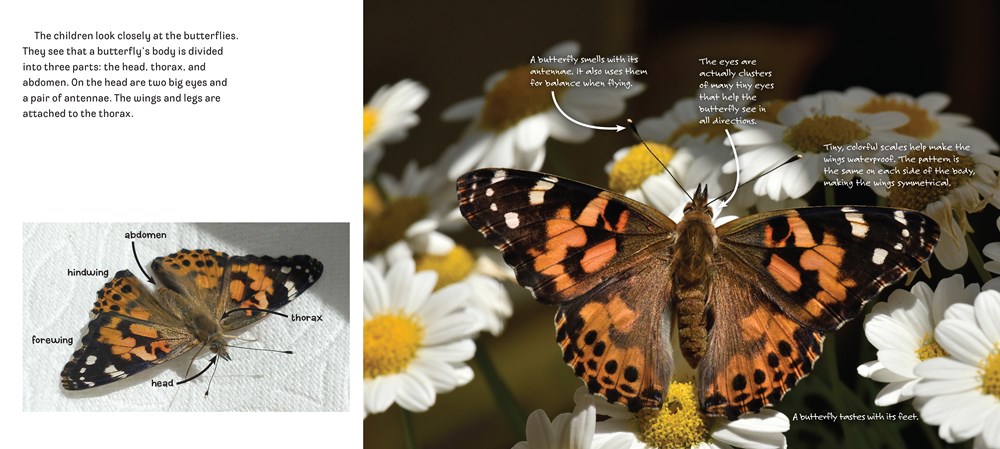
Spring is getting closer and closer, and that means that science classrooms all over the place are going to introduce their little ones to the life cycle of a caterpillar/butterfly. We’ve done it in my home, and each of my kids has done it in school, and it’s exciting every time. Butterflies in Room 6 revisits the Kindergarten students of Room 6 – a new group, since Hatching Chicks in Room 6 was published in 2017 – as they raise butterflies, starting from teeny, tiny caterpillar eggs.

Full-color photographs and informative text take this STEM/STEAM story through the step-by-step process by which the class observed and cared for their caterpillars; feeding them, observing the stages of life, moving the chrysalises to a larger, netted environment, the exciting emergence of the painted lady butterflies from their cocoons, and their release into the world! Leaf-shaped callouts throughout the book provide additional caterpillar and butterfly facts, and back matter provides butterfly questions, vocabulary, and a nice list of online and print resources for further reading.

Butterflies in Room 6 brings a real-world look into a primary classroom – it’ll get kids excited about science, especially if this is one of your classroom projects. Pair this with The Very Hungry Caterpillar and the classic that my kids all read in their kindergarten classes, Deborah Heiligman’s From Caterpillar to Butterfly.

Posted in Preschool Reads, Toddler Reads

Red Bunny & Yellow Bunny: The one that slipped by me!

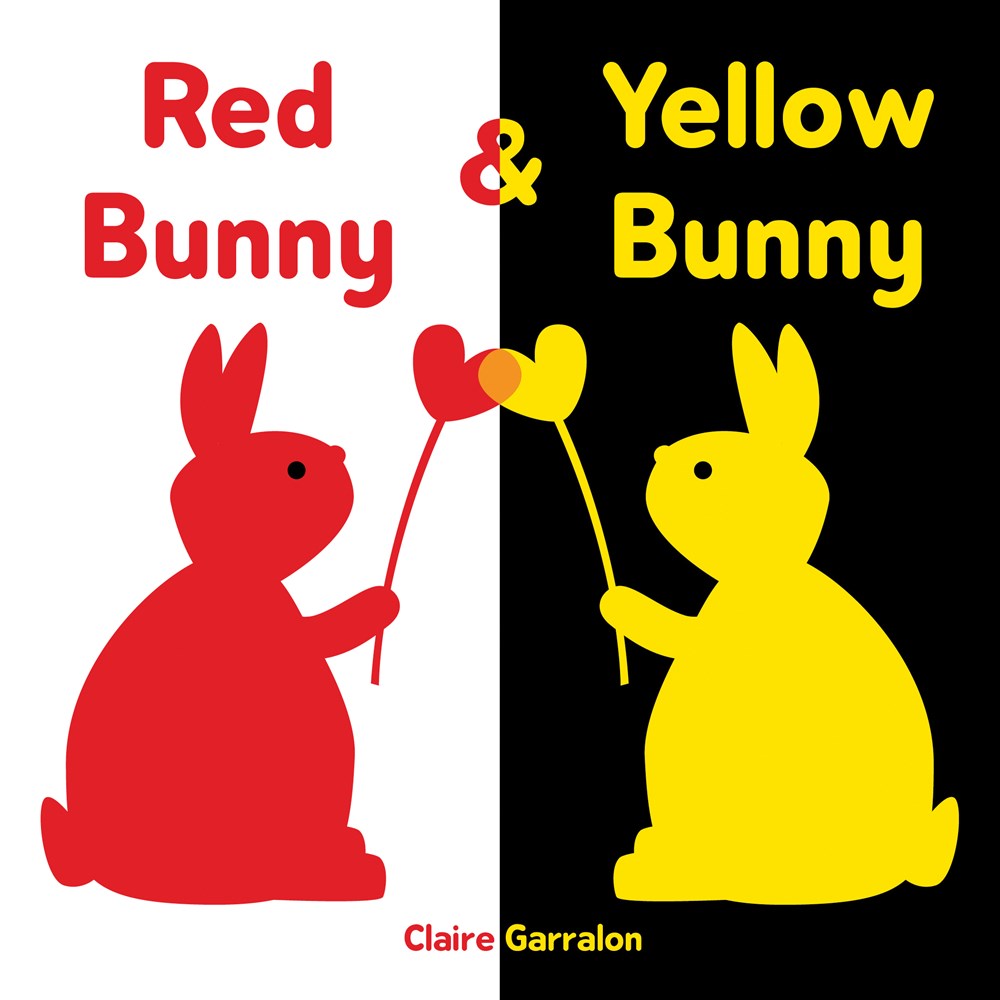
Red Bunny & Yellow Bunny, by Claire Garralon, (March 2019, Sourcebooks Jabberwocky), $7.99, ISBN: 9781492680147

Ages 0-4

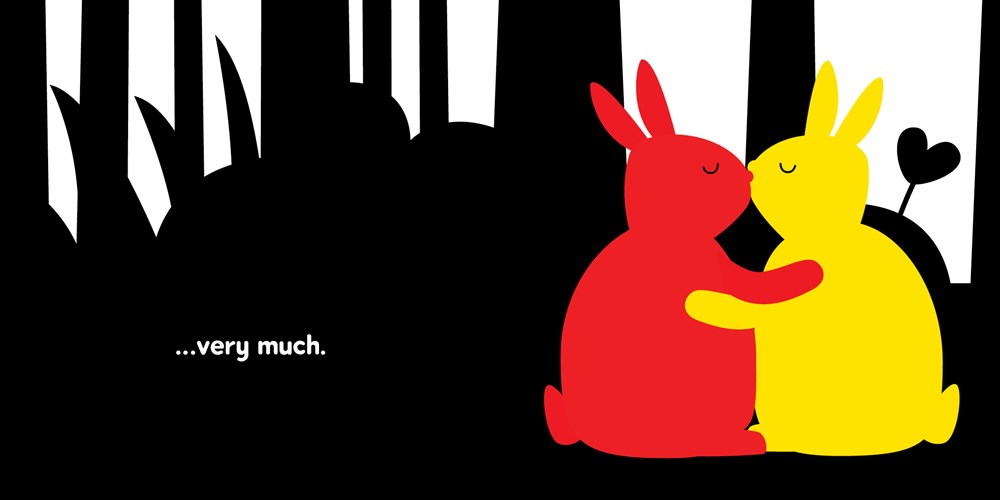
I sent off my Board Books post this morning, then realized I forgot one! Red Bunny & Yellow Bunny is the latest board book from Claire Garralon, who gave us the adorable Black Cat & White Cat in 2016. In Red Bunny & Yellow Bunny, two bunnies meet, fall in love, and have an orange baby bunny! What happens when that baby bunny grows up and falls in love? Keep reading!

I love how Claire Garralon communicates ideas about gender, social issues, and community for our youngest readers. The bunnies are genderless – no male or female pronouns needed; they are different colors, yet come together, fall in love, and have a baby that adorably blends their colors (red plus yellow makes orange, after all!). Bunnies fall in love with other bunnies, regardless of color, and create a rainbow of happy baby bunnies, all of whom play and live together. We saw a similar story emerge from Black Cat & White Cat, where two different color cats have to find a neutral place to play so they can see one another.

Naturally, we also have a sweet story that uses color concepts: explain that yellow and red make orange, and then ask what a yellow bunny and blue bunny’s baby would look like, or a red bunny and blue bunny’s baby. There’s a free, downloadable color mixing resource available on Teachers Pay Teachers, that you can hand out and let kids play with for a storytime activity. Let them fingerpaint and discover their own colors, or grab some Do a Dot! art markers.

Posted in Uncategorized

Board Books, Board Books, Board Books!

There’s a whole bunch of great board books out, and I love it!
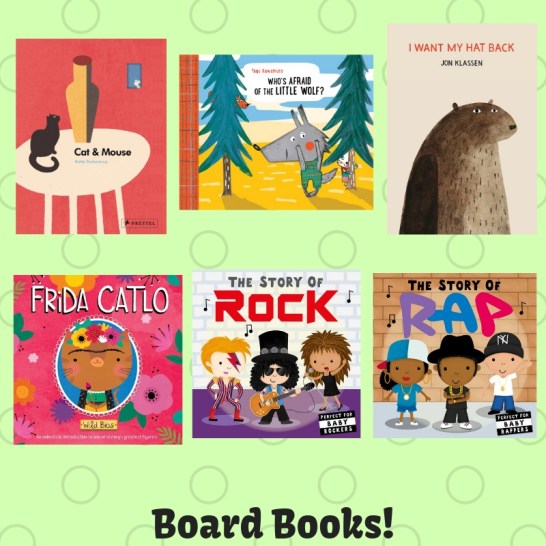
Cat & Mouse, by Britta Teckentrup, (March 2019, Prestel Publishing), $14.95, ISBN: 978-3-7913-7374-4

Ages 0-4

This die-cut, rhyming book is adorable! A cat and mouse play a game of hide and seek, with die-cut squares on each page letting little ones find the mouse, and explore with their fingers as well as their eyes and ears, as they go along. Cat and mouse wreak havoc across each spread, upending furniture and running up and down stairs: will the cat catch the mouse? I read this to my storytime group and wiggled fingers through the squares, let the little ones peek through the holes, and stuck my nose through one or two to mimic a cat sniffing for a mouse, all to tremendous giggles. This is an adorable storytime read, and a great pick for sensory and explorative reading. The artwork is loaded with shapes and colors to identify, making this a book you can really engage your little ones with.


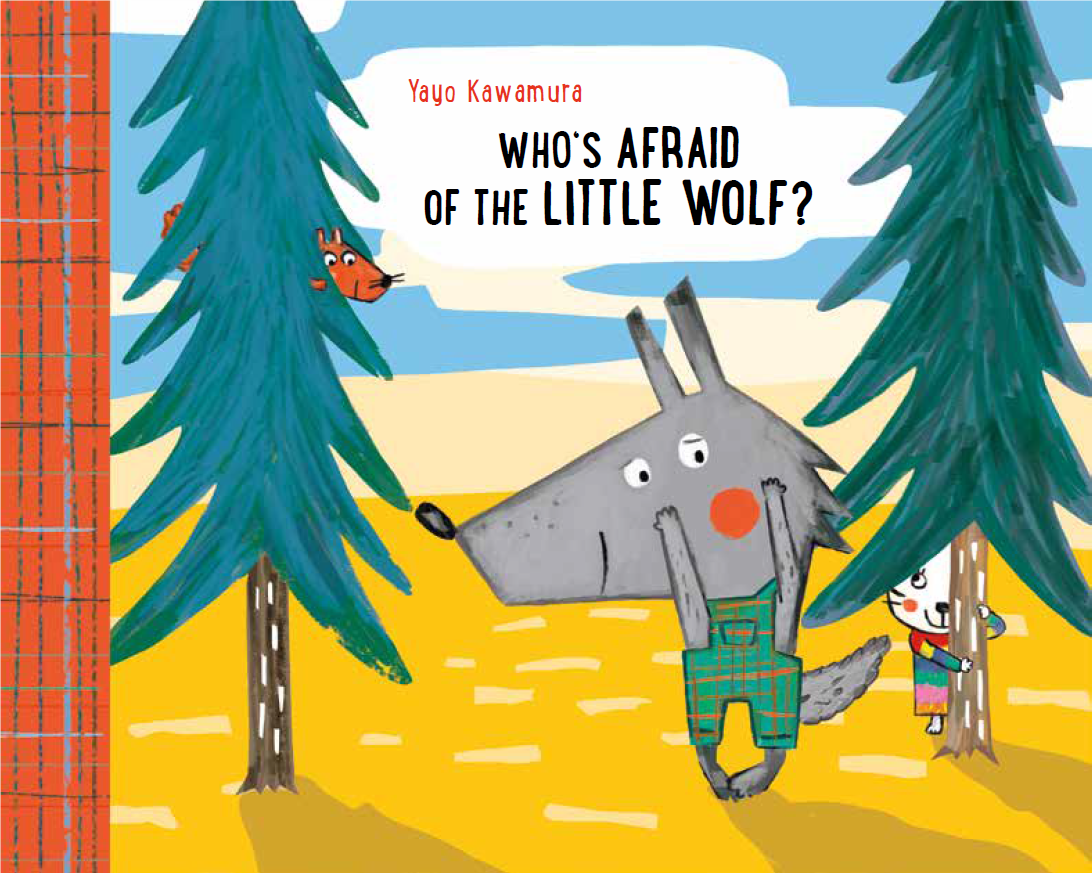
Who is Afraid of Little Wolf?, by Yayo Kawamura, (Apr. 2019, Prestel Publishing), $12.95, ISBN: 978-3-7913-7381-2

Ages 0-3

Little Wolf is bored and wants to play, but it seems like no one wants to play with him: the squirrel, rabbit, and fox all tell him their moms won’t let them play with wolves! Just when Little Wolf starts to cry, a little bee invites him to play. Seeing Wolf and Bee play together, the other animals realize that there’s nothing to be afraid of, and join the game. At sunset, Little Wolf and his new group of friends sit in a cuddled group, enjoying one another’s company after a big day of playing hide and seek. A sweet, simple story about overcoming prejudice, Who is Afraid of Little Wolf is a story that has a big message for little eyes and ears. Bold, colorful artwork and friendly animal faces make this instantly appealing to young readers and listeners, and gives a face to the fallout of predetermined ideas.


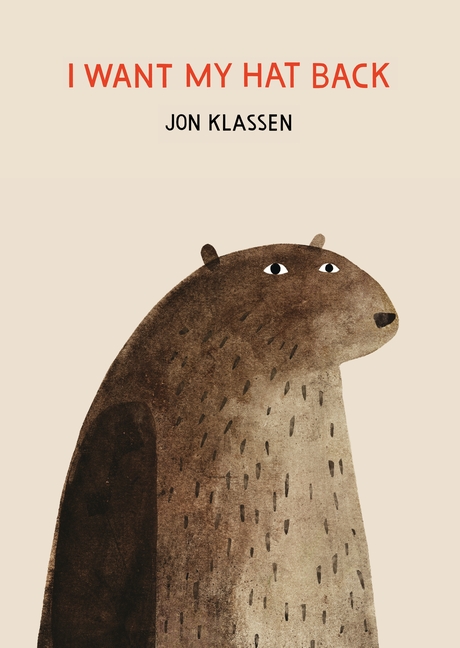
I Want My Hat Back, by Jon Klassen, (March 2019, Candlewick Press), $8.99, ISBN: 978-1-5362-0757-6

Ages 2-5

This is one of my favorite picture books of ALL TIME, and now it’s available in board book form! The darkly hysterical tale of a bear, a hare, and a hat is complete here; just in smaller format for littler fingers. The illustrations are beautifully, perfectly recreated here. My 6-year-old asked me if this was a “backpack copy” for him to bring to school, and darned if I didn’t say, “Wow… you may be onto something here”. Start your younger readers off right: give them Jon Klassen board books! (PLEASE say we’ll be getting Mac Barnett and Jon Klassen’s Triangle, Square, and Circle trilogy in board book at some point!)

Do you have crafts after storytime? Use this free, downloadable activity kit to let the kids make their own red hat, recreate their own forest story scene, and more.
 

Wild Bios: Frida Catlo, by Courtney Acampora & Maggie Fischer/Illustrated by Lindsay Dale-Scott, (Jan. 2019, Silver Dolphin Books), $7.99, ISBN: 978-1-68412-558-6

Ages 2-5

This is the cutest new board book series! Wild Bios puts an “animalistic twist” onto famous figure biographies by adding cute animals and wink, nudge puns to the biographical text. Here, we’ve got artist Frida Kahlo’s life with a feline spin: Frida Catlo was born in Meowixco City, painted self-pawtraits, and married fellow artist Doggo Rivera. A sweet way to introduce art to your little ones (I think it’s time for me to revisit my Art Storytime) and the puns will keep older siblings and adult caregivers chuckling at storytime. The bright, festive artwork is fun to look at, and Frida’s even got a little unibrow. Make sure to mention that Friday Kahlo loved animals – display and booktalk Monica Brown’s Friday Kahlo and Her Animalitos handy. Let the little ones draw afterward!


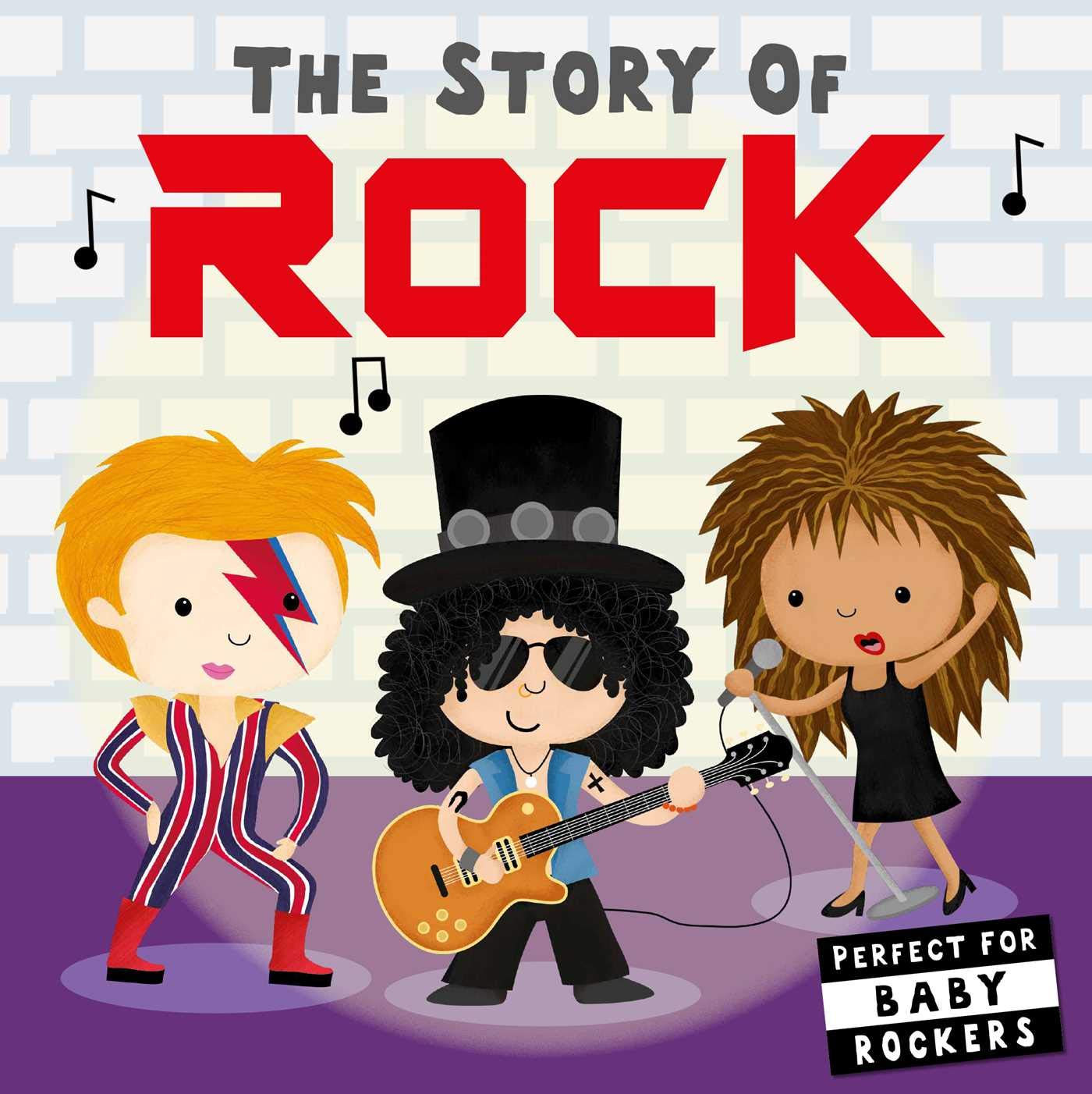
The Story of Rock, by the Editors of Caterpillar Books/Illustrated by Lindsey Sagar, (May 2019, Silver Dolphin Books), $8.99, ISBN: 978-1-68412-509-8

Ages 0-5

Perfect for music storytime, this rhyming look at the history of rock music starts – as it should! – with rock’s roots in blues and features some of the most iconic names in rock history, including Chuck Berry, Elvis, Jimi Hendrix, Queen, the Ramones, and more. The blues, through the rockabilly ’50s, the psychadelic ’60s, punk, hair metal, grunge, and ska are all here, with sweetly illustrated, friendly faces and instruments. Add this to your music shelf with board books like What is Punk?, Brandon Stousy’s What is Music? and We Are Music, Amazing Me! Music, by Carol Thompson, and Baby Loves to Rock! by Wednesday Kirwan.
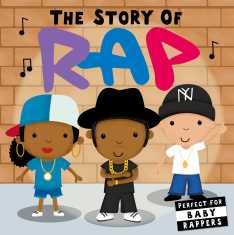
 

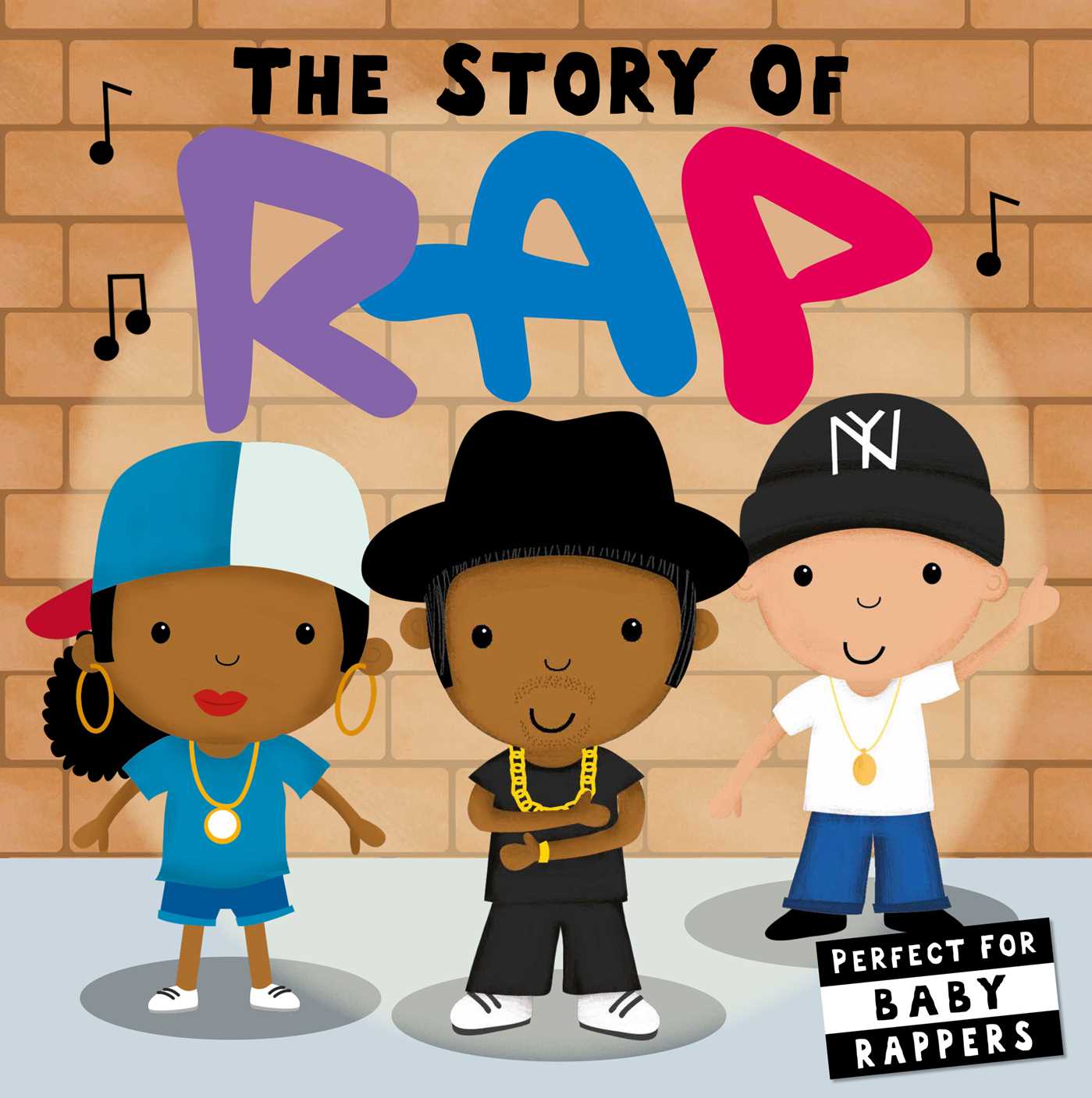
The Story of Rap, by the Editors of Caterpillar Books/Illustrated by Lindsey Sagar, (May 2019, Silver Dolphin Books), $8.99, ISBN: 978-1-68412-508-1

Ages 0-5

A companion to The Story of Rock, The Story of Rap starts off with rap’s beginning at a New York house party in 1973 and explains the genre’s sound: big bass, spoken word rhyme. Learn about rap icons, from Grandmaster Flash, Run DMC, and NWA; the protests, the East vs. West battle, and modern figures, including Jay-Z, and Kendrick Lamar. The emphasis on soul and social justice is here, and like the books says: “Rap is for the people, just like from the start, it’s more than music: it’s a work of heart”. The artwork is identical to The Story of Rock, with soft, cute, friendly faces and urban street wear; there’s some breakdancing, mixing and scratching at the turntables, and female representation (Lauryn Hill and Missy Elliott are here, but where’s Queen Latifah?). Add this to your music board books, and keep up your readers’ music education.


Posted in picture books, Preschool Reads

A boy learns to live between Here and There

Here and There, by Tamara Ellis Smith/Illustrated by Evelyn Daviddi, (March 2019, Barefoot Books), $16.99, ISBN: 9781782857419

Ages 4-8

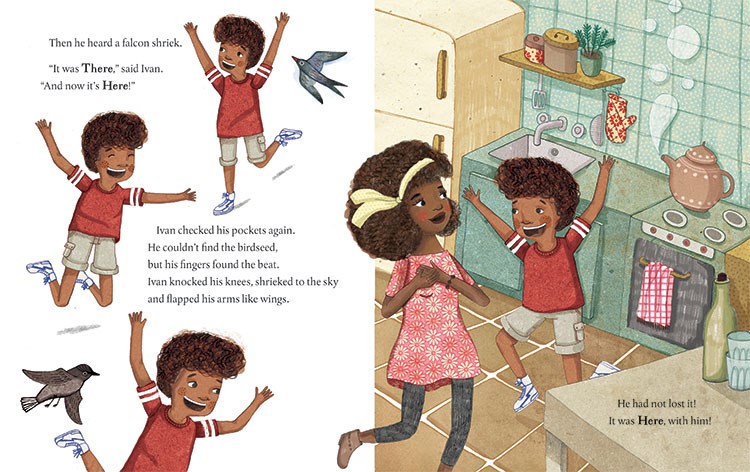
Ivan is a biracial child who splits his time between his two homes: Here, where he lives with his mother, and There; his father’s new home. Here, Ivan is comfortable; he sits in a tree and chatters with the birds. There, he curls into a chair, pulled into himself, ignoring his father’s attempts to engage him. Dad knows how to reach his son, though: he starts playing a song on his guitar, and Ivan can’t stop the good feelings from flowing through him. As Ivan negotiates living Here and There,  he knows there is music, there are birds, and there are people who love him at each place.

Here and There is a touching story about living as a child in a divorced family. Being taken out of his comfort zone; his home, makes Ivan feel off-balance. He isn’t Here, with the familiar; he’s There. He may even feel different around his father, bein gin this different place, with his father not where he’s supposed to be. But music builds a bridge between father and son: Ivan has an affinity for music, as we s

ee early on, when he chatters with the birds in his mother’s home. Once his father’s guitar music opens the door to conversation, Ivan reaches a new comfort zone, and finds himself discovering new birds in his father’s neighborhood, too. He’s building a new life for himself, understanding and working through feeling guilty for being happier in one place or another.

Here and There will speak to many kids who split their time between two households. The text uses the concepts of “Here” and “There” to explain Ivan’s familiarity and initial discomfort  as he learns to navigate between his mother’s and father’s home.  The pencil, acrylic paint, and collage artwork presents multiracial characters with soft, gentle facial features. Back matter includes 12 different birdcalls, with phonetic pronunciation, for kids to try out. Display and booktalk with The Mirror in Mommy’s House/The Mirror in Daddy’s House by Luis Amavisca, which uses a mirror to connect a child with two households.


Posted in picture books, Preschool Reads, Toddler Reads

Storytime Fiesta: One is a Piñata!

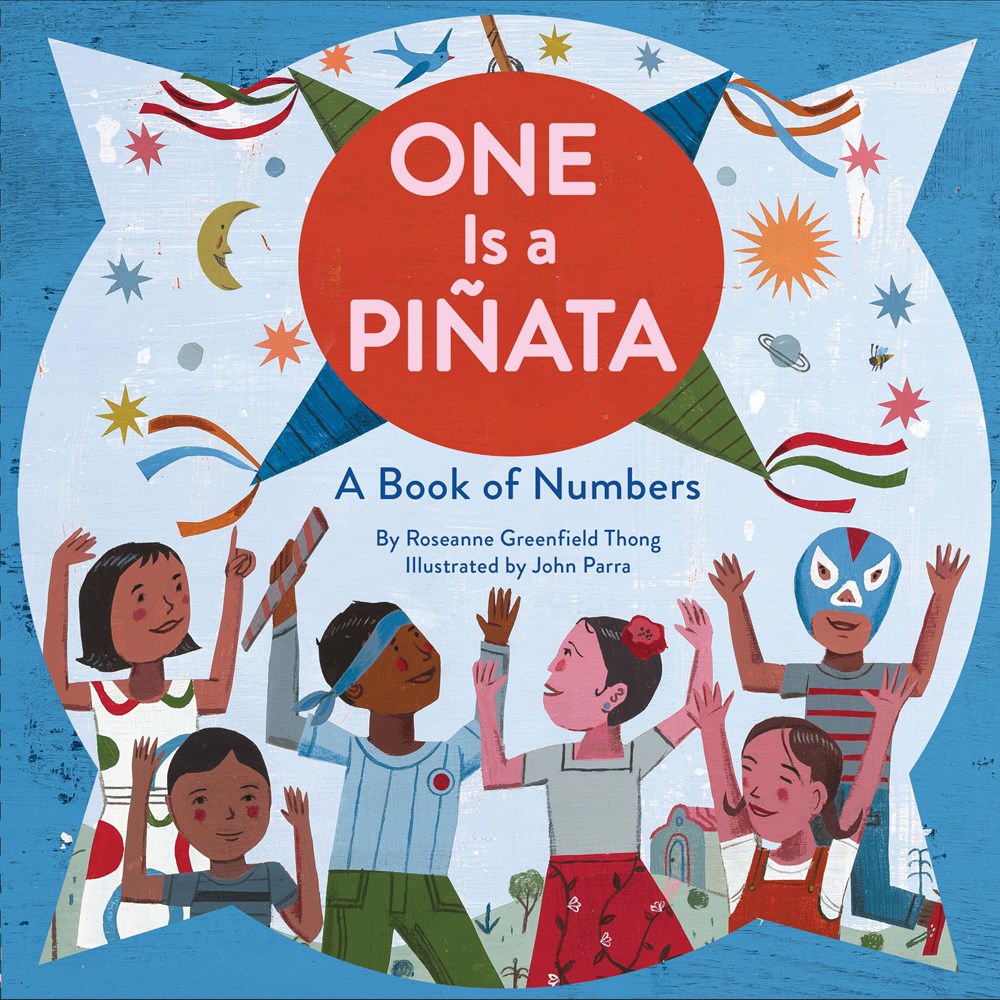
One is a Piñata, by Roseanne Greenfield Thong/Illustrated by John Para, (March 2019, Chronicle Books), $16.99, ISBN: 9781452155845

Ages 3-5

The duo behind concept books Round is a Tortilla and Green is a Chile Pepper are back with a counting book! This rhyming, bilingual English/Spanish concept book takes readers through the preparation for a fiesta, with maracas, calaveras, salsas, and plenty of sonrisas! The illustrations’ rich colors and the story’s lively, upbeat text will have readers counting down to a part of their own. There are wonderful Latinx touches to the artwork, including luchador masks and caleaveras; papel picado decorates the background, and a string of twinkling lights dangle across the endpapers. Count from 1 to 10, uno al diez, with your storytime group.

I love Roseanne Greenfield Thong’s multicultural concept series, and am so happy to see a counting book join her shapes and colors books. Invite your school-age kids to make their own papel picado to display, and let the little ones color some Sesame Street Spanish/English flash cards. Back matter includes a glossary with phonetic pronunciation of the Spanish-language words used in the book.

So… does this mean Roseanne Greenfield Thong and Grace Lin will team up on a counting book to accompany Round is a Mooncake and Red is a Dragon?

Roseanne Greenfield Thong is an award-winning author of over a dozen children’s books, including ‘Twas Nochebuena, Día de Los Muertos, and her multicultural concept books, Round is a Mooncake, Red is a Dragon, Round is a Tortilla, and Green Is a Chile Pepper.  John Parra is an award-winning illustrator who has three Pura Belpré Illustrator Honor awards, including one for Green is a Chile Pepper.

Posted in Uncategorized

Cultures collide, and blend, in When I Found Grandma

When I Found Grandma, by Saumiya Balasubramaniam/Illustrated by Qin Leng, (March 2019, Groundwood Books), $17.95, ISBN: 9781773060187

Ages 5-8

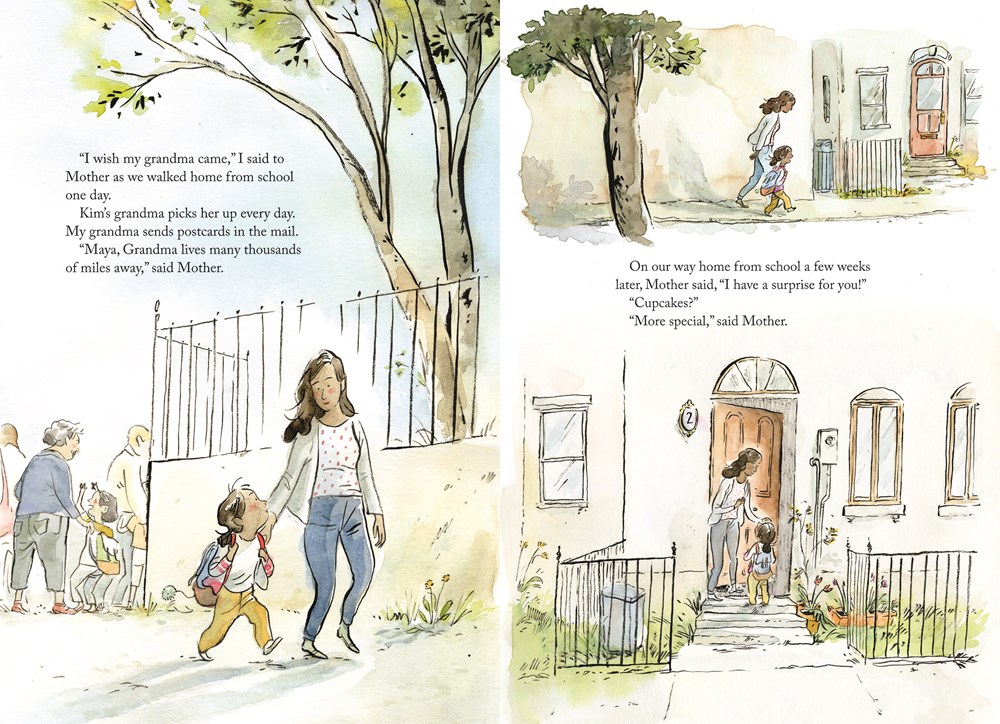
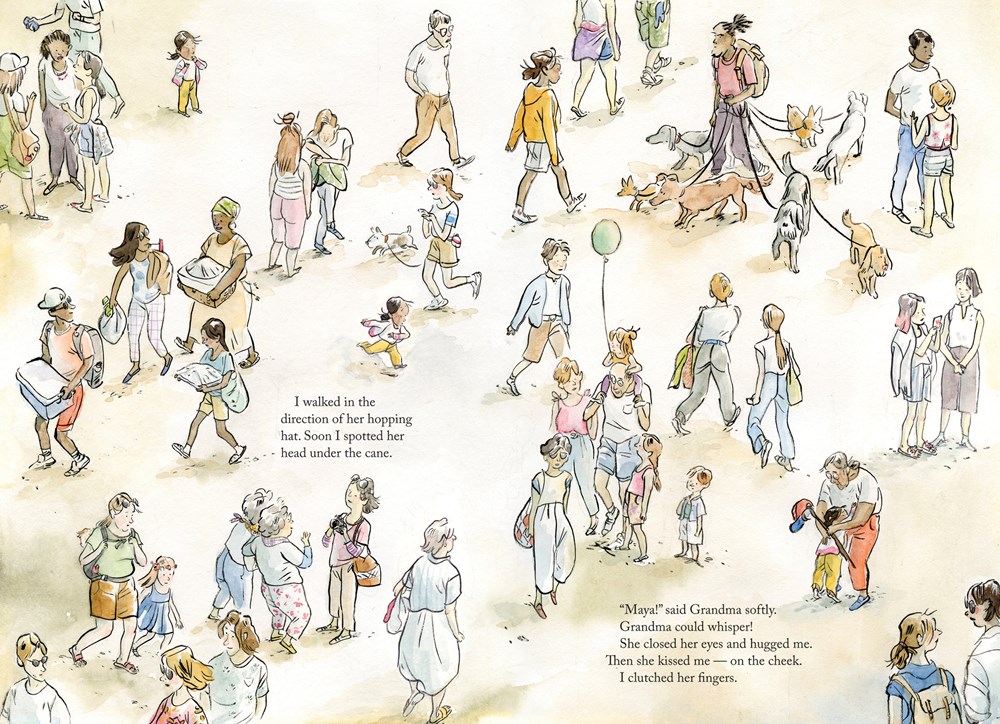
Maya is an Indian girl living in America with her family. She’s thrilled when her Grandma arrives from India for a visit, but she quickly finds things that rub her the wrong way. She doesn’t want Grandma to call her by her full name, Mayalakshmi, and she wishes Grandma didn’t wear her sari and noisy bangle bracelets when she pops in for a visit to Maya’s classroom. She isn’t crazy about the food Grandma makes, and she really, really doesn’t like her family’s decision to celebrate the Holi festival by visiting a temple so Grandma can pray, rather than go for their planned trip to a fair. But it turns out that when Maya needs help, Grandma’s the first one on the scene.

Two generations work things out together in this sweet, authentic story about a grandmother and granddaughter; it’s a cultural and inter-generational story of understanding, compromise, and, above all, love. The story text will resonate with kids and adults alike, and opens so many avenues for discussion between generations and cultures. The soft ink and watercolor artwork reflects emotions touched on the book; namely, familial love. The cover is a beautiful expression of intimacy and affection between grandmother and grandchild; something ever-present in both the text and artwork.

In a library system as diverse as mine, this is a must-add to collections. In less diverse areas, it’s an important book for generating understanding and respect for other cultures and how we look at our elders.


Posted in Early Reader, Non-Fiction, picture books, Preschool Reads

Natural world nonfiction for young learners: See to Learn: Forest

See to Learn: Forest, by Kate Moss Gamblin/Illustrated by, Karen Patkau, (March 2019, Groundwood Books), $16.95, ISBN: 9781554988792
Ages 4-7

This first book in a new nonfiction picture book series encourages little learners to look at a location – in this case, a forest – and really see: see different footprints that travel the forest floor; the different leaves carpeting the ground; moss covering a stump. Forest encourages readers to think: is that moss older than your grandparents? What changes do seasons bring with them? What happens during the passage of day to night?

The quiet text promotes introspection, curiosity, and presence, and the interrelationships between nature – trees are referred to as our “cousins” – and our planet. Everything here exists for readers to observe and ponder, and Forest encourages them to think of nature, the world, and their place in it.

This is a great way to talk about the natural world and basic concepts with kids: talk about colors, talk about different functions, talk about different stages of life, whether you’re a human grandparent or a young caterpillar. We all age; we all exist; we all interact with the natural world. Let kids see themselves in nature, and they’ll respect it and care for it. Further reading provides additional resources for younger and middle grade readers. An author’s note explains the rationale and thinking points for the series.

I’m looking forward to more books in this series. See to Learn: Forest is a great addition to primary and elementary science collections and programming. This will fit nicely with Kate Messner’s nonfiction books, Over and Under the Snow, Over and Under the Pond, and Up in the Garden and Down in the Dirt, for elementary readers; for primary readers, you can’t miss with Laura Vaccaro Seeger’s books, Green and Blue; and Denise Fleming’s In the Tall, Tall Grass, and In the Small, Small Pond.

Posted in picture books, Preschool Reads

Your heart cannot handle the adorableness of Tiny T. Rex!

Tiny T. Rex and the Impossible Hug, by Jonathan Stutzman/Illustrated by Jay Fleck, (March 2019, Chronicle Books), $15.99, ISBN: 9781452170336

Ages 3-7

Tiny T. Rex wants to hug his sad friend, Pointy the Stegosaurus, but there’s one problem: he has very tiny arms! He seeks advice from his parents, aunt, and siblings, and ultimately decides that practice makes perfect: but it’s sometimes precarious!

I have been squealing about this book since I first saw it at a Book Buzz a couple of months ago. A combination of smart writing and adorable cartoony artwork makes Tiny T. Rex one of the cutest, funniest books I’ve ever read. Tiny T. Rex is every kid, from preschool age on up, who has to contend with weird adult responses to big childhood dilemmas. When he asks his new age-y Aunt Junip for hugging advice, she recommends “balance and freshly squeezed cucumber juice”, to which T. Rex responds, “That is disgusting. I will ask my mother for help instead”. Mom’s advice isn’t much more helpful; she falls back on the traditional mom answer (which I’ve used quite a few times, myself): “It’s okay if you can’t hug. You are good at many other things… You are tiny, but your heart is big!” You can almost see his little eyes roll when he responds, “I cannot hug with my heart, mother”. When T. Rex decides to take his siblings’ advice and practice, he creates a hug strategy blackboard that kids will love: he’s considering being shot out of a cannonball, parachuting into the hug, and several other hilariously adorable ways to accomplish the hug. As he starts putting his ides into practice, he learns that trial and error can be a little painful, but ultimately, that the best hugs are the ones given with all the love you have to give. The artwork is heart-exploding levels of adorable. T. Rex and his fellow family and friends are bright and bold, with bright, cheerful foliage all around them.

It’s impossible not to squeal when you first lay eyes on this book: I have a dining room full of librarians and educators that backed me up, when Chronicle debuted this at the book buzz. With a sweet storyline about compassion and determination, eye-catching graphics that kids and adults alike will love, and text that was made for storytime reading, Tiny T. Rex and the Impossible Hug is a home run. Now, we wait for another adventure…

Illustrator Jay Fleck has a video on drawing Tiny T. Rex – invite your storytime kiddos to give it their best!

Posted in Early Reader, Non-Fiction, picture books

A math concept book with NO WRONG ANSWERS? Sign me up!

Which One Doesn’t Belong? Playing with Shapes, by Christopher Danielson, (Feb. 2019, Charlesbridge), $15.99, ISBN: 9781580899444

Ages 4-8

Math educator Christopher Danielson came up with a creative new way to get kids thinking about mathematical concepts: give them groups of shapes, and ask them, “What doesn’t belong?” The best part: NO WRONG ANSWERS. As the beginning explanation details, it’s all about the process, about critical thinking. One color could be different. A shape could be more squished, smooshed, or just look weirder than the others. It’s all in the eye, the mind, of the beholder here! Spreads alternate between layouts with shapes, and explanations on how every answer is correct, with supporting information like shapes, color, and other properties.

This is such a great way to make mathematics accessible to readers (kids and adults alike!). It doesn’t discourage anyone; it doesn’t make anyone’s answer, or rationale, wrong. Which One Doesn’t Belong shows readers how easy it is to approach things in a mathematical way: and this is coming from the lady who tells kids “the best way to do well in math is to not ask me for help with it”. Like the author himself says, “All properties count here; all ideas matter…”. Add this one to your nonfiction collections, build some programs around it for different age groups, and start making math more friendly to your readers!

Which One Doesn’t Belong? has a starred review from Kirkus and is the Winner of the Mathical Book Prize.

Posted in picture books, Preschool Reads

Josh Funk’s latest fractured fairy tale takes on Hansel and Gretel! Plus, a Giveaway!

It’s Not Hansel & Gretel, by Josh Funk/Illustrated by Edwardian Taylor, (March 2019, Two Lions), $17.99, ISBN: 9781503902947

Ages 4-8

One of my favorite picture book people, Josh Funk – seriously, have you followed him on Twitter? – has another entry into his fractured fairy tales “It’s Not…” series. This time, he’s setting his sights on Hansel and Gretel, who just can’t believe their loving parents would hatch an evil plot to leave them in a dark forest all alone, or that a sweet old lady who’s doling out candy could possibly be an evil witch!

Set up as a back and forth between our omniscient narrator and the characters, the story is set in motion. The narrator has a lot more information about the story handy than do our characters, and the back and forth between them is laugh out loud funny. Gretel chastises the narrator for making Hansel cry at the very insinuation that their parents have an evil plot to get rid of them; the narrator is exasperated when the kids go to town on all the candy that the witch puts out for them. Gretel adds a smart, feminist slant to the story, asking why it’s always “Hansel and Gretel”, when Gretel clearly comes first alphabetically; she also points out that Hansel gets to sit around and gorge himself while she, the girl, has to cook and clean, exclaiming, “Get with the times-this is the fifteenth century!” There’s a wink, nudge nod to jokes about food allergies, a fabulous unicorn makes a guest appearance, and a Happily Ever After that will satisfy and amuse readers.

Sharp-eyed readers will spot some great fairy tale cameos (was that a flying monkey I saw), and the endpapers are loaded with enough candy and treats to tempt any reader into sampling what lies inside. Josh Funk’s got a gift for snappy, fun dialogue, and Edwardian Taylor’s bright, digital art is fun and explodes with the energy Josh Funk loads his story with. I read this with my 6 year old; he voiced the characters, I voiced the narrator, and we had a blast together. A perfect add to your fractured fairy tales shelves!


Want a shot at winning your own copy of It’s Not Hansel and Gretel? Try this Rafflecopter giveaway!


Like Hansel and Gretel, Josh Funk doesn’t like being told how stories should go—so he writes his own. He is the author of a bunch of picture books, including the popular Lady Pancake & Sir French Toast series, illustrated by Brendan Kearney, and recently, How to Code a Sandcastle, illustrated by Sara Palacios, and Lost in the Library: A Story of Patience & Fortitude, illustrated by Stevie Lewis. He lives in New England with his wife and children. Learn more about him at www.joshfunkbooks.com and follow him on Twitter @joshfunkbooks.


Edwardian Taylor has worked as a visual development artist and character designer in the game and animation industry. He illustrated the picture book Race!, written by Sue Fliess and the chapter book Toy Academy: Some Assembly Required, written by Brian Lynch. He lives in Texas with his partner and their four dogs. Learn more about him at www.edwardiantaylor.com and follow him on Tumblr, Instagram, and Twitter @edwardiantaylor.