Posted in picture books, Preschool Reads

Arrrrrrrgh! There be Pirate Chickens in them thar books!

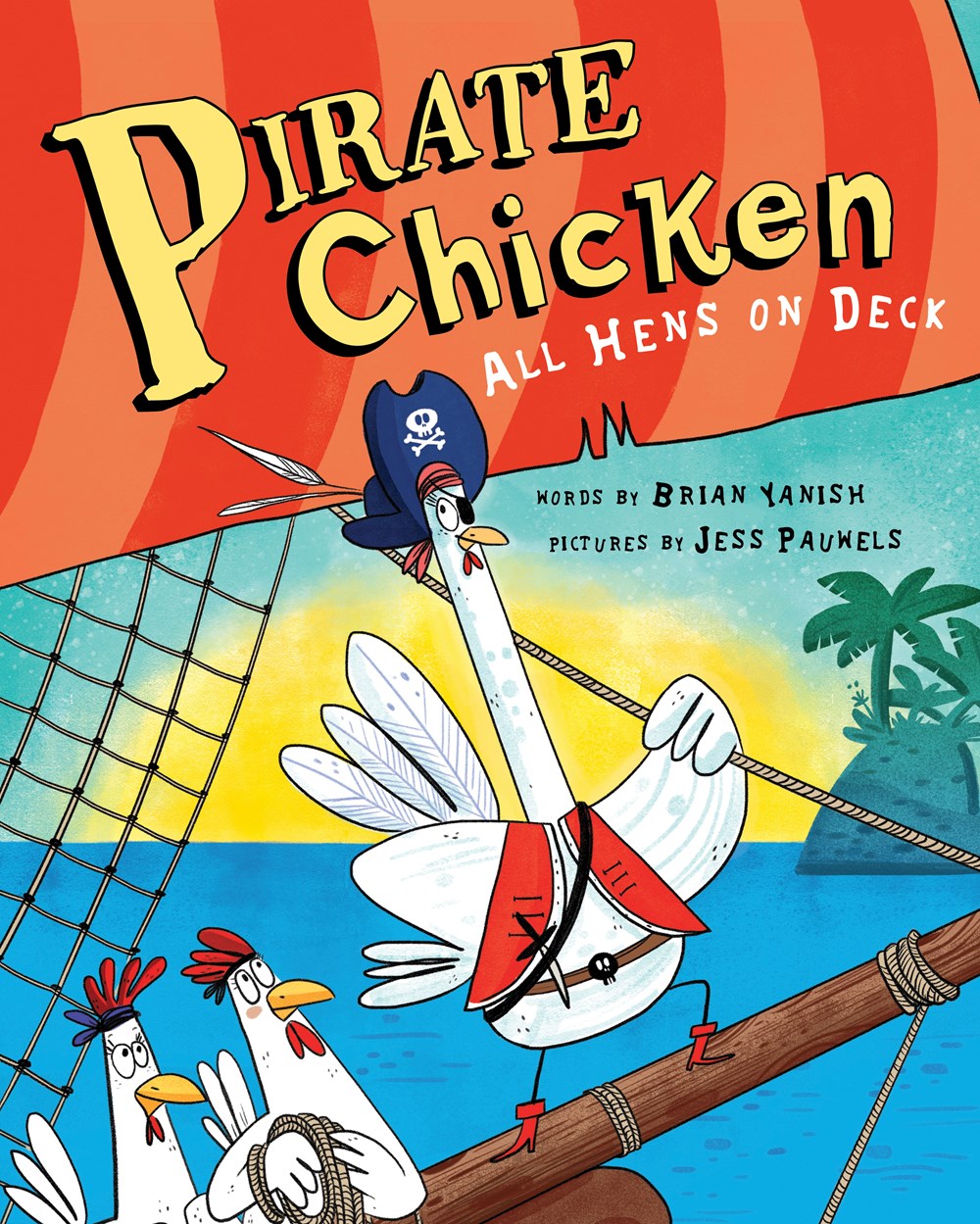
Pirate Chicken: All Hens on Deck, by Brian Yanish/Illustrated by Jess Pauwels, (March 2019, Sourcebooks Jabberwocky), $17.99, ISBN: 9781492665205

Ages 4-8

Avast, me hearties! If you love pirates (who doesn’t?), and you enjoy chickens (c’mon, they’re cute), Pirate Chicken: All Hens on Deck will speak to you and your storytime. Lily is a chicken with greater aspirations than pecking around at the farm, so when pirates invade her farm, she’s all in for a life on the high seas! The chickens even overthrow the pirates one night, and Lily finds herself in charge of an all-chicken pirate crew. Changing her name to Redfoot, she starts enjoying bossing everyone around a little too much – will she shape up before her crew sends her for walk on the plank?

Pirate Chicken is fun, upbeat, and just plain silly, feel-good storytelling. The colors are bright and bold, with boldly outlined figures. Lily sports a Jolly Roger-embellished pirate hat, and a bright red vest, for extra giggles. And what better craft to add to a pirate storytime, but pirate hats? Teach them the old sea shanty “Blow the Man Down” and you’re set for a Pirate Readaloud!

Posted in picture books, Preschool Reads

Prepare for a fiesta with The Piñata That the Farm Maiden Hung!

The Piñata That the Farm Maiden Hung, by Samantha Vamos/Illustrated by Sebastià Serra, (Jan. 2019, Charlesbridge), $17.99, ISBN: 9781580897969

Ages 4-8

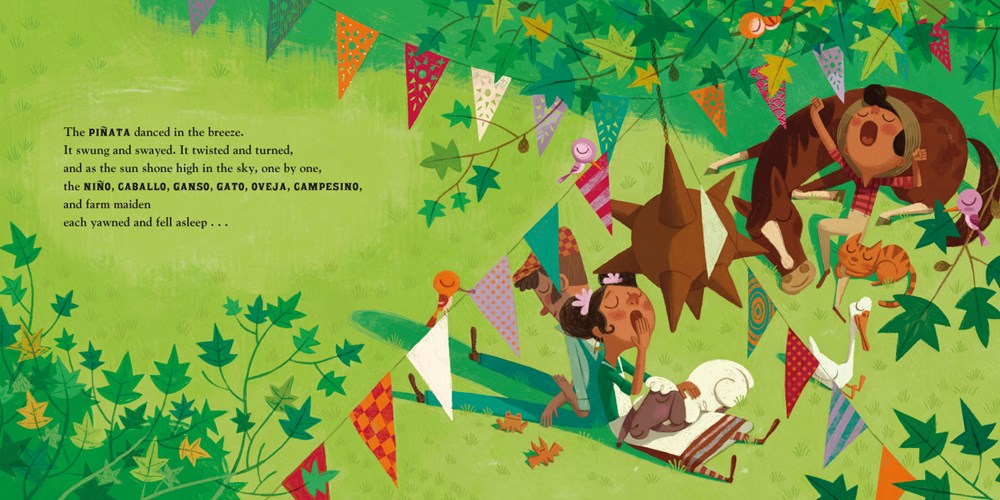
This adorable companion to 2011’s The Cazuela That the Farm Maiden Stirred is another bilingual, cumulative story. A girl heads to the market while the farm maiden and her friends pull together a piñata for a surprise celebration! Like Cazuela, The Piñata That the Farm Maiden Hung features Spanish words in bold font, with words identifiable using context clues, and the illustrations are colorful and bright, with friendly, soft character faces and festive touches like papel picado pennants and a bright piñata. Back matter includes the lyrics to “The Piñata Song/La Canción de la Piñata”, instructions on making your own piñata, a glossary, and list of Spanish translations. Charlesbridge offers the piñata instructions available for free download on their website.

This is a cute companion to The Cazuela That the Farm Maiden Stirred, and a fun addition to storytime. It begs for a felt board storytelling, so make a trip to the craft store!


Posted in Early Reader, Intermediate, Non-Fiction, Non-Fiction, picture books

Seashells: More Than a Home, more than decoration

Seashells: More Than a Home, by Melissa Stewart/Illustrated by Sarah S. Brannen, (Apr. 2019, Charlesbridge), $16.99, ISBN: 9781580898102

Ages 6-9

Kids love seashells. They’re the ultimate summer souvenir, coming in all shapes and sizes, with beautiful patterns and colors. Seashells: More Than a Home looks at 13 different seashells and lets readers in on their little world: their colors, patterns, and functions in protecting the marine life that live within them, keeping them safe and fed. For instance, a nautilus’s design allows it to sink and float like a submarine, while the screw-shaped burribella can anchor itself into the sand, allowing its sea snail to stay in place. Watercolor illustrations and soothing earth and sea colors make this a beautiful book to look at and learn from. Endpapers illustrate shells and a map, highlighting their locations, and back matter includes author and illustrator notes, and additional resources.

Seashells: More Than a Home is a companion to Melissa Stewart and Sarah Brannen’s book, Feathers: Not Just for Flying (2014) and a nice addition to nonfiction shelves and STEM storytimes. Get some seashells and pass them around; invite the kids to talk about what they see and feel. Melissa Stewart’s author website has free, downloadable educator activities, readers’ theatre scripts, and curriculum guides.


Posted in picture books, Preschool Reads

The Chickens Are Coming! What do we do?

The Chickens Are Coming!, by Barbara Samuels, (March 2019, Farrar Straus Giroux), $17.99, ISBN: 9780374300975

Ages 4-8

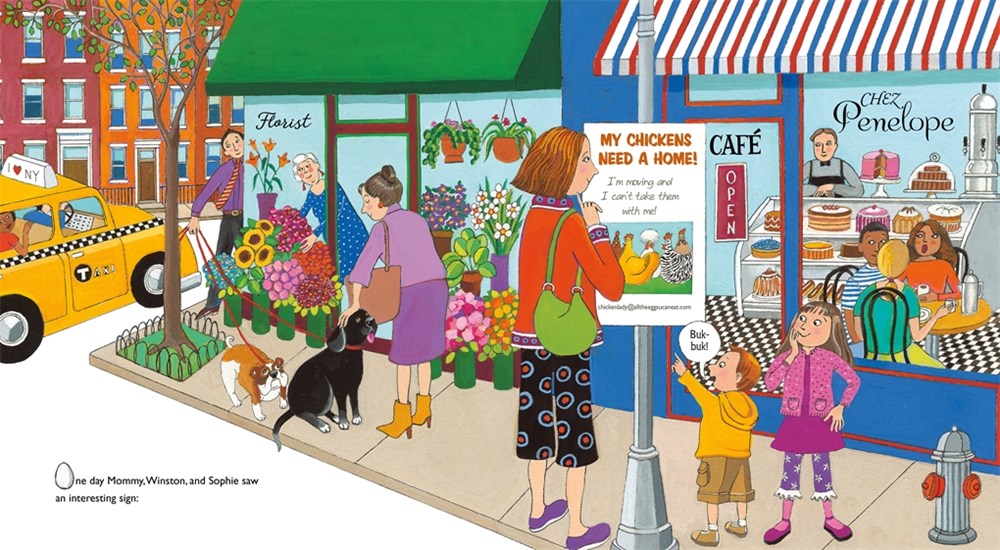
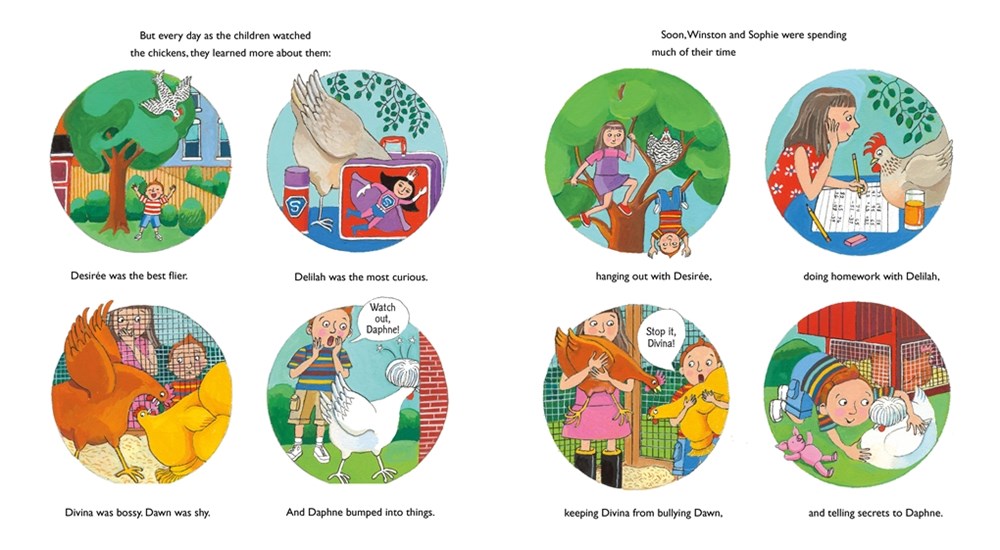
Siblings Winston and Sophie are shopping with their mom one day when they discover an interesting sign: someone called The Chicken Lady is moving and needs to rehome her chickens. Winston, Sophie, and their parents decide to take on the task of becoming urban farmers and adopting them! They get their backyard ready, setting up the coop and telling their friends; they promise fresh eggs to everyone, and Winston even creates a Chicken Dance. Once the chickens arrive, though, the family learns that chickens take work! They don’t want to be pets and they don’t want to lay eggs: not even for bedtime stories; not for relaxing music that the kids play for them; not at all. As Winston and Sophie try desperately to get the chickens to acclimate to their new home and family, they discover that each chicken has its own personality – and that each one is special is in its own way.

The Chickens are Coming! is a cute story about patience and learning. Winston and Sophie learn about raising farm animals in a city environment, which comes with unique challenges, and they learn that chickens aren’t just egg-laying machines for their convenience. Colorful artwork makes this appealing to readers, and each chicken is beautifully illustrated. An author’s note provides information about urban chicken-rearing, and a copy of Sophie’s Chicken Chart shows lets readers compare the different breeds, countries of origin, and egg sizes and colors. Endpapers feature the chickens in their colorful glory.

Pair this one with Caroline Arnold’s Hatching Chicks in Room 6 for more information about raising chicks in a nontraditional environment. This is a good read before a farm or domestic animal zoo visit.

Posted in picture books, Preschool Reads

Scampers teaches kids the scientific method!

Scampers Thinks Like a Scientist, by Mike Allegra/Illustrated by Elizabeth Zechel, (March 2019, Dawn Publications), $8.95, ISBN: 9781584696438

Ages 4-8

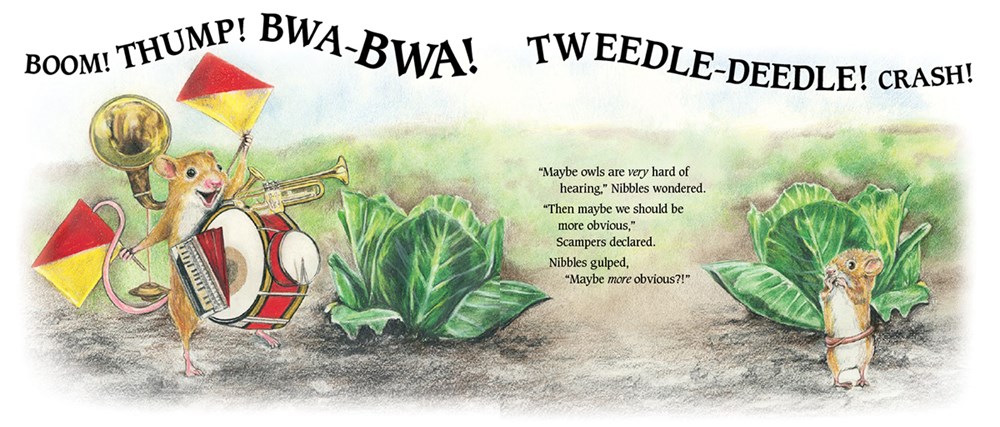
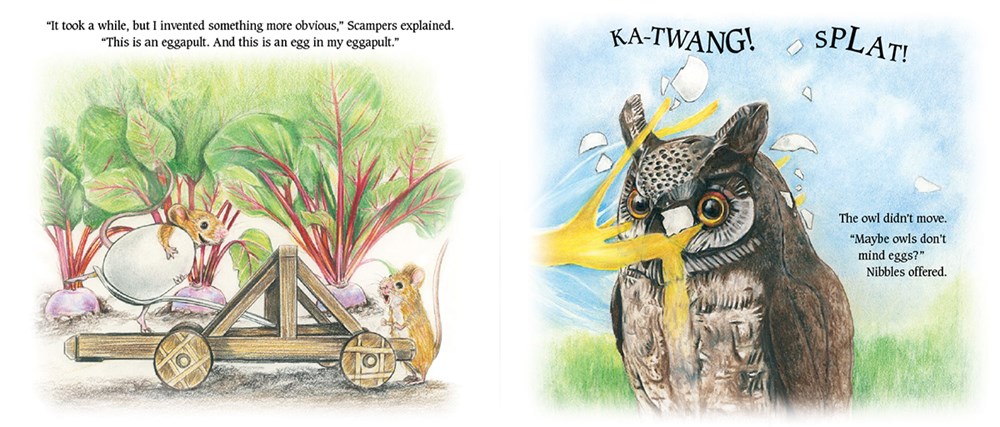
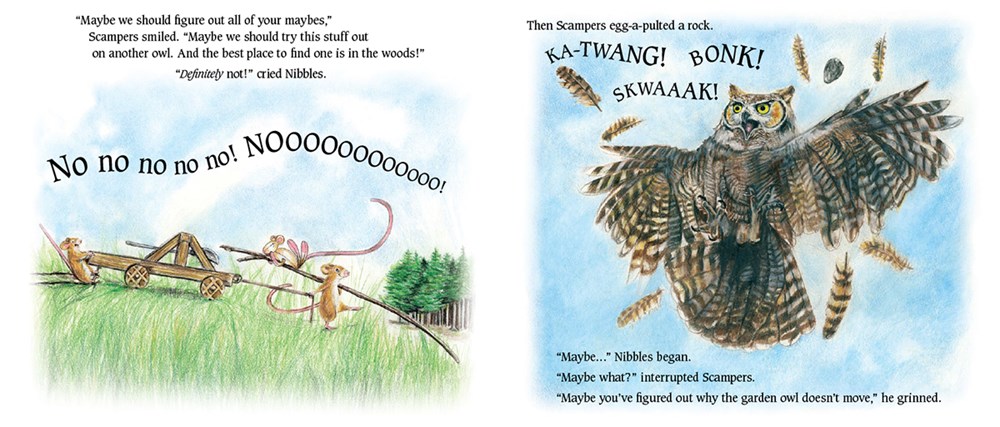
Scampers is a curious little mouse who wants to know what it will take to get a menacing-looking owl out of the vegetable garden, so he and the other mice can go back to getting food. With the help of Scampers’s friend, Nibbles, the two proceed to conduct a few experiments, including waving a rag doll and making noise that will startle the owl, and building an egg catapault to scare it off. No reaction. (Have you guessed yet?) When Scampers and Nibbles figure out the owl’s secret, they let their fellow mice know: the owl isn’t real! Will the mice believe their two scientists?

Scampers Thinks Like a Scientist is an adorable, abbreviated introduction to an scientific method. Scampers has a theory about the mouse, so she conducts some tests, considers her conclusion, and shares her results. The tests are amusing and let caregivers and educators work with readers to reason out the conclusion. It’s a cute way to introduce scientific thinking to younger readers, and publisher Dawn Publications has a free, downloadable companion activities for kids. Add this one to your science storytime.

Posted in picture books, Preschool Reads, Toddler Reads

Out of the nest and into the air! Why Should I Walk? I Can Fly!

Why Should I Walk? I Can Fly!, by Ann Ingalls/Illustrated by Rebecca Evans, (March 2019, Dawn Publications), $8.95, ISBN: 9781584696391

Ages 3-7

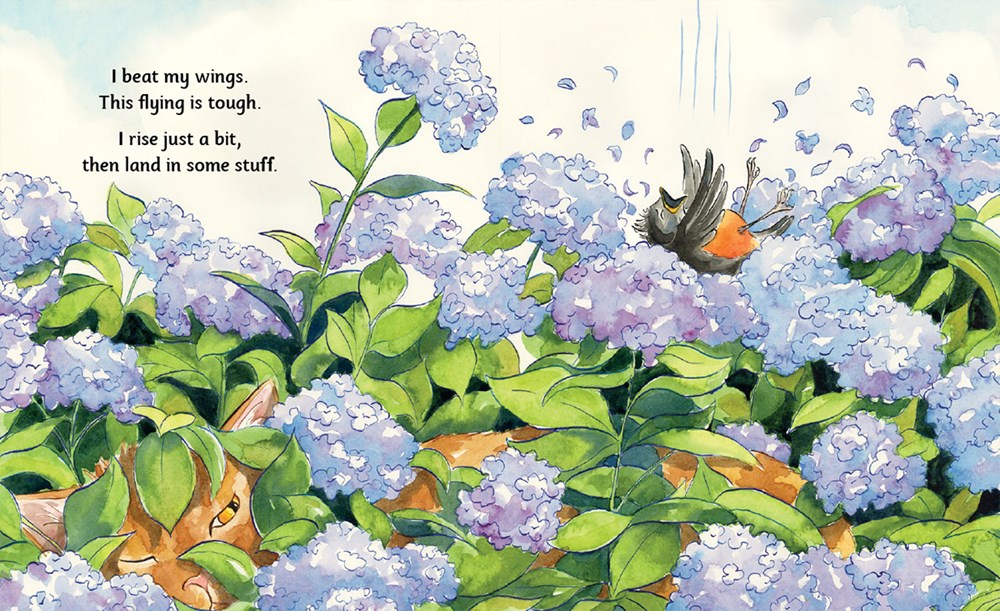
This rhyming story is all about a baby bird who’s ready to take the leap out of the nest and into the air… but maybe brother and sister can go first. The story is all about overcoming fears and persistence; kids will see themselves in the little robin’s excitement to take this next step, and the hesitation of moving out of one’s comfort zone. The kids will chuckle when Momma Bird gives the little bird some help leaving the nest, and parents will smirk in recognition; sometimes, we just have to help nudge our kids out of those comfort zones.

This is an encouraging story that shows kids it’s okay to be nervous, especially when trying something new; it’s perfectly normal to have excitement mixed with being nervous. And, yes, sometimes, we need a little push in the right direction; it’s all worth it, though, when we take off and succeed. Back matter includes a bird Q&A, photos, and STEM activities.

Why Should I Walk? I Can Fly! is a fun story about stretching one’s boundaries, trying new things, and growing up. It’s a good STEM storytime pick.

Posted in picture books, Preschool Reads, Toddler Reads

Tiger Days: Let the animals be your guide to feelings!

Tiger Days: A Book of Feelings, by M.H. Clark/Illustrated by Anna Hurley, (March 2019, Compendium), $16.95, ISBN: 978-1-946873-41-5

Ages 3-6

Tiger Days helps kids understand their emotions, and how to describe their feelings, by using animals to illustrate them. Ever feel like a rhino? So stubborn, no one can move you or change your mind? How about a silly monkey, all wiggly arms and legs, full of mischief and fun? Each spread is vividly colored, featuring a different animal, and characteristics of that animal that map to different moods. The background color of each page adds to the feel of each feeling; bright greens and yellows for happy rabbits and monkeys, who play across the pages; soft purple for a shy turtle; red for an angry bull. Each drawing is boldly lined and bright, popping off the page; fonts are capitalized to emphasize key words.

Tiger Days also lets kids know that their feelings are normal. No feelings are presented as “good” or “bad”; they just are, and this is how they can make people feel. I’d easily add this to one of my storytimes, including a yoga storytime, where I use animal poses. The kids’ favorite one tends to be the Lion Pose, where they get to open their mouths wide and roar. Linking feelings to mindfulness is a great way to help kids understand their feelings and be present for them, allowing them to describe and name what’s going on and furthering communication. Encourage your storytime kids roar, stamp the ground, or curl into their shells to describe different feelings! This would made a good time to break out some emoji flash cards, too; let the kids color the different faces and match them to animals mentioned in the book.

Tiger Days is a good book to have in your bookshelf, especially when you’re working with kids who are learning not only how to communicate with you, but to put words to things happening within themselves.


Posted in picture books, Preschool Reads

Dream Big: Be like the Marshmallow!

Most Marshmallows, by Rowboat Watkins, (Apr. 2019, Chronicle Books), $16.99, ISBN: 9781452159591

Ages 3-6

Did you ever consider the marshmallow? Well, Rowboat Watkins has, and the discoveries are pretty inspiring. Marshmallows, it turns out, are a lot like we are: they’re born to loving parents, live in houses and apartment buildings, and do a lot of the same things we do: they go to school, they celebrate birthdays, and they watch TV. BUT, did you know that some marshmallows know that ALL marshmallows can secretly do anything, including fly spaceships or scale mountains? What if we can, too?

Most Marshmallows is an absolutely adorable book with an uplifting message for readers. Illustrated with line drawings and real marshmallows, the cute level is through the roof as we see fluffy white marshmallows with adorable facial expressions sitting at family dinners, boarding school buses, and rocking little furniture, including tiny bookshelves and table settings. The text encourages kids to dream big by illustrating all the “normal” things marshmallows do, which happen to be the same things we humans do. Absolute fun, absolutely adorable, and absolutely perfect for storytime and anytime. Get this one on your shelves.

Posted in picture books, Preschool Reads

Friendship has been around since the beginning: Cavekid Birthday

Cavekid Birthday, by Cathy Breisacher/Illustrated by Roland Garrigue, (March 2019, Charlesbridge), $16.99, ISBN: 9781580898768

Ages 4-8

Caveboy and Cavegirl are best friends, born on the same day in side by side caves. Caveboy loves rocks, while Cavegirl enjoys working with tools and painting on cave walls. One birthday, each wants to give the other a gift, but what to get? They each visit Caveman’s Collectibles, separately, and find the perfect gifts. Caveboy trades his rock collection to get a box for Cavegirl to put her tools and paintbrushes in; Cavegirl trades her tools and paintbrushes to get a box for Caveboy to store his rock collection. When they exchange gifts, they figure out ways to put their new gifts – and existing talents – to work.

An updated, kids’ version of O’Henry’s The Gift of the Magi, Cavekid Birthday is a story about friendship, and it’s a story about creative thinking. Caveboy and Cavegirl’s friendship means so much to the other that they’re willing to trade their prized possessions away to get each other the perfect gift – and once they have those perfect gifts, they put them to creative use. But as they start to miss their rock and tool collections, they use their creative talents in another way in order to barter and get them back. Cavekid Birthday has a message about resourcefulness that encourages kids to think outside… well, the box.

The cartoon artwork is mostly earth-toned, with tonal greens and browns, and bright yellows and oranges that perk up the landscape. The characters are expressive and cute, and will keep readers interested. The storytelling leaves room for discussion throughout; ask the kids what they predict will happen when each Cavekid goes to the store, and what will happen when they unwrap each other’s gifts. A nice add to storytime collections.

Posted in picture books

Left-handers: This is a secret society worth knowing about!

Anya’s Secret Society, by Yevgenia Nayberg, (March 2019, Charlesbridge), $17.99, ISBN: 9781580898300

Ages 4-8

Anya is a young Russian girl who favors her left hand from an early age. She loves to create; she draws and paints, but she’s under constant scrutiny over her left-handedness. Even her neighbors correct her, saying things like, “The right hand is the right hand!” Under social and school pressure, Anya begins using her right hand to write, but she just can’t create with that hand. Her creativity, her art, flows from her left hand. Anya discovers a secret world of left-handed creators, including Leonardo DaVinci and Michaelangelo; she imagines herself part of their secret society, wearing masks to hide their identities as they flout conformity and use that sinister hand. When Anya’s family moves to America, though, she discovers that there is no stigma about which hand to use. She uses her left hand in public, and no one even notices! Her teacher doesn’t correct her! Anya is, at last, free to create.

Anya’s Secret Society uses beautiful language to communicate the desire to create art while lamenting the crushing conformity that threatens to squelch it. Anya draws, left-handed, in secret, and the text reveals that “…the right hand could not draw. Only the left hand could draw”, and “The right hand took care of the world outside Anya. The left hand took care of the world inside Anya”.

With mixed media artwork that’s reminiscent of Pamela Zagarenski, Anya’s Secret Society has bold, bright colors mixed with earth tones to illustrate Anya’s bright spirit; her “secret society” meetings take on a clandestine, almost candelit look. An author’s note discusses the author/illustrator’s own childhood, growing up left-handed in Russia. Anya’s Secret Society is good for picture book collections and carries a nice message of empowerment.