Posted in Intermediate, Middle Grade, Non-fiction, Non-Fiction

To Infinity and Beyond! The Day the Universe Exploded My Head

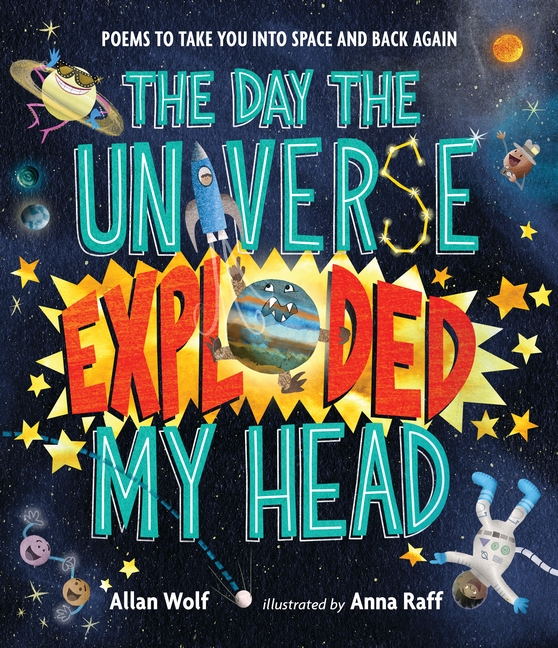
The Day the Universe Exploded My Head: Poems to Take You Into Space and Back Again, by Allan Wolf/Illustrated by Anna Raff, (March 2019, Candlewick Press), $17.99, ISBN: 9780763680251

Ages 7-12

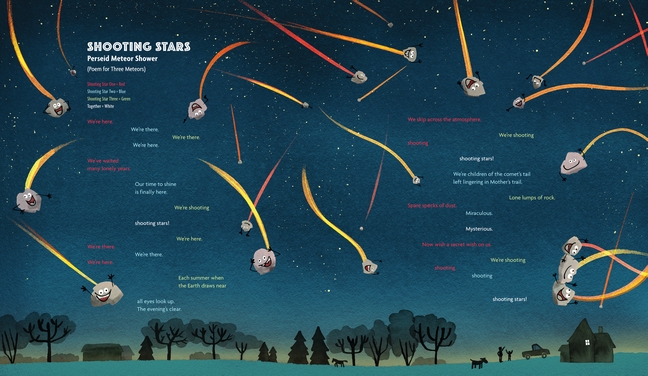
This is one of the best kids’ poetry books I’ve come across in a while! The Day the Universe Exploded My Head contains 29 poems, all about the wonder of space. Each planet gets a poem here, as do the outliers (Planet X, Charon, Pluto). There are nods to pivotal moments in space history (the 2013 meteorite over Cheylabinsk, Sputnik) natural phenomena (black holes, lunar and solar eclipses), and notable scientists (Ivan Ivanovich, Children of Astronomy). The poems are upbeat, factual, and, quite often, very funny, as with the poem, “Planet X”: “I’m one part supercilious/Another part mysterious/One part you-can’t-be-serious/They call me Planet X”. There are a wealth of poems for readers to read out loud, too: “Going the Distance” is a rap for two voices, color-coded for each speaker. The artwork: digitally assembled color collage, made from sumi ink washes, salt, pen, and pencil, explode off the page, with texture that will entice kids to see the swirls of light curling off a star and a fuzzy rings of moons around Neptune.

Non-fiction that informs and excites is aces with me, and The Day the Universe Exploded My Head is a great way to kick off and conclude a space storytime, a STEM program, or a fun read-aloud. Have some printable space coloring sheets ready to hand out, or check out illustrator Anna Raff’s webpage for super-cool activities (I like the Little Card printable for a library visit). Author Allan Wolf’s webpage also has activities, including poetry jokes.

The Day the Universe Exploded My Head has starred reviews from Kirkus and Booklist.


Posted in picture books, Preschool Reads

When Mom and Dad say no, Baby takes matters into his own hands… Baby’s First Bank Heist

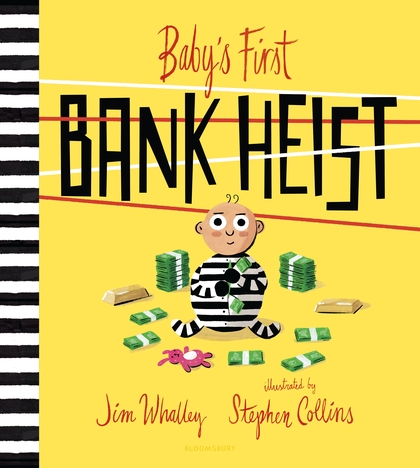
Baby’s First Bank Heist, by Jim Whalley/Illustrated by Stephen Collins, (March 2019, Bloomsbury), $17.99, ISBN: 9781547600625

Ages 3-7

Baby Frank is a cute little baby who loves animals and would love to have a pet, but Mom and Dad each say no. This doesn’t sit well with Baby Frank, who devises his own moneymaking scheme: he’s going to rob a bank. Hey, he’s already rocking black and white striped pajamas! He’s little, so he can crawl his way through laser beam alarm systems and past dozing guards. One Frank starts raking in the cash, he amasses quite the animal collection – but how much longer can he hide things from his parents? Frank’s cover is blown, and his parents devise a suitably adorable plan to repay the banks and put Frank to work.

Originally published in the UK, Baby’s First Bank Heist is a cute rhyming story that preschoolers and kindergartners will enjoy; they’ll appreciate Frank’s taking matters into his own hands, and they’ll get a laugh out of the different ways he tries to hide his growing menagerie from his parents. Cartoony gouache, ink, and Photoshop artwork is appealing, and makes for a fun pet storytime. Put some stuffed animals around the room and let the kids gather a few wild pets of their own.

YouthLitReviews, Imagination Soup, and Pre-Kinders all have really good pet picture book lists – add some to your pet storytime! Boss Baby is a good readalike, for stories about babies who are more than meets the eye. I also like Crackerjack Jack for a fun rhyming story about a robber waylaid by his duck. Hey… he kinda looks like Frank, come to think of it…

Posted in Fantasy, Fiction, Middle Grade, Realistic Fiction, Tween Reads

Middle Grade Quick Takes: The White Tower and Lions and Liars

Two more from the great TBR read-down! I’ve got some realistic fiction and some dark(ish) fantasy for you, right here!

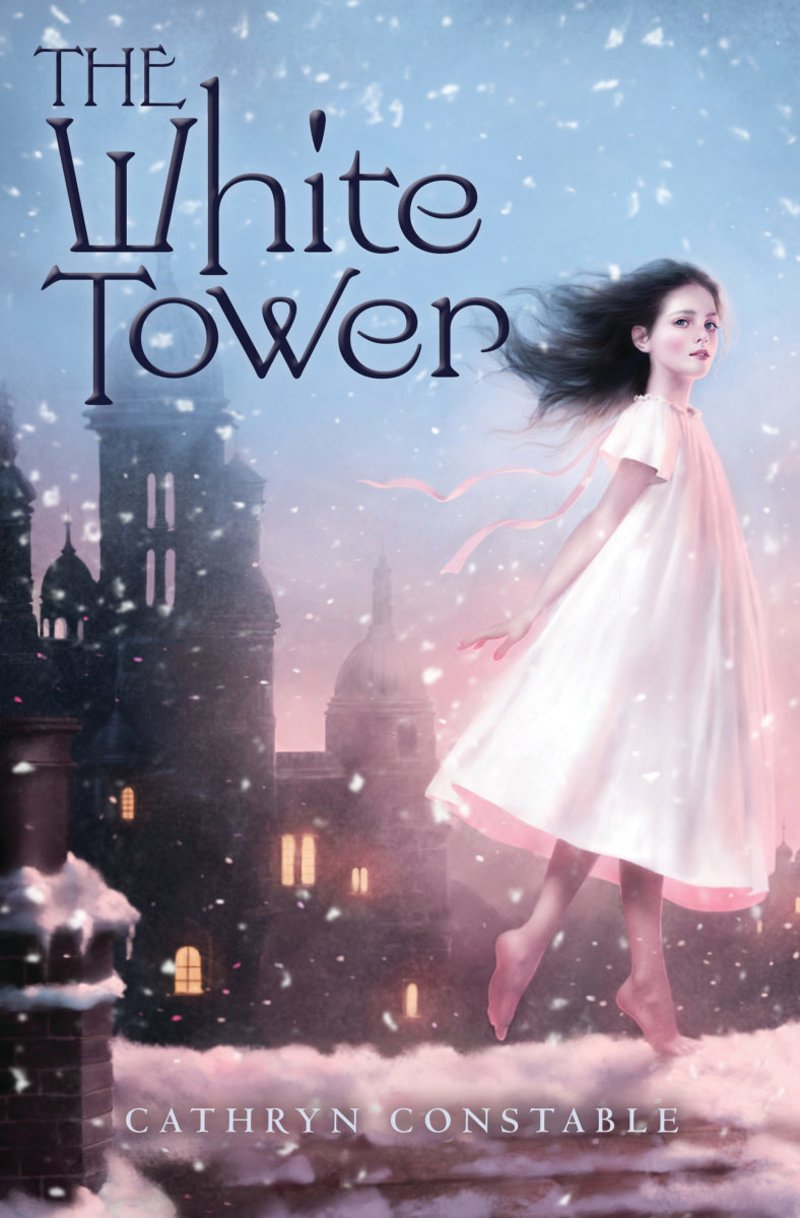
The White Tower, by Cathryn Constable, (Sept. 2017, Chicken House/Scholastic), $16.99, ISBN: 978-1-338-15746-8

Ages 8-12

Livy is a 12-year-old English girl who is still reeling from the recent death of her best friend is uprooted when her father accepts a prestigious job as the librarian at Temple College: a position that comes with a spot in the school for Livy and a new home for the family. Livy discovers the stone Sentinels – angels – on the roof of the school are tied into the school’s history, and that the school’s founder and her possible ancestor, Peter Burgess, was consumed with studies on gravity and flight. As Livy tries to fit in at school, she also finds herself drawn to the Sentinels and their secrets; a mystery between the school’s previous librarian, the current headmistress, and Peter Burgess moves the story forward.

Character development takes a back seat to the many subplots, leading to an at-times confusing story that has strong fantastic elements that I would have liked to explore more. Livy is a developing character who would have benefitted more from a stronger subplot on grief and loss, and the main plot – the Burgess mystery – being more defined, less stretched out between characters. If you have strong fantasy readers who liked Constable’s previous book, The Wolf Princess, this may work for them.


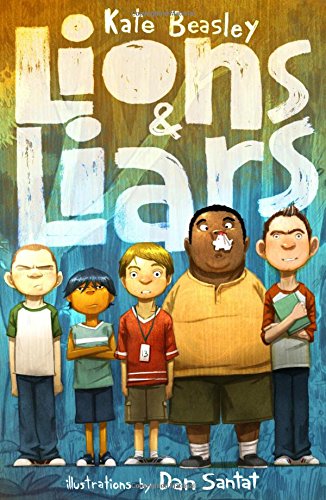
Lions & Liars, by Kate Beasley/Illustrated by Dan Santat, (June 2018, Farrar Straus Giroux), $16.99, ISBN: 978-0-374-30263-4

Ages 8-12

This case of mistaken identity at a summer camp for unruly kids is at times, hilarious; at times, touching. Fifth grader Frederick Frederickson is not the big kid on campus. He’s not even really the small kid on campus. According to his friend Raj’s “food-chain theory about life”, there are lions, like Devin; the big kid on campus. There are gazelles, the kids who are bullied by the lions. There are meerkats, who watch the world go by, and then, there are fleas, who live on the butts of the meerkats. According to Raj, Frederick is a flea. This doesn’t sit well with Frederick; things only get worse when his long-awaited family vacation is canceled because of a Category 5 hurricane threat. After his friends pull a mean prank on Frederick at a birthday party, he’s had enough, and pushes back. The only problem is, pushing back ends up with him stuck on a boat that leaves him on the shores of Camp Omagoshee, a summer camp for troubled kids. It gets worse when he’s mistaken for camper Dashiell Blackwood, whose name tag is the only one left. Assuming Dash’s identity, he finds himself in the big leagues for a change: Dash is legendary for being bad, but Frederick? He tries to convince his cabin mates, Nosebleed, Specs, The Professor, and Ant Bite, that he is every bit as tough as they come, but even Frederick isn’t sure if he’s going to be able to back up Dash’s fame. When the camp is cleared out when the hurricane starts heading in their direction, Frederick and his new group learn that they have to work together to stay safe, and maybe they’ll even become friends.

At its heart, Lions & Liars is about cliques and labels. The mistaken identity plot makes for some laugh-out loud moments, especially as Frederick tries to live up to Dashiell Blackwood’s infamous camp legend, but there’s also the stress of living a lie and the risk of being discovered. What happens when real friendships are made on the foundation of lies? The characters are nicely developed, and go beyond their “bad kid” label to show readers what constitutes a “troublesome child” in others’ eyes. Dan Santat’s black and white illustrations will keep readers turning pages. Kate Beasley has a great post about the labels kids get stuck with on the book on Nerdy Book Club.

Posted in Fiction, Intermediate, Realistic Fiction

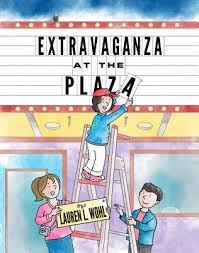
Extravaganza at the Plaza and a word from author Lauren L. Wohl

Extravaganza at the Plaza, by Lauren L. Wohl/Illustrated by Mark Tuchman, (Aug. 2018, Persnickety Press), $14.95, ISBN: 9781943978311

Ages 7-11

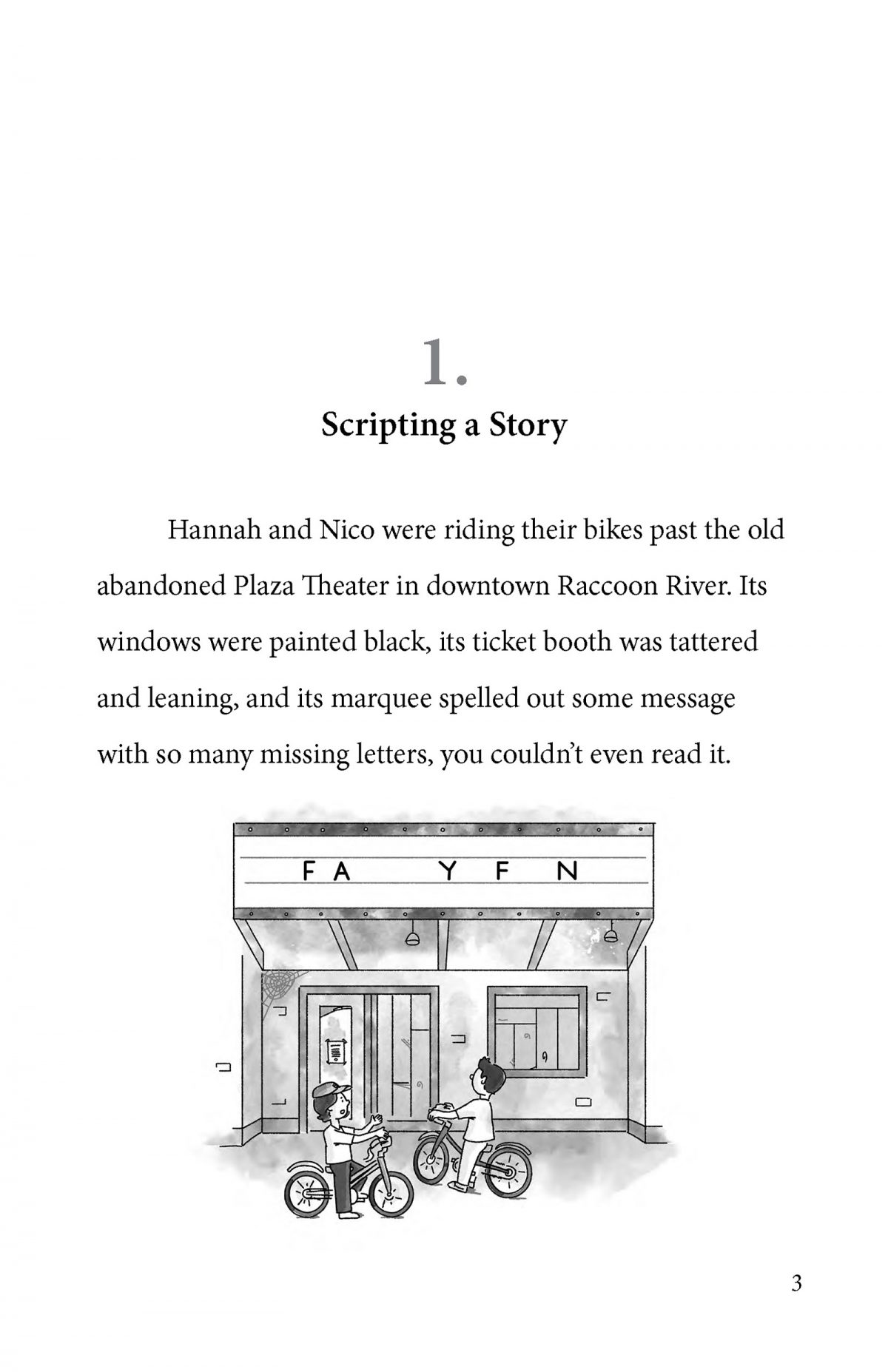
Third graders Hannah, and her best friend, Nico, walk by an abandoned theater in their neighborhood and decide it’s time to take action. Their town needs a good theater, after all: there are graduations and school concerts to be held, and everyone’s tired of traveling to nearby towns to see movies. There is a lot of work to be done, but Hannah is determined to make things happen! This companion to 2017’s Blueberry Bonanza is an upbeat story of how a community comes together with a goal in mind: to rehabilitate a public space!

Extravaganza is a good choice for middle graders. Hannah and Nico, along with their local mayor, have a lot to teach kids about taking action. The first place Hannah goes when she starts on her mission: the library! Her local librarian helps her look up the building’s owner and construction details, plus local history regarding the building. Hannah uses this information to learn what can be done, who to speak to, and how to get more help on board for her idea. Hannah is also a sympathetic character; she wants to make this her own pet project and struggles with so many people being part of it – kids will appreciate the feeling of wanting to work on a passion project, and the potential frustration of having someone else take the credit for their work. There’s discussions of fundraising, donor fatigue (when Hannah suggests sending postcards or calling people about donating, her mother steps in to gently nix that), and the necessities of renovating a building – find the owner; get it inspected; hire the right professionals – and, most importantly, the planning process for each task! Black and white illustrations throughout add a human face to the story, and the big ending will have kids wondering what they could do to make positive change in their own neighborhoods.

Lauren L. Wohl writes good stories about kids making the difference in their neighborhoods. Her Raccoon River Kids have started their own businesses (Blueberry Bonanza); motivated an entire town to come together to renovate a public space (Extravaganza at the Plaza), and, later this year, they’ll be starting a pet showcase to find homes for homeless pets (Zooapalooza). The Raccoon River books are a great precursor to books like The Donut Fix by Jessie Janowitz.


And now, a note from author Lauren L. Wohl!

MY FAVORITE LIBRARY MOMENTS

I grew up in Brooklynand believe me when I tell you, it was not the cool place it is today.  It was just home to many working familiesmade up of neighborhoods which were small and close and often built on shared values and experiences.

There was a branch of the Brooklyn Public Library eight blocks from home. For as long as I can remember, my dad and I walked to the library every Saturday morning. At each visit, he would borrow one of the color fairy tale collections by Andrew Lang. I dont recall how many there were, but I can still picture The Blue Fairy Book,The Purple Fairy Book, and The Rainbow Fairy Book. During the week that followed, he or my mom would read one whole story every night. We had favorites in each color, and we knew that evenif tonights story wasnt one of those, tomorrows or the next days would be.  

My dad also borrowed a book for himself for subwayreading back and forth to his job in Manhattan. Itoo, would pick a book to read on my own. 

The next week, we would return our books to the librarian who was always interested in what I liked and what I didnt. We engaged in conversations about the books(I thought she had read EVERYTHING in the library.). She took my opinions seriously. That interest and that respect mattered the world to me.

By the time I was in fourth grade, the librarian started to put aside three books she picked out just for me. She knew what my preferences were from the many book discussions we had hadShe picked winners just about every timeI felt so specially treated.

When I went through a period of reading books that she didnt thinkworthy, she would make sure the second selection of that Saturday met her standard. Slowly I developed skills to find books that challenged me and pleased me; humor that made me giggle; dramas that wrapped me inside them; nonfiction that answered my questions; and family and friend stories that warmed my heart.

When the city decided it was time to develop the area where our library stood, they moved the branch closer to our house. It was easier, sure, but I missed the long walks with my dad. I was in junior high by then, old enough to walk to this new location on my own.  But I missed that old library; I still do. Its impact was long-lasting, and many years later I know those Saturday mornings were a part of my decision to go to graduate school in library science.

When I finally completed my degree, my husband, young son and I took a vacation to Washington DC to celebrate. I wanted to explore thLibrary of Congress.

My husband called ahead, so that when I showed up, the library was ready for me with a special brand-new librarian tour. I saw rooms the public didnt usually see. I touched history; it surrounded me. Every step was thrilling, every detail memorable. Right then was when I knew I had made the right decision.

Posted in picture books, Preschool Reads

Babymoon celebrates that magical bonding time with a new baby

Babymoon, by Hayley Barrett/Illustrated by Juana Martinez-Neal, (March 2019, Candlewick Press), $16.99, ISBN: 9780763688523

Ages 3-7

“We’ll invite the world in soon, but for now – we’re on our babymoon”.

When new parents bring home their little bundle for the first time, there’s usually a line of well-wishers waiting to get in the door and visit, cuddle, and gush over the new arrival(s), but those days are also a big adjustment, too. Sometimes, you just want – need – some more time in that intimate bubble; more time to cuddle, gaze, and enjoy your new family, before letting the outside world in. It’s a time many refer to as The Babymoon, and Hayley Barrett and Juana Martinez-Neal have come together to create a gorgeous book celebrating that magical time.

Told in a gentle rhyme, this story of a mom, dad, and new baby is just gorgeous. It’s a celebration of discovery as a family; of “delighting in each small surprise”; of cuddly naps; of nursing; of lullabies and yawns; of connecting and figuring out one another. I adore award-winning illustrator Juana Martinez-Neal’s artwork – her book, Alma, is a beautiful look at the origin of a child’s name, and here, she uses warmly colored, soft, acrylic, colored pencil, and graphite artwork on handmade textured paper to capture the sheer wonder – and sleepiness, and even confusion – of this exquisite moment in time. Ms. Martinez-Neal creates illustrations that speak to readers; reaching up through the page and drawing them in, heart-first, to the story.

Babymoon is a lovely read-aloud and gift to new siblings, and assures kids (and adults alike) that it’s okay to keep the world outside for just a little bit longer, as they navigate this new little person. It’s a perfect baby shower gift, inviting new parents and parents-to-be to relax and enjoy this new time: everyone else can, and will, wait.

Babymoon has a starred review from Booklist.

Posted in picture books

Year One with Type One works on demystifying Type 1 diabetes

Year One with Type One: A True Story of a Boy with Type 1 Diabetes, by Mike Suarez/Illustrated by Olsi Tola, (Dec. 2018, Independently published), $11.99, ISBN: 978-1730703492

Ages 4-7

Inspired by the author’s son, Andrew, this rhyming story takes some of the mystery out of Type 1 diabetes (T1D) for children and families. Beginning with the big symptoms: excessive thirst and bathroom use – Andrew’s parents take him to the doctor and discover that he has Type 1 diabetes. But what does that mean? Author Mike Suarez explains a big word in easier to understand language. He soothes parents’ potential worries, too – Andrew’s parents wonder if they allowed their son too many sweets, but the medical staff quickly lets them know that Type 1 diabetes is nobody’s fault: Andrew’s pancreas has stopped producing insulin, but there are ways to live a happy, healthy, active life. Andrew’s family gets on board with technology, using apps, alarms, and emails to keep up to date on his blood sugar and keep his medical staff notified. He has healthy food, labeled with nutritional info (10g sugar each or a juice box and for a yogurt) and an emergency kit for when his blood sugar drops (lollipops). Andrew and his family also learn about the supportive community they’ve become part of: there are T1D camps and events, where kids and families can come together.  Andrew says it best when he sums up his first year with Type 1: “Diabetes is work from shots to blood samples/But there’s still time for fun/There’s lots of examples”.

The cartoony artwork is kid-friendly and helps mitigate some of the scary feelings a diagnosis may come with. The hospital is depicted as a bright, friendly place, with silly roommates, visiting therapy dogs, and giant fish tanks to see. The page with Andrew’s foods is laid out clearly, so families can see, and perhaps emulate, packing lunchboxes, travel snacks, and emergency sweets. A handwritten thank you note from the real-life Andrew concludes the story.

I loved seeing Andrew active and having fun. My niece was diagnosed with T1D as a preschooler; she’s now a junior in high school and a competitive gymnast. Going to a T1D camp was a fantastic experience for her. I’m so proud of her, I could burst. She – and her family – have come a long way from those first scary days. Books like Year One with Type One go a long way in dispelling myths and giving families a starting point after a diagnosis. It’s important to read these stories to all kids, too, so there’s no unknown to fear.

There are some good T1D resources online for kids and families. The American Diabetes Association has links to information about food and fitness, advocacy, awareness programs, and a chat line. They also have education resources for grades K-6 and 7-12. Endocrine Web has information for parents of children’s with T1D, including how to manage sick days, meal planning, and working with schools. There are also a number of e-alerts available for subscription.

Posted in picture books

Blog Tour: You Can Call Me Katelyn

Ever wish you could change your name? A young girl decides to do exactly that in Keri T. Collins’s new picture book, You Can Call Me Katelyn.


You Can Call Me Katelyn, by Keri T. Collins/Illustrated by Marcia Adams Ho, (May 2019, Purple Butterfly Press),
$19.99, ISBN: 978-1948604185
Ages 5-7

Inspired by Collins’s daughter and told in the first person from Katelyn’s point of view, readers learn that Katelyn was never thrilled with her name. Her parents didn’t even have a first named picked out for her in the hospital! Her parents settled on Carly, which she is NOT a fan of – and even less of a fan when she discovers that people can’t spell her name right. Katelyn decides to take charge of her happiness, which means changing her name: she likes Katelyn; a mashup of her two best friends’ names, and starts telling everyone around her to call her by her chosen name. Don’t want to call her Katelyn? She doesn’t want to answer you. She’s upbeat and enthusiastic, and lets readers know that all it takes is some determination and a little bit of sparkle to make the world a better place.

At some point, most kids aren’t in love with their names. It’s not like we have a choice when we’re born, after all. You Can Call Me Katelyn delivers a big message in a little story: overcome your fear and make changes where you can. It’s an inspiring message, and I’m sure this will be a popular read-aloud. I enjoyed the bigger message in this story – overcome fear and look within yourself for the power to effect change – and the author’s tips, available at the end of the book, for taking action and moving past fear. There’s a crown coloring sheet that kids can cut out and color; if you don’t want to damage your book, you can receive a coloring sheet via email at the author’s website.

The artwork is colorful and the pages are loaded with activity, always giving readers somewhere to look. There are humorous moments that kids will get a kick out of: Katelyn’s mother, holding her new baby in the hospital, covered with sticky notes scribbled over with baby names; baby Carly’s pacifier popping out of her outraged mouth as she sees her name misspelled on the sign welcoming her home from the hospital.

Pair this with some books and activities on the importance of names. Brightly has a great list and ideas here.


Posted in Intermediate, Non-Fiction, picture books

Picture Book Nonfiction in May: Spirit Bears and Teddy Bears

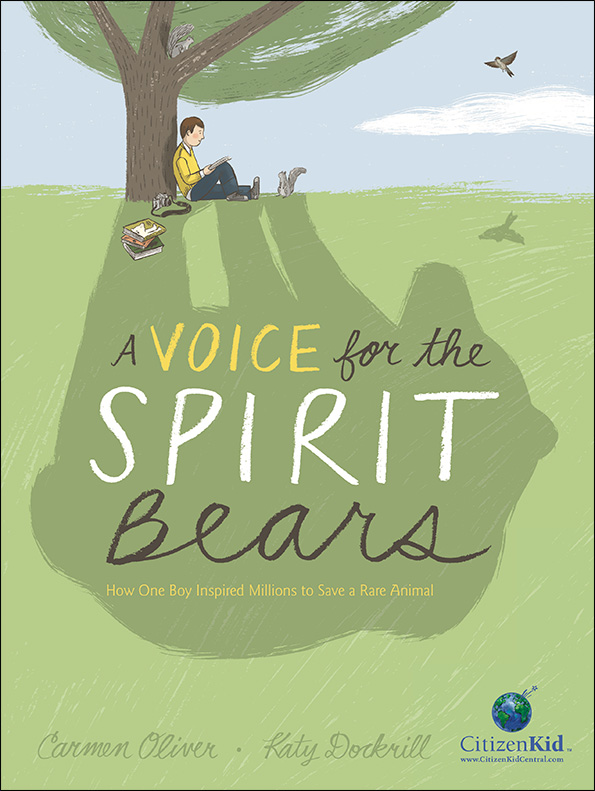
A Voice for the Spirit Bears: How One Boy Inspired Millions to Save a Rare Animal, by Carmen Oliver/Illustrated by Katy Dockrill, (May 2019, Kids Can Press/CitizenKid), $18.99, ISBN: 978-1-77138-979-2

Ages 7-10

Simon Jackson doesn’t quite fit in with the other kids as a child; he was bullied over his stutter, and found himself most at home in the woods, exploring, photographing, and learning about wildlife. As a teen, he found himself fascinated by a rare subspecies of black bear called a Spirit Bear and became an advocate and activist for the bears when their habitats were threatened with deforestation. Jackson founded the Spirit Bear Coalition, met Dr. Jane Goodall, and hiked the Great Bear Rainforest, always using his activism to educate others and advocate for the Spirit Bears. A Voice for Spirit Bears tells Jackson’s story, and shows kids that one is never too young to advocate for change. The book is an inspiring call to action for young activists (suggest a letter-writing exercise for a cause they believe in!). I would have liked to see a little more on the indigenous T’simshian people, for whom the Spirit Bear is sacred, but all in all, A Voice for Spirit Bears is a good biography on a young activist, with lovely, muted artwork. There are discussions to be had on overcoming obstacles, environmentalism and conservation, and activism, and would be a good STEM read-aloud. Check out the downloadable educator guide for discussion questions and an activity.

The Spirit Bear Coalition concluded its mission in 2014, after 20 years of advocacy. Their website is still active and offers education and information.


Teddy: The Remarkable Tale of a President, a Cartoonist, a Toymaker and a Bear, by James Sage/Illustrated by Lisk Feng, (May 2019, Kids Can Press), $18.99, ISBN: 9781771387958

Ages 6-10

Teddy brings together the story of the teddy bear in three parts. First, we have the legend: President Theodore Roosevelt refused to kill a “scruffy, no-account cub” while hunting. This story spread, and the Washington Post ran a political cartoon by Clifford Berryman, entitled, “Drawing the Line in Mississippi“, which led to husband-and-wife toymakers Morris and Rose Michtom creating a bear doll to honor “the President’s big warm heart”. They received permission from President Roosevelt to feature “Teddy’s Bears” in their shop, and an iconic toy was born. The book tracks the evolution of the teddy bear from those first bears, stuffed with wood shavings and with sewed on buttons for eyes, through today and notes how the teddy bear endures. It’s a happy, warm story, and the digital illustrations lend a realistic yet warmly colored feel to the tale. An author’s note mentions the differing versions of the Teddy Roosevelt story. It’s a cute book to have in your nonfiction collections, and would make a nice display with the Caldecott Medal-winning Finding Winnie.

For readers interested in learning more about Clifford Berryman’s political cartoons, the National Archives has a wonderful Clifford Berryman collection, which includes a great piece featuring Berryman drawing a bear, while a black bear stands next to him. The Theodore Roosevelt Center at Dickinson State University has an interesting blog entry on the origin of the teddy bear, and a link to Berryman’s artwork in their digital library.

Posted in Preschool Reads, Toddler Reads

To Baa or Not To Baaa… it’s William Sheepspeare’s Wild Bio!

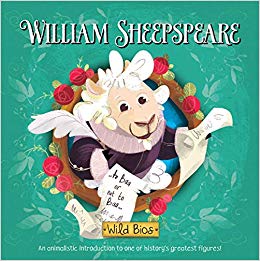
William Sheepspeare (Wild Bios), by Courtney Acampora & Maggie Fischer/Illustrated by Benedetta Capriotti, (Apr. 2019, Silver Dolphin), $7.99, ISBN: 9781684126194

Ages 2-5

The latest in the Wild Bios board book series introduces readers to William Shakes- I mean, William Sheepspeare, the Baa-rd of Avon. Like Frida Catlo, the first book in the series, William Sheepspeare uses animal-related puns to tell the story of playwright William Shakespeare: “William Sheepspeare wrote over thirty plays-histories, comedies, ram-ances, even shearious tragedies”. The authors even pun the titles of several of his play, including “Hamblet” and “The Taming of the Ewe”, and notes historical details like men taking on women’s roles: “…no ewes acted. All of the roles were performed by rams. The rams would perform the parts of the ewes, dressed in fancy fleeces and wooly wigs“. Sheep-related words are highlighted and in bold yellow font to stand out, and the artwork is cartoonish and charming. Most of this is going to go over little ones’ heads, but for preschoolers and kindergarteners, it’s a cute story about a sheep who writes plays. There’s a lot of text for a board book, and I lost my little ones during a storytime; I had to pick up the pace to get them back again. If you’re reading during a toddler time, you can cut it down to a sentence or two per page, and they’ll love it. I do like the Wild Bios, and want to continue getting the set to keep for my preschoolers.

Posted in Early Reader, Fiction, Fiction, Intermediate

More Nocturnals! Who will win The Chestnut Challenge?

The Nocturnals: The Chestnut Challenge, by Tracey Hecht/Illustrated by Josie Yee, (April 2019, Fabled Films Press), $12.99, ISBN: 978-1-944020-23-1

Ages 5-7

The latest Nocturnals easy reader is a story about playing fair. Sugar glider Bismark just loses a game of chestnut checkers to Tobin the pangolin, when a chinchilla named Chandler shows up and declares himself a chestnut champion, challining poor Tobin to a game. Tobin just likes to play for fun, but Bismark nudges him into play. Chandler causes distractions that get the group to look elsewhere so he can cheat, but Bismark finally catches him and calls him out! After confessing to cheating because he wanted to win, Tobin gently reminds him that practice makes perfect, and Dawn invites him to play with them as a group. The Chestnut Challenge addresses cheating, but it also looks at being sore losers and sore winners: we see Bismark being a sore loser, and Chandler, when cheating, gloats over his moves. Tobin doesn’t want to be in cutthroat competition, he just wants to have fun; it’s a point we should all be making when we read this with our kiddos. Winning can be fun, but cheating to win isn’t really winning. That said, being gracious and offering someone a second chance is winning, all on its own. (And, naturally, with Bismark keeping an eye out.) Back matter includes an introduction to each of the core group of Nocturnals, plus a fun fact about chestnuts.

I’m a dedicated fan of this series. Tracey Hecht has a way of reaching kids by using adorable animals with distinctive personalities to get to the heart of real-life situations kids find themselves coping with, and how to start discussions about those situations. These books are a great go-to for us grown-ups, too. The Nocturnals World website has great, free downloadables, including activity kids, coloring sheets and games, videos, and educational resources.