I know it’s been quiet on MomReadIt, but you know… holidays! I hope everyone is enjoying the holiday season, and let’s look forward to a Happy, Healthy 2020. Thanks for reading.

I know it’s been quiet on MomReadIt, but you know… holidays! I hope everyone is enjoying the holiday season, and let’s look forward to a Happy, Healthy 2020. Thanks for reading.
 Odd Dog Out, by Rob Biddulph, (Dec. 2019, HarperCollins), $17.99, ISBN: 9780062367266
Ages 3-7
In a society where all dogs wants to fit in, one dog stands out. The athletes wear stripes; the businessdogs wear suits and derby hats; the scouts and sailors wear their uniforms; our Odd Dog Out, sporting a multicolored knit cap and matching scarf. No matter what she tries to do, though, she just doesn’t fit in, so she strikes out for somewhere more amenable. Finding Fabulous Doggywood, she discovers dogs that rock her style! But she notices another dog who goes against the grain, and realizes that there’s nothing wrong with being different. She returns home to a warm reception, and that a little of her uniqueness has rubbed off on the populace: more dogs are starting to discover their own individual style, too.
This rhyming story carries a sweet message about being yourself and embracing standing out rather than blending in; it also shows how even the smallest change can work in a group, encouraging tolerance and transformation. A sweet story, Adorable digital weiner dog art, and bold, bright colors, and this is a cute book for storytime.
Originally released in the UK in 2016, Odd Dog Out has been shortlisted for a host of awards, including the Independent Booksellers Award. It’s also received the Bishop’s Stortford College Festival of Literature Picture Book Award and the UK Literacy Association’s Student Shadowers’ Vote Book Award. Rob Biddulph’s author page includes free downloadable activities and coloring sheets. U.S. publisher HarperCollins has a downloadable coloring sheet, too! Read and display with Peter Brown’s Mr. Tiger Goes Wild for another story about an animal who sees things differently.
NatGeo Kids has two digest-sized, chunky little books loaded with fun facts and pictures that will be perfect for a stocking stuffer or last-minute gift!
 Brain Candy: Seriously Sweet Facts to Satisfy Your Curiosity, by National Geographic,
(Oct. 2019, National Geographic Kids), $8.99, ISBN: 9781426334375
Ages 7-13
Brain Candy is so much fun because it’s loaded with facts, but it also connects facts together. Each spread presents one big fact – “A million is a lot”, for instance – and then connects other facts to that main fact: “A million days ago, the first Olympics were taking place in Ancient Greece”; “A million ants weight as much as one human”; “If you live a million hours, you will be 114 years old”. Taste buds, birthdays, pizza, animals, and trash are only a few of the subjects covered in this jam-packed book that will give kids endless things to think about, and tons of fun facts to spout off during dinner time. These little digest-sized books are great to stick in your bag, and they’re good for hours of entertainment. My second grader has a growing collection of them that he loves; he’ll just slip one off his shelf, curl up on the couch, and start reading them, because the facts are presented in bright, bold color and they’re easily read. Fun fact: One of my library kids once stood next to me with a NatGeo Kids joke book and read jokes to me for 30 minutes. He loved it, I had a good laugh, and other kids immediately wanted in on where he found the book. Reading is contagious!

 Surprising Stories About Everyday Stuff, by Stephanie Warren Drimmer,
(Sept. 2019, National Geographic Kids), $9.99, ISBN: 9781426335297
Ages 7-13
Ever wonder how blue jeans became so popular? Or where soap came from? Surprising Stories is all about how things we use everyday found their ways into our homes and our lives. Organized into 10 chapters, readers can see where the most popular toys, food, fashion, tools, household objects, holidays, and more came to be. Each chapter has a spotlight on fads throughout the years, and there are loads of callouts with even more quick facts. You know that Slinky jingle? It’s the longest-running jingle in the history of TV advertising. Cowboy boots have heels for guys and gals alike, because those heels keep a cowpoke’s foot from slipping through the stirrups. Once again, NatGeo Kids creates a quick-take book loaded with absolute fun.

 Dog Driven, by Terry Lynn Johnson, (Dec. 2019, HMH Books), $16.99, ISBN: 978-1328551597
Ages 9-13
Fourteen-year-old McKenna Barney is a musher: a dogsled racer, and she’s gearing up for The Great Superior Mail Run; a 3-day, 354-kilometer race that takes racers from Sault Ste. Marie, Ontario to White River, Ontario. The race is a tribute to the pioneer mail carriers who delivered mail along the shore of Lake Superior, and each participant is carrying a bag of mail that will receive special commemorative stamps. For McKenna’s 8-year-old sister, Emma, it’s the chance to put a spotlight on Stargardt disease, a disease that causes a loss of central vision. Emma has Stargardt’s disease, but what only Emma knows is that McKenna thinks she does, too. McKenna’s vision has started blurring, and she’s experiencing the same symptoms Emma developed at the disease’s onset. McKenna, determined to stay independent after seeing the strain Emma’s condition has put on her family, enters the race to deliver her sister’s message and because she doesn’t know if she’ll get to do this again. During the three-day race, she and her dogs are put to the test in brutal weather conditions: owl attacks; bitter cold; snow squalls, and shifting ice.
Dog Driven is SUCH good reading. McKenna emerges as a strong, smart character who you root for through the book. Her burgeoning friendship with fellow musher, Guy (pronounced “Geee”, with a hard G) provides a solid subplot to the story. Their partnership, despite being competitors, is light, fun, and vital to McKenna’s survival in the race and her determination to continue. Letters that our mushers are carrying, plus older letters from Guy’s great-great-grandfather, provide context and further investment in the race outside of the main storyline. Well-thought out characters, a strong survival in the wild story, and Terry Lynn Johnson’s incredible – and readable – knowledge of dogsled racing make this a must-read. Give this to your readers who’ve tackled I Survived and are ready for more; your Hatchet readers, and anyone who enjoys Terry Lynn Johnson other dog books and her Survival Diaries series.
Check out Terry Lynn Johnson’s author page for pictures of her sled dogs (SO CUTE), fun facts, and Survivor Diaries research.
Dog Driven has starred reviews from Kirkus and Booklist.
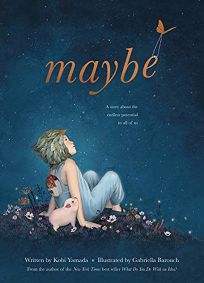
Late-breaking! If you’re still looking for a holiday gift (or a January birthday gift? Three Kings Gift?), HOLD EVERYTHING. Or, even better, hold this adorable plush pig!
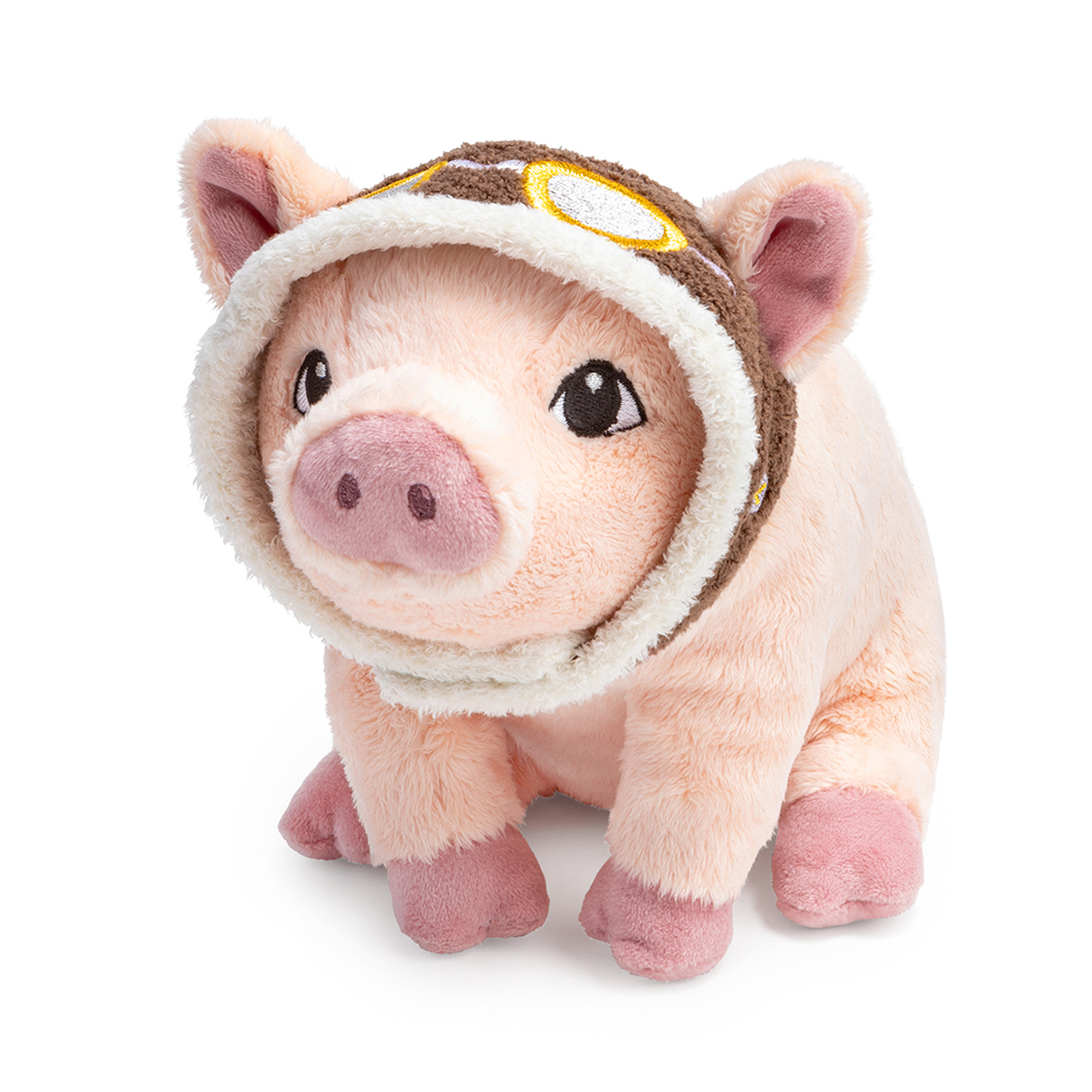 Remember this cutie? This is the pig featured in Kobe Yamada’s latest book, Maybe. Compendium’s released the sweetest little flying pig plush, complete with aviator hat. They were kind enough to send me one, and it is SO SQUISHY SOFT.
The pig is soft, small, and perfect for cuddling while you read Maybe. My second grader and I have personally test-driven the book and plush together in a shared storytime, and we agree. The aviator cap is removable, and hat and plush are machine washable. This little sweetie will stand up to a lot of love, and will go nicely with a copy of Maybe, Charlotte’s Web, or maybe some Steampunk ABC?
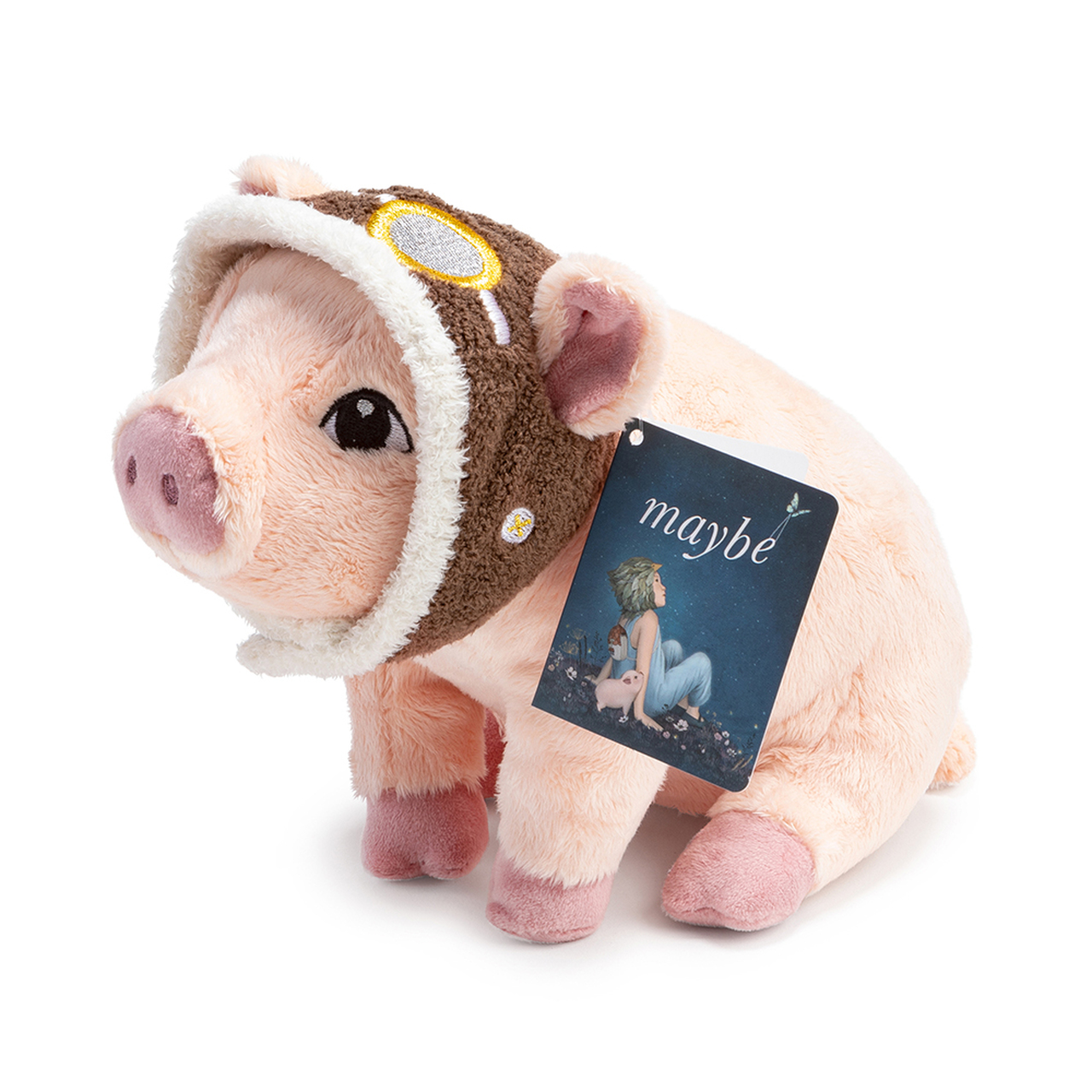 The Flying Pig plush is available at Compendium’s website, or your preferred mass market retailer’s site. Snuggle up with this little one and dream about flying over obstacles into a bright new year!
Seriously, though, here in New York, the weather IS frightful, and I’m getting over a 3-week stint with bronchitis. Luckily for me, I’ve got a yummy mug of hot chocolate and a stack of winter books that let me enjoy a nice, snowy evening… vicariously.
 The Boy and the Bear, by Tracey Corderoy/Illustrated by Sarah Massini,
(Nov. 2019, Nosy Crow), $16.99, ISBN: 9781536208146
Ages 2-5
A lonely boy wishes for a best friend to play with. A shy bear wants a friend to play with, and sends a message in a paper boat to the boy. The boy’s joy turns to apprehension when he discovers his new friend is a bear, but together, the two navigate a friendship as they learn to play together. When Bear has to go away when the weather changes, Boy is worried: will his friend ever be back? The Boy and the Bear is a sweet story of friendship through the seasons, with beautiful mixed media illustrations and sparse verse that travels through each spread. Perfect for storytime and cuddle time… and a stuffed animal sleepover.
 The Shortest Day, by Susan Cooper/Illustrated by Carson Ellis,
(Oct. 2019, Candlewick Press), $17.99, ISBN: 9780763686987
Ages 4-8
Easily my favorite book in this bunch. A celebration of Yule, of the Solstice, of darkness and light. The Shortest Day brings the reader through history, where early people gathered on the shortest day to drive the dark away, to the present day, where people gather to “carol, feast, give thanks,/ And dearly love their friends,/ and hope for peace”. The book and its beautiful gouache illustrations connect us to one another and generations and civilizations long past, set to Newbery Medal winner Susan Cooper’s poem. Caldecott Honor winner Carson Ellis creates a mood filled with warmth through the darkness, togetherness, and joy; the illustrations vividly communicate the waiting and the the relief the season is well-known for. The Shortest Day has starred reviews from Publishers Weekly, School Library Journal, Kirkus, Shelf Awareness, and Book Page. This one is on my Caldecott watch list.
 A Day for Skating, by Sarah Sullivan/Illustrated by Madeline Valentine,
(Nov. 2019, Candlewick Press), $16.99, ISBN: 9780763696863
Ages 3-7
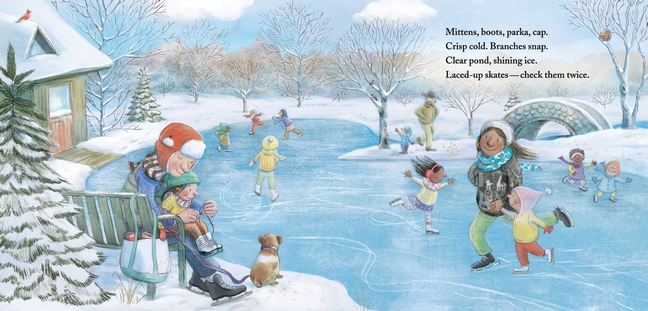
What a day to go ice skating! This rhyming story is all about a day in the life of an ice skating pond. Kids and parents lace up and skate across the ice; slipping and falling is all part of the learning process. Warm up with a hot cocoa in the cottage by the pond as hockey players raise a clatter and figure skaters glide by. When the sun goes down and everyone heads home to warm baths and beds, the pond is ready for the next group of skaters: the local wildlife explores. A Day for Skating is a lovely welcome to winter fun, with a note at the very beginning of the book about ice safety, especially if you’re not skating at a rink. Front endpapers start the story by showing a car heading somewhere, presumably the pond; back endpapers show a quiet, empty pond at night, with the marks left by skaters earlier in the day. Watercolor, pencil, and digital illustrations make every spread a welcoming winter scene, with calming blues and winter whites throughout. Add this to your winter storytimes for rhyming fun.
 Snow Still, by Holy Surplice, (Oct. 2019, Nosy Crow),
$8.99, ISBN: 9781536208344
Ages 0-3
This padded board book is the perfect toddler story for the wonder of winter. A little fawn discovers winter, and romps and plays through the forest, discovering and playing as it goes. Each spread illustrates a different two-word snowy phrase: “Snow white. / Snow slide. / Snow chase. / Snow hide” as the fawn wanders through a winter wonderland with animal friends. The watercolor illustrations are quietly engaging, with a curious little fawn and a winter white forest background. The rhyming text and easy sight words will engage toddlers and early preschoolers. A great lap-read on a cold winter day or night.
 The Little Snowplow Wishes For Snow, by Lora Koehler/Illustrated by Jake Parker,
(Oct. 2019, Candlewick Press), $16.99, ISBN: 9781536201178
Ages 3-7
This is an adorable seasonal read that works wonderfully for winter storytimes! The second Little Snowplow book sees Little Snowplow go through the seasons, desperately wishing for snow. But when winter arrives… no snow! On his birthday morning, though… there’s snow! Will Little Snowplow get all his plowing done in time for his birthday party? The pencil and digital illustrations are colorful, giving the vehicles sweet faces full of expression. Publisher Candlewick offers a free, downloadable activity kit that includes games, coloring sheets, even birthday invitations. Preschoolers love their vehicle books; add this to your storytime collection and watch them light up.
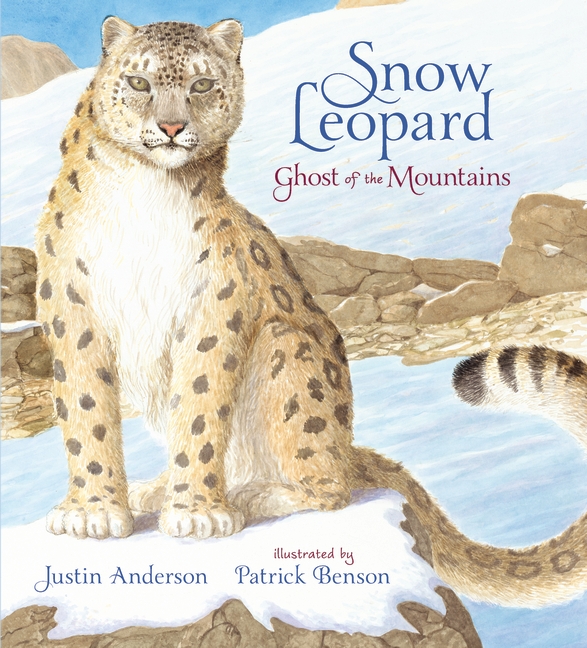 Snow Leopard: Ghost of the Mountains, by Justin Anderson/Illustrated by Patrick Benson,
(Oct. 2019, Candlewick Press), $16.99, ISBN: 9781536205404
Ages 5-8
Zoologist and filmmaker Justin Anderson weaves a story of a zoologist who travels into the Himalayan mountains in search of the elusive snow leopard. Anderson’s story – inspired by his experiences – is beautifully descriptive, with facts in smaller callouts throughout the book. His respect for and awe of the snow leopard and her habitat shines through in his descriptions, brought to life by Owl Babies illustrator Patrick Benson, whose earth-colored and winter watercolors transport us to a different world. Endpapers with footprints in the snow bring us into and lead us out of the book. Back matter includes an author’s note about snow leopards and the need for conservation and awareness, an index of key leopard terms, and resources for more about saving snow leopards.
First Second is a graphic novel powerhouse. Every season, I know I’m going to see good stuff from the authors and illustrators that First Second publishes. Here are two we’ve got coming in February.
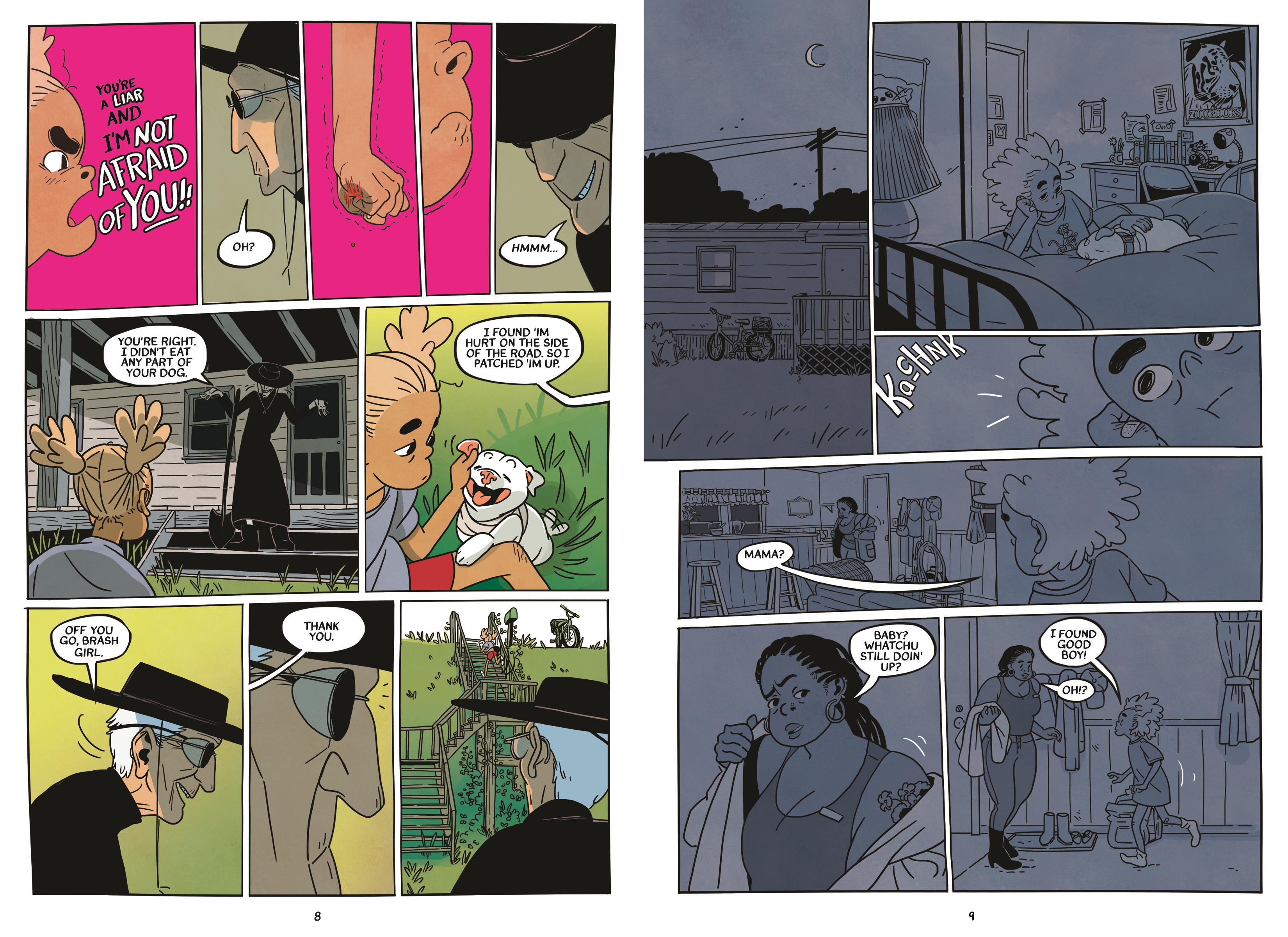
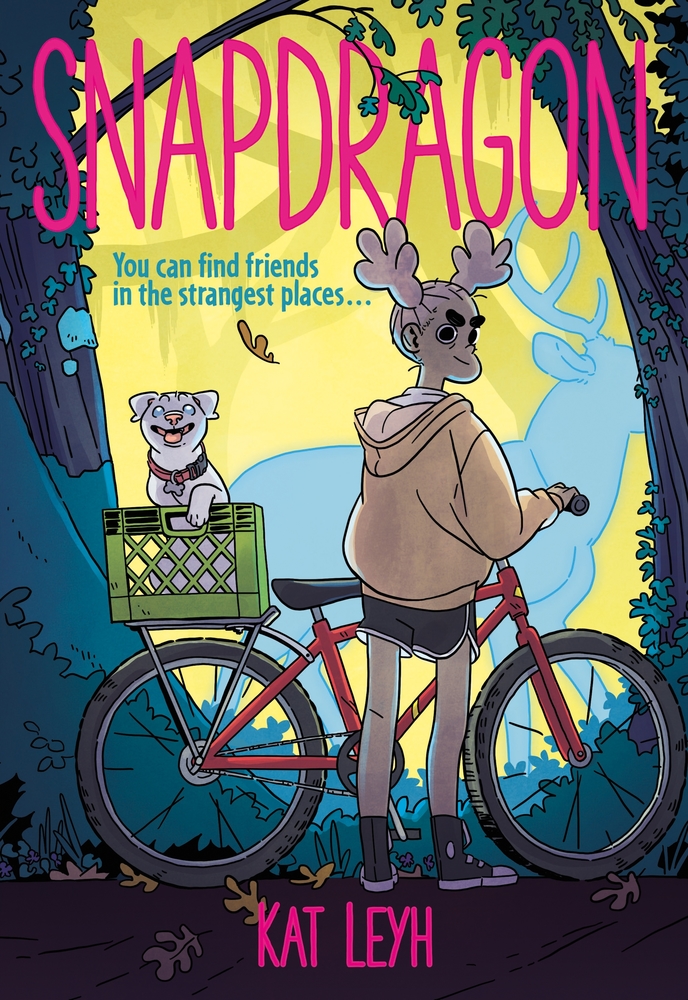 Snapdragon, by Kat Leyh, (Feb. 2020, First Second), $12.99, ISBN: 9781250171115
Ages 10+
Magical realism infuses this story about a girl who befriends the town witch. Snapdragon’s heard the rumors about the “roadkill witch”, but when Jacks – a loner constructs skeletons from roadkill to sell to veterinary schools – rescues Snap’s dog, she finds herself cultivating a friendship with the loner, who takes her on as an apprentice. But Jacks also has rituals she goes through, to put those roadkill spirits to rest, and Snap is pretty sure that Jacks has a little bit of witchcraft after all.
Snapdragon is a story with depth. Lumberjanes writer Kat Leyh creates a magical, yet real cast of characters: Snapdragon, the daughter of a single working mother, is bullied at school and by her mother’s cruel ex-boyfriend. Her friend, Louis, who prefers to go by Lulu and wear skirts and nail polish, is tormented by his brothers. The two bond over their mutual love of a a horror movie series and Lulu finds comfort and safety in Snapdragon’s home. Jacks and Snap discover a connection between them in a subplot with Snap’s grandmother.
Snapdragon has a starred review from Kirkus.
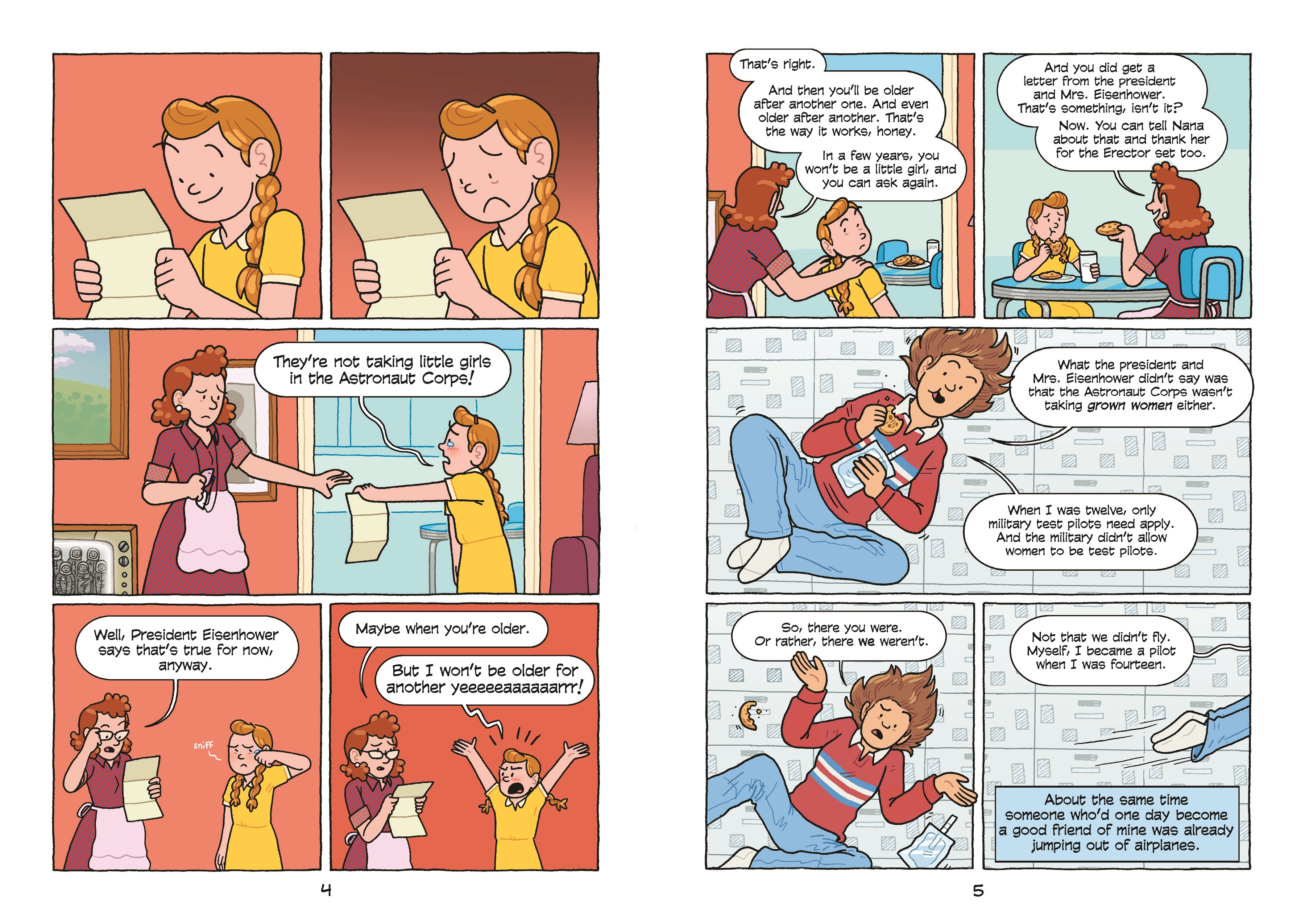
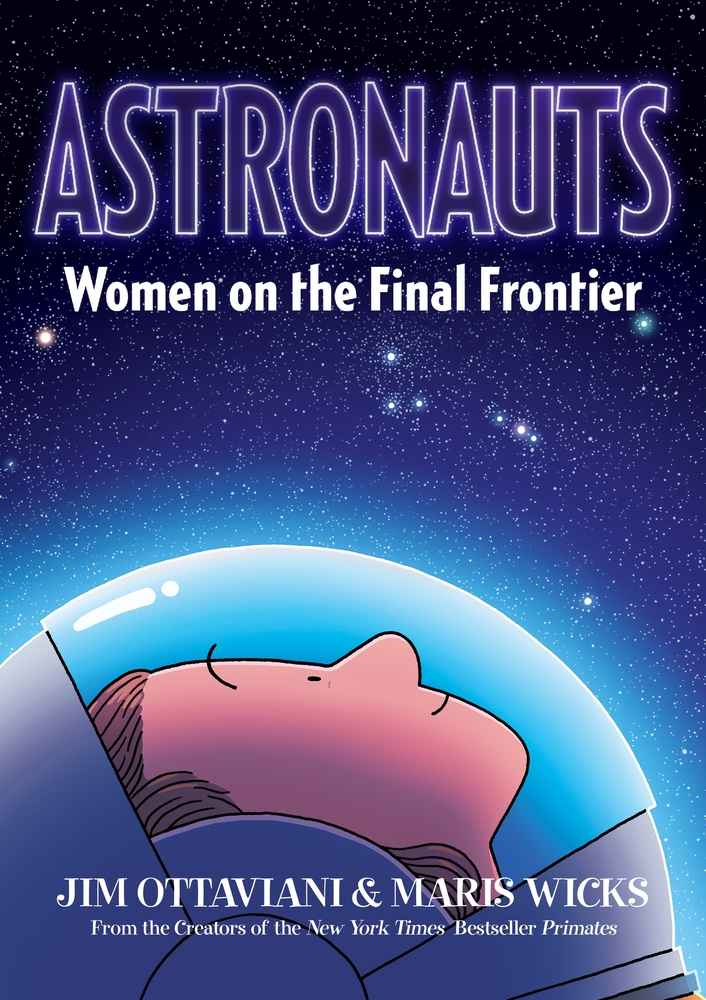 Astronauts: Women on the Final Frontier, by Jim Ottaviani & Maris Wicks, (Feb. 2020, First Second), $19.99, ISBN: 9781626728776
Ages 8-12
Meet the first women to travel into space in this nonfiction graphic novel that has big appeal for Science Comics fans. Astronaut Dr. Mary Cleave navigates readers through the history of women and space travel, starting with the Soviet space program that made Valentina Tereshkova the first woman in space, and illustrates the long road American women had to take to get Group 9, NASA’S first mixed-gender class, to the stars.
The most frustrating thing about Astronauts is reading how seemingly determined the U.S. government was to keep women out of space. The graphic novel tells multiple stories from different points of view; the Mercury 13 and Women in Space Program both ended up going nowhere, while the Soviet Union focused on sending just one woman – Tereshkova – into space. (And she didn’t even tell her mother before she went.) It’s disheartening to read that science journalists imagined conversations between women – female scientists – and Mission Control consisting of, “this little thingamabob has jiggled off the gizmo”. Even when NASA got it together and began recruiting women for the space program for real this time, their concerns about dress codes and complete ignorance of basic physiology left me frustrated and even more determined to get my STEM/STEAM programming firmly entrenched here at my library. The second half of the book, focusing more on Mary Cleave’s space shuttle missions and NASA training, are a welcome relief. There are some great and hilarious anecdotes throughout, and Mary Cleave’s love for space exploration and science comes through, making me hopeful that this book will inspire many, many kids. There are references, a bibliography, and working sketches.
Astronauts has starred reviews from Kirkus and Publisher’s Weekly.
I am so excited to talk up a new Hanukkah book! I received an e-mail from Sylvia Rouss, the author of the adorable Sammy the Spider series of books, inviting me to take a look at her new book, The Hanukkah Fable. I really enjoyed Sammy the Spider’s First Hanukkah, and having such a popular series author get in touch made my day. So let’s take a look at The Hanukkah Fable of Little Dreidel and Silver Menorah.
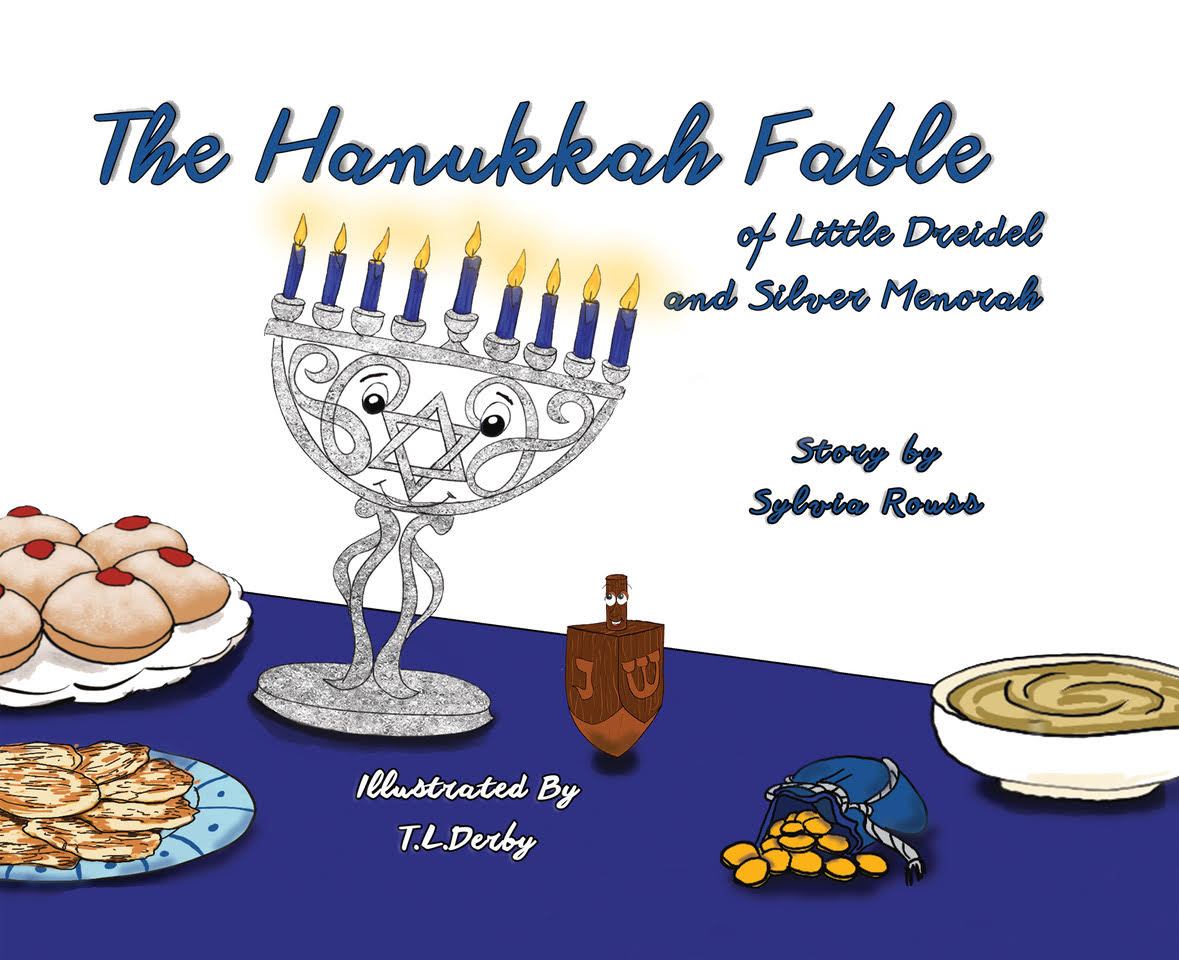
The Hanukkah Fable of Little Dreidel and Silver Menorah, by Sylvia Rouss/Illustrated by TL Derby,
(Nov. 2019, MacLaren-Cochrane Publishing), $19.99, ISBN: 978-1643720517
Ages 3-8
It’s the last night of Hanukkah, and a family gathers at the table to sing their blessings. When they head into the kitchen to start bringing out the food, the silver menorah notices that the wooden dreidel looks a little downcast; upon asking, we learn that dreidel is sad because the family gushed over the beautiful Silver Menorah, while the Wooden Dreidel went seemingly unnoticed. With a little Hanukkah magjc, Silver Menorah helps Dreidel turn into a lovely blue, to match the tablecloth! But Dreidel still goes unnoticed, so Silver Menorah helps Dreidel try on a few other colors until, finally, he ends up back in its original wooden form and learns that being true to oneself is the best way to be.
This is a sweet Hanukkah story with a wonderful moral: embrace who you are. You have no idea how important you may be to someone. The story has some rhyme and repetition in the form of Silver Menorah’s magic rhyme, “Spin around once and count to three and [color] is the color that you’ll be”. This adds a nice bit of interactivity to a storytime: hand out colorful dreidels if you have them, or colorful paper or scarves; invite the kids to stand up and twirl, like Dreidel, and call out their colors! Back matter includes a traditional Hanukkah song and prayers said when lighting the candles, and a note about Hanukkah.

TL Derby’s illustrations are bold and vibrant; both Silver Menorah and Dreidel have expressive facial expressions, and Silver Menorah looks sparkly and textured, like a mixed media rendering using foil.
Sylvia Rouss is the author of over 50 children’s picture books, most notably the Sammy the Spider series. Her books have received numerous awards, including the National Jewish Book Award, Sydney Taylor Award, Moonbeam Children’s Book Award, and Storytelling World Award.
TL Derby is a children’s book author and illustrator with a BFA in Creative Writing for Entertainment and an MFA In Creative Writing.
DC Comics has been putting out consistently good original graphic novels under their DC Ink imprint. They’ve hired top-name YA talent, like Lauren Myracle (Catwoman), Mariko Tamaki (Harley Quinn), Kami Garcia (Raven), Danielle Paige (Mera) and Marie Lu (Batman) to tell a more human story for each of these super-teens. When I received copies of Louise Simonson’s upcoming graphic adaptation of Leigh Bardugo’s Warbringer and Sarah Kuhn’s Shadow of the Batgirl, I squealed.
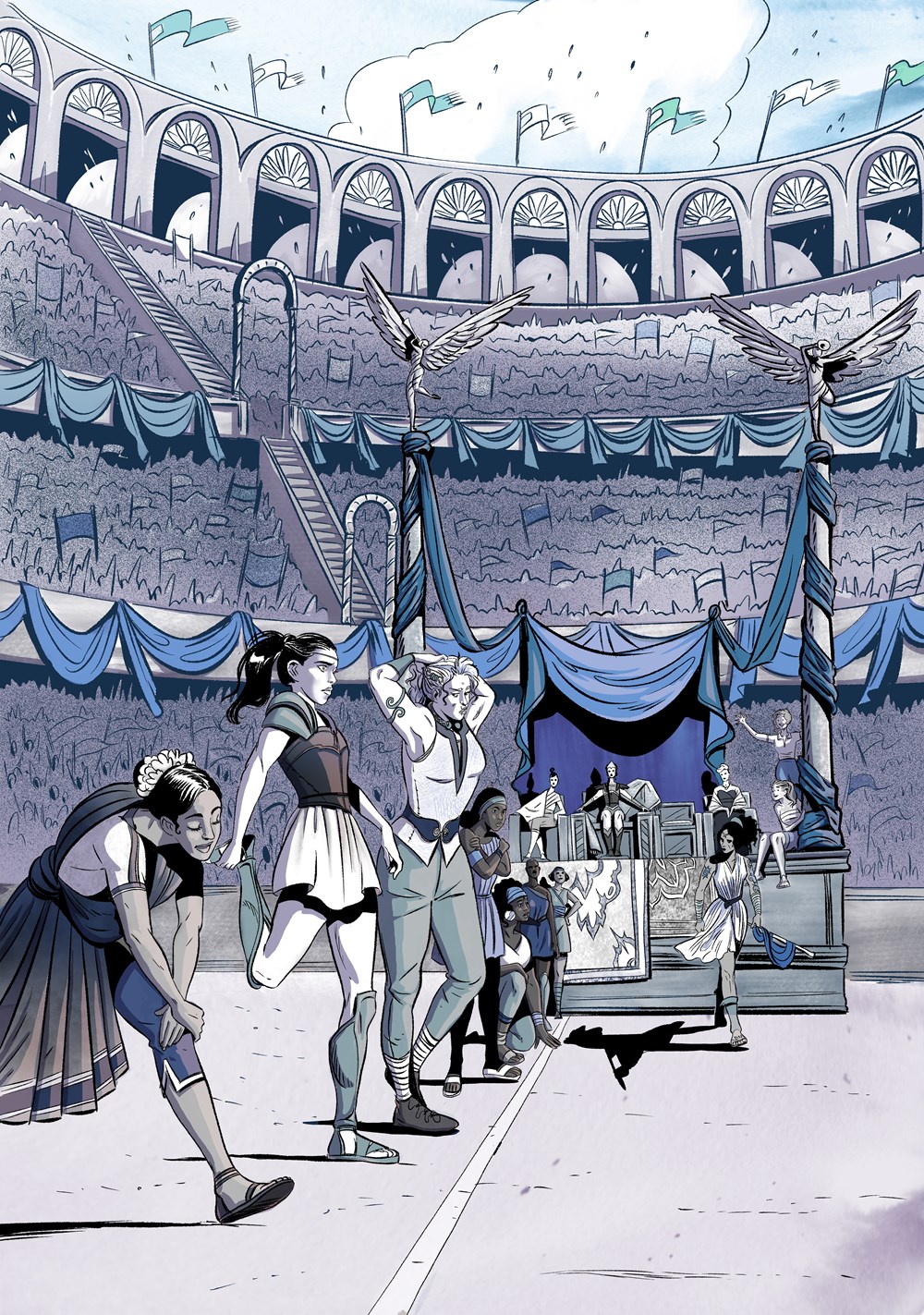
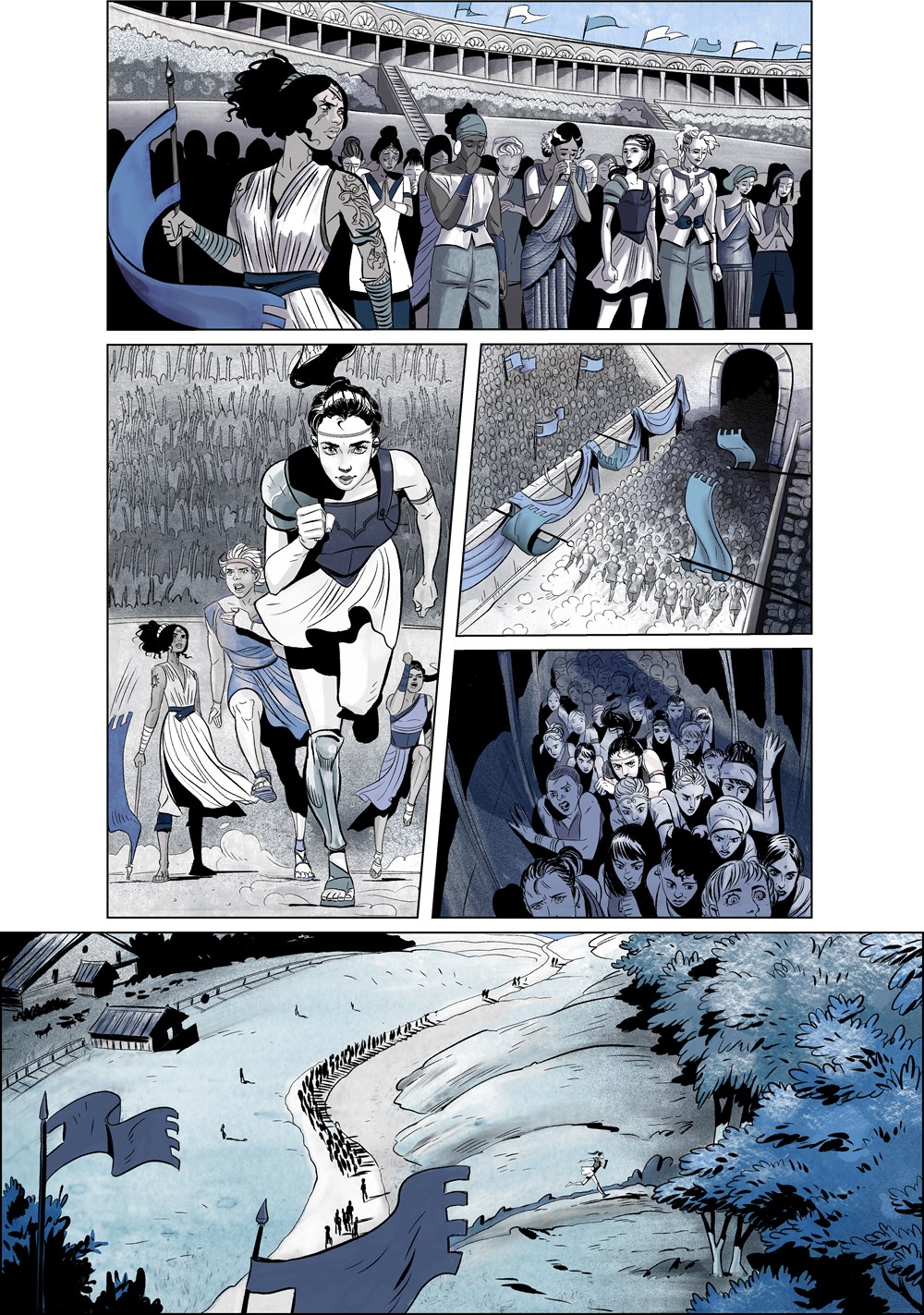
 Wonder Woman: Warbringer, by Leigh Bardugo/Adapted by Louise Simonson/Illustrated by Kit Seaton, (Jan. 2020, DC Ink), $16.99, ISBN: 978-1-4012-8255-4
Ages 12+
Before she was Wonder Woman, she was Diana, daughter of Hippolyta and the only inhabitant of Themiscyra to have been created, molded, given life at the behest of her mother and granted by the gods. This vision of Themyscira is more like a Valhalla for fallen female warriors: the way in is to die in battle. Because Diana’s existence differs from other residents of the island, she constantly feels she must prove herself to her Amazon sisters. The chance comes during a race – which she becomes diverted from when she sees a sinking ship and one survivor flailing in the water. The ship, from the world of Man, should not be there, but Diana can’t stand to let anyone die. She rescues a young woman named Alia Keralis, hiding her away until she can figure out what to do. But Themyscira reacts to Alia’s presence, and after consulting with the Oracle, Diana learns that Alia is a Warbringer – a descendant of Helen of Troy, and doomed to bring war, bloodshed, and misery wherever she goes – decides to bring Alia back to her world. When Diana and Alia arrive in modern-day New York, they find themselves in the middle of a struggle between factions who want the Warbringer for themselves, whether to end her line or possess her power.
Louise Simonson is a comic book legend, with Marvel and DC titles to her credit. Here, she masterfully adapts Leigh Bardugo’s novel to graphic format, focusing on Diana’s relationships: with the Amazons, with her mother, with Alia; each one fraught with tension. Diana learns to navigate these relationships while unraveling an ancient mystery in order to save the world. Literally. Kit Seaton’s artwork gives us mythic monsters, urban living, and sprawling Themyscira. There are moments where Diana’s innocence about the modern world of Man is played for laughs, like when she goes back at a guy making comments on the subway. Alia and her brother are biracial; Alia’s best friend, Nim, is Southeast Asian and bisexual.
Like the other DC Ink books, this one is a good add to your YA original graphic novels.
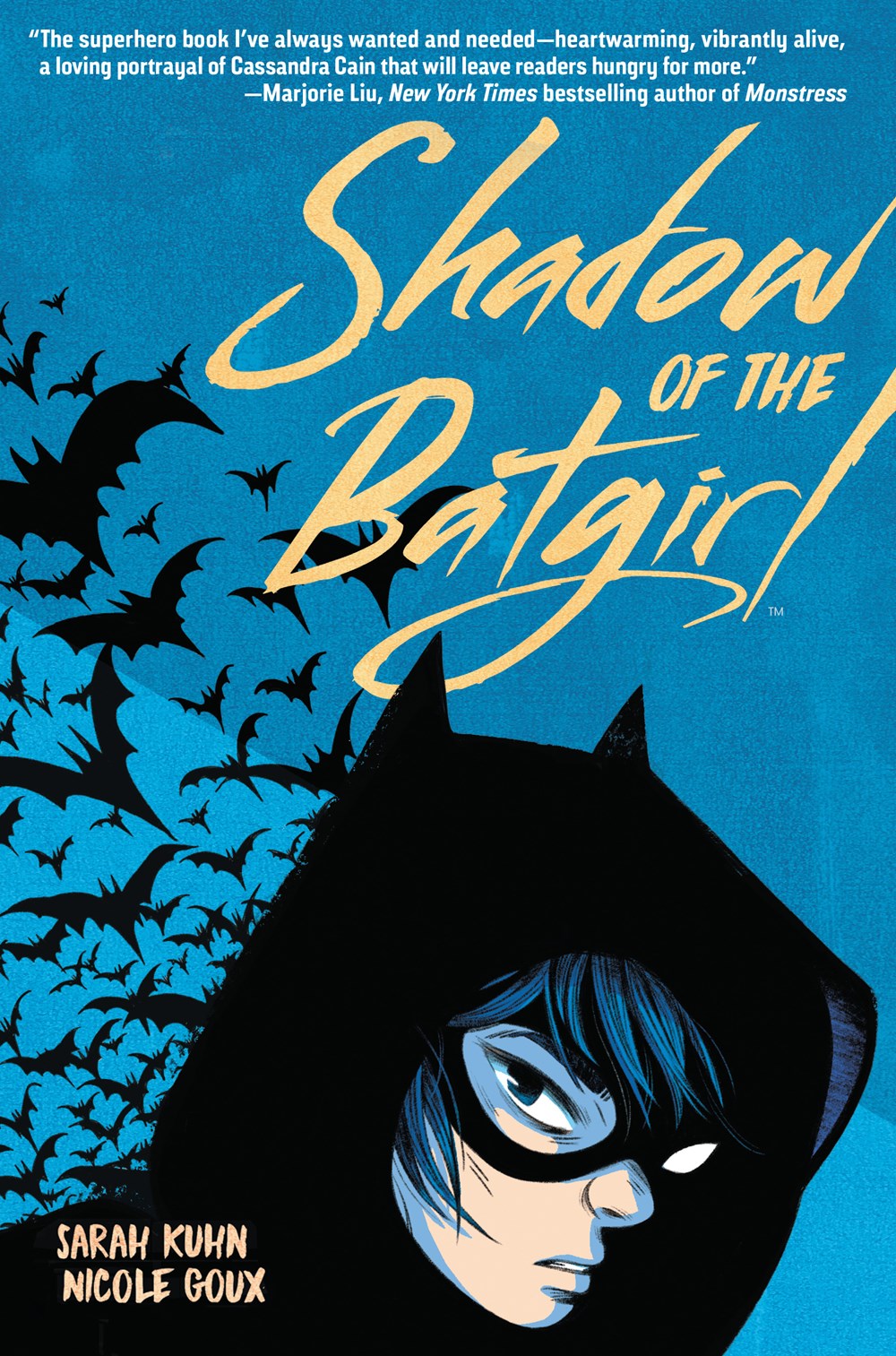 Shadow of the Batgirl: A Cassandra Cain Graphic Novel, by Sarah Kuhn/Illustrated by Nicole Goux, Feb. 2020, DC Ink), $16.99, ISBN: 978-1-4012-8978-2
Ages 12+
Cassandra Cain, teen assassin, is on the streets hunting her latest prey. But the dying pleas with Cain to relay a message to his daughter strikes a chord, and she goes on the run, hiding out in… a library! She sits in on a Batgirl storytime talk, delivered by my favorite comic book librarian, a wheelchair-bound Barbara Gordon, and finds herself enamored with Batgirl. Never taught to speak by her father, crime lord David Cain, she finds refuge with a local restaurant owner, Jackie Yoneyama, and eventually, Barbara Gordon herself. As Cassandra begins opening up to the two women, she also learns to speak, read, and write, and discovers that her father is wreaking havoc in Gotham City in his quest to gain control over the world’s assassins. It’s time for someone new to assume the Batgirl mantle, and Barbara knows the Cassandra has what it takes.
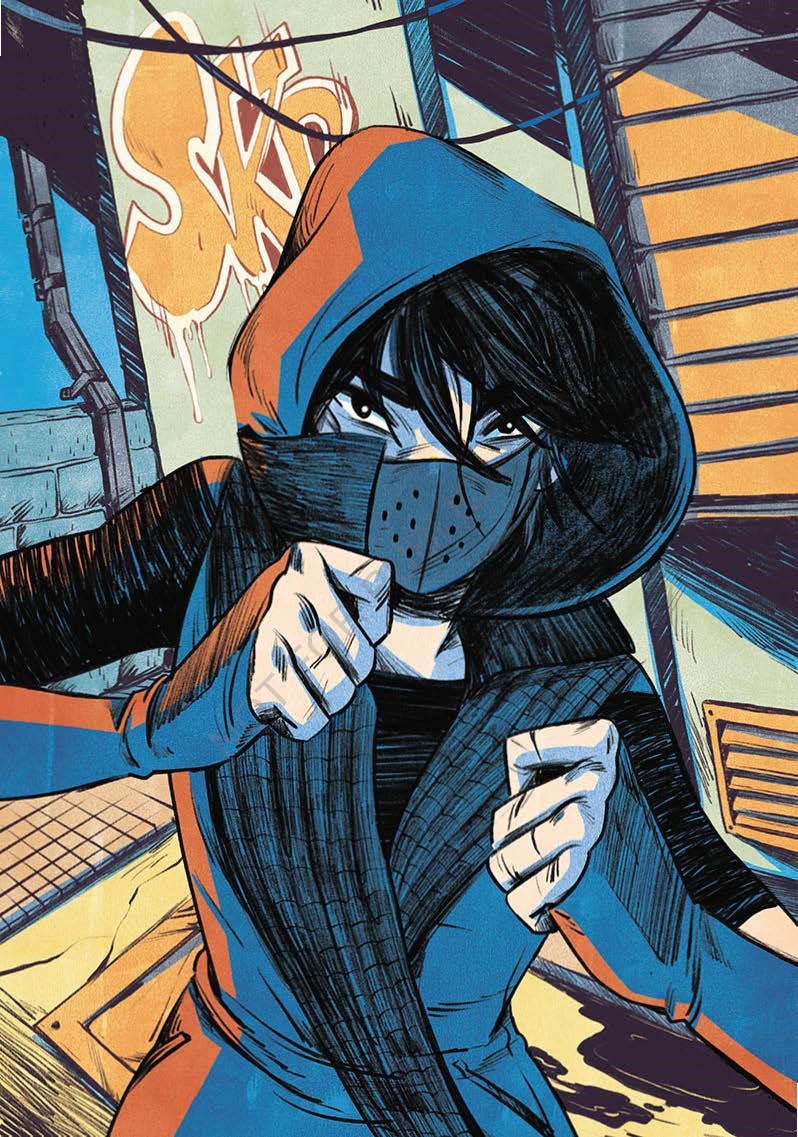
I am psyched that we get a Batgirl story that stars two different Batgirls! Barbara Gordon is more of an mentor/guiding force here; readers familiar with Batgirl’s history will know she’s in a wheelchair after the events of The Killing Joke. If you don’t know, it’s fine; it has no bearing on this story. Barbara has to pass on the cape and cowl, and Cassandra – an Asian-American girl who knows how to fight, and has a strong inner morality that steers her away from her cruel father. Sarah Kuhn can write great comic moments, and there a few in here, to lighten the storyline. The artwork is more colorful than I’ve seen in other DC Ink books, which tend toward two-color, with extra color for emphasis; here, we get some warm oranges when Cassandra is in the presence of Barbara and Jackie; colors tend toward cooler blues and purples when she’s struggling with her thoughts or shades of rose for other character’s memories. I loved Shadow of the Batgirl. Sarah Kuhn knows how to give readers a great superheroine origin.

Everyone is pretty aware of American Girl, the toy and book phenomenon that sent kids running to the stores for an experience – tea party, clothing selection, matching outfits – before Build-a-Bear got involved. The American Girl novels have big fans in every library where I’ve worked, but I never thought to pick up and read any of them for myself. But I received three from the publisher, so I figured, what the heck? Let’s see what these are about. I have to say, I’m pretty happy with them.
The three books that I received seem to be a repackaging of American Girl’s BeForever line of historical novels. The original books look to have been published in 2016-2017; these new releases have updated cover art and the interiors are very emerging reader friendly, with both color photos and artwork throughout, making it even more appealing and reader-friendly to emerging chapter book readers.
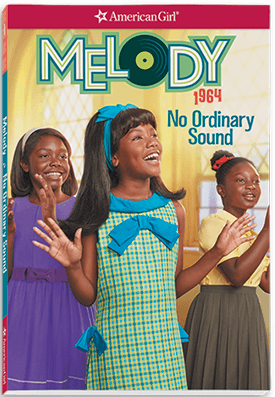 Melody: No Ordinary Sound (American Girl: Melody), by Denise Lewis Patrick, (Aug. 2019, American Girl), $7.99, ISBN: 9781683371403
Ages 8-12
It’s 1963 in Detroit, Michigan, and 9-year-old Melody just found out that she’s going to be singing her first church solo for the Youth Day celebration. Her older brother wants to be a Motown star, while their dad wants him to go to college and pick a more stable career; her older sister comes home from college with stories of protests, marches, and registering Black voters, and her cousin’s family arrives in Detroit, because racial tension in the American South has made it almost impossible to earn a living. As Melody and her family awaken to activism, a horrific church bombing in Birmingham, Alabama takes the lives of four children and leaves Melody speechless. She has to find her voice and sing for those who can’t.
No Ordinary Sound is such powerful historical fiction for intermediate and middle grade readers. I’ve enjoyed Denise Lewis Patrick’s books in the past, so I read this American Girl book first, and am so glad I did. Her characters experience three pivotal events in civil rights history – the Detroit Walk to Freedom; the March on Washington, where Dr. Martin Luther King, Jr. gave his “I Have a Dream” speech, and the church bombing in Birmingham, Alabama – and encourage readers to see these events from a personal point of view, developing a deeper understanding of more than just the facts. Denise Lewis Patrick provides a slice of life story, where readers experience the everyday racism Melody and her family and friends experience; from being banned from buying a soda at a soda machine to being shadowed by store security at stores where they’ve been longtime customers.
No Ordinary Sound was a great introduction to the American Girl historical fiction series of books, and I’ll be sure to include this series in booklists and booktalks about civil rights and historical fiction. Melody’s books have their own page on the American Girl website, where you can read first chapter excerpts.
Civil Rights Teaching has lesson plans and resources about teaching the Civil Rights Movement, as does Facing History and Ourselves. The Grammy Museum has a lesson plan on teaching the impact of Motown. Education.com has a free, downloadable worksheet on the History of Motown, and TeachRock.org has a lesson Assembling Hits at Motown. PBS Learning Media has a teaching guide and primary source materials on The Great Migration, and National Geographic has an educator’s guide.
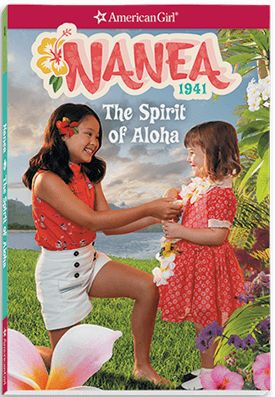 Nanea: The Spirit of Aloha (American Girl: Nanea), by Kirby Larson, (Aug. 2019, American Girl), $7.99, ISBN: 9781683371380
Ages 8-12
Nanea is a 9-year-old Hawaiian girl; she’s the youngest in her family, and feels frustrated that she can’t do grown-up things, like help in her family’s store. When Pearl Harbor is attacked by Japanese aircraft on December 7, 1941, Nanea discovers that she has to grow up quickly. Her father is a mechanic at Pearl Harbor, and rushes to help out; her older brother is an Eagle Scout, and heads to the site to hand out food and provide aid. Nanea’s Uncle Fudge is taken into custody because he’s Japanese, and Nanea is thrust into a different world with blackouts, curfews, and fear. She and her two best friends work to make themselves useful, especially when “nonessential personnel” must leave the island, which puts her friend at risk. With the spirit of aloha – love, understanding, and compassion – Nanea focuses on kokua – good deeds – to help everyone around her.
The Spirit of Aloha was another strong historical fiction piece. Kirby Larson has written likable, relatable female protagonists, and she’s done historical fiction before, so I was confident I was going to read a good story. Here, we have the main event, the bombing of Pearl Harbor, as a means to show how war makes children grow up overnight. Nanea sees her life change in moments: the bombing itself; the rounding up of Japanese people and the detention center; her fears for her father and brother as they head into the middle of the disaster to help; curfews and blackouts curtains, and the overall loss of a relatively peaceful, carefree existence. At the same time, she focuses on her culture’s principles of love, compassion, and good deeds. Kirby Larson adds touches of Hawaiian culture here, like the meaning of hula and tossing leis into the water to assure a return to Hawaii, and there’s a glossary of terms at the end. Nanea is biracial, with a Hawaiian mother and a Caucasian father, and this adds an additional facet to Nanea’s story, as she communicates with her mainland grandparents to let them know what’s going on in Hawaii.
The Spirit of Aloha is a good introduction to World War 2 historical fiction for younger readers. You can find excerpts and more about Nanea on the American Girl website.
Scholastic has a teaching guide on the attack on Pearl Harbor; Teachers Pay Teachers has some free, downloadable resources developed by fellow educators; the Pearl Harbor Aviation Museum has a lesson plan on developing visual literacy by analyzing photos from December 7, 1941. The New York Times has a lesson plan on using primary sources to teach the Japanese Internment, as does the Library of Congress.
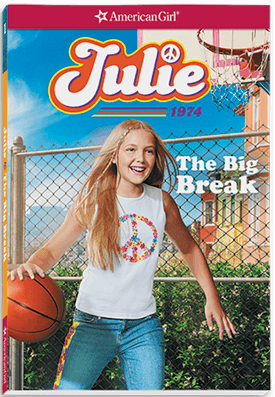 Julie: The Big Break (American Girl: Julie), by Megan McDonald, (Aug. 2019, American Girl), $7.99, ISBN: 9781683371328
Ages 8-12
Nine-year-old Julie has just moved to a new neighborhood and started at a new school after her parent’s divorce; she, her mother, and older sister live in an apartment above her mother’s new store. She starts at a new school and hears they have a basketball team, which is great! She loves basketball! The coach, however, makes no bones about it: the team is boys only, and he’s never going to let a girl play on his team. Julie, empowered by her tennis-playing older sister who tells her about tennis star Billie Jean King and Title IX, the law prohibiting gender discrimination in any educational programs receiving Federal financial assistance (read: public schools can’t refuse any boy or girl from playing on an athletic team). Julie embraces her newfound activism and takes to the streets, getting people to sign a petition to let her play.
The Big Break is a snapshot of the 1970s, when the second wave feminist movement was still pushing for equal rights in the workplace and in our schools. An interesting subplot with a Vietnam vet, who helps focus Julie’s activism by petitioning against the closing of a veteran’s hall, reminds readers that the ’70s were also about coping with the fallout from the Vietnam War and the vets who returned to homelessness, and a lack of necessary mental and physical health services. Julie’s sister is a burgeoning feminist who follows the Bobby Riggs-Billie Jean King Battle of the Sexes and tells Julie about Title IX, which opened the doors to school athletics for girls. At the same time, Julie is coping with her parent’s divorce – much more scandalous in the 1970s than it is today – and her feelings of grief and frustration with both her parents. Her mom appears to be a free spirit, with a ’60s-early ’70s flower child aesthetic; she’s a divorced woman entering the workplace and starting her own business venture: a store dedicated to handcrafted clothing and items, often repurposed. Julie’s pilot father often misses school events because he’s called to fill in for another pilot, and doesn’t initially support her bid to play on the boys’ basketball team.
The Big Break is by Megan McDonald, who everyone also knows as the author of the Judy Moody and Stink series! Here, she gives readers a glimpse into the 1970s, where things are so different, and yet, still the same. Girls still get grief from boys in the athletic sphere. Homeless veterans are still not getting the services they need. People now use Title IX to protect transgender and nonbinary students. And girls are still discovering and embracing their voices in activism. You can read more about Julie on her American Girl page, including first chapter excerpts.
TedEd has a lesson plan on Title IX that’s friendly to younger students. NEA Today has a good article on ways Title IX has helped women and girls; PBS has a video on Title IX; Scholastic Kids Press has an article on how Title IX changed girls’ sports. Teaching History has resources on teaching the Vietnam War.
Each book comes with a peek into each girls’ life: maps of their neighborhood, pictures of their families, a glimpse at someone’s room. Back matter includes overall information about each American Girls’ moment in history. American Girl makes teachers guides, readers guides, and printable activities available.
 Mom Read It