Posted in Guide, Non-Fiction, Teen, Young Adult/New Adult

Book Tour: College Student Health Handbook

Hi all! I’ve got a blog tour for our seniors to have on hand as they get read for college. Good health practices never go out of style, as we’ve certainly learned this year, and whether you’re home or (eventually) headed to a dorm, there’s some important info to be found here.


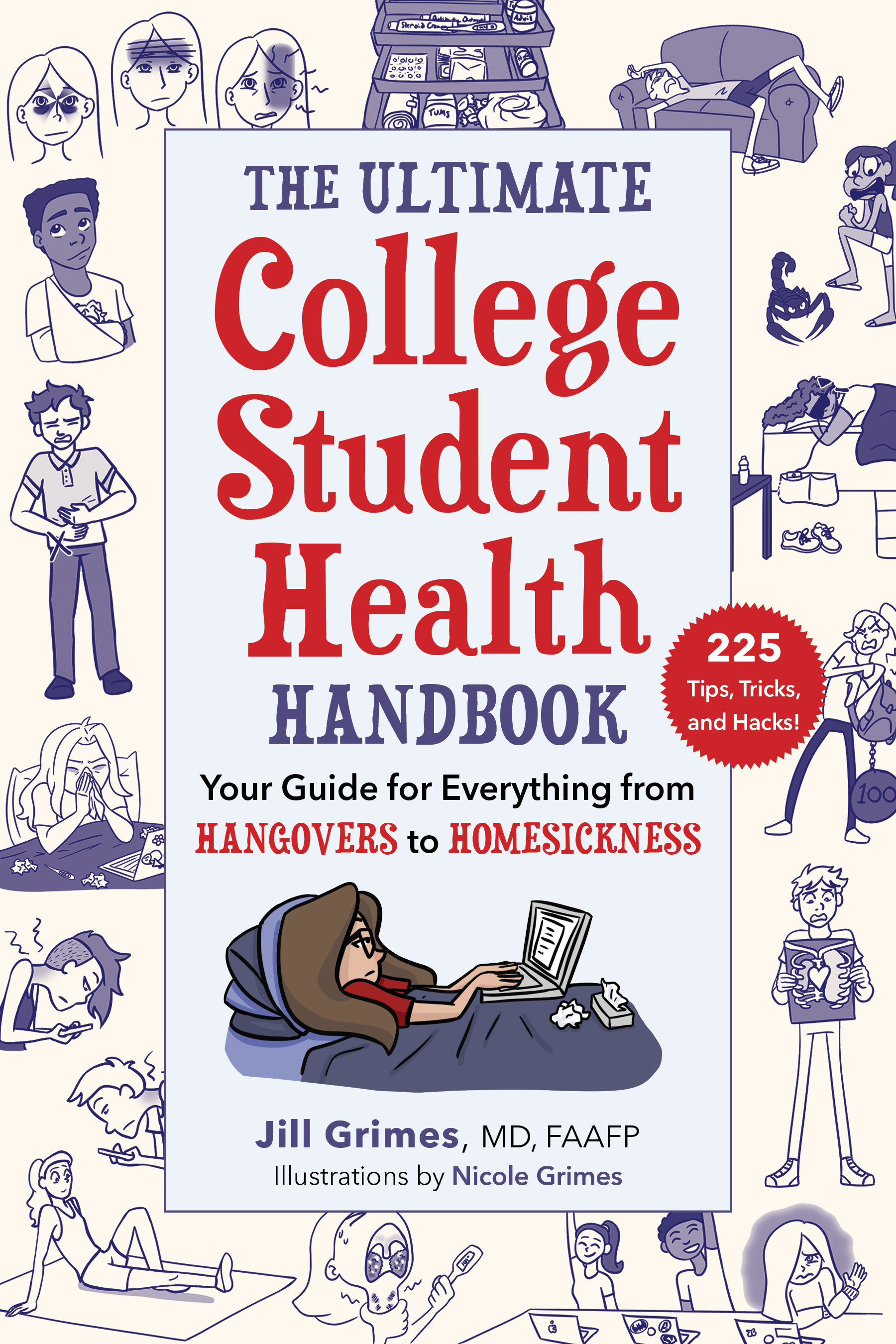
The Ultimate College Student Health Handbook: Your Guide for Everything from Hangovers to Homesickness,
by Jill Grimes, MD, GAPP/Illustrations by Nicole Grimes,
(May 2020, Skyhorse), $16.99, ISBN: 978-1510751033
Ages 16+

5 Must-Have Items for Your College Freshman

You’re making a list and checking it twice…because especially if this is your FIRST kid heading off to college, you want to be sure you’ve included every critical item.

  • Twin XL (Extra Long) Sheets?
  • Command Strips in every shape, size and strength? Check.

(Much bigger deal for girls vs. guys, but this is the only way to hang stuff on walls.)

  • Dorm Bed Risers? (I highly recommend the ones with extra outlets.) Check.

Chargers, fan, laundry bag, clothes, shoes, coats…the list goes on. And on. And ON. What could possibly be missing? From my perspective as a seasoned move-in mom and a university doctor, here ‘s my list of the top five forgotten items:

  1. Small Tool Kit: Hammer, screwdrivers, wrench set, pliers, scissors, tape measure and level. This should be last in, first out, because you’ll often need these immediately to assemble and disassemble dorm room furniture or fix a stuck drawer. Pro tip: Add in a couple garbage bags; trash piles up as soon as you start unpacking.
  2. Backup Prescription Glasses: especially for the kid that ALWAYS wears contacts! Why? Because if you get a bad stye or “pinkeye” (viral conjunctivitis), or more commonly, you accidentally fall asleep in your contacts or get something in your eye that scratches your cornea- you CANNOT wear contacts for several days to a week or more. And seeing clearly tends to help grades. If you always wear glasses, the backup pair is for when yours break or disappear. And inevitably, it happens during midterms or finals.
  3. Small Lock Box: If you take prescription medications for ADD, this is a must. These stimulant pills sell for $5-10 each (a felony if caught!!) and dorm rooms are rarely private and/or consistently locked. Please remove the temptation for others and keep your meds safe. Lock boxes also work well for pricey jewelry, your passport, and while we’re at it, your backup glasses.
  4. Heating Pad: Okay, not critical, but a great way to guarantee your popularity! Seriously, few students have these, but those that do tell me “EVERYONE borrows it” for aching muscles, back spasms and “cramps”. Bonus points: in cold climates they can double as an electric blanket (just don’t fall asleep on top of one, as this can cause burns.)
  5. Solid Air Freshener: Plug-ins are rarely allowed in dorms, but you can place a solid or gel freshener in your closet (by your shoes) and tuck another under your bed. Extra-strong odors? Bamboo charcoal bags are a pricey option, but they work incredibly well. Choose a neutral or “fresh” smell, not “flowery” or “citrus” as you don’t know your roommate’s sensitivity to different scents. Bodies, dirty clothes, third-hand smoke and old dorms all get very smelly. Unless you are moving into a brand-new dorm with a neat-freak roommate, these fresheners can be lifesavers. Or at the very least, roommate-savers.

Bottom Line: Add these five items to your list for a smoother move-in and a healthier, safer semester! (If you’re flying, pack the glasses & shop for the rest when you arrive.) Good Luck!

Posted in Fiction, Graphic Novels, Middle Grade, Teen, Tween Reads, Uncategorized, Young Adult/New Adult

Two more original DC graphic novels! Gotham High and My Video Game Ate My Homework

I missed the boat on this one when they pubbed on April 7th, but now, you have no excuse: two more DC original graphic novels have been out for a month now, and I am about to rave them. I picked up these advance copies at ALA Midwinter earlier this year, and had the best conversation with the folks at the DC Booth. I hope you’re all safe and sound, if you’re reading this, and trust me, I’m working my way through the stack o’graphic novels you were kind enough to send me home with.

Gotham High, by Melissa de la Cruz/Illustrated by Thomas Pitilli, (April 2020, DC Comics), $16.99, ISBN: 9781401286248

Ages 12-17

Melissa de la Cruz is a YA powerhouse: my middle graders can’t get enough of her Descendents novels, and my teens and YA readers devour her Alex and Eliza books. She can navigate complicated relationships between her characters, and who gets more complicated than the Joker, Catwoman, and Batman? Right? Gotham High is a YA take on Bruce, Selina, and Jack as teens – no capes, no superpowers, just the baggage they already come with (SO much baggage). Bruce is 17, just kicked out of boarding school, and has too many ghosts, in the form of memories, inhabiting stately Wayne Manor. Selina Kyle used to be the girl next door, now a Gotham High student that hangs out with Jack Napier, class clown with a heck of a mean streak. Bruce falls in with the two, and finds himself involved in a love triangle of sorts. But a kidnapping rocks Gotham High, and Bruce is thrust into the role of detective to get to the bottom of things.

Taking away the capes, gadgets, and makeup, Melissa de la Cruz gives us three incredibly complex, flawed characters, and brings us into their contentious friendship. She gives us chilling moments and dread realizations about the people each character will eventually become – with or without a costume. She makes them easily relatable and recognizable, and artist Thomas Pitilli gives us realistic characters with his artwork, with all the rah-rah high school spirit we expect to find in a high school hallway to the anger always simmering below the surface for each character. He captures the spirit of high school, in all its internal chaos, with style.


My Video Game Ate My Homework, by Dustin Hansen, (Apr. 2020, DC Comics), $9.99, ISBN: 9781401293260

Ages 8-12

This is a fandom-filled graphic novel that kids and grownups alike will love Dewey is a 13-year-old kid on the verge of flunking science when he and his friends gets sucked into a video game adventure that presents them with challenges, fights with digital monsters, and puzzles to solve. Loaded with sight gags and wink-nudges to video games, con life, and overall fandom, kids (and big kids, like me) will see themselves in Dewey and Co.

The book encourages readers to problem solve and emphasizes the importance of cooperation and teamwork. The cartoony-realistic style and fantasy monsters are so much fun – perfect story to introduce if you have Dungeons & Dragons fledgling fans. If you have Secret Coders readers, give them this book, which will continue challenging their problem-solving skills and captivating them with a fun storyline.

Dustin Hansen’s also written the Microsaurs series, which never stays on my library shelves. (Which means I probably need to order them for my kid, because he would LOVE them.) I got to talk to him at Midwinter, and he’s one of the nicest people ever.

Posted in Non-Fiction, Teen, Tween Reads, Young Adult/New Adult

Power to the People: We Are Power elevates nonviolent activism

We Are Power: How Nonviolent Activism Changes the World, by Todd Hasak-Lowy, (April 2020, Abrams Kids), $18.99, ISBN: 9781419741111

Ages 12+

A thought-provoking treatise on nonviolent activism, We Are Power presents six case studies throughout recent history: Gandhi, Alice Paul, Martin Luther King, Cesar Chavez, Václav Havel, and Greta Thunberg. Each section explores nonviolent resistance, the roots behind each advocate’s activism, and how the power of one person, exhorting nonviolence, can motivate thousands and create change. In an increasingly contentious world, the power of nonviolent activism, and placing this information in the hands of a generation of activists, is not only smart, it’s crucial.

Beginning with Gandhi and his theory of “soul force”, or satyagraha, each consecutive profile touches on how previous movements inspired one another. Martin Luther King in particular was influenced by Gandhi, while Alice Paul’s suffrage activism was a response to the more extreme suffagists in the UK, and her desire to be seen as calm, unflappable, and strong. Cesar Chavez understood that increasing awareness of migrant worker conditions was the best way to bring social justice to migrant workers and received a letter of encouragement from Martin Luther King, himself leading nonviolent resistance movements to bring civil rights to the country. Playwright-turned-Czech president Vaclav Havel used his art to protest; later, letters from prison, where he wrote about truth and opened people’s eyes by telling them that they were complicit in allowing their restrictive government’s rule by following the rules. Teenager Greta Thunberg began her climate change protest by being the sole student striking for climate change, and motivated a planet to take action.

A solid beginning for a discussion on social justice, activism, and civil disobedience, this is a must-have volume for middle school and high school collections. I can’t wait to put this in my order cart when my library, opens again. This would be a great Summer Reading choice, for educators who haven’t finished their lists yet. Photographs of protests and tense moments, like seeing schoolchildren attacked by dogs and being doused with hoses, make for great discussions on the use of violence against nonviolence – what stands to be gained? Comprehensive endnotes, bibliography, and index complete the book. Author Todd Hasak-Lowy’s author webpage has videos and resources for parents and educators.

We Are Power has starred reviews from School Library Journal, School Library Connection, and Kirkus.


Posted in Adventure, Fiction, Horror, Teen, Young Adult/New Adult

Life imitates art in Girls Save the World in This One

Girls Save the World in This One, by Ash Parsons, (Apr. 2020, Philomel Books), $18.99, ISBN: 9780525515326

Ages 13+

Okay, imagine you’re going to a con where the cast of your favorite zombie-ridden post-apocalyptic show is appearing. You’ve hit the exhibit hall, taken pictures with the cosplayers, and are just sitting down to a panel with the whole cast… and the zombie apocalypse happens. For reals. That’s how it goes down for teens June, Siggy, and Imani, attending ZombieCon! in their little hometown. They’re sitting in on a panel with all the stars of their favorite zombie show, Human Wasteland, when all hell breaks loose. The girls have to put their zombie apocalypse skills to the test to survive, and June has to cope with the indignity of having her ex-BFF, Blair, who’s also at the con and on the run from the undead. DRAMA.

Girls Save the World in This One is FANTASTIC. I loved every single page of this hilarious action-adventure story, with relatable teens who are sick and tired of friendship drama, dumb boyfriends, and all of these freaking zombies! June, Imani, and Siggy are quick-thinking, smart, and their friendship bond is #squadgoals. June, in fabulous teen fashion, takes time to agonize over her damaged friendship with Blair while figuring out how to escape zombies and put up with obnoxious cable TV celebrities, and Blair – the friend on the outside looking in – is proof that desperate times can bring people closer. Fans of the other zombie show on cable TV will recognize some characters, and I love the fangirl’s dream come true that evolves throughout the book. Who will survive? You MUST read this to find out. Strong female characters, the power of friendship, and a burgeoning romance amidst the zombie apocalypse make this a must have.

Posted in Realistic Fiction, Teen, Young Adult/New Adult

Lauren Myracle’s This Boy is quiet and powerful

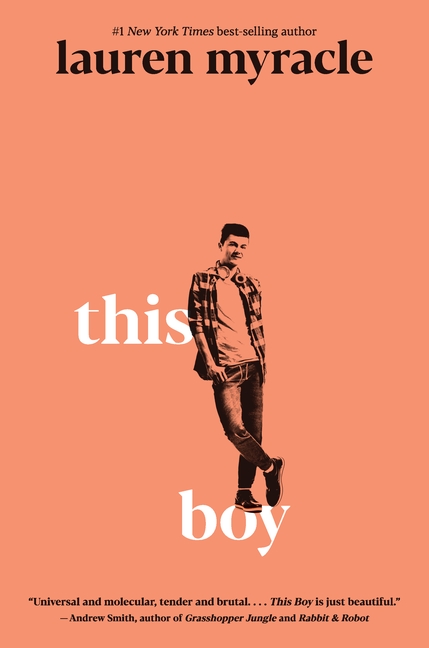
This Boy, by Lauren Myracle, (Apr. 2020, Candlewick Press), $18.99, ISBN: 9781536206050

Ages 14+

Paul Walden is an ordinary teen. He’s not a chest-beating jock, he’s just Paul, and This Boy takes us from freshman year to senior year. We meet Paul and his best friend, Roby; we meet Natalia Gutierrez, the girl they both fall for. They’re ordinary teens, doing teen stuff: some beer, some weed, but mainly, video games and talking about girls. Until disaster strikes and Paul finds himself gripped by addiction, depression, and grief.

This Boy is Lauren Myracle is her most powerful. The story shows readers exactly how “this could happen” to the kid next door. We all know Paul: he lives next door, or have a class or two with him. He’s the Everyman (Everyteen) of the story: living with his mom, not terribly close with his dad, loves playing video games and hanging out with his best friend. The dialogue is so painfully everyday teen; the small moments that make up the first part of this book are so spot on, that it makes the ensuing tragedy and Paul’s spiral even more heartbreaking to witness. He tries to dull his grief, but the usual social drinking isn’t working. He ups his game, becoming a full-blown addict. Paul’s mother isn’t invisible in this story; she’s a scared parent who doesn’t know what to do to help her boy. By trying her own methods first, she puts him in danger of a relapse, and has to come face-to-face with her own complicity in it. Paul’s story is raw and gritty, with frank descriptions of sex, masturbation, and drug use.  A strong choice for teen collections, and a good book to hand to readers who enjoy Chris Crutcher, Laurie Halse Anderson, and Eric Devine.  Hypable has an excerpt available.

Posted in Post-apocalyptic/Dystopian, Teen, Tween Reads, Young Adult/New Adult

Dust Bowl Post-Cataclysm! Elysium Girls ride to battle

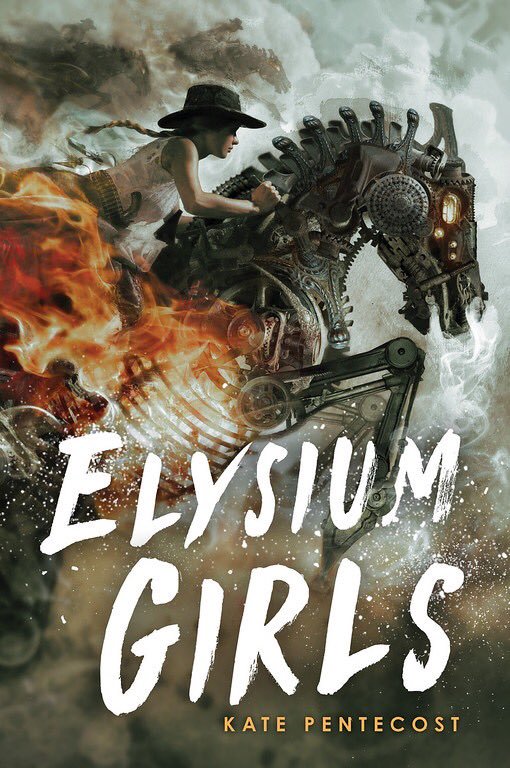
When you have a cover this amazing, you need to go full size.

Elysium Girls, by Kate Pentecost, (Apr. 2020, Little Brown),
$17.99, ISBN: 9781368041867
Ages 12+

When I was at a Book Buzz where this book came up, the publisher rep said, “I love this book! It’s hard to describe, but it’s so good! It’s so weird!” And really, that was all I needed to hear: I wanted to read a book with a big steampunk horse on the cover. I was not disappointed.

Elysium Girls is Dust Bowl-era dystopian fiction. In 1935, while America is in the grips of the Great Depression, a giant dust cloud rolls over Oklahoma. The goddesses of Life and Death have taken this little chunk of America and placed it in its own space and time, a chessboard for their own game. The survivors of the storm have 10 years to maintain order and set aside a third of their crops as a sacrifice for a chance to survive. Mother Morevna, an ailing witch in charge of a settlement called Elysium, takes on Sal, a teenaged apprentice, when a stranger calling himself Asa Skander arrives with supplies and a knack for magic himself. Sal and Asa are exiled from Elysium following a duel, where they meet a group of young women who have their own histories with Elysium and beyond. Facing the final days of the contest, a rising death toll, and plummeting spirits, Elysium and the group of women – and Asa – join forces once more to face the coming Dust Soldiers and attempt to break the game in order to win it.

This book is AMAZING. A dystopian historical fiction piece placing readers in Depression-Era Dust Bowl America? It’s a great concept, and Kate Pentecost touches on the endemic racism that endures even among the survivors; her description of the Dust Sickness that eats away at the populace is so gritty and raw that you’ll want a sip of water and to clear your throat as you read. Sal emerges as a smart heroine that comes into her confidence as a magic user, and Asa, who could easily have been sidelined as a cardboard supporting character, has a good backstory and has a character arc that really develops him nicely. Supporting characters all get fleshed out nicely, and should easily get reader investment.

The shifting perspective, from Sal’s first-person narration to third-person narration, takes a little getting used to, but I feel into the rhythm pretty quickly. The action is fast-paced, and dialogue will keep readers turning pages as different plots and subplots become revealed. I loved this one, and really, REALLY, want my own metal horse now.

Give this one to your new generation of post-cataclysm readers. (I can’t believe there’s a new generation of them, but wow: Hunger Games, Maze Runner, and Divergent are all a decade old, and then some. Wow.)


Posted in Middle School, Non-Fiction, Teen, Tween Reads, Young Adult/New Adult

A little bit of Flower Power goes a long way

Flower Power: The Magic of Nature’s Healers, by Christine Paxmann/Illustrated by Olaf Hajek/Translated by Jane Michael, (Apr. 2020, Prestel), $19.95, ISBN: 978-3-7913-7399-7

Ages 9-14

People have turned to flowers and plants for healing and food since the dawn of time. Flower Power: The Magic of Nature’s Healers presents 17 flowers that we still use for their healing properties, whether they’re available as teas, herbal medicine, or spices. Christine Paxmann begins with an author’s note on the human history of our relationship with flowering plants, from hunter-gatherers who learned through trial and error which were poisonous and which were beneficial (and tasty), to the ancient shamans, who began boiling, crushing, and mixing flowers and seeds together, to today’s consumer, who can walk into just about any store to pick up an herbal tea, cough drop, or spice to add to their food.

Each flower enjoys its own spread here, with an interesting profile discussing history and uses on the left-hand page, and on the right, a painting by illustrator Olaf Hajek. It’s really Olaf Hajek’s illustrations that are the stars of the show here: inspired by folk art, Renaissance paintings, and fairy tale illustrative style, each flower is bright and bold, with a touch of the fantastic and surreal, and immediately draws readers to the pages. These could easily be in a gallery as in a book.

The 17 flowers include names that are readily familiar, like the artichoke, dandelion, pineapple, and ginger; lesser-known appearances introduce readers to such plants as the Mary thistle, Madonna lily, and rowan. Flower Power is a nice reference book for readers interested in learning more about flowering plants and their uses and is a thoughtful add to STEM and nonfiction collections for middle school and high school. Flower Power is translated from the work’s original German.

Posted in Science Fiction, Young Adult/New Adult

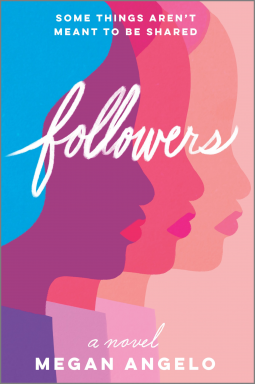
YA Crossover: Followers, by Megan Angelo

Followers, by Megan Angelo, (Jan. 2020, Graydon House Books), $26.99, ISBN: 9781525836268

Ages 16+

This satire, thriller, quasi-dystopian story tells the tale of two women, Orla and Floss, who become friends through a mutual desire for fame. Starting in the 20-teens, Orla is a writer, slaving away at a pop culture news site and waiting for her big break. Floss is a Kardashian wannabe: she wants to be an influencer, she wants followers, she wants insta-fame. She and Orla, her roommate, hatch a plan where Orla creates the Floss persona, and it works, to dizzying success. The story shifts between 2015-2016 and 2041, where society lives in the aftermath of an event that leaves those of us glued to our screens shadows of our former selves. Reality stars are moved to a government-run, enclosed village where they live their whole lives on camera, with implants that buzz to let them know when they’ve gained or lost followers, or if they’ve been off screen too long. Here, we meet Marlow, a 30-something who lives in the village, and dreams of a life off-screen. Discovering a long-held family secret gives her the courage to go on the run, where she heads to New York to get answers.

Followers is a realistic sci-fi thriller that posits an entirely plausible future. Social media-obsessed characters and a screen-consumed society are instantly recognizable – it does take place in 2016, after all – and the tempting mystery that unfolds through two timelines is fascinating and kept me turning pages, wanting to know what happens next. It’s a good book to handsell/booktalk to teens, and let them work through the story by asking them what they think future social media and reality stars will look like. Put this on your “this could be our future” shelf with Vox by Christina Dalcher (another YA/Adult crossover), and Caragh O’Brien’s Vault of Dreamers trilogy.

Followers has four starred reviews, and author Megan Angelo has a free, downloadable book club kit available on her website (minus the cotton candy champagne recipe – mix some cotton candy with sparkling water for a similar treat).

Posted in Graphic Novels, Teen, Tween Reads, Young Adult/New Adult

Two more DC original YA graphic novels to put on your TBR: The Oracle Code and Batman: Overdrive

DC Ink is knocking it out of the park with their original graphic novels for the YA audience! The next two coming up star Oracle and The Bat himself.

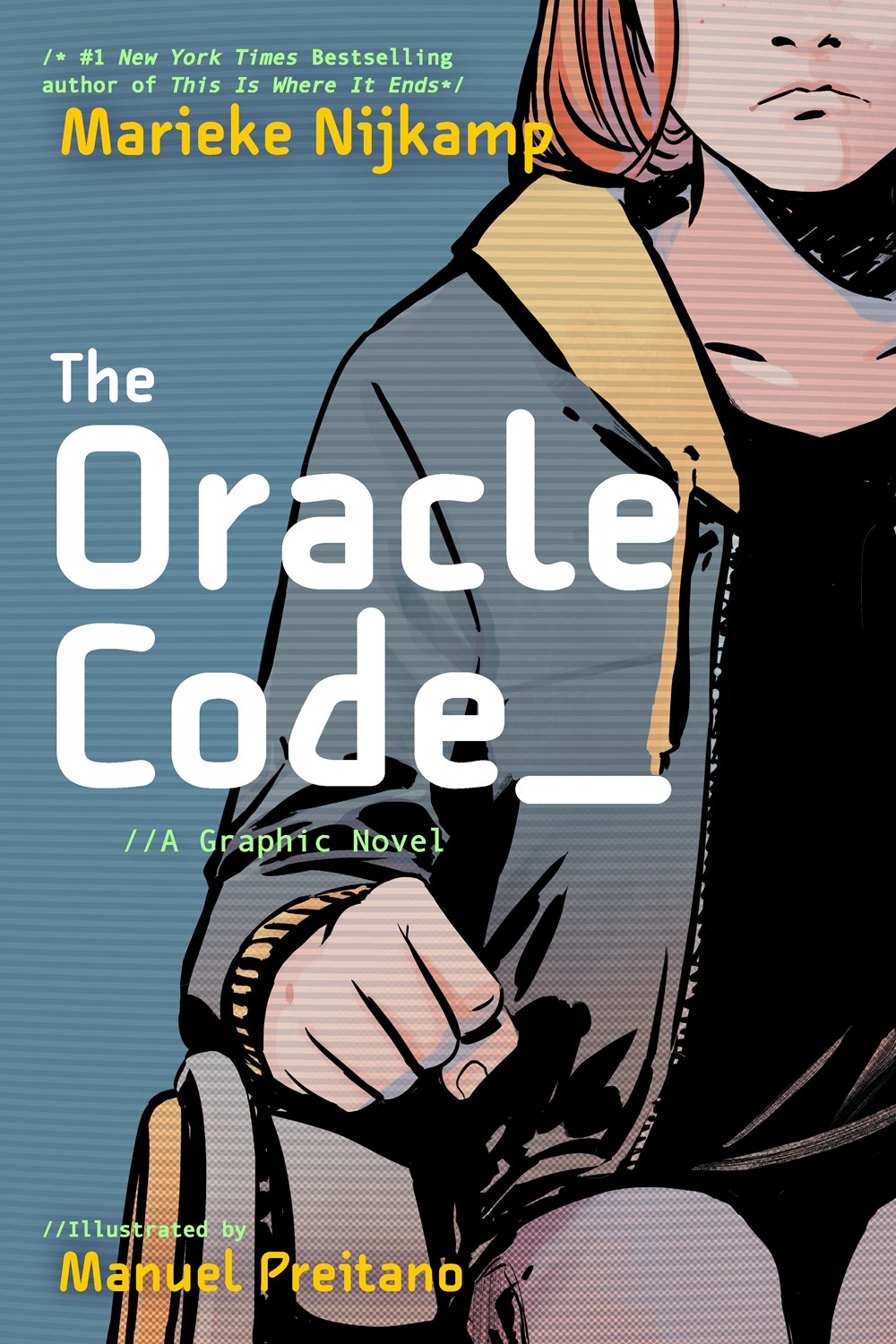
The Oracle Code, by Marieke Nijkamp/Illustrated by Manuel Preitano, (March 2020, DC Ink), $16.99, ISBN: 9781401290665

Ages 12+

Marieke Nijkamp, whose book, This Is Where It Ends is still one of the most intense books I’ve ever read, brings her intensity to a creepy mystery in the Bat-Family universe. The Oracle Code centers on Barbara Gordon, (later known as Batgirl), hacker and daredevil daughter of Gotham’s own James Gordon. Deftly creating her own entry in the DC Otherworlds universe by having Barbara’s gunshot paralysis occur while witnessing a police chase a suspect – as opposed to being shot, point blank, by the Joker, as was established in the 1988 graphic novel, Batman: The Killing Joke – we get a younger, Barbara whose personality is still in adolescent flux, and will be formed by the events she experiences in The Oracle Code. Barbara enters the Arkham Center for Independence, delivered by her father, to learn how to navigate her new normal and undergo physical, mental, and emotional rehabilitation. Barbara is slow to come around, and we feel her anger and her despondence as powerfully as we feel her sense of loss. When she meets a fellow patient who insists her brother is also at Arkham, Barbara thinks, at first, that the girl is dealing with her own loss: until her gut tells her otherwise. Barbara opens up her own investigation, which could put her at even greater risk.

I loved The Oracle Code. Big shoutout to one of my favorite colorists, Jordie Bellaire, for creating a somber, almost sinister mood with Manuel Preitano’s fantastic artwork. The story builds as we wonder who’s reliable and who isn’t, and Barbara doesn’t escape judgement here, either. Seeing Barbara reclaim her agency is an incredible thing; readers will appreciate her frustration as she is blown off and questioned time and again. Another home run for DC Ink and for Marieke Nijkamp.

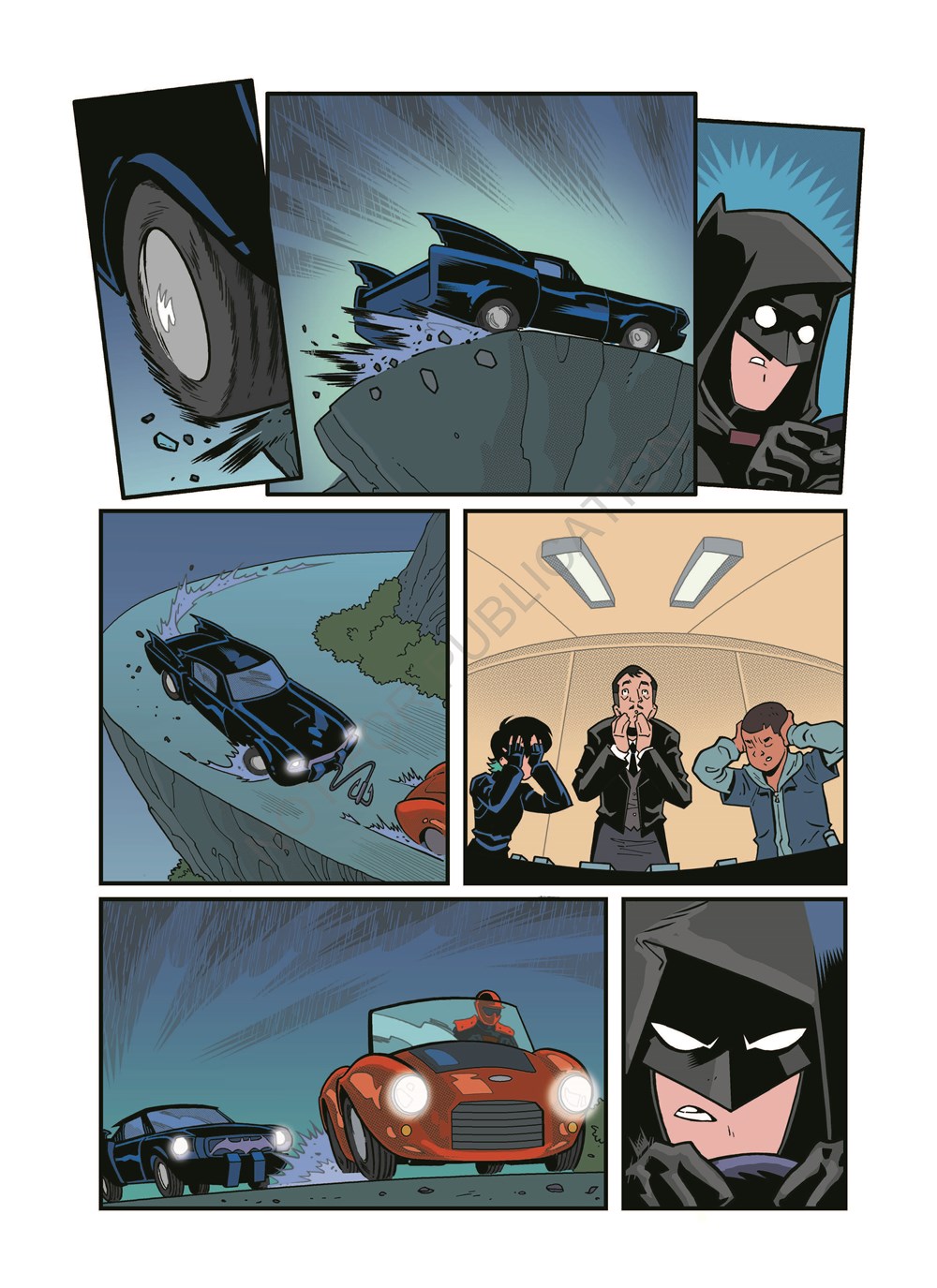
Batman: Overdrive, by Shea Fontana/Illustrated by Marcelo Di Chiara, (Feb. 2020, DC Ink), $9.99, ISBN: 9781401283568

Ages 10+

DC Superhero Girls writer and illustrator Shea Fontana and Marcelo Di Chiara turn their powers to a pre-Batman Bruce Wayne in Batman: Overdrive! Bruce Wayne, angry and struggling to come to terms with his parents’ deaths, turns his skills to detective work and automotive work: he decides to rebuild his dad’s first car. There’s an interesting new spin on his origin with Catwoman as the teen Bruce makes two new friends; Selina Kyle and Mateo Diaz, and we see young Bruce laying the foundation for the man who will become Batman.

Overdrive gives us a Bruce Wayne fraught with conflict. Alfred isn’t in his confidence yet; he pushes back and argues with him at every turn. He’s working through his anger and learning to trust here, and framed within the story of his father’s car, Batman: Overdrive is a solid Batman origin story. This skews toward a slightly younger audience in both writing and artwork; middle schoolers will enjoy this as much as a teen audience. Frustration with parents and a strong desire for freedom will resonate with all readers.


Posted in Graphic Novels, Teen, Young Adult/New Adult

DC’s new YA graphic novels star Wonder Woman and Batgirl

DC Comics has been putting out consistently good original graphic novels under their DC Ink imprint.  They’ve hired top-name YA talent, like Lauren Myracle (Catwoman), Mariko Tamaki (Harley Quinn), Kami Garcia (Raven), Danielle Paige (Mera) and Marie Lu (Batman) to tell a more human story for each of these super-teens. When I received copies of Louise Simonson’s upcoming graphic adaptation of Leigh Bardugo’s Warbringer and Sarah Kuhn’s Shadow of the Batgirl, I squealed.

Wonder Woman: Warbringer, by Leigh Bardugo/Adapted by Louise Simonson/Illustrated by Kit Seaton, (Jan. 2020, DC Ink), $16.99, ISBN: 978-1-4012-8255-4

Ages 12+

Before she was Wonder Woman, she was Diana, daughter of Hippolyta and the only inhabitant of Themiscyra to have been created, molded, given life at the behest of her mother and granted by the gods. This vision of Themyscira is more like a Valhalla for fallen female warriors: the way in is to die in battle. Because Diana’s existence differs from other residents of the island, she constantly feels she must prove herself to her Amazon sisters. The chance comes during a race – which she becomes diverted from when she sees a sinking ship and one survivor flailing in the water. The ship, from the world of Man, should not be there, but Diana can’t stand to let anyone die. She rescues a young woman named Alia Keralis, hiding her away until she can figure out what to do. But Themyscira reacts to Alia’s presence, and after consulting with the Oracle, Diana learns that Alia is a Warbringer – a descendant of Helen of Troy, and doomed to bring war, bloodshed, and misery wherever she goes – decides to bring Alia back to her world. When Diana and Alia arrive in modern-day New York, they find themselves in the middle of a struggle between factions who want the Warbringer for themselves, whether to end her line or possess her power.

Louise Simonson is a comic book legend, with Marvel and DC titles to her credit. Here, she masterfully adapts Leigh Bardugo’s novel to graphic format, focusing on Diana’s relationships: with the Amazons, with her mother, with Alia; each one fraught with tension. Diana learns to navigate these relationships while unraveling an ancient mystery in order to save the world. Literally. Kit Seaton’s artwork gives us mythic monsters, urban living, and sprawling Themyscira. There are moments where Diana’s innocence about the modern world of Man is played for laughs, like when she goes back at a guy making comments on the subway. Alia and her brother are biracial; Alia’s best friend, Nim, is Southeast Asian and bisexual.

Like the other DC Ink books, this one is a good add to your YA original graphic novels.


Shadow of the Batgirl: A Cassandra Cain Graphic Novel, by Sarah Kuhn/Illustrated by Nicole Goux, Feb. 2020, DC Ink), $16.99, ISBN: 978-1-4012-8978-2

Ages 12+

Cassandra Cain, teen assassin, is on the streets hunting her latest prey. But the dying pleas with Cain to relay a message to his daughter strikes a chord, and she goes on the run, hiding out in… a library! She sits in on a Batgirl storytime talk, delivered by my favorite comic book librarian, a wheelchair-bound Barbara Gordon, and finds herself enamored with Batgirl. Never taught to speak by her father, crime lord David Cain, she finds refuge with a local restaurant owner, Jackie Yoneyama, and eventually, Barbara Gordon herself. As Cassandra begins opening up to the two women, she also learns to speak, read, and write, and discovers that her father is wreaking havoc in Gotham City in his quest to gain control over the world’s assassins. It’s time for someone new to assume the Batgirl mantle, and Barbara knows the Cassandra has what it takes.

I am psyched that we get a Batgirl story that stars two different Batgirls! Barbara Gordon is more of an mentor/guiding force here; readers familiar with Batgirl’s history will know she’s in a wheelchair after the events of The Killing Joke. If you don’t know, it’s fine; it has no bearing on this story. Barbara has to pass on the cape and cowl, and Cassandra – an Asian-American girl who knows how to fight, and has a strong inner morality that steers her away from her cruel father. Sarah Kuhn can write great comic moments, and there a few in here, to lighten the storyline. The artwork is more colorful than I’ve seen in other DC Ink books, which tend toward two-color, with extra color for emphasis; here, we get some warm oranges when Cassandra is in the presence of Barbara and Jackie; colors tend toward cooler blues and purples when she’s struggling with her thoughts or shades of rose for other character’s memories. I loved Shadow of the Batgirl. Sarah Kuhn knows how to give readers a great superheroine origin.