Posted in Preschool Reads, Uncategorized

Book Review: Rain Romp, by Jane Kurtz/Illus. by Diana Wolcott (Greenwillow Books, 2002)

RainRompRecommended for ages 3-6

Preschoolers often deal with moods that they don’t know how to control; many will associate with this young girl who wakes up in a bad mood on a rainy day. Her parents try to boost her mood, but she wants none of it, until she decides to stomp her bad mood away in the rain. Her parents join her, and the bad mood goes away. The watercolor and gouache art is perfect to convey the both the weather and the girl’s moods, going from angry and gray, like the rain, to happy and content, as the sun peeks through the clouds. The text curves around the art and gets larger for emphasis when the girl vents her anger.  As she and her family hug, mood lifted, the text curves underneath them, allowing the reader to join in the hug.

This would be a good addition to a read-aloud on moods. There could be a discussion on what preschoolers do when they are angry, or sad, or happy. If they feel sad or mad, what makes them feel better? A good storytime craft would allow the children to draw a picture of how they deal with a bad mood, and they could receive a smiley face handstamp at the end of the storytime.

Posted in Uncategorized

Book Review: I Stink! by Kate McMullan/illus. by Jim McMullan (HarperCollins Children’s Books, 2002)

i stinkRecommended for ages 2-5

While the rest of the city sleeps, a garbage truck wakes up to start his work day. The smiling truck is proud of his powerful engine and the noises and smells that are part of his job – he roars and burps his way through an “alphabet soup” of trash, from apple cores to zipped-up ziti with zucchini-and brags about how much he stinks, telling the reader, “No skunk has ever stunk this bad!” He heads to the river to eject the trash onto a barge, and heads back to the garage to gas up and sleep until the next night. The watercolor-and-ink illustrations use a palette of darker colors to communicate the sleepy city and the colors of the garbage itself. The text is bold and appears in assorted sizes and colors, fitting the garbage truck’s friendly and big personality.

The voice of the truck provides for a fun read-aloud, where children can chime in and make truck noises: burping, roaring, saying ahh. There are many truck crafts, songs and fingerplays to create a truck-related storytime. Children can create their own trucks using construction paper shapes and popsicle sticks; several websites offer printable truck pictures to color.

Posted in Preschool Reads, Toddler Reads, Uncategorized

Book Review: Baby in Car, by Monica Wellington (Dutton Books, 1995)

baby in a carRecommended for ages 0-4

Monica Wellington’s Baby in a Car begins with the question, “What does baby see?” and answers by taking a toddler on a road trip filled with fun things to see from the car. This brightly colored board book is filled with bold, bright illustrations that toddlers will easily recognize, from traffic lights and taxis to flags and umbrellas.  The cartoon style illustration uses gouache collage to provide texture, including the blades on a helicopter, leaves on an apple tree, and the moon’s shading. Young readers will be attracted to the bright pictures of easily identifiable objects, and the childlike lettering further communicates a young, happy tone. Parents and guardians can use the book on car rides, whether to the grocery store or a longer family trip, to keep children happy and begin conversations about their surroundings.

Baby in a Car is part of a series by Wellington that includes Baby in a Buggy, Baby at Home, and Baby Goes Shopping.

Story time activities could include traveling rhymes and fingerplays including Wheels on the Bus and Over the Mountain. The book can be used in a participatory fashion, with the reader asking, “What does baby see?” and allowing parents and children to respond with each picture. 

Posted in Uncategorized

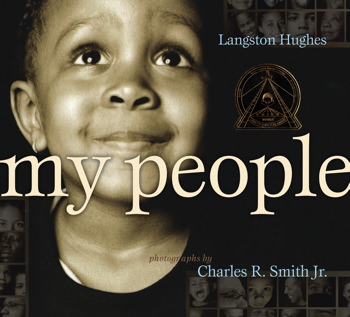
Book Review: My People, by Langston Hughes/illus. by Charles R. Smith Jr. (Ginee Seo books/Atheneum Books for Young Readers, 2009)

my peopleRecommended for ages 3-8

Langston Hughes’ 1923 poem is brought to life with images by illustrator Charles R. Smith in this 2010 Coretta Scott King Illustrator Award-winning book. The book brings together the 33 words of Hughes’ beautiful ode to beauty and sepia-toned photographs of African-Americans of all ages. The photos are close-up, happy, expressive faces against a black background, with additional photos of faces running down the margins of the pages; these are lighter sepia so as not to distract from the main photos and words on the page. The faces appear to emerge from the shadows, and Smith often juxtaposes young and old together, creating a perfect harmony on each spread. The font is large and bold, alternating white and sepia. The endpapers offer a collage of faces in the overexposed, faded sepia we see on the page margins inside.

This is an excellent story time choice for young audiences. The faces will appeal to babies, toddlers and preschoolers alike, and at 33 words, the reader can take his or her time, allowing listeners to enjoy the faces and allow the words to sink in. This would make an excellent Black History Month reading, but can be a reading done at any time. It would be a good addition to a multicultural story time in diverse neighborhoods, which could include fingerplays and songs from other cultures. Participants can be invited to contribute their own nursery rhymes, songs and fingerplays.

Posted in Uncategorized

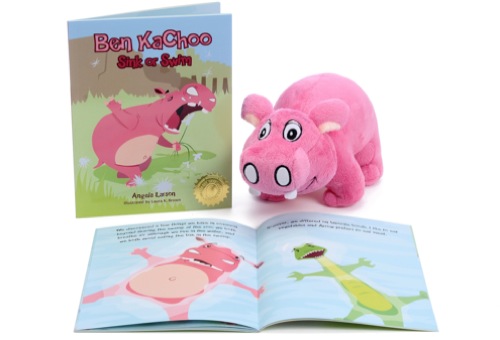
Book/Toy Review: Ben Kachoo – Sink or Swim, by Angela Larson/illus. by Laura K. Brown (Fierce Fun Toys, 2010)

ben kachooRecommended for ages 2-8

Ben Kachoo is a hippo with allergies. Unfortunately for him, he lives in a swamp at the zoo that does nothing but aggravate those allergies. He uses his sneezes as a positive, though; they are so forceful that they propel him through the water – until the day they send him crashing into a crocodile named Arrow. You see, the crocodiles and the hippos don’t mix, despite sharing the same swamp; so his collision with Arrow leaves Ben  worried, at first, and he apologizes profusely. Arrow couldn’t be friendlier, and not only accepts his apology but strikes up a friendship with the sneezing hippo.

The story of how unlikely friendships occur (with an emphasis on manners) is a great story for young readers and for read-alouds. The cartoon-type artwork is bright and lively, with exaggerated facial expressions taking up much of the pages and making it accessible for young, pre-readers to enjoy and follow along. The story font is black, bold, and in an expressive, angular font that will keep the interest of slightly older readers.

The accompanying plush Ben is a friendly, soft companion for a read-aloud. A squeeze of his tail activates one of his six sneezes, a “Whoa!” and an “Excuse me!”. which can enhance the storytelling. The story is also a good candidate for felt board storytelling; there are many sites that offer animal printouts.

This would be a great addition to a read-aloud on either friendship or manners. DLTK’s website offers a friendship craft where children trace their hands and cut them out to form a wreath.

Posted in Uncategorized

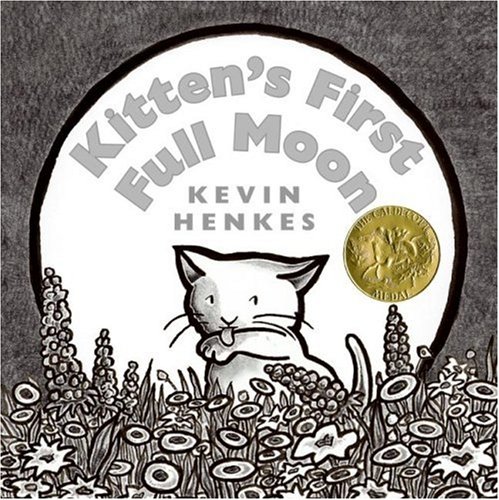
Book Review: Kitten’s First Full Moon, by Kevin Henkes (Greenwillow Books, 2004)

kittens-first-full-moonRecommended for ages 2-5

An adorable kitten sees her first full moon. Believing it is a saucer of milk, she sets out to have a taste. Her curiosity leads her on a series of misadventures where she ends up with bugs on her tongue, hurt from a leap off the porch, and soaking wet from a dive into a pond. The 2005 Caldecott Medal winner places Kitten’s actions in a repetitive series: she sees the moon and wants to drink from it; she takes an action and deals with the consequences; and the moon – referred to as the “little bowl of milk” – waits for her next move. Will Kitten learn from her mistakes? Kevin Henkes uses a charcoal and cream-colored palette, with simple, understated illustrations outlined in thick, black line, to tell his tale, and Kitten’s face is very expressive. The brief text on each page is simple, bold, and black; it causes no distraction for young readers and listeners. Preschoolers will see themselves in the tenacious Kitten, who is single-minded in her goal.

The repetitive actions of the story and its happy resolution make this book a good choice for a story time read aloud. This could be part of a moon stories read aloud with companion books like Bringing Down the Moon by Jonathan Emmett, which tells a similar tale. There are moon rhymes and fingerplays that can flesh out this story time.

The author’s website offers teaching resources for parents and educators.

Posted in Preschool Reads, Toddler Reads, Uncategorized

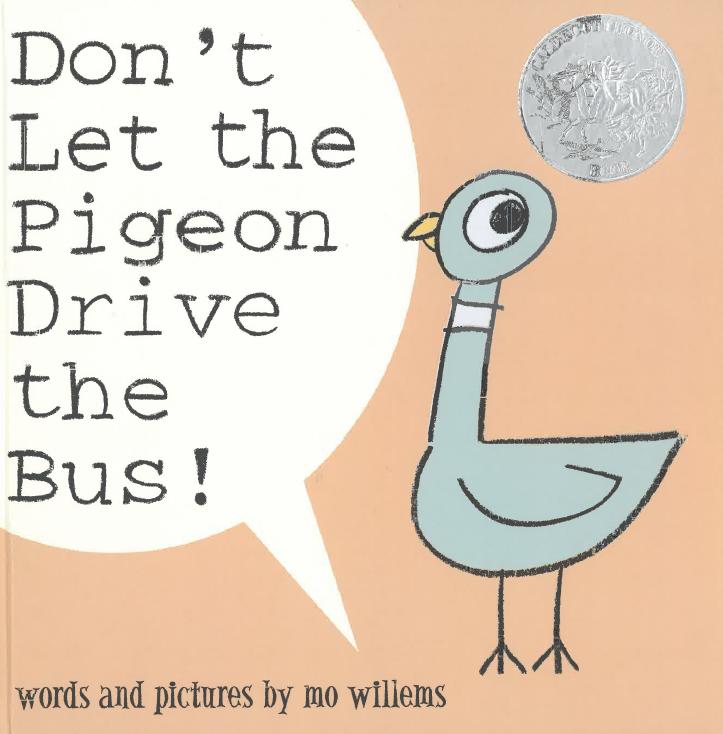
Book Review: Don’t Let the Pigeon Drive the Bus! by Mo Willems (Hyperion, 2003)

pigeon_coverRecommended for ages 0-5

A bus driver appears on the scene and asks his audience to watch his bus while he tends to something off-page; he is very firm in his request for one favor: don’t let the Pigeon drive the bus! As soon as the bus driver leaves, we meet the Pigeon, who spends the rest of the book asking, pleading, cajoling, and throwing a temper tantrum as he attempts to get readers and listeners to allow him to drive the bus. Mo Willems, an Emmy-award winning animator who worked on Sesame Street, uses simple line drawings and a plain palette to bring the Pigeon to life and allows him exaggerated facial expressions and that communicates his increasing agitation. Mr. Willems also makes great use of the page edges to denote action taking place off-page, particularly during Pigeon’s meltdown, which takes up an entire spread and is indicative of the stomping and thrashing that accompanies many a meltdown. Willems uses a bold, simple typewriter font to communicate to audiences, except for Pigeon’s meltdown, where the typewriter font is enlarged, capitalized, bolded, and outlined in yellow to emphasize his tantrum. The simplicity of the art allows audiences to focus on the text and the Pigeon himself; preschoolers will recognize themselves in his behavior and laugh along with him.

Don’t Let the Pigeon Drive the Bus! received Caldecott Honors in 2004 and is the first in the Pigeon series, including the  titles Don’t Let the Pigeon Stay Up Late!, The Pigeon Finds a Hot Dog!, The Pigeon Wants a Puppy!, and The Duckling Gets a Cookie?! There are Pigeon board books with original content for younger readers, including The Pigeon Loves Things That Go! and The Pigeon Has Feelings, Too!

Don’t Let the Pigeon Drive the Bus! is an interactive story, making it perfect for a story time. The Pigeon’s dialogue is meant to be responded to, and listeners can tell him “NO!” as he continues pleading to drive the bus. Like No, David!, Don’t Let the Pigeon Drive the Bus! can be used as part of a story time on following rules; it can also be a read-aloud that talks about feeling. Mo Willems’ website offers printable Pigeon and Duckling finger puppets and a printable picture of the month, both of which will work for a Pigeon craft.


Posted in Preschool Reads, Toddler Reads, Uncategorized

Book Review: Thank You Bear, by Greg Foley (Viking, 2007)

thank-you-bearRecommended for ages 2-4

Bear finds a box that he cannot wait to share with his best friend, Mouse. On his way to Mouse, he meets other friends – a Monkey, an Owl, a Fox, an Elephant, a Squirrel and a Bunny – who criticize Bear’s gift as being too small, too ordinary, or even a better gift for someone else. Dejected, Bear is unsure whether or not his gift is worth giving, until Mouse shows him that friendship is all about gratitude. Preschoolers will appreciate this simple book on friendship and gratitude, and the joy that even the simplest gifts can bring to another. The font is a spare, typewriter-like print, and the pastel watercolor artwork, outlined with strong black lines, bring simplicity to a story that may diverge from more brightly colored books, but will stand out because of it.


This would be a great addition to a storytime on friendship and gratitude. There is the potential for a wonderful discussion about friends and giving – Shel Silverstein’s The Giving Tree would be a great companion story to this book – and the importance of saying “thank you”. Friendship is a popular storytime theme, with many songs available on children’s CDs. DLTK’s website has a friendship wreath craft made with traced handprints that can be prepared in advance and ready for attendees to assemble with help from their parents/guardians.

The author’s website has downloadable designs for Bear stationery and computer wallpaper, in addition to links to other books. Mr. Foley’s “Bear” series includes Make a Wish Bear; I Miss You Mouse; Good Luck Bear and Don’t Worry Bear, which also features his friend, Mouse.

The book received the Charlotte Zolotow Award in 2008 and was a nominee for Iowa’s Goldfinch Book Award (2011).

Posted in Toddler Reads, Uncategorized

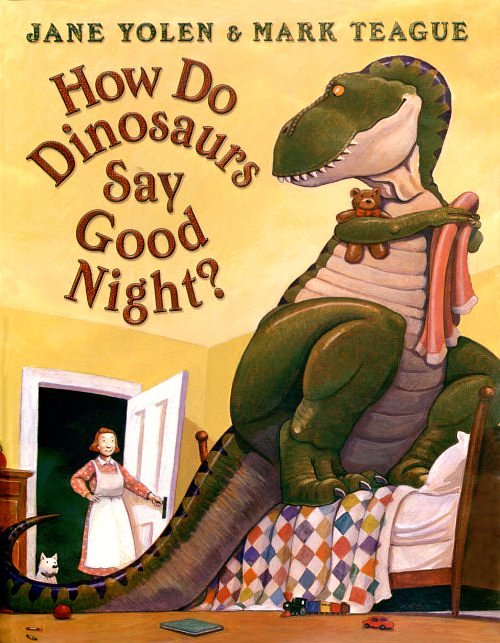
Book Review: How Do Dinosaurs Say Good Night? by Jane Yolen/Illus. Mark Teague (Blue Sky Press, 2000)

how-do-dinosaurs-say-goodnightRecommended for ages 2-5

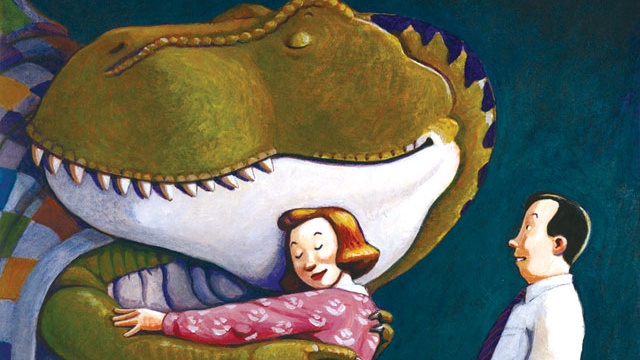
Do dinosaurs really act up when it’s bedtime? A host of dinosaurs, acting much like preschoolers, react to bedtime and show readers how a dinosaur should say good night.

Dinosaurs are a popular topic among young audiences, and these dinosaurs, loaded with personality, will connect with young readers. Young audiences will see themselves reflected in the dinosaurs and how they approach bedtime. The earthy, colorful paintings offer varying perspectives – some dinosaurs are viewed from up high, some tower over everything around them – and multicultural families will appeal to all families. Dinosaur names are cleverly offered in each room, providing the chance for a fun name hunt. The endpapers illustrate all the dinosaurs found in the story, along with their names.

This is a great story for either a dinosaur-related read-aloud or a bedtime tale, where children and parents/guardians can talk about how they good night in their homes. There are numerous bedtime songs and fingerplays to use in conjunction with the book, and Massachusetts Honor Books offers a fun activity where children can write down “good night” in different languages, posting them on a map of the world.

The book has received numerous accolades, including the ALA Notable Children’s Books: 2001, Colorado: Children’s Book Award Nominees: 2002, Helbie Award: 2001, Maryland: Children’s Book Award Honors: 2003, Missouri: Building Block Picture Book Award Nominees: 2001, Nevada: Young Readers’ Award Nominees: 2003, Tennessee: Volunteer State Book Award Nominees: 2003, Texas: and the 2×2 Reading List: 2001.

The author’s website offers information about her other books, book trailers, and resources for teachers and storytellers. The How Do Dinosaurs series includes How Do Dinosaurs Eat Their Food?, How Do Dinosaurs Go To School?, and How Do Dinosaurs Play With Their Friends?


timthumb

Posted in Uncategorized

Book Review: Tickle the Duck, by Ethan Long (Little, Brown, 2005)

tickle the duckRecommended for ages 2-5

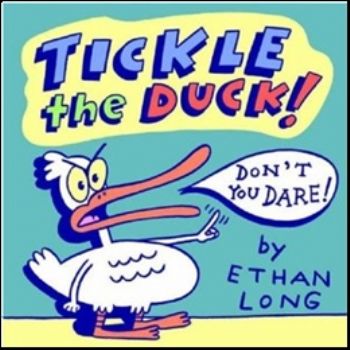
A cranky duck warns the reader not to tickle him – not to tickle his stomach, his foot, or under his wing – but really enjoys it when you do. Textured spots on each page add an additional dimension for young readers.

This 2006 Bulletin Blue Ribbon winner features a duck, reminiscent of a child who demands not to be tickled, only to shriek with laughter when tickled. It becomes a game, just as it does with this story. The story begins and ends with the endpapers, making use of every bit of space the book has to offer, and the different, touchable textures on duck’s body are exciting for younger, more tactile readers. The cartoon artwork and the big, colorful fonts will appeal to readers. The artwork is boldly drawn and outlined in black; the colors are simple – blue-gray, yellow, orange, and white – but stand out. The book could provide a fun laugh-out-loud read-aloud with an enthusiastic leader.

There are four books in the Duck series: Tickle the Duck!; Stop Kissing Me; Duck’s Afraid of the Dark; and Have You Been Naughty or Nice?

The author’s website offers more information about his books.