Posted in Uncategorized

The latest Explorer Academy installment, and a code-breaking adventure!

One of my absolute favorite middle grade series to emerge in the last couple of years has been, without a doubt, the Explorer Academy series from NatGeo Kids by Trudi Trueit. I’ve been waiting on every book in the series with the same anticipation, excitement, and – when the book is done – pins and needles feeling, knowing I have to wait for another book in the series. I’ve gotten my nephew hooked on the series, too: when I get my hello hug from him, he’ll say, “Did you get the next Explorer Academy book yet?” I’ve just ordered the first three books for my library, too, so I’m going to start booktalking this to my I Survived readers… which is to say, all my readers. So let’s talk about that third book, shall we?
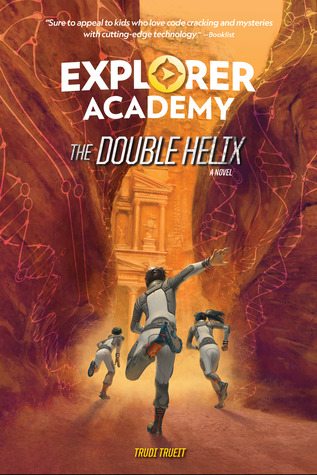
Explorer Academy: The Double Helix, by Trudi Trueit, (Sept. 2019, National Geographic Kids), $16.99, ISBN: 9781426334580

Ages 8-13

Things are heating up with the third book in the Explorer Academy series! In the last book, The Falcon’s Feather, Cruz Coronado and his friends narrowly escaped a scary situation, only to discover that Cruz’s dad has disappeared. The shadowy Nebula group is getting braver in their pursuit of Cruz and the pieces of his mother’s ciphers. Cruz needs to stay one step ahead of them while trying to track down his father, and find the next cipher. The closer Cruz gets to his 13th birthday, the higher the stakes. What happens when Cruz turns 13? WE NEED TO KNOW!

While the main plot continues to be Cruz vs. the Nebula group, we get some great subplots, including a look at space archaeology, where scientists use satellites to look for signs of looting at ancient burial sites. There’s great technology, too: this time around, the kids get to work with a PANDA: a Portable Artifact and Data Analyzer, that scans items and identifies the origins of bones, fossils, pottery, and includes a holographic image of the artifact being scanned.

Illustrated throughout, the latest installment is white-knuckle reading that adventure fans will refuse to put down from start to finish. The characters have become old friends at this point, so readers can jump in, reacquaint themselves, and get down to the business of conservation, preservation, and solving mysteries. The Truth Behind the Fiction highlights a space archaeologist and Egyptologist. Don’t miss this one.


Explorer Academy: Code-Breaking Activity Adventure, by National Geographic Kids, (May 2019, National Geographic Kids), $12.99, ISBN: 978-1-4263-3307-1

Ages 8-12

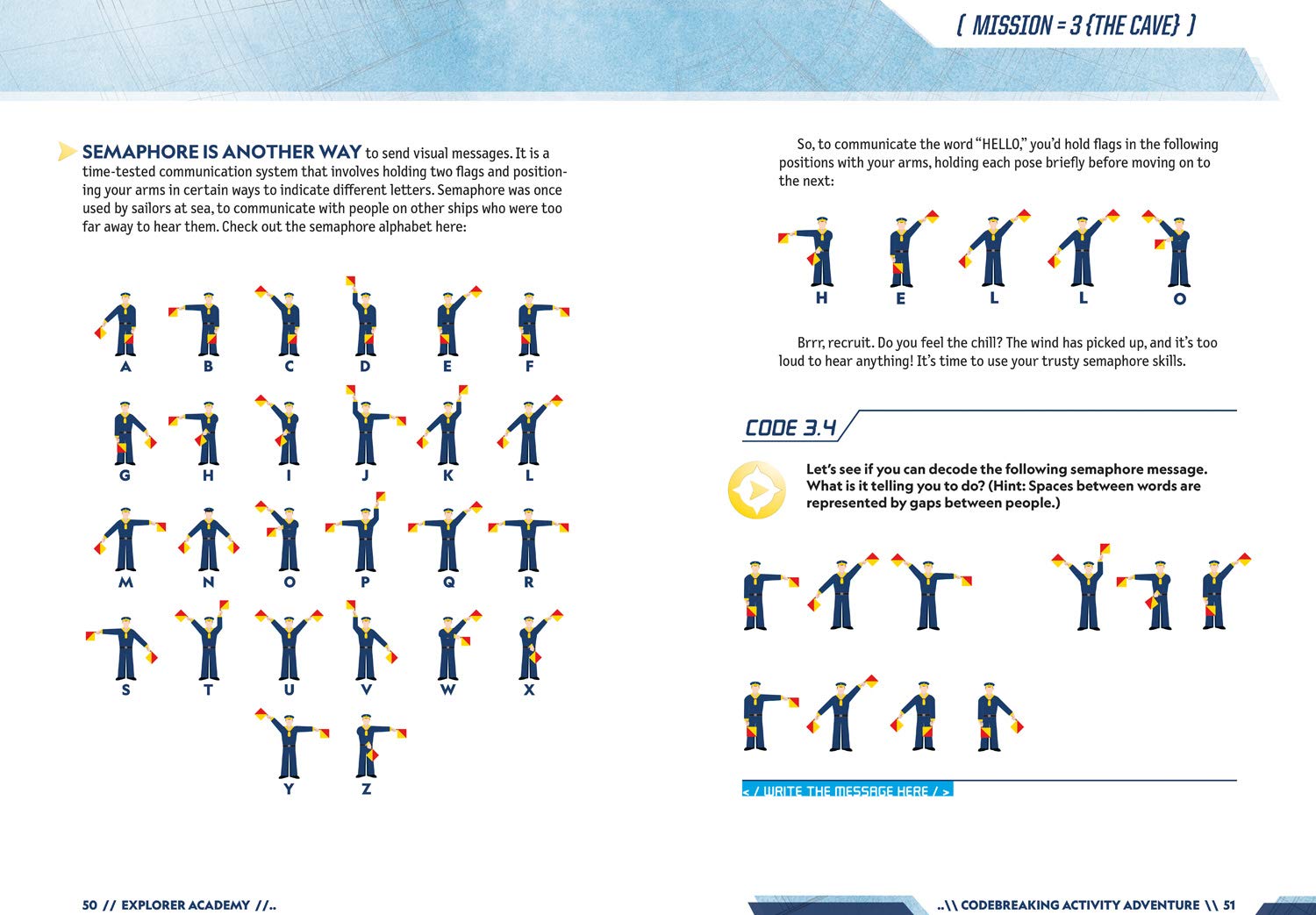
Who loves secret codes? This book, written like a handbook for Explorer Academy students, teaches readers secret codes while sending them on codebreaking missions throughout the book. Hubbard, the adorable Westie who shows up in the Explorer Academy series, appears throughout the book with helpful hints if you get stuck. Readers and codebreakers will learn about acrostic messages, morse code, semaphore, pigpen ciphers, and more, all while learning about different areas in the Explorer Academy: The Library, the CAVE, and the Museum, for starters. A certificate of achievement is ready for readers who finish their missions.

This book is just too much fun, and nicely incorporates the Explorer Academy into the activities. This book would be beat up in circulation in my library, but for Explorer Academy fans, this is a great gift. And for kids who love the spy activities I have at my library, this will be a fun group of exercises to emulate. I had a fun Spy Week during Summer Reading a few years ago; bringing some secret coding adventures back may be fun to explore. Since I have the Explorer Academy books arriving at my library soon, it may be time for an Explorer Academy adventure, with some codebreaking and scavenger hunts around the children’s room… hmmm…
Posted in picture books, Uncategorized

Blog Tour & Giveaway: Along the Tapajós

Along the Tapajós, by Fernando Vilela/Translated by Daniel Hahn, (Oct. 2019, Amazon Crossing Kids), $17.99, ISBN: 978-1542008686

Ages 5-8

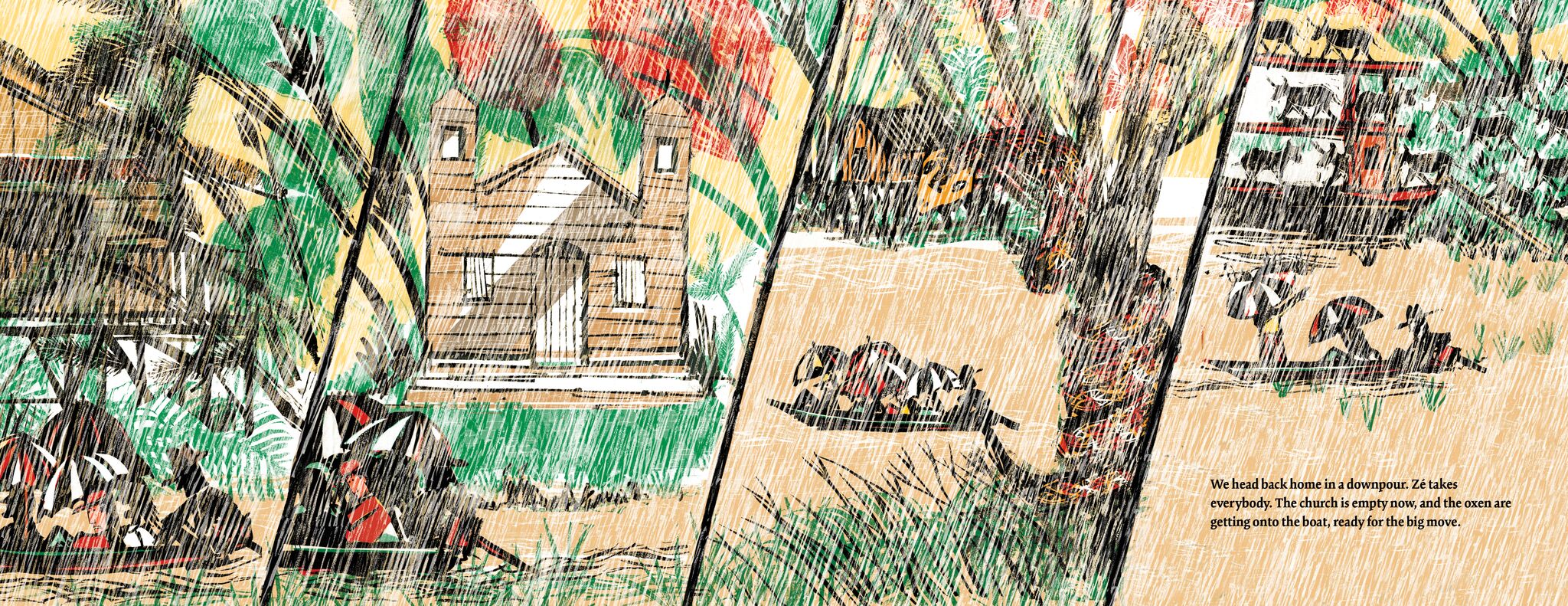
Amazon Crossing Kids’ latest picture book in translation, Along the Tapajós, is the story of Cauā and Inaê, a brother and sister who live in Pará, a Brazilian state along the Tapajós River. The home in Pará are built on stilts, and there are no school buses: kids travel to school by boat! When the winter season arrives, everyone returns home to pack up their homes and relocate to higher ground to wait out the rains. But when the family arrives at their new location, the siblings realize that Titi, their pet tortoise, has been left behind! Tortoises can’t swim, so Titi faces either drowning in the flooding or starving to death, but Ma stands firm: they’re not going back until the summer season. Determined to rescue their pet, Cauā and Inaê slip away that evening and head back to their home to rescue Titi.

Inspired by one of author Fernando Vilela’s trips to the Amazon Rainforest Along the Tapajós introduces readers to a different culture and a different way of life: going to school by boat? Living in a house on stilts, and moving with the seasons? There is so much going on in Along the Tapajós! While introducing a different way of life to kids, the story links readers through the love of a pet, the fear of forgetting and losing something beloved, and the excitement of an adventure to rescue it.

The digital and woodcut artwork is stunning, with vibrant, bright colors to celebrate the biodiversity of the Amazon: the endpapers show multicolored birds sitting on webs of crossed branches, and opaque waters with a glimpse at the life underneath; yellows, blues, and black stripes all show through the obscured water view. The artwork throughout is stunning, with bold colors and black line work, and images of communities working together to move to a safe space.

Most of my library kids are from countries in Central and South America. I can’t wait to read this to them and see what they think. Maybe I’ll hand out tortoise coloring sheets for an after-story craft! Ooh… and maybe have them contribute to an anaconda that will stretch across some of my display space… okay, I’m off to plan a rainforest storytime (I’ll be using Pragmatic Mom’s suggestions to start me off, along with one of my all-time favorite storytime books, The Perfect Siesta.)
Originally published in 2015 in Brazilian Portuguese, Along the Tapajós is available on October 1 and has a starred review from Kirkus. It also made School Library Journal‘s list, “The Marvelous Translated Picture Books of 2019 (So Far)“.

Fernando Vilela is an award-winning author and illustrator from Brazil. Published in Brazil under the title Tapajós, this book was inspired by one of his trips to the Amazon rainforest. He has received many awards for his books, and he has exhibited his artwork at home and abroad, including at the MoMA in New York and the Pinacoteca of the State of São Paulo. For his picture books, he has received five Jabuti awards (Brazil) and the New Horizons Honorable Mention of the Bologna Ragazzi International Award. He is also a plastics artist, and he teaches courses, lectures, and workshops on art and illustration. Learn more about him online at www.fernandovilela.com.br.

Daniel Hahn is an author, editor, and award-winning translator. His translation of The Book of Chameleons by José Eduardo Agualusa won the Independent Foreign Fiction Prize in 2007. His translation of A General Theory of Oblivion, also by José Eduardo Agualusa, won the 2017 International Dublin Literary Award. He recently served on the board of trustees of the Society of Authors. In 2017, Hahn helped establish the TA First Translation Prize, a new prize for debut literary translation. Learn more about him online at www.danielhahn.co.uk.

★“The vibrant colors in Vilela’s illustrations and the expressive faces of Cauã and Inaê bring lightheartedness to their dangerous journey and the cyclical living it prescribes. A riveting journey.” —Kirkus Reviews (starred review)

“This is one of those engaging titles that offers a glimpse of a location new to most American readers. More translations like this one, please!” —Fuse #8 Production

One lucky winner will receive a copy of Along the Tapajós, courtesy of Amazon Crossing (U.S. addresses). Enter the Rafflecopter giveaway!

Posted in History, Middle Grade, Non-fiction, Tween Reads, Uncategorized

Big nonfiction roundup!

I have been curating a pile of nonfiction over the last several weeks, ready to do a back to school post, but all these other great books started coming out, too… so, before this pile crushes me, let’s do this!

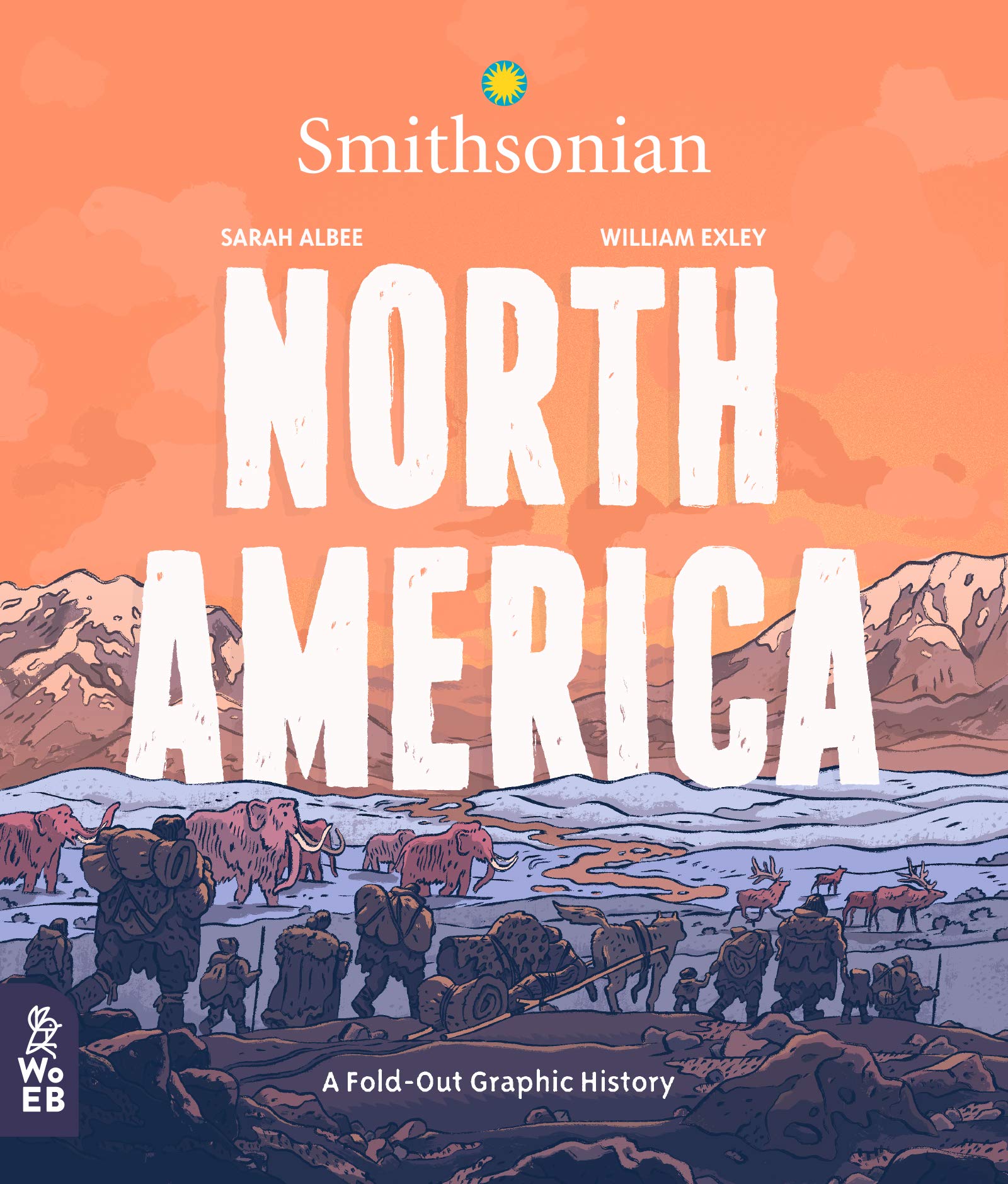
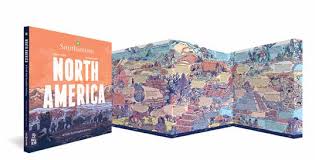
North America: A Fold-Out History, by Sarah Albee/Illlustrated by William Exley, (Oct. 2019, What on Earth Books), $19.99, ISBN: 978-1999967925

Ages 8-14

That What on Earth Books fold-out are so much fun! This time, we’ve got a fold-out graphic timeline of Canada, the United States, Mexico, and the Caribbean islands, going from 11,000 BCE to 2017. It’s fully illustrated and offers a wealth of history on early indigenous peoples, including the Olmecs, Maya, Taino, and Aztec. European invasions are covered – first the Vikings; later, Columbus and the conquistadors – and American history covers much of the book’s second half. History is captured with dates and a brief blurb about standout moments, and callout boxes call attention to larger happenings, like the spreading out of humans across the land, and how European conflicts played out in North America. Back matter includes facts; glossary; source notes, and an index.

Not one for circulation – it’ll sustain damage quickly – but it’s a good reference tool and darn fun to have at home. My little guy loves these books.

Source: Bounce Marketing UK


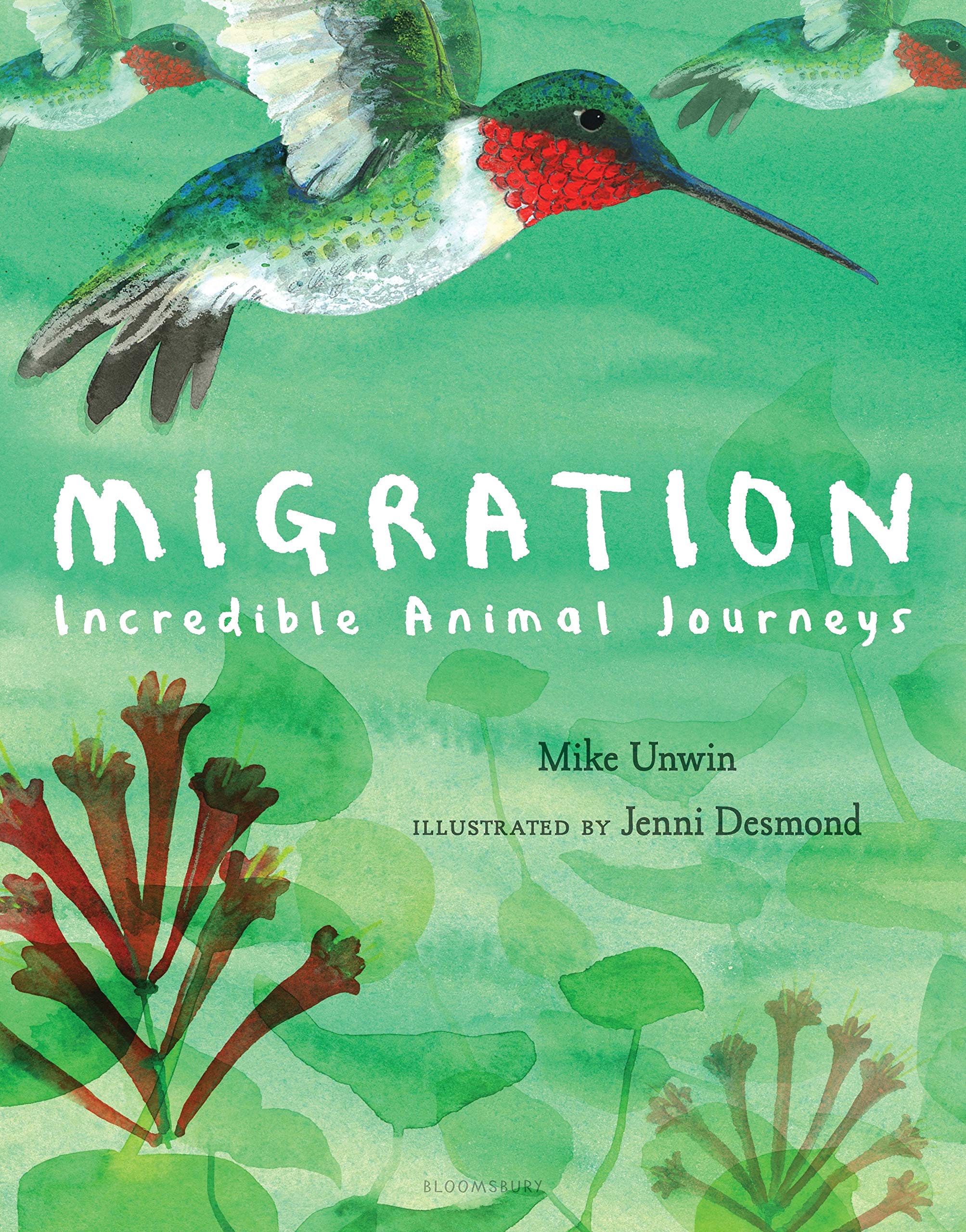
Migration: Incredible Animal Journeys, by Mike Unwin/Illustrated by Jenni Desmond, (Aug. 2019, Bloomsbury USA), $18.99, ISBN: 9781547600977

Ages 9-13

Originally published in the UK, Migration profiles 20 different migrating animals, including the humpback whale; emperor penguin; ruby-throated hummingbird; blue wildebeest, and green turtle. Each spread contains acrylic, watercolor, ink, pencil and crayon illustrations of these animals, captured in the progress of their journeys. Some artwork gives an incredible breadth of scale, like the spread dedicated to the Christmas Island red crabs, which form a “river of crabs” as they march to the sea. Others, like the humpback whale, are a more personal journey shared between a mother and her calf. Each spread provides a migration story, which reads like an I Survived novel: crossing rivers; digging through snow for food; flying for miles to reach their destination; marching across an icy landscape. Each spread also offers a quick animal fact. Back matter includes a migration map and notes on making the world safer for migrating animals.

Animals of all shapes and sizes make epic journeys across our planet, through harsh weather, avoiding hungry predators, in their efforts to survive. Travel around the globe with some of the world’s most incredible animals and discover their unique migration stories. A nice addition to your nonfiction collections, especially if your books on migration are spare.

Mike Unwin is a UK Travel Writer of the Year, and Jenni Desmond is a winner of the New York Times Best Illustrated Children’s Book, The Polar Bear. Migration: Incredible Animal Journeys has a starred review from Publisher’s Weekly.


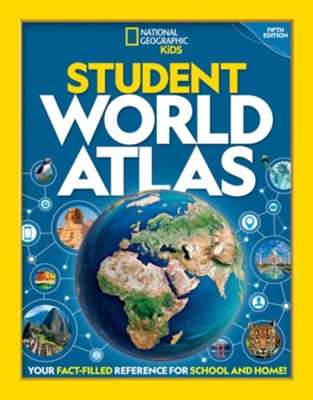
National Geographic Kids Student World Atlas (Fifth Edition), (July 2019, National Geographic Kids), $12.99, ISBN: 978-1426334795

Ages 8-12

This latest edition of this handy-dandy student reference has a wealth of facts, figures, and maps at your fingertips. There are over 100 maps, 70 incredible color photos, 50 charts and graphs with the latest data on climate change, the human footprint on our world, and most populous urban areas. Back matter includes an updated flags of the world section; a list of important websites on world resources, religions, languages, and quality of life; a glossary, thematic and place-name indexes, and more. If your budget allows for you to order two of these, do it: I like to keep one on hand at reference and put one into circulation. Along with the NatGeo Kids Almanac, you can’t go wrong with having these available for homework help.


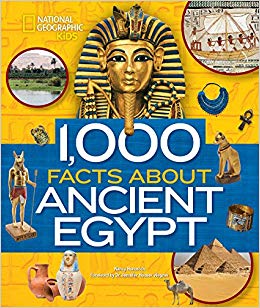
1000 Facts About Ancient Egypt, by Nancy Honovich (February 2019, National Geographic Kids), $14.99, ISBN: 978-1426332739

Ages 8-12

The 1000 Facts series from NatGeo Kids is almost as popular as the digest-sized Weird/Gross/Silly Facts books in my library. These are the books that prove that kids LOVE nonfiction! There are fast, bite-sized facts all about Ancient Egypt in this book: facts about the Egyptian gods and goddesses; facts about the Nile River; about making mummies and about the most famous mummy of them all, Tutankhamun; facts about inventions and temples; facts about hieroglyphics. There’s so much here, presented in compulsively readable, memorable chunks and illustrated with photos of artifacts. Back matter includes a glossary, a look at a tomb excavation, a timeline of Ancient Egyptian civilization, an index, and further resources. Have history fans? Is Ancient Egypt on the schools’ report list this year? Get this book on your shelf.


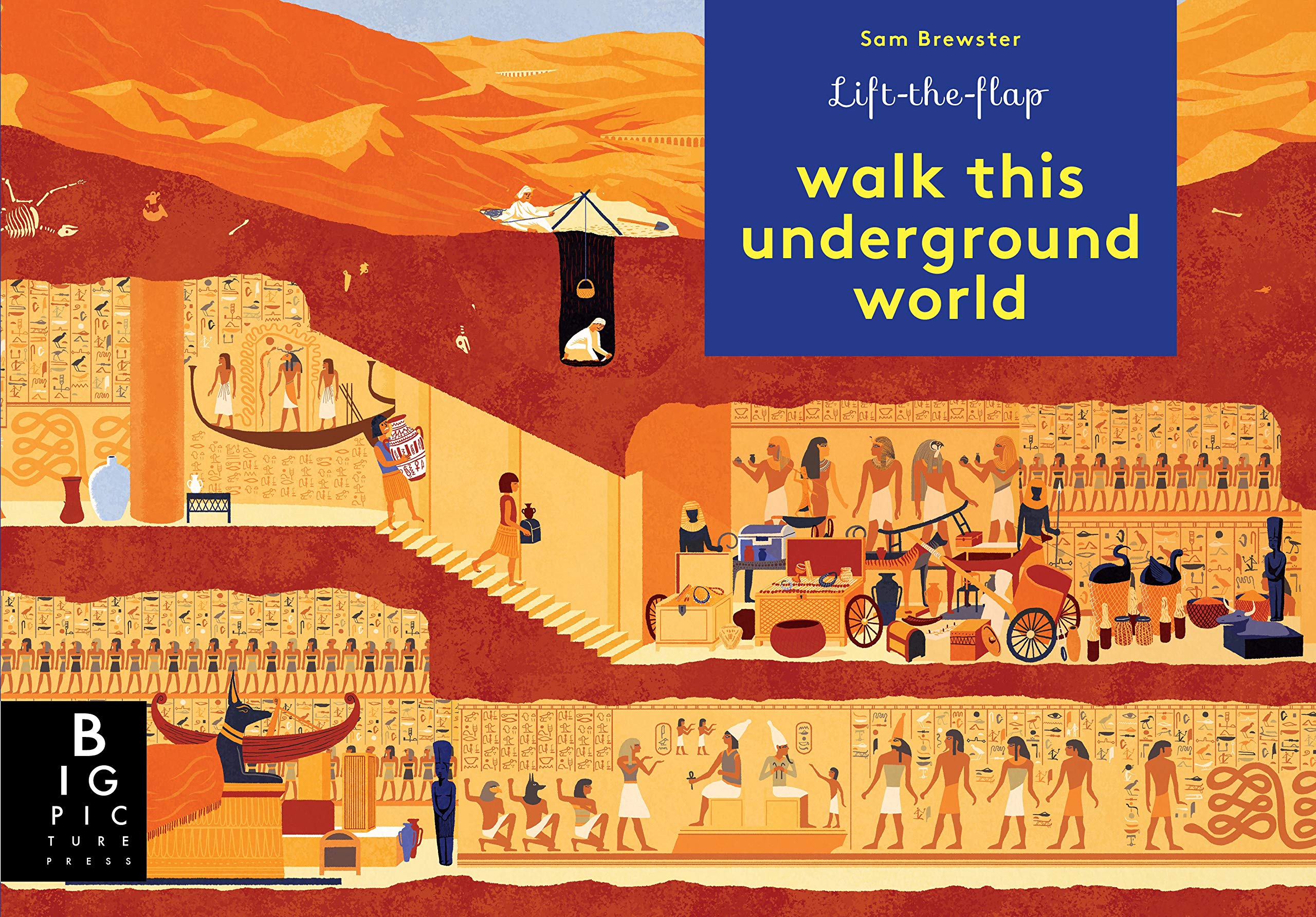
Walk This Underground World, by Kate Baker/Illustrated by Sam Brewster, (Oct. 2019, Big Picture Press), $19.95, ISBN: 978-1536208566

Ages 5-8

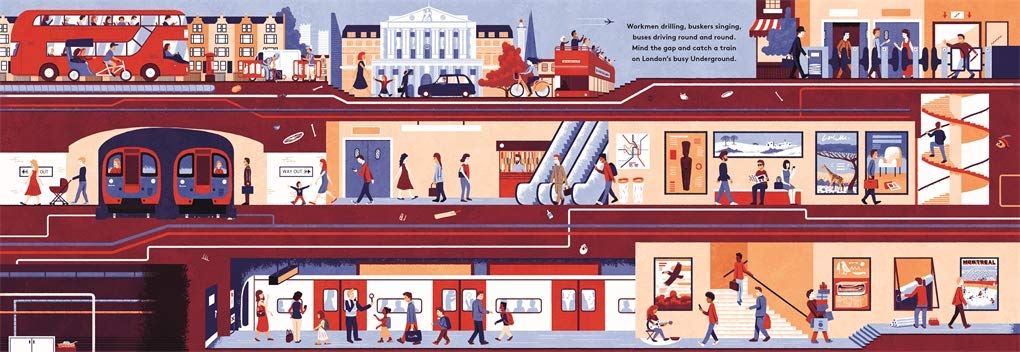
Lift the Flap fun! Readers can wander through underground worlds, from Montreal’s famous underground city to the ancient, underground tombs of Ancient Egypt. Wander the hidden natural world and see prairie dog dens, ant cities, and naked mole rat burrows. See Australian fortune hunters and Poland’s salt-rock mines; the bustling London Underground and the sleek underground train stations in Tokyo. There are 12 spreads with over 80 flaps to discover, making this a great gift book for the kiddos in your life. Definitely not going to last in circulation, but you could score a few copies for a program on underground ecosystems or travel.

That’s all for now – I have to get this copy of Walk This World back into my son’s room before he notices it’s gone!

Posted in Uncategorized

A greener, gentler world: The Green Giant

The Green Giant, by Katie Cottle, (July 2019, Pavilion Children’s Books), $16.95, ISBN: 978-1-84365-430-8

Ages 4-7

A little girl named Bea and her dog, Iris, spend summer vacation at Bea’s grandpa’s home in the countryside. One day, Iris chases a cat, sending Bea chasing Iris; the two discover a greenhouse packed with lush, green plants… and one of them is an honest-to-goodness giant! The friendly green giant befriends Bea, and tells her that living in the city was just too much: “…the city got more grey and it was hard to breathe. I had to leave”. Here in the magical greenhouse, the giant and all the plants have room to grow, and it shows: the illustrations depict bright, anthropomorphic foliage with smiling faces and outstretched branches and leaves. The greenhouse becomes Bea’s and Iris’s refuge for the summer, but all too soon, it’s time to go home. The giant hands Bea a gift of sparkling seeds, which she sprinkles outside her apartment window. A beautiful transformation takes place, turning the drab grey of the city into a green, yellow, and orange paradise! Will the giant return one day to see his friend’s handiwork?

The Green Giant is a lovely story about taking care of our world and encouraging green spaces. Katie Cottle takes an intuitive approach to talking green with younger children by creating a friendly green giant to explain that the city’s crowded, grey spaces made it too difficult to live – but, in an optimistic spark for the future, gives her seeds that will turn – maybe thanks to the greenhouse’s magic? – the concrete landsdcape into a living outdoor green space! The artwork is bright, bold, and primarily uses greens, oranges, browns, yellows, and blues, all coming to life from the a stark white background. Bea appears to be biracial; she is a child of color, and her grandfather presents as Caucasian.

Pair this with Ingrid Chabbert’s The Last Tree for an environmentally-focused read-aloud. You can also pair with Lois Ehlert’s classic, The Leaf Man, and invite kids to use leaves to make their own Green Giants and Leaf Men. Or invite parents to a container planting program, and encourage personal green spaces. Read an interview with author Katie Cottle on the Gardening Know How’s Blog, and visit her author webpage for more of her illustration work.

Posted in Uncategorized

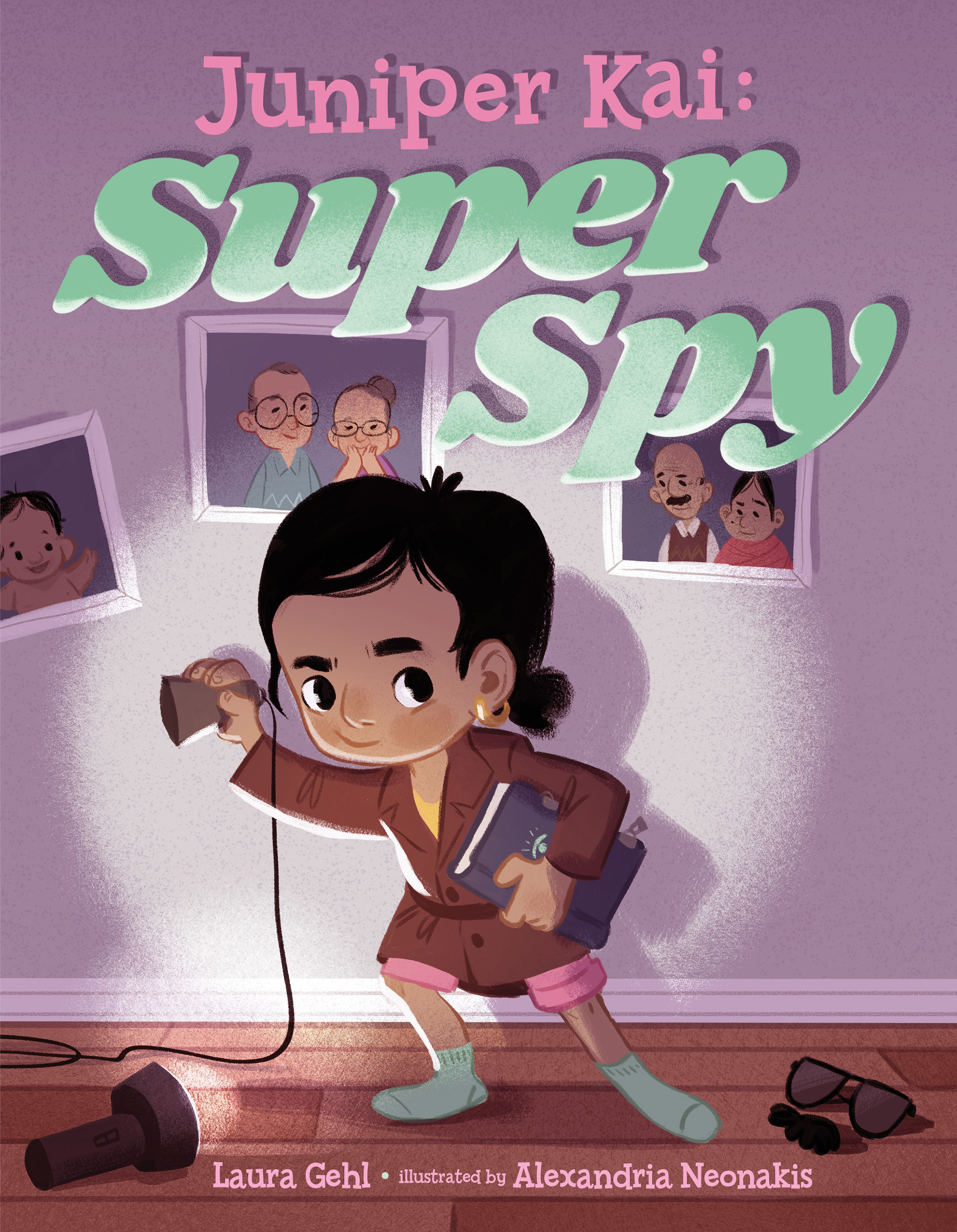
Blog Tour & Giveaway: Juniper Kai, Super Spy!

Juniper Kai is a little girl who loves being a spy: she can crack codes, spot clues, and she’s a master of disguise! When she notices her parents have been acting a little… different, Juniper is on the case to spot the clues and find out their secret. Join her for the fun!

Juniper Kai, Super Spy, by Laura Gehl/Illustrated by Alexandria Neonakis,
(Sept. 2019, Amazon/Two Lions), $17.99, ISBN: 978-1542043328
Ages 3-7

This fun read-aloud is huge fun and perfect for sharp-eyed readers who can spot the visual clues throughout the story that will lead readers to the mystery Juniper Kai is on the case to solve! Kids will love seeing Juniper using her spy gadgets and deductive skills to figure out her big case. This is a great book to use when illustrating problem solving; there are lots of opportunities to prompt readers to look at the clues on each spread and help them connect the dots to a solution. The digital artwork is adorable, giving readers a multicultural heroine and family and cartoony cute artwork with expressive faces and fun moments, including Juniper spying on her parents while rocking a mustache and funny hat; binoculars, even a drone. The colors are largely muted pinks and purples, with appropriately shadowy darker colors and warm glows to reflect different moods and times of day.

This is an all-around fun book that challenges readers to exercise their own detective skills. There’s a free, downloadable teacher’s guide available through Laura Gehl’s website, offering discussion prompts and spy activities – I think I’ll be using some of these at storytime soon.

Laura Gehl is the author of many popular picture books, including One Big Pair of Underwear, illustrated by Tom Lichtenheld; the Peep and Egg series, illustrated by Joyce Wan; and My Pillow Keeps Moving, illustrated by Christopher Weyant. She lives in Chevy Chase, Maryland, with one husband, four children, and seventeen fake mustaches. Visit Laura online at www.lauragehl.com.

Twitter: @AuthorLauraGehl


Alexandria Neonakis grew up in Nova Scotia, Canada, with her huge family. She now lives in California with her husband and their two cats. In addition to illustrating children’s books, she works as a character- concept artist for video games. Her recent children’s books include Sweetest Kulu by Celina Kalluk and This Is MY Room by Jennifer Richard Jacobson. Learn more about her online at www.alexneonakis.com.

Twitter: @Beavs

Instagram:@alexneonakis

“Harriet the Spy would approve of this sharp-eyed investigator. This will be a read-aloud favorite for little supersleuths, particularly those with junior agents on the way.” —Kirkus Reviews

One lucky winner will receive a copy of Juniper Kai: Super Spy, courtesy of Two Lions/Amazon (U.S. addresses). Enter the Rafflecopter giveaway!

Posted in Uncategorized

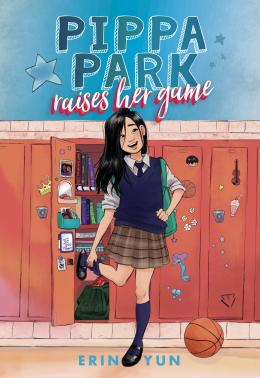
Meet Pippa Park, a new middle grade book from Erin Yun and Fabled Films!

Pippa Park Raises Her Game, by Erin Yun, (Feb. 2020, Fabled Films Press), $15.99, ISBN: 978-1944020262

Ages 9-13

Korean-American seventh grader Pippa Park’s is a juggler: living with her older sister and brother-in-law, rather than her Mom, in Korea, she juggles the weight of their expectations; she juggles her responsibilities at home and school, and she juggles schoolwork with her first love, basketball. She receives an unexpected basketball scholarship to an affluent private school, Lakeview Private, and decides to reinvent herself: she doesn’t want to stand out as the “scholarship student”, especially among the rich kids, and especially among the members of the basketball team – her former middle school’s rivals! But reinventing herself comes with a price, and Pippa discovers that she’s getting further away from the person she wants to be while trying to keep pace with the Royals, Lakeview’s version of Queen Bees/Mean Girls/the In-Crowd. She can’t turn to her sister; she can’t turn to her best friend, who won’t talk to her anymore; and she certainly can’t turn to the Royals. When a series of antagonistic social media messages start showing up, threatening to expose Pippa’s real life, she really feels lost.

Inspired by Charles Dickens’s Great Expectations, Pippa Park Raises Her Game is a relatable middle grade story about a middle schooler dealing with the school stress, family stress,  an unrequited crush (with his own family stress), and the stress of keeping her real life secret from her glam friends at school. She’s witty and dorky and just wants to do the right thing, but why is the right thing so hard to do? We want Pippa to get it right, because she’s us.

Kudos to Erin Yun for making The Royals a complex, smart group of characters, too! They’re not vapid Mean Girls, even if some of them – not all, by the way – are straight-up stereotypical. First off, they’re not cheerleaders! Let’s hear it for breaking the stereotype! They are unapologetically feminine, and they’re all business on the basketball court, showing readers that real girls don’t always wear pom-poms; sometimes, they slam dunk. There’s an interesting subplot with Pippa’s tutor-turned-crush, Eliot, and his family’s long-standing emotional baggage, which feeds nicely into Pippa’s main story.

Pippa Park Raises Her Game is a slam-dunk for middle grade readers. It’s smart, funny, and gives readers a heroine they can root for.

Psst… keep your eye on the Pippa Park GoodReads page. Maybe add it to your “To-Read”. I’ve got word there may be a giveaway coming in a few weeks.

Posted in Uncategorized

Blog Tour and Giveaway: A Tiger Like Me!

A little boy and his tiger alter-ego bound through the day, doing all sorts of tiger things: waking up in his tiger den, eating breakfast ast his feeding spot, springing up at those lazy humans… it’s all in a tiger’s day, after all! At night, the restless tiger can’t find sleep in his sleeping place, so he heads to his parents’ den for cuddles, and thinks about how great it is to be a tiger as he drifts off to sleep.

A Tiger Like Me, by Michael Englel/Illustrated by Joëlle Tourlonias, Translated by Laura Watkinson,
(Sept. 2019, Amazon Crossing), $17.99, ISBN: 978-1542044561
Ages 4-7

This is another title from Amazon Crossing, the translation imprint from Amazon’s publishing group. Originally published in Germany, A Tiger Like Me is a book every kid (and grownup) can enjoy, because it’s a celebration of childhood imagination. The book flap genders the child as male, but the artwork and text don’t make any gender definitive. Narrated by the kid-Tiger, it’s a spot-on glimpse into a child’s imagination as they navigate the world in Tiger Mode. There’s repetition of the phrase, “Because I am a tiger, a tiger!” on each spread, as they go about their day; waking up, they are a “tiger, a wide-awake tiger!”; eating breakfast, “a greedy, gutsy tiger!”; getting caught in a laundry basket full of clothes, “a clumsy, klutzy tiger!”. Mom and Dad are there to provide some comic fun, particularly when the Tiger jumps at Dad, making him spill his coffee and grab for the Tiger, hunter-style. The day ends with a loving family cuddle, making this a great bedtime story for your own little tigers.

The digital artwork is playful, fun, and bright, with an almost hand-sketched look to some details. There are great little nuances throughout the story: look for the Tiger’s toy animal friends laying around the pages, and Dad drinks from a mug with a tiger’s face on it. Tiger eats Tiger Crunch cereal and envisions itself eating at a stone table with cave paintings on it. There’s so much to enjoy here; you won’t want to read it just once. Pages are full-bleed, with atmosphere switching from a family home to a jungle. The endpapers offer a lead-in and drift-out to the story, too: opening endpapers show us the Tiger waking up and ready to begin his day as a poetic introduction about a tiger stirring in his den introduces readers to the story. The closing endpapers show our Tiger, back in his den, as a poetic epilogue to the story takes readers out of the story. This one is an adorable add to bedtime story collections.

Michael Engler studied visual communication in Düsseldorf, Germany, and first worked as a scriptwriter and illustrator. He then spent several years as an art director at advertising agencies. He is currently a freelance author in Düsseldorf, writing children’s books and plays for the theater and radio. He has written more than fifteen children’s books. Learn more about him online at www.michaelengler.com.


Joëlle Tourlonias was born in Hanau, Germany, and studied visual communication with an emphasis on illustration and painting at the Bauhaus University Weimar. She is the illustrator of more than thirty children’s books. She continues to draw, paint, and live in Düsseldorf. Learn more about her online at www.joelletourlonias.blogspot.com.


Laura Watkinson is an award-winning translator of books for young readers and adults. She is a three-time winner of the Batchelder Award and also won the Vondel Prize for Dutch-English translation. Originally from the United Kingdom, she now lives in Amsterdam. Learn more online at www.laurawatkinson.com.


“Child readers (and certainly adult caregivers) will identify with the book’s central message: Children can experience a wide swath of feelings, everyone makes mistakes, and everyone has complicated ways of interacting with the world. The final quiet pages offer a peaceful conclusion…Wildness is part and parcel of everyday childhood, embraced here with a roar.” —Kirkus Reviews


Want a shot at winning your own copy of A Tiger Like Me, courtesy of Amazon Crossing Kids? Check out this Rafflecopter giveaway (U.S. addresses only, please!)

Posted in Uncategorized

Two picture books about summer… and life

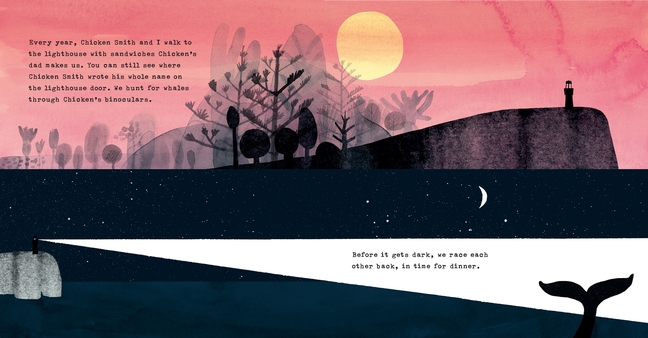
Waiting for Chicken Smith, by David Mackintosh, (May 2019, Candlewick Press), $16.99, ISBN: 9781536207712

Ages 4-8

A young boy waits for his friend to show up at the family’s summer rental in this story about summer, relationships, and change. The boy, a child of color, narrates the story as he waits for Chicken Smith to show up. The boy talks about Chicken Smith, his dog, Jelly, and the fun summers the two friends have had in the past as he waits, holding a “crazy shell from the gas-station shop” as a gift. Where the heck is his friend? Readers know; in the beautifully detailed pages, we see an empty cabin with a “Summer Rental” sign. The boy’s sister finally manages to get his attention, and the two glimpse a whale: something he and Chicken Smith have never been able to catch together, not even with binoculars. The boy and his sister head back to the cabin and enjoy their evening together, and he wonders if he’ll see Chicken Smith next year.

Originally published in the U.K., Chicken Smith is a story about change and summer friendships. Readers feel the boy’s longing as he waits for his friend; it’s in his voice as he recalls summers past, the cool shell he found for him, and the fact that he’s so focused on waiting for Chicken Smith that he ignores just about everything going on around him. His sister is finally able to get through to him through sheer persistence, and that’s when the Chicken Smith spell is broken: there’s a whale to watch. The story is almost achingly sad at points; when the boy askis, “What is taking Chicken Smith so long, anyway? We’re missing out on everything”, we just know he won’t be there this year – and sure enough, the next page shows an empty cabin, and the boy describes the windows being shut and seeing a cobweb with a fly in it. David Mackintosh pulls readers and the narrator back from the brink by giving us a new relationship to discover: the relationship between the boy and his sister, brought together by the whale. The two go back to their cabin and look at his whale book, then make plans to go on a shell hunt. The boy ends on an optimistic tone, hoping he’ll see Chicken Smith next year, but deciding to enjoy his sister’s company for this year. The pen, pencil, ink, watercolor, and kraft paper artwork come together to create a child’s scrapbook-like feel for summer memories.

Waiting for Chicken Smith has a starred review from Kirkus.


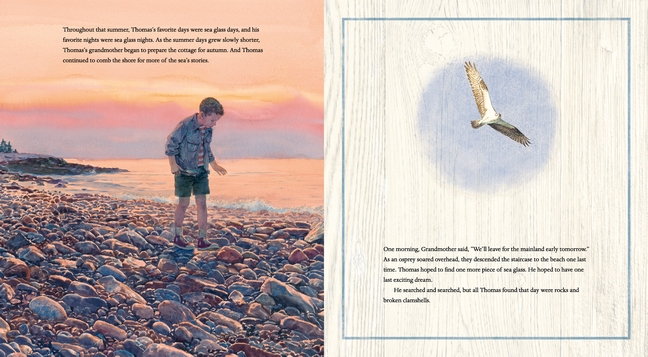
Sea Glass Summer, by Michelle Houts/Illustrated by Bagram Ibatoulline, (May 2019, Candlewick Press), $16.99, ISBN: 9780763684433

Ages 5-8

A boy named Thomas explores the beach by his grandmother’s seaside cottage. Using his grandfather’s magnifying glass, he discovers the complex beauty in nature: grains of sand look as big as rocks, and clamshells have swirls of color. But the discovery of sea glass is what really fascinates Thomas. Learning how sea glass is made – a piece of glass, dropped into the sea, becomes worn smooth and cloudy over time – and that his grandfather said that “every piece of sea glass has a story all its own” fuels his imagination; he finds himself dreaming of ship christenings and ships caught in storms; stories that could give rise to the found glass on the beach. When he and his grandmother head back to the mainland, the magnifying glass shatters, and he tosses the glass into the sea. Years later, a girl named Annie discovers sea glass on the beach, and brings her discovery to her grandfather, an older man she calls Papaw Tom.

Sea Glass Summer is a moving inter-generational story that beautifully recreates the feel of summer: warm, lazy days on the beach; the smell of the sea air, the grains of sand, rough against your fingertips, the smooth sea glass in the palm of your hand. In between these cozy summer memories, there’s a story that reaches across decades, linking a grandfather and his granddaughter, in a story that stirs the imagination and tugs at the heartstrings. An author’s note notes that sea glass was more common in the days before recycling awareness.

I loved Sea Glass Summer. This one is a summer classic.

Sea Glass Summer has a starred review from Kirkus.

Posted in Uncategorized

Circle, by Mac Barnett & Jon Klassen brings the Shape Trilogy to a sweet close

Circle, by Mac Barnett & Jon Klassen, (March 2019, Candlewick Press), $15.99, ISBN: 9780763696085

Ages 5-10

Mac Barnett and Jon Klassen’s Shape Trilogy has been hilarious reading, and the final book in the trilogy, Circle, wraps things up in a sweet, silly, perfect way. The three shape friends – Triangle, Square, and Circle – play a game of hide and seek; Circle only asks that no one hide behind the waterfall. So, naturally, the second Circle closes her eyes to count, Triangle takes off and hides behind the waterfall. Circle heads off to fetch Triangle, and heads into the deep dark area behind the waterfall, where she vents her frustrations at Triangle: “Why do you always break all the rules? Why do you always spoil our fun? Why are you such a bad friend?” When Triangle doesn’t answer, Circle takes a moment, apologizes for her angry words, and Triangle thanks her – but Triangle isn’t standing where Circle expects her to be! So whose eyes do the shapes see, glimmering in the dark? Not waiting to find out, the two dash back to the safety of the outside, where they ponder what could have been with them in the dark. “It might have been a good shape”, says Circle; “We just could not see it”.

Circle is a story where kid see themselves, and parents and caregivers will see their kids. Who among us hasn’t said, “Okay – you can play ANYWHERE in this area, but don’t go there”, knowing full well that the second you finish that sentence, one of your little ones is charging directly for that one forbidden spot? Kids will understand the frustration of a friend who doesn’t listen to them, and the spillover that can lead to. Circle also has an important message, quietly included in the storyline: don’t make snap judgements without more information. Don’t jump to conclusions or make decisions about others based on fear. (That being said, stranger danger is also worth a mention here.)

Mac Barnett and Jon Klassen can do no wrong in my book. The Hat Trilogy and the previous Shape books are instant storytime go-tos for me, and my son knows that, left to my own devices for at-home reading, those are the books that are likely to get pulled off the shelf. I love the way these two creators work together; the sharp, dry humor that speaks volumes; the spare artwork that communicates so much with a mere shift of a pair of eyes, and the enjoyment I see when the kids reading along with me get the jokes. Finish your collection and get Circle on your shelf.

Posted in Uncategorized

Board Books, Board Books, Board Books!

There’s a whole bunch of great board books out, and I love it!

Cat & Mouse, by Britta Teckentrup, (March 2019, Prestel Publishing), $14.95, ISBN: 978-3-7913-7374-4

Ages 0-4

This die-cut, rhyming book is adorable! A cat and mouse play a game of hide and seek, with die-cut squares on each page letting little ones find the mouse, and explore with their fingers as well as their eyes and ears, as they go along. Cat and mouse wreak havoc across each spread, upending furniture and running up and down stairs: will the cat catch the mouse? I read this to my storytime group and wiggled fingers through the squares, let the little ones peek through the holes, and stuck my nose through one or two to mimic a cat sniffing for a mouse, all to tremendous giggles. This is an adorable storytime read, and a great pick for sensory and explorative reading. The artwork is loaded with shapes and colors to identify, making this a book you can really engage your little ones with.


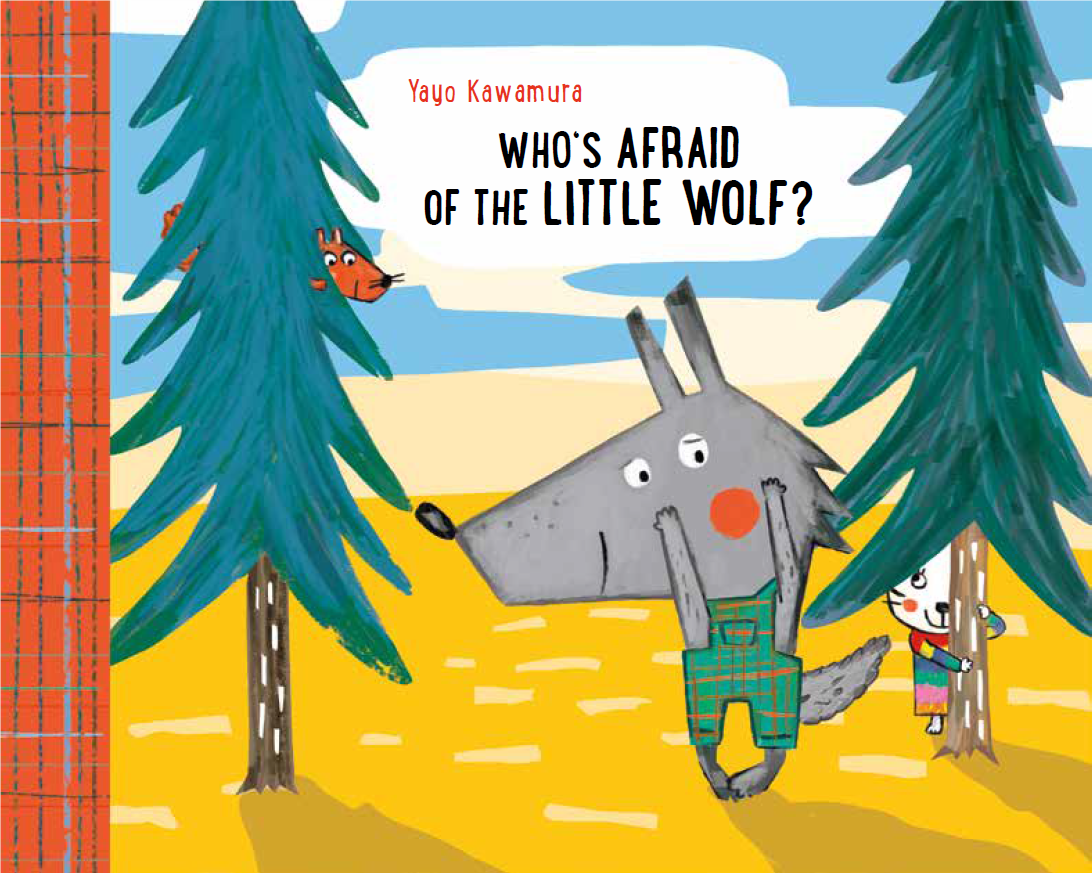
Who is Afraid of Little Wolf?, by Yayo Kawamura, (Apr. 2019, Prestel Publishing), $12.95, ISBN: 978-3-7913-7381-2

Ages 0-3

Little Wolf is bored and wants to play, but it seems like no one wants to play with him: the squirrel, rabbit, and fox all tell him their moms won’t let them play with wolves! Just when Little Wolf starts to cry, a little bee invites him to play. Seeing Wolf and Bee play together, the other animals realize that there’s nothing to be afraid of, and join the game. At sunset, Little Wolf and his new group of friends sit in a cuddled group, enjoying one another’s company after a big day of playing hide and seek. A sweet, simple story about overcoming prejudice, Who is Afraid of Little Wolf is a story that has a big message for little eyes and ears. Bold, colorful artwork and friendly animal faces make this instantly appealing to young readers and listeners, and gives a face to the fallout of predetermined ideas.


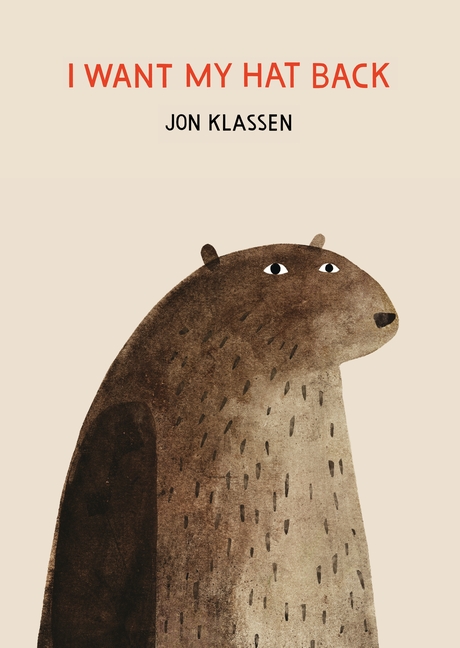
I Want My Hat Back, by Jon Klassen, (March 2019, Candlewick Press), $8.99, ISBN: 978-1-5362-0757-6

Ages 2-5

This is one of my favorite picture books of ALL TIME, and now it’s available in board book form! The darkly hysterical tale of a bear, a hare, and a hat is complete here; just in smaller format for littler fingers. The illustrations are beautifully, perfectly recreated here. My 6-year-old asked me if this was a “backpack copy” for him to bring to school, and darned if I didn’t say, “Wow… you may be onto something here”. Start your younger readers off right: give them Jon Klassen board books! (PLEASE say we’ll be getting Mac Barnett and Jon Klassen’s Triangle, Square, and Circle trilogy in board book at some point!)

Do you have crafts after storytime? Use this free, downloadable activity kit to let the kids make their own red hat, recreate their own forest story scene, and more.


Wild Bios: Frida Catlo, by Courtney Acampora & Maggie Fischer/Illustrated by Lindsay Dale-Scott, (Jan. 2019, Silver Dolphin Books), $7.99, ISBN: 978-1-68412-558-6

Ages 2-5

This is the cutest new board book series! Wild Bios puts an “animalistic twist” onto famous figure biographies by adding cute animals and wink, nudge puns to the biographical text. Here, we’ve got artist Frida Kahlo’s life with a feline spin: Frida Catlo was born in Meowixco City, painted self-pawtraits, and married fellow artist Doggo Rivera. A sweet way to introduce art to your little ones (I think it’s time for me to revisit my Art Storytime) and the puns will keep older siblings and adult caregivers chuckling at storytime. The bright, festive artwork is fun to look at, and Frida’s even got a little unibrow. Make sure to mention that Friday Kahlo loved animals – display and booktalk Monica Brown’s Friday Kahlo and Her Animalitos handy. Let the little ones draw afterward!


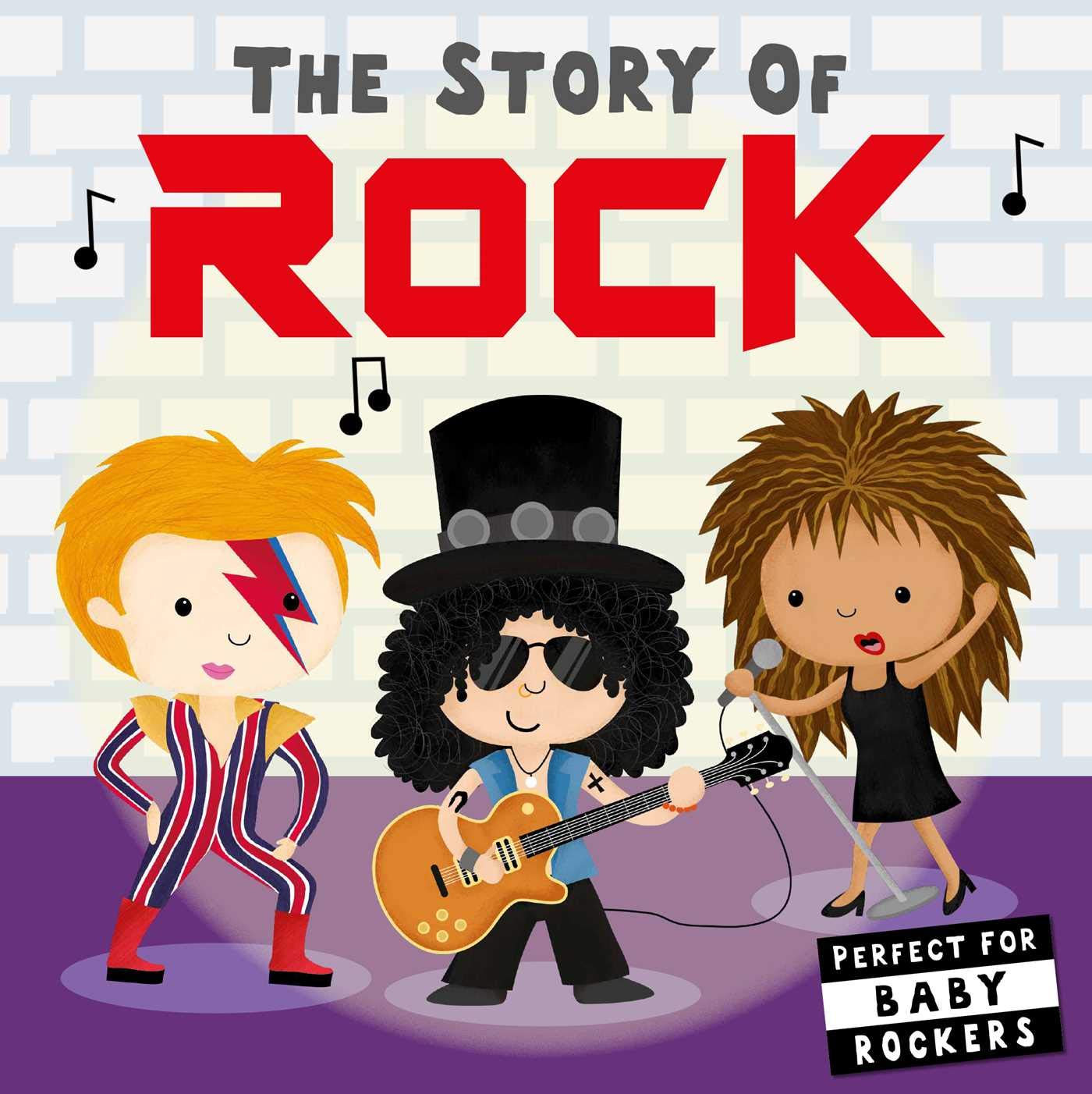
The Story of Rock, by the Editors of Caterpillar Books/Illustrated by Lindsey Sagar, (May 2019, Silver Dolphin Books), $8.99, ISBN: 978-1-68412-509-8

Ages 0-5

Perfect for music storytime, this rhyming look at the history of rock music starts – as it should! – with rock’s roots in blues and features some of the most iconic names in rock history, including Chuck Berry, Elvis, Jimi Hendrix, Queen, the Ramones, and more. The blues, through the rockabilly ’50s, the psychadelic ’60s, punk, hair metal, grunge, and ska are all here, with sweetly illustrated, friendly faces and instruments. Add this to your music shelf with board books like What is Punk?, Brandon Stousy’s What is Music? and We Are Music, Amazing Me! Music, by Carol Thompson, and Baby Loves to Rock! by Wednesday Kirwan.


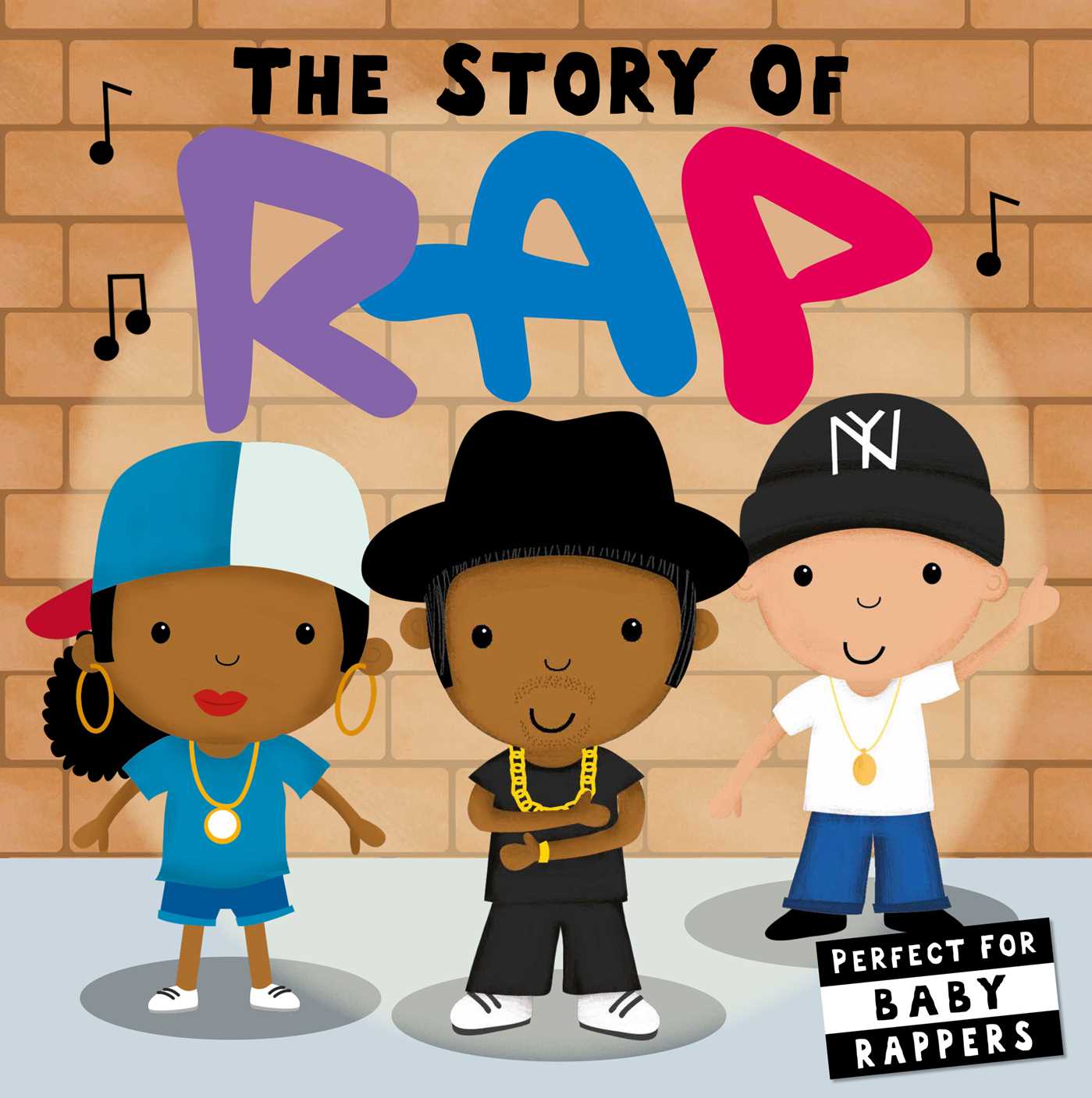
The Story of Rap, by the Editors of Caterpillar Books/Illustrated by Lindsey Sagar, (May 2019, Silver Dolphin Books), $8.99, ISBN: 978-1-68412-508-1

Ages 0-5

A companion to The Story of Rock, The Story of Rap starts off with rap’s beginning at a New York house party in 1973 and explains the genre’s sound: big bass, spoken word rhyme. Learn about rap icons, from Grandmaster Flash, Run DMC, and NWA; the protests, the East vs. West battle, and modern figures, including Jay-Z, and Kendrick Lamar. The emphasis on soul and social justice is here, and like the books says: “Rap is for the people, just like from the start, it’s more than music: it’s a work of heart”. The artwork is identical to The Story of Rock, with soft, cute, friendly faces and urban street wear; there’s some breakdancing, mixing and scratching at the turntables, and female representation (Lauryn Hill and Missy Elliott are here, but where’s Queen Latifah?). Add this to your music board books, and keep up your readers’ music education.