Posted in Fantasy, Graphic Novels, Teen, Tween Reads, Young Adult/New Adult

Pashmina is an Indian-American girl’s journey of self-discovery

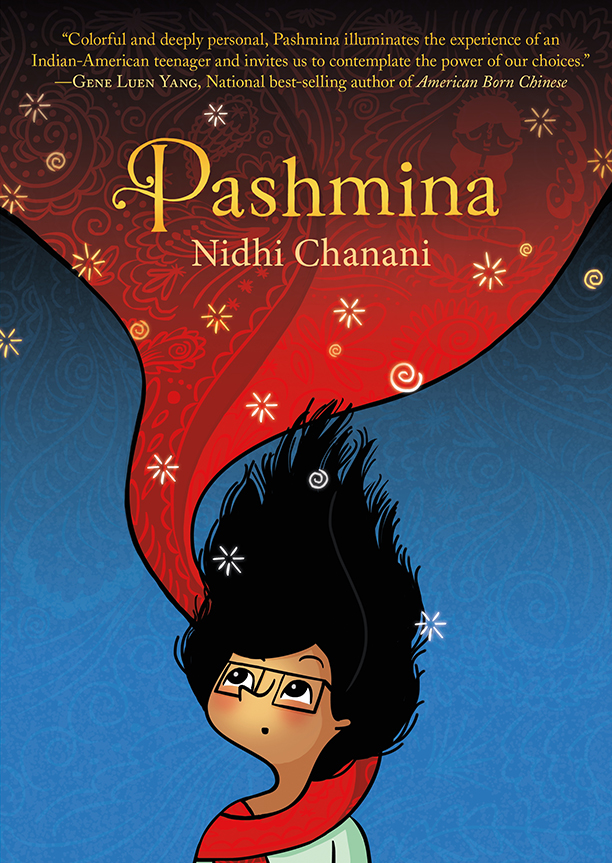
Pashmina, by Nidhi Chanani, (Oct. 2017, :01FirstSecond), $16.99, ISBN: 9781626720879

Recommended for ages 12+

Priyanka is an Indian-American young woman, living with her single mom, in California. She’s got so many questions: Why did her mother leave India to raise her daughter in the States? What’s India like? Why doesn’t she ever talk about India? And the big question: Who’s her father, and why hasn’t she ever met him? For Priyanka’s mom, though, the topic of India is closed. She will only say that things were different for women in India, and that’s that. Left with her questions, and feeling emotional after her uncle – her only father figure – becomes a new dad, Priyanka stumbles across one of her mother’s old suitcases, containing a beautiful pashmina shawl. She wraps it around herself and is transported to a magical, beautiful place: India. She also meets two guides: Kanta, an elephant, and Mayur, a peacock, who show her a breathtaking India. Priyanka gets the feeling she may not be getting the whole story – especially when the two guides keep shooing away a mysterious shadow that lurks by them – but she’s determined to find out more about her heritage and her birth.
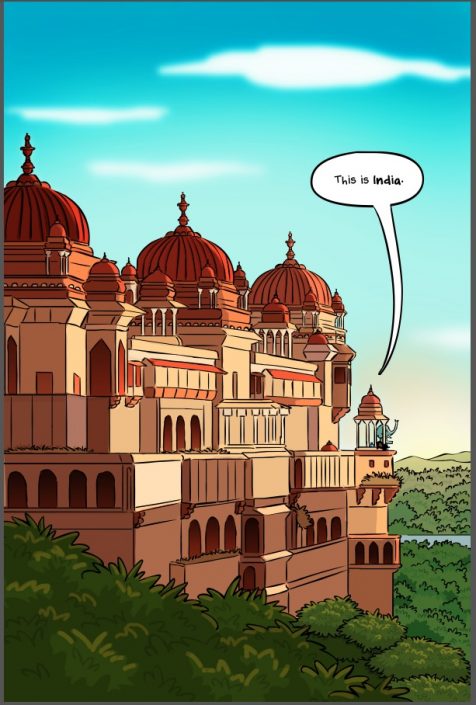
Priya gets the opportunity when her aunt calls to reconnect with her estranged sister. She’s pregnant, and Priya’s mom agrees to let her fly to India to spend time with her. Thrilled, Priya embarks on a journey that will provide more answers than she expected, and learn more about her mother – and herself.

Pashmina is brilliant, bold, and beautiful storytelling. It’s the story of a child walking the line between two cultures, and it’s a story about the search for identity. It’s also a powerful story of feminism; the goddess Shakti guiding women to choose their own paths and the women who are brave enough to answer the call. Nidhi Chanani creates breathtaking, colorful vistas within the pashmina’s world, making Priya’s everyday black-and-white world even more stark and humdrum. This is a must-add to graphic novel collections, particularly for middle schoolers and teens. Booktalk and display with Gene Luen Yang’s American Born Chinese, Na Liu’s Little White Duck, and Sarah Garland’s Azzi in Between.

See more of Nidhi Chanani’s art at her website.
Posted in geek, geek culture, Middle Grade, programs, Tween Reads

I had a BookPop! party and it was great!

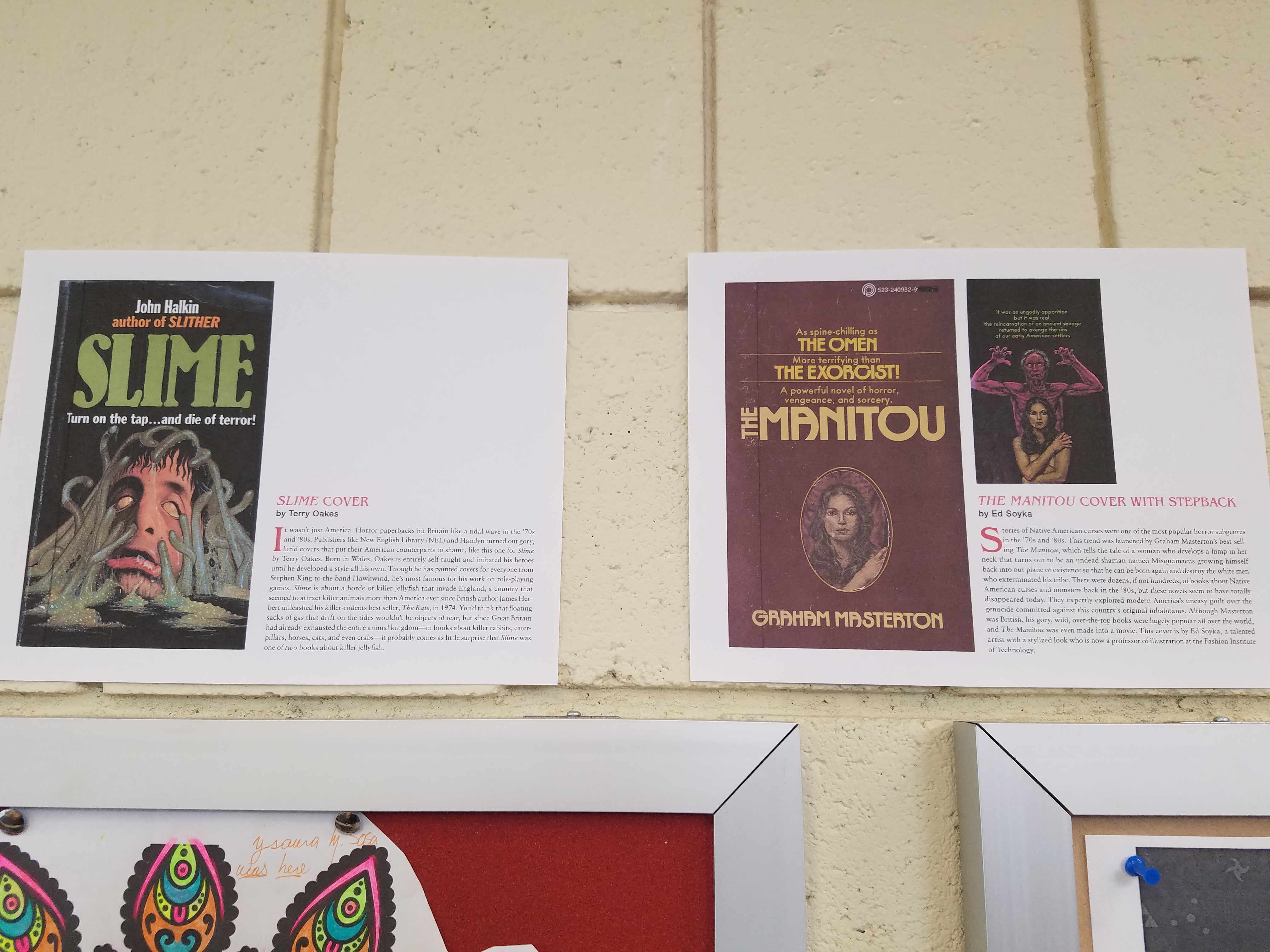
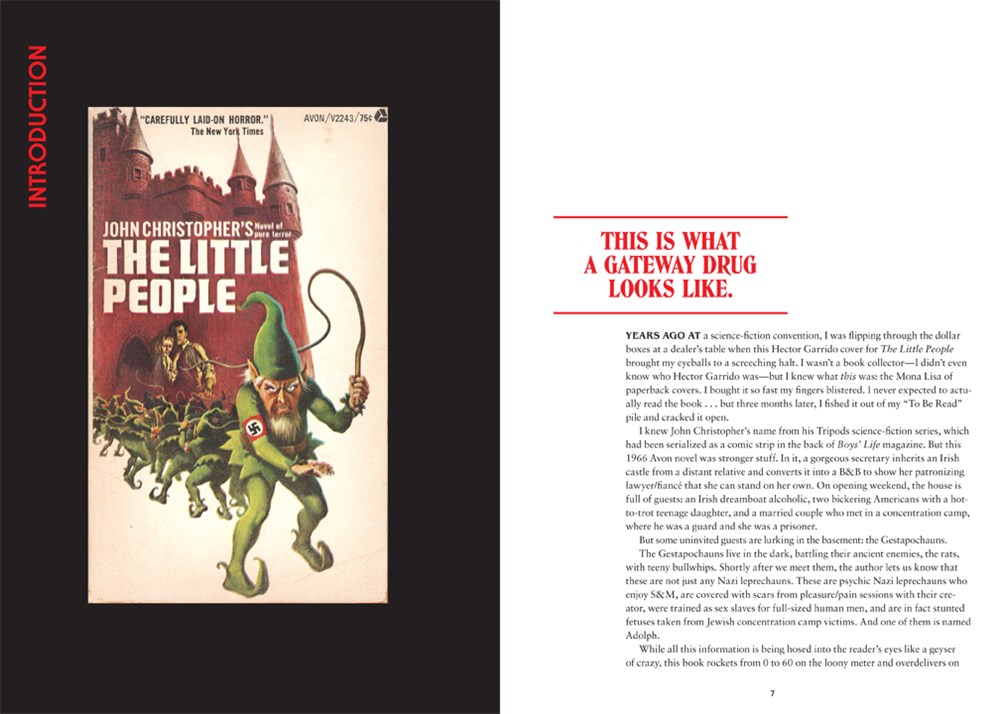
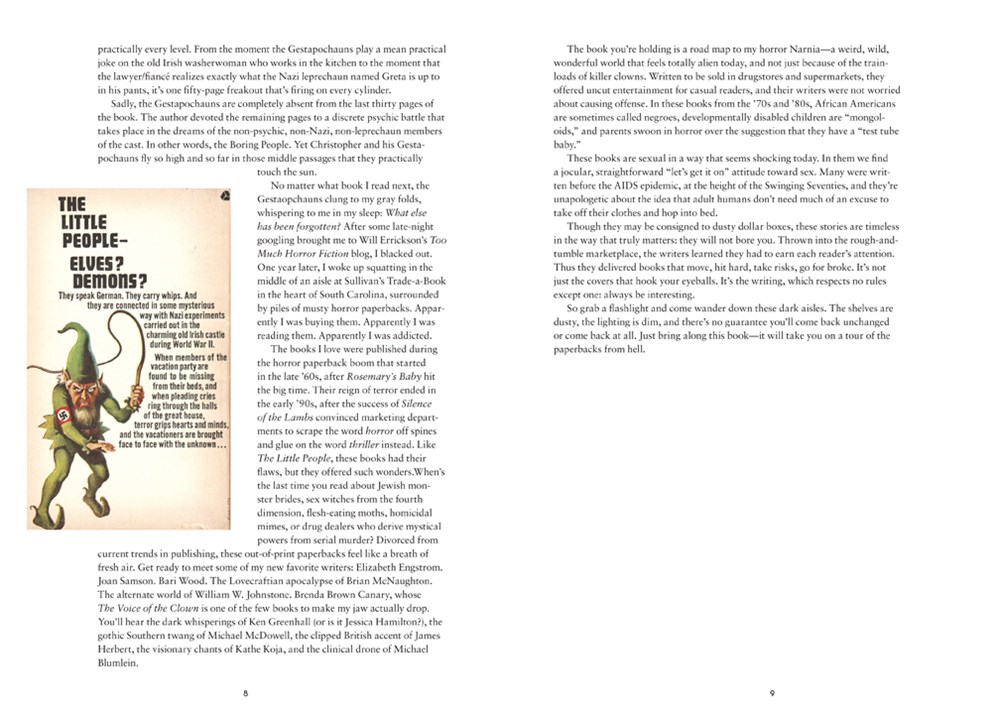
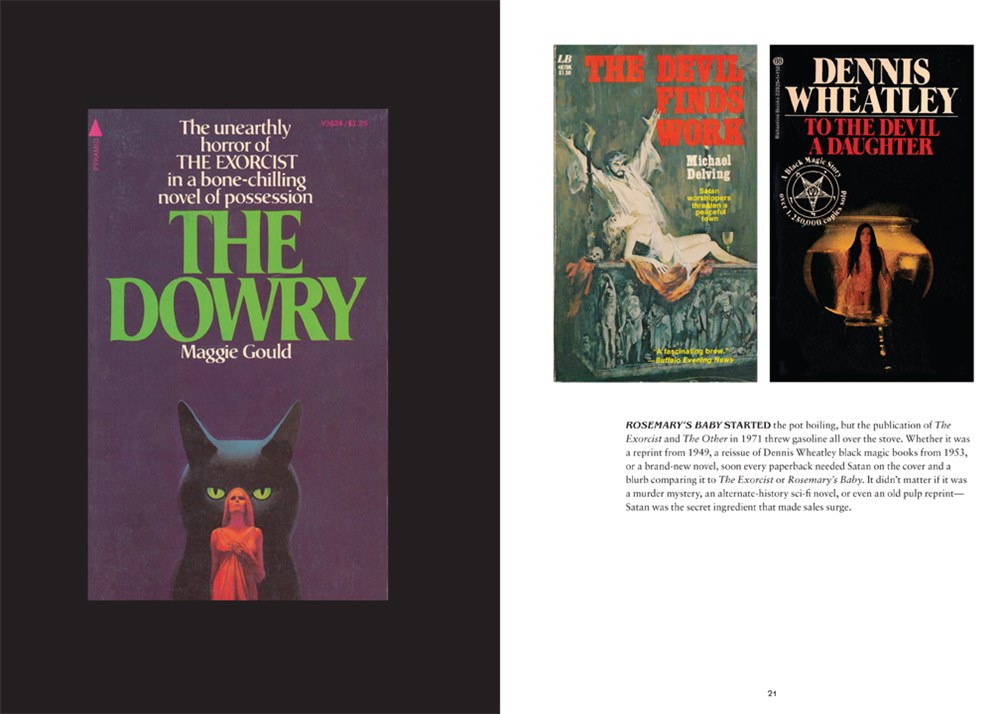
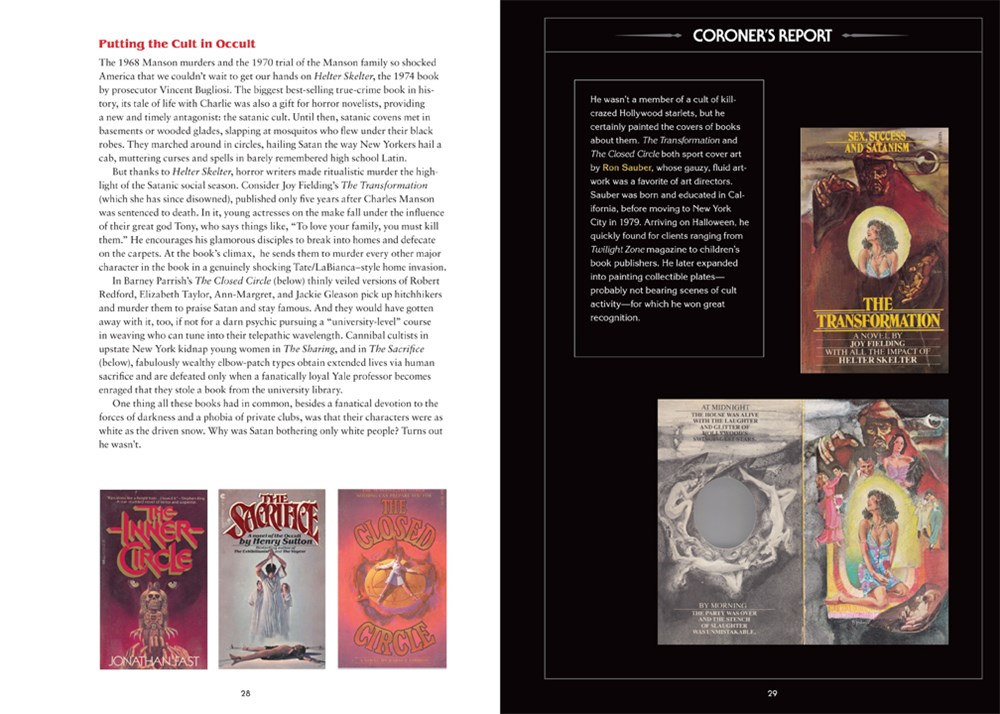
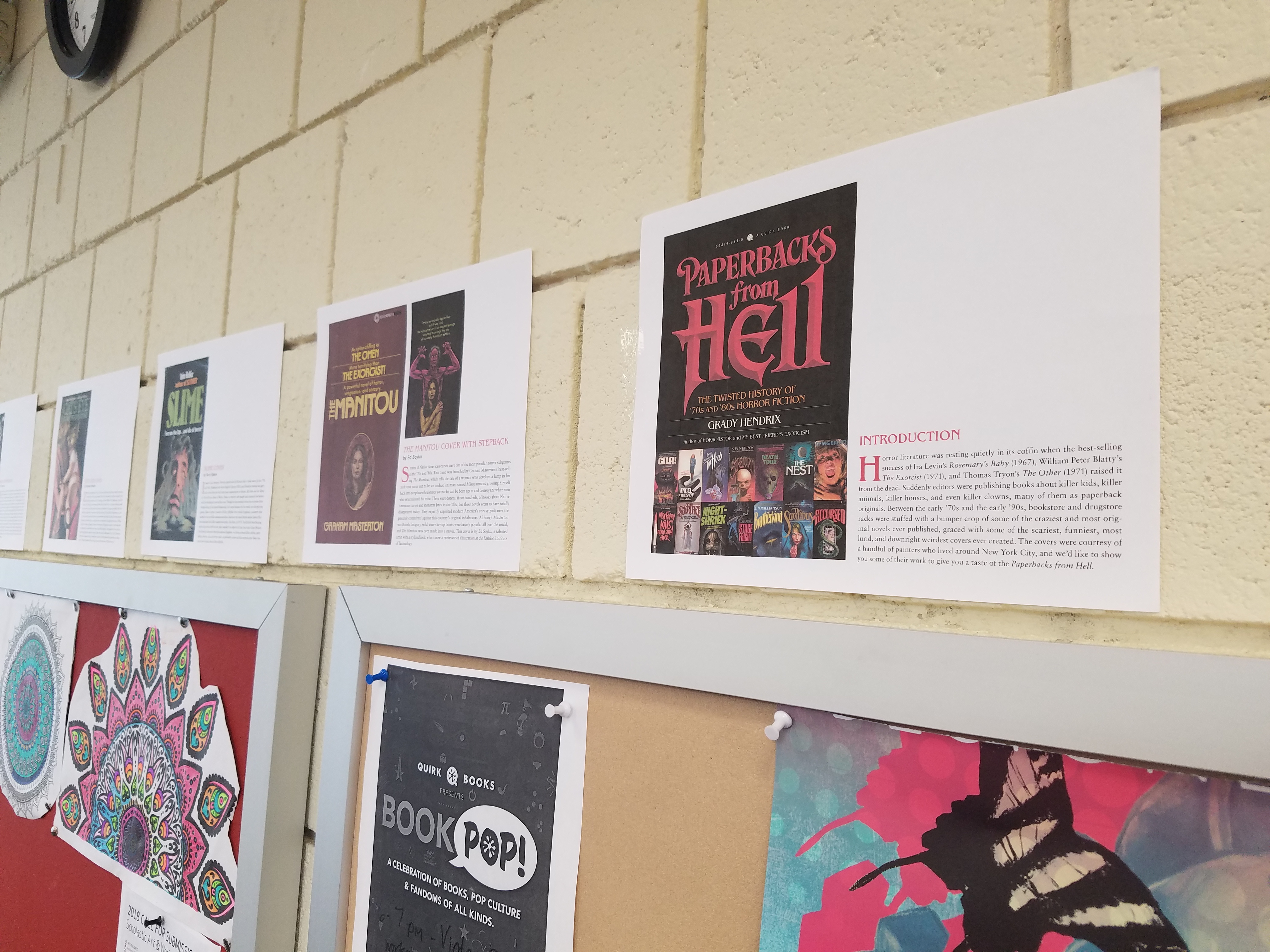
Quirk Books is a… well, quirky, fun book publisher that has a comic book writer and former YA librarian in their ranks, spreading the good word. It’s pretty awesome, because now, my library gets to do things like have a gallery dedicated to horror paperbacks of the ’70s and ’80s (Paperbacks From Hell), and have a mini pop culture con for my kiddos and tweens.

First up, my Paperbacks From Hell gallery, in my teen section. It’s garnering some looks, some chuckles, and some conversations: “What the hell is that?” “That is a giant gila monster. And watch your mouth.” (The display is in the teen area, but you know, little pitchers, big ears). The teens are pretty baffled, the grownups get a kick out of it, and it just makes me happy.

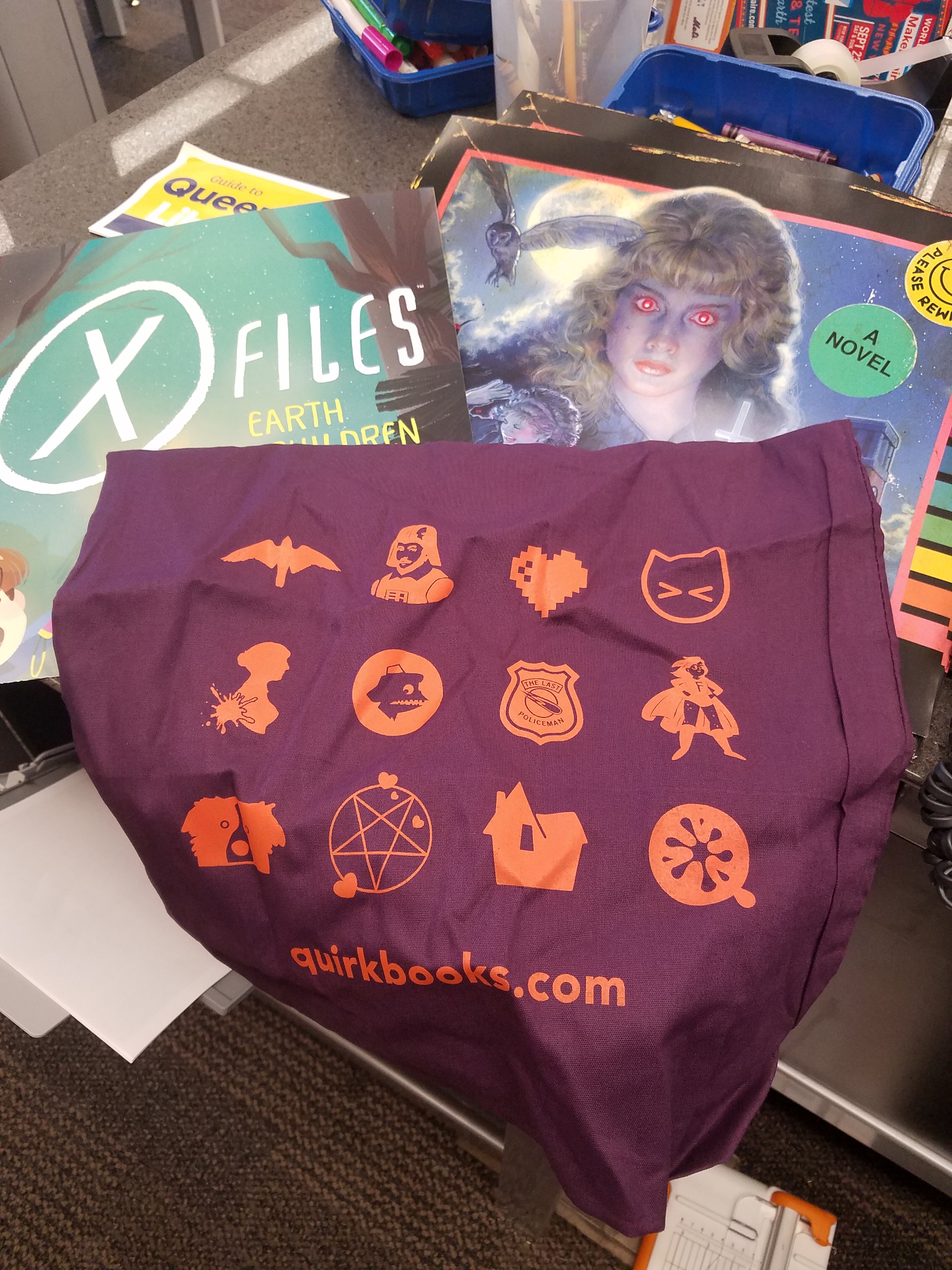
Next up, BookPop: Quirk’s traveling pop culture fest, happening in libraries and bookstores all over the place. I held mine late, because I thought it would be the perfect program to hold when the kids were out of school; last Thursday – since most of the families in my community don’t observe Rosh Hashanah – was the day. Quirk sent me a box o’swag, including ET: The Extra-Terrestrial tattoos (not in the picture: those babies were GONE); posters of the new kids’ books, X-Files: Children are Weird, and the YA novel My Best Friend’s Exorcism; and a spiffy tote bag to put everything in. I downloaded Quirk’s Geek Guides for putting on a great day of programming, and was ready.

First program of BookPop! Day was Superhero Storytime. I had a handful of kiddos and their parents attend, and we made masks and Geek Family Crests when we were done. The kids loved the masks – I downloaded some blank templates from First Palette, handed out scissors, markers, crayons, and lanyard to tie the masks, and the kids loved it. One little one even wore her mask through the next program…

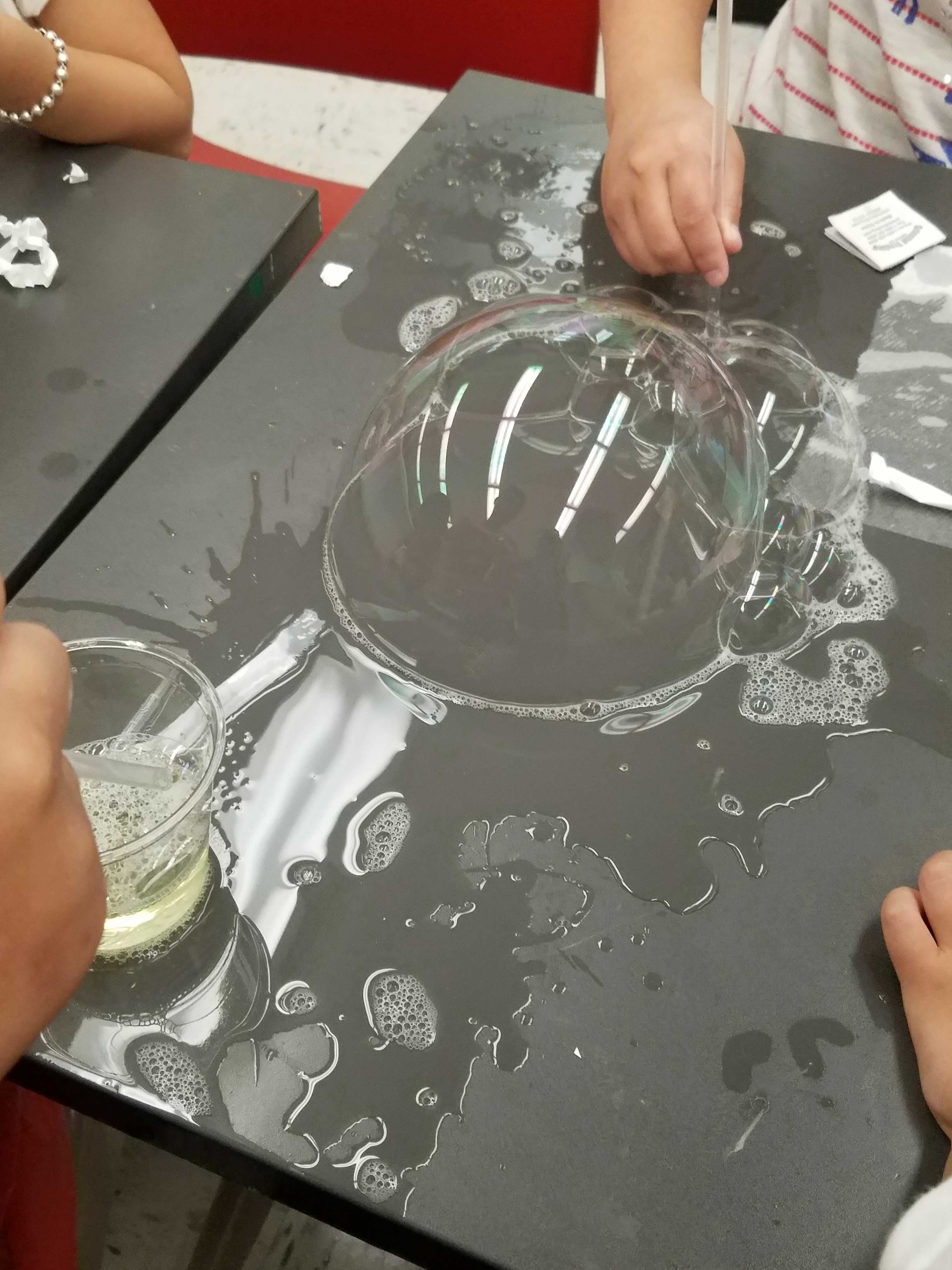
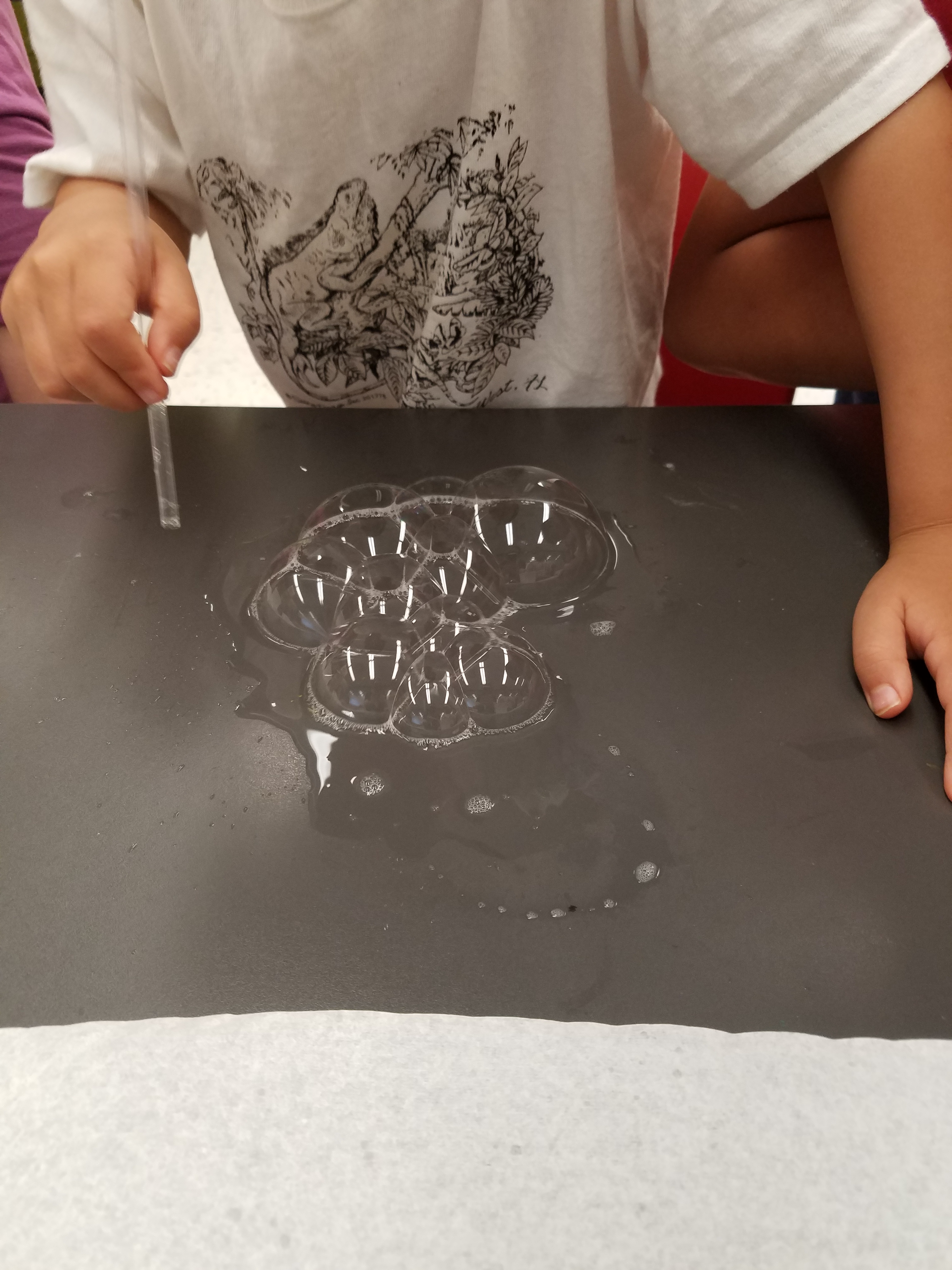
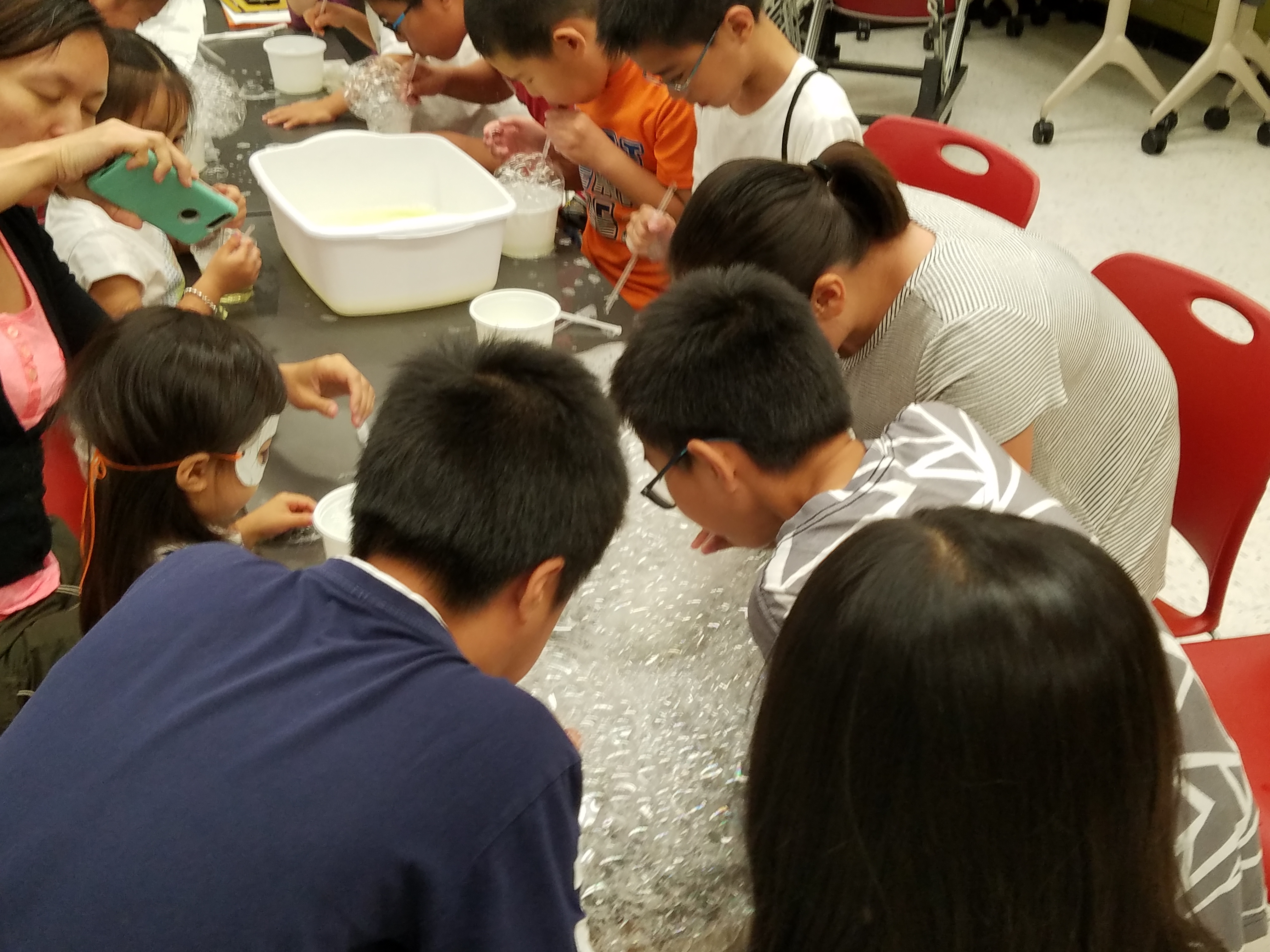
Nick and Tesla’s Science Workshop. The Nick and Tesla books are tons of fun and loaded with STEM experiments, but I wanted something that even my littler ones could do. Enter, bubbles. I told the kids that Nick and Tesla are a brother-sister team that solve mysteries and get out of trouble by creating great science projects, and that we were going to learn about surface tension, and the difference between bubbling your milk and bubbling water with a little dish soap in it. I had a gallon-sized tub filled with water, gave out droppers, straws, and cups, and we bubbled away. Then, I had one of the kids add a cup of plain old liquid dish soap, and they all took turns stirring it. I spread some water on the table and demonstrate how to blow a table bubble, and that was all the kids needed. Look at these bubbles!

The entire table, at one point, was covered in bubbles. They loved it, I loved it, and they want more fun science programming, so win, all around. Next up was…

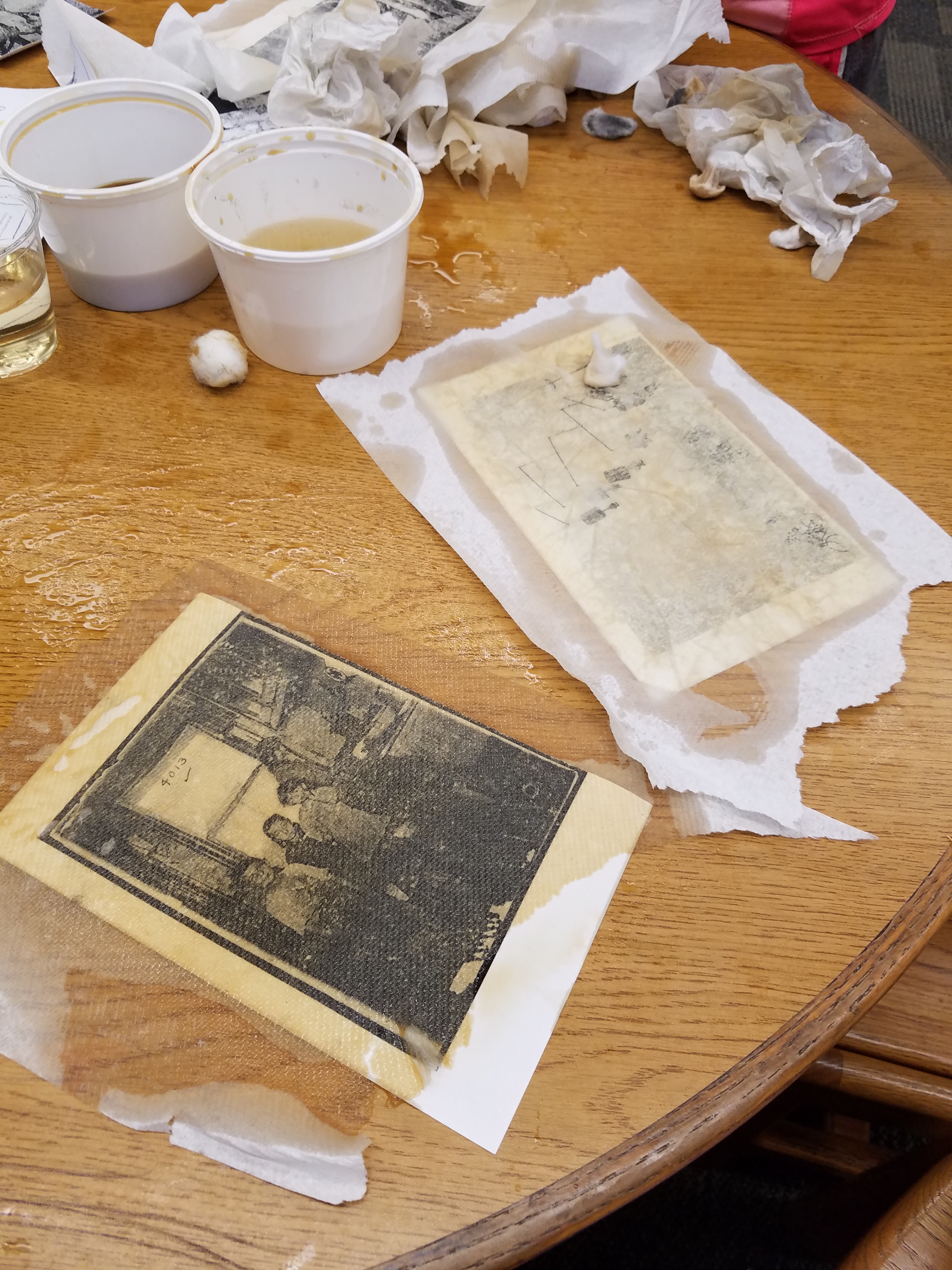
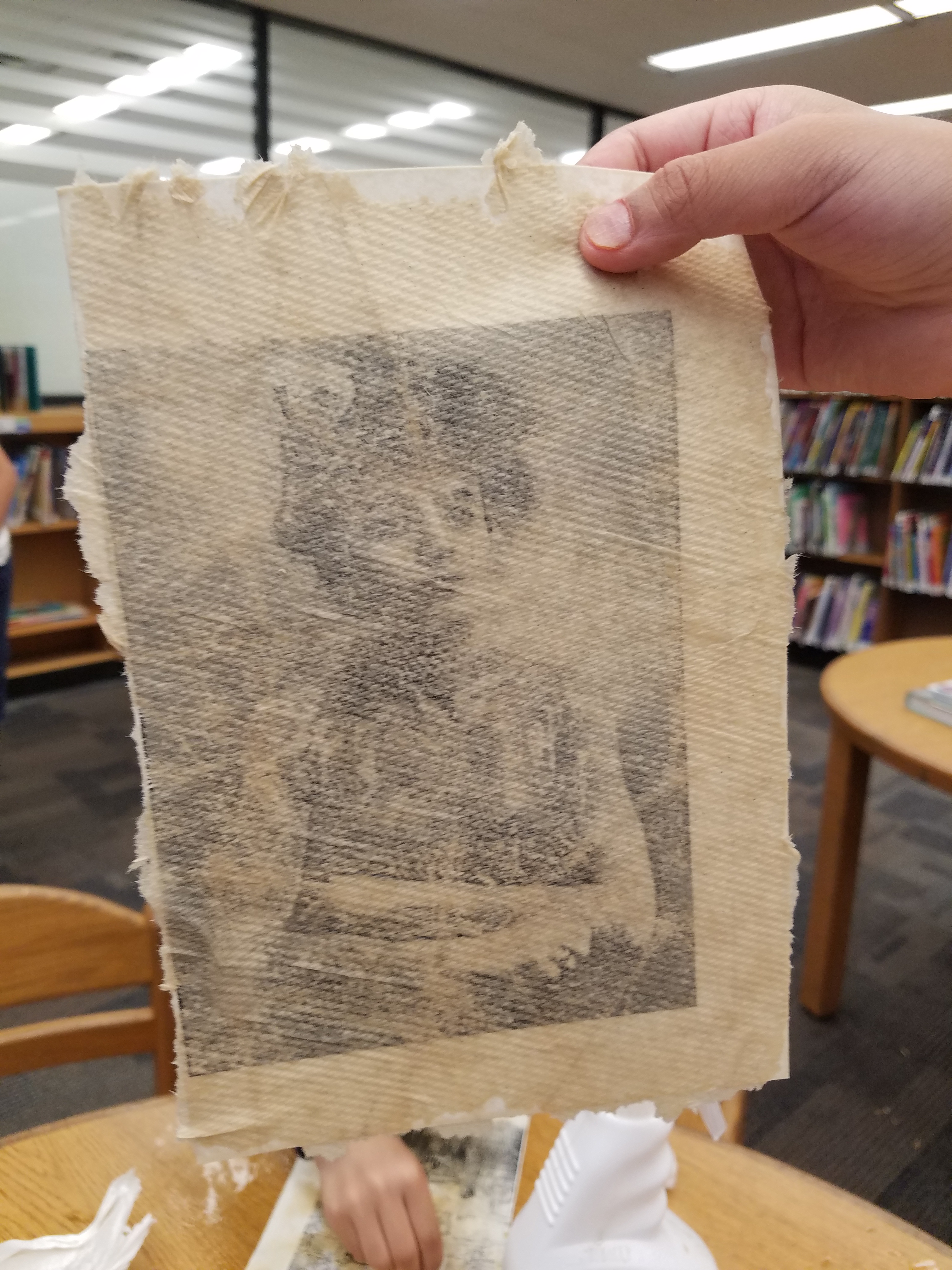
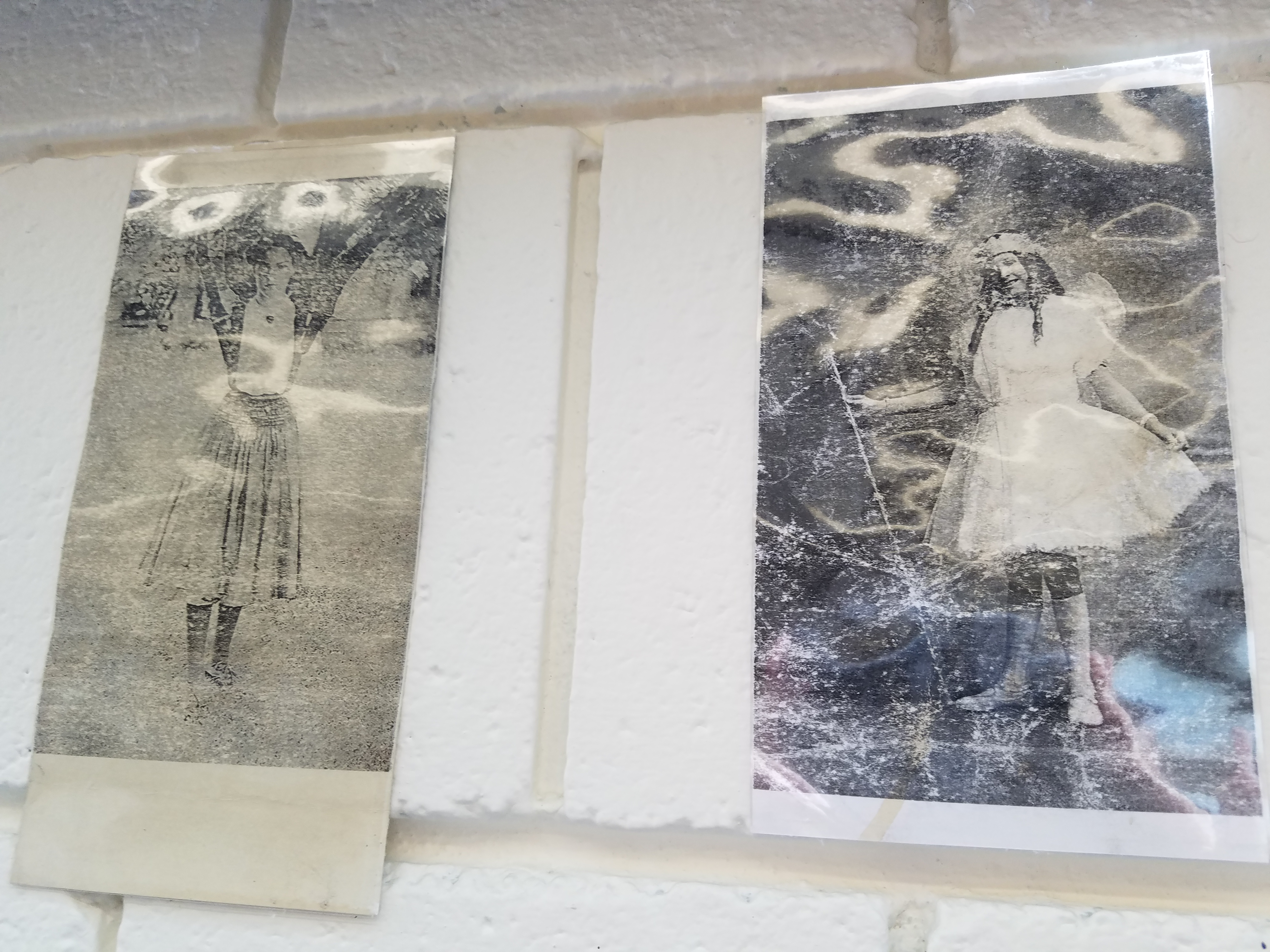
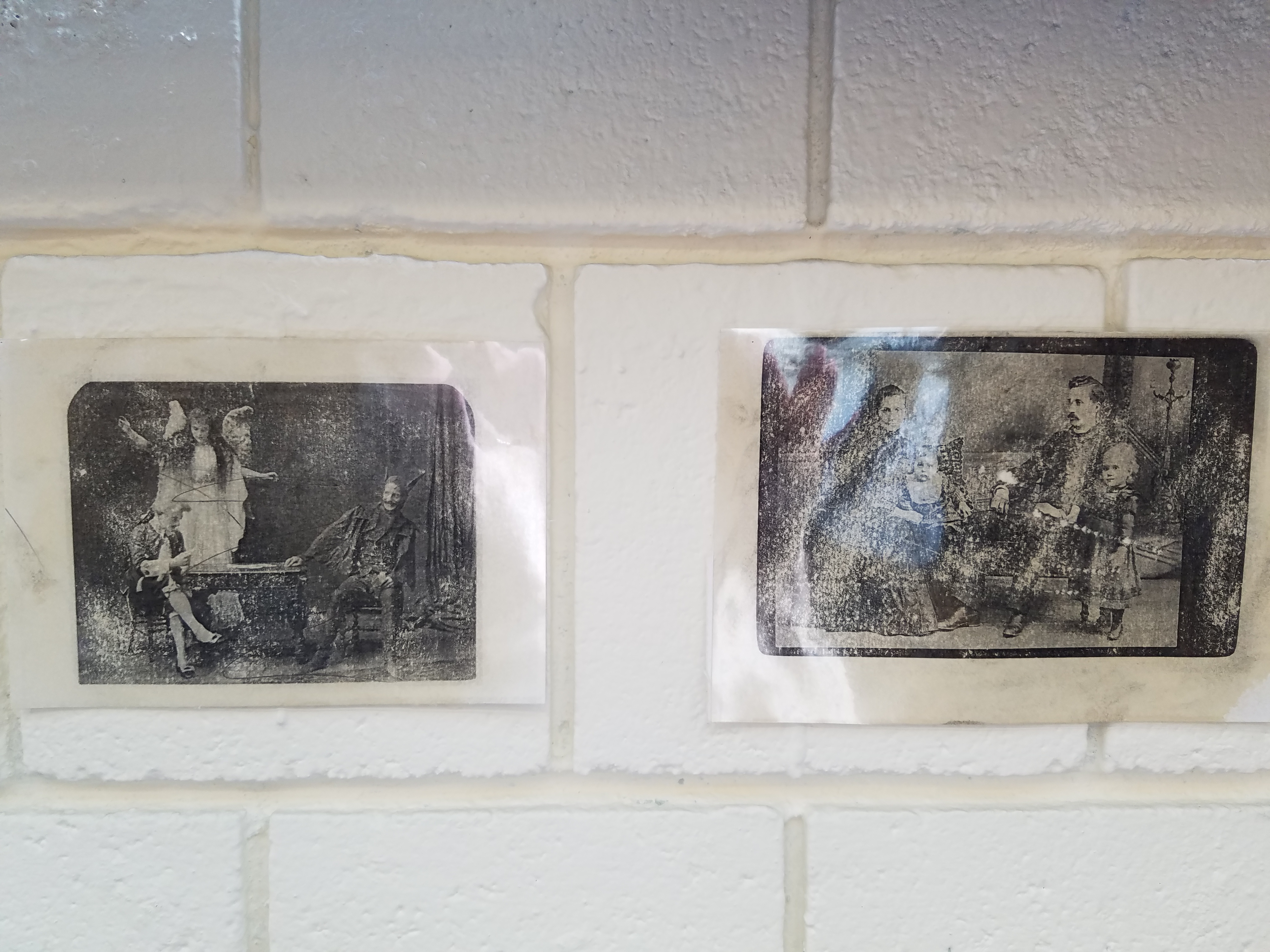
The Miss Peregrine Photo Workshop. Originally, I planned this for my teen patrons, but they weren’t interested – I had a group of tweens, though, who were all over it. We talked about the movie, I showed them the books, and brought out the equipment: photos I printed onto card stock from a Miss Peregrine-inspired Pinterest board (search on “vintage weird” and I guarantee you won’t be sorry), lots of paper towel, a spray bottle full of coffee, and two containers of coffee and tea. The kids loved aging their photos, and I was amazed by their creativity: one girl laid a paper towel over her photo to give it more texture as the coffee seeped through, and another tore the borders of her photo to make it look even older.

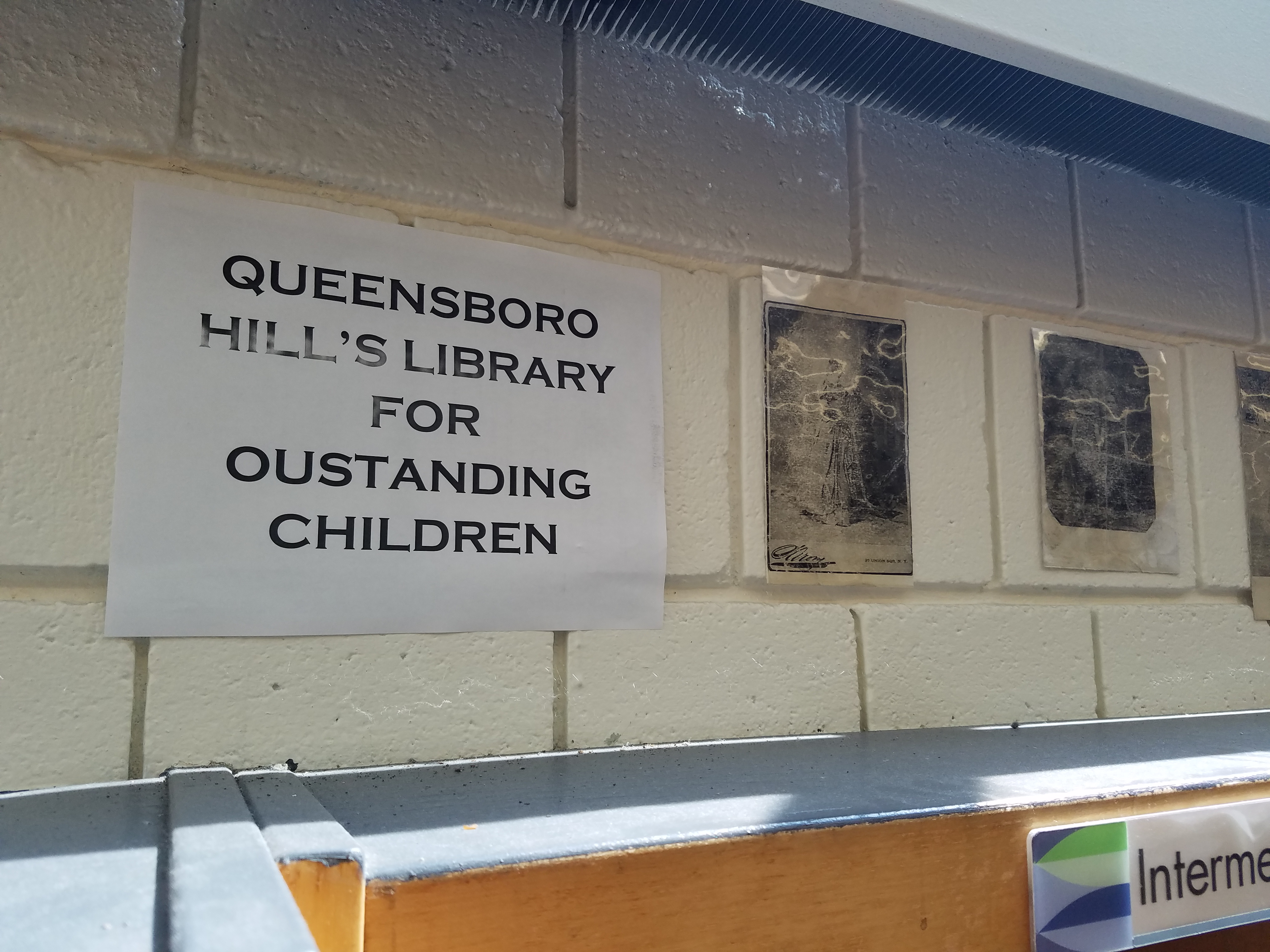
When I told them I wanted to create a photo gallery of their work, they all donated the photos to the library! So today, we have “Queensboro Hill’s Library for Outstanding Children” (forgive the glare, I laminated the photos so they wouldn’t deteriorate further):

I handed swag bags out for most of the day, and everything went except for one tote, two X-Files posters, and a handful of My Best Friend’s Exorcism posters, which will all be prizes for future programs. One kid couldn’t even wait to get home: he gave himself an ET tattoo sleeve, which was pretty fabulous.

I’d call our Queensboro Hill BookPop! a success.

Posted in Animal Fiction, Fantasy, Fiction, Graphic Novels, Middle Grade, Tween Reads

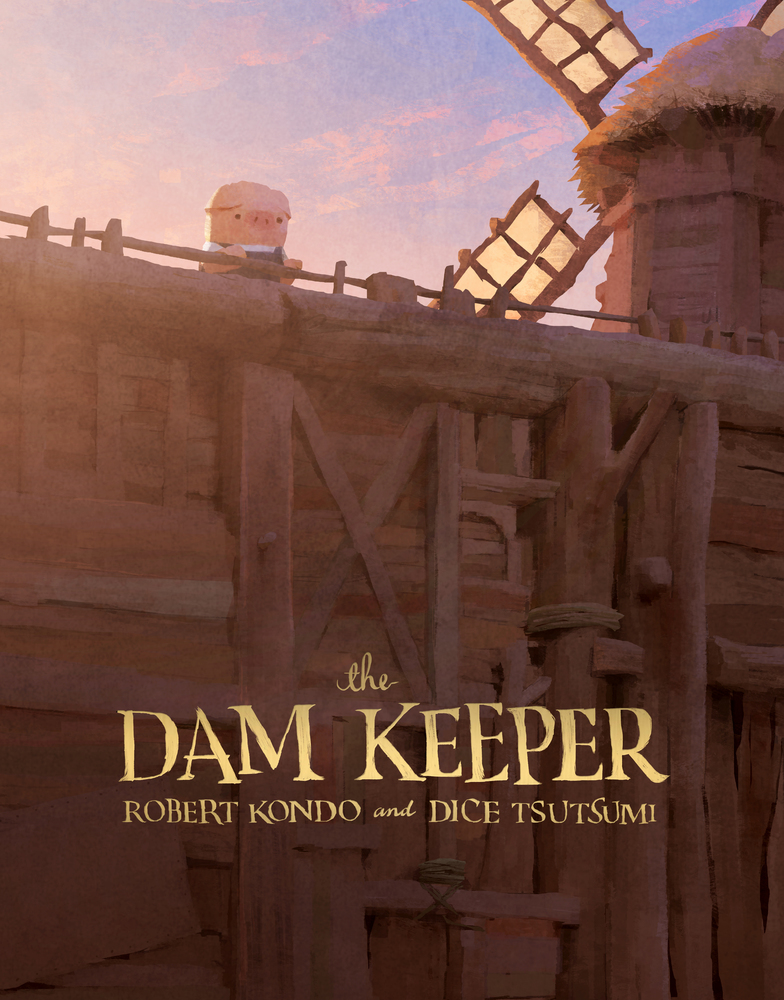
The Dam Keeper: from screen to page

The Dam Keeper, by Robert Kondo and Dice Tsutsumi, (Sept. 2017, :01First Second), $17.99, ISBN: 9781626724266

Recommended for readers 8-12

A young pig learns from his inventor father how to maintain the dam that keeps their village in Sunrise Valley safe. When Pig’s father disappears, it falls on Pig to keep the dam intact and the village safe. He’s an outcast at school, teased and ridiculed, but he never strays from his task. But a black fog is coming, threatening the Valley and the dam. Pig, with his new friend, Fox, and the reluctant Hippo, come together to answer the threat and discover what’s on the other side of the dam.

Based on the 2015 Oscar-nominated short, The Dam Keeper, this adaptation by Robert Kondo and Dice Tsutsumi – cofounders of the animation studio Tonko House – is breathtaking. They manage to give a graphic novel a stunning landscape, where the art comes alive for readers and the empathy for their main character is bottomless. Kondo and Tsutsumi create deep characters with Pig, Fox, and Hippo; one can’t help but fall in love with them and root for them.

You can rent The Dam Keeper online through YouTube and sign up for e-mails at the Tonko House website. It’s a beautiful little film that the graphic novel expands upon and enhances. A definite must-add to collections; I can’t wait to see what happens in Part 2.
Posted in Fiction, Middle Grade, Realistic Fiction, Tween Reads

Little Women gets a middle grade update!

Littler Women: A Modern Retelling, by Laura Schaefer, (Sept. 2017, Simon & Schuster/Paula Wiseman Books), $16.99, ISBN: 9781481487610

Recommended for readers 8-12

The March sisters are back in this updated version of Louisa May Alcott’s classic, Little Women. Now, they’re coping with a dad who’s deployed overseas, and the girls are contending with school dances, sleepovers, and crushes. The characters are a little younger: Meg is 13 and a freshman in high school; Jo is 12; Beth is 10, and Amy is 9, and their overall personalities are wonderfully close to their original personas. Jo loves hockey, while Beth prefers to stay at home or visit their neighbors, the Lawrences, to play piano. Laurie and Demi are back in this update, too, with age-appropriate crushes on the March girls. Author Laura Schaefer sticks pretty close to the original story, with a happier resolution to Beth’s story. Each chapter contains a fun activity from one of the March sisters, including crafts and recipes. The sisters also create a family ‘zine, which I love – and tips on creating one – and I’m thrilled to see that ‘zines are becoming a thing again, popping up in books like Littler Women and Moxie.


Littler Women is such a good introduction to the classic for middle graders. It encourages creativity and emphasizes the bond between sisters, between family, and between friends; there are disagreements between characters, but they are able to work things out every time. Talk up the similarities and differences between Little Women and Littler Women (don’t forget to mention Little Men), and maybe even have a viewing of one of the several movie adaptations of the original. Definitely fun reading, worth adding to your shelves or giving to a classic-minded reader who loves a good story.

Author Laura Schaefer is also the author of The Tea Shop Girls series. Her website offers links to her blog and information about school visits.

Posted in Non-Fiction, Teen, Young Adult/New Adult

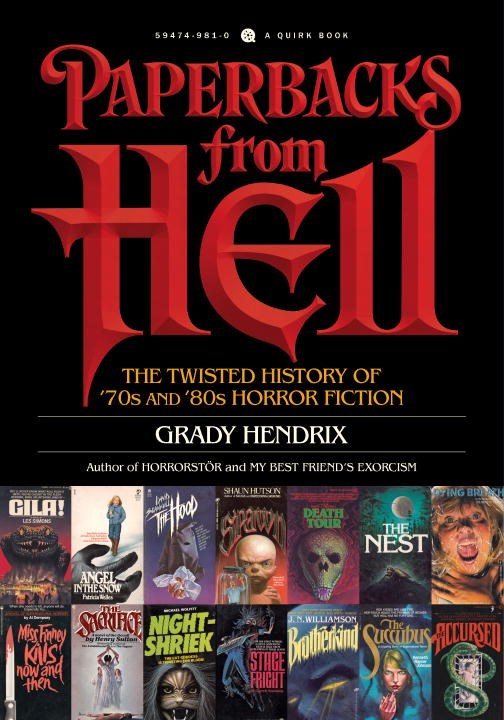
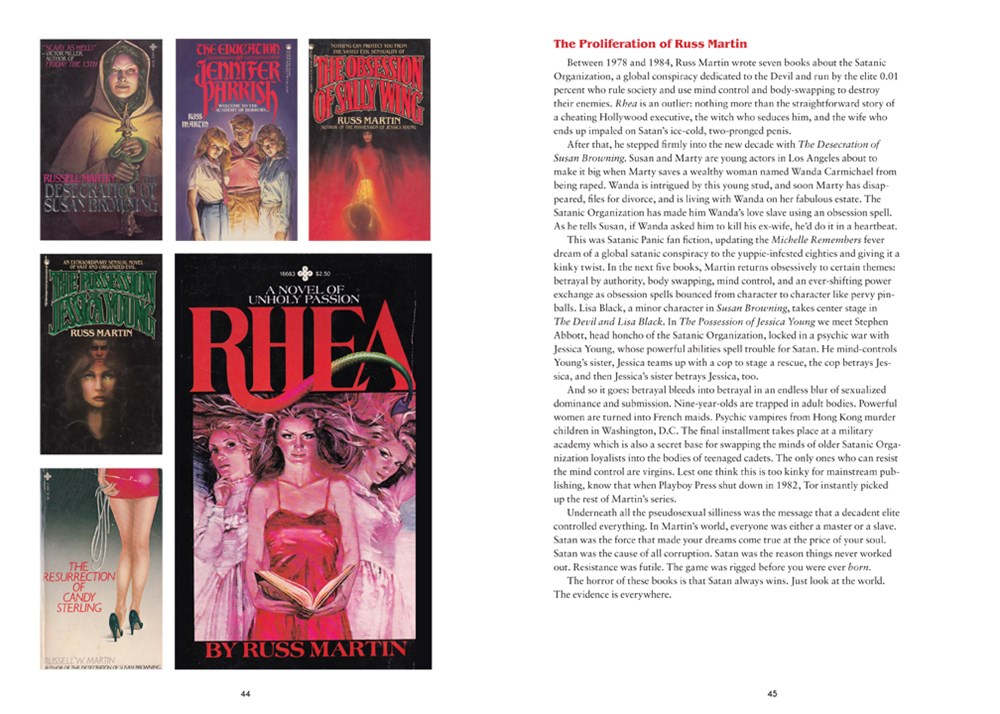
Paperbacks from Hell is a love letter to ’70s and ’80s horror fiction

Paperbacks from Hell: The Twisted History of ’70s and ’80s Horror Fiction, by Grady Hendrix, (Sept. 2017, Quirk Books), $24.99, ISBN: 9781594749810

Recommended for readers 16+

I know you may be looking at this review funny: ’70s and ’80s horror fiction? For teens now? YES. Walk with me.

First off, Grady Hendrix is straight up hilarious. If you haven’t read Horrorstor or My Best Friend’s Exorcism, you haven’t yet been introduced to his brand of smart, snarky horror: a haunted Swedish furniture store (Horrorstor) starts out witty, and leaves you sleeping with the light on for a week. A YA novel about demonic possession in the ’80s (My Best Friend’s Exorcism) starts with insidious, creepy storytelling, takes it into sheer horror territory, and ends on the most ’80s of endings; you can practically hear the synths in your mind as you turn pages. And now, Hendrix writes a love letter to that crazy time with his retrospective of horror paperback fiction. We go back to a time when paperbacks were sold in the supermarket; when kids like me would sneak peeks at VC Andrews’ Flowers in the Attic while on line at the A&P grocery store. So many creepy children. So much Satan, with so many cultists. So many animals bent on our destruction.

Hendrix is one of those authors that make you pause, grab a friend – or your teenager, in my case  and say, “No, wait, you have to hear this.” Multiple times. Until said teenager finally asks, “Wait a minute: Gestapochauns? There was a book about Nazi leprechauns? Are you serious?” And that, my friends, is where you hook them. You pick a section – any section – and you show them some of the covers. Then you read some of the text, because Hendrix’s knowledge about these books – in conjunction with Too Much Horror’s Will Errickson – is encyclopedic. And the teen is laughing and kind of terrified and wants to know more, all the same.


Gestapochauns are indeed a thing.


Paperbacks from Hell is perfect for us readers of a certain age, sure, but it’s also a book that connects us with our teens. We can get them on board with the craziness and the overwrought drama of the art and the stories. You can point out authors that teens will know, like VC Andrews, who’s now considered YA, and RL Stine, who was writing horror long before Goosebumps made him a household name. Let horror build a bridge between you and your teens. As my teen told me, “You grew up in a different time, Mom.” Yes, son. Yes, I did. And it was amazing.

Grab a copy and take a tour through the bookshelves of your youth, and invite your teens to make the trip with you. And while you’re at it, share your best six-word horror story with Quirk Books on Twitter by this Friday (9/22/17) and maybe you’ll win your own copy of Paperbacks from Hell! Details are here.


Posted in Fantasy, Fiction, Fiction, Fiction, Graphic Novels, History, Intermediate, Middle Grade, mythology, Non-Fiction, Teen, Tween Reads, Young Adult/New Adult

Illustrated/Graphic Novel Rundown

Phew! I may have overextended myself just an eensy bit with  my own summer reading list, but it was all worth it. There are some great books out this Fall. Here’s a quick rundown of some graphic novels and illustrated nonfiction out this month (and one from June… it was a busy summer!).


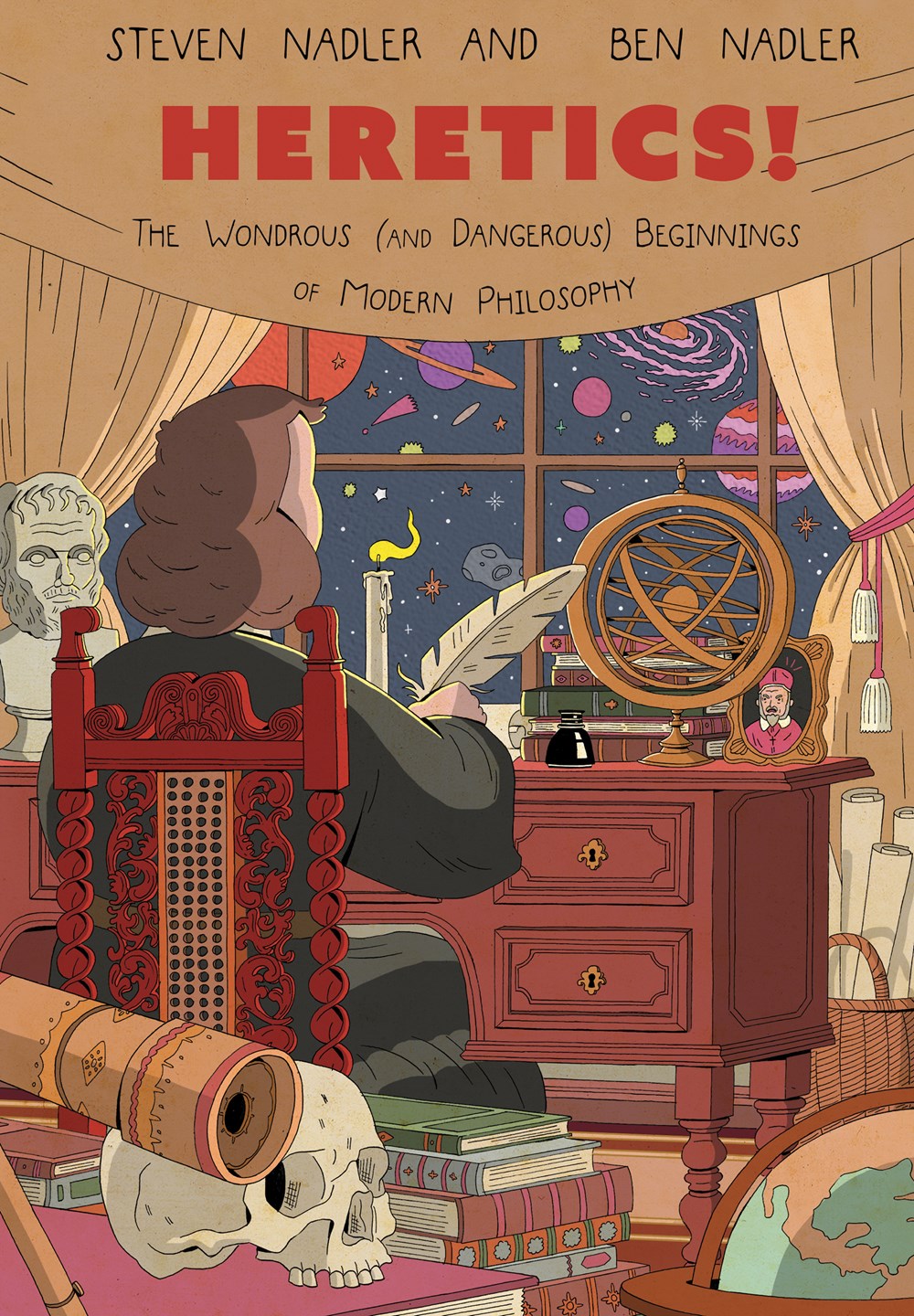
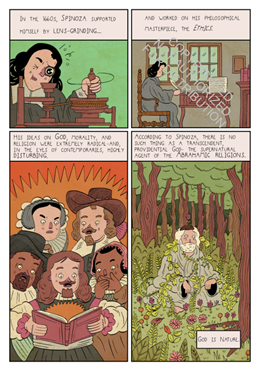
Heretics!: The Wondrous (and Dangerous) Beginnings of Modern Philosophy, by Steven & Ben Nadler, (June 2017, Princeton University Press), $22.95, ISBN: 9780691168692 / Ages 16+

This nonfiction graphic novel tells the story of the 17th-century thinkers – Galileo, Descartes, Locke, Newton, and more – who fundamentally changed the way mankind saw society and ourselves. These philosophers and scientists challenged the church’s authority to prove that Earth was not the center of the universe; that kings were not divinely chosen to rule; that neither God nor nature makes choices: sometimes, things just happen. Period. The reader-friendly, cartoony drawings, combined with simple explanatory text helps readers understand the scandalous nature of these thinkers. Booktalk and display with the Action Philosophers collection.


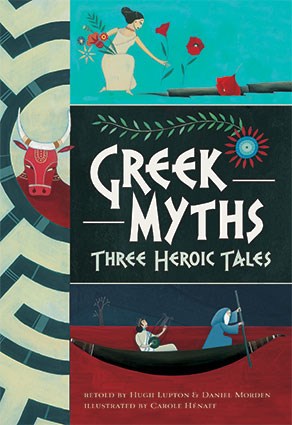
Greek Myths: Three Heroic Tales, by Hugh Lupton and Daniel Morden/Illustrated by Carole Henaff, (Sept. 2017, Confident Readers), $12.99, ISBN: 9781782853497 / Ages 8-12

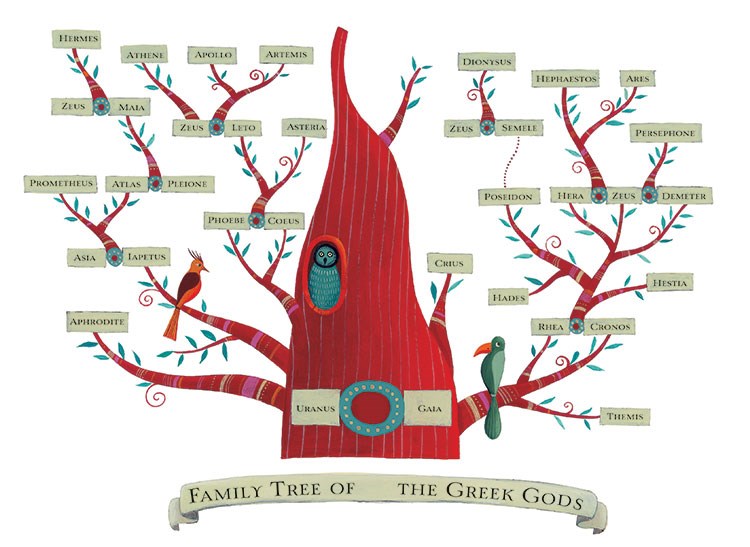
Three of the most famous Greek myths: Demeter and Persephone, Theseus and the Minotaur, and Orpheus and Eurydice – get the illustrated treatment here. Award-winning French illustrator Carole Hénaff uses a palette of deep and bright colors to create beautiful illustrations that would be as beautiful in a frame as they are in this book.

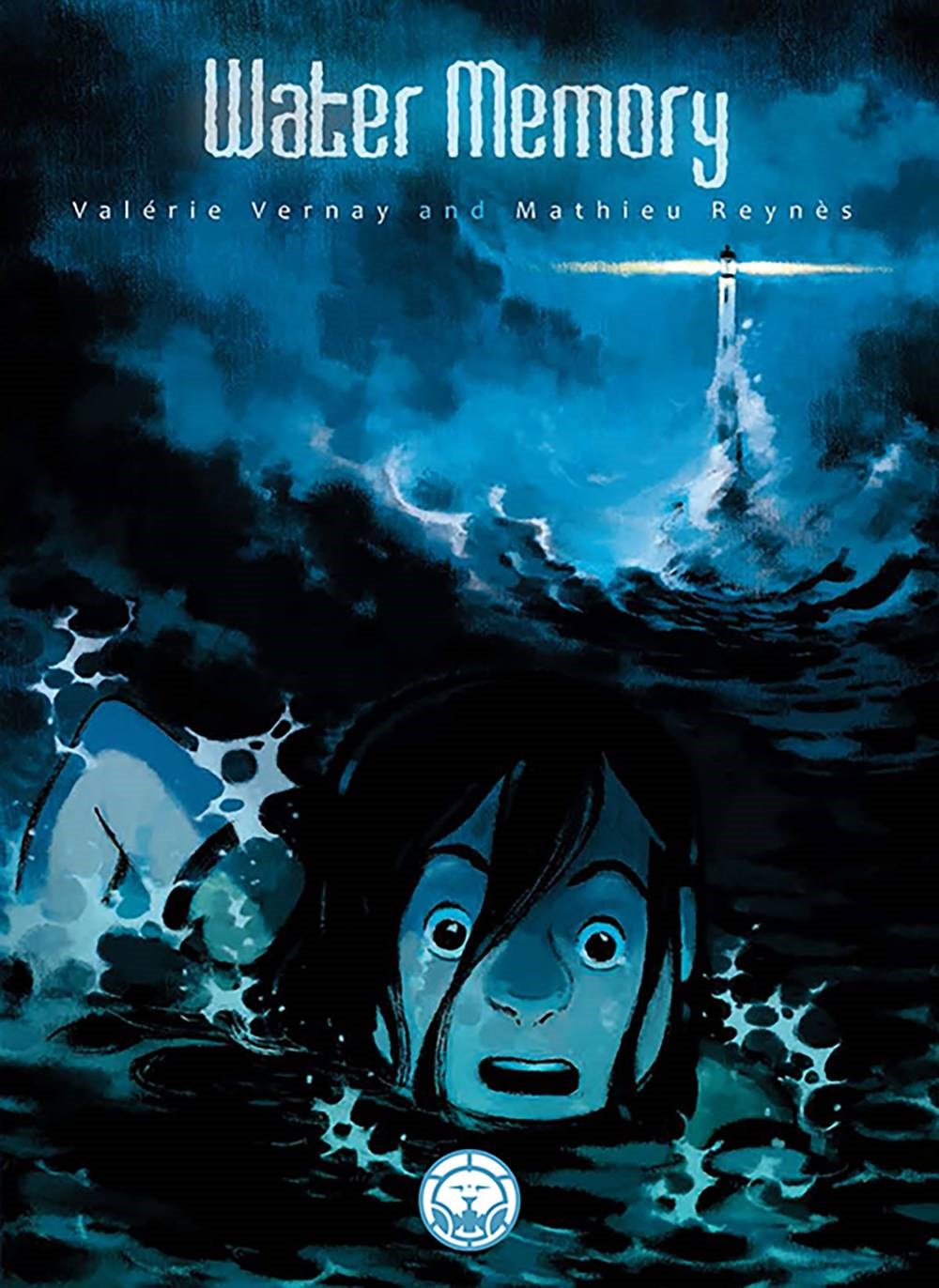
Water Memory, by Mathieu Reynes/Illustrated by Valerie Vernay, (Sept. 2017, Lion Forge), $14.99, ISBN: 9781941302439 / Ages 13+

I love a good, spooky story, and if it’s a good, spooky graphic novel that I can share with my library kiddos, even better. Marion’s mom inherited an old family house. It’s got a private beach and overlooks the ocean. It’s too good to be true, right? Right. Marion discovers some strange rock carvings and that a chilling local legend may be coming to life. The artwork is beautiful, and the translation from the original French to English is seamless.

    
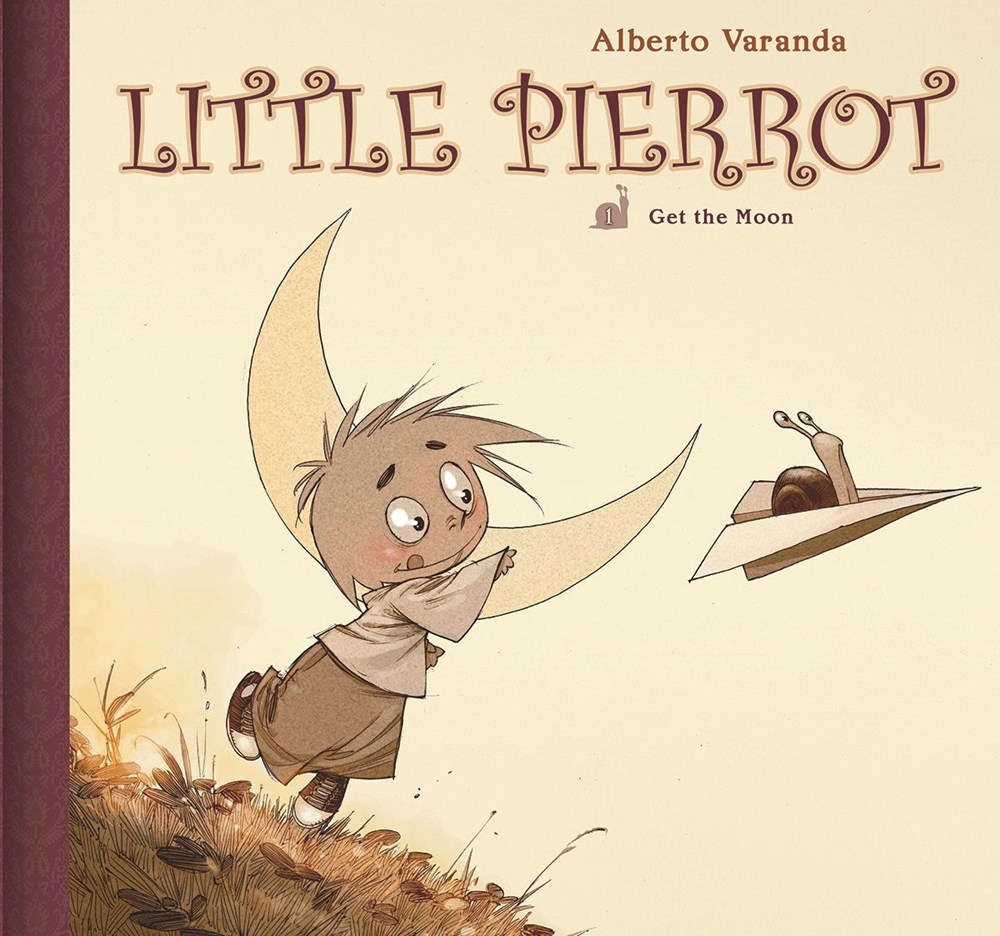
Little Pierrot Vol 1: Get the Moon, by Alberto Varanda, (Sept. 2017, Lion Forge), $14.99, ISBN: 9781941302590 Ages / 4-8
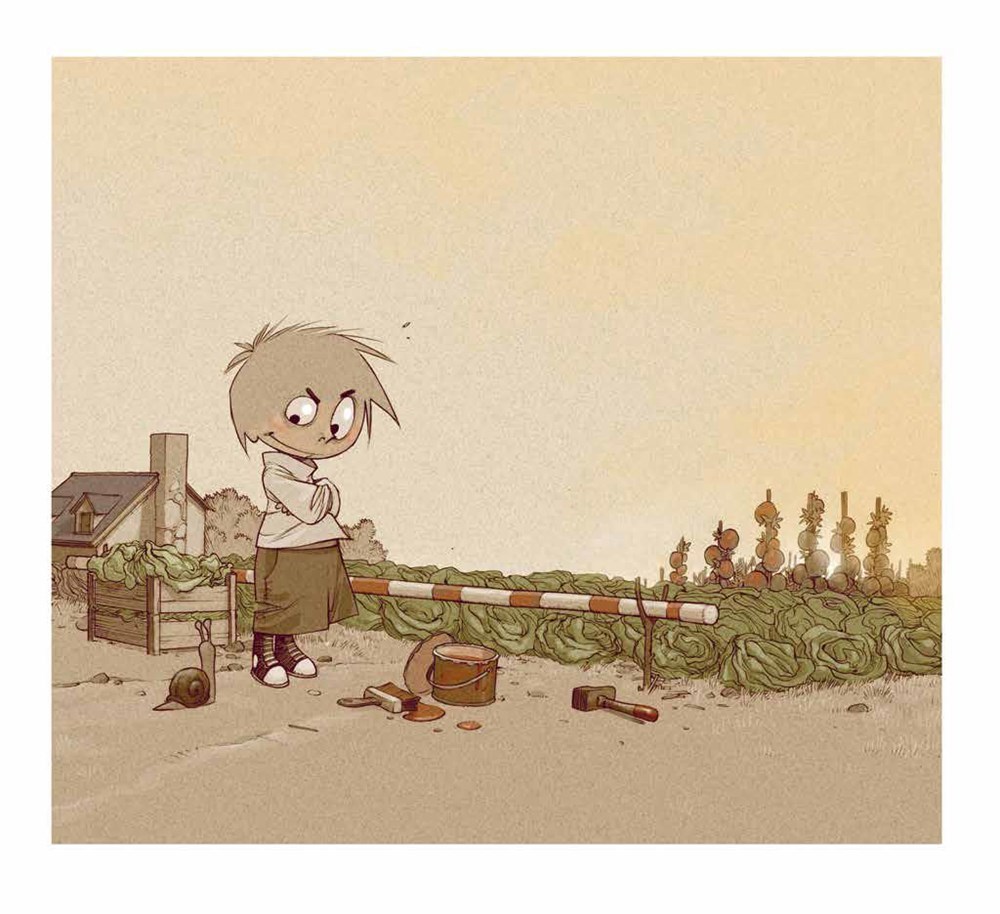
This is the first in a new graphic novel series, translated from French, and perfect for young readers. Little Pierrot is a little boy with a big imagination. He and his snail buddy – Mr. Snail, naturally – have surreal adventures and end their day together, like best buddies do. Give this to your TOON Books readers; it’s got a similar look and feel. The artwork is sweet and whimsical, and kids will identify with Pierrot in terms of imagination and having a best buddy at one’s side, whether it’s a snail, a dog, or a stuffed plush. Booktalk with Calvin and Hobbes and Garfield, who never likes to be without his teddy bear, Pooky.
Posted in Fiction, Science Fiction, Teen, Young Adult/New Adult

The Vault of Dreamers Trilogy closes with The Keep of Ages

The Keep of Ages (The Vault of Dreamers #3), by Caragh M. O’Brien, (Aug. 2017, Roaring Brook Press), $17.99, ISBN: 9781596439429

Recommended for readers 12+

The conclusion to The Vault of Dreamers trilogy sees Rosie on the run from Dean Berg and Ian, the vault of dreamers technician that took care of her while she was kept in the vault in the previous book, The Rule of Mirrors. When she discovers that Dean Berg has hold of her family, she follows clues to an abandoned amusement park to save them and bring down the vault of dreamers. It’s more complicated than even Rosie realizes, though – she discovers her sister is among the dreamers and that bigger plans are in motion for viewers of The Forge Show. Rosie has to risk everything to save her family and keep Thea – her seeded consciousness, now suffering migraines – safe while making sure Dean Berg can never harm anyone again.


There is a real sense of urgency running through The Keep of Ages, but the execution gets bogged down in multiple subplots. One character, Lavinia, is almost too good to be true: the theme park designer, offers access to a place to hide, serves as a conduit to connect Rosie with her family, and is a font of information on the secret network of tunnels beneath the Keep, where the dreamers are held. The final resolution neatly ties everything up, but left me wanting a little more. Get it if you need answers to questions left in the previous book.

Posted in Fiction, Historical Fiction, Realistic Fiction, Teen, Tween Reads

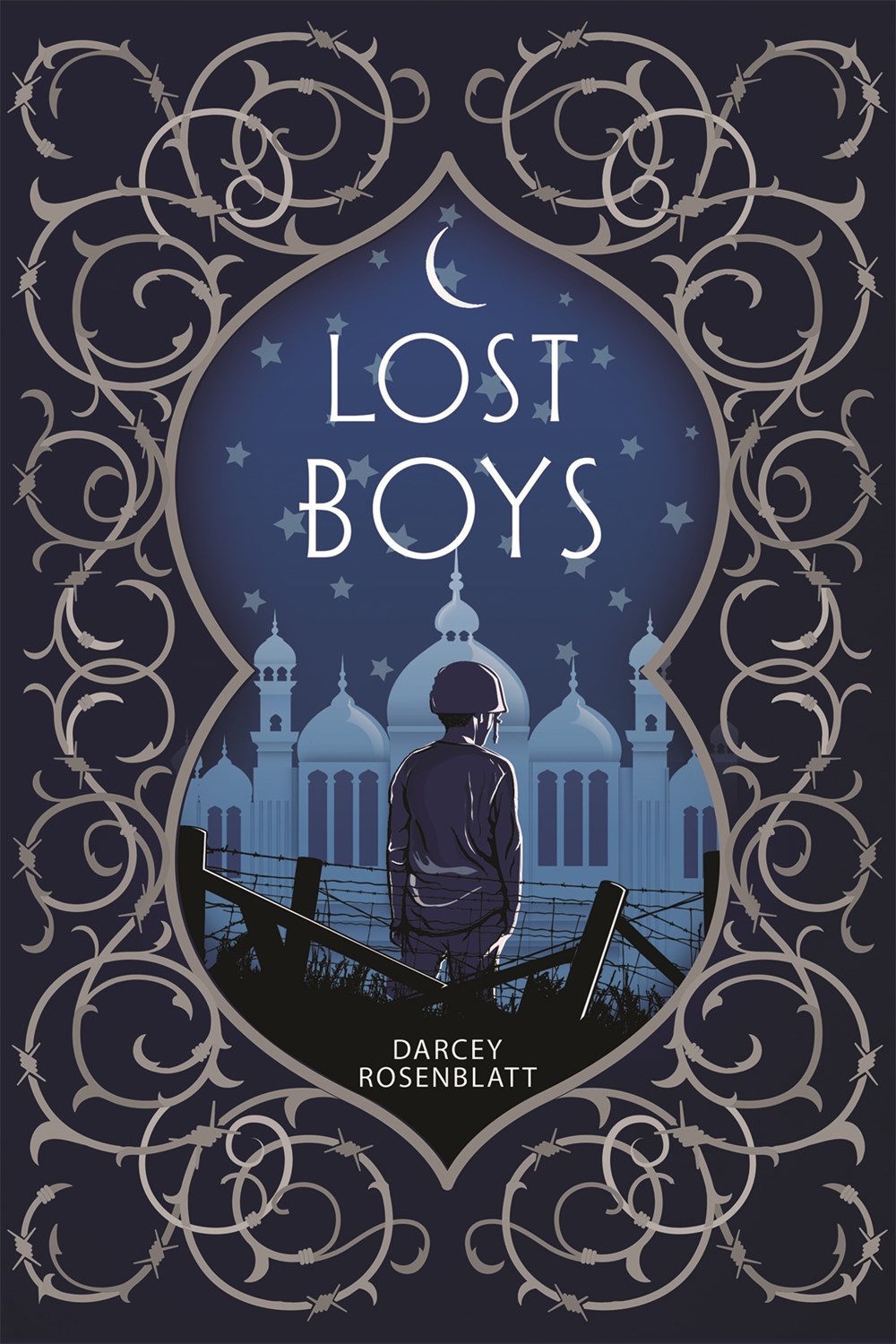
Lost Boys chronicles the Iran-Iraq War through a boy soldier’s eyes

Lost Boys, by Darcey Rosenblatt, (Aug. 2017, Henry Holt & Co), $16.99, ISBN: 9781627797580

Recommended for readers 9-14

Twelve year-old Reza is a musical prodigy living in 1982 Iran. He lives with his widowed, fundamentalist mother, and craves visits from his Uncle Habib; a member of the resistance, he also encourages Reza’s love of music by slipping him cassettes of artists from Stevie Wonder to Thelonious Monk. His mother pushes him to join the war effort, telling him she would be proud to have her son die in service of Allah. Reza wants nothing to do with the conflict, but when his uncle is killed and his best friend, Ebi, signs up to serve, Reza feels he has nothing left without his best friend, and signs on. He and Ebi receive their “keys to heaven” – plastic keys that serve as symbols that they will achieve paradise when they die in service to Iran and the Ayatollah – and are sent into battle. War is not the glorious battle that Ebi dreamed about; it’s not full of exciting moments like he and Reza have seen in the movies. The boys are fodder for the minefields – tied together and sent into battle to clear the way for older troops. Reza is injured and sent to a prisoner of war camp, where he meets other boys his age and desperately tries to learn Ebi’s fate as he endures abuse at the hands of a sadistic prison guard.

I couldn’t put Lost Boys down, choosing instead to disregard my normal sleep schedule until I finished the last page. Reza is a heart-achingly real character based on far too many child soldiers. He and his classmates are promised glory and fed lies; in the end, all he lives for is the hope that he’ll be reunited with his best friend and live to enjoy music again. Set in 1982, the story is more relevant now than ever, as children are still pressed into service all over the world. Booktalk Lost Boys with Marjane Satrapi’s Persepolis for tween and teen readers; booktalk with Child Soldier: When Boys and Girls Are Used in War, by Jessica Dee Humphreys and Michel Chikwanine to illustrate the worldwide epidemic of using children as combatants. This article from Global Citizen shines a light on seven countries that still use child soldiers, and what we can do to help stand against the practice.

Lost Boys is an important book that sparks outrage and empathy, and is a must-add for collections. I’d love to see this on next summer’s reading lists.

Posted in Fantasy, Preschool Reads

Funk’s Fine Fractured Fairy Tale: It’s Not Jack and the Beanstalk!

It’s Not Jack and the Beanstalk, by Josh Funk/Illustrated by Edwardian Taylor, (Sept. 2017, Two Lions), $17.99, ISBN: 978-1542045650

Recommended for readers 4-10

Happy Book Birthday to It’s Not Jack and the Beanstalk! I love fractured fairy tales: they let me get as silly as I want to be (need to be?) in a storytime, which lets the kids know they can be as silly as they want or need to be, too. After all, storytime is supposed to be fun, isn’t it?

The story starts out as usual: the fancy fairy tale font, the “Once upon a time” opening line… but wait. Jack is sleeping! The narrator nudges him, and demands that he put on pants (this is the part where every kid in the room is on board with Jack) and get into the story. That’s when we get the idea that this narrator is a little pushy, and that maybe Jack has different ideas about how this fairy tale is going to go. Poor Jack is badgered into trading his pet cow for beans that make him toot, climb a giant beanstalk, and face off against a giant that he really has no quarrel with. Jack takes the story into his own hands, and brings things to a more satisfying conclusion.

Loaded with fairytale references – keep a sharp eye and ask your readers to point them out as they see them – and fun, cartoony digital art, It’s Not Jack and the Beanstalk! is an essential to fractured fairy tale collections. It’s not just for the little readers, either – you can get a heck of a reader’s theatre going on here, thanks to all the side conversations and the power struggle between the Narrator and Jack. Wanna see it in action? Check out Josh Funk’s website, where teachers and librarians stage their own reading. It’s also a nice way to talk to kids about believing everything they read: the Narrator likes to embellish a few areas, but Jack is quick to call out alternative facts where he finds them.

If you haven’t enjoyed Josh Funk’s books yet, you have got to start. I love Pirasaurs – because there are pirate dinosaurs – and Lady Pancake and Sir French Toast make me laugh out loud. He’s got a load of great stuff available on his website, including downloadable coloring books and activity sheets, character cards, and book songs.

Want a shot at winning your own copy of It’s Not Jack and the Beanstalk? You know you do. Enter a Rafflecopter giveaway for your chance!


Josh Funk writes silly stories and somehow tricks people into publishing them as books – such as the Nerdy Book Club Award-winning DEAR DRAGON and LADY PANCAKE & SIR FRENCH TOAST along with IT’S NOT JACK AND THE BEANSTALK, and the upcoming ALBIE NEWTON, HOW TO CODE A SANDCASTLE (in partnership with Girls Who Code), and more.

Josh is a board member of The Writers’ Loft in Sherborn, MA. was the co-coordinator of the 2016 and 2017 New England Regional SCBWI Conferences, and has written a free 12-Step Guide to Writing Picture Books. Josh grew up in New England and studied Computer Science in school. Today, he still lives in New England and when not writing Java code or Python scripts, he drinks Java coffee and writes manuscripts.

Find out more about Josh at www.joshfunkbooks.com and on Twitter @joshfunkbooks.

Posted in Animal Fiction, Early Reader, Fantasy, Fiction

A Nocturnals Easy Reader! The Moonlight Meeting

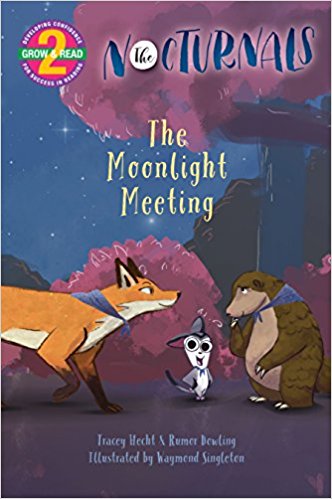
The Nocturnals: The Moonlight Meeting, by Tracey Hecht & Rumur Dowling/Illustrated by Waymond Singleton, (Sept. 2017, Fabled Films Press), $5.99, ISBN: 978-1-944020-14-9

Recommended for ages 5-8

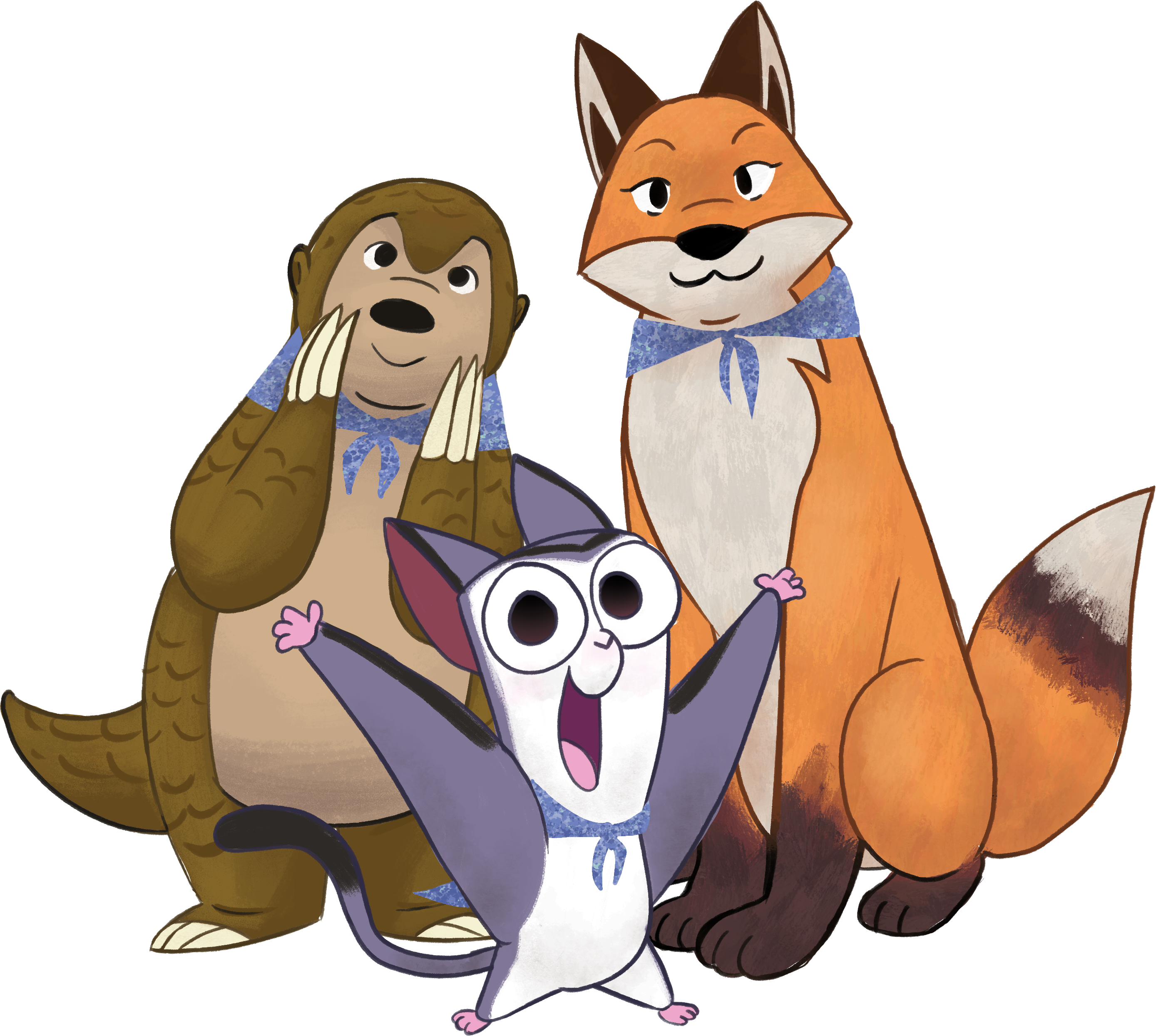
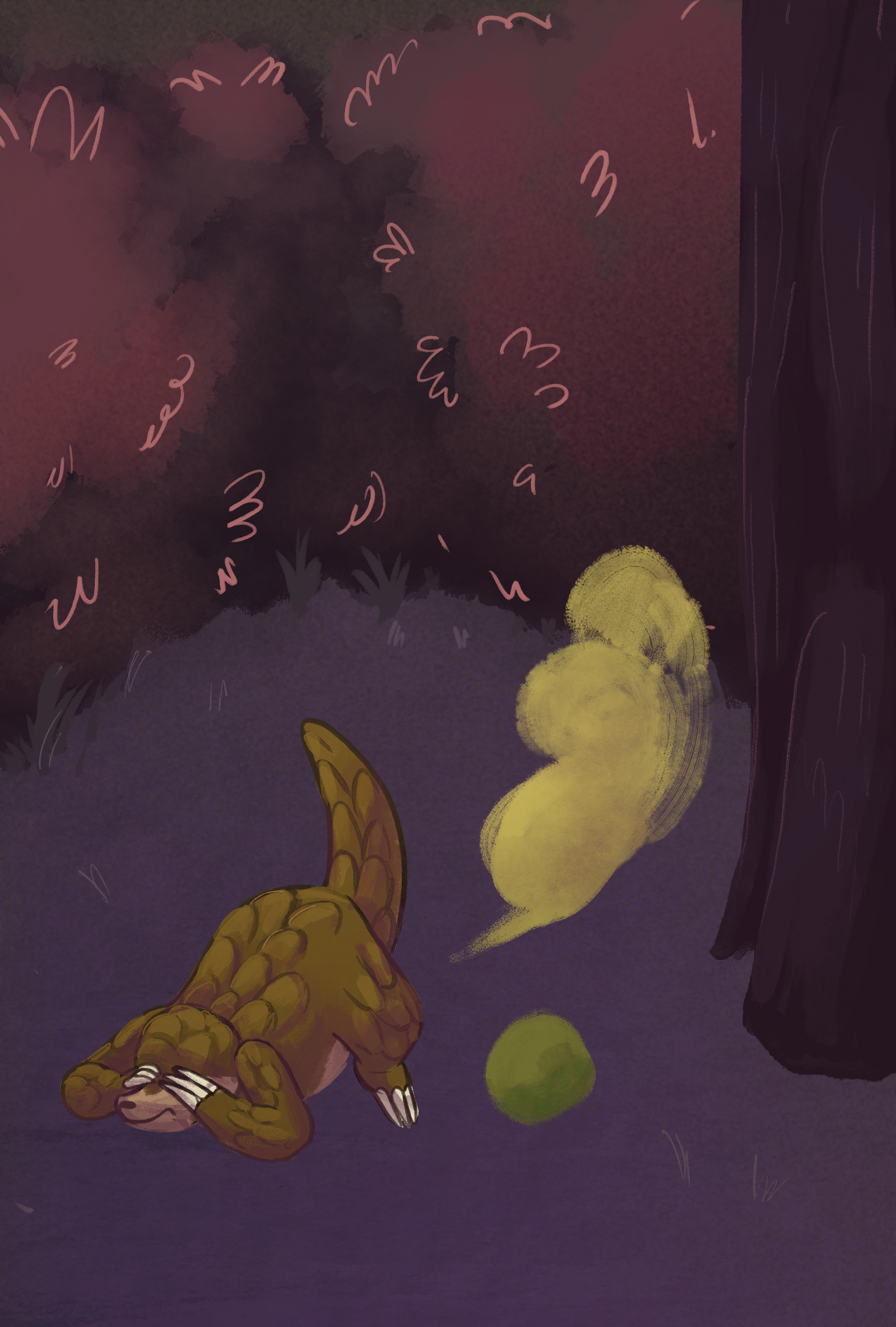
YAY! One of my favorite recent middle grade series is expanding to easy readers! The Nocturnals: The Moonlight Meeting introduces younger readers to my favorite Nocturnal group of friends: Tobin, the pangolin, Dawn, the fox, and last but never least, Bismark, the sugar glider (don’t dare call him a squirrel). An unlikely pomelo fruit brings the three new friends together, as Tobin – forever hungry – and Bismark disagree over ownership rights. Readers get a fun dose of fart humor thanks to sweet Tobin, who’s a bit nervous and has… well, a bit of a reaction. (Readers familiar with Tobin and the latest middle grade Nocturnals story, The Fallen Star, will enjoy the reference.)

Waymond Singleton’s artwork is perfect for an easy reader audience, giving the group more definition and providing an animated feel. Bismark is all wide eyes and open mouth; Tobin’s glance is shyly cast downward, and Dawn is ever gentle and ready to step in to help. As with the middle grade novels, The Moonlight Meeting emphasizes friendship, teamwork, and sharing. Fun Facts at the end of the book provide descriptions about the real-life Nocturnal counterparts. The brief sentences and easy dialogue make this a great step for readers who are ready to move on from Level 1 readers. A leveling guide on the back of the book, similar to the Step Into Reading series, explains each leveled step for parents and caregivers. This works well with a preschool or kindergarten read-aloud, too.

I can’t wait to introduce The Nocturnals to my storytime group. The group’s website at Nocturnals World is a treasure trove of information for caregivers and educators, featuring curriculum guides, library resources, discussion guides, and activity kits. If you’ve got animal fiction fans, get them hooked early and add The Moonlight Meeting to your easy readers.