Posted in Espionage, Middle Grade, Non-fiction, Tween Reads

Can You Crack the Code? makes codebreakers out of your readers

Can You Crack the Code? A Fascinating History of Ciphers and Cryptography, by Ella Schwartz/Illustrated by Lily Williams, (March 2019, Bloomsbury USA), $21.99, ISBN: 9781681195148

Ages 10-13

Three years ago, I held a great, week-long Spy program at my library for Summer Reading. The kids went berserk for it; I had a blast planning and running it, and books like Can You Crack the Code? make me think it might be time to hold a program like that again. Ella Schwartz has come up with a nice history of codes, code names, and cryptography for middle graders, with loads of pictures, informative sidebars, and activities to keep readers on their toes. Famous moments in cryptography history include the Caesar Cipher, invented by Julius Caesar, the Arnold Cipher, used by the infamous Benedict Arnold, and the Enigma machine, used by the Germans during World War II; the machine that gave them the upper hand until a team of British codebreakers at Bletchley Park finally broke the code (shout-out to computer scientist and codebreaker Alan Turing). Want to know why you have to generate a strong password, obnoxious as it may be? Check out the “Can You Hack the Bank?” activity and you’ll be changing all of your passwords. A final challenge has readers going through the book to solve one last cipher. There’s a comprehensive bibliography and the book is indexed, making this a nice volume to have on your shelves.

Display this with the Book Scavenger series, the Mr. Lemoncello’s Library books, the Secret Coders graphic novels, and – naturally! – the Girls Who Code books, both fiction and nonfiction. Brightly has a good post on fiction with puzzles and codes.

Now, if you’ll excuse me, it’s time to revisit some of my old Summer Reading plans… I know this year’s theme is A Universe of Stories; maybe I’ll just use some codes to send them into space! Great escape room ideas in here, too. All around fun for your brain-teaser-loving readers.

Posted in Fantasy, Fiction, Graphic Novels, Middle Grade, Tween Reads

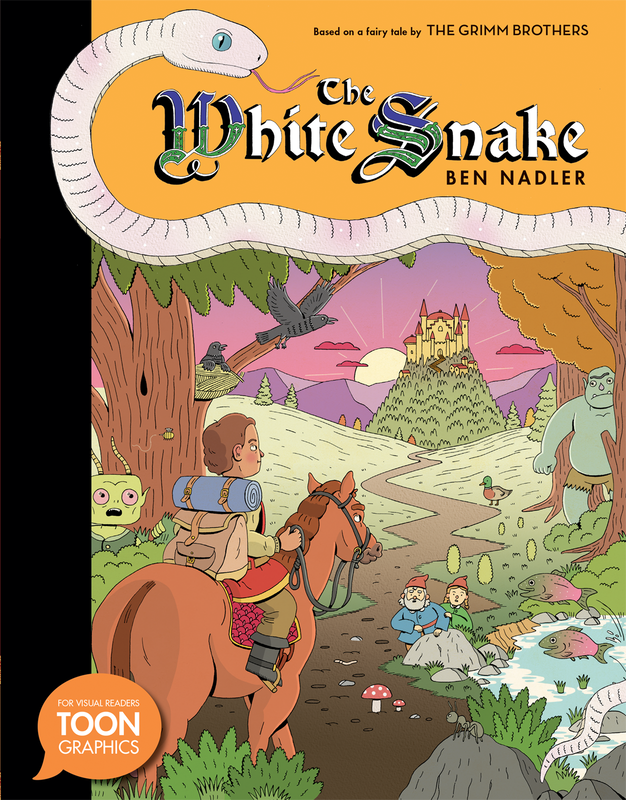
A classic fairy tale with modern-day sensibilities: The White Snake

The White Snake, by Ben Nadler (based on a fairy tale by the Grimm Brothers), (May 2019, TOON Graphics), $16.95, ISBN: 9781943145379

Ages 8-12

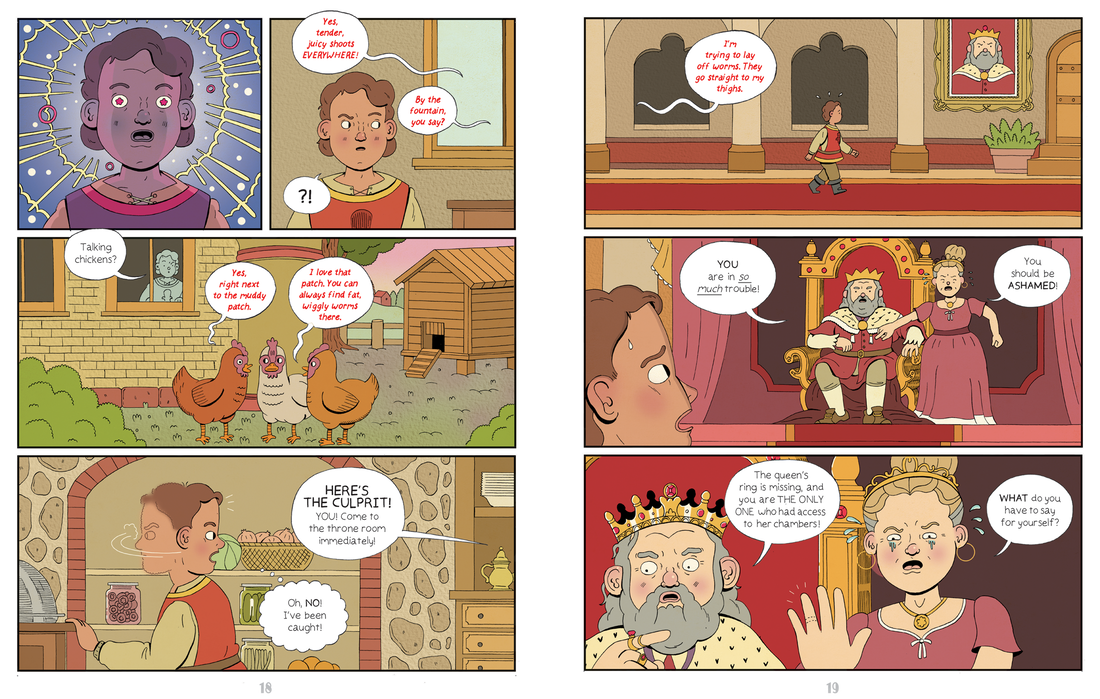
Ben Nadler revisits The Grimm Brothers’ tale, The White Snake, with modern-day emphasis on themes including kindness to animals and pushing back against classicism, and sexism. Randall is a young servant for King Arnold, an indecisive monarch who seems confounded by the mere act of hanging a picture. He is an autocratic father, too, shouting down his daughter and refusing to consider letting her rule; choosing instead to find a suitor for her. King Arnold sends Randall to the neighboring kingdom of Borisylvania to spy and report back on why King Boris is beloved. In Borisylvania, Randall discovers Boris’ secret: he is able to communicate with animals by eating a meal of white snake. With this knowledge, Randall heads back home, showing kindness to animals along the way. This kindness pays off when Randall needs help to complete quests set by King Arnold in order to win his daughter’s hand – and save his own life.

Ben Nadler weaves themes of sexism and racism throughout the story. King Arnold is a brutish overlord who refuses to listen to his own daughter, and throws Randall in prison when he refuses to divulge King Boris’ secret. Princess Tilda come to his rescue by offering herself as bait; she tells her father to offer her hand in marriage as a contest prize. When Randall completes each quest the king sets before him, he refuses to let a servant marry his daughter and adds additional perilous tasks. When Randall finally helps King Arnold see the light, the story takes an upbeat turn and the message is loud and clear: “the animals talked to me. All I had to do is listen”.

Back matter includes an essay by graphic novelist educator Paul Karasik on retelling folk tales, and a bibliography of print and online resources. TOON has a free, downloadable educator’s guide available. The endpapers feature artwork of key figures in the story: birds, fish, horses, crowns, and apples, all arranged into a lovely design with a vintage feel. The artwork dives into surrealist territory in points, which will make you wonder just what is in that food. Randall is fair-skinned; King Arnold and Princess Tilda are brown-skinned.

A great add to your graphic novel and fairy tale collections. TOON has copies available in both hardcover and softcover. Check out the interview Smash Pages did with Ben Nadler!

Posted in Fantasy, Fiction, Middle Grade, Realistic Fiction, Tween Reads

Middle Grade Quick Takes: The White Tower and Lions and Liars

Two more from the great TBR read-down! I’ve got some realistic fiction and some dark(ish) fantasy for you, right here!

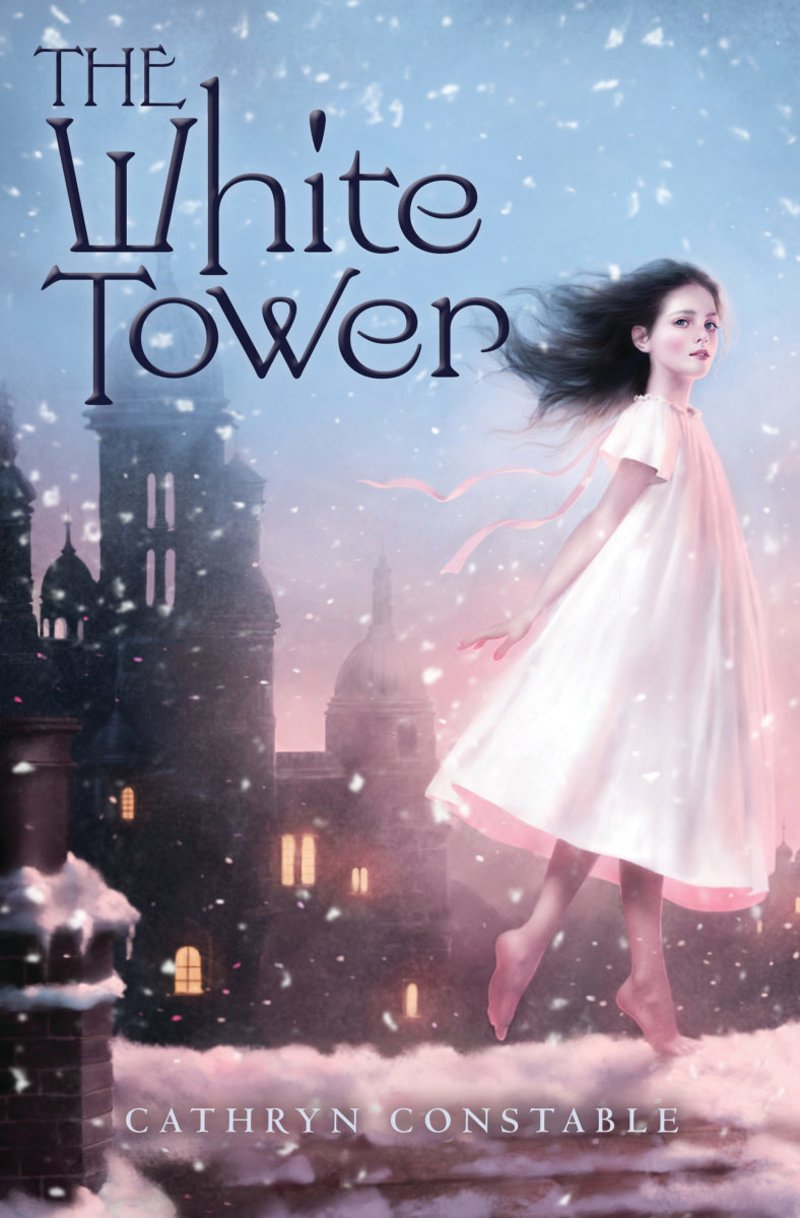
The White Tower, by Cathryn Constable, (Sept. 2017, Chicken House/Scholastic), $16.99, ISBN: 978-1-338-15746-8

Ages 8-12

Livy is a 12-year-old English girl who is still reeling from the recent death of her best friend is uprooted when her father accepts a prestigious job as the librarian at Temple College: a position that comes with a spot in the school for Livy and a new home for the family. Livy discovers the stone Sentinels – angels – on the roof of the school are tied into the school’s history, and that the school’s founder and her possible ancestor, Peter Burgess, was consumed with studies on gravity and flight. As Livy tries to fit in at school, she also finds herself drawn to the Sentinels and their secrets; a mystery between the school’s previous librarian, the current headmistress, and Peter Burgess moves the story forward.

Character development takes a back seat to the many subplots, leading to an at-times confusing story that has strong fantastic elements that I would have liked to explore more. Livy is a developing character who would have benefitted more from a stronger subplot on grief and loss, and the main plot – the Burgess mystery – being more defined, less stretched out between characters. If you have strong fantasy readers who liked Constable’s previous book, The Wolf Princess, this may work for them.


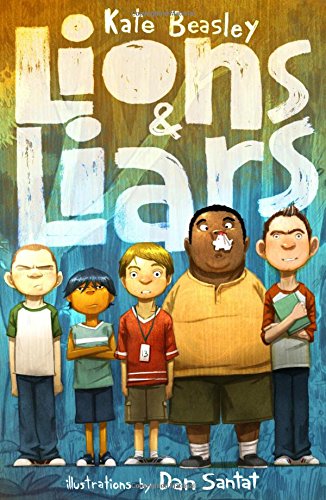
Lions & Liars, by Kate Beasley/Illustrated by Dan Santat, (June 2018, Farrar Straus Giroux), $16.99, ISBN: 978-0-374-30263-4

Ages 8-12

This case of mistaken identity at a summer camp for unruly kids is at times, hilarious; at times, touching. Fifth grader Frederick Frederickson is not the big kid on campus. He’s not even really the small kid on campus. According to his friend Raj’s “food-chain theory about life”, there are lions, like Devin; the big kid on campus. There are gazelles, the kids who are bullied by the lions. There are meerkats, who watch the world go by, and then, there are fleas, who live on the butts of the meerkats. According to Raj, Frederick is a flea. This doesn’t sit well with Frederick; things only get worse when his long-awaited family vacation is canceled because of a Category 5 hurricane threat. After his friends pull a mean prank on Frederick at a birthday party, he’s had enough, and pushes back. The only problem is, pushing back ends up with him stuck on a boat that leaves him on the shores of Camp Omagoshee, a summer camp for troubled kids. It gets worse when he’s mistaken for camper Dashiell Blackwood, whose name tag is the only one left. Assuming Dash’s identity, he finds himself in the big leagues for a change: Dash is legendary for being bad, but Frederick? He tries to convince his cabin mates, Nosebleed, Specs, The Professor, and Ant Bite, that he is every bit as tough as they come, but even Frederick isn’t sure if he’s going to be able to back up Dash’s fame. When the camp is cleared out when the hurricane starts heading in their direction, Frederick and his new group learn that they have to work together to stay safe, and maybe they’ll even become friends.

At its heart, Lions & Liars is about cliques and labels. The mistaken identity plot makes for some laugh-out loud moments, especially as Frederick tries to live up to Dashiell Blackwood’s infamous camp legend, but there’s also the stress of living a lie and the risk of being discovered. What happens when real friendships are made on the foundation of lies? The characters are nicely developed, and go beyond their “bad kid” label to show readers what constitutes a “troublesome child” in others’ eyes. Dan Santat’s black and white illustrations will keep readers turning pages. Kate Beasley has a great post about the labels kids get stuck with on the book on Nerdy Book Club.

Posted in Fiction, Intermediate, Realistic Fiction

Extravaganza at the Plaza and a word from author Lauren L. Wohl

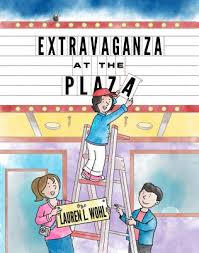
Extravaganza at the Plaza, by Lauren L. Wohl/Illustrated by Mark Tuchman, (Aug. 2018, Persnickety Press), $14.95, ISBN: 9781943978311

Ages 7-11

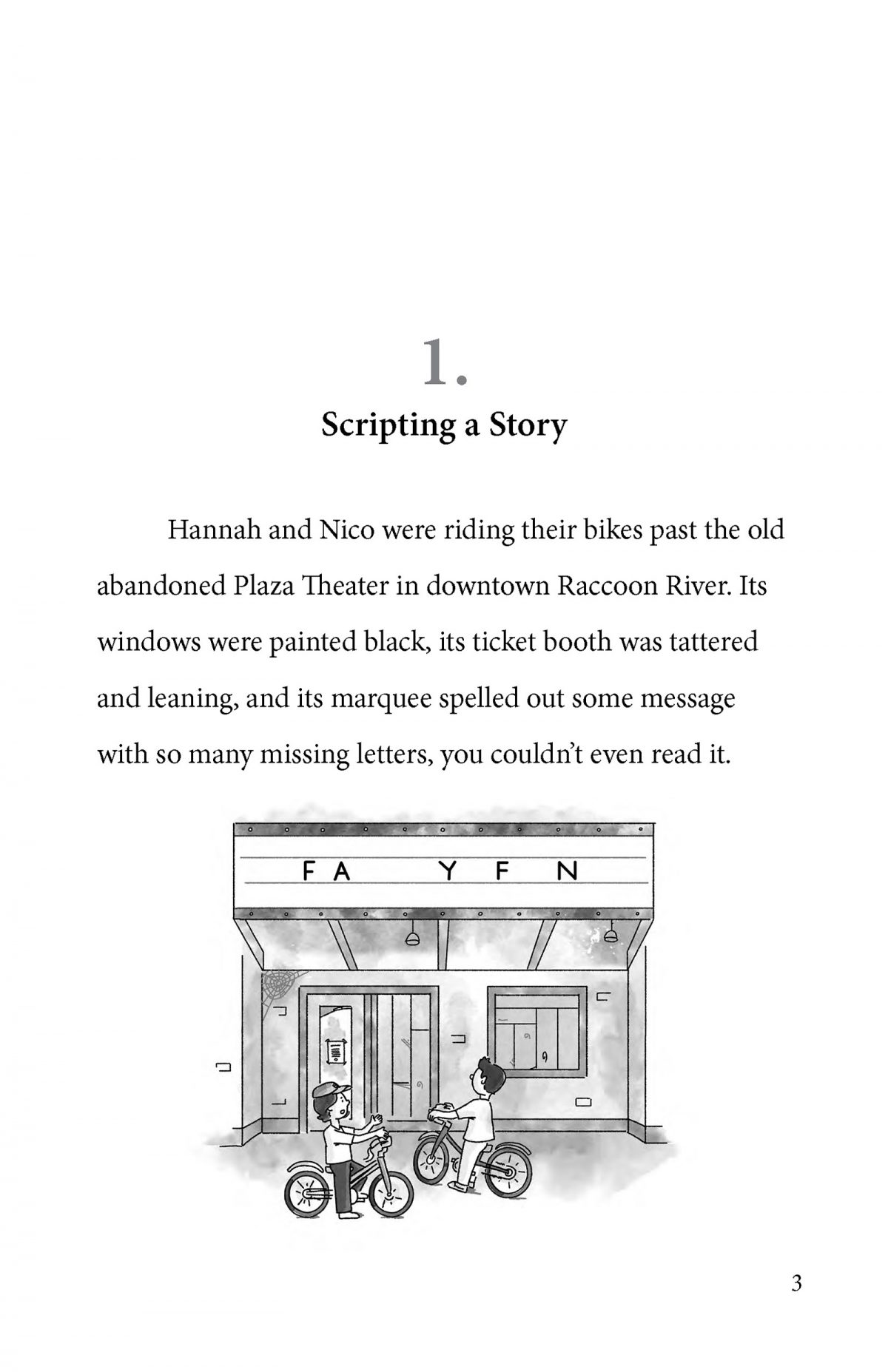
Third graders Hannah, and her best friend, Nico, walk by an abandoned theater in their neighborhood and decide it’s time to take action. Their town needs a good theater, after all: there are graduations and school concerts to be held, and everyone’s tired of traveling to nearby towns to see movies. There is a lot of work to be done, but Hannah is determined to make things happen! This companion to 2017’s Blueberry Bonanza is an upbeat story of how a community comes together with a goal in mind: to rehabilitate a public space!

Extravaganza is a good choice for middle graders. Hannah and Nico, along with their local mayor, have a lot to teach kids about taking action. The first place Hannah goes when she starts on her mission: the library! Her local librarian helps her look up the building’s owner and construction details, plus local history regarding the building. Hannah uses this information to learn what can be done, who to speak to, and how to get more help on board for her idea. Hannah is also a sympathetic character; she wants to make this her own pet project and struggles with so many people being part of it – kids will appreciate the feeling of wanting to work on a passion project, and the potential frustration of having someone else take the credit for their work. There’s discussions of fundraising, donor fatigue (when Hannah suggests sending postcards or calling people about donating, her mother steps in to gently nix that), and the necessities of renovating a building – find the owner; get it inspected; hire the right professionals – and, most importantly, the planning process for each task! Black and white illustrations throughout add a human face to the story, and the big ending will have kids wondering what they could do to make positive change in their own neighborhoods.

Lauren L. Wohl writes good stories about kids making the difference in their neighborhoods. Her Raccoon River Kids have started their own businesses (Blueberry Bonanza); motivated an entire town to come together to renovate a public space (Extravaganza at the Plaza), and, later this year, they’ll be starting a pet showcase to find homes for homeless pets (Zooapalooza). The Raccoon River books are a great precursor to books like The Donut Fix by Jessie Janowitz.


And now, a note from author Lauren L. Wohl!

MY FAVORITE LIBRARY MOMENTS

I grew up in Brooklynand believe me when I tell you, it was not the cool place it is today.  It was just home to many working familiesmade up of neighborhoods which were small and close and often built on shared values and experiences.

There was a branch of the Brooklyn Public Library eight blocks from home. For as long as I can remember, my dad and I walked to the library every Saturday morning. At each visit, he would borrow one of the color fairy tale collections by Andrew Lang. I dont recall how many there were, but I can still picture The Blue Fairy Book,The Purple Fairy Book, and The Rainbow Fairy Book. During the week that followed, he or my mom would read one whole story every night. We had favorites in each color, and we knew that evenif tonights story wasnt one of those, tomorrows or the next days would be.  

My dad also borrowed a book for himself for subwayreading back and forth to his job in Manhattan. Itoo, would pick a book to read on my own. 

The next week, we would return our books to the librarian who was always interested in what I liked and what I didnt. We engaged in conversations about the books(I thought she had read EVERYTHING in the library.). She took my opinions seriously. That interest and that respect mattered the world to me.

By the time I was in fourth grade, the librarian started to put aside three books she picked out just for me. She knew what my preferences were from the many book discussions we had hadShe picked winners just about every timeI felt so specially treated.

When I went through a period of reading books that she didnt thinkworthy, she would make sure the second selection of that Saturday met her standard. Slowly I developed skills to find books that challenged me and pleased me; humor that made me giggle; dramas that wrapped me inside them; nonfiction that answered my questions; and family and friend stories that warmed my heart.

When the city decided it was time to develop the area where our library stood, they moved the branch closer to our house. It was easier, sure, but I missed the long walks with my dad. I was in junior high by then, old enough to walk to this new location on my own.  But I missed that old library; I still do. Its impact was long-lasting, and many years later I know those Saturday mornings were a part of my decision to go to graduate school in library science.

When I finally completed my degree, my husband, young son and I took a vacation to Washington DC to celebrate. I wanted to explore thLibrary of Congress.

My husband called ahead, so that when I showed up, the library was ready for me with a special brand-new librarian tour. I saw rooms the public didnt usually see. I touched history; it surrounded me. Every step was thrilling, every detail memorable. Right then was when I knew I had made the right decision.

Posted in Animal Fiction, Fantasy, Fiction, Middle Grade, mythology, Tween Reads

Middle Grade Quick Takes: Thundercluck! and The Tiny Hero of Ferny Creek Library

I did some more TBR-diving over the last few weeks, and have some more middle grade quick takes!

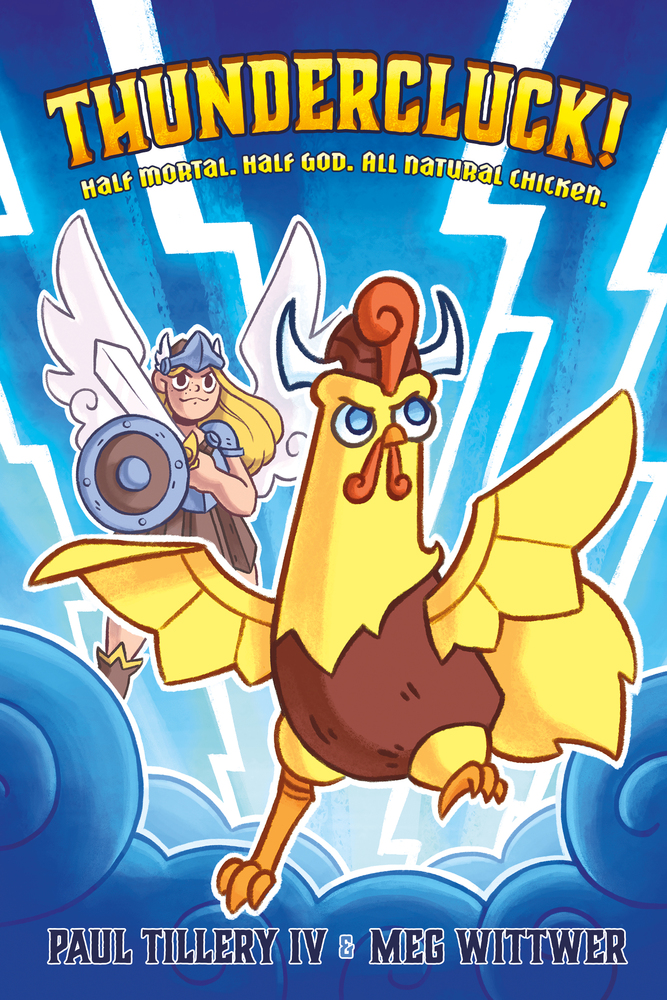
Thundercluck!, by Paul Tillery IV & Meg Wittwer, (Oct. 2018, Roaring Brook Press), $14.99, ISBN: 978-1-250-15228-3

Ages 8-12

How do you not check out a book that has the tagline, “Half moral. Half god. All natural chicken”? Thundercluck is about the valiant chicken of Thor. The story begins when Thor and the evil Under-Cook Gorman Bones fight as Thor defends his hen, Hennda, from the cooking pan. Thor hits Bones with lightning, but Hennda gets a jolt, causing her to lay a giant egg, which hatches and reveals a tiny chick with a horned helmet and little vest, and who shoots lightning from his beak. Behold, the birth of Thundercluck! Raised by Brunhilda, a young Valkyrie in Odin’s court, Thundercluck and Hennda are sent to Midgard (that’s Earth), to be kept safely hidden from vengeful Gorman Bones, but like every epic tale, the heroes return to do battle; it’s the Under-Cook versus the Valkyrie and her faithful chicken for the win!

Thundercluck! is the first in a new series – the next book is due out in September – and is a win for your middle grade readers. There’s a lot of hilarious moments, some good Norse mythology, epic battles, and, at the heart of the book, is the story of an enduring friendship. Black and white illustrations throughout are adorable and will keep readers turning pages. There’s a Thundercluck! website that includes an award-winning short on Thundercluck!, which was author Paul Tillery IV’s MFA thesis. Give this one to your younger mythology fans – if they like Joan Holub & Suzanne Williams’s Thunder Girls series, they’ll love this one!


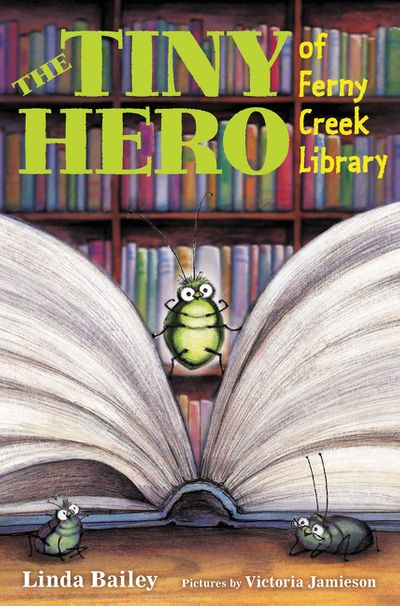
The Tiny Hero of Ferny Creek Library, by Linda Bailey/Illustrated by Victoria Jamieson, (June 2017, Greenwillow Books), $16.99, ISBN: 978-0-06-244093-8

Ages 8-12

Ferny Creek School Library has a beloved librarian who goes on maternity leave, and her awful replacement wants to get rid of the library and make way for a testing space! Meanwhile, Eddie, a tiny green bug with a passion for books, finds himself in the library as he searches for his Aunt Min, who was injured and can’t get out of the library. Together, the two bookworms – bookbugs? – cook up a Charlotte’s Web-type strategy to plead for the library to stay as is.

The Tiny Hero of Ferny Creek Library is just adorable. The story, loaded with great book references, includes Eddie & Min’s “Bugliography” at the end; a nice listing of all the books mentioned, in one spot, and serves as a good readers’ advisory guide (and display guide). This is a love letter to libraries, particularly school libraries, which have had a really rough time of it these last few years. The heart of the story is the love for a school library, and its librarian, who makes the library a home for the kids at school, versus the mean Mrs. Visch, sister of the school’s superintendent, and testing enthusiast who sees books and reading as frivolous at best. Roller Girl’s Victoria Jamieson created adorable black and white illustrations, featured throughout the book, and really makes readers fall in love with Eddie, Min, and their quest to save the library. It’s a feel good story that book lovers will come to again and again, and reminded me of all the great memories I have from my first library and Mrs. Reale, my first school librarian, who always seemed to know what book to hand me when I needed it.

Posted in Fantasy, Graphic Novels, Historical Fiction, Teen, Young Adult/New Adult

The Iliad goes graphic: Gareth Hinds interprets the epic into a graphic novel for teens

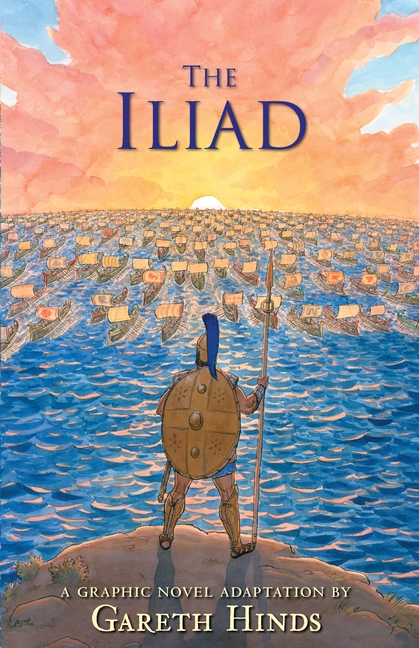
The Iliad, Adapted and Illustrated by Gareth Hinds, (March 2019, Candlewick Press), $27.99, ISBN: 9780763681135

Ages 13+

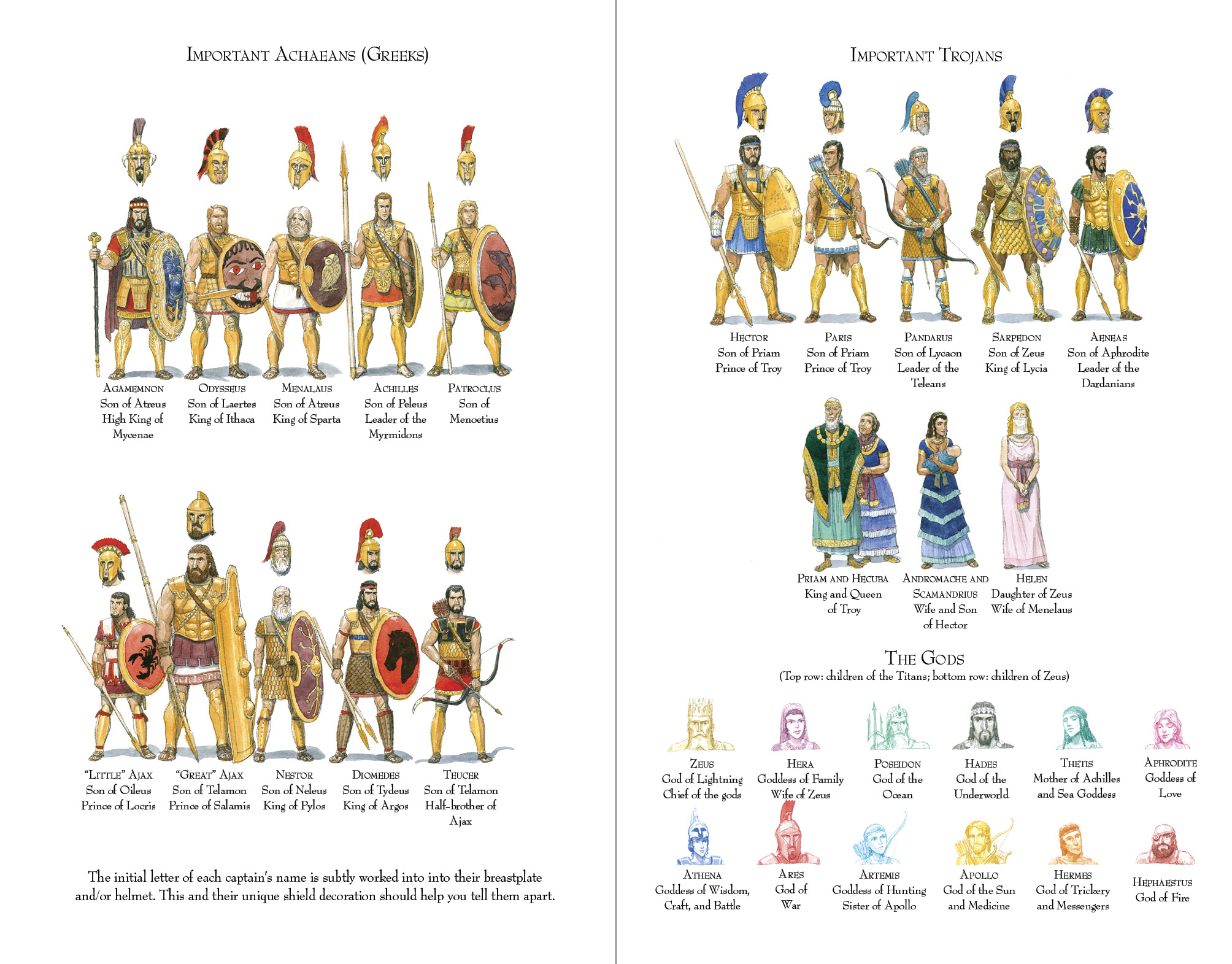
A companion to 2010’s award-winning adaptation of Homer’s The Odyssey, Gareth Hinds adapts Homer’s epic and manages to capture the breathtaking scale. The Iliad is the first part of the epic poem that recounts The Trojan War, introducing readers to legendary characters including Achilles, Hector, Paris, and Odysseus. Hinds gives readers a dramatis personae of important Greeks and Trojans; he also provides illustration of the cantankerous, trouble-making Greek gods, dividing them up between Titans and children of Zeus.

Flowing the story as dialogue between an omniscient narrator (Homer) and the characters is a big help to readers who may be cowed by the epic poem in its original form; Gareth Hinds brings life to the characters and creates landscapes and battle scenes that really engage readers. The drama is more intimate when one feels like a bystander as Hector and his wife, Andromache, say their goodbyes as he goes off to fight Achilles; seeing the gods interfere in the outcomes of battle will have some readers yelling at the book like we yell at our TV screens (okay, the reader in question is me). There’s just so much material to interact with here: an epic story that’s endured for millennia; maps, and notes all come together to make this a great volume to keep on hand for your students, kids, and patrons.

Gareth Hinds’s The Iliad has starred reviews from Publisher’s Weekly and The Bulletin of the Center for Children’s Books. You can find tour dates for Gareth Hinds’s Iliad tour on his website. Candlewick Press has a free, downloadable educator’s guide available.

Gareth Hinds is an award-winning graphic novelist who has some great, epic classics to his credit, including Beowulf, Macbeth, and the works of Edgar Allan Poe. ELA teachers and librarians, get copies of his work into your students’ hands!


Posted in Fantasy, Graphic Novels, Teen, Young Adult/New Adult

DC Ink: Top name YA authors and reimagined origin stories. Sign me up!

DC Ink is a fairly new (little over a year) DC Comics imprint, dedicated to middle grade and YA original graphic novels. I only had a sneak peek at Harley Quinn’s upcoming book, Breaking Glass, and haven’t read Mera’s book, Tidebreaker yet, but I received ARCs for both Under the Moon: A Catwoman Tale, and Teen Titans: Raven, and had to dive in.

As with the YA novels in the DC Icons line, every book DC Ink is written by YA royalty, so you just know you’re getting good stuff before you even open the book. They’re illustrated by graphic novel rock stars, so  you’re going to get some phenomenal artwork. Put it all together, and you’ve got a can’t-miss group of graphic novels coming your way. Let’s check ’em out.
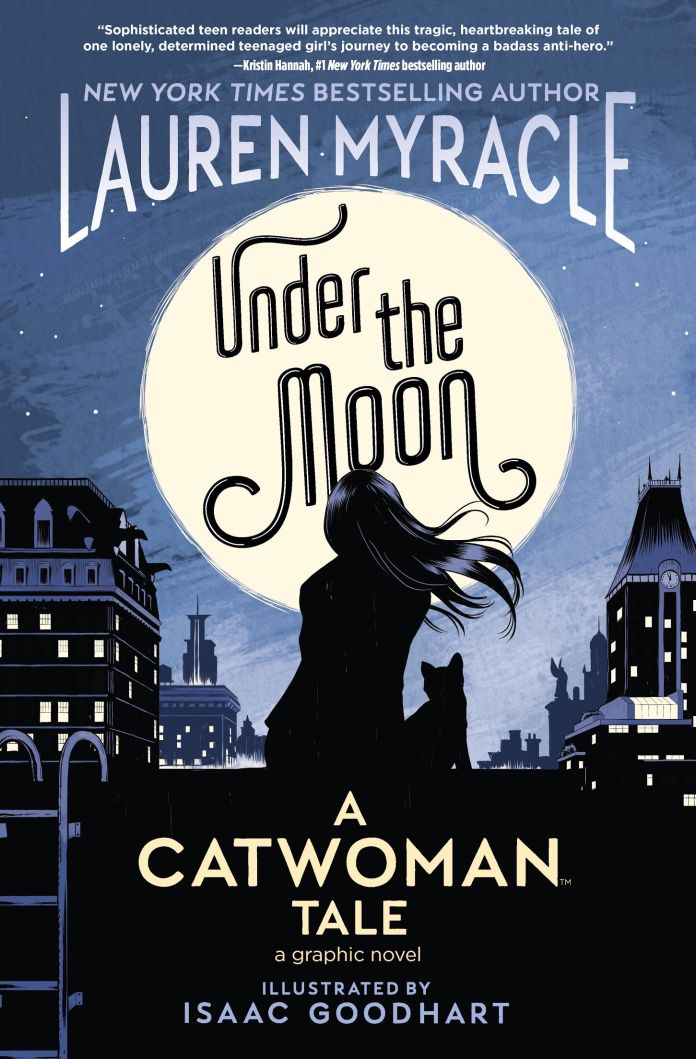
Under the Moon: A Catwoman Tale, by Lauren Myracle/Illustrated by Isaac Goodheart, (May 2019, DC Ink), $16.99, ISBN: 978-1-4012-8591-3

Ages 13+

We all know Selina Kyle, aka Catwoman, has a multitude of origin stories (the comics, Gotham, Batman Returns, The Dark Knight Rises), but it’s because she’s such a captivating character: authors want to tell ALL the stories, and we want to read them! Selina can be anyone, from anywhere; her fluidity makes her a longtime fan favorite, and in Lauren Myracle’s hands, we get an entirely new Selina: a 14-year-old, living with her mother and her revolving door of awful boyfriends. The current one, Dernell, has been around for a while, and seems to be the absolute worst. He’s verbally and physically abusive, and Selina’s mother won’t say a word against him. When he goes too far in “punishing” Selina one night, she has had enough: she runs away and lives on the streets, stealing what she needs to survive. And she finds that not only is she good at it, but she enjoys it. A group of homeless kids adopts Selina, despite her desire to be a loner; she’s drawn in by Rosie, a selectively mute young girl who bonds with Selina. But Rosie goes missing, and Selina finds herself in an awkward situation as she tries to track Rosie down and keep her safe.

Under the Moon is such a good origin story. The consistent thing about Selina is that she’s always capable, always collected, and always at odds with her desire to be a loner and her desire to help those less fortunate then she is. Her vulnerability is her heart, but you’ll never know it (unless you’re a third party reading her book, amirite?). Bruce Wayne is a supporting character here, and it’s fun to see him and his perfect hair in high school; it’s also nice to see he and Selina verbally spar even back in the day. There’s also an interesting murder mystery subplot, because it’s Gotham City.

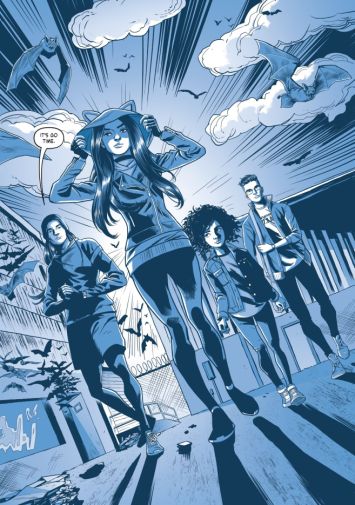
The artwork is largely subdued purple-blue and white, with sound effects rendered in yellow for effect. The artwork makes excellent use of movement, perspective, and body language. Grab this one for your YA collections, but use caution if you’re thinking of handing it off to younger readers: there’s domestic violence and profanity in here, so much younger readers will be much better off with Superhero Girls trades.

Lauren Myracle is the author of the New York Times bestselling Internet Girls series, which includes ttyl and ttfn, all of which are written in textspeak. Isaac Goodhart is an illustrator whose graphic novel cred includes Postal and Love is Love. He also has an amazing sketch of Hawkeye and Kate Bishop on his Instagram.


Teen Titans: Raven, by Kami Garcia/Illustrated by Gabriel Picolo, (July 2019, DC Ink), $16.99, ISBN: 978-1-4012-8623-1

Ages 12+

Teen Titan’s Raven speaks to my wannabe goth girl soul. I love her on the original Teen Titans cartoon from the early 2000s, and I crack up watching her on Teen Titans GO! now. Who else could write this character but Kami “Beautiful Creatures” Garcia, who also speaks to my inner wannabe magic-using goth girl? Raven’s orphaned at age 17 when her foster mom is killed in a car accident. Raven moves in with her foster mom’s sister, who seems to know something about Raven that Raven either can’t remember or doesn’t know. She and her foster sister become fast friends, and a cute guy named Max is interested in her, so things should be settling down for Raven, but weird occurrences start happening. When Raven thinks something, it happens: a mean girl trips and falls, just as Raven wishes she would. She can hear what people are thinking. She’s having nightmares. A sprinkling of good, old school Nawlins voodoo and a Deathstroke appearance make Raven’s origin story A-plus reading.

The artwork is mainly black and white, with some color pages splashed here and there. Raven’s trademark purple and black hair shines off the page, and – Raven fans, are you ready? – she wears adorable narwhal pajama pants at one point. There are little DC winks and nudges throughout, including Raven holding a Wonder Woman doll as a child, and there are some amusing girl power-message tees.

Kami Garcia is a bestselling author and cofounder of YALLFest, the biggest teen book festival in the U.S. Gabriel Picolo is a comics artist who’s worked with Blizzard, BOOM! Studios, and DeviantArt.

Get the Raven book. Get all the DC Ink books. Your readers will be glad you did. And really, you should sit down and read through them, too.


Posted in Fiction, Fiction, Middle Grade, Realistic Fiction

Math, Loss, and Zombie Movies: A Good Night for Shooting Zombies

A Good Night for Shooting Zombies, by Jaco Jacobs/Illustrated by Jim Tierney/Translated from Afrikaans by Kobus Geldenhuys, (March 2019, Rock the Boat), $12.95, ISBN: 9781786074508

Ages 10-14

Martin is a South African teen living with loss. His father was killed in a car crash a few years ago, and his mother hasn’t left the house since. His sister is hardly ever home, usually out with her sketchy boyfriend. All Martin has is his chickens – his nickname is Clucky – and his propensity for numbers. When the neighbor kid’s dog kills his prize chicken, he goes over to say something – and ends up making a friend instead. Vusi, whose dog, Cheetah has a taste for chicken, is a horror movie fan determined to make his own zombie movie. He’s also fighting Hodgkin’s lymphoma, but he has no interest in letting that, or his protective parents and nurse, stop him. He quickly recruits Martin as a zombie extra, and before Martin realizes it, he’s sneaking out with Vusi, shooting Vusi’s movie and even developing a crush on a schoolmate. And, bonus: the cover glows in the dark!

Jaco Jacobs knows how to pack a book. While A Good Night for Shooting Zombies is primarily about Martin’s and Vusi’s friendship, it’s also about coping with loss, as Martin and his family grieve in their own ways; it’s about potential loss, as Vusi and Martin cope with Vusi’s lymphatic cancer, and it’s got a quietly compelling subplot about a group of troublemaking teens and Vusi and Martin bumbling their way into their sights. Martin is comforted by his mathematics equations, which he uses as a coping mechanism, very similar to Willow in Counting by 7s. He and Vusi each have their comforts – Vusi’s is horror movies – and as they share these pieces of themselves, they build a deeper friendship. Jim Tierney’s black and grey illustrations add some visual interest, and Jaco Jacobs’ writing keeps pages turning; the end of the story will stick with you long after you close the book.

I became a Jaco fan after reading last year’s A Good Day for Climbing Trees. A Good Night for Shooting Zombies just sealed it. I can’t wait to read more.

A Good Night for Shooting Zombies has a starred review from Foreword Reviews. There’s a free, downloadable readers’ guide available from publisher OneWorld Publications.

Posted in Fantasy, Fiction, Graphic Novels, Middle Grade, Tween Reads

Nico Bravo and the Hounds of Hades – graphic mythology gone wild!

Nico Bravo and the Hounds of Hades, by Mike Cavallaro, (April 2019, First Second), $12.99, ISBN: 9781626727519

Ages 8-12

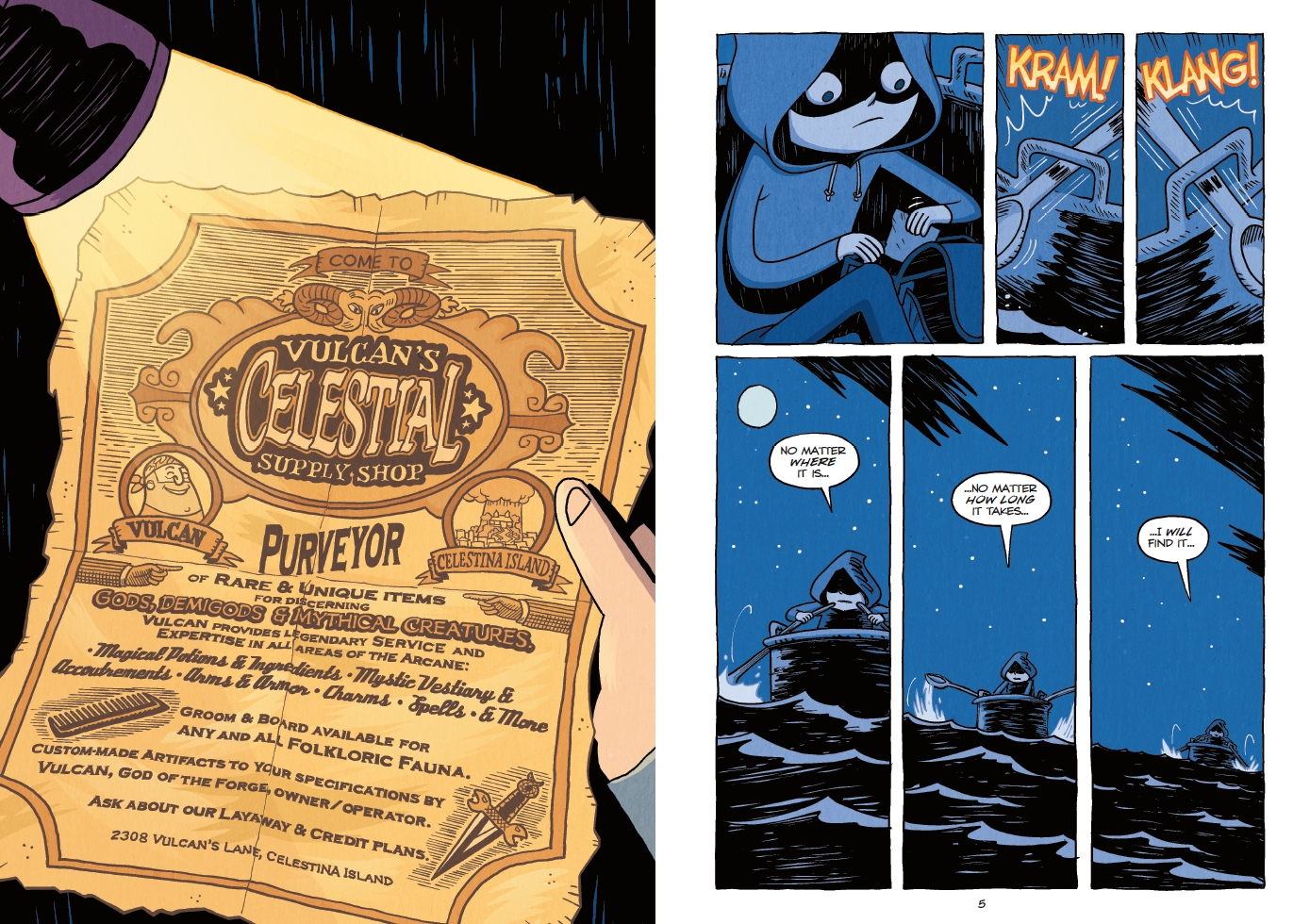
This fun new graphic novel adventure is perfect for mythology fans. Vulcan is a kid working at Vulcan’s Celestial Supply Shop, serving all the gods’ and goddesses’ needs. He works with a sphinx named Lula and Buck, a unicorn with PTSD, and things are fine and dandy until Eowulf – descendant of Beowulf himself – targets a monster for slaying, to keep the family name going. The problem? The monster happens to be Cerberus, the three-headed dog that guards the gates of the Underworld! If Cerberus isn’t there to guard the gates, there’s about to be a whole lot of dead folks invading our world. Nico has to get it together and stop Eowulf from bringing on a zombie apocalypse!

I like Mike Cavallaro’s storytelling. He’s great at worldbuilding – something I discovered when I read his fencing graphic novels, Foiled and Curses! Foiled Again, where he created a side-world filled with fantasy and myth. There are mythological references throughout the book that kids will recognize, and some possibly new ones to draw more readers in. Have your Rick Riordan books ready, and your mythological reference books on hand – you’ve got great display possibilities! The cartoon art reminds me of popular animation on TV, with book expressive eyes, colorful artwork, and fantastically cool monsters and beasts for everyone to enjoy. There’s a lot of mythology available, and kids love reading about it – I hope we get some more adventures with Nico Bravo soon!

Posted in Middle Grade, Non-Fiction, Non-fiction, Teen, Tween Reads, Women's History

Taking Cover: Growing up during the Iranian Revolution

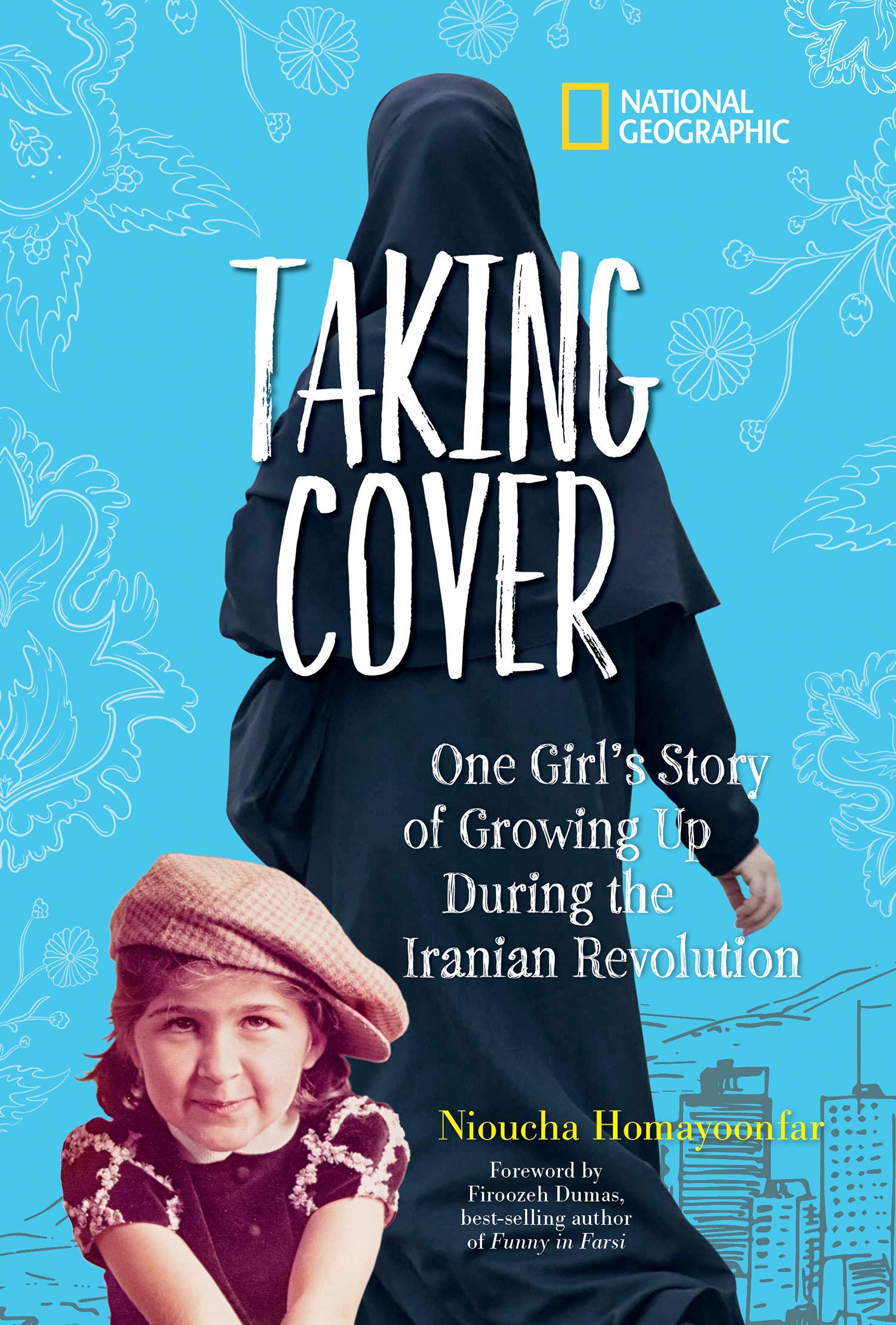
Taking Cover: One Girl’s Story of Growing Up During the Iranian Revolution, by Nioucha Homayoonfar, (Jan. 2019, National Geographic Kids), $18.99, ISBN: 9781426333668

Ages 10-14

Nioucha Homayoonfar’s memoir of life in Iran during the Iranian Revolution is equal parts joyful and heartbreaking. In 1976, at the age of 5, her family moves from Pittsburgh to Iran, where her father can be with his family again. For several years, Nioucha and her expat friends are educated in a progressive French-Persian school and enjoy the things most kids do, including listening to music, dancing, and swimming. But the revolution changes all that. Nioucha and her friends are segregated; they have to wear robes and hoods that cover their hair (and are threatened with burning in Hell, hanging on every visible thread of hair), and live in fear of being kidnapped by the Moral Police: a group called the Zeinab Sisters. Nioucha refers to them as The Black Crows, which brings a colorful, tongue in cheek image to mind, but these women are anything but humorous. The women patrol the streets in a van, capturing women and teens they deem immoral, hiding them in prisons, and beating them until they feel redemption is earned.

But there are wonderful moments of family and friendship in Taking Cover, too. Nioucha recalls her first Iranian Christmas, when she hopes Santa Claus will remember that she’s moved to Iran, so she’ll get her presents, and her family decorates her aunt’s house with a beautiful tree and presents. She talks about her relationship with her grandparents, who adore her and comfort her during her first sleepover away from her parents; going to concerts and driving around with her cousin, Sara, even learning French in an underground school run by her mother and her best friend’s mother. In the midst of explosions and oppression, Nioucha and her family managed to take joy where they found it.

Parallels to Persepolis are expected, and should be encouraged. Taking Cover is an excellent memoir and lead-in to Persepolis, allowing middle graders to expand their worldview and start a conversation on how the Iranian Revolution changed the world. The book includes a map of Iran and surrounding areas, and a timeline of Iranian history. There is a free, downloadable Educator’s Guide available.