Posted in Science Fiction, Teen, Young Adult/New Adult

Space Opera: How Rory Thorne Destroyed the Multiverse

How Rory Thorne Destroyed the Multiverse, by K. Eason, (Oct. 2019, DAW), $26, ISBN: 978-0-7564-1529-7

Ages 14+

The first in a duology, How Rory Thorne Broke the Universe starts out with a hard fairy tale line: the new princess is born to the Thorne family line, and fairies come to bestow gifts on her. One fairy is pretty teed off that her invitation… got lost in the mail, let’s say, but there’s no spindle and no curse here. She bestows a dubious gift on the princess; the gift to see through lies of flattery and kiss-uppance. Rory is the first female baby to be born to the Thorne line for a while, so her birth throws things into a bit of a tizzy; it’s a tizzy that’s even more stirred up when a terrorist attack kills her father and the king of a neighboring planetary federation. Her mother gives birth to a male Thorne heir around the same time, which gives us an antagonist to watch out for in the next book.

Rory’s betrothed to the prince of the neighboring federation, and sent to live there while she waits to turn 18 and become his wife. Meanwhile, the Regent –  not her betrothed’s mother, since she also managed to get killed off – is a sleazy minister with his own power game at play. Rory, her body-maid (a badass half-cyborg named Grytt), her Vizier, Rupert, and two guards under Grytt, Thorsdottir and Zhang, keep an eye on things, because the Regent is up to no good. When the Vizier is arrested after trying to poke around and find out the Regent’s deal, Rory takes over and discovers a plot that will have major consequences for Rory, her family, and their corner of the universe. She enters her own Game of Thrones to outwit, outplay, and outlast the Regent.

Rory Thorne is a great character. She’s a smart, savvy teen princess who is ready to defend herself and throw down with anyone who gets in her way. But the book falls a little flat for me. There’s a great deal of worldbuilding, but tends to drone on at points and left me putting down the book to find something else to pique my interest between chapters. Is it YA? It’s definitely YA crossover material. Nothing too violent or overt for teen audiences, but it may not hold your usual readers’ attention. Talk this up with your space opera readers.

How Rory Thorne Destroyed the Multiverse has a starred review from Kirkus.

Posted in Adventure, Fiction, Humor, Middle Grade

Spy Penguins are on the scene!

At the beginning of the school year, Macmillan sent me a box of new fiction to check out; I’ve been working my way through it, but had to take some time to post about the Spy Penguins books by Sam Hay, with illustrations by Marek Jagucki. These books are hilarious and loaded with wacky adventures! I read both books in the series so far (there’s a third one coming in September 2020), and have started reading the first book to my kiddo. He’s thoroughly enjoying them. So let’s take a look at the newest dynamic duo, The Spy Penguins.

Spy Penguins, by Sam Hay/Illustrated by Marek Jagucki, (Sept. 2018, Feiwel & Friends), $13.99, ISBN: 9781250188380

Ages 7-11

The first book in the new Spy Penguins series introduces us to Agent 00Zero and Q, better known as Jackson and his best friend, Quigley. They’re two young penguins who have big dreams of joining the FBI (Frosty Bureau of Investigation). Jackson wants to be a field agent, just like his Uncle Bryn, while Quigley wants to be the gadget guy, creating all sorts of cool inventions, just like his cousin, Sunny. The problem? They’re a little young, a little dorky, and have a gift for getting into trouble. But when rare fish start disappearing from the aquarium, jeopardizing their friend’s Lily’s dad’s job and reputation, the two agents-in-training get down to business! But can the two crack the case AND avoid being the next to disappear?

Spy Penguins is just fun to read. There’s some good world-building, with penguin-related vocabulary (flipper and ice-related terms, krill-sized problems), and creative backgrounds for the side characters, like Jackson’s Type-A mom, who is a “truth magnet” that can track you down and whose temper is measured in shark levels, or Jackson’s father, a more creative type who constantly creates new rooms to add on to the family home. Jackson and Quigley make a great and lovable team, and the action and fast-paced storytelling will ensure that kids will want to spend time with these two – and their extended group of family and friends – again. Black and white illustrations add to the fun and the story, providing a visuals and a solid framework around the story.

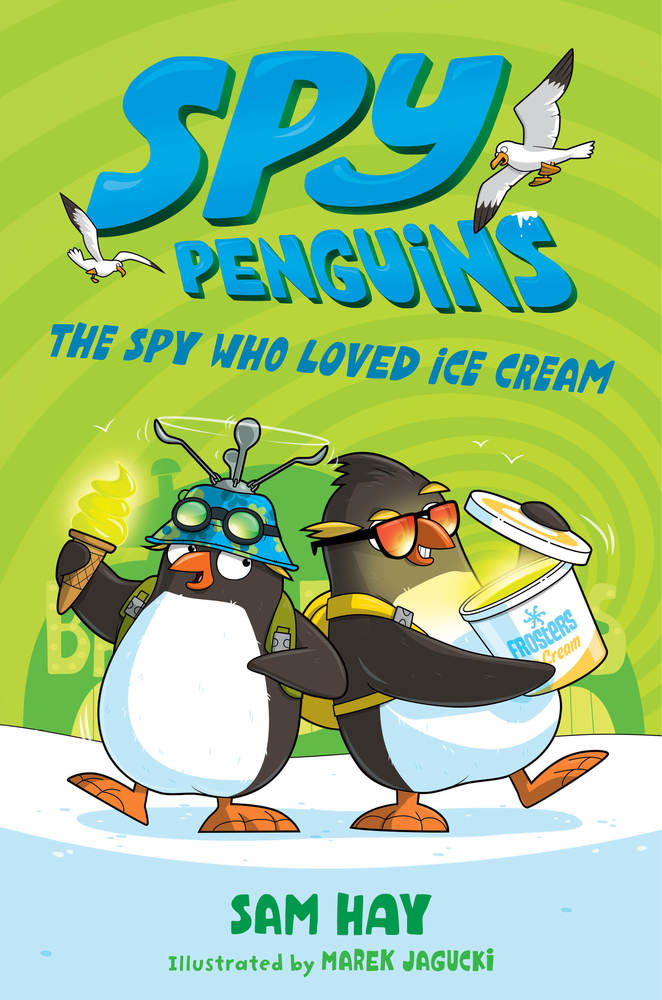
Spy Penguins: The Spy Who Loved Ice Cream, by Sam Hay/Illustrated by Marek Jagucki, (Sept. 2019, Feiwel & Friends), $13.99, ISBN: 9781250188588

Ages 7-11

Jackson and Quigley are back, and just in time! Jackson’s Uncle Bryn, actual member of the FBI (Frosty Bureau of Investigation), has been hypnotized and is on a crime spree! The two wannabe-agents-in-training have to figure out what happened to Uncle Bryn, prove his innocence, and dodge Jackson’s mom, who still has them on punishment from the last adventure!

Picking up immediately after the events of the first Spy Penguins novel, The Spy Who Loved Ice Cream begins with Jackson and Quigley scrubbing seagull poop as part of their punishment, meted out by Jackson’s mom. But things take a turn when they stop at the ice cream parlor and meet Uncle Bryn and two other FBI agents, who are eating a weirdly glowing ice cream and don’t acknowledge the two. Sure, it’s strange, since Uncle Bryn is Jackson’s favorite uncle; when they discover that Uncle Bryn is wanted for robbery, they know something is REALLY up. Loaded with more gadgets, delicious (and mind-altering) ice cream, and new ways of trying to avoid Jackson’s mom, The Spy Who Loved Ice Cream is every bit as much fun as Spy Penguins. More characters get fleshed-out backstories, including Quigley’s tech whiz cousin, Sunny and antagonist Hoff Rockhopper. The inventions are straight-up hilarious this time around, including a hat that’s supposed to deflect seagull poop and a suit made of sardine poop that should (emphasis on “should”) render the wearer invisible. The illustrations and fast-paced, fun writing will keep readers coming back for more.

If you have readers who love Snazzy Cat Capers, introduce them to Jackson and Quigley. If these characters all existed in the same universe, I’d be thrilled. (CROSSOVER!)

Posted in Graphic Novels, Non-Fiction, Teen, Uncategorized, Young Adult/New Adult

Open Borders presents the science and ethics of immigration

Open Borders: The Science and Ethics of Immigration, by Bryan Caplan/Illustrated by Zach Weinersmith, (Oct. 2019, First Second), $19.99, ISBN: 9781250316967

Ages 14+

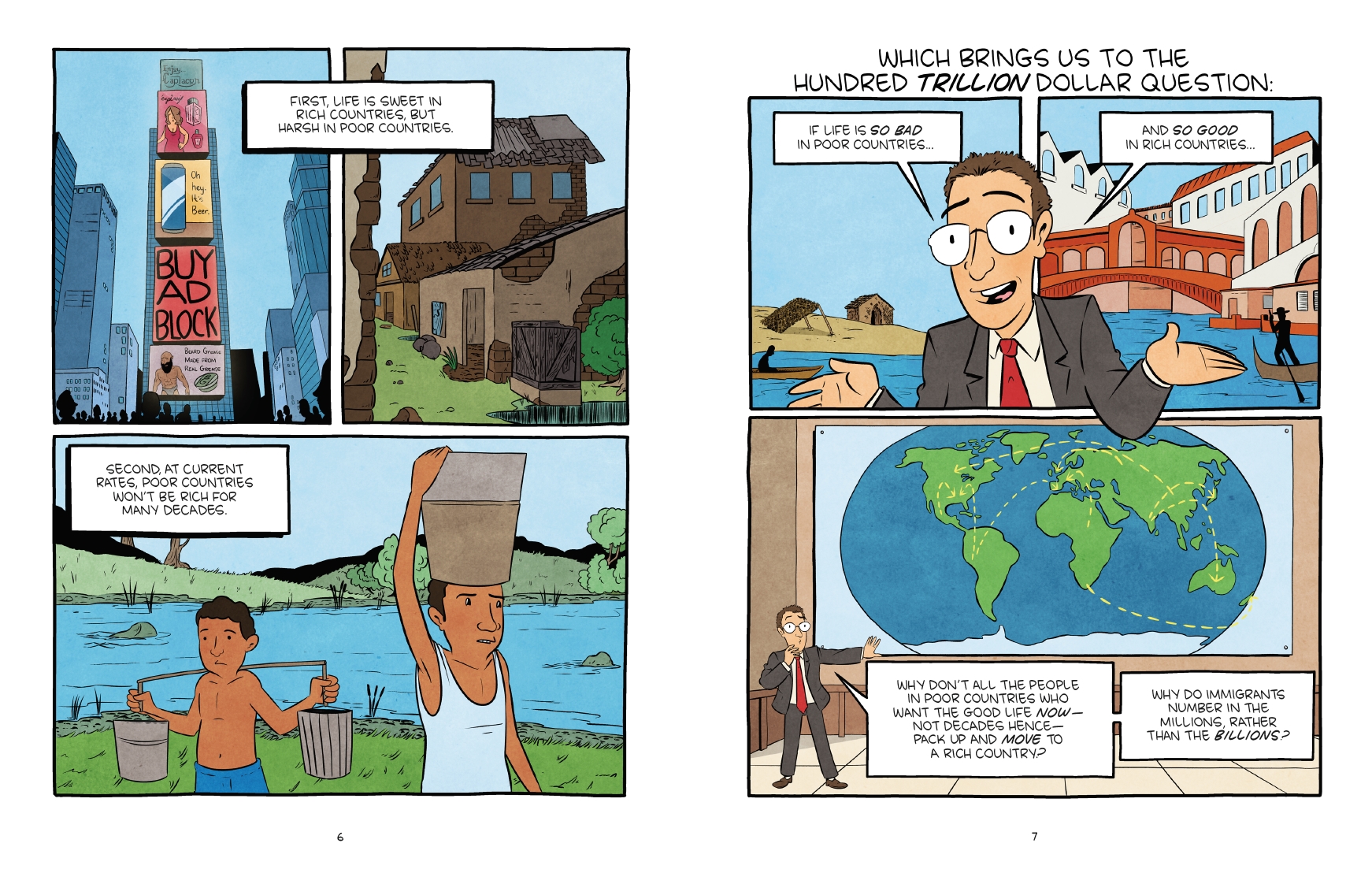
It’s no secret that immigration is a hot-button – one of the hottest button – topics in current events. One one side, we have those who would welcome new immigrants, for cultural and humanitarian reasons; on the other, those who want to restrict the flow of people into the country, whether to protect the current citizenry, the culture, or the economic status quo. Economist Bryan Caplan has written Open Borders: The Science and Ethics of Immigration as a proposal to both sides. He argues in favor of open borders, noting that doing so could eliminate poverty worldwide, not spiral us deeper into it; raise the global education and skill level, and lead us – as a whole – into a new age of prosperity for all.

The book, masterfully illustrated by Zach Weinersmith, presents Caplan’s argument using comprehensive research, communicated with a plain-English tone and artwork that’s colorful, multicultural, and translatable to audiences who don’t have a background in economics. The book is conversational and never preachy, and Caplan takes on reasons detractors have fallen back on time and again to argue against open borders, showing, using hard numbers, why open borders may be the next best way for us to advance.

This should be used in high schools and colleges: there are lists of resources and further reading; copious notes and references, and the straight-talk explanations, with clear illustrations, will really assist students, especially those who may stumble with pages of numbers, charts, and data. Once presented in the frame of a story, with a real-life, current events situation to anchor it, the numbers take on a life and meaning.

Open Borders has a starred review from Booklist. Author Bryan Caplan’s webpage is a treasure trove of articles and information, including cartoons and role-playing resources(!).

Posted in Adventure, Animal Fiction, Fantasy, Fiction, Middle Grade, Tween Reads

What’s the secret of The Hippo at the End of the Hall?

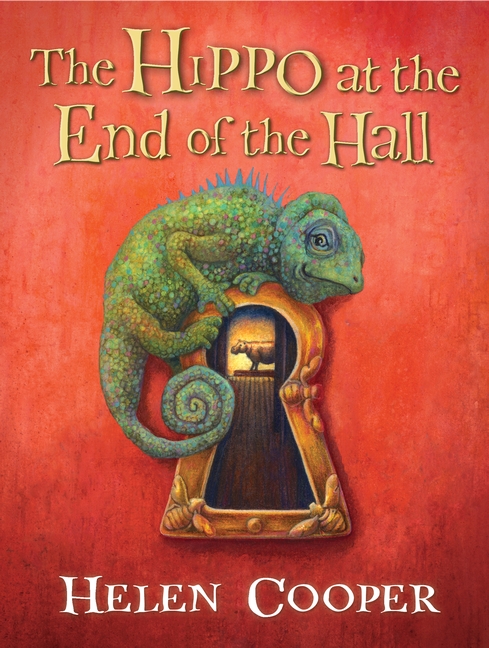
The Hippo at the End of the Hall, by Helen Cooper, (Oct. 2019, Candlewick Press), $17.99, ISBN: 9781536204483

Ages 8-12

Ben has lived alone with his mom ever since his father died when he was little. When an invitation to a mysterious, odd museum called The Gee Museum arrives addressed to him, it stirs up a vague memory of time spent with his father – and sets his mother on edge, although she won’t say why. Ben goes to the old museum and meets a group of talking animals, all waiting for him. They tell him that the museum is in danger, and he’s the only one who can save it – the proprietress is old and tired of keeping it going, and the people she’s considering selling it to – a greedy landlord who’s also trying to force Ben’s mom out of business and their home, and a rival museum’s director who plans to scavenge the most valuable pieces and junk the rest – don’t have the Gee’s best interests at heart. As Ben unravels the secrets of the Gee, and the mysterious hippo and his place among all the animals, he finds answers about his father and his family that will fill a missing piece he’s lived with for too long.

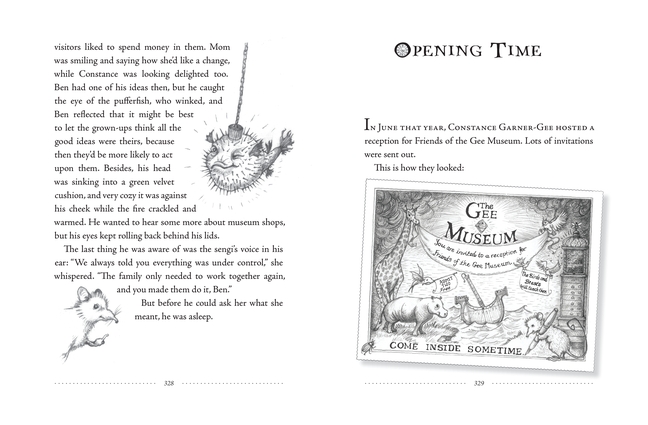
The Hippo at the End of the Hall is an steadily building tale that blends the fantastic with a story of family and of memory. Ben and his mom are likable characters that stick together, even when one’s annoyed at the other: kind of like real moms and kids, right? The animals have individual personalities that set them apart from one another and bring them right into the story, and the human characters have history that’s never completely given away, yet feel fully formed and built up – Helen Cooper leaves us to wonder and imagine the wonderful adventures that took place before we joined the group. The black-and-white illustrations throughout add a vintage feel to the atmosphere, bringing the Gee Museum to life under your fingertips. Magical museums and magical creatures, two terrible baddies, and a family putting itself back together make this a book to booktalk to your Jumanji fans, your Night at the Museum fans (schedule a showing of the movies!), and your magical realism fans.

Helen Cooper is a two-time Kate Greenway medalist. This is her first novel. You can find more about Ms. Cooper, including her bibliography, at her author website.

Posted in Humor, Intermediate, Middle Grade, Non-fiction, Tween Reads

Learn how to tell the perfect joke: The Joke Machine

The Joke Machine, by Theresa Julian/Illustrated by Pat Lewis, (Oct. 2019, Odd Dot), $8.99, ISBN: 978-1-250-31864-0

Ages 7-12

The Joke Machine is one of those books that’s kind of a no-brainer for my library purchases. Joke books are huge in my library community. A book that teaches you how to build the perfect joke, and manages to squeak in some English lessons while it’s at it? That’s a book my kids need.

Set up like as a trip through a fictional Laugh Lab, The Joke Machine takes readers through 16 “rooms”, each where they’ll learn a new strategy and meet a new joke specialist. They’ll also get to know LOLA, a joke machine whose name stands for Laugh Out Loud Apparatus. There are chapters on such joke techniques as contrast, specifics, being literal, and personalizing jokes to your own sense of humor (“twizzling”), all with dozens of examples. The book contains over 500 family-friendly jokes, many of which have been tested by my second grader and me, with varying degrees of success (everything from a chuckle to “MOM, STOP” – that one was from my too-cool-for-me college student), plus quick and easy ideas for creating your own jokes.

Teaching kids the subtle art of playing with words and helping them fine-tune the magic of exaggeration? Priceless. A note on sarcasm cautions kids about hurt feelings, and encourages them to be positive and respectful when joking. Black and white line illustrations get a dose of orange to liven things up throughout.

Get ready to hear these jokes over and over again – and have some of your own ready to answer with. This one will be a popular selection.


ollow a cast of fictional funny experts into the Laugh Lab, a hilarious joke-building factory that teaches middle-grade readers how to create their own jokes, puns, silly one-liners, and more. Each chapter explores a different style of joke making, such as surprise, understatement, and exaggeration, and includes hundreds of hilarious examples.

By the end of the book, readers will have a set of tools in their joke belt to make their friends and family actually LOL.

The book includes more than 500 family-friendly jokes—plus zillions that you can create on your own!

 
Posted in Fiction, Middle Grade, Middle School, Realistic Fiction, Tween Reads

The Tornado takes on a tough question about bullies

The Tornado, by Jake Burt, (Oct. 2019, Feiwel & Friends), $16.99, ISBN: 978-1-250-16864-1

Ages 10-14

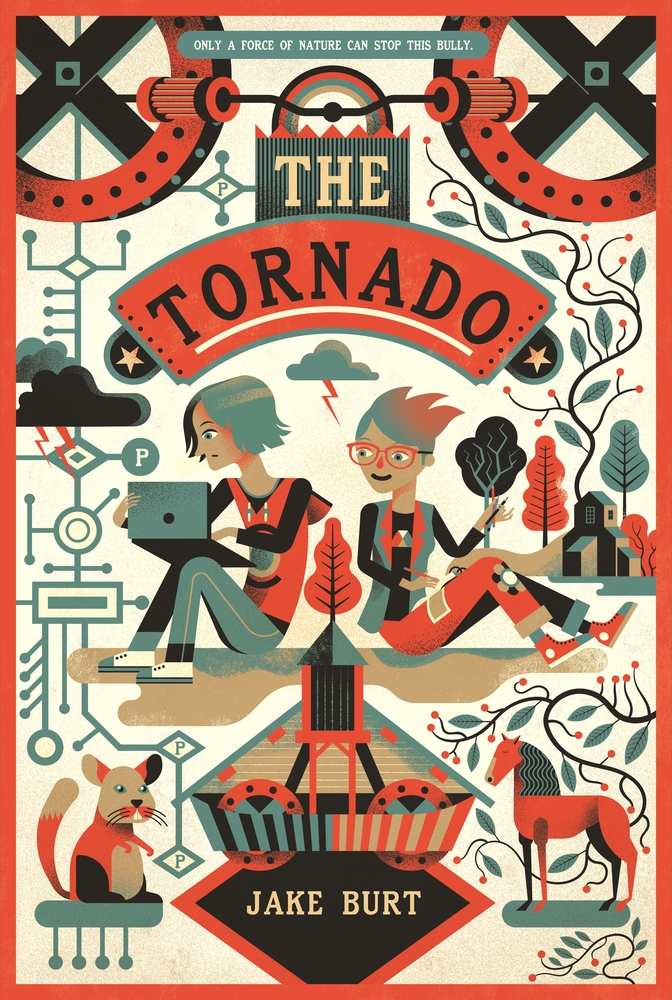
Fifth grader Bell Kirby loves systems and structure. He uses them to excel in his school’s Creator’s Club, he creates an enviable habitat for his pet chincilla, Fuzzgig, and he stays under the radar, away from the school bully, Parker Hellickson – who also happens to be the principal’s son. When Daelynn Gower shows up – a new kid in town, straight out of homeschool, with rainbow-colored hair and a personality to match – and befriends Bell, she puts all of his hard work and systems at risk. Because Daelynn can’t help but be noticed. But when Daelynn finds herself in the bully’s sights, Bell finds himself at a crossroads: back in Parker’s good graces if he stands by and lets the next kid take the abuse, or stand up for himself and his new friend.

This is a strong story about bullying, looking at it from a less examined point of view. What happens when your bully moves on to another kid? Bell struggles with this because he’s relieved, but he knows that even standing by, pretending not to see the bullying, is wrong. When he learns that he was another kid’s relief from being in Parker’s sights, he knows, even more, that he has to take a stand. It’s a topic that can contribute to a meaningful class discussion. Jake Burt gives us fully realized characters here. Bell loves building and creating things to order his world, likely influenced by his military parents, who pass that love for structure onto him: he messages with his father, who’s stationed overseas and sends him engineering puzzles to figure out; his mother, a major in the US Army, is working on her Ph.D. and is referred to as a “mad scientist” by Parker. Parker is an unrepentant bully who uses the fact that his father has his own blind spot when it comes to his son’s bullying, brushing aside repeated complaints and believing the thinnest of excuses while letting readers glimpse into a home life that may not be ideal for Parker, either. His father talks down to Bell’s mother on several occasions, and she needs to correct him about her rank in the Army on at least one occasion, noting that she outranks her husband.

Woven into this story is Bell’s interest in systems and creating, and bringing a great STEAM challenge into the plot. The Creator Club challenge for this school year is to recreate one of Leonardo DaVinci’s creations, DaVinci-era style. No Internet. No electricity. Working by candlelight and looking up information in books. It’s a great subplot about friendship, teamwork, and cooperation. There’s also some great references to The Wizard of Oz throughout the book – see how many you can find, and challenge your readers. The one question that came up for me multiple times throughout the reading: Who is the Tornado here? I don’t know about you, but I got a different answer each time I considered it.

Author Jake Burt’s website offers updates and more information about his books. John Schu has an interview with Jake Burt available at Watch.Connect.Read, and The Tornado has a starred review from School Library Journal.


Posted in Middle Grade, Tween Reads

STEAM project fun: Super Robot

Super Robot, by Arnaud Roi, (Oct. 2019, Schiffer Kids), $12.99, ISBN: 9780764358302

Ages 6-12

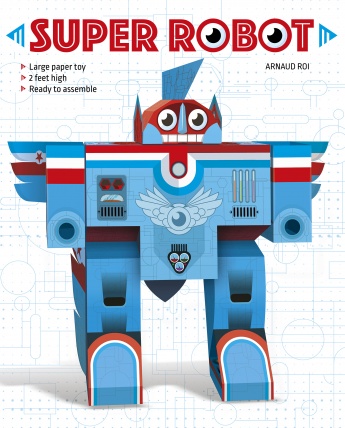
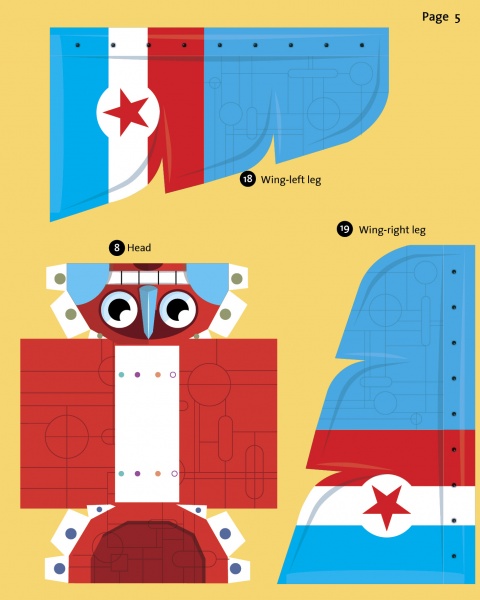
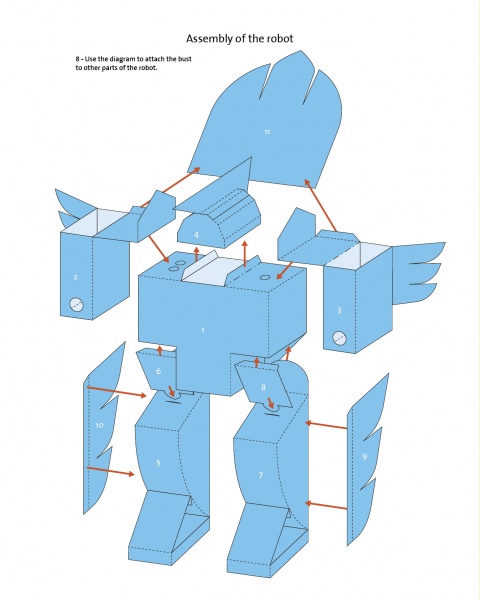
This is one of those books that makes me think back to when I had punch-out paper doll books. They’re still around, albeit a little tougher to find, so I was really excited to get a copy of Super Robot in the mail from Schiffer Kids! Artist Arnaud Roi uses his love of the 1950s aesthetic to create a vintage-looking robot that kids can punch out and put together, creating a 2-foot-high paper structure.

Assembly instructions are detailed and take readers, step-by-step, through assembly; the assembly process is helpfully illustrated so you don’t get too turned around in the building process. The paper is sturdy and scored where necessary, to help with folding and assembling. The robot is a bright, bold combination of primary colors.

Younger scientists and paper artists will need a helping hand, but bigger creators should be able to work on this, no problem. It’s a fun idea for a Discovery Club activity, and small groups can work on one robot at a time, if your budget permits you to buy a few copies. Create a robot army, or an army of one – either way, Super Robot is a fun build that get kids working with their hands.

Pair with Adam Rubin’s Robo-Sauce, one of my favorite robot books: the book transforms into a Robo-Book. Have some Legos, and some robotics books around for your readers who are ready to explore more. I recommend NatGeo Kids’ Everything Robotics and National Geographics Readers: Robots.


Posted in Animal Fiction, Fiction, Middle Grade

The Great TBR Readdown Continues: Real Hamsters Don’t Bite

Real Hamsters Don’t Bite, by Alexis Cleoford, (May 2017, Amazon Digital Services), $7.99, ISBN: 978-1548365233

Ages 8-11

My TBR read-down continues with this short novella from author Alexis Cleoford, who generously emailed me a PDF of her book, Real Hamsters Don’t Bite. It’s the first book in an humorous animal series, Mighty & Brennon. Mighty and Brennon are two housecats who are not thrilled about being sent to a “pet hotel” while their humans are on vacation. When they arrive home, Mighty – the leader – decides it’s time to strike out on and find Cat Land, a sort of paradise for cats, where they’re treated as they should be (remember, people used to worship cats: they have never forgotten this). They also stumble onto a mystery: hamsters are attacking cats! But… real hamsters don’t bite, do they?

Real Hamsters Don’t Bite is a novella – only about 50 pages – and is available via ebook or paperback through Amazon. Narrated in the first person by Mighty, the bolder cat of the two, there’s some humor and a sense of adventure. Brennon is the more cautious of the two, giving readers a nice little dramatic – and fun – foil to play off of. Black and line drawings throughout add some interest. Give Real Hamsters Don’t Bite a shot if you have animal fiction fans.


Posted in Animal Fiction, picture books, Preschool Reads

Ready… Set… Go! The Big Race is on!

The Big Race, by David Barrow, (Sept. 2019, Kane Miller), $12.99, ISBN: 9781610678803

Ages 4-7

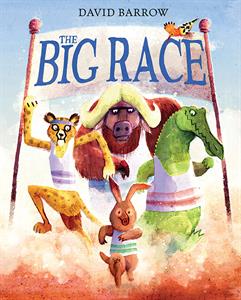
The Big Race is a very tough race in which only the fastest, biggest, and strongest animals participate. So when little Aardvark decides she’s going to sign up to compete, she gets laughed at. Her competitors – a lion, cheetah, buffalo, and crocodile – all laugh at her, and tell her she’ll never finish, but she will defy them all. She’s not competing to win; she’s competing to have fun. The story shows each of the bigger, stronger animals pushing themselves to get to the next level in this triathalon-type race, but Aardvark? She’s pushing herself, and giggling, laughing, and enjoying the journey. Aardvark may not be the biggest, strongest, or fastest, but she has enough heart to power her through the finish line.

Originally published in the UK in 2018, The Big Race is all about embracing the journey rather than the destination, listening to the inner voice that tells you “I can!”, and doing the thing that may be a little overwhelming. It’s about self-empowerment and self-reliance. The other animals jeer at Aardvark, but they’re the ones arguing over the grand prize while Aardvark stands, surrounded by her friends, and receives her medal for finishing. It’s a sweet story about challenging oneself, and testing one’s limits.

The mottled artwork is bright, and the contrast between tiny Aardvark and her hulking co-competitors makes for a big visual. Remind kids to be present, and to adjust expectations once in a while.


Posted in Non-Fiction, Teen, Young Adult/New Adult

Blog Tour: Writers in the Secret Garden – Fanfiction, Youth, and New Forms of Mentoring

Who would have ever imagined that fanfiction would not only go mainstream, but be so popular? In the last 5 years since I’ve been librarianing, I’ve been to academic and pop culture panels on fanfic in the library; I’ve seen fanfic programs for middle graders and teens bring kids into the program room, I’ve seen novels like Carry On go meta and be about fanfic within a YA world, and I’ve seen my friends’ kids starting their own fanfic accounts so they could contribute to their fandom. It’s a wonderful thing to behold. One of my colleagues wrote her MLIS thesis on fanfiction. Now, University of Washington professors Cecelia Aragon and Katie Davis have given us Writers in the Secret Garden: Fanfiction, Youth, and New Forms of Mentoring; an in-depth exploration of how teens and tweens support and learn from each other through their participation in online fanfic communities like fanfiction.net and AO3.

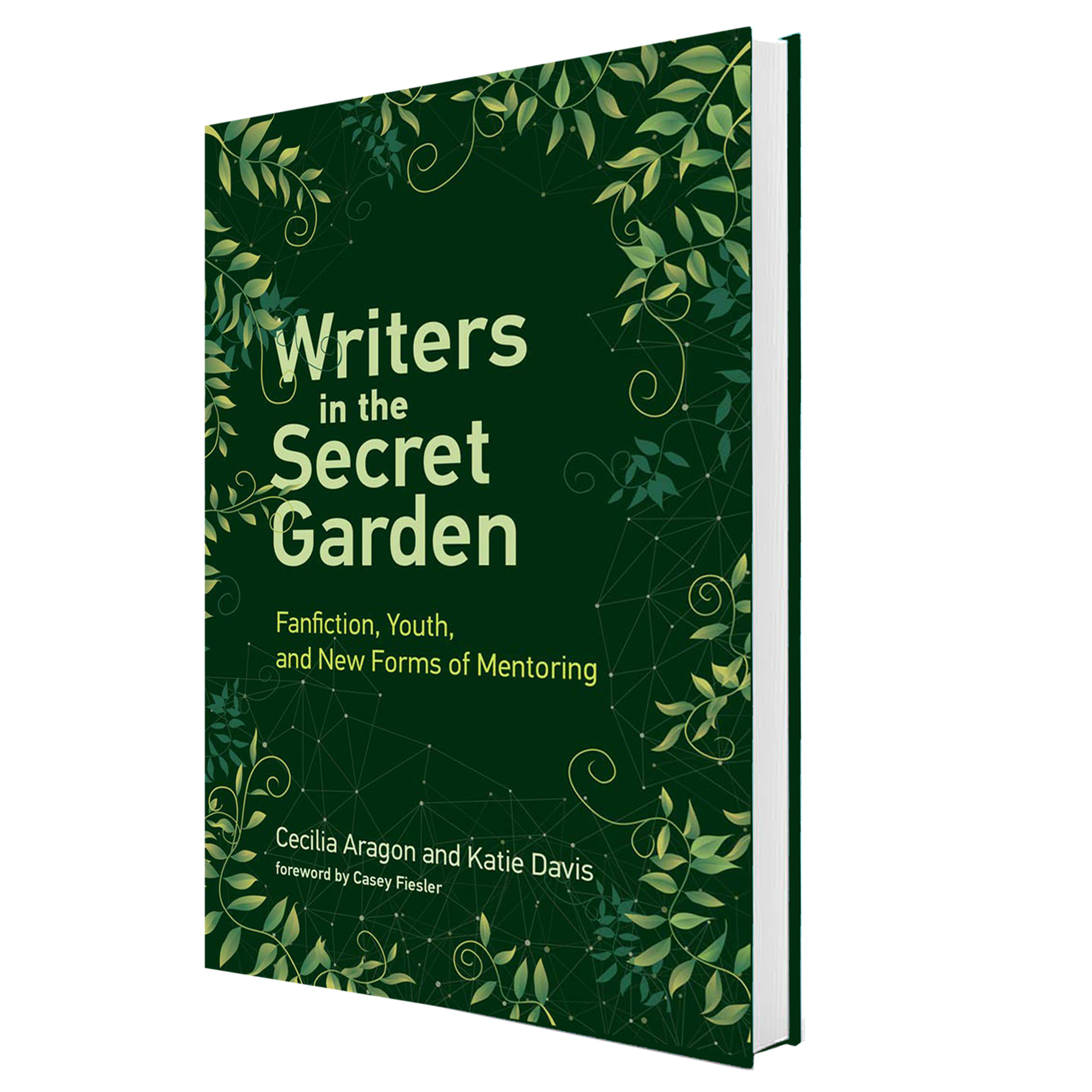
Writers in the Secret Garden: Fanfiction, Youth, and New Forms of Mentoring, by Cecelia Aragon and Katie Davis,
(Aug. 2019, MIT Press), $25, ISBN: 978-0262537803
Ages 16+


Writers in the Secret Garden was sparked by a conversation in 2013, after a slew of news storied claimed young people couldn’t write/weren’t writing. Aragon and Davis extensively studied what was happening on fanfiction.net from both education and human-centered data science perspectives. Some of their findings include:

  • Most adults either have a negative view or are unaware of fanfiction, and the impact it is having on the lives of many young people today.

  • On Fanfiction.net alone, 1.5 million authors have published over 7 million stories and shared over 176 million reviews of those stories.

  • The median age of authors on the site is 16, with over 87% between the ages of 13 and 25.

  • 84% of authors on the site are female; and more fanfiction authors identify as gender-nonconforming (9%) than male (7%).

  • Young people are teaching each other how to write through the feedback they give. This new type of mentoring is unique to networked communities. Called “distributed mentoring,” it is described in detail in the book.

  • The quality of the writing improves in response to the amount of distributed mentoring the author received. (650 reviews predicts as much growth as one year of maturation).

  • Despite the fact that readers post reviews anonymously, comments are overwhelmingly positive, with less than half of one percent gratuitously negative.

The discovery of this vast and vibrant resource for kids who have something to say has been especially meaningful to Aragon as she recalls her own hidden efforts. When Cecilia Aragon was ten years old, she read The Lord of the Rings and fell in love with the world Tolkien created. But, in her opinion, there weren’t enough female characters, and she also had some ideas for scenes that should have been in the books. So, she sat down and wrote her own version in a spiral notebook that she kept hidden. No one ever saw it, and she never told anyone about it until recently, because she thought it wasn’t “real writing.”

“Fanfiction is a private universe — a secret garden — that has become a welcoming community, particularly for those from marginalized groups,” says Cecilia Aragon.  “In it, young people are mentoring each other to become skillful writers and thoughtful readers – and they are doing it entirely on their time and their own terms.”

The research group at the University of Washington maintains a Tumblr about their research.