Posted in Fiction, Fiction, Graphic Novels, Humor, Intermediate, Middle Grade

Little Knight is back in Ogres Awake!

ogres_1Ogres Awake!, by James Sturm, Alexis Frederick-Frost, Andrew Arnold (July 2016, First Second), $14.99, ISBN: 9781596436534

Recommended for ages 5-10

Little Knight and her faithful steed, Edward, are back for another installment! This time, the two discover that ogres are sleeping in the castle courtyard! Knight rushes to the castle’s defense, but finds out that there’s already an army assembled, and they’re wielding potato peelers and spoons instead of swords and shields. Knight and the gnome army have a LOT of stew to make before the ogres wake up… HUNGRY.

This is the fourth outing for the Drawn and Quarterly gang; the third Little Knight Adventure. I love this series: it’s a great way to introduce graphic novels to young readers and they’re fun stories that have a little bit of drawing instruction, a la Ed Emberley’s old step by step books, that I used to love when I was a kid.

Little Knight is a kid that kids will recognize: she’s excited, she wants to jump right in and be in the center of the action, and learns a valuable lesson in each outing. This time around, she learns that not every confrontation needs to be handled the rough way. Sometimes, an act of kindness is all you need to avoid things getting ugly. It’s a great message, communicated with fun, bold, cartoony art and witty writing. Add this series to your shelves; your kids will love you for it. I read this with my 3 year-old, who thoroughly enjoyed it; if you’ve got preschoolers in your life, curl up with them and read it! It’s a great opportunity illustrate sequencing and talk about doing nice things for people: even ogres.

Make sure to check out Gryphons Aren’t So Great and Sleepless Knight, the other Little Knight books by Sturm, Frederick-Frost, and Arnold, as well as Adventures in Cartooning, where we first meet Little Knight and Edward. Don’t forget to check out Drawn and Quarterly, too! Take a look at a few pages from Ogres Awake right here:
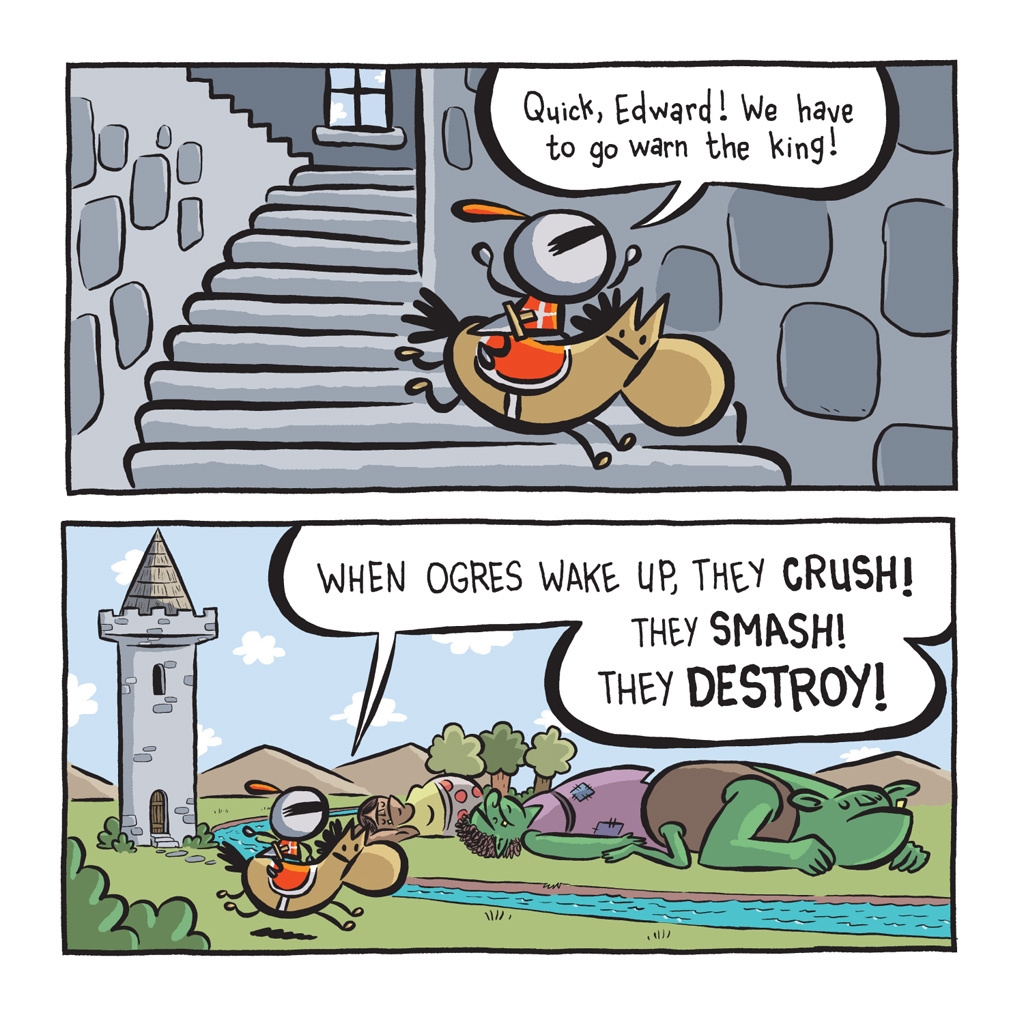
ogres_3 ogres_4

Posted in Fiction, Middle Grade, Middle School, Tween Reads

Framed! Gives us a new tween sleuth, Florian Bates

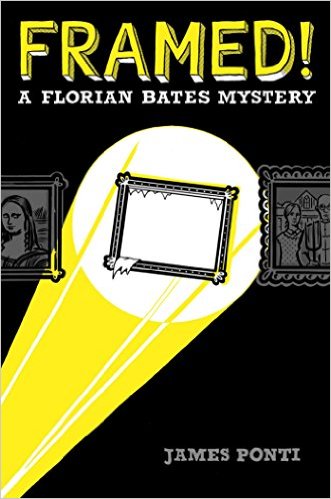
florian batesFramed! A Florian Bates Mystery, by James Ponti (Aug. 2016, Aladdin), $16.99, ISBN: 9781481436304

Recommended for ages 8-12

Florian Bates is a 12 year-old seventh grader in Washington DC. He’s the new kid in school, he likes pizza and egg rolls, he’s in the Scrabble Club, and he’s on the FBI’s speed dial. Florian is like a young Sherlock Holmes: he notices all the small details that people often overlook. He’s even got a cool acronym for it: TOAST, short for Theory of All Small Things. His dad designs security systems for museums and his mother restores paintings, so he’s developed an eye for the details.  When he teaches his TOAST theory to his new friend, Margaret, they foil an art theft that saves the National Gallery millions of dollars, Florian finds himself on the FBI’s speed dial – and possibly on a crime syndicate’s hit list!

Framed! is a fun whodunit for tweens. Florian is Sherlock Holmes without the intimidating presence, and Margaret is a sidekick with the promise of becoming more involved in future books. I love the TOAST theory and the detail with which Ponti describes and illustrates various ways to apply it; it’s a great talent to hone and a smart and fun way to communicate it to readers. As the mother of a tween who can stare into a refrigerator and tell me there’s no milk, simply because the container isn’t dancing and jumping into his arms when he opens the door, I thoroughly support teaching kids the importance of noticing the details.

The story is light and fun, and kids will appreciate that, FBI consultant or not, Florian’s parents aren’t letting him solve any mysteries until he gets his homework done. This is a good selection for libraries (personal, school, or public) where kids need a good mystery and are ready to move on from A to Z Mysteries.

James Ponti is the author of the Dead City series, a middle grade series that follows the adventures of Molly, a tween zombie hunter, in New York City.

Posted in Early Reader, Fiction, Fiction, Intermediate, Realistic Fiction

A school can be anywhere: Armando and the Blue Tarp School

armandoArmando and the Blue Tarp School, by Edith Hope Fine, Judith Pinkerton Josephson/Illustrated by Hernán Sosa (March 2014, Lee & Low), $12.95, ISBN: 9781620141656

Recommended for ages 5-8

Armando’s family are pepenadores -trash pickers – living off things they can use, recycle, and sell from the city trash dump community where they live. Armando works with his father to help support the family, but dreams of being one of Señor David’s regular students. Señor David sets up a blue tarp in his colonia and teaches the children how to spell, count, and learn words in English, and says a school can be anywhere – even on a tarp in a colonia. At first, Armando’s parents discourage him from attending the school, saying that they need him to help the family and that they have always been pepenadores, but slowly, his father sees the importance of an education and allows Armando to attend the school. Shortly after, a fire burns down several homes in the colonia, Armando’s included, and it’s Armando’s picture of the blaze that runs in a newspaper and calls support to the colonia. Money and support come into the community, allowing for a new school building to be built.

Inspired by the real-life Señor David: a New York City special education teacher in the 1980s who went to Mexico to teach children living in the Tijuana colonia – Armando and the Blue Tarp School shows kids that education is a privilege not every child enjoys. Armando desperately wants to learn; he saves bits of erasers, paints, and paper he finds while working alongside his father in the trash dumps, and is thrilled when Señor David returns to his area. Kids will also see that not all parents understand the value of education: Armando’s father scoffs at his son’s “dreams of school”. To many parents in poverty-stricken areas, education takes time away that could be spent working and earning money for the family. For many families, work is survival and education is an expense they can’t afford.

This is a great book to use in classroom, library, and home discussion about how education is perceived throughout the world, and it opens up a chance to find out from kids what they think about education. Do they understand how important it is in the long run? Ask themselves to think about Armando, and put themselves in his place. There are some activities at the Blue Tarp website, some discussion questions, and suggestions for expanding on the story’s theme.

Armando and the Blue Tarp School was a nominee for a California Young Reader Medal and was turned into a stage production in 2009; kids can listen to one of the songs from the show and watch video taken from the show at the Lee & Low blog.

An author’s note at the end of the book provides more information about David Lynch, his Responsibility organization, and the Los Angeles Times article about his work in Mexico that prompted an anonymous donor to donate money to build a school in the Tijuana colonia. There are photos of Lynch and his colonia students, success stories of previous students, and a glossary and pronunciation guide.

A valuable addition to #weneeddiversebooks and school-age collections.


Posted in Fantasy, Fiction, Middle Grade, Tween Reads

What is the Secret of Dreadwillow Carse?

dreadwillowThe Secret of Dreadwillow Carse, by Brian Farrey (Apr. 2016, Algonquin Young Readers), $16.95, ISBN: 9781616205058

Recommended for ages 8-12

In a fantasy kingdom where all the subjects are deliriously happy, two girls bond over their mutual feelings of sorrow, helplessness, and ultimately, determination. Princess Jeniah is a 12 year-old Queen Ascendant; her mother is dying and she’s got very little time left to learn to be a queen, let alone to process the grief she’s feeling. Her mother’s cryptic message about the mysterious bog, Dreadwillow Carse, fires up her curiosity: “If you enter the Carse, the monarchy will fall.”

At the same time, a village girl, Aon, loses her father when the Crimson Hoods come and take him away, ostensibly to become the next advisor to the monarchy. The villagers barely recognize that he’s gone, and Aon – who’s already lost her mother to the Carse – is bereft. Aon is not like the other villagers. She feels a sadness she can’t explain. All the time.

When the two girls encounter one another, Jeniah asks Aon for a favor: explore the Carse. The monarchy can ask someone else to enter the Carse, after all, can’t they? In return, Aon asks Jeniah to send her father home. This meeting sets each girl off on her own personal voyage of discovery, where they’ll uncover long-kept secrets of the Carse, the monarchy, and most importantly, about themselves.

On the face of it, this is an interesting middle grade fantasy tale, with multicultural characters and a Big Secret to be uncovered. Read a little deeper, and you discover that this is an interesting portrayal of pre-adolesence set in a high fantasy setting. A villager and a monarch bond over their mutual sadness, that they feel they can never show to others. The people around them are either keeping secrets from them, as with Jeniah, or are wandering through life in a false delirium, refusing to see what’s going on around them, as with Aon. Aon feels a sadness no other villager can grasp, and she feels frustrated and ignored. The Carse’s presence holds so many answers, but they’re discouraged from venturing in. They have to work together to find answers, and those answers will reveal terrible truths about those around them.

Tweens will identify with the girls and their feelings of frustration; many will understand the undercurrent of seemingly inexplicable sadness and the pressure to put on a smiling face. They’ll share Jeniah’s frustration with her tutor, who answers all of her questions with questions – she has to learn not only to question everything, but to weigh the answers in front of her before she acts. The character development is built steadily through the book, with small plot reveals throughout leading readers further and further, until they reach the conclusion that hits hard and leaves a lot of questions in its wake. This is a great book to hold a discussion group with. I’ll be booktalking it for sure.

A good addition to middle grade collections and fantasy fans’ TBRs. Author insights and an excerpt are available on the Algonquin website. The Secret of Dreadwillow Carse has received a starred review from School Library Journal.

Posted in Animal Fiction, Fiction, Humor, Middle Grade

Go on an adventure with Stick Cat!

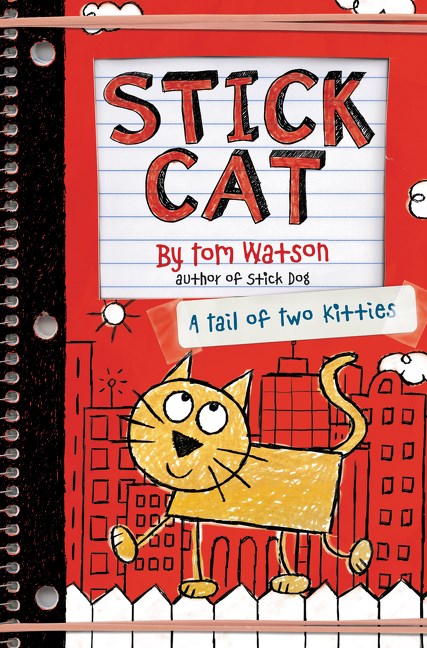
stick catStick Cat: A Tail of Two Kitties, by Tom Watson (May 2016, HarperCollins), $12.99, ISBN: 9780062411006

Recommended for ages 8-12

A spin-off of the popular Stick Dog series, Stick Cat introduces us to… well, Stick Cat, who lives in an apartment with his human friend, Goose, and hangs out during the day with Edith, the cat next door. The two love to play games and listen to Mr. Music tune pianos at the factory next door, but one day, Mr. Music has an accident! His arms are trapped in the piano when the top of the instrument crashes down, and Stick Cat has to figure out a way to save him.

Introduced by the same middle grade narrator that draws Stick Dog, we learn Stick Cat’s origin: he wants to impress a classmate who suggests that he draw a Stick Cat. We launch into Stick Cat’s adventure, which will grab Wimpy Kid, Dork Diaries, and Big Nate fans right away. It’s a similar format, with line drawings accompanying text, and filled with humor. Stick Cat and Edith banter back and forth during their daily playdate; Edith is a little dense and self-centered, and Stick Cat plays off of that while trying to spare Edith’s feelings and accomplish his rescue mission.

Readers can visit the Stick Dog/Stick Cat website for videos, downloadables, quizzes, and the author’s blog. A Tail of Two Kitties is the first Stick Cat book, with two more in the planning stages. There are currently four Stick Dog books.

Both series are a fun addition to middle grade collections and will likely appeal to reluctant and struggling readers – I know my Big Nate and Wimpy Kid books are always off the shelves, so this may help stem the tide a bit this summer!

Posted in Fiction, Historical Fiction, Realistic Fiction, Teen, Tween Reads

My Name is Not Friday is a younger generation’s Twelve Years a Slave

fridayMy Name is Not Friday, by Jon Walter (Jan. 2016, David Fickling Books), $18.99, ISBN: 9780545855228

Recommended for ages 12-18

Living in an orphanage in the South at the end of the Civil War, Samuel is always trying to keep his younger brother, Joshua, out of trouble. The latest prank to be laid at Joshua’s feet is a big one; Samuel takes the blame to keep his brother safe, and finds himself sold into slavery as a consequence. He’s stripped of his given name, renamed Friday, and threatened to keep his true origin – that he’s a freeborn black boy – a secret. Told in the first person through Samuel’s eyes, readers get an often brutal, heart-breaking account of slavery in the last days of the Civil War.

My Name is Not Friday is a powerful book, at times difficult to read. The characters aren’t always likable, and they’re not always loathsome – that’s part of the struggle. It’s easy to hate the mustache-twirling, top hat-wearing villain, but when it’s a child who struggles with wanting to do the right thing – even when he doesn’t really fully understand the right thing – it’s not as easy. Friday is a sympathetic character, and the frustration of his situation comes across so strongly, that I had to put the book down a few times.

An important addition to shelves, My Name is Not Friday has received starred reviews from Publishers Weekly, Kirkus, and School Library Journal. Suggested for middle school and high school readers for overall content. Put this on your shelves next to Solomon Northrup’s Twelve Years A Slave and Alex Haley’s Roots, which returns as a mini-series on History Channel at the end of May.

From SLJ: An author’s note references historical documents, including Harriet Jacobs’s classic Incidents in the Life of a Slave Girl.

Posted in Early Reader, Fantasy, Fiction, Preschool Reads

Suite for Human Nature is a musical folktale made art

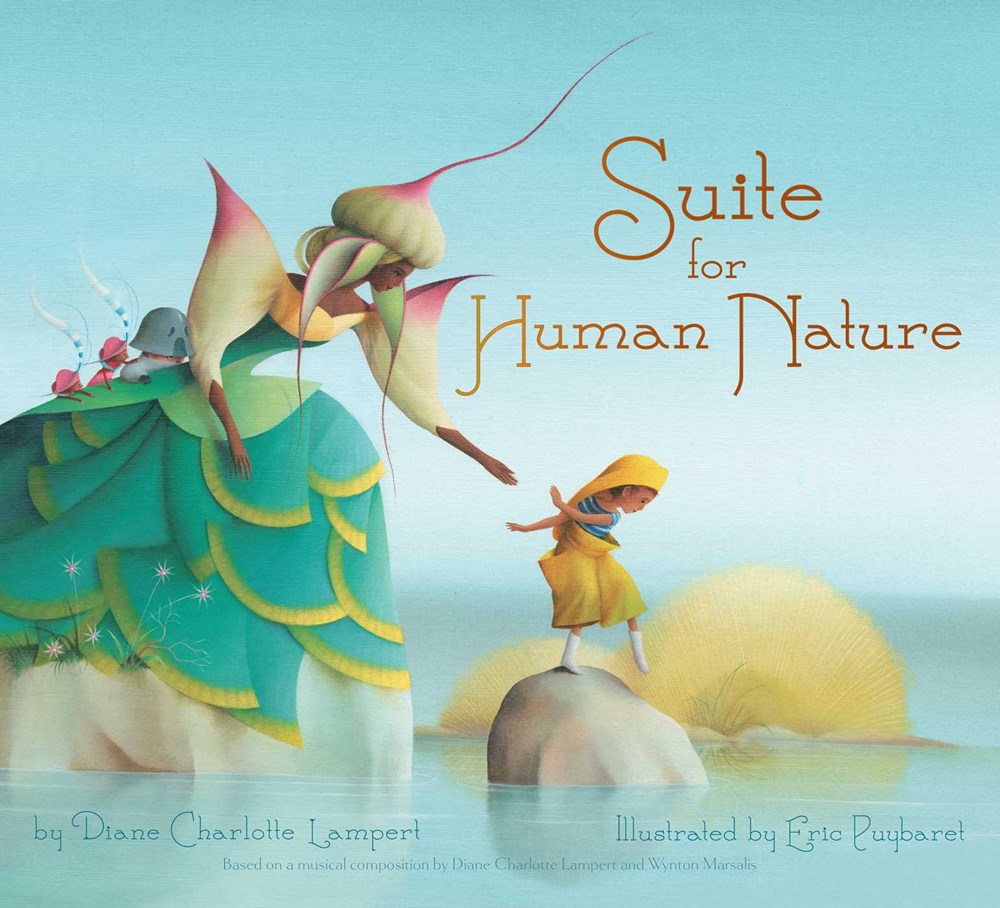
suite for human natureSuite for Human Nature, by Diane Charlotte Lampert/Illustrated by Eric Puybaret (May 2016, Atheneum/Caitlyn Dlouhy Books)$17.99, ISBN: 9781416953739

Recommended for ages 4-10

A musical collaboration between legendary songwriter Diane Lampert and Jazz legend Wynton Marsalis becomes a beautifully illustrated parable on humanity in this gentle story about Mother Nature and her challenging children.

Mother Nature is busy. She’s got seasons to change, flowers to wake up and put to bed, and all of Earth’s creatures to care for. But she really longs for children of her own, so using bits and pieces of nature – sticks, stones, seeds, leaves – she ends up making five children: Fear, Envy, Hate, Greed, and Fickle. Each time, she’s taken aback when she realizes how tough it is to raise a child, and asks humans – the creatures that can’t fly, swim, roar, or gallop – to keep an eye on her unruly children once she buzzes off to tend to another season. Each time she returns, she creates another child, hoping to even things out, and each time, things get a little more complicated, especially when the children’s personalities start rubbing off on the humans. When she takes some advice from the Winds, and creates Twins, though, things change.

Suite for Human Nature is told in old folktale tradition, telling the story of human nature; its strengths and its weak spots, and the one thing that conquers all. Breathtaking acrylic and linen illustrations by Eric Puybaret make this a joy to read and gaze at. This is a better read-aloud for slightly older listeners, who can sit for a little longer and use their imaginations to fly away with this story. Ask your listeners to draw their feelings – what materials would they use? What colors would they give them? Older kids doing a unit on fairy tales and mythology could compare this story to the myth of Pandora’s Box.

Absolute must for collections. I would love to get hold of the actual music.

Diane Lampert (1924­–2013) was a renowned songwriter who contributed to lyrics for artists from The Beatles to Brenda Lee and over twenty movie title tracks such as The Snow Queen, I’ll Take Sweden, Billie, and Silent Running, as well as songs for The Wild and the Innocent, and Trees Lounge, and for Bob Hope, Gary Grant, and Buster Keaton, among others. Suite for Human Nature first debuted at a concert at Jazz at Lincoln Center, with the world-famous Boys Choir of Harlem.

Eric Puybaret has illustrated many children’s books, including Suite for Human Nature; the bestselling Puff, the Magic Dragon; The Night Before Christmas; Over the Rainbow, as well as many others in his native country, France. Eric’s critically acclaimed work was praised by The New York Times as “elegantly rendered” and Publishers Weekly calls it “graceful [and] whimsical.”

Have a look at some of Eric Puybaret’s beautiful art:


suite for human nature_2

suite for human nature_3


Posted in Fantasy, Science Fiction, Teen, Young Adult/New Adult

Beyond the Red: Intergalactic politics and species war with a dash of romance

beyond the redBeyond the Red, by Ava Jae (March 2016, Sky Pony Press), $17.99, ISBN: 9781634506441

Recommended for ages 16+

Kora is a reigning queen of an alien race that’s seen its share of violence: her parents were killed during a terrorist attack during her birthday; her people are locked in a race war with human settlers, known as red-bloods, that exist on her planet, and she’s been the target of assassination attempts. Her twin brother, Dima, holds a grudge against her – he and their deceased father felt Dima should have ascended the throne – not a woman – but birth order is destiny.

Eros is a half-blood soldier, raised by humans and yet, held at arm’s length because of his half-alien blood. His adopted parents and brother are killed during one of Kora’s army raids, and he’s taken prisoner, where Kora decides to make him her personal guard. She has some questions about his true identity, and decides he’d be a valuable asset to keep close to her.

Despite being wildly attracted to one another, they play it safe, knowing that Eros’ half-blood status could get him killed at any time, and would certainly be a death sentence for any children they’d have if they married. Kora accepts the proposal of a high-ranking diplomat, but an assassination attempt leaves her and Eros running for their lives. Now, they have to work together to save the human rebels and keep Eros’ secret on a much larger scale.

There’s a lot of storytelling and world-building in this debut from Ava Jae. The entire story provides the groundwork for a series, and the ending leaves no question about a sequel being in the picture. It just wasn’t my book, alas: it never hooked me. The story seemed to focus on a few points that were emphasized again and again: Eros’ physical attraction to Kora; Dima’s simmering rage toward Eros, his jealousy toward Kora; Kora’s vacillating on her attraction to Eros. We don’t know anything about the human encampment on this world, only that they seem to have been left there generations ago. I’m hoping more about the schism between the two races will emerge in future books, because that has potential for a huge story.

The novel is more young adult than teen for sensual content, violence, and mild language. Space opera fans and fantasy fans should give this one a look.

Posted in Fiction, Historical Fiction, Middle Grade, Realistic Fiction, Tween Reads

Ruby Lee and Me looks at friendship and social change

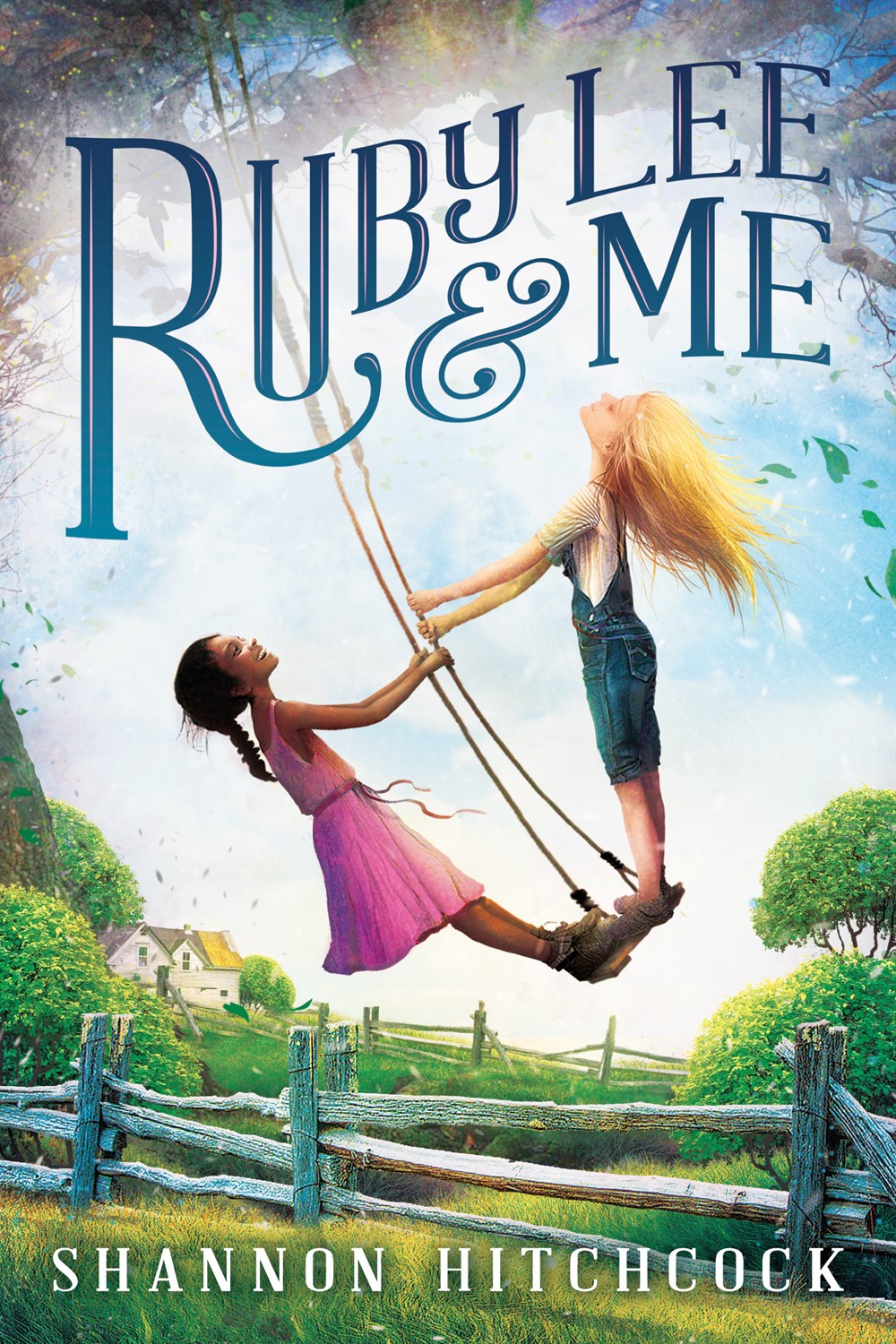
ruby leeRuby Lee and Me, by Shannon Hitchcock (Jan. 2016, Scholastic), $16.99, ISBN: 9780545782302

Recommended for ages 8-12

In 1969, a segregated North Carolina town is facing integration, and not everyone is happy about it. Set against this backdrop is the story of 12 year-old Sarah Beth, who is plagued with guilt when her younger sister is hit by a car while under her watch. Sarah’s family moves to a house on her grandparents’ property to save money, which means a new school – one that’s about to undergo integration. On the plus side, that means that Sarah will be able to go to school with her friend, Ruby Lee, an African-American who will be a student at the integrated school. Enthusiastically, the girls decide that they will be best friends in public – something not very common in the area – just like the Freedom Riders; but the girls have a falling out, leaving Sarah feeling more alone than ever. She’s lost her best friend, she’s facing a new school alone, and she’s certain her sister’s accident is her fault.

A work of both historical and realistic fiction, Ruby Lee & Me is a good coming-of-age story set against a time of huge social change.While this is Sarah’s story, first and foremost, friendship and integration amidst the upheaval of segregation and prejudice is a strong subplot. An upsetting incident involving the school’s first African-American teacher is a powerful moment in the story.

The history of race relations speaks volumes in the relationship between Sarah’s and Ruby’s grandmothers: they “gossip like best friends” when they’re together on the farm, but merely nod politely to one another in town; Sarah’s grandmother says, “The creek don’t care what color feet wade in it, but the town pool surely does. It’s easier to be friends away from wagging tongues”. Sarah’s ambitious daydream of she and Ruby being public friends sends both grandmothers into a tizzy; they discourage the girls from inviting trouble into their lives. Ruby Lee is annoyed when she sees her grandmother “trying too hard” around whites; Sarah sees Ruby as trying to be “the boss of her” in their interactions, yet always seeks her out when she needs someone to talk through a problem with.

A note from the author on historical accuracy briefly explains her connection to events in the story and points out little bits of tweaking made for creative license.

Ruby Lee and Me received a starred review from Booklist. The author’s website offers discussion questions for educators.

Posted in History, Intermediate, Middle Grade, Non-fiction, Non-Fiction, Tween Reads

Titanic survivor stories: 10 True Tales

titanicTitanic: Young Survivors (10 True Tales), by Allan Zullo, (Dec. 2015, Scholastic), $5.99, ISBN: 9780545818391

Recommended for ages 10-12

Another solid addition to the 10 True Tales series, Allan Zullo researched survivor stories of the kids who survived the Titanic sinking and told their stories. With heartbreaking statistics – only 86 of about 195 young people under age 17 survived – and tear-jerking stories of children saying goodbye to their fathers as they were lowered into lifeboats, these stories are tough to read, but create an emotional link between readers and the kids who survived the tragic sinking of the luxury liner over 100 years ago. It’s a good additional book to add to nonfiction collections; one that will go beyond the facts and straight to the heart of the people and what they lost. Each story includes a brief epilogue that details what happened to the survivors after arriving back in New York, and any information about the recovery of the survivor’s family members.

If Allan Zullo’s name is on it, I buy it. He’s written over 100 nonfiction books for kids, and knows how to write series nonfiction that reads like page-turning fiction. He knows the subject matter that kids like to read about, from war heroes to surviving sharks, and he makes sure to get a kids’-eye view with books like Kid Pirates and Teens at War. He puts the real face of history into nonfiction text by telling the stories of people affected by world-shattering events.

The book includes a glossary, and Zullo mentions several reliable Web resources, including Encyclopedia Titanica, Titanic-Titanic, and the Titanic Inquiry Project.

Allan Zullo’s author webpage offers more information about his books and an FAQ that features questions kids have asked him.