Posted in Fiction, Middle School, Science Fiction, Teen, Tween Reads

Henry and the Incredibly Incorrigible, Inconveniently Intelligent Smart Human makes humans the invention.

henry and the humanHenry and the Incredibly Incorrigble, Inconveniently Intelligent Smart Human, by L.A. Messina. Tater Tot Books (2014), eBook: $3.99 ISBN: 9780984901838

Recommended for ages 10-14

Henry is a young teen robot in his 13th upgrade. He’s not the popular kid at school, and he has a faulty processor that comes from a virus that attacked his system when he was younger. When his father’s boss shows up at their home one night with a new human model to test for the market, Henry is thrilled – his own human! But this human isn’t a slack-jawed, drooling blank slate like most humans are. This one makes up words, can do things without extensively detailed commands, and doesn’t want to sleep in his box because it’s not comfortable. At first, Henry is worried – what if this human goes berserk like the one that went on a rampage in his mother’s business? – but he comes to realize that the HueManTech ETC-420- GX-2, or “E”, as Henry calls him, is a very special model.

Unfortunately, Henry’s not the only one who thinks “E” is special, which leads to a taut race to unravel the truth about E, especially when the government begins showing an interest in E and Henry’s family.

The book starts out slow as Ms. Messina establishes the drudgery of Henry’s young teen life – mocked at school, boring job at his mother’s spa, Henry is the lonely kid who takes comfort in his comic books and video games, until something exciting – E’s arrival – sparks up his life. Even then, the narrative moves at a slower pace as Henry discovers how special E really is. But once the plot kicks into motion, involving the government and the origins for both E and Henry, the story moves at a great pace that kept me turning pages and wanting to know more.

The book, available via e-book format, is a good read for tweens and young teens. It provides a wealth of opportunities to discuss what would happen in a society where robots were on the top of things and humans were the creation; it also offers chances to discuss morality and the government. It would be a good discussion group story for educators to encourage among their students and patrons.

Lynn Messina’s website offers a book trailer for Henry, along with fun extras for readers.

Posted in Fiction, Humor, Middle School, Tween Reads

Desmond Pucket Makes Monster Magic and Get Laughs

desmond-pucket-makes-monster-magic_0Desmond Pucket Makes Monster Magic, by Mark Tatulli. Andrews McMeel Publishing (2013), $13.99, ISBN: 978-1-4494-3548-6

Recommended for ages 8-12

Desmond Pucket is a middle schooler who loves monster movies and special effects. He’s also a prankster who just can’t resist a good opportunity to use his special effects expertise to scare the daylights out of people, whether it’s his annoying older sister or one of the teachers. He’s been good at covering his tracks, but when he springs a prank on his older sister and her friends at a sleepover, he finds himself in hot water at school – one of his sister’s friends is the daughter of the disciplinary head at his school; he’s been waiting for Desmond to slip up, so he can transfer him to another school! Now Desmond has three chances left before he’s kicked out of school and misses the big field trip to Mountain Full of Monsters at Crab Shell Pier. Can he keep out of trouble for just a little longer?

The book is written in a similar style to Jeff Kinney’s Diary of a Wimpy Kid; it’s a first-person storyteller and illustrated, presumably by Desmond, with black and white sketches. There are even drawings that look like they’ve been sketched on torn bits of paper, to add to the realism of Desmond, and his friend Ricky’s, notes. The endpapers are green and have the appearance of crumpled paper, with more of Desmond’s drawings and notes to the reader.

I loved this book. It’s fun, light, and Desmond is – like Greg in Diary of a Wimpy Kid – a victim of his own making. He can’t stay out of trouble, but unlike Greg, he knows he’s his own worst enemy. He just can’t resist a good prank opportunity to cause mayhem. He even laments not being able to take credit for his brilliant pranks, because he knows it will get him into trouble. When he decides to pull a prank at  his sister’s sleepover, he has no idea of the trouble he’s getting himself into, and when the fallout hits, he has a major crisis on his hands – how can he stay out of trouble and still be himself?  He ultimately decides that being true to himself and owning who he is is more important than anything, including a long-awaited school trip.

Andrews McMeel has a wealth of Desmond activities and information online, especially since the second book in the series, Desmond Pucket and the Mountain Full of Monsters, will be released this August. You can read a sample chapter online at the Desmond Pucket site, follow him on Facebook, and download teacher and librarian resources on the Andrews McMeel site, including a guide to teaching with graphic resources and English/Language Arts and Science curriculum connections to work with, using the book. There are games and activities for readers both online and at the end of the book itself, where Desmond shares some notes on how to make fake blood, cool monster growl effects, a phantom knocker, a ghost, and a gelatin dessert.

I am looking forward to more Desmond books, as is my 10 year-old son, who read this book in about an hour and a half last night!

Posted in Fiction, Uncategorized

The Most Magnificent Thing teaches kids perspective

the most magnificent thingThe Most Magnificent Thing, by Ashley Spires. Kids Can Press (2014), $16.95, ISBN: 9781554537044

Recommended for ages 4-8

One day, a girl and her dog set out to make the “most magnificent thing” – the girl draws up schematics (her dog is the assistant), gets materials, and sets up on the street, getting to work. When she’s finished, she takes a look at it – it’s not really what she had in mind. She tries again. And again. And again. She just can’t make her vision come to life, and she gets MAD. At this point, her assistant suggests a walk, where she starts to feel better; she finds she has regained self-control and even more, perspective, allowing her to go back and look at her previous creations with a refreshed eye.

Ashley Spires, who some may know from her Binky the Space Cat series, looks at the frustrating process of working on something and not having it turn out the way you envision it. It is something everyone can relate to, from a LEGO structure to a Science Fair project to a PowerPoint presentation for the big client meeting. Children, who are still learning the delicate art of self-control, will recognize themselves in these pages, as the girl becomes increasingly frustrated with her work, and once she injures herself, loses her temper. Her dog/assistant serves as comic relief and ends up saving the day by having her walk away and clear her head. The book teaches a valuable lesson to kids and grownups alike; walking away and returning when you’re calmer often allows the ability to see things are not so bad after all, and maybe, you can even find things you liked in the project you were about to crumple up and throw out.

The digital art is adorable. The characters have large, expressive faces, and are set against a mostly line-art, blue and black or white and black background, so they really stand out. There are some beautiful spreads and the font itself is a curvy font with a quirky personality and fits perfectly with the story. The endpapers display the row of brownstones where the story takes place, leading the reader into the story.

This is a good book to use for a storytime on patience or feelings. Perhaps a small LEGO craft afterward, or a construction paper assembly craft will help young minds create their own most magnificent things.

Posted in Animal Fiction, Fiction, Preschool Reads

Ten Birds Meet a Monster teaches us to count and describe things around us.

tenbirds meet amonsterTen Birds Meet a Monster, by Cybèle Young. Kids Can Press (2014), $18.95, ISBN: 9781554539550

Recommended for ages 4-8

Ten little birds discover a scary shadow outside their door – what can they do? One by one, the birds rally together to create different beasts using the clothes in the closet, each shape becoming more amorphous than the last, with increasingly wild names to accompany their shapes: we have Vicious Polka-dactyls, a Gnashing Grapplesaurus, a Frightening Vipper-Snapper, and more. Will the monster be more scared of them than they are of him and leave the birds alone?

Ten Birds is a concept book meant for a slightly older child, due to the more elevated language. We go beyond counting here, althoug counting from one to ten is certainly the basis for the story, and delve into adjectives and wordplay. Every bird is described with an adjective as he or she jumps in to help: “always resourceful”; “always diligent”; “always creative”. Each concoction the birds come up with is also defined with an adjective, allowing the opportunity for a good discussion about adjectives and describing words. This would be a fun enhancement to an English lesson in addition to a Math lesson.

The story is repetitive,which appeals to younger readers. The black and white ink and paper artwork is spare and beautiful, with beautiful detailing on the birds’ faces and bodies. The white background and framed pages make this an art book almost as much as it is a concept book for children. The font is a simple, black font on the white background, giving the sign that this is a read-aloud book – no fancy or fun fonts to distract the reader or the audience.

Ms. Young has written and illustrated an earlier Ten Birds book – Ten Birds – where the birds encounter a problem and have to solve it with their own wits, much like they do in Ten Birds Meet a Monster. Ten Birds received the 2011 Governor General’s Award for Illustration. The Birds series is a good one for young readers and I look forward to seeing what other predicaments Ms. Young can find for these birds. Maybe a board book for little hands and minds next?

Posted in Adventure, Fiction, Middle School, Tween Reads

Young Sherlock and Irene Adler Face Off in Sherlock, Lupin, and Me: The Dark Lady

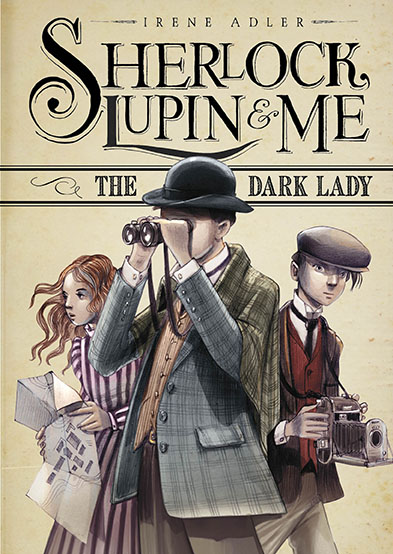
sherlock lupin meSherlock, Lupin and Me: The Dark Lady, by Irene Adler. Capstone Young Readers (2014), $12.95, ISBN: 9781623700409

Recommended for ages 9-14

Written by Irene Adler herself, this middle-grade novel details the first time Irene Adler, a young American girl living abroad and vacationing with her mother in a French coastal town, meets Sherlock Holmes and his friend, Lupin. The three become quick friends; when a dead body washes up on the beach one morning, they decide to solve the mysteries surrounding the dead man: who was he? Was this a suicide or a murder, and why?

Woven into the story’s fabric is background information on Holmes and Adler, offering glimpses into life events that led to the adults they become. Adler lives with her mother and her butler, Horatio Nelson, who seems to double as a chaperone/bodyguard. Young Irene is headstrong and willful, seemingly at endless odds with her mother. Sherlock is a quiet, somewhat surly, brilliant boy who’s reticent to discuss his home life; he has an older brother and a younger sister that annoy him. Arsene Lupin, the son of an acrobat, is a reckless young man who has an eye for Irene, but may eventually find himself at odds with the great Sherlock Holmes.

I really enjoyed this story. Middle graders who have already begun studying Sherlock Holmes will enjoy seeing the character development written into this young, teenage Sherlock, and those unfamiliar with Holmes will doubtless enjoy this introduction, easing them into the great sleuth’s world. The writing is fun and accessible to younger readers, and the sets itself up for a potentially exciting continuing series. For starters, will we find out more about Lupin, who ends up being one of the most famous thieves in literature? Will we meet a young Moriarty? A young Lestrade or Watson? And will we find out more about Irene Adler’s parents, who seem very secretive about something to do with Irene?

Jacopo Bruno’s Victorian-type illustrations add a Holmesian feel to each chapter, setting a mood for the reader.

I love the pairing of the world’s greatest detective with the world’s best gentleman thief as teenagers – I can’t wait to see where this series is going to go.

The Capstone Kids site should be getting a minisite up soon, but I didn’t see anything on Sherlock, Lupin and Me at the moment.

Posted in Fiction, Tween Reads, Uncategorized

Minerva Mint: The Order of the Owls

minervamintMinerva Mint: The Order of the Owls, by Elisa Puricelli Guerra/illus. by Gabo Leon Bernstein, Capstone Young Readers Group (2014), $9.95, ISBN: 9781623700386

Recommended for ages 8-10

Minerva Mint: The Order of the Owls is the first book in a new middle-grade series about an eccentric young girl named Minerva Mint, her two friends, Thomasina Crowley and Ravi Kapoor, and the mysteries that the group solves together; the most important being to find Minerva’s parents.

Minerva was found, as an infant, in a bag in Victoria Station. She lives in Lizard Manor -a large, ramshackle mansion that has seen better days – with Mrs. Flopps, the station custodian who discovered Minerva. Minerva meets Ravi and Thomasina, and the three become fast friends. Thomasina shares Minerva’s adventurous spirit and Ravi, a bit more level-headed and fearful, comes along for the ride at first because of his crush on Thomasina. He grows into himself during the group’s first adventures, but I’m pretty sure we’ll still see him as the voice of reason in the group.

This first book establishes the characters and the underlying mystery that will permeate the series – who are Minerva’s parents, and why did they leave her as an infant? There are some clues in the bag Minerva was found in, and she tries to put the pieces together. Thomasina and Ravi are sworn to help her, but Minerva is no damsel in distress; she can handle after years of fending off various long lost “parents” who come to the home in search of the valuable real estate and imagined riches in Lizard Manor.

The story is fast-paced and light, perfect for a middle-grade read about friendship with some mystery thrown in. Minerva is a quirky, fun character that will appeal to girls who want to step outside the “girly” model. Thomasina – pretty, blonde, wealthy Thomasina – is an adventurous spirit and a friendly, outgoing girl, which is a relief if you’re tired of the seemingly obligatory mean girls popping up as dramatic foils. Ravi is a shy, fearful boy who allows himself to be drawn out by the two girls. The group’s valued friendship sends a good message to younger readers about sticking together.

Gabo Leon Bernstein’s black and white illustrations are adorable and add to the story, giving us characters to bond with and creepy, fun landscapes. His illustrations advance the plot and fire up the imagination.

I look forward to more Minerva Mint books, and luckily, there are a two in progress: Merlin’s Island and The Legend of Black Bart. The publishers website offers extras, including character profiles, a book trailer, and downloadable clues sheet and a secret club contract that readers can use for their own secret societies!

Posted in Fantasy, Fiction, gaming, geek, geek culture, Humor, roleplaying, Science Fiction, Teen, Young Adult/New Adult

Attack the Geek: Geek Culture Gone Wild!

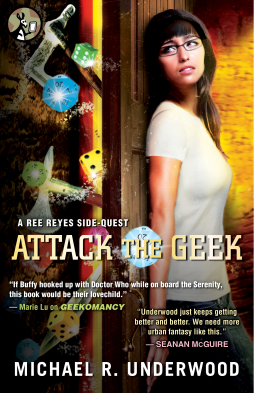
attackthegeekAttack the Geek, by Michael R. Underwood. Gallery, Threshold, Pocket Books (2014), $2.99, ISBN: 9781476757780

Recommended for 18+

Attack the Geek is more of a New Adult read than it is a YA read, but there are plenty of pop culture, gaming, and garden variety geek references in there that will appeal to younger audiences. There’s a content heads-up for language, but it’s nothing the kids aren’t screaming at each other these days.

Attack the Geek is a side adventure to a series created by Michael R. Underwood; his previous two books, Geekomancy and Celebromancy, are available via digital download on Amazon for a very reasonable price. I haven’t read the two previous books which could be a reason why I felt off-kilter with Attack the Geek.

For any gamers out there – did you ever have a roleplaying session where one bar fight or battle took up hours of your campaign? If you know what I’m talking about, that’s how I felt while reading Attack the Geek. It’s a single combat story, with barista Ree Reyes, the heroine and protagonist of the series, and her fellow geekomancers coming under attack at Grognards, the establishment owned by Ree’s boss, Grognard. The geekomancers have the ability to channel the power of geek culture by consuming it – Ree, for instance, keeps clips from her favorite movies, like X-Men or Spider-Man, to draw upon when she needs power – and she’ll be able to shoot webs or toss people with telekinesis. There are props aplenty, including working Star Trek phasers and Star Wars lightsabers, and collectible card game cards merely need to be torn to release their  magic in this world, if channeled by the geekomancer. So when they come under attack from a Strega witch named Lucretia, it’s a hairy battle, loaded with pop culture references and witty banter.

This being a side adventure is my own issue – I am unfamiliar with the geekomancy power and these characters, so in a sense, I was at a disadvantage. But I also thought the book was trying to be too witty, throw too many references in, for its own good. The references took over the plot, and after a while, I was just reading about a battle where there was Spider-Man web slinging, Star Trek phasers, and lots of collectible card game references. This just wasn’t my book. For anyone who’s a devoted sci-fi/fantasy/gaming/comic book fan, it’s worth a shot. It’s why I requested it from NetGalley, after all, and I may read Geekomancy now just to see if having more of a background will help me better grasp the book.

Posted in Fantasy, Fiction, mythology, Tween Reads

Neil Gaiman’s Odd and the Frost Giants: In which Thor, Loki and Odin get into trouble AGAIN.

odd and the frost giantsOdd and the Frost Giants, by Neil Gaiman/illustrated by Brett Helquist. HarperCollins (2008), $14.99, ISBN: 978-0061671739

Recommended for ages 8-12

Neil Gaiman takes on Norse mythology with his tale of a lame young Norse boy named Odd, who encounters a bear, a fox, and an eagle in the frozen woods one day, only to discover that they are Thor, Loki, and Odin, on the run after Asgard is overrun by Frost Giants. They need Odd’s help to regain the kingdom and end the forever winter that the Frost Giants have spread throughout Midgard (and possibly, all of the realms). Is Odd smart enough to outwit the Frost Giants?

Gaiman adapts his storytelling voice for this story (as opposed to his dark fantasy voice that you can read in works like Coraline and Graveyard Book). The book is filled with his wry humor, especially in the interactions between Thor, Loki, and Odin – he gives Loki a particularly amusing voice, being the God of Mischief in the guise of a wily fox. Gaiman also excels at writing quiet, mild characters that achieve greatness through intelligence – Odd is yet another quiet Gaiman hero. Quiet kids will love how Odd uses his wits to save the day, rather than charging around Asgard swinging a war hammer and screaming for blood.

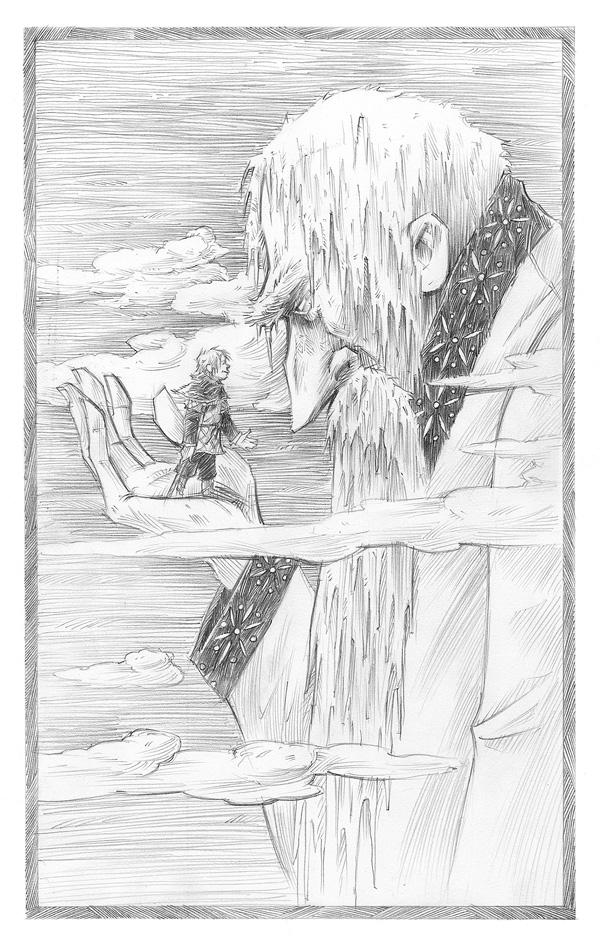
Brett Helquist’s art enhances Gaiman’s story with beautiful black and white sketches. The artwork lends a real authenticity to the Norse tale; the work could hail from a hoary, old tome, found in an old castle, it has such a wise old sense of timeliness about it.

9780061671739-oddfrosts16_zoom

I love Gaiman’s storytelling, and Odd is right there with his other work. This could enhance a unit on storytelling as easily as it could a unit on Norse mythology, and there are many activities to get kids writing that this book could inspire, including a Write Your Own Myth workshop, or asking the kids to put themselves in Odd’s place – how would they save Asgard? What would they do if they discovered three gods in the woods? Do you identify with Odd? What makes a hero heroic? There are many discussion topics that work for this book.

Posted in Fiction, Humor, Middle School, Science Fiction, Tween Reads

M.E. Castle’s The Clone Chronicles concludes with Game of Clones

gameofclones_3 Game of Clones: The Clone Chronicles, #3, by M.E. Castle. Egmont USA (2014), $15.99, ISBN: 9781606842348

Recommended for ages 8-12

In M.E. Castle’s third installment of the Clone Chronicles, seventh grader Fisher Bas and his clone, Fisher-2, put aside their differences to team up and fight Three, the Fisher clone created by the evil Dr. X. Three’s gone rogue, with plans for world domination on his mind, and he’s on track to make it happen – will Dr. X make an appearance? Is the enemy of Fisher’s enemy a friend?

The book is a fast-moving action-adventure series that should appeal to both middle grade boys and girls. Fisher and Fisher-2 have allies in their classmates, Amanda and Veronica, both of whom serve as the boys’ crushes and as intelligent, strong females in the series. Fisher tends to be an overthinker, and Alex struggles to define his own personality despite being a Fisher clone. This struggle runs throughout the book, and mirrors many a tween’s burgeoning identity and personality clashes and crises; where Fisher-2 is a clone, a tween pushes back against being merely “the son” or “the daughter”. Three wreaks havoc in Fisher’s neighborhood and school, forcing him to think of creative solutions and seek help outside of his gadgets; he realizes the power of friendship and of reaching out to ask for help, and it makes him a better person.

Overall, it’s a fun book in a popular series that tweens will enjoy. Game of Clones is part of The Clone Chronicles series; the first two books are Popular Clone and Cloneward Bound.

Posted in Fantasy, Fiction, Graphic Novels, Middle School, Science Fiction, Tween Reads

The Glorkian Warrior Delivers a Pizza: Middle-Grade Hilarity in a Graphic Novel Format

The Glorkian Warrior Delivers a Pizza, by James Kochalka (First Second, 2014), ISBN: 978-1-59643-917-7, $17.99
Pub Date: March 2014

Recommended for ages 8-12

Glorkian-Warrior_AdvanceBooks_FrontCover I first discovered James Kochalka a few years ago, when my son read and adored his book, Peanut Butter & Jeremy’s Best Day Ever. I loved the cartoony art and fun dialogue; when I saw this title available on NetGalley, I immediately requested it, knowing I’d be in for a fun read. I was absolutely right.

Not knowing about the successful Glork Kickstarter that Mr. Kochalka and PixelJam games had back in 2010, I came to Glork as a brand new audience. The book is hilarious and surreal on a level that middle schoolers can truly appreciate and adults will just laugh out loud looking on. The Glorkian Warrior is sitting at home with his Super Backpack, when the phone rings – it is destiny? Well… kind of – it’s a pizza order. While Backpack wants the Glorkian Warrior to disregard the obviously wrong number, the Warrior will not be put off – this is his mission! He grabs a partially eaten pizza from his fridge and sets off on a journey that will introduce him to alien babies and add strange and unusual toppings to the pizza, including ash, tears, and fire damage. Will the Glorkian Warrior fulfill his delivery destiny? Don’t look at me for answers, read the book!

The book, which hits bookshelves in late March, is great fun. The cartoony art is perfect for its middle grade audience, as is the goofy humor. The Warrior is hilariously oblivious, Backpack is the brains of the operation, and together, the two are responsible for bickering and laughs on the level of Star Wars’ C3P0 and R2D2.

I enjoy graphic novels for kids, for several reasons. The first reason? Reluctant readers. They may stare at a page full of words and shut their brains off, but how can you look at a brightly colored, fun adventure and say, “No thanks”? You can’t. This will draw in reluctant readers, who – sadly – also tend to be boys. Having an alien warrior delivery a pizza with his laser-powered sentient backpack will definitely help bring the boys to the reading table. The second reason? Graphic novels teach sequence. Sequential art – art that is broken up into panels, a sequence – gives kids a sense of pacing and “what happens next” – very important concepts in the Common Core these days.

I thoroughly enjoyed riding shotgun with the Glorkian Warrior, and look forward to seeing him again. Reserve this book for any young readers you may have – they’ll get a kick out of it. The book also opens itself up to some great reading group discussions, including drawing your own alien workshop/top your own alien pizza workshop, map out the mission mapmaking sessions, and make your own comic book programs.

Mr. Kochalka has a Tumblr, Kochalkaland, where he features some webcomics (not necessarily young child-appropriate, but then again, neither is Tumblr) and a webcomic at American Elf (again, not young reader-appropriate). You can follow Glorkian Academy on Twitter for news about the books.