Posted in Fiction, Historical Fiction, Middle Grade, Realistic Fiction, Tween Reads

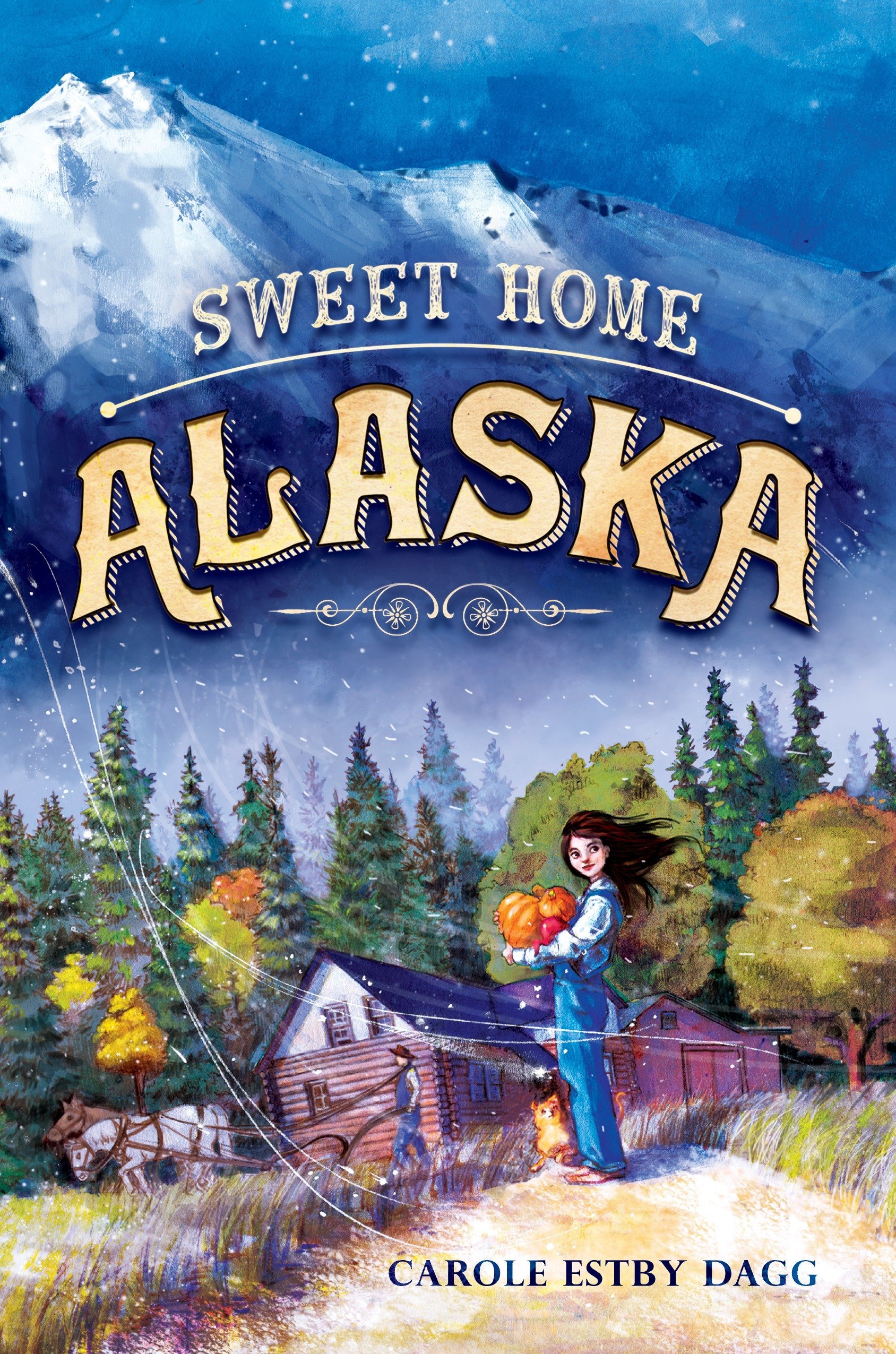
Sweet Home Alaska: Little House, up North

Sweet Home Alaska, by Carole Estby Dagg, (July 2019, Puffin), $8.99, ISBN: 9780147514202

Ages 9-13

Terpsichore Johnson’s family is just one of many families suffering through the American Great Depression in 1934. When the local mill in their Wisconsin town closed, the family relied on whatever they could grow in order to eat, and Terpsichore can make darn near anything out of a pumpkin. Her father is determined to take care of his family, and suggests taking President Franklin D. Roosevelt up on his New Deal offer: become an Alaskan pioneer in his Palmer Colony project! Terpsichore is at once unsure and excited: it’s a chance to be a pioneer, just like her hero, Laura Ingalls Wilder, but it’s so far from everyone and everything she knows. The family decides to give it a year, and they’re off. Life isn’t easy for that first group of colonists: there’s illness, and schedule and materials mismanagement leave a lot of folks living in tents when they should have had homes built, but slowly and surely, life in Alaska starts to grow on the Johnson family, except for Terpsichore’s mother. Can Terpsichore’s prize pumpkin win enough money at the Palmer Colony Fair so she can buy her mother a gift that will make her agree to stay?

I loved this book! Sweet Home Alaska is about the 1935 Matanuska Colony; one of FDR’s New Deal projects that would create jobs, investment in the country and infrastructure, and colonize part of U.S.-owned Alaska, which wasn’t a state just yet. The parallels between Sweet Home Alaska and Laura Ingalls Wilder’s Little House series are wonderful, and a good readalike for readers who enjoy the Wilder books, and Louise Erdrich’s Birchbark House books. (There are no interactions between the mostly white Palmer colonists and indigenous people in Sweet Home Alaska; a point discussed in the author notes at the end of the book.) Terpsichore – pronounced Terp-sick-oh-ree, named for the muse of dancing – even refers to Wilder’s book, Farmer Boy, when growing her pumpkin to show at the Palmer Colony Fair.

The book takes a deeper look into a moment in history I haven’t yet seen captured in historical fiction. While it takes place during the Great Depression, this is new territory, and worth the read. Terpsichore is the eldest child, with twin younger sisters and an infant brother, and handles much of the housework to help her mother out. She’s smart, enterprising, and determined. She and the two friends she makes in Palmer – Gloria, named for actress Gloria Swanson, and Mendel, named for the scientist who studied genetics – work together to start up a colony library and find ways to raise money for books and supplies. She experiences frustration, but always bounces back, stronger than before. The writing just flows from page to page, with adventure, emotion, and excitement throughout. There are wonderful mini-plots throughout, including the telegram to Eleanor Roosevelt that got our President’s attention; a visit from Will Rogers; and a Palmer resident with interesting ties to Terpsichore’s family. I loved spending time with this group.

An author’s note and further reading are included, and really make this a solid choice for kids seeking out historical fiction. There are also some recipes, including one for jellied moose nose. You know you’re curious.

Sweet Home Alaska was originally published in 2016, but I somehow missed it. Glad my friend Barbara over at Blue Slip Media told me I needed to read it now! Check out the free, downloadable discussion and activity guide, and find out about author visits, Skype visits, and contact info (including how to get an autographed bookmark!) at the author’s website.
 

Posted in Fiction, Graphic Novels, Historical Fiction, Middle Grade, Teen, Tween Reads

Queen of the Sea: Re-imagined History

Queen of the Sea, by Dylan Meconis, (June 2019, Candlewick Press), $24.99, ISBN: 9781536204988

Ages 10-14

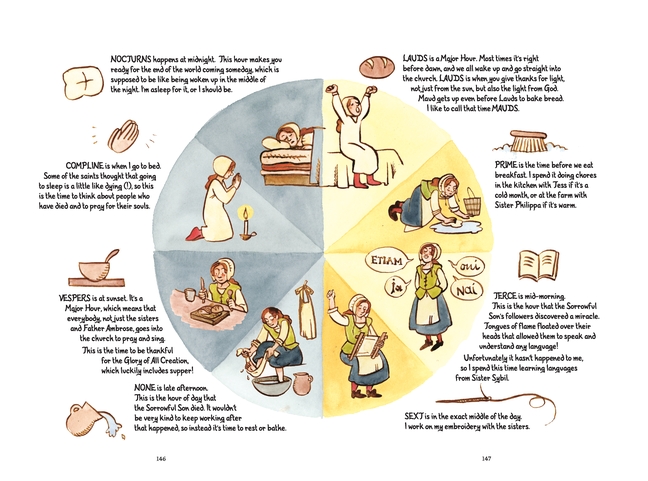
Inspired by Queen Elizabeth’s exile when her sister Mary I ascended the throne, Queen of the Sea begins with the banishment of Queen Eleanor, a young monarch of an embattled kingdom, to an island where nuns live, pray, garden, and sew. Margaret is a young girl who has spent her entire life on the island in the care of the nuns and finds herself drawn to Eleanor. Margaret learns about the island and the reasons behind her presence there, and quietly begins planning with Eleanor and a mysterious man who washes up on the island one stormy night.

Queen of the Sea is gorgeously created historical fiction with fully realized characters and a solidly constructed plot filled with intrigue; revelations; world-building, even light romance. Dylan Meconis’ pen, ink, and gouache artwork will appeal to Raina Telgemeier and Victoria Jamieson fans; the characters are softly realistic with period costuming and soothing earth and sea colors. I particularly love the back-and-forth between present moment storytelling and Margaret’s narration of history and myth, rendered to appear as stone or stained glass. The character growth is a joy to witness: Eleanor, from a taciturn exile to an embattled young woman embracing her feelings, and Margaret, a naïve child to a young woman coming into herself and her own intelligence make this a wonderful read. An author’s note discusses Elizabeth I’s inspiration of Eleanor. Graphic novel gold.

Queen of the Sea has starred reviews from Kirkus, Publisher’s Weekly, Booklist, and School Library Journal. You can read an excerpt at Candlewick’s website.

Posted in Historical Fiction, Teen, Tween Reads

The Good Son tells a tale in miniature

The Good Son: A Story from the First World War Told in Miniature, by Pierre-Jacques Ober/Illustrated by Jules Ober & Felicity Coonan, (May 2019, Candlewick Studio), $22, ISBN: 9781536204827

Ages 10-14

“About one hundred years ago, the whole world went to war. The war was supposed to last months. It lasted years.” This story about Pierre, a World War I French soldier, is told with spare narrative and is illustrated using antique military miniatures, photographed to create stunning moments.

Pierre is a young French soldier who quietly left his regiment for two days to celebrate Christmas with his mother. Upon his return, he is imprisoned for desertion and awaits execution. As he waits, he looks back on his life as a soldier: his choice to sign up, his dreams of glory, and the horrific truth of the battlefield. He remembers sharing coffee with German soldiers who were tired of fighting, and of spending what would be his final Christmas with his mother. His friend, Gilbert, comes by to bring him food and wine, and makes a promise to carry Pierre’s letter to his mother.

The Good Son is not a picture book for young children; it’s for middle schoolers and up. The use of miniatures brings home the scale of war: seeing the lines and lines of soldiers going into battle looks impressive, but turned becomes chilling when you understand that young men, not toys, headed to battle. There are beautiful and horrifying shots of battlefield explosions and war machines; pensive portraits by firelight as Pierre waits for word from the colonel. The text is heart aching, as we read about a young man’s struggle to understand how to be a good son and a good soldier. An author’s note and a note on the photography process provide a deeper look into the creation of the book and offers some further insight into Pierre’s story.

Beautifully written and photographed, this is a story that will provoke thought and discussion. A good book group choice.

Posted in Fantasy, Graphic Novels, Historical Fiction, Teen, Young Adult/New Adult

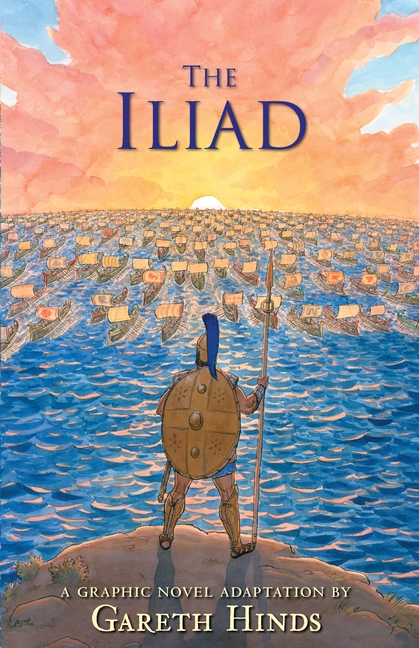
The Iliad goes graphic: Gareth Hinds interprets the epic into a graphic novel for teens

The Iliad, Adapted and Illustrated by Gareth Hinds, (March 2019, Candlewick Press), $27.99, ISBN: 9780763681135

Ages 13+

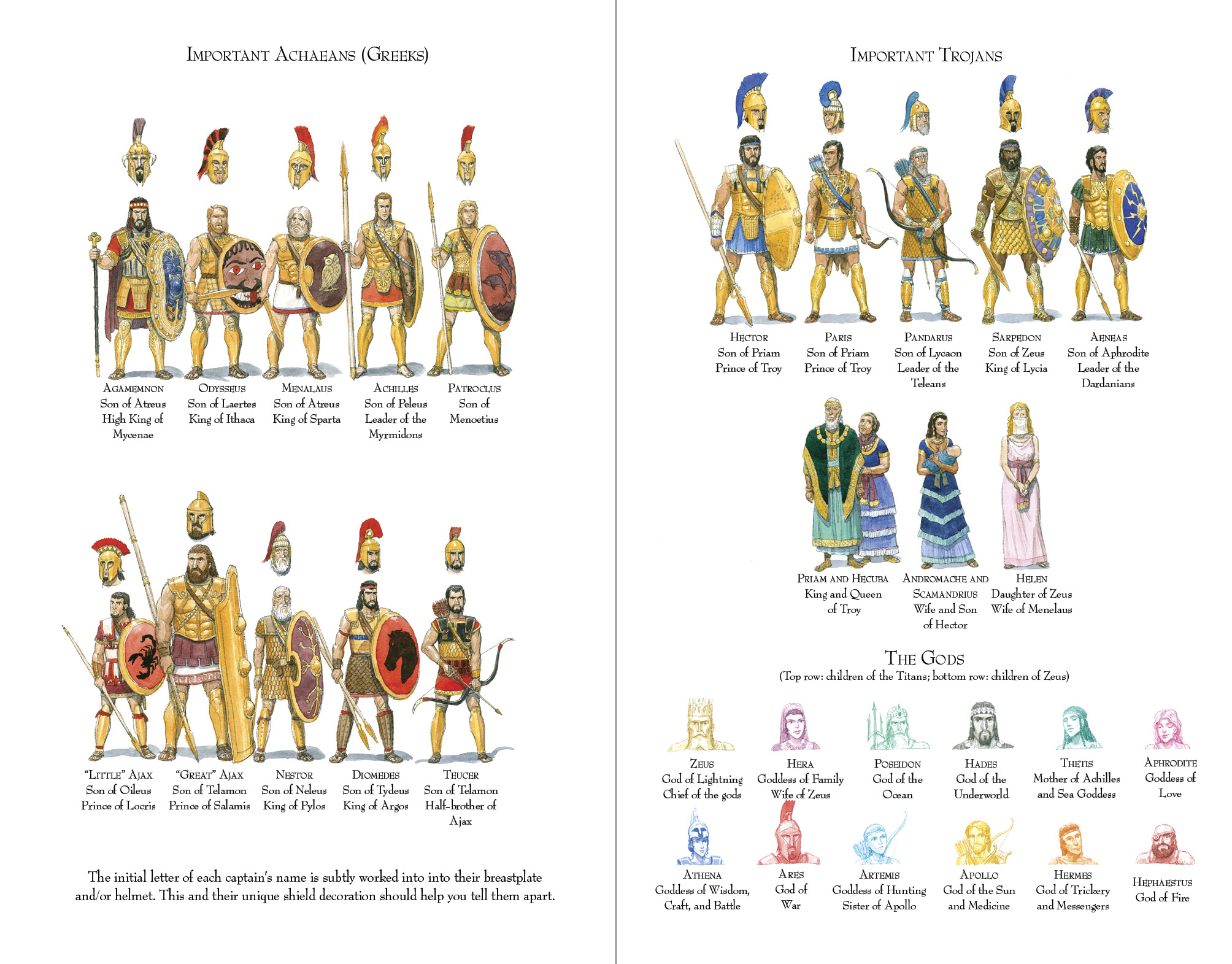
A companion to 2010’s award-winning adaptation of Homer’s The Odyssey, Gareth Hinds adapts Homer’s epic and manages to capture the breathtaking scale. The Iliad is the first part of the epic poem that recounts The Trojan War, introducing readers to legendary characters including Achilles, Hector, Paris, and Odysseus. Hinds gives readers a dramatis personae of important Greeks and Trojans; he also provides illustration of the cantankerous, trouble-making Greek gods, dividing them up between Titans and children of Zeus.

Flowing the story as dialogue between an omniscient narrator (Homer) and the characters is a big help to readers who may be cowed by the epic poem in its original form; Gareth Hinds brings life to the characters and creates landscapes and battle scenes that really engage readers. The drama is more intimate when one feels like a bystander as Hector and his wife, Andromache, say their goodbyes as he goes off to fight Achilles; seeing the gods interfere in the outcomes of battle will have some readers yelling at the book like we yell at our TV screens (okay, the reader in question is me). There’s just so much material to interact with here: an epic story that’s endured for millennia; maps, and notes all come together to make this a great volume to keep on hand for your students, kids, and patrons.

Gareth Hinds’s The Iliad has starred reviews from Publisher’s Weekly and The Bulletin of the Center for Children’s Books. You can find tour dates for Gareth Hinds’s Iliad tour on his website. Candlewick Press has a free, downloadable educator’s guide available.

Gareth Hinds is an award-winning graphic novelist who has some great, epic classics to his credit, including Beowulf, Macbeth, and the works of Edgar Allan Poe. ELA teachers and librarians, get copies of his work into your students’ hands!


Posted in Fantasy, Fiction, Historical Fiction, Middle Grade, Tween Reads

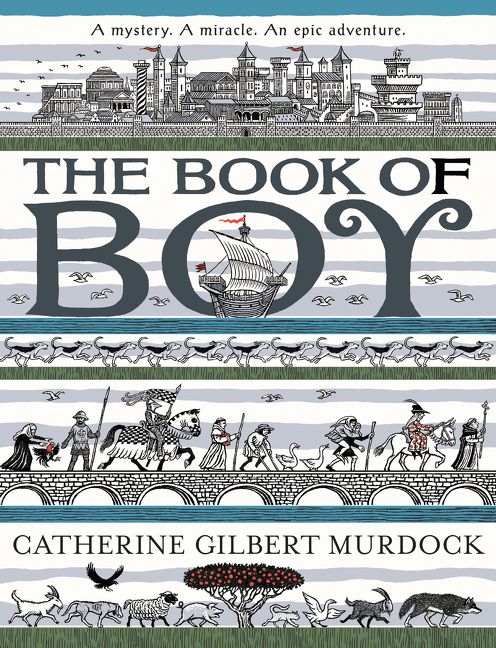
A hero’s journey of a different sort… The Book of Boy

The Book of Boy, by Catherine Gilbert Murdock/Illustrated by Ian Schoenherr, (Feb. 2018, Greenwillow Books), $16.99, ISBN: 9780062686206

Ages 9-14

Set in France in 1350, Boy is a young man, thought to be a simpleton and hunchback, who works as a servant and goatherd. Secundus, a pilgrim on his way to Rome, drafts Boy for his mission and is sent along on Secundus’ quest to collect seven relics of Saint Peter – Rib, Tooth, Thumb, Toe, Dust, Skull, and Tomb – so he can gain passage to Heaven. When Boy questions Secundus’ methods – they sure look a lot like thievery – he is told that they are protecting the relics from others. Boy is so much more than everyone around him realizes – more than he realizes. He puts his faith in Secundus’ mission, hoping that Saint Peter will heal him and make him “a boy” at the end of his mission, but Secundus starts figuring out that there’s more to Boy than meets the eye: he can communicate with animals, for starters.

A dash of Canterbury Tales with a story of how true good can blossom in a seemingly lost society makes this a consuming read. Boy is kind, gentle, and naive, but he’s anything but simple. He’s truly special; paired with Secundus, a deceiving pilgrim with a personal agenda, makes Boy’s goodness stand out even more. The grittiness of Europe in the post-Black Death Middle Ages comes alive with Catherine Gilbert Murdock’s descriptions of the sights, smells, even textures of the age; reading about the religious relics is all at once fascinating and cringe-worthy (descending into a tomb to scoop up some of Saint Peter’s ashes has quite possibly given me goosebumps that will stay with me forever), because it really happened. An author’s note gives some more insight into the Holy Year of 1350, the relics market in Europe, and the burial site of Saint Paul, a plot point in the book.

Ian Schoenherr’s black and white woodcut illustrations add to the the feeling of perusing a medieval text. The Book of Boy has starred reviews from Booklist, Kirkus, and the Horn Book and is a must-add to your collections. Give this to your historical fiction readers and your adventure readers.

Posted in Historical Fiction, Teen, Young Adult/New Adult

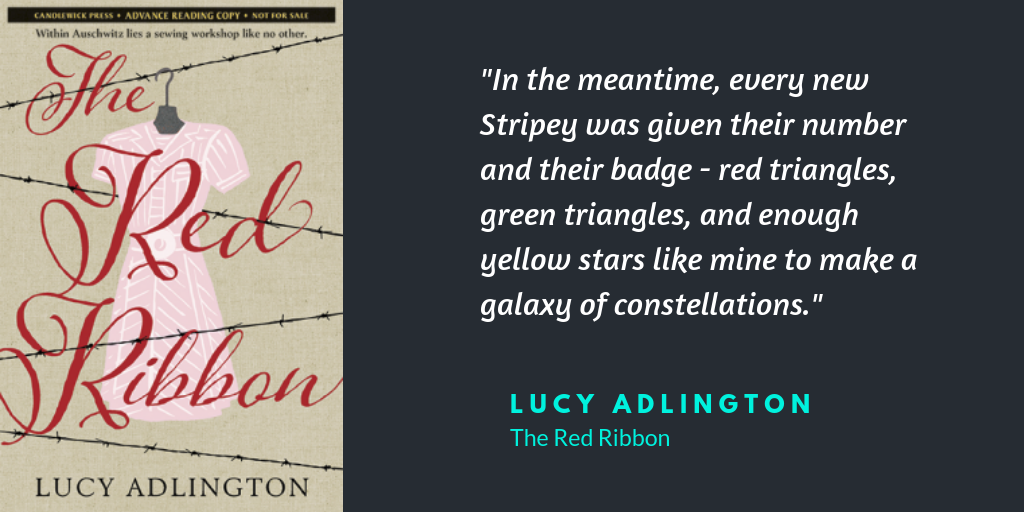
The Red Ribbon finds hope in the heart of despair

The Red Ribbon, by Lucy Adlington, (Sept. 2018, Candlewick Press), $17.99, ISBN: 9781536201048

Ages 12+

Ella is a 14-year-old young woman who lands in Auschwitz-Birkenau after being picked up on the way home from school. She lies about her age to be placed in the Upper Tailoring Studio; a dressmaking studio within the camp, where the skeletal women Ella calls “Stripeys”, referring to the prisoners’ striped uniforms, make dresses for their clients: the wives and girlfriends of the SS officers, and the female SS officers themselves. Ella has dreams of being a dressmaker and finds herself more than up to the task, but her friend Rose points out that there’s a fine line between doing what’s necessary for survival and collaborating with the enemy, no matter where one’s true passion lies.

The Red Ribbon looks at some big issues taking place during the Holocaust: there really was a dressmaking studio, where prisoners repurposed clothing taken from the arriving prisoners to make clothing for the SS wives, girlfriends, and officers. There were prisoners who acted as “prominents”: they oversaw other inmates and could be almost as cruel and demanding as their jailers. Ella’s talent for dressmaking gains her notice from one SS officer, an 18-year-old named Carla, who leaves her small gifts for trade and invites her to share birthday cake with her one time and viciously beats her another, calling her inhuman. Rose acts as Ella’s conscience, seeing through the illusion Ella desperately wants to create: an illusion where her grandmother is still safe at home and waiting to hear from her; an illusion where her dressmaking talent is valued, and the Auschwitz “Department Store” is a kind of thrift store and not a pile of stolen goods from stolen lives. Ella’s desperation to hone her dressmaking talent borders on collaboration, but she refuses to acknowledge it until a heartbreaking moment when her beloved grandmother’s sewing machine lands in front of her in the Studio. It smashes Ella’s naivete, but she and Rose bolster one another, and the women around them as they pray and wait for liberation.

There are some devastating moments in this story, and Lucy Adlington’s words weave beautiful, terrible visions. Prisoners tell each other to “Look down at your sewing, not up at the chimneys”. One prisoner is so desperate for news about her children that she asks about an SS officer’s son: “Tell us about the little boy –  how old?  My son was three when they took us.”

The book equally captures desperation and determination; hope and despair. It’s a good add where collections need YA fiction that discusses The Holocaust. Display and booktalk with Antonio Iturbe’s The Librarian of Auschwitz, The Diary of Anne Frank and John Boyne’s The Boy in the Striped Pajamas (I’ve seen this title in both Juvenile and YA collections); Elie Wiesel’s Night and Tatiana de Rosnay’s Sarah’s Key, and Art Spiegelman’s Maus. The Jewish Book Council has an excellent list of Holocaust-related YA books. There is a creative writing resource available for free download from The Hay Festival.

Posted in Fiction, Historical Fiction, Middle Grade, Realistic Fiction, Tween Reads

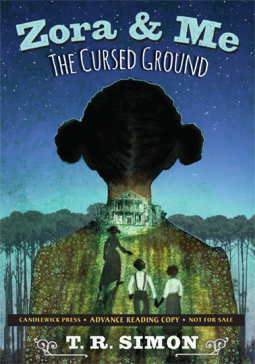
Zora and Carrie have more adventures in Zora and Me: The Cursed Ground

Zora and Me: The Cursed Ground, by T.R. Simon (Sept. 2018, Candlewick), $16.99, ISBN: 9780763643010

Ages 10-14

Is it any more perfect that the latest installment in a series starring a young Zora Neale Hurston is out right before Banned Book Month? Zora Neale Hurston’s brilliant classic, Their Eyes Were Watching God, is both a staple on high school reading lists AND a book that’s landed on Banned and Challenged lists since 1997.

Zora & Me is the story of young Zora Neale Hurston and her best friend, Carrie. The year is 1903, and the two live with their families in Eatonville, Florida, in the first African-American city to be incorporated in the state. Even as a child, Zora is every bit the storyteller, the grand designer of adventures; Carrie likes to play it safer, but always follows Zora into an escapade – or a mystery. In this second novel, author T.R. Simon examines hate, white privilege, and history. It begins when Mr. Polk, their mute neighbor, is attacked and his horses set loose. When the girls go investigate and help Mr. Polk, they discover he can speak – he speaks to Old Lady Bronson, a woman rumored to be a conjure woman. When Mr. Polk breaks his silence, it sets other pieces to a long-unsolved puzzle into motion. The narrative shifts between the events in 1903 and the story of a Lucia, a young woman sold into slavery in 1855. In 1903, Zora and Carrie discover an abandoned plantation mansion on Mr. Polk’s property; at the same time, white men come to Eatonville and demand more of Mr. Polk’s land, claiming a right to it. Tensions rise, and the people of Eatonville prepare to stand up for themselves and their home. As the narratives move back and forth, the puzzle comes together and everything becomes heartbreakingly clear.

Zora & Me: The Cursed Ground is intense and raw, with brutal honesty about slavery and its aftermath. T.R. Smith writes about the roots of racial violence and the “enduring wounds of slavery” that persist to this day. Zora Neale Hurston is an intelligent, headstrong 12-year-old, and Carrie finds her strength and voice. They’re strong protagonists, strong African-American young women, and fully aware of the danger that whites present to them, even if slavery is now something they’re only hearing about: many parents were born into slavery, and freed as very young children. This generation knows that they weren’t “given” their freedom. They weren’t given anything: they will fight for everything that is theirs. Lucia, the third main character in The Cursed Ground, tells a sharp, painful story about family lost and found; about freedom taken; about people who would diminish a whole race’s humanity, and about discovering and defending one’s sense of self. It’s an incredible story. A biography of Zora Neale Hurston and a timeline of her life conclude this story. I hope to read more of Zora’s and Carrie’s adventures. This is definitely on my Newbery shortlist, and I hope it’s on a Coretta Scott King Award shortlist, too. It’s a must-add to historical fiction collections and would make a stellar African-American History Month reading assignment for classes.

Posted in Historical Fiction, Teen, Young Adult/New Adult

YA Alternate History: My Name is Victoria

My Name is Victoria, by Lucy Worsley, (May 2018, Candlewick), $16.99, ISBN: 978-0-7636-8807-3

Ages 12+

Lucy Worsley, British historian Chief Curator at Historic Royal Palaces and Chief Curator at Historic Royal Palaces, creates an alternate history surrounding Queen Victoria’s ascension to the throne that YA fans, Anglophiles, and BritLit fans like me will LOVE.

Eleven-year-old Miss V. Conroy, daughter of Sir John Conroy, wielder of the royal checkbook (aka, the comptroller), is headed to London to serve as a companion to the Princess Victoria. She’s not terribly sorry to leave home – her mother seems to have forgotten about her ages ago, and her domineering father insists that Miss V and her dog, Dash, are exactly what the young Princess needs. Or does Sir John need another set of eyes and ears in Kensington? That’s what seems to be the case, as Miss V discovers once she arrives at Kensington and meets Victoria, who’s an unkempt, rude girl prone to throwing temper tantrums. Sir John expects Miss V to keep him apprised of everything the young princess says and does, desperate to keep his oppressive hold on Victoria and her mother – a structure known as “The Kensington System” – and eventually, wield the power behind the throne. As Victoria and Miss V develop a close friendship, Miss V begins questioning her father and The System.

Originally published in the UK My Name is Victoria is a book that historical fiction fans will addictively read from start to finish. Miss V goes through major character growth, from a young girl in awe of her powerful father, to a jaded young woman who has seen and learned too much about the world, and her family’s place in it. Queen Victoria is a strong supporting character; at times needy and unpredictable, other times, aware and angry, striking out at the repressive Kensington System and John Conroy’s manipulation. There are complicated relationships, British politics, a little bit of intrigue, and a blend of fact and fiction to please. My Name is Victoria has a starred review from Kirkus. British history fans should check out Lucy Worsley’s webpage, and learn more about the real-life Victoria and the Kensington System at the BBC’s page. U.S. Publisher Candlewick Press has a chapter excerpt available.

Posted in Fiction, Historical Fiction, Middle Grade, Realistic Fiction, Tween Reads

My Year in the Middle: Relevant then, relevant now

My Year in the Middle, by Lila Quintero Weaver, (July 2018, Candlewick), $15.99, ISBN: 9780763692315

Ages 8-11

Sixth-grader Lu Olivera and her Latin American family find themselves in the middle of a civil rights struggle in their Red Grove, Alabama neighborhood one hot summer in 1970. The tensions run high in her integrated school: black kids sit on one side of the room, white kids on the other; she sits in the middle row. She’s in the the middle child, smack dab between her older, activist sister and younger twin siblings; she’s in the middle when it comes to local politics: many of the white families want to re-elect segregationist governor George Wallace, while Lu and her family support incumbent Albert Brewer. Many of her classmates are leaving their school to go to a private, white school. When Lu befriends fellow track runner Belinda Gresham, an African-American girl, and her classmates turn on her, she decides it’s time to take a stand.

Inspired by the author’s Alabama childhood, My Year in the Middle is a story of civil rights and finding one’s voice. Lu puts up with the passive racism in her community, with remarks like, “she’s from South America, she doesn’t mind going to school with Negroes”. But seeing how her African-American friends are treated by her fellow classmates, and by the general public in her town, pushes her buttons. Lu is a character who stands out: she’s a character of color stuck in the middle of the Civil Rights Movement, but because she’s not African-American, she’s tolerated: until she digs in her heels and says, “No more”. She gives and receives support from her black classmates and from Sam, her classmate and crush, a white preacher’s son who is bullied for his civil rights stance.

Lu is at once relatable and a mirror for our society today. We’re still divided, and more and more people are forced from the middle to take a stand. Readers may recognize recent political speeches and attitudes in George Wallace’s condescending stumping and the racial tension that permeates Lu’s classroom. My Year in the Middle is a solid work of historical fiction that provides excellent discussion topics for readers on civil rights, social justice, and where we’ve gone versus where we are.

Posted in Fiction, Historical Fiction, Middle Grade, Tween Reads

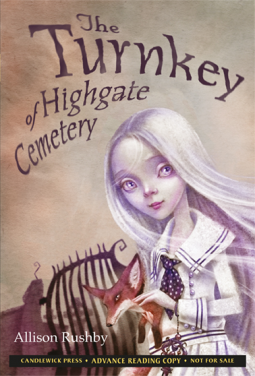
The Turnkey of Highgate Cemetery is keeping watch

The Turnkey of Highgate Cemetery, by Allison Rushby, (July 2018, Candlewick Press), $15.99, ISBN: 9780763696856

Recommended for readers 9-12

Flossie Birdwhistle is a ghost, but that’s beside the point. She’s got a very important job as Turnkey at London’s Highgate Cemetery; making sure her fellow souls are at rest and cared for. She’s a young ghost – she’s only 11- and while some may have something to say about that, she’s good at her job. Right now, her big concern is World War II, currently raging over Britain, and disturbing her dead neighbors. Flossie encounters the ghost of a German soldier up to no good, so she starts investigating, and learns that he’s somehow managed to bridge the gap between the worlds of the dead and the living. She has got to stop him before he – and the enemy army – can destroy Britain!

This is thoroughly enjoyable historical fiction with a nice dose of the supernatural. Flossie has a nicely sketched out backstory, and we learn just enough about her fellow ghosts and familiars to keep us satisfied and turning pages. I like how author Allison Rushby incorporated Hitler’s well-documented fascination with the supernatural into the story, making this a “what if” type of alternate history novel for younger readers, and I like Flossie’s determination and ability to think while under (often literal) fire. Mystery and ghost story fans will enjoy meeting Flossie and friends. Want to give readers a fun website? Let them visit the actual Highgate Cemetery’s webpage, where they can find war graves (including soldiers from WWII), take a virtual tour of the cemetery, and visit a few luminaries.