Posted in Preschool Reads, Toddler Reads

Book Review: If You’re a Monster and You Know It, by Rebecca & Ed Emberley (Orchard Books, 2010)

If-You-re-a-Monster-and-You-Know-It-9780545218290Recommended for ages 2-5

The classic song “If You’re Happy and You Know It” gets a monster makeover from Rebecca Emberley and her father, Caldecott Award winner Ed Emberley.

Caregivers have taught toddlers and preschoolers that song, “If You’re Happy and You Know It”, for years. Rebecca and Ed Emberley put a fun, new spin on a familiar song by incorporating monsters, with all of the snorts, growls, wiggles and roars that go with them. Most children will be familiar with the tune, so slotting in new, fun, silly words and actions will be easy and exciting. The neon-bright, digitally created monsters pop off the black page backgrounds, appearing to almost pop off the page. The story font is a bright green for easy reading, but small and almost comic-like in appearance. The action words – stomp, snort, growl, wiggle, roar – are large, brightly colored, and appear to be digitally rendered along with the rest of the artwork, providing an easy prompt for children to take action.


This would be a great interactive read-aloud for toddlers and preschoolers alike, especially for a fun Halloween storytime. There could be a mask-making workshop before the storytime, where participants can color in blank printouts and create their own monsters that will stomp and roar and twitch their tails during the reading. Ed Emberley’s website offers printable mask activities and other October activities that would work with a Halloween read-aloud. There are many fingerplays and songs to be sung during a Halloween storytime; plus, the book comes with a link to a free, downloadable version of the song from the Scholastic website that can be played for a full-on monster dance party.

The authors have further resources on their websites (http://www.rebeccaemberley.com/, http://www.edemberley.com/pages/main.aspx) for more printable, downloadable activities.

The book has received several accolades, including nomination for the Grand Canyon Reader Award and the Building Block Picture Book Award, and designation as an IRA Children’s Choice.

Posted in Preschool Reads, Toddler Reads

Book Review: In the Small, Small Pond by Denise Fleming (Henry Holt & Company, 1993)

In-the-Small-Small-Pond-9780805059830Recommended for ages 2-4

Denise Fleming’s In the Small, Small Pond gives readers get a glimpse of life among the animals living in a small pond as the seasons change. A child – who could be either a boy or a girl – watches life in a small pond change throughout the seasons. Beginning in the spring, tadpoles wiggle and jiggle and baby geese waddle and wade; as the seasons progress, we see turtles doze, minnows scatter, muskrats stack, and finally, a frog – a presence throughout the book – burrow under the mud as winter sets in, waiting for spring.

The artwork uses color to take readers through the seasons: the bright greens and yellows of spring, the blue and green laziness of a hot summer day, the brown and yellow of fall setting in,  and the cool blues and whites of the winter. Ms. Fleming gives life to her story by using collages created by poured cotton pulp through hand-cut stencils onto handmade paper, giving her illustrations a beautiful, handmade feel that will attract the attention of children and adult audiences. The rhythm of the rhyming text will appeal to young readers. The text is bold and black, with few words to a page; more often than not, the text blends with the background, but this is a book meant to be read-aloud; this will not be a distraction to participants. This is a companion book to the author’s In The Tall, Tall Grass, which uses the same type of artwork and storytelling.

In the Small, Small Pond received Caldecott Honors in 1994 and a Child Study Children’s Book Committee award in 1995.

The book would be a great addition to a read-aloud on seasons or it can be part of a read-aloud on pond life: frogs, birds, fish, or turtles, for instance. There are many ideas on seasonal read-alouds and read-alouds related to pond animals on the Web that can be used for free. The author’s website offers a printable “finish the picture” coloring page where children can create their own pond scene, and there is also a match-up game for older audiences where the children match the animal with the verb (i.e., geese waddle, turtles doze).

Posted in Preschool Reads, Toddler Reads

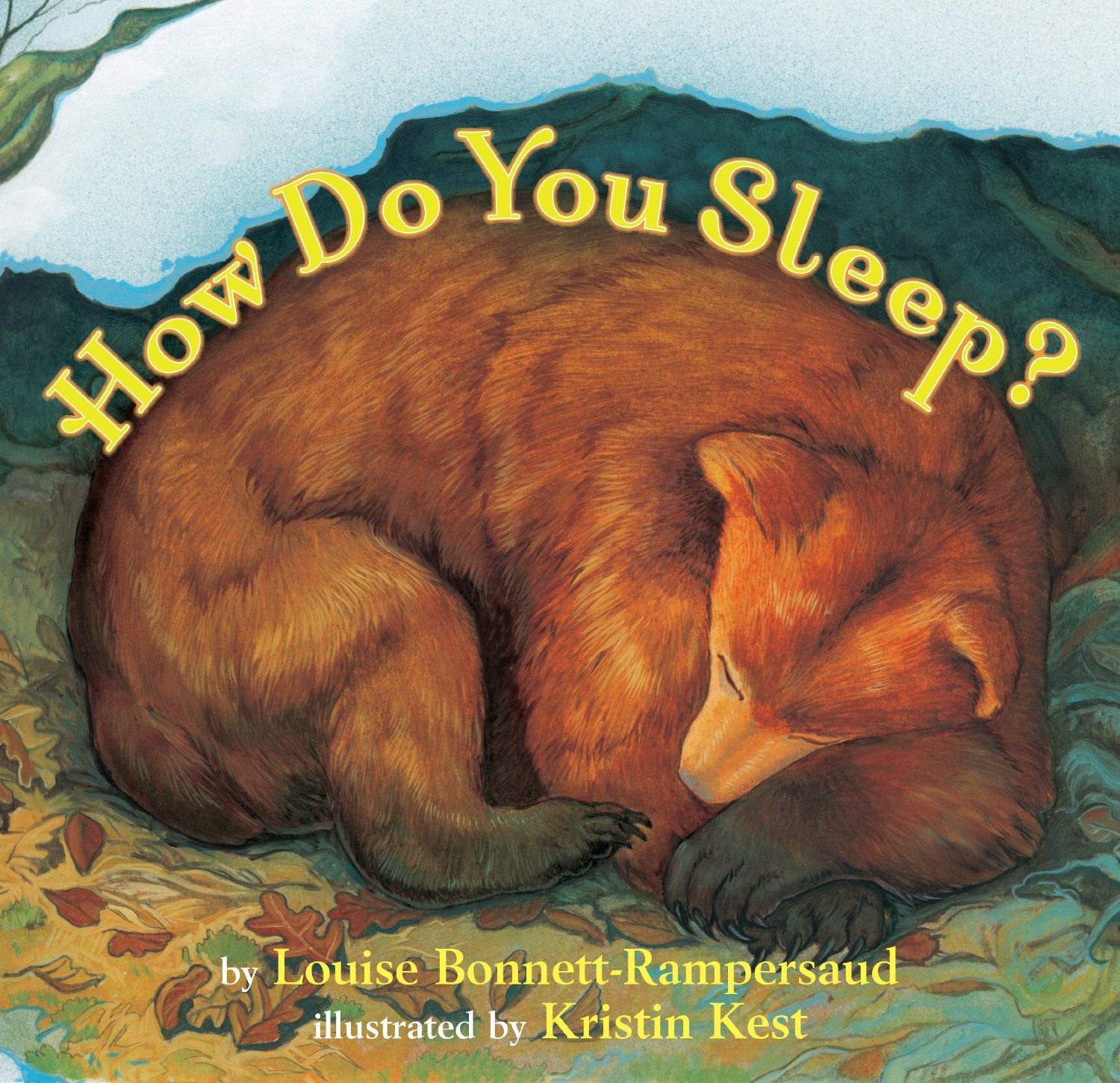
Book Review: How Do You Sleep, by Louise Bonnet-Rampersaud (Marshall Cavendish Children, 2005)

how do you sleepRecommended for ages 2-4

Different animals answer the question of how they sleep in rhyme. Children conclude the story by describing how they sleep.

This is a rhyming story about how different creatures sleep, ranging from birds to frogs to human children. The pace is soothing and repetitive: one spread asks the question, “How do you sleep?” and a different animal answers on the next. The realistic pictures of animals (and children) are rendered in oil paintings, and makes for a read-aloud that will keep viewers and listeners interested with the large and small details: the flowers on the branches where a bird sits; the mouse sitting on a bell hook in the pig sty; the cozy bed the children sit in, listening to their father read them a bedtime story. The font is a larger version of a standard one, similar to Times Roman, but it does not need to capture the reader here – the story is in the pictures.  There is a board book version of this available for younger audiences.

This is a great story to build on for a bedtime read-aloud. Encourage audiences to wear their favorite pajamas and bring a beloved toy. There are bedtime songs like Twinkle Twinkle Little Star and Star Light, Star Bright that would work well here.

The author does not appear to have her own website, but her publisher offers a link to her other book and offers the chance to sign up for updates.

Posted in Preschool Reads, Toddler Reads

Book Review: Is Everyone Ready for Fun? by Jan Thomas (Beach Lane Books, 2011)

is everyone ready for funRecommended for ages 2-5

A group of rowdy cows want to have fun on a chicken’s sofa. The chicken does not share their enthusiasm.

The repetitive story follows three cows who want to have fun – jumping, dancing, wiggling fun – on Chicken’s sofa. Chicken is not at all happy about this. Reminiscent of another Jan Thomas’ story, “What Will Fat Cat Sit On?”, the cartoon illustrations use exaggerated expressions for the cows and the Chicken. The colors are bright but not overwhelming; the page backgrounds are either bright blue, green, or lime green, and the characters are boldly outlined in black. The story begins and ends with the endpapers, and Thomas uses the margins to denote offscreen action, most notably when the Chicken’s head appears to look in on the madness. Communicated in speech bubbles, the text allows young readers and listeners to imagine different voices for each of the speakers – and allows the storytime reader to affect different voices during the reading.

The book allows for a great deal of interactivity and falls into a comfortable pattern that younger readers and listeners can catch on to right away. The title phrase – “Is everyone ready for fun?” begins the series, followed by the Chicken’s protest, the cows’ latest attack on the sofa, and the Chicken’s growing aggravation. Storytime participants can get up and jump, dance, and wiggle along.

The author’s website offers links to other books and printable activities, several of which include recognizable characters from Is Everyone Ready for Fun? The activities can enhance a storytime, as can farm animal-related songs and fingerplays.

Posted in Toddler Reads

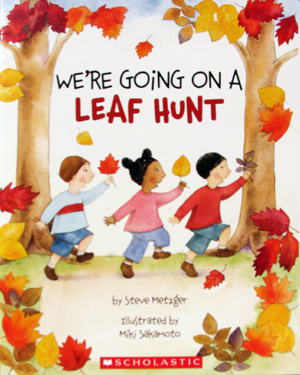
Book Review: We’re Going on a Leaf Hunt, by Steve Metzger/illus. by Miki Sakamoto (Scholastic, 2008)

leaf huntRecommended for ages 2-5

A group of friends goes on a leaf hunt, which leads them on adventures over a mountain, through a forest, around a waterfall, and across a lake.

I have a special place in my heart for this book; it was one of my son’s favorite books, because of its repetitive interactivity. The story follows a group of friends on a leaf hunt. They state their beginning intention – “We’re going on a leaf hunt. We’re going right away. Let’s find colorful leaves. It’s a wonderful day!”. The group’s arrival at each point – a mountain, a forest, a waterfall, and a lake – comes is accompanied by a repetitive phrase (“climb, climb, huff puff. We made it!”). They collect leaves from a different tree at each spot, and when they return, they revisit these areas, arriving home ready to jump and play. It makes for a fun read-aloud, where children can echo the repeated phrase and act out the group’s actions (climbing a mountain, crossing a lake).

The artwork appears to be watercolor, with lively reds, browns and yellows to create a beautiful fall day. The story font is mostly brown and bold, but words with emphasis receive a different treatment: the world “colorful” is spelled out with different fall colors; the names of the trees are bright orange, and water-related words are blue.

There are many websites available that offer printouts of different leaves that children can color for a fun, seasonal craft. There are also many seasonal and Fall-related songs and fingerplays.

The author’s website offers links to all of his books, with printables related to some of his books.

Posted in Toddler Reads

Book Review: Chicka Chicka Boom Boom, by Bill Martin Jr. & John Archambault, illus. by Lois Ehlert (Simon & Schuster, 1989)

Chicka_Chicka_Boom_BoomRecommended for ages 0-5

This award-winning classic sees the lowercase letters of the alphabet racing up a coconut tree, with a consequence that preschoolers can relate to. Upper-case parents and guardians come to the rescue.

The story is an enduring classic, told in a rhyme that children will be able to pick up and repeat in no time. They can repeat the phrase, “Chicka chicka boom, boom, will there be enough room?” throughout a reading, and will enjoy the story’s rhythm as it proceeds, sympathizing with the lower case letters when they tumble to the ground and are comforted by their upper-case parents, aunts, and uncles. It is a playground collision put to paper!

Lois Ehlert’s bright and eye-catching illustrations use hot pink and orange polka-dotted borders to decorate each page; the coconut tree is a bright green and brown, and the letters are brightly colored, set against a stark white background so that they truly pop from the page. The letters slant to and fro as they climb the tree, giving the impression of movement. The plain black font employs the use of bolding for emphasis; this is a book meant to be read out loud.  Ehlert’s trademark collage artwork is here, with layered coconuts on trees, alternating shades of green on the tree’s leaves, and the layering of the letters on one another as they climb and fall. The endpapers offer a brightly colored alphabet, with upper- and lower-case letters situated together.

The Alphabet Song is a good companion song to a reading, and, space permitting, a round of “Pin the letter on the Coconut Tree” is a fun activity. The Crafting Chicks website suggests an interesting coconut tree craft using toilet paper rolls that children can stick pre-printed letters to.

There is a Chicka Chicka Boom Boom board book, but the story ends when the coconut tree falls to the ground. Toddlers may enjoy the abbreviated story, but you really need the book to enjoy the full story.

Chicka Chicka Boom Boom has received numerous accoldates, including designation as an ALA Notable Children’s Book and a Boston Globe/Horn Book Award Honor Book. Chicka Chicka 1, 2, 3 teaches readers to count.


Posted in Toddler Reads

Book Review: Who Hops, by Katie Davis (Harcourt, 2001)

who hopsRecommended for ages 0-4

Who Hops takes a funny look at animals who hop, swim, fly or crawl – and which animals do not.  Asking the opening question, “Who hops?”, the book teaches children about the animal world. We learn that frogs hop, as do rabbits, kangaroos and cows – wait, cows? Even the cow appears distressed! The author quickly corrects herself, noting that “Cows moo and give milk, but they don’t hop!”

The questions continue, asking who flies, who slithers, who swims and who crawls, with similar groupings of animals that do and one animal that doesn’t, with hilarious responses. The exaggerated facial expressions on the odd animals out are laugh-out-loud funny, and the day-glo artwork, outlined in bold black outlines, assures that all readers will be able to see and enjoy the book. The artwork is simple – line drawings, filled in with fluorescent colors – and the text is in bold, black font.

The book is a good companion to Jan Thomas’ What Will Fat Cat Sit On? and can be read as part of a silly animal read-aloud. Readers can participate by calling out when the story reaches the animal that doesn’t hop, fly, slither, swim or crawl. The author’s website features a printable matching game, where readers can match the animal to his activity. There are also songs and fingerplays about animals and how they move that would make for a fun read-aloud.

The book has received the Oppenheim Toy Portfolio Platinum Award, National Parenting Publications Honors, and designation as a Book Sense 76 Pick.


Posted in Toddler Reads

Book Review: Not a Box, by Antoinette Portis (HarperCollins, 2006)

not a boxRecommended for ages 2-5

A young bunny uses his imagination to make an ordinary cardboard box into a spaceship, a mountain, a robot, and more.

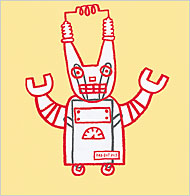
Not a Box illustrates the importance of childhood imagination. The rabbit insists that his toy is “not a box” in answer to the repeated question stated in the title. Using bold, black line drawings on white backgrounds, each page presents readers with the inner working of the rabbit’s imagination; what he imagines his toy is rather than what it isn’t: a race car; a burning building that his fireman can put out; a robot; a mountain. The questions are featured in bright white text against a brown background – the color of a cardboard box. Even the cover and endpapers have the color and texture of a cardboard box. The simple art and design of the book add to the importance of imagination contained within.

This book provides the opportunity for an imagination read-aloud, where children can participate by repeating, “It’s not a box!” in answer to the questions asked on each spread. A printable activity at TeacherVision encourages children to illustrate their vision of “not a box”, and offers coloring sheets and instructions on making their own “not a box”. An episode of Spongebob Squarepants features Spongebob and Patrick the Starfish play with a box, using their imaginations; this would be fun companion viewing to the reading.  For those lapsit readers who may not grasp the concept of the box being 3-dimensional, incorporating a cardboard box into storytime can further spark the imagination and get them thinking about what the box can be.

The book has received designation as an ALA Notable Children’s Books (2007), and received Theodore Seuss Geisel Honors (2007).

The author’s website offers information about the author and her books. She continues the story in Not a Stick.


notabox robot


Posted in Toddler Reads, Uncategorized

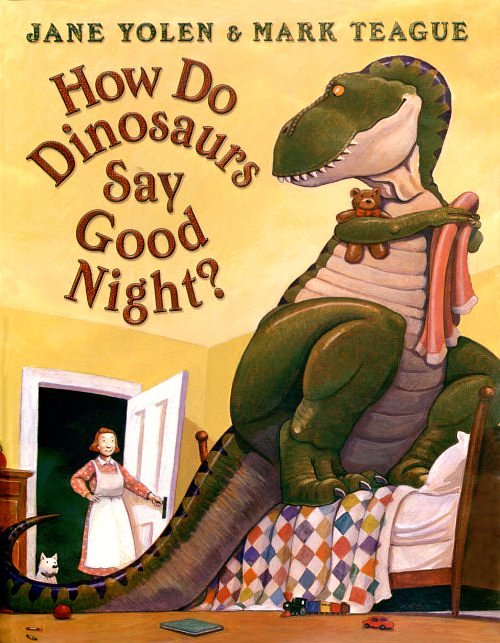
Book Review: How Do Dinosaurs Say Good Night? by Jane Yolen/Illus. Mark Teague (Blue Sky Press, 2000)

how-do-dinosaurs-say-goodnightRecommended for ages 2-5

Do dinosaurs really act up when it’s bedtime? A host of dinosaurs, acting much like preschoolers, react to bedtime and show readers how a dinosaur should say good night.

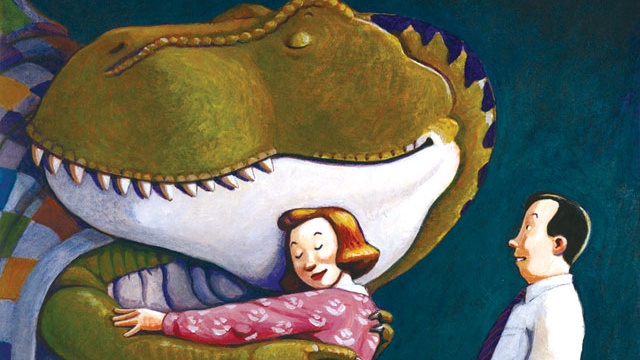
Dinosaurs are a popular topic among young audiences, and these dinosaurs, loaded with personality, will connect with young readers. Young audiences will see themselves reflected in the dinosaurs and how they approach bedtime. The earthy, colorful paintings offer varying perspectives – some dinosaurs are viewed from up high, some tower over everything around them – and multicultural families will appeal to all families. Dinosaur names are cleverly offered in each room, providing the chance for a fun name hunt. The endpapers illustrate all the dinosaurs found in the story, along with their names.

This is a great story for either a dinosaur-related read-aloud or a bedtime tale, where children and parents/guardians can talk about how they good night in their homes. There are numerous bedtime songs and fingerplays to use in conjunction with the book, and Massachusetts Honor Books offers a fun activity where children can write down “good night” in different languages, posting them on a map of the world.

The book has received numerous accolades, including the ALA Notable Children’s Books: 2001, Colorado: Children’s Book Award Nominees: 2002, Helbie Award: 2001, Maryland: Children’s Book Award Honors: 2003, Missouri: Building Block Picture Book Award Nominees: 2001, Nevada: Young Readers’ Award Nominees: 2003, Tennessee: Volunteer State Book Award Nominees: 2003, Texas: and the 2×2 Reading List: 2001.

The author’s website offers information about her other books, book trailers, and resources for teachers and storytellers. The How Do Dinosaurs series includes How Do Dinosaurs Eat Their Food?, How Do Dinosaurs Go To School?, and How Do Dinosaurs Play With Their Friends?


timthumb

Posted in Toddler Reads

Book Review: My Colores/Mis Colores, by Rebecca Emberley (Little, Brown, 2000)

mis coloresRecommended for ages 0-4

My Colores/Mis Colores is a bilingual board book that teaches readers basic colors and vocabulary words in English and Spanish. Each set of pages follows a formula: the left-hand page names a color in both English and Spanish, with the entire page bathed in that color; the right-hand page offers a cut-paper image in that color, set off against a white background and described in English and Spanish. The author utilizes a cut-paper technique that adds depth and interest to the objects, and the white backgrounds make them pop off the page. The colors and objects featured side by side provide a visual link for children – the sun is yellow; frogs are green; apples are red. Fonts describing colors are large and bold in a Times Roman-type font; object descriptions are smaller, in the same font type.

Encourage older toddlers and young preschoolers to pronounce the words during a read-aloud. There are also bilingual printables on many learning websites that children can color. The author’s website offers more information on her books and artwork.