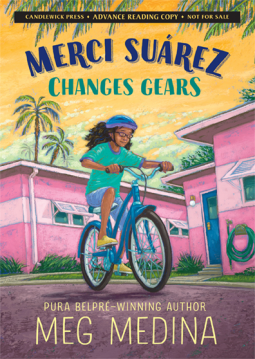
Merci Suárez Changes Gears, by Meg Medina (Sept. 2018, Candlewick), $16.99, ISBN: 9780763690496
Ages 8-12
Sixth grade Cuban-American Mercedes “Merci” Suárez lives in South Florida with her family in Las Casitas: three houses, side by side, where Merci lives with her brother, Roli, and their parents; her Abuela and Lolo; and her Tía Inéz and her crazy twin 5-year olds, Axel and Tomás. She and Roli also attend an exclusive private school, Seaward Pines. In order to help pay their tuition, Merci has to take part in Sunshine Buddies, a community service program that matches her with a new student from Minnesota, Michael Clark. Merci has a pretty full plate with Sunshine Buddies, practicing for the soccer tryouts at school, and tolerating the school’s resident mean girl, Edna Santos, but things get even more complicated when her grandfather, Lolo, starts acting differently. He forgets his glasses in the refrigerator; he falls off his bike, and he tries to pick up the wrong twins at school one day. Merci finds herself with mounting family responsibilities and pushes back against the frustration of school and home life, but she and her family will work together, like they always do, to get through life’s challenges.
Meg Medina creates the most memorable, likable characters, from Piddy Sanchez (Yaqui Delgado Wants to Kick Your Ass) to Mía and Abuela (Mango, Abuela and Me). She creates an atmosphere that immediately feels comfortable and tactile; reading her books feels like home for me. The peppered Spanglish throughout the narrative; the mouth-watering descriptions of food, the chaotic, crazy family life all fit like a comfortable sofa that I sink into to read my books. She creates strong Latinx girls and women who run businesses and raise families, who have straight talk with their families and friends, even when those conversations are painful, and they know the strength that family provides. Every character in Merci’s story feels real because these characters are real: they’re the kids next to you in school, or who live down the block. Meg Medina uses humor and authentic voices to create a story about a tween girl who has insecurities, worries, and frustrations; she’s also funny, smart, and creative, with a whip-smart wit. Merci Suárez Changes Gears is a story about growing up and about how much it hurts to see your grandparents aging. Put this in every kid’s hand, because it’s that good. This one’s on my Newbery 2018 short list.
Merci Suárez Changes Gears has starred reviews from Kirkus, Horn Book, and Booklist. Meg Medina has an author site where you can learn more about her books and read her blog, and make sure to check out the Girls of Summer website; a project co-designed by Meg Medina and author Gigi Amateau. Girls of Summer reviews 18 titles for strong girls (picture book, middle grade and YA) every year, in early June; there are also giveaways and weekly Q & As with selected authors. The blog is active from June until Labor Day every year, but you can still check out the content (from 2011-present) no matter what time of the year!
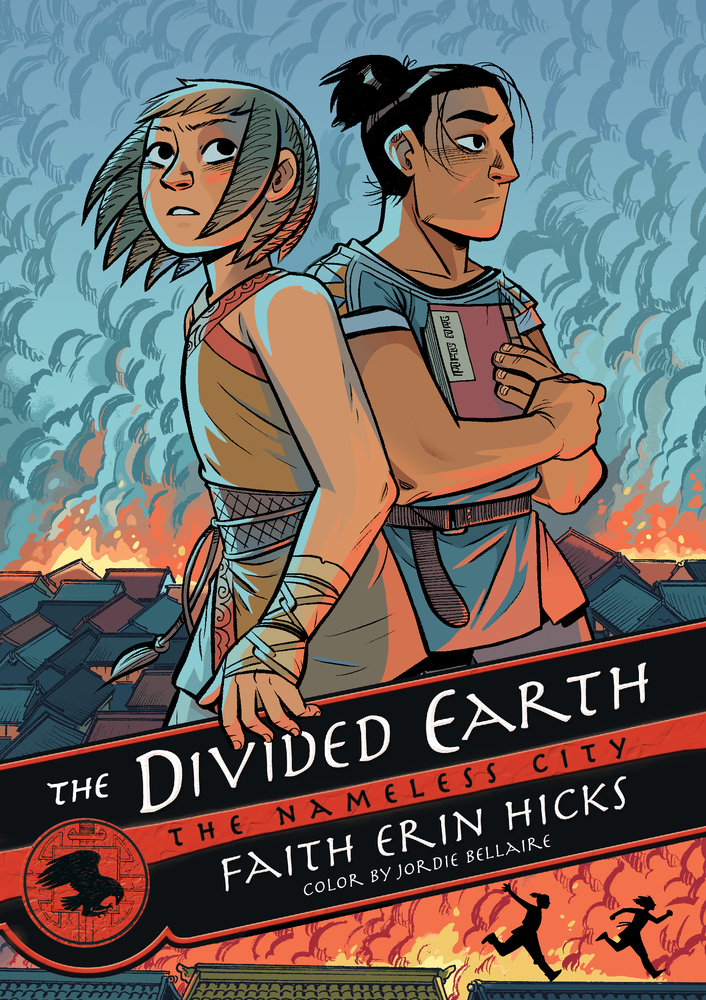
The Nameless City: The Divided Earth (The Nameless City #3), by Faith Erin Hicks (Sept. 2018, First Second), $14.99, ISBN: 9781626721609
Ages 8-13
Faith Erin Hicks’ epic graphic novel trilogy, The Nameless City, comes to a phenomenal close with The Divided Earth. Dao prince Erzi now has control of The Nameless City, but the city is under siege by Dao and Yisun forces who want the war for the Nameless City to come to an end. The Named – the people of the city – are caught in between. Rat and Kaidu (Kai), the two main characters, plan to sneak into Erzi’s palace and steal back the ancient text containing the formula for napatha, an ancient weapon that Erzi plans to unleash on the city.
The Nameless City saga has incredible worldbuilding and storytelling. Faith Erin Hicks has given readers strong characters with complex backgrounds and relationships, and a grand-scale story about a clash between cultures and societies who are tired of war. Rat and Kai have both had their heroes’ journeys and are smarter, stronger, wiser characters than they were at the outset. It’s been said that the best villains are the ones who believe they’re truly the heroes, and that certainly holds true for Erzi, who believes he is doing what’s best for The Nameless City, and who believes that rule of the Named is his birthright, having been born there. It certainly makes for a more tragic villain. Faith Erin Hicks is gifted at writing and rendering emotion, and colorist Jordie Bellaire makes thoughtful choices that bring out the terrible emotional cost of battle as beautifully as she does the gentle moments of love between parent and child, or between two friends who would die for one another.
If you have fantasy readers who haven’t yet discovered The Nameless City, please get the books into their hands. They’ll be happy you took the time to booktalk it.I hope I see this series on Summer Reading lists next year: it’s wonderfully diverse and examines the fallout that happens when one culture attempts to dominate all others.
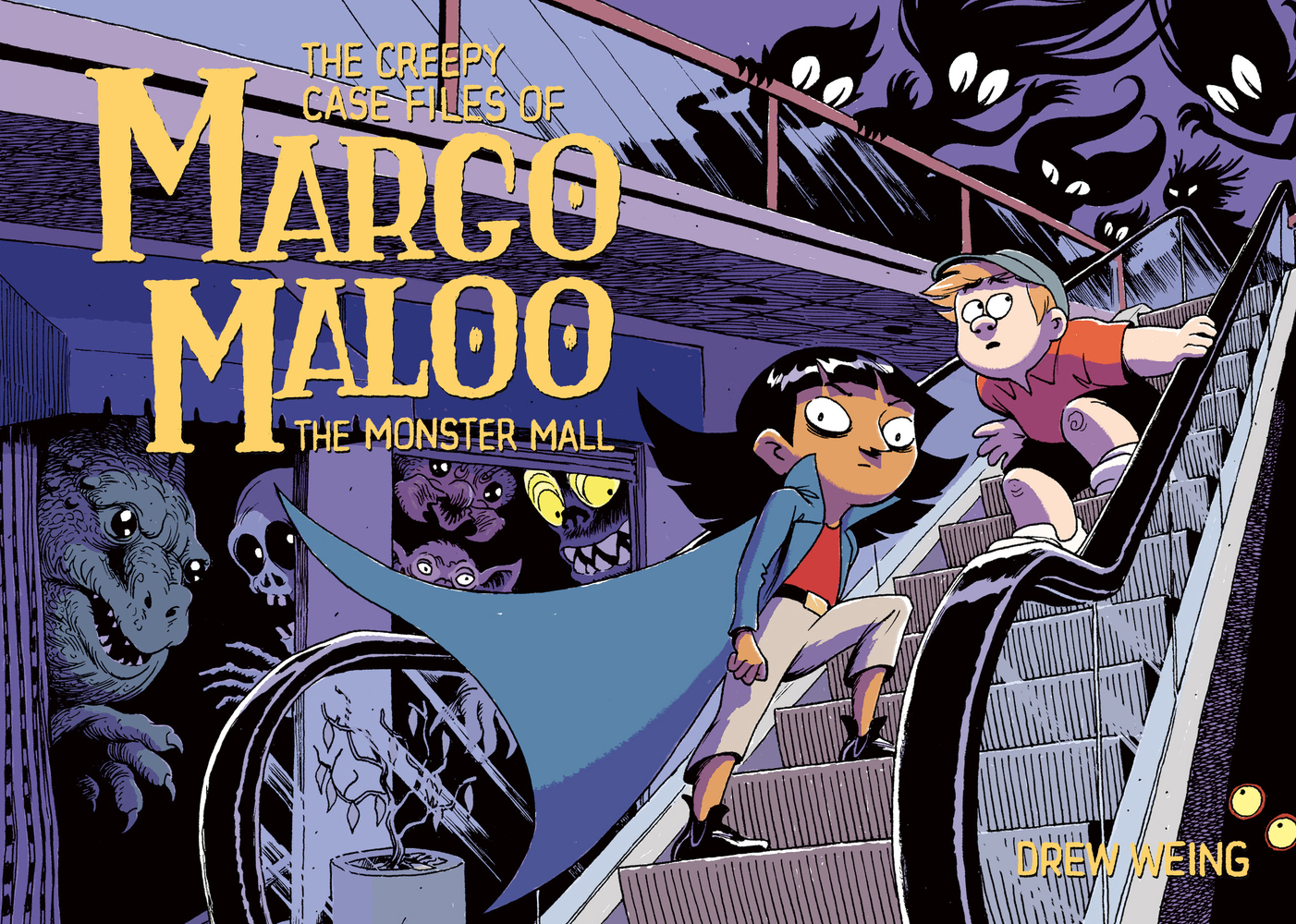
The Creepy Case Files of Margo Maloo: The Monster Mall, by Drew Weing, (Sept. 2018, First Second), $15.99, ISBN: 9781626724921
Ages 8+
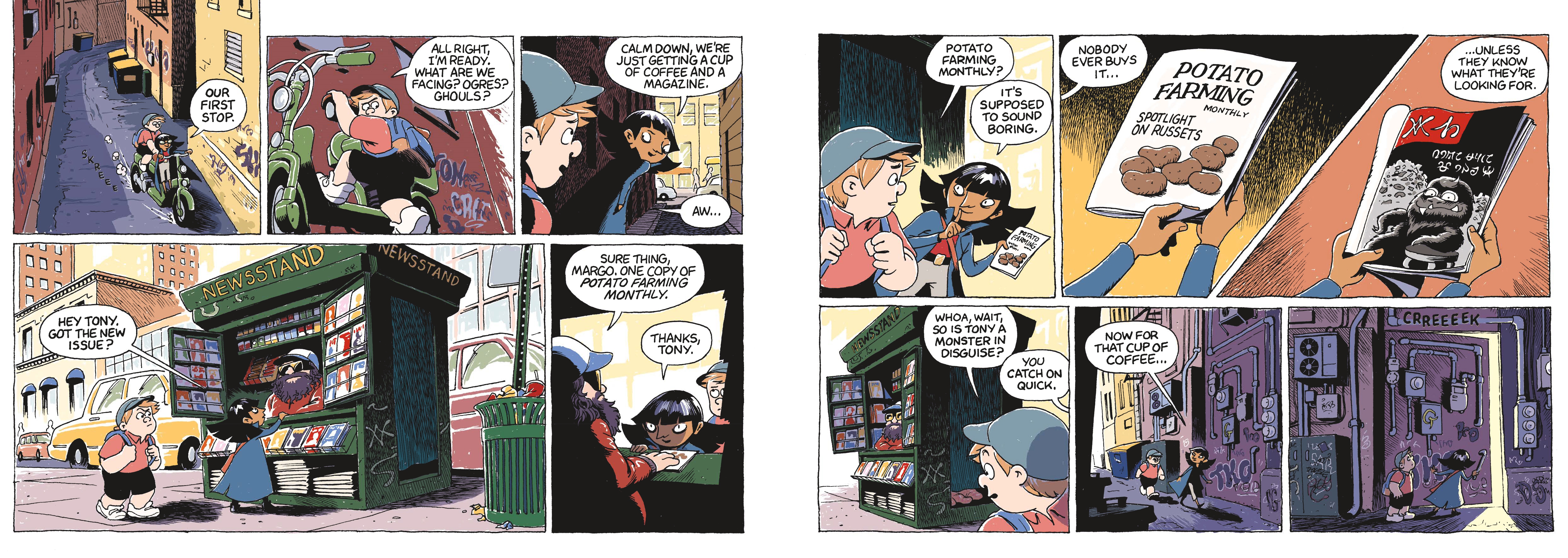
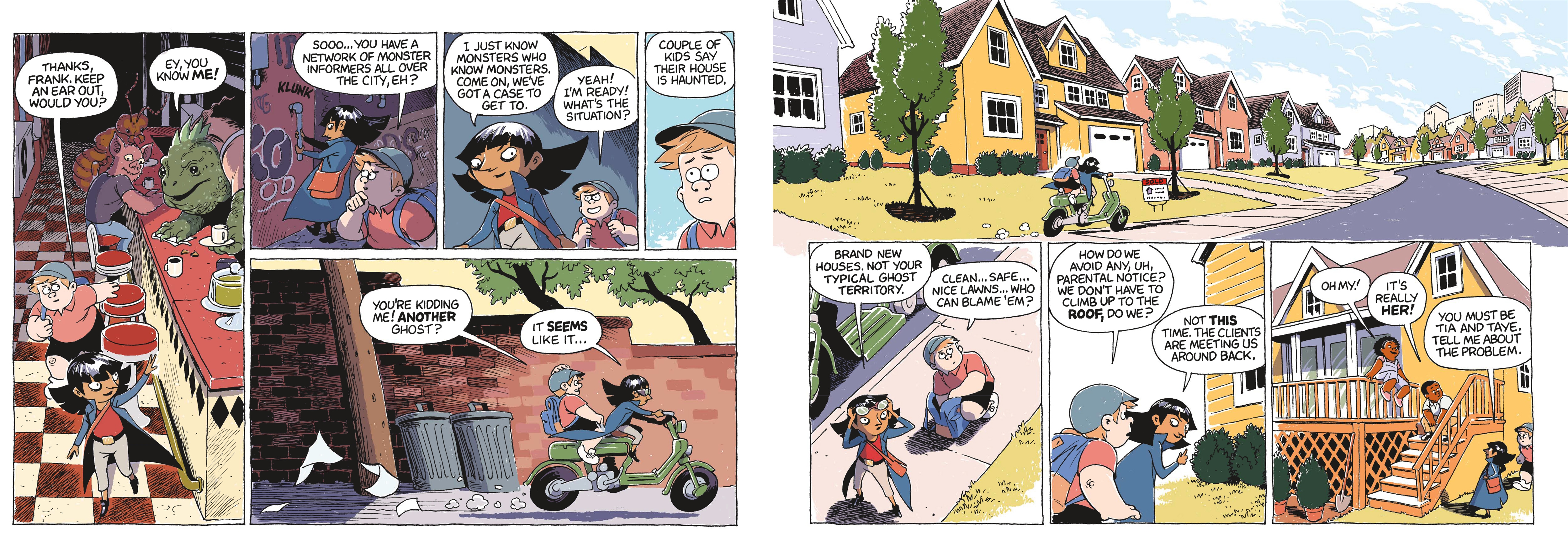
The intrepid duo of Margo Maloo and Charles Thompson is back in their second adventure! Margo Maloo is on a new case, and she needs Charles and his journalistic talents to help. The situation in Echo City is getting tougher on monsters. Humans are encroaching on their environment, and the Monster Code states that NO monster can let themself be seen by a human. Thank goodness, kids don’t count, but teenagers do, and there’s a group of teens hanging out at an abandoned mall. Some monsters are sick of hiding, and want to fight. Other monsters just want to be left alone. Tensions are running high, and it’s up to Margo and Charles to help keep the monster community in status quo!
The Monster Mall is a great follow-up to 2016’s The Creepy Case Files of Margo Maloo. The dynamic between Margo and Charles is fun and light, with smart dialogue and loads of humor. Margo has some wise insights, like one of my favorite lines, “…the older people get, the less they can be trusted”; Charles believes that kids and monsters can learn to trust one another. After all, Marcus and Kevin, Charles’ monster buddy in the basement and his friend, play Battlebeenz together, right? An epilogue teases the future of human-monster relations, and I can’t wait for the next installment. Cartoony monster art, witty dialogue and a diverse cast of characters that bring up some smart questions about diversity make this a book you want in your graphic novel collections.
Begone the Raggedy Witches (Wild Magic #1), by Celine Kiernan, (Sept. 2018, Candlewick), $15.99, ISBN: 9780763699963
Ages 9+
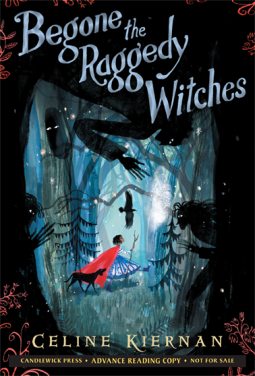
Mup is a biracial girl living in Ireland with her family. On the night her Aunty dies, though, things change. The raggedy witches come for her mother; they’ve come to bring her back to their world, the Glittering Land, where an awful queen reigns: and who just happens to be Mup’s grandmother. When Mup’s mother holds them off the first time, the witches take more drastic measures, kidnapping Mup’s father. Mup, her mother, baby brother, and dog set off to the Glittering Land to save Dad, but will her Mam want to come back again, if she gets a taste for power – or survives her own mother?
Fantasy readers are going to be drawn right into Celine Kiernan’s mystical, magical tale. There are talking animals, shapeshifting kids, golden forests, and an evil queen to be reckoned with. Celine Kiernan creates a magical world beyond our imaginations, bringing to mind Narnia and Wonderland. The enchanted worldbuilding will keep your fantasy readers thrilled, and Mup’s heroine’s quest is thoughtful and intriguing. This is the first of a planned trilogy, so get your readers hooked now.
Begone the Raggedy Witches has a starred review from Kirkus.
NatGeo Kids rolled out a new series of books. The Absolute Expert series helps kids become experts on a favorite, high-interest topic: current topics are Dolphins, Dinosaurs, Volcanoes, and Soccer. Experts in the field act as guides, leading readers through the info-packed books. Stunning photos, facts, and activities make each volume a great reference for science and STEM collections, and great desk references for kids who just can’t get enough of their favorite topics.
Absolute Expert: Volcanoes, by Lela Nargi and Arianna Soldati, (Aug. 2018, National Geographic Kids), $14.99, ISBN: 9781426331428
Ages 8-12
Volcanologist Arianna Soldati guides readers through a solid volume on volcanoes. Kids learn about ocean volcanoes, volcanoes in space, and deadliest eruptions (psst… Vesuvius isn’t #1!) The book explains plate tectonics and features a world map noting explosive volcanoes, and gives readers a heads-up on staying safe during a volcanic eruption, including an evacuation plan strategy exercise. Four “Get in the Flow!” sections provide activities that will take kids deeper; from building and cataloging a rock collection to creating a volcanic (soda) eruption of one’s own. Resources for further reading and an index finish up this book.
I buy all the volcano/natural disaster books I can get my hands on, because the schools here do a science unit on natural disasters, and the kids raid our libraries, usually heading for the volcano books first. I remember my first year as a librarian, hosting a class trip, and having the teacher ask me where those books were. I pointed out the shelf, and the kids swarmed me. TWO SHELVES. EMPTY. Since then, I don’t play games with my natural disaster books, and neither should you.
The writing is geared for middle grade to early middle school, with scientific terms that may send kids to the dictionaries (and good for that!) for new terms, while photos and illustrations provide a look at volcanoes in various stages of being, from quiet to very, very active. If seeing lightning hit a volcano spewing lava doesn’t inspire an awesome respect for nature, I don’t know what will.
Absolute Expert: Dinosaurs, by Steve Brusatte and Lela Nargi, (Aug. 2018, National Geographic Kids), $14.99, ISBN: 9781426331404
Ages 8-12
Paleontologist Steve Brusatte combines forces with author Lela Nargi to make dino EXPERTS out of readers. My favorite section? The little callout box that tries to unravel the mystery of T-Rex’s itty bitty arms. Turns out, they were incredibly strong, and have to have served some purpose, but what? We still don’t know, but there will be countless memes to entertain us until we do. There are details on some of the biggest and smallest dinosaurs; a dinosaur family tree that shows how dinosaurs evolved as history marched on, and a nice section dedicated to feathered dinosaurs, including the evolution of dinosaur feathers, with a picture of a fossilized archaeopteryx feather! Photos of fossils and dino digs make this a perfect volume for budding archaeologists, and beautiful illustrations help readers put faces to those bones they see in the museums. (Jurassic Park does a pretty good job of that, too, but the dinos are usually trying to eat people; this is much less threatening.) A world map spread points out where dino evidence has been found, worldwide, and four “Dig In” sections teach kids about dino tracking, offer quizzes, and invite kids to make their own dinosaur teeth and paleontologist field kits.
Do I even need to say this book is a given in your collections? It’s NatGeo, and it’s dinosaurs. Put this NatGeo dino page on your reference resources list of links: there are videos, activities, and games, and there’s a YouTube video playlist of nothing but dinosaurs! That is a program all by itself!
Absolute Expert: Dolphins, by Jennifer Swanson and Justine Jackson-Ricketts, (May 2018, National Geographic Kids), $14.99, ISBN: 9781426330100
Ages 8-12
Marine biologist Justine Jackson-Ricketts serves as the guide in this volume, taking readers deeper into the world of dolphins. A world map spread shows kids the waters where dolphins tend to spend their time. There are tips on becoming a dolphin trainer, what to do if one encounters a stranded animal, and important life lessons dolphins have to impart (“Thanks for the all the fish” is not one of them). As Justine Jackson-Ricketts’ research involves ecology, there’s substantial information on preservation and conservation of our waters and of our dolphins; the authors also shed some light onto the captivity debate. Four “Dolphin Deep Dive” sections help kids design a dolphin study, offers suggestions on how to move and like a dolphin, tests kids’ ability to find dolphin figures in everyday objects, and organize a beach clean-up. Resources for further reading and an index are included.
There are wonderful pictures of dolphins and orcas in here, sure to please animal fans and make some new ones. There are great call-out facts here – perfect for adding to projects and classroom/library displays, too! There’s good scientific writing that challenges readers, and some information on the National Geographic Pristine Seas Initiative; National Geographic’s commitment to explore and help save the last wild places in the ocean. This is a good site to keep in your reference links: there are videos taken on the Initiative’s expeditions, mission descriptions, and updated news events as they unfold. Conservation projects and ocean research projects can get a nice boost from this site.
Absolute Expert: Soccer, by Eric Zweig and Mark Geiger, (May 2018, National Geographic Kids), $14.99, ISBN: 9781426330087
Ages 8-12
Professional soccer referee Mark Geiger is here to talk soccer with author Eric Zweig. Conversation goes into supporting one’s team and the different ways fans around the world show their love, including the now-famous vuvuzela; soccer jargon and the 17 Laws of the Game. There are maps of the field and the positions’ places on the field, an explanation of the penalty cards, and a history of “the beautiful game”. A Soccer Around the World section celebrates the diversity of the game and its fans, and since this is a book on sports, there are World Cup numbers, results by nation, and a US map of MLS teams, for us Americans just getting on the soccer bandwagon. Facts and stats throughout give readers some extra street cred knowledge, and four “Get in the Game” activities encourage kids to make up their own game and offer quizzes. There are great photos and illustrations of soccer players and equipment through history, and there are callout biographies on major players throughout. The text is easily readable by middle grade and middle schoolers; this is a volume that soccer fans are going to love.
Check out the National Geographic World Cup 2018 website for vintage photos, World Cup facts, and articles on the science of sport. This 2014 National Geographic blog post, Why the World Cup is About More Than Soccer, puts into words how the sport brings people together, worldwide.
NatGeo, keeping it real for my nonfiction section.
Birds and Their Feathers, by Britta Teckentrup, (March 2018, Prestel), $16.95, ISBN: 9783791373355
Ages 6+
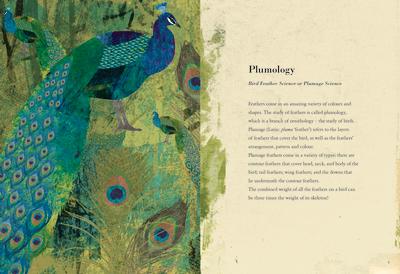
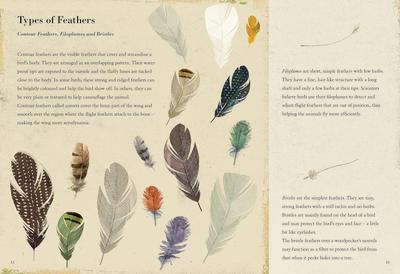
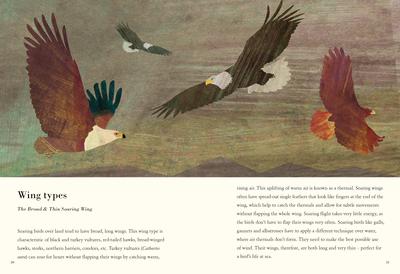
It’s always wonderful when art and science come together to show us the world in all of its natural beauty. Britta Tecktentrup’s Birds and Their Feathers is a stunning example. The book introduces readers to the science of plumology – bird feather science, or plumage science. If this is a new term for you, you’re not alone; this is a branch of ornithology that I wasn’t aware of, either! The book beautifully blends fascinating facts about plumage and birds with breathtaking artwork to give readers a wonderful introduction to this area of the natural world, with spreads dedicated to the structure and development of the feather; types and colors of feathers (they all have their own jobs!) and wings, human usage of the feather, and how humankind was so inspired by the feather, we used it to take flight on our own.
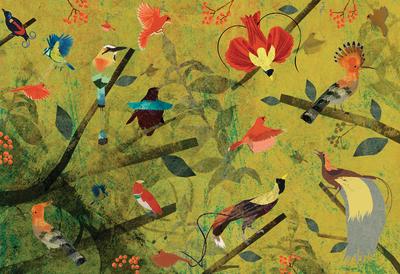
The artwork is quietly breathtaking, using earth tones and collage artwork to create soft, yet dramatic, pictures of birds and their plumage. The endpapers are covered with feather artwork so realistic, you’ll swear you can feel their softness under your fingertips. The writing is never overwhelming; rather, each page has anywhere from a few lines to a handful of paragraphs dedicated to its topic, with facts like: “The inside of a feather needs colours that help protect it and keep it durable. Such colours may include red and yellow, which can prevent bacteria from harming the feather”; “Some birds can make different sounds generated by their feathers”; and “Some fish-eating birds eat their own feathers to line their stomachs, which protects them from sharp fish bones”. This book is perfect for kids and grown-ups alike.
Perfect for a nature study or STEM project, Birds and Their Feathers is a must-add to your nonfiction shelves. Get your readers working with feathers to make their own art, and if you can find a feather or two to show off the parts of a feather up close (wear gloves if you get this from outside!), even better. I’d use this in my Discovery Club in a second. Birds and Their Feathers has a starred review from Publisher’s Weekly.
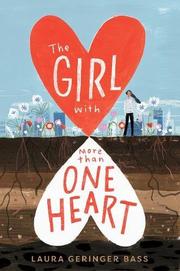
The Girl with More Than One Heart, by Laura Geringer Bass, (Apr. 2018, Amulet), $16.99, ISBN: 9781419728822
Ages 10+
Briana is starting her eighth grade year when her father dies of a sudden heart problem. Her mother spirals into grief, leaving Briana with the responsibility of caring for her 5-year-old brother, Aaron, who’s on the autism spectrum. Briana thought of her father as “her” parent and her mother as “Aaron’s parent”, which introduces frustration and resentment on top of her own grief. Briana feels a “second heart” form in her stomach, which communicates to her in her father’s voice, telling her to “find” her mother, and to “let go”.
Told in the first person in Briana’s voice, this novel is a touching, sensitive look at the complicated grief process: it’s messy, frustrating, and filled with mixed emotions, especially when thrown into the volatile mix of adolescent emotions. The writing is so believable, so real, that I felt overwhelmed by both Briana’s and her mother’s grief at points. Readers receive a wealth of information through Briana’s “Before Aaron” flashbacks, back to when her mother had as much time for her as her father; back when they were a cohesive, whole family. This process also helps Briana become a more present sibling to Aaron, and to reach out to new friends when the opportunities present themselves. We get a glimpse of what grief can do to a parent, and the effect of that grief on a child, and we see how the extended family – in this case, Briana’s grandfather – have to take on roles that they may be unprepared for.
The Girl with More Than One Heart is a must-add to your realistic fiction collections, and keep this one in your booktalking pocket for books on grief and loss.
A Monster Calls, by Patrick Ness: Thirteen-year-old Conor’s mother is fighting cancer and losing; at the same time, a yew tree tells Conor stories and expects him to tell his.
It’s getting harder and harder, waking up to the world we’re living in today. Some of our best defenses are, and will always be, empathy and information. I was inspired to create my own list of books to cultivate young activists by CuriousCity’s Books for All of Us post; I hope these books inspire you, too. Remember what J.R.R. Tolkien told us: even the smallest person can change the course of the future.
A is for Activist, by Innosanto Nagara, (Nov. 2013, Triangle Square), $9.40, ISBN: 978-1609805395
Available in board book or hardcover, A is for Activist is a rhyming abcedary of activism. The book introduces little ones to ideas like Co-Op, Equal Rights, Grassroots, Indigenous, and Justice. Best for pre-k and up in terms of grasping the concepts, but it’s never too early to get an ABC book in front of the little ones. The illustrations are loaded with new things to find with each reading.
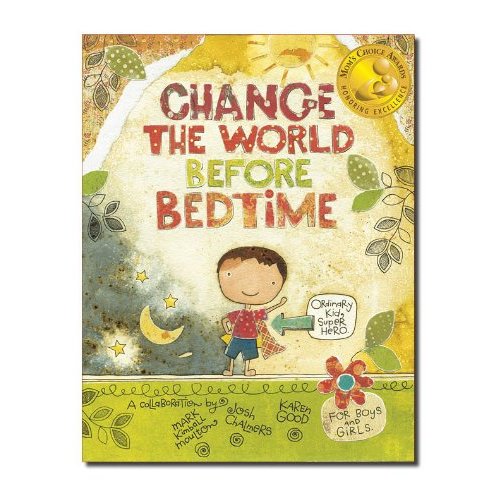
Change the World Before Bedtime, a collaboration by Mark Kimball Moulton, Josh Chalmers, and Karen Good (Schiffer Publishing, 2012). $16.99, ISBN: 978-0764342387
One of my storytime constants, Change the World Before Bedtime is loaded with ways for kids to make positive changes in their world, from eating locally to visiting a sick friend, to donating money from a lemonade stand to a good cause. It’s another rhyming text, with homespun, cozy artwork that immediately evokes the warm fuzzies.
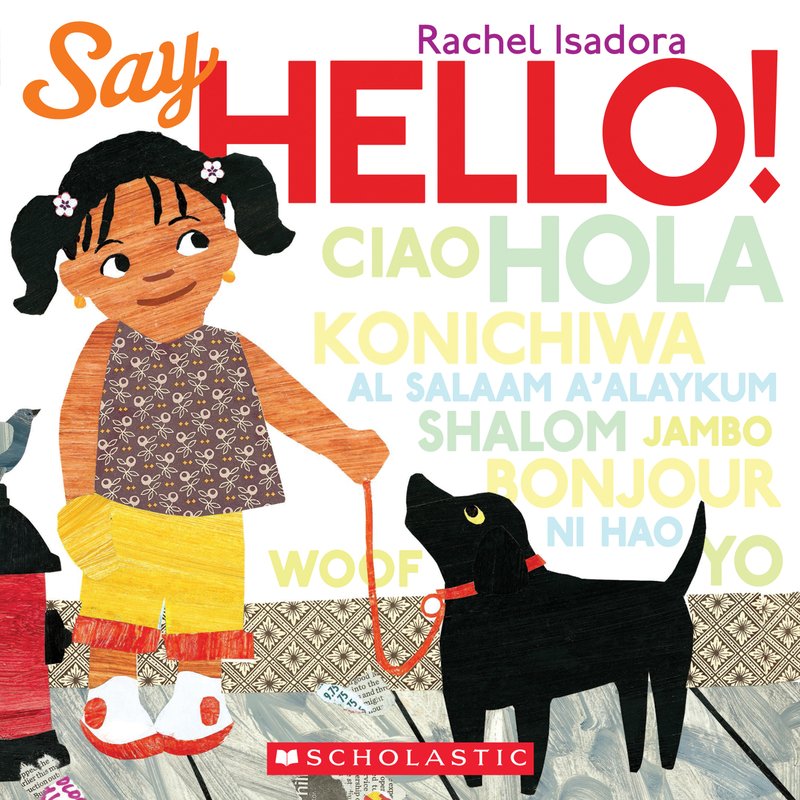
Say Hello!, by Rachel Isadora, (Apr. 2010, GP Putnam), $14.95, ISBN: 978-0399252303
Everyday activism! Carmelita is a little girl going to visit her abuela. As she walks through her neighborhood, she and her neighbors greet one another in their native languages: “Buenos días!”, “Konichiwa!”, “Shalom!”, and other joyful salutations embrace the multicultural world in which we live. Say Hello! will have kids sharing their own greetings with one another.
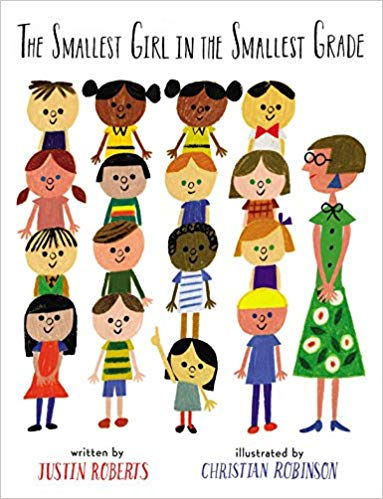
The Smallest Girl in the Smallest Grade, by Justin Roberts/Illustrated by Christian Robinson, (Sept. 2014, GP Putnam), $16.99, ISBN: 978-0399257438
Little Sally McCabe may be the smallest girl in the smallest grade, but she’s making big things happen when she decides to speak up when she sees bullying at the playground. This rhyming story lets kids of all sizes know that we can all make a difference.
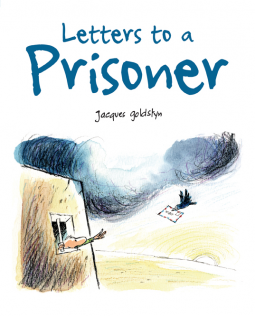
Letters to a Prisoner, by Jacques Goldstyn, (Sept. 2017, OwlKids Books), $18.95, ISBN: 9781771472517
This wordless picture book is inspired by human rights organization Amnesty International’s letter writing campaigns. A man is arrested during a peaceful protests and languishes in jail. A cruel guard burns letters that would sustain the man, inspiring more letter writers to come together and create a winged army of written support that overwhelms the guard and lifts the prisoner up and away. The book illustrates the power of the written word to sustain as well as to take a stand.
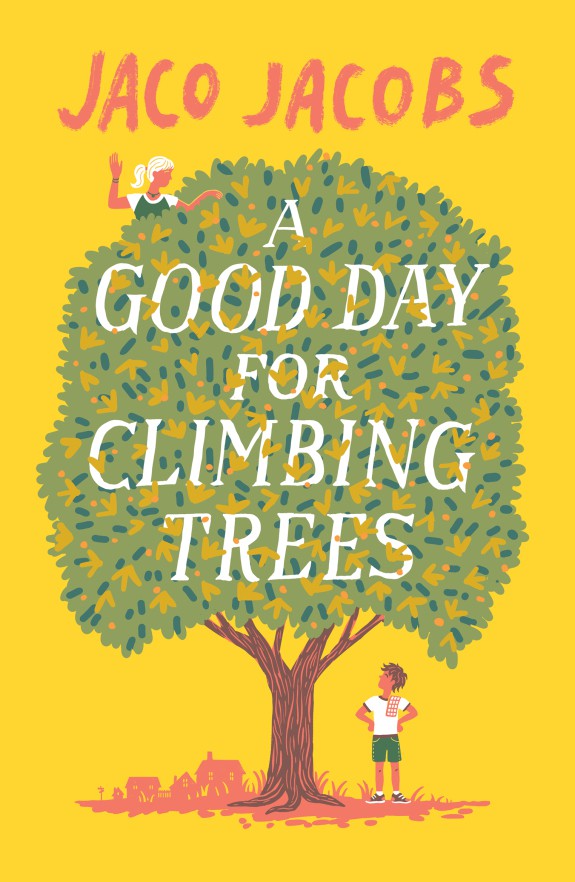
A Good Day for Climbing Trees, by Jaco Jacobs, Translated from Afrikaans by Kobus Geldenhuys/Illustrated by Jim Tierney, (Apr. 2018, One World Publications), $11.99, ISBN: 978-1-78607-317-4
Middle graders have more of a grasp on the world around them, can take action in different ways. Marnus, the 13-year-old protagonist in A Good Day for Climbing Trees, and a friend take action to save a local tree from demolition by petitioning and holding a sit-in, which alerts others to their cause. Readers get a more involved view of activism, and some potential results, here.
This is just a small handful of the growing number of books out there. I encourage you all to read these books, read them to your kids, and add them to your collections.
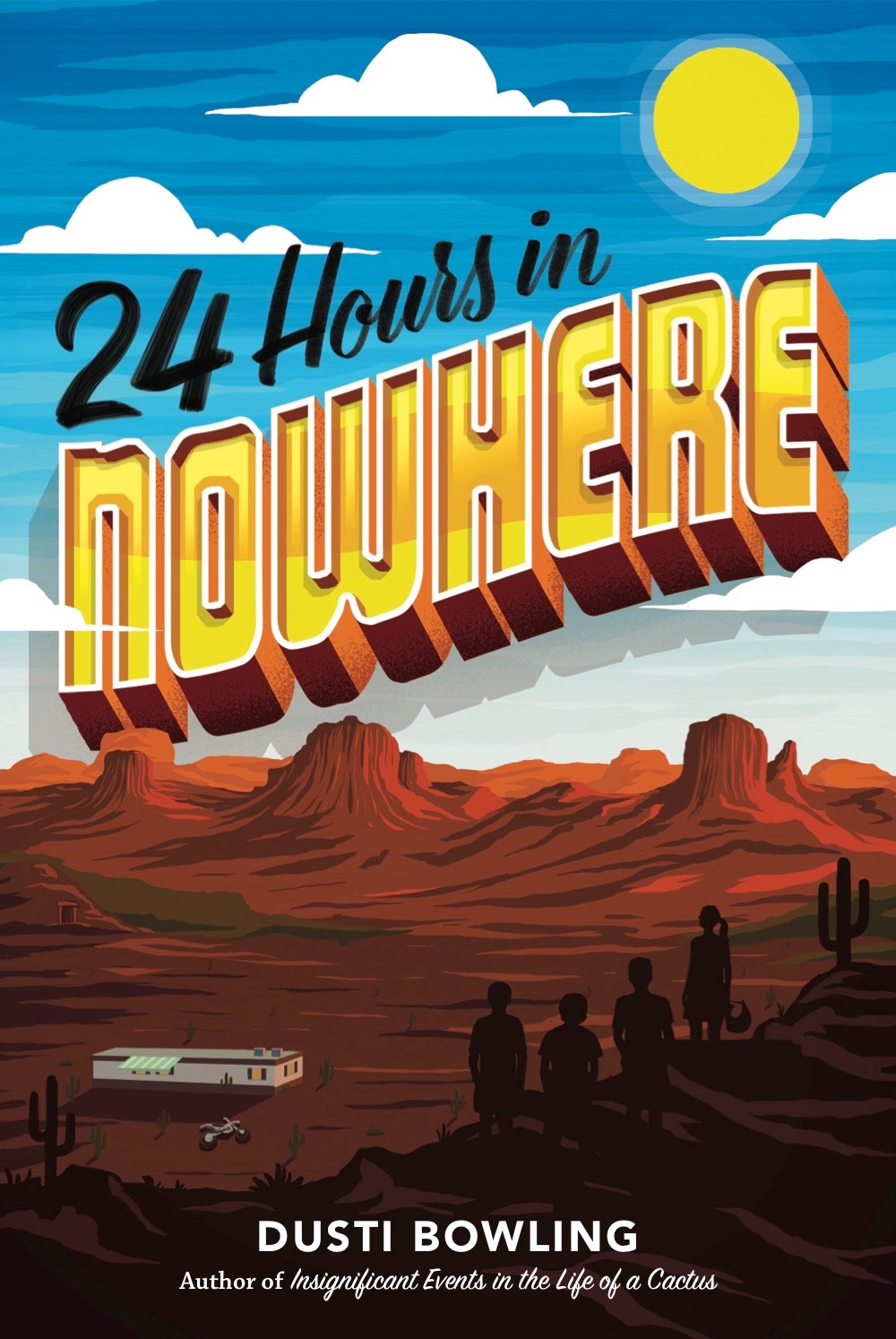
24 Hours in Nowhere, by Dusti Bowling, (Sept. 2018, Sterling), $14.95, ISBN: 9781454929246
Ages 9-12
Gus is a 13-year-old kid, abandoned by his parents, living with his grandmother in Nowhere, Arizona. When Bo Taylor, the worst bully in town, tries to force him to eat a spiny cactus, Rossi Scott interferes. She’s one of the best dirt bike racers in nowhere, and she’s got designs on winning the big race the next day – until she gives up her bike to save Gus. Now Bo has the bike, and Gus heads to Dead Frenchman’s Mine in the hopes of finding a piece of gold to get the bike back. Matthew, one of Bo’s cronies, is along for the trip, making sure Gus doesn’t spray paint a rock; Jessie, Gus’ former best friend, and Rossi show up to talk some sense into Gus, but a cave-in traps the four friends, leaving them to seek a way out and avoid mountain lions.
I loved Dusti Bowling’s fantastic debut, Insignificant Events in the Life of a Cactus (2017), so I immediately requested the ARC for 24 Hours in Nowhere. I am happy to say, there’s no sophomore slump here! Dusti Bowling continues writing smart, empathetic books about kids who are just doing the best they can in the face of everyday life. The teens share stories about their Worst Day Ever, giving us a glimpse into poverty, abuse, neglect, abandonment, race, (Jessie is Mexican-American, and Rossi is Native American, from the Tohono O’odham Nation) and white privilege, all within the greater examination of life in poor, rural America. Gus is a first-person narrator and alternately has moments of introspection, empathy, and humor. There’s a little bit of Goonies, a little bit of Holes, and a lot of great storytelling to be found here. Psst… teachers… put this one on next year’s Summer Reading lists, please?
Check out Dusti Bowling’s author website for extras (just Cactus for now, but sure to be updated with 24 Hours shortly) and school visit info, including free Skype visits! 24 Hours in Nowhere has a starred review from School Library Journal.
H is for Haiku, by Sydell Rosenberg/Illustrated by Sawsan Chalabi, (Apr. 2018, Penny Candy Books), $16.95, ISBN: 978-0998799971
Ages 5+
Sydell “Syd” Rosenberg, who lived, wrote, and taught in New York City. Syd passed away in 1996, but her daughter, Amy Losak, made it her mission to see her mother’s work published. H is for Haiku, is a fun, illustrated book containing 26 “small moments” haiku: little slices of daily life. As Ms. Losak notes in her introduction, “Haiku poems make small moments big”.
Reading H is for Haiku took me back to sons’ “small moments” units in elementary school. They and I both struggled with the idea of a small moment; often puzzling over the feedback, “no, smaller”. How could a trip to the grocery store get smaller? H is for Haiku is the book to go to for those moments: a cat dreams; rain water collects in an old watering can, a girl rides a bike downhill. Syd Rosenberg captures the magic in these tiny moments, finding the poetry in the everyday and illuminating them for readers. Sawsan Chalabi’s artwork is a treat, bringing creativity and movement to these magical moments with color and bold fonts.
A library card’s potential, through the eyes of a new reader. I want a print of this for my library!
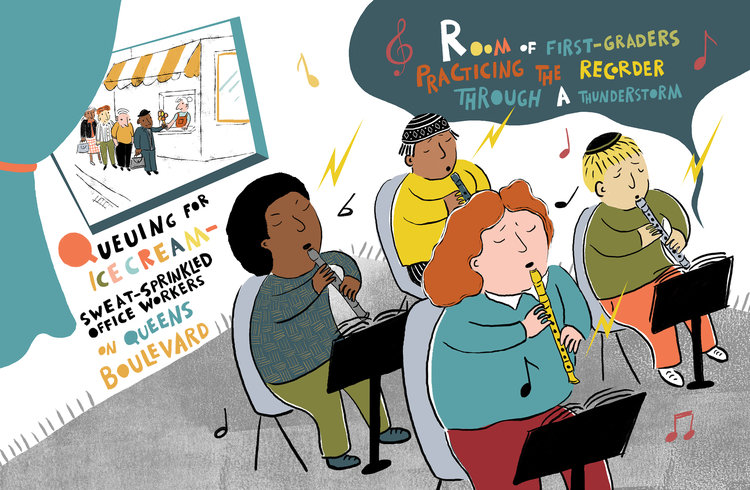
This is so Queens. I love it. Book samples courtesy of Penny Candy Books.
This is a great way to bring poetry, particularly haiku, to kids. It’s a great way to explain small moment writing to students, too. Consider adding H is for Haiku to your collections, or giving a copy to your poetry readers. To see more of a illustrator Sawsan Chalabi’s work, visit her website; to learn more about Amy Losak and her mother’s haiku, visit the Penny Candy website.
 Merci Suárez Changes Gears, by Meg Medina (Sept. 2018, Candlewick), $16.99, ISBN: 9780763690496














 Mom Read It