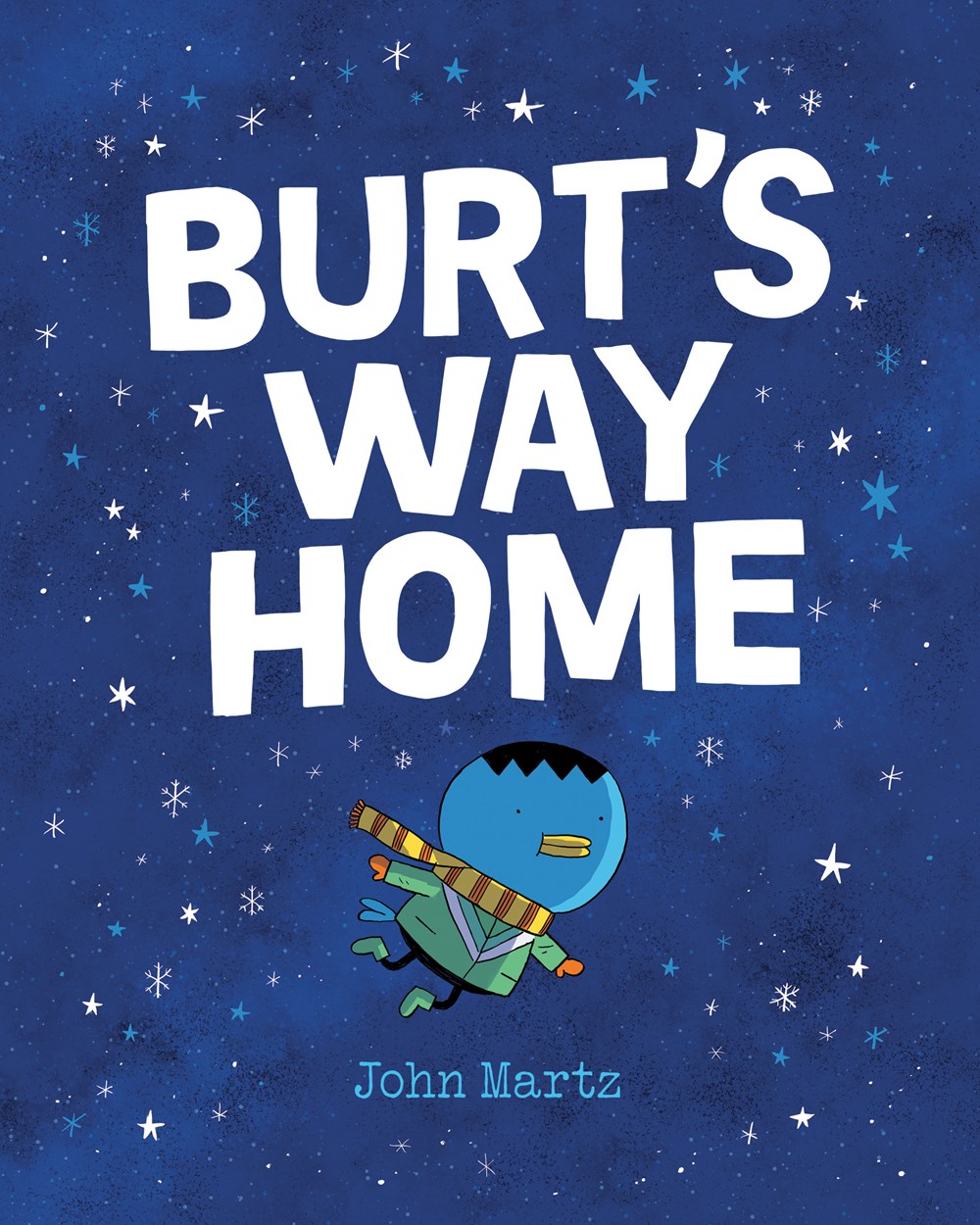
Burt’s Way Home, by John Martz, (July 2022, Tundra Books), $12.99, ISBN: 9780735271029
Ages 6-9
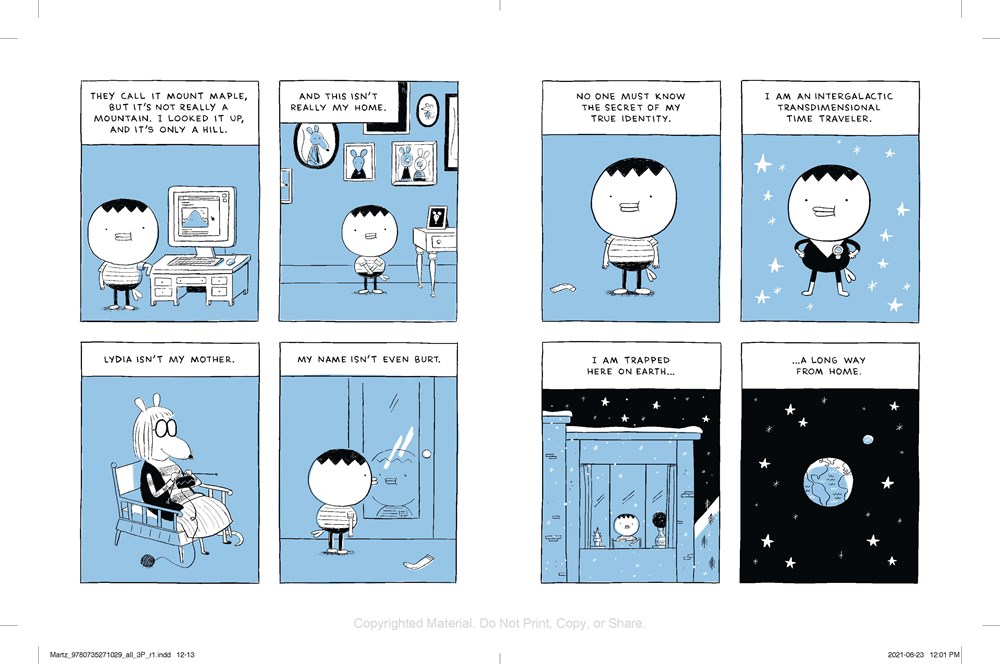
Burt is an “intergalactic, transdimensional time traveler”. His parents, also time travelers, have been separated from him during a journey, and now he’s stuck on Earth, living with a woman named Lydia, until he can figure out the antiquated Earth technology and find his way home. Lydia, however, tells a very different story. A graphic novel created with two narratives, Burt’s Way Home is an aching look at a child in foster care, dealing with confusion and grief, and the caregiver who tirelessly works at understanding him, supporting him, and caring for him. Illustrated in two-color blue and white, with bold black outlines, John Martz creates an unfussy atmosphere that carries cartoon appeal while delivering a poignant message. This is a completely different story about grief and loss, and I want this in my collection first and foremost, for any child that may need it – for a child living in a foster situation, or for any children whose primary caregiver is not their parents: a grandparent, an aunt or uncle, an older sibling, a family friend – and to explain and engender empathy in others. Sensitive and respectful, this is a great book to have in your collections.
Burt’s Way Home was originally published in 2016 by Koyama Press.
Izzy Newton and the S.M.A.R.T. Squad: Absolute Hero, by Valerie Tripp/Illustrated by Geneva Bowers, (Oct. 2021, National Geographic Kids), $7.99, ISBN: 9781426373039
Ages 8-12
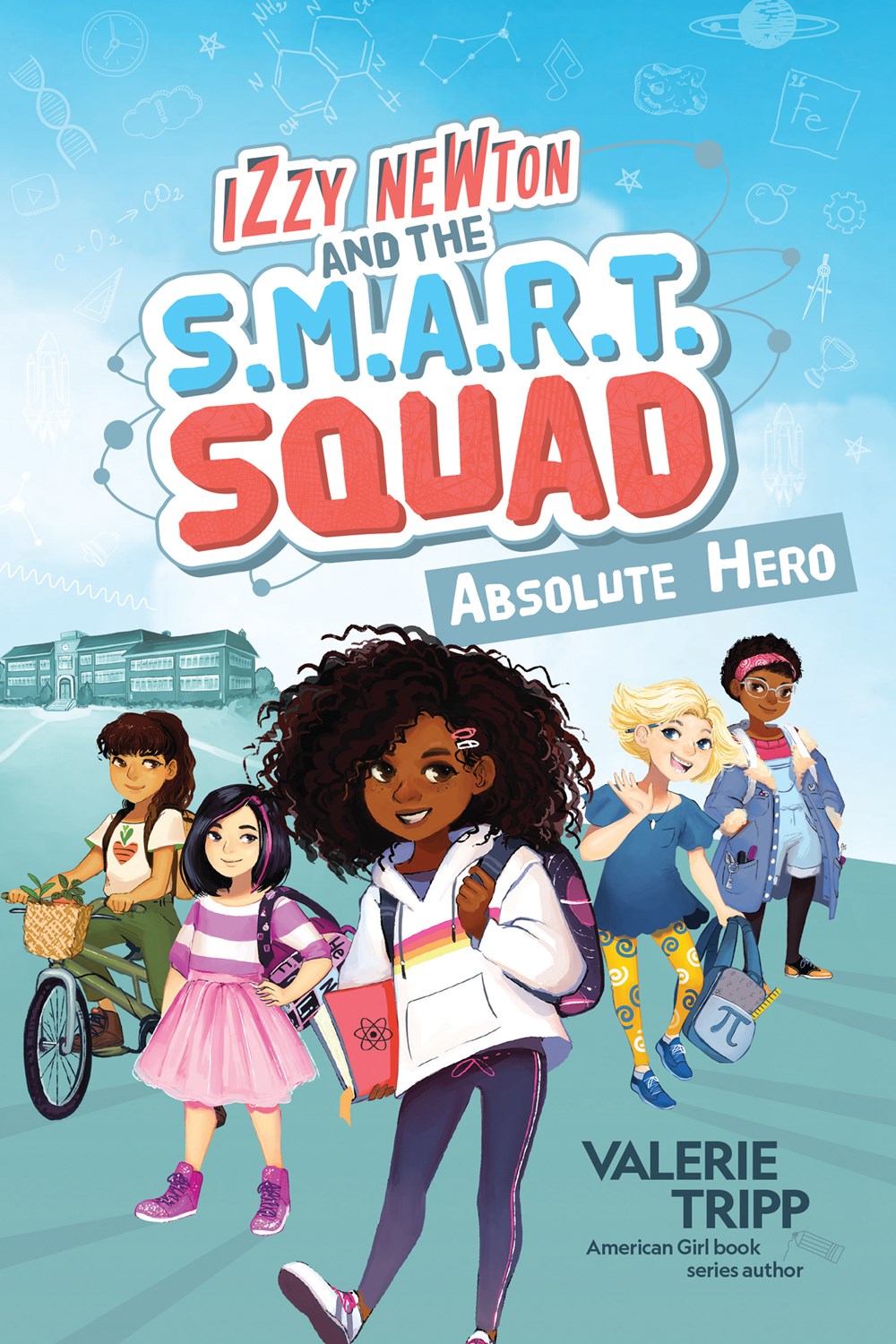
Izzy Newton, Allie Einstein, and Charlie Darwin are best friends starting Atom Middle School together, when they discover that a friend of theirs who moved away is back! Marie Curie doesn’t seem as friendly as she was when the girls were besties, and she’s got a new friend, Gina Carver, who seems equally standoffish. When the air conditioner in their middle school shows no signs of letting up, the group have to put their science-loving brains to work to figure out how to keep themselves, and the rest of the school, out of deep freeze. Izzy and her friends are all named after scientific icons (you’ll learn more about them in the back matter), and each girl has an interest in an area of science similar to their namesakes. Middle-grade subjects like friendship and working out differences are familiar for readers, and the story examines how misunderstandings arise when people assume and don’t speak to one another. The air conditioning mystery is a science problem that needs to be solved; something the girls do through the scientific method, detailed throughout the story. The pace and dialogue are light and smart, and black and white illustrations run throughout. Back matter includes explanations of scientific terms and profiles of women scientists mentioned in the novel. Absolute Hero – a play on the scientific term “absolute zero” – is the first book in the Smart Squad series, with an additional novel, Newton’s Flaw, available now, and another, The Law of Cavities, coming in October. Visit the Smart Squad webpage for free, downloadable Readers and Educators Guides. Absolute Hero was originally published in hardcover in September 2020.
As I continue scaling Mount TBR, I’ve got a fun middle grade two-fer today: the first two books in the Lightning Girl series by British singer, dancer, and Britain’s Got Talent judge Alesha Dixon.
Lightning Girl, by Alesha Dixon & Katy Birchall/Illustrated by James Lancett (June 2020, Kane Miller), $6.99, ISBN: 9781684640782
Ages 8-12
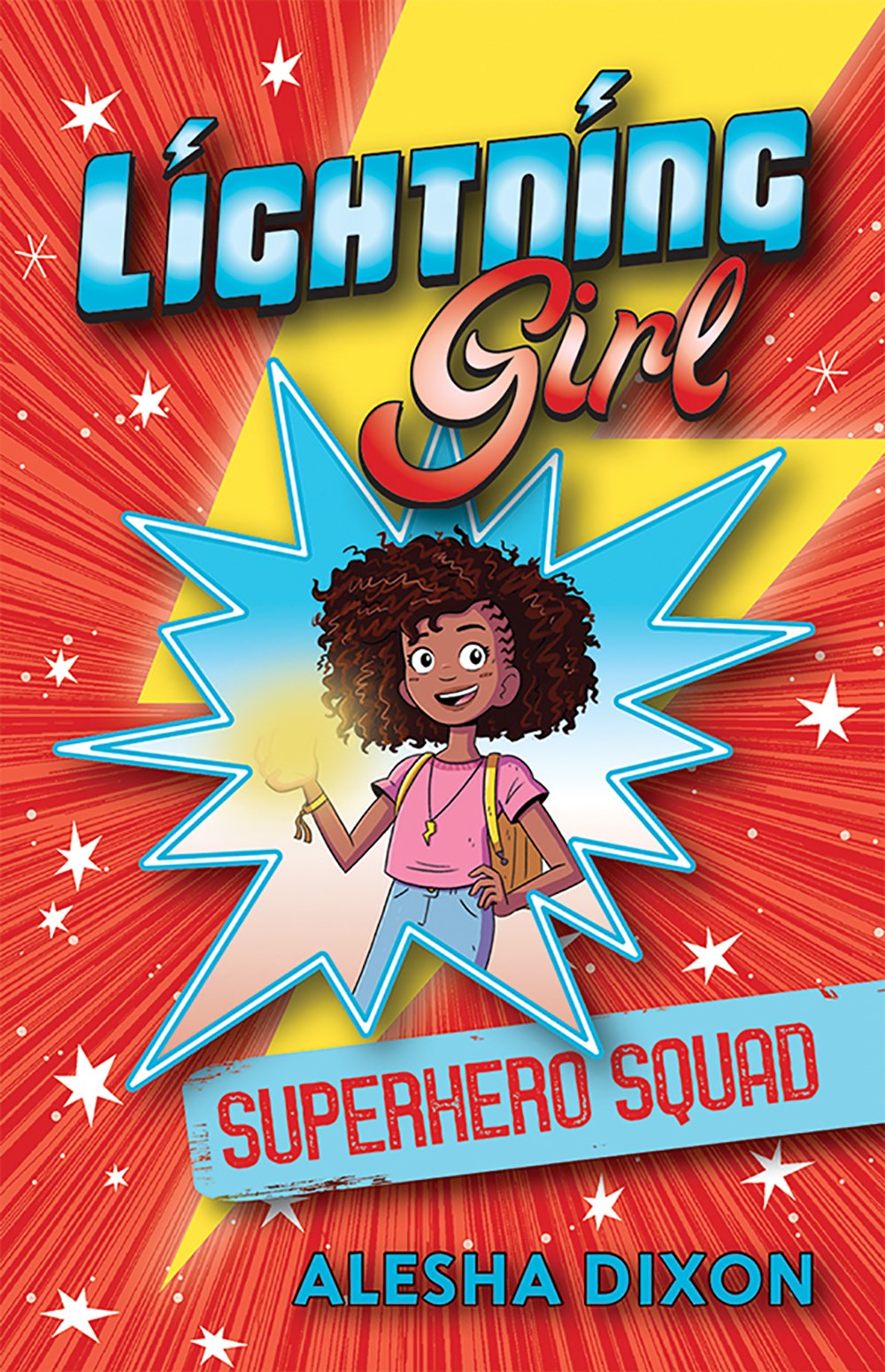
Life isn’t always a breeze for 10-year-old Aurora Beam, a biracial British girl living in a UK suburb, but when she discovers that her hands light up, and that her mom is a secret superhero, things get even wilder! Aurora is descended from a long line of female superheroes, and her mom is delighted to start putting her through training exercises. But how can she keep this a secret from her best friend? And how can she navigate her parents’ separation, school life, and her morally ambiguous auntie while learning about her superpowers? Lightning Girl is absolute fun, using superpowers to communicate all the frustrations of being a tween: Aurora is coping with body changes, weird friendship dynamics, school drama, siblings, and parental ups and downs. The dialogue and action move quickly, and the characters are funny and relatable. Black and white illustrations throughout add to the fun. A great entry into a fun middle grade series.
Lightning Girl: Superhero Squad, by Alesha Dixon & Katy Birchall/Illustrated by James Lancett (Sept. 2020, Kane Miller), $6.99, ISBN: 9781684640799
Ages 8-12
Aurora, aka Lightning Girl, is back and so are her friends, The Bright Sparks! After the events of the first Lightning Girl adventure, Aurora is in high demand: she’s got appearances booked right and left, leaving her almost no time for herself – and the paparazzi is always there to capture her worst moments! Aurora and her family head off to a superhero convention, where she hopes to get away from it all for a little bit, but a crime is committed and all fingers seem to be pointing at her! Can Aurora and the Bright Sparks clear her name, and can she finally get away from the glare of the spotlight? Superhero Squad is Aurora’s second adventure, and takes on the havoc social media can wreak on a person’s reputation and psyche. You don’t need to be a superhero to be bullied on social media; Aurora trying to turn the tide of public opinion is a great discussion point for booktalking and book groups. Themes of friendship and family run strong in this story. Back matter includes stats on the newest members of the Bright Sparks. With a diverse cast and great storytelling, this is a great series to add to your shelves.
There are a total of five Lightning Girl books available.
Pauli Murray: The Life of a Pioneering Feminist & Civil Rights Activist, by Rosita Stevens-Holsey & Terry Catasús Jennings, (Feb. 2022, little bee books), $18.99, ISBN: 9781499812510
Ages 8-12
Haven’t heard of Pauli Murray before? Remedy that and pick up this biography in verse, written by one of the civil rights activist’s nieces and Terry Catasús Jennings, author of the Definitely Dominguita chapter book series. Born in 1910, Pauli Murray chafed under the Jim Crow South and what she called “Jane Crow”: further prejudice against women. She would become a friend to Eleanor Roosevelt and a voice for the oppressed; she created arguments that would eventually form the Brown vs. Board of Education Topeka backbone (with no credit) and the 1964 decision that won workplace equality for women (credited, thanks to Ruth Bader Ginsburg).
Pauli Murray is told in verse, giving poetic gravitas to her life from her early childhood; the early death of her mother and separation of the siblings, which saw Pauli Murray move to Baltimore to live with her aunt, who eventually adopted her; her life in the Jim Crow South, which awakened the activist in her, and her work to dismantle the white male patriarchy that sought to “other” her and hold her, and other women and people of color, down. Queer and Black, she was a force for positive change. She went to jail for refusing to sit in a broken seat in the back of a bus long before Rosa Parks, and, like Martin Luther King Jr., was inspired by Ghandhi’s promotion of protest through nonviolence.
Back matter includes author’s notes, a timeline of Murray’s life, endnotes, and a bibliography. An eloquent, powerful biography for upper middle graders and middle schoolers.
The Stardust That Made Us: A Visual Exploration of Chemistry, Atoms, Elements, and the Universe, by Colin Stuart/Illustrated by Ximo Abadía, (March 2022, Big Picture Press), $24.99, ISBN: 9781536223835
Ages 8-12
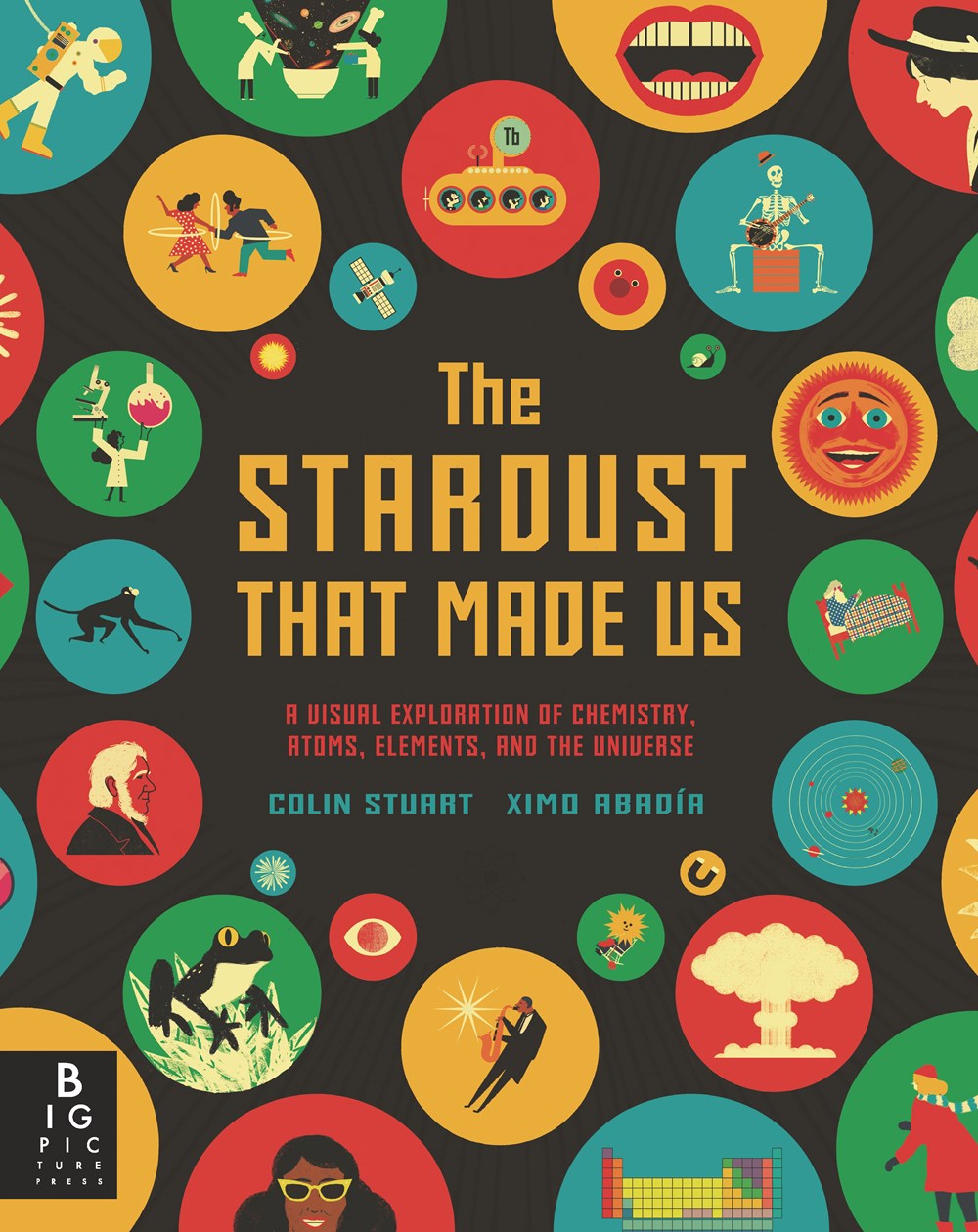
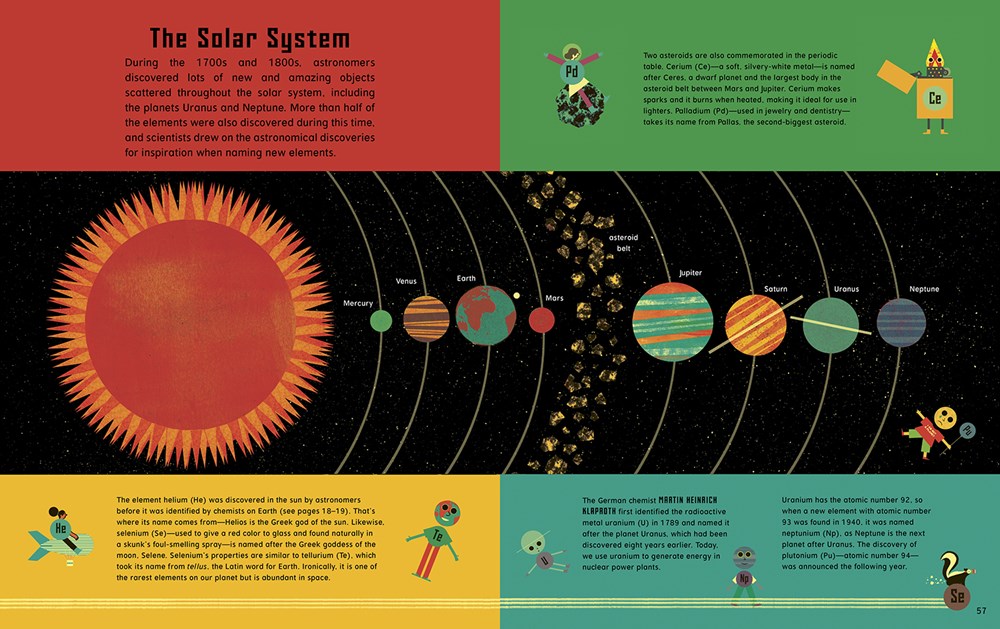
This oversized book is a “visual exploration of chemistry, atoms, elements, and the universe”, made accessible to middle grade and middle school students. Organized into five areas, The Stardust That Made Us looks at the history of chemistry in the natural world, the people who have dedicated their lives and careers to studying it, how we use chemistry in our everyday lives, and where the future of chemistry lies. Astronomy author and speaker Colin Stuart uses straightforward language to explain concepts in a way that respects and understands his readers. He uses enticing phrases like, “Nature has an unseen book full of recipes for making everything you’ve ever encountered” to draw readers in and pique their interest. He shares interesting bits of information within the scientific text, too, noting that the green dye that fascinated consumers in Victorian Britain was also slowly poisoning them: the green dye was produced by arsenic; mobile phones vibrate thanks to the chemical element dysprosium, that makes the motor responsible for the vibration, and ancient cave paintings in France were made using paint containing the element manganese. Ximo Abadía’s high contrast illustrations are stunning and colorful. A good addition to STEM collections.
Visit Colin Stuart’s webpage for more information about his books, to sign up for his newsletter (and get a free ebook!), and get information about appearances.
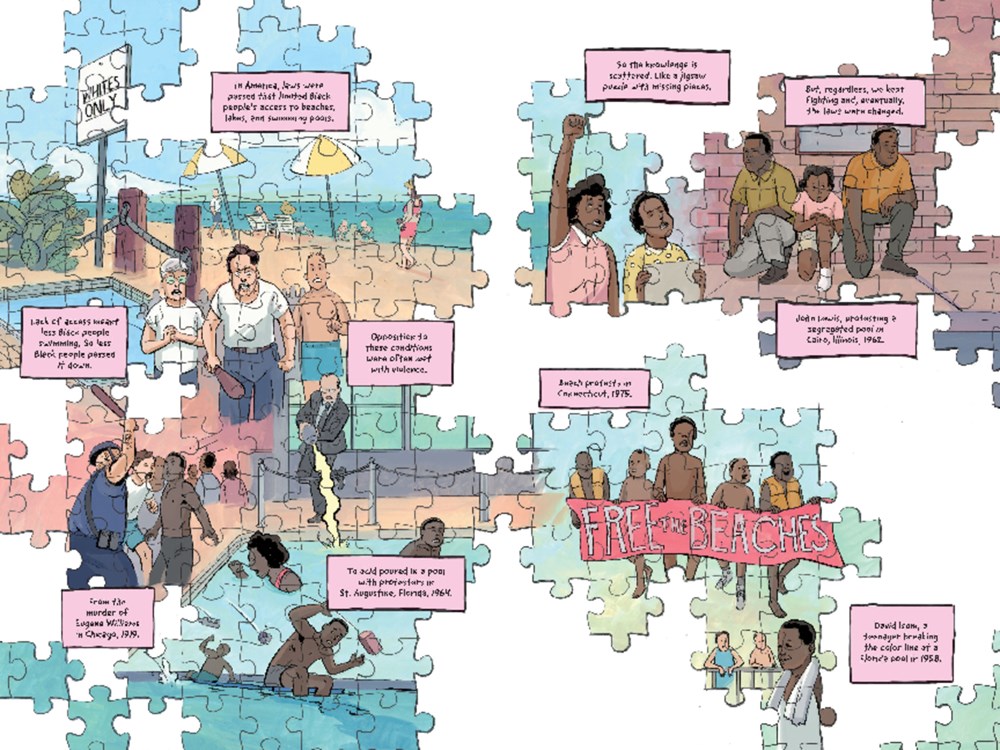
Bree is starting her new middle school and can’t wait to select her electives. She’s got her eye on Math Club, but it’s closed out. In fact, everything is closed out of her time slot, except for Swim 101. Bree, afraid to swim, reluctantly takes the class, but tries to dodge it until she realizes that it will affect her grade point average. A mishap at her apartment complex leads her to Etta, an older woman who lives in the building, who also happens to be a former swim team captain from Bree’s school. As Etta trains Bree, she becomes a confident swimmer who gives the school team a chance at victory over rival Holyoke Prep. A strong subplot about Etta’s time in middle school delves into the history of segregation and public pools, and busts the “Black people don’t swim” myth wide open. Solidly constructed storytelling keeps readers invested and engaged; they’ll be white-knuckling the book and cheering Bree’s team, the Manatees, at every meet. A strong theme of social justice and change provides historical background and back matter includes resources for more reading. Talk this up with realistic fiction graphic novels like Jerry Craft’s New Kid and Class Act; Alyssa Bermudez’s Big Apple Diaries, and Gillian Goerz’s Shirley and Jamila Save Their Summer. Put this book on your shelves!
Swim Team has starred reviews from Publishers Weekly, School Library Journal, Kirkus, and BookPage; it’s also been selected for the Kids’ Indie Next List.
All My Friends, by Hope Larson, (Jan. 2022, First Second), $12.99, ISBN: 9780374388669
Ages 10-14
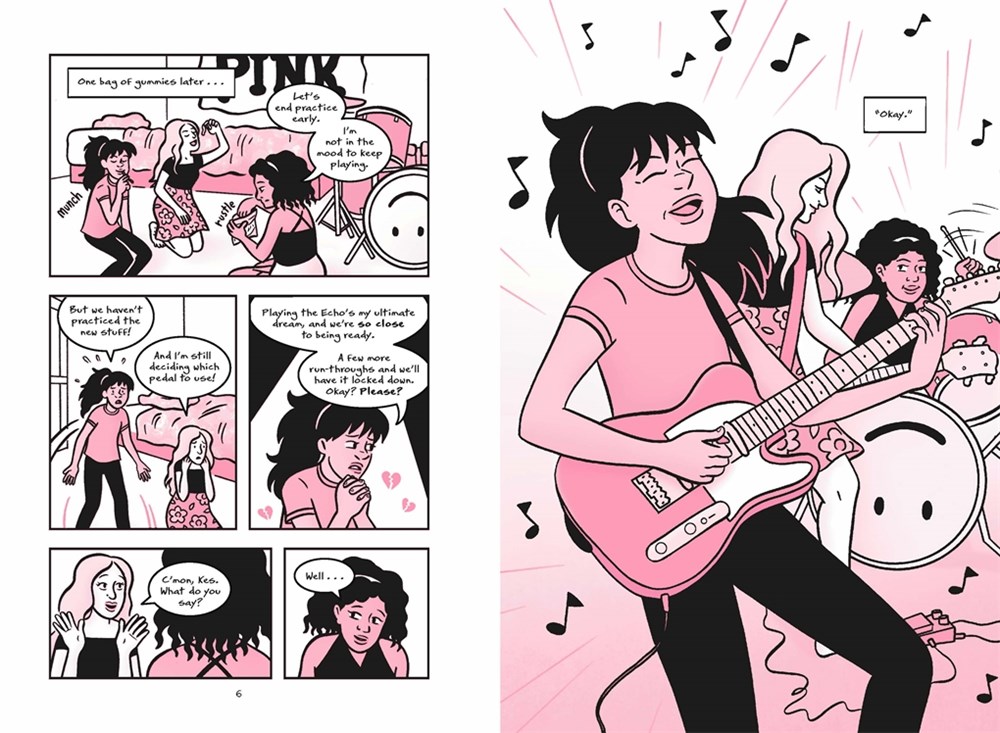
Hope Larson’s third installment in Eagle Rock series keeps the momentum going. When we first met Hope’s main character, Bina, in 2018’s All Summer Long, she was a 13-year-old finding her way through music, and figuring out her evolving friendship with her bestie, Austin. Now, in All My Friends, Bina and her friends are in Fancy Pink, a band getting a lot of notice; she’s in a back-and-forth with her parents as she tries to take her band to the next level, and her parents worry about things moving too quickly, and she’s still figuring out relationships, whether it’s her strained relationship with Austin or how she feels about Cooper, the cute guy in a local band. The Eagle Rock books have captured big moments in a tween/teens’ life: relationships, dating, parents, and growing up. The characters have grown with each book, as Hope Larson’s audience is growing, keeping them invested in the stories of the Eagle Rock friends. Artwork in shades of pink, black, and white keep the focus on the story while using fonts to give the feeling of music moving through crowds. Whether she is weaving magical tales driven by a human story, or a character-driven story with a spark of magic (in this case, through music), Hope Larson always nails it. A great third act for a popular series.
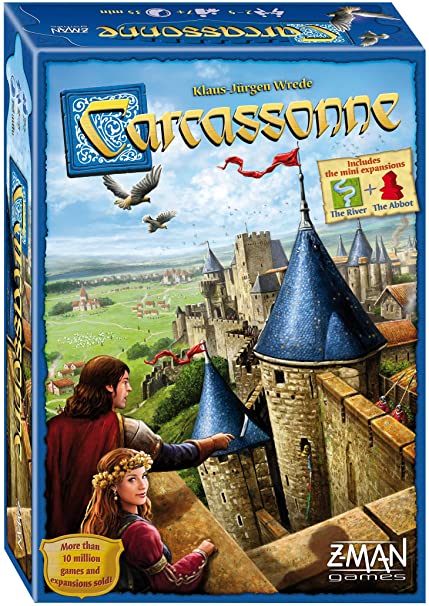
Next up, we have Carcassone. My library system’s gaming committee sent our first bin of games over, so I have 10 copies each of Carcassone and 10 of 7 Wonders. I’m still trying to work out 7 Wonders, so we played Carcassone.
I initially brought the game home to playtest with my kids, so I’d be able to figure out modifications, if necessary, for my younger kids, but this was pretty straightforward out of the box, so let’s go.
Carcassone, Z-Man Games (2000)
Ages 7+ (the box says 7+; for my library kids, I’d go 8-10+)
Play time: 45-60 minutes
Number of players: 2-5
The Plot: You and your fellow players are creating the French medieval city of Carcassone. To do this, you’ll turn over tiles to reveal different parts of the landscape, and you must create and claim your lands.
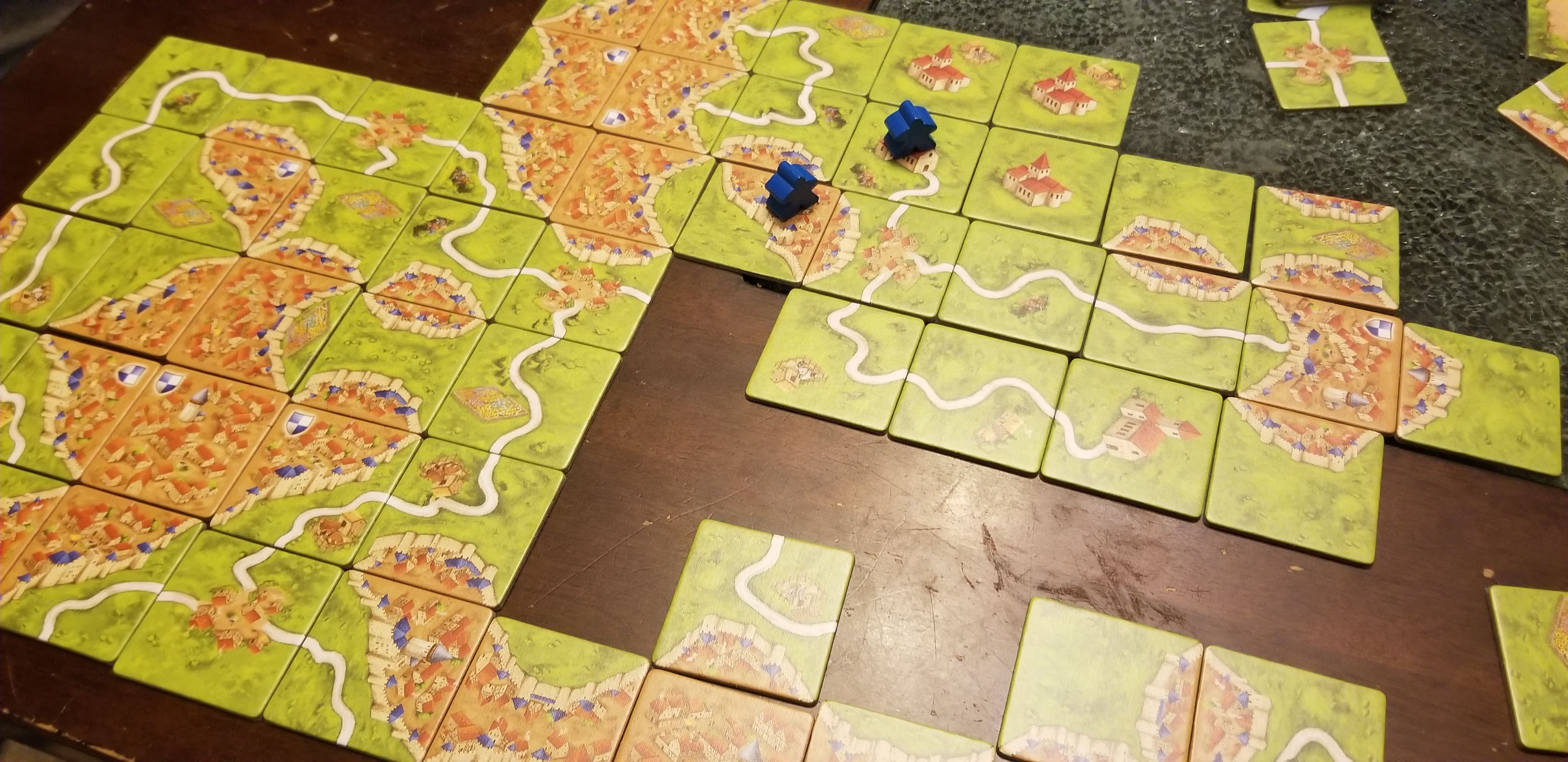
Medieval gerrymandering? No, it’s Carcassone! (my photo)
There are rules all players must adhere to: roads (those squiggly beige lines) must connect to other roads. Cities (the walled brown areas) must connect to other parts of the cities. Meeples (the cute little blue guys you see in the above photo) claim different areas as you build them. There are five groups of Meeples: green, red, blue, black, and yellow. Choose your color, and start building. As you play each tile, use your Meeples to claim area. Meeples placed on roads are highwaymen, for those folx who love a bad guy; claim the cities and be a knight; lay your Meeple down on the green areas to be a farmer; claim a monastery (the pointy buildings in the center of the photo) and be a monk. Each of these areas get scored differently:
Putting your meeple on a road claims that road, but you do not score points until the road is complete. It has to lead from somewhere to somewhere. Each tile your road touches is worth one point; my road above leads from one monastery to another, and touches 5 tiles, so that’s 5 points.
Putting your meeple on a city means you’re a knight protecting that city. You do not score points until the city has been completed. See my Meeple above, next to the monastery? That city touches 3 tiles; those tiles are worth 2 points each, so my Knight has 6 points. See that larger city toward the left hand side of the picture? That is a much bigger city, AND has several shields. Those shields are worth an additional 2 points per shield, so that city, which was still under construction when I took this picture, is worth 22 points: 16 points because it spreads across 8 tiles, plus 6 points for the 3 shields within.
Monasteries get 1 point for every tile enclosing them in the area – basically, monasteries get 9 points; they’re surrounded by 8 tiles, and the monastery makes 9.\
As you complete your areas, you take your Meeples back, ready to guard (and rob) the next area of the burgeoning city. Use the scoreboard to keep track of your scores.
Okay, a couple of observations during gameplay. You will inadvertently help your opponents sometimes, depending on the tile you draw. My son and I, on our first couple of plays, initially thought we could undercut one another by placing tiles that didn’t connect to anything, to block progress. Don’t do that! After reading more blogs and watching several gameplay videos, we figured out that Carcassone is kind of cooperative, kind of not in that way. Think of it like you’re building a map. It needs to make sense at the end of the day.
Play the short game and the long game for best use of your Meeples! Can you build a 2-tile city? YES. Don’t get hung up on only building gigantic cities, because I promise you, it will bite you on the backside. Ditto for starting roads that have no end. If, toward the end of the game, you have no Meeples to place, you get no points for tiles laid! Make that 3-tile road; build that 2-tile city; get your Meeples and keep going.
After a few plays at home, my son and I got into a good rhythm of gameplay, and I was easily able to show our library’s after-school coordinator and one of our children’s librarians how to play. I’m looking forward to reporting back on how the kids took to it this coming Tuesday!
All in All: A fun, creative game that guarantees you’ll never play the same game twice. Easy to explain to younger kids; I think our middle graders and middle schoolers are going to be a strong group for this game, and I feel like the few teens I get (hopefully more, by this summer!) will be into this. As popular as Carcassone is, I’ve yet to meet more than a handful of folx who’ve actually played it (kind of like me, with Settlers of Catan).
If you’d like to watch gameplay videos, I highly recommend Wil Wheaton’s Tabletop episode and Watch It Played’s Carcassone episode, both of which I’m embedding here. Both YouTube accounts are great for learning gameplay for a wealth of different games and are worth subscribing to the feeds.
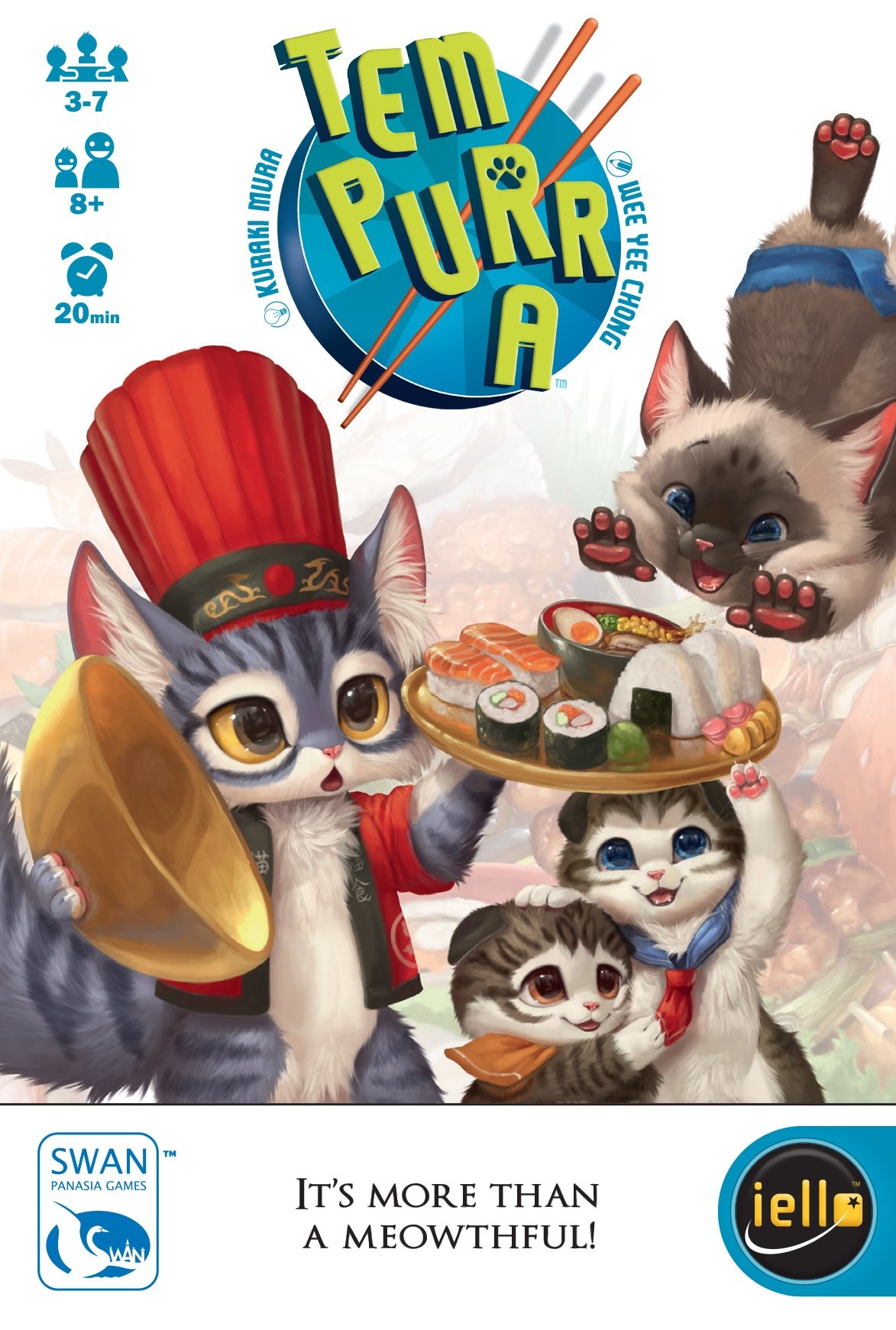
I have mostly younger kids in my library community – we don’t have a zoned high school near us, and we’re not open for Saturday or Sunday service, so my high school kids are likely hanging out in neighborhoods where their schools are. This informs my gaming choices, to be sure; the lion’s share of my kids are 0-12, with the 5-8 year-old range being the biggest attendees for our programs. So in addition to the usual suspects: Uno, Monopoly and Monopoly Jr., Candyland, and Connect 4, I introduced Tem-Purr-A, a card game that’s similar to Uno, but with more indigestion.
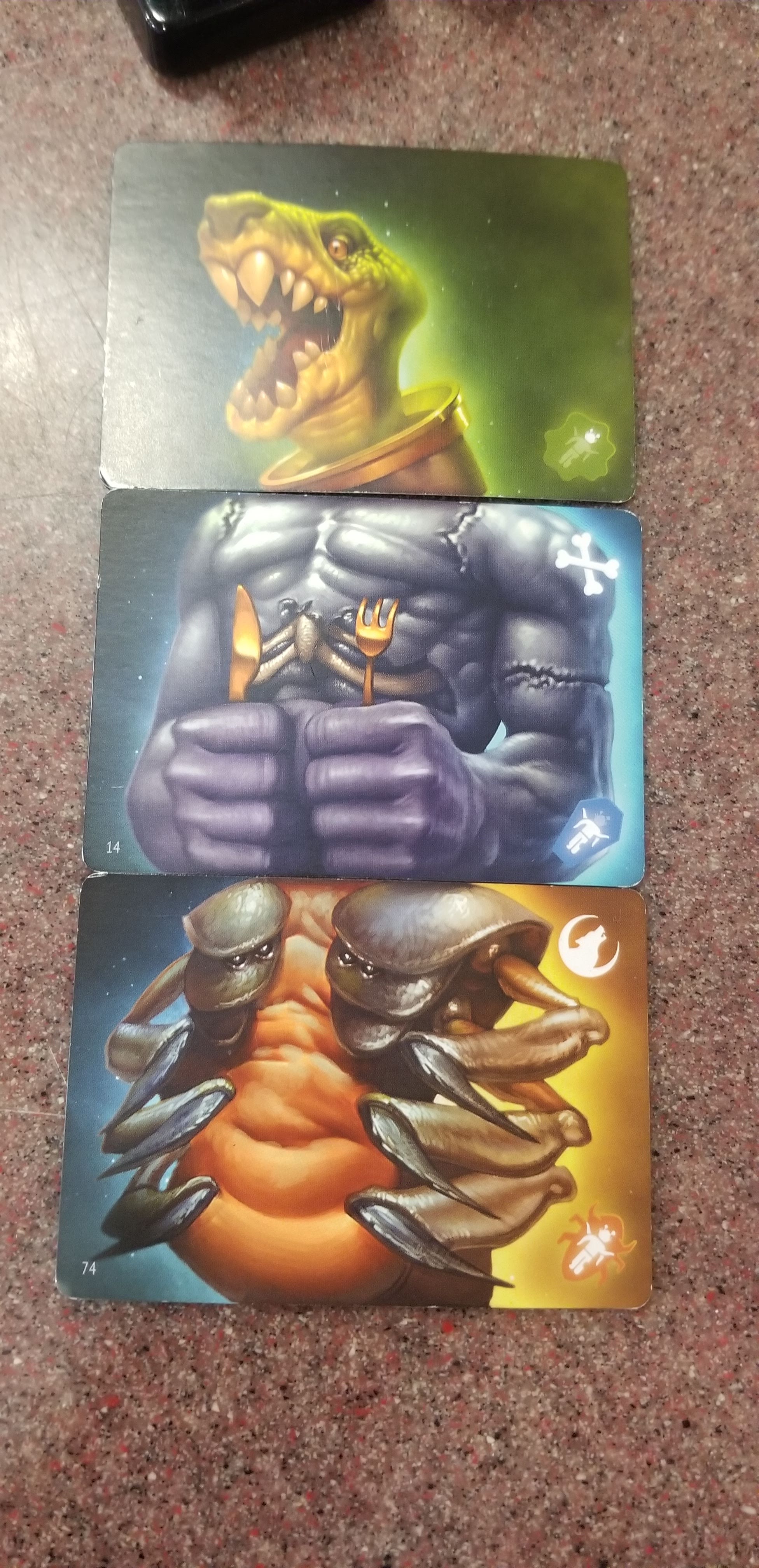
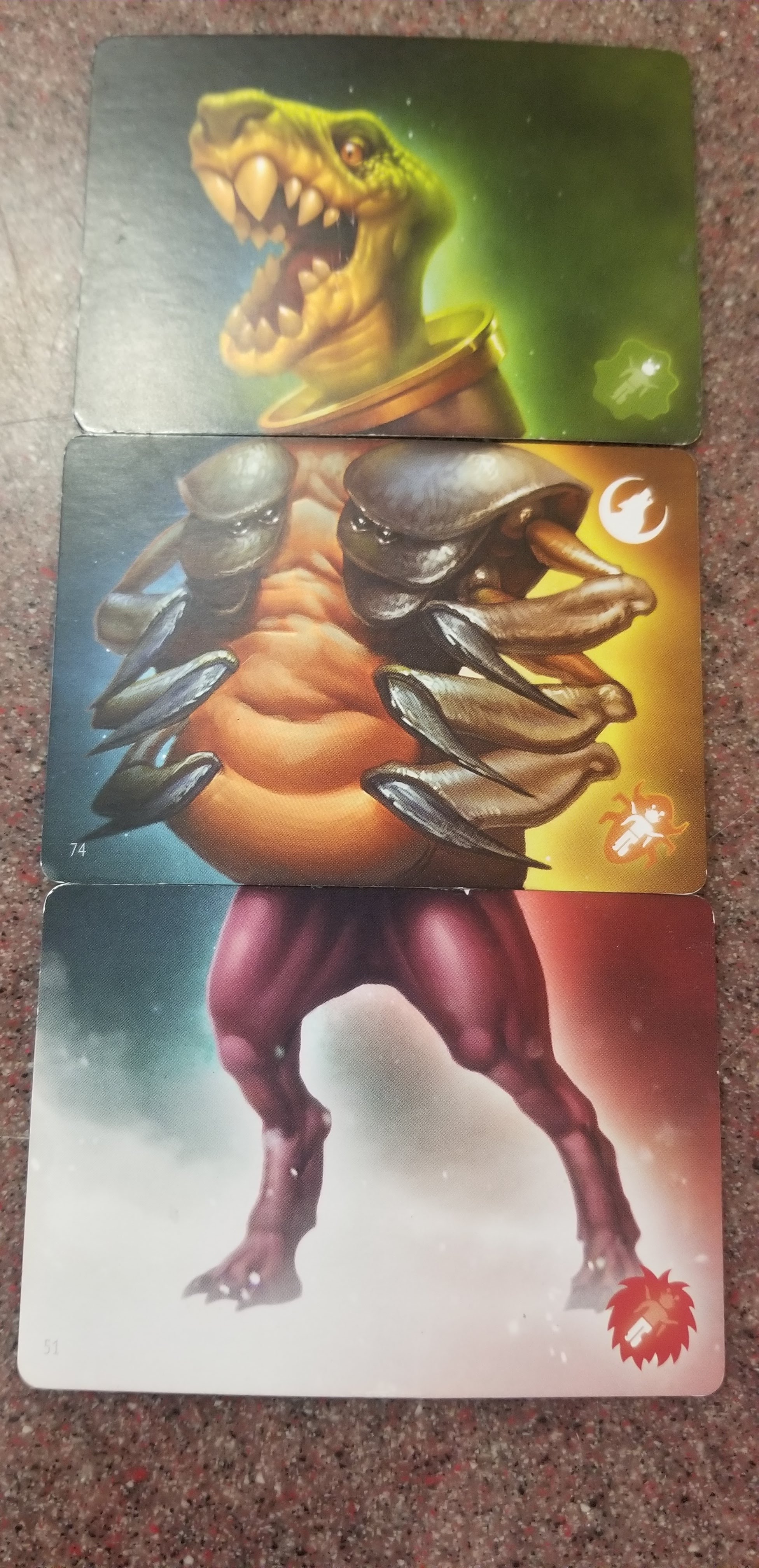
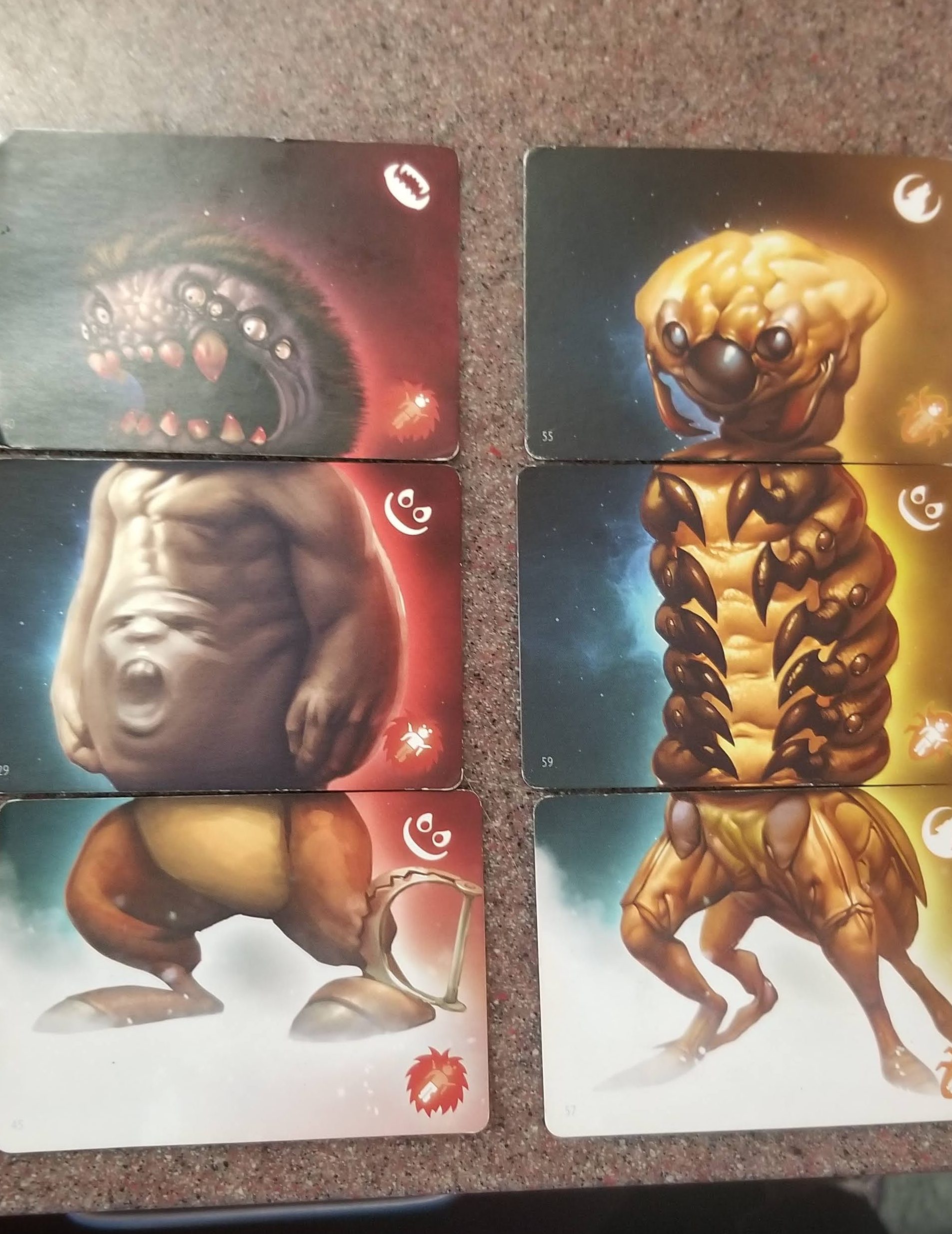
Tempurra, IelloGames (2011)
Ages 8+ (6+ with modifications)
Play time: 15-20 minutes
Number of players: 3-10
The Plot: It’s an eating contest! All the players are cats, passing dishes back and forth among each other, but every card you pick brings you closer to indigestion. If you get three indigestion counters, it’s all over; go get some Alka-Seltzer and relax.
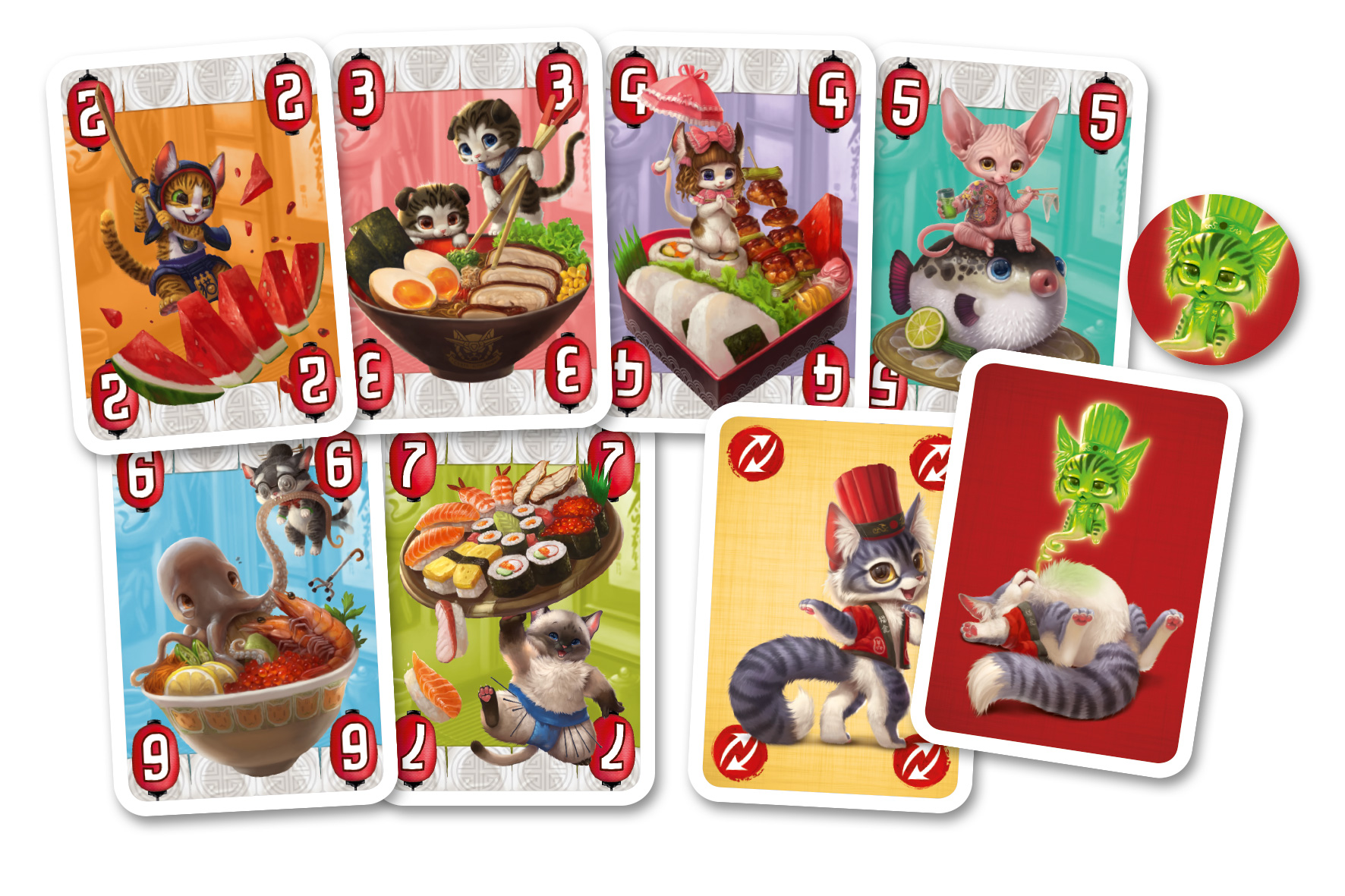
The art is adorable: various cats, brandishing gloriously overflowing dishes. Separate the Indigestion cards from the other cards, shuffle, deal 5 to each player. Put one of the Indigestion cards in the remaining pile.
Gameplay happens over several rounds. The first player chooses a dish card from their hand and puts it face-up on the table. The next player can either:
Serve a Dish: play a card with the same value (if a card has a value of 6, the player must play a card from their hand with a value of 6)
Eat a Mouthful: Draw the same number of cards as the value of the played card (if you don’t have a 6 card, draw 6 cards). At this point, if you haven’t drawn an Indigestion card, discard the stack you’ve been playing on, and start a new stack by playing a card from your hand.
If you DO draw an Indigestion card, the round is over: the person who got the Indigestion card gets an Indigestion counter; they add the cards they’ve drawn to their hand, and the deck is reshuffled, adding an additional Indigestion card to the mix. The stakes get higher with every Indigestion card revealed, because you’re adding MORE to the deck!
Play an Action Card: Rather than Serve a Dish or Eat a Mouthful, players can play an action card if they have one in their hand. Action cards let you reverse the action, throwing the game back into the previous player’s lap; pass over yourself and have the next player take an action, OR add one dish to the total of dishes to be eaten. If you have a card with a value of 3 showing, and you play a +1 card, the next player must play a card with a face value of 3 OR draw four cards.
Skip a Dish: If you don’t have a card with a face value of the card in play, but have multiple cards of another value, you can play those and Skip the Dish offered. If that 3-card is face up, and you don’t have a 3, but you have a pair of 6 cards, throw them down! Then, clear the stack and start a new pile with the second 6-card facing up, and the next player must either match with a 6-card of their own, draw 6 cards, play an action card, or skip.
Gameplay ends when someone draws their third Indigestion card.
The kids really enjoyed this game, with some modifications. I made it even simpler for my younger kids by keeping it closer to Uno rules: match the cats by number or play an action. If you can’t match, take the number of cards on the displayed card. If you play a +1, the same rules apply as the game rules. I keep the rounds short, and hope to introduce skipping dishes in the next week or two, once the kids are comfortable with game play and pace.
All in All: Super fun for kids 8+, modified for ages 7-8 made it fun for my library kids. This is one of our favorite games at home, and I have my library kids actively looking for this one on game days now.
The First Cat in Space Ate Pizza, by Mac Barnett/Illustrated by Shawn Harris, (May 2022, Katherine Tegen Books), $15.99, ISBN: 9780063084087
Ages 7-12
Two award-winning kidlit powerhouses come together for a laugh-out-loud tale about a cat, a toenail-clipping robot, and a group of hungry rats posed to devour the moon. Rats from another galaxy are eating the moon! What is the Earth to do? Dispatch a cybernetically enhanced cat – First Cat – to take care of business. Accompanied by a stowaway robot who believes he’s destined for greater things than clipping toenails, and a ship’s computer who’s furious at being upstaged from a larger part in the story, First Cat lands on the moon, and the adventure begins: frozen wastelands, living forests, churning waters (Sea of Tranqulity? HA!) and dangers at every turn. There are repeating gags that get funnier with every utterance, and readers will giggle themselves silly as First Cat tries, time and again, to have a mouth-watering slice of pizza. Artwork is boldly outlined and colorful, hilariously communicating the madcap storytelling.