Posted in Fantasy, Fiction, Graphic Novels, Middle Grade, Teen, Tween Reads

Truckus Maximus: Bread, Circuses, and Gladiator Monster Trucks!

Truckus Maximus, by Scott Peterson/Illustrated José Garcia, (Oct. 2019, First Second), $16.99, ISBN: 9781596438149

Ages 12+

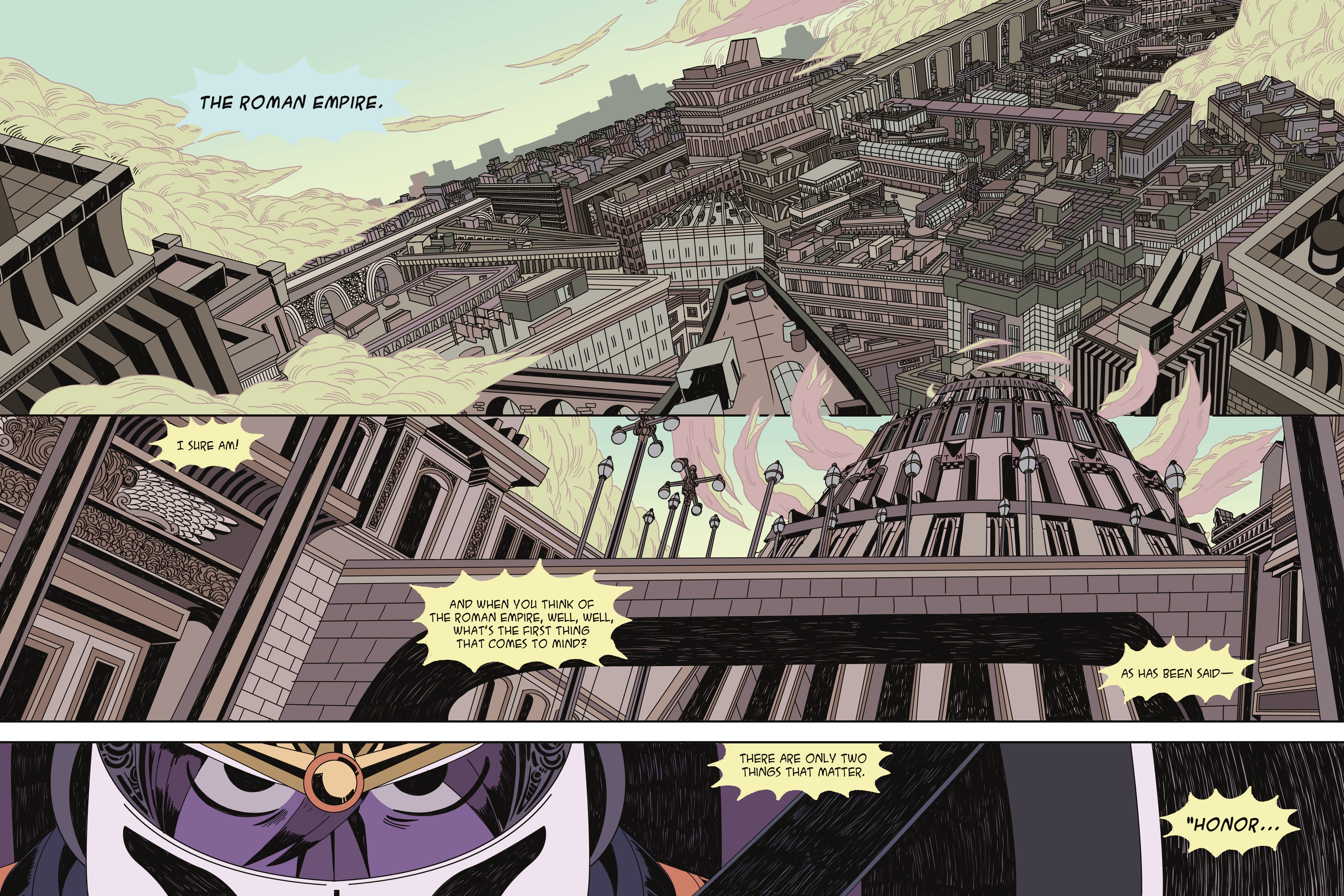
In this dystopian YA graphic novel, the Roman Empire never fell and now, gladiators duke it out on the track: Truckus Maximum is a competition where combatants race monster trucks to the death (Gen Xers, think Rollerball meets Death Race 2000). Team Apollo leader Axl is the best driver who can pull a win out in the worst of circumstances and adheres to a strict moral code. If he wins his 1000th match, he’ll be free – but at what cost to his teammates? Piston is a racer that’s new to Team Apollo. She takes chances, she lives and drives recklessly, and Axl sees something in her that no one else does. Can he teach her to rein herself in before she gets herself traded off to a worse fate than the track?

If you have manga fans, give them this one! The artwork is very manga-inspired, and the storyline is fast-paced, with car aerodynamics and explosions aplenty. There’s good world-building – I like the idea of the Roman Empire’s enduring and not moving past this whole entertainment-or-death business. It’s a popular dystopian theme, from The Running Man to The Hunger Games, and fits where we are as a media-obsessed, “if it bleeds, it leads” society. Axl is an interesting character, with his stoicism and the big moral choice ahead of him. In a society where everyone is corrupt, the good guy becomes the outlaw – and the team owner and the emperor himself are all in, trying to sway Axl. Piston is Axl’s foil, made of passion where Axl represses everything. Her bad decisions get her tossed off one team, and leave her future with Team Apollo pretty tenuous until she starts to harness her own power and channel it in more positive ways. But having a bit of that wild streak also means pulling out some big risks, and that may be what Team Apollo needs.

Truckus Maximus is a fun read, and should be popular with tweens and young teens. I’d like to see this as an animation.
Posted in Fiction, Humor, Middle Grade, Middle School, Realistic Fiction, Teen, Tween Reads

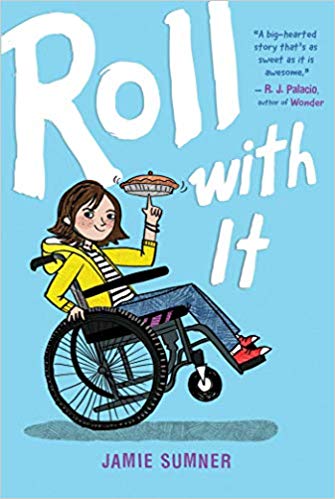
Jamie Sumner’s Roll With It gives life with CP a face and a story

Roll With It, by Jamie Sumner, (Oct. 2019, Atheneum), $17.99, ISBN: 9781534442559

Ages 10-14

Twelve-year-old Ellie loves to bake. She writes letters to famous chefs and cookbook authors, asking questions to make her own art better. She’s frustrated by her overprotective mom, having to go to the bathroom at school with the help of an aide, and her father, who exists in theory, not so much in practice. Ellie also has cerebral palsy, or CP, which keeps her wheelchair-bound, but never out of the game. After her grandfather, who has dementia, drives his car into a local supermarket, Ellie’s mom packs up and heads to Eufala, Oklahoma, to live with and help out. Ellie’s grandmother is thrilled to have her family for a visit, but makes it clear that she’s not putting her husband into a home. Ellie starts school and a new life in Oklahoma, befriending Coralee and Bert; schoolmates who have their own eccentric flairs, and taking on a school that isn’t ready for Ellie.

Inspired by her son, Roll With It is author Jamie Sumner’s first novel, and with it, she has given us a main character who is upbeat, smart, funny, and darned independent. She’s a tween on the verge of teenhood, coping with adolescent feelings and frustrations on top of family worries, like her grandfather’s increasing dementia, concern about her grandmother, and a father that she’s disappointed in and hurt by. On top of that, she has the struggles that come with being in a school ill-equipped to work with her needs, and being the new kid in the middle of a school year. How does she cope? She lets you know what’s going on! Her voice is strong and clear, in her fantastic tweenage snark and honesty. Her friends Coralee and Bert have fully-realized backstories, giving them life beyond being Ellie’s friends in the background. Ellie’s grandparents and mother emerge as realistic, three-dimensional characters with big concerns of their own: family health, an absent spouse, bills, bills, bills.

A story about fitting in and standing out, following a dream and making your own way, Ellie is a character you want to cheer for and your kids will want to hang out with. Hand this to any of your realistic fiction readers, especially the kids that love Aven’s adventures in Insignificant Events in the Life of a Cactus by Dusti Bowling or Sharon Draper’s Out of My Mind; for your baking aficionados, give to readers who loved Jessie Janowitz’s The Doughnut Fix/The Doughnut King, and Anna Meriano’s Love Sugar Magic books. Talk this up to your teacher visitors, and suggest they take a look at it (I’m always ready to push good Summer Reading list ideas).

Roll With It has starred reviews from Kirkus and Publisher’s Weekly. Check out Jamie Sumner’s author webpage, where you can sign up to receive her newsletter and download a free discussion guide.


Posted in Fantasy, Fiction, Fiction, Graphic Novels, Intermediate, Middle Grade, Tween Reads

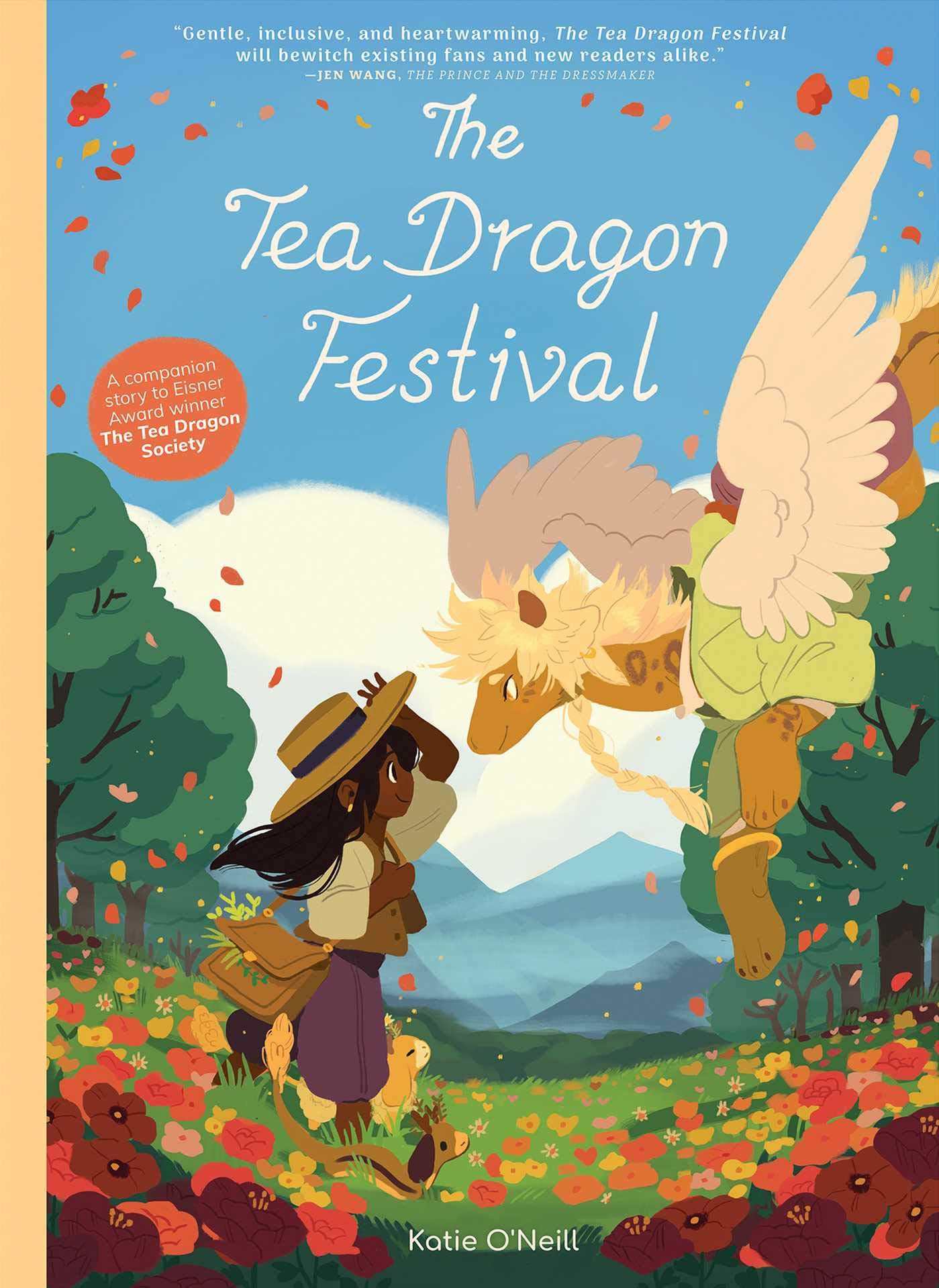
Katie O’Neill follows up The Tea Dragon Society with The Tea Dragon Festival

The Tea Dragon Festival, by Katie O’Neill, (Sept. 2019, Oni Press), $21.99, ISBN: 978-1-62010-655-6

Ages 8-12

The Tea Dragon Festival takes place in the universe introduced in the Eisner-winning The Tea Dragon Society (2017) and is a prequel of sorts, featuring two characters from the first book. Taking place in a mountain village called Silverleaf, Tea Dragons are small dragons that live with the villagers; the villagers care for them, even pamper them, and harvest tea leaves that the dragons grow on their bodies. Each dragon is named for the teas they produce: we’ve previously met Jasmine, Roobios, and Chamomile, and The Tea Dragon Festival debuts some additional dragons: Fennel, Marshmallow, and Mountain Chamomile.

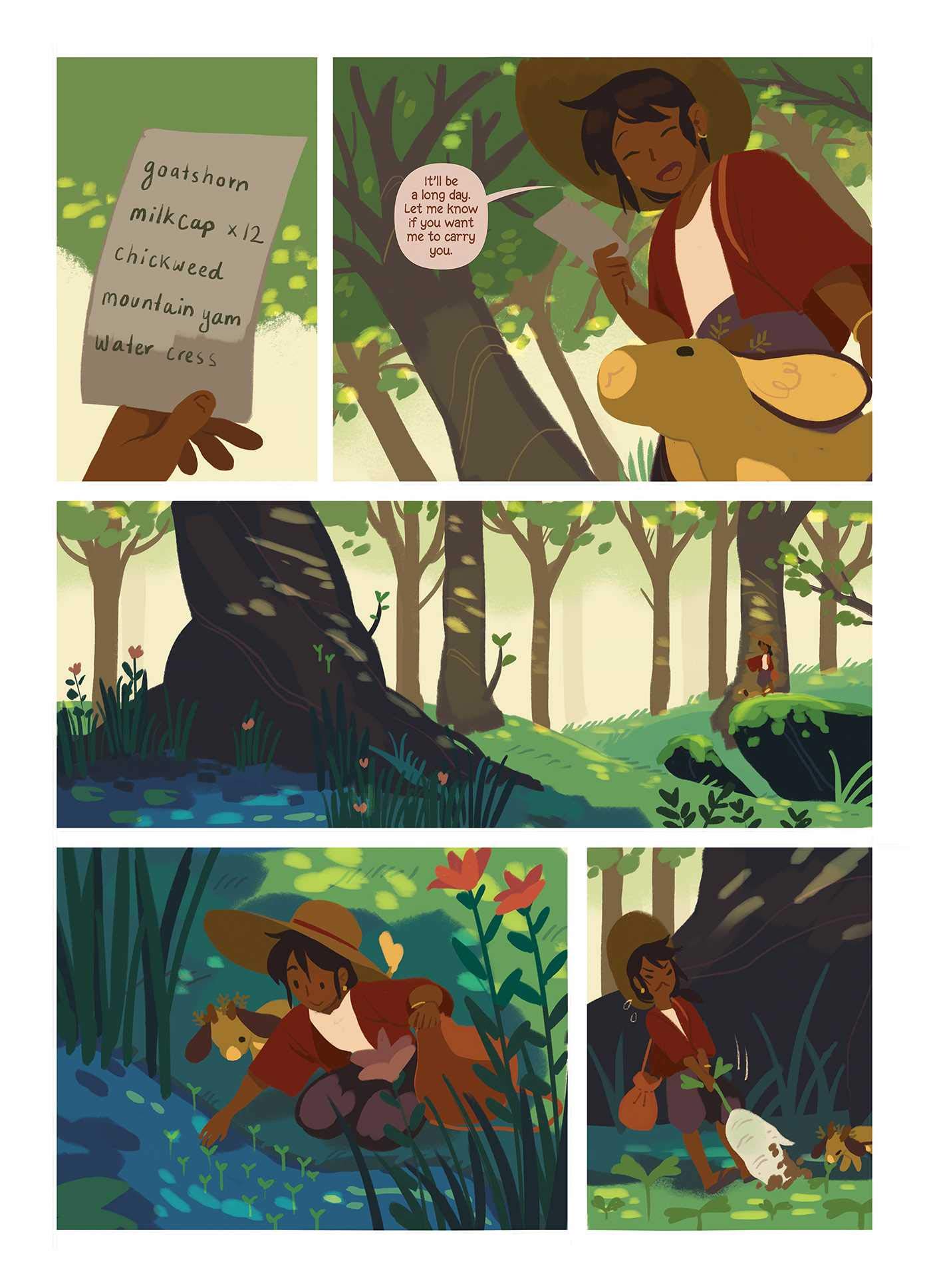
A girl named Rinn goes into the woods to gather ingredients and discovers a real dragon, fast asleep. Upon waking, Aedhan – the dragon – explains that he was sent to protect Silverleaf, but dozed off. But he’s ready for the barley tea celebrations at the next Tea Dragon Festival! The only problem is… the barley tea celebration happened 80 years ago. To lift Aedhan’s spirits, Rinn brings him back to the village and introduces him to everyone, including her Uncle Erik and his companion, Hesekiel, who previous Tea Dragon readers will remember. The couple are younger here, and are still in their bounty hunting days; they deduce that the bounty they are hunting – a mysterious forest creature who can put people to sleep for decades. While Erik and Hesekiel seek out the bounty, Rinn includes Aedhan in festival preparations, and endears him to the village – and vice versa.

This is just a lovely, uplifting story. Katie O’Neill once again gives us a world where diverse characters live and work together in harmony; we have fluid gender identities and diverse characters, even diverse species, living among one another in peace. It’s a visually beautiful story, with verdant forest colors and lush landscapes. Aedhan is a shape-shifting dragon who looks stunning, majestic, in flight and shifts into a softer, humanoid form to interact with the Silverleaf inhabitants. Back matter includes a note about tea dragons and dragons, and an Alpine Tea Dragon Handbook, introducing three new tea dragons from the story. A wonderful fantasy that will make readers happy.

The Tea Dragon Society webpage has a cast of characters, an almanac of tea dragons, and the tea dragon webcomic! Add to your friendly list of links for kids!

Katie O’Neill is an Eisner and Harvey Award-winning graphic novelist. Visit her webpage for more about her books and illustration.

Posted in Fiction, Graphic Novels, Middle Grade, Realistic Fiction, Tween Reads

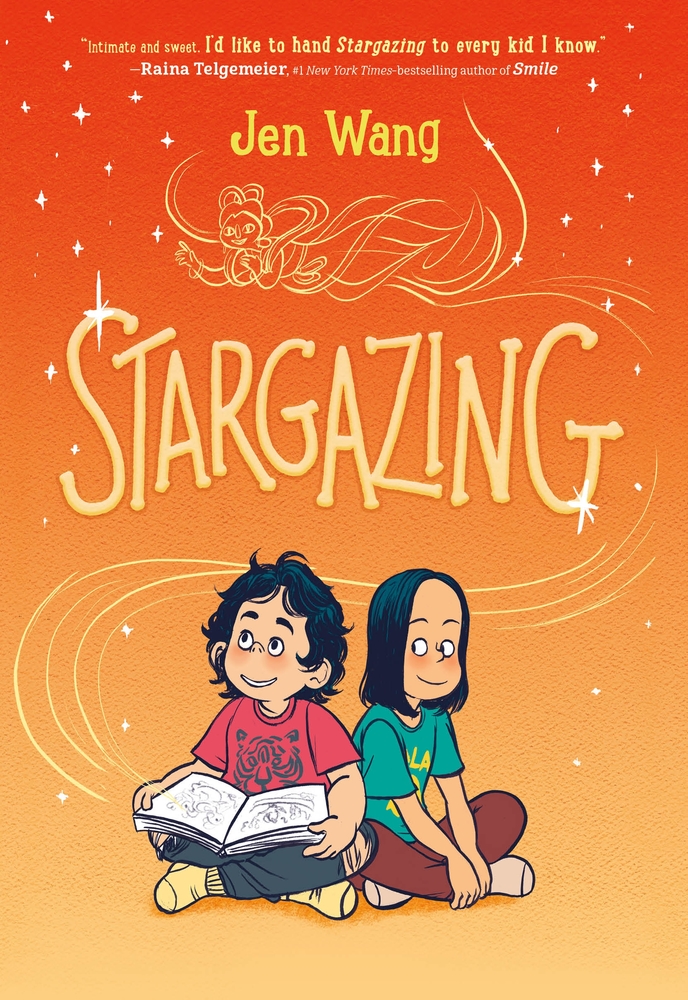
Jen Wang does it again with Stargazing!

Stargazing, by Jen Wang, (Sept. 2019, First Second), $12.99, ISBN: 9781250183880

Ages 9-13

Jen Wang’s given us cyberpunk fantasy with In Real Life (2014) and high fantasy with The Prince and the Dressmaker (2018). With Stargazing, readers get a more contemporary story with, as Kirkus notes, a true portrayal of the diversity within the Asian-American community.

Christine is a Chinese-American girl from a more traditional Chinese family. She is focused on school and her music, until her family moves YuWen Lin and her daughter, Moon, into the in-law apartment where Christine’s grandfather used to live. YuWen and Moon are a struggling family, and the hospitality offered by Christine’s family is much appreciated. Christine and Moon are encouraged to spend time together, but the two are polar opposites: Moon is a vegetarian Buddhist who loves K-Pop and is rumored to get into fights. Despite their differences, Christine and Moon grow close, with Moon introducing Christine to a lighter, more fun side of life, letting her relax and let her guard down. Moon confides in Christine, telling her that she belongs in outer space, and that beings from space speak to her. When Moon meets a Caucasian girl that shares many of her interests, Christine’s jealousy takes control, and she puts Moon into an embarrassing situation; Moon reacts with her fists, which leads to an episode that lands Moon in the hospital.

Jen Wang weaves an intricate story of family expectations, social groups, and the complexity of navigating friendships in Stargazing, giving us some of her best storytelling yet. Influenced by events in her childhood and growing up in an Asian-American family, the story has depth and incredible emotion. Whether she’s giving us cyber farmers (In Real Life) or a friendship between two schoolgirls who love K-Pop, Jen Wang always manages to make her character’s humanity the central focus of her stories. Christine and Moon are so real, so strong, that their voices come right off the page and speak to readers; telling them about their stories, their lives, their struggles. When Christine writes that she doesn’t consider Moon Asian, we see the conflict between a traditional Chinese household versus a more contemporary, Westernized Chinese-American household. Christine’s mother holds Chinese lessons in her home; YuWen runs a plant nursery and watches TV with her daughter at night. While Christine listens to more Westernized music, Moon embraces K-Pop and dance routines. The two families present a glimpse into the diversity of Asian-American families, both connected to the culture in different ways.

Stargazing is a definite must-read and has starred reviews from Kirkus and Publisher’s Weekly. Newsarama has an interview with Jen Wang that’s worth reading.


Posted in Fiction, Graphic Novels, Middle Grade, Tween Reads

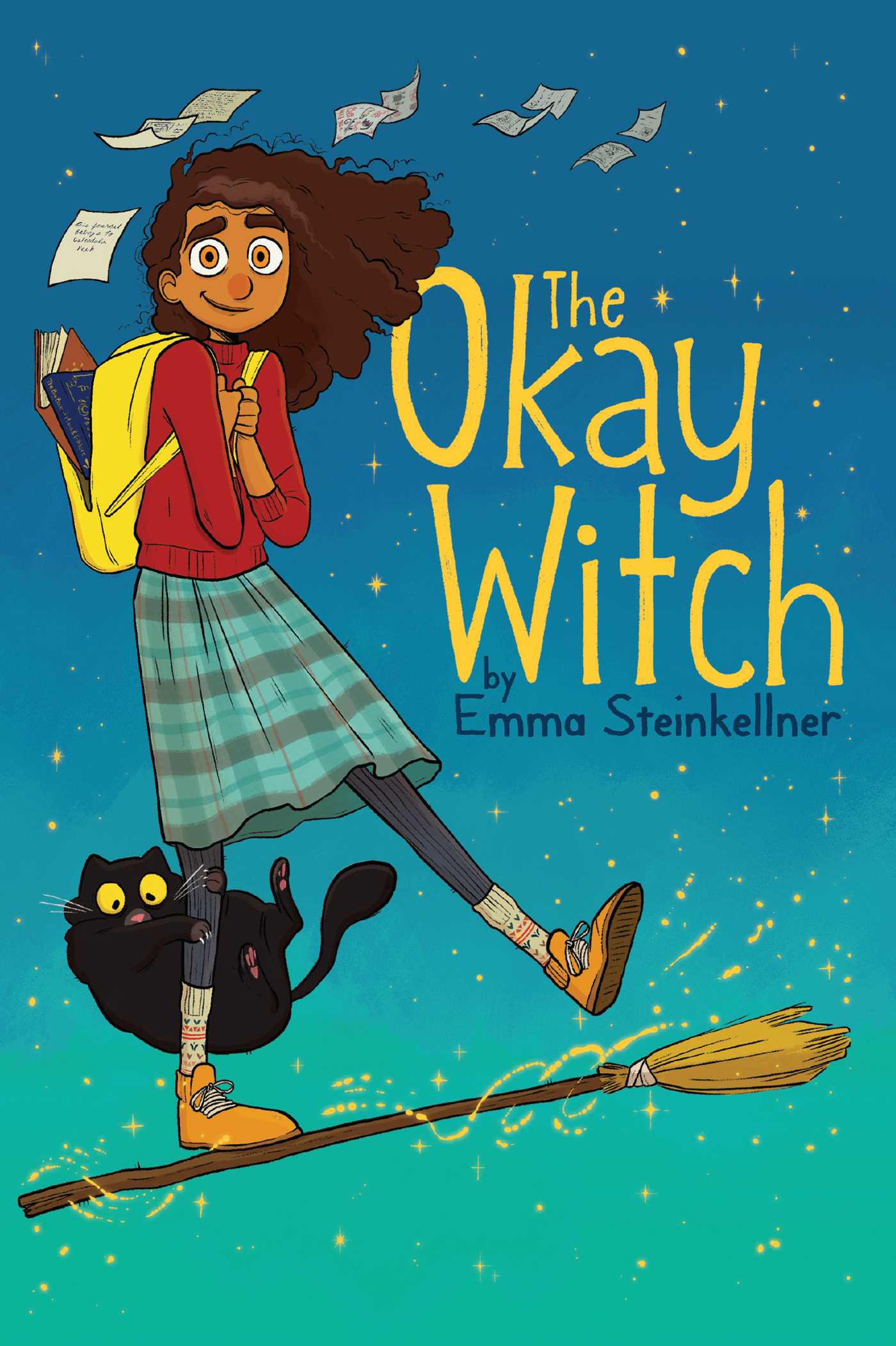
Blog Tour: The Okay Witch by Emma Steinkellner

I’m excited to be a stop on The Okay Witch blog tour! I picked up a copy of this graphic novel at BookExpo this year, and loved it. Now, without further ado…

Magic is harder than it looks.

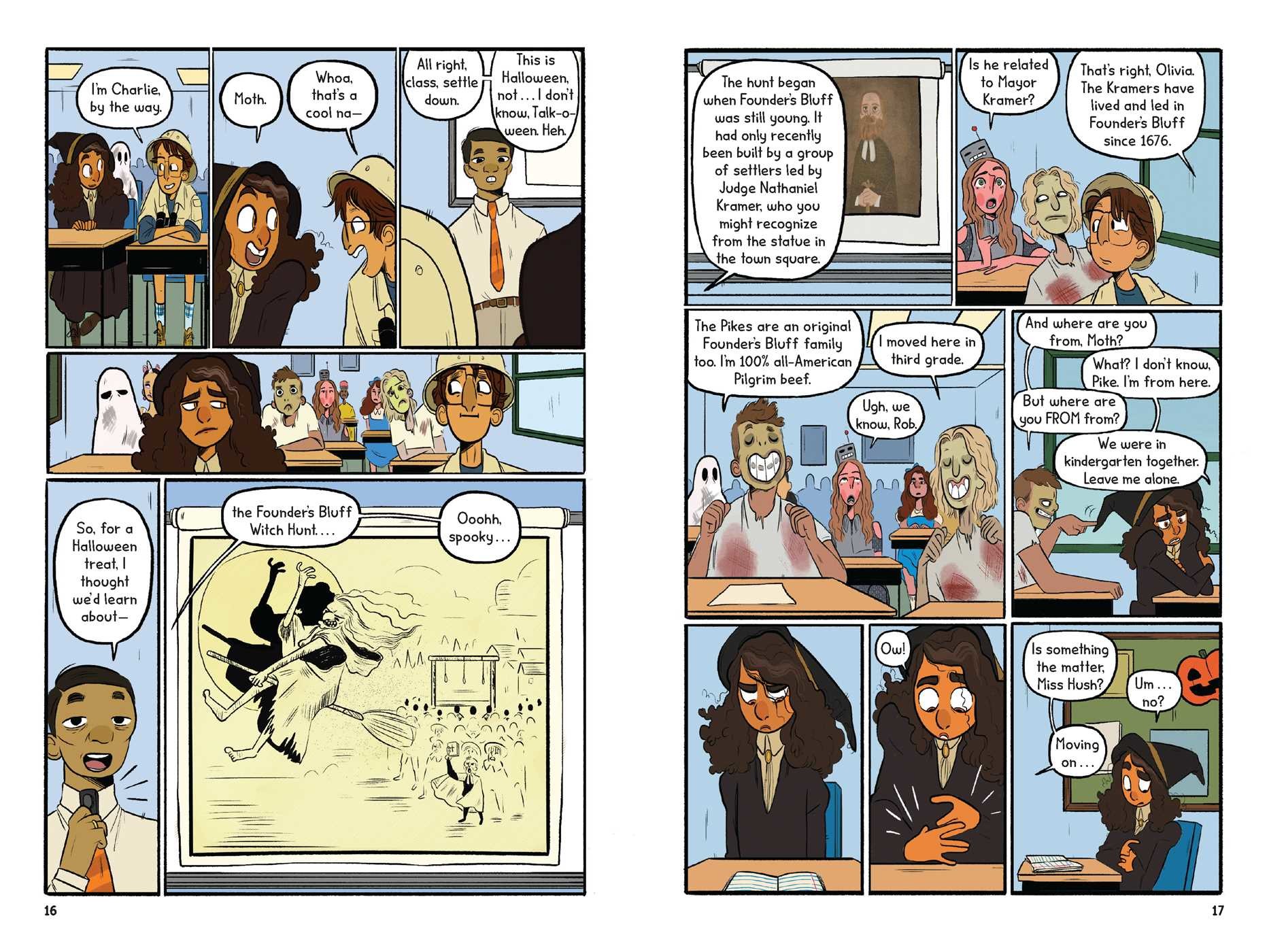
Thirteen-year-old Moth Hush loves all things witchy. But she’s about to discover that witches aren’t just the stuff of movies, books, and spooky stories. When some eighth-grade bullies try to ruin her Halloween, something really strange happens. It turns out that Founder’s Bluff, Massachusetts, has a centuries-old history of witch drama. And, surprise: Moth’s family is at the center of it all!

When Moth’s new powers show up, things get totally out-of-control. She meets a talking cat, falls into an enchanted diary, and unlocks a hidden witch world. With that revelation, Moth’s adventure truly begins – an adventure that spans centuries, generations, and even worlds – as she unravels the legacy at the heart of her life. (from the publisher)

Where to start gushing about The Okay Witch?

The story stars a heroine of color, and the main storyline addresses it from the beginning: Founder’s Bluff’s leader wanted, as Moth’s mother, Calendula states, “a town of sober, obedient, lily-white Pilgrims”. Women – especially women of color – who had any kind of independent spirit? Women of color? That didn’t fit into Judge Kramer’s mold, and it didn’t fit into colonial America’s mold, so they were hunted until Moth’s grandmother and her coven tore the fabric between worlds to create a safe space of their own: Hecate. Moth is a child of color in a mostly white town, where she’s bullied by young white men, one of whom happen to be a descendant of one of the founding families, who even asks Moth where “she’s FROM from”. Moth is a teen coming into her own power and struggling with the decision to embrace it or suppress it to “be normal” as her mother, who eschews magic and witchcraft, begs her to. When Sarah, Moth’s grandmother, shows up to see her granddaughter, there’s a power struggle on either side of Moth that represents her internal struggle.

We also get a sassy talking cat, Moth and Calendula’s friend reincarnated; who also happens to have the sweetest backstory (and gives the story an LGBTQ nudge, further establishing Moth and her family as awesome socially aware folks). Using witchcraft and witch hunts to address prejudice and racism, The Okay Witch makes history and current events equally relevant – and sadly, we see that not much has changed.

The Okay Witch is a fantastic coming-of-age story with characters you’ll love and return to long after you’ve finished the book. Give this to your Roller Girl readers, your BabyMouse readers that are ready to take on more challenging material, and your Raina Telgemeier readers.

The Okay Witch, by Emma Steinkellner, (Sept. 2019, Aladdin)
$12.99, ISBN: 978-1-5344-3146-1
Ages 8-12


About the Author

Emma Steinkellner is an illustrator, writer, and cartoonist living in Los Angeles, California. She is a graduate of Stanford University and the illustrator of the Eisner-nominated comic Quince. The Okay Witch is her debut graphic novel as an author. You can visit her webpage to see more of her illustration work.

Posted in Fantasy, Fiction, Humor, Middle Grade, Middle School, Tween Reads

All hail Doug, King of the Mole People!

King of the Mole People, by Paul Gilligan, (Aug. 2019, Henry Holt & Co.), $13.99, ISBN:  978-1-250-17134-4

Ages 8-12

Doug Underbelly just wants to be a normal seventh grader, but the fates are stacked against him: he and his dad live in a house that looks straight out of a scary movie, and the only meals his dad makes are from the eels that are plentiful around the house grounds; the weird girl at school follows him around, too. And it doesn’t help that he’s covered in mud and worms most of the time… but that’s what happens when one is king of the mole people, as Doug is. He doesn’t really want to be their king, but it was thrust upon him, and even though the throne is awfully uncomfortable and his royal advisor most definitely is plotting against him, he’s doing his best. But there’s trouble rumbling down below: the Slug People are getting fidgety and fussy, and it looks like the Mushroom Folk and the Stone Goons are going to get involved, too. What happens when giant worms start rising up and wrecking everything above ground? Doug has to get things under control, and quick – and maybe that weird girl will be more of a help than he expects.

This laugh-out-loud middle grade book is the first in a new series that kids are going to devour. It’s got gross-out humor, there’s some touching moments, and Doug is the underdog character that we all love to cheer for (and laugh at). He’s got a fatalistic yet snarky outlook on life, and his attempts to be normal – from signing up for sports and drama, to deciding he’ll crush on a popular girl, because everyone else does – are sweetly hilarious and painfully relatable. Magda, the “weird girl”, is a goth girl with brains and depth, and she keeps Doug on his toes. Doug’s royal entourage/mole people buddies are sweetly literal and not terribly bright, but loyal.

Kirkus says it best: “The Wimpy Kid’s got nothing on the King of the Mole People—he’s got more laughs and more mud”. Betsy Bird has a fun interview with author Paul Gilligan on School Library Journal, and you can find an excerpt, trailer, and downloadables – including your own crown – at the publisher’s King of the Mole People website.


From Macmillan’s website

Posted in Fantasy, Fiction, Graphic Novels, Middle Grade, Tween Reads

The team-up I’ve been waiting for: Mighty Jack and Zita the Spacegirl!

Mighty Jack and Zita the Spacegirl, by Ben Hatke, (Sept. 2019, First Second), $14.99, ISBN: 9781250191731

Ages 8-12

The latest Ben Hatke graphic novel brings together two of his best series: Zita the Spacegirl and Mighty Jack. It’s a team-up he teased in 2017’s Mighty Jack and the Goblin King, and I have been waiting patiently for two years to find out what was going to happen.

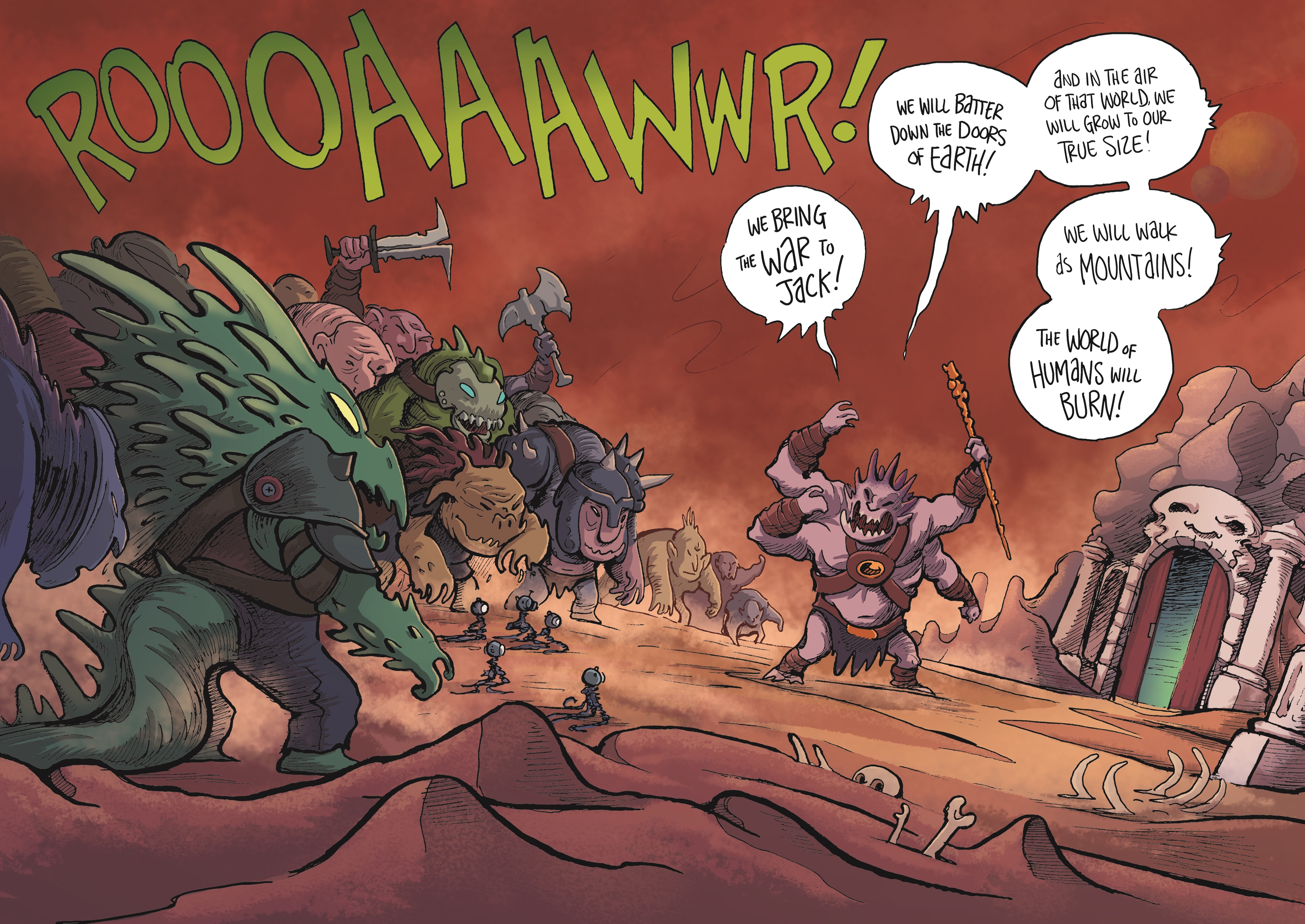
After Zita and her friends arrive from their space-hopping adventures, Jack and his family have been housing and feeding the group. Lily, Jack’s neighbor, who helped him fight the giants and rescue Maddy, his sister, is on edge, though. Is she jealous of Zita, or is there something more to it? Meanwhile, the giants are growing stronger and getting ready to invade above-ground: the gate between worlds is growing weaker, and they’re ready to use it to their advantage. Zita, Jack, Lily, and Maddy have to get ready to battle once more.

I’ve been a fan of Ben Hatke since 2012, when I first read Zita the Spacegirl. I love Hatke’s art, I love his storytelling and world-building, and I love sharing his books with the kids at my libraries. Hatke is a great storyteller, giving each of his characters a rich backstory and exciting quest. He also weaves the fantastic with the everyday, giving us robots, dragons, giants, goblins alongside a terrified mother, the complexity of navigating tween friendships, and the frustration of being “ordinary”.

Mighty Jack and Zita the Spacegirl is a wonderful chapter in the Zita/Jack saga. Is it the end? Well… you just have to pick it up and read it for yourself. Mighty Jack and Zita the Spacegirl has a starred review from Kirkus.

Posted in Animal Fiction, Fiction, Fiction, Intermediate, Middle Grade

A story about trust: The Dog Who Lost His Bark

The Dog Who Lost His Bark, by Eoin Colfer/Illustrated by PJ Lynch, (Sept. 2019, Candlewick), $16.99, ISBN: 9781536204421

Ages 7-11

A puppy is taken from his mother, purchased as a birthday gift for a cruel boy from his equally cruel parents. Abandoned at a dump, wrapped in linoleum tile, he is rescued, and chosen by another boy – a boy named Patrick. But Oz, as Patrick names the pup, is afraid of humans. He’s never met a kind one, and he doesn’t want to be hurt again. Patrick, ever patient, sits with Oz, talks to Oz, and waits for Oz to warm up to him. But Patrick’s life is about to undergo upheaval, too: his parents are splitting up… is it because his father is allergic to dogs? Patrick swears that he will make the painful sacrifice and send Oz back to the shelter if it means having his father back home.

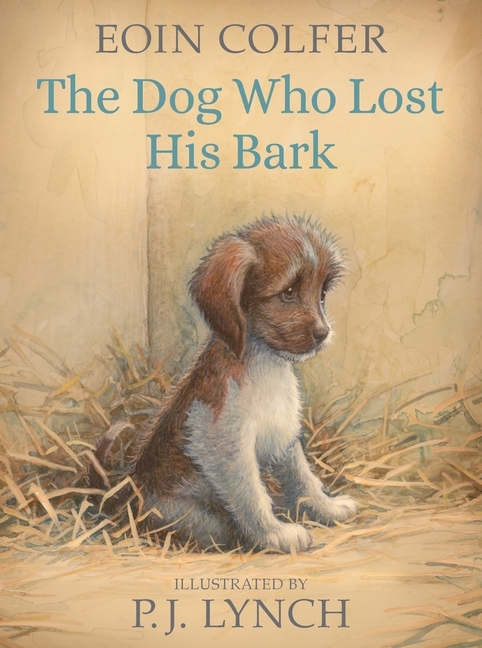
The Dog Who Lost His Bark is a sensitive, sometimes painful, ultimately soothing story about trust, betrayal, and family. Eoin Colfer creates wonderfully memorable characters, both canine and human, and PJ Lynch’s black and white illustrations give them form. Oz’s playful innocence is so harshly broken by his first family that it becomes painful; Lynch’s illustrations give us a sweet dog that just wants to be loved, but is terrified of opening himself up to that possibility ever again. It’s all there, right on the cover image. Illustrations introducing us to Patrick, the boy who adopts Oz, give us a sensitive boy who wants to reach his pup.

The Dog Who Lost His Bark reads like classic kidlit. I’ll be recommending this one along with my EB White favorites and Kate DiCamillo’s books, for sure. Beautifully written, wonderfully illustrated, and an absolute must for your reading lists next year, educators. I’m putting this one on my Newbery watch list.

The Candlewick website offers a free, downloadable discussion guide.

Posted in Animal Fiction, Fantasy, Fiction, Fiction, Historical Fiction, Intermediate, Middle Grade

At the Heels of History, where the goodest pups make history, too – and a giveaway!

Filigree’s Midnight Ride (At the Heels of History #1), by Pam Berkman & Dorothy Hearst/Illustrated by Claire Powell, (Aug. 2019. Simon & Schuster), $17.99, ISBN: 978-1534433335

Ages 8-11

The story of Paul Revere and his daughter’s Pomeranian, Filigree, kick off the first in the At the Heels of History series, where kids get to read about major moments in history as seen through the eyes of the dogs that were there.

Filigree wasn’t always Paul Revere’s dog, but his Loyalist human was shipped back to England and he was adopted by Paul Revere for his daughter, Frances. Poor Filigree is looked down on by the other colonists’ dogs: Sam Adams’s Newfoundland, Jove, bullies him, and even the Revere family cat, Anvil, has complete disdain for the little dog. But Frances loves him, and wants him to protect her father when he leaves home for a secret mission that could put him in danger with the British troops. Is Filigree just going to be in the way, or will he play a major part in a pivotal moment in American history?

This is such a cute book and an enjoyable new historical fiction/What If series! Kids will get a kick out of reading the “real story” behind historical moments like Paul Revere’s famed midnight ride and the American Gold Rush (coming in the next book), witnessed by the loyal canines who stood by their humans as history happened. There are black and white drawings throughout, making this extra fun and giving readers visual context of the time periods and the characters. Filigree’s Midnight Ride’s subplot involves the rough (ruff?) relationship between Jove, Sam Adams’s giant Newfoundland, and little Filigree, so the artwork demonstrating the vast difference in size just adds to the amusing read. Back matter points out some important information about the famed Midnight Ride, which didn’t really happen the way that Schoolhouse Rock taught me that it did (but I’m still going to sing along to the song). There’s a word about marginalized voices, particularly the enslaved, and their support of the patriots against the British.

There’s a website for the series where you can find free, downloadable curriculum guides, fun facts, and downloadable mazes, puzzles, and more for everyone to enjoy.

A cute add to your intermediate/middle grade fiction sections, and a nice additional way to generate interest in history units. At the Heels of History has a second book in the series, Bo-Bo’s Cave of Gold, coming in April 2020.

Hear ye! Hear ye! Enter this Rafflecopter giveaway for a chance to win your own copy of Filigree’s Midnight Ride! (U.S. addresses only, please!)

Posted in Fiction, Historical Fiction, Middle Grade, Realistic Fiction, Tween Reads

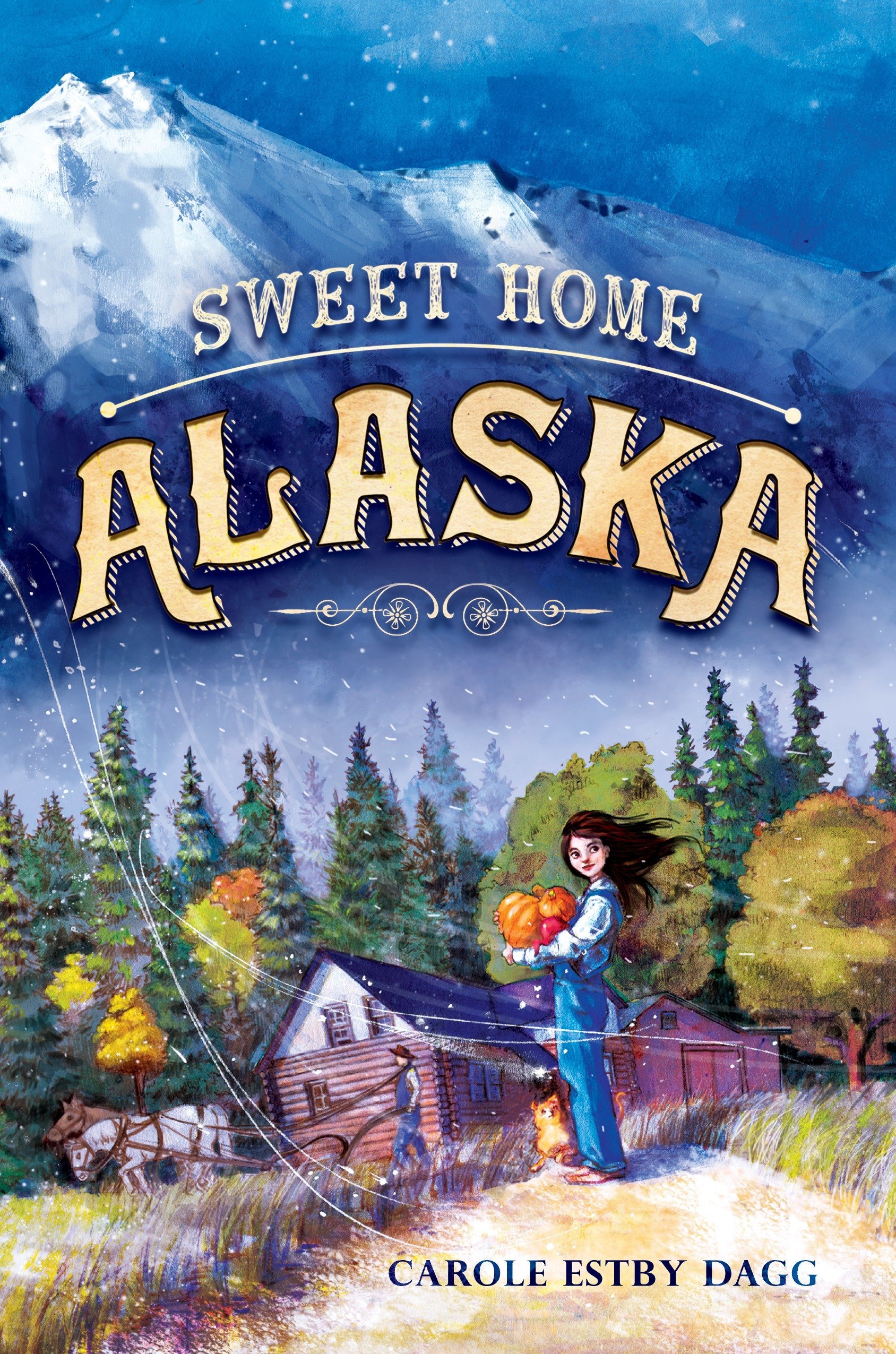
Sweet Home Alaska: Little House, up North

Sweet Home Alaska, by Carole Estby Dagg, (July 2019, Puffin), $8.99, ISBN: 9780147514202

Ages 9-13

Terpsichore Johnson’s family is just one of many families suffering through the American Great Depression in 1934. When the local mill in their Wisconsin town closed, the family relied on whatever they could grow in order to eat, and Terpsichore can make darn near anything out of a pumpkin. Her father is determined to take care of his family, and suggests taking President Franklin D. Roosevelt up on his New Deal offer: become an Alaskan pioneer in his Palmer Colony project! Terpsichore is at once unsure and excited: it’s a chance to be a pioneer, just like her hero, Laura Ingalls Wilder, but it’s so far from everyone and everything she knows. The family decides to give it a year, and they’re off. Life isn’t easy for that first group of colonists: there’s illness, and schedule and materials mismanagement leave a lot of folks living in tents when they should have had homes built, but slowly and surely, life in Alaska starts to grow on the Johnson family, except for Terpsichore’s mother. Can Terpsichore’s prize pumpkin win enough money at the Palmer Colony Fair so she can buy her mother a gift that will make her agree to stay?

I loved this book! Sweet Home Alaska is about the 1935 Matanuska Colony; one of FDR’s New Deal projects that would create jobs, investment in the country and infrastructure, and colonize part of U.S.-owned Alaska, which wasn’t a state just yet. The parallels between Sweet Home Alaska and Laura Ingalls Wilder’s Little House series are wonderful, and a good readalike for readers who enjoy the Wilder books, and Louise Erdrich’s Birchbark House books. (There are no interactions between the mostly white Palmer colonists and indigenous people in Sweet Home Alaska; a point discussed in the author notes at the end of the book.) Terpsichore – pronounced Terp-sick-oh-ree, named for the muse of dancing – even refers to Wilder’s book, Farmer Boy, when growing her pumpkin to show at the Palmer Colony Fair.

The book takes a deeper look into a moment in history I haven’t yet seen captured in historical fiction. While it takes place during the Great Depression, this is new territory, and worth the read. Terpsichore is the eldest child, with twin younger sisters and an infant brother, and handles much of the housework to help her mother out. She’s smart, enterprising, and determined. She and the two friends she makes in Palmer – Gloria, named for actress Gloria Swanson, and Mendel, named for the scientist who studied genetics – work together to start up a colony library and find ways to raise money for books and supplies. She experiences frustration, but always bounces back, stronger than before. The writing just flows from page to page, with adventure, emotion, and excitement throughout. There are wonderful mini-plots throughout, including the telegram to Eleanor Roosevelt that got our President’s attention; a visit from Will Rogers; and a Palmer resident with interesting ties to Terpsichore’s family. I loved spending time with this group.

An author’s note and further reading are included, and really make this a solid choice for kids seeking out historical fiction. There are also some recipes, including one for jellied moose nose. You know you’re curious.

Sweet Home Alaska was originally published in 2016, but I somehow missed it. Glad my friend Barbara over at Blue Slip Media told me I needed to read it now! Check out the free, downloadable discussion and activity guide, and find out about author visits, Skype visits, and contact info (including how to get an autographed bookmark!) at the author’s website.