Posted in Intermediate, picture books, Preschool Reads

Monsters and Mermaids bring fantasy fun!

Two fun picture books are coming up in August and September! If you’re looking for books for your late Summer/early Fall shopping carts, give these a spin.

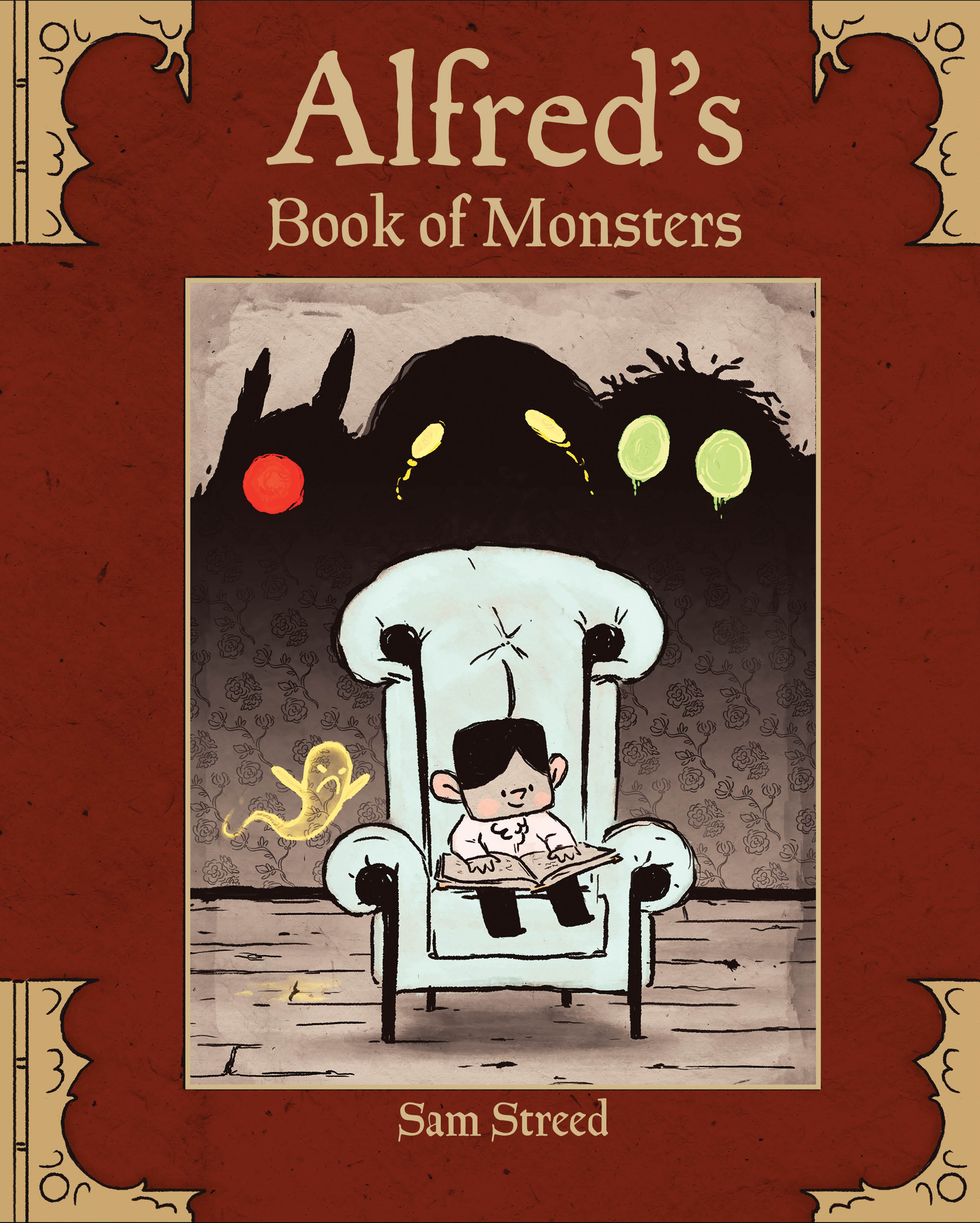
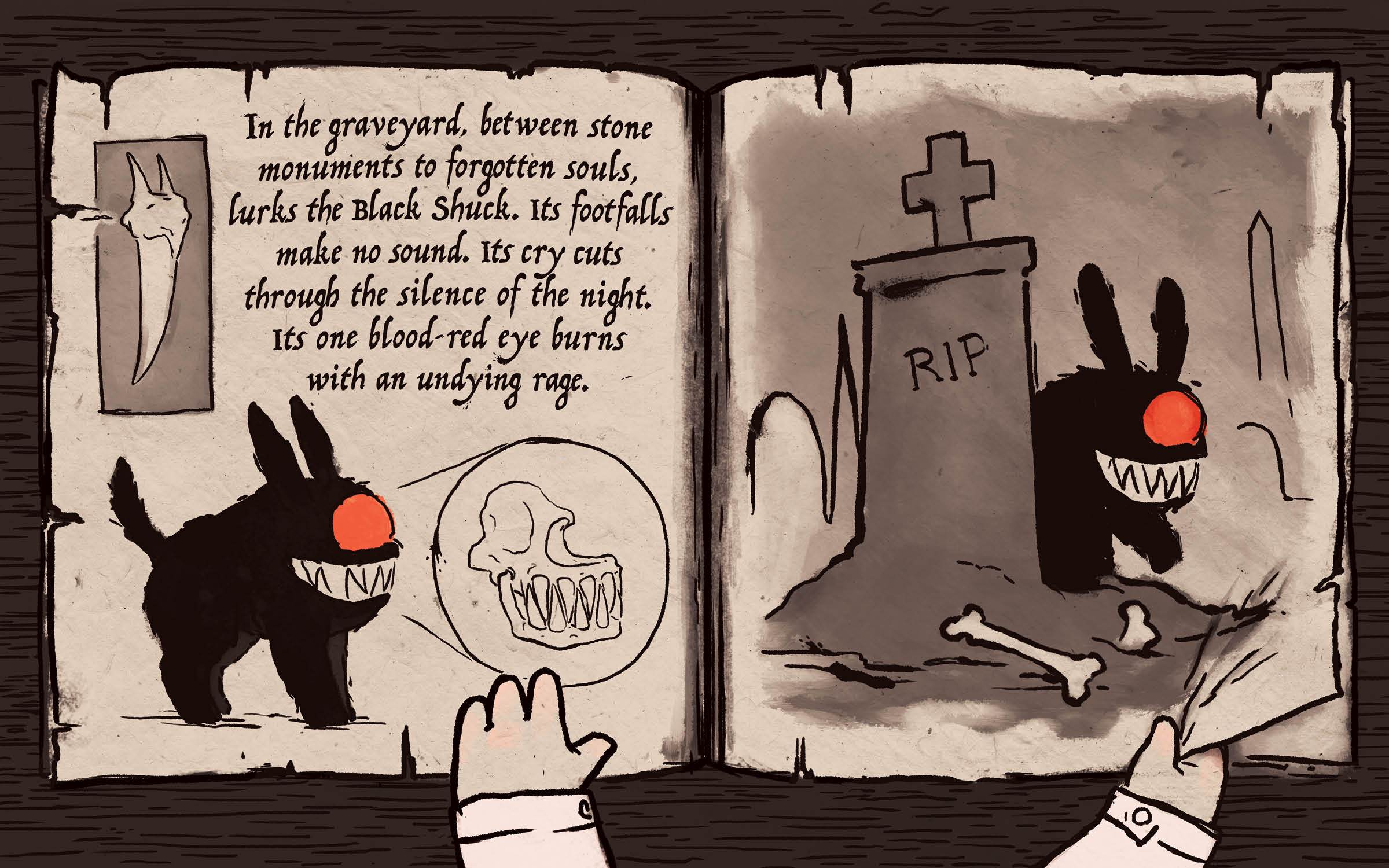
Alfred’s Book of Monsters, by Sam Streed, (Aug. 2019, Charlesbridge), $15.99, ISBN: 9781580898331

Ages 5-8

Alfred is a little boy who loves monsters, not boring old tea times. Aunty thinks monsters are dreadful, and constantly interrupts Alfred’s precious reading time by calling him to tea. Alfred decides to invite the monsters he reads about: the Nixie, the Black Shuck, and the Lantern Man, to tea time; when they take him up on the invitation, they have a fabulously terrible time! Poor Aunty never knew what hit her.

This is the picture book for the kids who enjoy a good, morbidly amusing story. Have Neil Gaiman or Lemony Snicket fans? Do you have storytime kids who giggle time and again at I Want My Hat Back? Do you just want a fun Halloween read in your back pocket? This is the book for you and your readers. Baby goths and kids who love monsters will get a kick out of this story, which has a lovely Victorian vibe going for it, with bold, black lines and brown and black artwork, occasionally punched up with washed out greens, pinks, yellows, and blues for effect. The story alternates between Alfred’s monster stories and tea time, letting you switch voices back and forth to get your readers squealing with monstrous delight. The artwork was created by scanning and combining old paper, ink splotches, and spooky sketches, and was influenced by antique books and Victoriana; the endpapers sport a dark brownish-red rose wallpaper with framed photos of Aunty, Alfred, and an assortment of pets, people, and tea sets.

Less spooky than humorous, this is a fun book for storytime. Make some puppets and bring your own monsters to tea!


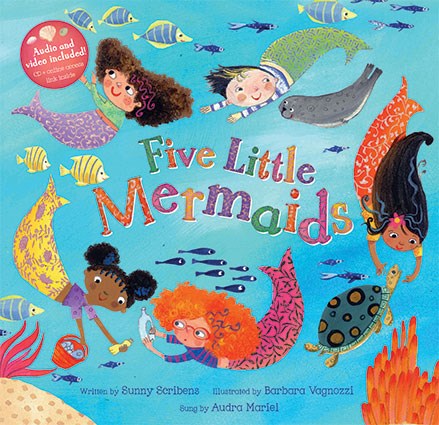
Five Little Mermaids, by Sunny Scribens/Illustrated by Barbara Vagnozzi, (Sept. 2019, Barefoot Books), $16.99, ISBN: 9781782858317

Ages 3-7

This adorably rhyming story is an underwater take on the popular counting tale. A multicultural group of five little mermaids decide to go swimming to “see what they could see”, each of them leaving the group when they meet with various turtles, penguins, giant squid, and jellyfish. Together, the group travels through the world’s oceans, then comes together back home to talk about what they’ve seen. It’s a soothing, familiar rhyme scheme with cheery, bright art that uses vivid colors and brings readers through a lovely underwater world. Back matter includes spreads on the world’s oceans and their properties; notes about mermaid legends from different cultures (Greece, Japan, Central America, New Zealand, and West, Central and Southern Africa); marine life that appears in the book, and finally, sheet music for the song. There will be a CD and downloadable copy available, read by jazz vocalist Audra Mariel.

Barefoot Books always puts a great message out there in such a fun way. The mermaids play alongside their ocean friends and come from all around the world. The back matter provides interesting mermaid and ocean information using a one world, many cultures approach, taking myth examples from cultures including African, Asian, and Central American.

If you want to explore some videos from Barefoot Books, their YouTube channel is a good place to start. I find some of their mindful and diverse kidlit videos good professional development, and I’m sure Five Little Mermaids will have a book trailer up as the release date gets closer.

Posted in Fiction, Fiction, Graphic Novels, Humor, Intermediate, Middle Grade

The Worst Book Ever is hilarious!

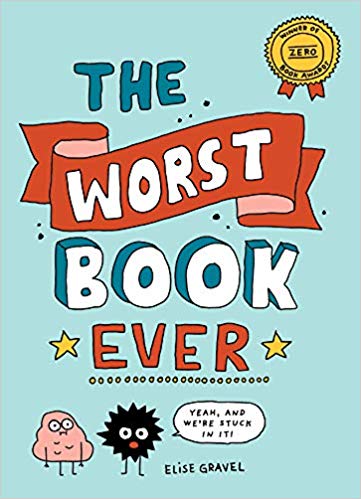
The Worst Book Ever, by Elise Gravel, (May 2019. Drawn & Quarterly), $17.95, ISBN: 9781770463639

Ages 5-10

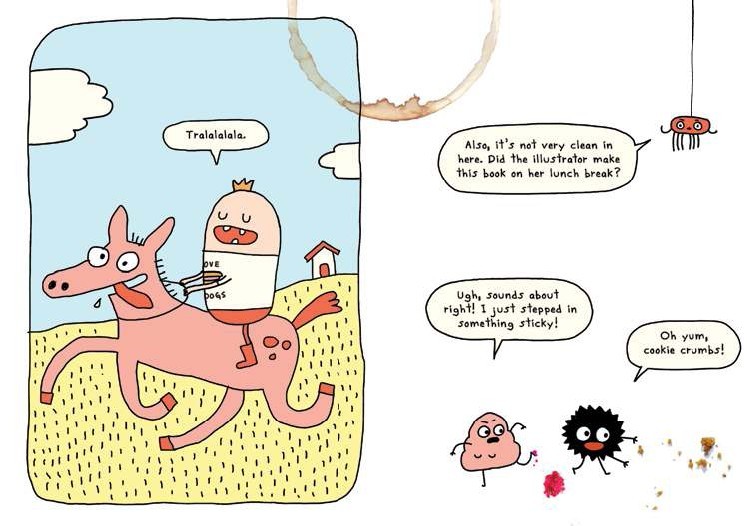
Elise Gravel’s work always makes me smile, and her newest book, The Worst Book Ever, made me laugh out loud. Three characters come together to comment on the worst fairy tale ever as it unfolds. They’re annoyed by standard fairy tale tropes, like the “beautiful prinsess and brave prinse”; they criticize typos, illustration, and writing style, all for laughs. The commentary is laugh-out-loud funny, and the visuals are bold, bright, and wonderfully odd. The fourth wall is more than broken; it’s demolished as coffee stains and cookie crumbs dot the pages and our main characters call out lack of diversity, literary clichés, and weak female characters. One character makes a list of all the spelling mistakes found in the book always good for a prize for anyone who can catch them all. As the story descends into madness, the characters become more confused, and your readers will laugh even harder.

The Worst Book Ever can be a good companion when talking about short story writing. Point out issues the characters have with the story as it develops, and see what your readers chime in with. Can they fix the narrative?

Lest I leave out the most important part: there’s bathroom humor. I quote: “Poopie Peepee Fart Booger”. So this is basically kid gold.

Add this to your graphic novel shelves and watch it fly.

Posted in Non-Fiction, picture books, Preschool Reads

Three great books about space!

The Summer Reading theme for this year is all about Space, and I am psyched. I love outer space, and I’ve got a growing list of books to add to my own readers advisory lists (I’ll put that together in the next week or two for a post). Meanwhile, Sourcebooks and Barefoot Books have three great books about space that are staggered throughout the year, and perfect for your space-faring STEM fans. Let’s check them out, shall we?
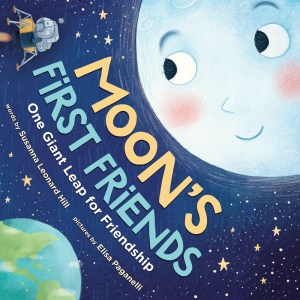
 

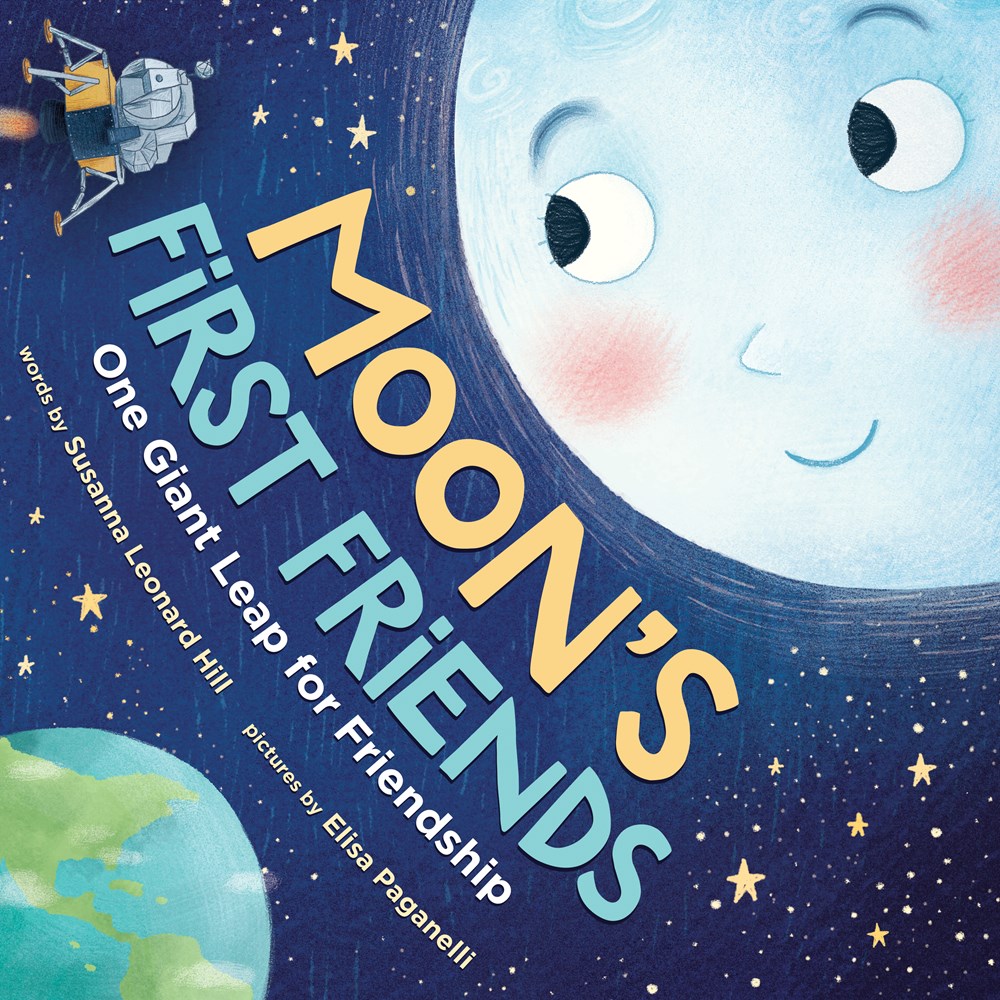
Moon’s First Friends: One Giant Leap for Friendship, by Susanna Leonard Hill/Illustrated by Elisa Paganelli, (June 2019, Sourcebooks Wonderland), $17.99, ISBN: 9781492656807

Ages 4-8

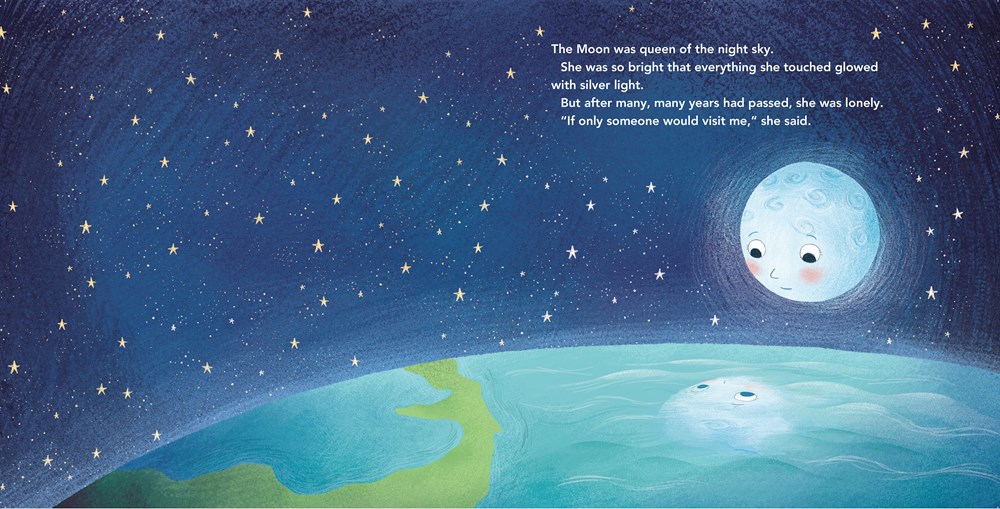
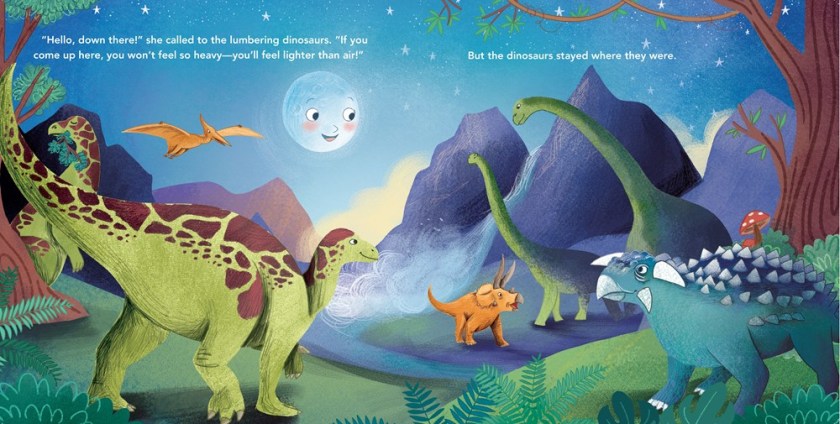
The Moon was so lonely, up in the night sky by herself. When she sees life developing on Earth, she patiently waits for someone to notice and visit her. It takes a while: the dinosaurs don’t notice; early people build pyramids and structures that just aren’t high enough. Eventually, though, she gets some visitors, and she is thrilled! She gives them presents of rocks and dust to take back to Earth, and they give her a beautiful flag and a plaque. Now, Moon is in the sky, happy and waiting for more visitors. Will you be her next guest?

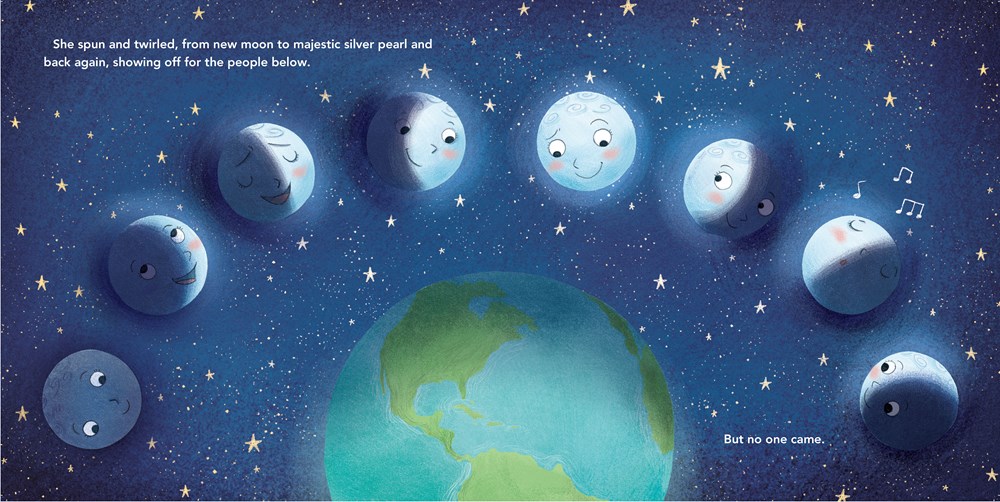
This is the sweetest story I’ve read yet on the Apollo 11 mission to the Moon. The Moon is illustrated as a softly shining, opalescent sphere with kind eyes, rosy cheeks, and a sweet smile; readers are treated to a quick history of Earth’s development as the Moon quietly observes, waiting for a friend to reach out – or up – and say hello. She even dances around the planet, showing off her phases! The actual Apollo mission takes up a brief part of the story, making this sweet book about a lonely satellite who just wants a friend an adorable storytime read for younger kids, and a fun book with solid facts for school-age kids. There’s a brief bibliography on the verso page, and back matter includes several pages dedicated to Mission Moon, the Apollo 11 voyage; moon facts, and moon phases, along with a running timeline of Earth’s formation and development. Endpapers are starry nights, where kids can imagine sailing through the stars to visit their favorite moon. Readers can also scan a QR code to hear Neil Armstrong’s historic first words from the 1969 moon landing. Gentle storytelling and adorable illustration make this a great Summer Reading addition! Display and booktalk with Stacey McAnulty’s Moon, Earth, and Sun trilogy.

 

There Was a Black Hole That Swallowed the Universe, by Chris Ferrie/Illustrated by Susan Batori, (Sept. 2019, Sourcebooks Explore), $17.99, ISBN: 9781492680772

Ages 3-8

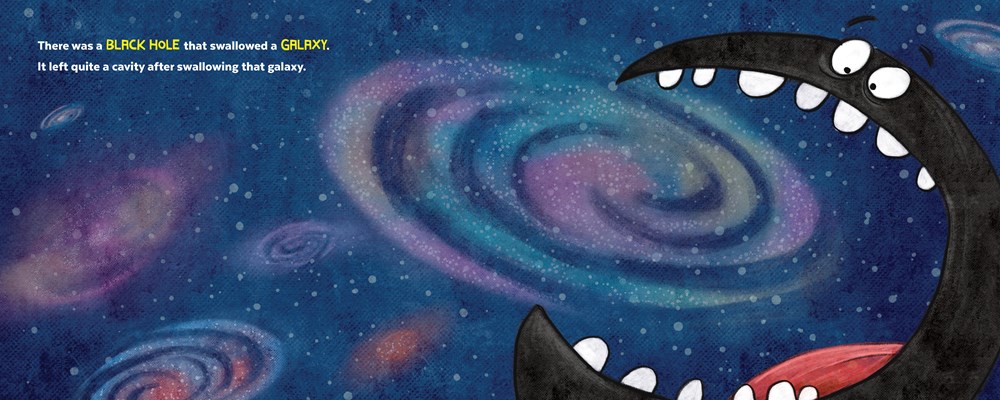
You know if Chris Ferrie is writing a book, I’m reading it. This STEM-errific take on There Was an Old Lady Who Swallowed a Fly is about a giant black hole that swallows… well, everything. He starts with a universe… it couldn’t get worse! But oh, it does: the black hole swallows planets, stars, galaxies, and atoms, molecules, and quarks along with it. Yikes!

I read this to my first grader this morning and he immediately smiled and said, “This is like The Old Lady story!”, so kids familiar with the classic tale (and all of its spin-offs) will immediately jump in and know what’s coming; how the story will progress. With each chomping, the black hole gets bigger, and the planets and heavenly bodies look hilariously terrified as they try to get away from its maw. The storytelling is fun and loaded with humor; it’s cumulative and rhyming storytelling at its scientific funniest. The illustrations are goofy, with exaggerated facial expressions that make the storytelling more dramatic and humorous as you go. Bone up on your keyword knowledge for kids who will ask during the story (neutrons, atoms, quarks, oh my!). Scientific terms are highlighted in bold yellow, and capitalized to stand out and give your readers a nice working STEM vocabulary. Shine a blacklight on the pages from back to front, and you’ll reveal a super-cool, hidden history of the universe’s creation!

Absolute fun and a must-get for your storytime collections. Be a rock star at Science Storytime! Pair this with The Universe Ate My Homework by David Zelster for more black hole-related fun.


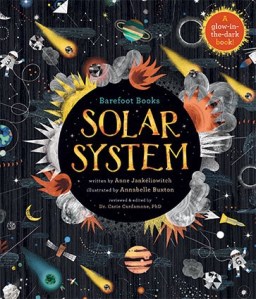
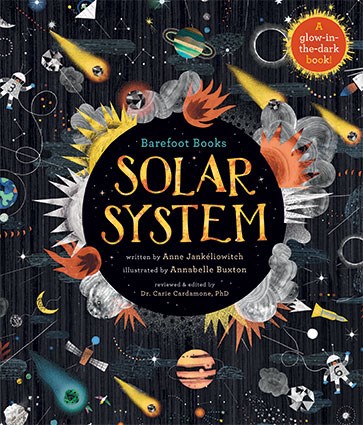
Barefoot Books Solar System, by Anne Jankéliowitch/Illustrated by Annabelle Buxton, Translated by Lisa Rosinsky, $19.99, ISBN: 9781782858232

Ages 8-12

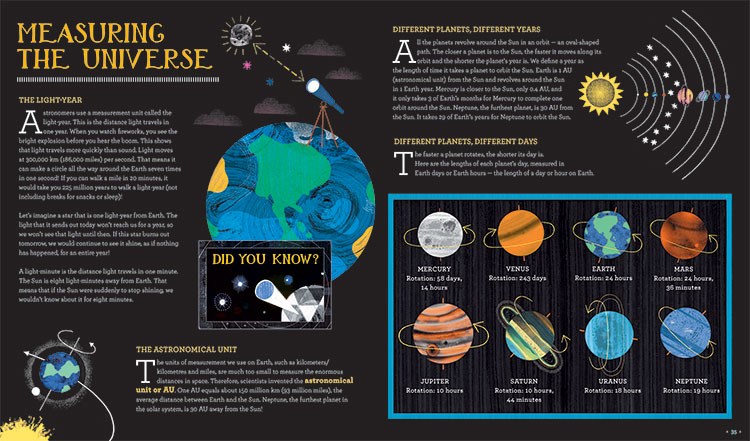
Riding high on the post-Summer Reading wave, middle grade kids can go back school and check out Barefoot Books Solar System, a glow-in-the-dark, interactive guide to our Milky Way, complete with lift the flap booklets, a pull-out map, and beautiful artwork. Originally published in French, the book has been reviewed, edited, and updated by Dr. Carie Cardamone, professor of STEM education and Boston Museum of Science teacher and educator. The text is written with a tongue-in-cheek sense of humor while delivering solid nonfiction goods to middle graders. The book covers each planet, with nicknames like :Saturn: The Space Diva”, and “Uranus and Neptune: The Icy Sisters”; the asteroid belt; differences between solid and gas planets; measuring the universe, and famous outer space voyages. The artwork is bright and bold, seeming to explode off the black pages to grab the reader’s attention.

In keeping with Barefoot’s mission of diversity and inclusivity, there is information about space exploration from around the world, making this a truly global effort. Back matter includes a comprehensive glossary of scientific terms and a note on the units of measurement used in the book. Don’t pass this one up; your 520s will shine a little brighter with Barefoot Books Solar System on your shelf.
Posted in Fantasy, Fiction, Humor, Intermediate, Middle School

Odd Gods – Mythic Middle School can be Heck!

Odd Gods: Misfit Myths from Mount Olympus Middle School, by David Slavin & Daniel Weitzman/Illustrated by Adam J.B. Lane, (May 2019, HarperCollins), $13.99, ISBN: 9780062839534

Ages 7-11

This mythological mashup is straight-up hilarious. Oddonis is the son of Zeus and Freya, the Nordic goddess of love. You’d think he was set, right? NOPE. He’s got a weird chin, messy hair, a third nipple, and he’s nothing like his twin brother… Adonis. Yup, THAT Adonis. Adonis, who had six-pack abs as a baby! How does that even happen? Narrated by Oddonis, Odd Gods is the story of the Odds – the not-quite godly gods – as they navigate the halls of Mount Olympus Middle School, and of Oddonis’ attempt to wrest respect from his brother and his father when he runs against Adonis for class president.

Odd Gods has a snarky bent to the narration – think Jeff Kinney’s Diary of a Wimpy Kid – with a strong undercurrent of frustration. These are the kids that have been discounted from the very beginning. We have Mathena, goddess of math and… poultry. She loves math; she breathes it, lives it, loves it, to her classmate’s ridicule. There’s also the duck and chicken following her around; that can’t help. There’s Germes, god of sniffling and snot, who can often be found hanging out in a dumpster. Don’t forget Puneous, the smallest god of them all, and Oddonis’s best friend… Gaseous. Gaseous, who can clear a room or send a group of gods flying. Together, this group of misfits will take on the established group of Mean Gods and prove, for once and for all, that there’s room on Olympus for everyone.

Absolute fun, with black and white drawings throughout that directly contribute to the story’s flow. Hand this to your Jedi Academy readers and see how they think the two schools would do in a match-up. Heroes in Training and Goddess Girls readers will love this one, too.

Posted in Intermediate, Non-Fiction

If I Were a Park Ranger introduces kids to a green career!

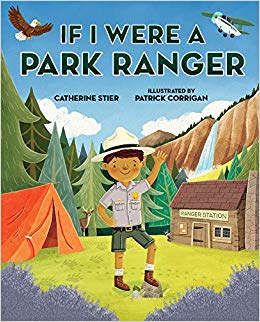
If I Were a Park Ranger, by Catherine Stier/Illustrated by Patrick Corrigan, (April 2019, Albert Whitman & Co.), $16.99, ISBN: 9780807535455

Ages 4-9

A diverse group of kids think of all the great things they’d do if they were park rangers in this picture book that takes readers across the United States for peeks at the beautiful national parks, while shedding some light on a career that you don’t often hear people talk about: the national park ranger. Catherine Stier and Patrick Corrigan provide kids with a history of the profession, and portraits of prominent figures in national parks history: Stephen Mather and Horace Albright, the founding directors of the National Park Service; Theodore Roosevelt, who created programs to protect land and wildlife, and Gerard Baker, a superintendent who brought Native American heritage to the parks, to name a few. Each child envisions himself or herself in ranger uniform, working across different locales; from desert to forest, from volcanoes to caves, battlefields and monuments; they help campers, they protect nature and wildlife, and they report emergencies that threaten our national parks.

Each spread is labeled, introducing readers to a different park. The group of rangers is racially diverse, as are the park visitors; the artwork is colorful and earth-toned, showing lush greens, calming blues, and warm browns of the lands. Deserts like Death Valley National Park get a beautiful orange and violet spreads. The author talks about her love of national parks, and how national parks contribute to STEM and art learning; there is also a note on how to become a park ranger, complete with a link to the National Park Service for becoming a Junior Ranger.

This is a fun addition to career sections, and an overall good book to introduce when talking about nature, environmentalism, and preservation. There are free, downloadable activity pages available, too! For kids interested in learning more about the US National Parks, recommend Ranger Rick’s Travels: National Parks.

Posted in Intermediate, Middle Grade, Non-fiction, Non-Fiction

New York City gets a park: A Green Place to Be

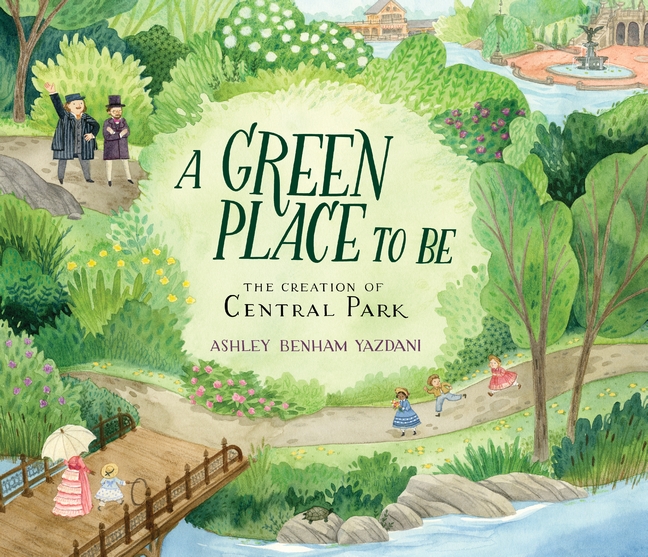
A Green Place to Be: The Creation of Central Park, by Ashley Benham Yazdani, (March 2019, Candlewick Press), $17.99, ISBN: 9780763696955

Ages 7-10

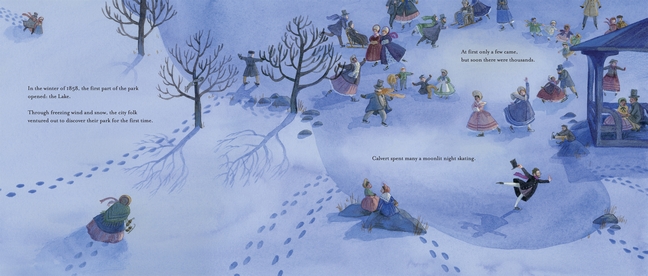
This beautiful and lushly illustrated history of Central Park starts with the land’s beginnings, as a barren area where farm animals and industrial waste left much to be desired, and the design contest devised by architect Calvert Vaux – a contest that he also entered with every intention of winning. A Green Place to Be follows Vaux’s and park superintendent Frederick Law Olmsted’s vision, focusing on their planning, execution, and invitation to artists to join in the effort. The winter of 1858 saw the first park of the park, the Lake, open for visitors; in the summer of 1859, the woodsy Ramble joined the landscape, followed by the Children’s District.

Illustrated in watercolor and pencil, this is a loving tribute to an iconic green space and the men and women who created it. Back matter includes profiles of both Olmstead and Vaux, and a Q&A on spaces within the park. Sharp-eyed readers will love returning to the illustrations again and again to find squirrels, bridges, and other affectionately placed details. There is an author’s note and bibliography for further reading.

A Green Place to Be is a love letter to New York’s green spaces and creativity. Central Park’s website has extensive information about the park, including a calendar of events and links to social media. Planetizen has a good article on teaching urban planning to preschoolers; this could be a fun activity where kids can learn and create their own green spaces! National Geographic has a fun Design a Park activity for middle grade kids, and the STAR Library Network has a printable Design a Park activity that will work with large groups of kids. It’s a fun springtime program!

Posted in Intermediate, Middle Grade, Non-fiction, Non-Fiction

To Infinity and Beyond! The Day the Universe Exploded My Head

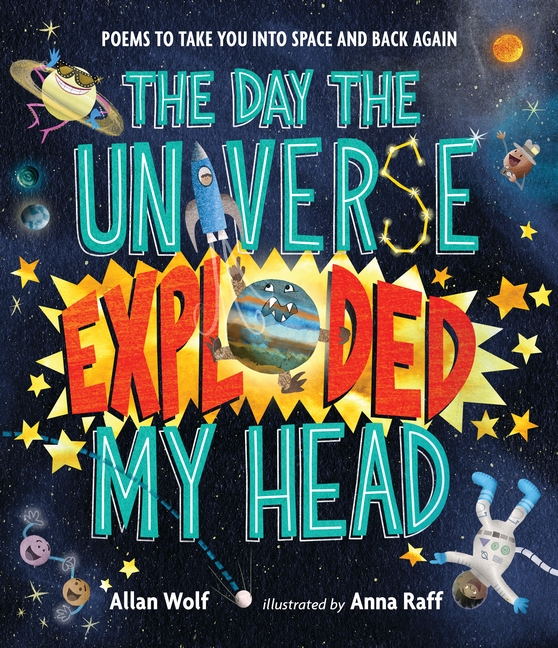
The Day the Universe Exploded My Head: Poems to Take You Into Space and Back Again, by Allan Wolf/Illustrated by Anna Raff, (March 2019, Candlewick Press), $17.99, ISBN: 9780763680251

Ages 7-12

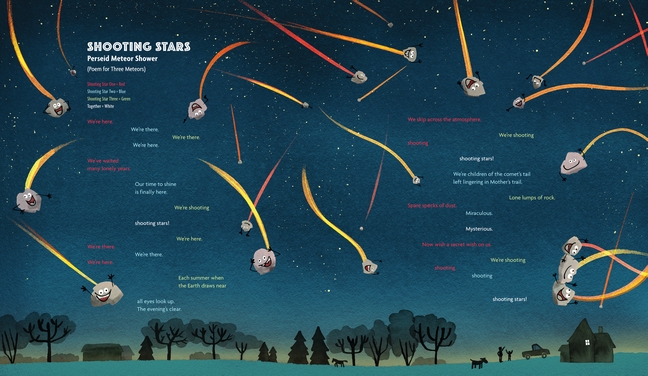
This is one of the best kids’ poetry books I’ve come across in a while! The Day the Universe Exploded My Head contains 29 poems, all about the wonder of space. Each planet gets a poem here, as do the outliers (Planet X, Charon, Pluto). There are nods to pivotal moments in space history (the 2013 meteorite over Cheylabinsk, Sputnik) natural phenomena (black holes, lunar and solar eclipses), and notable scientists (Ivan Ivanovich, Children of Astronomy). The poems are upbeat, factual, and, quite often, very funny, as with the poem, “Planet X”: “I’m one part supercilious/Another part mysterious/One part you-can’t-be-serious/They call me Planet X”. There are a wealth of poems for readers to read out loud, too: “Going the Distance” is a rap for two voices, color-coded for each speaker. The artwork: digitally assembled color collage, made from sumi ink washes, salt, pen, and pencil, explode off the page, with texture that will entice kids to see the swirls of light curling off a star and a fuzzy rings of moons around Neptune.

Non-fiction that informs and excites is aces with me, and The Day the Universe Exploded My Head is a great way to kick off and conclude a space storytime, a STEM program, or a fun read-aloud. Have some printable space coloring sheets ready to hand out, or check out illustrator Anna Raff’s webpage for super-cool activities (I like the Little Card printable for a library visit). Author Allan Wolf’s webpage also has activities, including poetry jokes.

The Day the Universe Exploded My Head has starred reviews from Kirkus and Booklist.


Posted in Fiction, Intermediate, Realistic Fiction

Extravaganza at the Plaza and a word from author Lauren L. Wohl

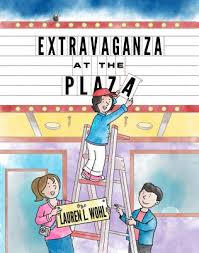
Extravaganza at the Plaza, by Lauren L. Wohl/Illustrated by Mark Tuchman, (Aug. 2018, Persnickety Press), $14.95, ISBN: 9781943978311

Ages 7-11

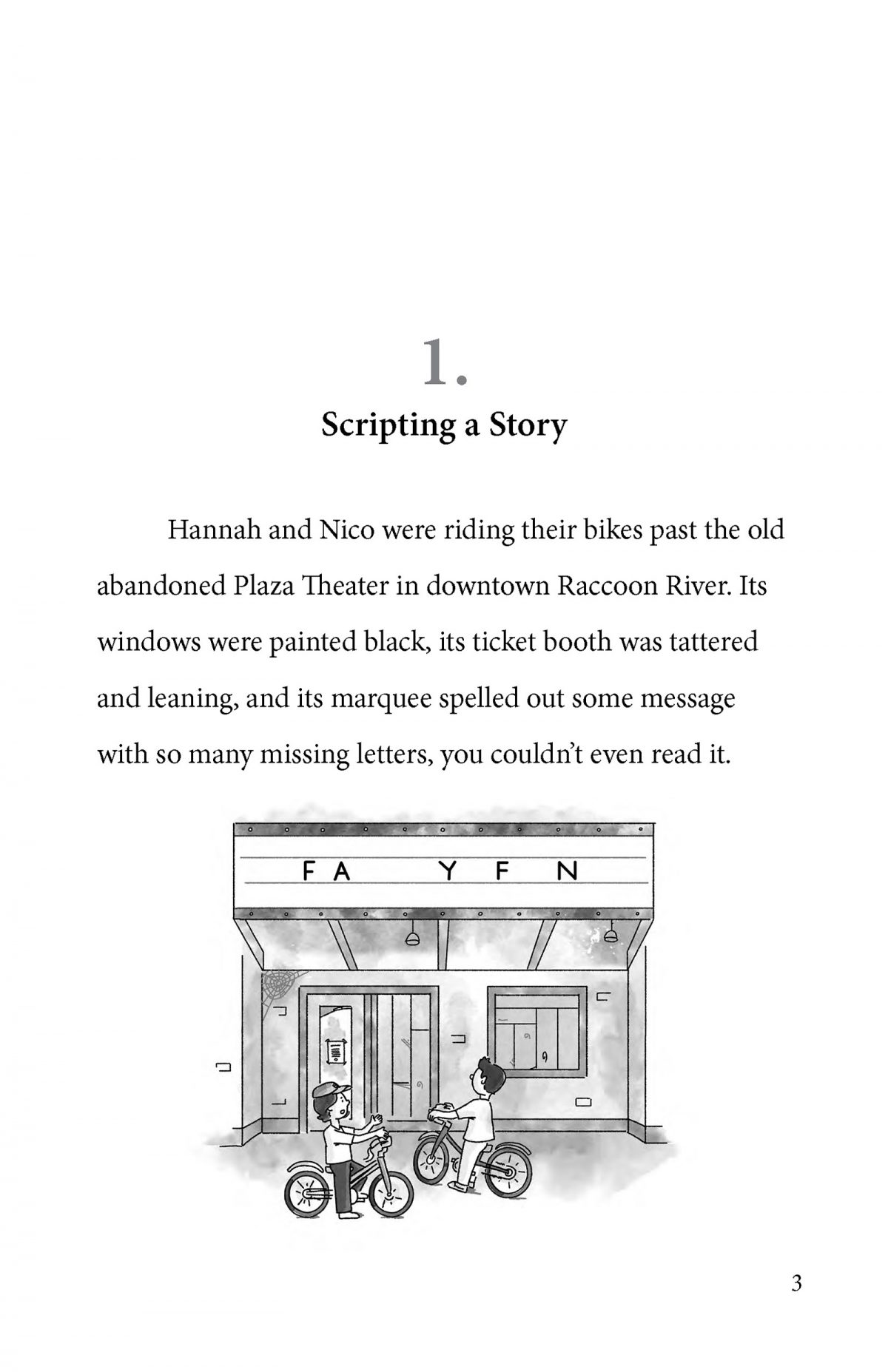
Third graders Hannah, and her best friend, Nico, walk by an abandoned theater in their neighborhood and decide it’s time to take action. Their town needs a good theater, after all: there are graduations and school concerts to be held, and everyone’s tired of traveling to nearby towns to see movies. There is a lot of work to be done, but Hannah is determined to make things happen! This companion to 2017’s Blueberry Bonanza is an upbeat story of how a community comes together with a goal in mind: to rehabilitate a public space!

Extravaganza is a good choice for middle graders. Hannah and Nico, along with their local mayor, have a lot to teach kids about taking action. The first place Hannah goes when she starts on her mission: the library! Her local librarian helps her look up the building’s owner and construction details, plus local history regarding the building. Hannah uses this information to learn what can be done, who to speak to, and how to get more help on board for her idea. Hannah is also a sympathetic character; she wants to make this her own pet project and struggles with so many people being part of it – kids will appreciate the feeling of wanting to work on a passion project, and the potential frustration of having someone else take the credit for their work. There’s discussions of fundraising, donor fatigue (when Hannah suggests sending postcards or calling people about donating, her mother steps in to gently nix that), and the necessities of renovating a building – find the owner; get it inspected; hire the right professionals – and, most importantly, the planning process for each task! Black and white illustrations throughout add a human face to the story, and the big ending will have kids wondering what they could do to make positive change in their own neighborhoods.

Lauren L. Wohl writes good stories about kids making the difference in their neighborhoods. Her Raccoon River Kids have started their own businesses (Blueberry Bonanza); motivated an entire town to come together to renovate a public space (Extravaganza at the Plaza), and, later this year, they’ll be starting a pet showcase to find homes for homeless pets (Zooapalooza). The Raccoon River books are a great precursor to books like The Donut Fix by Jessie Janowitz.


And now, a note from author Lauren L. Wohl!

MY FAVORITE LIBRARY MOMENTS

I grew up in Brooklynand believe me when I tell you, it was not the cool place it is today.  It was just home to many working familiesmade up of neighborhoods which were small and close and often built on shared values and experiences.

There was a branch of the Brooklyn Public Library eight blocks from home. For as long as I can remember, my dad and I walked to the library every Saturday morning. At each visit, he would borrow one of the color fairy tale collections by Andrew Lang. I dont recall how many there were, but I can still picture The Blue Fairy Book,The Purple Fairy Book, and The Rainbow Fairy Book. During the week that followed, he or my mom would read one whole story every night. We had favorites in each color, and we knew that evenif tonights story wasnt one of those, tomorrows or the next days would be.  

My dad also borrowed a book for himself for subwayreading back and forth to his job in Manhattan. Itoo, would pick a book to read on my own. 

The next week, we would return our books to the librarian who was always interested in what I liked and what I didnt. We engaged in conversations about the books(I thought she had read EVERYTHING in the library.). She took my opinions seriously. That interest and that respect mattered the world to me.

By the time I was in fourth grade, the librarian started to put aside three books she picked out just for me. She knew what my preferences were from the many book discussions we had hadShe picked winners just about every timeI felt so specially treated.

When I went through a period of reading books that she didnt thinkworthy, she would make sure the second selection of that Saturday met her standard. Slowly I developed skills to find books that challenged me and pleased me; humor that made me giggle; dramas that wrapped me inside them; nonfiction that answered my questions; and family and friend stories that warmed my heart.

When the city decided it was time to develop the area where our library stood, they moved the branch closer to our house. It was easier, sure, but I missed the long walks with my dad. I was in junior high by then, old enough to walk to this new location on my own.  But I missed that old library; I still do. Its impact was long-lasting, and many years later I know those Saturday mornings were a part of my decision to go to graduate school in library science.

When I finally completed my degree, my husband, young son and I took a vacation to Washington DC to celebrate. I wanted to explore thLibrary of Congress.

My husband called ahead, so that when I showed up, the library was ready for me with a special brand-new librarian tour. I saw rooms the public didnt usually see. I touched history; it surrounded me. Every step was thrilling, every detail memorable. Right then was when I knew I had made the right decision.

Posted in Intermediate, Non-Fiction, picture books

Picture Book Nonfiction in May: Spirit Bears and Teddy Bears

A Voice for the Spirit Bears: How One Boy Inspired Millions to Save a Rare Animal, by Carmen Oliver/Illustrated by Katy Dockrill, (May 2019, Kids Can Press/CitizenKid), $18.99, ISBN: 978-1-77138-979-2

Ages 7-10

Simon Jackson doesn’t quite fit in with the other kids as a child; he was bullied over his stutter, and found himself most at home in the woods, exploring, photographing, and learning about wildlife. As a teen, he found himself fascinated by a rare subspecies of black bear called a Spirit Bear and became an advocate and activist for the bears when their habitats were threatened with deforestation. Jackson founded the Spirit Bear Coalition, met Dr. Jane Goodall, and hiked the Great Bear Rainforest, always using his activism to educate others and advocate for the Spirit Bears. A Voice for Spirit Bears tells Jackson’s story, and shows kids that one is never too young to advocate for change. The book is an inspiring call to action for young activists (suggest a letter-writing exercise for a cause they believe in!). I would have liked to see a little more on the indigenous T’simshian people, for whom the Spirit Bear is sacred, but all in all, A Voice for Spirit Bears is a good biography on a young activist, with lovely, muted artwork. There are discussions to be had on overcoming obstacles, environmentalism and conservation, and activism, and would be a good STEM read-aloud. Check out the downloadable educator guide for discussion questions and an activity.

The Spirit Bear Coalition concluded its mission in 2014, after 20 years of advocacy. Their website is still active and offers education and information.


Teddy: The Remarkable Tale of a President, a Cartoonist, a Toymaker and a Bear, by James Sage/Illustrated by Lisk Feng, (May 2019, Kids Can Press), $18.99, ISBN: 9781771387958

Ages 6-10

Teddy brings together the story of the teddy bear in three parts. First, we have the legend: President Theodore Roosevelt refused to kill a “scruffy, no-account cub” while hunting. This story spread, and the Washington Post ran a political cartoon by Clifford Berryman, entitled, “Drawing the Line in Mississippi“, which led to husband-and-wife toymakers Morris and Rose Michtom creating a bear doll to honor “the President’s big warm heart”. They received permission from President Roosevelt to feature “Teddy’s Bears” in their shop, and an iconic toy was born. The book tracks the evolution of the teddy bear from those first bears, stuffed with wood shavings and with sewed on buttons for eyes, through today and notes how the teddy bear endures. It’s a happy, warm story, and the digital illustrations lend a realistic yet warmly colored feel to the tale. An author’s note mentions the differing versions of the Teddy Roosevelt story. It’s a cute book to have in your nonfiction collections, and would make a nice display with the Caldecott Medal-winning Finding Winnie.

For readers interested in learning more about Clifford Berryman’s political cartoons, the National Archives has a wonderful Clifford Berryman collection, which includes a great piece featuring Berryman drawing a bear, while a black bear stands next to him. The Theodore Roosevelt Center at Dickinson State University has an interesting blog entry on the origin of the teddy bear, and a link to Berryman’s artwork in their digital library.

Posted in Early Reader, Fiction, Fiction, Intermediate

More Nocturnals! Who will win The Chestnut Challenge?

The Nocturnals: The Chestnut Challenge, by Tracey Hecht/Illustrated by Josie Yee, (April 2019, Fabled Films Press), $12.99, ISBN: 978-1-944020-23-1

Ages 5-7

The latest Nocturnals easy reader is a story about playing fair. Sugar glider Bismark just loses a game of chestnut checkers to Tobin the pangolin, when a chinchilla named Chandler shows up and declares himself a chestnut champion, challining poor Tobin to a game. Tobin just likes to play for fun, but Bismark nudges him into play. Chandler causes distractions that get the group to look elsewhere so he can cheat, but Bismark finally catches him and calls him out! After confessing to cheating because he wanted to win, Tobin gently reminds him that practice makes perfect, and Dawn invites him to play with them as a group. The Chestnut Challenge addresses cheating, but it also looks at being sore losers and sore winners: we see Bismark being a sore loser, and Chandler, when cheating, gloats over his moves. Tobin doesn’t want to be in cutthroat competition, he just wants to have fun; it’s a point we should all be making when we read this with our kiddos. Winning can be fun, but cheating to win isn’t really winning. That said, being gracious and offering someone a second chance is winning, all on its own. (And, naturally, with Bismark keeping an eye out.) Back matter includes an introduction to each of the core group of Nocturnals, plus a fun fact about chestnuts.

I’m a dedicated fan of this series. Tracey Hecht has a way of reaching kids by using adorable animals with distinctive personalities to get to the heart of real-life situations kids find themselves coping with, and how to start discussions about those situations. These books are a great go-to for us grown-ups, too. The Nocturnals World website has great, free downloadables, including activity kids, coloring sheets and games, videos, and educational resources.