Posted in Intermediate, Non-Fiction, picture books

Ahoy! Great Ports of the World takes you on a tour

Great Ports of the World From New York to Hong Kong, by Mia Cassany/Illustrated by Victor Medina, (Oct. 2018, Prestel Publishing), $14.95, ISBN: 9783791373553

Ages 5-11

Take a look at some of the world’s ports and explore different cultures! Great Ports of the World takes readers on a tour of some of the world’s most incredible seaports: Hamburg, over 800 years old; Hong Kong, where a container is being loaded or unloaded every single second; New York, with the Statue of Liberty welcoming ships in New York Harbor. There are 15 featured ports here; from New York, through Europe, Asia, and the Congo. Beautifully illustrated by Victor Medina, each spread offers a boldly illustrated, brightly colored port of call, with loads of little details that will keep readers entertained. The art is charming and fun, with a great vintage travel poster feel; it brings Mia Cassany’s brief, informative text to life, illustrating key points of cultural and industrial history for each site. You’ll see a cross-section of a cruise ship that includes a zoo and a discotheque in Barcelona, a mummy playing peek-a-boo in Egypt, and cats hanging out on the rooftops of London.

This is a fun book to have in your nonfiction collections, and an entertaining way to introduce port cities and the history of industry to young readers.

Posted in Intermediate, Non-Fiction, picture books

February Non-Fiction is all about the animals!

River Rescue, by Jennifer Keats Curtis & Tri-State Bird Rescue & Research, Inc./Illustrated by Tammy Yee, (Feb. 2019, Arbordale), $17.95, ISBN: 9781607188230

Ages 5-8

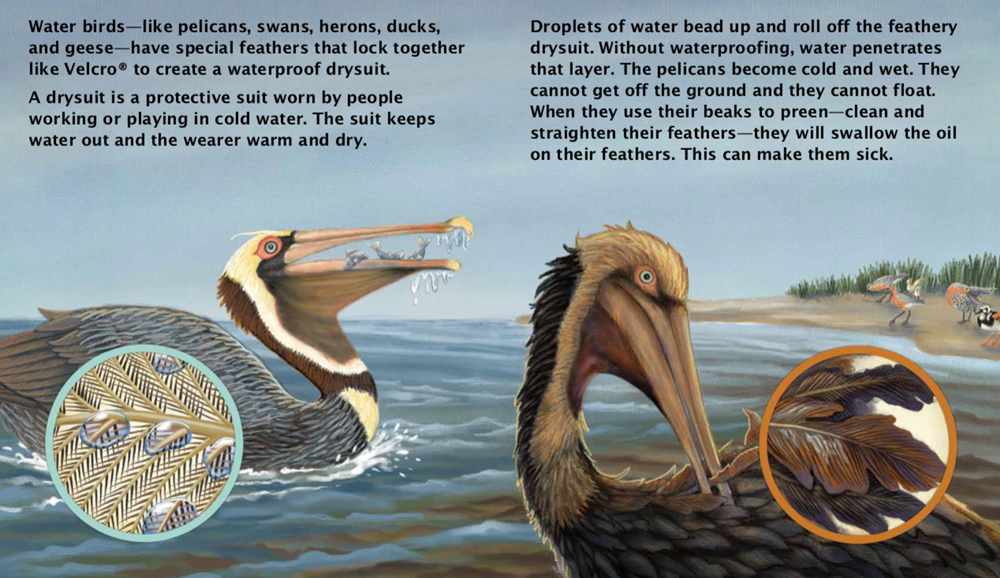
River Rescue illustrates how an oil spill – even one drop of oil – can be devastating to plan and animal life. Introducing readers to the Wildlife Response Team at Tri-State Bird & Rescue, a Delaware-based organization that rescues and rehabilitates animals affected by oil, River Rescue teaches readers about the delicate cleaning process and the care so critical to helping evaluate, treat, and rehabilitate affected animals.

There are so many questions to ask: is the animal alert on arrival? What kind of oil is on the animal? The cleansing process brings more questions: what kind of bird is this? Is it a flocking bird, or a solitary one? Is it a water bird or a land bird? After the rehabilitation process, animals are released back into the wild, preferably in the area where they were rescued.

River Rescue provides an informative look into animal rescue and rehabilitation and encourages good environmental citizenship among readers. The earth-toned art is realistic and the text is easy to understand. Back matter includes a 4-page For Creative Minds section allowing teachers, parents, and caregivers to photocopy and distribute activities on identifying wildlife, a Q&A with Tri-State Executive Director Dr. Lisa Smith, and information on preventing oil spills and helping animals.

The Long and Short Tale of Colo and Ruff, by Diane Lang/Illustrated by Laurie Allen Klein, (Feb. 2019, Arbordale Publishing), $17.95, ISBN: 9781607187387

Ages 4-7

Colo is a cougar and Ruff is a wild cat. The two friends want to play, but Ruff’s short tail prevents him from jumping as far as Colo can. As the two search for a new tail for Ruff, they encounter all the different things other animals can do with their tails and Ruff decides that his tail is just right after all.

This fun story is nonfiction with fiction wrapping: great for preschoolers and kindergartners! Colo and Ruff are realistically illustrated, but with softer artwork, playing up the cute factor. They encounter lizards, hawks, skunks and gophers on their search for a new tail, and callout facts throughout provide information that’s perfect for pleasure reading or an animal report. The For Creative Minds back matter includes a table comparing three kinds of cats and cat habitat maps.

Animal Noses, by Mary Holland, (Feb. 2019, Arbordale Publishing), $17.95, ISBN: 9781607188056

Ages 4-9

Noses, beaks, tongues, antennae – animals have a bunch of different ways to use their senses of smell, and Animal Noses is all about animal noses, how animals transmit messages through scent, and which animals have super noses versus which animals don’t. Loaded with sharp, full-color photos and facts, this is a nice add to science sections, especially when teachers come in looking for books on the five senses – always fun to throw something unexpected, like this, into my readers’ advisory, and show the similarities and differences between how we use our senses versus how animals use theirs.

Arbordale always has good back matter, too: their For Creative Minds sections allow for photocopying and distribution for educational use. The Animal Noses For Creative Minds covers fun facts about scent, a match the nose game, and spotlights animals with great senses of smell.


If a Mummy Could Talk…, by Rhonda Lucas Donald/Illustrated by Cathy Morrison, (Feb. 2019, Arbordale Publishing), $17.95, ISBN: 9781607187370

Ages 7-10

Meet some mummies and hear their stories: this volume contains stories about 12 different mummies: elephants, bison, dogs, cats, and humans, including the world’s most famous mummy, King Tut. Each spread focuses on one mummy, providing its date and location, and “before” and “after” illustrations that show readers what the animal or person most likely looked life while alive, and what its mummy looks like today. Facts gleaned from research and scientific observation bring each mummy’s story to life for readers, and provide clues to each demise. Discussions about different types of mummification, a mummy map of the world, and features on scientists’ tools and technology make up the back matter For Creative Minds section.

There are better books on mummies available, but this is an entertaining introduction for intermediate readers with an interest in natural history. The illustrations are realistic and colorful, and callout fact boxes appear throughout the book, clarifying bits of information contained in the text.


Posted in Intermediate, Middle Grade, Non-fiction, Non-Fiction

Malala Yousafzai: Warrior with Words

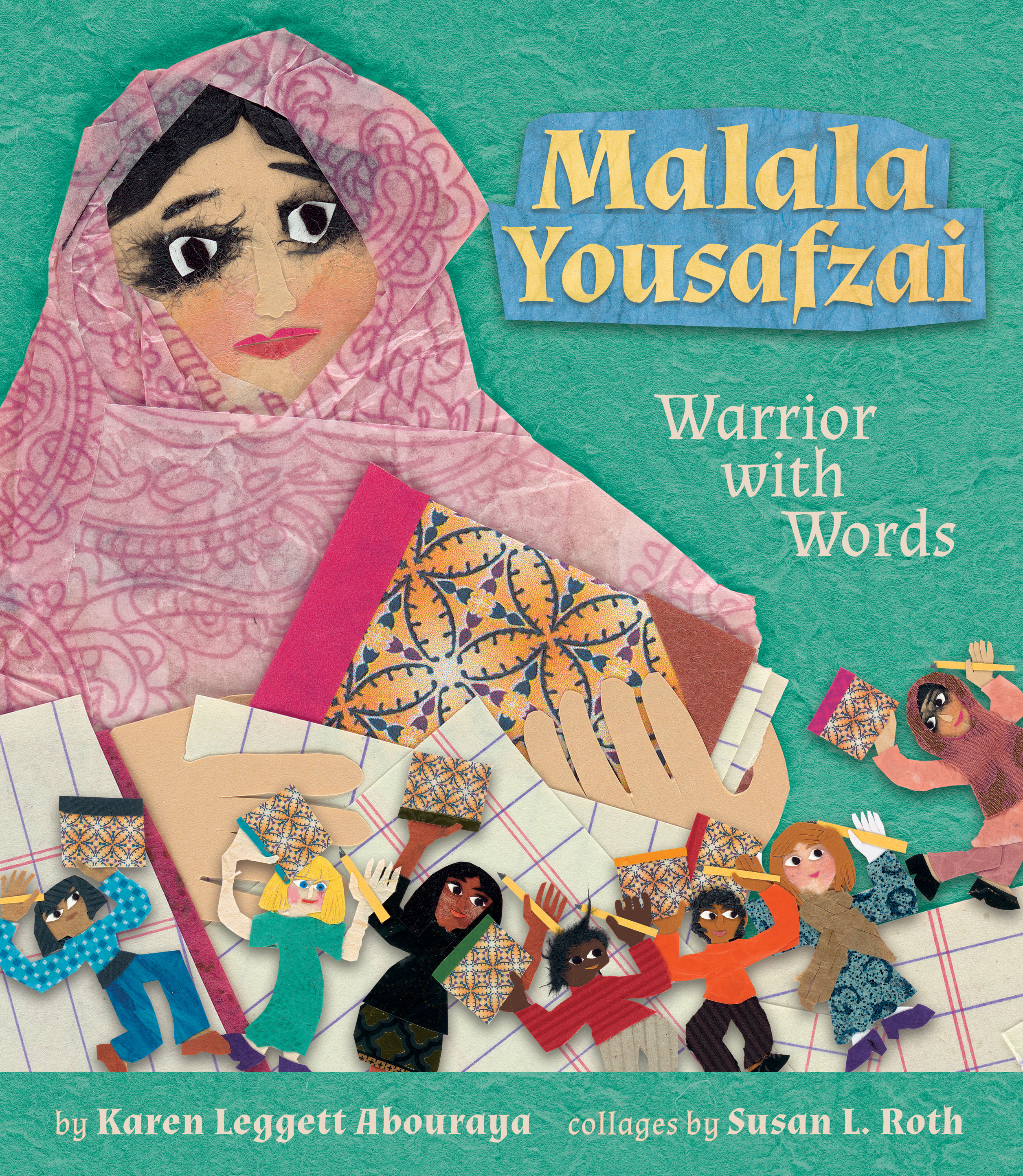
Malala Yousafzai: Warrior with Words, by Karen Leggett Abouraya/Illustrated by Susan L. Roth, (Jan. 2019, Lee and Low), $19.95, ISBN: 9781620148389

Ages 6-10

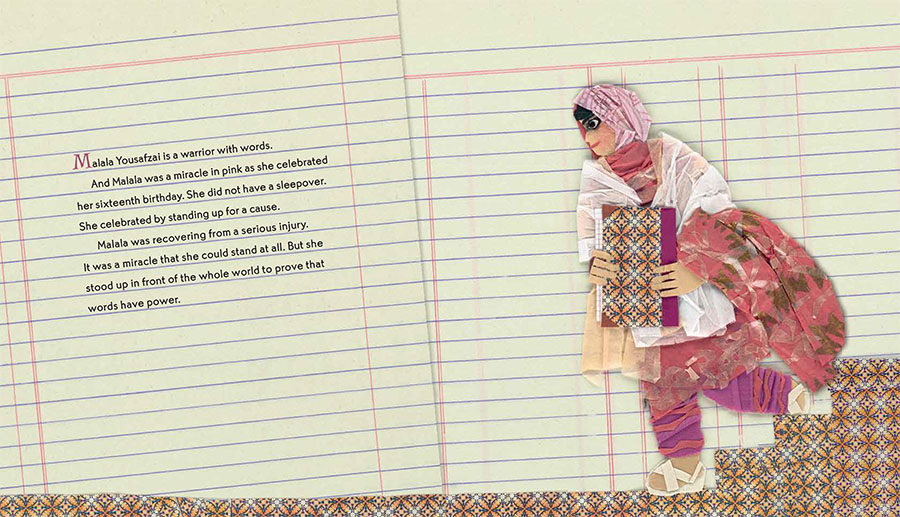
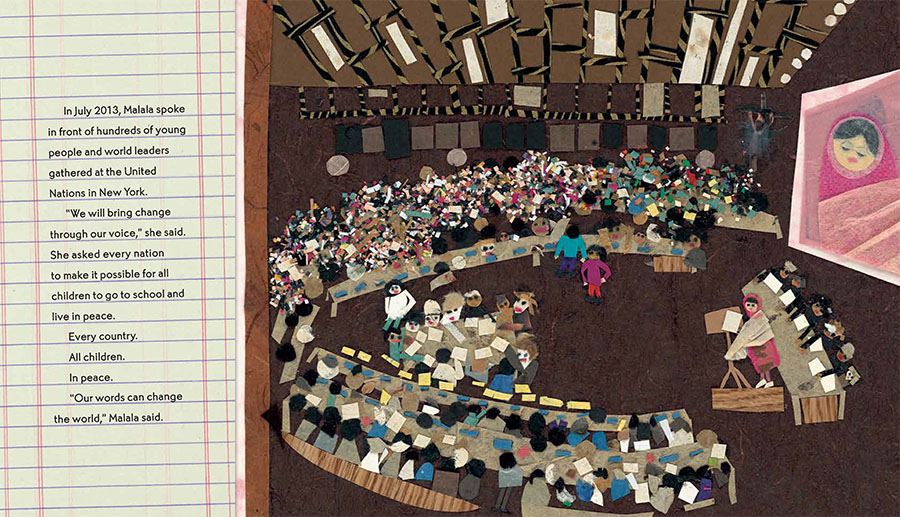
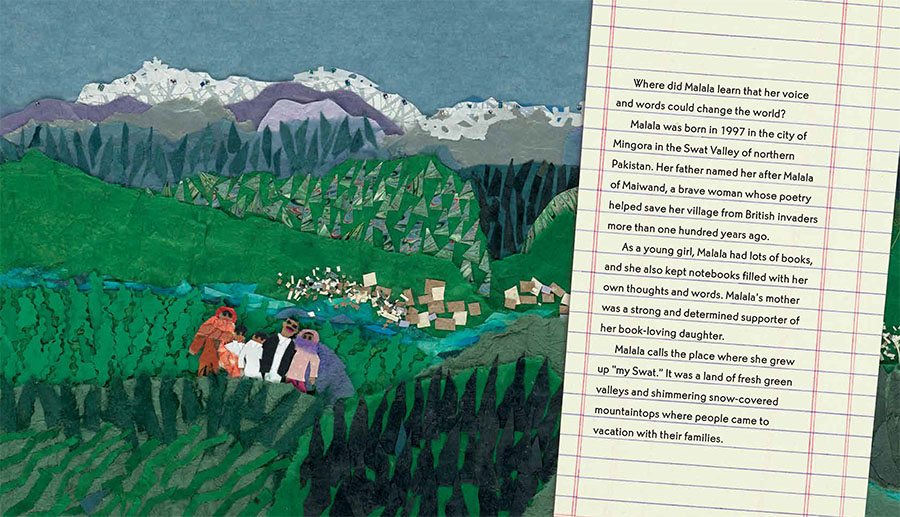
This latest biography of activist and Nobel Prize winner Malala Yousafzai speaks to younger, intermediate readers on their level: she grew up in Pakistan’s Swat Valley, lovingly referred to by Malala as “my Swat”. Her father was the principal of a school for girls, and she grew up loving books and learning. In 2007, when the Taliban came to power and tried to ban education for girls and women, Malala began blogging, under a pen name; her blog was picked up by the BBC’s website in 2009. Her family fled the Swat Valley when Pakistan’s army fought the Taliban, but they returned when the fighting was over, finding much of their home destroyed. In 2012, Malala and two friends   were shot by Taliban soldiers who boarded their school bus. She was taken to a hospital in England, and her activism became a worldwide phenomenon, speaking at the United Nations and receiving a Nobel Prize for her work.

The text is straightforward, describing the Taliban’s policies and even Malala’s shooting in plain language. The Taliban doesn’t get to take Malala’s story away from her: she shines here, with her accomplishments and her dedication to education for all being the main focus of the book. Her awards and her studies are lauded, as is her love of the color pink and her love for her family and her home. Back matter includes information on Pakistan, the Taliban, The Malala Fund, and a spotlight on youth activism and organizations.

The collage art is outstanding. Most of the artwork is soft, using felts and fabrics with warm and soft colors to create Malala, her family, her world, and the diversity of the United Nations and our world; even when women must don black clothing to avoid notice by the Taliban, the crisp blacks and whites of the characters clothing are felt: soft, warm. That all changes for the two pages introducing the Taliban, which depicts them using photo art with crudely drawn, mask-like faces. It made me sit up the first time I read the book, and on subsequent readings, I realized how brilliant illustrator Susan L. Roth is. It’s a subtle, but jarring change that lets readers experience just a fraction of the discomfort, the fear, that these figures brought with them. Incredible artwork by an award-winning illustrator, and it supports and gives life to Karen Leggett Abouraya’s informative reporting. Add this to your picture book biographies.

Posted in Intermediate, Non-Fiction, Preschool Reads

Pocket Bios: itty bitty picture book bios!

Somehow, I missed Pocket Bios until now. Introduced earlier this year, Pocket Bios are a series of pocket-sized picture book biographies. They’re filled with cute, colorful illustrations; more cartoon than realistic, and the text is fairly simple, giving big-picture facts to serve as a quick introduction to young readers. The first found of Pocket Bios drew from entertainment, sports, science, and civil rights figures, including Muhammad Ali, Charlie Chaplin, Marie Curie, and Gandhi; this next group of books includes The Buddha, Pocahontas, Marie Antoinette, and Vincent Van Gogh.

Buddha, by Al Berenger, (March 2019, Roaring Brook Press), $14.99, ISBN: 9781250168887

Ages 4-7

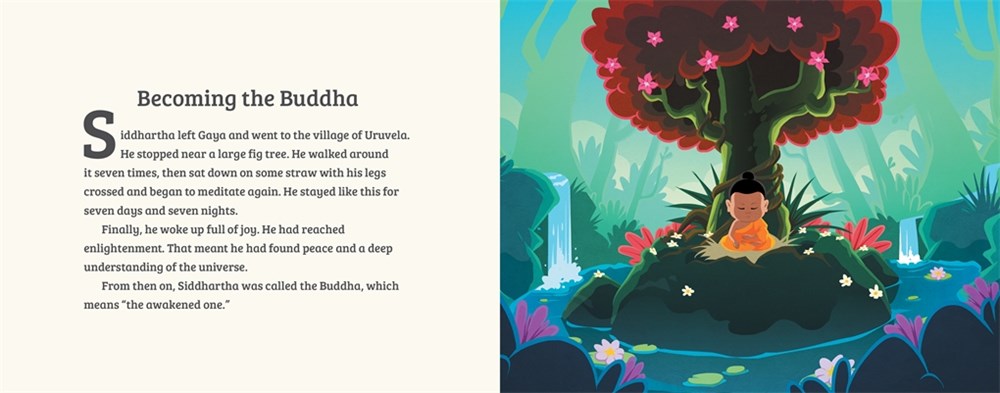
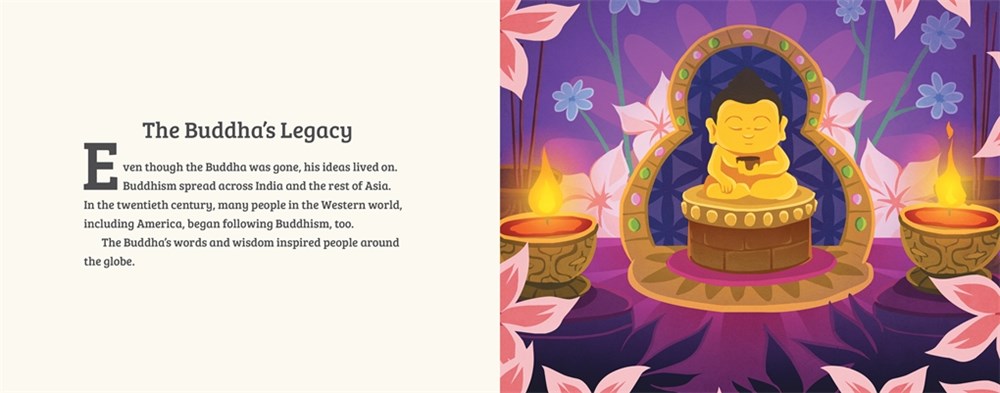
This picture book bio of Siddhartha, who would become the Buddha, the founder of Buddhism, touches on key moments in his life: his birth, youth, and marriage; his leaving the palace on his journey to find happiness, his new life as he sought and achieved enlightenment; his teaching and traveling, last days, and legacy. A timeline provides a more linear, dated glimpse at the events covered in the book, and a map shows readers important locations in Buddha’s life. People to Know offers profiles of important people in his life, including his mother and the Dalai Lama, and an illustrated “Did You Know” section offers some quick, additional facts on his life.

The art is rounded and bright, soft and cute, with some beautiful moments, particularly when Siddhartha fully realizes enlightenment, and as he teaches a group of students. A picture of an aging Buddha is gentle, tinged with an understanding that he will be moving on. There are some truly lovely moments to be found here.


Marie Antoinette, by Al Berenger, (March 2019, Roaring Brook Press), $14.99, ISBN: 9781250168825

Ages 4-7

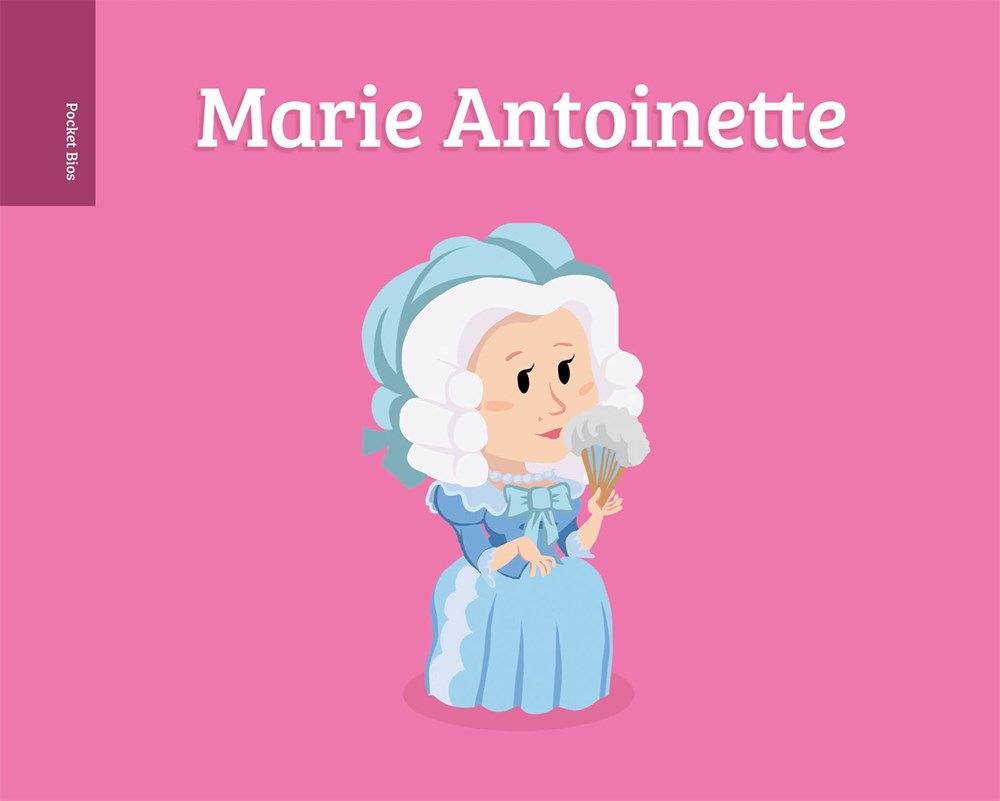
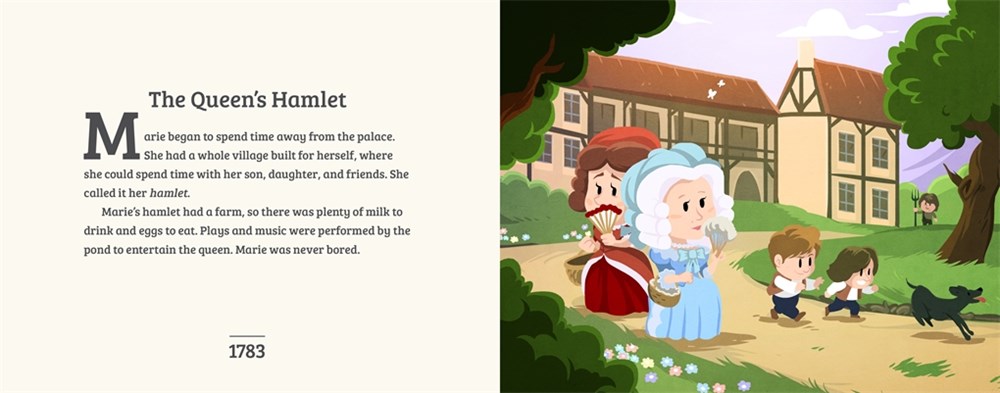
Each spread in Marie Antoinette’s Pocket Bio covers a major period in her life; the factual information on the left hand side provides the dates. We first meet her as a young princess in Vienna; move along to her 1770 wedding to Louis XVI, and then to his coronation. Then, we move into the Marie Antoinette period that everyone’s familiar with: the lavish lifestyle, depicted by a huge dinner party. As the text reminds readers, Marie Antoinette was not content in her royal duties, leading her to seek refuge at a village, built just for her, her children, and her friends. Meanwhile, revolution was in the works, and in 1789, the French Revolution began, illustrated with a French mob brandishing swords and pitchforks, outside the burning Bastille. As Marie, Louis, and their children tried to escape Paris in 1791, they were arrested and taken back to Paris, where they eventually met their ends at the guillotine – Louis, in 1793, Marie, soon after. The pictures are dramatic, loaded with shadows and flame during the Revolution; pastoral and soothing during the happier times in Marie’s life. There is a timeline, map and key of Europe in 1793, with key areas emphasized. People to Know include Marquis de Lafayette and Yolande de Polastron, one of Marie Antoinette’s close friends. Did You Know? fact to handsell the book: Marie Antoinette has some hairstyles that were four feet tall!


Vincent van Gogh, by Al Berenger, (March 2019, Roaring Brook Press), $14.99, ISBN: 9781250168863

Ages 4-7

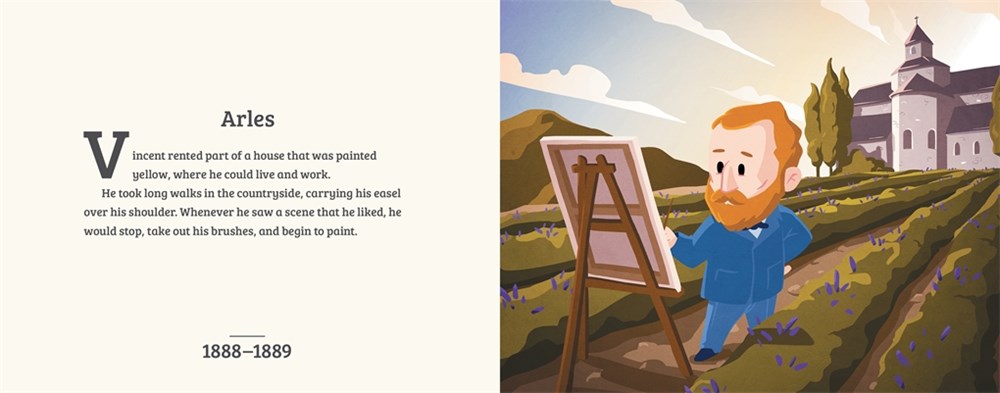
Artist Vincent Van Gogh’s biography also includes dates for the key represented moments in his life. We begin with his childhood in the Netherlands, and touches on the close relationship between van Gogh and his brother, Theo; we move onto an apprenticeship under his uncle, where he traveled to London and Paris, developing a love for art. He was a pastor in a coal-mining town from 1877-1880, and spoke out against the dangerous conditions in the mines, which influenced his painting, The Potato Eaters. From there, van Gogh embraced his love of art and began painting in 1880, after moving to Antwerp. From there, he moved to Paris, to be with Theo, but he tired of city life and relocated to Arles, where he could live and work in the countryside. The book touches on van Gogh’s struggle with mental illness and the work he created while in the hospital and under his doctor’s care. Finally, the narrative addresses his suspicious death – previously thought to be a suicide, and his posthumous fame. The timeline includes all of the moments written about in the book, and the map and key emphasize six key location in van Gogh’s life. People to know include his brother, Theo, and artist Paul Gaugin. Key Did You Know? takeaway: his most famous work, Starry Night, was painted during his time at a psychiatric hospital and he thought it was his greatest failure.


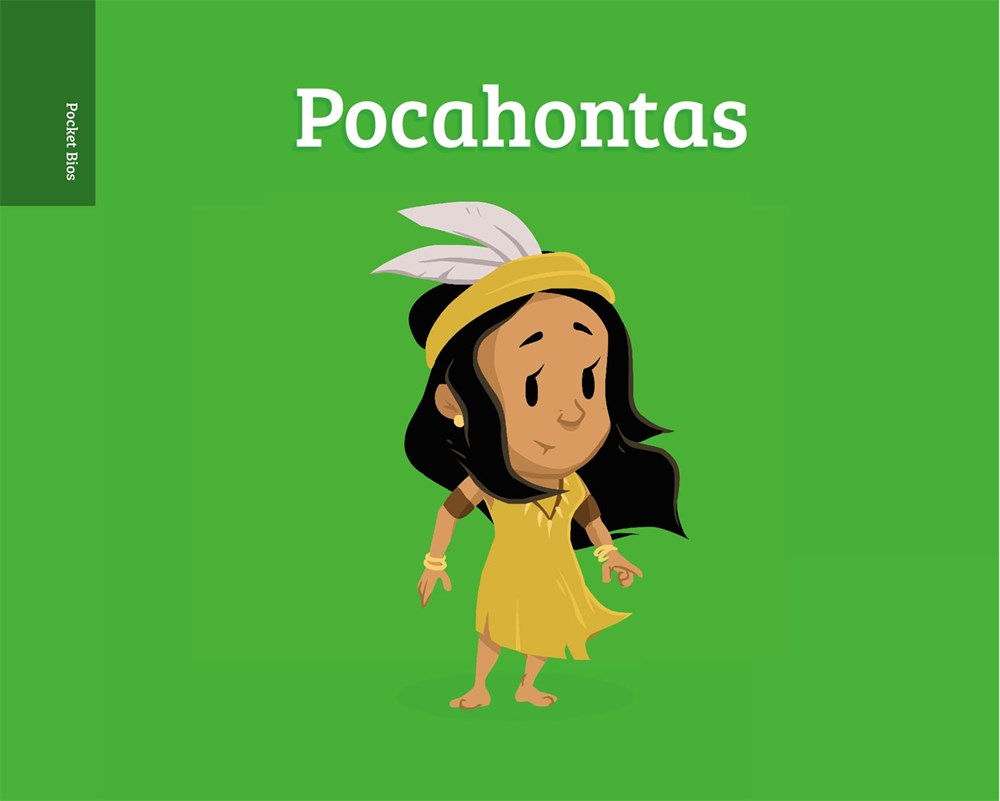
Pocahontas, by Al Berenger, (March 2019, Roaring Brook Press), $14.99, ISBN: 9781250168863

Ages 4-7

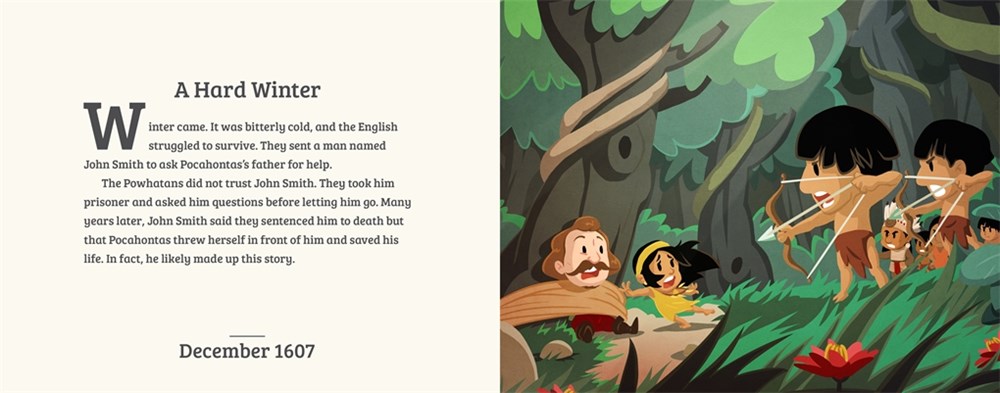
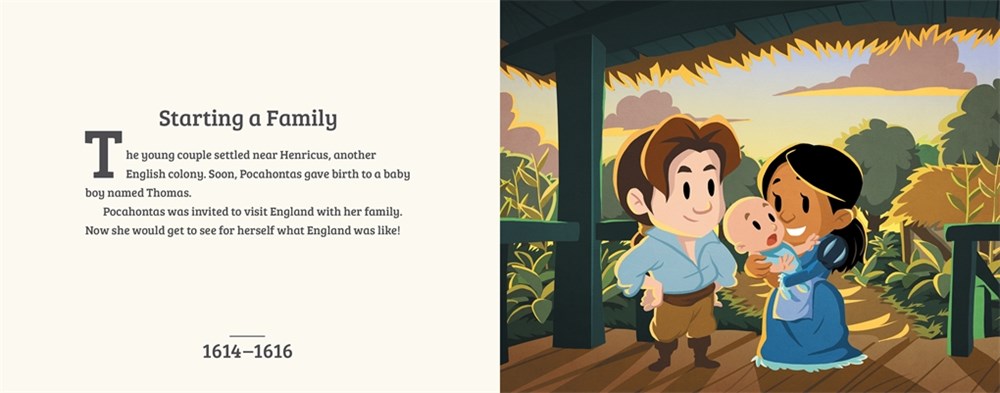
Pocahontas’ biography, also dated, starts with her years growing up in the Powhatan tribe, located where Virginia is now. The English arrived in 1607 and established the Jamestown colony; the illustration shows a young Pocahontas watching a ship dock at a newly built port. The brutal winter forced the settlers to send John Smith to ask the Powhatans for help, which led to his imprisonment. Here, the narrative diverges from the history books I grew up with (thank goodness) and points out that John Smith most likely made up the story of Pocahontas throwing herself in front of him to save him from certain death; she then becomes a friend of sorts to the Jamestown settlers, visiting them and working to keep peace between the Powhatans and the settlers. John Smith’s 1609 injury required him to head back to England – and Pochontas was told that he died on the voyage home. At this point in history, relations between the Powhatan tribe and the settlers fell apart, and they warred with one another. Pocahontas was taken prisoner and brought up English – her father refused to trade her for English prisoners – eventually marrying settler John Rolfe, converting to Christianity, and taking the English name, Rebecca. The wedding helped ease relations between the Native Americans and the settlers, and Pocahontas – now a mother of two sons – was invited to visit England. She became ill and died while traveling, and is buried in England.

There are some beautiful moments in the artwork here – a ship sailing into the golden sunlight, Pocahontas as a child, playing with other children, with a waterfall streaming in the background. There’s a timeline and illustrated map; people to know include Pocahontas’s father – not Powhatan, but Wahunsunacock, and King James I. A key Did You Know? fact reminds readers that John Smith was not the most reliable narrator.

The verdict? The Pocket Bios are a good start for younger readers, but aren’t the first resource you should seek. It’s a good series to start planting an interest in history and key people in history. Readers who enjoy Brad Meltzer’s Ordinary People Change the World series of biographies will likely enjoy these.

Posted in Fiction, Fiction, Intermediate, Middle Grade, Non-fiction, Non-Fiction, picture books, Preschool Reads

Last minute gift shopping? Books are easy to wrap!

Okay, the big days are coming, and you still need a gift or two – maybe your kid’s got a last-minute gift to get, or you don’t want to show up to a party empty-handed for any kids in the house. Check out some more of these gifts books for some guaranteed entertainment!

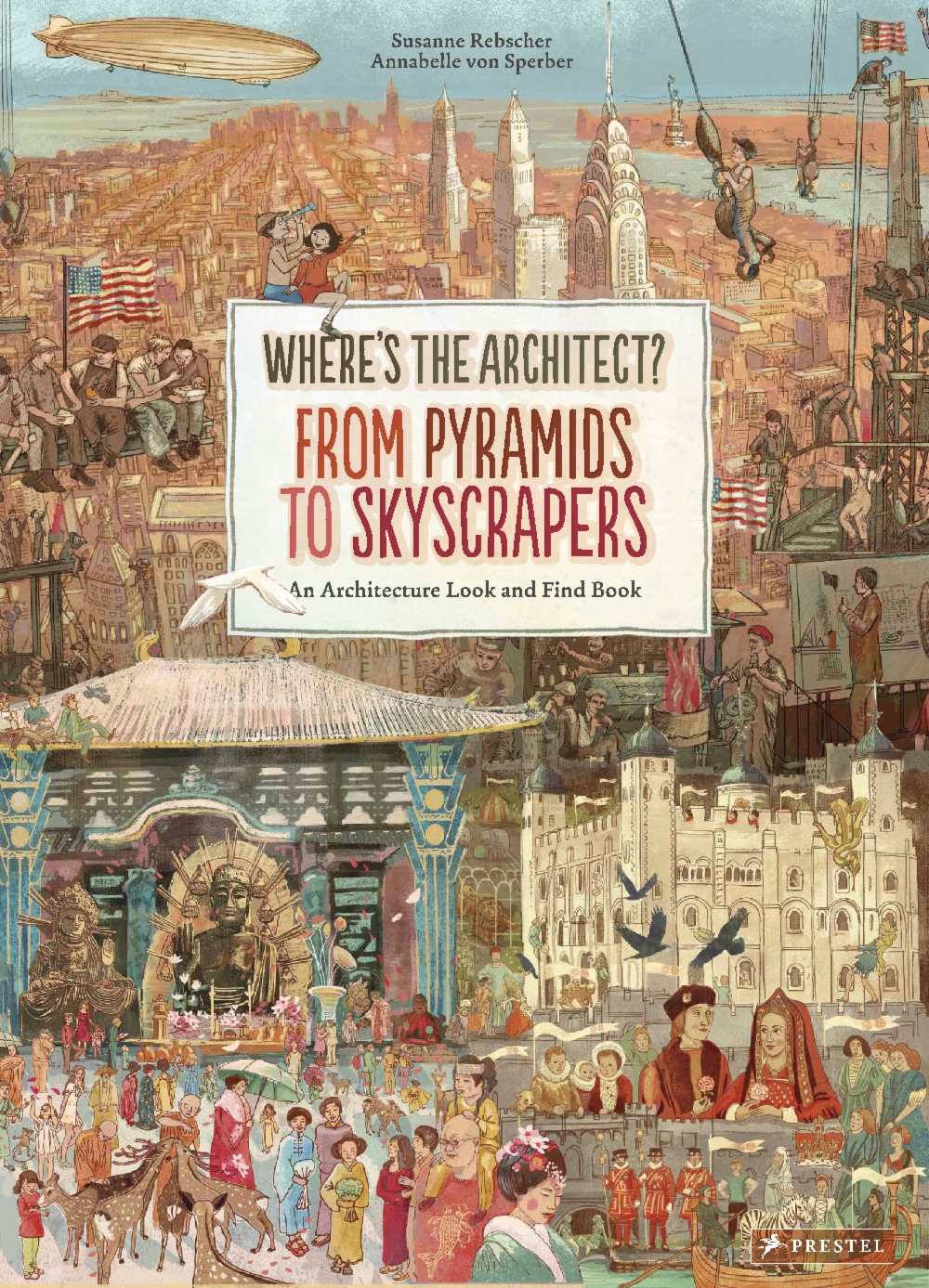
Where’s the Architect? From Pyramids to Skyscrapers: An Architecture Look and Find Book, by Susanne Rebscher/Illustrations by Annabelle von Sperber, (Oct. 2018, Prestel Publishing), $19.95, ISBN: 978-3-7913-7301-0

Ages 4-10

This one is like I Spy, but with architecture. Readers can join two kids – Ben and Mia – and two little monkey escorts on an adventure around the world! View 12 beautiful works of architecture, learn a little bit about each, and find some cool objects and people along the way. Count ravens at London’s The Tower of London; see an exhibition at the Moscow Metro, and take in a concert at Sydney’s Opera House. Artwork is full-color and there’s always something to see. Back matter offers more information on each of the structures, a timeline of construction, and a glossary of terms. Endpapers add to the fun with a world map sporting numbers for each structure’s location, and beautiful artwork featuring Ben and Mia riding a Chinese dragon. This one’s a fun gift for your seek and find fans and can pair with some Legos – let kids build their own structures!

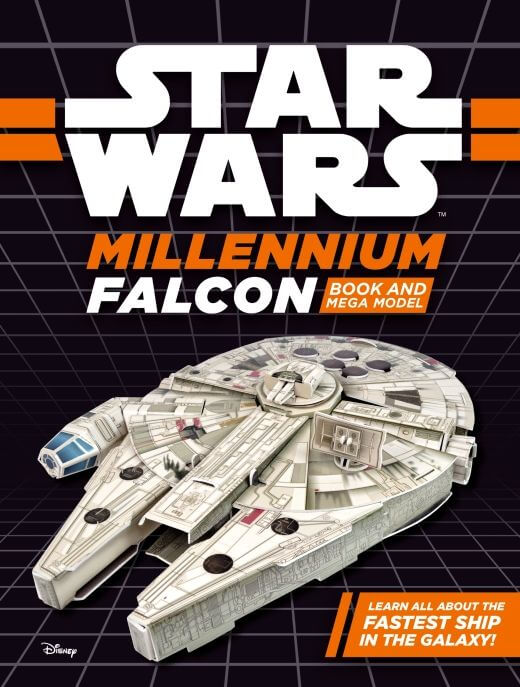
Star Wars: Millennium Falcon Book and Mega Model, (Oct. 2018, Fun Studio International), $17.99, ISBN: 978-0794442071

Ages 8-12

Okay, this is just too much fun. Build your own Millennium Falcon model with this book-model combo! Punch out the laminated stock pieces, and assemble using the attached book, which includes instructions and some Falcon history: stats on previous Falcon pilots, ports of call, and key movie moments where the ship played a big part. Activities abound here: starship Sudoku, Hoth escape maze, and draw your own spaceship. The model assembly is a little fiddly, so younger fingers will need some help from older readers. The accompanying volume is slim, but loaded with facts and fun, making this a gift Star Wars fans will love.


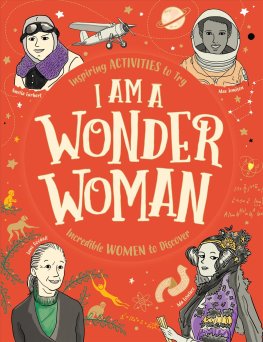
I Am a Wonder Woman: Inspiring Activities to Try, Incredible Women to Discover, by Ellen Bailey, (Sept. 2018, Portable Press), $14.99, ISBN: 978-1684125487

Ages 8-12

Activity books are a great go-to gift, and I Am a Wonder Woman is right up there, mixing a bit of nonfiction with thought-provoking, fun activities. There are profiles of 60 women who’ve made their mark on history, all with accompanying activities. Make a diary entry like Anne Frank; work on your suffragist buttons and newspaper articles with Emmaline Pankhurst and Kate Sheppard; plant a tree like Nobel Prize winner Wangari Maathai. There are familiar names here: Anne Frank, Jane Goodall, and Helen Keller; and new names, including artist Artemisia Gentileschi, whose story was recently told in the award-winning YA novel, Blood Water Paint. Two-color illustrations throughout make this a fun, smart bet for a gift book.


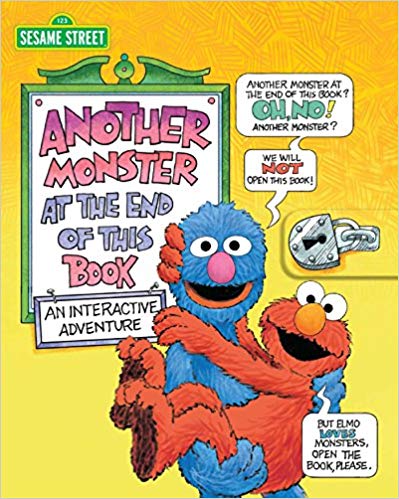
Another Monster at the End of This Book: An Interactive Adventure, by Jon Stone, (Sept. 2018, Fun Studio International), $14.99, ISBN: 978-0794441746

Ages 3-5

My favorite book of all time has been, and always will be, The Monster at the End of This Book, Starring Lovable, Furry Old Grover. I have the best memories of my mom reading this to my 4- and 5-year old self, and of the two of us giggling together as Grover’s nervous breakdown increased with each turn of the (barricaded) page, bringing us closer to the Monster at the End of the Book – which was, as you may have guessed, Grover himself. I’ve read this book to my own  kids, and added another monster to the mix, when Elmo joined Grover in 1999 for Another Monster at the End of This Book. Now, we’ve got an interactive update to Another Monster, complete with magnetic book locks, flaps to explore, and pop-ups to surprise. It’s an adorable update to a classic kids’ book, and a perfect gift for the holidays.


Happy Shopping, and Happy Holidays!

Posted in Fiction, Intermediate, Middle Grade, Non-Fiction, Non-fiction, Non-Fiction, picture books, Teen, Toddler Reads, Tween Reads

Need a gift? Give a book!

Now that the discount coupons are hitting inboxes, it’s a great time to stock up on books to give for the holidays. Here’s a look at some more books that will delight the readers in your life!

For the Little Ones:
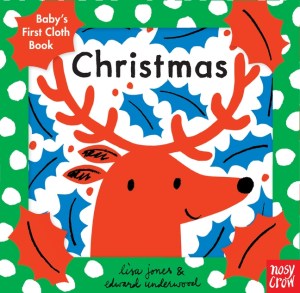
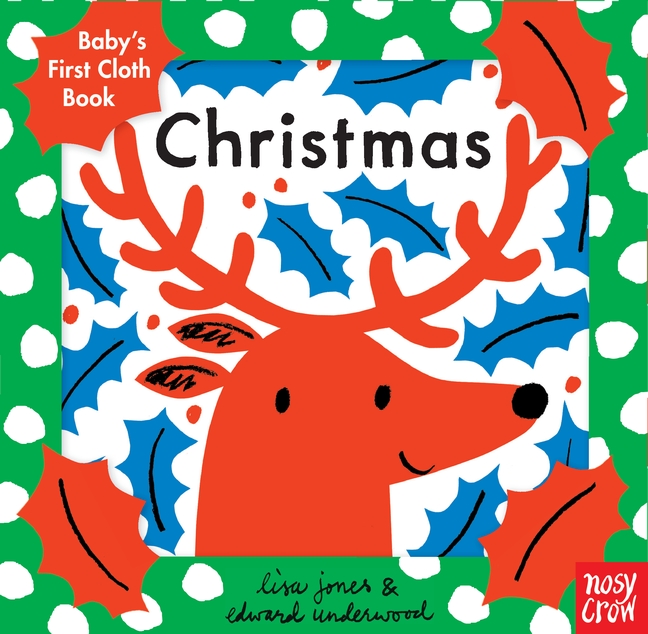
Baby’s First Cloth Book: Christmas, Ilustrated by Lisa Jones & Edward Underwood, (Sept. 2018, Candlewick), $18, ISBN: 978-1-5362-0275-5

Ages 0-2

It’s Baby Boo’s first Christmas! This 8-page book is soft and squishy, perfect for exploring little hands and mouths. Baby Boo enjoys the snow, builds a snowman with Daddy, goes back inside to warm up by the fire and gaze at the Christmas tree, and at night, Santa drops off presents! The plush book is soft, and the page featuring the snowman is crinkly; perfect for play time and engaging your little one’s senses. The colors are bright, with gentle-faced animals and people. The book comes in its on add Park, Farm, and Zoo to the list.
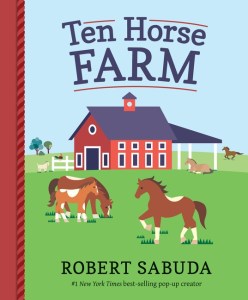
 

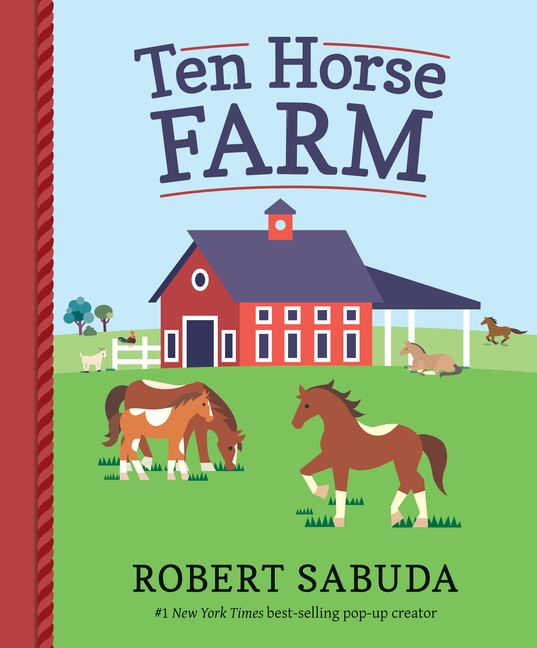
Ten Horse Farm, by Robert Sabuda, (Apr. 2018, Candlewick Press), $29.99, ISBN: 978-0-7636-6398-8

Ages 5+

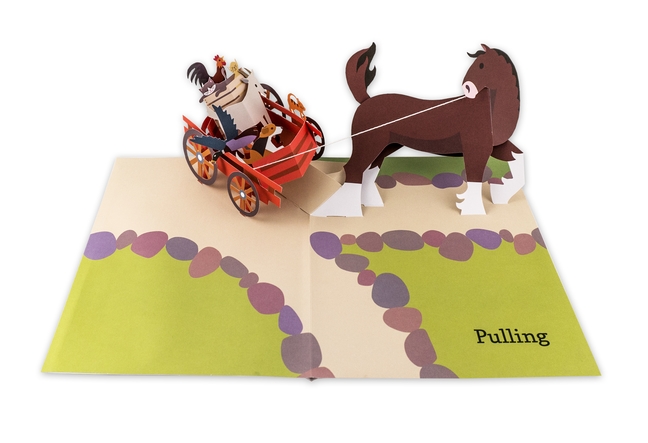
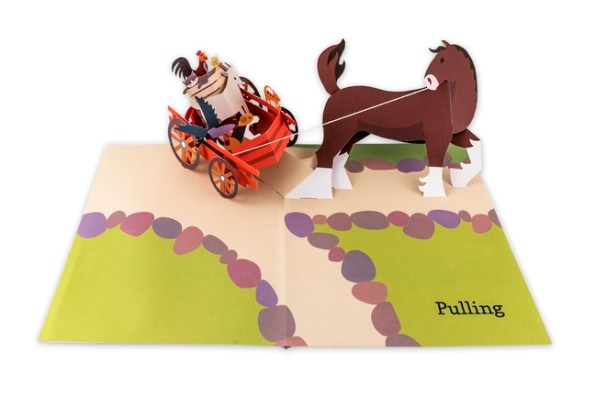
You don’t have to be a kid to love Robert Sabuda; his paper engineering is stunning to see. Ten Horse Farm is a full-color, pop-up counting book where each spread stars a different horse engaging in some kind of activity: racing, resting, jumping, or bucking. Let your kiddos count the horses as you go, and use this book in storytime to bring wonder and surprise to your readers. This fits in nicely with a horse storytime, farm storytime, animal storytime… any time storytime. Inspired by rural America, Robert Sabuda even named his upstate New York art studio Ten Horse Farm. Sabuda books are timeless gifts.

Ten Horse Farm has starred reviews from Publishers Weekly and Kirkus.
For the Dinosaur fan:

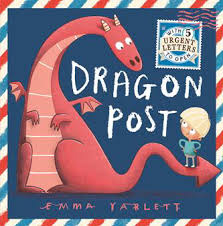
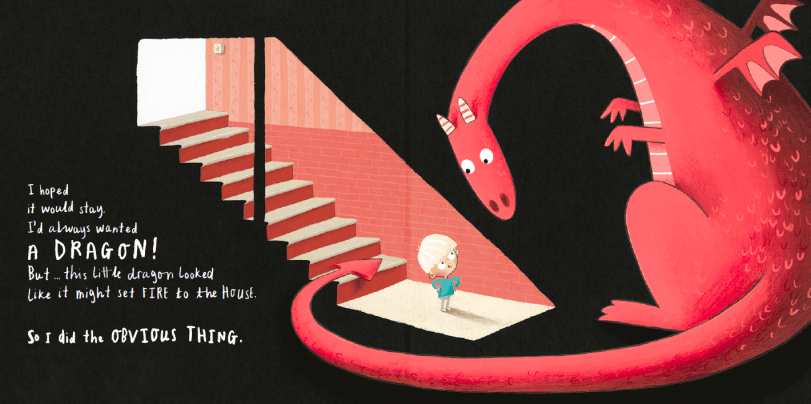
Dragon Post, by Emma Yarlett, (Dec. 2018, Kane Miller), $14.99, ISBN: 978-1-61067-818-6

Ages 6-10

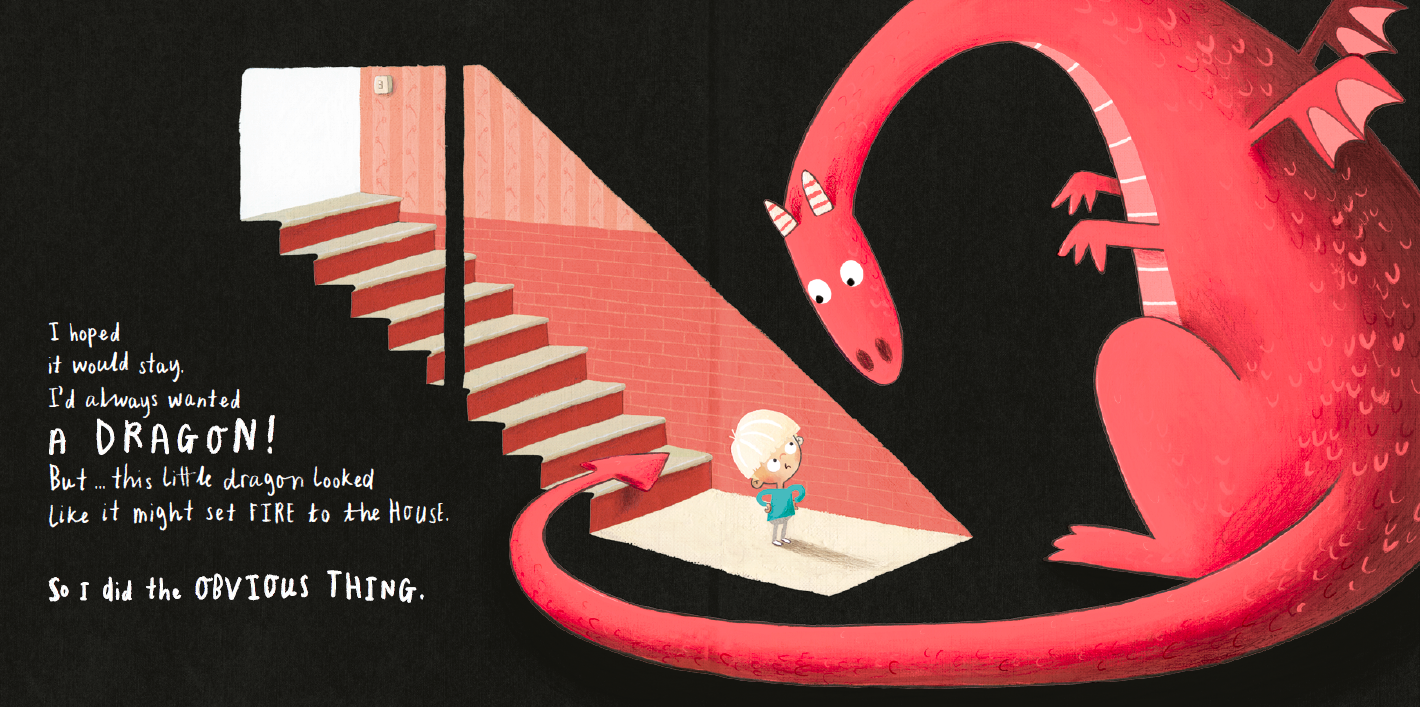
If you’re a regular reader here, you know I LOVE Emma Yarlett. Her Nibbles the Book Monster books are required reading in my home, and the kids at my library and my son’s Kindergarten class can’t get enough Nibbles. Dragon Post has the same fun spirit as we meet Alexander, a young boy who finds a dragon in his home. He’s excited, naturally, but he’s also a little concerned about fire safety. So he writes a series of letters, as different questions pop up for him. The best part? We get to read the letters!

This is an interactive book, with envelopes (lightly toasted) and letters you can pull up and read for yourself. The story is hilarious as Alexander’s predicament grows, and just when it takes a bittersweet turn, we get the hope of a sequel. The laser-cut correspondence is a fun addition to the story, and the full-color, cartoony artwork will appeal to readers. The scrawled black text reminds me of Oliver Jeffers’ lettering. Absolute fun for the holidays. If you’re buying this for your library, put it an extra copy in your storytime reference to keep one safe. This one will be loved quite a bit.
For the adventure seeker:
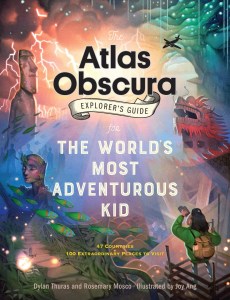
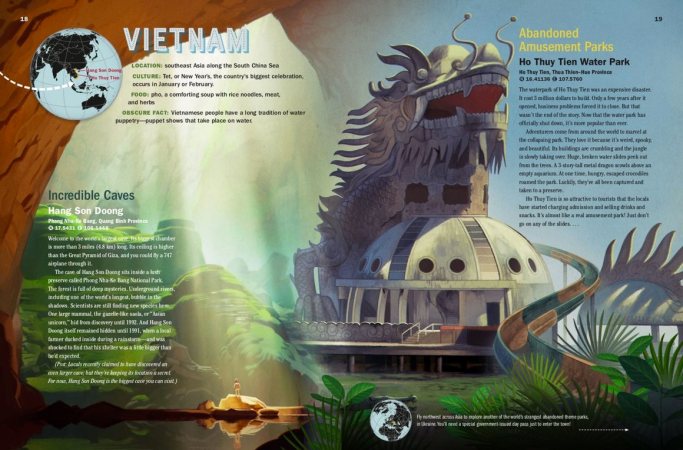
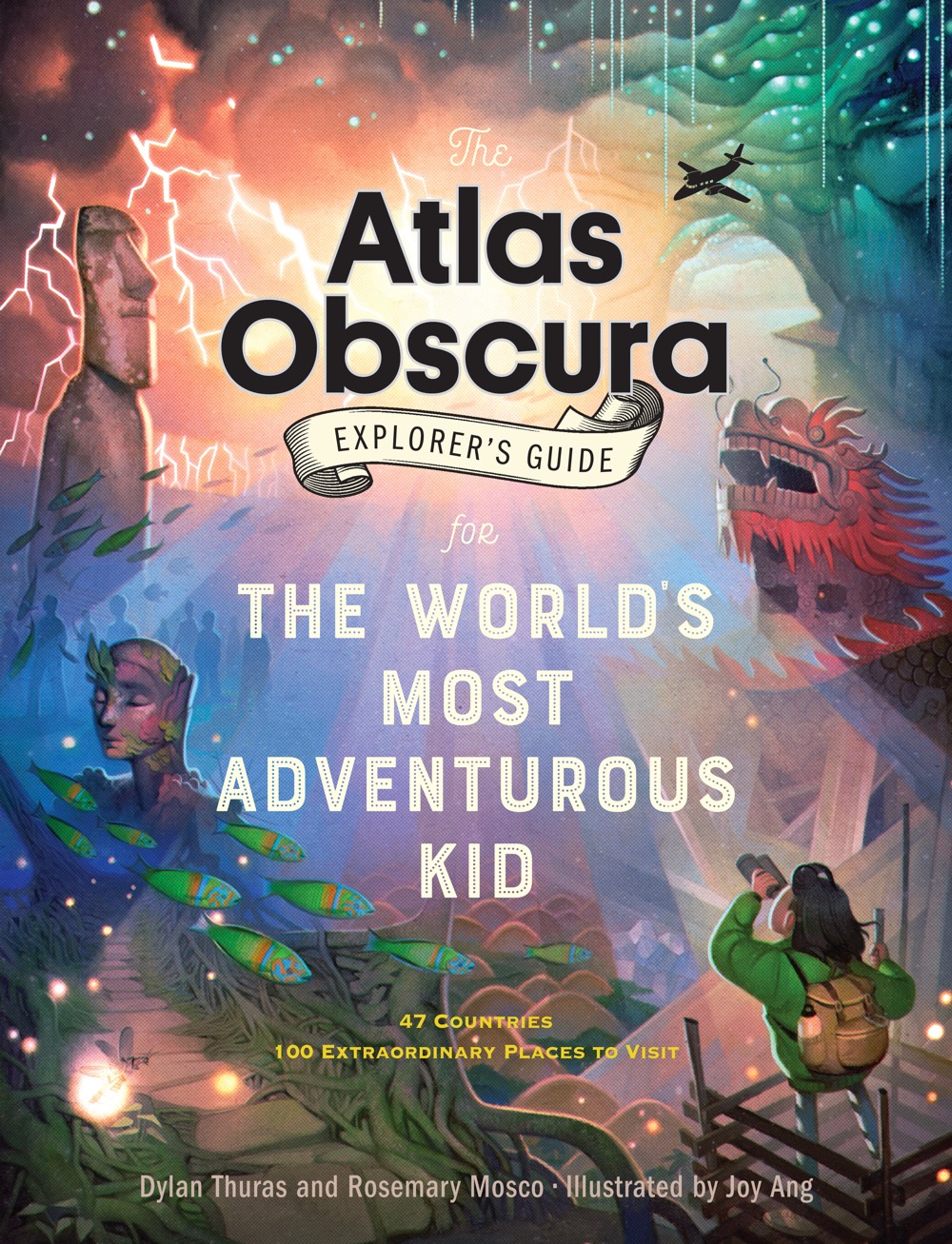
Atlas Obscura: Explorer’s Guide for the World’s Most Adventurous Kid, by Dylan Thuras and Rosemary Mosco/Illustrated by Joy Ang, (Sept. 2018, Workman), $19.95, ISBN: 978-1-5235-0354-4

Ages 8-12

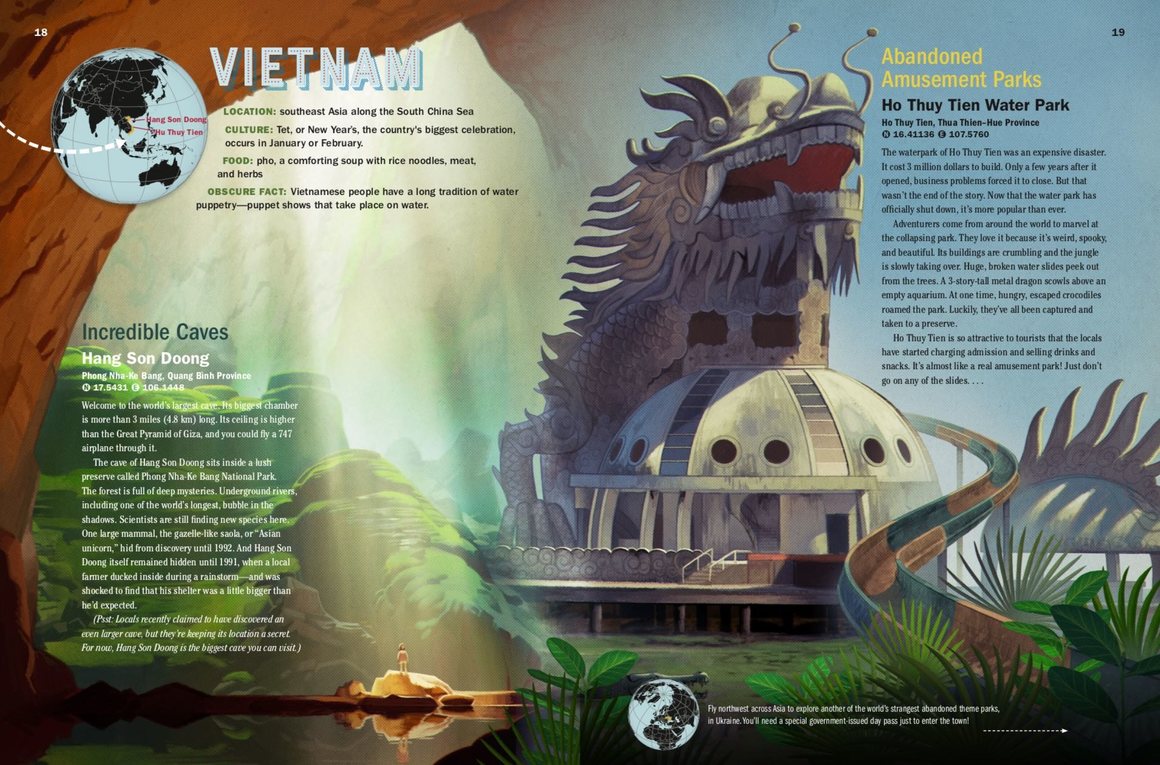
Here’s one for the kids who love the offbeat, quirky, and awe-inspiring things in life: Atlas Obscura is the kids’ companion to the website and adult guide book and is all about 100 of the most “weird but true” places on earth. Discover the Door to Hell in Turkmenistan (it’s a drilling accident gone terribly wrong), then head to Germany to ride a rollercoaster in the Wunderland Kalkar – an abandoned nuclear power plant. Check out the world’s seed bank in Norway, or visit an underwater museum near the Canary Islands.

Full-color illustrations offer an incredible point of view, and each site includes a locator globe and longitude and latitude (ahem… program in a book). A packing list – in case you’re so motivated – and explorer’s tips, along with alternate travel routes, methods of travel by speed, and height comparisons of attractions from biggest to smallest help with travel planning, and a list of further reading will have your world explorers putting up maps and pins in their rooms. This is just way too much fun. Give this to all the kids you normally hand your National Geographic gifts to, and you’ll be the favorite for another year running.
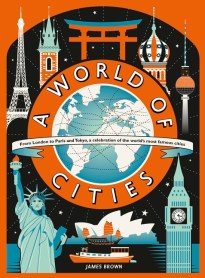
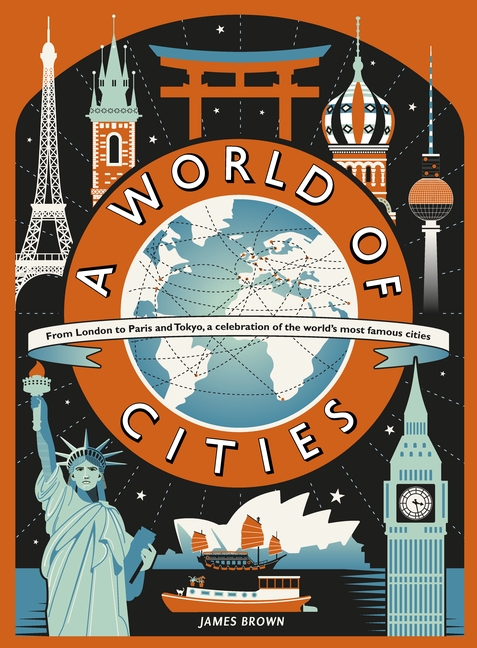
A World of Cities: From Paris to Tokyo and beyond, a celebration of the world’s most famous cities, by James Brown, (July 2018, Candlewick Studios), $25, ISBN: 9780763698799

Ages 8-12

Visit 30 of the world’s most famous cities with this book as your guide! It’s an oversize book with two- or 3-color tourism poster artwork and facts on each spread. Did you know Dubai has its own archipelago of artificial islands? Or that Albert Einstein’s eyeballs are stored in a safe-deposit box in New York City? There are tons of fun facts here, all assembled to create a stylized art book that takes armchair travelers to the bright lights and big cities of the world.

This is a follow-up to James Brown’s A World of Information, for anyone who’s a fan of infographics style information delivery.

 

For the animal lovers:
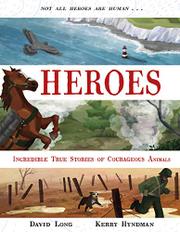
Heroes: Incredible True Stories of Courageous Animals, by David Long/Illustrated by Kerry Hyndman, (Nov. 2018, Faber & Faber), $22.95, ISBN: 978-0-5713-4210-5

Ages 9-13

I loved the companion series to this book, the more human-focused Survivors, that came out earlier this year, so I dove into Heroes when the publisher sent me a copy. If you and your kids loved Survivors, you’re going to love Heroes, with 33 stories of courageous animals (and an epilogue about London’s Animals in War Memorial). It’s more than an “I Survived” starring animals; these are stories about how we rely on animals to survive and to thrive. There’s Rip, the terrier who rescued people trapped in the rubble of the London Blitz during World War II: “…somehow having Rip around made things more bearable… if Rip could cope with the war, so they [the people]”; and Mary of Exeter, a messenger pigeon who spent five years carrying messages back and forth between England and France during World War II and who’s buried alongside Rip and Beauty, another WWII hero dog profiled here. Kerry Hyndman’s illustrations are all at once intense and beautiful, and David Long’s tributes are filled with respect for these companions. Read with a box of tissues nearby. Give to your animal fans and your adventure story fans.
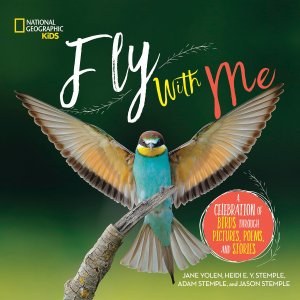
 

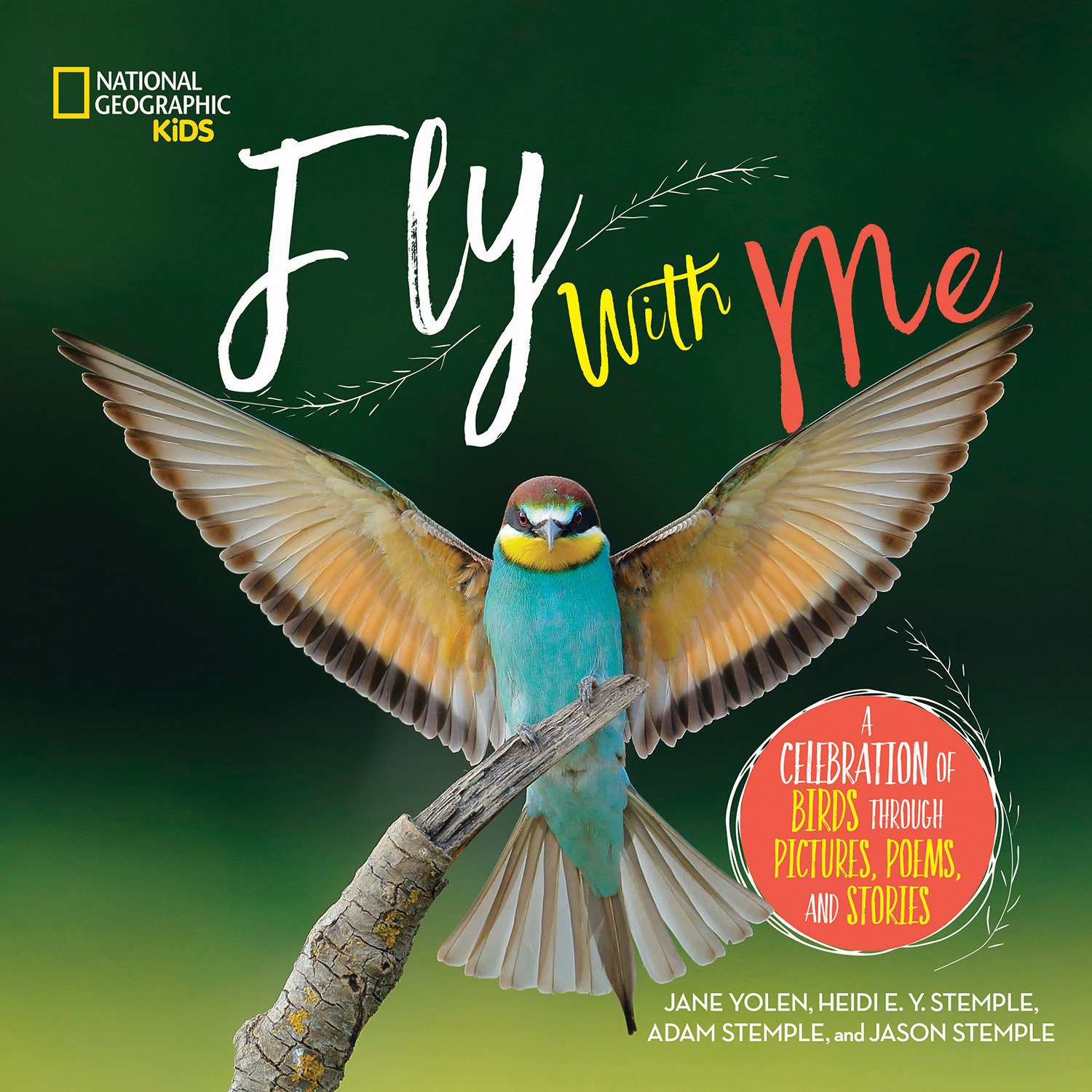
Fly With  Me: A Celebration of Birds Through Pictures, Poems, and Stories, by Jane Yolen, Heidi EY Stemple, Adam Stemple, and Jason Stemple, (Oct. 2018, NatGeo Kids), $24.99, ISBN: 978-1-4263-3181-7

Ages 8+

A compendium of all things bird for your bird-readers and watchers, Fly With Me has everything you’d want to know about birds: the physical characteristics, history (dino birds!), state bird profiles, songs, migration, and birding in your own backyard are just a few areas. There’s an emphasis on conservation and activism, and the section on birds in the arts is fantastic for your budding artists. The photos are jaw-dropping, with colors that burst off the page, and gorgeous illustrations. Endpapers are loaded with bird-related quotes, including one of my favorites: “If it walks like a duck, quacks like a duck, looks like  duck, it must be a duck”. Back matter is loaded with additional resources. Pull some of the poems out and use them in your storytimes!


For the poetry reader:
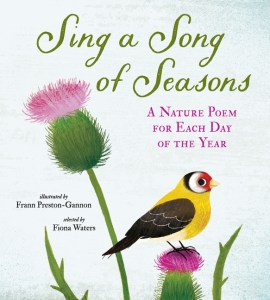
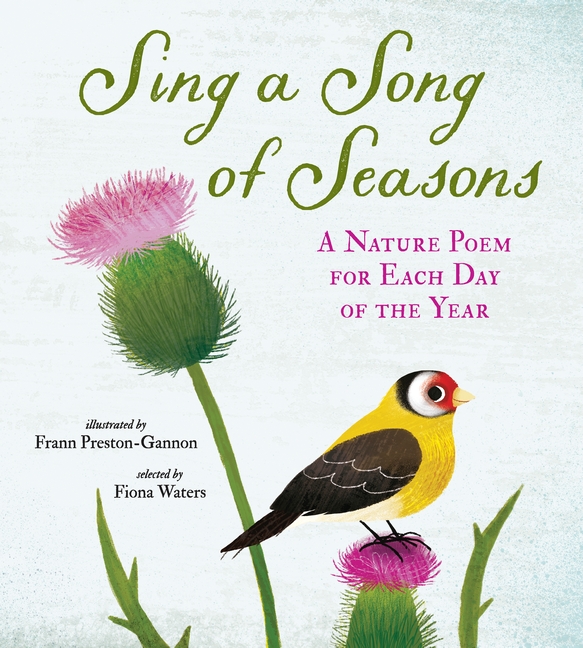
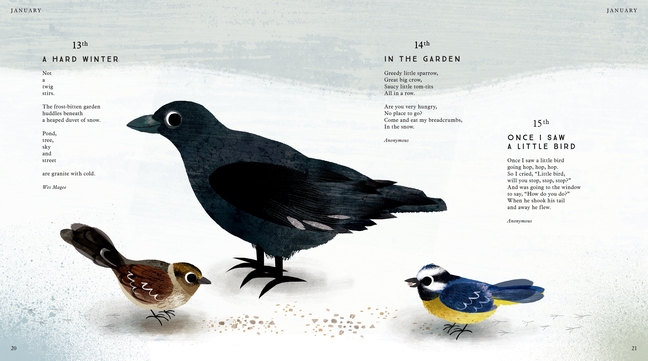
Sing a Song of Seasons: A Nature Poem for Each Day of the Year, selected by Fiona Waters/Illustrated by Frann Preston-Gannon, (Oct. 2018, Nosy Crow), $40, ISBN: 9781536202472

All Ages

There’s a poem for every single day of the year in this book. From January 1st through December 31st, greet each day with a poem and a beautiful illustration. Poets include Robert Louis Stevenson, Robert Frost, Ogden Nash, ee cummings, and John Updike, and poems are indexed by poet name, poem title, and first lines. This is a gorgeous gift: the illustrations are absolutely beautiful, with cold winter scenes, green fall forests, and colorful, shell-covered beaches. Start the day off, or end a day, snuggled up with a poem.

This one’s a great gift for grownups, too – librarians and teachers, put this on your wish list and you’ll be thrilled to add new poems and fingerplays to your storytimes. I’m currently trying to think of hand movements to add to Alastair Reid’s “Squishy Words (To Be Said When Wet)” (August 4th).

Sing a Song of Seasons has starred reviews from Publishers Weekly and Kirkus.
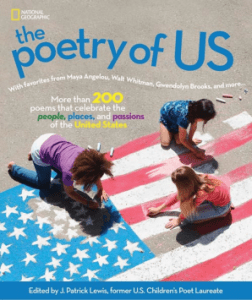
The Poetry of US: More Than 200 poems that celebrate the people, places, and passions of the United States, Edited by J. Patrick Lewis, former US Children’s Poet Laureate, (Sept. 2018, NatGeo Kids), $24.99, ISBN: 978-1-4263-3185-5

All Ages

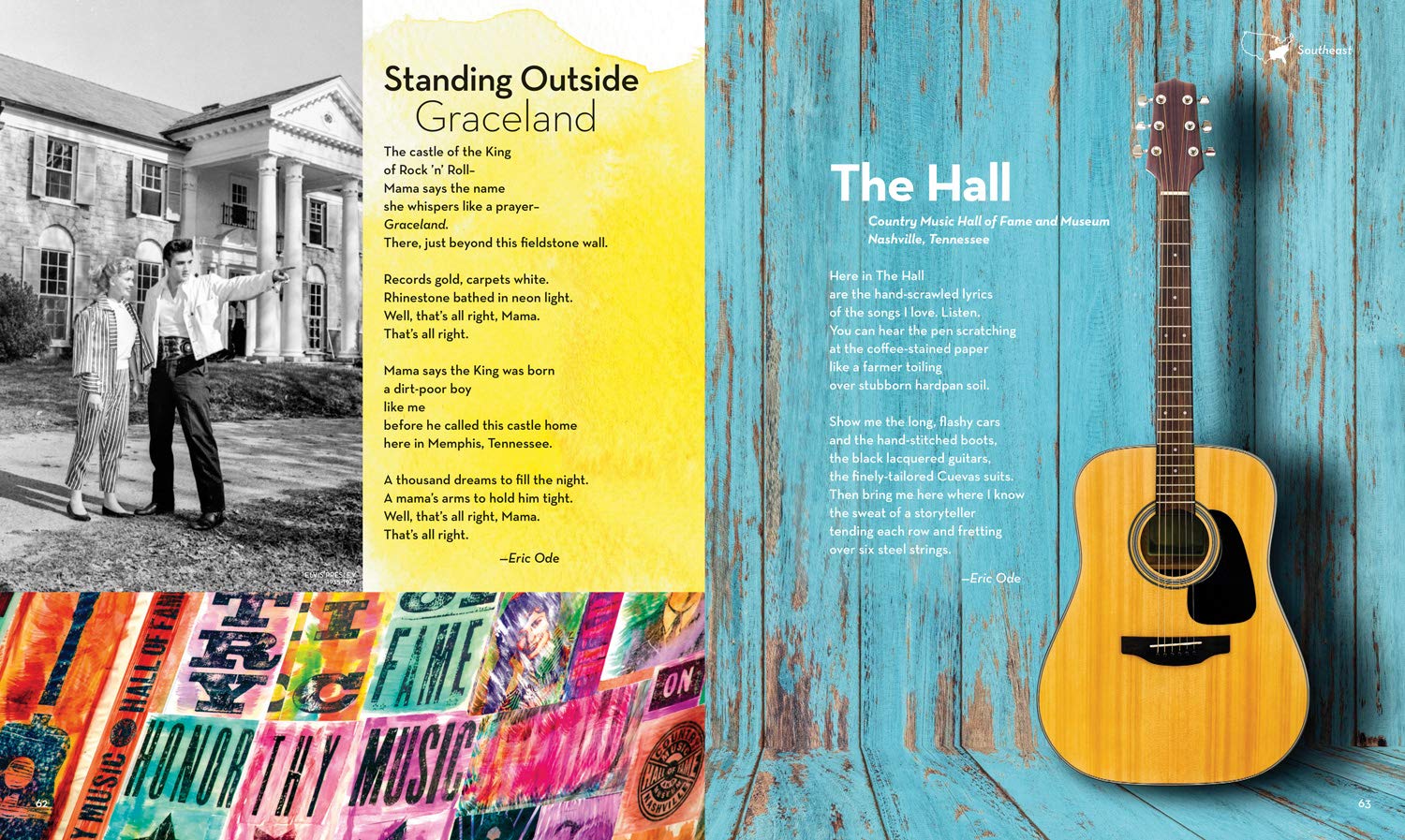
This is another incredible poetry volume, all celebrating the United States: it’s a love letter to the country, compiled by former US Children’s Poet Laureate J. Patrick Lewis. Organized by region: New England, Mid-Atlantic, Southeast, Midwest, Great Plains, Rocky Mountain West, Pacific Coast, and Territories, over 200 poems celebrate the natural beauty of our lands and our rich cultural and diverse history. “Never Say No” by Laurie Purdie Salas is all about the perfection of a Philly cheesesteak, while Linda Sue Park’s “Asian Market” – showcased here in both English and Korean –  is a tantalizing tribute to the smells and sights of eating at an Asian food market. Reuben Jackson’s haunting “For Trayvon Martin” is side by side with J. Patrick Lewis’ “The Innocent”, a poem for Emmett Till. “Spelling Bee”, an acrostic by Avis Harley, is a nod to the Scripps Spelling Bee, and Allan Wolf’s “Champion Betty” celebrates a competitor at the Westminster Kennell Club Dog Show. There are poems about beaches and forests, Disney and weddings; there are poems in Korean and Spanish, and poems that shine a light on how far we have to go. It’s America, and these voices are why it’s beautiful.

For your reader who loves the classics:
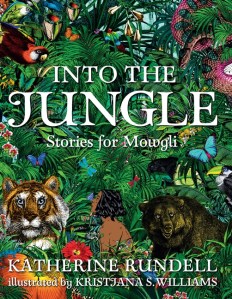
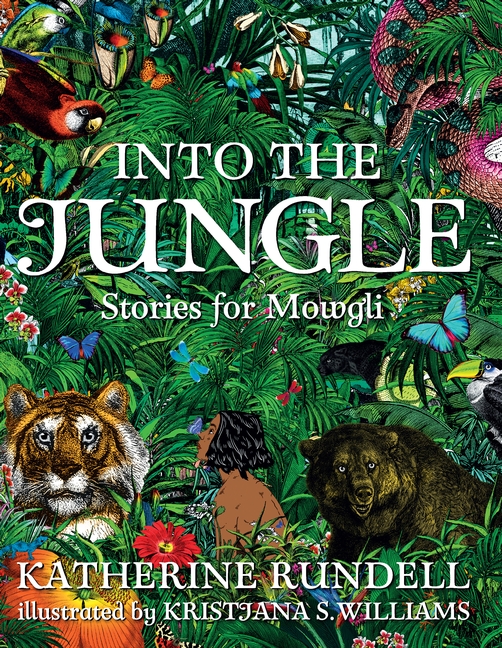
Into the Jungle: Stories for Mowgli, by Katherine Rundell/Illustrated by Kristjana S. Williams, (Oct. 2018, Walker Books), $24.99, ISBN: 9781536205275

Ages 8-12

The flap of Into the Jungle says it best: “To turn the page of The Jungle Book is to long for more tales of Mowgli the man-cub, Baheera the panther, Baloo the bear, and Kaa the python”. Into the Jungle is a companion to the classic Rudyard Kipling book, enriching readers with five more stories about Mowgli and his companions: “Before Mother Wolf Was a Mother, She Was a Fighter”; “Bagheera’s Cage”; “Baloo’s Courage”; “Kaa’s Dance”, and “Mowgli” all bring back fan favorite characters and deliver themes of empathy, kindness, and understanding across species, cultures, and genders. Katherine Rundell has given Kipling’s classic – and, by extension, his fans – new life, and new relevance in a world very different – and sadly, not so different – from 1894.

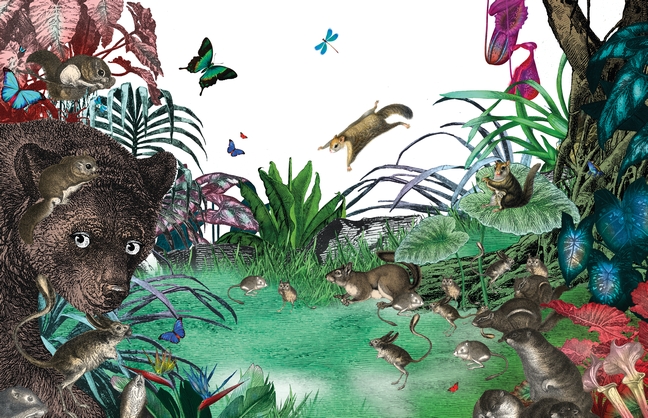
Illustrations are full-color and created in collage, using Victorian engravings, to give an historical feel with incredible texture. Humans and animals alike share expressive faces and body language, and the lush Indian jungle unfurls itself to readers, beckoning them to join them in the pages. A gorgeous gift book.
I hope that helps with some shopping lists! Happy Holidays, all!
Posted in Intermediate, Non-Fiction, picture books

Jenni Desmond talks elephants in her latest nonfiction work

The Elephant, by Jenni Desmond, (Nov. 2018, Enchanted Lion Books), $18.95, ISBN: 9781592702640

Ages 5-8

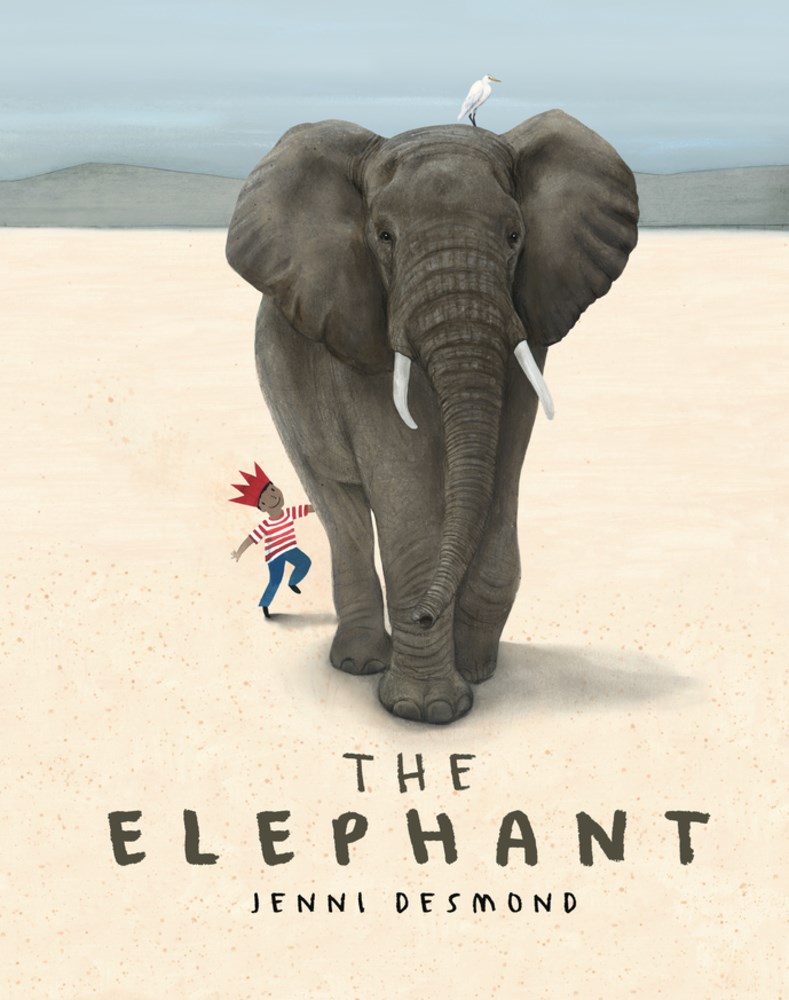
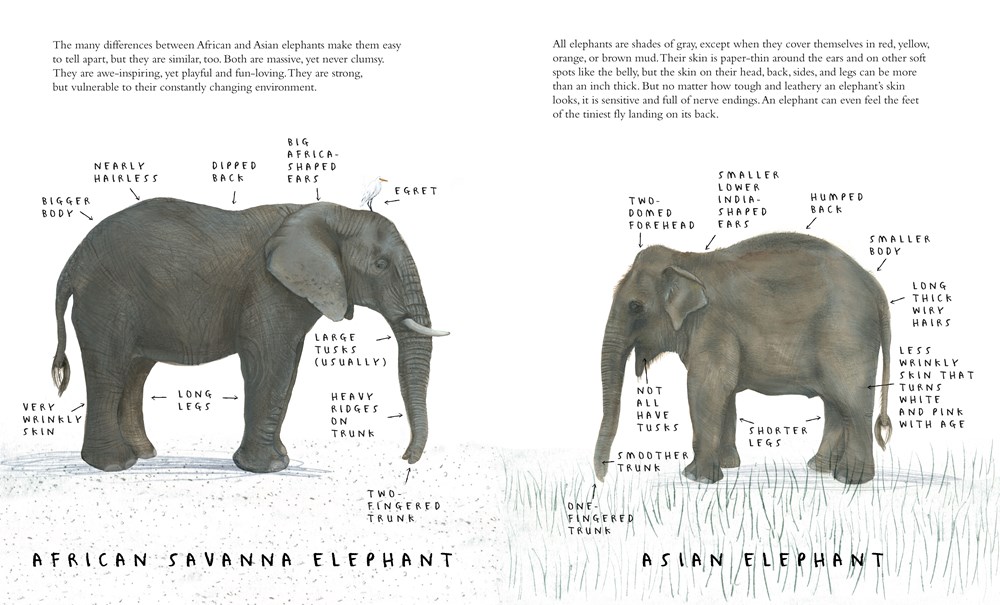
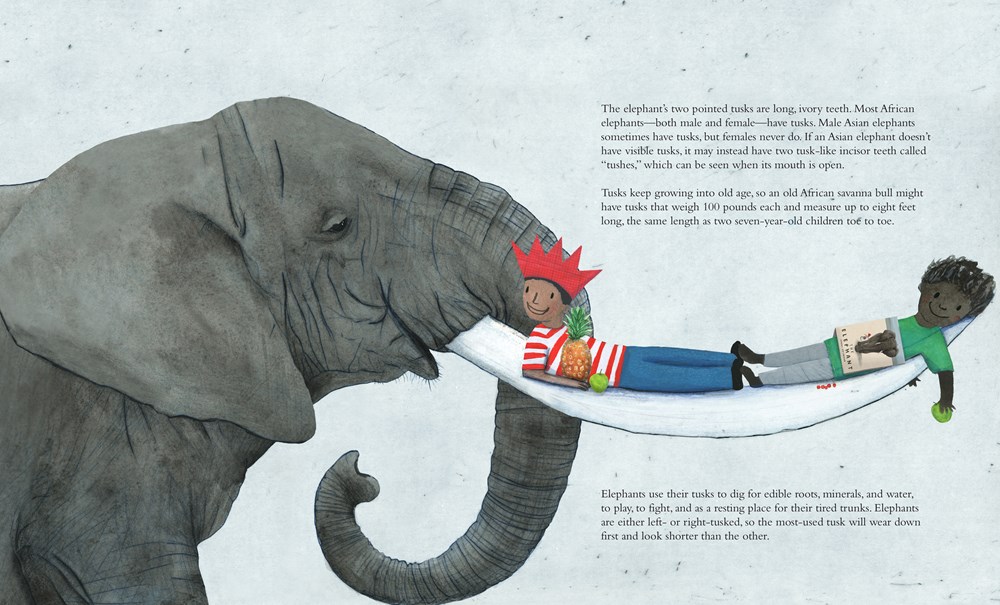
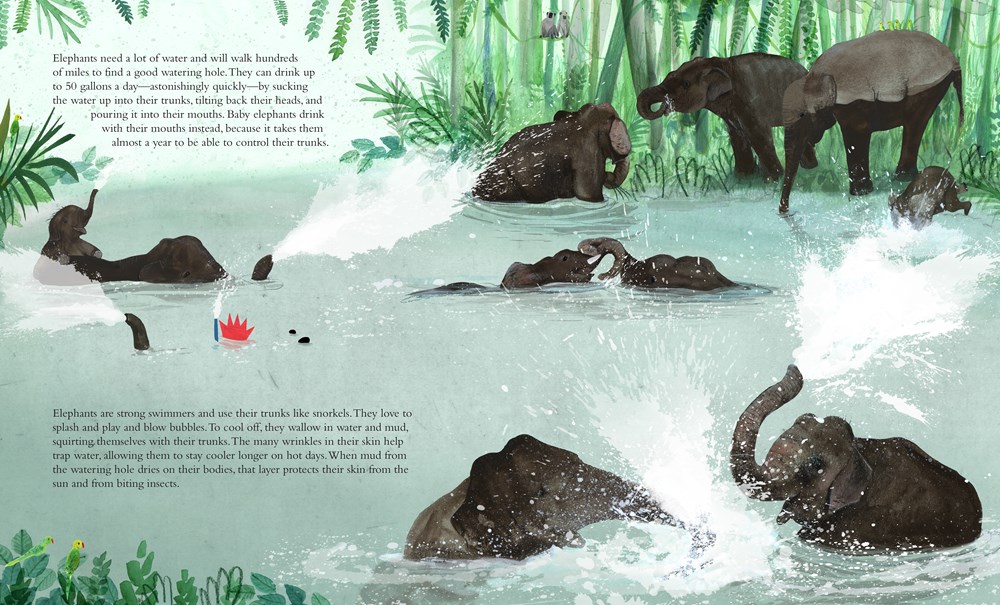
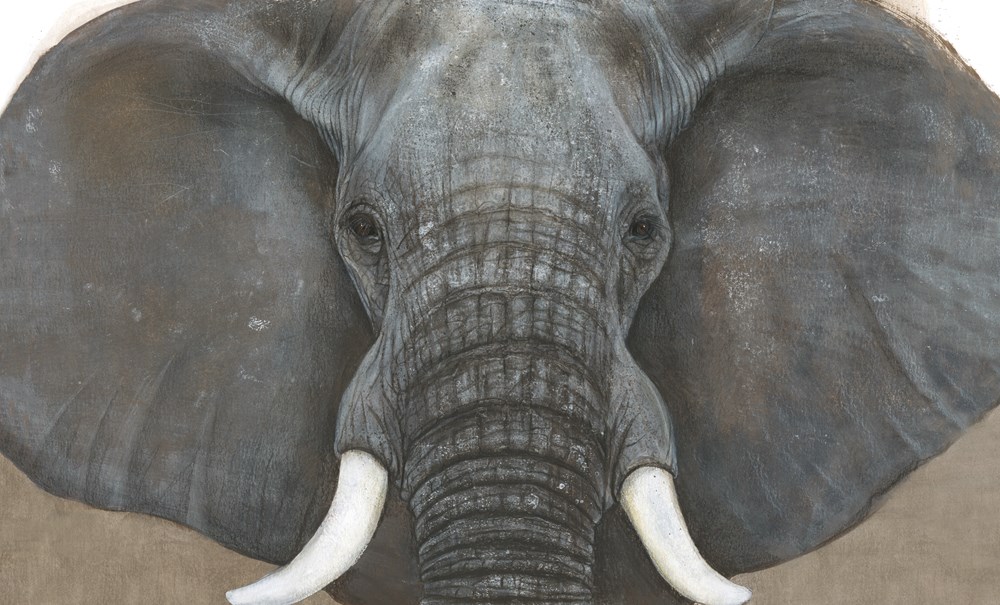
Jenni Desmond’s latest nonfiction book takes a look at one of our world’s largest animals: the elephant. Using a young boy’s exploration as a vehicle, we see him pick a book and be drawn into an elephant’s world through breathtaking, realistic color artwork. Informative facts throughout include the difference species and subspecies of elephants and the fact that they appear light on their feet because they mainly walk on tiptoe; they have sensitive skin and detect a fly landing on a leg or the rumbling of other elephants from as much as six miles away! Elephants can favor a tusk, much like humans have a preferred hand to write with. The author notes factors endangering elephants, including poachers who seek elephants’ ivory tusks.

The collage, paint, and colored pencil artwork is stunning, rendering detailed, realistic elephants on every page, while keeping readers aware that this is a child’s journey; the boy shows up, cartoon-like, in spreads, sporting a red crown and, sometimes, a friend.

This superb volume is a wonderful way to connect reading, imagination, and nonfiction – nonfiction is great for dreamers, too, after all! Jenni Desmond received the 2016 New York Times Best Illustrated award for The Polar Bear. This is her third book on endangered animals, joining The Polar Bear and The Blue Whale (2015). The Elephant has starred reviews from Publisher’s Weekly, Kirkus, and Booklist, and is a Publisher’s Weekly Best Book of 2018. Add this one to your wildlife nonfiction collections.

Posted in Intermediate, Middle Grade, Non-fiction, Non-Fiction

The Holiday Shopping has started… buy some books!

It’s that time of year again, where I dig deep to find all sorts of great books to add to your holiday shopping lists. This is the first round, so I’m thinking this post will suggest books and goodies to bring when you celebrate Thanksgiving, or the Fall Harvest, with your families and friends. These books will be fun for the kiddie table – before the food, naturally!

City, by Ingela P. Arrhenius, (Sept. 2018, Candlewick Press), $22, ISBN: 9781536202571

Ages 3-7

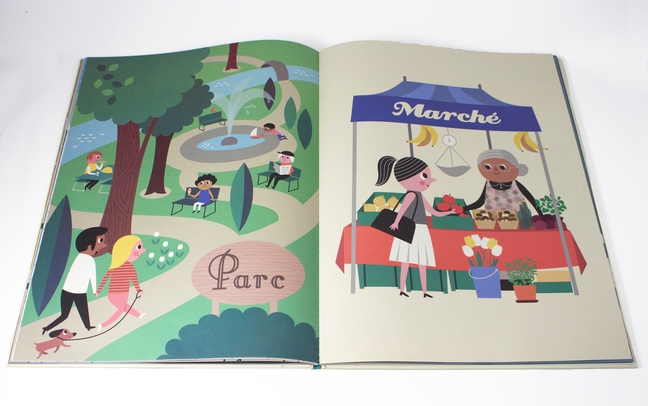
This book is just too much fun. First of all, it’s huge: over 40 inches high by over 17 inches wide, making it almost as big as some of the kids you’ll be seeing this holiday season! My niece giggle-shrieked when I stood the book up next to her, and that was that. She was hooked. It’s a gorgeous, funky concept book, introducing readers to different sights of city life: streetlamps, subways, coffee shops, fountains, zoos, even skateboarders are all here, with retro chic, bright art. The only words are the descriptive words for each picture; the endpapers are loaded with pictures of the smaller details of city life: a cat, a server, a scale, a shrub.

Put this in front of the kids, and let them have at it. My niece and my son loved talking about things they recognized: my niece remembers taking a train to work with her mom, and my son talked up the subway when I took him into the city on our winter break. And they both pretended that I was in the coffee shop and the bookstore, so it’s nice to know they think of me.

City is a gorgeous gift book that can be a coffee table art book for kids, or a prompt for creativity. Its only limit is the imagination.

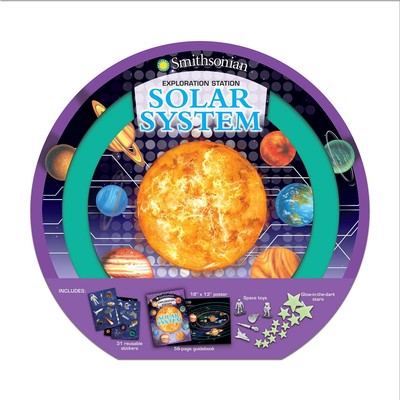
The Smithsonian Exploration Station sets are fantastic gifts. Bring one or two of these with you, and set the kids up in their own personal science labs while the food cooks.

Smithsonian Exploration Station: The Human Body, (Nov. 2018, Silver Dolphin Books), $21.99, ISBN: 9781626867215

Ages 4-10

The Smithsonian sets are contained in a nice, sturdy box that holds a lot of stuff. The Human Body box includes a 56-page fact book, 30 stickers, a plastic model skeleton kids can put together, and 25 fact cards. It’s similar to the Adventures in Science kit Silver Dolphin put out earlier this year, and my son loved them both. Learn what makes your blood pump, your muscles stretch and how your different systems come together to make you walk, run, eat, sleep, and play. Older kids can help younger kids with some basic terms and reading, and the littlest ones can still enjoy putting the stickers on the skeleton body while bigger kids help put the skeleton together.


Smithsonian Exploration Station: World Atlas, (Nov. 2018, Silver Dolphin Books), $21.99, ISBN: 9781626867208

Ages 4-10

This set was hands-down my son’s favorite set. A blow-up globe, a world map and stickers of landmarks from all over the world, and cardstock puzzles of the Eiffel Tower, Taj Mahal, and a Mayan Pyramid? Plus, a 56-page fact book that tells readers all about the cool landmarks as they decorate their maps? SOLD. We spent three days working on the map, at which time he told me that he wants to see every single one of these sights. We built the cardstock models, which called for much dexterity – so I called my eldest son in to help, because I tend to become a little exuberant, shall we say, with my papercrafting. My son also loves his inflatable globe, and asks me to point out cool places to him; some from the map, some, the countries that his friends at school hail from, some, names of places he hears about on TV. It’s a great set.


Smithsonian Exploration Station: Space!, (Nov. 2018, Silver Dolphin Books), $21.99, ISBN: 9781626867222

Ages 4-10

Kids love planets! The Space! Exploration Station includes a 56-page fact book, astronaut and rocket plastic figurines, stickers, and glow in the dark stars to make their own constellations. There are incredible, full-color photographs and text that explains the makeup of our solar system, galaxies, planets, and constellations. Let the kids decorate your dining room to and eat under the stars!

Every single one of these kits is such fun, and urges kids to be curious and explore the world inside them and around them. If you have the budget for it, throw these in your distributor cart and get a few sets for your STEM/STEAM programming, too. The Smithsonian has a good science education channel on YouTube, with kid-friendly videos that make for good viewing.


Where’s Waldo? The Spectacular Spotlight Search, by Martin Handford, (Oct. 2018, Candlewick Press), $18.99, ISBN: 9781536201765

Ages 5-9

Waldo’s back with a new trick: this time, the spreads have all gone dark! Luckily, the Spectacular Spotlight Search comes with a cool spotlight viewer to help you find him, and the challenges he sets out for you. There are six puzzles and a magic slider that slides into the scene to “light up” small sections – like a spotlight. Find Waldo and other familiar characters, plus other hidden challenges and games on each spread.  My 6-year-old and my 3-year-old niece had a blast with this book, eventually recruiting me for my Waldo-finding skills (narrator: The children were better.)

If you have puzzle and game fans in your family, this is a great gift to bring along. If you’re looking at it for your library, I suggest keeping it in reference; that spotlight will go missing or get beaten up in no time. But it’s good Waldo fun.

I have so much more to come, but I think this is a good start. A little something for everyone and plenty of hands-on fun!

Posted in Intermediate, Non-Fiction, Preschool Reads

Show kids the excitement of cooking with Kids Cooking!

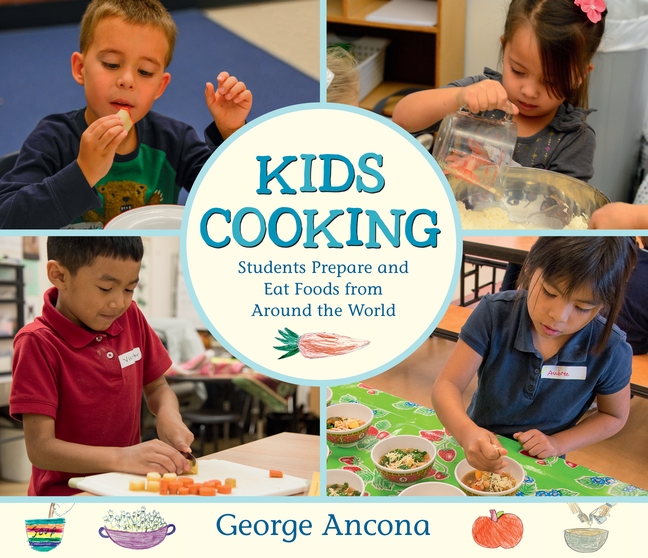
Kids Cooking: Students Prepare and Eat Foods From Around the World, by George Ancona, (Oct. 2018, Candlewick Press), $16.99, ISBN: 9780763698768

Ages 4-7

When my son (now a high schooler) was in first grade, his school participated in a great program called CookShop. The teachers ran the program, and we parents volunteered as helpers, and a couple of times a month, kids learned cooking skills: chopping (with plastic knives), mixing, and the math involved in putting together a recipe. I loved it, and he loved the process of creating meals. No, he didn’t eat anything he made (that honor went to me), but working together brought us even closer, and the whole class came together as a group to prepare and share food. I may have enjoyed CookShop more than he did – I still have my apron! – and am glad it’s still a program in NYC schools. When I read Kids Cooking: Students Prepare and Eat Foods From Around the World, I was immediately brought back to that first grade classroom and the warm memories.

Kids Cooking is photographer George Ancona’s venture into classrooms where a similar organization, Cooking with Kids, brings children from diverse backgrounds come together to prepare healthy meals from different cultures. They roast vegetables and prepare a Moroccan sauce called chermoula; make Chinese-American fried rice with sweet and sour cucumbers; work together to cook up an Italian minestrone soup with breadsticks, and learn about different tomatoes that go into making a Mexican salsa with tortillas and tamales. They draw pictures as they go; teachers use a globe to demonstrate where different meals originate, and parents and teachers make sure that everyone’s cooking experience is safe and exciting.

The book presents photos of the kids and grownups at work, along with some of the children’s artwork, and phrases from the cultures whose meals they’ve prepared. It’s a celebration of food, friendship, and different cultures: meals prepared and shared together are the best meals. An author’s note mentions the Cooking With Kids program and the schools that participated in the book.

With the holidays on the horizon, Kids Cooking is a great book to read to kids and get them talking about meals they enjoy at home. A recipe link included in the book didn’t work for me, but the Cooking with Kids website has recipes available: see if your family wants to try a few out!

You can find more of George Ancona’s photos and learn more about his children’s books here.

Posted in Intermediate, Non-Fiction, picture books, Preschool Reads

Nonfiction rundown: October and November

Picture book nonfiction just gets better and better. In October and November, we get two more biographies on people of color that have, until now, been largely overlooked by history. It’s disheartening on one hand, but I choose to be glad that books are coming forward now to liven up our nonfiction shelves and give readers even more role models across all walks of life to learn about and be inspired by. I’ve also got some fun alphabet books and some nature and science. Pull up a chair, brew a warm beverage of your choice, and enjoy!


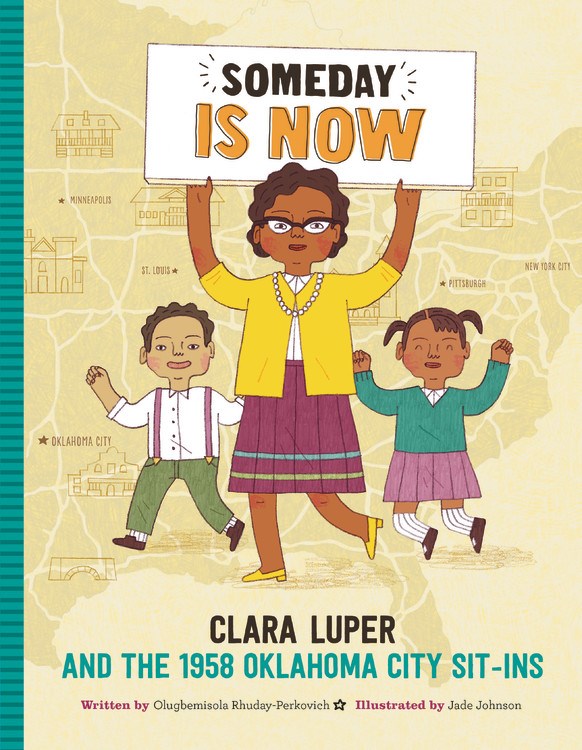
Someday is Now: Clara Luper and the 1958 Oklahoma City Sit-Ins, by Olugbemisola Rhuday-Perkovich/Illustrated by Jade Johnson, (Aug. 2018, Seagrass Press), $17.95, ISBN: 9781633224988

Ages 6-9

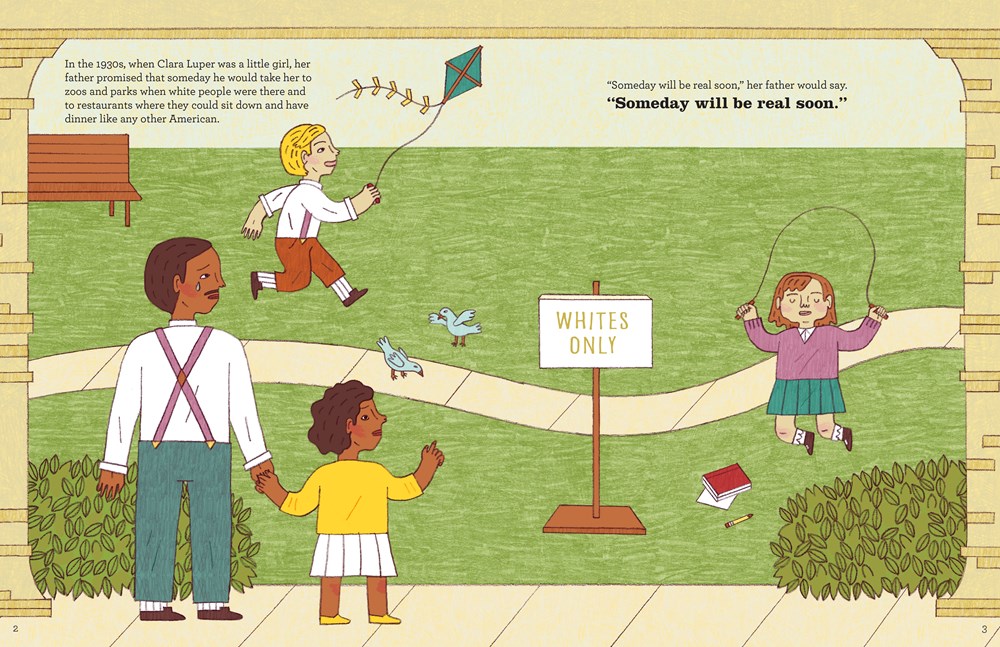
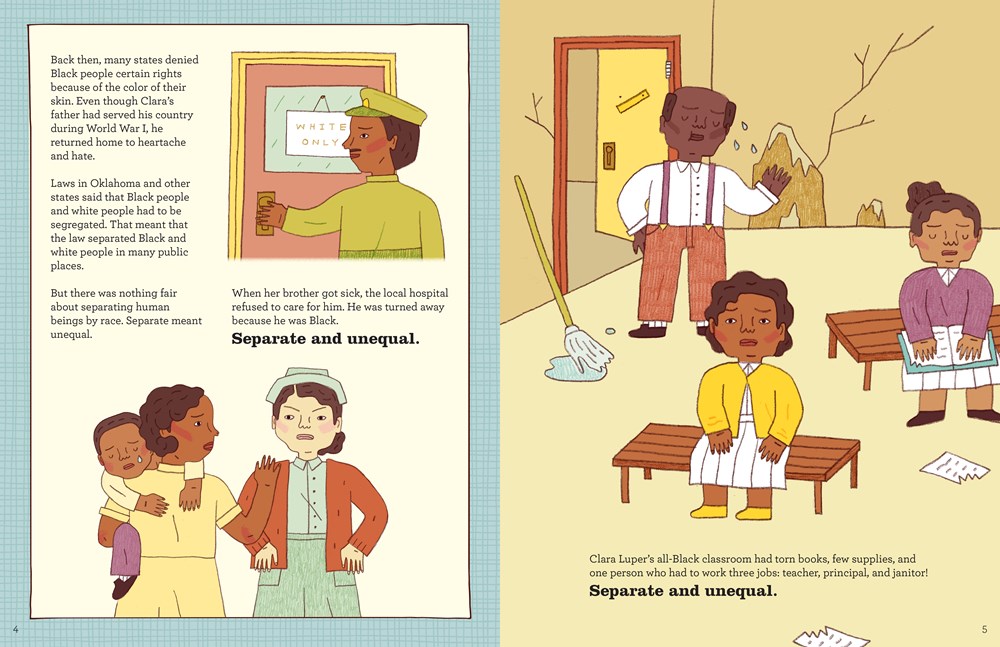
I missed this one the first time around, but I’m glad I caught it when I went back through my Edelweiss account to check up on my TBR. This picture book biography of civil rights activist Clara Luper (nee Clara Mae Shepard) is a great addition to your picture book biographies. Growing up in segregated Oklahoma, Clara saw her World War I veteran father diminished by the very country he fought for: her brother turned away from a local hospital because it was a whites-only facility; she was educated in a run-down classroom with torn books and a teacher who also served as the principal and janitor; restaurants dictated where Blacks could eat. Everywhere she looked, Clara saw things were “separate and unequal”, a phrase repeated throughout the book in bold, large font to drive home the message. Ms. Luper became a teacher who pushed for change, working with the NAACP Youth Council and participating in lunch counter protests with her students after a trip to non-segregated New York. Back matter includes an encapsulated biography of Ms. Luper.

This is the first picture book biography on Clara Luper: everything else I found online is decades old. Let’s get more civil activist bios into the hands of our kids, so they can see for themselves how many voices led to change. Someday is Now has a starred review from Kirkus.

Author Olugbemisola Rhuday-Perkovich is the co-author of the NAACP Image Award nominated Two Naomis and the forthcoming Naomis Too and is the editor of The Hero Next Door, an anthology from We Need Diverse Books. You can see more of Jade Johnson’s illustration work, including downloadable coloring pages, on her website.


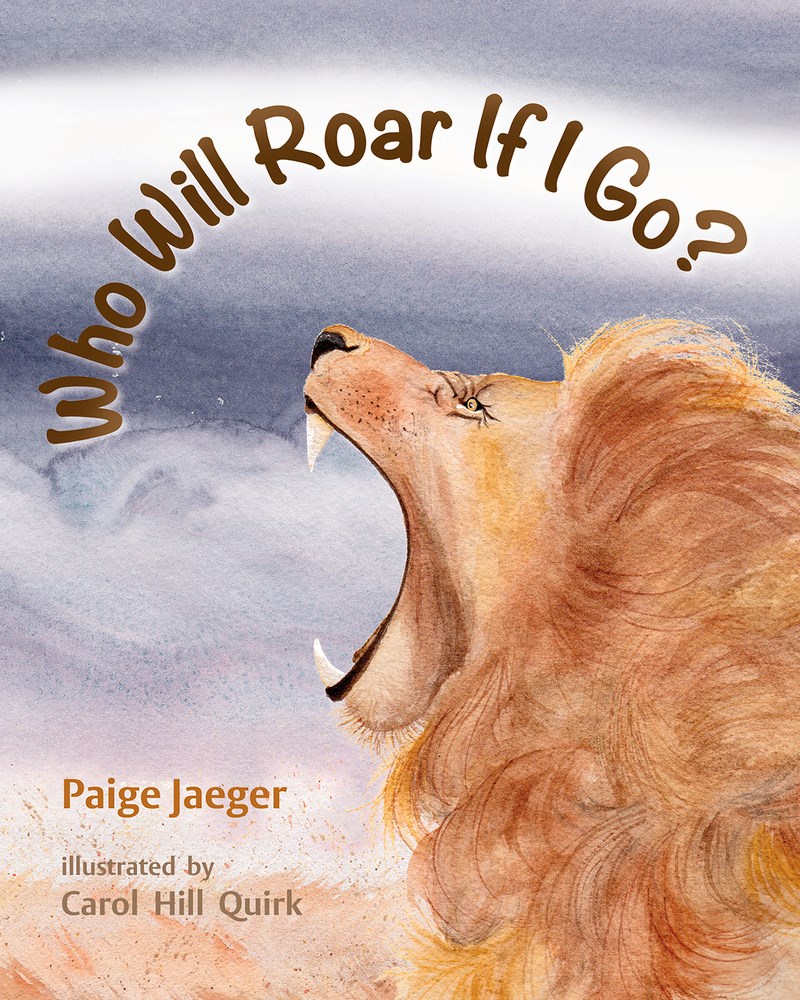
Who Will Roar If I Go? (If We’re Gone, Book 1), by Paige Jaeger/Illustrated by Carol Hill Quirk, (June 2018, Boutique of Quality Books), $18.95, ISBN: 9781945448157

Ages 5-7

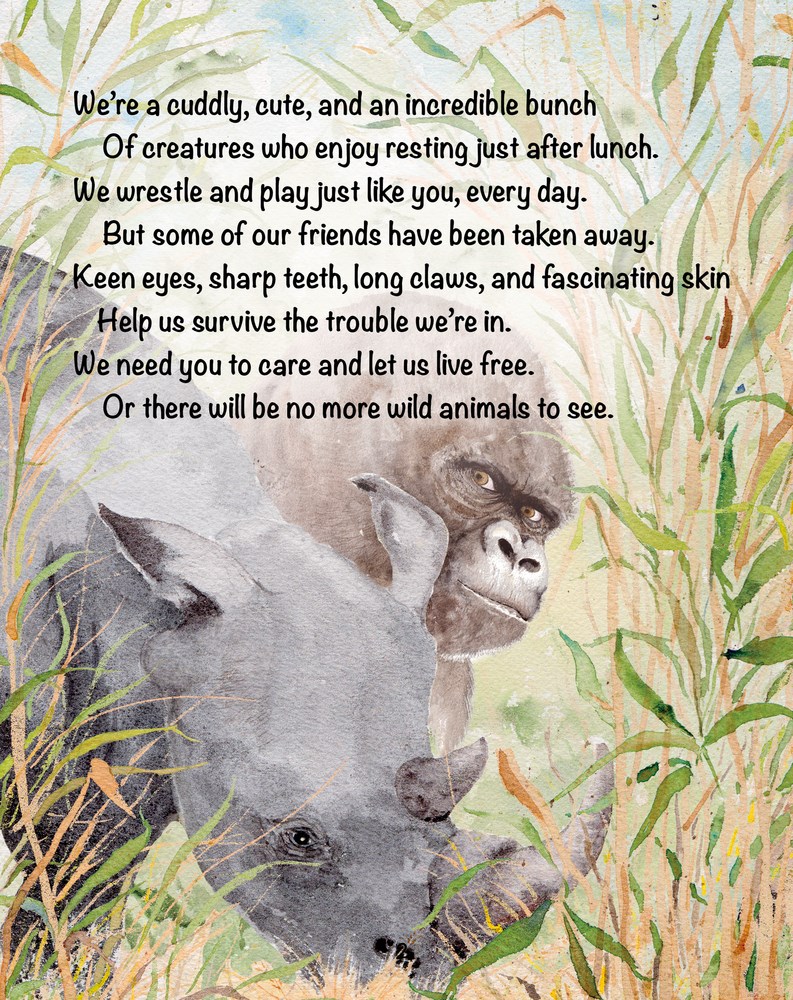
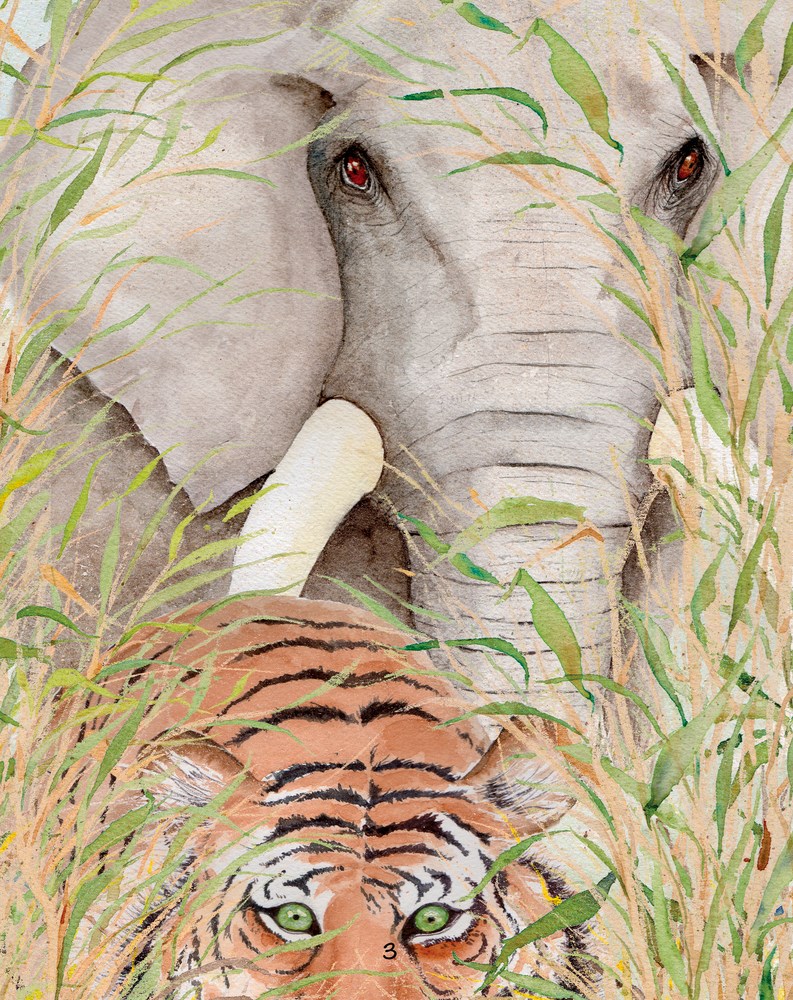
This rhyming story, the first in a planned series, is a plea to readers from endangered animals suffering from a multitude of human-based maladies, most commonly, the disappearance of their habitats and hunting, be it for trophies or luxury dining. Thirteen animals ask humans for help in their quest for survival; each rhyme provides readers with a little background on the animal and why it needs help. The elephant’s page reads: “I sure am an enormous creature; With ivory tusks my most attractive feature; For these long, tapered tusks that I hold dear; Thousands of friends were lost last year; No one needs my tusks but me; Go make some in a factory”.

Back matter includes a glossary of terms and an animal footprint guessing game. Each animal gets its own spread, including its geographic location and footprint, related to a game in the back matter. The watercolor artwork is realistic and showcases each animal in its natural environment. Who Will Roar If I Go? is a good introduction to endangered animals and the need for conservation and preservation; it’s a good additional add to your picture book nonfiction.

The Who Will Roar webpage offers free, downloadable educator resources.


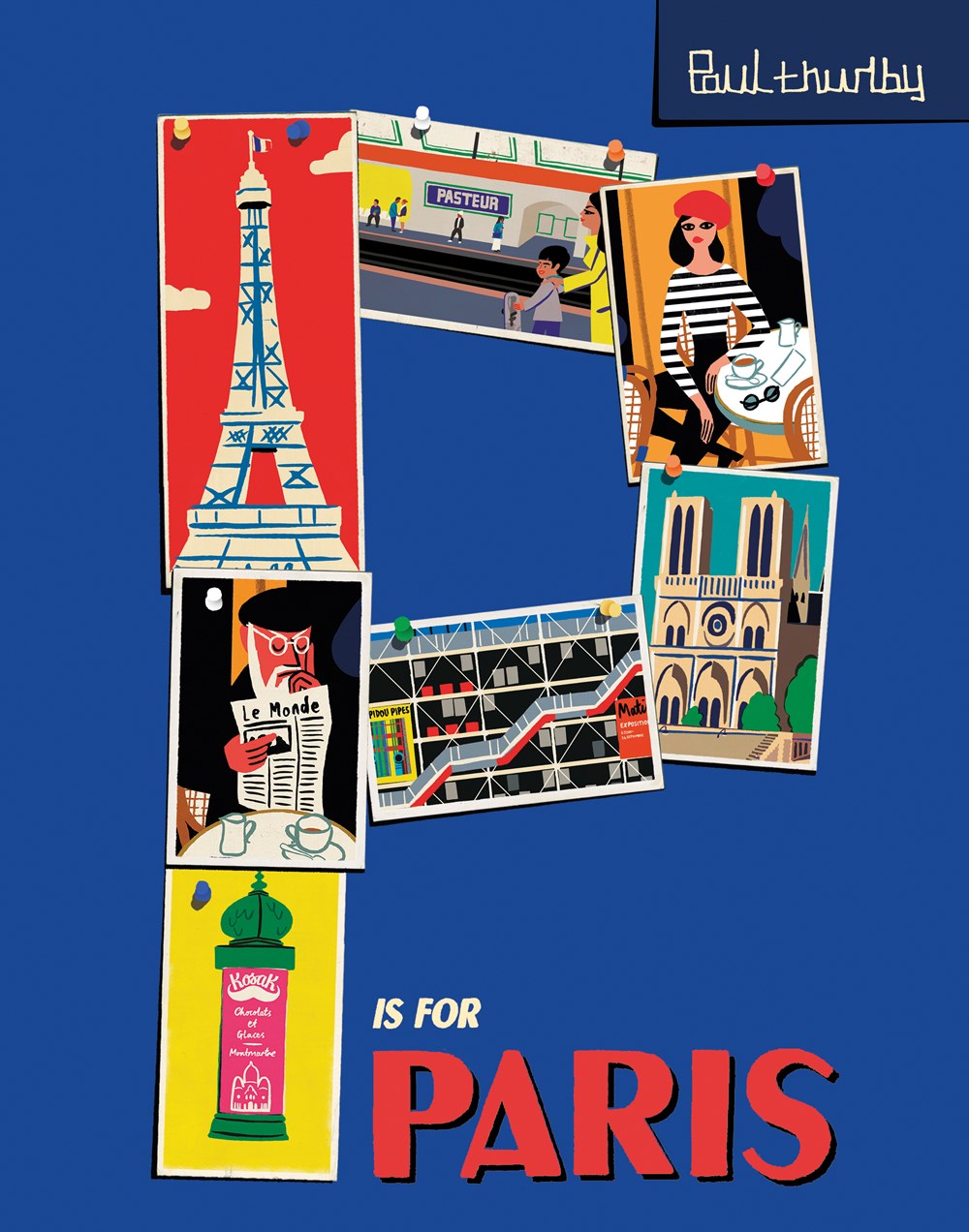
P is for Paris, by Paul Thurlby, (Oct. 2018, Sourcebooks Jabberwocky), $19.99, ISBN: 9781492668152

Ages 5-8

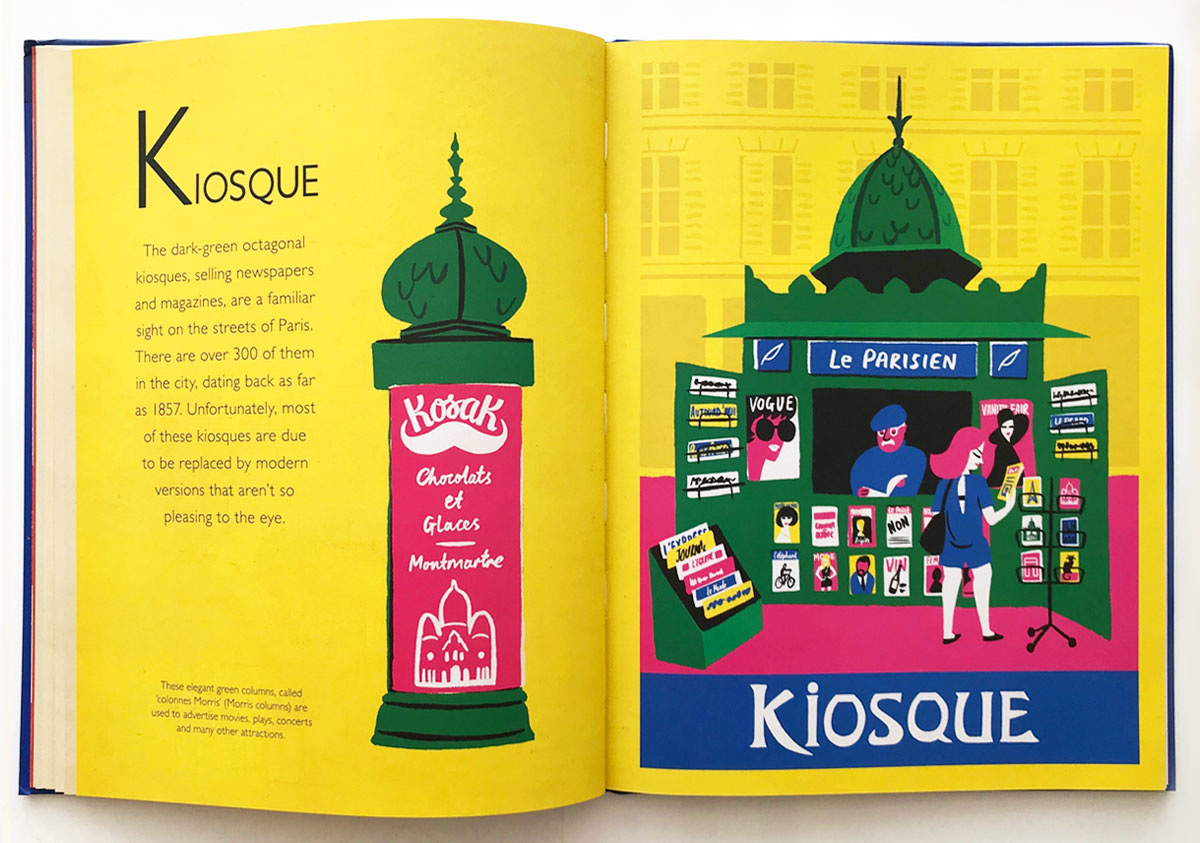
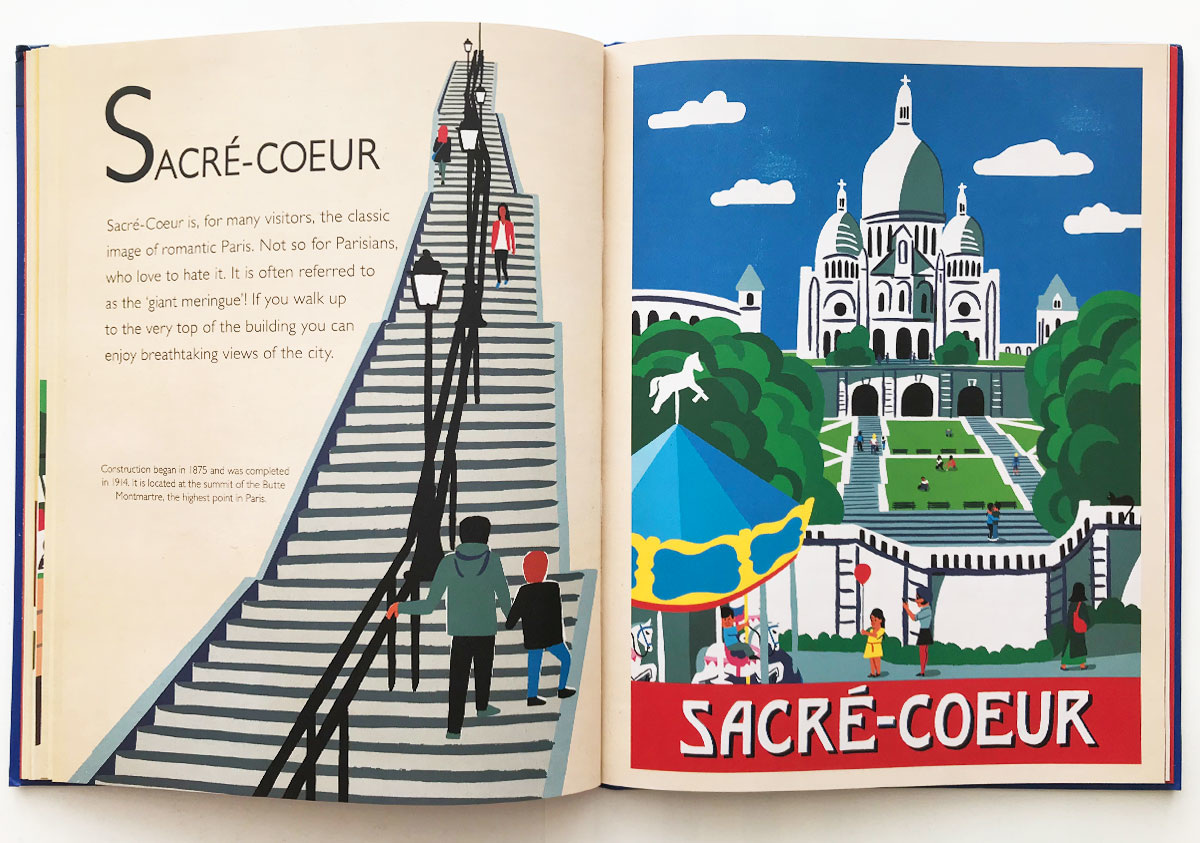
The latest book in Paul Thurlby’s ABC Cities series brings readers on an alphabetical tour of the City of Lights: Paris. Beautiful, bright artwork brings to mind vintage travel posters, and little bites of Parisian history on each page make this a fun addition to your picture books and world sections. Adults will enjoy this one as much as the kids will; references are equally accessible to kids and grownups. From the Abbesses to the Zoo De Vincennes, this is a nice addition to Thurlby’s Cities set. Endpapers provide a map to Paris, with attractions throughout the book numbered for reference. The author provides a concise explanation of the city’s organization into arrondissments. This easily works for both concept sections and geography sections, but don’t mistake this for a beginner’s abecedary; it’s a little more complex and better for Kindergarteners and up.

Check out Paul Thurlby’s webpage for more artwork and information on his other books. Take your armchair travelers on a picture book trip around the world with Thurlby’s books and Miroslav Sasek’s books.


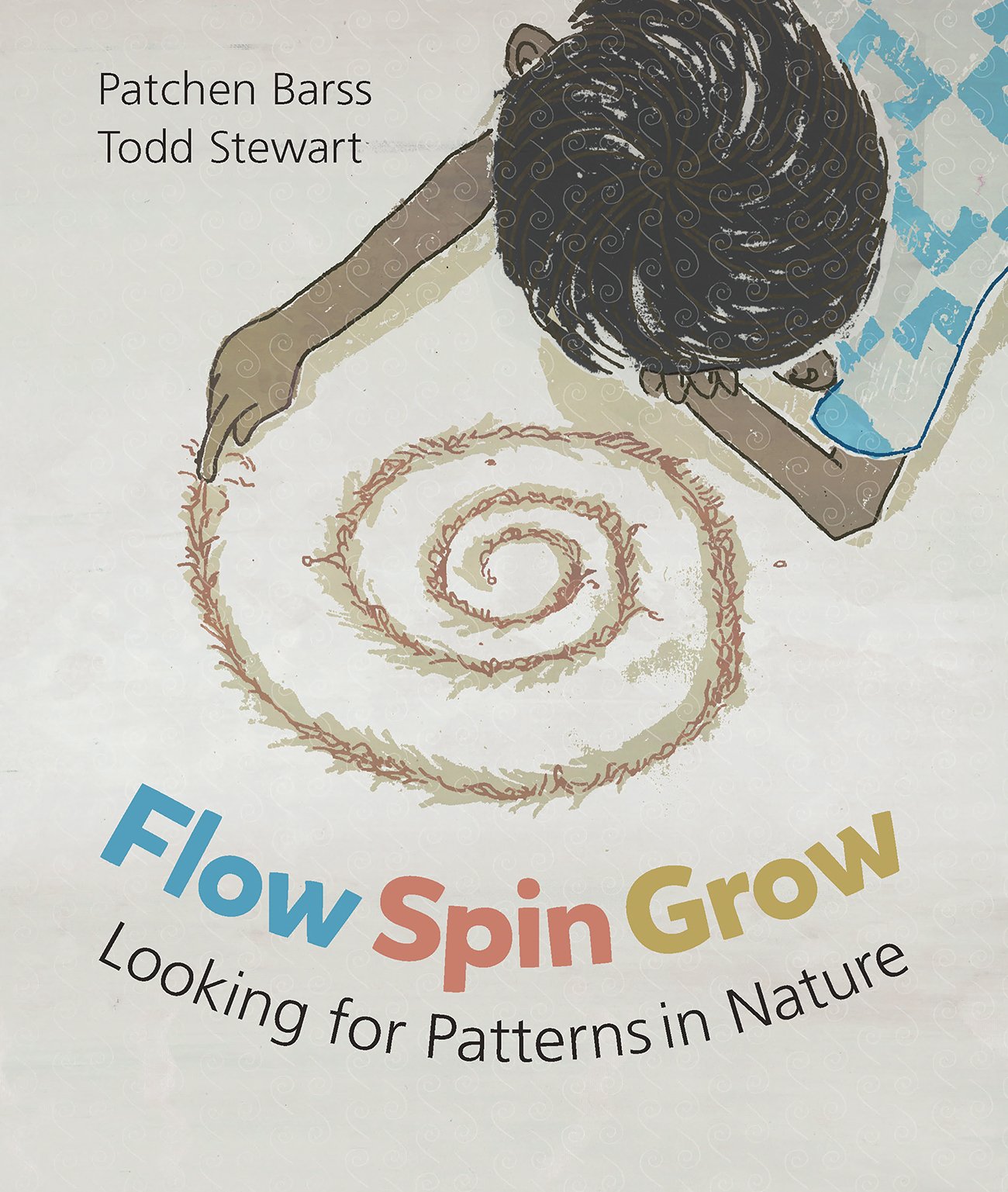
Flow, Spin, Grow: Looking for Patterns in Nature, by Patchen Barss/Illustrated by Todd Stewart, (Oct. 2018, OwlKids), $18.95, ISBN: 9781771472876

Ages 5-7

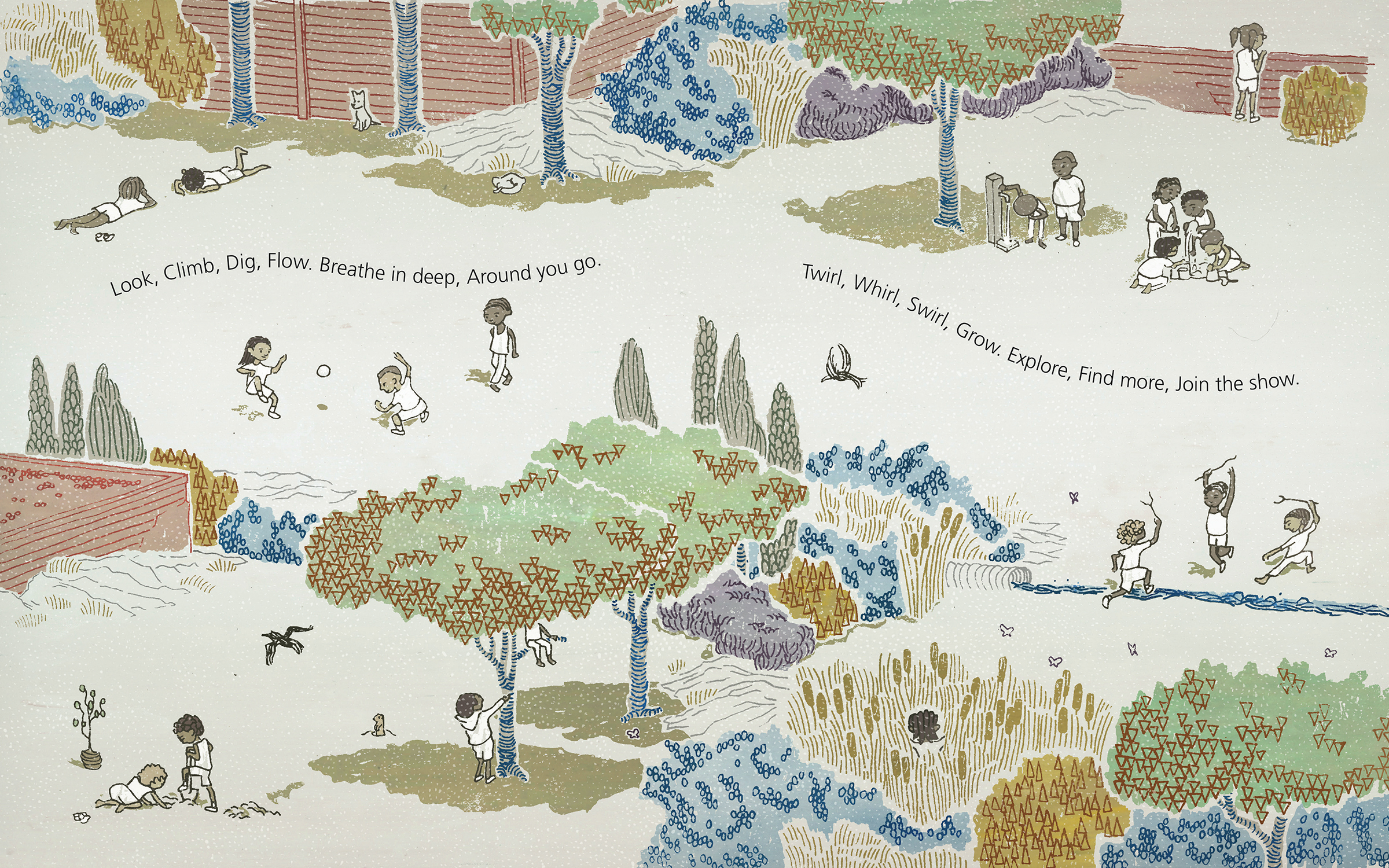
Readers are encouraged to explore patterns in nature in this mindful rhyming book. A diverse group of children play and relax in an open park area in the opening spread. The text playfully crawls around the scene, encouraging kids to “Look, climb, dig, flow. Breathe in deep, around you go. Twirl, whirl, swirl, grow. Explore, find more, join the show.” The text inspires readers to look for patterns everywhere: observe, dig, explore, climb; a tree trunk splits, branches split, and below the ground, roots split and grow; water branches off into smaller bodies of water, and our own lungs have little branches like mini-trees, reaching for air. Nature twirls and whirls, like the galaxies in space or two friends at play; pine cones, storm clouds, and snail shells all swirl. It’s an interesting way to introduce scientific inquiry to burgeoning scientists. An author’s note goes further into the “secret code” hidden in the shapes of things, and suggests additional resources for more reading.

The artwork is the star in this book. Multilayered screen prints and muted colors create a setting where patterns gently emerge, waiting for readers to spot them: triangles on a tree or bush; cracks in the dirt and roots underground reach out. Flow Spin Grow is a good purchase for primary science collections; I also love Joyce Sidman and Beth Krommes’ award-winning Swirl by Swirl: Spirals in Nature, and Jane Brocket’s Spotty, Stripy, Swirly: What Are Patterns?

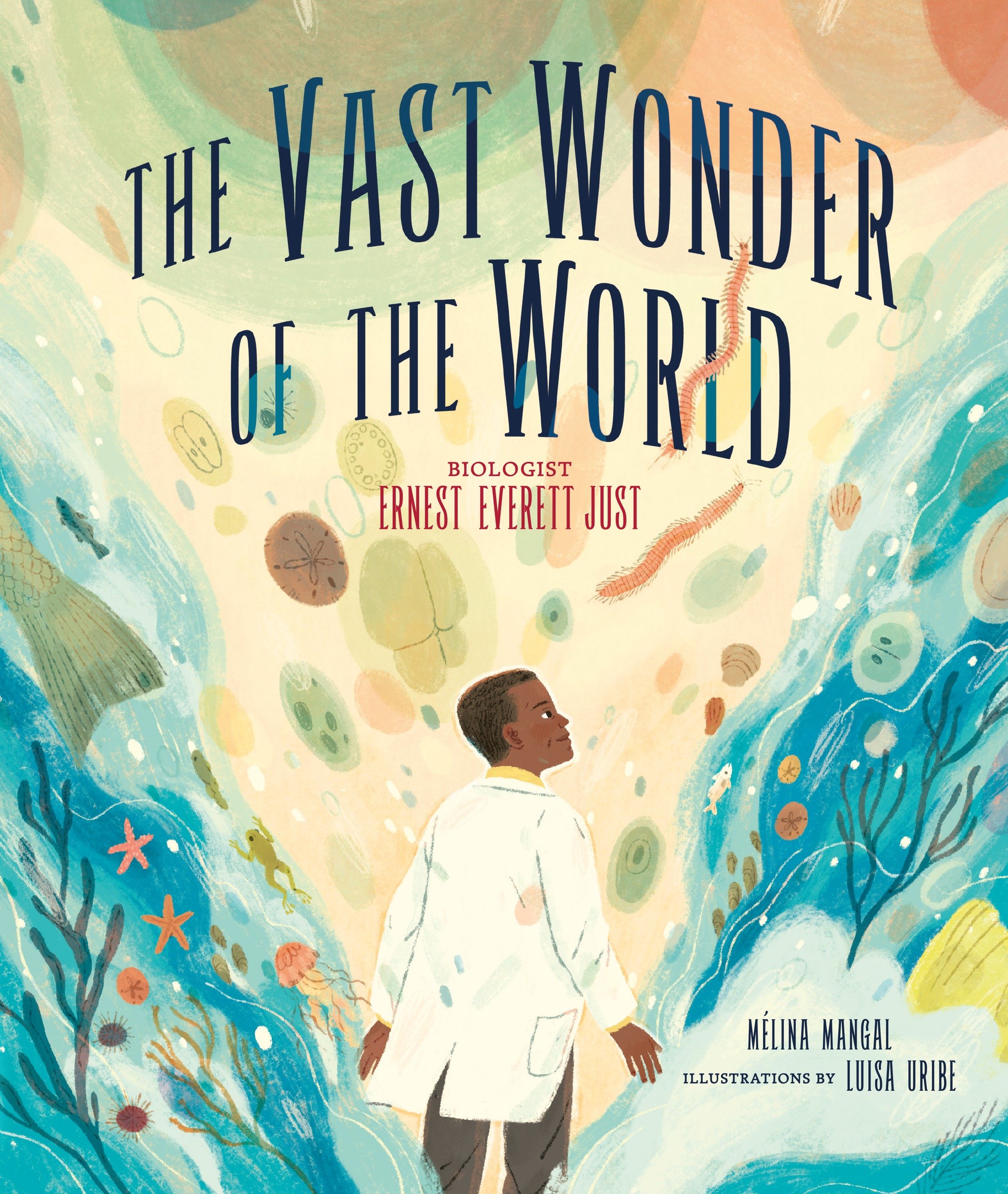
The Vast Wonder of the World: Biologist Ernest Everett Just, by Mélina Mangal/Illustrated by Luisa Uribe, (Nov. 2018, Lerner Publishing Group), $19.99, ISBN: 9781512483758

Ages 7-9

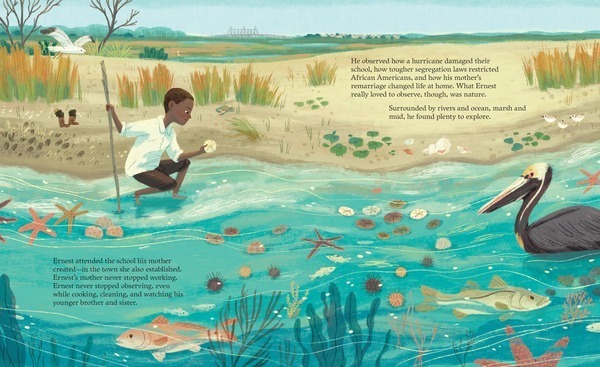
This bio on biologist Ernest Everett Just is just what your picture book biography section needs. He came of age in the Jim Crow South, paying his way through Dartmouth College while supporting his siblings after his mother’s passing. He “unlocked the mysteries of how the different parts of the cell worked together as new life developed”, and found success as a Howard University professor, embryologist, and cytologist, working in both Europe and the States. The Vast Wonder of the World tells his story, introducing him to a new generation of budding scientists who will be inspired by his determination and success in the face of racism and adversity. The muted pencil and digital artwork, in shades of blue, creates a sense of wonder and beauty, giving readers a real appreciation for Just and his place in science history. An author’s note, a timeline, and source notes complete this solid addition to science biography sections. Display and booktalk – PLEASE – with Gwendolyn Hudson Hooks and Colin Bootman’s Tiny Stitches: The Life of Medical Pioneer Vivien Thomas, and – if you can find it (can we please get this book back in print?) – May Chinn: The Best Medicine, by Ellen Butts and Joyce R. Schwartz, illustrated by Janet Hamlin.

The American Society for Biochemistry and Molecular Biology (ASBMB) has a good feature story on Dr. Just, with references to further reading, by W. Malcolm Byrnes.

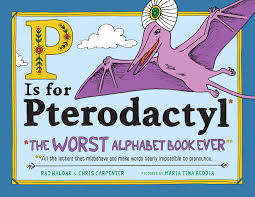
P is for Pterodactyl, by Raj Haldar & Chris Carpenter/Illustrated by Maria Beddia, (Nov. 2018, Sourcebooks Jabberwocky), $17.99, ISBN: 9781492674313
Ages 6-10

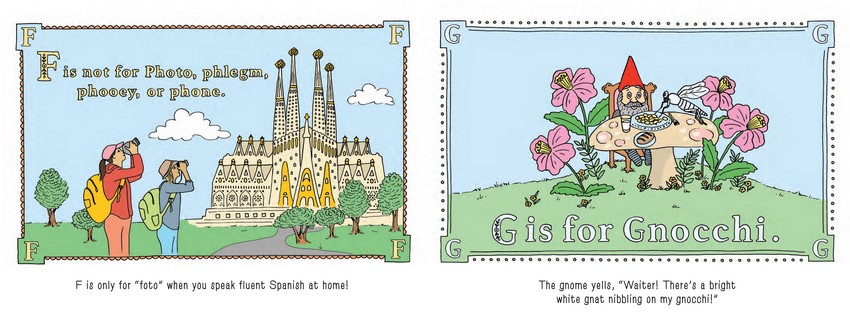
Calling itself “The Worst Alphabet Book Ever”, P is for Pterodactyl is a smirk, wink, and nudge at rebel words in the English language: words that don’t follow the rules. The book uses humor, alliteration, and amusing artwork to get its point across, as with E is for Ewe, which depicts sheep at a wake: “Eileen the ewe was so euphoric with wolves were eaten, she even gave the eulogy” (keep reading the book for more on Eileen); or L is not for Elle, which shows an elevated subway car transporting some elephants across the city of El Paso: “An elephant named Elle rode the el train halfway to El Paso and dined on hearts of palm with her folks”. It’s not a basic concept book for new learners, but it’s sure fun to read it out loud and watch kids laugh and play with language. My 6-year-old cracks up at this one, and it helps when he tries to figure out new words.

P is for Pterodactyl has a starred review from Foreword Reviews.