Posted in Non-Fiction, picture books, Preschool Reads

It’s Spring… time to raise the butterflies!

Butterflies in Room 6, by Caroline Arnold, (March 2019, Charlesbridge), $16.99, ISBN: 9781580898942

Ages 3-7

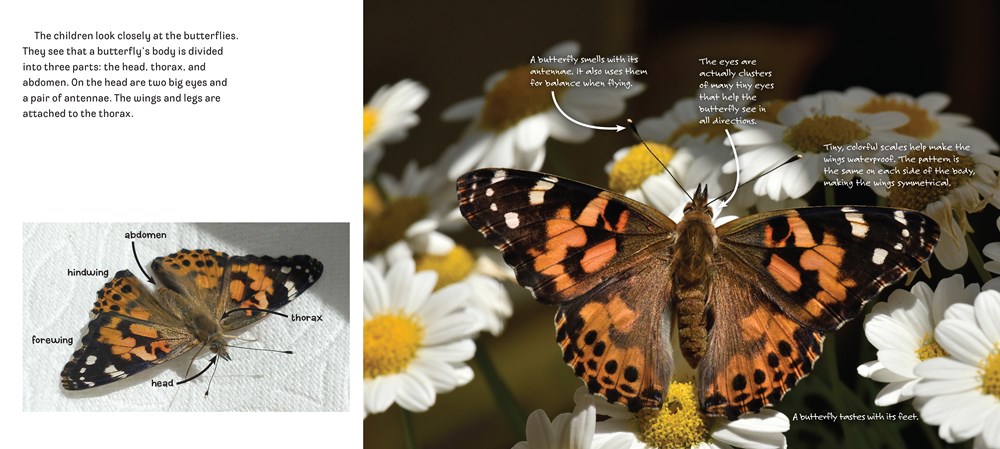
Spring is getting closer and closer, and that means that science classrooms all over the place are going to introduce their little ones to the life cycle of a caterpillar/butterfly. We’ve done it in my home, and each of my kids has done it in school, and it’s exciting every time. Butterflies in Room 6 revisits the Kindergarten students of Room 6 – a new group, since Hatching Chicks in Room 6 was published in 2017 – as they raise butterflies, starting from teeny, tiny caterpillar eggs.

Full-color photographs and informative text take this STEM/STEAM story through the step-by-step process by which the class observed and cared for their caterpillars; feeding them, observing the stages of life, moving the chrysalises to a larger, netted environment, the exciting emergence of the painted lady butterflies from their cocoons, and their release into the world! Leaf-shaped callouts throughout the book provide additional caterpillar and butterfly facts, and back matter provides butterfly questions, vocabulary, and a nice list of online and print resources for further reading.

Butterflies in Room 6 brings a real-world look into a primary classroom – it’ll get kids excited about science, especially if this is one of your classroom projects. Pair this with The Very Hungry Caterpillar and the classic that my kids all read in their kindergarten classes, Deborah Heiligman’s From Caterpillar to Butterfly.

Posted in Early Reader, Non-Fiction, picture books, Preschool Reads

Natural world nonfiction for young learners: See to Learn: Forest

See to Learn: Forest, by Kate Moss Gamblin/Illustrated by, Karen Patkau, (March 2019, Groundwood Books), $16.95, ISBN: 9781554988792

Ages 4-7

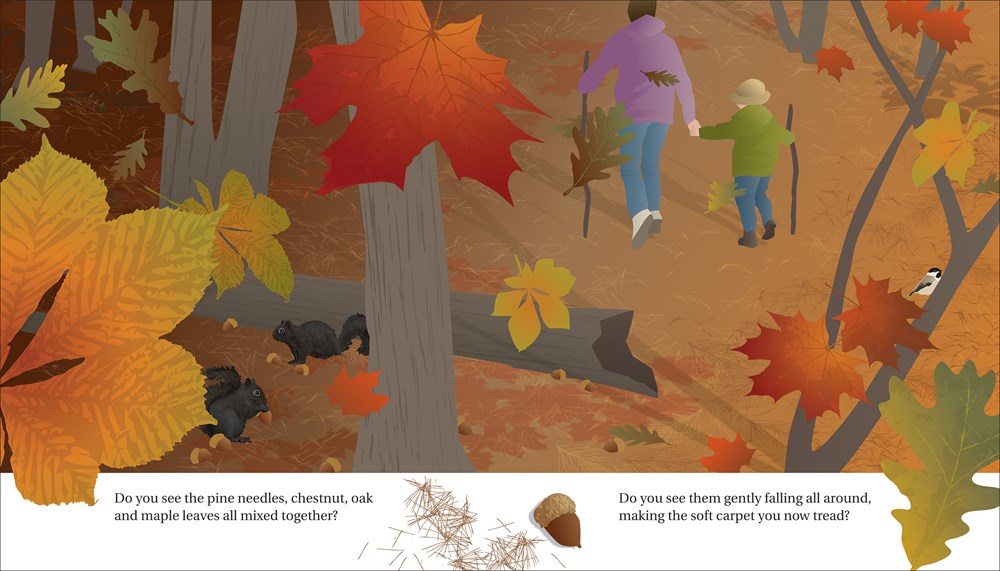
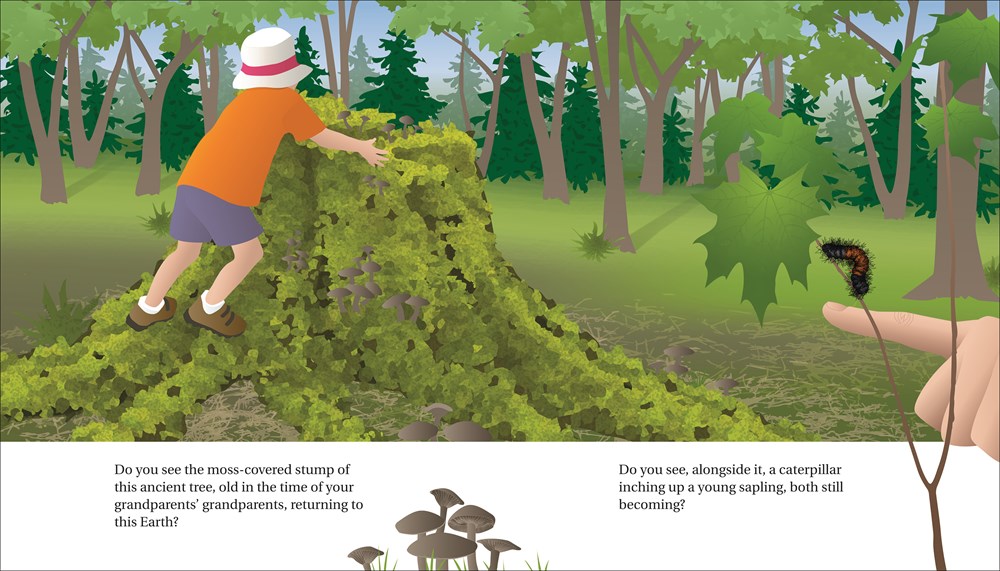
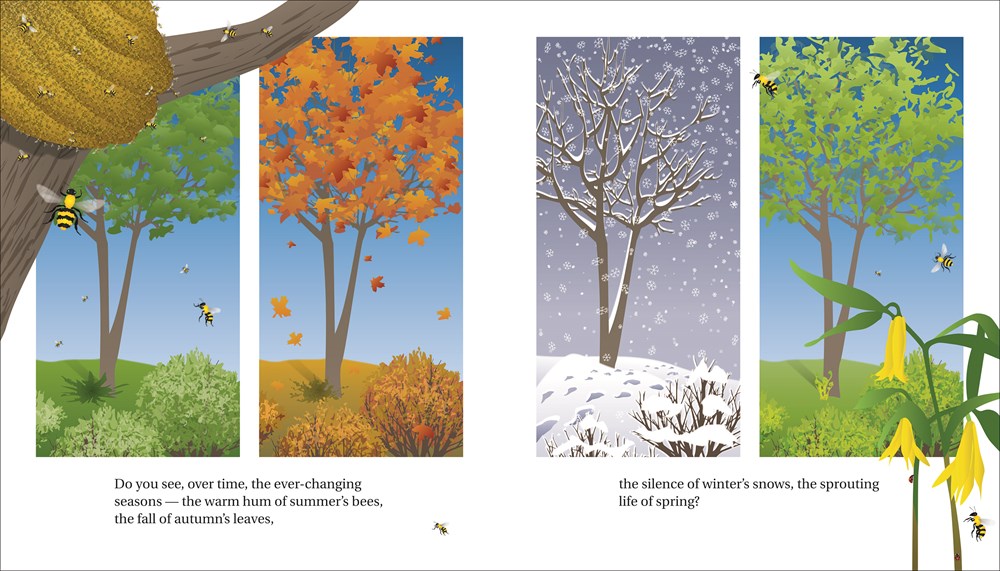
This first book in a new nonfiction picture book series encourages little learners to look at a location – in this case, a forest – and really see: see different footprints that travel the forest floor; the different leaves carpeting the ground; moss covering a stump. Forest encourages readers to think: is that moss older than your grandparents? What changes do seasons bring with them? What happens during the passage of day to night?

The quiet text promotes introspection, curiosity, and presence, and the interrelationships between nature – trees are referred to as our “cousins” – and our planet. Everything here exists for readers to observe and ponder, and Forest encourages them to think of nature, the world, and their place in it.

This is a great way to talk about the natural world and basic concepts with kids: talk about colors, talk about different functions, talk about different stages of life, whether you’re a human grandparent or a young caterpillar. We all age; we all exist; we all interact with the natural world. Let kids see themselves in nature, and they’ll respect it and care for it. Further reading provides additional resources for younger and middle grade readers. An author’s note explains the rationale and thinking points for the series.

I’m looking forward to more books in this series. See to Learn: Forest is a great addition to primary and elementary science collections and programming. This will fit nicely with Kate Messner’s nonfiction books, Over and Under the Snow, Over and Under the Pond, and Up in the Garden and Down in the Dirt, for elementary readers; for primary readers, you can’t miss with Laura Vaccaro Seeger’s books, Green and Blue; and Denise Fleming’s In the Tall, Tall Grass, and In the Small, Small Pond.

Posted in Early Reader, Non-Fiction, picture books

A math concept book with NO WRONG ANSWERS? Sign me up!

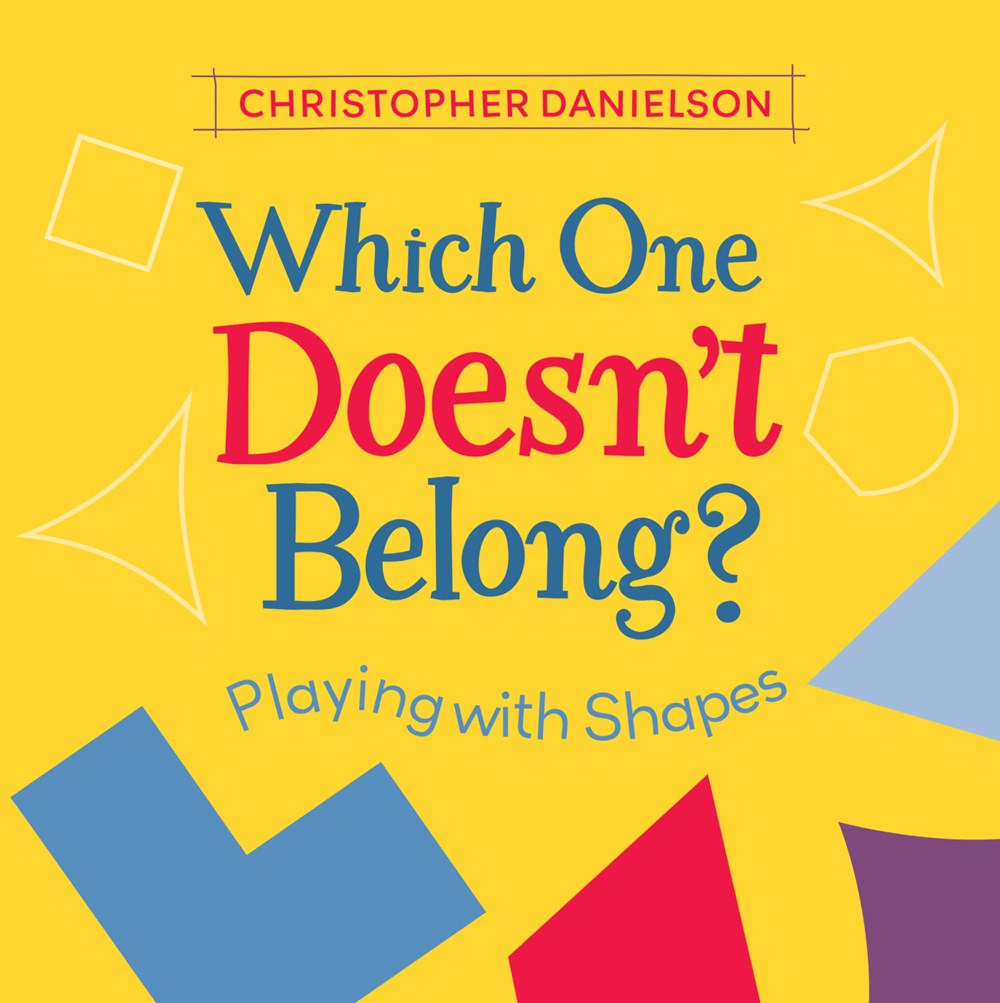
Which One Doesn’t Belong? Playing with Shapes, by Christopher Danielson, (Feb. 2019, Charlesbridge), $15.99, ISBN: 9781580899444

Ages 4-8

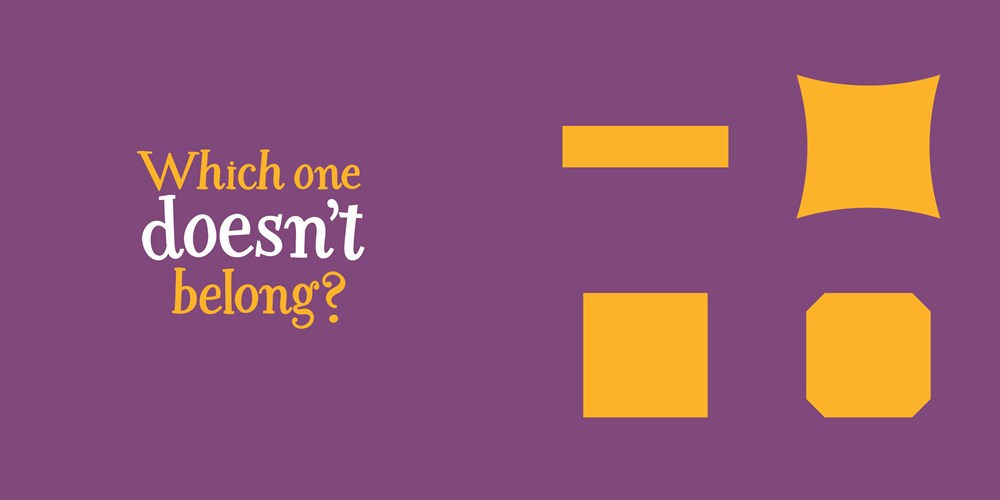
Math educator Christopher Danielson came up with a creative new way to get kids thinking about mathematical concepts: give them groups of shapes, and ask them, “What doesn’t belong?” The best part: NO WRONG ANSWERS. As the beginning explanation details, it’s all about the process, about critical thinking. One color could be different. A shape could be more squished, smooshed, or just look weirder than the others. It’s all in the eye, the mind, of the beholder here! Spreads alternate between layouts with shapes, and explanations on how every answer is correct, with supporting information like shapes, color, and other properties.

This is such a great way to make mathematics accessible to readers (kids and adults alike!). It doesn’t discourage anyone; it doesn’t make anyone’s answer, or rationale, wrong. Which One Doesn’t Belong shows readers how easy it is to approach things in a mathematical way: and this is coming from the lady who tells kids “the best way to do well in math is to not ask me for help with it”. Like the author himself says, “All properties count here; all ideas matter…”. Add this one to your nonfiction collections, build some programs around it for different age groups, and start making math more friendly to your readers!

Which One Doesn’t Belong? has a starred review from Kirkus and is the Winner of the Mathical Book Prize.

Posted in Early Reader, Graphic Novels, Intermediate, Non-Fiction, Non-Fiction, Preschool Reads

Two from TOON: Fun ways of looking at Math and Science

TOON’s doing it again: promoting authors and illustrators who know how to take abstract concepts and craft them into something exciting, beautiful, and fun. The two Fall graphic novels TOON has coming out: 3×4, by Ivan Brunetti, and We Are All Me, by Jordan Crane, play with multiplication, sorting, and sets; creation, DNA, and our relation to the planet and beyond. Sounds like weighty stuff, right? It is, but here’s the best part: these books are for kids, ages 3 and up. Let’s take a deeper look.

3 x 4, by Ivan Brunetti, (Sept. 2018, TOON Books), $12.95, ISBN: 9781943145348

Ages 3+

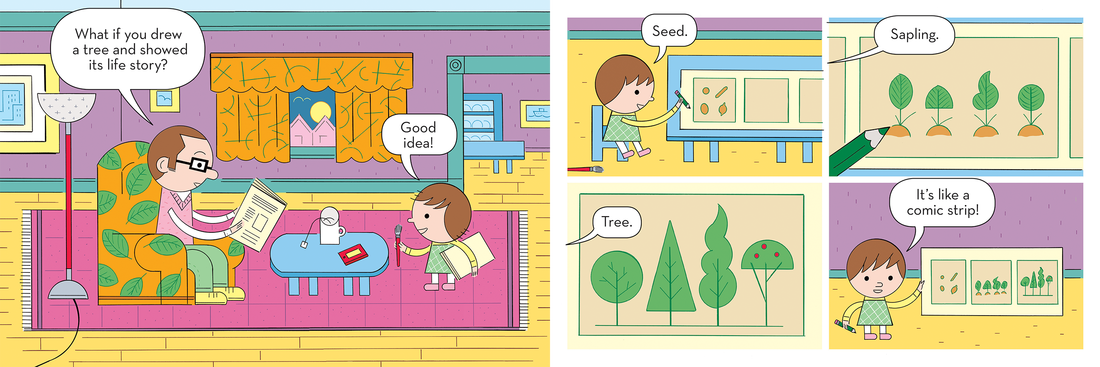
A teacher gives his class an assignment: draw 12 things, but in sets. Everything else is up to them: how many sets, what to draw, what colors to use. Annemarie, one of the girls in class, thinks deeply about what to create, as we see her classmates get to work on their sets. The book introduces readers to the beginning principles in multiplication; sorting; and thinking outside the box, as we see through the kids’ assignments. The book is so meta – it’s a math assignment within a math assignment – that teachers can easily use this as a math storytime.

Ivan Brunetti’s previous TOON book, WordPlay, played with language and compound words, and also starred Annemarie, a child of color in a diverse classroom of friends. As an art teacher, he has a gift for seeing things differently, and has the talent to make his ideas fun and relatable to a young audience. My 6-year-old read 3×4 to me, cover to cover, one night, after I read it to him and we worked through all the similarities between events in the book and what he’d done in his Kindergarten classroom the past school year. I’d love to try a math challenge for the kids in my library, asking them to start with 3 x 4, and go from there: make an art gallery and keep switching up the numbers. Have stickers and stamps and other creative materials handy!

3 x 4 has a starred review from Kirkus. As with all TOON books, a free, downloadable teacher’s guide is forthcoming.


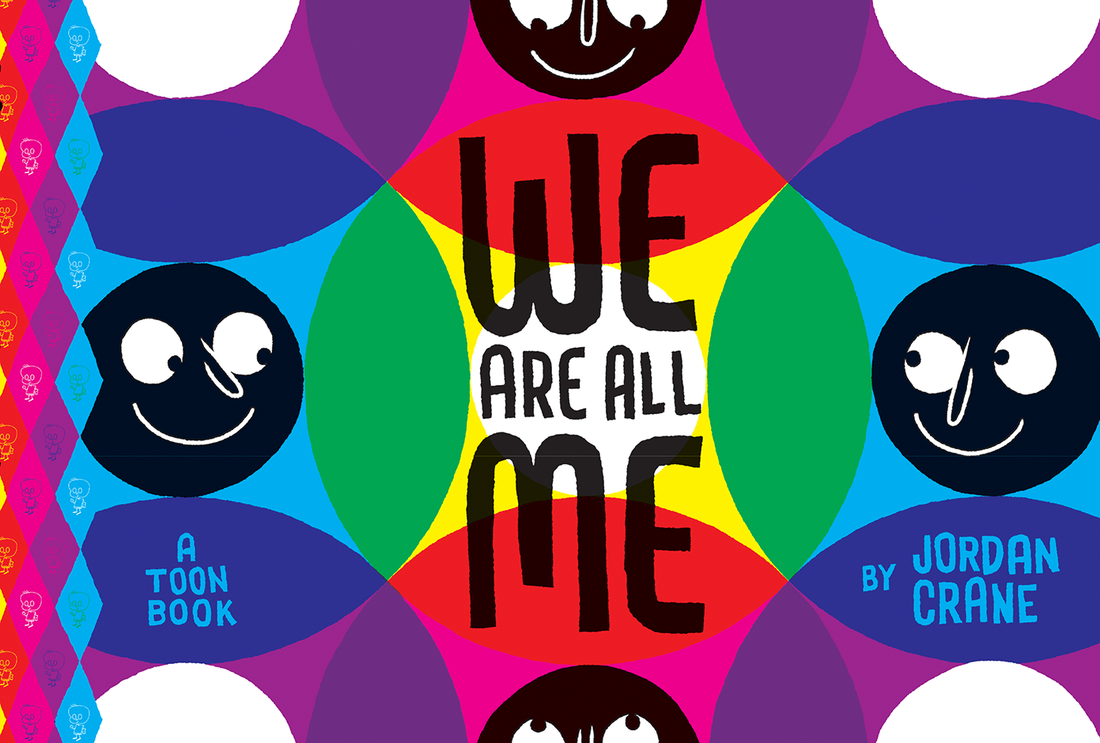
We Are All Me, by Jordan Crane, (Sept. 2018, TOON Books), $12.95, ISBN: 9781943145355

Ages 3+

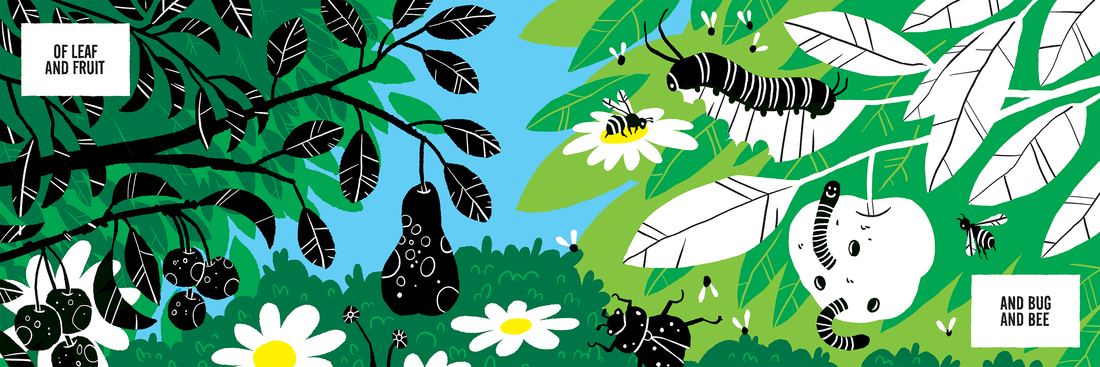
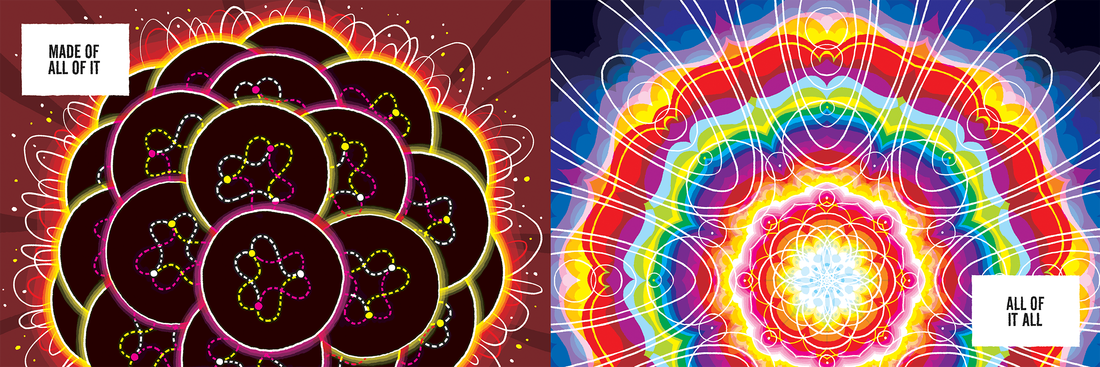
A dot forms and takes readers on a visual journey through existence. As it moves through bodies, nature, DNA, and space, readers experience evolution, our relationship to the Earth, and consciousness, all in vibrant, pulsing, day-glo pen, ink, and tablet artwork. Spare text reads lyrically, almost mantra-like, as we – via the dot – progress through time and space. The visual confirmation that we are connected to this world, and to one another, is exciting and humbling all at once; for young readers, it’s mind-blowing and beautiful. This is one of those books that left me speechless when I first read it, because it’s breathtaking and uses such brief, eloquent verbiage to explain… everything. A stunning must-have for all collections. Own it, and read it. Often.

We Are All Me has a free, downloadable teacher’s guide forthcoming.

Posted in Early Reader, Non-Fiction, Preschool Reads

Baby Loves Science – big ideas for little ones

I’m all for introducing science in all its wonderful forms to kids as early as possible, and all about introducing new vocabulary to kids, so science and math don’t scare them as they get bigger. I haven’t read any of the Baby Loves… Science! series by Ruth Spiro and illustrated by Irene Chan, so I started with the two newest books, Baby Loves Gravity! and Baby Loves Coding!

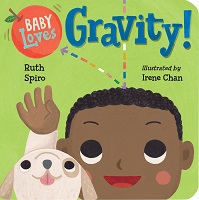
Baby Loves Gravity, by Ruth Spiro/Illustrated by Irene Chan, (June 2018, Charlesbridge), $8.99, ISBN: 9781580898362

Baby drops a noodle, and Puppy gobbles it up. How does that noodle fall? Gravity! Simple enough concept to explain to a toddler, and that’s how Baby Loves Gravity! starts out: simple and relatable. From there, we get a clear explanation of matter, mass, and gravity, and how it works on the sun, moon, and earth’s pull on us here. It’s clear and nicely illustrated, but this is a lot of information, even for toddlers, no matter how simply it’s phrased. I liked the illustrations, was pleased to see a child of color as the star of the show, but would read the beginning and ending, where baby slides down a slide, illustrating gravity, for a toddler STEAM or science storytime. I would rather test this out in a Kindergarten-level science storytime. The board book format makes for easy holding, and the illustrations are large, bright, and easily seen by a circle time group of kids. I could work with a group of kindergarteners, even pre-kindergarteners, in a science workshop using this as a companion text.


Baby Loves Coding!, by Ruth Spiro/Illustrated by Irene Chan, (June 2018, Charlesbridge), $8.99, ISBN: 9781580898843

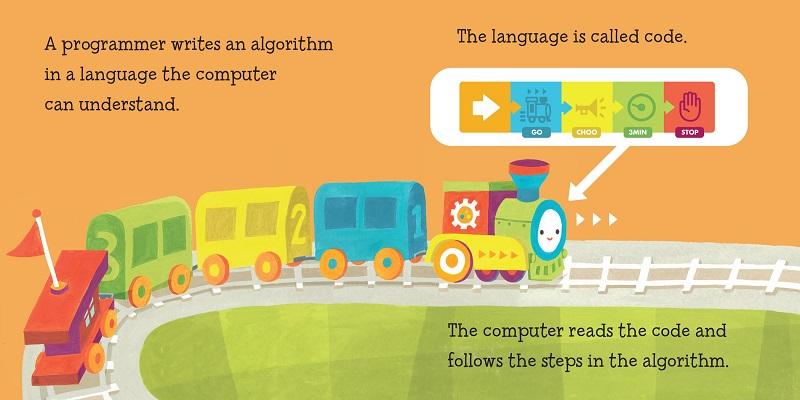
Baby’s playing choo-choo, and wants to add a red car to his train. Let’s follow him as he walks over! Baby Loves Coding features a child of cover on the cover, and is an adorably illustrated, clearly laid out way to introduce coding to kids, but this is also way above a little one’s head. The first few spreads, explaining how baby walks to the toy box, are great – you can get kids up and moving along with you on this one – but the text launches into an explanation of algorithms, programmers, and reading code, and this is just going to lose little ones. The pictures do all the work here, illustrating, with colorful interlocking blocks, how code fits together, like the cars of a train. I do love the explanations and the artwork, and the idea of getting kids up and moving works with CS Unplugged activities I’ve done in my library. I’ve used Code.org’s curriculum; CS Unplugged also has some great lesson plans and printables.
My advice? Use these with your pre-k and Kindergarten science storytimes. They’re great books for the right age.

Posted in Early Reader, Intermediate, Non-Fiction, Non-Fiction, picture books, Preschool Reads

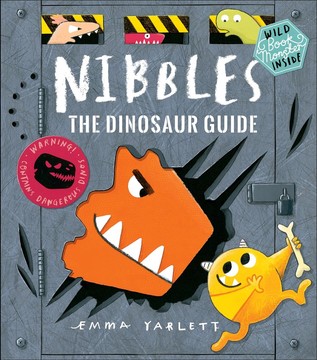
Nibbles Does Nonfiction! Nibbles: The Dinosaur Guide!

Nibbles: The Dinosaur Guide, by Emma Yarlett, (March 2018, Kane Miller),  $16.99 ISBN 978-1-61067-643-4

Recommended for readers 4-8

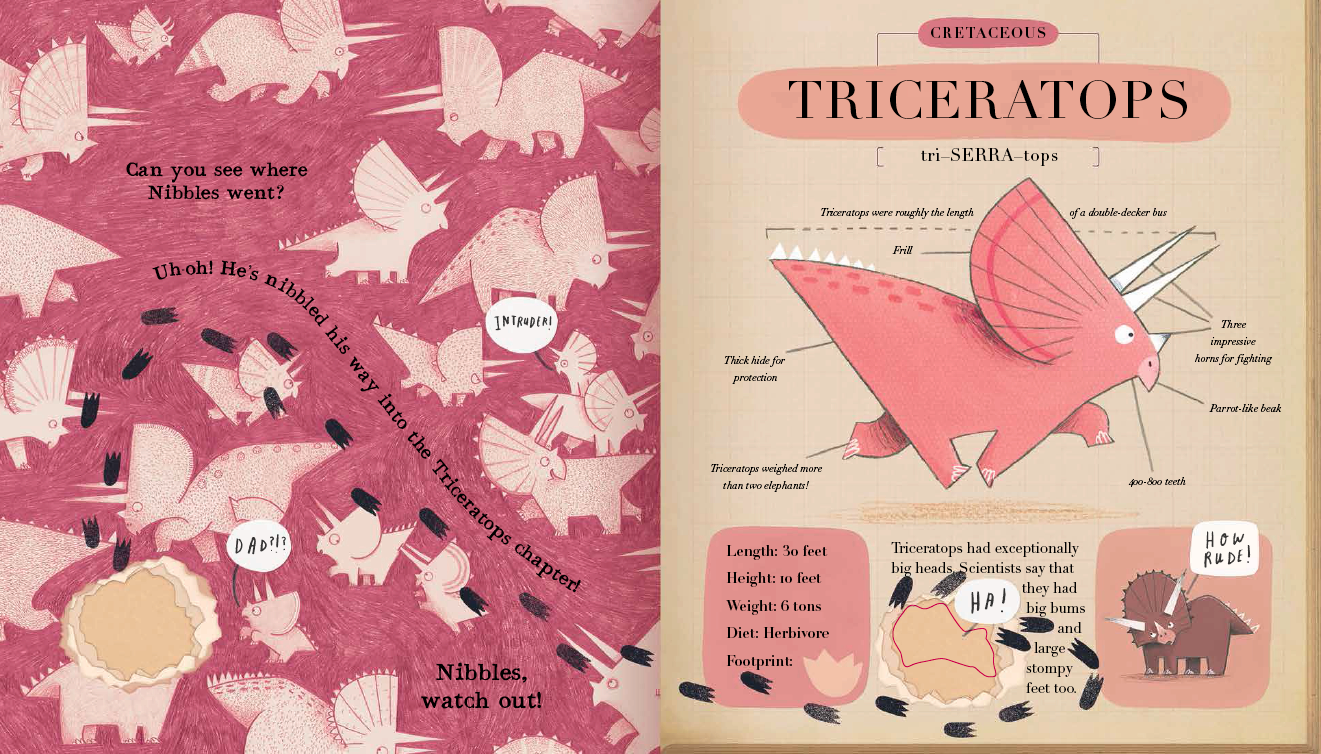
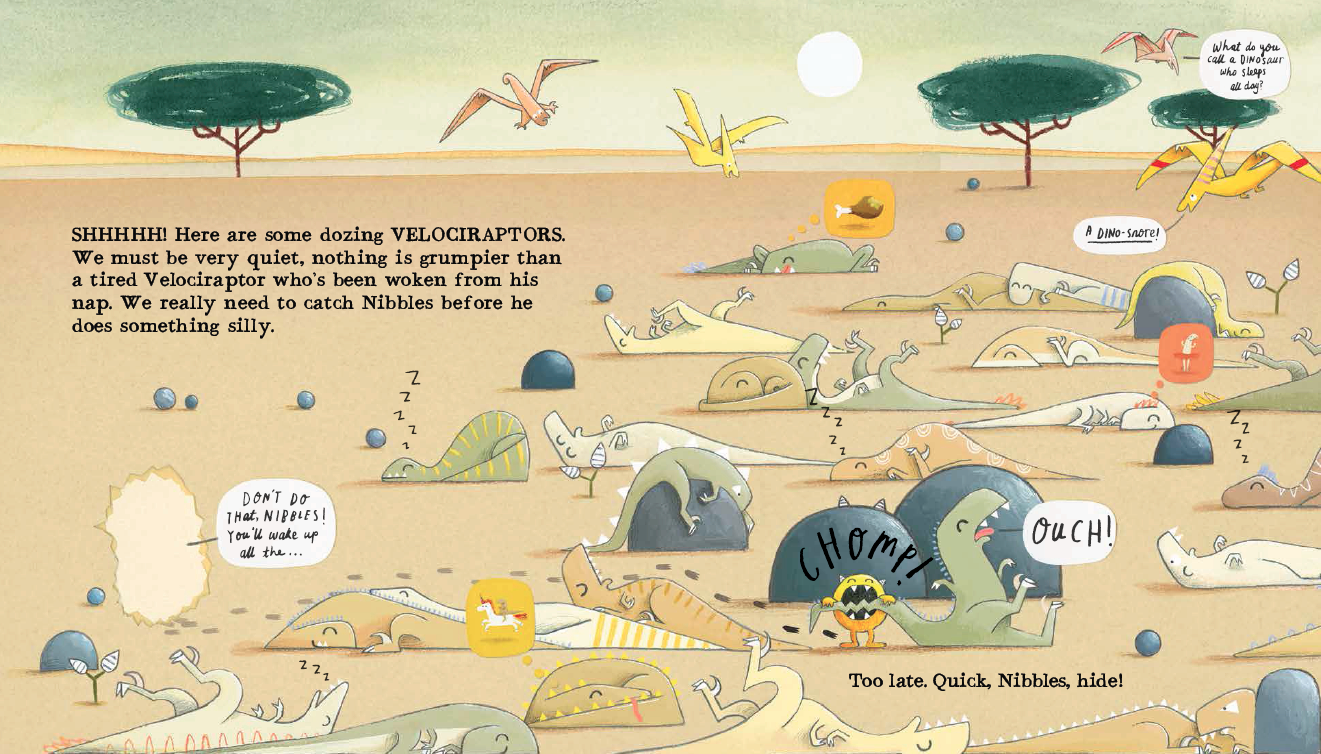
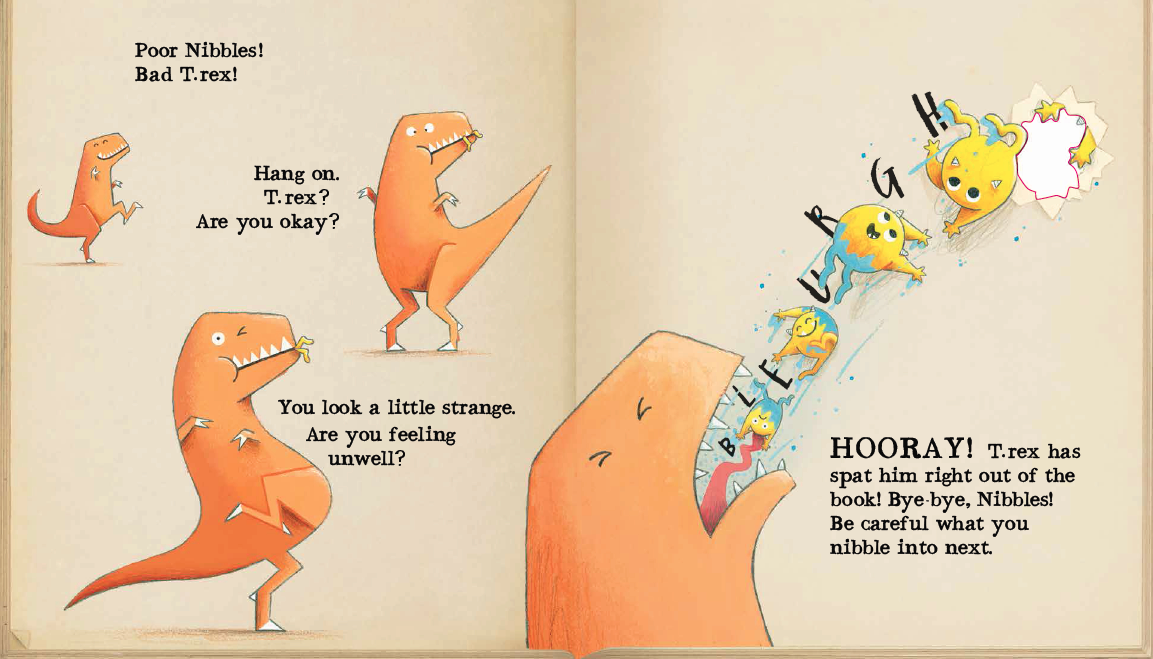
Nibbles the Book Monster is a HUGE celebrity in my home, in my storytime, and now, in my kiddo’s classroom. More on that in a sec. So, Nibbles is a little yellow monster who loves to nibble books. In his first adventure, he nibbled his way through some fairy tales, but he wanted more. Enter Nibbles: The Dinosaur Guide, which combines solid nonfiction dinosaur information, including eras, scientific names (with pronunciation), and fast facts. This is no regular dinosaur book, though: Nibbles is on another adventure, chomping and nom nom-ing his way through the prehistoric era, irritating dinosaurs and spreading mayhem as he goes! Will Nibbles end up on the menu this time?

Nibbles: The Dinosaur Guide is full of the same flips and bite-sized page nibbles that makes the first book so much fun to read. Add to that, the hilarious bodily functions of dinosaurs (did you know that a single diplodocus fart could power a hot air balloon? You do now!) and a laugh-out-loud interaction with a T-Rex, and you have a dino book that kids will come back to again and again.

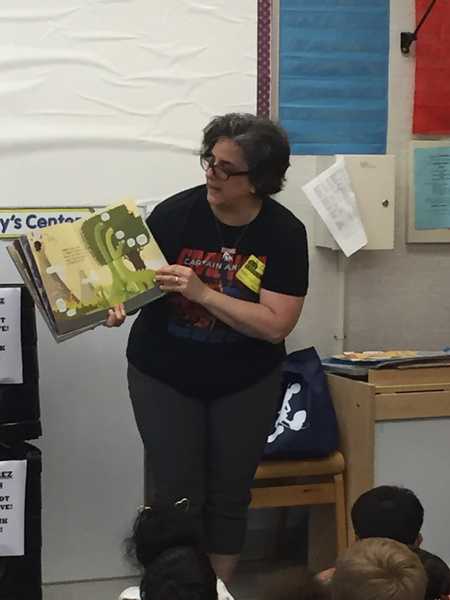
Now the fun part: I brought Nibbles: The Dinosaur Guide to my son’s kindergarten class for a storytime visit. The kids had a choice of books, and Nibbles got the overwhelming vote, so we got into circle time on the carpet and I read the story. The screaming. The hilarity. It was controlled pandemonium, and I loved every second of it. The best part of the visit was my reading the phrase, “I am the Prince of Parps!” (polite British speak for ‘fart’) and the one Scottish kid in my son’s class burst out laughing; his classmates said, “What’s a parp?”, so I looked at him and nodded. He proudly pronounced, “IT”S A FART!” and the class lost their minds. That, my friends, is how you embrace storytime.

Need more Nibbles in your life? Who doesn’t? Author Emma Yarlett’s webpage has printable activities aplenty. Go make a Nibbles bookmark!

Rocking Nibbles in the classroom

Posted in Early Reader, Fiction, Non-Fiction, picture books

Science for Kindergarteners!

I’m always looking for ways to get more science in my kids’ days: my QBH Kids and my own Kindergartener alike. I’ve had some great successes and some that fell a little flat. At my previous library, I had a phenomenal early learning assistant who helped create amazing Science Storytimes, using popular storybooks to demonstrate simple science concepts for little ones: using Ellen Stoll Walsh’s Balancing Act to teach balance, while showing them a simple balance board that kids were invited to place small objects on and discover what balanced, and what tipped the sides.

I also look to fellow librarian and teacher bloggers for hints. Pinterest is a great resources, as is Education.com and Teachers Pay Teachers. Science In Storytime is one of my more recent go-tos, with loads a great book and activity ideas, and The Show Me Librarian has some fantastic programming for Pre-K and elementary programs.

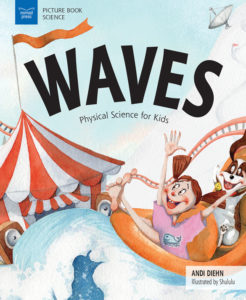
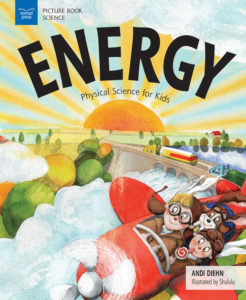
I’ve just received some new books from Nomad Press’ Picture Book Science series, too. These are a lot of fun: color artwork on every page, a fun poem to kick off each book, and my favorite part: an explanation of the scientific term, with all the uses of the term. Take, for instance, the book Waves: it starts off with the simplest interpretation of the word; a way to say hello. The book goes on to include ocean waves in that explanation, then the motion of a wave, and finally, a discussion of waves: energy, light, sound, all using questions to provoke thought, discussion, and understanding. Each book “Try This!” boxes, with simple activities kids can easily do at home or in the classroom (or during Science Storytime). Glossaries are handy to define terms that come up. There are currently four books in the Picture Book Science series: Waves, Forces, Matter, and Energy, all written by Andi Diehn and illustrated by Shululu; at $9.95 each, it’s a good and reasonable investment for our home, school, and public shelves. (Waves: 978-1-61930-635-6; Forces: 978-1-61930-638-7; Matter: 978-1-61930-644-8; Energy: 978-1-61930-641-7)


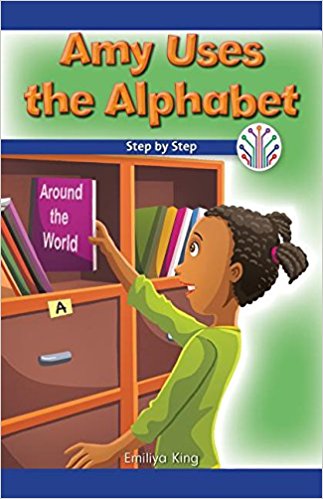
Rosen Classroom has a new series of easy readers called Computer Science for the Real World. They’re not attempting to teach Python or Scratch to the little ones (yet): these readers break the concepts needed to study computer science down for beginning readers. The three readers I received use everyday concepts – morning routines, alphabetizing books, building a birdhouse – to introduce activities that will help learn computer science; in this case, repetition and doing things step by step.


The books are leveled and contain instructional guides with include new vocabulary words, background knowledge for the specified concept, and text-dependent questions. There are independent and class activities to help kids learn through experience, and are available in English and Spanish. I really like these readers; there aren’t that many “just right books” (as my son’s school calls them) explaining science like this, and I’d love to have them in my library, but this is more of a Central library purchase, at least in my system, because you’re going to want to buy these by the collection; you can certainly buy them as single books, but having a whole set will better benefit your readers. The pricing is pretty reasonable, so I’ll be slipping this into an interoffice envelope bound for my collection development department tomorrow morning.

Posted in Early Reader, Non-Fiction, Preschool Reads, Toddler Reads

Night Creepers: nonfiction that goes from toddler to school-age

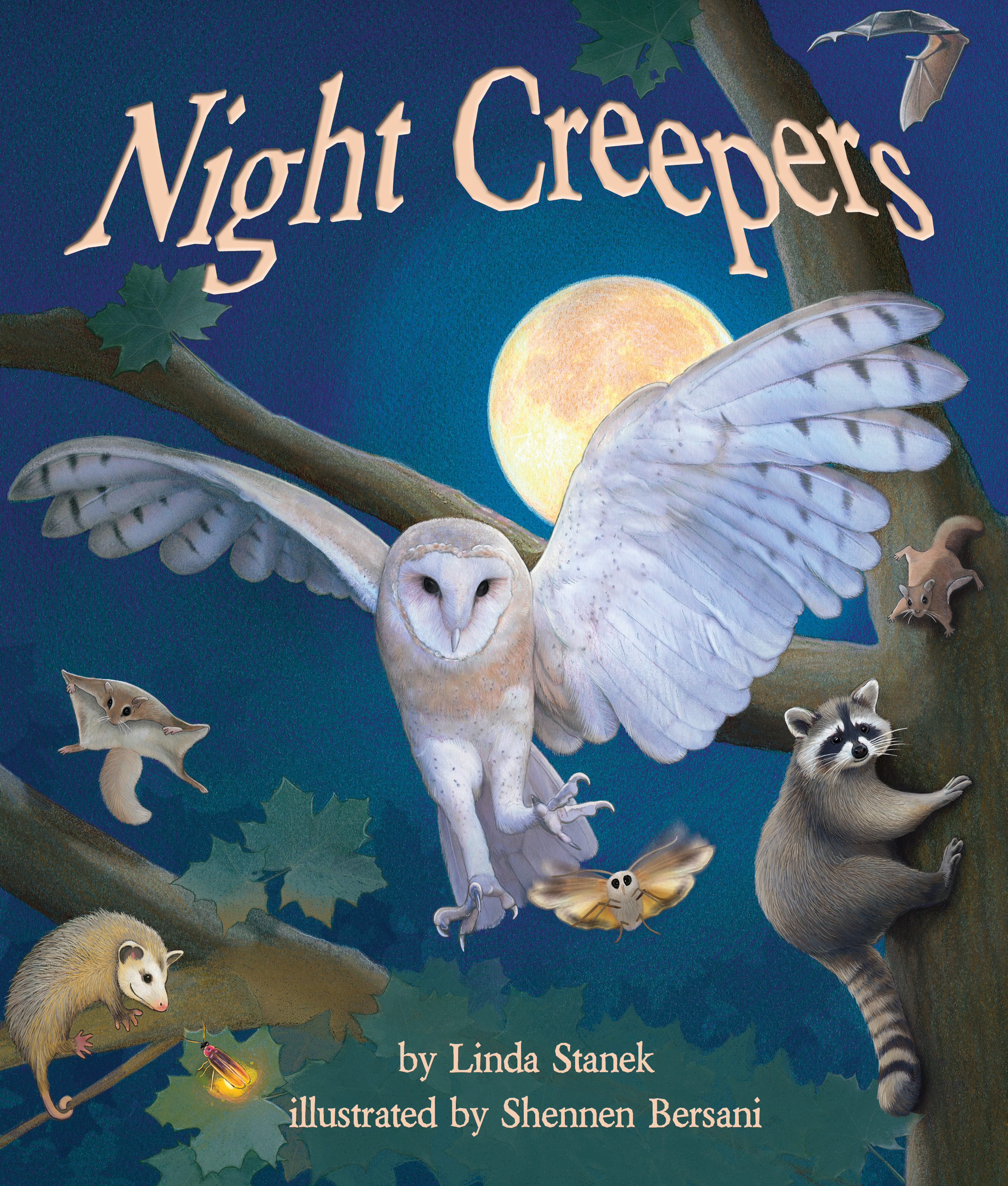
Night Creepers, by Linda Stanek/Illustrated by Shennen Bersani, (Sept. 2017, Arbordale Publishing), $9.95, ISBN: 978-1-607-183235

Recommended for readers 3-7

Night Creepers is both a rhyming tale about night time animals for toddlers and preschoolers and a nonfiction text on nocturnal animals for first and second graders. Each spread introduces a new nocturnal animal: foxes and wolves, bats and flying squirrels, skunks, possums, and more. On the left hand side of the spread, we have short, rhyming text about animals who wake up when the rest of the world starts getting ready for bed. On the right hand side, we have short paragraphs, constructed with simple sentences, containing information about each animal. Shennen Bersani’s realistic illustrations are beautiful, with vibrant and deep colors coming together to give readers an exciting reading experience. As with all Arbordale books, there is a “Creative Minds” section at the end, with activities and resources for further learning; they are free to photocopy and hand out for educational, non-commercial use.

I read Night Creepers in my toddler storytime this past week, and the little ones enjoyed it. One of my QH Kids excited pointed out animals she knew, and we all repeated the names of the animals on each spread. The rhyming, brief text was just the right length for a short story.

I was able to see author Linda Stanek speak at a non-fiction panel at KidLitCon, and look forward to adding more of her books – particularly, award-winner Once Upon an Elephant. Arbordale has a great website, releasing Spanish editions concurrently with English editions of their books, e-book access (and one free read-aloud e-book a month), and free resources for educators. Linda Stanek’s author website has more info about her books, and about school and library visits.

I’m always on the lookout for good nonfiction – my library’s collection needs constant updating, and animal books are big here. Night Creepers‘ appeal to different age groups means I can get this book in front of a larger group of kids, getting more bang for my budget’s buck. A nice add to primary nonfiction/easy nonfiction collections.

Posted in Fiction, Horror, Media, Middle Grade, Non-Fiction, Realistic Fiction, TV Shows, Tween Reads, Uncategorized

Part Lois Lane, Part Nancy Drew… Introducing Cici!

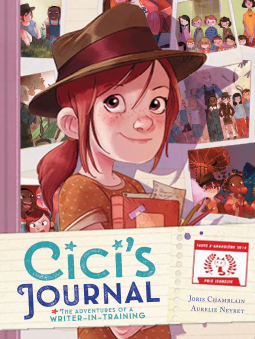
Cici’s Journal: The Adventures of a Writer in Training, by Joris Chamblain/Illustrated by Aurelie Neyret, Translated by Carol Burrell, (Nov. 2017, :01FirstSecond), $16.99, ISBN: 9781626722484

Recommended for readers 8-12

Cici’s dream is to become a novelist. She journals her thoughts and ideas, and constantly people watches, much to the chagrin of her mother and friends. Cici doesn’t see it as being nosy; she figures that you need to understand what’s inside of people in order to write about them. But when she starts digging further into people’s lives and expecting her friends to lie to her mother to cover up her “investigations”, they let her know that they’ve had enough. Can Cici learn to be a good friend and an attentive writer?

Originally published in France under the French title Les carnets de Cerise (2012), this is Cici’s first English translation and includes two stories. In the first story (title), Cici discovers an older man walking through the forest every Sunday, covered in paint and lugging cans of paint back and forth. In Hector’s Journal, she tries to get to the bottom of a mystery involving an older woman who takes the same library book out every week. Both times, Cici goes after her subject with gusto, but is often insensitive to her friends and mother. It isn’t until her mentor, a local author, steps in to have a heart to heart with Cici that she finally understands that she’s been using people, and starts taking others into consideration. Kids will recognize themselves and their friends in Cici, especially as she goes through the frustration of disagreeing with Mom and falling out with friends.

The graphic novel is a mix of graphic storytelling and journaling, with doodles, scrapbook pieces, comments, and notes throughout the book. The art is realistic with a soft touch, and Cici has a very fun and eclectic style that will appeal to middle graders. She complains about her friends throughout the book, and with seeming good reason: one girl is in a perpetually bad mood, and Cici herself can be exasperating (mind you, I say this as a 46 year -old mother of three, not a tween). In short, kids will identify with or see their friends in these characters, and dive into Cici’s adventures – and maybe start journaling on their own.

In my neverending quest to create programs that I can booktalk with, Cici’s Journal is a nice fit with a writer’s program I want to test out. Put this one with your Dork Diaries, Amelia’s Notebooks, Wimpy Kid books, My Dumb Diaries, Kate the Great, Origami Yodas, and Popularity Papers.

Posted in Early Reader, History, Non-Fiction, Preschool Reads, Toddler Reads

Cheer Up, Ben Franklin! There’s a party coming soon!

ben-franklinCheer Up, Ben Franklin!, by Misti Kenison, (July 2017, Sourcebooks Jabberwocky), $9.99, ISBN: 9781492652472

Recommended for ages 0-3

Poor Ben Franklin is sad! No one has time to fly kites with him today. George Washington’s rallying his troops, Betsy Ross is sewing a flag, Sam Adams is throwing a tea party in Boston, and Alexander Hamilton is too busy counting money. What’s a Founding Father to do? Ben’s friends are sure to pull through in the end, with a signing of the Declaration and a big fireworks party to cheer him up in this fun, adorable book by Misti Kenison.

This is the cutest book for budding historians (and the adults who love them: one of my best friends is an historian who wrote her thesis on Franklin, and she loves this book). It’s great for toddlers who understand what a drag it is when no one can play with them, and the artwork is adorable. Ape this book up in storytime! Ben’s giant, mournful eyes will get sympathy from anyone, and the big fireworks party at the end is a great way to celebrate with an Independence Day storytime. Thanks to Ms. Kenison for, to paraphrase Abigail Adams, remembering the ladies! Including Betsy Ross and Abigail Adams is important, to illustrate to readers that women were indeed a big part of founding the United States of America.

A timeline at the end of the book goes from 1773, when Sam Adams organized the Boston Tea Party, through 1801, when Jefferson became President. Each historical figure mentioned in the book is briefly profiled here, too. A must-add to libraries, schools, and personal collections, and also a perfect gift for the Hamilton fans in your life.

Misti Kenison is a web/graphic designer and author/illustrator of the Tiny Traveler series. Visit Misti at her Tiny Traveler site to learn more about her books, and download some fun printables!