All My Friends, by Hope Larson, (Jan. 2022, First Second), $12.99, ISBN: 9780374388669
Ages 10-14
Hope Larson’s third installment in Eagle Rock series keeps the momentum going. When we first met Hope’s main character, Bina, in 2018’s All Summer Long, she was a 13-year-old finding her way through music, and figuring out her evolving friendship with her bestie, Austin. Now, in All My Friends, Bina and her friends are in Fancy Pink, a band getting a lot of notice; she’s in a back-and-forth with her parents as she tries to take her band to the next level, and her parents worry about things moving too quickly, and she’s still figuring out relationships, whether it’s her strained relationship with Austin or how she feels about Cooper, the cute guy in a local band. The Eagle Rock books have captured big moments in a tween/teens’ life: relationships, dating, parents, and growing up. The characters have grown with each book, as Hope Larson’s audience is growing, keeping them invested in the stories of the Eagle Rock friends. Artwork in shades of pink, black, and white keep the focus on the story while using fonts to give the feeling of music moving through crowds. Whether she is weaving magical tales driven by a human story, or a character-driven story with a spark of magic (in this case, through music), Hope Larson always nails it. A great third act for a popular series.
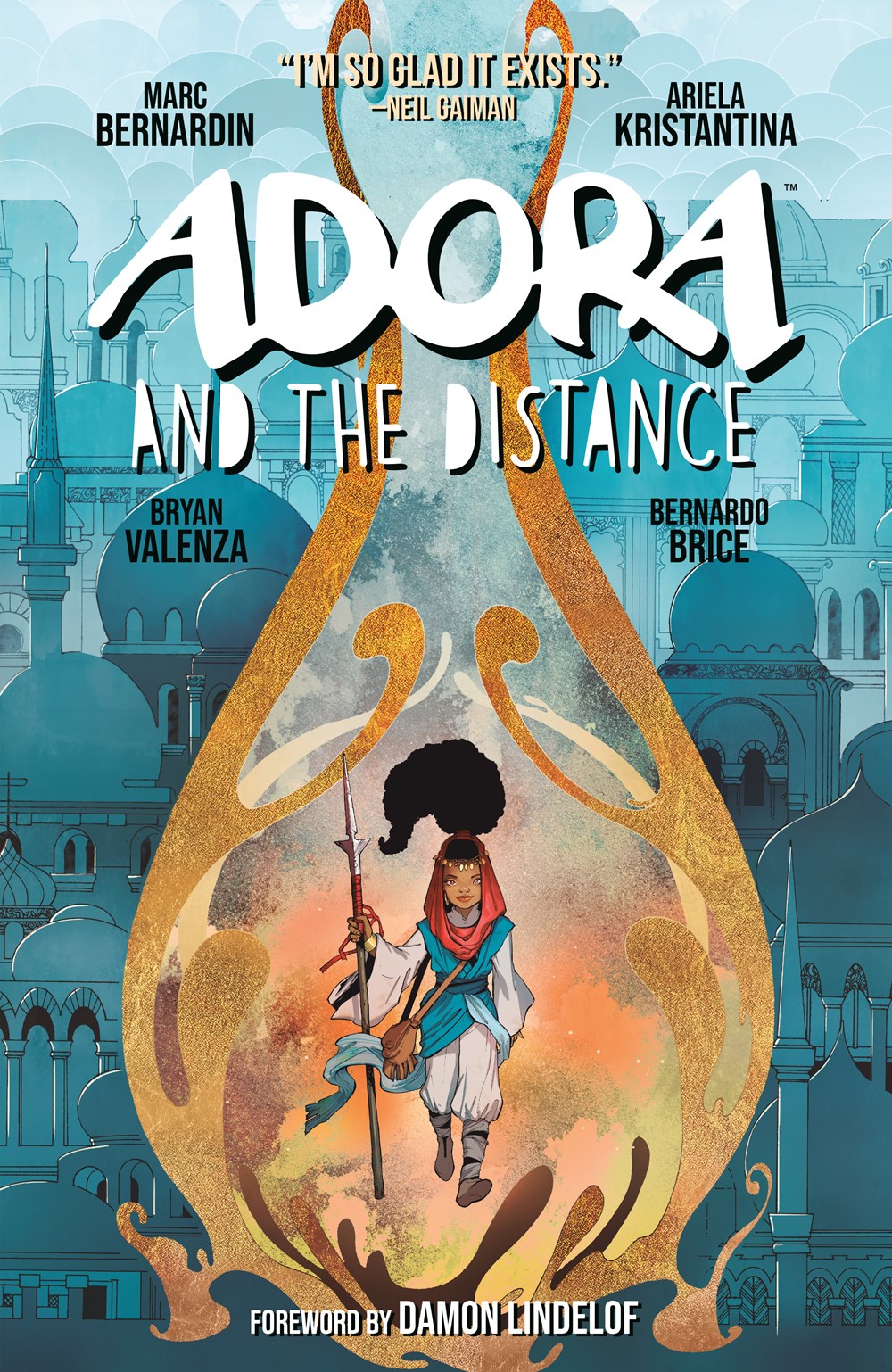
Adora and the Distance, by Marc Bernardin/Illustrated by Ariela Kristantina, (March 2022, Dark Horse), $14.99, ISBN: 9781506724508
Ages 12+
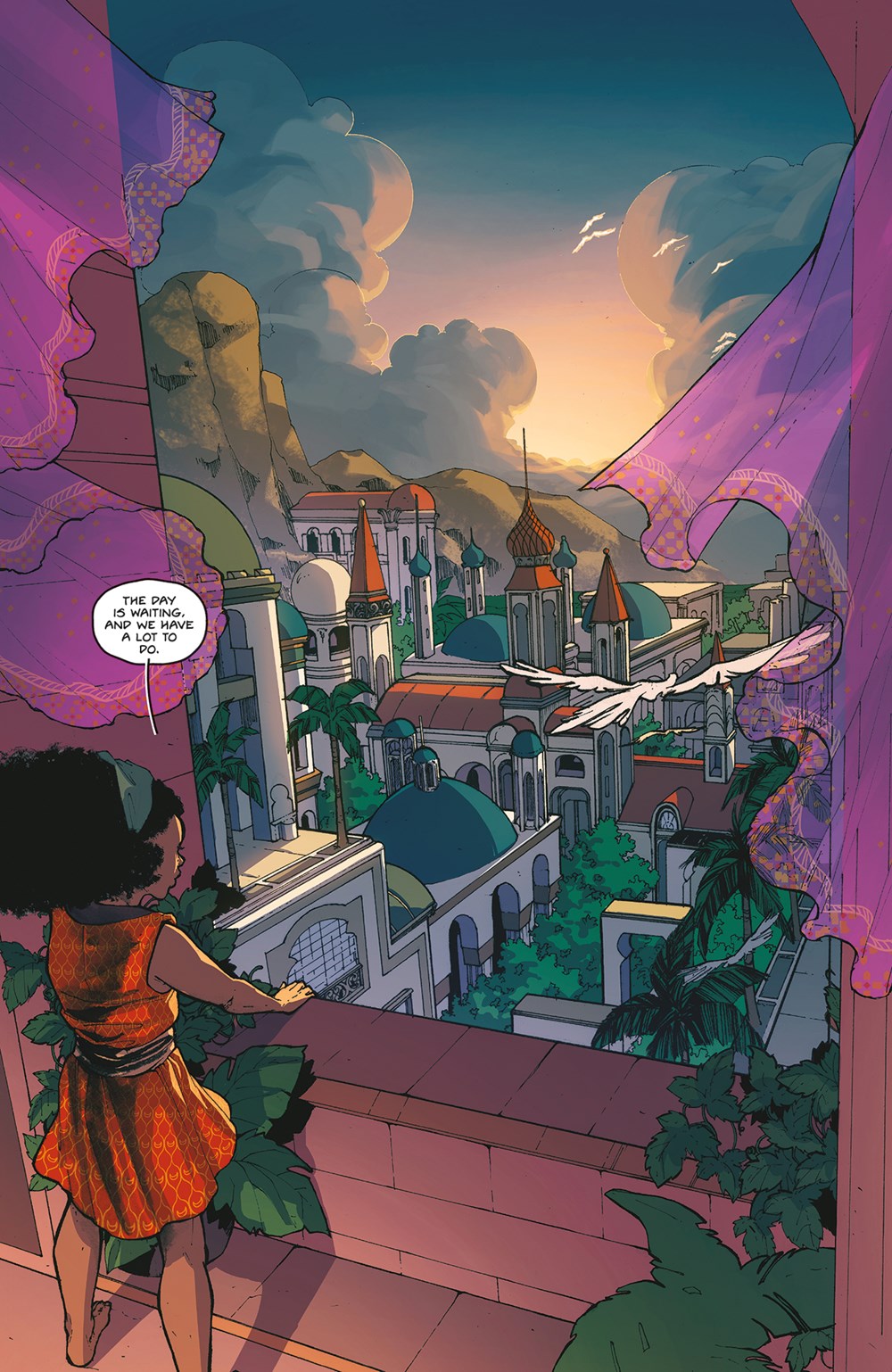
Like I said, I read a HUGE backlog of graphic novels while I had my little break, so be prepared for some “If you didn’t read it, it’s new to you!” posts. This time, I’ve got Adora and the Distance, by television writer-producer and comic book author Marc Bernardin. Set in a high fantasy world, Adora is a young woman of color living in a world full of adventure: there are pirates, ghosts, a royal family, and a malevolent entity known as The Distance. The Distance devours and destroys, and Adora, connected to The Distance, must leave her home on a mission to stop it.
The artwork is stunning. The colors, the shading, the depth, bring this book to life in a reader’s hands. The story builds to an incredible conclusion that made the world come to a halt around me as I took it all in. Adora and the Distance is a father’s love letter to his daughter in the best way he could reach her; the best way to let her know he sees her. Adora and the Distance is a story of autism, you see; Marc Bernardin’s author’s note at the end of the book explains his impetus for creating this epic tale. Adora is smart, brave, and full of love. There’s humor, adventure, family, and forgiveness all here, bound into this story that connects a father to his daughter.
Put Adora and the Distance in your distributor cart, and get it on shelves for your readers. Give it to parents, educators, and caregivers.
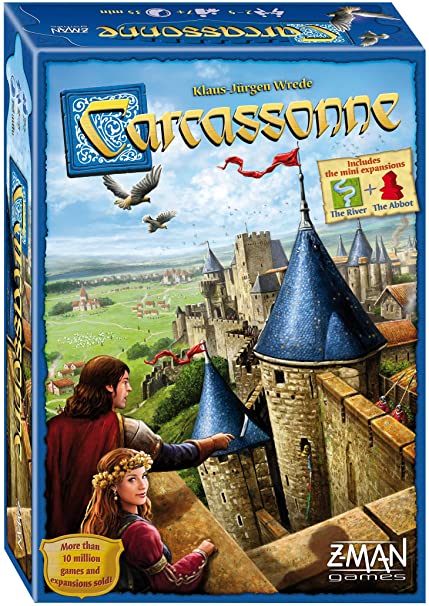
Next up, we have Carcassone. My library system’s gaming committee sent our first bin of games over, so I have 10 copies each of Carcassone and 10 of 7 Wonders. I’m still trying to work out 7 Wonders, so we played Carcassone.
I initially brought the game home to playtest with my kids, so I’d be able to figure out modifications, if necessary, for my younger kids, but this was pretty straightforward out of the box, so let’s go.
Carcassone, Z-Man Games (2000)
Ages 7+ (the box says 7+; for my library kids, I’d go 8-10+)
Play time: 45-60 minutes
Number of players: 2-5
The Plot: You and your fellow players are creating the French medieval city of Carcassone. To do this, you’ll turn over tiles to reveal different parts of the landscape, and you must create and claim your lands.
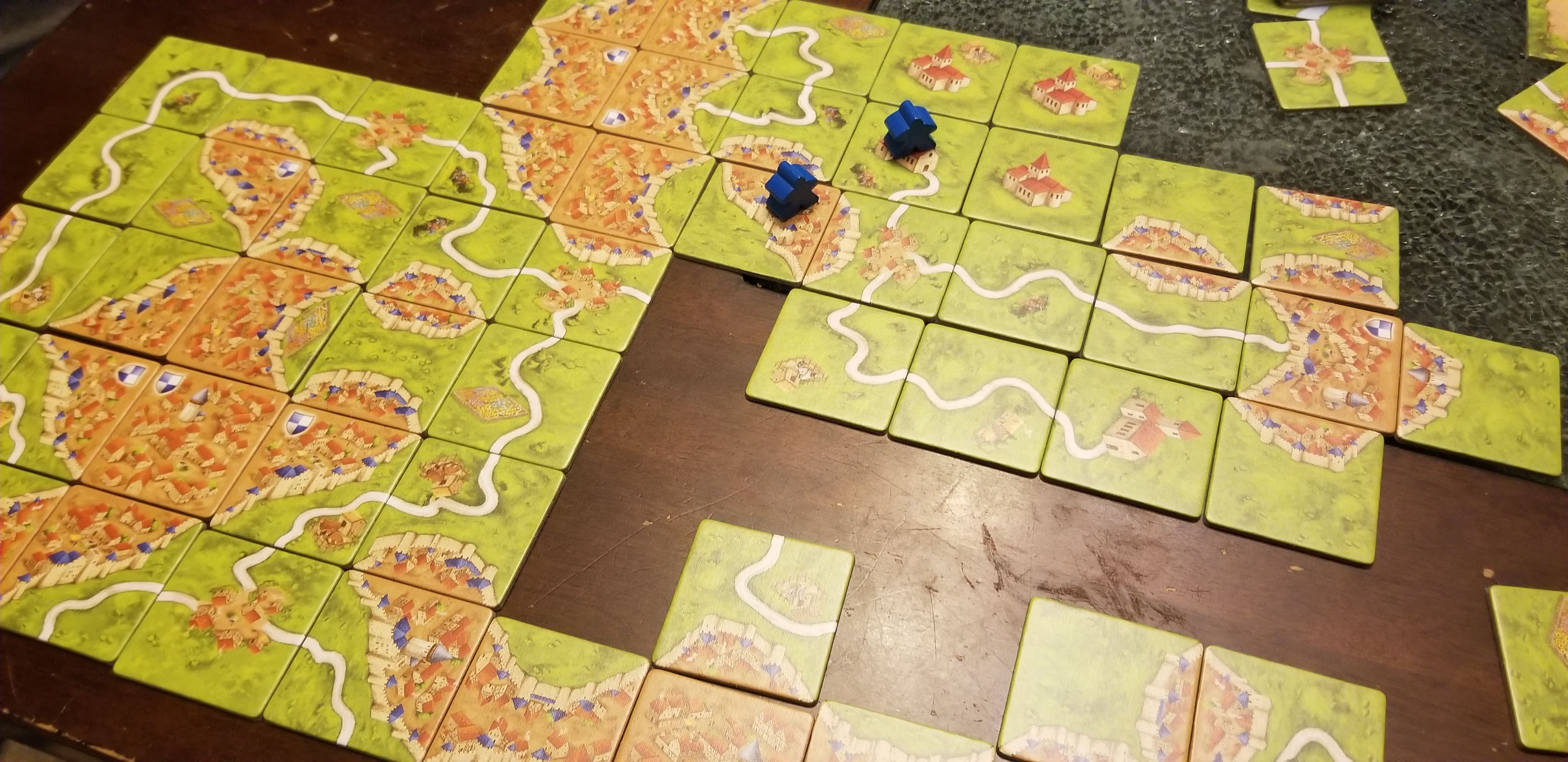
Medieval gerrymandering? No, it’s Carcassone! (my photo)
There are rules all players must adhere to: roads (those squiggly beige lines) must connect to other roads. Cities (the walled brown areas) must connect to other parts of the cities. Meeples (the cute little blue guys you see in the above photo) claim different areas as you build them. There are five groups of Meeples: green, red, blue, black, and yellow. Choose your color, and start building. As you play each tile, use your Meeples to claim area. Meeples placed on roads are highwaymen, for those folx who love a bad guy; claim the cities and be a knight; lay your Meeple down on the green areas to be a farmer; claim a monastery (the pointy buildings in the center of the photo) and be a monk. Each of these areas get scored differently:
Putting your meeple on a road claims that road, but you do not score points until the road is complete. It has to lead from somewhere to somewhere. Each tile your road touches is worth one point; my road above leads from one monastery to another, and touches 5 tiles, so that’s 5 points.
Putting your meeple on a city means you’re a knight protecting that city. You do not score points until the city has been completed. See my Meeple above, next to the monastery? That city touches 3 tiles; those tiles are worth 2 points each, so my Knight has 6 points. See that larger city toward the left hand side of the picture? That is a much bigger city, AND has several shields. Those shields are worth an additional 2 points per shield, so that city, which was still under construction when I took this picture, is worth 22 points: 16 points because it spreads across 8 tiles, plus 6 points for the 3 shields within.
Monasteries get 1 point for every tile enclosing them in the area – basically, monasteries get 9 points; they’re surrounded by 8 tiles, and the monastery makes 9.\
As you complete your areas, you take your Meeples back, ready to guard (and rob) the next area of the burgeoning city. Use the scoreboard to keep track of your scores.
Okay, a couple of observations during gameplay. You will inadvertently help your opponents sometimes, depending on the tile you draw. My son and I, on our first couple of plays, initially thought we could undercut one another by placing tiles that didn’t connect to anything, to block progress. Don’t do that! After reading more blogs and watching several gameplay videos, we figured out that Carcassone is kind of cooperative, kind of not in that way. Think of it like you’re building a map. It needs to make sense at the end of the day.
Play the short game and the long game for best use of your Meeples! Can you build a 2-tile city? YES. Don’t get hung up on only building gigantic cities, because I promise you, it will bite you on the backside. Ditto for starting roads that have no end. If, toward the end of the game, you have no Meeples to place, you get no points for tiles laid! Make that 3-tile road; build that 2-tile city; get your Meeples and keep going.
After a few plays at home, my son and I got into a good rhythm of gameplay, and I was easily able to show our library’s after-school coordinator and one of our children’s librarians how to play. I’m looking forward to reporting back on how the kids took to it this coming Tuesday!
All in All: A fun, creative game that guarantees you’ll never play the same game twice. Easy to explain to younger kids; I think our middle graders and middle schoolers are going to be a strong group for this game, and I feel like the few teens I get (hopefully more, by this summer!) will be into this. As popular as Carcassone is, I’ve yet to meet more than a handful of folx who’ve actually played it (kind of like me, with Settlers of Catan).
If you’d like to watch gameplay videos, I highly recommend Wil Wheaton’s Tabletop episode and Watch It Played’s Carcassone episode, both of which I’m embedding here. Both YouTube accounts are great for learning gameplay for a wealth of different games and are worth subscribing to the feeds.
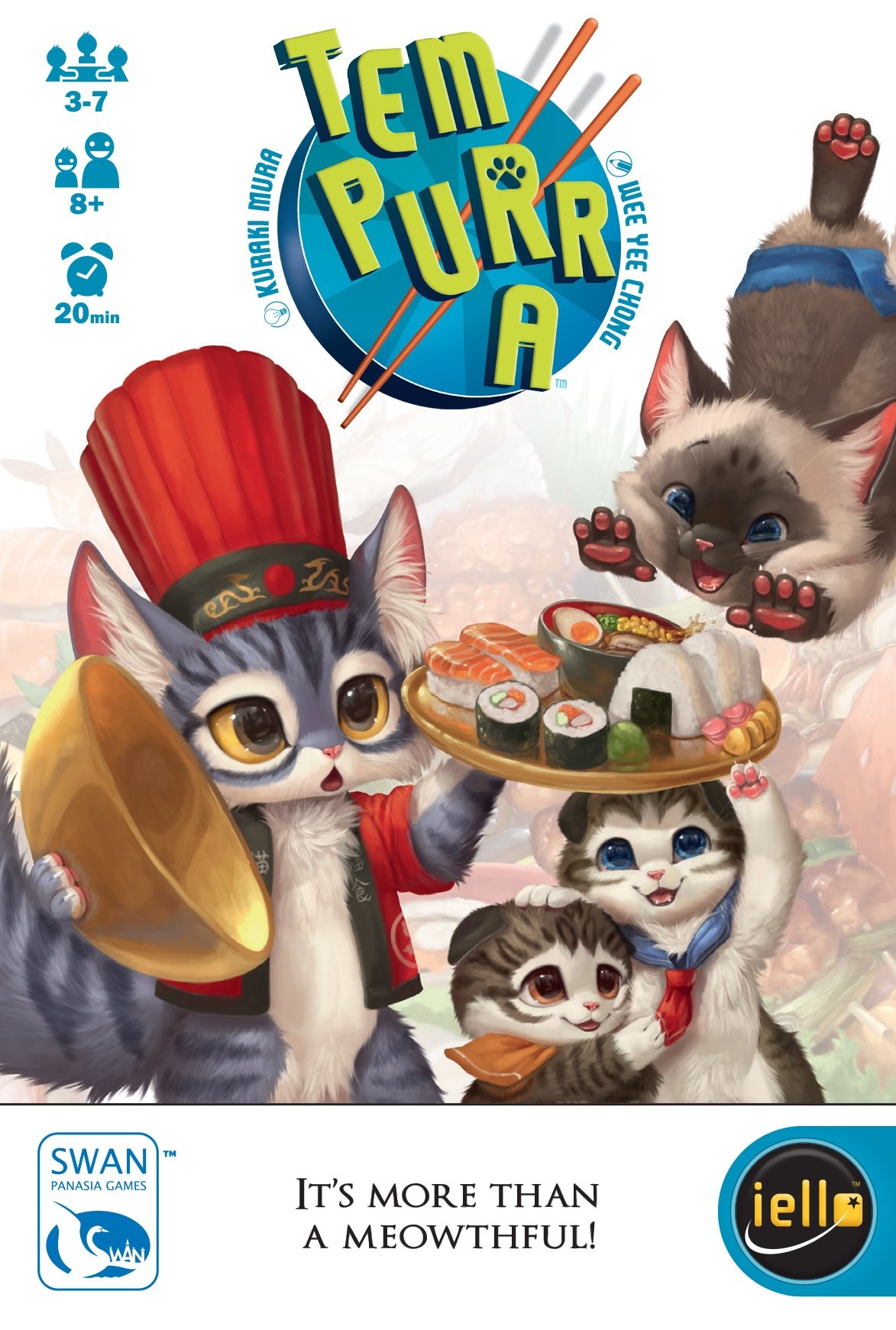
I have mostly younger kids in my library community – we don’t have a zoned high school near us, and we’re not open for Saturday or Sunday service, so my high school kids are likely hanging out in neighborhoods where their schools are. This informs my gaming choices, to be sure; the lion’s share of my kids are 0-12, with the 5-8 year-old range being the biggest attendees for our programs. So in addition to the usual suspects: Uno, Monopoly and Monopoly Jr., Candyland, and Connect 4, I introduced Tem-Purr-A, a card game that’s similar to Uno, but with more indigestion.
Tempurra, IelloGames (2011)
Ages 8+ (6+ with modifications)
Play time: 15-20 minutes
Number of players: 3-10
The Plot: It’s an eating contest! All the players are cats, passing dishes back and forth among each other, but every card you pick brings you closer to indigestion. If you get three indigestion counters, it’s all over; go get some Alka-Seltzer and relax.
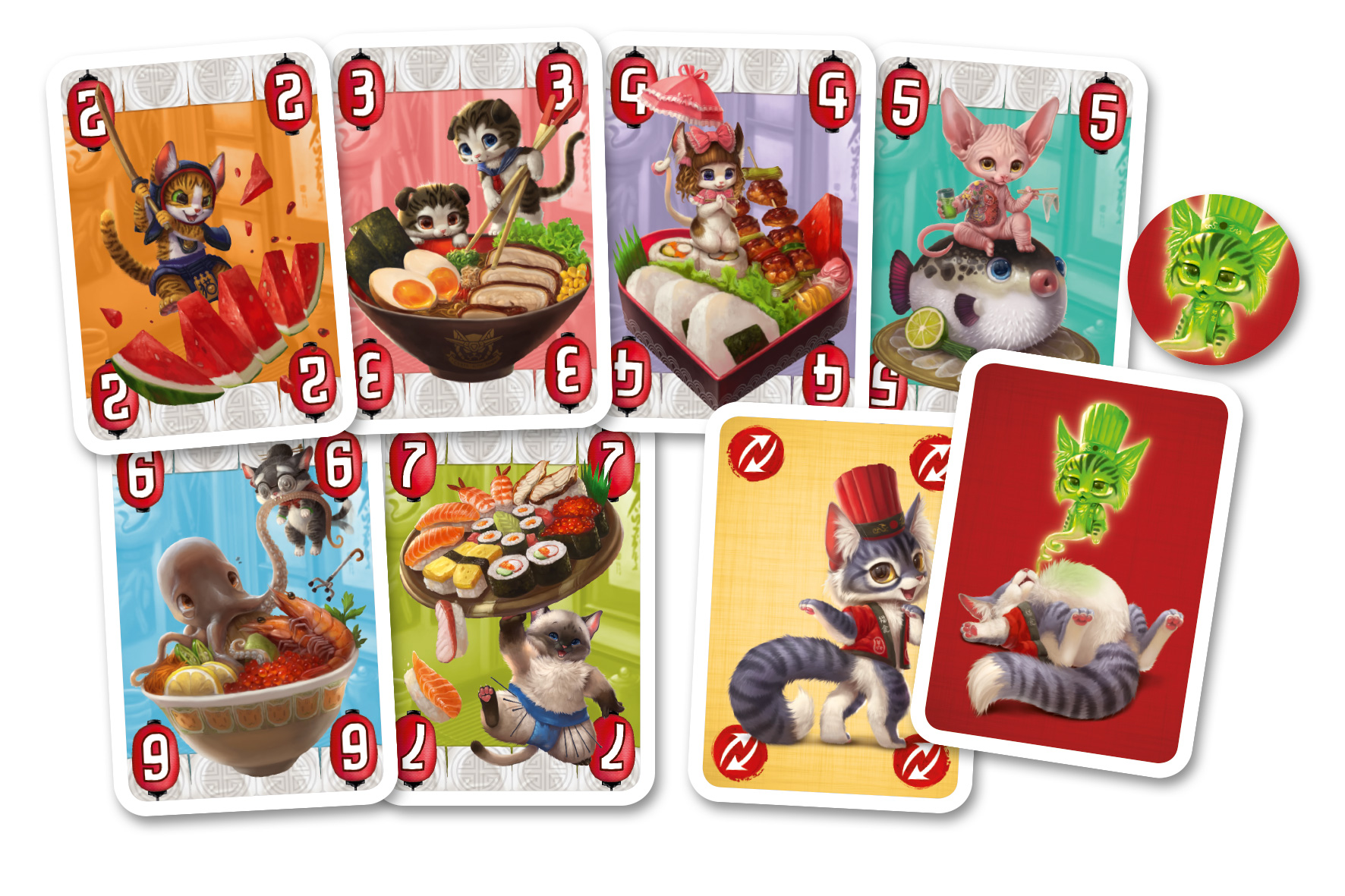
The art is adorable: various cats, brandishing gloriously overflowing dishes. Separate the Indigestion cards from the other cards, shuffle, deal 5 to each player. Put one of the Indigestion cards in the remaining pile.
Gameplay happens over several rounds. The first player chooses a dish card from their hand and puts it face-up on the table. The next player can either:
Serve a Dish: play a card with the same value (if a card has a value of 6, the player must play a card from their hand with a value of 6)
Eat a Mouthful: Draw the same number of cards as the value of the played card (if you don’t have a 6 card, draw 6 cards). At this point, if you haven’t drawn an Indigestion card, discard the stack you’ve been playing on, and start a new stack by playing a card from your hand.
If you DO draw an Indigestion card, the round is over: the person who got the Indigestion card gets an Indigestion counter; they add the cards they’ve drawn to their hand, and the deck is reshuffled, adding an additional Indigestion card to the mix. The stakes get higher with every Indigestion card revealed, because you’re adding MORE to the deck!
Play an Action Card: Rather than Serve a Dish or Eat a Mouthful, players can play an action card if they have one in their hand. Action cards let you reverse the action, throwing the game back into the previous player’s lap; pass over yourself and have the next player take an action, OR add one dish to the total of dishes to be eaten. If you have a card with a value of 3 showing, and you play a +1 card, the next player must play a card with a face value of 3 OR draw four cards.
Skip a Dish: If you don’t have a card with a face value of the card in play, but have multiple cards of another value, you can play those and Skip the Dish offered. If that 3-card is face up, and you don’t have a 3, but you have a pair of 6 cards, throw them down! Then, clear the stack and start a new pile with the second 6-card facing up, and the next player must either match with a 6-card of their own, draw 6 cards, play an action card, or skip.
Gameplay ends when someone draws their third Indigestion card.
The kids really enjoyed this game, with some modifications. I made it even simpler for my younger kids by keeping it closer to Uno rules: match the cats by number or play an action. If you can’t match, take the number of cards on the displayed card. If you play a +1, the same rules apply as the game rules. I keep the rounds short, and hope to introduce skipping dishes in the next week or two, once the kids are comfortable with game play and pace.
All in All: Super fun for kids 8+, modified for ages 7-8 made it fun for my library kids. This is one of our favorite games at home, and I have my library kids actively looking for this one on game days now.
Happy Children’s Book Week! I just got the news that Two Lions/Amazon Publishing is offering free ebooks to celebrate this week!
You may recognize some of these books (especially my best T-Rexter buddy, Dexter); you may even have hard copies. But now, you can get e-copies to have handy whenever the occasion pops up – impromptu storytimes, long train rides (or car rides, if you and the kiddos don’t get car sick), or just those lovely “I’m so BOOOOOOOORED” moments that pop up, whether you’re visiting, sitting and waiting for a parent-teacher meeting, or out at a restaurant that actually has flatware on the tables.
The First Cat in Space Ate Pizza, by Mac Barnett/Illustrated by Shawn Harris, (May 2022, Katherine Tegen Books), $15.99, ISBN: 9780063084087
Ages 7-12
Two award-winning kidlit powerhouses come together for a laugh-out-loud tale about a cat, a toenail-clipping robot, and a group of hungry rats posed to devour the moon. Rats from another galaxy are eating the moon! What is the Earth to do? Dispatch a cybernetically enhanced cat – First Cat – to take care of business. Accompanied by a stowaway robot who believes he’s destined for greater things than clipping toenails, and a ship’s computer who’s furious at being upstaged from a larger part in the story, First Cat lands on the moon, and the adventure begins: frozen wastelands, living forests, churning waters (Sea of Tranqulity? HA!) and dangers at every turn. There are repeating gags that get funnier with every utterance, and readers will giggle themselves silly as First Cat tries, time and again, to have a mouth-watering slice of pizza. Artwork is boldly outlined and colorful, hilariously communicating the madcap storytelling.
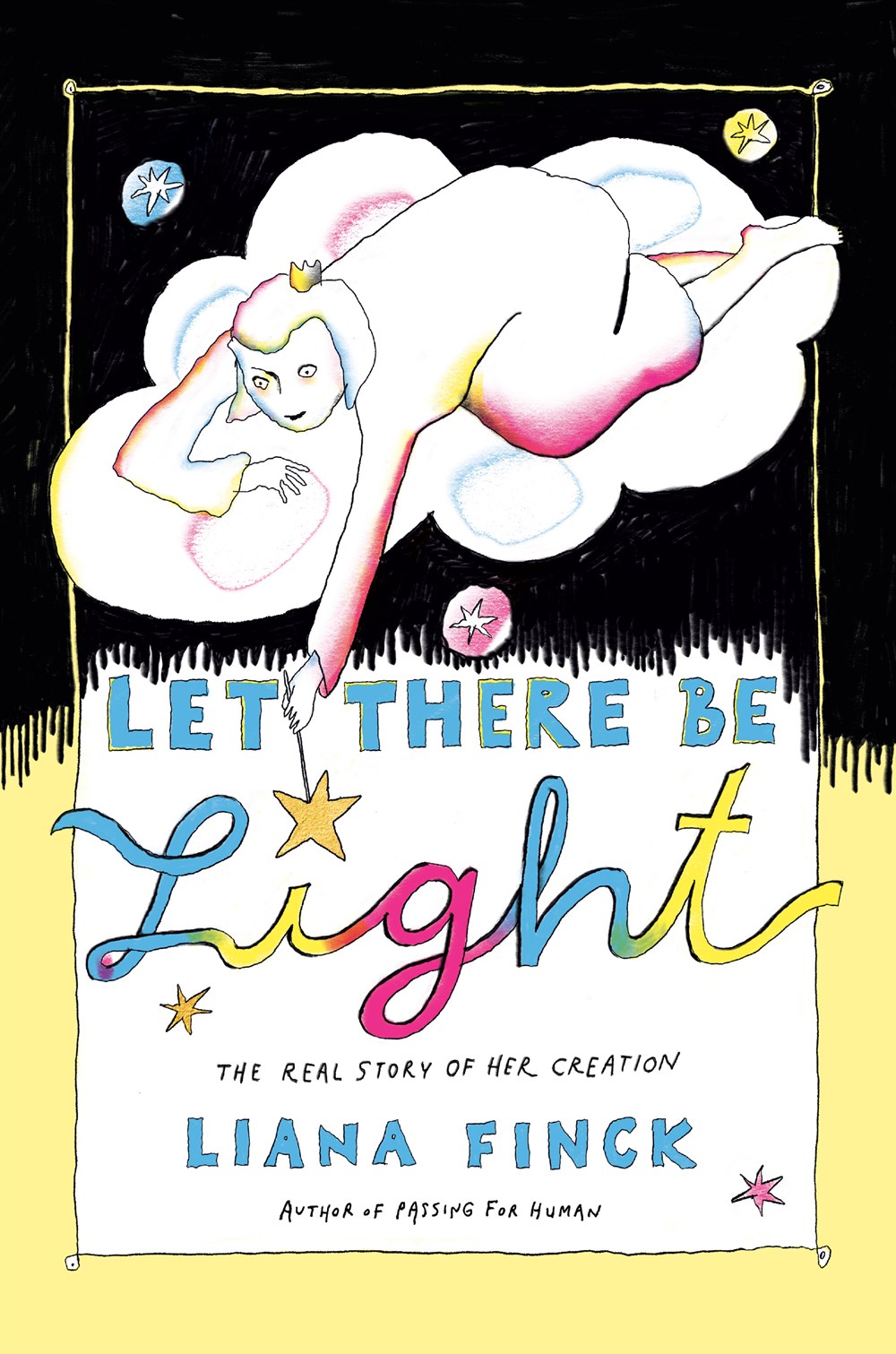
Let There Be Light: The Real Story of Her Creation, by Liana Finck, (Apr. 2022, Random House), $28.99, ISBN: 9781984801531
Ages 14+
Artist Liana Finck reimagines the Book of Genesis in her latest graphic novel; here, god is a woman wearing a crown and wielding a wand, creating the world and populating it but not quite satisfied. She creates Man, then creates Lilith (Adam’s first wife), creating Eve when Lilith storms out and leaving Adam bereft. It’s assumed God presents as male – something that irks the Creator throughout the book, as rendered in amusing and outraged footnotes – which ends up being the reason behind why humans are unable to view the face of God. Let There Be Light tells the stories of Cain and Abel, the “Begats” (an hilarious look at all the babies being born to centuries-old men, seemingly without female assistance), Joseph, Abraham, and others. Simple black and white line drawings get spots of color for emphasis. God is a more human deity in this book, with neuroses and anxiety, making her a more compassionate figure. An author’s note touches on Kabbalist concepts and its influence on her story. An amusing and thought-provoking retelling.
Let There Be Light: The Real Story of Her Creation has a starred review from Booklist. Visit Liana Finck’s webpage for more information on her books and her artwork.
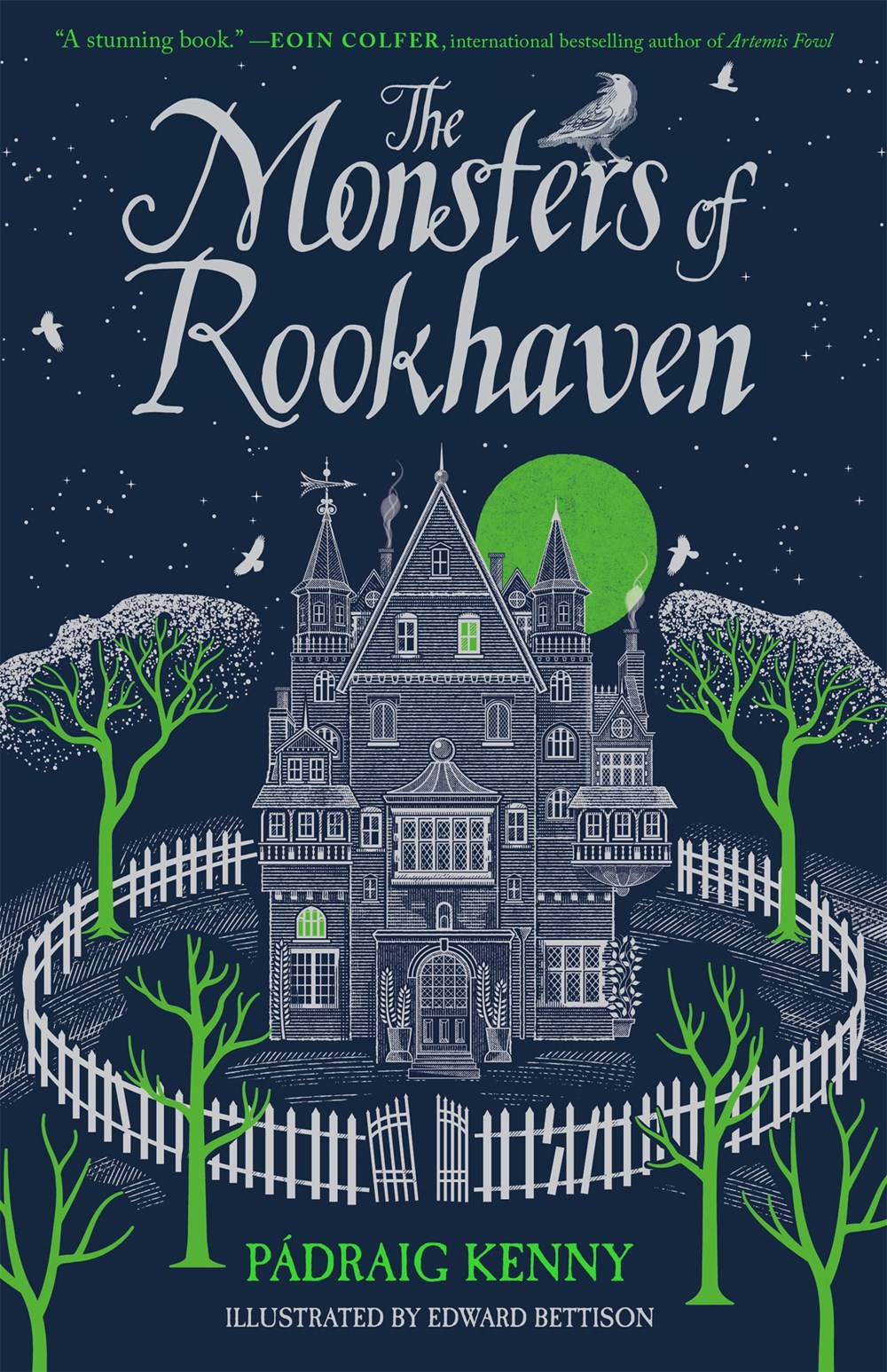
The Monsters of Rookhaven, by Pádraig Kenny/Illustrated by Edward Bettison, (Sept. 2021, Henry Holt), $16.99, ISBN: 9781250623942
Ages 10-14
Mirabelle loves her very unique family: there’s Uncle Bertram, who can transform into a grizzy bear, and Aunt Eliza, entirely made up of spiders. There are the twins, Dotty and Daisy, who can be a little cruel, and Odd, who travels through portals. There’s Gideon, the newest addition to the family, and the mysterious Piglet; and there’s Uncle Enoch, who presides over the group. They have an agreement with the English village that separates them by way of a magical border: they don’t cross the border and eat the townsfolk, and the village keeps them fed and safe from the outside world. But Jem and Tom, two orphaned siblings, discover a tear in the magic and find their way into Rookhaven, with consequences for everyone on both sides of the border.
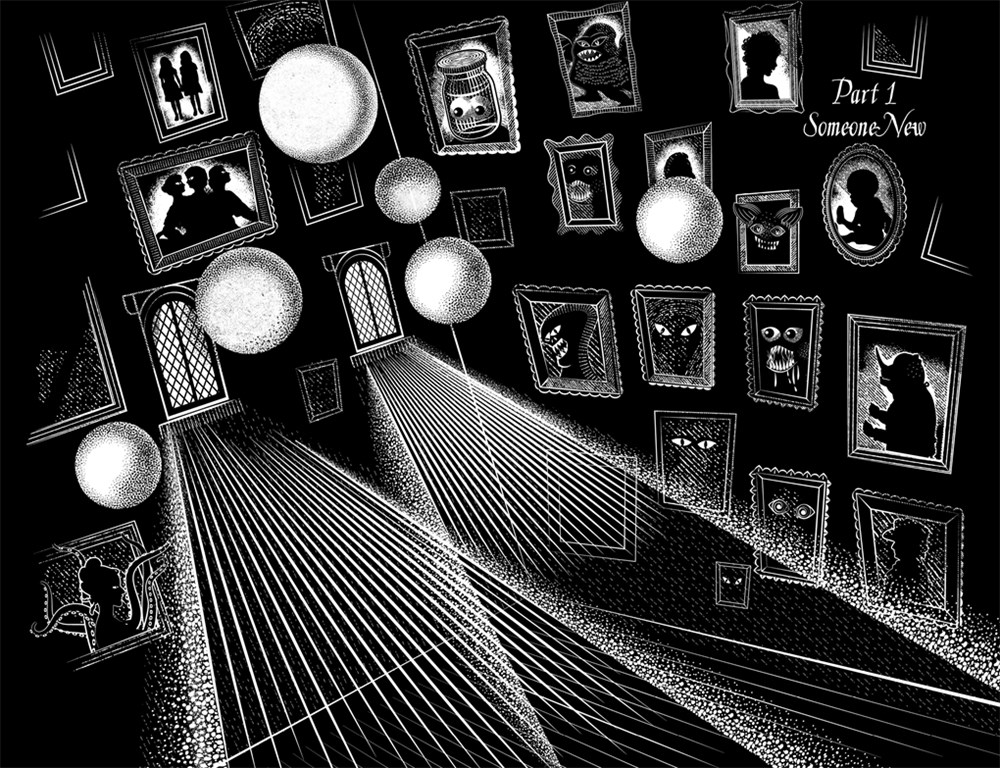
This book is gorgeous; beautifully macabre and perfect for kids who loved Neil Gaiman’s The Graveyard Book. The narration moves swiftly along but is never rushed; it’s deliberate and takes its time creating the world of Rookhaven and the post-War English countryside; we meet a group of people devastated by war and the grief and loss it brings, making them susceptible to the worst type of manipulation. We meet another group of beings, specially gifted but assumed terrible, also suffering from grief and loss, with the added confusion of having two very human children stumble into their secure world and turn things upside down. Pádraig Kenny masterfully brings these elements together with dark humor and gentle moments, tension and terror mixed with wonder and pain. Edward Bettison’s blackwork illustrations add the perfect moodiness to the story. An excellent choice for book groups
The Monsters of Rookhaven is out in hardcover now and will be released in paperback this September, to coincide with the hardcover release of the next Rookhaven book, The Shadows of Rookhaven.
The Monsters of Rookhaven has a starred review from Booklist.
 All My Friends, by Hope Larson, (Jan. 2022, First Second), $12.99, ISBN: 9780374388669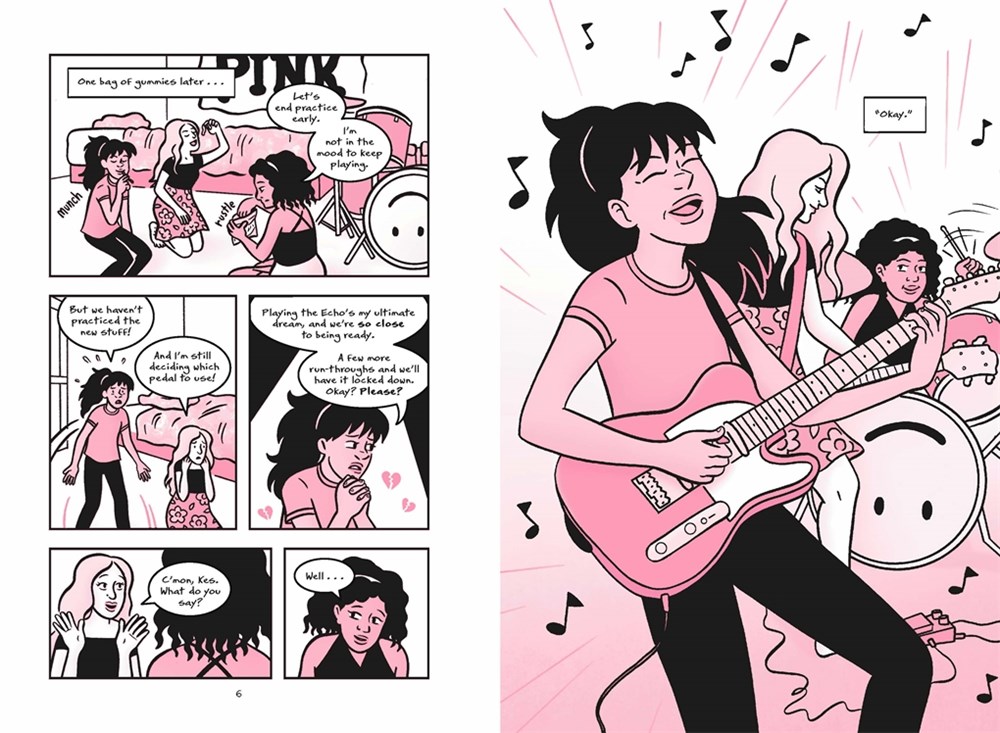



 Mom Read It