Posted in Animal Fiction, Fantasy, Fiction, Fiction, Historical Fiction, Intermediate, Middle Grade

At the Heels of History, where the goodest pups make history, too – and a giveaway!

Filigree’s Midnight Ride (At the Heels of History #1), by Pam Berkman & Dorothy Hearst/Illustrated by Claire Powell, (Aug. 2019. Simon & Schuster), $17.99, ISBN: 978-1534433335

Ages 8-11

The story of Paul Revere and his daughter’s Pomeranian, Filigree, kick off the first in the At the Heels of History series, where kids get to read about major moments in history as seen through the eyes of the dogs that were there.

Filigree wasn’t always Paul Revere’s dog, but his Loyalist human was shipped back to England and he was adopted by Paul Revere for his daughter, Frances. Poor Filigree is looked down on by the other colonists’ dogs: Sam Adams’s Newfoundland, Jove, bullies him, and even the Revere family cat, Anvil, has complete disdain for the little dog. But Frances loves him, and wants him to protect her father when he leaves home for a secret mission that could put him in danger with the British troops. Is Filigree just going to be in the way, or will he play a major part in a pivotal moment in American history?

This is such a cute book and an enjoyable new historical fiction/What If series! Kids will get a kick out of reading the “real story” behind historical moments like Paul Revere’s famed midnight ride and the American Gold Rush (coming in the next book), witnessed by the loyal canines who stood by their humans as history happened. There are black and white drawings throughout, making this extra fun and giving readers visual context of the time periods and the characters. Filigree’s Midnight Ride’s subplot involves the rough (ruff?) relationship between Jove, Sam Adams’s giant Newfoundland, and little Filigree, so the artwork demonstrating the vast difference in size just adds to the amusing read. Back matter points out some important information about the famed Midnight Ride, which didn’t really happen the way that Schoolhouse Rock taught me that it did (but I’m still going to sing along to the song). There’s a word about marginalized voices, particularly the enslaved, and their support of the patriots against the British.

There’s a website for the series where you can find free, downloadable curriculum guides, fun facts, and downloadable mazes, puzzles, and more for everyone to enjoy.

A cute add to your intermediate/middle grade fiction sections, and a nice additional way to generate interest in history units. At the Heels of History has a second book in the series, Bo-Bo’s Cave of Gold, coming in April 2020.

Hear ye! Hear ye! Enter this Rafflecopter giveaway for a chance to win your own copy of Filigree’s Midnight Ride! (U.S. addresses only, please!)

Posted in picture books, Preschool Reads

Bring on the School Stories (and a giveaway!): My Name is Wakawakaloch!

My Name is Wakawakaloch!, by Chana Stiefel/Illustrated by Mary Sullivan, (Aug 2019, Houghton Mifflin Harcourt), $17.99, ISBN: 978-1-328-73209-5

Ages 4-6

Over here in NYC, most kids are going to be starting school next week; many kids across the country are already back in school. It’s the perfect time to introduce some new school stories to the kids!

My Name is Wakawakaloch! takes place in the Stone Age (-ish), and stars a little girl who’s frustrated because her classmates can’t pronounce her name right! She goes home and tells her parents she wants to change her name to a nice, simple name, like Gloop. Her parents send her to the Wise Neanderthal in their village, the Elder Mooch, who tells her that she’s a “forward thinker”, but needs to be a “backwards seer, too”. Wakawakaloch returns home and looks at her home’s cave paintings, and sees that she is named for a line of strong women in her family and is empowered to not only stick with her unique name, but to empower other kids with extraordinary names.

This is an adorable book to start off the school year (or for anytime, really). How many of us have names you don’t see on a mug or a t-shirt? How many of us have growled when our names are mispronounced again and again? (You’d look at my name and think, “That’s so easy, it looks like it sounds!” But no.) In our multicultural society, we – and our kids – meet people with names that will be new to us on a daily basis. Books like My Name is Wakawakaloch! show kids (and adults) that our names are as individual as we are, and that there are positive ways to embrace our names and encourage others to embrace both our names and their names. The cartoony digital artwork has a playful sense of fun, and works with the story to deliver an upbeat story with a positive message.

Display with books like Phoebe Sounds it Out by Julie Zwillich, and Alma and How She Got Her Name by Juana Martinez-Neal.


Want a chance to win your own copy of My Name is Wakawakaloch? Enter this Rafflecopter giveaway! (U.S. addresses only, please!)

Posted in picture books, Preschool Reads

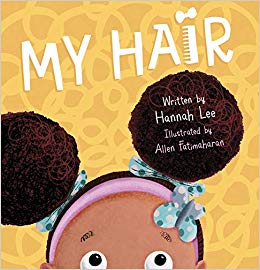
Celebrating Hair with Hannah Lee and Allen Fatimaharan

My Hair, by Hannah Lee/Illustrated by Allen Fatimaharan, (Sept. 2019, Faber & Faber), $16.95, ISBN: 9780571346868

Ages 4-7

A little girl has a birthday coming up, and wants a new hairstyle to debut. What should she get? This rhyming story follows a girl of color as she explores different hairstyles, observing friends, family, and the ladies at the salon. She mulls over dreadlocks, fades, braids, close-cropped, and wraps and turbans before finally listening to her mother and going with her natural, beautiful afro.

This acclamation of black hair and culture is such a joy to read. The rhyming text is fun and works beautifully with the images: earth-toned, bold, expressive characters and settings abound, and the personality of the images pops off the page. There are pets throughout the story, many sporting dramatic hairstyles (fur styles?) that match their humans. The young girl uses positive, lively words to run through styles she knows: her mother’s dreadlocks are “dazzling”; her uncle’s waves “swirl all over his head”; her aunt’s close-shaved hair is “like the head of a lioness”, and her grandmother “found one [grey hair] years ago and invited them all to stay”.

A positive, upbeat book about hair and community, and a smart add to your picture book collections.

A side note – if you haven’t had a chance to read or see the animated short for Mathew A. Cherry and Vashti Harrison’s Hair Love yet, please get the book or see the short (it’s running before Angry Birds 2; I hope other kids’ movies pick it up).


Posted in Uncategorized

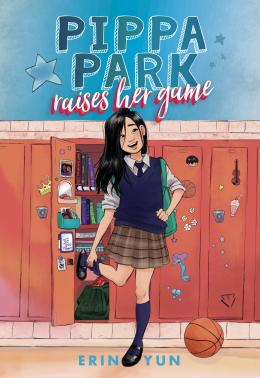
Meet Pippa Park, a new middle grade book from Erin Yun and Fabled Films!

Pippa Park Raises Her Game, by Erin Yun, (Feb. 2020, Fabled Films Press), $15.99, ISBN: 978-1944020262

Ages 9-13

Korean-American seventh grader Pippa Park’s is a juggler: living with her older sister and brother-in-law, rather than her Mom, in Korea, she juggles the weight of their expectations; she juggles her responsibilities at home and school, and she juggles schoolwork with her first love, basketball. She receives an unexpected basketball scholarship to an affluent private school, Lakeview Private, and decides to reinvent herself: she doesn’t want to stand out as the “scholarship student”, especially among the rich kids, and especially among the members of the basketball team – her former middle school’s rivals! But reinventing herself comes with a price, and Pippa discovers that she’s getting further away from the person she wants to be while trying to keep pace with the Royals, Lakeview’s version of Queen Bees/Mean Girls/the In-Crowd. She can’t turn to her sister; she can’t turn to her best friend, who won’t talk to her anymore; and she certainly can’t turn to the Royals. When a series of antagonistic social media messages start showing up, threatening to expose Pippa’s real life, she really feels lost.

Inspired by Charles Dickens’s Great Expectations, Pippa Park Raises Her Game is a relatable middle grade story about a middle schooler dealing with the school stress, family stress,  an unrequited crush (with his own family stress), and the stress of keeping her real life secret from her glam friends at school. She’s witty and dorky and just wants to do the right thing, but why is the right thing so hard to do? We want Pippa to get it right, because she’s us.

Kudos to Erin Yun for making The Royals a complex, smart group of characters, too! They’re not vapid Mean Girls, even if some of them – not all, by the way – are straight-up stereotypical. First off, they’re not cheerleaders! Let’s hear it for breaking the stereotype! They are unapologetically feminine, and they’re all business on the basketball court, showing readers that real girls don’t always wear pom-poms; sometimes, they slam dunk. There’s an interesting subplot with Pippa’s tutor-turned-crush, Eliot, and his family’s long-standing emotional baggage, which feeds nicely into Pippa’s main story.

Pippa Park Raises Her Game is a slam-dunk for middle grade readers. It’s smart, funny, and gives readers a heroine they can root for.

Psst… keep your eye on the Pippa Park GoodReads page. Maybe add it to your “To-Read”. I’ve got word there may be a giveaway coming in a few weeks.

Posted in Fiction, Historical Fiction, Middle Grade, Realistic Fiction, Tween Reads

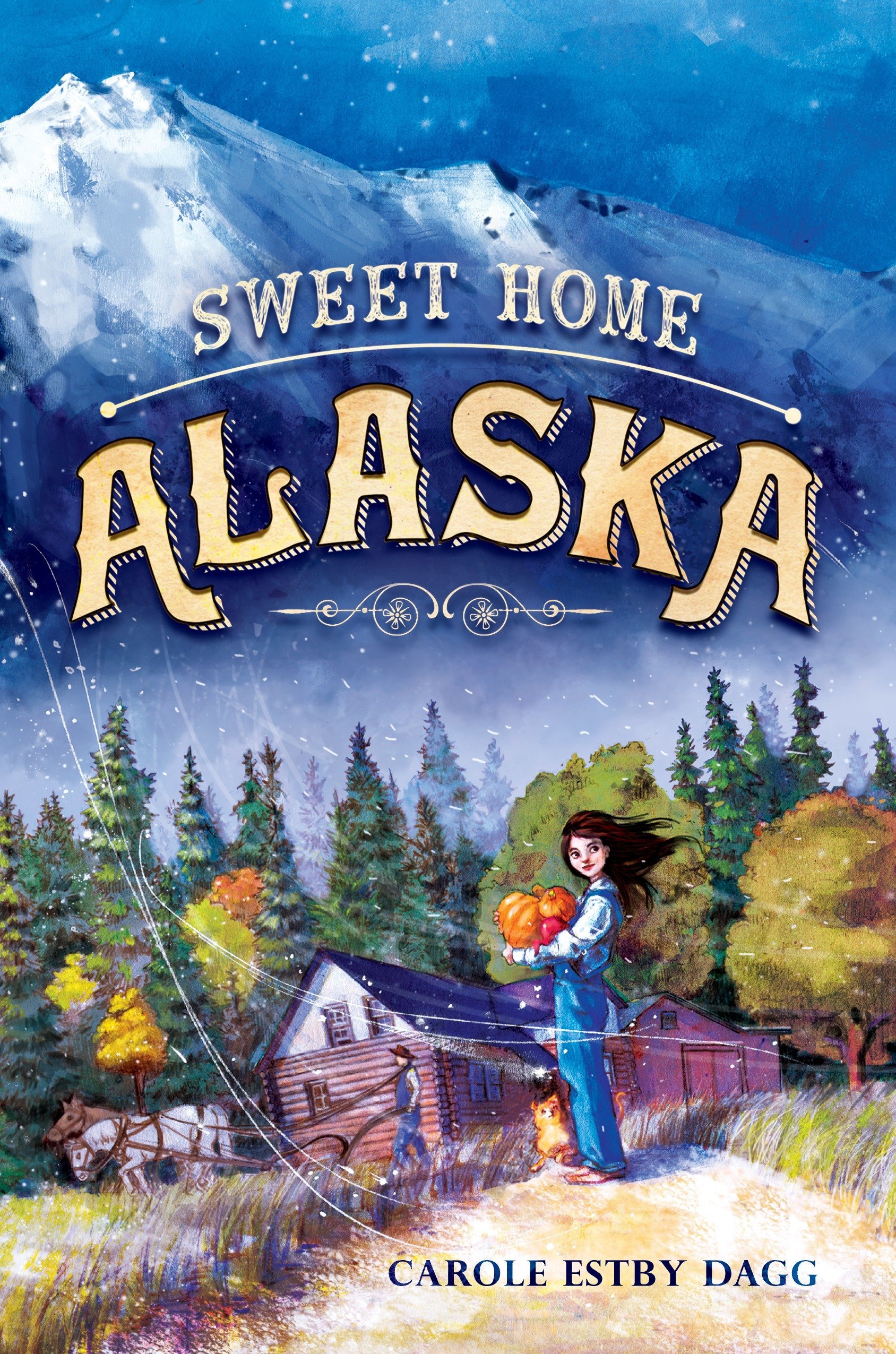
Sweet Home Alaska: Little House, up North

Sweet Home Alaska, by Carole Estby Dagg, (July 2019, Puffin), $8.99, ISBN: 9780147514202

Ages 9-13

Terpsichore Johnson’s family is just one of many families suffering through the American Great Depression in 1934. When the local mill in their Wisconsin town closed, the family relied on whatever they could grow in order to eat, and Terpsichore can make darn near anything out of a pumpkin. Her father is determined to take care of his family, and suggests taking President Franklin D. Roosevelt up on his New Deal offer: become an Alaskan pioneer in his Palmer Colony project! Terpsichore is at once unsure and excited: it’s a chance to be a pioneer, just like her hero, Laura Ingalls Wilder, but it’s so far from everyone and everything she knows. The family decides to give it a year, and they’re off. Life isn’t easy for that first group of colonists: there’s illness, and schedule and materials mismanagement leave a lot of folks living in tents when they should have had homes built, but slowly and surely, life in Alaska starts to grow on the Johnson family, except for Terpsichore’s mother. Can Terpsichore’s prize pumpkin win enough money at the Palmer Colony Fair so she can buy her mother a gift that will make her agree to stay?

I loved this book! Sweet Home Alaska is about the 1935 Matanuska Colony; one of FDR’s New Deal projects that would create jobs, investment in the country and infrastructure, and colonize part of U.S.-owned Alaska, which wasn’t a state just yet. The parallels between Sweet Home Alaska and Laura Ingalls Wilder’s Little House series are wonderful, and a good readalike for readers who enjoy the Wilder books, and Louise Erdrich’s Birchbark House books. (There are no interactions between the mostly white Palmer colonists and indigenous people in Sweet Home Alaska; a point discussed in the author notes at the end of the book.) Terpsichore – pronounced Terp-sick-oh-ree, named for the muse of dancing – even refers to Wilder’s book, Farmer Boy, when growing her pumpkin to show at the Palmer Colony Fair.

The book takes a deeper look into a moment in history I haven’t yet seen captured in historical fiction. While it takes place during the Great Depression, this is new territory, and worth the read. Terpsichore is the eldest child, with twin younger sisters and an infant brother, and handles much of the housework to help her mother out. She’s smart, enterprising, and determined. She and the two friends she makes in Palmer – Gloria, named for actress Gloria Swanson, and Mendel, named for the scientist who studied genetics – work together to start up a colony library and find ways to raise money for books and supplies. She experiences frustration, but always bounces back, stronger than before. The writing just flows from page to page, with adventure, emotion, and excitement throughout. There are wonderful mini-plots throughout, including the telegram to Eleanor Roosevelt that got our President’s attention; a visit from Will Rogers; and a Palmer resident with interesting ties to Terpsichore’s family. I loved spending time with this group.

An author’s note and further reading are included, and really make this a solid choice for kids seeking out historical fiction. There are also some recipes, including one for jellied moose nose. You know you’re curious.

Sweet Home Alaska was originally published in 2016, but I somehow missed it. Glad my friend Barbara over at Blue Slip Media told me I needed to read it now! Check out the free, downloadable discussion and activity guide, and find out about author visits, Skype visits, and contact info (including how to get an autographed bookmark!) at the author’s website.


Posted in Uncategorized

Blog Tour and Giveaway: A Tiger Like Me!

A little boy and his tiger alter-ego bound through the day, doing all sorts of tiger things: waking up in his tiger den, eating breakfast ast his feeding spot, springing up at those lazy humans… it’s all in a tiger’s day, after all! At night, the restless tiger can’t find sleep in his sleeping place, so he heads to his parents’ den for cuddles, and thinks about how great it is to be a tiger as he drifts off to sleep.

A Tiger Like Me, by Michael Englel/Illustrated by Joëlle Tourlonias, Translated by Laura Watkinson,
(Sept. 2019, Amazon Crossing), $17.99, ISBN: 978-1542044561
Ages 4-7

This is another title from Amazon Crossing, the translation imprint from Amazon’s publishing group. Originally published in Germany, A Tiger Like Me is a book every kid (and grownup) can enjoy, because it’s a celebration of childhood imagination. The book flap genders the child as male, but the artwork and text don’t make any gender definitive. Narrated by the kid-Tiger, it’s a spot-on glimpse into a child’s imagination as they navigate the world in Tiger Mode. There’s repetition of the phrase, “Because I am a tiger, a tiger!” on each spread, as they go about their day; waking up, they are a “tiger, a wide-awake tiger!”; eating breakfast, “a greedy, gutsy tiger!”; getting caught in a laundry basket full of clothes, “a clumsy, klutzy tiger!”. Mom and Dad are there to provide some comic fun, particularly when the Tiger jumps at Dad, making him spill his coffee and grab for the Tiger, hunter-style. The day ends with a loving family cuddle, making this a great bedtime story for your own little tigers.

The digital artwork is playful, fun, and bright, with an almost hand-sketched look to some details. There are great little nuances throughout the story: look for the Tiger’s toy animal friends laying around the pages, and Dad drinks from a mug with a tiger’s face on it. Tiger eats Tiger Crunch cereal and envisions itself eating at a stone table with cave paintings on it. There’s so much to enjoy here; you won’t want to read it just once. Pages are full-bleed, with atmosphere switching from a family home to a jungle. The endpapers offer a lead-in and drift-out to the story, too: opening endpapers show us the Tiger waking up and ready to begin his day as a poetic introduction about a tiger stirring in his den introduces readers to the story. The closing endpapers show our Tiger, back in his den, as a poetic epilogue to the story takes readers out of the story. This one is an adorable add to bedtime story collections.

Michael Engler studied visual communication in Düsseldorf, Germany, and first worked as a scriptwriter and illustrator. He then spent several years as an art director at advertising agencies. He is currently a freelance author in Düsseldorf, writing children’s books and plays for the theater and radio. He has written more than fifteen children’s books. Learn more about him online at www.michaelengler.com.


Joëlle Tourlonias was born in Hanau, Germany, and studied visual communication with an emphasis on illustration and painting at the Bauhaus University Weimar. She is the illustrator of more than thirty children’s books. She continues to draw, paint, and live in Düsseldorf. Learn more about her online at www.joelletourlonias.blogspot.com.


Laura Watkinson is an award-winning translator of books for young readers and adults. She is a three-time winner of the Batchelder Award and also won the Vondel Prize for Dutch-English translation. Originally from the United Kingdom, she now lives in Amsterdam. Learn more online at www.laurawatkinson.com.


“Child readers (and certainly adult caregivers) will identify with the book’s central message: Children can experience a wide swath of feelings, everyone makes mistakes, and everyone has complicated ways of interacting with the world. The final quiet pages offer a peaceful conclusion…Wildness is part and parcel of everyday childhood, embraced here with a roar.” —Kirkus Reviews


Want a shot at winning your own copy of A Tiger Like Me, courtesy of Amazon Crossing Kids? Check out this Rafflecopter giveaway (U.S. addresses only, please!)

Posted in picture books

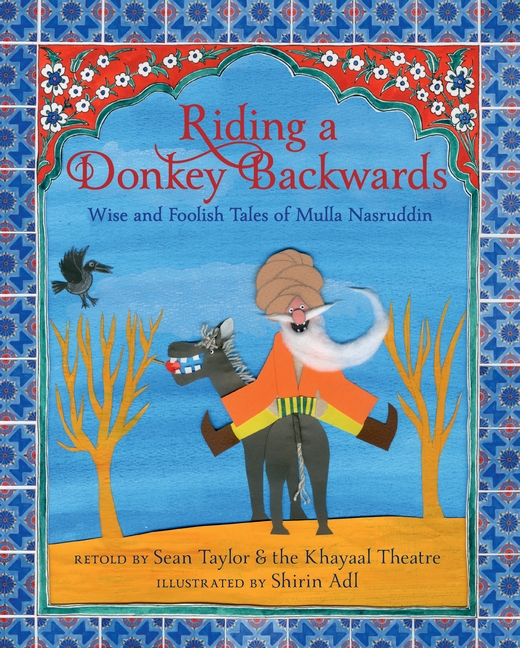
Folk and Fairy Tales with Mulla Nasruddin: Riding a Donkey Backwards

Riding a Donkey Backwards: Wise and Foolish Tales of Mulla Nasruddin, retold by Sean Taylor & the Khayaal Theatre/Illustrated by Shirin Ali, (Aug. 2019, Candlewick Press), $18.99, ISBN: 9781536205077

Ages 4-8

Mulla Nasruddin, the wise fool from Muslim folk tales, is here to entertain and liven up your 398 sections with 21 trickster tales. Every story is amusing; some are laugh-out-loud funny, and all of them will make you think. There are stories like “Whose Move?”, where the Mulla’s home is robbed; the Mulla follows the robber back to his home, gets into his bed, and informs him that his wife and family will join them tomorrow, convinced that he thought the robber was moving the Mulla and his family to the robber’s house. Stories like “Who Owns the Land?”, where the Mulla gives a thoughtful response to a dispute between farmers, will make readers pause and think about the earth and who has rights to it, after all. There’s a little bit of wisdom in each story.

The stories run 1-2 pages, allowing for quick reads during a circle time, story time, or lesson. The mixed media art is wonderful; it’s colorful and has different textures, almost inviting readers to touch the Mulla’s cottony beard or run a finger across a woven rug. An author’s note at the beginning of the book introduces readers to Mulla Nasruddin, and a glossary of Arabic terms helps readers with some new words. A welcome addition to trickster tales on the folktales shelf.

You can find out more about the Khayaal Theatre Company at their website. See more of Shirin Adl’s illustrations at her website. Get a riddle at author Sean Taylor’s website, or visit his blog for older readers.

Posted in picture books

Saying Farewell to Summer Reading with How to Be on The Moon

How to Be on the Moon, by Viviane Schwarz, (June 2019, Candlewick Press), $16.99, ISBN: 9781536205459

Ages 4-7

A little girl and her best crocodile friend decide to go to the moon. They ready their math skills, practice having patience, and pack travel games and sandwiches, then take off for a jaunt on the moon.

This is the second Anna and Crocodile adventure from Viviane Schwarz (the first, How to Find Gold, was published in 2016), and it is a celebration of friendship and imagination. The illustrations are pencil, crayon, and watercolor, giving the scenery different textures; it’s like taking a peek into an imaginary landscape. The moonscape is amazing, and looks like aluminum foil (more on that in a minute) against a colorful rocketship and blue-black spacescape. The book is upbeat, with an overall sense of playful fun, that makes this a book I’ll return to again and again at storytime and science time.

Speaking of science time, I’m finishing up my summer reading programs this week, and will be reading How to Be on the Moon when the kids and I make aluminum foil moons. It’s a simple enough craft that I can open it up to all ages, and I think it will be a fun way to bid summer reading goodbye for another year.

Author/illustrator Viviane Schwarz has fun, free downloadables and activities on her author webpage. Check them out!

I look forward to seeing where Anna and Crocodile go on their next trek!

Posted in picture books, Preschool Reads

Blob Tour Stop: A. Blob on a Bus

Hi, all! Happy to be a stop on this fun book tour about a bully, a blob (one and the same), and a bus. Read on!

A. Blob on a Bus, by L.A. Kefalos/Illustrated by Jeffrey Burns,
(July 2019, Laughing Leopard Press), $9.95, ISBN: 978-1-731251107
Ages 3-6

The second book in the A. Blob series stars A. Blob, who’s just a big, gooey bully. He pulls hair, he oozes all over the place as he shoves his way through the bus, he throws erasers, he’s just awful. One day, a little girl named Alexandra has had enough. She confronts the bully, and the other kids, bolstered by her courage, stand behind her. Faced with a united front, the bully puts itself in their shoes, and stops oozing! What lies beneath the muck that is A. Blob?

The first book, This is A. Blob, took a look at the other side of bullying, introducing us to the big, oozing bully tormenting kids at the school playground, and hints that bullies can be sad and lonely people who have trouble connecting with others. Here, we’ve got another common bully setting – the school bus – and the story of what happens when one person says, “Enough”. With A. Blob’s ooze slithering away, we see that possibly, that ooze is a wall built up to keep others out. The third book promises to reveal all!

The artwork reminds me of Nick Jr.-like characters; a realistic cartoony feel. Characters are diverse, with large, expressive eyes. Blob’s eyes are just as expressive, on eye stalks at the top of his head, letting readers know that there’s more than just what’s on the surface. The A. Blob books are a nice addition to your anti-bullying bookshelf, adding a thoughtful look at a bully’s internal motivation while encouraging kids to stand up for themselves and others. Display and read with Kathryn Otoshi’s books, particularly One.

There are bullying facts and free, downloadable materials guides for both This is A. Blob on A. Blob on a Bus at the Laughing Leopard website.

Posted in Fantasy, Fiction, Fiction, Horror, Intermediate, Middle Grade, Tween Reads

The Great TBR Readdown: Hello, Neighbor and The Land of Broken Time

My Great TBR Readdown continues!

Hello Neighbor: Missing Pieces (Hello Neighbor, Book 1), by Carly Anne West/Illustrated by Tim Heitz, (Sept. 2018, Scholastic), $7.99, ISBN: 978-1-338-28009-8

Ages 10-14

Based on the horror video game, Hello Neighbor, this is the first book in a middle school-and-up series introducing Nicky Roth, a new kid in the town of Raven Brooks, and their neighbors, the Petersons. Nicky and Aaron, the Peterson’s son, become friends over their shared interest in tinkering, but when Nicky visits Aaron’s home, he’s uncomfortable. Aaron’s father makes him uneasy, and Nicky notices that Aaron, his mother, and sister are equally uncomfortable around him. The kids at school seem afraid of Aaron, and secrets and rumors about his father run wild. What’s the Peterson family’s dark secret, and why does Nicky feel like Aaron’s father is stalking him?

Knowing nothing about the Hello Neighbor game, I picked this book up and discovered a quietly creepy, light horror novel for tweens. If you have horror fans, this should be a good book to hand them. There are three in the series so far; the characters have a good background to build on, and the suspense builds nicely throughout the book. Illustrations throughout keep the pages turning.


In the Land of Broken Time, by Max Evan/Illustrated by Maria Evan, (Aug. 2016, self-published), $7.99, ISBN: 978-1520569291

Ages 8-10

A self-published novella by husband-wife team Max and Maria Evan, we’ve got a time-traveling fantasy starring a boy, a girl, and a talking dog, taking place in a fantasy land ruled by time – or the lack of it. Christopher sneaks out of his house to go to a nearby traveling circus, meets a girl named Sophie, and ends up hijacking a hot-air balloon, where the two meet a talking circus dog named Duke. They end up in a land where sibling scientists work at opposite ends: one seek to help them repair time, while the other wants to use time to manipulate his own power struggle.

The books is only about 50 pages, and is a quick enough read. I’d like to see something a little more fleshed out, because the world-building felt a little rushed, but was promising. Where is this land? What are the origin stories for the scientists, gnomes, and townspeople who waited for the prince? How did this power struggle between the two scientists begin? There are Narnian influences here that I enjoyed spotting, and there’s obviously more backstory to draw on; the story’s end leaves a sequel – or a prequel? – open to possibility. Maria Evan’s illustrations are beautiful, bright, and colorful, and brought the land and its characters to life. I’d like to see more. Let’s hope we get it.