Posted in Intermediate, Middle Grade, Non-fiction, Non-Fiction

The Holiday Shopping has started… buy some books!

It’s that time of year again, where I dig deep to find all sorts of great books to add to your holiday shopping lists. This is the first round, so I’m thinking this post will suggest books and goodies to bring when you celebrate Thanksgiving, or the Fall Harvest, with your families and friends. These books will be fun for the kiddie table – before the food, naturally!

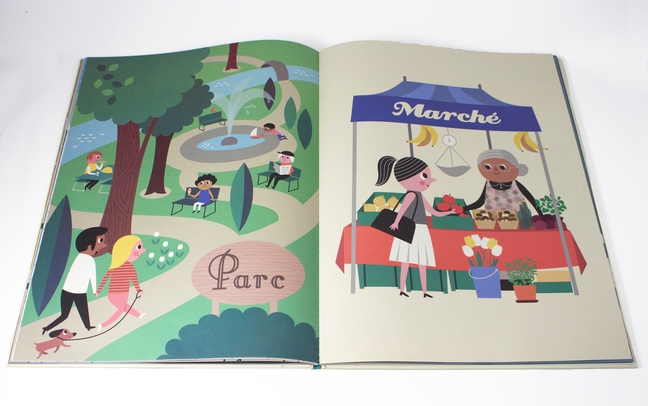
City, by Ingela P. Arrhenius, (Sept. 2018, Candlewick Press), $22, ISBN: 9781536202571

Ages 3-7

This book is just too much fun. First of all, it’s huge: over 40 inches high by over 17 inches wide, making it almost as big as some of the kids you’ll be seeing this holiday season! My niece giggle-shrieked when I stood the book up next to her, and that was that. She was hooked. It’s a gorgeous, funky concept book, introducing readers to different sights of city life: streetlamps, subways, coffee shops, fountains, zoos, even skateboarders are all here, with retro chic, bright art. The only words are the descriptive words for each picture; the endpapers are loaded with pictures of the smaller details of city life: a cat, a server, a scale, a shrub.

Put this in front of the kids, and let them have at it. My niece and my son loved talking about things they recognized: my niece remembers taking a train to work with her mom, and my son talked up the subway when I took him into the city on our winter break. And they both pretended that I was in the coffee shop and the bookstore, so it’s nice to know they think of me.

City is a gorgeous gift book that can be a coffee table art book for kids, or a prompt for creativity. Its only limit is the imagination.
The Smithsonian Exploration Station sets are fantastic gifts. Bring one or two of these with you, and set the kids up in their own personal science labs while the food cooks.

Smithsonian Exploration Station: The Human Body, (Nov. 2018, Silver Dolphin Books), $21.99, ISBN: 9781626867215

Ages 4-10

The Smithsonian sets are contained in a nice, sturdy box that holds a lot of stuff. The Human Body box includes a 56-page fact book, 30 stickers, a plastic model skeleton kids can put together, and 25 fact cards. It’s similar to the Adventures in Science kit Silver Dolphin put out earlier this year, and my son loved them both. Learn what makes your blood pump, your muscles stretch and how your different systems come together to make you walk, run, eat, sleep, and play. Older kids can help younger kids with some basic terms and reading, and the littlest ones can still enjoy putting the stickers on the skeleton body while bigger kids help put the skeleton together.


Smithsonian Exploration Station: World Atlas, (Nov. 2018, Silver Dolphin Books), $21.99, ISBN: 9781626867208

Ages 4-10

This set was hands-down my son’s favorite set. A blow-up globe, a world map and stickers of landmarks from all over the world, and cardstock puzzles of the Eiffel Tower, Taj Mahal, and a Mayan Pyramid? Plus, a 56-page fact book that tells readers all about the cool landmarks as they decorate their maps? SOLD. We spent three days working on the map, at which time he told me that he wants to see every single one of these sights. We built the cardstock models, which called for much dexterity – so I called my eldest son in to help, because I tend to become a little exuberant, shall we say, with my papercrafting. My son also loves his inflatable globe, and asks me to point out cool places to him; some from the map, some, the countries that his friends at school hail from, some, names of places he hears about on TV. It’s a great set.
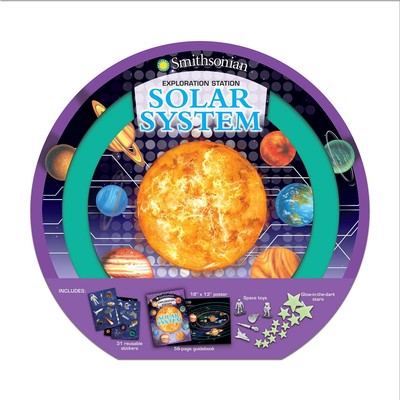
 

Smithsonian Exploration Station: Space!, (Nov. 2018, Silver Dolphin Books), $21.99, ISBN: 9781626867222

Ages 4-10

Kids love planets! The Space! Exploration Station includes a 56-page fact book, astronaut and rocket plastic figurines, stickers, and glow in the dark stars to make their own constellations. There are incredible, full-color photographs and text that explains the makeup of our solar system, galaxies, planets, and constellations. Let the kids decorate your dining room to and eat under the stars!

Every single one of these kits is such fun, and urges kids to be curious and explore the world inside them and around them. If you have the budget for it, throw these in your distributor cart and get a few sets for your STEM/STEAM programming, too. The Smithsonian has a good science education channel on YouTube, with kid-friendly videos that make for good viewing.


Where’s Waldo? The Spectacular Spotlight Search, by Martin Handford, (Oct. 2018, Candlewick Press), $18.99, ISBN: 9781536201765

Ages 5-9

Waldo’s back with a new trick: this time, the spreads have all gone dark! Luckily, the Spectacular Spotlight Search comes with a cool spotlight viewer to help you find him, and the challenges he sets out for you. There are six puzzles and a magic slider that slides into the scene to “light up” small sections – like a spotlight. Find Waldo and other familiar characters, plus other hidden challenges and games on each spread.  My 6-year-old and my 3-year-old niece had a blast with this book, eventually recruiting me for my Waldo-finding skills (narrator: The children were better.)

If you have puzzle and game fans in your family, this is a great gift to bring along. If you’re looking at it for your library, I suggest keeping it in reference; that spotlight will go missing or get beaten up in no time. But it’s good Waldo fun.

I have so much more to come, but I think this is a good start. A little something for everyone and plenty of hands-on fun!

Posted in Fantasy, Fiction, Fiction, Intermediate, Middle Grade

Webcomics on Wednesday: Dylan Campbell’s Scared by the Bell

I’ve been meaning to do something like this for a while, now: create a list of webcomics that I could post by the computers at my library, so the kids could check them out and maybe discover a comic to follow. They’re huge graphic novel fans, and this would give them something new to read while they’re waiting for the next volume of Amulet/Pokemon/anything by Raina Telgemeier to publish.

I started going through my inbox, and lo and behold (and with much embarrassment), I found an email from Dylan Campbell, a creator who let me know about his new webcomic, Scared by the Bell, back in January 2017. It is insane, how one thinks, “Oh, I’ll get to that in a second”, and a year later, it’s still in the inbox. But the good news is, there are three issues online now! But I’ll get to that. First, Scared by the Bell.

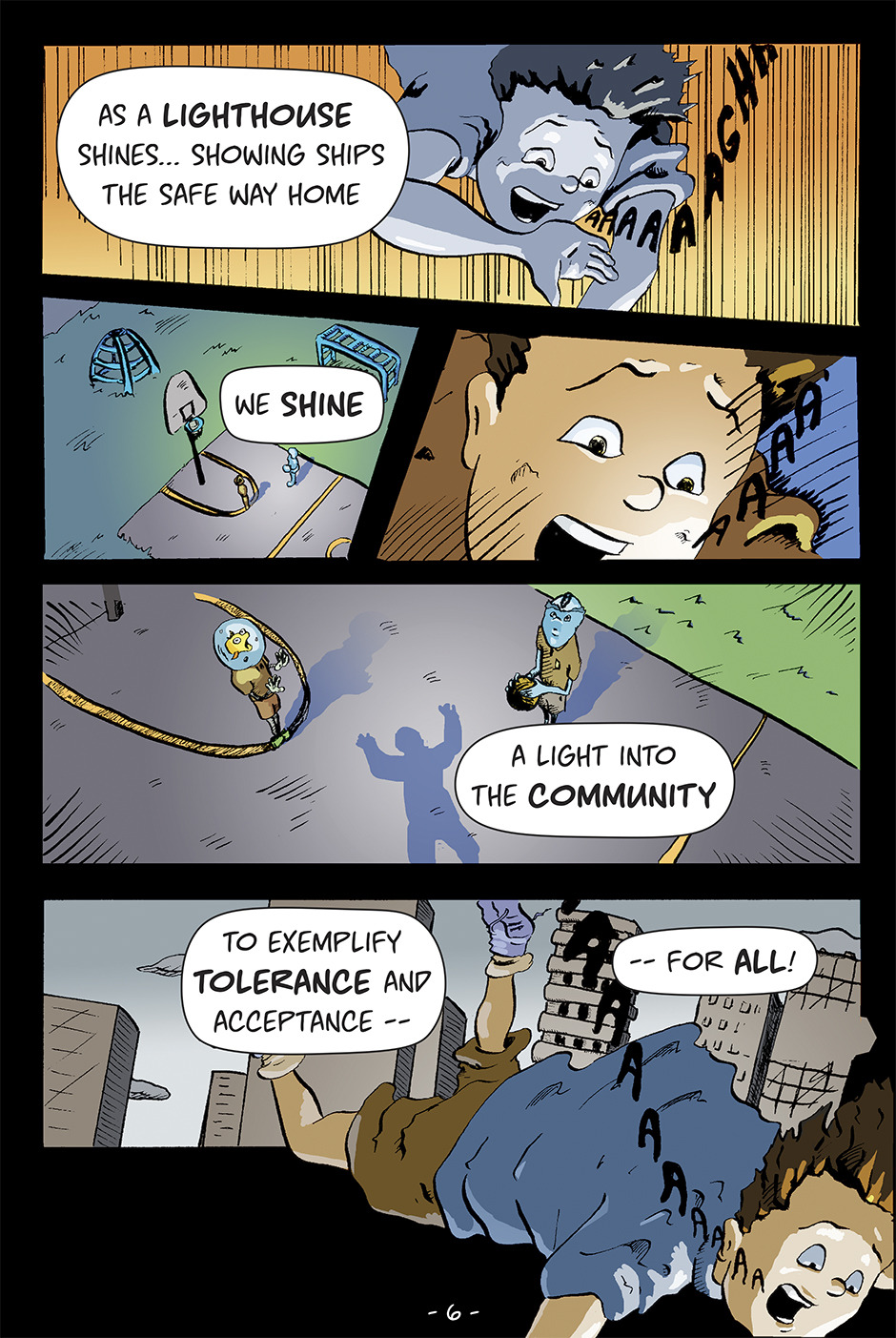
Peter is a kid on his first day at Lighthouse Middle School, but this is no ordinary, run of the mill school. Peter’s classmates include Maggie (a Medusa), Vlad (a vampire), Frank (Frankenstein), and Marv (a werewolf), for starters. Principal Merlin takes Peter under his wing to explain a little bit about Lighthouse, but Peter’s still baffled: how did he get here, and how is he going to make it through middle school when his classmates want to snack on him?

Scared by the Bell has three complete issues under its belt, and Dylan Campbell had a successful Kickstarter earlier this year, all great signs. The art is cartoony and fun, and the classmates are familiar and inspired; there’s a Cthulhu-faced kid (and you know how I love my Lovecraftian monsters); a mummy, a skeleton, even a scary looking teddy bear. Now that the infamous Goldilocks has also joined the crew, I’m looking forward to even more adventures. Scared by the Bell updates on Fridays – a great way to end the week! For Spanish speakers, Dylan offers “Asustado por la Compana” (http://asustadoporlacampana.smackjeeves.com/), and translates it himself, which is pretty fantastic. He welcomes comments and suggestions!

Also – I have a Spanish version of “Scared by the Bell” called “Asustado por la Compana” that updates every Friday as well.  You can find the link to the Spanish version over here at: http://asustadoporlacampana.smackjeeves.com/  


Dylan, I am so sorry that it’s taken almost a year to get on board with your comic, but Scared by the Bell is going on my list of webcomics. I like the writing, I like the character interaction, and I enjoy the artwork.

If you’ve got graphic novel readers, let me know if webcomics are working for your readers!

Posted in picture books

Self-Publishing Spotlight: Look at Me Look at Me

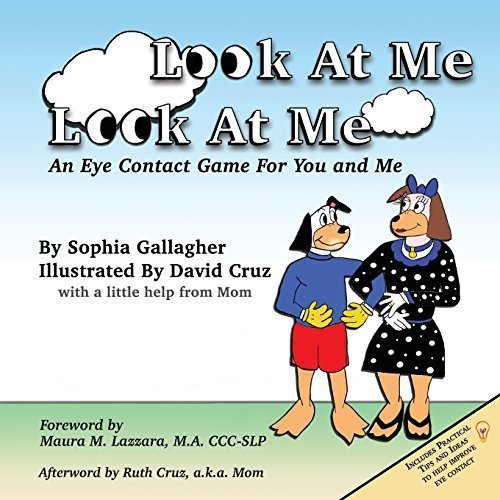
Look at Me Look at Me: An Eye Contact Game for You and Me, by Sophia Gallagher/Illustrated by David Cruz, (March 2016, Puppyducks Publishing), $12.99, ISBN: 978-0996794909

Ages 4+

This self-published book is a team effort: the author is a paraprofessional at a high school in New Jersey; the illustrator, David Cruz, is a young man with ASD (autism spectrum disorder) and Ms. Gallagher’s student; Ruth Cruz is David’s mom and pitched in as an editor and writes the afterword. Speech pathologist Maura M. Lazzara worked with David and writes the foreword. David has a solid team surrounding him!

Look at Me Look at Me is based on a game developed specifically for and with David, to develop and maintain eye contact during social interactions. The repetitive phrase, “Look at me Look at me” invites David – and readers – to make eye contact to communicate feelings. The story is upbeat and positive, with David’s illustrations of Puppyduck – a puppy with duck feet – bringing a sweet element into the artwork. David the Puppyduck goes through his day, interacting with different adults who encourage him to look at them. The story ends with a counting game that any kid would enjoy and is easily translated to others.

The next half of the book is dedicated to strategies for parents, educators, and caregivers when working with special needs kids. Discussions include Sections include eye contact and how to maintain it; fun bubble-blowing and puppet activities, and dress-up play.

David’s illustrations are bright, child-friendly, and positive. He makes his characters’ eyes large, so readers can maintain eye contact with them (a great start). It’s an empowering book for kids, especially those with special needs. I’d love to see this in school counselors’ and doctors offices.

Posted in Fiction, Fiction, Middle Grade, Realistic Fiction, Tween Reads

Reckless Club “remixes The Breakfast Club for the Instagram generation”

The Reckless Club, by Beth Vrabel, (Oct. 2018, Running Press), $16.99, ISBN: 9780762490400

Ages 9-13

I had to use Kirkus’ line in that opening, because how more perfect can one describe a book? Beth Vrabel, one of my favorite middle grade authors, reaches back into one of the movies that defined my generation and brought it back, with a few nips and tucks, to inspire a new generation. We take one group: a Nobody (Jason), a Drama Queen (Lilith), a Flirt (Wes), an Athlete (Ally, also known as “Sports Barbie”), and a rebel (Rex) all come together at a retirement home one day in the late summer. Each has done something so wrong in their last year of middle school that they’ve got to spend the last Saturday before high school here, helping elderly patients and their principal’s sister, who oversees the home. Each teen is paired with an elder, and their personalities quickly emerge, as does a mystery: is one of the nurse’s stealing from the patients?

The book has wonderful callouts to The Breakfast Club, meaning I’ll get to booktalk this to some of my parents, too. We Gen Xers never get tired of ’80s nostalgia! But the story is so much more than that. Beth Vrabel has the dual gifts of dialogue and character development, giving readers a voraciously readable story that delves into LGBTQ+, self-esteem and acceptance, and race matters.

I love Beth Vrabel’s books. I feel good at the end of a Beth Vrabel story, and I feel like people can and still want to make a difference when I read a Beth Vrabel story. She tells realistic stories about kids we could see in our classrooms, our libraries, and at our dinner tables every day, and provides insights that we may not even realize we’re overlooking. That handsome class president with the dimples may not have it as easy as you think. The drama queen that throws a hissy fit may have hit her last straw with an awful teacher. That star athlete may have something really unhealthy pushing her to excel. It reminds us, as adults, as well as middle graders and tweens, that everyone has something going on under the surface. A final note, a la the Breakfast Club, sums up the group’s experiences of the day, and we can only hope that The Reckless Club has another adventure in store for us soon.

Visit Beth Vrabel’s website for study guides, news about her other books, and info about school visits.

Posted in picture books

Two siblings support each other in Benji, the Bad Day, and Me

Benji, the Bad Day, and Me, by Sally J. Pla/Illustrated by Ken Min, (Oct. 2018, Lee & Low Books), $17.99, ISBN: 9781620143452

Ages 5-8

Sammy is having a terrible, horrible, no-good, very bad day. He’s been in trouble at school, the cafeteria ran out of pizza for lunch, and he had to walk home in the rain. When he gets home, he discovers that Benji, his little brother who has autism, is having a bad day, too: but a bad day for Benji is totally different. Benji has a special hiding place and a block city set up, and Mom even wraps Benji up “like a burrito” in a special blanket when he’s having a bad day. When Sammy has a bad day, no one seems to notice – or so he thinks. Because Benji does notice, and in a touching moment of sibling affection, gets out his blanket and leads Sammy to it. Because Sammy his his little burrito.

Benji, the Bad Day, and Me will resonate with anyone who loves Judith Viorst’s classic, Alexander and the Terrible, Horrible, No Good, Very Bad Day; Sammy’s frustrated narrative is so close to Alexander’s, readers may wonder if Sammy’s about to pack it all in and head for Australia. Sally J. Pla is wonderful at using this narrative device to introduce readers to a story about siblings and the challenges of being a sibling to a child with autism. Sometimes, it may feel like one’s feelings get lost, or no one’s paying attention, but Sally Pla and illustrator Ken Min show readers that family will always be there for you. The story is inspired by the author’s experiences of “sibling rivalry and neurodiversity, all wrapped in a big blue blanket”. Ken Min‘s acrylic and colored pencil artwork uses digital enhancements to give us a warm household; Benji’s isolation shows in the cool blue color depicted inside his box fort; a color repeated in Sammy’s recollection of Benji’s appointments with his occupational therapist, who Sammy refers to as “Super-Happy Lady”. As Benji gazes out at Sammy, reduced to tears when he hits his final straw, the shadow falls across Benji’s face, warming up his eyes and nose as he gazes out at his brother. Sammy and his family appear tan-skinned, with dark brown hair.

Benji, the Bad Day, and Me has a starred review from Shelf Awareness and is a solid add to your collections. It is a strong book to suggest when explaining neurodiversity, autism acceptance, and exploring sibling relationships. As author Sally J Pla notes on her website, “I once heard someone describe autism as “not a spectrum, so much as a constellation.” I love that. We are all stars shining with different lights.”


Posted in Teen, Young Adult/New Adult

Listening to Limetown? Here’s the prequel!

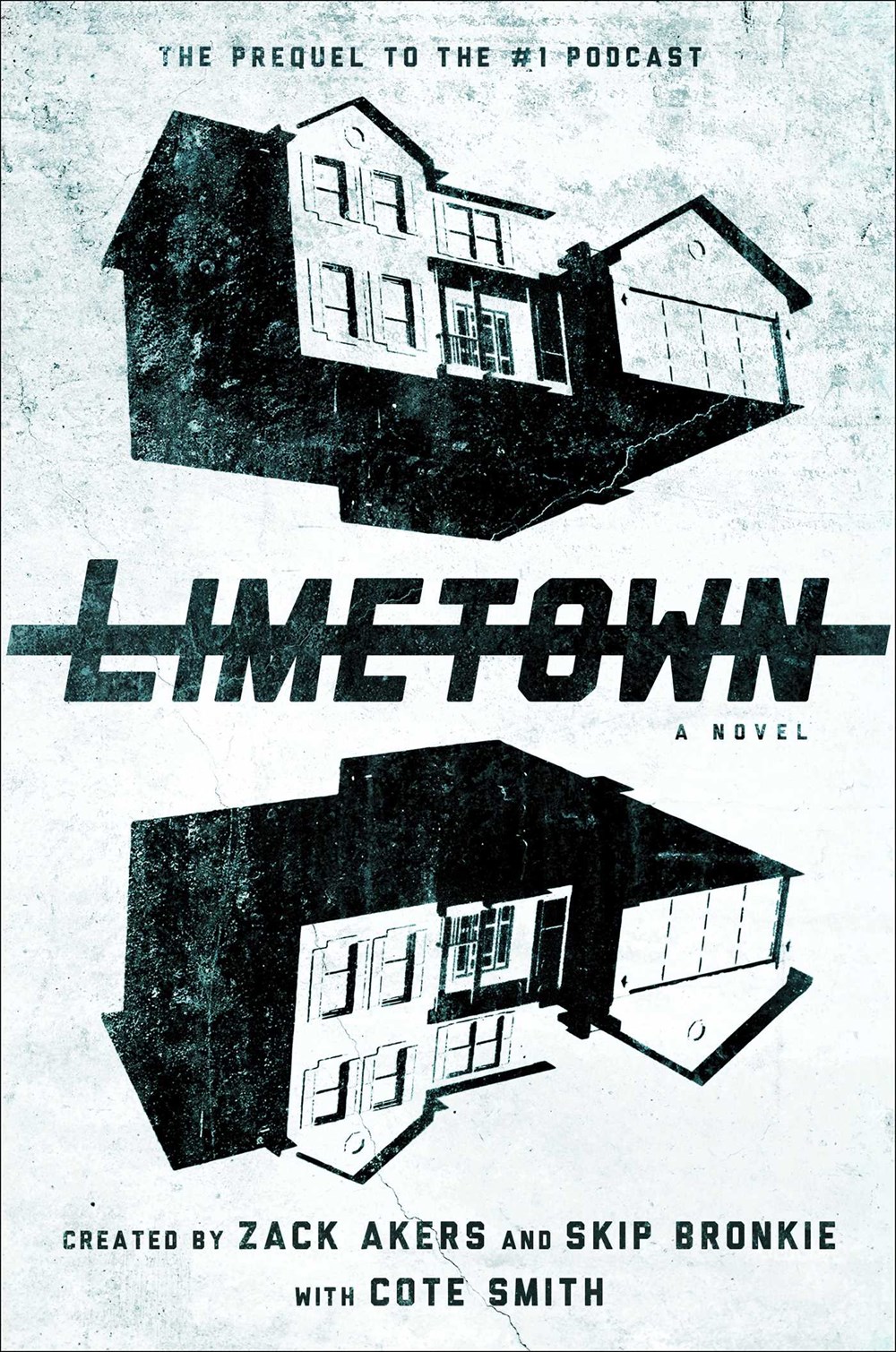
Limetown, by Cote Smith, Zack Akers, & Skip Bronkie, (Nov. 2018, Simon & Schuster), $26, 9781501155642

Ages 14+

If you haven’t listened to Season 1 of the Limetown podcast, I highly recommend it.  It’s a creepy, fictional Serial-type podcast, where a journalist named Lia Haddock investigates a research community where over 300 men, women, and children disappeared, virtually overnight. One of the scientists was uncle, Emile Haddock. The second season’s just started, and there are only six episodes in the first season, so you have time.

The Limetown novel, written by the podcast’s creators, is a prequel that works as a YA crossover novel. Lia and Emile Haddock are the central characters here; Lia is a teen at the time of the novel, which takes place in two time frames: Lia’s adolesence in the immediate aftermath of Limetown, and Emile and Jacob’s – Lia’s father – adolesence and early adulthood. We learn about the roots of Limetown, and Emile’s path in getting there, and we get the formation of Lia’s burgeoning journalism career, what led her to investigate Limetown, and allusions to her being part of the Limetown event.

There are some glaring inconsistencies between the book and the podcast which didn’t sit right with me, to be honest. Lia seems to end the book with a lot more information than she starts out the podcast with, and at points, the narrative tends to lag. Lia’s mother emerges as a fascinating character that I want to learn more about in future episodes of the podcast. I liked discovering characters from the podcast in this novel, but would rather have had a prequel about Limetown itself, rather than have it merged with Lia’s story. Maybe that’s in store for another book? If you’re a fan of the podcast, give the book a shot.

Posted in picture books, Preschool Reads, Toddler Reads

Up, up, and away with My Bed is an Air Balloon!

My Bed is an Air Balloon, by Julia Copus/Illustrated by Alison Jay, (Oct. 2018, Faber & Faber), $15.95, ISBN: 9780571334841

Ages 3-6

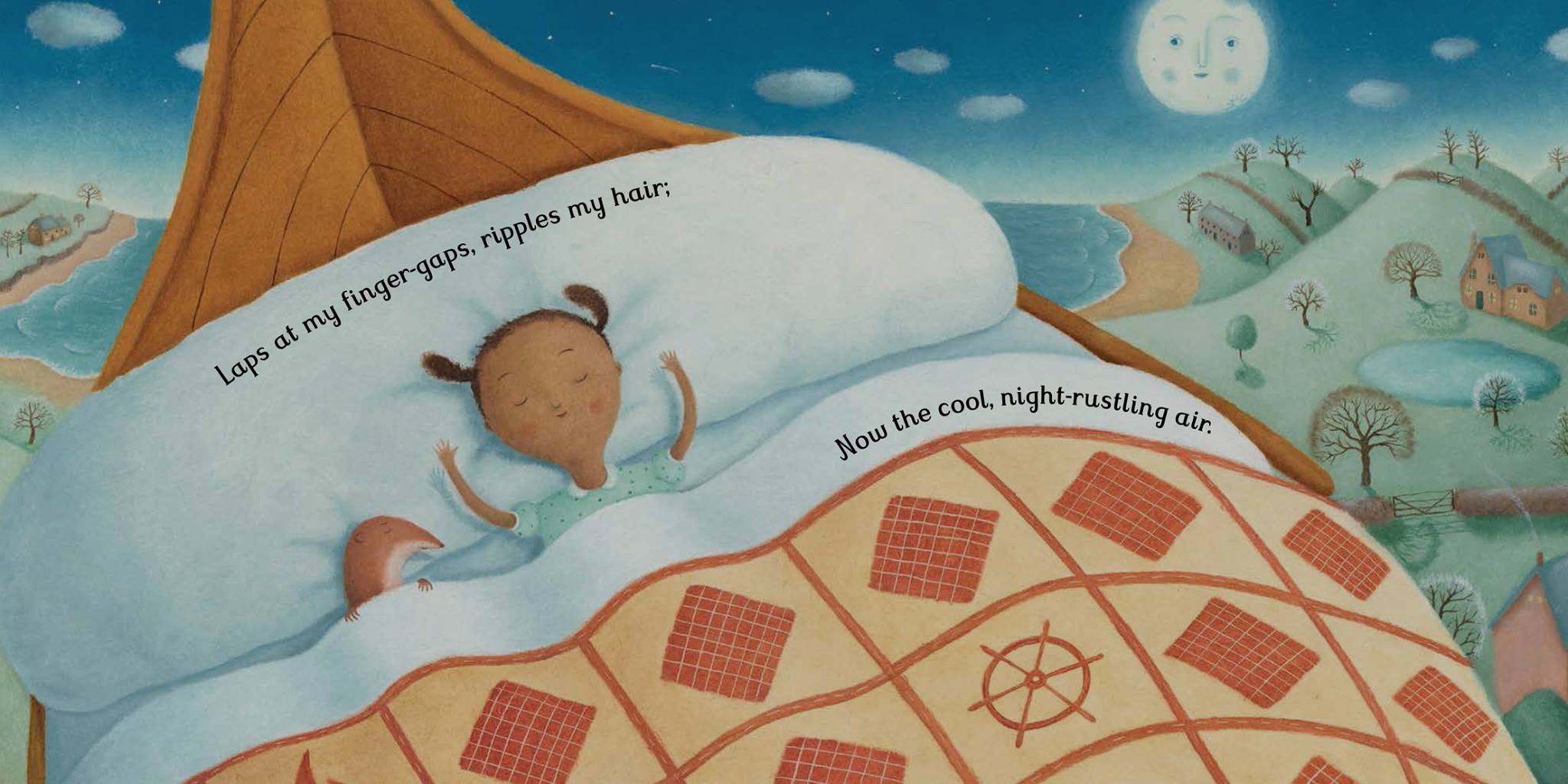
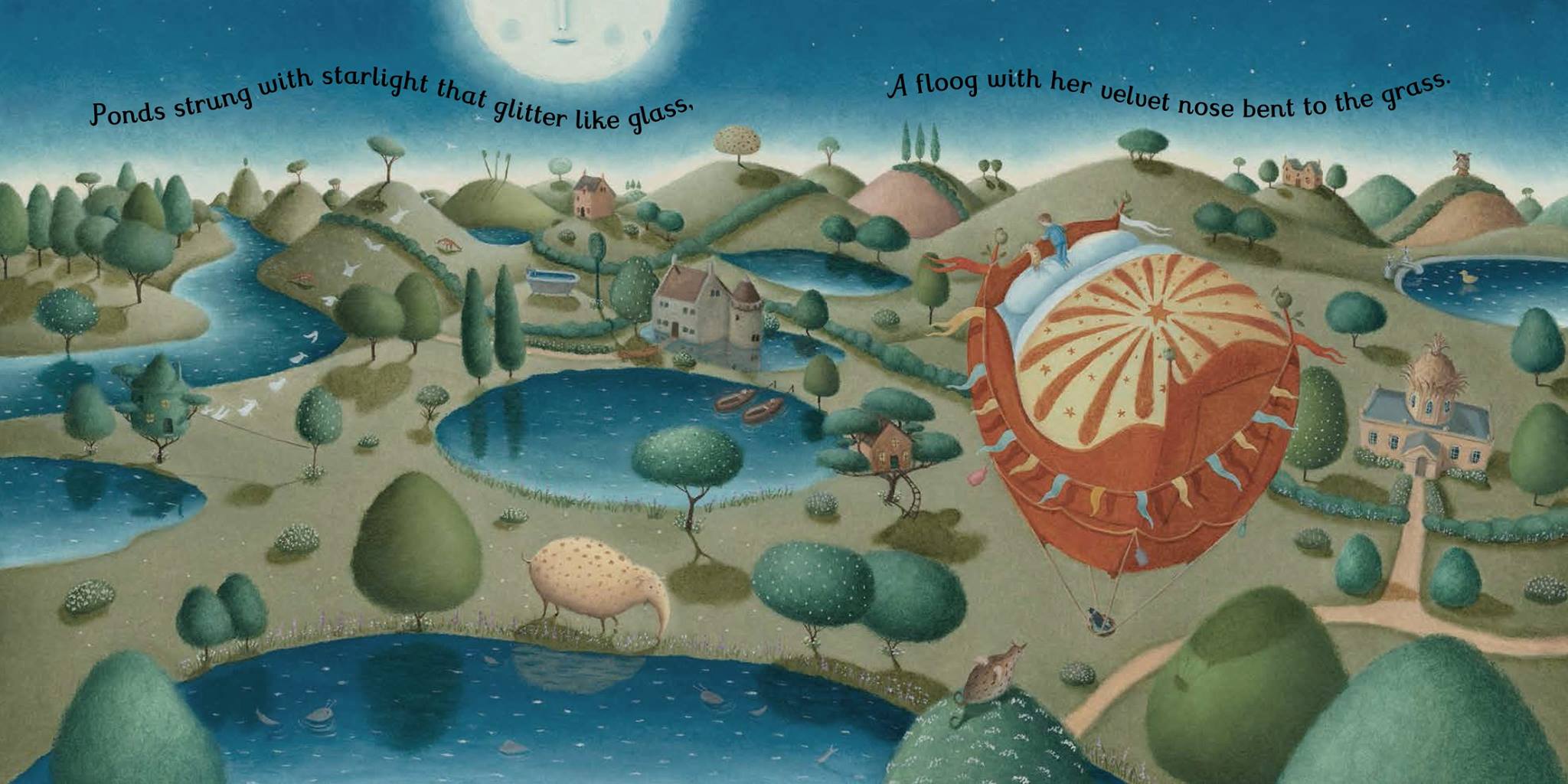
This bedtime story has an entertaining spin: the book has two front covers, and can be read front to back, or back to front. It’s a mirror form poem where two children – a light-skinned boy and a dark-skinned girl go on a bedtime adventure in their beds, which magically transform into hot air balloons that transport them over treetops and hills, spying fantastic animals like flutterrufts, whifflepigs, and floogs. The children meet in the middle – two air balloons that pass in the night? – and the journey resumes on the next spread, as the story continues in reverse with the opposite child.

My Bed is an Air Balloon brings playfulness and joy to bedtime storytime. Alison Jay’s whimsical art creates a fantasy landscape where smiling suns and moons overlook a sea of white, cloudlike dream-shapes; giant beds that become balloons and ships, and boats that look suspiciously like bedtime slippers. There is a wonderfully retro feel to the artwork; a 1920s-type look and feel with round faces, expressive eyes, and long, thin noses with a slight, secret smile.

This one is a cute add to your bedtime story collections, and a nice gift to a parent or caregiver who’s always on the lookout for a bedtime adventure. What better way to send your kids off to dreamland?

(Thanks to illustrator Alison Jay for putting open book shots on her Facebook page!)

Posted in Fiction, Intermediate, picture books

Dad’s Camera explains Alzheimer’s to children

Dad’s Camera, by Ross Watkins/Illustrated by Liz Anelli, (Oct. 2018, Candlewick Press), $16.99, ISBN: 9781536201383

Ages 5-10

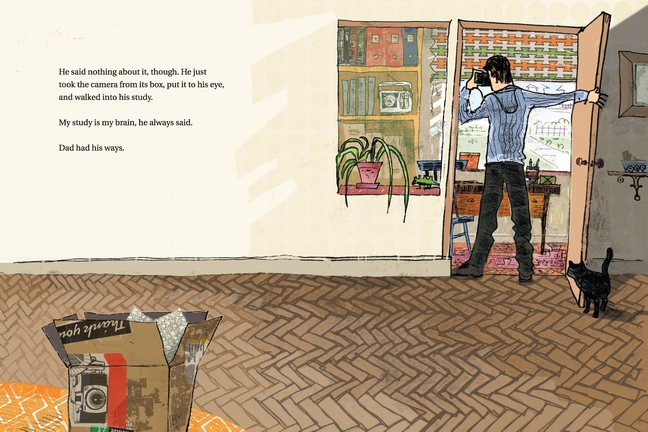
A boy’s father comes home one day with “one of those old cameras, the kind that uses film”, and starts taking pictures of the world around him. The boy and his mother don’t think much of it at first – Dad is doing funny things, like putting tools in the fridge, and milk in the cupboard; it’s what the doctor says will continue happening. As Dad continues photographing everyday objects, the boy and his mother wonder why he’s not taking pictures of them: aren’t they worth remembering, too? Dad just looks puzzled, and makes collages of his developed photos, sticking them on a window. When Dad passes, a package arrives for the boy and his mother: it’s the camera, with one photo left to be developed. The boy and his mother discover a final photo from Dad: a family portrait.

Dad’s Camera is a heartbreaking conversation about a young family struggling with Alzheimer’s, inspired by the author’s father-in-law, who developed the disease when his daughter was a tween. An author’s note explains that Ross Watkins wrote Dad’s Camera to “create a way for children and adults to talk about the confusion often surrounding Alzheimer’s, but also to celebrate the tenderness and small surprises of such difficult times”. Mission accomplished: Dad’s Camera is a series of poignant, small moments that are tender and loving; a bright spot in a family’s dark time. It’s a moving, bittersweet story of loss, grief, and the joy of memory and is a smart addition to your collections. It begins a conversation that is normally reserved for grandparents and elder family members, and provides a comforting strength for families.


Liz Anelli’s incorporates collage, watercolor, mono print, acrylic, and digital color to create a sedate atmosphere for the story, always mindful of details that readers will discover through multiple reads. A bus runs a camera film ad on its side in one spread; in the next spread, the camera arrives in a box with the same photo on the side. The colors are warm, homey, and yet, infused with a sadness and a yearning.

Dad’s Camera was originally published in the UK as One Photo (2016).

Posted in Uncategorized

Let it Snow, Let it Snow, Let it Snow!

As I write this, it’s almost 70 degrees in New York. In November. So what’s left to do when you’ve unpacked all your Fall and Winter clothes? Think SNOW. So, join me in thinking chilly thoughts with some of these books.

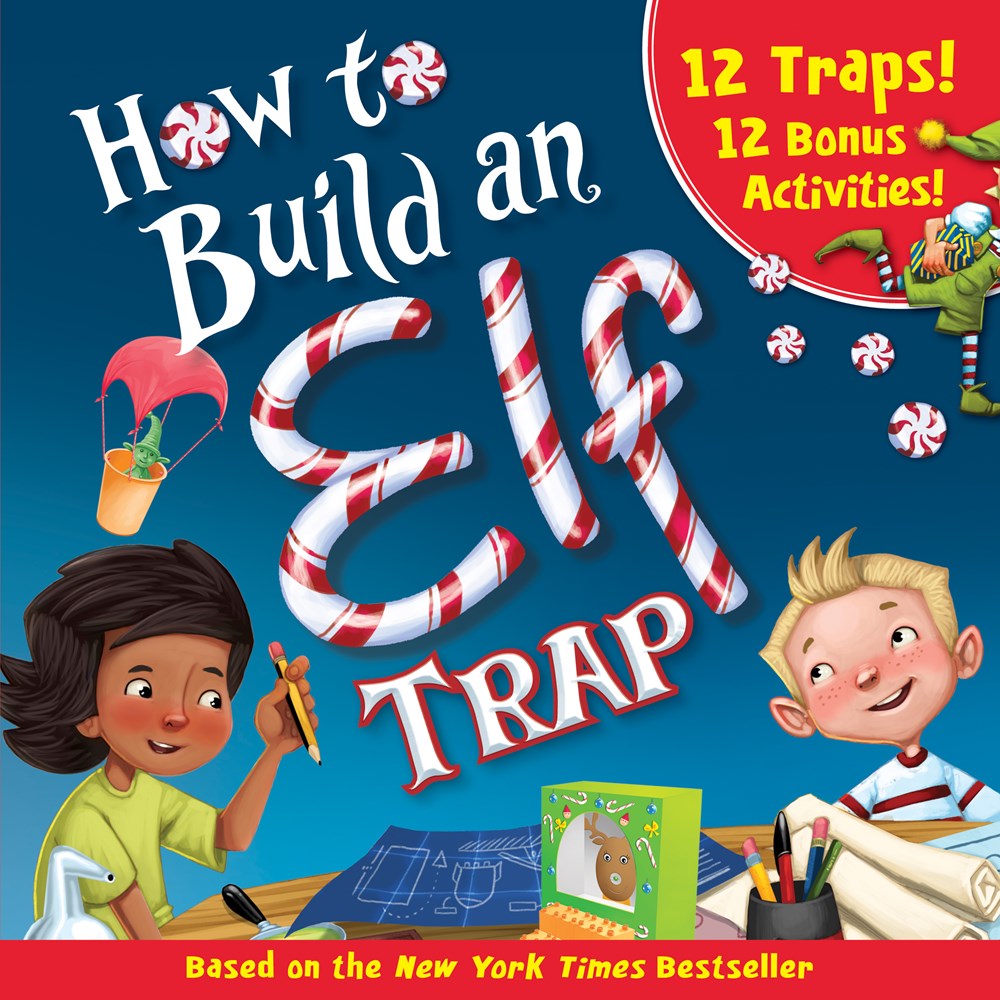
How to Build an Elf Trap, by Larissa Juliano, (Oct. 2018, Sourcebooks Jabberwocky), $9.99, ISBN: 9781492663904

Ages 4-8

This fun nonfiction companion to Adam Wallace & Andy Ellerton’s How to Catch an Elf (2016) is all about STEAM for the holidays! Learn how to build 12 elf traps this Christmas, and take your pick of 12 bonus Christmas activities! Projects tend to run fairly simple, with most of the materials being found around the house. The projects encourage you to experiment with materials, too: swap things out! Add things! Take each construction and make it your own! Difficulty is measured in candy canes (1 for easy, 2 for intermediate, 3 for difficult) and Elf Appeal (how it will appeal to the elves you’re trying to nab). Projects are laid out step by step, with photos to guide you along, and digital artwork adds a fun flavor to the festivities. There are STEAM connections that explain how each project connects to science, and Did You Know? facts boxes add some fun Christmas facts throughout. Make an Elf Door, stick some tea light snowmen on your fridge (or locker), and get to work on your Elf Snatcher 500 while you snack on a Reindeer Cupcake.

Librarians and educators: PROGRAM IN A BOOK. This, my friends, is your December STEAM programming, right here!

One Snowy Day, by Diana Murray/Illustrated by Diana Toledano, (Oct. 2018, Sourcebooks Jabberwocky), $17.99, ISBN: 9781492645863

Ages 3-7

Two siblings enjoy a snowy day in this rhyming counting story! The story begins, as the best ones do, with a snowfall, while two children of color sleep snug in their beds – until their ONE pup wakes them up! The kids rise and shine, play with the pup and eat their breakfast, then it’s time to go out and play, as sister and brother meet their SIX friends for some winter fun and games. The text is light and fun, counting everything from a pup to ten snowballs – and then we count backwards, from nine buttons on a snowman’s chest to one sleepy puppy at the end of the day. The children are a multicultural group, and the detail on their clothes and the scenery itself is breathtaking. The mixed media artwork brings winter scenery to life, from sweaters with intricate Fair Isle designs, and beautifully detailed snowflakes. One Snowy Day pairs up nicely with other snowy day books and makes a nice winter concept book for your shelves.

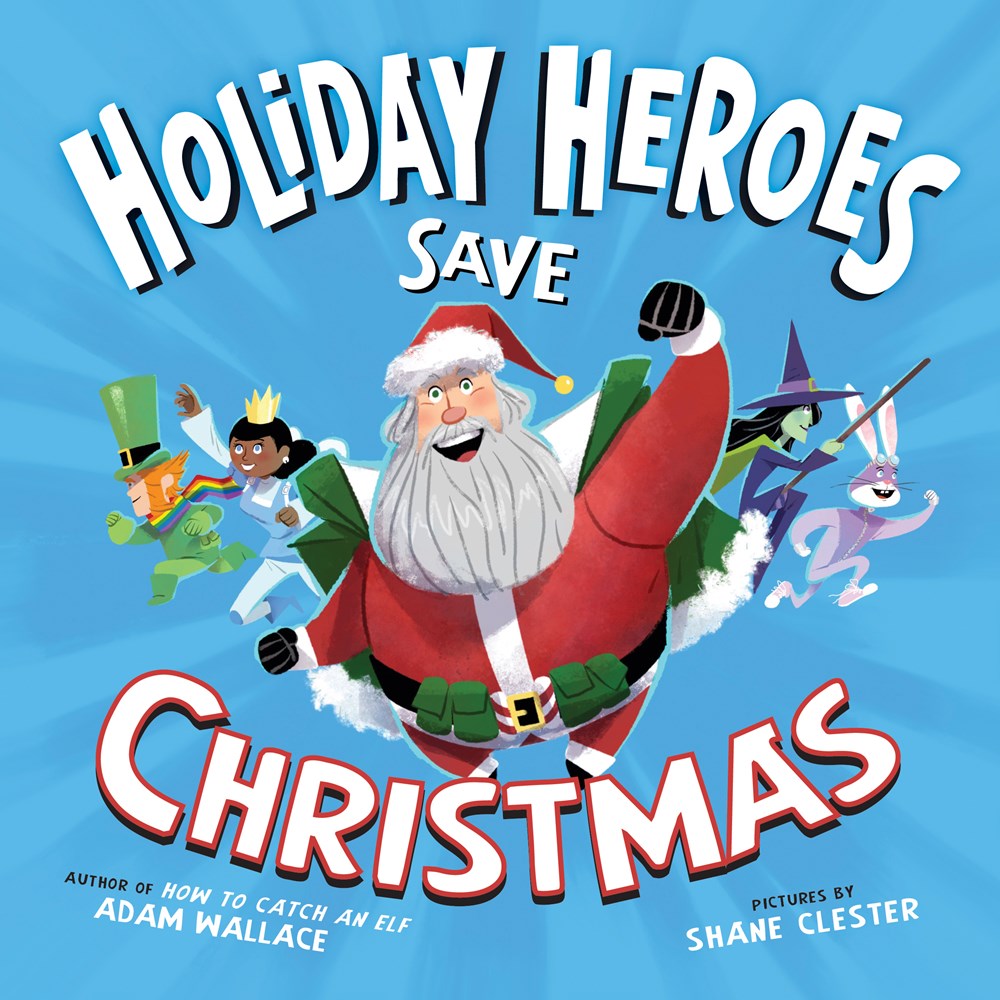
Holiday Heroes Save Christmas, by Adam Wallace/Illustrated by Shane Clester, (Oct. 2018, Sourcebooks Jabberwocky), $10.99, ISBN: 9781492669708

Ages 4-7

Sourcebooks is rocking the Christmas picture books! This is the latest book by How to Catch… series author Adam Wallace, and this time, Santa needs help from his fellow holiday heroes! Santa’s too sick to deliver Christmas presents, so it’s up to the Easter Bunny, Tooth Fairy, Witch, and Leprechaun to save Christmas – but they’re not so great at this Christmas thing. The Tooth Fairy is hiding presents under pillows, and the Leprechaun is taking spare change from the houses they visit. Santa’s got to step in, but is it too late? Is Christmas done for? C’mon, you know it’s not. The gang gets their act together after a quick pep talk from Santa, and each hero plays to his or her strengths to make Christmas amazing! This is a fun story about teamwork, and a laugh out loud comedy of errors. (Psst… if you want to screen the movie, Rise of the Guardians, you can compare the heroes in the book versus the ones in the movie.) The digital art is bright, kid-friendly, and cartoony; end papers offer brief character descriptions of Santa and the gang. The book is set up with graphic novel-type panels and word balloons, so you can offer this one to your fledgling graphic novel readers to get them in the holiday spirit. This one’s a fun take on the “Santa needs help!” story theme, and should go over pretty well in libraries (and as a stocking stuffer).

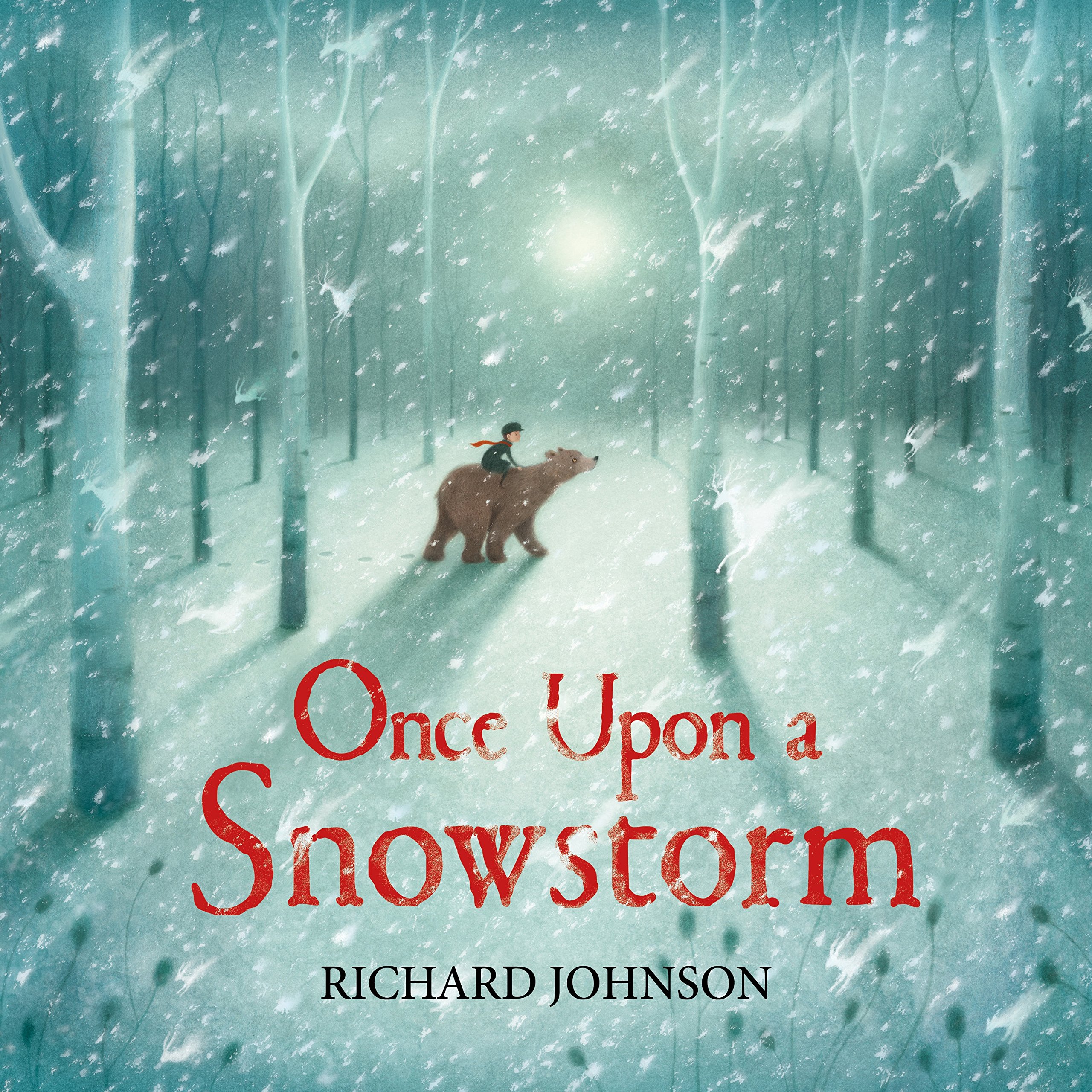
Once Upon a Snowstorm, by Richard Johnson, (Nov. 2018, Faber & Faber), $16.95, ISBN: 978-0-5713-3928-0

Ages 2-7

A boy and his father go into the woods to hunt, and are separated during a snowstorm. The boy is rescued by a group of animals, who care for him and befriend him. When the bear in the group takes the boy back through the snow to find his father, Dad is grateful, and befriends the animals, too.

The art says it all in this stunning, wordless story. As father and son head into the woods, the snow comes down in the shapes of woodland animals: deer, foxes, hares, ethereal in their delicacy and beauty. Lost, the boy sleeps, shivering, under velvet skies with constellations creating animal shapes around him. When the animals accept the boy into their group, they dance, feast, and paint on cave walls; at that moment, the boy remembers his father and how desperately he misses him (Mom is present only in old family photos hanging in the home), signaling to his new friend, Bear, that it’s time to find Dad. At the story’s end, father and son enjoy a spring day, sitting on a hill with their animal friends.

The artwork alternates between panels and full bleed pages and is dreamlike in its subdued beauty. The endpapers bookend the story, with driving snow on the front papers, and a cave painting of the boy, his father, and the animals, playing together, on the back papers. The artwork is soft, and goes from the cold outdoor artwork to warm interiors both in the family home and in the company of the animals.

I love this book, and can’t wait to share it with my little readers, so I can hear their stories. This one’s a wonderful add to your winter collections – booktalk this one with Raymond Briggs’ wordless classic, The Snowman.

Posted in Uncategorized

Porcupine’s Pie: Friendship is the best ingredient of all!

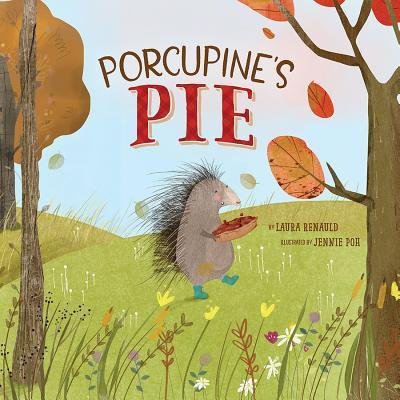
Porcupine’s Pie, by Laura Renauld/Illustrated by Jennie Poh, (Oct. 2018, Beaming Books), $16.99, ISBN: 9781506431802

Ages 3-7

It’s Fall Feast Day, and Porcupine is so excited: she’s going to make her famous Cranberry Pie! She sets out to wash her cranberries, and comes across her friends Squirrel, Bear, and Doe, along the way, each of whom has their own delicacy Porcupine is looking forward to. Each of her friends is missing a crucial ingredient for their signature dish, so sweet Porcupine offers them use of her stocked pantry. But when Porcupine arrives at the river – oh no! – she discovers that her pail of cranberries is empty, something sharp-eyed readers will notice as they read along. When Porcupine’s friends find out about Porcupine’s cranberries, everyone comes to the rescue with ingredients of their own, and Porcupine makes the best pie of all: Festive Friendship Pie!

This is a sweet story of friendship and sharing that kids will love and that makes for a great Thanksgiving/Harvest storytime. Jennie Poh’s illustration has a lovely, textured feel to it and concentrates on details like the burlap feel of a sack on one shelf, the cloth of Porcupine’s apron, and the oh-so silent falling of her cranberries as she heads to the river. There’s a sweet little ladybug who shows up in every spread and on the endpapers: challenge your readers to find it! The colors are warm autumn shades of green, brown, and dark red; the titular “Pie” appears in a dark red plaid tablecloth filling, with a big, bold font. The story font alternates between plain black and plain white (against a darker background), not interfering with the story, allowing the atmosphere to take center stage.

Porcupine’s Pie is a sweet book about friendship and being grateful, and it’s perfect for preschoolers and Kindergarteners. A recipe for Friendship Pie at the end is the perfect ending to the story, and an invitation to some holiday baking. Display and with readalikes, Karma Wilson’s Bear Says Thanks, and Stone Soup.

Author Laura Renauld’s author website offers links to the KidLit community, her blog, and information about her books. You can see more of Jennie Poh’s illustration on her Instagram.