Posted in Fantasy, Fiction, Intermediate, picture books

Grab your passport! These picture books will take your imagination on an adventure!

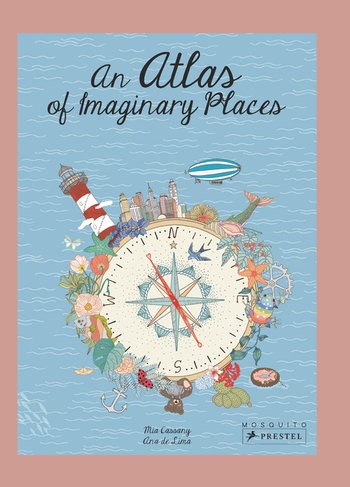
An Atlas of Imaginary Places, by Mia Cassany/Illustrated by Ana de Lima, (March 2018, Prestel), $19.95, ISBN: 9783791373478

Recommended for readers 5-10

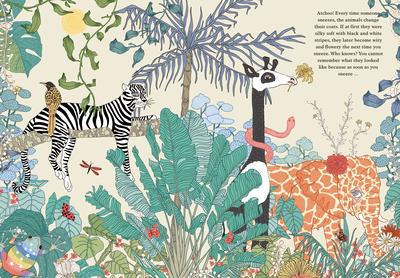
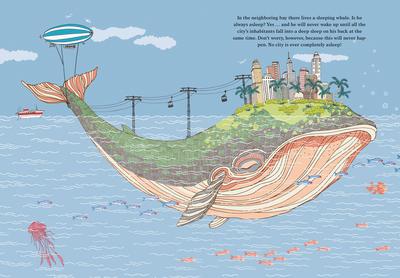
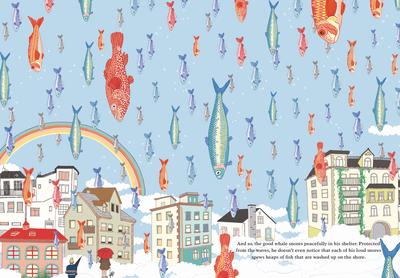
How do you not love a book that came together over coffee and carrot cake? An Atlas of Imaginary Places came together when author Mia Cassany and Ana de Lima did just that; talking about the places they pictured in their minds and dreams, they came up with “colors and languages for an atlas that would never exist… Or would it?” Bursting with color, islands, and mountains; with animals that change their coats every time someone sneezes, and volcanoes that spit lava made of bubble gum, the places in this atlas provide something new and exciting with each turn of the page.

This is the kind of book that begs for multiple readings. Every spread offers a new place with new wonders, and you’ll notice something new each time. There are cities, oceans, jungles, and islands waiting to be explored by readers who can get lost in their pages. Send your little ones to bed with a page or two, setting the stage for wonderful dreams, or ask your readers to add to the landscape and come up with their own exciting places and inhabitants. This is the kind of book that makes readers love reading; this is the kind of storytelling that sets the stage for creativity. Give this to your explorers and dreamers, and display with books like Cloudy with a Chance of Meatballs, Adele in Sandland, or Wallpaper. An Atlas of Imaginary Places was originally released in Spain in 2016.


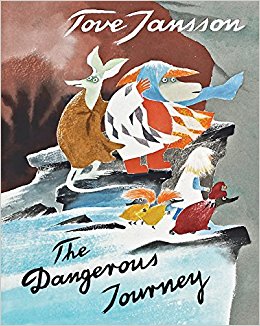
The Dangerous Journey, by Tove Jansson, (Apr. 2018, Drawn & Quarterly), $16.95, ISBN: 9781770463202

Recommended for readers 6+

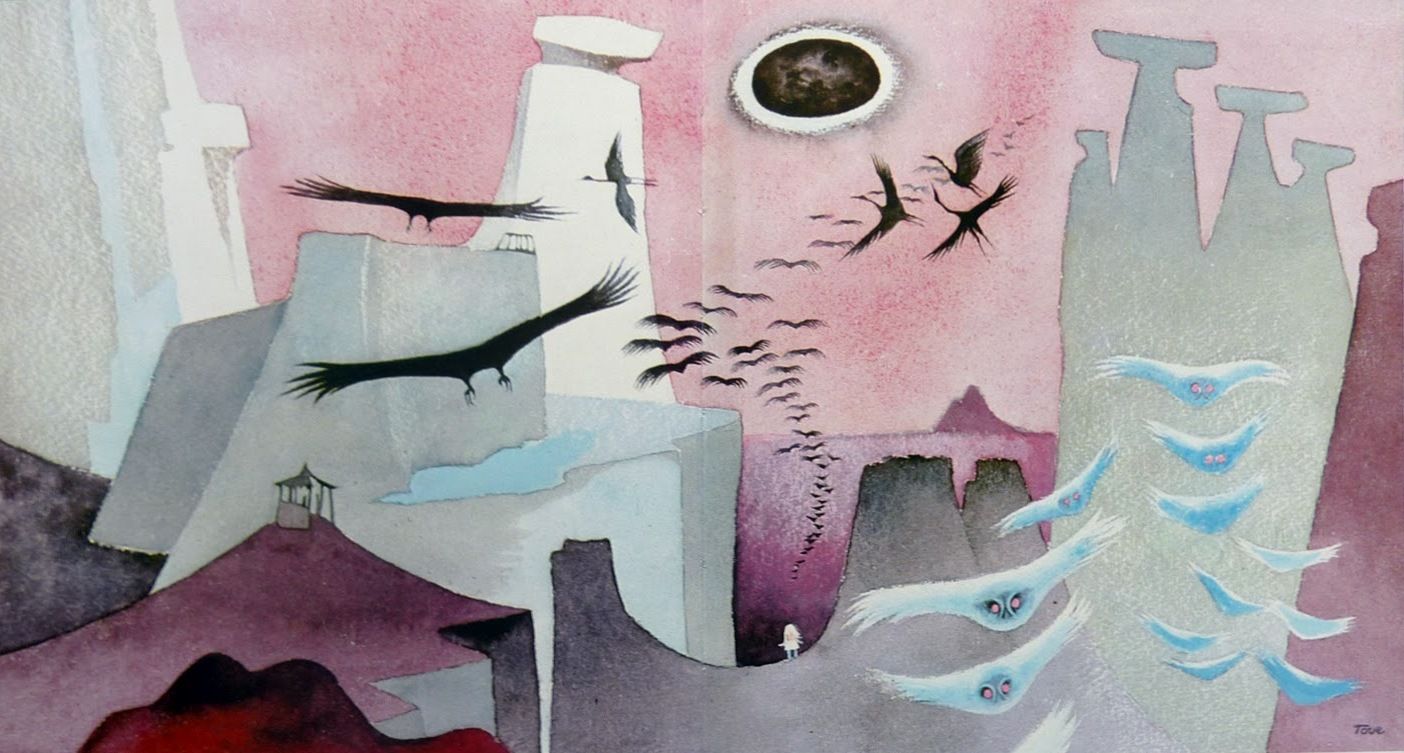
Originally published in 1977 in Finland and translated to English in 2010, this Moomin adventure was the last picture book completed by beloved artist and author Tove Jansson. A young girl named Susanna is bored and irritable; her cat, being a cat, is curled up on the grass, enjoying the beautiful day, which seems to annoy Susanna even more. When a new pair of glasses just appears next to her, she tries them on and is transported to a fantastic land, where, though frightened, she sets off on a new adventure. She meets a group of fellow travelers who seem to know who she is: Hemulen (who readers familiar with Moomin will recognize), and friends from Moomin Valley:  Bob and Thingummy, Sniff, and Snufkin. Together, the group treads through surreal, creepy landscapes, braving volcanoes, storms, and monsters, until they reach Moomin Valley and safety.

The Dangerous Journey is a surreal adventure fit for kids and adults alike. The Dangerous Journey‘s rhyming text begs for a read-aloud, and Tove Jansson’s watercolor artwork appeals to the eyes and the imagination. The book’s final message also makes this a good graduation gift á la  Dr. Seuss’ Oh, The Places You’ll Go!: “Whether things turned out okay/She’s never going to know./When adventure comes your way/Enjoy it. Let it go.” This is a picture book classic to add to your collections; introduce it to readers of all ages who haven’t yet met the Moomins. You can meet the characters in Moomin, and see which character you’d be at the Moomin website.


Posted in picture books, Preschool Reads

Alma and How She Got Her Name is a beautiful family story

Alma and How She Got Her Name, by Juana Martinez-Neal, (Apr. 2018, Candlewick Press), $15.99, ISBN: 978-0-7636-9355-8

Recommended for readers 4-8

Alma is a little girl with a big name: Alma Sofia Esperanza José Pura Candela! She asks her Daddy how she ended up with six names, and her dad tells her the beautiful story behind each name.

I adore this book. So many of us have interesting origins for our names: some of us are named for family members; some for historical figures; some, just because our parents really thought the names were cool and interesting. Here, little Alma learns, through beautifully illustrated spreads, about her family history and her place within that history. We tend to put our hopes and dreams into a child’s name; Alma reveals those inspiring stories through Alma’s father, as he tells Alma her own story.

The drawings are largely monochromatic; black pencil on ivory pages, with washed reds and pinks (and the occasional blue) to liven things up. The names get star treatment, with beautiful, expressive fonts and pictures of namesakes throughout.

I can’t say enough good things about Alma. She belongs in every storytime and every shelf, because every family deserves to explore their history together. Candlewick has a great activity kit that will help kids create their own family trees and research their name(s); it’s free for downloading through their site.

Alma and How She Got Her Name has starred reviews from Publisher’s Weekly, Booklist, and School Library Journal. The book is available in English and Spanish.

Posted in Uncategorized

White Rabbit: A YA Whodunit

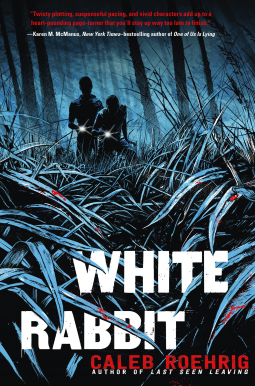
White Rabbit, by Caleb Roehrig, (Apr. 2018, Feiwel & Friends), $17.99, ISBN: 9781250085658

Recommended for readers 13+

Rufus Holt started out having a great evening at his best friend’s birthday party, but things have gone downhill pretty quickly. His ex-boyfriend, Sebastian – who ghosted him after Rufus told him he loved him – showed up at the party, looking for him, and his younger half-sister, April, called him and begged for his help. When Rufus and Sebastian head over to Fox Whitney’s place, where his sister was partying with the other rich, in-crowd teens, they find April holding a bloody knife, and Fox, laying dead in a pool of blood. Thus starts White Rabbit, a first-person narrated whodunit.

Rufus is the bastard son of a wealthy lawyer who refuses to acknowledge him. Unfortunately for Rufus, his half-siblings notice him just fine. He’s the school outcast, bullied and harassed by his borderline sociopath half-brother and his friends, and their rich kid crowd. When he came out, the abuse ratcheted up several notches, but Rufus refuses to break. He starts seeing Sebastian – one of the rich kid in-crowd – on the down-low, but Sebastian broke things off in a panic, afraid of how his parents would react. But Sebastian is back, and wants to try to patch things up with Rufus, so he rides along  as Rufus spends the night frantically trying to clear April’s name so he can get a payoff from her mother. The killer is still lurking, and systematically killing off anyone who can tie him – or her – to the night’s events, and Rufus is asking way too many questions.

White Rabbit is similar to Natasha Preston’s The Cabin: a group of awful teens with too much money get into trouble and the outcast has to save the day. The pace is fast, and the subplot surrounding Rufus and Sebastian’s relationship will pull readers in and keep them turning pages. Rufus can be a frustrating hero at points; his motivation to help April before the money came into play still makes me scratch my head, but Sebastian emerges as the deeper, more interesting character to follow here. Give this book to your thriller fans.

Posted in Intermediate, Non-Fiction

Fania’s Heart is a moving, true story

Fania’s Heart, by Anne Renaud/Illustrated by Richard Rudnicki, (Apr. 2018, Second Story Press), $18.95, ISBN: 9781772600575

Recommended for readers 7-10

Sorale, a 10-year-old girl, finds a tiny heart-shaped card in her mother’s dresser and asks her where she got it. Her mother sits down and finally tells her daughter the story of her survival in the Auschwitz concentration camp. Fania tells her daughter how she was taken to the camp, tattooed, and put to work with other women in the camp. She talks about their fear and their hunger, and how, on her birthday, the women came together to give her a birthday gift: a cake, from their bread rations, and the tiny card, folded into a heart-shape, which opens into a petaled flower, inscribed with their wishes for Fania. This little book is all that Sorale’s mother has left of her life before.

Based on a true story, Fania’s Heart embraces resilience, courage, and the strength we gain through our friendships. The realistic artwork may invoke strong emotions from readers: the pain of memory; the slumped shoulders of the Auschwitz women; the determination on Fania’s face, all carry powerful reactions. An author’s note tells Fania’s story and includes photos of Fania, Sorale (Sandy), and Fania’s heart, which is on display in the Montreal Holocaust Museum. Fania’s Heart is a good additional book to add to World War II and Holocaust collections.

Posted in Fiction, Middle Grade, Middle School, Realistic Fiction, Tween Reads

The Miscalculations of Lightning Girl is wonderful!

The Miscalculations of Lightning Girl, by Stacy McAnulty, (May 2018, Random House), $16.99, ISBN: 978-1-5247-6757-0

Recommended for readers 8-12

I am so excited to talk up this book, because it is SO GOOD. I was lucky enough to be on author Stacy McAnulty’s “street team”, so I have evangelized this book to my library kiddos, bending the ear of everyone I talk to (including grownups) at the library and at home, and generally shoving this book at people to tell them that they need to read it immediately.

Lucy is a gifted tween, thanks to a lightning strike at age seven that left her with savant abilities in math. She loves math. She sees and smells the numbers and equations; they reveal themselves to her and tell them all their secrets, but social relationships have eluded her. She struggles with OCD behaviors and has been homeschooled by her grandmother, who finally decides that Lucy develop socially, and enrolls her in middle school, which doesn’t really go over so well with Lucy, who’s more ready for college applications. But Lucy promises her grandmother that she’ll make one friend, join one activity, and read one book that isn’t a math textbook. Lucy’s OCD automatically makes her a target to the local mean girl, but she persists, finding ways to use her talents in a class project, and making two pretty good friends, while she’s at it.

I can’t find enough great things to say about Lightning Girl. Stacy McAnulty gives us a strong, funny, sweet, and complex group of characters that reader will recognize bits of themselves in; supportive parental figures that are doing their best, and parents that need a bit more work. It’s a glimpse at everyday life with a touch of the extraordinary, and it’s a touching look at the power of caring about something bigger than oneself. Lucy goes through tremendous upheaval, but she rides it out, and grows through the course of the book. Before the events that form the narrative, she sees life as a series of problems that can be worked out, but learns that some of the toughest problems bring rewarding solutions. Even if the final answer isn’t correct, the work to get there makes a difference.

The Miscalculations of Lightning Girl is compulsively readable, discussable, and perfect middle grade reading. Teachers, PLEASE put this on your Summer Reading lists, so I can hand this book to every middle grader I see this summer. Lightning Girl has starred reviews from School Library Journal, Kirkusand Publisher’s Weekly. Author Stacy McAnulty is on a book tour for Lightning Girl right now: head to her author webpage for a schedule!


Posted in Intermediate, Non-Fiction, picture books, Preschool Reads

Lion (Forge), Tigers, and Bears… Oh, My!

In a twist on the classic Wizard of Oz quote, I found myself with a tiger book, a bear book, but no lion book. Lion Forge came to the rescue with a hilarious (and animal-related) picture book! Enjoy!
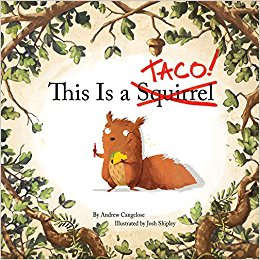
This is a Taco!, by Andrew Cangelose/Illustrated by Josh Shipley, (May 2018, Lion Forge), $15.99, ISBN: 978-1941302729

Recommended for readers 4-8

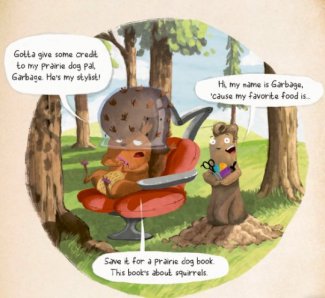
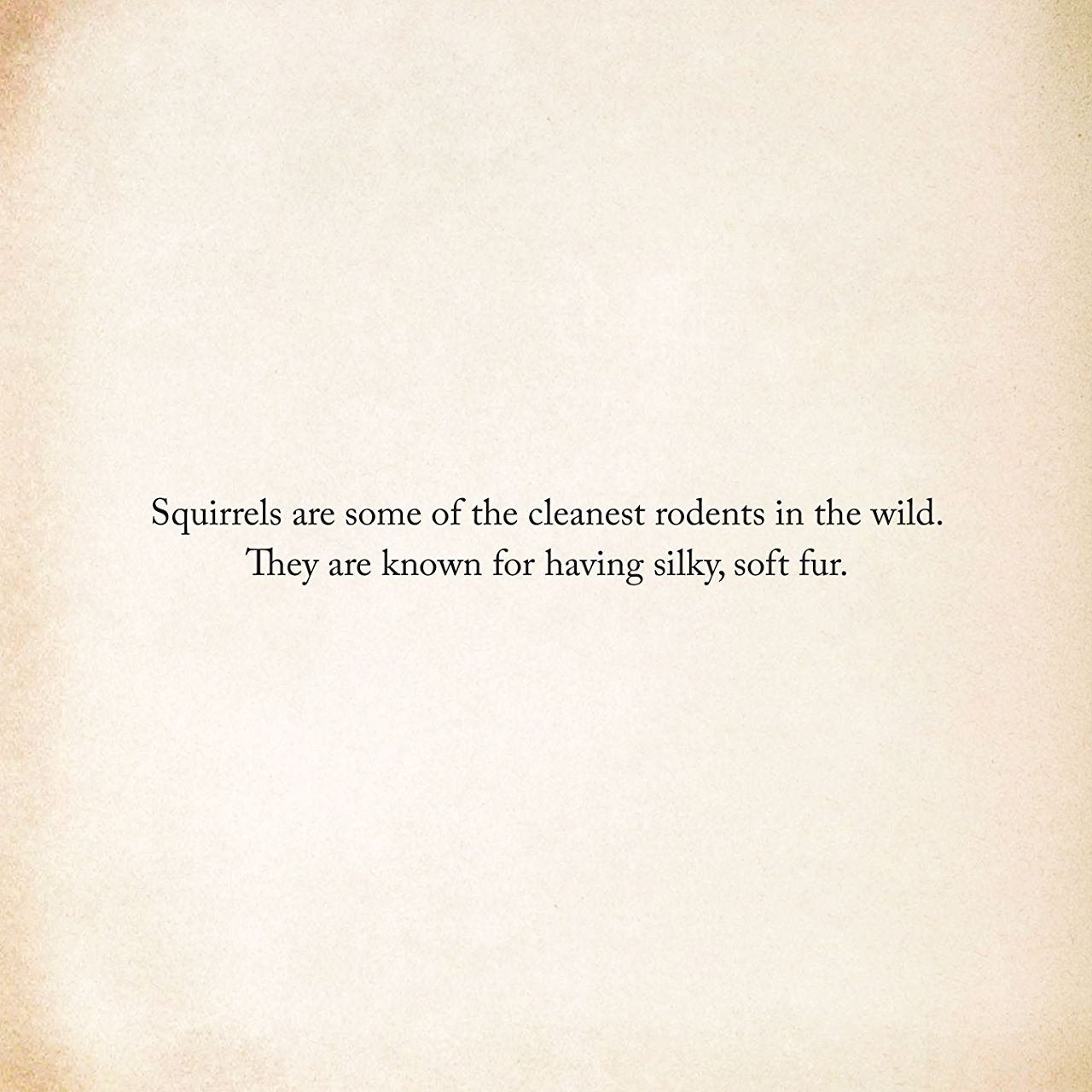
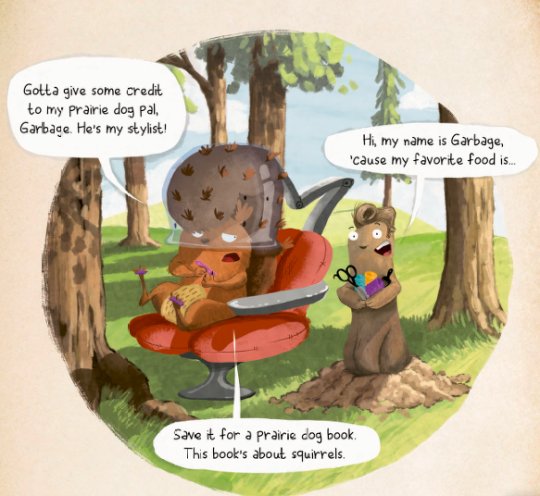
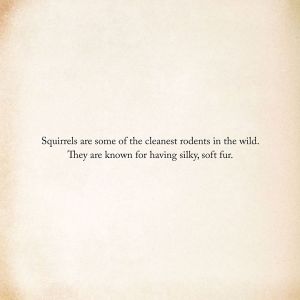
Lion Forge Comics also puts out some really good kids’ books. This is a Taco! is a laugh-out-loud take on a nature book about squirrels that breaks the fourth wall. Taco is a squirrel who loves tacos. As the nonfiction narrative on squirrels progress, Taco is there to disabuse readers of any facts they may be picking up about squirrels. Squirrels eat tree bark? This is news to Taco, who really wants to know where his tacos are. Great climbers? Taco’s terrified! He lives in a bush! Taco has enough by the time a section on hawks – the greatest squirrel predator – shows up on the scene, and decides to change the story. Grabbing a red pen, Taco writes his own happy ending and imparts serious wisdom to readers: “if you want tacos in your story, then YOU make sure there are tacos in your story”.

Kids are going to love this hilarious book. Taco the Squirrel is right up there with Mo Willems’ Pigeon in terms of characters who take charge of their stories and bring the laughs. This makes for a great creative writing exercise with older kids; let them “rewrite” their own stories with weeded picture books or some photocopied pages. Show them Jon Scieszka and Mac Barnett’s Battle Bunny for another example of a picture book taking on a life of its own. And for taco-loving readers, get those Dragons Love Tacos books on the display shelves. This book is way too much fun – get it into the hands of kids, ASAP! There’s a companion book, This is a Whoopsie, coming out in October.
 

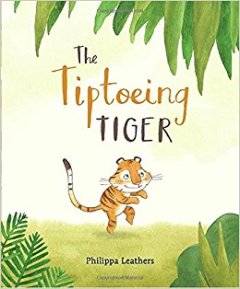
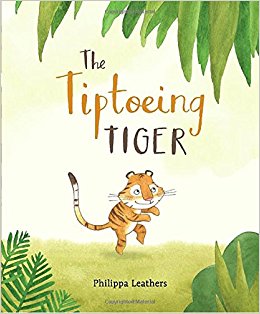
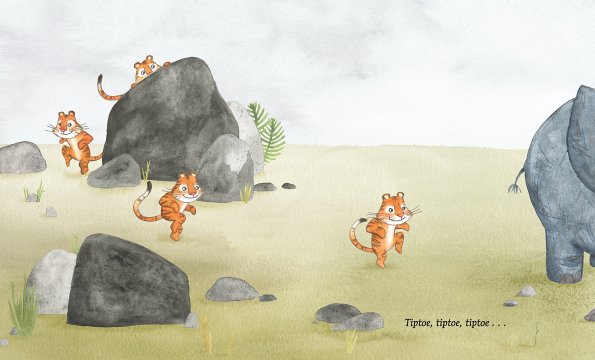
The Tiptoeing Tiger, by Philippa Leathers, (Feb. 2018, Candlewick Press), $14.00, ISBN: 9780763688431

Recommended for readers 3-7

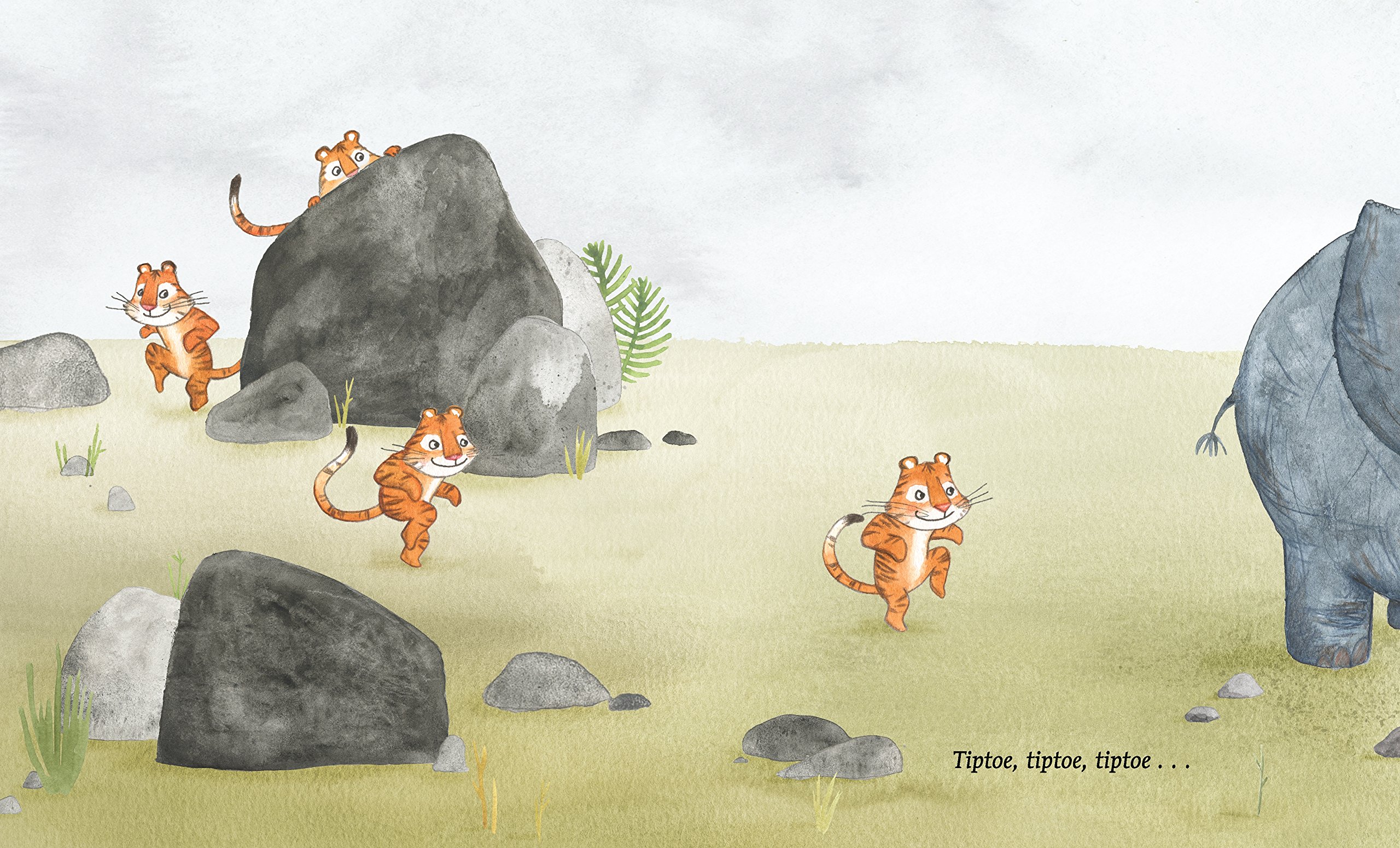
Everyone knows that tigers are sleek, silent, and totally terrifying. Except for Little Tiger. He can’t seem to get anyone in the forest to notice him, let alone be afraid of him! After his brother bets that he can’t scare any animal in the forest, Little Tiger sets off, determined to frighten someone. He tiptoes his way through the book, trying to scare boars, elephants, and monkeys, with no luck. Isn’t there anyone he can scare before the day is out?

This is a great book for the littles, who LOVE “scaring” people. I remember I couldn’t walk out of my bathroom without my little guy jumping and “boo!”-ing me starting around the age of 3. (He’s 5 now, and still tries it; these days, it’s usually with a Nerf sniper rifle.) The author speaks to a child’s desire to be seen as someone bigger, and the frustration at being ignored, or worse – laughed at – when they’re trying to be like the bigger folks. The repetition of Little Tiger’s tiptoeing up to his prey invites readers to be part of the story, whether they tiptoe with their toes or walk their fingers on a surface. Let them give their best ROAR! to see how they’d match up with Little Tiger.

The pencil and watercolor illustrations are adorable; very kid-friendly, and leave a lot of open space to show the size differences between Little Tiger and the rest of the animals. Green endpapers with fern leaf patterning bring readers into the story. The Tiptoeing Tiger is a fun story about being small, but determined. A fun additional book for animal lovers.
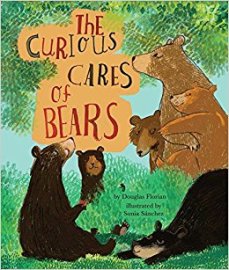
 

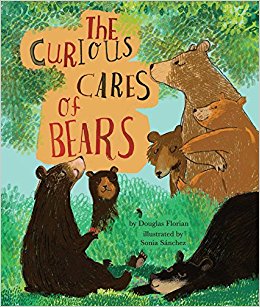
The Curious Cares of Bears, by Douglas Florian/Illustrated by Sonia Sánchez, (Aug. 2017, little bee books), $16.99, ISBN: 978-1-4998-0462-1

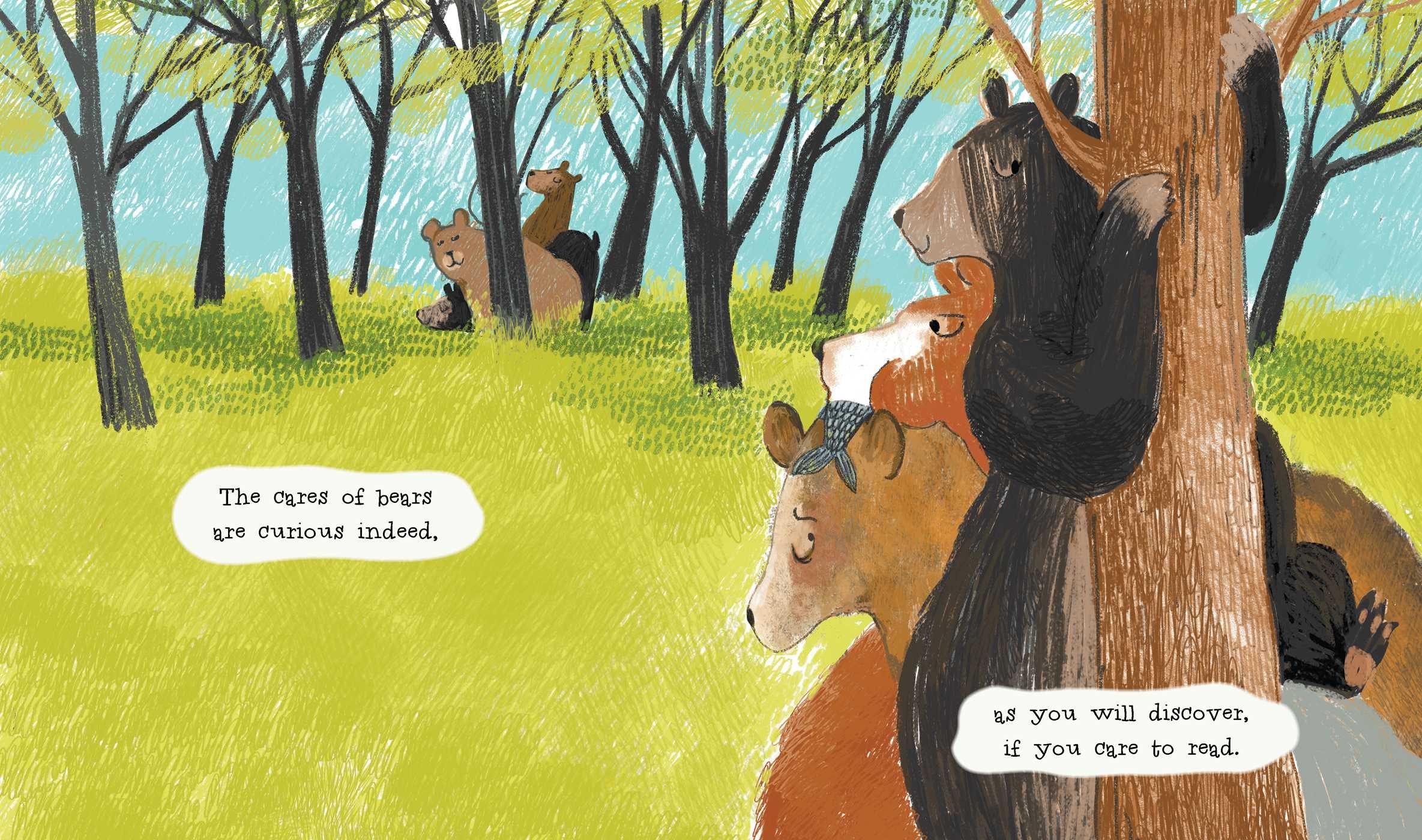
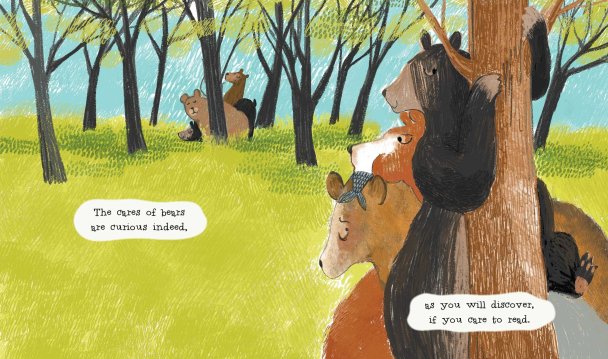
This rhyming story takes readers through the four seasons with a group of bears and how they spend their time. In the spring, they love to climb trees and steal honey from bees, play and chase each other; in the summer, there’s swimming and games, family reunions, and parties; in the fall, they play all day and sing by a campfire at night; and when winter arrives, it’s time to make their way to their den to hibernate, until the spring thaw comes, and they get ready to explore their world all over again.

This is a gentle, fun read about the seasons. The group of cuddly bears pass their time in similar ways to our own families, which makes for some fun questions to pose to readers, especially near different seasonal school breaks. The rhyming text has a nice, steady rhythm for readers and the soft art makes the bears look fuzzy and cuddly, like the best bear books do. Endpapers feature an extended family group of bears wandering around the forest, setting the tone for the story. Give this to your teddy bear loving readers, and booktalk with some easy reader season books, like those from Rookie Readers.
 

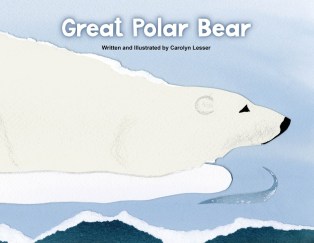
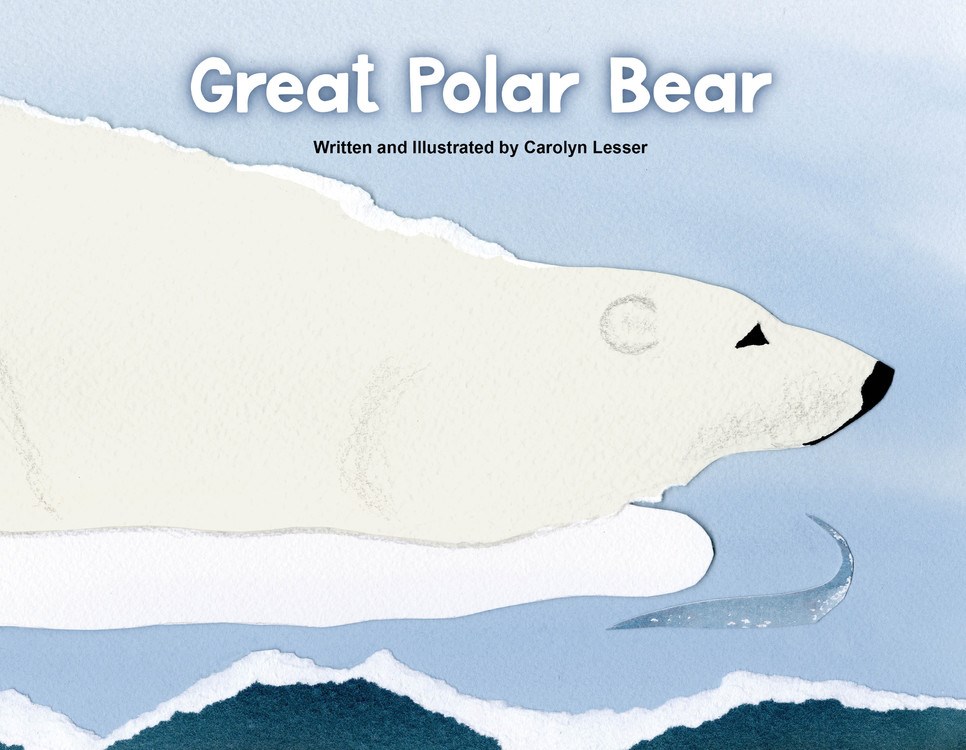
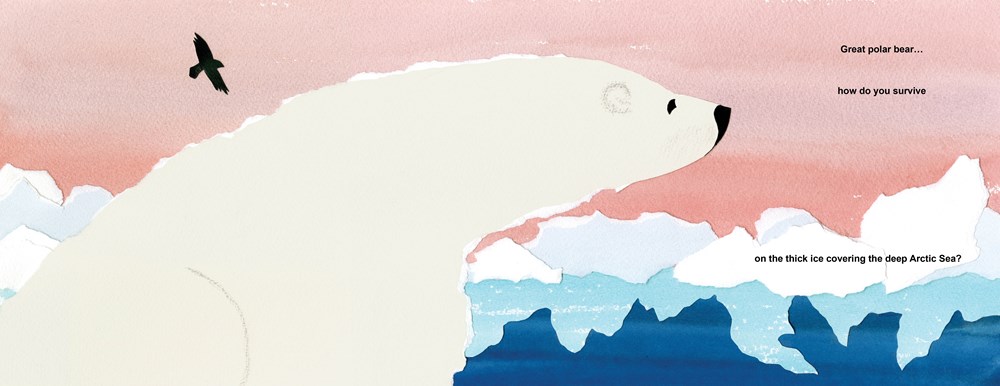
Great Polar Bear, by Carolyn Lesser, (Apr. 2018, Seagrass Press), $17.95, ISBN: 9781633225022

Recommended for readers 5-8

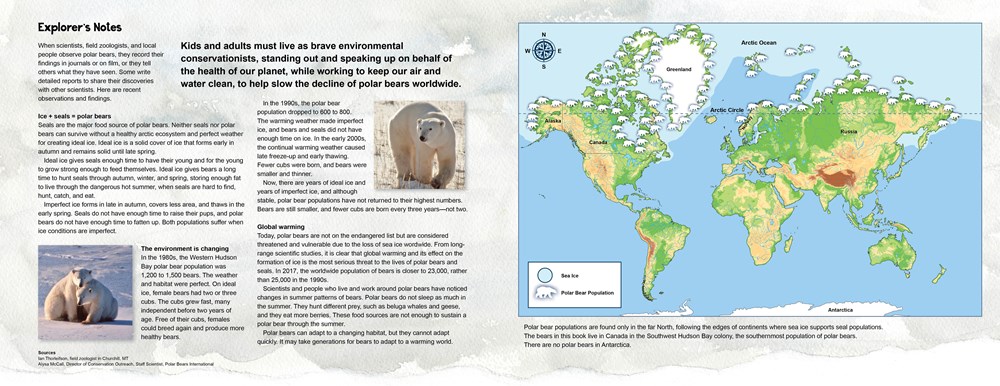
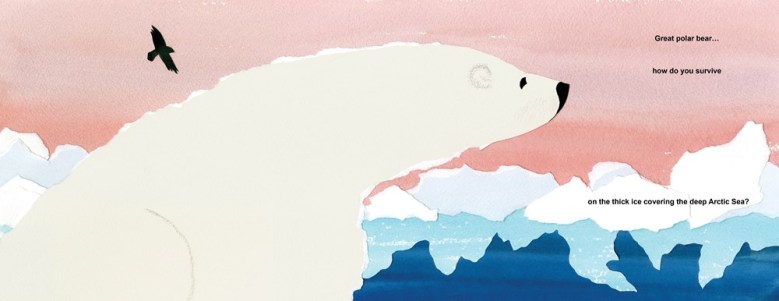
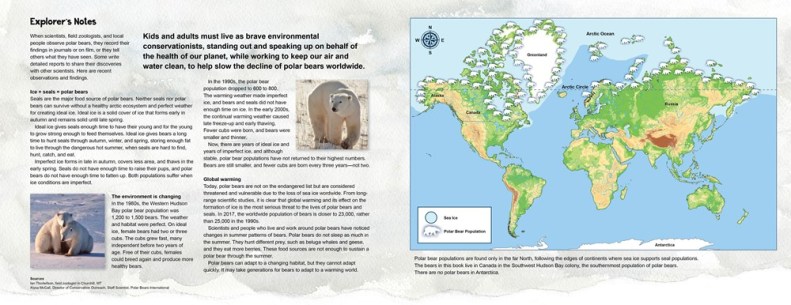
I had to add an extra bear book here, because Great Polar Bear is just beautiful. A nonfiction book written in verse, Carolyn Lesser takes readers through a year in the life of a polar bear. Originally published in 1996 as The Great Crystal Bear (illustrated by William Noonan), this new edition features all-new collage artwork by Lesser; it gives beautiful texture and depth to the illustrations. The narrative brings facts to readers through rhythmic verse, rather than terse statements: the bear’s fur, for instance, “gathers sunlight, to heat your black skin and thick layer of fat”. We also learn about the endangered environment and problems caused by climate change. Back matter contains “Explorer’s Notes” and emphasizes conservation. This is a good additional text for nonfiction collections where bears are popular.
 

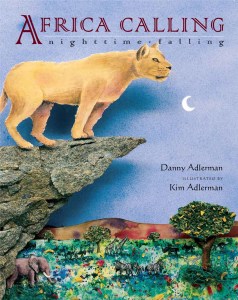
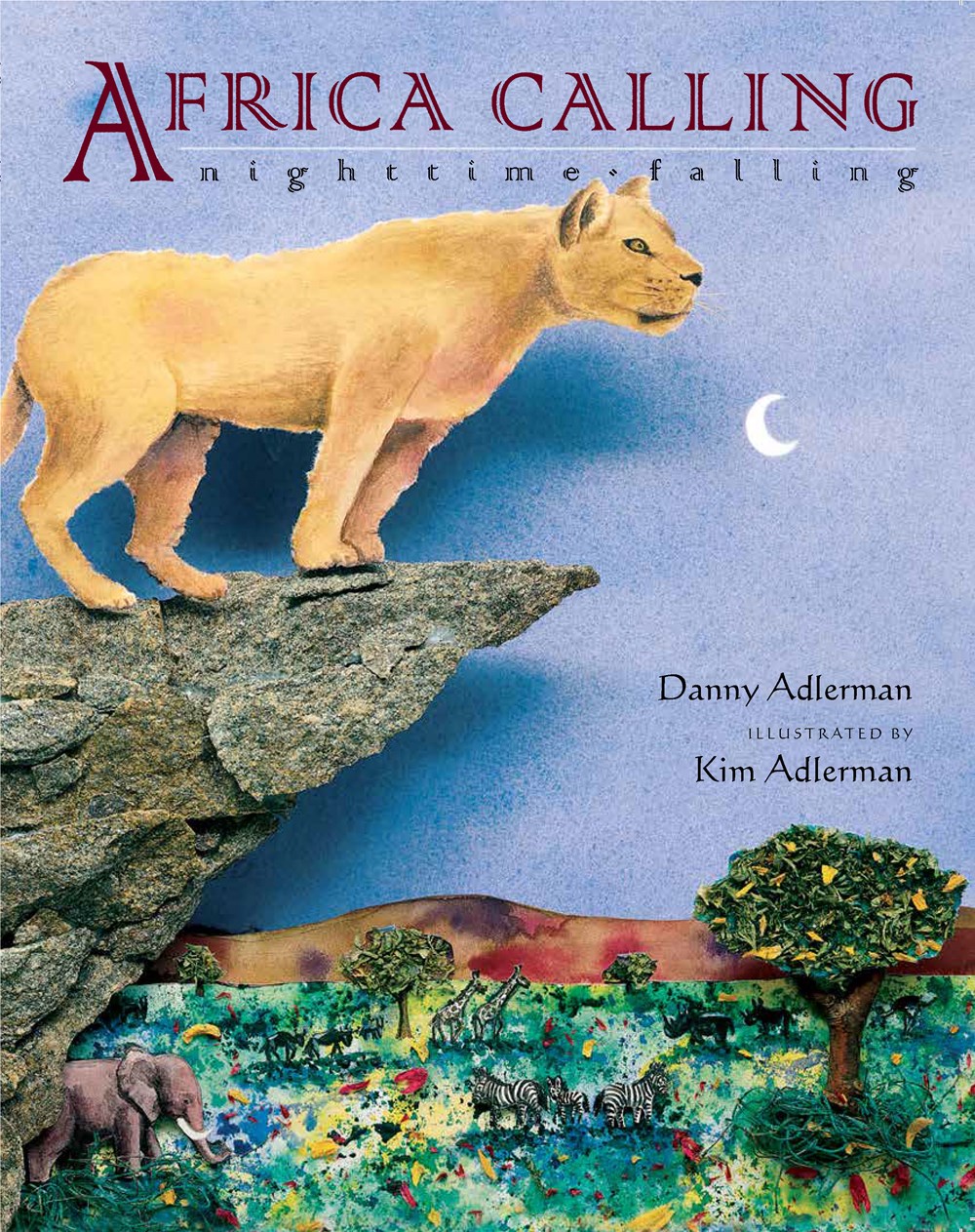
Africa Calling, Nighttime Falling, by Danny Adlerman/Illustrated by Kim Adlerman, (March 2018, Lee and Low Books), $9.95, ISBN: 9781620147955

Recommended for readers 3-7

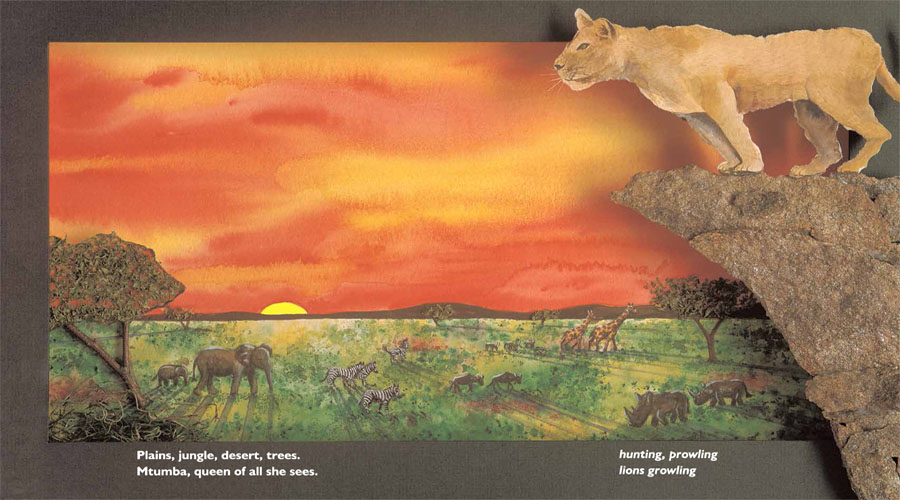
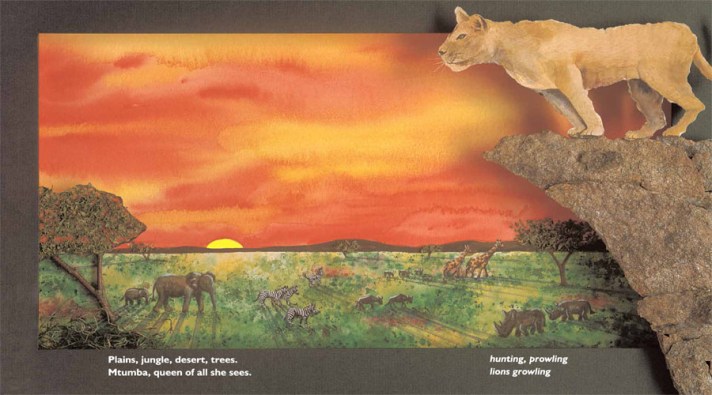
For my Oh My! book, I’ve got the bedtime story, Africa Calling, Nighttime Falling; a mellow story about African animals in their habitats as the sun sets for the day. The rhyming text leads includes quiet accompanying phrases for each animal: “As moonlight cloaks the desert land, Viper slinks across the sand… swiftly sliding, vipers gliding”. I read them as whispered phrases, between stanzas, because it seems to really work with my Kindergartner. The artwork includes collage over paintings, with what looks like some photographic media mixed in. The twist at the end brings this full circle when readers see that it’s a little girl’s imagination, before bedtime, and that she’s surrounded by her jungle’s worth of stuffed animals. It’s a nice additional add where bedtime stories and animal books are popular, and a good one to test out with stuffed animal sleepover storytimes.
 

Posted in picture books, Preschool Reads

Count along with Annie Aardvark, Mathematician!

Annie Aardvark, Mathematician, by Suzie Olsen/Illustrated by Davina “Viv” Kinney, (Jan. 2017, STEAM Publishing), $9.99, ISBN: 9780998433707

Recommended for readers 3-6

This cute counting book stars Annie, an aardvark mathematician. She loves math! She decides to count everything she finds, and takes readers on a 1-10 feast for the senses where she enjoys sniffing and tasting cucumbers, rocks, assorted bugs, berries, and plants. Each spread features a white page with black text for easy storytime reading, and a full-color page featuring Annie and her latest discovery. Kids can count along with the repetitive text, which features written numbers, illustrated things to count, and – most fun – the sounds Annie makes as she explores and investigates each treasure. She gulp, gulp, gulps beetles, slurp, slurp, slurp, slurps sticks, and has a whole bunch of snorts for leaves!

This is a cute concept book that would work really well with flannels – nature flannels are easy enough to make or find. It fits in well with a nature storytime; I’d pair this with Sue Williams’ I Went Walking. Make fun sound effects to get the kiddies giggling! The art is cute; Annie has a friendly smile and expressive eyes that will draw readers’ attention. Explain what an aardvark is, and more importantly, what a mathematician is. Pronounce the kids mathematicians and have them count!

Posted in Early Reader, Fiction, picture books, Preschool Reads

Where does your mind go during class?

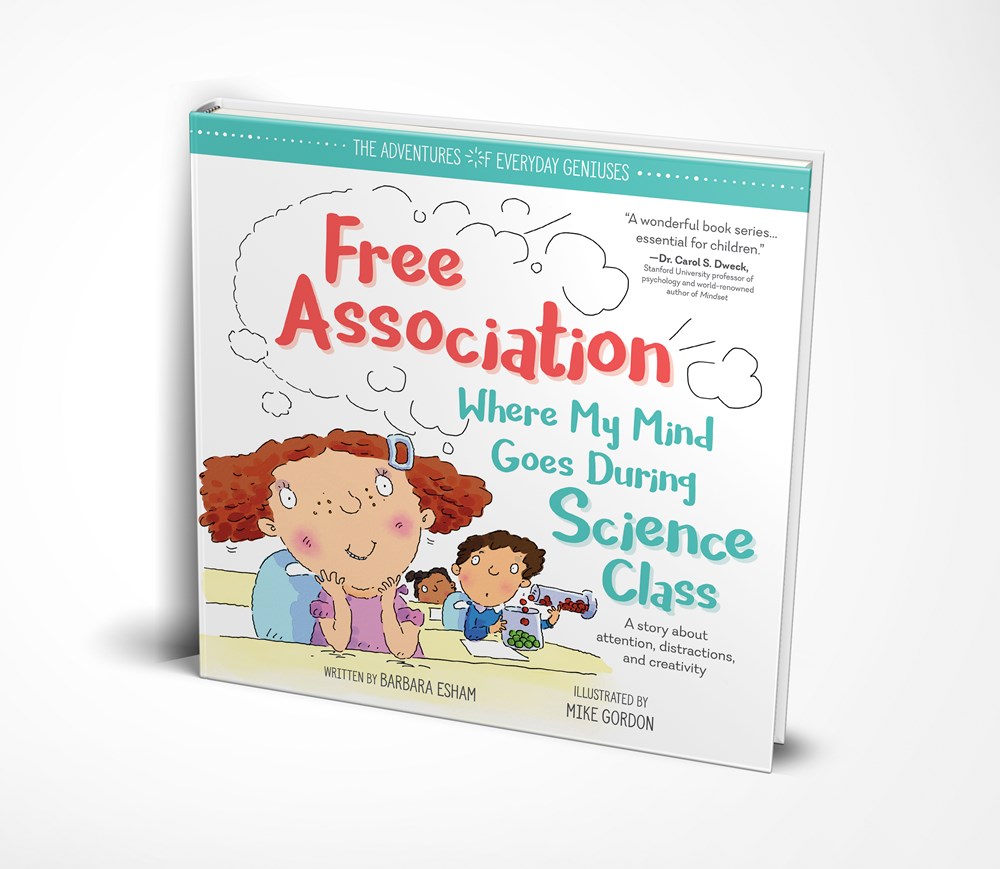
Free Association: Where My Mind Goes During Science Class (Adventures of Everyday Geniuses), by Barbara Esham/Illustrated by Mike Gordon, (May 2018, Sourcebooks), $17.99, ISBN: 9781492669951

Recommended for readers 4-8

Emily is a  young student who loves doing science: the hands-on stuff, not the rote memorization that comes with the routine school day, which tends to set her mind off, wandering. Emily wants to be like Albert Einstein, setting her off into a daydream where Einstein climbs out of a classroom poster; he ends up sticking around as a quiet mentor throughout the book. After catching Emily daydreaming again, her teacher gives her a science journal – a way to be mindful of when she’s paying attention, versus when her mind is about to wander. Emily discovers that the journal is just what she needed, and the teacher, impressed with a theory Emily comes up with in her journal, encourages the whole class to keep science journals and use their imaginations.

The Adventures of Everyday Geniuses is a series of books for kids who may learn in nontraditional ways. Where My Mind Goes During Science Class addresses everyday boredom in class – come on, we all know it happens – as well as how to reach students with ADHD. The teacher embraces creativity and imagination, and understands that journaling can lead to some pretty exciting work – bravo, teacher! Emily speaks for most kids when she grouses, “It seems like the only thing we do in science is memorize information from a book”. Who hasn’t felt like that at some point? Emily is relatable to all kids (and a heck of a lot of grownups). Back matter talks to readers who are “everyday geniuses” and offers tips for focusing and centering themselves when their minds wander. The story font is set in OpenDyslexic, a font specifically designed for readability with dyslexia; an impressive commitment by the publishers to readers. Kids may recognize illustrator Mike Gordon’s artwork – he illustrates the super-popular Robin Hill School Easy Reader series.

Find out more about the Everyday Geniuses at the series website. This looks like a good series to have in classroom and library collections, to introduce kids to different ways of learning. I’m going to request other titles in the series from my libraries, to get to know this set better. The Adventures of Everyday Geniuses series is Reading Rockets Recommended, a Parents Choice Award Winner, and an ALA Booklist Pick.

Posted in Fiction, Fiction, Historical Fiction, Middle Grade, Realistic Fiction, Tween Reads

Never That Far: They never really leave us

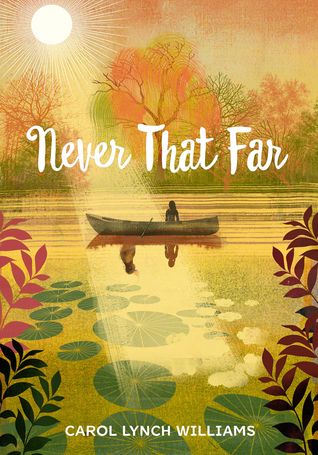
Never That Far, by Carol Lynch Williams, (Apr. 2018, Shadow Mountain), $16.99, ISBN: 978-1-62972-409-6

Recommended for readers 9-12

Twelve-year-old Libby is devastated when her best friend, her grandfather, dies at home. Crippled by grief, her father can barely get out of bed to work in the family’s Florida orange groves. On the night of Grampa’s funeral, though, Libby has a visitor: Grampa’s spirit shows up in her room, telling her that “the dead ain’t never that far from the living”, and that she has to search the lake for something he left for her. Sadly, he tells her that her father can’t see him; he doesn’t believe. To him, “the Dead are dead”. Libby joins forces with her friend, Bobby, to discover the treasure at the lake, but her father spirals further into grief and depression and threatens to derail Libby’s entire mission.

Never That Far has a touch of the supernatural set into a realistic fiction about grief, loss, and family. The Sight, Libby’s family gift, allows her to see and speak with dead family members. Her father has been worn down by grief, enduring the deaths of his siblings, wife, mother, and now, father; he has spent years arguing with his family about their “gift”, refusing to accept it for what it is. Libby’s revelation is unbearable to him, threatening an even greater rift between father and daughter when he tries to stop her from her mission. Together, Libby and Grampa, with some help from Bobby, work to save Libby’s father, who’s in danger of becoming a shell of a person and leaving Libby alone in the world.

The characters are gently realized, revealing themselves to readers little by little over the course of the book and packing powerful emotional punches as they come. Libby witnesses her grandfather’s grief at not being able to connect with his son in a scene that will have readers reaching for tissues. Taking place in the late 1960s in rural Florida allows the plot to remain character-driven. This is a moving story of grief, loss, and renewal that will appeal to certain readers: it’s a good book to have handy for your tough times lists, and for comfort reading. It’s spiritual, rather than overtly religious, and is soothing for readers experiencing loss and moving on.


Posted in Graphic Novels, Intermediate, Middle Grade, Non-fiction, Non-Fiction

Join Elise Gravel’s Mushroom Fan Club!

The Mushroom Fan Club, by Elise Gravel, (May 2018, Drawn & Quarterly), $17.95, ISBN: 978-1-77046-322-6

Recommended for readers 6-12

Artist and author Elise Gravel’s newest book, The Mushroom Fan Club, is its own little science comic! Elise Gravel and her family love going mushroom hunting, and The Mushroom Fan Club shares that sense of fun and adventure with readers. Beginning with an illustration of Gravel, her daughters, and cats heading out to explore, Gravel narrates why she’s fascinated with mushrooms: they look like aliens from outer space! They come in all different sizes and shapes! She proceeds to teach readers what she’s learned about mushrooms, from biology (parts, reproduction, environment) to the different types of mushrooms. She exercises caution, exhorting readers NOT TO EAT mushrooms they may encounter on their own, as many are poisonous; even illustrating mushrooms warning readers that they can “make you very, very sick! And even worse!” The Mushroom Fan Club is loaded with fun facts, bright illustrations in Elise Gravel’s immediately recognizable style, and fun mushroom-related art activities.

I’m a big Elise Gravel fan, so if she illustrated a box of cereal, I’d eat it and suggest it for literary honors. I love this fun twist on earth science nonfiction; she makes graphic nonfiction interesting and memorable. If you haven’t read her biography on The Great Antonio, I highly recommend it. Check out an excerpt of The Mushroom Fan Club on the Drawn and Quarterly website, and visit Elise Gravel’s author webpage for free printables of all sorts. Read The Mushroom Fan Club in a science program, read it at dinner time, just read it and have fun with it!