Posted in Fiction, Realistic Fiction, Teen, Tween Reads

Not just the flu: Pandemic

pandemicPandemic, by Yvonne Ventresca, (July 2016, Sky Pony Press), $9.99, ISBN: 9781510703902

Recommended for ages 12+

This is the paperback release of the 2015 SCBWI Crystal Kite Winner for the Atlantic region.

Liliana used to be an outgoing, top student. Until the whole thing with Mr. B happened; now, she’s withdrawn, her grades have plummeted, and her outlook has changed from a glass half full to the glass being smashed on the floor. Only a few people know what happened, and she’s lost some friends over it, but Lil has bigger problems right now: there’s a fast-spreading flu going through her New Jersey town, and friends and neighbors are getting really sick. Her medical journalist father is in Delaware covering the disease’s early stages, and her mother, on business in Hong Kong, is unable to get a flight back home when everything hits. Lil is on her own, and she’s terrified. As the disease marches through her world, she’s got to reach deep down inside herself and become the person she once was to survive.

Pandemic is a good read. It moves fast, has good characters, and puts them in a scary situation that’s all too real for a lot of us watching the news these days. Lil is on a journey without realizing it. Readers don’t know her before the incident with a teacher, but we see her go from a withdrawn, depressed teen to a strong young woman who can think, organize, and act to keep herself and the people around her as safe as she can, all while facing terrifying odds. I love a good, strong heroine, and was really appreciative that Yvonne Ventresca gives readers a take-charge main character who’s flawed but recognizes the need to push forward.

If you know readers who love a good plague story (minus zombies here), add this one to your shelves. For readers who want the gripping lead-up to dystopia, but minus the government-run aftermath.

Pair this with your cataclysm books: Chris Weitz’s The Young World series, Em Garner’s Contaminated books, and Lex Thomas’ Quarantine series are some good starts (and make Pandemic look like everyone’s getting off easy).

Edited to add: Holy cow, I sent this to publish too soon. Yvonne Ventresca’s author page has links to a Pandemic Pinterest board and an educator’s guide. Make sure to check it out!
Posted in Fantasy, Fiction, Fiction, Middle Grade, Teen, Tween Reads

Sacred Geometry: Rebel Genius

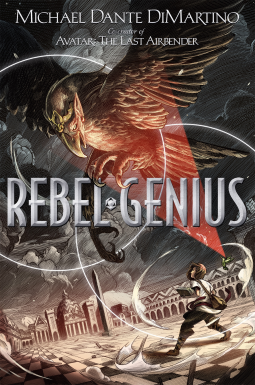
rebel-geniusRebel Genius (Geniuses #1), by Michael Dante DiMartino, (Oct. 2016, Roaring Brook Press), $16.99, ISBN: 9781626723368

Recommended for ages 10+

When the co-creator of Avatar: The Last Airbender and The Legend of Korra writes a new middle grade fantasy series, you read that book ASAP.

In an Italian Renaissance-inspired fantasy world called Zizzolan, we meet 12 year-old Giacomo, a young artist who’s living on the streets after his parents’ death. He lives in a society where Geniuses – animal muses that inspire humans to creativity – are outlawed. When Geniuses are taken from their humans, the humans become empty; dead inside – Lost Souls. This was Giacomo’s parents’ fate. When a Genius discovers Giacomo, he knows he’s in big trouble. He tries to get the bird companion to leave him alone, but the Genius isn’t having it. Just when Giacomo’s luck is about to run out, he’s rescued by a group of teens and tweens that bring him back to the studio where they are students of Pietro Vasari, who trains the kids and their Geniuses in sacred geometry, which will allow them to channel their creative powers. Before Giacomo is able to train for long, though, Vasari tells the group that a renegade artist named Ugolino is on the search for the Sacred Tools that will give him the power to destroy the world and anyone in his way; they need to find him and stop him. Ugolino won’t be so easy to bring down, though – he’s accompanied by his own monstrous work of art: Zanobius, a golem-like sculpture brought to life to carry out Ugolino’s bidding. Giacomo and his new friends set out on a quest that may cost them their lives and their Geniuses – can they save the world?

This is a deep book. DiMartino dives into some massive ideas here, particularly, Sacred Geometry: universal patterns used in the designs of everything in our reality. Think of a spiral: there are spiral galaxies; there are spirals in shells; a chameleon’s tail curls into a spiral, and when you look at it from above, a hurricane appears as a spiral. That’s sacred geometry: math, art, proportion, it all comes together in music and nature. That DiMartino chose such a weighty subject shouldn’t be a surprise; both Avatar and Korra; two hugely popular animated series, delved deeply into Buddhism, religious and cultural conflict, immigration, and identity. DiMartino isn’t afraid to talk to kids about weighty matters; he’s able to communicate layered, complex concepts to his audience. That said, while this is a book aimed at an 8-12 audience, some readers on the younger end of the range may struggle. I’d definitely booktalk this to my 5th and 6th graders, and I’d push this on my teens, too; this is a good crossover to YA. Black and white illustrations add interest and depth to the book, and help illustrate some more abstract concepts.

This is literary fantasy, and it’s beautifully written fantasy. If you’ve got fantasy readers, I think this would be a great book to introduce them to, and it would spark some great discussion. Wnat to read an excerpt? (You know you want to read an excerpt.) Head over to the Rebel Genius Tumblr and download one.


Posted in Middle Grade, Non-Fiction, Non-fiction, Tween Reads

Give your brain a workout with NatGeo Kids’ MASTERMIND!

mastermindMastermind, by Stephanie Warren Drimmer/Puzzles by Julie K. Cohen, (May 2016, NatGeo Kids), $12.99, ISBN: 978-1-4263-2110-8

Recommended for ages 8-12

Loaded with over 100 games, tests, and puzzles designed to “unleash your inner genius,” Mastermind is huge fun – and you learn stuff, too.

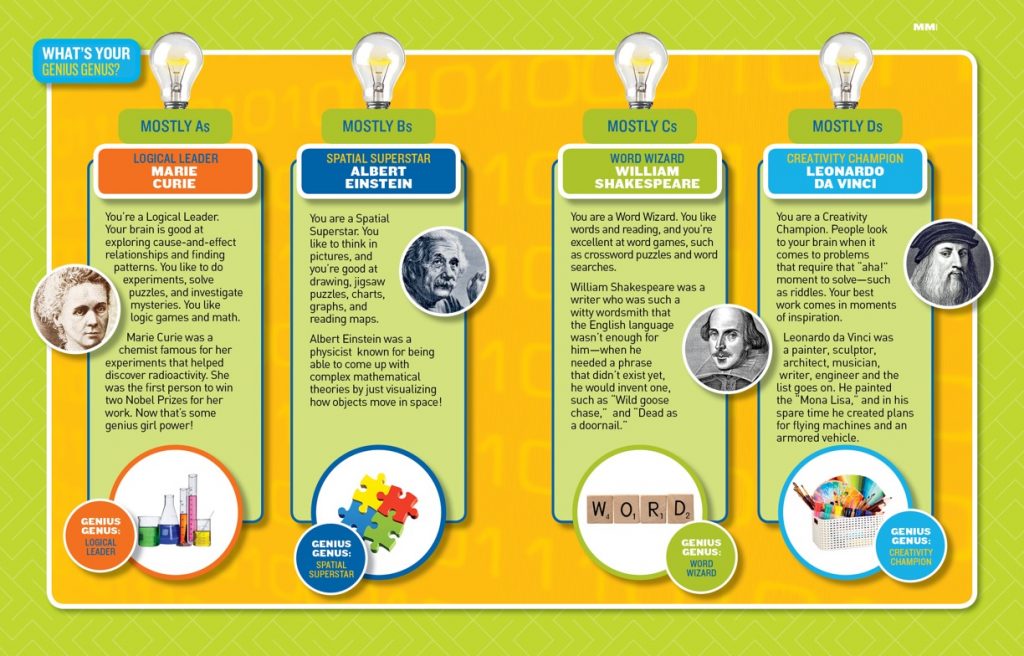
Guided through the book by cartoon characters Ima Genius and her canine sidekick Astro, Mastermind is all about the brain: each section is devoted to a different part of our brains and features sections like How it Works, where readers are guided through a step by step process of each part of the brain makes operations like sight, muscle movement, smell, and memory happen; fun facts and wild photos help break it all down for readers. Time Trials challenge readers to solve puzzles while timing themselves, and a final quiz in each chapter, called Test Your S.M.A.R.T.S. (Superior Mental Acuity and Rationality Testing System), pop up in each section, so budding geniuses can witness themselves becoming smarter with each section. A fun Mastermind Meter lets you track the progression of your genius through the book.

I had a great time reading and playing the games in Mastermind. The facts and real-life stories are interesting and fun, and there’s a ton of information to be learned here. Each section of the book looks at a different part of the brain and how we use them, from our senses, to identifying sounds, to mental map making and memory. Beginning with a maze through a highlighted part of the brain (to get your brains ready, naturally), readers learn how animals use their brains for similar purposes, and Weird Science introduces us to people living with brain issues that make them see things differently; for instance, hemospatial neglect causes someone to ignore things on one side – imagine only shaving half your face?

This will be destroyed in circ, because kids are meant to write in this book, but it won’t stop me from adding it as a great birthday or holiday gift to a few budding geniuses on my list. There are tons of ideas in this book for teachers and librarians, though; you can get the kids fired up with your own timed code challenges or have them figure out which genius they gel best with. The Mastermind website offers two downloadable puzzles, and a genius personality quiz kids can take online. All in all, Mastermind provides some fun and makes you think, which is really what learning should be all about.

mastermind_1

Posted in gaming, Graphic Novels, Non-Fiction, Teen, Tween Reads, Young Adult/New Adult

Box Brown gives us the real story of Tetris, the most addictive game EVER

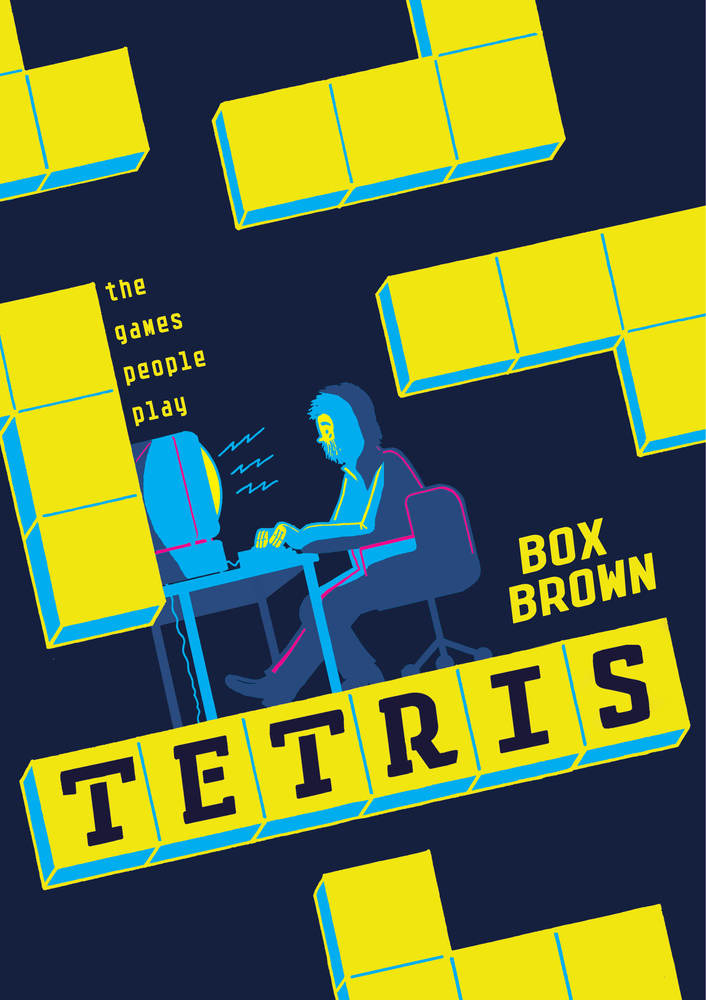
tetris_1Tetris: The Games People Play, by Box Brown (October 2016, First Second), $19.99, ISBN: 9781626723153

Recommended for ages 12+

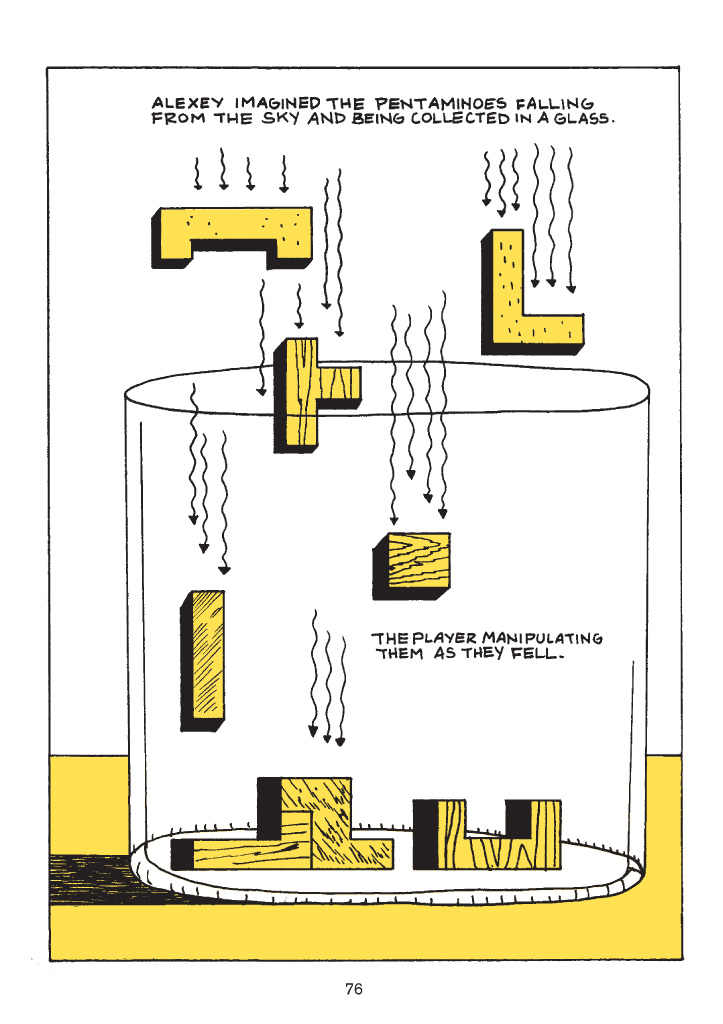
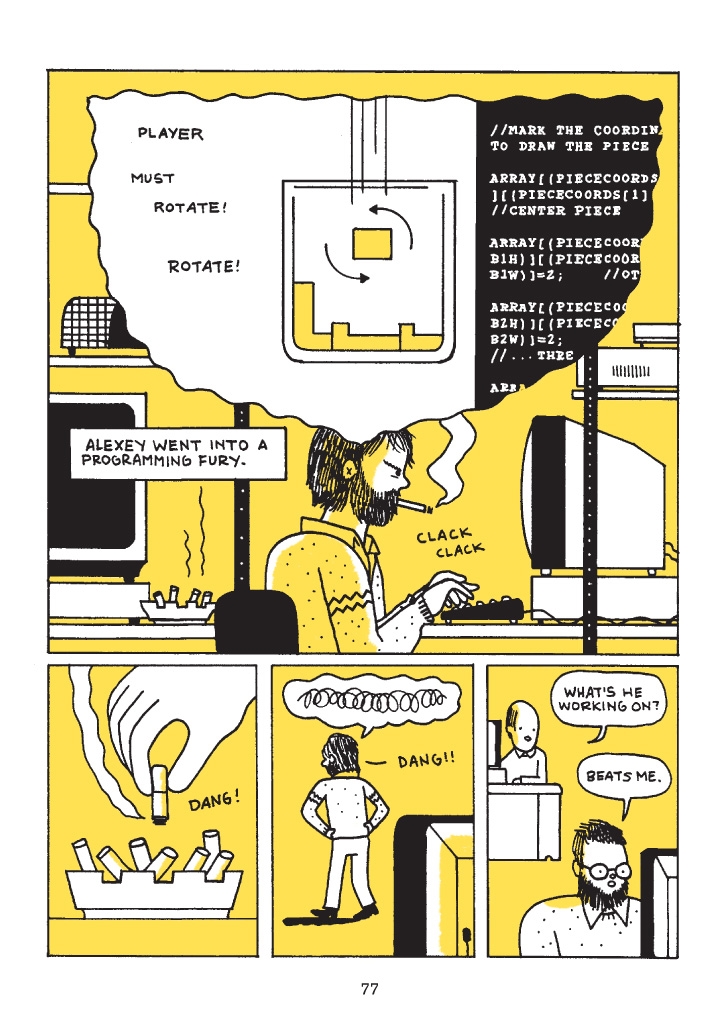
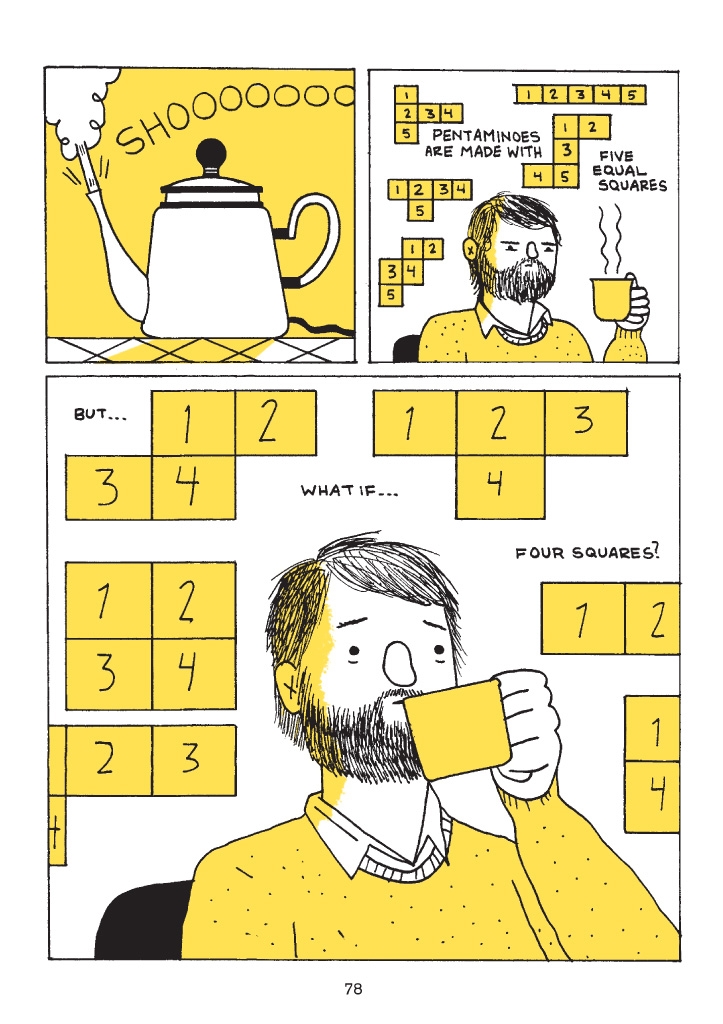
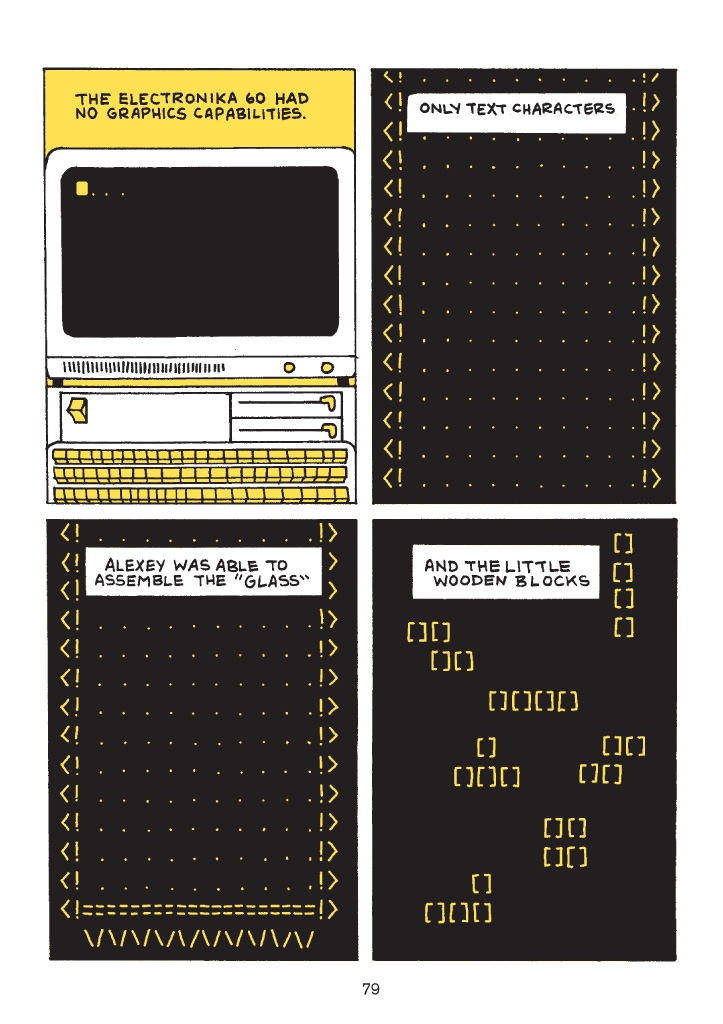
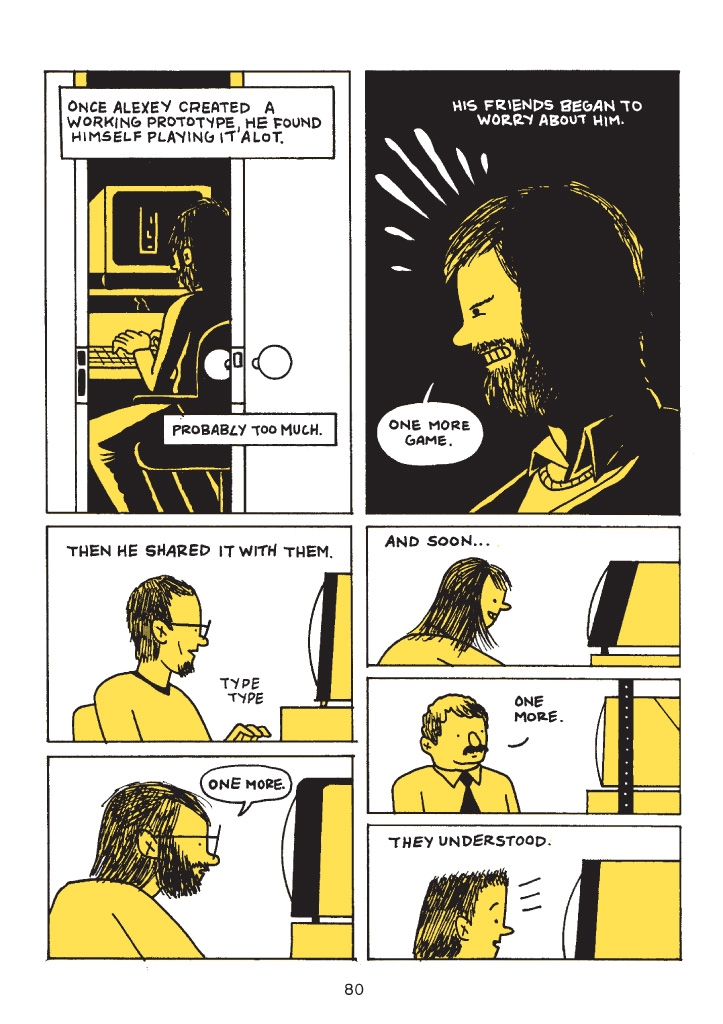
If you spent the better part of the early ’90s glued to your keyboard/gaming console/handheld, immersed in the video game Tetris, you’re not alone. I have logged many hours in front of my NES, rotating those little blocks to achieve the perfect fit. Box Brown’s graphic novel tells the story behind Tetris: the men who created it, and the game developers that almost went to war over bringing it to the masses.

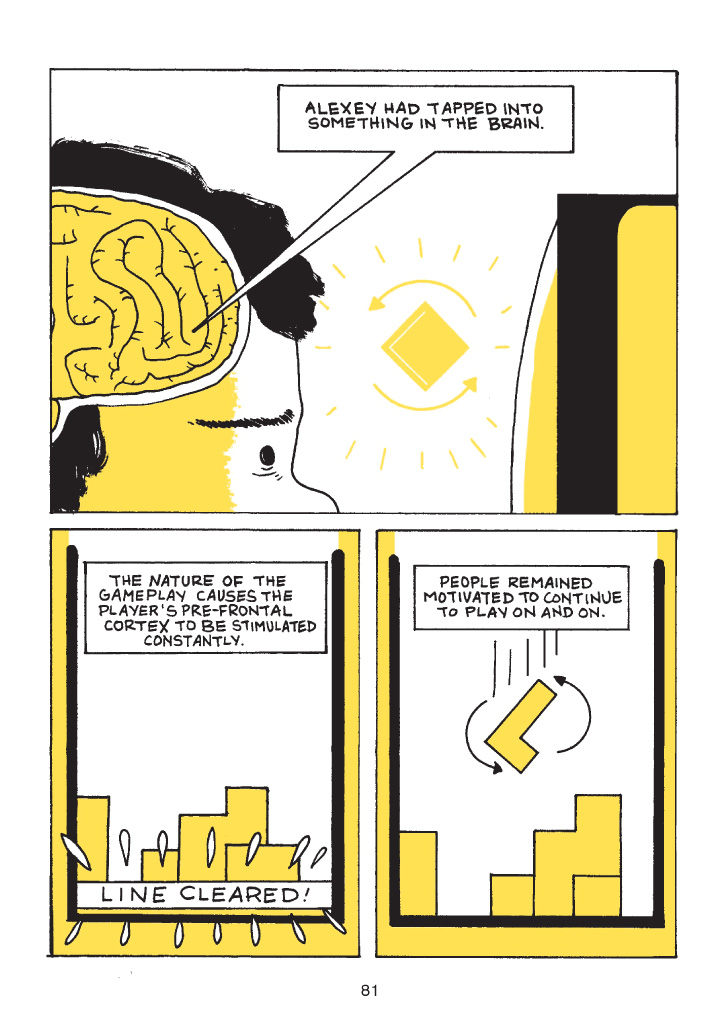
We meet Alexey Pajitnov and his colleague, Vlad Pokhilko, computer scientists at the Moscow Academy of Science. In 1984, Alexey created Tetris in his spare time; it began life as freeware, being passed from friend to friend, coworker to coworker. This game was a phenomenon waiting to happen: it was addicting from the start; people were mesmerized. One story in the book illustrates a manager providing copies to his workplace colleagues, only to take the discs back and destroy them when office productivity declined.

We see the struggle between game developers and the tangled weave of rights for the game: Nintendo, Atari, and Sega all wanted it, and rights 0wnership was downright sketchy, with miscommunication and under the table deals leading to lawsuits. The story reads like an international thriller in parts, with all the trips to Moscow, international dealings, and theft and intrigue.

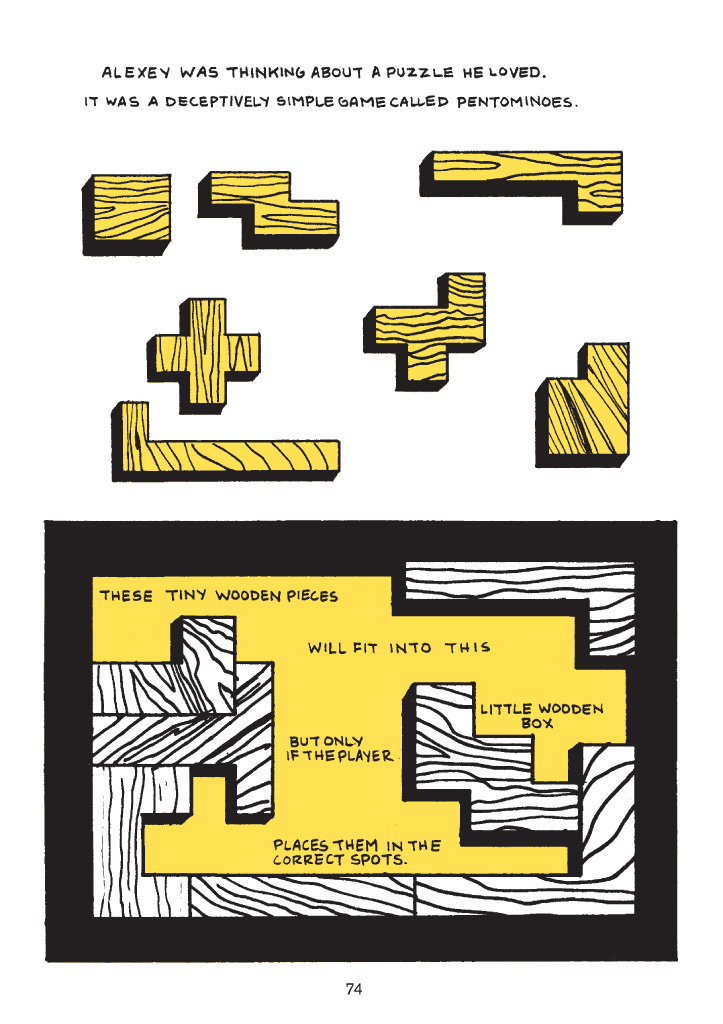
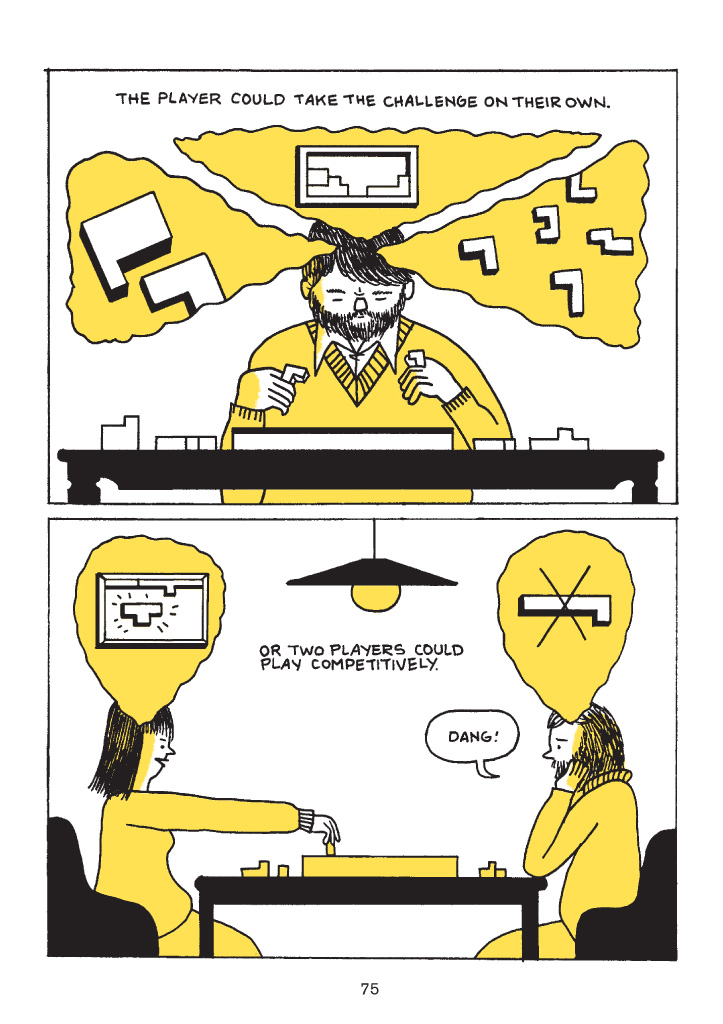
The story unfolds in two-color art, with game screen renderings and simple character drawings keeping readers focused on the story and the complexity of the game itself. In the story of Tetris, Box Brown also gives us the story of gaming: the pursuit of fun, and the role of gaming in art, culture, commerce, and intellect. From Lascaux cave paintings, which depict games, to artifacts of gaming pieces rendered in bone, to Senet, an Ancient Egyptian board game, to dice games, and finally, to smartphone gaming (where Tetris still lives on), the pursuit of fun, the joy of gaming, is part of human history.

This will go over well with gamers and history fans, graphic novel fans and anyone interested in business. There’s some good advice for businesses in the story of Tetris, especially for anyone interested in international licenses. Box Brown’s graphic novel is multilayered and well-rounded, with an abundance of information presented in an interesting and easy to digest format.

Box Brown is a New York Times–bestselling author. He wrote the best-selling graphic biography, Andre the Giant: Life and Legend. Take a look at some more of Tetris here, and head over to Box Brown’s author webpage and see more of his illustration work.

tetris_2 tetris_3 tetris_4


And now, you can’t get the Tetris music out of your head, either. You’re welcome.

Posted in Realistic Fiction, Teen, Young Adult/New Adult

Blog Tour: Playing for the Devil’s Fire, by Philippe Diederich

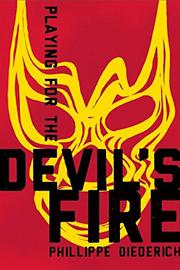
devilsfirePlaying for the Devil’s Fire, by Phillippe Diederich, (March 2016, Cinco Puntos Press), $11.95, ISBN: 978-1-941026-29-8
Recommended for ages 14+

Photojournalist Philippe Diederich wrote his debut novel as a way of communicating his sorrow and anger at the brutual narcoviolence and corruption infecting Mexico. The brutal and gripping story follows 13 year-old Libero “Boli” Flores as he sees his town, Izayoc, crippled by the town’s new inhabitants: men who wear shiny guns, expensive clothes, and drive big SUVs; men who have a lot of money to spend, and men who don’t like to be questioned or crossed. When people speak out, they show up dead.

Boli’s parents know it’s no use to go to the local police, so they head to a neighboring town to seek help, but they never arrive. Boli waits for someone to bring he and his sister, Gaby, some kind of news. Hope comes, briefly, in the form of El Chicano Estrada, a small-time luchador that Boli sees at a wrestling match. Boli, a devoted fan of lucha, particularly the legendary El Santo, begs Chicano to help him locate his parents. Chicano sees the corruption and grim reality facing Boli and the people of Izayoc; it awakens something in him, and he tries to be the hero that Boli needs. But Chicano also knows a truth that Boli hasn’t learned yet: the world is not a good place.

This is a vicious, heartbreaking story about the end of childhood. It’s a grim, powerful, and beautifully written novel, with unforgettable characters: Boli and Gaby are two siblings struggling to move on with their lives in the most horrifying circumstances; their Abuela escapes into her memories of the past to cope; Chicano is someone who just wanted to get by until he found someone that believed in him. Diederich looks at the morality, or lack of it, using Boli as the lens.

Who do you turn to in a town when everyone can either be bought or murdered? This is the question at the heart of Playing for the Devil’s Fire, and it is a very real question facing many Mexican communities. It’s an eye-opening look into a reality many young people face. Philippe Diederich puts a very human face on the cost of the neverending war on drugs.

This is not a book for middle grade or middle schoolers. There is graphic violence (the story begins with a child finding a decapitated head), language, and overall content that is disturbing and upsetting. I’d suggest this for upper high school, young adult, and adult readers, because it is a brilliantly written book that will make readers think, and hopefully, talk.

Playing for the Devil’s Fire has received a starred review from Publishers Weekly.

Philippe Diederich grew up in Mexico City where he played marbles in the streets and became a fan of lucha libre – pastimes he revisits in Playing for the Devil’s Fire. This is his first novel for young adults, but his short stories have been published in literary journals, and his mystery, Sofrito, is a culinary mystery that travels from Havana to New York City. His author website offers a newsletter and more information.

Playing for the Devil’s Fire Blog Tour

August 31: Rich in Color review  (http://richincolor.com)

Sept 1: The Pirate Tree review & interview (http://www.thepiratetree.com)

Sept 4: Guest Post for Clear Eyes, Full Shelves (www.cleareyesfullshelves.com)

Sept 5: Review, The Brain Lair (http://www.thebrainlair.com)

Sept 6: Rich in Color author interview (http://richincolor.com)

September 7: Edi Campbell CrazyquiltEdi review (https://campbele.wordpress.com)

September 8: Anastasia Suen, #KidLitBookoftheday (asuen.com)

September 9: Reading Through Life author highlight plus links to blog tour  (http://readingtl.blogspot.com)

Sept 9: Guest Post, The Brain Lair (http://www.thebrainlair.com)

September 12: Linda Washington (https://lmarie7b.wordpress.com/ )

September 13: Excerpt, Review, Mom Read it (https://momreadit.wordpress.com)

Posted in Middle Grade, Middle School, Non-Fiction, Non-fiction, Teen, Tween Reads

Bridge to the Wild: Zoos connect people and animals

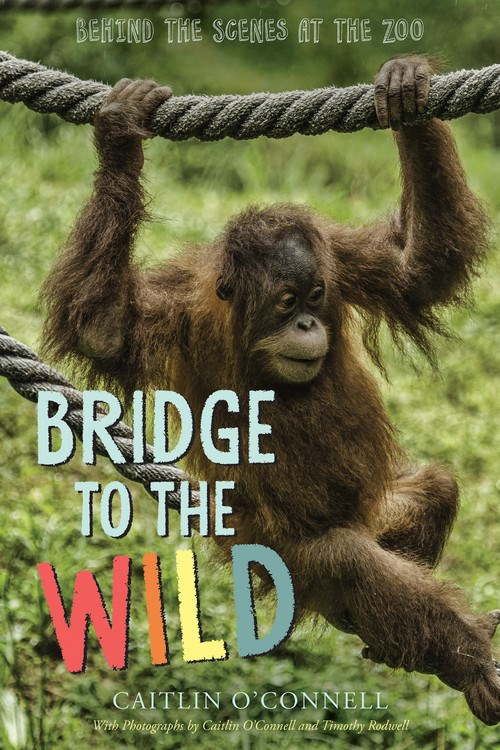
bridge-to-the-wildBridge to the Wild, by Dr. Caitlin O’Connell/Photographs by Timothy Rodwell, (Aug. 2016, HMH Books for Young Readers), $18,99, ISBN: 9780544277397

Recommended for ages 10 and up

I’m about to gush here. If you read my reviews often enough, you probably have guessed that I love any nonfiction book about animals, conservation and preservation, and even better when the ideas are combined. In Bridge to the Wild, Dr. Caitlin O’Connell begins by recalling a childhood visit to the zoo – back when animals were still largely kept in cages (I remember it well), and saw a gorilla, seemingly in deep despair over living in a cage not much bigger than he was.

Thankfully, those days are (mostly) over. Zoos are more like natural preserves now, offering many animals larger spaces to roam; conservation and preservation is the order of the day, with zoo staff rescuing and caring for animals all over the world. As more animals face extinction at the hands of poachers, habitat devastation, and pollutants that contaminate their environment, zoos are playing a bigger part in keeping our wildlife alive, and conducting valuable research on improving their conditions and our world. Bridge to the Wild is Dr. O’Connell’s manifesto, where she lays out the valuable ways zoos are a bridge for humans, to the wild outside our doors.

Dr. O’Connell spent a week working with the staff at Zoo Atlanta –  a private, nonprofit wildlife park and zoo – to observe the relationships between animals and caretakers, to help strengthen this bridge. After all, what we see as observers is only the tip of the iceberg; many, many loving and brilliant people are behind the scenes, learning about and learning from the animals, caring for them, loving them. From the Dawn Chorus – the morning symphony conducted by the tenants as the day begins, to the Dusk Chorus, when they start winding down for the night, Dr. O’Connell and Tim Rodwell introduce us to the inhabitants of Zoo Atlanta, from the pandas, to the hornbills, meerkats, gorillas, tigers and more.

There are anecdotes and beautiful photographs, a “Keeper Feature” that profiles the different keepers at Zoo Atlanta, and a fantastic note on ignorance and extinction, which is a real call to action to end senseless poaching of animal parts for talismans and “remedies” that simply don’t work. A full bibliography and sources are available and provide more research opportunities, and data sheets encourage budding zoologists to do some research on their own, guided by Dr. O’Connell, who lays out simple experiments to observe and record behaviors.

Animal books are hugely popular with my Corona Kids, and I’ve been stacking my collection with plenty of rescue, preservation, and conservation titles for them, to drive home the point that this planet doesn’t only belong to us. Bridge to the Wild is going to be one of those books I talk endlessly about, especially since my library is about a stone’s throw away from the Queens Zoo. I may even slip copies of this book into teachers’ hands during class visits, with a “hint, hint” nudge for a class trip activity (sorry, kids!). That’s how important this book is to me.

Bridge to the Wild has received a starred review from School Library Journal. Learn more about Dr. O’Connell’s work and books at her author website.

Take a peek at a chapter excerpt on meerkats, then go order this book for your animal lovers!
meerkat_1


Posted in Fantasy, Fiction, Middle Grade, Tween Reads

New Legends of Orkney: Kalifus Rising

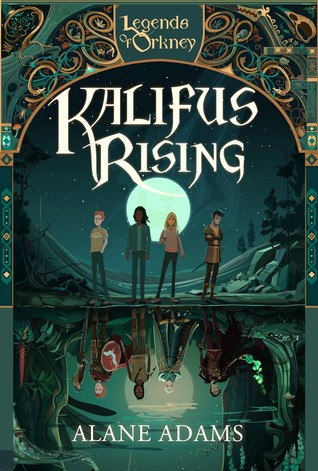
kalifusKalifus Rising (Legends of Orkney #2), by Alane Adams, (Sept. 2016, SparkPress), $24, ISBN: 9781943006052

Recommended for ages 9-14

In this sequel to 2014’s Red Sun, Sam Baron has freed Orkney from the Red Sun, but is now a prisoner of Catriona, leader of the Volgrim Witches. She’s determined to bend Sam to her will and use his half-god, half-witch power to mold him into the formidable force that will crush Odin and help her gain rule over Orkney and beyond. Fortunately, Sam’s not alone; his three best friends, Keeley, Howie, and Leo, find themselves drawn back into the fray to help save Sam. Each given their own quest, the three friends will learn more about themselves in this adventure.

Full disclosure: I didn’t read The Red Sun, and that’s to my detriment. While I could pick up the general gist of the story through exposition and dialogue that discusses previous events, I would have gotten more from Kalifus Rising if I’d read the first book (and now, it’s on my TBR).

This is a solid quest fantasy that your fantasy readers will love. I appreciated that it was a team effort to save Sam, and I love that each friend had a quest that taught them about themselves; some were given quests they didn’t feel cut out for, only to discover the inner strength to achieve the objective. It’s inspirational, which is the point of really good fantasy, isn’t it? The story concentrates on the importance and power of friendship: a key theme for middle graders; there are also great scenes where Sam reacts exactly like a tween/teen would when faced with a seemingly insurmountable task. He tries to convince Catriona that he’s moved over to her side, while relying on his inner strength to remind himself where he really stands, but as Sam – and by extension, the reader – learns, going it alone can be a tough and scary thing; the danger of losing yourself is real and having people around you to remind yourself of who you are is important. (And so is having a kick-butt mom, if I may say so, myself,)

Kalifus Rising debuted as the #1 hot new release on Amazon, so ride the wave and treat your fantasy readers to the Legends of Orkney series. Booktalk and display with Rick Riordan’s Magnus Chase and the Gods of Asgard, Jasmine Richards’ Secrets of Valhalla, Keira Gillett’s Zaria Fierce trilogy, and K.L. Armstrong’s The Blackwell Pages series.

There’s a great Legends of Orkney webpage that includes a link to BattleKasters, a downloadable game based on the series! You want to see the trailer, right? Of course you want to see the trailer.

Posted in Fiction, Realistic Fiction, Teen, Young Adult/New Adult

Two teenagers take to the Canadian trails to work out their problems in Gone Wild

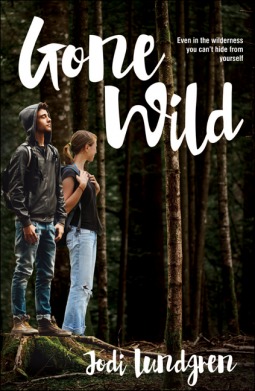
gone-wildGone Wild, by Jodi Lundgren (Sept. 2016, Lorimer), $27.99, ISBN: 9781459409897

Recommended for ages 14 and up

This is another selection from Canadian publisher James Lorimer & Company’s line for reluctant and struggling readers. The publisher’s ability to find and champion interesting, relevant realistic fiction that speaks to teens and the issues facing them these days is huge, and Lorimer has managed to find authors that provide diverse backgrounds, viewpoints, and situations that will speak to teens.

Told in alternating third-person narratives, Gone Wild is the story of two teens who head to a wilderness park on Vancouver Island to work out the problems they each have going on. Seth is a teen who was bullied by his half-brother until he went to foster care; he was adopted, but his parents have split, leaving him open to verbal abuse by his mother and psychological bullying by his mother’s boyfriend. Fed up with it all, he storms out and finds himself on the trail.

Brooke’s a high school with a control freak mother, who never lets her feel like she measures up to Brooke’s older sister. When Brooke thinks she may be pregnant, she grabs her gear – she loves outdoor sports and hiking – and heads for the trail, to clear her head and work things out.

Eventually, the two teens meet and work together to get through the wilderness, to figure out the directions their lives are going, and to find the strength to take control back for themselves.

This was a good, quick read. The characters were well-developed and faced some big topics: life-changing topics. We’re dealing with teenage pregnancy, abuse, and adoption, for starters, so more conservative readers may shy away from this book. For teens who are living with their own struggles, though, the idea of finding a way to clear your head and walk it out may be soothing, a real help. You don’t have to find a hiking trail; urban kids can find a quiet place in a park, or work it out on the basketball court or track, for instance; it’s the idea of finding a constructive way to work through life and the curveballs it throws at us.

Because this is a book aimed at reluctant and struggling readers, the text gets to the point quickly and is matter-of-fact in its discussion. All readers will appreciate the candor that Jodi Lundgren uses to tell her story.

A good addition to realistic fiction collections, especially where grittier subjects find readers.

Posted in Fiction, Horror, Teen, Young Adult/New Adult

Skin crawling YA horror: The Women in the Walls, by Amy Lukavics

women-in-the-wallsThe Women in the Walls, by Amy Lukavics (Sept. 2016, Harlequin Teen), $18.99, ISBN: 9780373211944

Recommended for ages 13+

Lucy Acosta lives with her cousin, Margaret, her aunt, Penelope, and her father, Felix, in a Victorian mansion in the middle of the woods. Her mother died when she was three, leaving her to be raised by her loving aunt and distant father. When Lucy is 17, Penelope takes a walk into the woods and disappears, throwing the household into chaos. Margaret, Penelope’s daughter, is becoming unhinged, telling Lucy that she hears her dead mother talking to her through the walls, telling her to join her. Her father, obsessed with throwing dinner parties for the exclusive club he belongs to, ignores Lucy’s pleas for help; he won’t accept any sign of weakness. As Lucy tries to get to the bottom of the voices in the walls, she starts hearing them too; and when she begins digging into her family’s legacy, the things she find may doom her.

This was a gloriously creepy novel with just enough gore to move it from haunted house novel to horror. Think Wicker Man meets The Legacy (wow, did I just date myself with that reference), with wonderful madness tossed in, to make things interesting. Be warned, delicate sensibilities and stomachs may find some of the language and violence too much. This is not a book for your conservative readers.

Lucy and Margaret are fairy skin-deep characters with the potential for deeper storytelling, but it’s not really their story, as you’ll discover. The real development is going on around them. Think of Lucy as the narrator – which she is – and the host of the story. She’s the central character, but she’s in the dark almost as much as we readers are. The supporting characters are where the story lies, and when the elements all come together, this is a page-turning read. Horror and suspense fans will enjoy this one.

Posted in Middle Grade, Non-Fiction, Non-fiction, Teen, Tween Reads

You want football stats? SI Kids has them! 1st and 10 is loaded with lists, stats, and photos!

sikidsfootballSports Illustrated Kids 1st and 10: Top 10 Lists of Everything in Football (Revised & Updated), by the Editors of Sports Illustrated for Kids, (July 2016, Sports Illustrated, $19.95, ISBN: 978-1-61893-173-3

Recommended for ages 8+

Do you love lists? Do you love stats? Do you love football? There’s something for everyone in this updated edition of Sports Illustrated for Kids’ book, 1st and 10: Top 10 Lists of Everything in Football. There are loads of Top 10 lists, sure: Top 10 Rivalries, Nicknames, Fantasy Performers, Stadiums, and more, but each of these lists is loaded with stats: dates, scores, major games, players, you name it. There are 36 lists in all, with some great career highlights for longtime football fans and new ones who want to learn some of the history behind the sport.

Since I’m not well-read or conversant in sports, I’ve been trying to beef up some of that knowledge so I can guide the kids at my library to books that will interest them; 1st and 10 is a great book for me to lead them to. I can easily booktalk it, because it’s quick bites of information. There are things I can focus on, like the Top 10 Artifacts (the first Super Bowl ring! A football from 1895! My inner archivist and history nerd is rejoicing!), Movies (The Replacements is a long guilty pleasure of mine), and Hairstyles (My hair on the most humid of days has nothing on Troy Polamalu).  Add in the stunning photography that you’d expect from Sports Illustrated, and you have a book that collectors of any age will enjoy.

1st and 10 is part of a series of Top 10 lists for each sport: you can also add Full Count: Top 10 Lists of Everything Baseball, Slam Dunk! Top 10 Lists of Everything Basketball, Face-Off! Top 10 Lists of Everything Hockey, and The Top 10 of Everything Sports. I’ll be putting these books on my shelves, now that I know about them. They’re great go-to resources for any library that has sports fans coming through the doors.