Posted in picture books, Preschool Reads

Wombats are Pretty Weird… and pretty awesome!

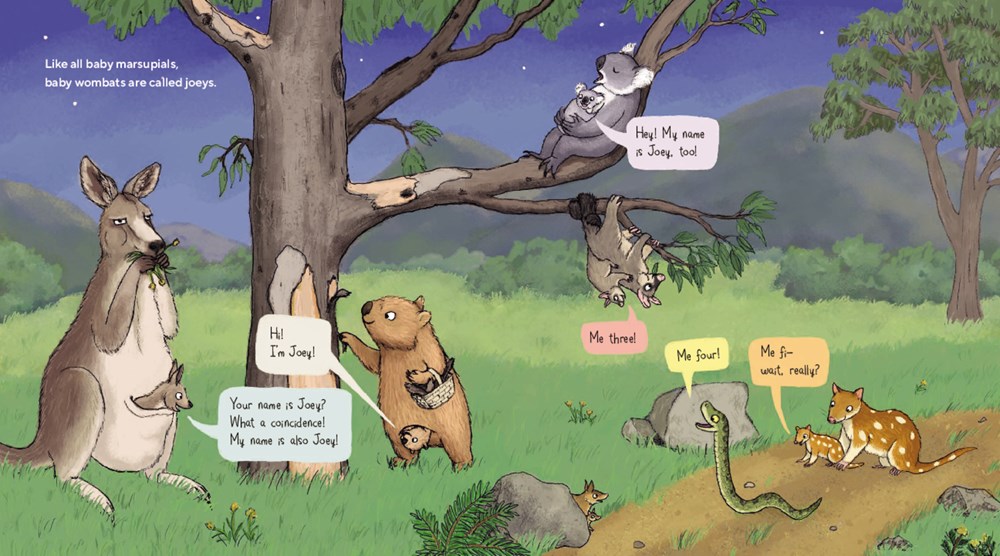
Wombats Are Pretty Weird : A (Not So) Serious Guide, by Abi Cushman, (May 2023, Greenwillow Books), $19.99, ISBN: 9780063234437

Ages 4-8

This fun book is all about the wombat; a cute marsupial primarily known for pooping cubes. Wombats are Pretty Weird gives kids the full scoop on these marsupials, with some laugh-out-loud moments, usually to do with the aforementioned cubic poop. Joey the Snake is a comic sidekick to the wombats in this story, acting as a self-insert character for readers. There are loads of interesting facts: a wombat’s teeth never stop growing, and they have backward-facing pouches, unlike a kangaroo. They also have very tough behinds, made of cartilage, to protect their hind quarters from predators!

Kid-friendly with fun sidebars, cartoon art, narration and speech balloons, this is a good addition to animal nonfiction collections and early nonfiction collections. Backmatter includes a glossary and more facts about the three types of wombats.

Visit Abi Cushman’s author webpage for some free downloadable resources, including a Wombats are Weird activity guide!

Posted in Early Reader, Non-Fiction, picture books, Preschool Reads

¡Más libros en español: peces y insectos! / More books in Spanish: Fish and Insects!

When I got back to my library just under two months ago, I discovered some bookmail waiting for me: two books in Spanish, courtesy of Peachtree Publishing! They’ve been wonderful about keeping me updated on their bilingual and Spanish nonfiction books, and I’ve loved the “About…” series they’ve sent me so far, so I wanted to make sure I gave these two books the love they deserve (and a place on my Spanish collection shelves).

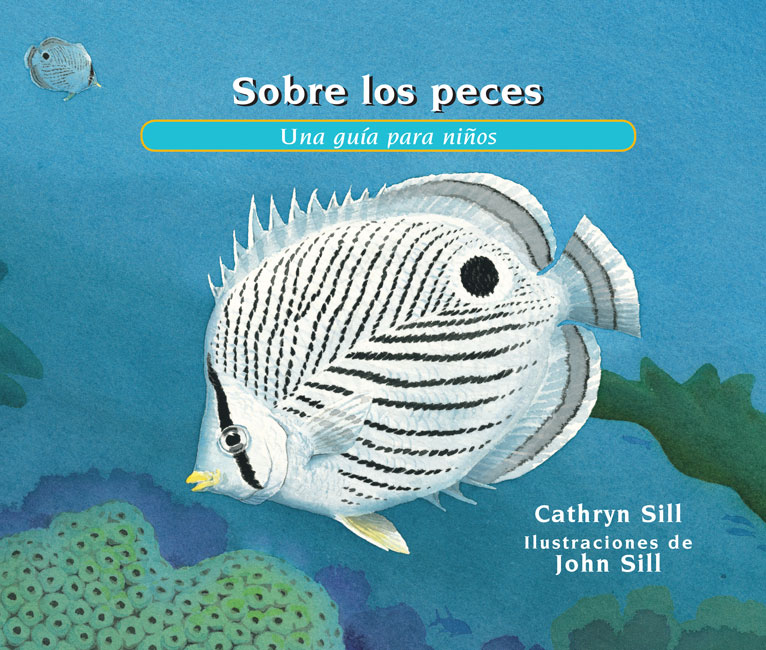
Sobre los peces, by Cathryn Sill/Illustrated by John Sill, (Feb. 2020, Peachtree Publishers), $8.99, ISBN: 978-1-68263-154-6

Ages 3-7

Great early reader nonfiction. Sobre los peces is entirely in Spanish, and offers readers a look at the basics of fish: where they live, how they adapt to their environment, what they eat, how they reproduce. The text is written in easy-to-read, easy-to-understand, simple sentences, and each spread includes colorful, realistic paintings of different fish throughout. The text is presented in bold, black font against a white background, not competing for the reader’s attention; each painting includes the name of the fish, to increase understanding and forward the fact that there are a LOT of fish out there! Back matter includes more information about each spread: did you know that tropical fish are usually more vibrantly colored than fish from cold waters? It helps them camouflage better in their surroundings! A glossary and bibliography offer more resources for curious readers.

Peachtree includes a link to a free, downloadable Teacher’s Guide for the whole series. The guide is in English, but pair with some Spanish-language information like this page on National Geographic España, this story on sharks from TeachersPayTeachers creator, The Storyteller’s Corner, and this graphic organizer from TeachersPayTeachers creator Dual Language, Dual Fun.


Sobre los insectos, by Cathryn Sill/Illustrated by John Sill, (Feb. 2020, Peachtree Publishers), $8.99, ISBN: 978-1-68263-155-3

Ages 3-7

More great books in translation from Peachtree! About Insects is translated entirely into Spanish, with easy-to-read, easy-to-understand sentences introducing readers to the basics about insects: how many legs they have (it’s 6, not 8!), their hard exoskeletons, how they change forms as they get older, what they eat and how they eat, and how they are helpful to us humans (and how some are just plain pests). Colorful paintings by John Sill are realistic and detailed, making a naturalist out of every reader; the environments are textured, often lush, and there’s always something to draw your eye, from the movement of water as a trout jumps to catch a fleeing mayfly to the shadowy leaves in the background as a katydid leaps. Details on each painting, a glossary, and bibliography make up the back matter.

While the Teacher’s Guide is currently available in English, you can find more information about insects at National Geographic España, and there are copious free resources on TeachersPayTeachers, including a reader about The Hungry Insects from The Spanglish Senorita, bilingual bug bingo from onlinefreespanish, and a  counting sheet from The Spanish Amigo.

Thanks again, Peachtree!

Posted in Preschool Reads, Toddler Reads

#HomesCool for babies, too! Anti-Racism, Climate Change, Oceanography, and Mammals!

Babies need fun books, too! #HomesCool doesn’t just start with school-age kids: let’s take a look at some of the best board books out this summer, ready for you to read to your lap-sitters as we head into Fall.

Anti-Racist Baby, by Ibram X. Kendi/Illustrated by Ashley Lukashevsky, (June 2020, Kokila), $8.99, ISBN: 9780593110416

Ages 0-4

If you haven’t had the chance to enjoy Anti-Racist Baby yet, please find a copy now! National Book Award Winner Ibram X. Kendi and illustrator Ashley Lukashevsky have created a gorgeous, playful book for readers of all ages that celebrates diversity and offers simple, wonderful ways that we can teach our children, from the  youngest ages, to be actively anti-racist. There are easy concepts to grasp here; it’s our job as parents and caregivers to use the vocabulary to break down large concepts as “see all colors” “and “blame the policies, not the people” to our kids. The illustrations are bold, upbeat, and feature diverse groups of families. The rhyming scheme will keep kids entertained, introducing them to new words – just like STEM board books! – while we show them concepts through our own actions. Consider this for your collections, display and read with books like Feminist Baby, Woke Baby, and A is for Activist.

Anti-Racist Baby has a starred review from School Library Journal.


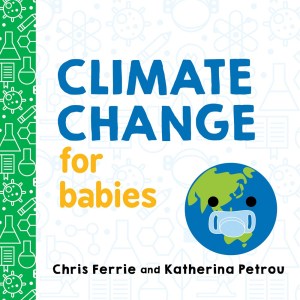
Climate Change for Babies, by Chris Ferrie/Illustrated by Katherina Petrou, (Aug. 2020, Sourcebooks Explore), $9.99, ISBN: 9781492680826

Ages 2-5

Another Chris Ferrie STEM board book! I love his STEM series for babies and toddlers. Here, Chris Ferrie and illustrator Katherina Petrou teach littles about climate change, using the idea of a blanket keeping planets warm: that’s the atmosphere. Different planets have different blankets, but Earth’s blanket is just right, thanks to our trees, animals, and oceans… but not when people start changing the blanket with transportation, pollution, and livestock! When our blanket gets too hot, Earth doesn’t feel well, and makes a lot of things go wrong. What can we do? Lots of things, like plant more trees, cut down on coal, oil, and cars and factories! Simply illustrated with bright colors and pictures of happy and sad planets, vehicles, and landscapes, kids will be entertained while we grownups digest the big picture and talk about keeping our world safe and healthy.


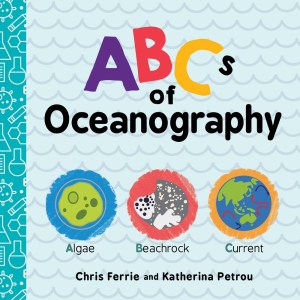
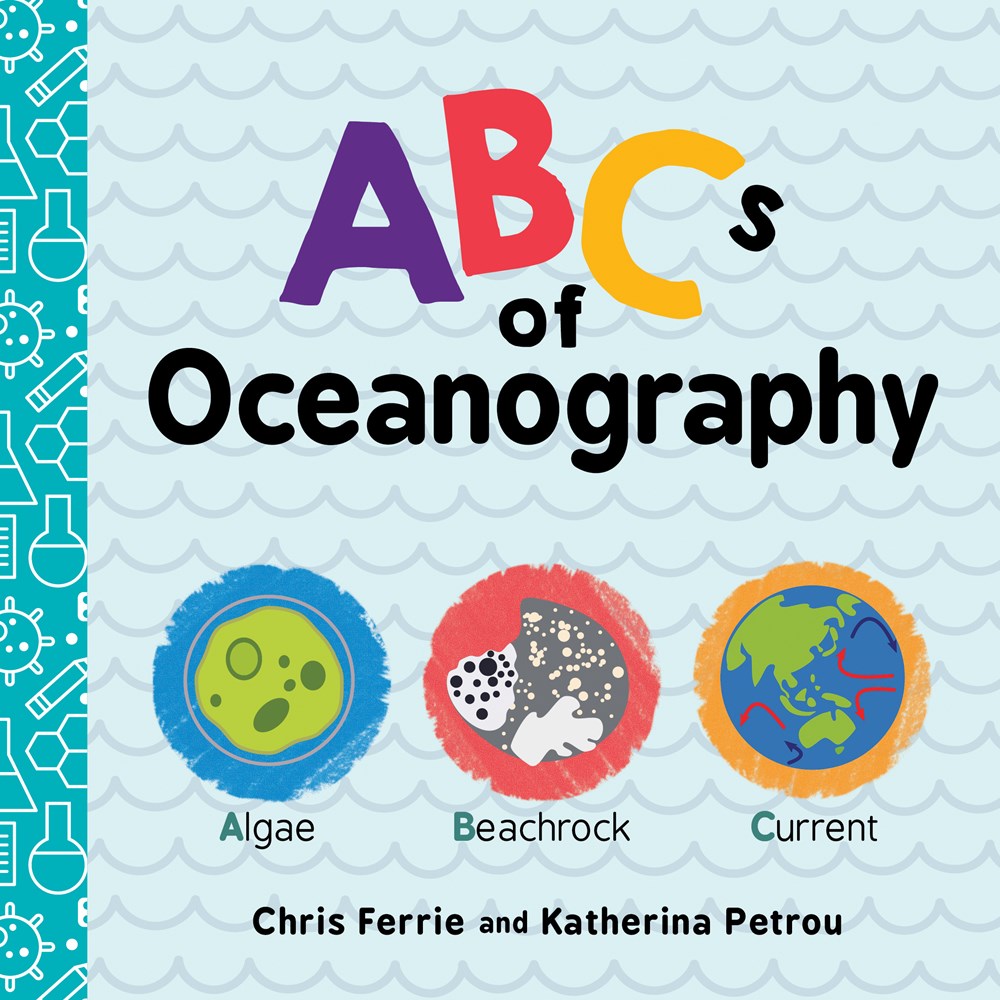
ABCs of Oceanography, by Chris Ferrie/Illustrated by Katherina Petrou, (Aug. 2020, Sourcebooks Explore), $9.99, ISBN: 9781492680819

Ages 2-5

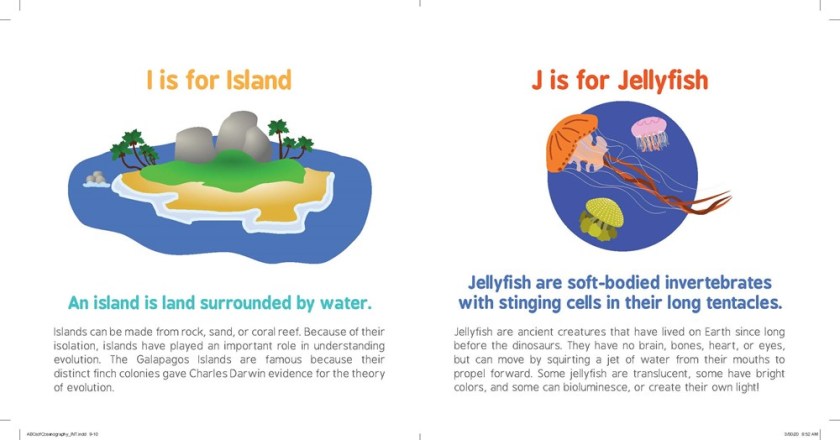
It’s a Chris Ferrie Fest! ABCs of Oceanography is the seventh(ish?) book in Ferrie and illustrator Katherina Petrou’s ABCs series. Like other books in the series, this book grows along with your little ones: Colorful pictures illustrate each alphabetical concept, with the letter and word bright and bold, standing out against a stark white background: “A is for Algae”, with an illustration of algae. Next, for young learners, the concept word is used in a descriptive sentence: “Algae are aquatic life that conduct photosynthesis”; using bigger vocabulary words in a scientific context, to introduce preschoolers to the basic words they can expect to learn in kindergarten. Finally, a fuller definition, perfect for children moving up into elementary school, yet still easy enough to grasp, to give them the full breadth of the definition and ownership of the concept. There are familiar words, like Dolphin, Island, and Octopus, and newer words, like Euphotic Zone, Gyre, and Quahog. Pair with Baby Shark and get some flannel ocean figures out!

Sourcebooks has a Baby University page on their publisher website, that features Chris Ferrie’s books organized into series: For Babies, ABCs, and Picture Books.


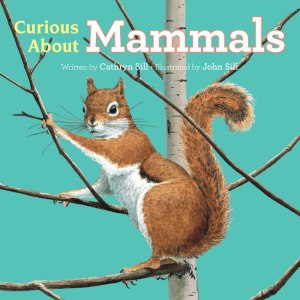
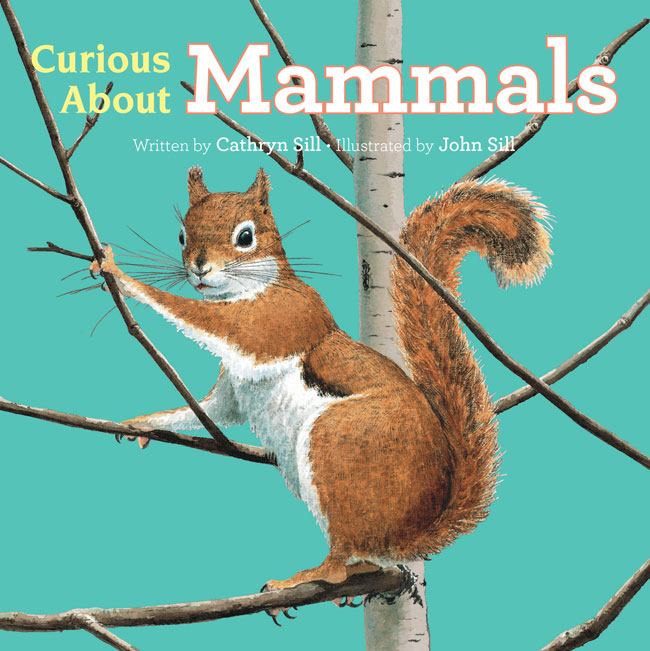
Curious About Mammals, by Cathryn Sill/Illustrated by John Sill, (Aug. 2020, Peachtree Publishing), $6.99, ISBN: 978-1-68263-198-0

Ages 0-3

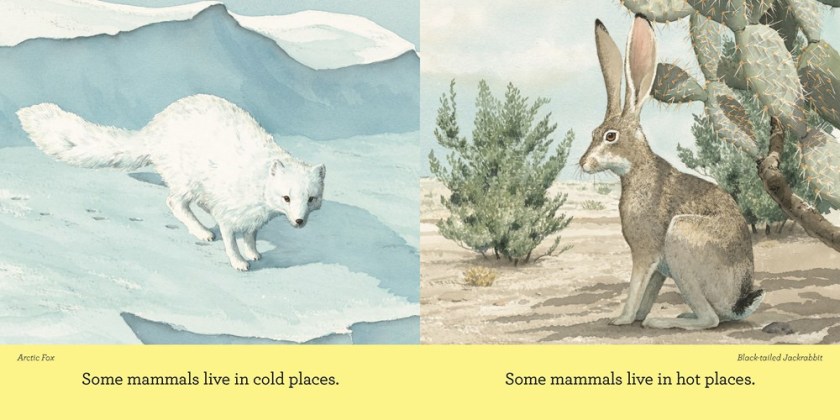
This book is adorable and informative! The second book in Peachtree’s and author-illustrator team Cathryn and John Sill’s Discovering Nature series, Curious About Mammals presents one-sentence facts about mammals, accompanied by elegant, detailed wildlife artwork by wildlife illustrator John Sill. The sentences contain basic facts and plenty of sight words for young learners, with the accompanying artwork showing animals in their daily lives: climbing; swimming; flying; alone, or with a group. Each animal’s common name appears under their picture, in small italic text, letting readers go back and discover their new favorite animals again and again. Some may be familiar, like the Northern Raccoon and Blue Whale; others may be brand new, like the Black-Tailed Jackrabbit and American Badger. A great add to board book collections where you have burgeoning animals fans.

Posted in Non-Fiction

Poems celebrate creatures who build in A Place to Start a Family

A Place to Start a Family: Poems About Creatures That Build, by David L. Harrison/Illustrated by Giles Laroche, (Jan. 2018, Charlesbridge), $17.99, ISBN: 9781580897488
Recommended for readers ages 5-9
A nice meeting of prose and science, A Place to Start a Family includes 12 poems about creatures that build homes to house their families. Organized into poems for animals who build underground, like prairie dogs and moles; on land, like the cobra or termite; in water, like the beaver or pufferfish; in the air, like storks and wasps, each poem is illustrated with attractive, textured mixed media artwork. Poems are brief, factual, and some bring a tongue-in-cheek sense of humor to nature. Witness the poem in praise of the White-Spotted Pufferfish: With tail and fin/hoping he/will soon charm/a willing she/he works hard/day and night/Will he win a mate?/He might. More information about each animal, including scientific names, descriptive paragraphs, and further resources, are available at the end. Thanks to the authors and editors for recommending readers visit the library to learn more! A nice additional resource for animal and poetry collections.
Posted in Early Reader, Non-Fiction, Non-Fiction, Preschool Reads

Do you like to play? Animals do, too!

animals-doAnimals Do, Too!, by Etta Kaner/Illustated by Marilyn Faucher, (May 2017, Kids Can Press), $16.95, ISBN: 9781771385695

Recommended for ages 4-8

Do you like to dance? Do you like to play leapfrog? Play tag? Well, guess what: animals do, too! This fun book features pictures of families at play on one spread, and a corresponding spread on the next two pages, with a group of animals engaged in the same fun. The alternating question and answer format engages kids right away, and the activities that we humans do for fun, while animals do them to find food and care for their young will spark discussion with young learners.

Animals Do, Too! features animals that differ from the usual farm and jungle animals kids meet in their books. Sure, we’ve got bumblebees and frogs, but we also meet cattle egrets and marmosets, gazelles and leaf-cutter ants. A spread at the back of the book provides fast facts about each animal in the book.

There is some lovely watercolor work here, featuring lovely nature scenes. The families are enjoying one another, and the animals are playful while completing their everyday work. The parallels between humans and animals should engender interest and empathy in kids and will start some great conversations – ask the kids around you to think of animals they see every day: what does a cat do that a person does? (Stretching is a good one!) What does a dog do that a person does? (Jump and play!) You can create matching games that match the activity with the animal, for younger learners; bonus: they get to color.

The question and answer pattern of the text invites kids to interact with the text and gives them a chance to contribute before revealing the answer on the following spread. This is a good additional purchase for nature, life science, and animal collections.

Posted in Middle Grade, Middle School, Non-Fiction, Non-fiction, Teen, Tween Reads

Bridge to the Wild: Zoos connect people and animals

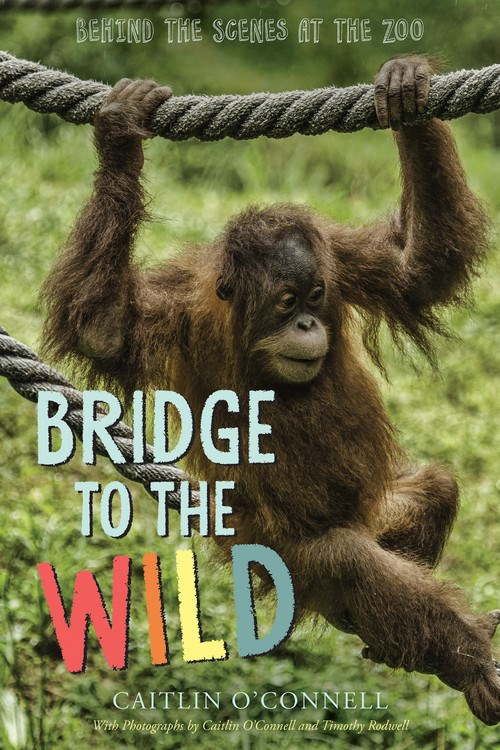
bridge-to-the-wildBridge to the Wild, by Dr. Caitlin O’Connell/Photographs by Timothy Rodwell, (Aug. 2016, HMH Books for Young Readers), $18,99, ISBN: 9780544277397

Recommended for ages 10 and up

I’m about to gush here. If you read my reviews often enough, you probably have guessed that I love any nonfiction book about animals, conservation and preservation, and even better when the ideas are combined. In Bridge to the Wild, Dr. Caitlin O’Connell begins by recalling a childhood visit to the zoo – back when animals were still largely kept in cages (I remember it well), and saw a gorilla, seemingly in deep despair over living in a cage not much bigger than he was.

Thankfully, those days are (mostly) over. Zoos are more like natural preserves now, offering many animals larger spaces to roam; conservation and preservation is the order of the day, with zoo staff rescuing and caring for animals all over the world. As more animals face extinction at the hands of poachers, habitat devastation, and pollutants that contaminate their environment, zoos are playing a bigger part in keeping our wildlife alive, and conducting valuable research on improving their conditions and our world. Bridge to the Wild is Dr. O’Connell’s manifesto, where she lays out the valuable ways zoos are a bridge for humans, to the wild outside our doors.

Dr. O’Connell spent a week working with the staff at Zoo Atlanta –  a private, nonprofit wildlife park and zoo – to observe the relationships between animals and caretakers, to help strengthen this bridge. After all, what we see as observers is only the tip of the iceberg; many, many loving and brilliant people are behind the scenes, learning about and learning from the animals, caring for them, loving them. From the Dawn Chorus – the morning symphony conducted by the tenants as the day begins, to the Dusk Chorus, when they start winding down for the night, Dr. O’Connell and Tim Rodwell introduce us to the inhabitants of Zoo Atlanta, from the pandas, to the hornbills, meerkats, gorillas, tigers and more.

There are anecdotes and beautiful photographs, a “Keeper Feature” that profiles the different keepers at Zoo Atlanta, and a fantastic note on ignorance and extinction, which is a real call to action to end senseless poaching of animal parts for talismans and “remedies” that simply don’t work. A full bibliography and sources are available and provide more research opportunities, and data sheets encourage budding zoologists to do some research on their own, guided by Dr. O’Connell, who lays out simple experiments to observe and record behaviors.

Animal books are hugely popular with my Corona Kids, and I’ve been stacking my collection with plenty of rescue, preservation, and conservation titles for them, to drive home the point that this planet doesn’t only belong to us. Bridge to the Wild is going to be one of those books I talk endlessly about, especially since my library is about a stone’s throw away from the Queens Zoo. I may even slip copies of this book into teachers’ hands during class visits, with a “hint, hint” nudge for a class trip activity (sorry, kids!). That’s how important this book is to me.

Bridge to the Wild has received a starred review from School Library Journal. Learn more about Dr. O’Connell’s work and books at her author website.
Take a peek at a chapter excerpt on meerkats, then go order this book for your animal lovers!
meerkat_1