Posted in picture books

Holiday Shopping Suggestions!

Over the next few days, I’ll be working on a few holiday shopping ideas. To paraphrase one of the pillars of Library Science, there’s a book for every reader, right? If you need some books for some littles over the next couple of days, I got you.

For the kid who loves being outdoors:
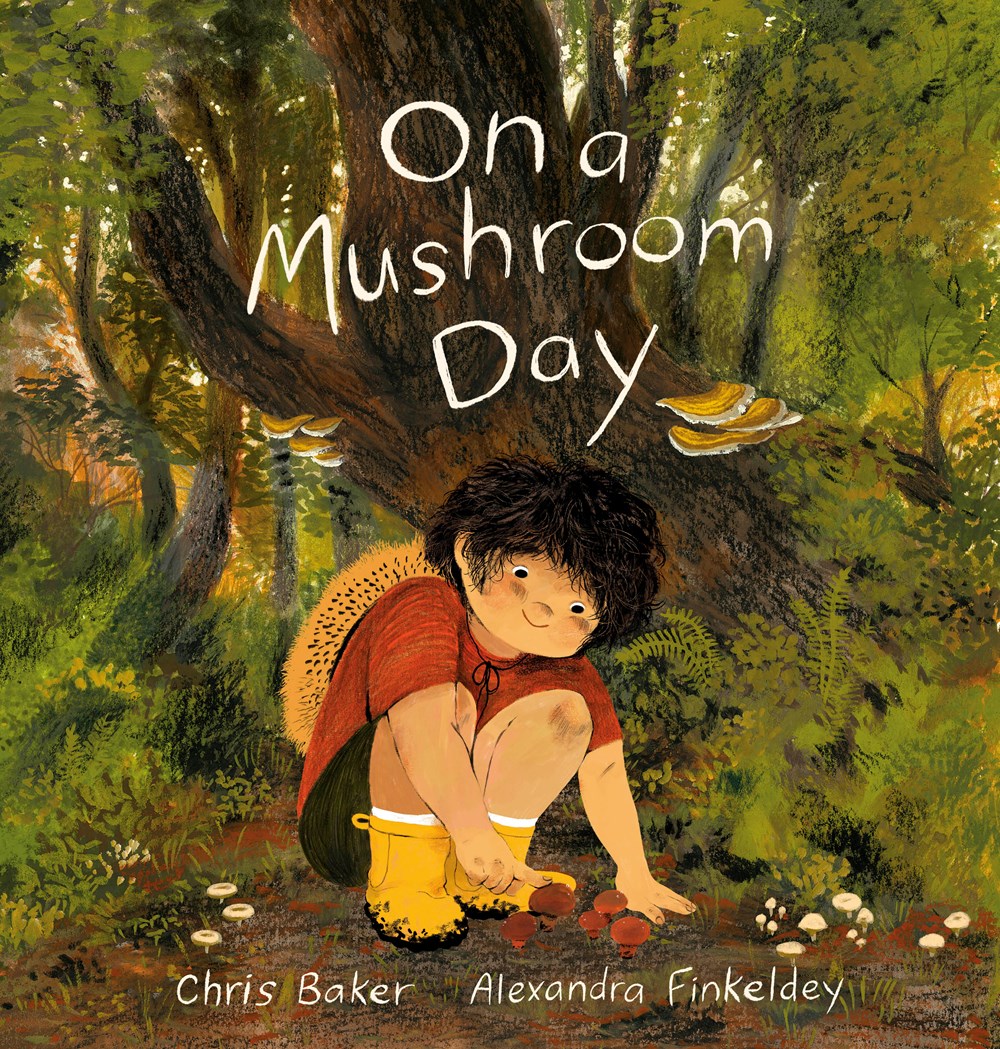
On a Mushroom Day, by Chris Baker & Alexandra Finkeldey, (July 2024, Tundra Books), $18.99, ISBN: 9781774882580

Ages 3-7

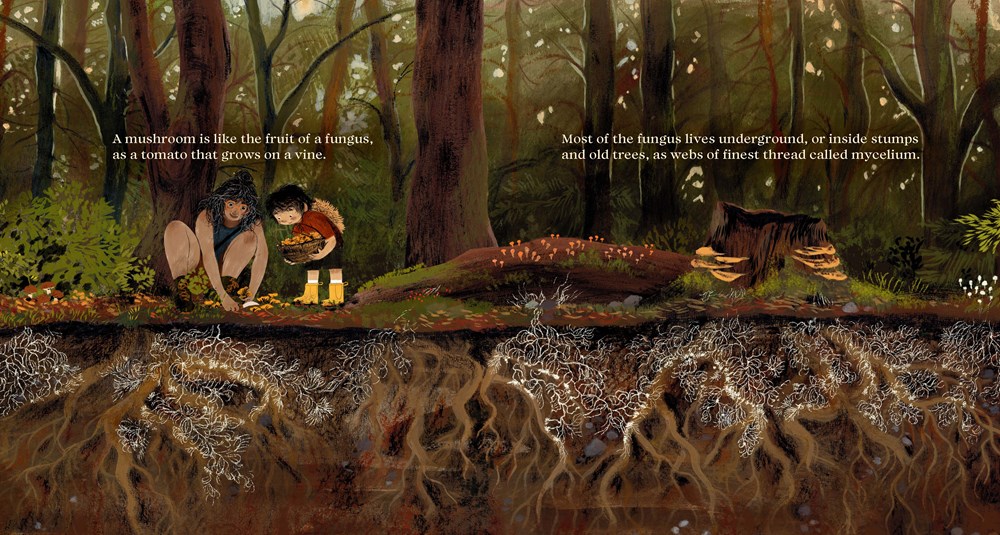
Go on a lyrical exploration with a caregiver and child, discovering the different types of fungi. Baker and Finkeldey engage all five senses in this informational story that walks readers through a forest that “springs a little under your footsteps”; listening to birds and mosquitoes through the canopy; smelling delicious aromoas wafting up from the forest floor; seeing the different colors and shapes of various mushrooms – “like the fruit of a fungus, as a tomato that grows on a vine”, and finally, after a long day of exploring and gathering, tasting “something wonderful indeed”. Earthy-colored illustrations pair with fantasy images of mythical forest creatures to create truly delightful images for the readers. Back matter includes species of mushrooms featured in the story, fungi facts, resources for further reading, and tips for having one’s own mushroom day. A sweet and informative book for beginning mycologists and those with an interest in nature.

Have kids who want more mushroom info? You can’t go wrong with Elise Gravel’s Mushroom Fan Club.
 

For the kid who loves the Alphabet Song:
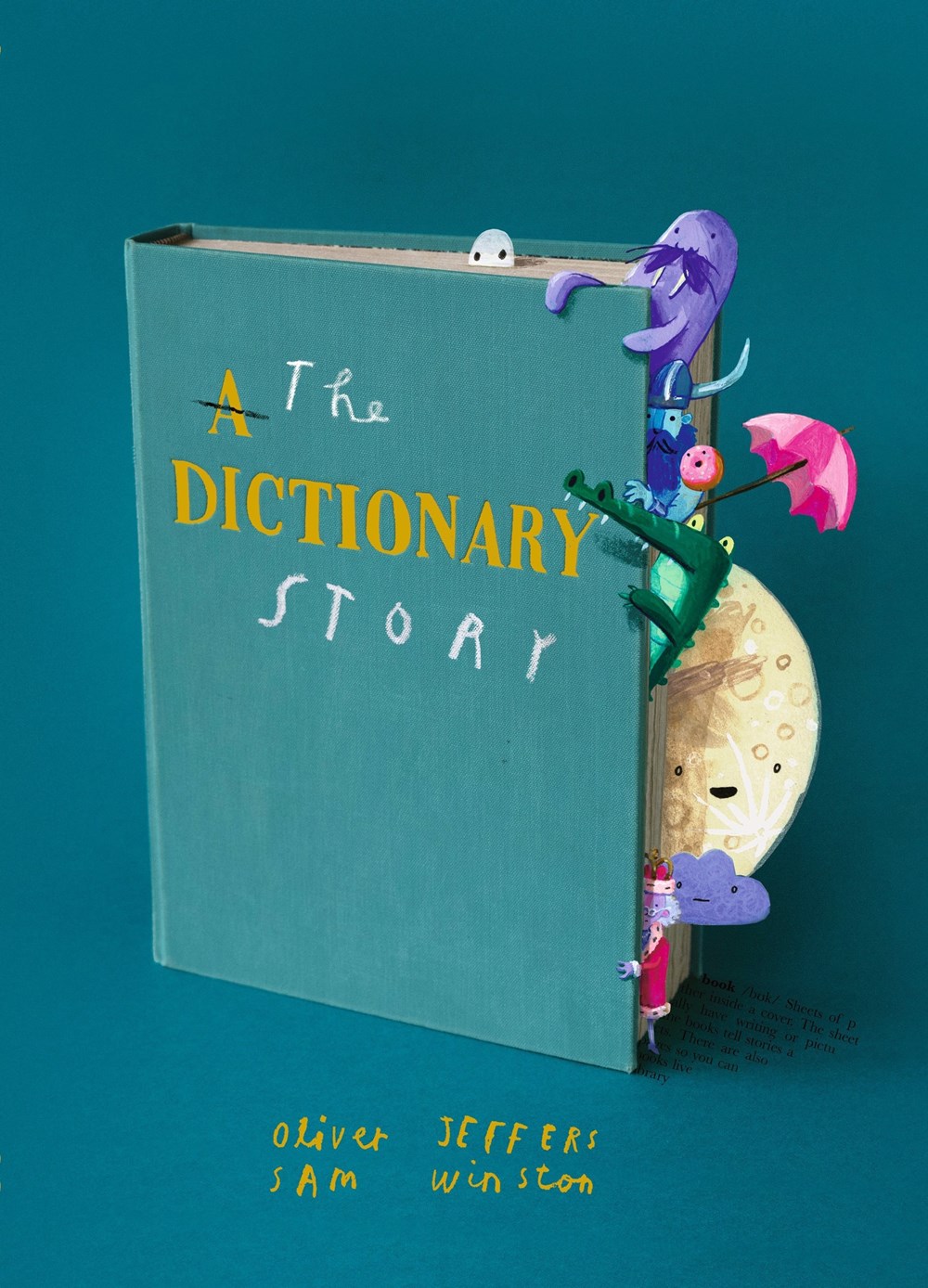
The Dictionary Story, by Oliver Jeffers & Sam Winston, (Aug. 2024, Candlewick Press), $18.99, ISBN: 9781536235500

Ages 3-7

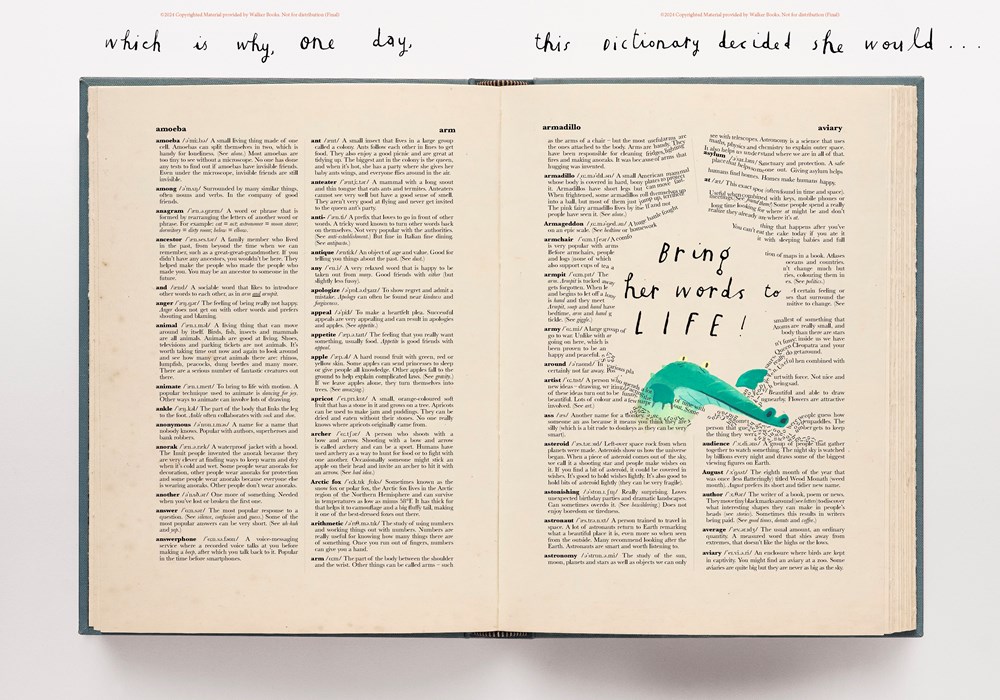
Any Oliver Jeffers book is going to offer readers a great adventure. Here, Dictionary longs to create a story like other books, and brings her words to life: it’s cute at first, with Alligator in search of a tasty Donut, but things quickly escalate and things spin out of control! The Moon wonders what beings from the front of the library are doing over in her area; a Ghost appears and frightens everyone; a moody Tornado emerges and threatens to wreck everything! Dictionary is going to need some help from friend Alphabet to get things back in order. The delightful story and masterful illustration includes dictionary pages as the main backdrop; the illustrations run rampant over the dictionary entries, causing the dictionary’s organized layout to bend and snap out of shape under the weight of the characters. It all comes together to create a playful adventure that will easily become a storytime mainstay.

A Dictionary Story has starred reviews from Kirkus, Booklist, and Shelf Awareness; it was also an Indie Next selection.
 

For the adventurer:
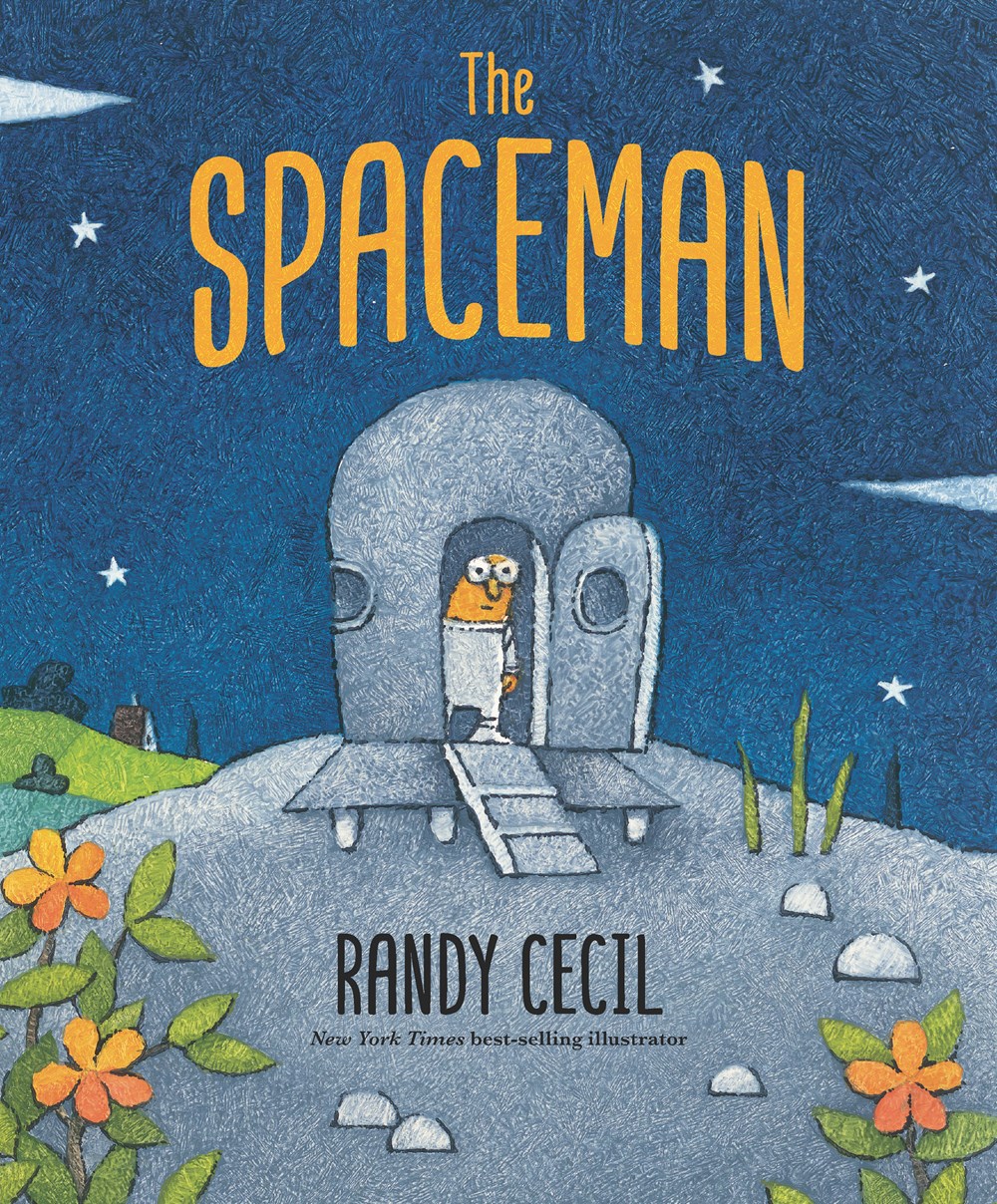
The Spaceman, by Randy Cecil, (May 2024, Candlewick Press), $17.99, ISBN: 9781536226164

Ages 3-7

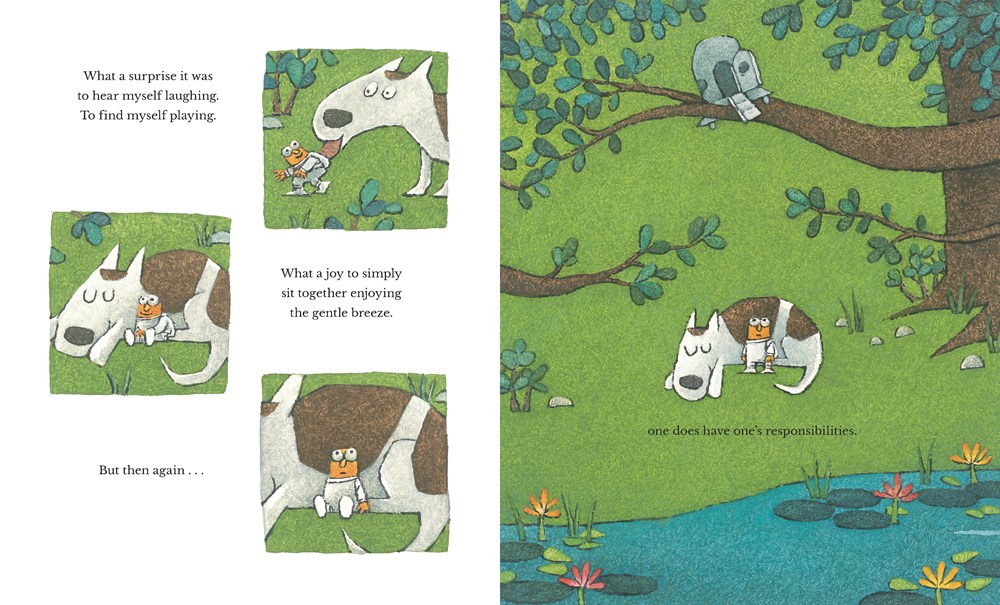
A diminutive spaceman arrives on the latest planet on his roster and sets about his usual, if a bit boring, tasks; collecting, labeling, and filing soil samples. This time is different, though: he discovers a beautiful red flower. While he’s gazing at the flower, his ship is stolen and he pursues the bird in question. While in pursuit, he discovers even more incredible sights: “a fantastical array of creatures… Some were wonderfully strange. Some were adorable. Some were beautiful”. He even meets a curious, furry friend to share time with. After spending a day with his new friend and realizing happiness, he has to make a decision: go back to his responsibilities, or… maybe not? With sweet and deadpan humor, Cecil’s storytelling and illustration makes for a story that readers will enjoy for multiple readings.

The Spaceman has starred reviews from BookPage, Kirkus, School Library Journal, and Booklist.
Posted in picture books, Preschool Reads

There’s No Such Thing as Vegetables? Fantastic, can’t wait to tell my kids!

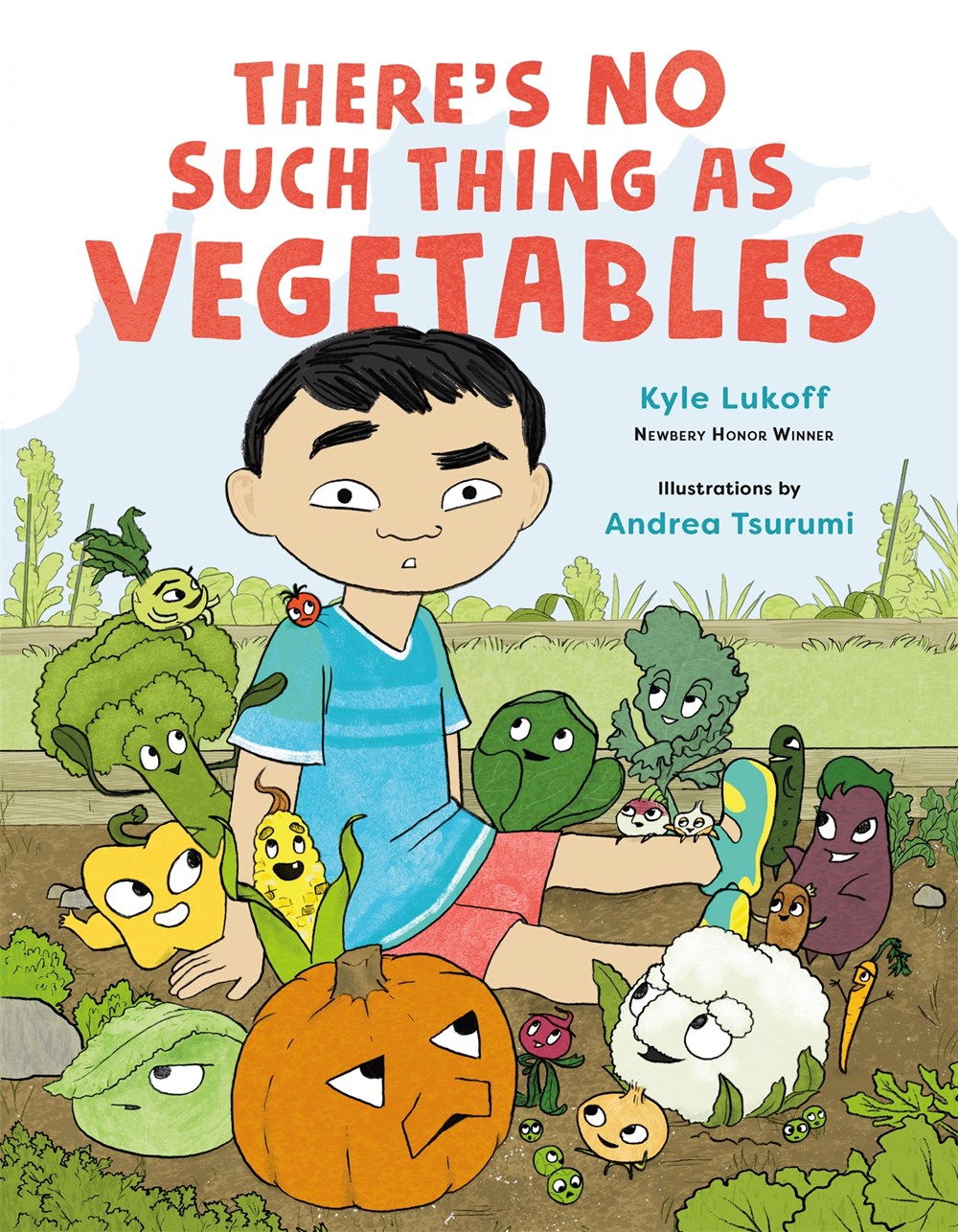
There’s No Such Thing as Vegetables, by Kyle Lukoff/Illustrated by Andrea Tsurumi, (Feb. 2024, Henry Holt & Company), $18.99, ISBN: 9781250867841

Ages 4-8

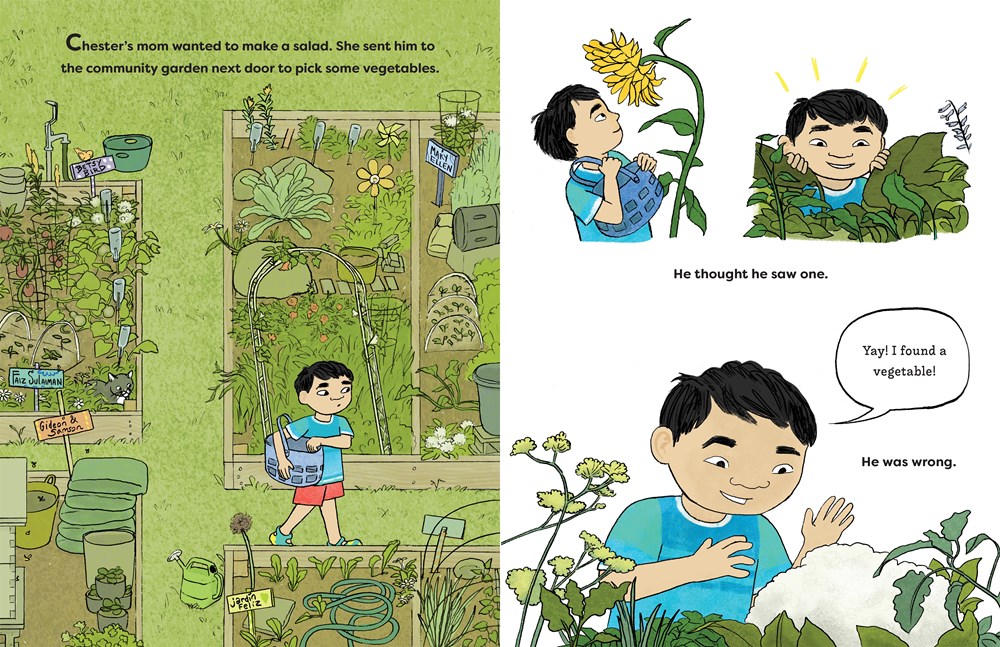
Chester is a kid who just wants to get some vegetables from the community garden so his mom can make him a salad. He gets schooled by the garden’s inhabitants on the many groups that fall under the “vegetable umbrella”. Broccoli? That’s a flower, and her name is Juanita, thank you very much. Potato and Carrot? Those are roots; Lettuce and Kale? Those are leaves. Cucumber, Pepper, and Eggplant are all fruits. Different groups explain their importance and their jobs to Chester with often hilarious moments: Lettuce informs Chester that being good in a salad doesn’t make one a vegetable: “…bacon is good in salads, but that doesn’t make bacon a vegetable”. When Chester claims that vegetables taste good but don’t have a lot of sugar, Beet corrects him, noting that “they literally use me to make sugar”. So why are all these different groups of tasty foods grouped under one term? “Say anything enough times and it’ll stop sounding like a real word”, replies Corn. Newbery Honor Award and Stonewall Award winner Lukoff takes a funny story about vegetables to teach a lesson on social constructs, and an author’s note at the end of the story invites readers to think about  and discuss other social constructs. Tsurumi’s illustrated vegetables have personality, and Chester is sweetly exasperated as he tries to work it all out. Endpapers show the group of of sassy “vegetables”, clearly labeled to help readers identify them. Download free activity worksheets here.

Kyle Lukoff is a Newbery Honoree, a Stonewall Award winner, and a National Book Award finalist. Visit his author page to learn more about his books and upcoming events. Illustrator Andrea Tsurumi is a Society of Illustrators Silver Medalist and Red Clover Book Award recipient. You can visit their author page to read their comics and learn more about their books.


Posted in Middle Grade, Non-Fiction, Non-fiction, Teen, Tween Reads

#HomesCool: Career Day, Playing with Words, Women’s History, and ICK!

More #HomesCool fun as I catch up on my Summer Reading TBR! Here’s what’s good this week:

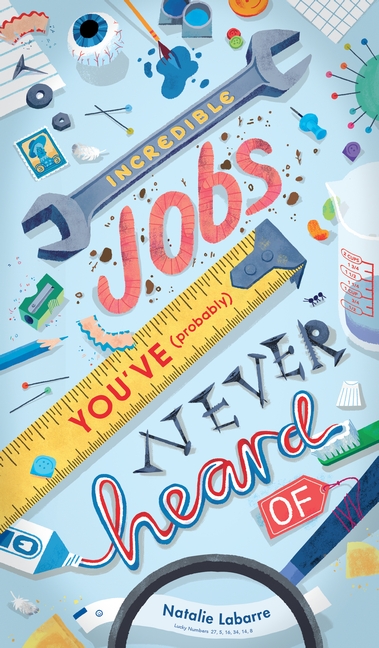
Incredible Jobs You’ve (Probably) Never Heard Of, by Natalie Labarre, (Apr. 2020, Nosy Crow), $19.99, ISBN: 9781536212198

Ages 9-12

Welcome to Career Day! What do you want to be when you grow up: a librarian? Teacher or doctor? How about… a Train Pusher, or a Pet Preservationist? If the usual Career Day job list is leaving you with a case of the blahs, Incredible Jobs You’ve (Probably) Never Heard Of is the book for you and your kiddos. Oversized and illustrated in full color, this book spotlights jobs that are off the beaten path: sure, kids may have heard of an Egyptologist, but do they know that a Body Farmer uses the bodies of folks who’ve donated their bodies to science to recreate crime scenes or do scientific research? Or that a Chief Sniffer smell-checks anything going on a spacecraft launch? How about creating works of art from cheese, like a Cheese Sculptor? There are so many great jobs in here, kids will never look at Career Day the same way again. Illustrated with upbeat, fun artwork, and bright blue endpapers that give nods to all sorts of careers waiting inside, this is way too much fun, and a brand new take on the question, “So… what do you want to be when you grow up?”.


Alphamaniacs: Builders of the 26 Wonders of the Word, by Paul Fleischman/Illustrated by Melissa Sweet, (Apr. 2020, Candlewick Studio), $19.99, ISBN: 9780763690663

Ages 12+

Looking like an artist’s journal, filled with colorful, mixed media illustrations in bold, wild colors, Alphamaniacs is a book for those of us who love words and language. Twenty-six profiles fill this book, but they’re not the kind of wordsmiths you may think of: Simon Vostre, the 15-century publisher of religious books who wrote book curses to protect his works from careless readers and handlers: “Whoever steals this Book of Prayer / May he be ripped apart by swine, / His heart be splintered, this I swear, / And his body dragged along the Rhine”; Corín Tellado, the prolific author whose writing career left us with over 4,000 novels; and Daniel Nussbaum, the creator of “PL8SPK” – vanity license plates that retell the classics – are all here, as are other word artists and lovers. The book is perfect for tweens and teens who love a good word-related joke, and can be used in ELA classes to show how much fun it is to play with language. Any language!

Alphamaniacs has starred reviews from Kirkus and the Bulletin of the Center for Children’s Books.


Noise Makers: 25 Women Who Raised Their Voices & Changed the World, by Kazoo Magazine, Edited by Erin Bried, (Jan. 2020, Alfred A. Knopf), $25.99, ISBN: 9780525580171

Ages 9-14

This book is AMAZING. It’s a graphic novel look at 25 women who made history, written and drawn by some of the most outstanding names in comics and graphic novels today, including Lucy Knisley, Maris Wicks, and Kat Leyh. Collected by the editors at Kazoo Magazine, every woman profiled here gets star treatment: a biographical spread with a picture, summary paragraph, and bullets points, inviting readers to see what they have in common with these women (talk about inspiring!), and a short graphic novel story from the woman’s life. Eugenie Clark, the “Shark Whisperer” (and Shark Lady, according to Jess Keating), is here; Wangari Maathai, who planted trees in Kenya, is here, too. Junko Tabei, the first woman to reach the peak of Mount Everest; artist Frida Kahlo, and musician and spy Josephine Baker are all here, too. Their stories are beautifully told and in a way that links reader, writer, and subject. Noise Makers organizes profiles under six areas: Grow (women who worked with nature); Tinker (entrepreneurs and inventors); Play (those with more physical accomplishments); Create (artists and creators); Rally (advocates and activists); and Explore (pioneers and explorers). This is essential, joyful, reading. Each contributing artist has a profile in the back matter. Put a copy on your Biography shelves and a copy on your Graphic Novels shelves.


Ick! Delightfully Disgusting Animal Dinners, Dwellings, and Defenses, by Melissa Stewart, (June 2020, National Geographic Kids), $14.99, ISBN: 9781426337468

Ages 7-13

You have got to love NatGeo Kids for having their finger on the pulse of what kids like. Ick! celebrates the grossest stuff in the animal world: caterpillars that camouflage themselves to look like dung, birds who build their nests with spit, a wasp who builds her nest inside her prey; it’s all here, with full-color photos that will make readers squeal with macabre delight. Organized into sections on Disgusting Dinners, Disgusting Dwellings, and Disgusting Defenses, readers learn all about the ways animals live, eat, and protect themselves. Callout facts and stats feature throughout the book, as do “Extra Ick!” sections with even grosser facts! Birds, bugs, mammals, fish, lizards, every type of animal can be found here: 45 of them, to be precise. A glossary, selected sources, and index round out the back matter.

Pair this with NatGeo Kids’ and Anna Claybourne’s Don’t Read This Book Before Dinner for an all-out squeal fest. And check out the Ick! section of author Melissa Stewart’s webpage, which includes a great interactive teaching presentation!


Posted in Uncategorized

Gift Guide for Little Readers

What do you get the littlest readers? (Hint: BOOKS) Come on, everyone else is going to get them all the toys.

Alphabet Street, by Jonathan Emmett/Illustrated by Ingela P. Arrhenius, (Oct. 2019, Nosy Crow), $17.99, ISBN: 9781536208276

Ages 0-4

How fantastic is a lift-the-flap book that also folds out into a little neighborhood street? It’s an alphabetical trip through 13 storefronts, where each store is named after neighboring letters (Alfie’s Bakery; Coffee & Donuts; Elegant Fashions) and feature two big flaps, where little explorers can discover an alphabet lesson. The reverse side of the flaps is a bright, bold, park play area, making this absolutely perfect for kids to bring out their toys to interact with the storefronts and the book characters! The construction is sturdy, and will hold up to lots of play; the book is held together with a blue satin ribbon to keep everything together when not laid out. There’s eight feet of play here, so kids can play together or fly solo. If you put a copy in your storytime reference, your library kids will love you.

I am a big fan of Ingela P. Arrhenius’s art, which is so perfect for toddlers and preschoolers who love to see big, expressive, and friendly animal faces. The retro art, the big, bold color, it all makes for fun, tactile learning play.


100 First Words, by  Edward Underwood, (Sept. 2019, Nosy Crow), $9.99, ISBN: 9781536208221

Ages 0-3

This giant board book is loaded with words to explore – there are bunches of them hidden behind flaps, where a fence can reveal a pig; fold back a leaf to discover a caterpillar; discover a cat hidden behind a houseplant. Big, bold words are paired with bold, bright artwork, and sturdy flaps will hold up to curious little hands that want to explore over and over again. There are animals; household items; means of transportation (including a rocket ship!); body parts; baby esssentials, like diaper, cup, pajamas, and teddy: all easy words for you to share with your little one, and most easily enough spotted in the wild that you can point them out and reinforce the picture-word connection. Edward Underwood is great with concept art for little ones, and makes this book absolute fun.


Posted in Fantasy, Fiction, Middle Grade, Tween Reads

How many words will stay on The List?

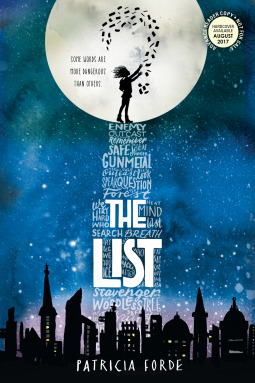
The List, by Patricia Forde, (Aug. 2017, Sourcebooks Jabberwocky), $16.99, ISBN: 9781492647966

Recommended for readers 10-13

A post-cataclysmic society called Ark is led by a fanatic who believes words are at the heart of the problem. After all, words can stretch the truth, can bend, can lie, just like the politicians did before The Great Melting. Letta is apprenticed to Ark’s wordsmith, Benjamin; the community is allowed only 500 words, which Benjamin and Letta curate. Benjamin saves words for a time when man will be able to handle more – or so Letta believes. When Benjamin disappears on a word-finding mission, and Letta meets a boy from a neighboring community of free-thinkers and artists, she discovers that their leader, the leader she put her trust in, is working on a way to rob the people of Ark of language forever.

The List is similar on many levels to The Giver: an enclosed, guarded society, quiet removals of dissidents, and hidden truths waiting to be revealed. As an apprentice wordsmith, Letta sees more than the average Ark citizen; saving the life of a Desecrator – a member of a neighboring group of artists and musicians – opens her eyes to even more goings-on within Ark and its surroundings. It’s up to her to act on the information she receives, and she struggles with the burden of responsibility. There are strong themes for discussion here: the power of words, free thought and speech, and art as resistance. This is a great book to give readers who are ready for something beyond The Giver, but not yet ready for Fahrenheit 451. This novel can easily stand on its own, but readers may want to see what lies in Ark’s future.