Posted in Preschool Reads, Toddler Reads

The newest Board Books for little learners are GREAT!

I have a special place in my heart for a good board book. They’re so little, and durable, and take the biggest ideas in the world and make them perfect for little eyes, fingers, and minds (and yes, mouths) to enjoy. I  love everything about board books, so I’m always on the lookout for good ones to read to my toddlers and babies. Here are the latest ones that you can expect to show up in storytimes.
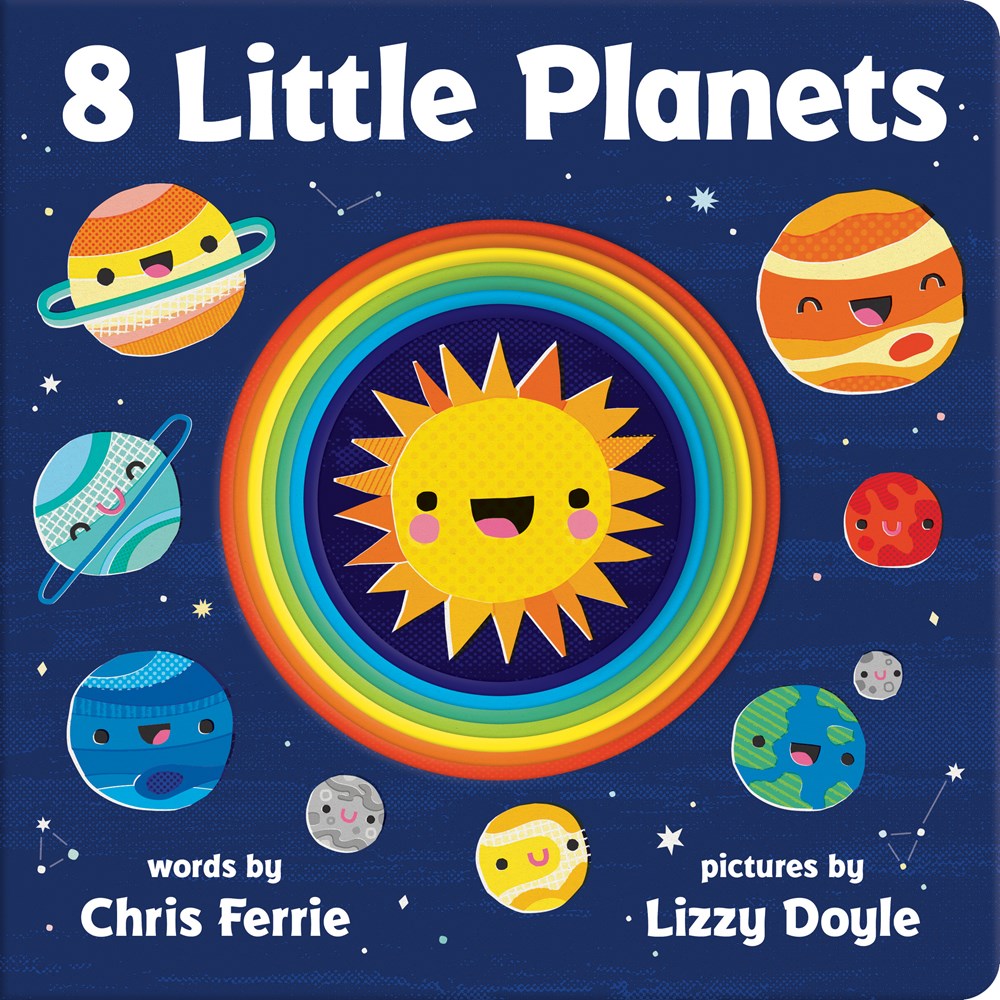
8 Little Planets, by Chris Ferrie/Illustrated by Lizzie Doyle, (Oct. 2018, Sourcebooks Jabberwocky), $10.99, ISBN: 9781492671244

Ages 2-5

How adorable is this book?! Put a cute little face on a planet or two, and I will buy it. It’s a weakness. Chris Ferrie, whose praises I sing pretty regularly here at MomReadIt, shifts his focus from the sciences to this sweet rhyming story about the planets. Counting down from 8 to 1, readers learn a couple of facts about each planet, from Neptune to Mercury, in an upbeat rhyming pattern that kids and caregivers will easily clap along with. Each planet is unique in its own way: Uranus spins on one side; Mars has the tallest mountain in the solar system. The collage artwork adds fun texture; there are corrugated planets and waffle-patterned moons, comets that combine textures, and happy stars and constellations abound. The happy-faced planets are going to delight any reader that comes across the book.

This is a perfect flannel board read. I’m going to have to get some flannel planets underway. Pair this with They Might Be Giants’ “How Many Planets?” to get the little ones up and dancing. For some more nonfiction-y board books, you can’t go wrong with ABC Universe, from the American Museum of Natural History (nice and big, for a larger storytime), and Our Solar System, also from the American Museum of Natural History, complete with graduated flaps that make turning pages a little easier for itty bitty fingers.

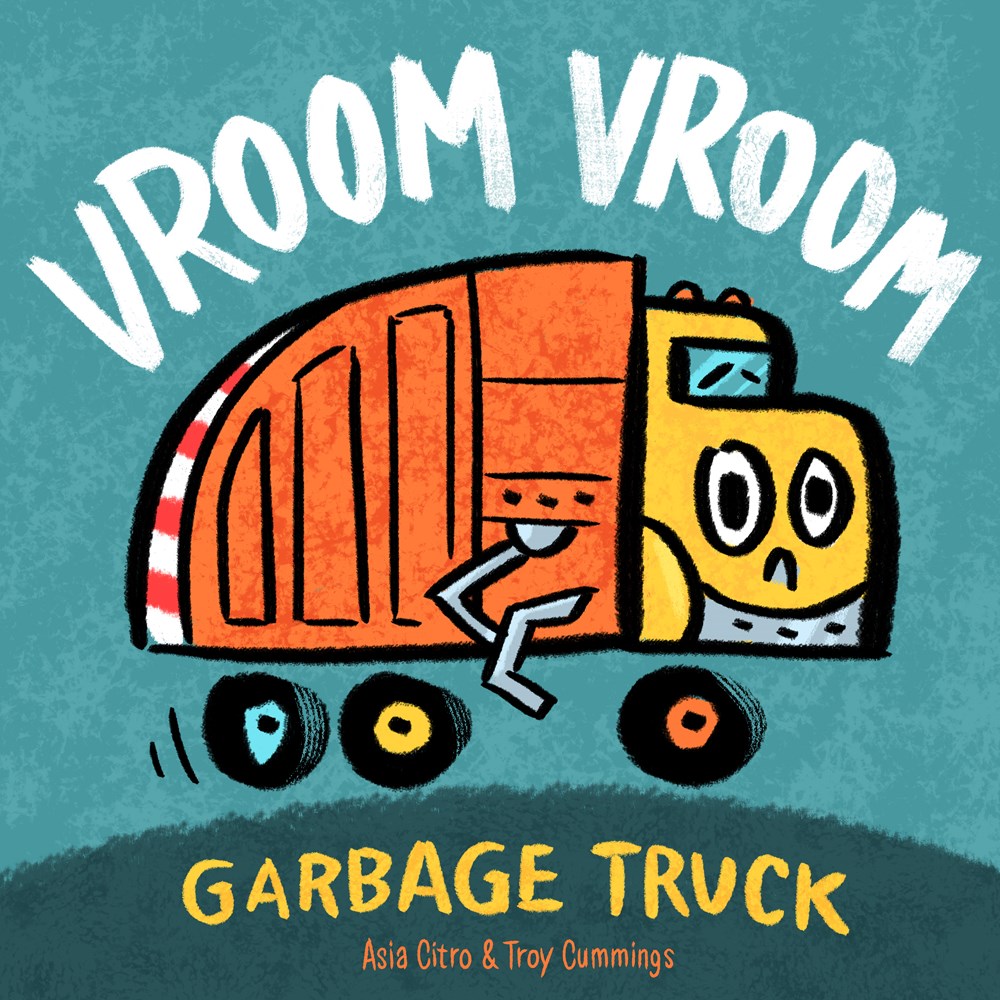
Vroom Vroom Garbage Truck, by Asia Citro/Illustrated by Troy Cummings, (Oct. 2018, Innovation Press), $8.99, ISBN: 9781943147434

Ages 0-4

A garbage truck wakes up and starts its day in this fun board book. Creaks and clangs, rumbles and bangs, and naturally, vroom-a-vroom vrooms abound as the garbage truck trundles through the city, picking up the trash and keeping its headlights open for crossing ducks and slowing down for a grateful early riser who forgot to put out his trash the night before. After a trip to the dump to lighten its load, Garbage Truck heads back to the garage for a good night’s sleep, with a shush, a sigh, and a click.

Told using only sound effects, this is a great story for infant and toddler storytime! There are so many fun sounds to make, and inviting caregivers to rumble and gently bounce little ones on their laps adds to the fun. Bold, black lines, bold, large text, and bright colors will keep little eyes engaged and active. There are oodles of great transportation board books out there to make for a fun storytime, especially anything by Byron Barton. If you want to go with a city-inspired storytime, you can’t go wrong with Christopher Franceschelli’s CityBlock. Songs and fingerplays abound, too. Add some plastic cars and trucks to your playtime and let the toddlers vroom along!

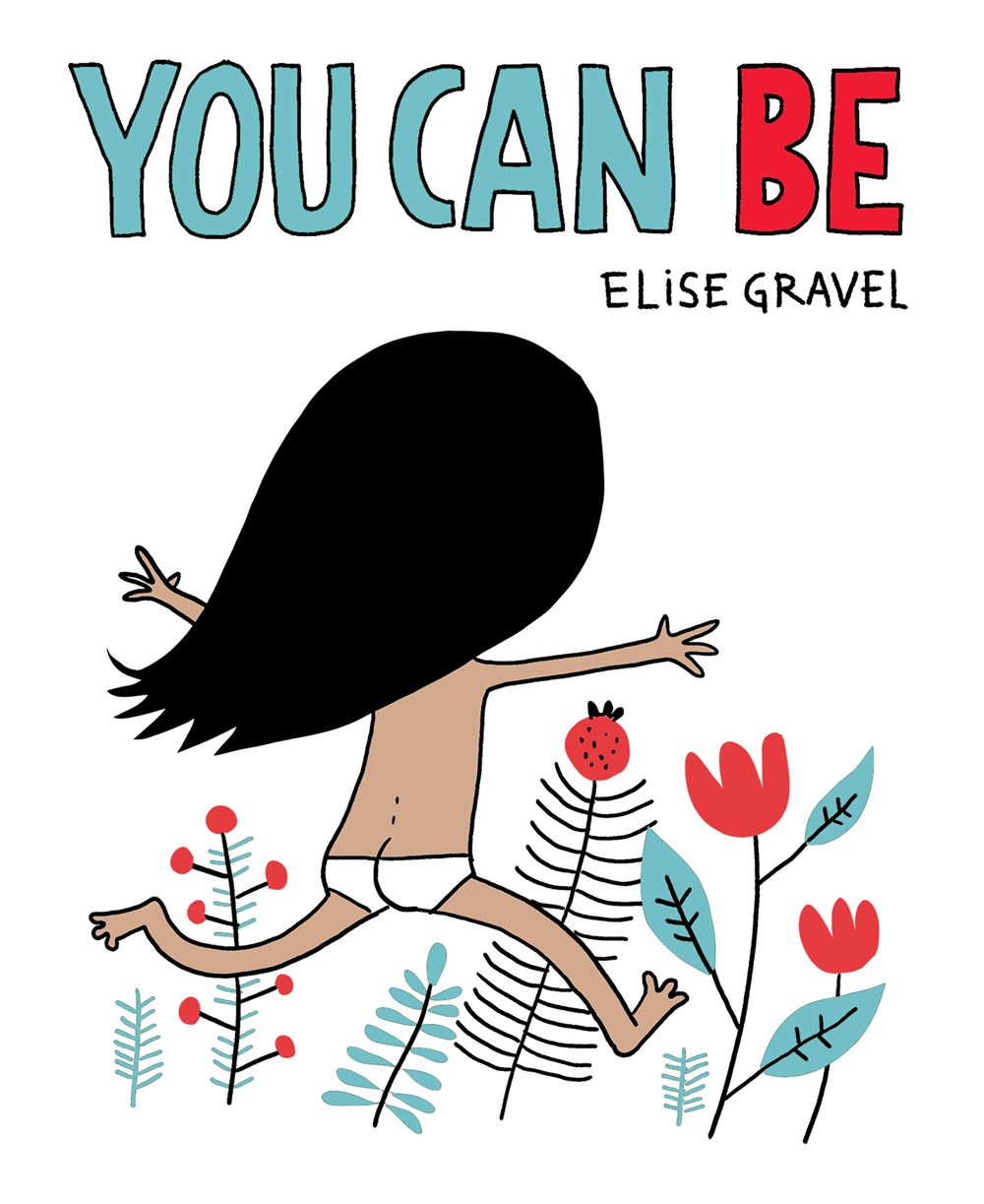
 

You Can Be, by Elise Gravel, (Oct. 2018, Innovation Press), $8.99, ISBN: 978-1-943147-40-3

Ages 3-5

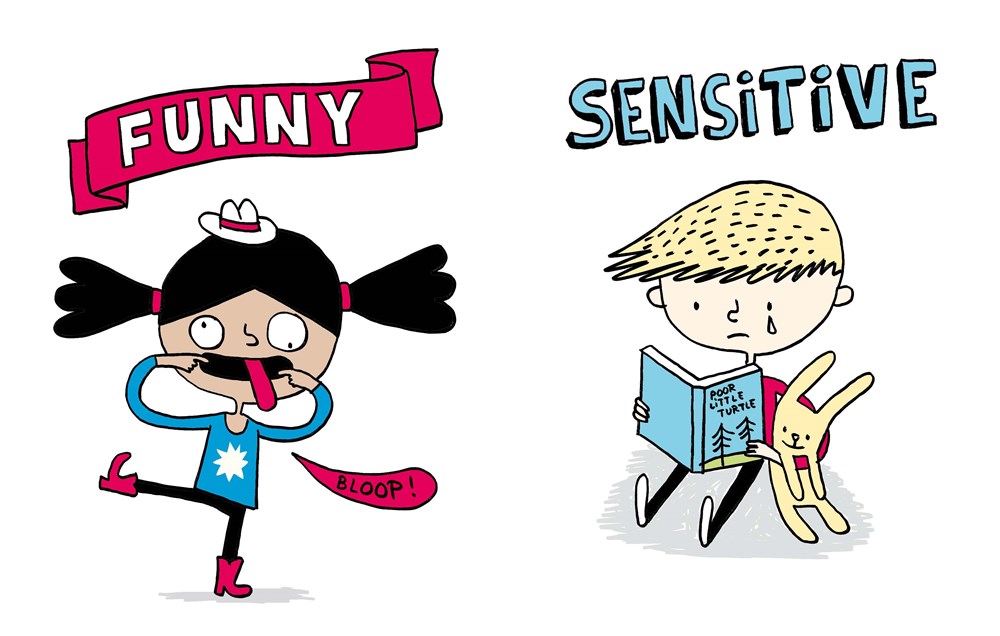
A sight familiar to any kid or caregiver, You Can Be starts readers off with a carefree kid, clad only in underwear, running across the cover. And you know this is going to be a kid-friendly book about being a carefree, happy kiddo. Elise Gravel starts off by telling readers, “There are many ways to be a kid. You can be…” and proceeds to bring readers through weird and wonderful ways of being a kid: funny and sensitive; noisy and artsy; grumpy and smelly (sometimes… complete with toot cloud!). Kids are diverse and the drawings are bold and bright, each adjective large, bold, colorful, and fun. The message here? You can be angry, you can be smelly, you can be funny, or quiet… there’s no wrong way to be a kid. After all, as Elise Gravel says, “you can feel “almost any way you feel like being. (Except mean or rude, of course.)” I love that gender doesn’t define anyone’s mood here: girls are smelly, boys are artsy; kids are kids. It’s a great message to readers about self-acceptance and self-awareness.

Invite your readers to act out different moods! Let them be as silly or serious as they want to be. I love all things Elise Gravel, so this one will be on my shelves, no question. Pair this one with any Todd Parr book for a feel good, I Love Me! storytime. Check out Elise’s website for a free downloadable book, Artsy Boys and Smelly Girls, and other fun downloadables!

 

Autumn Babies and Winter Babies, by Kathryn O. Galbraith/Illustrated by Adela Pons, (Sept. 2018, Peachtree Publishers), $6.95, ISBN: 9781682630662 (Autumn) and 9781682630679 (Winter)

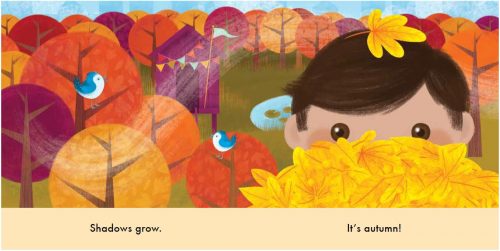
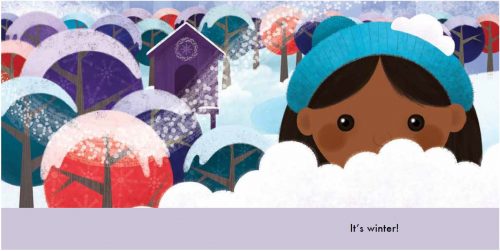
The first in a new series, Babies in the Park, Autumn Babies and Winter Babies star a group of multicultural babies who discover the joy in each season as they play in the park. Composed of two- and three-word sentences, each book takes readers through a park as it goes through the season. The four babies ( Sai, Simón, Jayden, and Emma) are dressed for the season and stomp, romp, and roll through the Fall, throwing sticks for pups to fetch, flying kites, and throwing leaves.

They bundle up for their winter playdate, sporting boots, hats, scarves, and warm coats. Snow plops, and babies catch snowflakes on their tongues, run, glide, and ride through the snow. Each book begins with a simple statement of the season: “It’s autumn in the park.” “It’s winter in the park”, establishing the season, and ends with a closeup of one a baby, with a joyful exclamation of the season: “It’s Autumn!” “It’s Winter!”

These books are such fun ways to greet the seasons, and the Babies in the Park idea is adorable. Give parents and caregivers ideas about activities – Peachtree has done the work for you and made up an activity companion sheet to the books! There are great extension activities to engage the kids during storytime: show different shapes (circle trees, diamond kites, triangle roofs), talk about different colors that you see. There are so many seasonal songs and fingerplays to be found on the Web: TeachingMama, one of my favorite blogs, always has adorable printables that you can give out to your families to sing along; let them bring the sheets home to keep the kids singing along after storytime.

If you want to read a little more about the series, Peachtree has an article on their website. Spring Babies and Summer Babies will be out early next year, so completionists like me can breathe a sigh of relief.
Posted in Preschool Reads

Oskar and the Eight Blessings: A Hanukkah tale

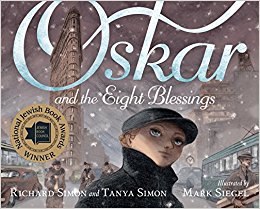
Oskar and the Eight Blessings, by Ricahrd Simon & Tanya Simon/Illustrated by Mark Siegel, (Sept. 2015, Roaring Brook Press), $17.99, ISBN: 9781596439498

Recommended for readers 4-8

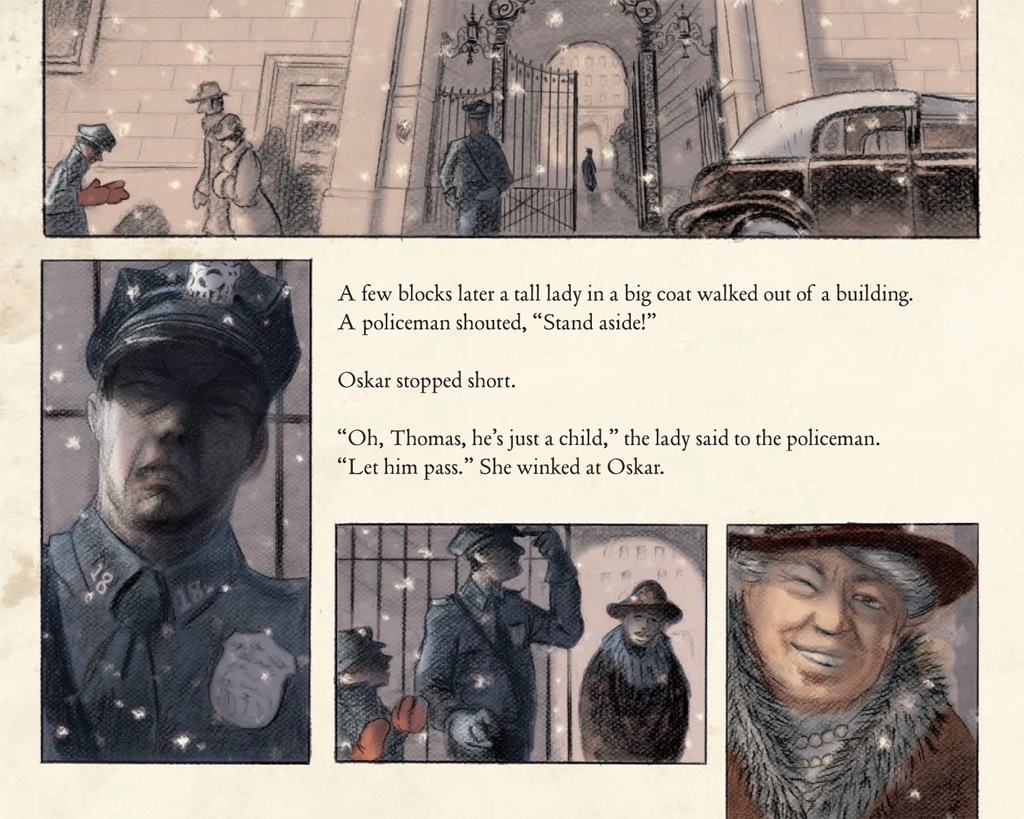
Oskar is a young, Jewish refugee arriving in New York to stay with his aunt after the horror of Kristallnacht. He arrives in New York on the seventh day of Hanukkah in 1938, which also falls on Christmas Eve. He has no money, and faces a long walk from Battery Park to his Aunt Esther’s apartment on West 103rd Street. As he walks the length of Manhattan, he keeps his father’s words in mind: “…even in bad times, people can be good. You have to look for the blessings.” And sure enough, he encounters blessings, in the forms of people whose paths he crosses, that provide him with small moments of kindness, from a woman who gives him bread to newsstand man who gives him a copy of a Superman comic. Two legendary figures pop up to show kindness toward Oskar, whistling a tune with him and giving him a wink. Each act of kindness sustains Oskar on his journey, which ends in his aunt’s arms.

This is a gorgeous book. It’s about the power of empathy, and how the seemingly smallest kindnesses can make the greatest differences. It’s about the resilience of the human spirit and the strength of children. The book begins with a gut punch, and ends with a crescendo; you can’t be unaffected by Oskar’s story. The artwork relies on close-ups of faces, particularly eyes, to convey emotion, and it’s through Oskar’s eyes that we see the fear of being in a strange, new place; wonder and joy at the connections he makes, and finally, the comfort of home. I need my own copy of this book.

Oskar and the Eight Blessings received the National Jewish Book Award for Children’s Literature and was chosen for both the Booklist Editors’ Choice and Kansas State Reading Circle. The book received starred reviews from Publishers Weekly, School Library Journal, and Booklist.

Posted in Preschool Reads

Hanukkah picture books for holiday storytime!

I realized that my winter holiday reading has been somewhat narrow in scope, so I’m looking for Hanukkah and Kwanzaa books to read deeper and stronger. Here are some adorable Hanukkah books I’ve just read; I hope you enjoy them, too!

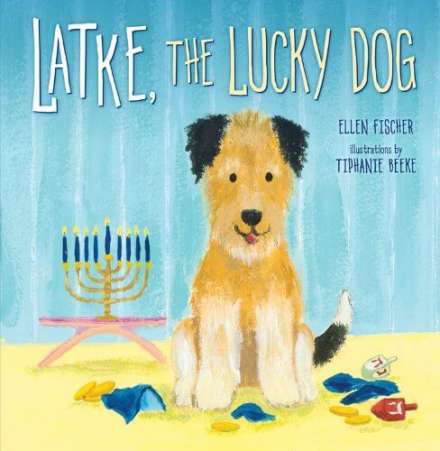
Latke, the Lucky Dog, by Ellen Fischer/Illustrated by Tiphanie Beeke,
(Aug. 2014, Kar-Ben Publishing), $7.95, ISBN: 978-0761390398
Good for readers 4-8

Narrated by Latke, a shelter dog that’s rescued on the first night of Hanukkah, this is an adorable story about pet adoption and Hanukkah. As he gets used to his new home, Latke manages to get in trouble every single night of Hanukkah! He’s eating the sufganiyot, chewing up dreidels, and slobbering all over the gelt. Yikes! Luckily for Latke, his family is very forgiving, and gives him his very own present on the eighth night. As Latke repeats throughout the book, he is “one lucky dog”. Latke the Lucky Dog has soft illustrations and changes in font color to note when Latke is narrating (blue) versus when someone else speaks (black). Anyone who has lived with a puppy will recognize Latke doing what dogs do; the forgiving family makes this a story of compassion and empathy while also giving kids a look into what life with a pet can be like. The story touches on the foods and activities that are part of the Hanukkah celebration.


Sammy Spider’s First Hanukkah, by Sylvia A. Rouss/Illustrated by Katherine Janus Kahn,
(Oct. 1993, Kar-Ben Publishing), $7.99, ISBN: 978-0929371467
Good for readers 4-7

Sammy Spider and his mom watch from their web as their family, the Shapiros, light their menorah on the first night of Hanukkah. Sammy is intrigued, and drops down a bit. He loves the way the menorah keeps his feet warm, and he enjoys hearing the story of Hanukkah, but what he really loves are the dreidels that Josh, the young boy, receives from his parents each night! He asks his mother if he can have a dreidel, but Mom tells him spiders spin webs, not dreidels… but on the last night of Hanukkah, Mom has a wonderful surprise for Sammy. I really enjoyed this book, because it provided a nice background on the holiday itself – the story of the Maccabees and the miracle of the oil – and incorporated family traditions. It’s also a concept book, with illustrations reinforcing numbers and colors. The artwork is reminiscent of Eric Carle, with a collage feel. There is a whole library of Sammy the Spider books, where he learns about different aspects of Jewish life, from holidays, to traveling to Israel.

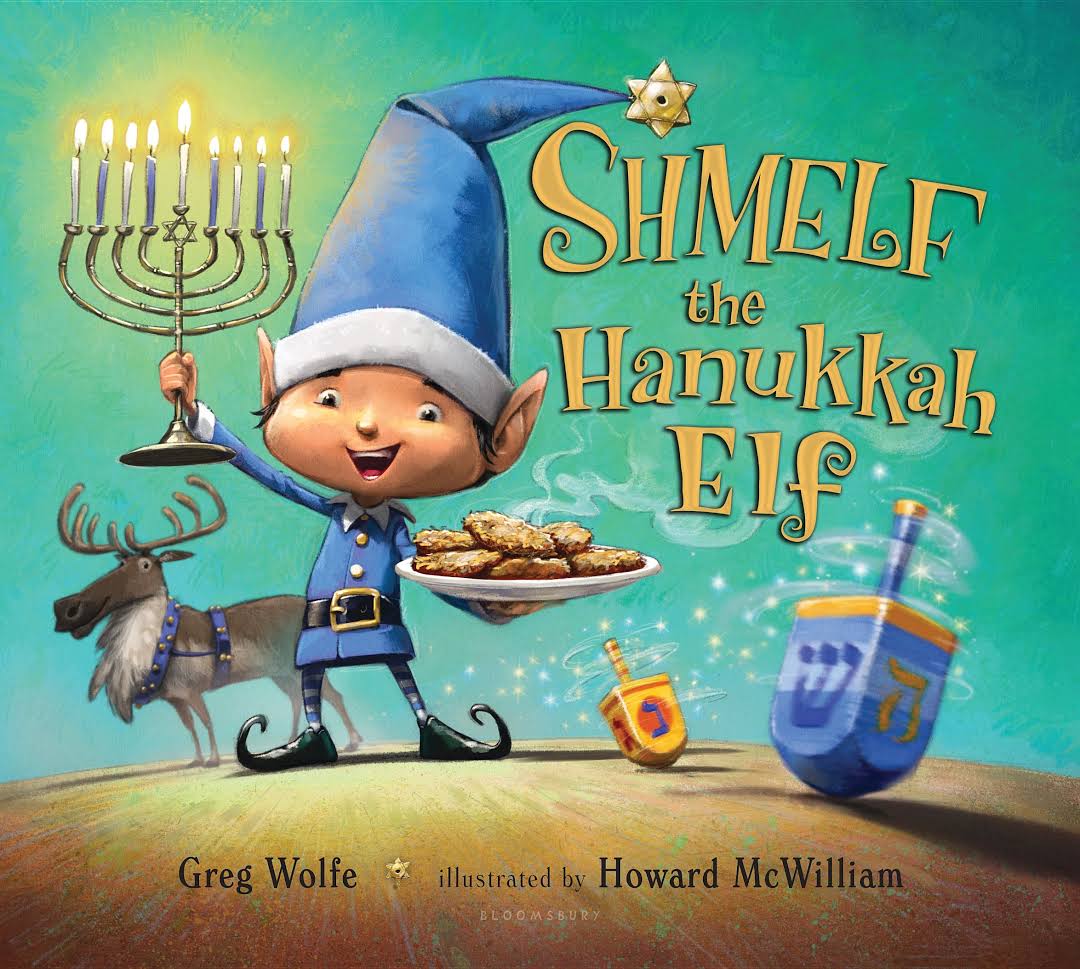
Shmelf the Hanukkah Elf, by Greg Wolfe/Illustrated by Howard McWilliam,
(Sept. 2016, Bloomsbury), $16.99, ISBN: 978-1619635210
Good for readers 4-8

This story is adorable, and handles that whole Elf on the Shelf business (Shmelf on the Shelf, maybe?) while we’re at it. Shmelf is a new elf, working on Santa’s List, checking it twice, when he notices something really distressing: there are a whole bunch of kids that aren’t on the naughty list, yet they’re not receiving presents! When he asks the head elf what the deal is, he finds out that the kids on the list are Jewish, and have their own holiday, where they receive gifts from their parents. This still doesn’t sit right with Shmelf, who goes investigating and sees a family celebrating Hanukkah: they’re spinning dreidels, they’re snacking on gelt, and yes, they’re getting presents! One for each night! He hears the story of Hanukkah and is so excited, he races back to the North Pole, where Santa gives him a special task: he’s going to travel the world, spreading Hanukkah magic! He gets a snazzy blue and white outfit, a sleigh and reindeer of his own, and heads out every year – sometimes November, sometimes December – to make sure your latkes are crispy and think, your menorahs burn bright, and your dreidels win. You want to thank Shmelf and his reindeer, Asher? No cookies – they like gelt and kosher dill! How can you not love this story? It’s a great way to explain Hanukkah – I love how Mom’s story takes shape in word bubbles  – and adds a fun spin to the holiday.

That was my first foray into Hanukkah reading, and now I plan to request more!

Posted in Fiction, Middle Grade, Post-apocalyptic/Dystopian, Tween Reads

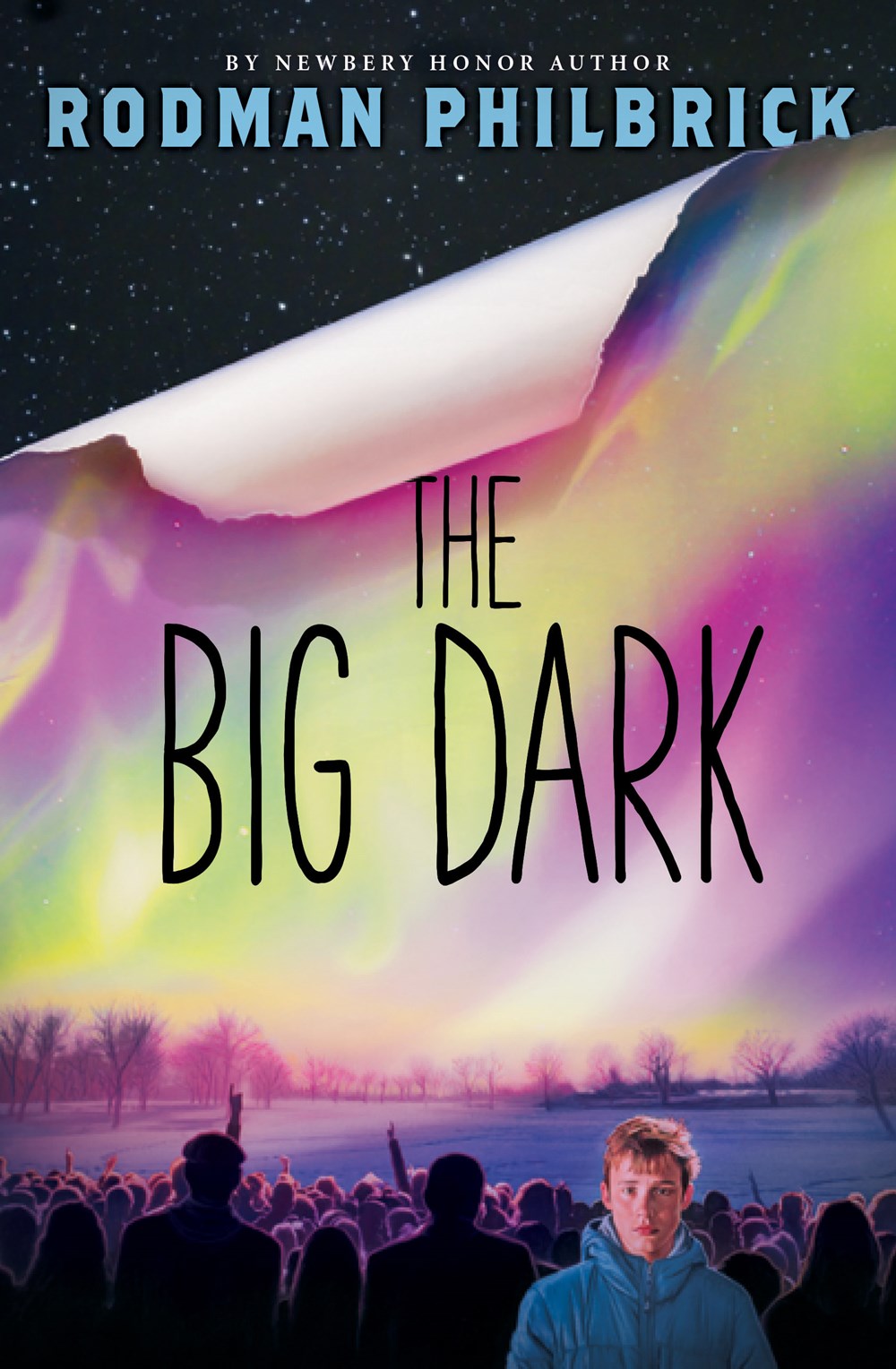
The Big Dark will show you what you’re made of.

big darkThe Big Dark, by Rodman Philbrick (Jan. 2016, Blue Sky Press), $17.99, ISBN: 9780545789752

Recommended for ages 9-14

On New Year’s Eve, the lights went out. Everything went out. Charlie, a tween living with his younger sister and widowed mom in the mountains of New Hampshire, sets off on a seemingly impossible mission when he discovers that his diabetic mother doesn’t have enough medication to sustain herself for more than three weeks.

Charlie’s small town shows us how we can turn on one another – or reach out and help one another – when the worst case scenario happens. When a solar event causes all technology to fail, the entire country – maybe even the world – is knocked back to Colonial days, relying on wood stoves and preserved food to survive. There’s a volunteer policeman/school janitor who takes charge of the situation, urging everyone to band together to muddle through, and there’s a ruthless survivalist who sees his chance to form his own free state. In the middle of this power struggle, Charlie has to find a way to sneak out and search for medicine in the nearest city, at least 50 miles away. With no power and after a blizzard.

Philbrick’s books always hit like a gut punch. Whether it’s the stark The Last Book in the Universe, the heart-wrenching Freak the Mighty, or the desperation in The Big Dark, he knows how to create a taut, white-knuckled narrative that will keep you reading until the very last words are digested. He finds the humanity in the worst possible situations, and pits it against the worst in humanity. There’s always hope in a Philbrick novel. His characters keep going, keep fighting. That’s what I love about his books.

This book is realistic fiction, with a touch of dystopia. This is a scary thought, because it makes the seemingly impossible very, very real. Give this to your middle grade dystopian fans and tell them that this is what happens before The Hunger Games. Give this to your Hatchet fans, and your survival fiction readers. Tell your readers to read this, and then read Michael Northrup’s Trapped, for an interesting discussion.

Rodman Philbrick is an award-winning author of middle grade and young adult fiction. Visit his author website for interviews, teaching guides, and more information on his books.

Posted in Preschool Reads

Book Review: All You Need for a Snowman, by Alice Schertle/illus. by Barbara LaVallee (Harcourt, 2002)

all-you-need-for-snowmanRecommended for ages 3-5

A group of children list all the important materials you need to create a snowman, beginning with the first snowflake.

The process of building a snowman takes on a life of its own in cadence and rhyme in this story, which builds excitement as it goes along, teasing the reader with each spread. “One small snowflake/fluttering down—/that’s all you need/for a snowman” begins the first spread, but the word EXCEPT on the lower right hand corner of the page tells the reader there’s more to come. The next spread brings the next adds more snowflakes: “two more snowflakes…/three flakes… four…/five… six… seven thousand…/eight million more…”, followed by the rolling of the snow into a ball, then two smaller balls, then choosing a hat, until the snowman stands,  towering over the group. The word EXCEPT shows up on every other spread, pushing the reader to continue the story and building anticipation in the listener. The artwork brings an interesting look at a multicultural group of children by emphasizing the children’s profiles and shadowing one half of each face as if the children possess both light and dark skin. Ms. Lavallee’s watercolor and gouache paintings use light blue snowflakes as a background to the children’s snowman building activity, and  she  changes perspective from close-ups to full scenes that work with the pace of the text. The plain black font plays with the space, never interfering with the story and yet becoming part of it as it stacks to the side of the artwork or teases at the bottom of a page.

This would be a great story to read during a winter/snow read-aloud. The rhyme and cadence of the text would be soothing to listeners even as they became excited to learn what comes next in the snowman-building process. There are many printables and fingerplays available featuring snowmen, and a fun craft would allow children to create their own snowmen with cutout shapes that mirror some of those mentioned in the story: big snowballs, smaller snowballs, hats, “bottle caps” for eyes, “carrots” for noses, scarves, earmuffs, boots and belts. The Perry Public Library has many suggestions for Winter read-alouds.

The Children’s Literature Network offers an author webpage for Ms. Schertle with a biography and featured covers of some of her works.

Posted in Preschool Reads

Book Review: The Snowy Day, by Ezra Jack Keats (Viking Press, 1962)

snowydayRecommended for ages 3-5

In Keats’ beloved classic, a little boy enjoys the wonder of his first snowfall. Peter wakes up to see snow covering everything as far as the eye can see. After breakfast, he ventures outside and plays in the snow, making snow angels, playing with footprints, making a snowman, and climbing a mountain. He goes home and tells his mother about his day, takes a warm bath, discovers that the snowballs he saved in his pockets are gone, and  goes to sleep, only to wake up to another snowy day. The groundbreaking book was the first picture book to feature an African-American child as the hero of his own story and is still popular with audiences of all cultures and backgrounds today; it is the story of a child enjoying a snowy day – preschoolers will enjoy thinking about their favorite snowy day and appreciate moments that Peter experiences that may be familiar to them: the feeling of snow hitting him on the head, getting hit with a snowball when he tries to play with older boys, and the feeling of a  nice, warm bath  when he gets home.

Mr. Keats used illustrations consisting of cut-outs, varied textures, strong watercolors, geometric shapes, and collages, was also considered an artistic breakthrough. The images are not outlined, giving making for a softer appearance and will keep young audiences interested while the plain black font allows for a read-aloud that will keep audiences interested in the pictures while the reader weaves the tale. The endpapers provide a comfortable lead-in and phase-out to the story, with multi-colored snowflakes on a sponge-like background. Peter also appears in Keats’ books Peter’s ChairA Letter to Amy; and Goggles!

The Snowy Day has won numerous awards and accolades over the last 50 years, including the Caldecott Medal (1963) and the Child Study Children’s Book Committee (1995).

This would be a great anchor story for a winter/snowy day read-aloud. There is a board book version available for even younger audiences; it may be a good idea to have copies on hand for toddlers who want to follow along. Multicultural audiences will appreciate the African-American main character. The author’s website has an interactive version of the story with narration and a soundtrack that should be accessible on library computers. The Perry Public Library’s Snow & Winter storytime offers ideas, fingerplays and songs; children can talk about their favorite snow days and could color snow-related printables available on many children’s websites. Children could use precut shapes to make and decorate their own snowmen.