Posted in picture books, Preschool Reads

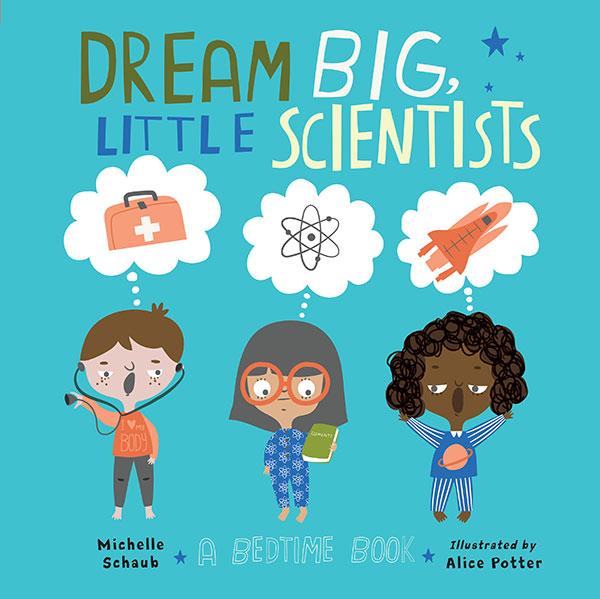
Dream Big, Little Scientists encourages and inspires

Dream Big, Little Scientists, by Michelle Schaub/Illustrated by Alice Potter, (Feb. 2020), Charlesbridge, $16.99, ISBN: 9781580899345

Ages 3-7

Twelve kids who dream of being scientists get ready for bed in this adorable, rhyming bedtime STEM story. Each spread features a different child who favors a different area of science, and the spreads are a feast for the eyes. The verse maps to each child’s preferred area, bringing art and verse together to give kids a mini-science lesson on each spread: each child has favored scientists in each field; bedding and room decor cleverly gives readers a guessing game of scientific proportions. A little girl looks out her window at the moon, shining through her planetary curtains; on her bedside table is a book on stars and planets, and she has posters of Carl Sagan and a Space Shuttle hanging up. The verse reads, “The sun has tucked itself in bed; the moon is on the rise”; on the next spread, a boy lays across his map of the world rug, reading; his bedding depicts a mountain scene, and he has a shade with an erupting volcano drawn. A poster of geologist Jess Phoenix hangs on the wall, and the verse reads, “Under rumpled mountain quilts, the earth is snuggled tight”.

It’s a wonderful way of teaching through exposure: younger readers will love the rhyme, bright colors, and bold digital artwork; school-age readers can guess each kid’s favorite science and name disciplines as they navigate their way through each spread. Back matter offers brief profiles of each discipline spotlighted, and a link to visit for more information. The book detail page on publisher Charlesbridge’s website includes a link to information about the featured scientists in the story, plus a downloadable educator’s guide and storytime kit.

I’m definitely incorporating this into a Science Storytime. Pick a few branches of science and go for it! I really like Toronto Public Library’s suggestions here, and there are tons of great Toddler/Preschooler STEAM craft ideas on Pinterest and all over the web (homeschoolers, I love you).

Dream Big, Little Scientists is great for bedtime, science time, or anytime!

Posted in Fiction, Graphic Novels, Middle Grade, Non-fiction, Teen, Tween Reads, Women's History

February graphic novels bring magical realism and STEM nonfiction

First Second is a graphic novel powerhouse. Every season, I know I’m going to see good stuff from the authors and illustrators that First Second publishes. Here are two we’ve got coming in February.

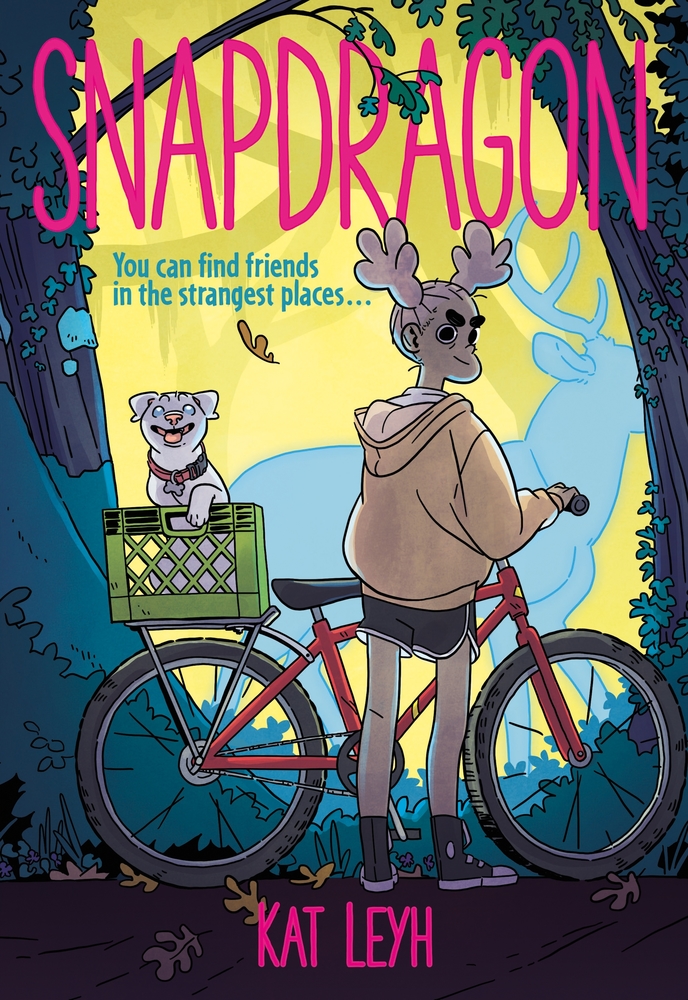
Snapdragon, by Kat Leyh, (Feb. 2020, First Second), $12.99, ISBN: 9781250171115

Ages 10+

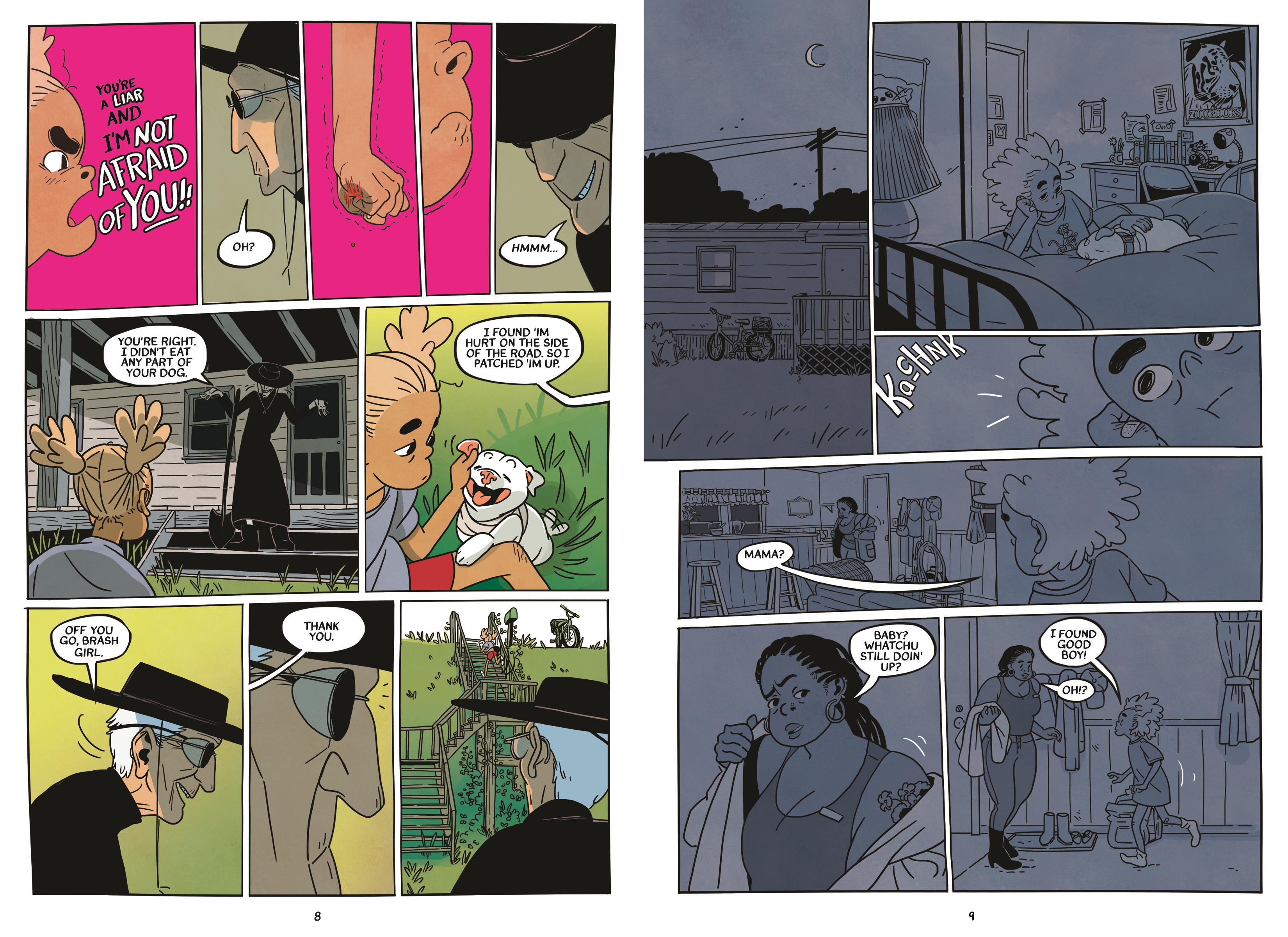
Magical realism infuses this story about a girl who befriends the town witch. Snapdragon’s heard the rumors about the “roadkill witch”, but when Jacks – a loner constructs skeletons from roadkill to sell to veterinary schools – rescues Snap’s dog, she finds herself cultivating a friendship with the loner, who takes her on as an apprentice. But Jacks also has rituals she goes through, to put those roadkill spirits to rest, and Snap is pretty sure that Jacks has a little bit of witchcraft after all.

Snapdragon is a story with depth. Lumberjanes writer Kat Leyh creates a magical, yet real cast of characters: Snapdragon, the daughter of a single working mother, is bullied at school and by her mother’s cruel ex-boyfriend. Her friend, Louis, who prefers to go by Lulu and wear skirts and nail polish, is tormented by his brothers. The two bond over their mutual love of a a horror movie series and Lulu finds comfort and safety in Snapdragon’s home. Jacks and Snap discover a connection between them in a subplot with Snap’s grandmother.

Snapdragon has a starred review from Kirkus.


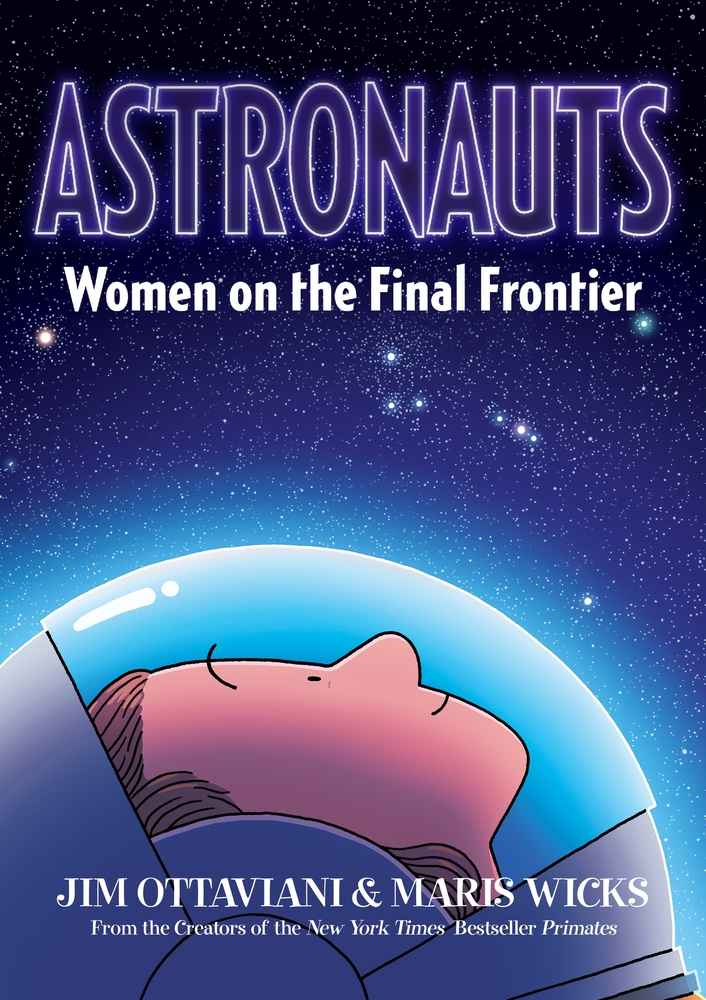
Astronauts: Women on the Final Frontier, by Jim Ottaviani & Maris Wicks, (Feb. 2020, First Second), $19.99, ISBN: 9781626728776

Ages 8-12

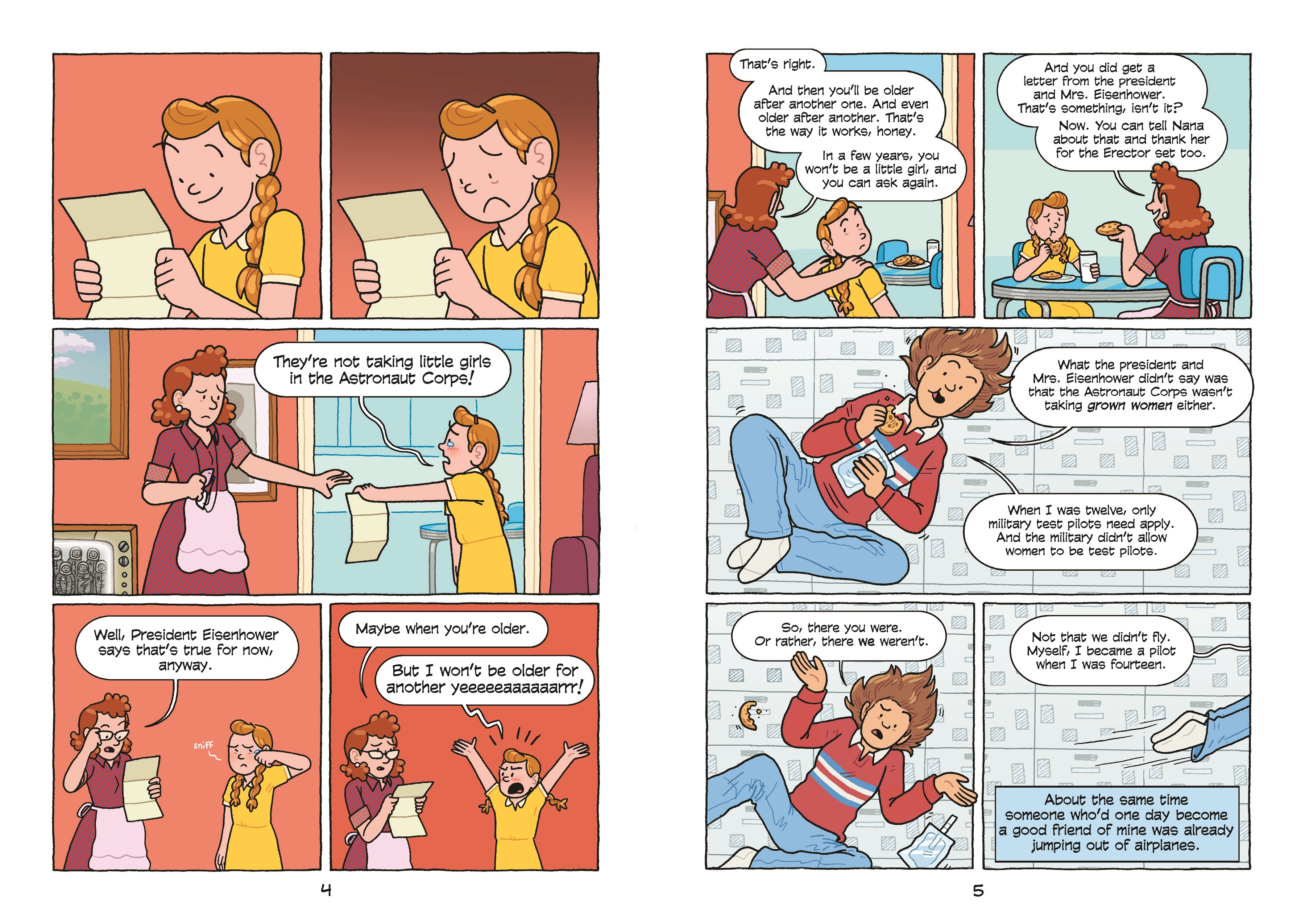
Meet the first women to travel into space in this nonfiction graphic novel that has big appeal for Science Comics fans. Astronaut Dr. Mary Cleave navigates readers through the history of women and space travel, starting with the Soviet space program that made Valentina Tereshkova the first woman in space, and illustrates the long road American women had to take to get Group 9, NASA’S first mixed-gender class, to the stars.

The most frustrating thing about Astronauts is reading how seemingly determined the U.S. government was to keep women out of space. The graphic novel tells multiple stories from different points of view; the Mercury 13 and Women in Space Program both ended up going nowhere, while the Soviet Union focused on sending just one woman – Tereshkova – into space. (And she didn’t even tell her mother before she went.) It’s disheartening to read that science journalists imagined conversations between women – female scientists – and Mission Control consisting of, “this little thingamabob has jiggled off the gizmo”. Even when NASA got it together and began recruiting women for the space program for real this time, their concerns about dress codes and complete ignorance of basic physiology left me frustrated and even more determined to get my STEM/STEAM programming firmly entrenched here at my library. The second half of the book, focusing more on Mary Cleave’s space shuttle missions and NASA training, are a welcome relief. There are some great and hilarious anecdotes throughout, and Mary Cleave’s love for space exploration and science comes through, making me hopeful that this book will inspire many, many kids. There are references, a bibliography, and working sketches.

Astronauts has starred reviews from Kirkus and Publisher’s Weekly.

Posted in Intermediate, Middle Grade, Non-fiction, Non-Fiction, picture books

Unhinged History, where the oddest of couples change the world: The Bathysphere Boys

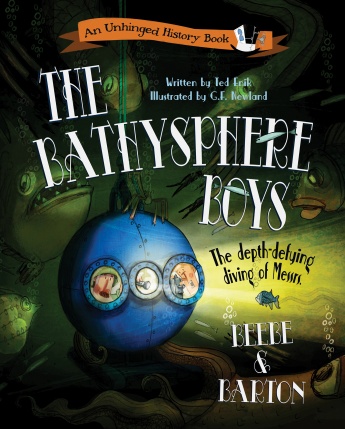
The Bathysphere Boys: Beebe & Barton (Unhinged History), by Ted Enik/Illustrated by G.F. Newland, (Sept. 2019, Schiffer Books). $16.99, ISBN: 9780764357930

Ages 7-10

This second book in Schiffer’s Unhinged History series brings together William Beebe and Otis Barton, who came together to create the bathysphere, an invention that sent the two underwater explorers more than half a mile underwater in 1930. The two were able to sees, close-up, underwater sea life that redefined deep-sea exploration. The story, written in slant rhyming, tells the story of the two very different personalities, who clashed throughout the invention process and, in 1934, split up for good after their historic dive. The story mentions the sphere’s return to life in 1994, when a renovation to the New York Aquarium gave the sphere a facelift, and where it proudly stands today. Back matter includes drawings of some of the sea life discovered during the deep sea dives, Bathysphere schematics, a timeline of human diving, and a profile on explorer Gloria Hollister, who worked with Beebe and Barton and who made her own deep sea dive in 1934.

Cartoon illustrations and a rhyme scheme outside of the norm make this an interesting choice for intermediate and middle grade readers who have an interest in science and underwater exploration. I like the idea of bringing together people who may not always have the most harmonious relationship, but who work together to affect great change: it’s a good way to show kids that you may not always get along, but there’s a value in putting aside differences to work together. A note on slant rhyming (also called “lazy rhyme”) will help readers ease into reading the story, which may feel off at first.


Posted in Uncategorized

Reach for the Stars with Astro-Girl

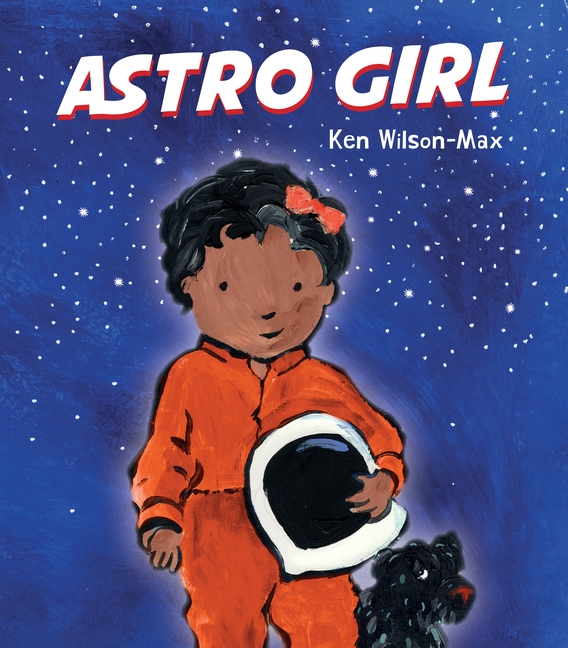
Astro Girl, by Ken Wilson-Max, (Sept. 2019, Candlewick Press), $16.99, ISBN: 9781536209464

Ages 4-8

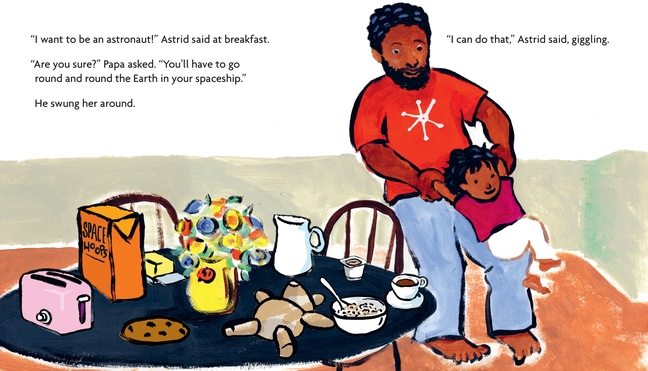
Astrid is a little girl who loves the stars and space.  She and her father act out the challenges that astronauts face in outer space, as they wait to meet Astrid’s mom, who’s coming home from a business trip… of sorts. He swings her around and around like a spaceship orbiting Earth and tosses her up in the air, defying gravity like an astronaut; she eats a cereal bar in place of astronaut food in a tube and conducts her own “experiments” by making rocket ship cookies.

I love Ken Wilson-Max’s bold, bright acrylic artwork, and Astro Girl has plenty of it. Boldly outlined, with bright, bold colors, Astro Girl is as wonderful to look at as it is to read. The story of a family of color is a great STEAM story, too: Astrid’s mom is an astronaut, and Astrid means to follow in her footsteps. Back matter includes the origin of the word “astronaut”, and brief profiles on five women who have gone into space, just like Astrid’s mom. Endpapers show a midnight blue sky, sprinkled with stars, giving kids the same desire to reach for the stars that Astrid is imbued with. The warm colors and bold outlines make this a warm book that draws readers close and talks to them, like Astrid has a secret to share with each reader.

I can’t get enough of Astro Girl, and I guarantee your readers won’t, either. The cover features Astrid, in her bright orange jumpsuit and astronaut helmet – accompanied by her dog – is a striking sight that will grab everyone’s attention. My son asked me if this was a Mae Jemison book when he saw it! Use this as an opportunity to get Mae Jemison’s name, and the names of other astronauts. You can start with the most recent all-female spacewalk:


Astro Girl is a must-have for your storytimes, and your STEM/STEAM shelves.

Posted in picture books, Preschool Reads

Join the Red Rover as it wanders Mars

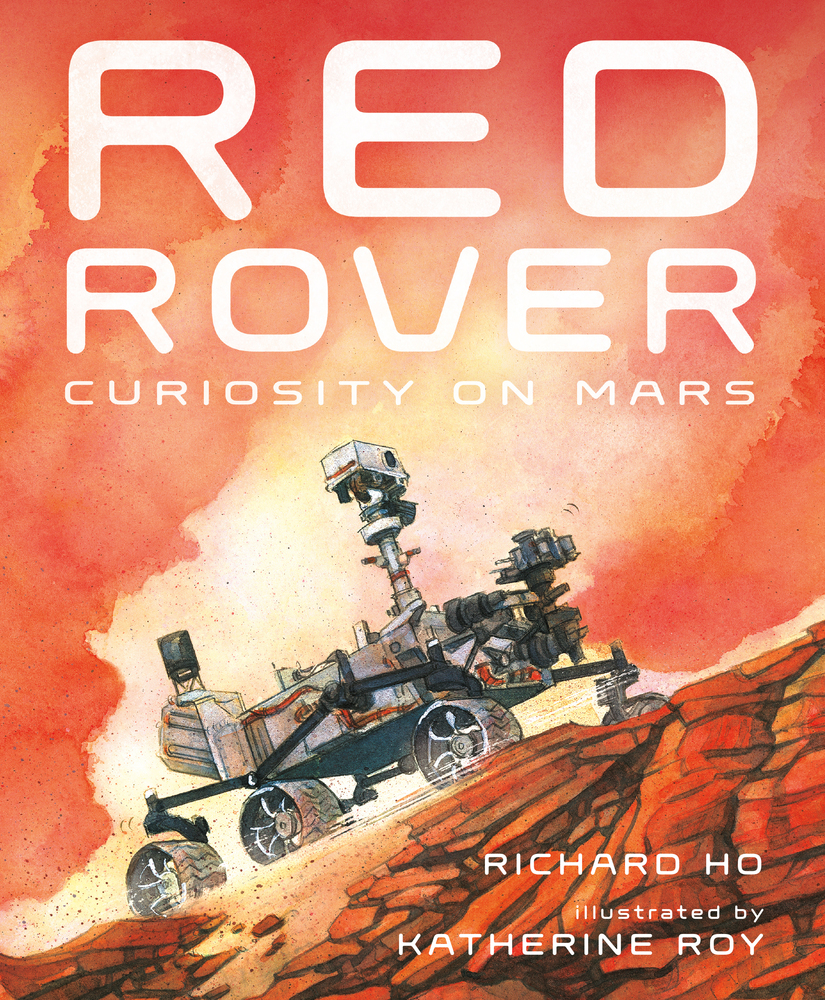
Red Rover: Curiosity on Mars, by Richard Ho/Illustrated by Katherine Roy, (Oct. 2019, Roaring Brook Press), $18.99, ISBN: 978-1-250-19833-4

Ages 4-7

I am in love with this sweet, factual story about the Curiosity Rover, the robotic rover currently exploring Mars after landing in the Gale Crater in August, 2012. The story is straightforward, yet gives life to the Curiosity by referring to it as the “little rover” and wondering about its habits. Is it looking for water because it’s thirsty? It may seem lonely, but it has friends that came before. The narrator is the planet Mars, who seems to be watching Curiosity and its predecessors with interest. Mars states, “They call me Mars. I am not like your world”, and notes that life is hard for Curiosity: there are sand storms; the air is thin and it’s cold; it’s very, very, red. Through it all, artwork depicts the scrappy Curiosity rover, undeterred from its mission: it collects, its observes, it records. Back matter includes an annotated sketch of the Curiosity; facts about Mars, and brief profiles of the previous orbiters, landers, and rovers that have explored the planet (and that are in progress). There’s a bibliography and websites for further reading.

The story gives the Curiosity a personality of sorts, and the artwork presents a breathtaking artist’s rendering of the Red Planet. The sandstorms are chaotic, and a foldout of the red landscape is just stunning: the Curiosity stands on a cliff, overlooking the barren, beautiful world. Red Rover is a nice introduction for younger readers to the world of space exploration. If you have Wall-E fans, introduce them to Red Rover.

If you have readers who want more on Mars, Kiddle has Curiosity Facts for Kids; NASA’s Space Place has the Mars rovers broken out into trading cards with stats; and NASA’s FunZone has coloring sheets.

Posted in Middle Grade, Tween Reads

STEAM project fun: Super Robot

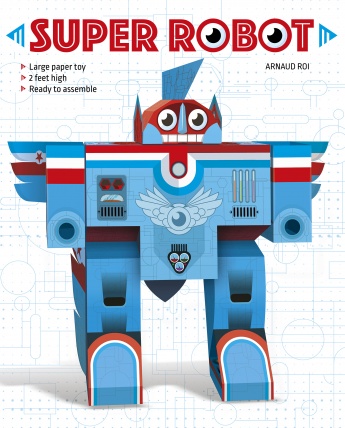
Super Robot, by Arnaud Roi, (Oct. 2019, Schiffer Kids), $12.99, ISBN: 9780764358302

Ages 6-12

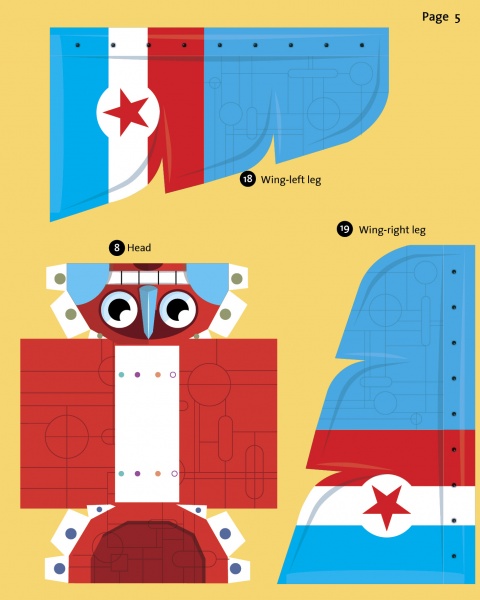
This is one of those books that makes me think back to when I had punch-out paper doll books. They’re still around, albeit a little tougher to find, so I was really excited to get a copy of Super Robot in the mail from Schiffer Kids! Artist Arnaud Roi uses his love of the 1950s aesthetic to create a vintage-looking robot that kids can punch out and put together, creating a 2-foot-high paper structure.

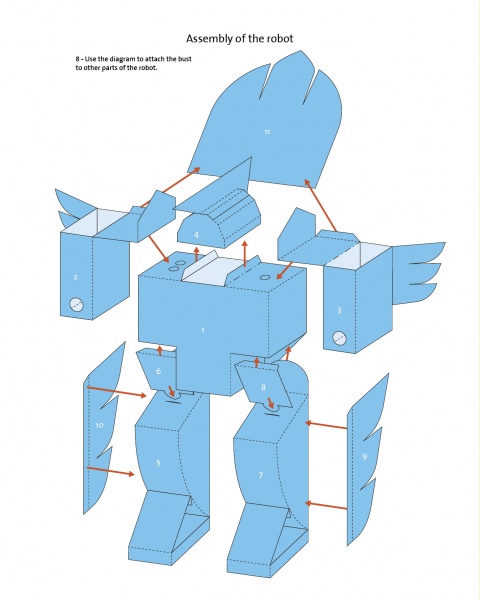
Assembly instructions are detailed and take readers, step-by-step, through assembly; the assembly process is helpfully illustrated so you don’t get too turned around in the building process. The paper is sturdy and scored where necessary, to help with folding and assembling. The robot is a bright, bold combination of primary colors.

Younger scientists and paper artists will need a helping hand, but bigger creators should be able to work on this, no problem. It’s a fun idea for a Discovery Club activity, and small groups can work on one robot at a time, if your budget permits you to buy a few copies. Create a robot army, or an army of one – either way, Super Robot is a fun build that get kids working with their hands.

Pair with Adam Rubin’s Robo-Sauce, one of my favorite robot books: the book transforms into a Robo-Book. Have some Legos, and some robotics books around for your readers who are ready to explore more. I recommend NatGeo Kids’ Everything Robotics and National Geographics Readers: Robots.


Posted in Conferences & Events

The Tri-State Book Buzz: Coffee, Breakfast, and Books

I attended the Tri-State Book Buzz this morning, where over 20 publishers invited librarians and educators for a morning of breakfast and kidlit, from board books to YA. There are some fantastic books to come! Let’s take a look at some of the big reveals first:

Graphic Novels

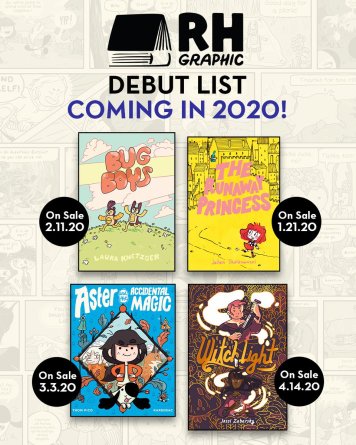
The big news here is that Random House is starting their own dedicated graphic novel imprint, Random House Graphic, headed up by Publishing Director Gina Gagliano, who is just a great person, who genuinely adores graphic novels, and wants kids to love them, too. RH Graphic is dedicated to putting a graphic novel on every readers’ shelf; meaning, they’re going to publish graphic novels for all ages and interests. The debut list looks good, with graphic novels for intermediate readers, middle graders, and teens all lined up and ready to go in the near year: Bug Boys by Laura Knetzger is about two bug friends, aimed at intermediate readers, and fans of Narwhal and Jelly; The Runaway Princess by Johan Troïanowski and Thom Pico and Karensac’s Aster and the Accidental Magic are geared for middle graders and star strong female characters, and Witchlight is a YA graphic novel by Jessi Zabarsky, about two women traveling and growing together. These are the first four books in 2020, with 8 more to come later in the year.
 

GRAPHIX WEEK! Scholastic has a week of graphic novels programming coming up in December (the 9th-13th) for their TeachGraphixWeek celebration. There’s going to be classroom activities, Twitter chats, and a live Facebook broadcast with Raina Telgemeier, Kazu Kibuishi, and more, which assures that my Corona Kids will be losing their minds. For now, there’s a link to sign up for more information; the sites from previous Graphix Week haven’t been updated for this year’s content just yet.
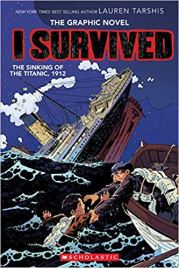
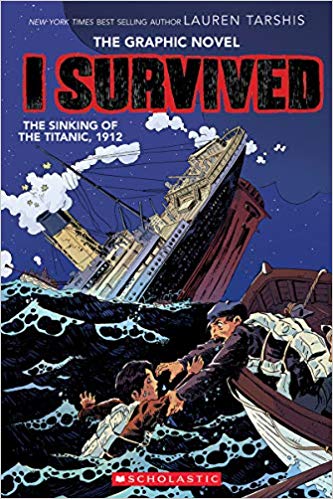
Speaking of Graphix, the big news is that Lauren Tarshis’ I Survived books are getting the Graphix treatment! The first two books release in February (I Survived the Titanic) and June (I Survived the Shark Attacks of 1916), and this will surely send the kids into a frenzy. I found out from Ms. Tarshis herself a couple of weeks ago, when one of my Corona Kids and I were wondering why this series hadn’t gotten the graphic novel treatment yet; we Tweeted at the author, who responded, lightning-fast, with a copy of the Titanic cover, causing my Corona Kid and I to dance with joy. (Side note: Tweet your authors! They are amazing people and the kids love to be acknowledged!)

Graphix is also taking on the Geronimo Stilton graphic novels, with the first one, The Sewer Rat Stink, coming in May and written by Origami Yoda writer (and HUGE Stilton fan) Tom Angleberger! (The Stilton graphic novels have been, up until now, published by Papercutz).

For the Shannon Hale/Raina Telgemeier readers, Graphix has a realistic fiction story, Nat Enough, by Maria Scrivan, coming in April. Nat is a sixth grader who feels like she isn’t cool enough for her best friend, and tries to change, but will figure out, along the way, that she’s just fine as is.
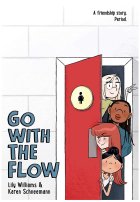
 

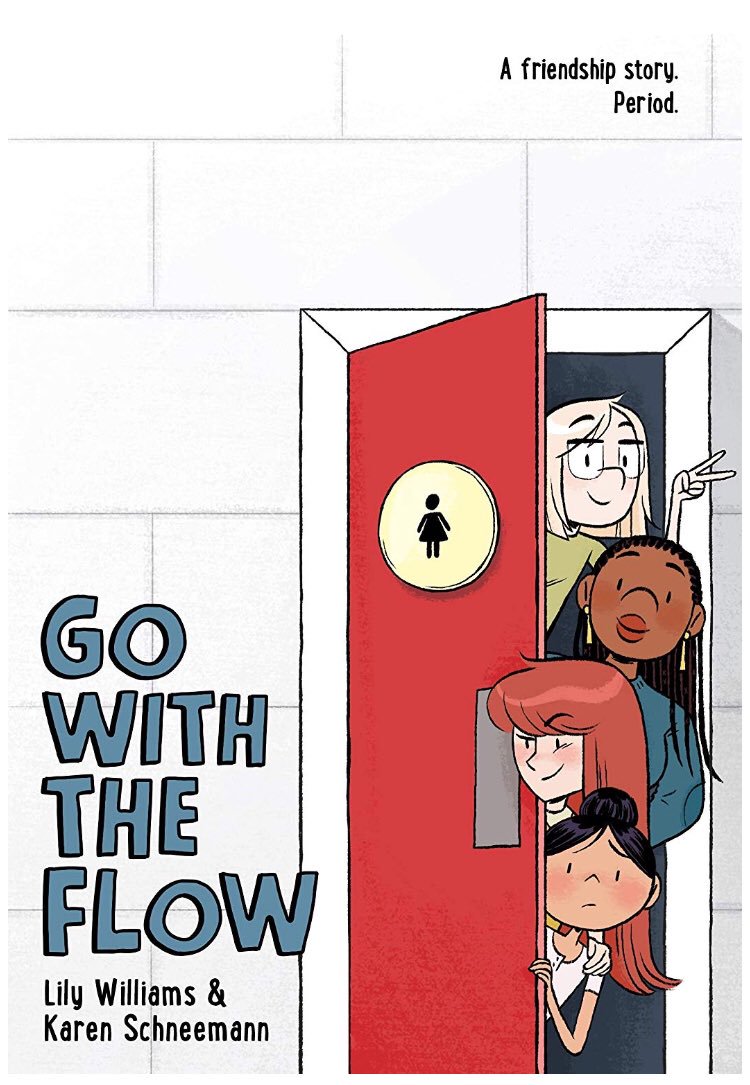
Macmillan (shout-out to First Second!) has some good graphic novels, too. I’m interested in Go With the Flow, a middle grade novel about body positivity, resistance, and feminism when a group of girls push back when their school invests more money in their (male) athletes’ comfort than in restocking menstrual products in their school. Breaking the menstrual taboo for middle grade is so important, especially when so many middle and high school bathrooms are sorely lacking in feminine hygiene product availability (don’t get me started on this). I’m definitely looking forward to this one. Romper has a good article and sneak peek for you.

Also coming from Macmillan/First Second: John Patrick Green’s InvestiGators (my son has nicked my BookExpo copy; if I can get it back, you’ll get a review from both of us), the first in a new series, coming in February.


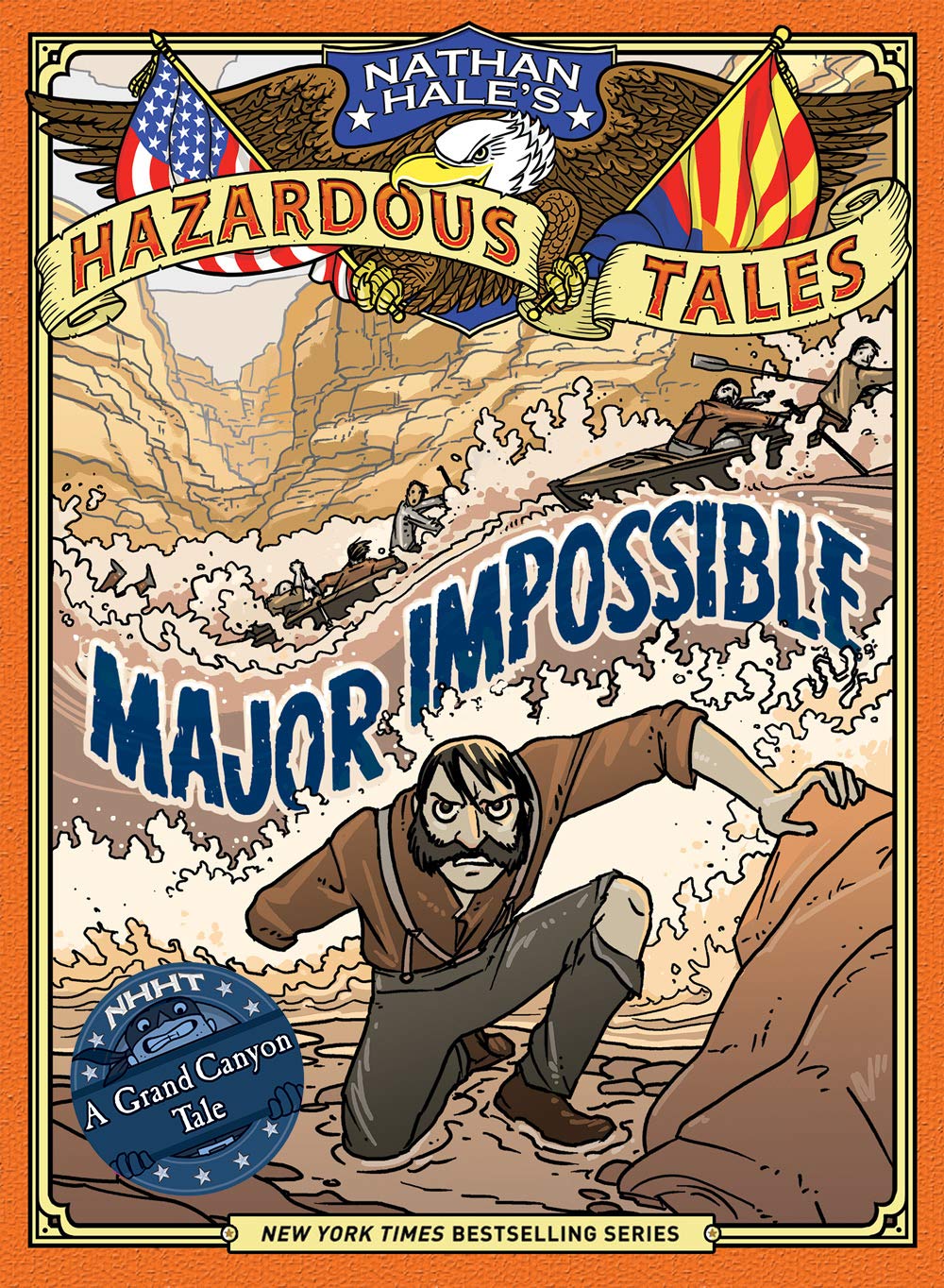
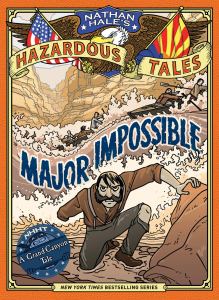
Finally, Amulet, the children’s publishing imprint for Abrams, has a new Nathan Hale’s Hazardous Tale! Major Impossible is the ninth book in the series and tells the story of John Wesley Powell, a one-armed geologist who explored the grand canyon.
Picture Books

There are TOO many picture books to shout out individually, so I’ll put up a couple of highlights. Let’s just say that end of 2019/beginning of 2020 is going to be a very good year.

Vanessa Brantley-Newton, whose Youngest Marcher and Mary Had a Little Glam are some of my recent favorites, is coming out with Just Like Me, “an ode to the girl with scrapes on her knees and flowers in her hair, and every girl in between”. Sounds like storytime magic happening to me!

Picture Book Biographies

Aretha Franklin is getting a picture book biography treatment from Katheryn Russell-Brown and illustrator Laura Freeman. Bloomsbury is publishing A Voice Named Aretha in January 2020. Mary Walker, who learned to read at the age of 116, is also getting a picture book biography; Random House Children’s Books is publishing The Oldest Student: How Mary Walker Learned to Read, by Lorrain Hubbard and illustrated by Oge Mora, in January; Disney/Hyperion has Ruth Objects: The Life of Ruth Bader Ginsburg, by Doreen Rappaport and illustrated by Eric Velasquez, coming in February. Sourcebooks has a picture book biography of Jennifer Keelan, the young activist who participated in The Capitol Crawl in 1990 at the age of 8 to demand passage of the Americans with Disabilities Act. Jennifer, who has cerebral palsy, climbed out of her wheelchair and up the steps of the Capitol. Annette Bay Pimentel authors, Ali Haider illustrates, and Jennifer Keelan-Chaffins writes the forward.

Hello, Neighbor! The Kind and Caring World of Mister Rogers, by Matthew Cordell, debuts in May from Holiday House, created by Caldecott Medalist Matthew Cordell. It’s the only authorized picture book biography on Fred Rogers, and I can’t wait to see it. If you haven’t read A Beautiful Day in the Neighborhood: The Poetry of Mister Rogers, illustrated by Luke Flowers (from Quirk Books), please get a copy on your shelves. Introduce our kids to Mister Rogers; we need him back.

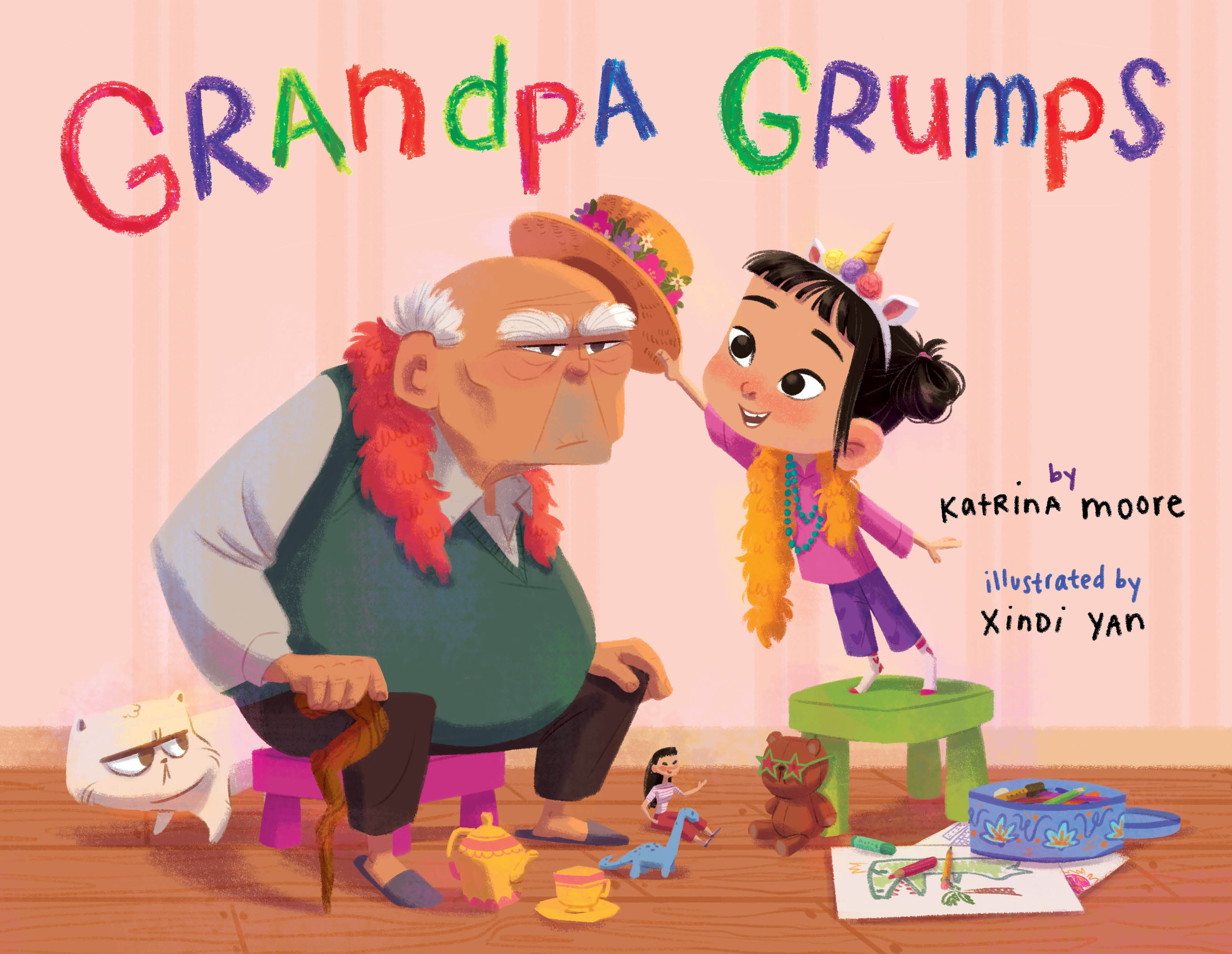
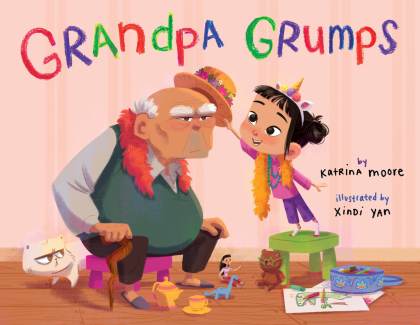
Little Bee’s Grandpa Grumps is an adorable multi-generational story about a little girl and her grumpy grandpa who comes to visit from China. The two bond over cooking, and there’s a recipe at the end. The art is Pixar-inspired, and absolutely adorable. Grandpa Grumps, by Katrina Moore, with art by Xindi Yang, pubs in April.
 

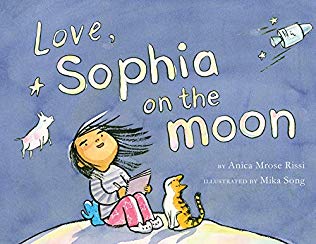
Disney Book Group has Love, Sophia on the Moon, a book I think I’ll have to buy my niece. Sophia writes a letter to her mother, telling her she’s run away to the moon., where there are no time-outs and early bedtimes. Mom responds with a sense of humor. Who hasn’t wanted to run away to the moon? Heck, I think about it even now.
 

Holiday House is also publishing In My Garden; originally written in 1962 by Charlotte Zolotow and reimagined by Philip Stead. It’s a lovely, intergenerational story about a child and older adult who spend time in a beautiful garden as the seasons pass.

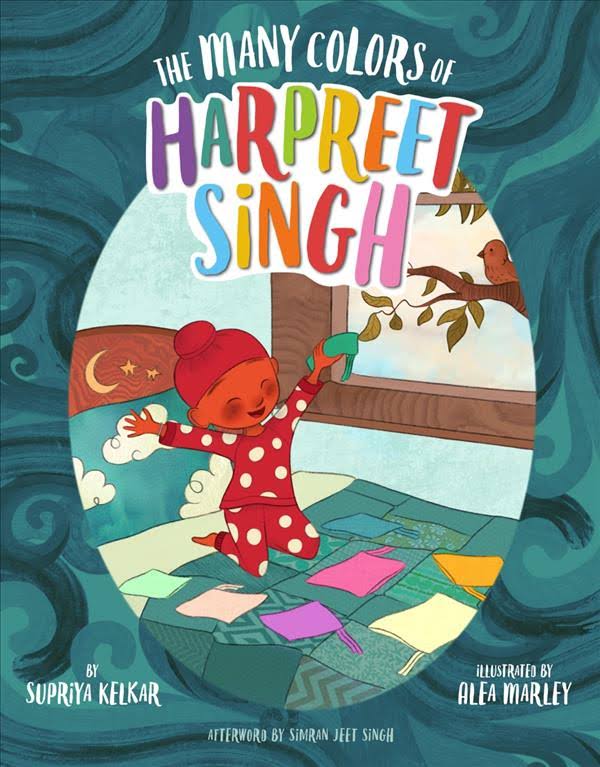
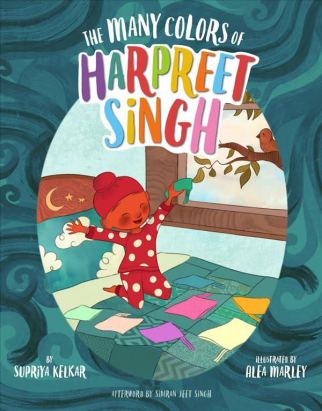
The Many Colors of Harpreet Singh, by Supriya Kelkar and illustrated by Alea Marley, is already out, and is a beautifully illustrated book about an Indian American boy, a practicing Sikh, who matches his patka – his head covering – to his emotions and occasions. I haven’t seen this one yet, so I’ll be requesting it and reading it ASAP.
 

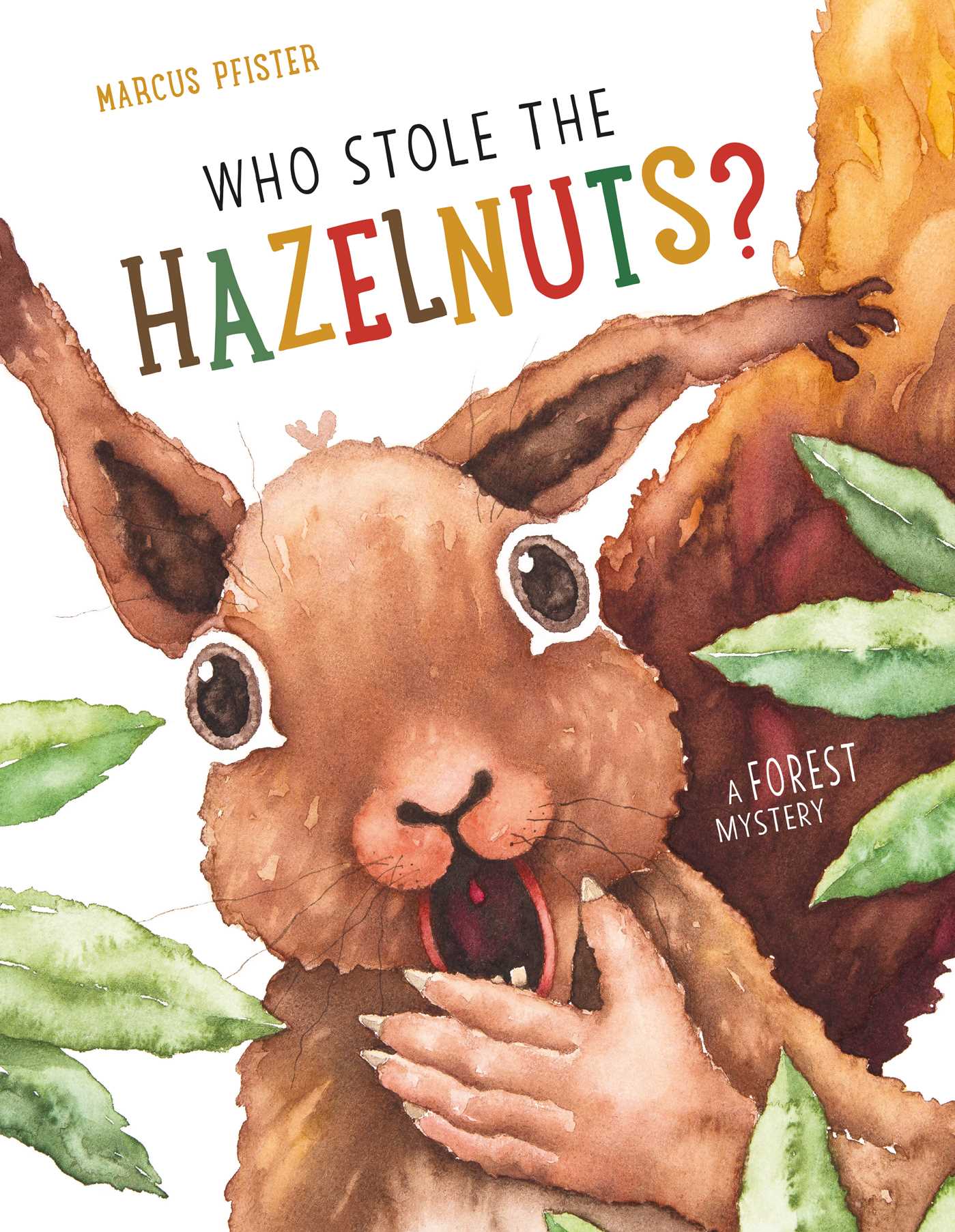
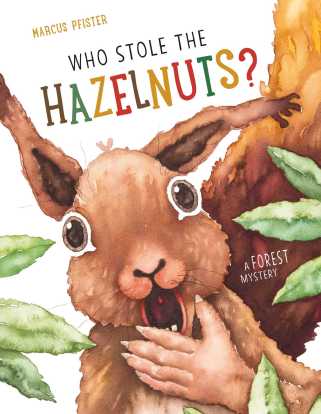
Rainbow Fish author Marcus Pfister has a new book out! Who Stole the Hazelnuts? starts off with a terrifying scream when Squirrel discovers that someone has stolen his hazelnuts! The art on this is hilarious, and Squirrel’s face is my entire mood on some days. I mean, honestly. Tell me you can’t relate:
 

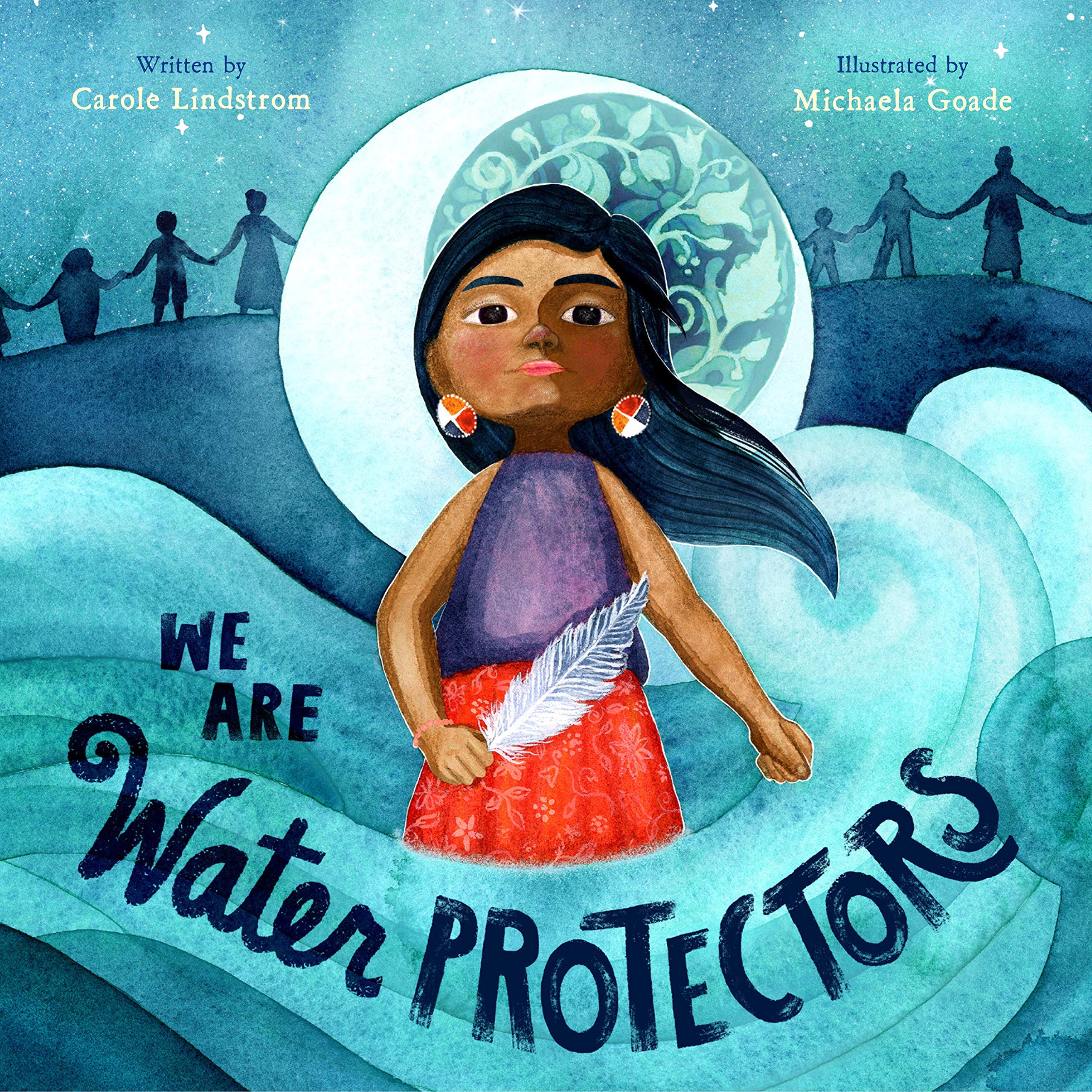
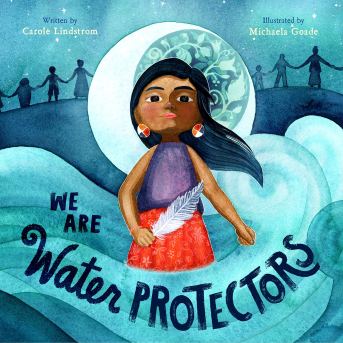
We are Water Protectors by Carole Lindstrom and illustrated by Michaela Goade is the beautifully illustrated and narrated story of the Standing Rock Pipeline protest, from a Native American child’s perspective. Due out in March, this is a book I’m going to make sure we have on our shelves.
 

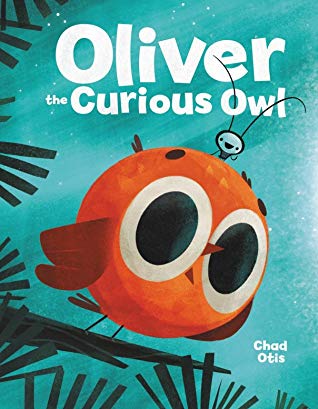
Look at this adorable book! Oliver the Curious Owl is a young owl who wants to know all the big questions: Who? What? Where? When? Why? He decides to go on his own adventure to see if he can learn some answers to his questions. I’m already planning owl storytimes for this book by Chad Otis. The book won’t be out until August 2020. I can wait. I can wait. I won’t be patient about it, but I can wait.
 

STEM

Picture books, nonfiction books, there are all sorts of ways to work STEM/STEAM into kids books, and there are some really good ones coming.

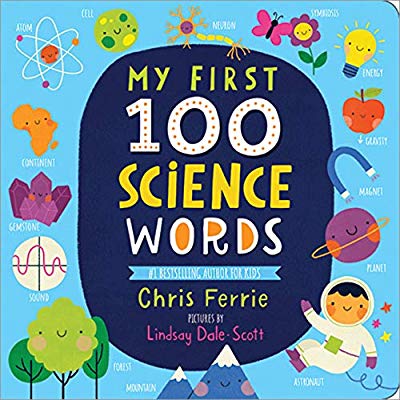
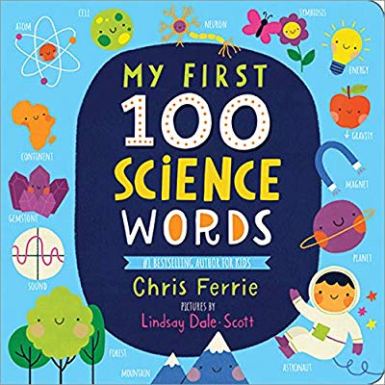
Chris Ferrie, my favorite kidlit science guru, has My First 100 Science Words, introducing the littlest readers to awesome science words like food chain, fluorescence, and cell. Illustrated by Lindsay Dale Scott, it’s the cutest little science book I’ve ever seen. (Until, let’s be honest, his next book.)
 

Charlesbridge has a great Winter/Spring line, with loads of STEM/STEAM books in the works. Mario and the Hole in the Sky is about Mexican-American scientist and Nobel Laureate Mario Molina. Publishing simultaneously in English in Spanish, by Elizabeth Rusch and illustrated by Teresa Martinez, Mario publishes in less than a month: you can get it in November. Earth Hour, by Nanette Heffernan and illustrated by Bao Luu, invites kids to take part in Earth Hour, where communities all over the world are encouraged to turn off non-essential electricity for one hour. Earth Hour is publishing in January, with activities and ideas for kids all over the world; there’s more than enough time to prepare Earth Hour activities for March, when Earth Hour happens. You’re Invited to a Moth Ball is a collaboration with scientist Loree Griffin Burns and photographer Ellen Harasimowicz; it’s a “nighttime insect celebration” with advice on how kids can throw their own Moth Ball. Sterling is releasing The Boy Who Thought Outside the Box: The Story of Video Game Inventor Ralph Baer, by Marcie Wessels and illustrated by Beatriz Castro, in March.

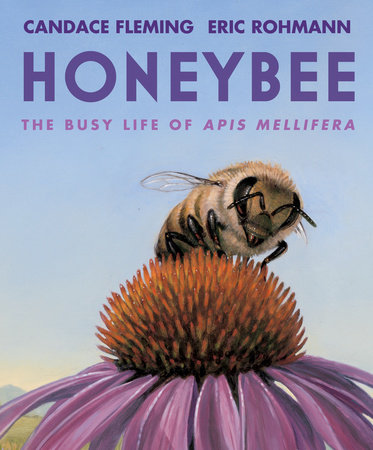
Candace Fleming and Eric Rohmann have Honeybee: The Busy Life of Apis Mellifera coming in April from Holiday House, and the artwork is just breathtaking. It’s the story of a honeybee’s journey through life, and the detail is just wonderful.
 

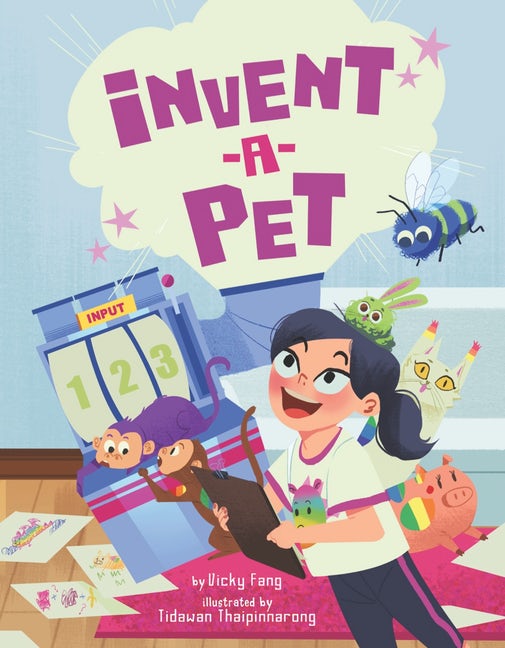
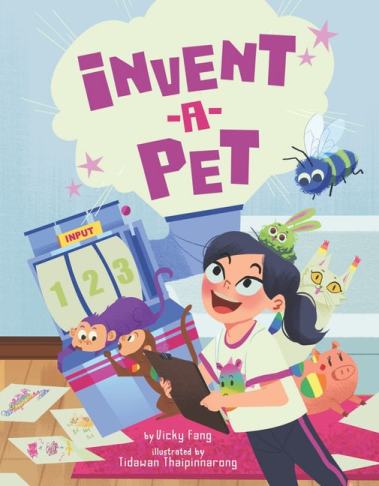
Sterling has three adorable STEM/STEAM stories coming soon: When Grandpa Gives You A Toolbox (March 2020), by Jamie L.B. Deenihan and illustrated by Lorraine Rocha; where a young boy wants storage for his dolls, receives a toolbox from his grandfather, and overcomes his disappointment when he discovers that he can use the toolbox to make a storage box by himself. Invent-a-Pet (May 2020), by Vicky Fang and illustrated Tidawan Thaipinnarong, a a STEM and coding story about a girl who decides that the best pet you can have is the one you make on your own. 
 

There were SO MANY BOOKS. This is just a quick rundown of some of the picture books and graphic novels to come. Up next, middle grade and YA.
Posted in Middle Grade, Non-Fiction, Non-fiction, Tween Reads

Learn about these Awesome Achievers in Technology!

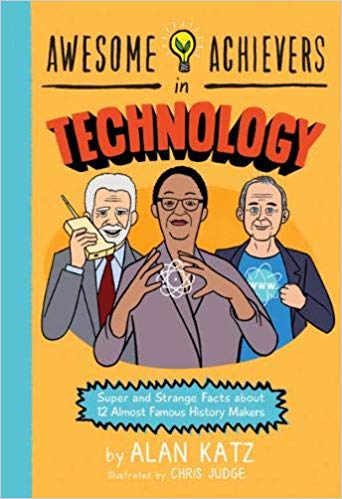
Awesome Achievers in Technology, by Alan Katz/Illustrated by Chris Judge, (Aug. 2019, Running Press), $11.99, ISBN: 9780762463367

Ages 8-12

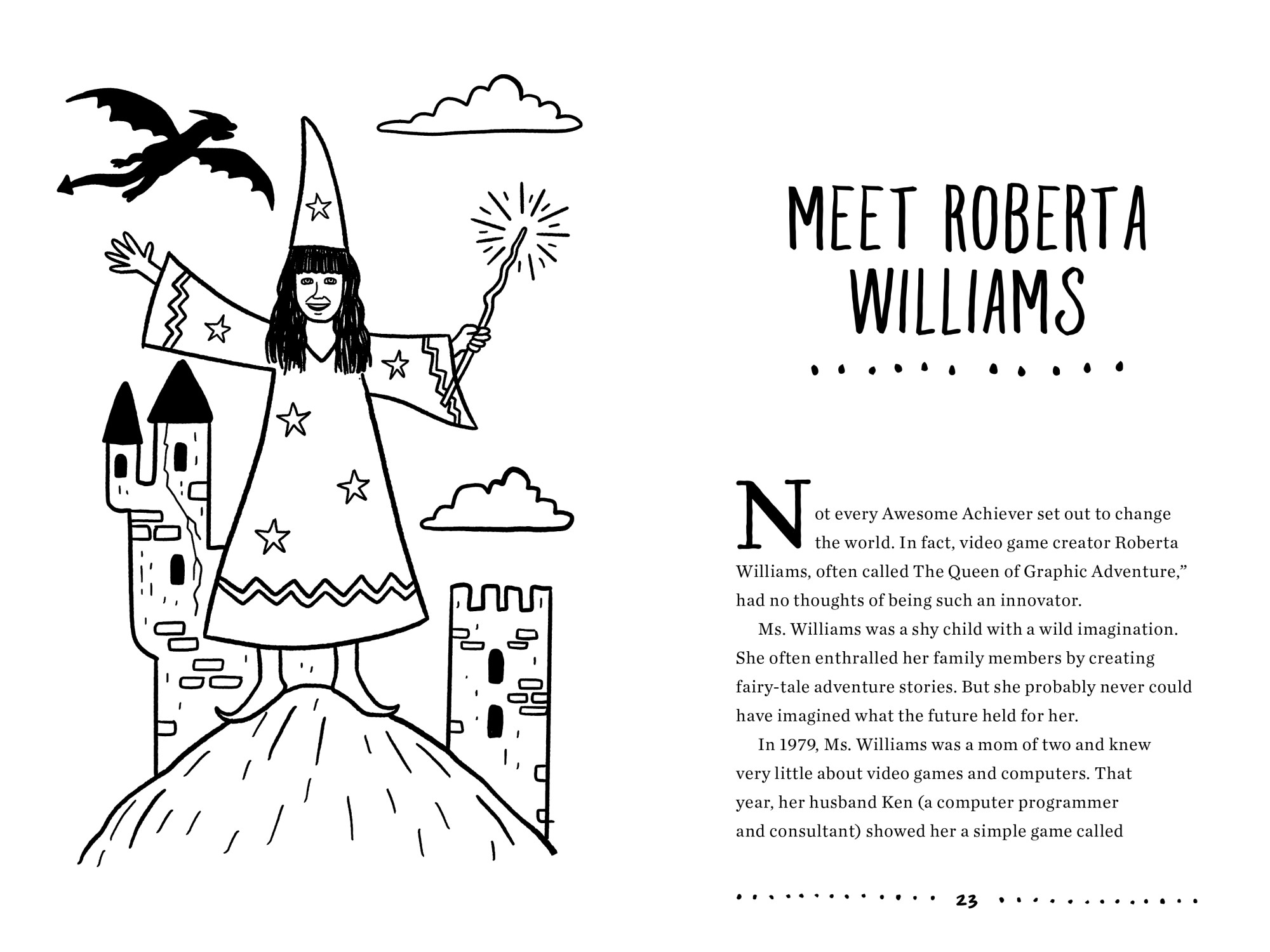
Kids have heard of the big names in Technology: Steve Jobs, Bill Gates, and, lord knows, Markus Persson (also known as Notch; Minecraft’s creator). But have they heard of Sir Tim Berners-Lee, the particle physicist who invented the World Wide Web as a way to share information with other scientists? Or Marie Van Brittan Brown, the nurse from Queens who devised the first closed circuit TV system, in conjunction with her engineer husband? Awesome Achievers in Technology is a series of short bios on some of the lesser-heralded names in technology. The book is part biography compilation, part wacky facts and silly stories, and a sprinkling of dad jokes. There are 12 profiles and 13 biographies – Adam Cheyer and Dag Kittlaus, the developers who created Siri, are included together – with black and white illustrations throughout. There are fun asides, including a “Get the couch potato back where he belongs” maze, remote control pop quiz, and wacky poems and stories from Katz’s memories.

All in all, a fun addition to biography shelves, and a good way to introduce kids to even more figures in STEM history. Awesome Achievers is going to be an ongoing series, with Awesome Achievers in Science hitting shelves on the same day as Awesome Achievers in Technology.

Posted in Middle Grade, Non-Fiction, Non-fiction, Tween Reads

Ocean: Secrets of the Deep is STEM fun!

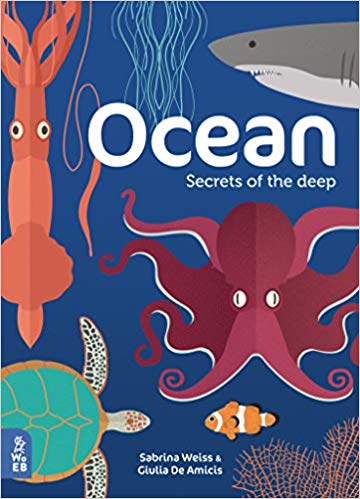
Ocean: Secrets of the Deep, by Sabrina Weiss/Illustrated by Giulia De Amicis, (April 2019, What on Earth Books), $19.99, ISBN: 97-1-9999680-7-6

Ages 7-12

We’re heading to Florida on the first road trip we’ve had in ages, so I’m all over the beachy reading right now. My little guy is excited, because his grandpa lives right by the ocean, so we’ve been enjoying this book immensely.

Ocean: Secrets of the Deep is loaded with facts and figures about the underwater world, and I am in love with the bright, bold illustrations and infographics! The information is presented in bite-size chunks that kids can easily enjoy and digest, and the minimailst artwork is bold and gorgeous. Not just a fact book, there is info about myths and legends (including one of my faves, the Kraken); sections on each of the ocean’s zones, with numbered renderings of each form of life living in each zone; animals who work together in the deep; animal sizes and sounds, and migration patterns. There are sections on environmental concerns and challenges, including overfishing, pollution, and climate change, and a call to action that encourages and empowers kids to act. A glossary and index complete this beautiful volume.

Natural history and environmental studies units would benefit from adding this book to shelves, and you can easily use Ocean in your library STEM programming. When we had our Discovery Club at my library, we did a unit on the ocean, and had the kids create their own ocean zones display on a wall in our meeting room. Print out pictures of different fish featured in Ocean, and invite the kids to color and stick their own marine life to the zones in your library or classroom! It’s a great multi-week project, if you want to spend time creating the monochromatic zones, then working on the marine life.

Ocean is absolute fun and absolutely gorgeous.

Posted in Middle Grade, Non-fiction, Tween Reads

STEAM into Summer!

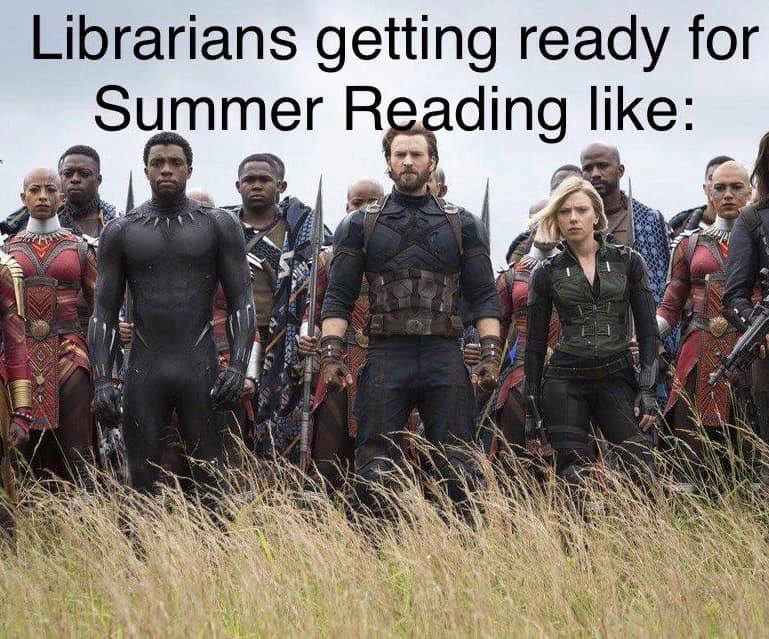
Summer Reading is the best – and craziest – time for librarians. We’re planning intense levels of programming, ordering books and putting lists together like mad, and just waiting for that last day of school, when the kids will storm the library like… well, let the Avengers tell you.

It’s real.

NatGeo Kids was kind enough to send some books my way to check out and talk up for my STEM programs this summer. Let’s take a look!


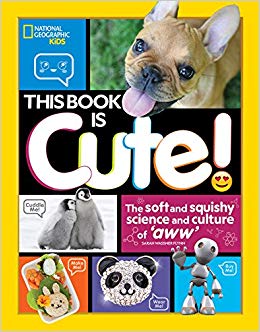
This Book is Cute! The Soft and Squishy Science and Culture of Aww, by Sarah Wassner Flynn,
(March 2019, National Geographic Kids), $12.99, ISBN: 9781426332944
Ages 5-12

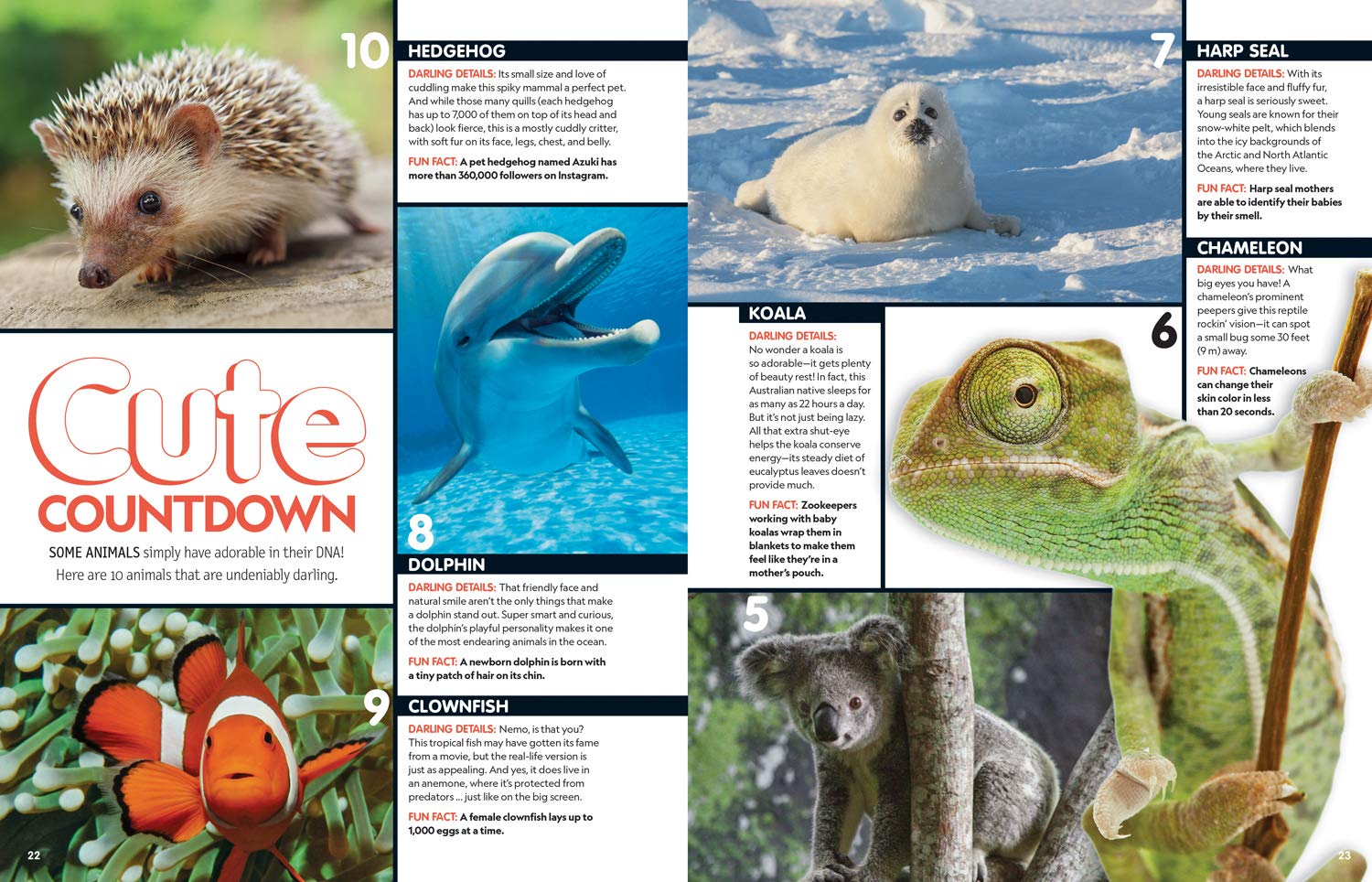
Can you believe there’s a science to cuteness? Of course NatGeo Kids would get to the bottom of this! Cute foods! (More attractive to eat!) Cute (human and animal) babies! (Trigger emotions in us that make us protect and care for them!) Cute clothes and toys! (We can’t get enough of ’em!) This Book is Cute is 112 pages of high-pitched squealing, science, and lists of cute animals, cutest jobs ever (I would like to apply for the Cat Cuddler spot, please), even appliances. Put up a bulletin board and see how many cute animals or food your kids can identify, or test their Cute IQ using the quiz in the book. This Book is Cute! is absolutely adorable; kids will go crazy for it and so will you.

Ages 8-12
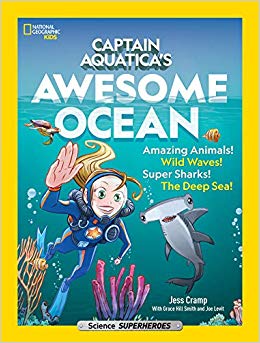
A companion to Dr. E’s Super Stellar Solar System and Dirtmeister’s Nitty Gritty Planet Earth, Awesome Ocean takes readers underwater exploring with cartoon superhero Captain Aquatica and her hammerhead shark sidekick, Finn. Shark researcher and marine conservationist Jess Cramp is the real-life version of Captain Aquatica, and leads readers through chapters on the ocean; waves, tides, and water; sharks and marine life; underwater technology; ecosystem engineering, and the critical importance of conservation. Moving back and forth between a comic book adventure and factual explanation, the book is loaded with incredible photos, fact boxes, and easy experiments that kids and families can do at home. There are scientist profiles – I love these, because they introduce readers to even more scientists than they’ll meet in our biography aisles – a glossary, index, and book and website resources for more exploration. NatGeo books are amazing because they always make sure to empower kids to make the world a better place, providing ways to get involved and start making changes. Their photos are consistently fantastic, and I love having as many of their books as possible in my library. If a parent or kid comes in looking for nonfiction about the natural world or animal book suggestions, I bring them to NatGeo books first. Display this set together, if you have them, and direct your readers to a series that looks at the big picture: earth, ocean, and space.
Luna: The Science and Stories of Our Moon, by David A. Aguilar,
(June 2019, National Geographic Kids), $17.99, ISBN: 9781426333224
Ages 8-12
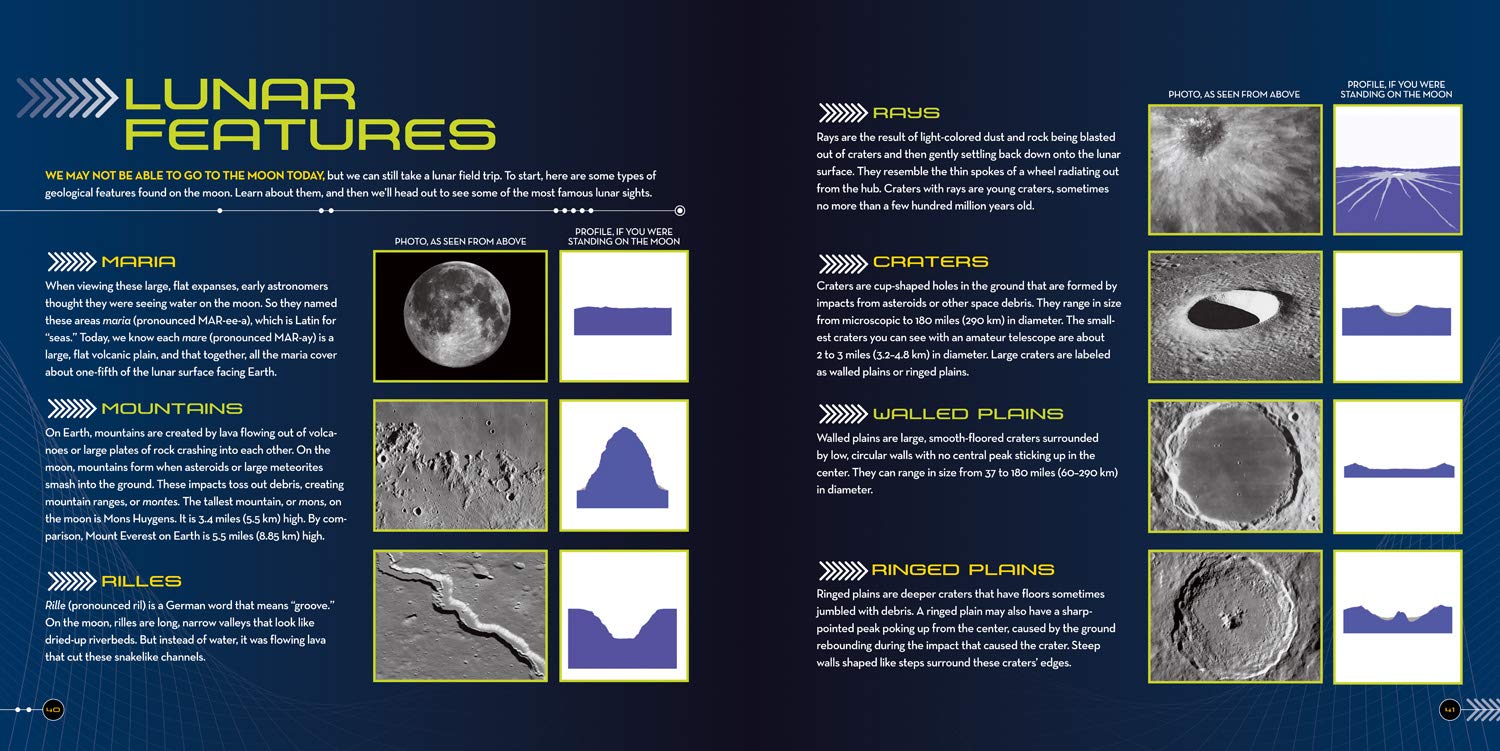
NatGeo wouldn’t let a Summer Reading theme go by without a book for us to give to the kiddos! Luna is all about our friendly satellite, the Moon. It’s a compact volume, at 64 pages, packed with all the info a middle grade space enthusiast could want. There are beautiful photos, callout quotes and facts, and full-color diagrams, and thought-provoking chapters cover topics including moon myths and hoaxes; the famous “dark side” of the moon; how our moon stacks up against other moons; lunar phases, and – naturally! – the 1969 lunar landing. There’s a fun make the moon activity (get your old t-shirts on; this one involves Plaster of Paris), a viewing guide, and tips on drawing the moon. There’s an index and a list of additional resources. This is one of the best middle grade volumes on the moon that I’ve read since Elaine Scott’s Our Moon (2015), and a solid add to your 520s. Mine are always in high demand (along with my dinosaurs), and with the outer space theme for this year’s Summer Reading, I imagine I’ll need a second copy of my own to use for programming.
Thanks again to NatGeo for always keeping nonfiction interesting and fun!