Posted in Fantasy, Fiction, Humor, Middle Grade, Middle School, Tween Reads

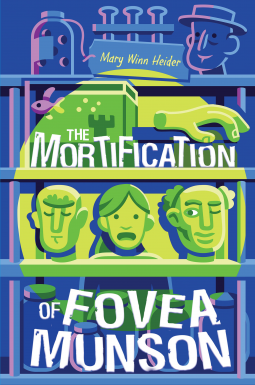
The Mortification of Fovea Munson is hilarious Summer Reading!

The Mortification of Fovea Munson, by Mary Winn Heider/Illustrated by Chi Birmingham, (June 2018, Disney-Hyperion), $16.99, ISBN: 9781484780541

Ages 9-13

From the opening line, “Dead bodies are the worst”, you just know you’re in for a good time with this book. Fovea Munson is the 12-year-old daughter of two doctors: cadaver surgeons. They operate on dead folks, and they teach medical students how to work their craft on dead folks. They’ve got the corniest senses of humor, a never-ending love for Hippocrates, the father of medicine, and they’ve just hired Fovea to be their receptionist for the summer. This is bad enough for a 12-year-old who’s already feeling tragically uncool, but wait: three heads in the cadaver lab start talking to her. Death isn’t necessarily final, after all, and Lake, McMullen, and Andy – the three heads in question – want to start a barbershop quartet, hit a recording studio, and have a release party, and it’s up to Fovea to make it happen. Quickly. Because that receptionist that quit left a lovesick, slightly unhinged cremator, behind, and he’s got information that will ruin Fovea’s family. The heads know something, so it’s a little quid pro quo in action.

Is this madcap? Absolutely! Is it hilarious? Without question! Fovea narrates this laugh-out-loud story of a summer vacation gone sideways with a priceless, put-upon tween voice as she navigates her relationship with her parents, her friends (both dead and living), and her scooter-riding grandmother. There’s an unexpected amount of pathos here as Fovea comes to care for a classmate and the trio of cadaver heads in her care, and a bittersweet realization that some friendships aren’t meant to last. There are black and white illustrations throughout, adding some visual humor to the story, and chapters titles remind us how much Hippocrates has influenced Fovea’s life. The end of the book leaves me hopeful that we’ll get some more fun with Fovea down the road, and an appendix (snicker) includes amusing little in-jokes that readers will get a kick out of.

The Mortification of Fovea Munson is a perfect summer read, especially for kids who think their parents are weird (which is, honestly, most of ’em). Don’t miss it. Add it to your STEM reading – cadavers science is a thing!

Posted in Intermediate, Middle Grade, Middle School, Non-Fiction, Non-fiction, Non-Fiction, Tween Reads

BIG Summer Nonfiction Reads Roundup!

From sharks, to space, to stories of survival in the wild, I’ve got books for all sorts of nonfiction tastes! Let’s start with the oogie stuff and go from there.

They Lost Their Heads! What Happened to Washington’s Teeth, Einstein’s Brain, and Other Famous Body Parts, by Carlyn Beccia, (Apr. 2018, Bloomsbury), $18.99, ISBN: 9780802737458

Recommended for readers 10+

If you have readers who loved Georgia Bragg and Kevin O’Malley’s books, How They Croaked: Awful Ends of the Awfully Famous, and How They Choked: Failures, Flops, and Flaws of the Awfully Famous, this is a home run! Learn what happened to the famous body parts of 17 famous folks, and pick up some knowledge about other body parts and how they influenced science medicine. If you’ve ever ever wanted to know what happened to Thomas Edison’s last breath or Van Gogh’s missing ear, this is the place to go. You also learn cool stuff like what rots first after you die (psst… it’s the intestines). Loaded with black and white drawings, funny footnotes, sources, an index, and a bibliography. This one’s a hit for upper elementary readers, all the way through high school. They Lost Their Heads! has a starred review from Booklist.

StarTalk with Neil DeGrasse Tyson (Young Readers Edition), by National Geographic, (March 2018, National Geographic), $17.99, ISBN: 9781426330872

Recommended for readers 10+

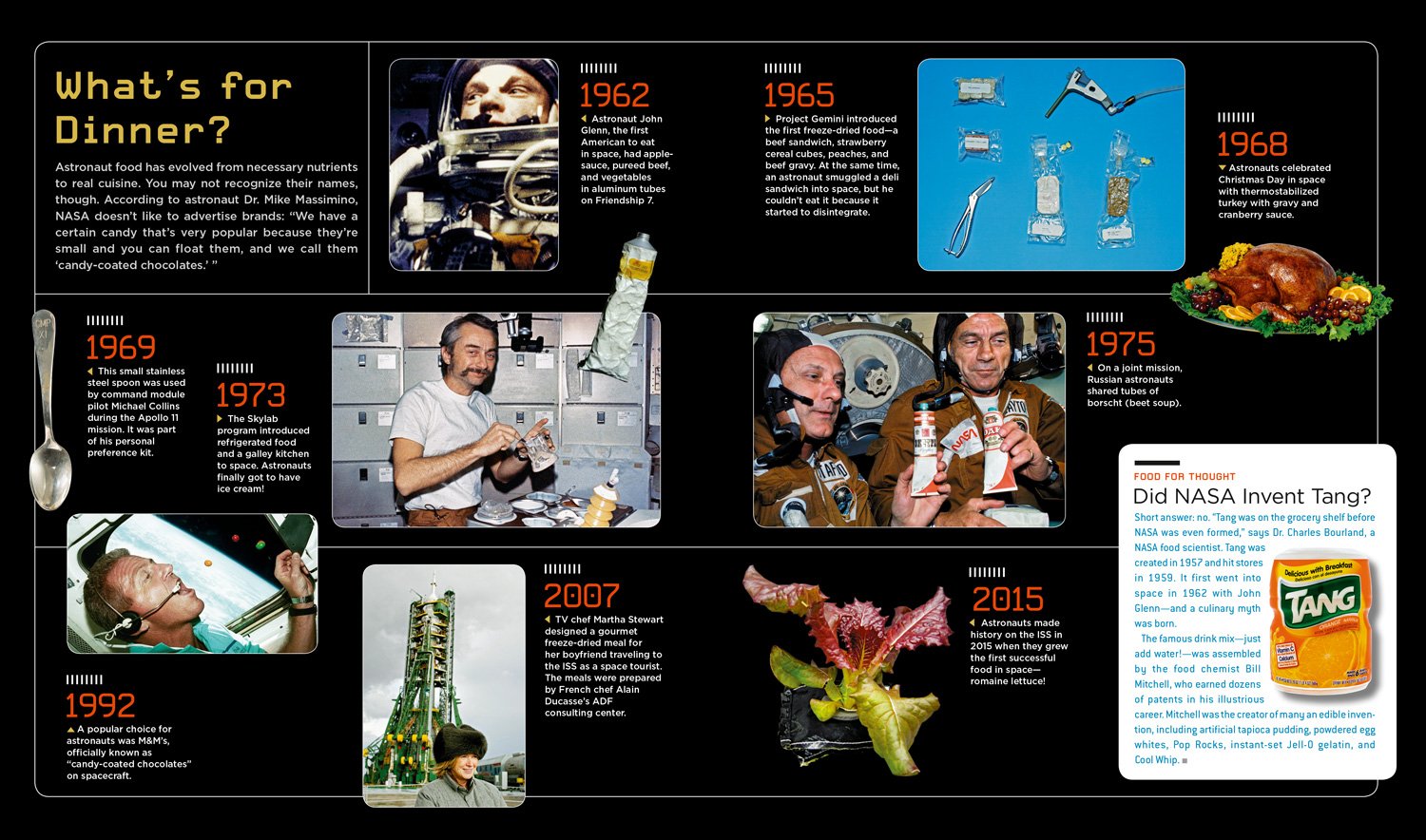
I LOVE Neil DeGrasse Tyson and evangelize his StarTalk Radio podcast any chance I get. (Seriously, it’s great stuff.) NatGeo’s Young Readers edition of the StarTalk book is must-booktalk summer reading. Get your Summer Reading budget and buy some astronaut ice cream; while you and the kids feast, read the section on why you can’t get a pulled pork sandwich in space; find out what the Vomit Comet is; and read mini-bios on scientists like Carl Sagan. Not so much with the food? There are also sections on zombies and superheroes. Debate the eternal question: Could the Death Star really blow up a planet? There’s so much to discover in this book that every kid is darn near guaranteed to find something to interest him or her. (Psst… get an extra copy for yourself. You’ll thank me.)


Survivors: Extraordinary tales from the Wild and Beyond, by David Long/Illustrated by Kerry Hyndman, (Sept. 2017, Faber & Faber), $19.95, ISBN: 9780571316014

Recommended for readers 9-13

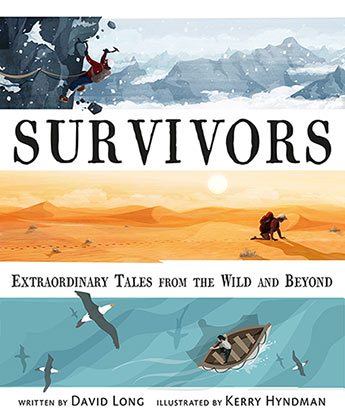
Do you know fans of Lauren Tarshis’ I Survived series? I’ve never been able to keep those books on the shelves, no matter which library I’ve been at. Middle graders go berserk for that series, and they’ll LOVE this oversized, illustrated anthology of true survival tales. There are 23 stories in here; the most famous being explorer Ernest Shackleton, who saved his crew when a 1914 Antarctic expedition put their lives in danger. There’s also the story of Hugh Glass, a “fur trapper and adventurer” who made the critical error of surprising a mother bear and her cubs by the Missouri River in 1823, or Mauro Prosperi, a runner competing in the 1994 Marathon of the Sands through the Sahara Desert, found himself in the middle of a sandstorm. Not crazy enough for your readers? There’s also a Hollywood pilot who crashed INSIDE a Hawaiian volcano in 1992. The stories are fast-paced, beautifully illustrated in color, and are perfect for adventure fans. Best part? All the stories are TRUE.


The Ultimate Book of Sharks, by Brian Skerry, Elizabeth Carney, & Sarah Wassner Flynn, (May 2018, National Geographic Kids), $19.99, ISBN: 9781426330711

Recommended for readers 7-13

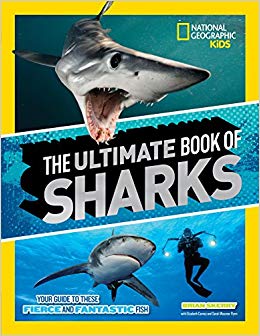
Kids love sharks. This is a fact. The Ultimate Book of Sharks has all the info and pictures your shark-loving fans crave, just in time for Shark Week, which kicks off on July 22 (get your printables and programs lined up – I’ll do a separate post about Shark Week as it gets closer). The NatGeo folks bust myths about sharks, give us a look at shark anatomy, and – as always – provide loads of information about conservation and preservation, and how we can all help keep sharks, and our waters, safe and clean. This volume is chock full of fast facts and lists, with Up-Close Encounters, where marine wildlife photojournalist and author Brian Skerry shares some of his stories with readers. There’s an index at the end. This volume is an absolute must-add to your science and nature collections.


Red Alert! Endangered Animals Around the World, by Catherin Barr/Illustrated by Anne Wilson, (July 2018, Charlesbridge), $17.99, ISBN: 9781580898393

Recommended for readers 7-11

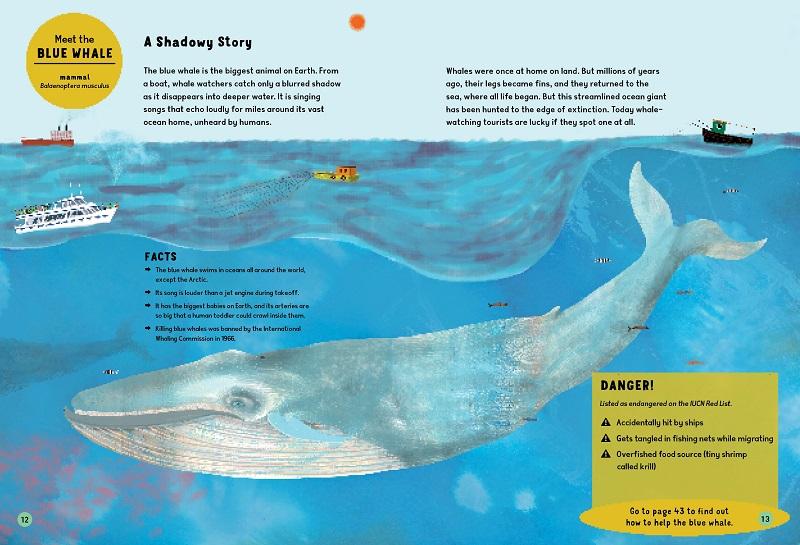
This is such a fun book. Think of a Choose Your Own Adventure about endangered animals, and you’ve got Red Alert! Red Alert! profiles 15 animals on the International Union for Conservation of Nature’s (IUCN) list. A beginning note explains the organization’s “Red List”: a list of endangered plants, animals, and fungi, and lists some of the categories mentioned in the book. Colorful endpapers start the fun: the first, a map of the world, with the 15 profiled animals drawn into their world regions; final endpapers highlight a plethora of endangered animals. From here, readers can pick a place to explore: deserts, forests, mountains, grasslands, rivers, or oceans; pick a creature from each of these regions, and go to its page to read further. You can also read the book straight through. Spreads include the animals’ scientific names, facts, endangered category, and factors contributing to the endangerment of the species. A section at the end provides resources for more information on taking conservation action. A solid introduction to environmental action for younger readers.

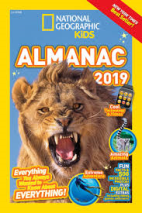
 

National Geographic Kids Almanac (2019 Edition), (May 2018, National Geographic Kids), $14.99, ISBN: 9781426330131

Recommended for readers 8-13

Another guaranteed must-have from NatGeo Kids, this latest edition of their Kids Almanac shows readers a baby animal “tweet-off” between several zoos and aquariums (it’s from 2017, but who doesn’t want to revisit that simpler, lovelier time?), talks about updates in robotics and technology, dwarf planets, and has a Special Gross Edition of their Just Joking feature. Facts, quizzes, updated maps and stats, and homework help ideas all in one volume? This is one desk reference every kid should have – put one on your shelves, and keep one in your reference area, to be on the safe side.


How’s that for a start? Next time a kid comes in, stressed about needing a nonfiction book, consider yourself ready.
Posted in Intermediate, Middle Grade, Non-fiction, Non-Fiction

Epic Fails! New series nonfiction looks at the not-so-great moments in history

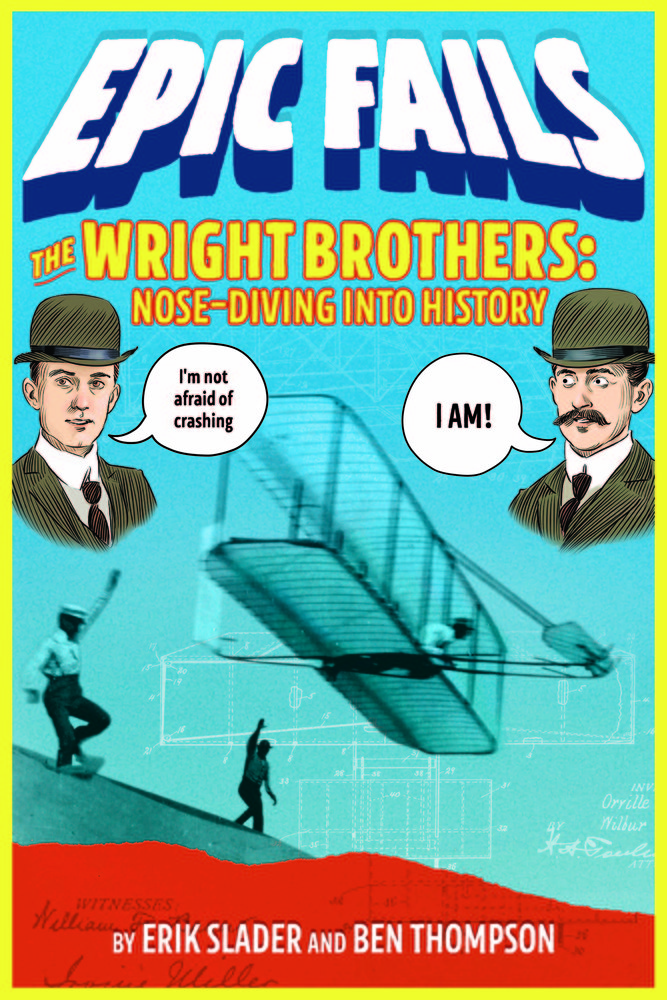
The Wright Brothers: Nose-Diving into History (Epic Fails #1), by Erik Slader & Ben Thompson/Illustrated by Tim Foley, (July 2018, Roaring Brook Press), $6.99, ISBN: 978-1-250-15056-1

Recommended for readers 7-11

Say the names Orville and Wilbur Wright, and people automatically think of airplanes. They were the first self-taught engineers, after all, to achieve flight. But success didn’t come easy, and there were a lot of fails before their 12-second success. Epic Fails is a new non-fiction series for intermediate and middle grade readers that details some of history’s biggest successes – and the failures that went hand-in-hand with them.

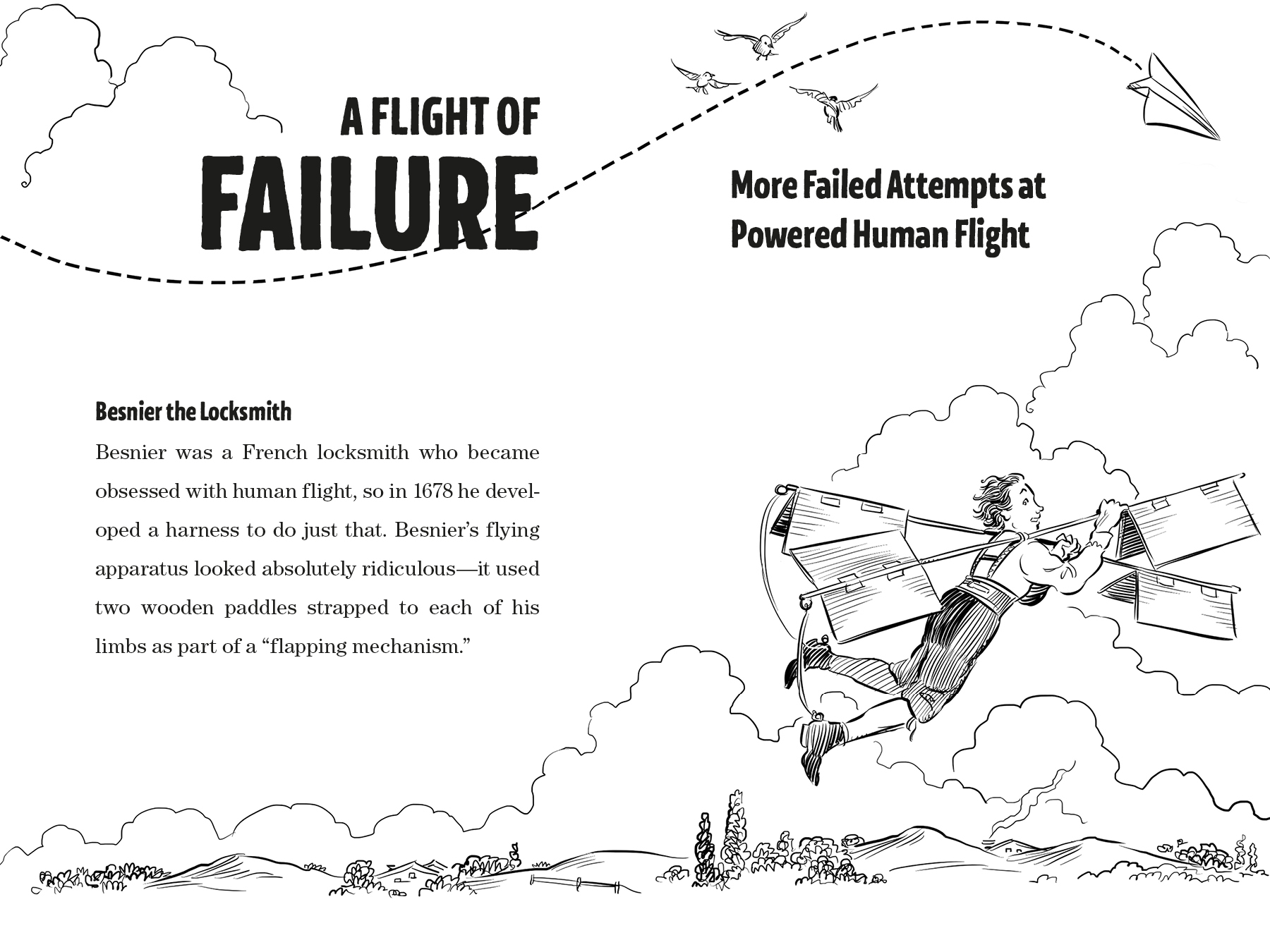
Written with a humorous tone, readers will learn about the previous attempts made before the Wright Brothers were even born; the nosedives and crashes, and the lessons learned from each misstep that led to success. Filled with black-and-white illustrations and photos, a timeline of flight, a bibliography, and an index, this is a handy additional resource for schoolwork, and a fun read that delivers the message that it’s okay if that science project, that school paper, or that great model rocket you were building doesn’t work the first time. Or the second time. Or multiple times. It’s okay to not be perfect, because it really is part of the learning process. That’s a pretty great message to communicate to our kids, isn’t it?

Add to your STEM/STEAM reading lists, and display with the Science Comics volume on Flying Machines, and maybe some instructions for paper airplanes. Fold ‘N Fly is a searchable database of free paper airplane designs, filtered by difficulty, type, and whether or not you want to use scissors to cut them, manipulating air flow. Sweet!

Posted in picture books, Preschool Reads

Count along with Annie Aardvark, Mathematician!

Annie Aardvark, Mathematician, by Suzie Olsen/Illustrated by Davina “Viv” Kinney, (Jan. 2017, STEAM Publishing), $9.99, ISBN: 9780998433707

Recommended for readers 3-6

This cute counting book stars Annie, an aardvark mathematician. She loves math! She decides to count everything she finds, and takes readers on a 1-10 feast for the senses where she enjoys sniffing and tasting cucumbers, rocks, assorted bugs, berries, and plants. Each spread features a white page with black text for easy storytime reading, and a full-color page featuring Annie and her latest discovery. Kids can count along with the repetitive text, which features written numbers, illustrated things to count, and – most fun – the sounds Annie makes as she explores and investigates each treasure. She gulp, gulp, gulps beetles, slurp, slurp, slurp, slurps sticks, and has a whole bunch of snorts for leaves!

This is a cute concept book that would work really well with flannels – nature flannels are easy enough to make or find. It fits in well with a nature storytime; I’d pair this with Sue Williams’ I Went Walking. Make fun sound effects to get the kiddies giggling! The art is cute; Annie has a friendly smile and expressive eyes that will draw readers’ attention. Explain what an aardvark is, and more importantly, what a mathematician is. Pronounce the kids mathematicians and have them count!

Posted in professional development

Professional Development Reading: Exploring the Science of Sounds

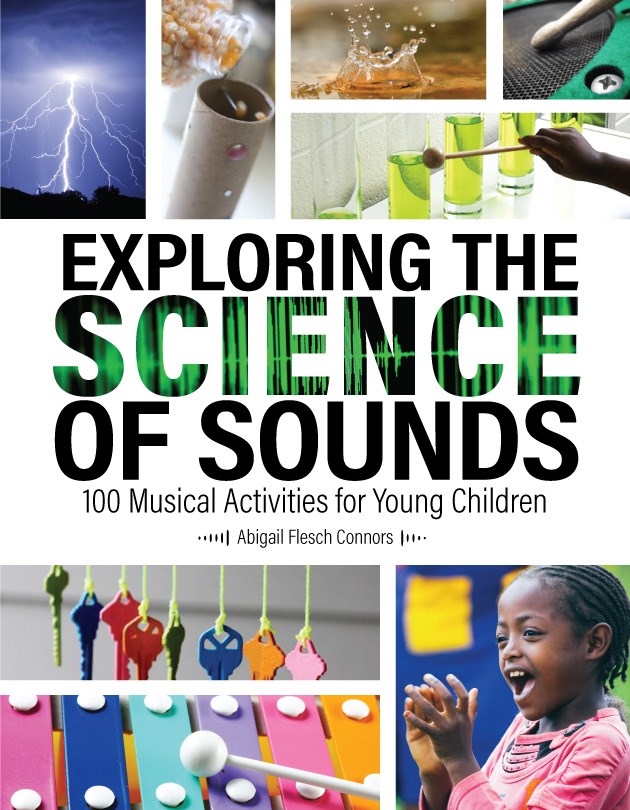
My latest professional development read is Exploring the Science of Sounds: 100 Music Activities for Young Children, by Abigail Flesch Connors. Since I enjoy singing songs and teaching my storytime kids fingerplays, I wanted to see how else I could bring music into my programs. Two of my colleagues have done great programs with musical instruments and musical play, so I want to get in on the fun!

Exploring the Science of Sounds: 100 Musical Activities for Young Children, by Abigail Flesch Connors,
(October 2017, Gryphon House), $16.95, ISBN: 9780876597316

Although aimed at professionals that work with kids from preschool to age 7, many of these activities are easily adaptable to toddlers. We get an explanation of the science behind sounds – pitch, tempo, musical instruments and how they make the sounds they make – and activities that translate to teachable moments for kids (and caregivers!). Teach kids to make their own guitar/harp/stringed instruments using a tissue box and rubber bands! Use different surfaces to understand how sound travels with different thicknesses! Every single activity in here will enrich a storytime or form the groundwork for a STEAM/STEM music program that kids will love. I’m putting this one in my professional development budget; I can see myself referring to this book again and again.

Posted in Fiction, geek, Guide, Non-Fiction, Non-fiction, Tween Reads

Holiday Book Shopping: Science and Tech

Books make fantastic holiday gifts! Need a stocking stuffer or are stumped by a kid who has seemingly everything? Try one of these!

I am guilty of favoring books in the STEM/STEAM areas, because that’s what I love evangelizing to my own kids and the kids at my libraries. Take a look – you don’t need to be a Stephen Hawking-in-the-making to enjoy these.

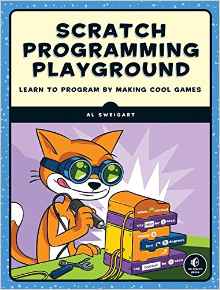
scratch-playgroundScratch Programming Playground, by Al Sweigart, (Oct. 2016, No Starch Press), $24.95, ISBN: 978-1593277628

Recommended for Ages 8-12

I love working with Scratch for young coders. It’s all about teaching kids how to computer code using interconnecting blocks of code, and the Scratch program, developed at MIT, is free and available online. Scratch Programming Playground walks kids (and grownups – I used this book extensively while putting together programs for this coming winter) through the process of learning Scratch by making cool games, like Fruit Slicer (a Fruit Ninja clone), Brick Breaker (where my ’80s friends at?), and Asteroid Breaker (Asteroids! Remember that one?). There are tons of full-color visuals and step-by-step breakdowns that will have kids programming in no time. I buy No Starch books for my libraries all the time – they’re great to have on hand.


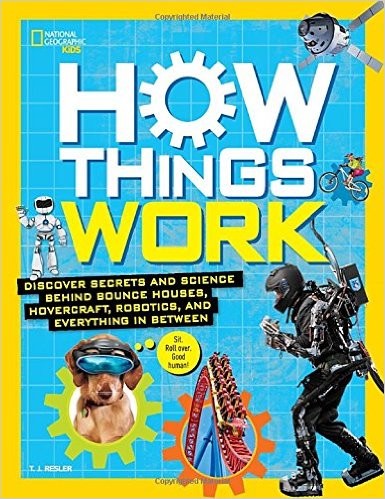
how-things-workHow Things Work, by T.J Resler (Oct. 2016, National Geographic Kids), $19.99, ISBN: 978-1-4263-2555-7

Recommended for ages 7-12

Know a kid who’s constantly taking everything apart to see how it works? This is the book for her or him. It’s loaded with gadgets and how they work; fun facts; in-depth pieces on technology and how it works; profiles of scientists and innovators, and yes, experiments that are totally safe to try at home (with adult supervision, please). Learn how a tablet really works, how an aquarium works to keep fish healthy and happy, even how a toilet works, complete with diagram. Design a roller coaster with your kids – it’s easier than you think! Because it’s a NatGeo Kids book, you know the writing is great; it speaks to kids in easy, clear, fun language that educates and never talks over their heads or down to them. The photos are amazing, and the dog on a surfboard (page 131) is worth the cost of the book all on its own.

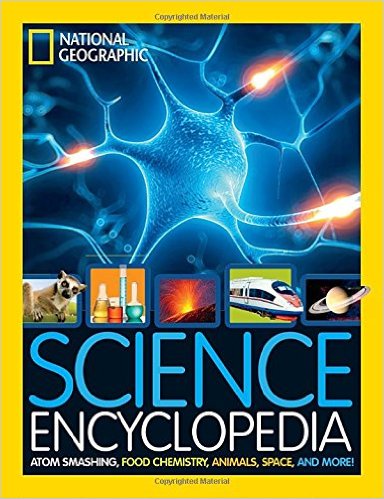
science-encyclopediaScience Encyclopedia: Atom Smashing, Food Chemistry, Animals, Space, and More!, by National Geographic Kids, (Oct. 2016, National Geographic Kids), $24.99, ISBN: 978-1-4263-2543-4

Recommended for ages 8-13

I know, it’s a NatGeo Kids lovefest right now, but it’s well-deserved. The Science Encyclopedia is info-packed with everything kids need to know about physical and life sciences, covering matter, energy, electronics, the universe, and more. There are record breakers, key dates in atomic science, and activities to try at home. Information is presented in 2-page spreads broken out into subject-specific blocks, with stunning photos, fun facts, and hilariously bad jokes (Where does bad light go? A prism!) A glossary, index, and additional resources round this volume out. Fantastic gift for any tween who wants to know more about everything.


These are all available now, either in your local bookstore or online through Amazon, Barnes & Noble, Books-a-Million, or IndieBound.

Posted in Intermediate, Middle Grade, Non-fiction, Non-Fiction, Teen, Tween Reads

Create and learn with Maker Lab

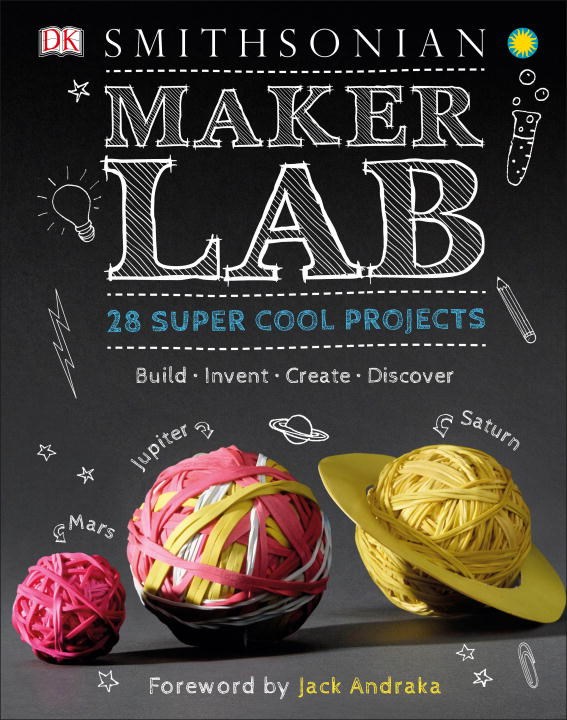
maker lab_covMaker Lab – 28 Super Cool Projects: Build * Invent * Create * Discover, by  Jack Challoner, (July 2016, DK Publishing), $19.99, ISBN: 9781465451354

Recommended for ages 8-12

I saw a mockup copy of this book at PLA earlier this year, and stopped dead in my tracks, for two reasons: I LOVE DK books, and anything Maker or STEM grabs my attention, because I have kids at home and at work, so I’m always on the lookout for projects to bring to them. When an e-ARC was available on Edelweiss, I jumped at it.

There are 28 projects in here, 90% of which you probably have the  materials for in your home or can easily get to. The book is divided into four sections: Food for Thought (kitchen science); Around the Home (pretty self-explanatory); Water World (projects working with water); and the Great Outdoors (stuff you can do outside). Each project is beautifully photographed and step-by-step instructions and photos take burgeoning scientists through each experiment/project/activity. Each project has a notation of approximate time the activity will take, difficulty (easy-medium-hard), and adult supervision is always encouraged, particularly when using sharps, like scissors, or hot liquids. A “How it Works” section explains the science behind each project, adding some nice science inquiry. A glossary and index complete the book.

Maker Lab is created in association with the Smithsonian Institution and supports STEAM education initiatives, and it’s just fun. I want to add this book to my two science clubs at work, and get my little guy making a rubber band solar system with me at home. I know I’m a DK fangirl, but with good reason: they create great material for anyone who wants to learn.

This book will be a big help during science fair season, so maybe get an extra copy.


maker lab_3

Posted in Adventure, Fiction, Middle Grade, Tween Reads

STEM Siblings: Nick and Tesla are back!

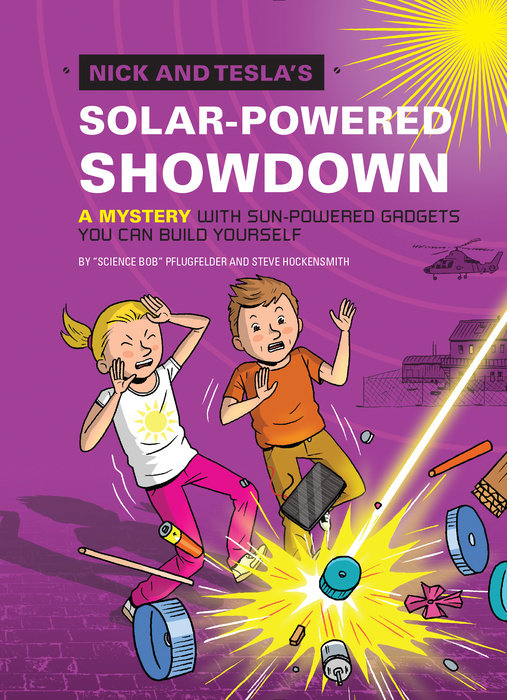
nick and teslaNick and Tesla’s Solar-Powered Showdown, by “Science Bob” Pflugfelder and Steve Hocksmith/Illustrated by Scott Garrett (May 2016, Quirk Books), $12.95, ISBN: 978-1-59474-866-0

Recommended for ages 8-12

Super smart siblings Nick (short for Nicolas) and Tesla are back, and so is Uncle Newt, plus friends Silas, and DeMarco! Nick and Tesla are having a heck of a summer: their parents are still missing, and all signs point to them being kidnapped, possibly by an evil mastermind. This latest installment in the popular middle grade mystery series has brother and sister working together to create all sorts of solar-powered gadgets that will get the attention of their government contact, distract the bad guys, and save the day. Let’s hope it’s enough!

This is such a fun series for middle graders, because it puts the power in their hands. Nick and Tesla are competent, smart kids that aren’t middle school pariahs; they have fun, wacky friends, and they have a strong, supportive – if eccentric – family. They can MacGuyver a solution to seemingly every problem: from getting a secret agent’s attention, to cooking hot dogs using a Pringles container and solar power. The best part? The kids can recreate the experiments! As with the other books in the Nick and Tesla series, Solar-Powered Showdown features five projects readers can make along with the twins: a a hot dog cooker, listening device, nighttime LED signal cannon, range rover, and alarm bell. All solar-powered, and all easy to make (with adult supervision).

You don’t need to be intimately familiar with the series to pick this one up – this is the first book I’ve read in the series; it’s been on my “to get to” list for a while – because the text will fill you in, usually via humorous footnotes, on what’s happened in the previous books. A note at the beginning of the book lets parents and kids alike know that project instructions should be reviewed by an adult, and that adults should supervise and assist on each project. The instructions are detailed, numbered, and illustrated, really encouraging kids to go for it and create exciting, sustainable things!

The Nick and Tesla website has videos, educator guides, book excerpts, and downloadable shopping lists, by book, for each of the projects featured in the novels. You can submit your own work for them to check out, too.

I’m working on a lot of STEM/STEAM ideas for Summer Reading, so this series will be on display, along with Gene Luen Yang’s Secret Coders and HowToons graphic novels (the second Secret Coders book is due out in August!), and Jon Sciezska’s Frank Einstein series of novels. Get kids thinking and creating this summer!

Need more ideas? Science Bob has tons of them on his own website, and his Instagram has some very cool science facts and videos, like Tesla coils at work and BB8 droids under construction.