Posted in Early Reader, Non-Fiction, picture books, Preschool Reads

Natural world nonfiction for young learners: See to Learn: Forest

See to Learn: Forest, by Kate Moss Gamblin/Illustrated by, Karen Patkau, (March 2019, Groundwood Books), $16.95, ISBN: 9781554988792

Ages 4-7

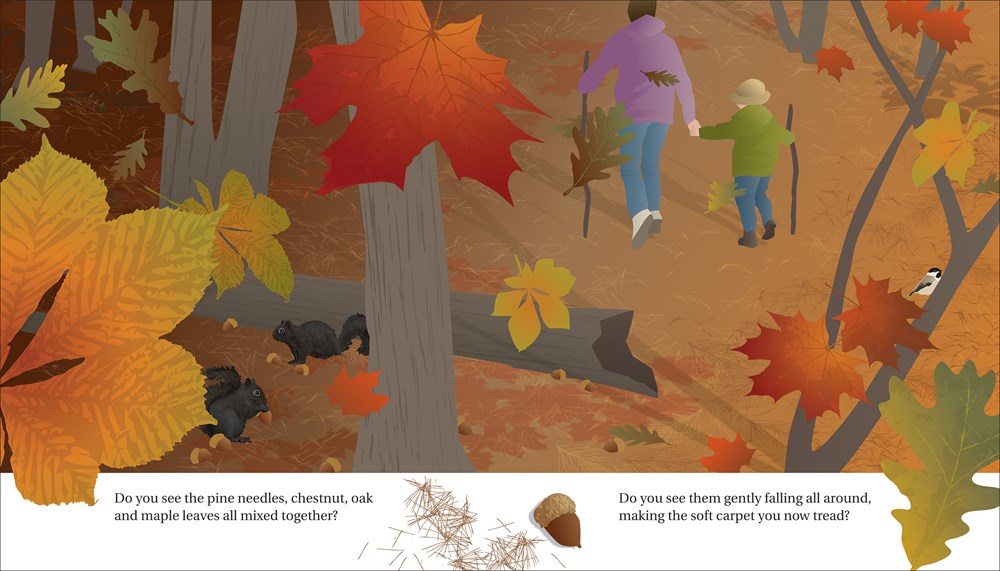
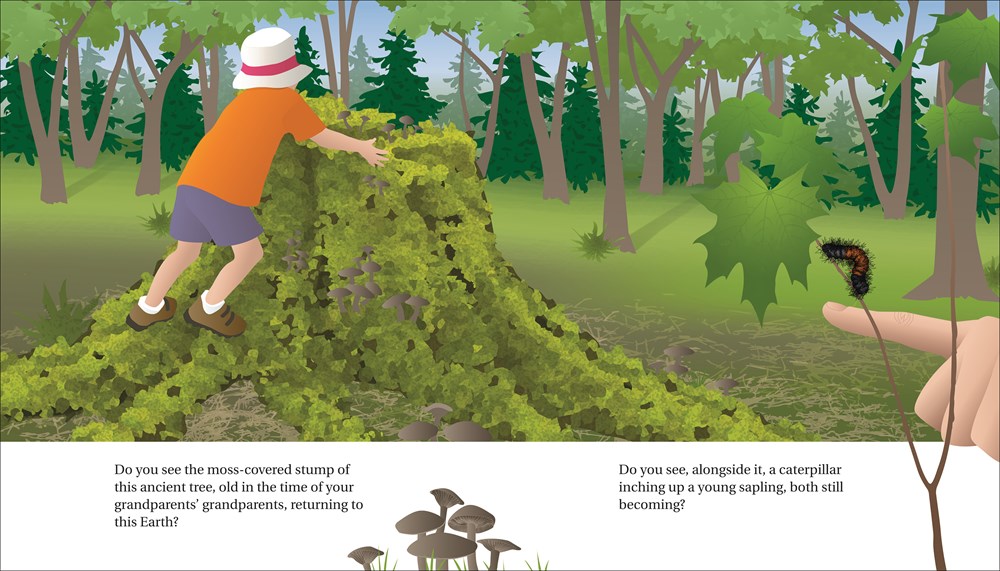
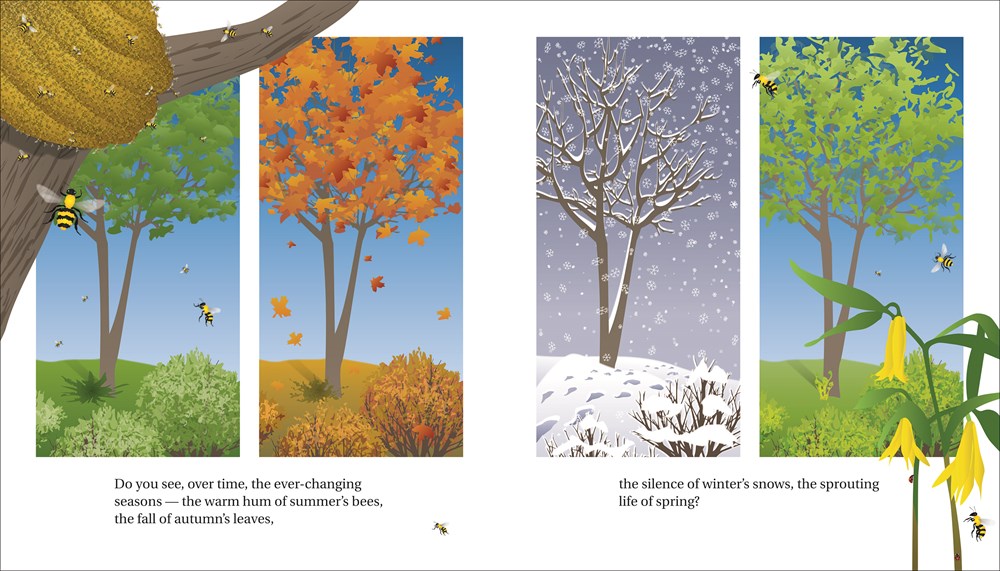
This first book in a new nonfiction picture book series encourages little learners to look at a location – in this case, a forest – and really see: see different footprints that travel the forest floor; the different leaves carpeting the ground; moss covering a stump. Forest encourages readers to think: is that moss older than your grandparents? What changes do seasons bring with them? What happens during the passage of day to night?

The quiet text promotes introspection, curiosity, and presence, and the interrelationships between nature – trees are referred to as our “cousins” – and our planet. Everything here exists for readers to observe and ponder, and Forest encourages them to think of nature, the world, and their place in it.

This is a great way to talk about the natural world and basic concepts with kids: talk about colors, talk about different functions, talk about different stages of life, whether you’re a human grandparent or a young caterpillar. We all age; we all exist; we all interact with the natural world. Let kids see themselves in nature, and they’ll respect it and care for it. Further reading provides additional resources for younger and middle grade readers. An author’s note explains the rationale and thinking points for the series.

I’m looking forward to more books in this series. See to Learn: Forest is a great addition to primary and elementary science collections and programming. This will fit nicely with Kate Messner’s nonfiction books, Over and Under the Snow, Over and Under the Pond, and Up in the Garden and Down in the Dirt, for elementary readers; for primary readers, you can’t miss with Laura Vaccaro Seeger’s books, Green and Blue; and Denise Fleming’s In the Tall, Tall Grass, and In the Small, Small Pond.

Posted in Intermediate, Non-Fiction, picture books

February Non-Fiction is all about the animals!

River Rescue, by Jennifer Keats Curtis & Tri-State Bird Rescue & Research, Inc./Illustrated by Tammy Yee, (Feb. 2019, Arbordale), $17.95, ISBN: 9781607188230

Ages 5-8

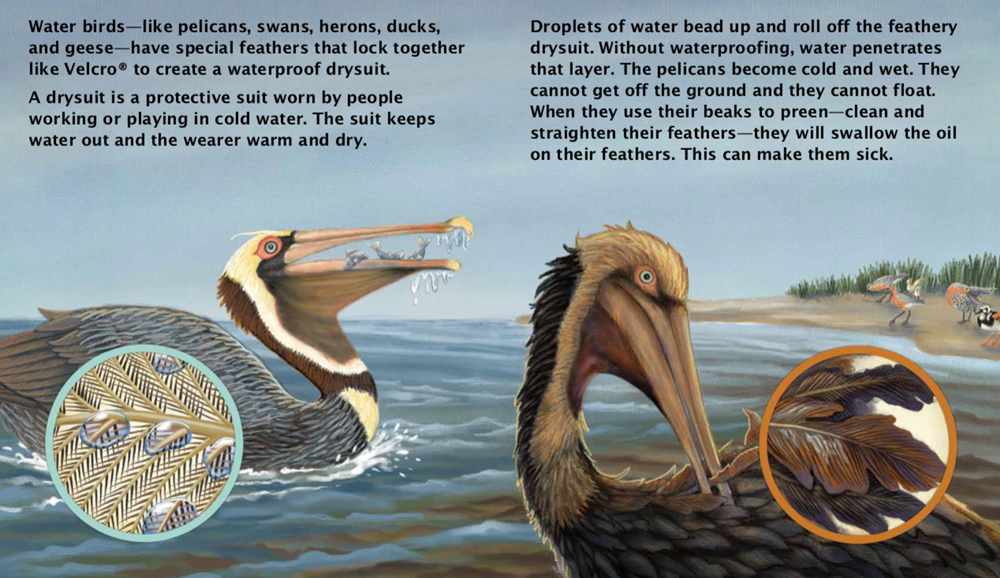
River Rescue illustrates how an oil spill – even one drop of oil – can be devastating to plan and animal life. Introducing readers to the Wildlife Response Team at Tri-State Bird & Rescue, a Delaware-based organization that rescues and rehabilitates animals affected by oil, River Rescue teaches readers about the delicate cleaning process and the care so critical to helping evaluate, treat, and rehabilitate affected animals.

There are so many questions to ask: is the animal alert on arrival? What kind of oil is on the animal? The cleansing process brings more questions: what kind of bird is this? Is it a flocking bird, or a solitary one? Is it a water bird or a land bird? After the rehabilitation process, animals are released back into the wild, preferably in the area where they were rescued.

River Rescue provides an informative look into animal rescue and rehabilitation and encourages good environmental citizenship among readers. The earth-toned art is realistic and the text is easy to understand. Back matter includes a 4-page For Creative Minds section allowing teachers, parents, and caregivers to photocopy and distribute activities on identifying wildlife, a Q&A with Tri-State Executive Director Dr. Lisa Smith, and information on preventing oil spills and helping animals.

The Long and Short Tale of Colo and Ruff, by Diane Lang/Illustrated by Laurie Allen Klein, (Feb. 2019, Arbordale Publishing), $17.95, ISBN: 9781607187387

Ages 4-7

Colo is a cougar and Ruff is a wild cat. The two friends want to play, but Ruff’s short tail prevents him from jumping as far as Colo can. As the two search for a new tail for Ruff, they encounter all the different things other animals can do with their tails and Ruff decides that his tail is just right after all.

This fun story is nonfiction with fiction wrapping: great for preschoolers and kindergartners! Colo and Ruff are realistically illustrated, but with softer artwork, playing up the cute factor. They encounter lizards, hawks, skunks and gophers on their search for a new tail, and callout facts throughout provide information that’s perfect for pleasure reading or an animal report. The For Creative Minds back matter includes a table comparing three kinds of cats and cat habitat maps.

Animal Noses, by Mary Holland, (Feb. 2019, Arbordale Publishing), $17.95, ISBN: 9781607188056

Ages 4-9

Noses, beaks, tongues, antennae – animals have a bunch of different ways to use their senses of smell, and Animal Noses is all about animal noses, how animals transmit messages through scent, and which animals have super noses versus which animals don’t. Loaded with sharp, full-color photos and facts, this is a nice add to science sections, especially when teachers come in looking for books on the five senses – always fun to throw something unexpected, like this, into my readers’ advisory, and show the similarities and differences between how we use our senses versus how animals use theirs.

Arbordale always has good back matter, too: their For Creative Minds sections allow for photocopying and distribution for educational use. The Animal Noses For Creative Minds covers fun facts about scent, a match the nose game, and spotlights animals with great senses of smell.


If a Mummy Could Talk…, by Rhonda Lucas Donald/Illustrated by Cathy Morrison, (Feb. 2019, Arbordale Publishing), $17.95, ISBN: 9781607187370

Ages 7-10

Meet some mummies and hear their stories: this volume contains stories about 12 different mummies: elephants, bison, dogs, cats, and humans, including the world’s most famous mummy, King Tut. Each spread focuses on one mummy, providing its date and location, and “before” and “after” illustrations that show readers what the animal or person most likely looked life while alive, and what its mummy looks like today. Facts gleaned from research and scientific observation bring each mummy’s story to life for readers, and provide clues to each demise. Discussions about different types of mummification, a mummy map of the world, and features on scientists’ tools and technology make up the back matter For Creative Minds section.

There are better books on mummies available, but this is an entertaining introduction for intermediate readers with an interest in natural history. The illustrations are realistic and colorful, and callout fact boxes appear throughout the book, clarifying bits of information contained in the text.


Posted in Fiction, Fiction, Intermediate, Middle Grade

Get some Autumn Science in with The Acadia Files

The Acadia Files, Book Two: Autumn Science, by Katie Coppens/Illustrated by Holly Hatan, (Sept. 2018, Tilbury House Publishers), $13.95, ISBN: 9780884486046

Ages 7-10

Part science journal, part chapter book, The Acadia Files is a planned 4-book series that introduces readers to 10-year-old Acadia Greene, who loves science and investigating. She often goes on adventures with her best friend, Isabel, her dog, Baxter, and her science teacher Mom. Autumn Science, the second book in the series, is a 5-chapter book where Acadia works on conservation and environmentalism, learns about frogs, and why leaves change color. She also learns about the water cycle in a chapter called, “Drinking Dinosaur Pee” – yes, my friends, think on that for a little bit! – and discovers the International Date Line and figures out time zones in “What Time Is It?” Finally, the bane of the cooler weather – cold season – gets its due in “The Germ War”, which explains the importance of washing one’s hands and other ways to stay healthy.

Each chapter can be read as a standalone adventure. Full color illustrations throughout give a journal-type feel to the book, including “entries” made by Acadia; there are washi-taped photos and data jotted down in the pages, experiments, new science vocabulary words, and each section ends with further questions to discuss in a “Things I Still Wonder” list. A section on “further exploration”includes links to all topics covered in the book. Endpapers look like a molecule party gone wild, and the cover looks like a decorated cardboard cover. Readers with even a passing interest in science should gobble this one up, and I’d love to see science programs (program in a book!) in libraries use this book to create some STEM fun – there will be four books in the series, after all; one for each season! Which reminds me… I think a “Dinosaur Pee” program would do GANGBUSTERS here at my library. Excuse me while I go make some plans…

Give this to your readers who liked Lucy’s Lab. Display with… what else? Science Comics!

Author Katie Coppens is a science educator. You can visit her author website to learn about author visits and see more of her books.

Posted in Intermediate, Middle Grade, Non-fiction, Non-Fiction

The Holiday Shopping has started… buy some books!

It’s that time of year again, where I dig deep to find all sorts of great books to add to your holiday shopping lists. This is the first round, so I’m thinking this post will suggest books and goodies to bring when you celebrate Thanksgiving, or the Fall Harvest, with your families and friends. These books will be fun for the kiddie table – before the food, naturally!

City, by Ingela P. Arrhenius, (Sept. 2018, Candlewick Press), $22, ISBN: 9781536202571

Ages 3-7

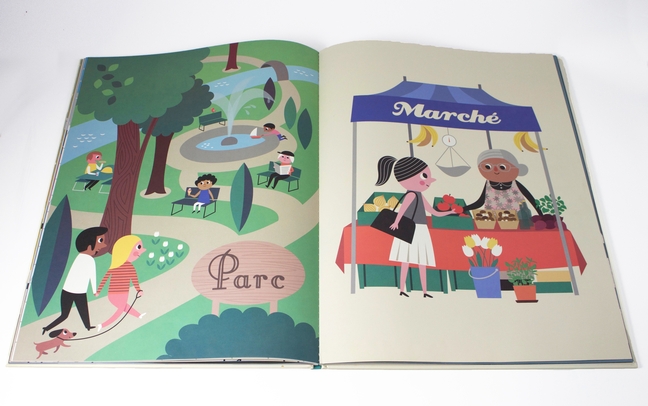
This book is just too much fun. First of all, it’s huge: over 40 inches high by over 17 inches wide, making it almost as big as some of the kids you’ll be seeing this holiday season! My niece giggle-shrieked when I stood the book up next to her, and that was that. She was hooked. It’s a gorgeous, funky concept book, introducing readers to different sights of city life: streetlamps, subways, coffee shops, fountains, zoos, even skateboarders are all here, with retro chic, bright art. The only words are the descriptive words for each picture; the endpapers are loaded with pictures of the smaller details of city life: a cat, a server, a scale, a shrub.

Put this in front of the kids, and let them have at it. My niece and my son loved talking about things they recognized: my niece remembers taking a train to work with her mom, and my son talked up the subway when I took him into the city on our winter break. And they both pretended that I was in the coffee shop and the bookstore, so it’s nice to know they think of me.

City is a gorgeous gift book that can be a coffee table art book for kids, or a prompt for creativity. Its only limit is the imagination.
The Smithsonian Exploration Station sets are fantastic gifts. Bring one or two of these with you, and set the kids up in their own personal science labs while the food cooks.

Smithsonian Exploration Station: The Human Body, (Nov. 2018, Silver Dolphin Books), $21.99, ISBN: 9781626867215

Ages 4-10

The Smithsonian sets are contained in a nice, sturdy box that holds a lot of stuff. The Human Body box includes a 56-page fact book, 30 stickers, a plastic model skeleton kids can put together, and 25 fact cards. It’s similar to the Adventures in Science kit Silver Dolphin put out earlier this year, and my son loved them both. Learn what makes your blood pump, your muscles stretch and how your different systems come together to make you walk, run, eat, sleep, and play. Older kids can help younger kids with some basic terms and reading, and the littlest ones can still enjoy putting the stickers on the skeleton body while bigger kids help put the skeleton together.


Smithsonian Exploration Station: World Atlas, (Nov. 2018, Silver Dolphin Books), $21.99, ISBN: 9781626867208

Ages 4-10

This set was hands-down my son’s favorite set. A blow-up globe, a world map and stickers of landmarks from all over the world, and cardstock puzzles of the Eiffel Tower, Taj Mahal, and a Mayan Pyramid? Plus, a 56-page fact book that tells readers all about the cool landmarks as they decorate their maps? SOLD. We spent three days working on the map, at which time he told me that he wants to see every single one of these sights. We built the cardstock models, which called for much dexterity – so I called my eldest son in to help, because I tend to become a little exuberant, shall we say, with my papercrafting. My son also loves his inflatable globe, and asks me to point out cool places to him; some from the map, some, the countries that his friends at school hail from, some, names of places he hears about on TV. It’s a great set.
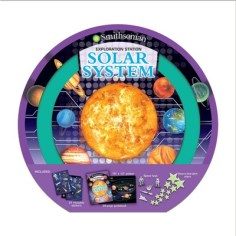
 

Smithsonian Exploration Station: Space!, (Nov. 2018, Silver Dolphin Books), $21.99, ISBN: 9781626867222

Ages 4-10

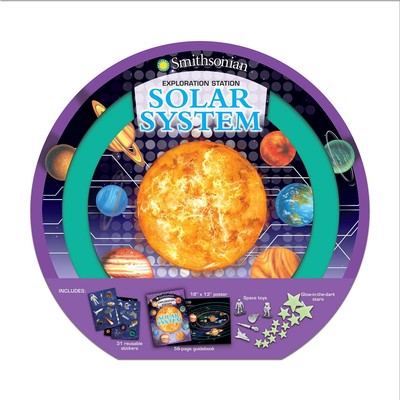
Kids love planets! The Space! Exploration Station includes a 56-page fact book, astronaut and rocket plastic figurines, stickers, and glow in the dark stars to make their own constellations. There are incredible, full-color photographs and text that explains the makeup of our solar system, galaxies, planets, and constellations. Let the kids decorate your dining room to and eat under the stars!

Every single one of these kits is such fun, and urges kids to be curious and explore the world inside them and around them. If you have the budget for it, throw these in your distributor cart and get a few sets for your STEM/STEAM programming, too. The Smithsonian has a good science education channel on YouTube, with kid-friendly videos that make for good viewing.


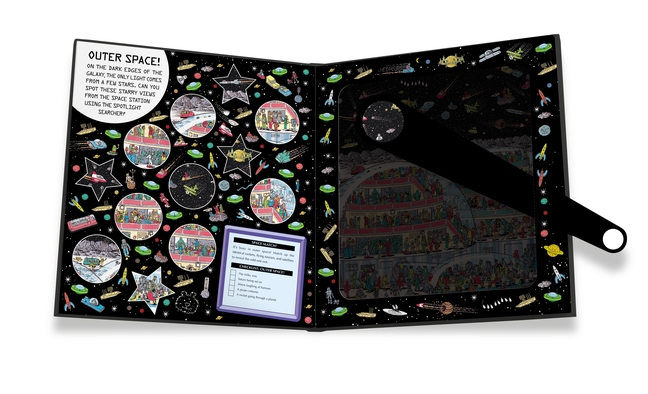
Where’s Waldo? The Spectacular Spotlight Search, by Martin Handford, (Oct. 2018, Candlewick Press), $18.99, ISBN: 9781536201765

Ages 5-9

Waldo’s back with a new trick: this time, the spreads have all gone dark! Luckily, the Spectacular Spotlight Search comes with a cool spotlight viewer to help you find him, and the challenges he sets out for you. There are six puzzles and a magic slider that slides into the scene to “light up” small sections – like a spotlight. Find Waldo and other familiar characters, plus other hidden challenges and games on each spread.  My 6-year-old and my 3-year-old niece had a blast with this book, eventually recruiting me for my Waldo-finding skills (narrator: The children were better.)

If you have puzzle and game fans in your family, this is a great gift to bring along. If you’re looking at it for your library, I suggest keeping it in reference; that spotlight will go missing or get beaten up in no time. But it’s good Waldo fun.
I have so much more to come, but I think this is a good start. A little something for everyone and plenty of hands-on fun!

Posted in Uncategorized

Let it Snow, Let it Snow, Let it Snow!

As I write this, it’s almost 70 degrees in New York. In November. So what’s left to do when you’ve unpacked all your Fall and Winter clothes? Think SNOW. So, join me in thinking chilly thoughts with some of these books.

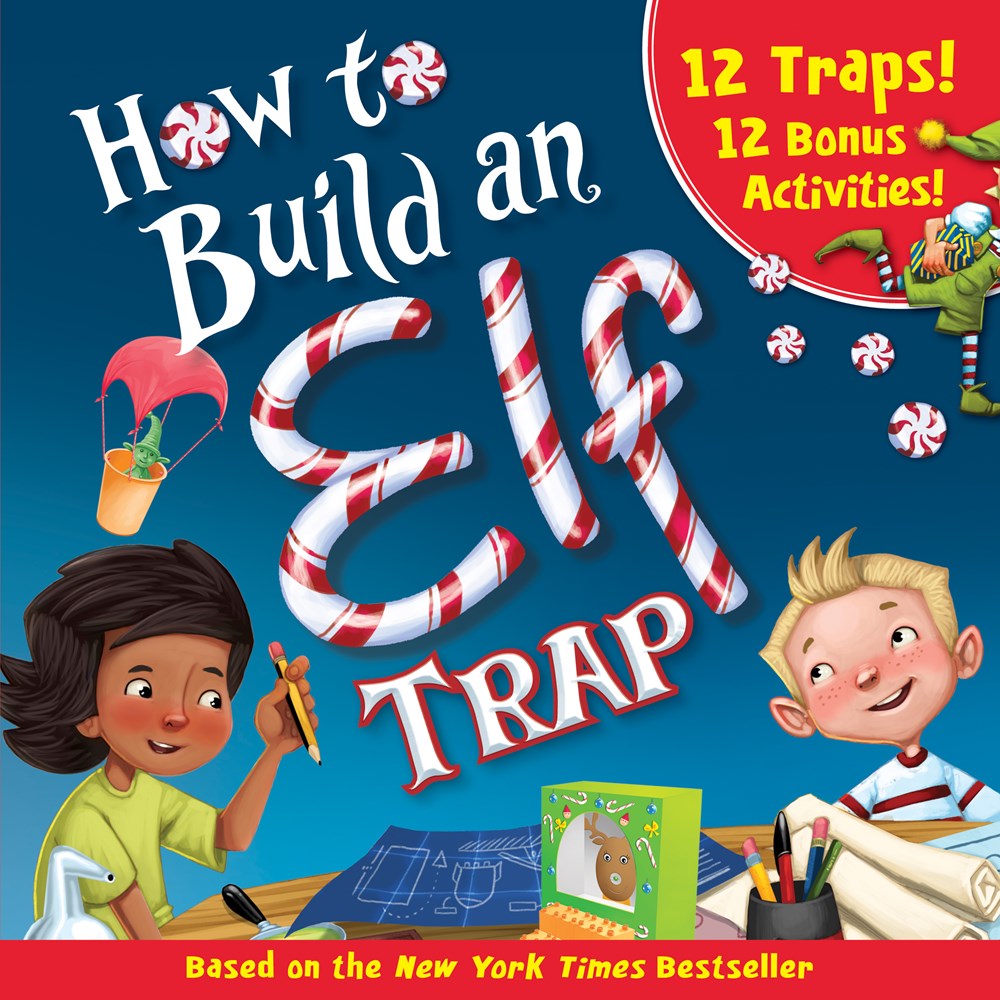
How to Build an Elf Trap, by Larissa Juliano, (Oct. 2018, Sourcebooks Jabberwocky), $9.99, ISBN: 9781492663904

Ages 4-8

This fun nonfiction companion to Adam Wallace & Andy Ellerton’s How to Catch an Elf (2016) is all about STEAM for the holidays! Learn how to build 12 elf traps this Christmas, and take your pick of 12 bonus Christmas activities! Projects tend to run fairly simple, with most of the materials being found around the house. The projects encourage you to experiment with materials, too: swap things out! Add things! Take each construction and make it your own! Difficulty is measured in candy canes (1 for easy, 2 for intermediate, 3 for difficult) and Elf Appeal (how it will appeal to the elves you’re trying to nab). Projects are laid out step by step, with photos to guide you along, and digital artwork adds a fun flavor to the festivities. There are STEAM connections that explain how each project connects to science, and Did You Know? facts boxes add some fun Christmas facts throughout. Make an Elf Door, stick some tea light snowmen on your fridge (or locker), and get to work on your Elf Snatcher 500 while you snack on a Reindeer Cupcake.

Librarians and educators: PROGRAM IN A BOOK. This, my friends, is your December STEAM programming, right here!

One Snowy Day, by Diana Murray/Illustrated by Diana Toledano, (Oct. 2018, Sourcebooks Jabberwocky), $17.99, ISBN: 9781492645863

Ages 3-7

Two siblings enjoy a snowy day in this rhyming counting story! The story begins, as the best ones do, with a snowfall, while two children of color sleep snug in their beds – until their ONE pup wakes them up! The kids rise and shine, play with the pup and eat their breakfast, then it’s time to go out and play, as sister and brother meet their SIX friends for some winter fun and games. The text is light and fun, counting everything from a pup to ten snowballs – and then we count backwards, from nine buttons on a snowman’s chest to one sleepy puppy at the end of the day. The children are a multicultural group, and the detail on their clothes and the scenery itself is breathtaking. The mixed media artwork brings winter scenery to life, from sweaters with intricate Fair Isle designs, and beautifully detailed snowflakes. One Snowy Day pairs up nicely with other snowy day books and makes a nice winter concept book for your shelves.

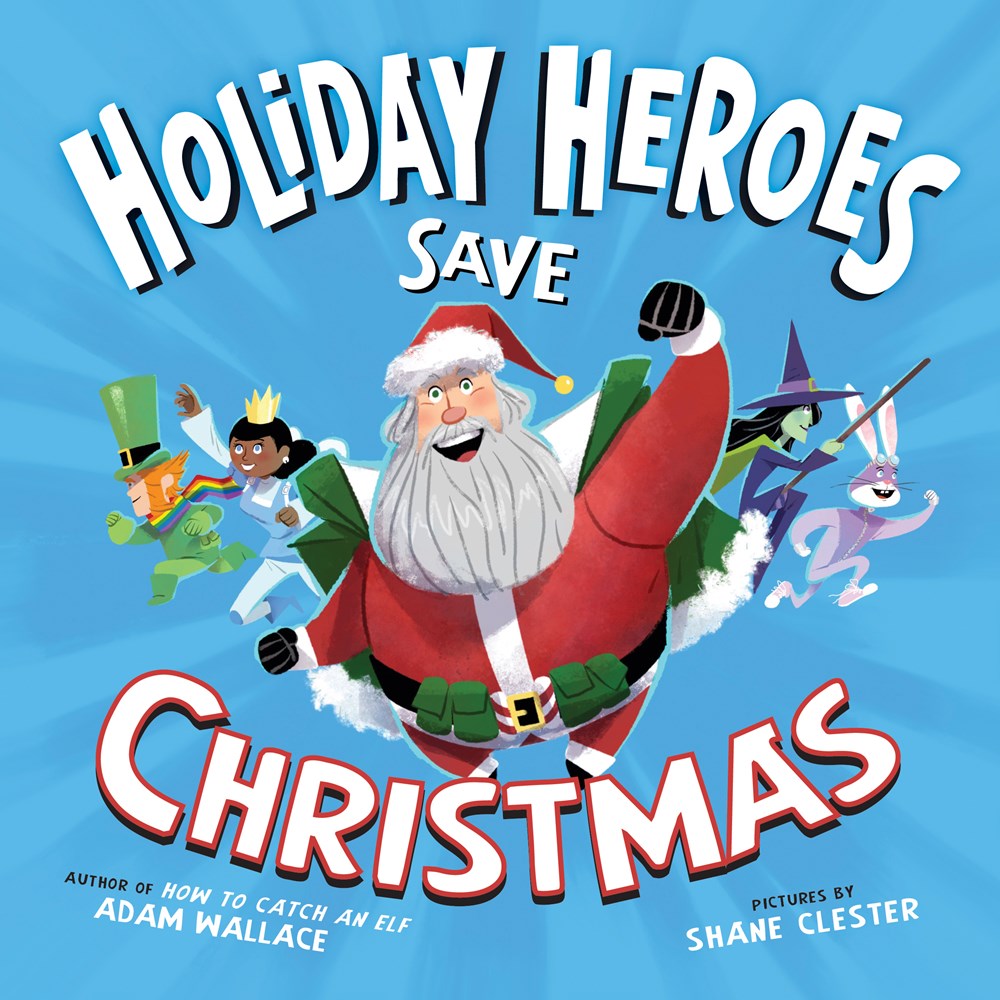
Holiday Heroes Save Christmas, by Adam Wallace/Illustrated by Shane Clester, (Oct. 2018, Sourcebooks Jabberwocky), $10.99, ISBN: 9781492669708

Ages 4-7

Sourcebooks is rocking the Christmas picture books! This is the latest book by How to Catch… series author Adam Wallace, and this time, Santa needs help from his fellow holiday heroes! Santa’s too sick to deliver Christmas presents, so it’s up to the Easter Bunny, Tooth Fairy, Witch, and Leprechaun to save Christmas – but they’re not so great at this Christmas thing. The Tooth Fairy is hiding presents under pillows, and the Leprechaun is taking spare change from the houses they visit. Santa’s got to step in, but is it too late? Is Christmas done for? C’mon, you know it’s not. The gang gets their act together after a quick pep talk from Santa, and each hero plays to his or her strengths to make Christmas amazing! This is a fun story about teamwork, and a laugh out loud comedy of errors. (Psst… if you want to screen the movie, Rise of the Guardians, you can compare the heroes in the book versus the ones in the movie.) The digital art is bright, kid-friendly, and cartoony; end papers offer brief character descriptions of Santa and the gang. The book is set up with graphic novel-type panels and word balloons, so you can offer this one to your fledgling graphic novel readers to get them in the holiday spirit. This one’s a fun take on the “Santa needs help!” story theme, and should go over pretty well in libraries (and as a stocking stuffer).

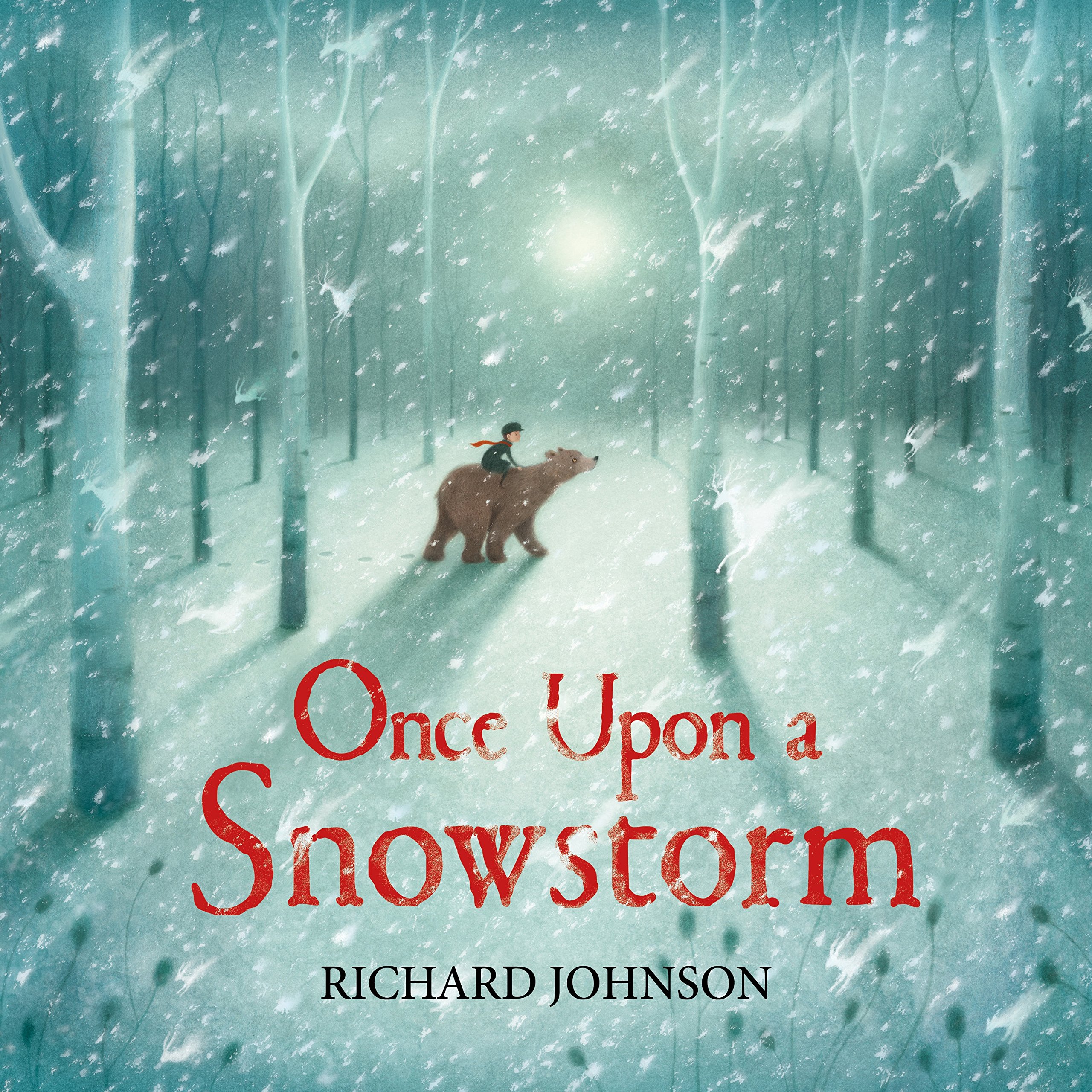
Once Upon a Snowstorm, by Richard Johnson, (Nov. 2018, Faber & Faber), $16.95, ISBN: 978-0-5713-3928-0

Ages 2-7

A boy and his father go into the woods to hunt, and are separated during a snowstorm. The boy is rescued by a group of animals, who care for him and befriend him. When the bear in the group takes the boy back through the snow to find his father, Dad is grateful, and befriends the animals, too.

The art says it all in this stunning, wordless story. As father and son head into the woods, the snow comes down in the shapes of woodland animals: deer, foxes, hares, ethereal in their delicacy and beauty. Lost, the boy sleeps, shivering, under velvet skies with constellations creating animal shapes around him. When the animals accept the boy into their group, they dance, feast, and paint on cave walls; at that moment, the boy remembers his father and how desperately he misses him (Mom is present only in old family photos hanging in the home), signaling to his new friend, Bear, that it’s time to find Dad. At the story’s end, father and son enjoy a spring day, sitting on a hill with their animal friends.

The artwork alternates between panels and full bleed pages and is dreamlike in its subdued beauty. The endpapers bookend the story, with driving snow on the front papers, and a cave painting of the boy, his father, and the animals, playing together, on the back papers. The artwork is soft, and goes from the cold outdoor artwork to warm interiors both in the family home and in the company of the animals.

I love this book, and can’t wait to share it with my little readers, so I can hear their stories. This one’s a wonderful add to your winter collections – booktalk this one with Raymond Briggs’ wordless classic, The Snowman.

Posted in Fiction, Graphic Novels, Middle Grade, Science Fiction, Tween Reads

Sanity & Tallulah are a STEAM Dream Team!

Sanity & Tallulah, by Molly Brooks, (Oct. 2018, Disney-Hyperion), $21.99, ISBN: 9781368008440

Ages 8-12

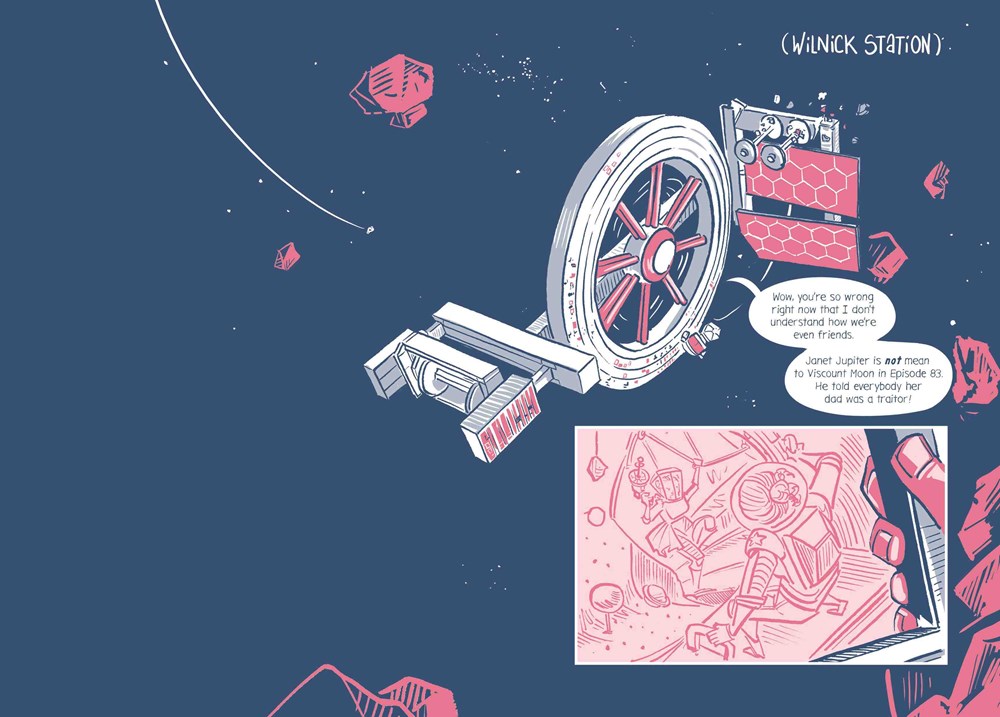
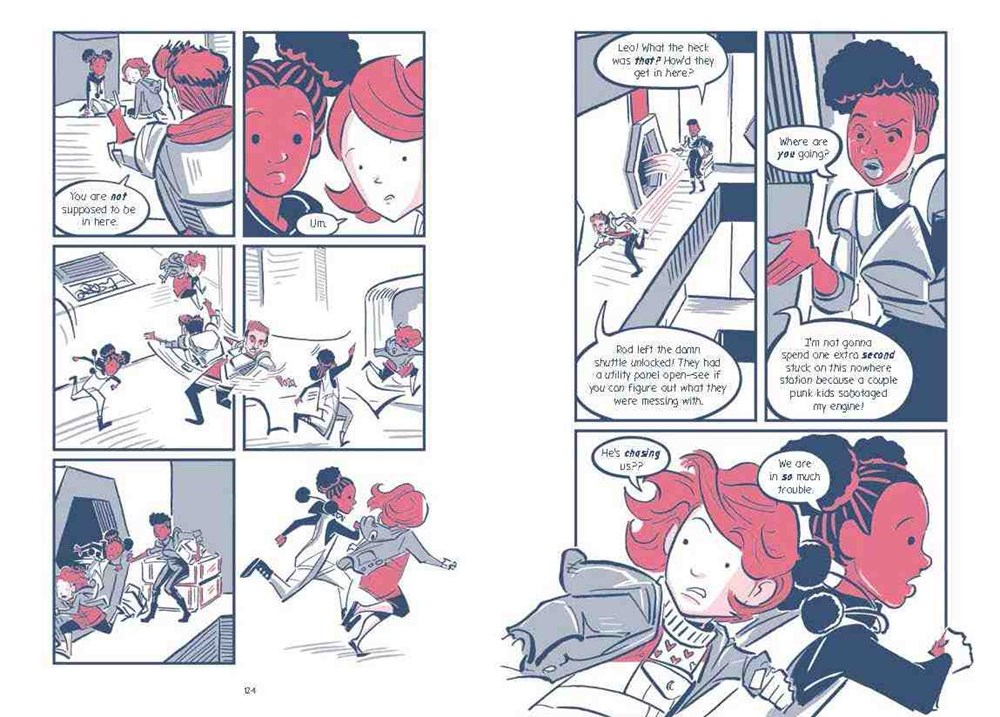
Life aboard a space station is never boring, especially when you have to cobble things together to keep things running. Sanity Jones, and her best friend, Tallulah Vega-Davisson, certainly know how to keep things interesting aboard Wilnick Station: their latest experiment is Sanity’s project; a three-headed kitten named Princess Sparkle Destroyer of Worlds (one name for each head, naturally!). Princess Sparkle is discovered, but the kitten escapes into the duct system. As the girls go on the search for their pet, before she can get hurt or caught, Dr. Vega, the station’s senior scientist and Tallulah’s mom, has bigger problems on her hands: Wilnick Station is experiencing some big-time glitches that could put the station at risk. While some of the crew point their fingers at Princess Sparkle Destroyer of Worlds, Sanity and Tallulah find evidence of something else in those ducts. They’ve got to solve the mystery and save their kitten, and they may just have to rescue the whole space station!

This is such a positive, fun read. The cast is diverse, with our two heroines coming from African-American and biracial (Latinx-white) families of prominence: Sanity’s dad is Wilnick’s station director, Tallulah is the daughter of the senior scientist. Her white dad rocks a man bun, prosthetic leg, and context clues allude to his being a celebrity heartthrob at some point in the past. There’s humor and technospeak that kids will love. The three-color white, purple, and pink artwork has bold lines and gives a real feel for the sheer size and scope of a space station.  Molly Brooks gives readers a vision of a diverse future where strong female characters are valued. A must-add to graphic novel collections – put this with your Zita the Spacegirl and Star Scouts books!

Sanity & Tallulah has starred reviews from Kirkus and Publisher’s Weekly.

Posted in Middle Grade, Non-fiction, Tween Reads

Solve This! Engineering challenges for kids!

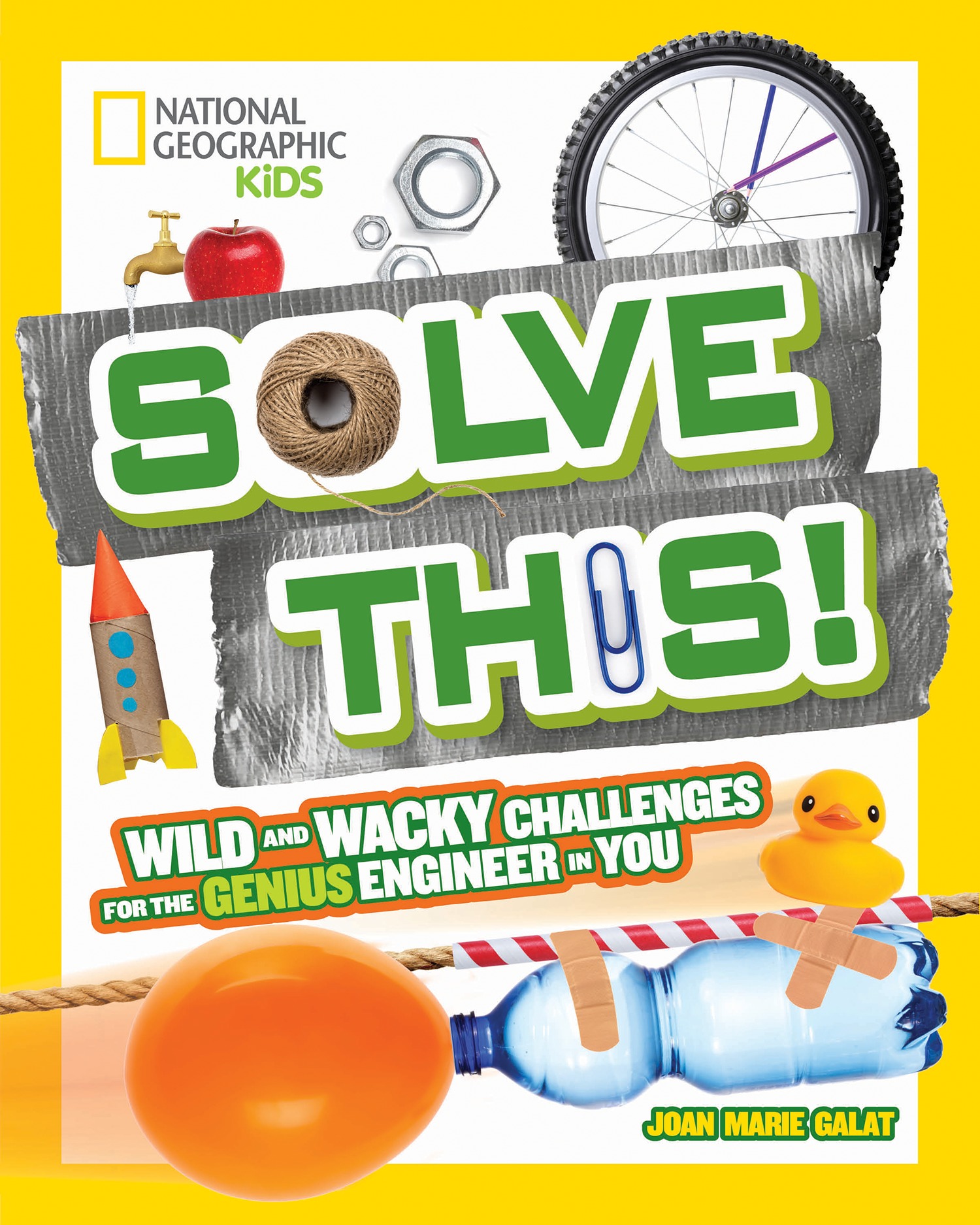
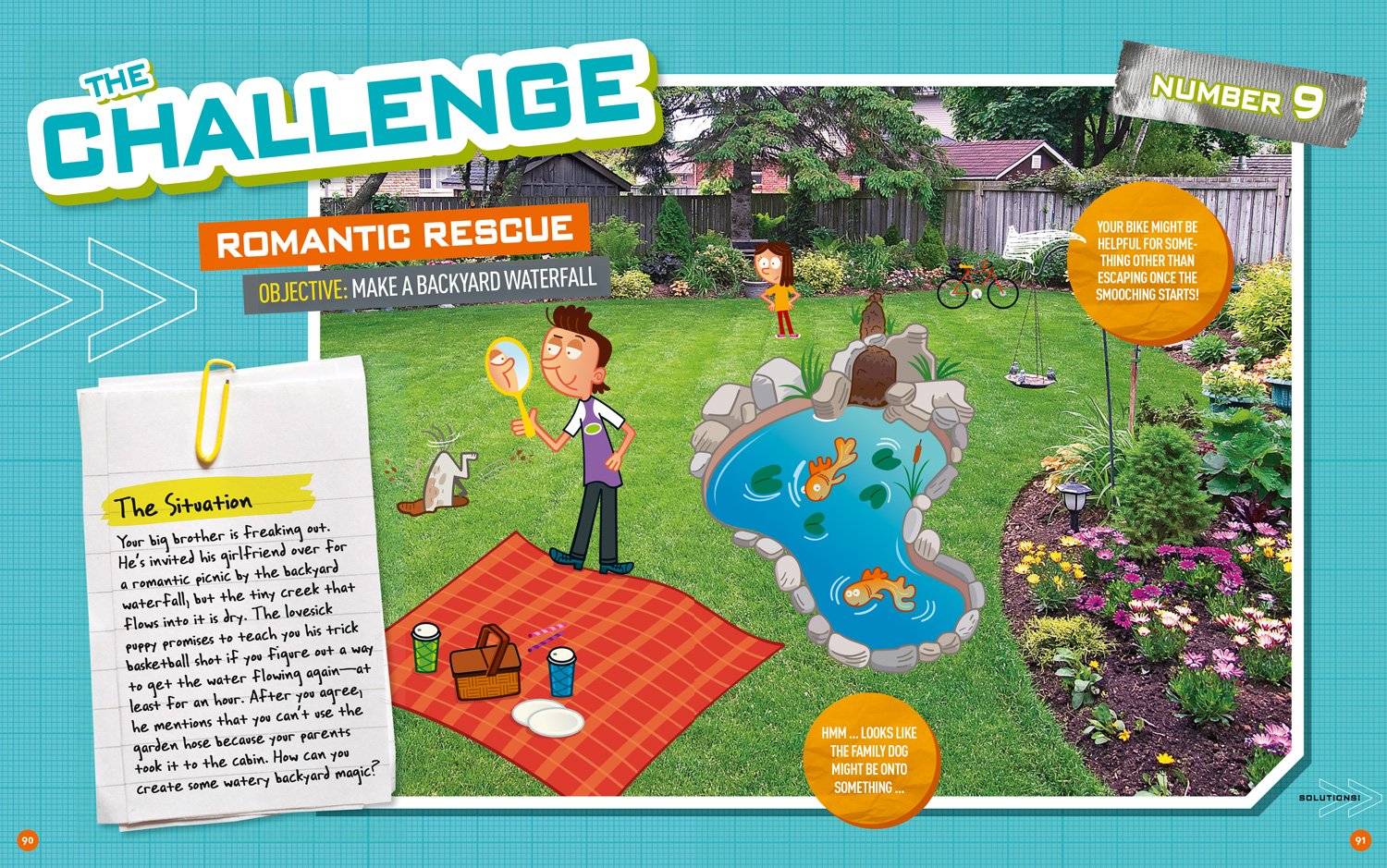
Solve This! Wild and Wacky Challenges for the Genius Engineer in You, by Joan Marie Galat, (March 2018, NatGeo Kids), $16.99, ISBN: 9781426327322

Ages 8-13

Another STEM/STEAM hit from NatGeo Kids, Solve This gets kids thinking about wacky ways to solve life’s little challenges. Need to soundproof your room for a sleepover? How about protecting your candy stash? NatGeo Kids has your back, with 14 engineering challenges that will make readers laugh and think, “Hmm… but what if hot sauce did get in the swimming pool?”

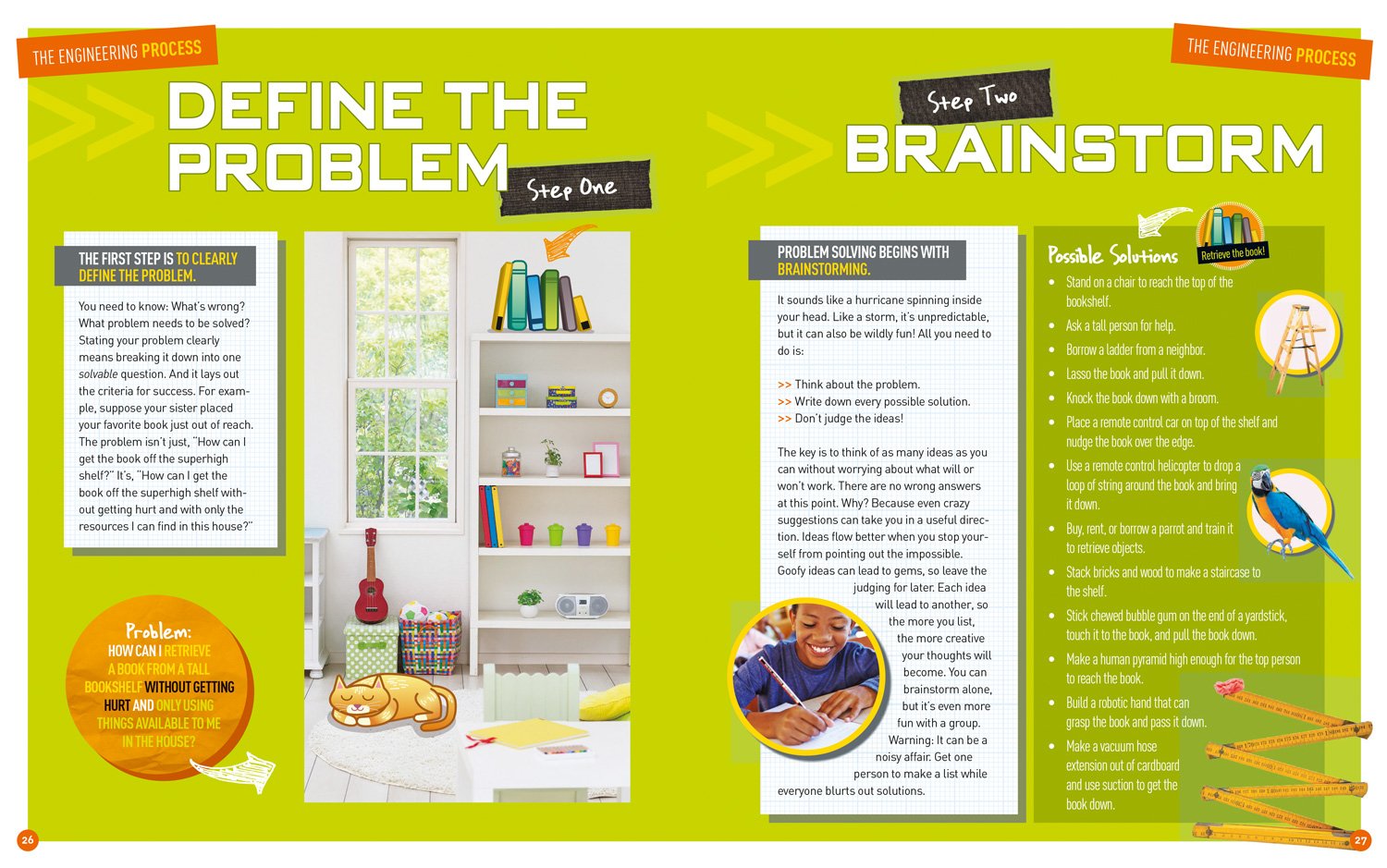
Organized into three sections, the book first introduces readers to engineers and the science of engineering, with discussions on different types of engineers and an overview of the engineering process. The fun stuff – the challenges! – happens in the Solve This! section, starting with an introduction to the Solution Panel: 13 wonderfully diverse scientists and the author. They took these challenges and offer their own tips and tricks to help kids along in the most kid-friendly and often non-conventional ways. Solutions are sketched out, putting the panel’s money where their mouths are: a kid can look at these sketches and easily work things out. Engineering Our World gives some real-life engineering successes and flops, plus a look at what we can expect from engineering in the future. Back matter includes further resources, a glossary, and an index.

STEM/STEAM fans, this is the book for you. Science classes, library programs, trying not to blow up the basement at home; this is a book you can use anywhere. Discovery Clubs, where are you? This is an entire season’s worth of library programming! A nice add to nonfiction collections and for kids who love tinkering. A handy reference to have when kids come in asking for books on simple machines, too – I have some great ones for the little learners, but this will be a good add to my middle graders’ shelves.

Posted in Middle Grade, Non-fiction, Tween Reads

Get outside with your pup… for science! Dog Science Unleashed gives you ideas!

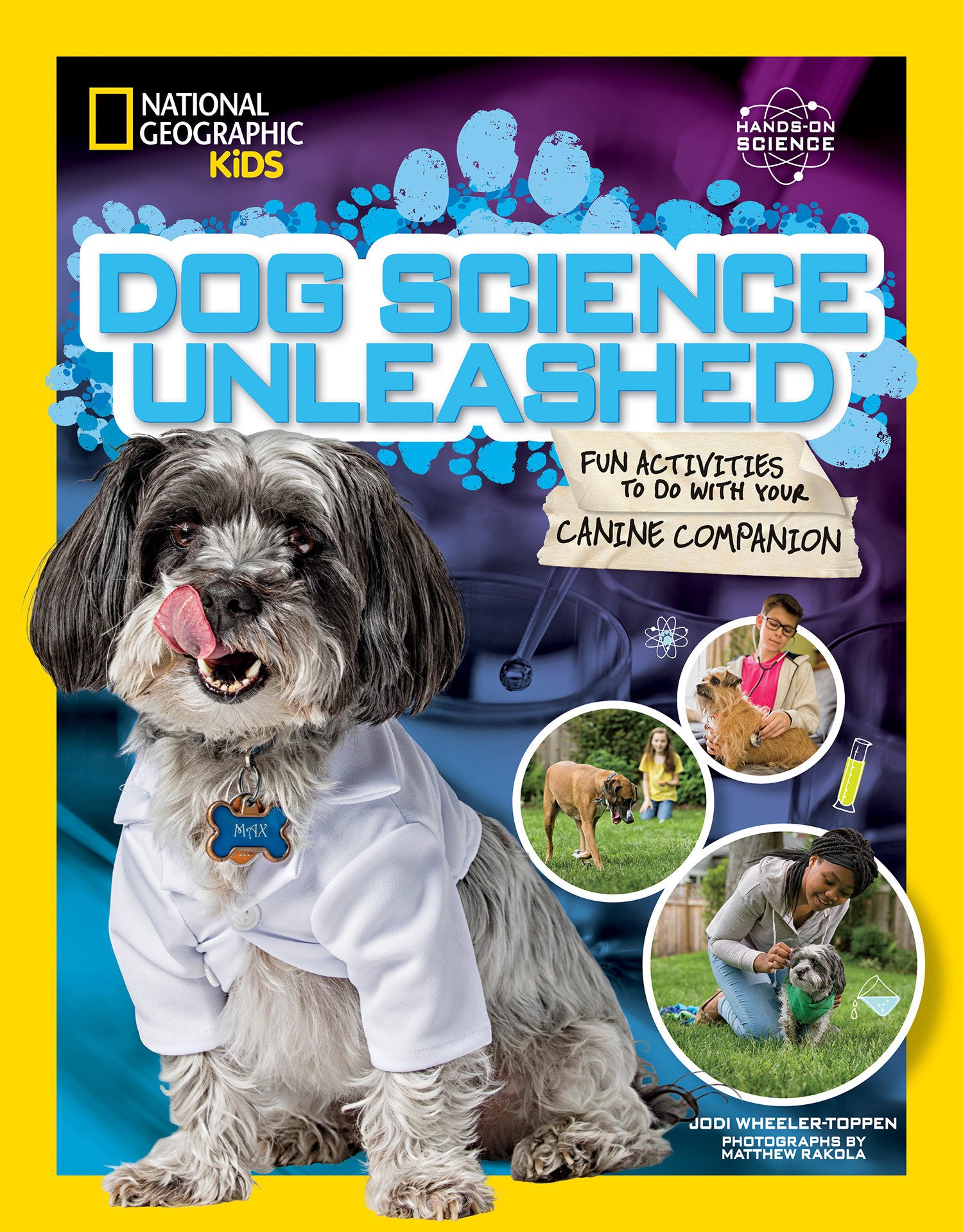
Dog Science Unleashed: Fun Activities To Do With Your Canine Companion, by Jodi Wheeler-Toppen/Photographs by Matthew Rakola, (Aug. 2018, National Geographic Kids), $12.99, ISBN: 9781426331534

Ages 8-13

Dog lovers and science fans will dive right into this NatGeo book that teaches kids all about their canine companions. There are 22 “safe and dog-friendly” activities in this volume, tested by 15 kid scientists and their pups, that will teach readers about their dogs’ senses, fitness, behavior, and grooming habits. There is a big emphasis on safety here, since we are talking about working and playing with dogs: notes to parents and kids remind readers about the importance of safety for humans and dogs alike, and if your dog isn’t into the activity you want to do? Respect the dog and walk away.

Every activity has a difficulty level and approximate active time, so you can gauge your energy and your dog’s energy. (When I’m half asleep first thing in the morning, my pup may be ready for a 15 minute race to see who’s faster, but I can assure you, I am not.) There are great color photos of dogs and humans being scientists together, and great callout facts to be discovered (and now I know why dogs have those slits on their noses). It’s a great way to bond with your dog and spend time learning together. A fun add to your nonfiction books, and a good gift for a dog and his or her human.

Posted in Adventure, Fantasy, Fiction, Fiction, Middle Grade, Tween Reads

Join NatGeo’s Explorer Academy!

Explorer Academy: The Nebula Secret, by Trudi Trueit, (Sept. 2018, National Geographic), $16.99, ISBN: 9781426331596

Ages 9-13

Twelve year-old Cruz Coronado has lived with his dad in Hawaii ever since his mom died in a work-related accident when he was little. Now that Cruz is 12, though, he’s got a big future: he’s been accepted into the prestigious Explorer Academy, which will take him to Washington, DC. The Explorer Academy is no joke: they accept only 24 kids from around the world every year; the students train to become the next generation of great explorers. But someone doesn’t want Cruz at the Academy: there’s an attempt on his life before he even leaves for the school! When he arrives at the Academy, he learns that his mother’s history is tied into his – and this could endanger his life, and the lives of his new friends. But who’s out to get Cruz?

Explorer Academy: The Nebula Secret is the first in a new NatGeo adventure series, and I loved it. It’s action-packed, fast-paced, and features a good cast of diverse, interesting characters with loads of cool tech and devices, like Mell, Cruz’s honeybee drone. There are copious tech and nature facts and information found throughout the story, with scientist and technology profiles in a “Truth Behind the Fiction” section at the end of the book. Color illustrations and maps throughout the book make this a solid hit for tweens and early teens. I’m looking forward to The Falcon’s Feather – the second book in the series – in March. Cruz is a likable hero who has a talent for code-breaking and a good relationship with his dad and his aunt, who also happens to be a professor at the Academy. Cruz’s best friend, Lani, isn’t a student at the Academy (yet), and serves as an anchor to home for Cruz. She, and Cruz’s friend and Academy roommate, Emmett, are the gadget masters here: the Q of the series, for you James Bond fans. Talk them up to your STEM/STEAM kids!

Display and booktalk with the Nick and Tesla series from Quirk; the HowToons comic series, and the Book Scavenger series by Jennifer Chambliss Berman. And talk up the Explorer Academy website! There are character profiles, book trailers, a chapter excerpt, gadget talk, and a crack the code challenge. It’s a good series to wrap a program around… just sayin’.

Posted in Intermediate, Middle Grade, Non-fiction, Non-Fiction

Birds and Their Feathers brings art and STEM together

Birds and Their Feathers, by Britta Teckentrup, (March 2018, Prestel), $16.95, ISBN: 9783791373355

Ages 6+

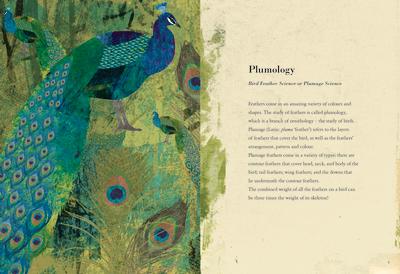
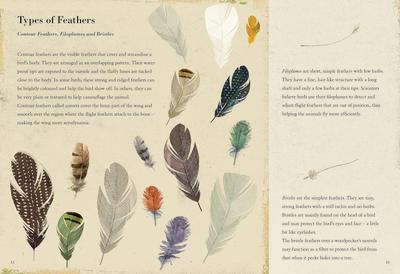
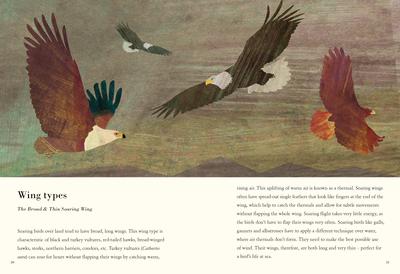
It’s always wonderful when art and science come together to show us the world in all of its natural beauty. Britta Tecktentrup’s Birds and Their Feathers is a stunning example. The book introduces readers to the science of plumology – bird feather science, or plumage science. If this is a new term for you, you’re not alone; this is a branch of ornithology that I wasn’t aware of, either! The book beautifully blends fascinating facts about plumage and birds with breathtaking artwork to give readers a wonderful introduction to this area of the natural world, with spreads dedicated to the structure and development of the feather; types and colors of feathers (they all have their own jobs!) and wings, human usage of the feather, and how humankind was so inspired by the feather, we used it to take flight on our own.

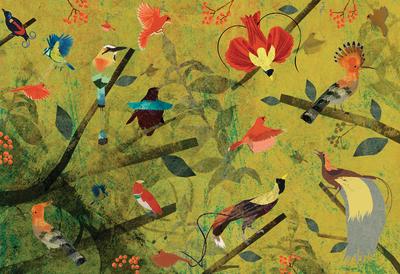
The artwork is quietly breathtaking, using earth tones and collage artwork to create soft, yet dramatic, pictures of birds and their plumage. The endpapers are covered with feather artwork so realistic, you’ll swear you can feel their softness under your fingertips. The writing is never overwhelming; rather, each page has anywhere from a few lines to a handful of paragraphs dedicated to its topic, with facts like: “The inside of a feather needs colours that help protect it and keep it durable. Such colours may include red and yellow, which can prevent bacteria from harming the feather”; “Some birds can make different sounds generated by their feathers”; and “Some fish-eating birds eat their own feathers to line their stomachs, which protects them from sharp fish bones”. This book is perfect for kids and grown-ups alike.

Perfect for a nature study or STEM project, Birds and Their Feathers is a must-add to your nonfiction shelves. Get your readers working with feathers to make their own art, and if you can find a feather or two to show off the parts of a feather up close (wear gloves if you get this from outside!), even better. I’d use this in my Discovery Club in a second. Birds and Their Feathers has a starred review from Publisher’s Weekly.


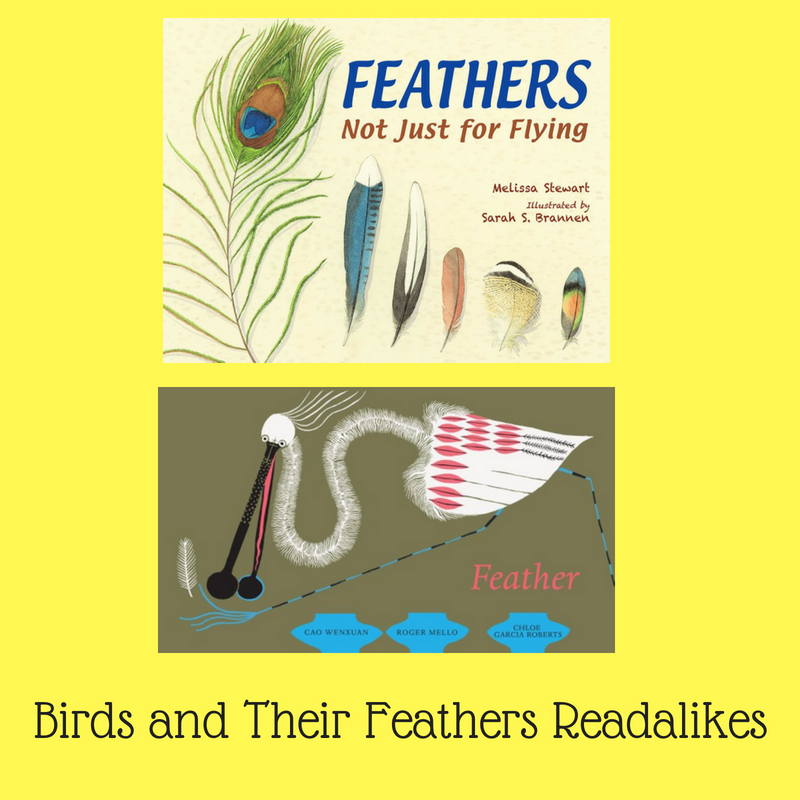
Feathers: Not Just for Flying, by Melissa Stewart/Illustrated by Sarah S. Brannen – Science picture book on how different birds use their feathers.

Feather, by Cao Wenxuan/Illustrated by Roger Mello, Translated by Chloe Garcia-Roberts – A fable about a feather trying to find its origin.