Posted in Fiction, Middle Grade, Middle School, Realistic Fiction, Tween Reads

Click’d: Coding, apps and friendship drama!

Click’d (Code Girls #1), by Tamara Ireland Stone, (Sept. 2017, Disney-Hyperion), $16.99, ISBN: 9781484784976

Recommended for readers 8-12

Sixth grader Allie Navarro is SO excited about the friendship app she built at CodeGirls summer camp. Click’d collects data about user interests and sends users on a scavenger hunt to find other users with similar interests. It went over big at camp, and now Allie is going to show it to her BFFs at school. She’s also presenting her game at the big Games for Good competition, but she’s going up against her nemesis: Nathan Frederickson, who wins EVERY science fair and drives her crazy.

The app goes over in a big way, but it’s not as great as Allie thought it would be. People are upset about their standings on friendship leaderboards, and a technical glitch ends up embarrassing one of her best friends. Things start spiraling out of Allie’s control; even with Nathan’s help, she’s not sure if she can make things right in time for the competition.

I’m excited about the new coding fiction trend that’s emerging in light of Girls Who Code’s nonfiction/fiction releases! Click’d is great to hand to readers who may be ready to move on from the Girls Who Code series fiction, or readers who may not be ready for Lauren Myracle’s TTYL books just yet. There’s friendship drama for sure, as well as positive messages about resilience and friendship. Each chapter contains screenshots of the Click’d app, adding to the fun; readers can watch Allie’s user count change, and monitor different leaderboards to better envision how the app works (and maybe get some ideas of their own). Tamara Ireland Stone gives us realistic characters and an interesting storyline and builds an extended universe of CodeGirls – girls who all met through a Girls Who Code-type camp – that will work for future novels.

Make sure to check out the Click’d teacher’s guide on the author’s website!

Posted in Fantasy, Graphic Novels, Middle Grade, Non-Fiction, Teen, Tween Reads

Graphic Novel Rundown: Memoir, Coders, and Fantasy

There are a bunch of good graphic novels out, so let’s jump right in – there’s something for everyone!


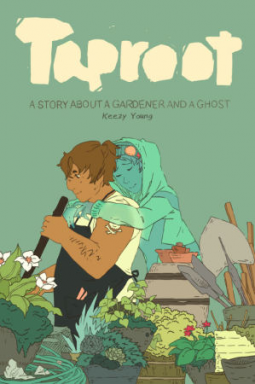
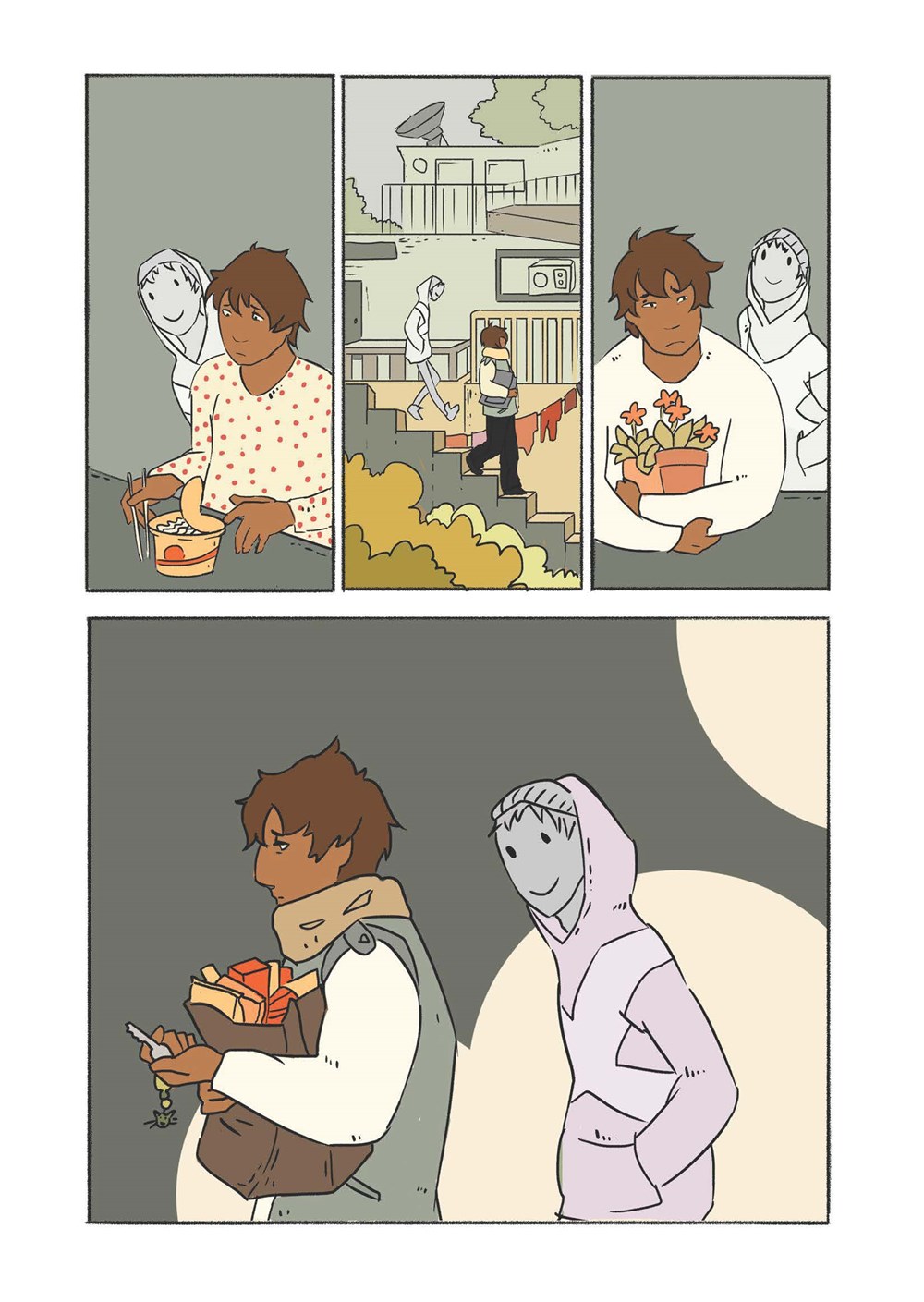
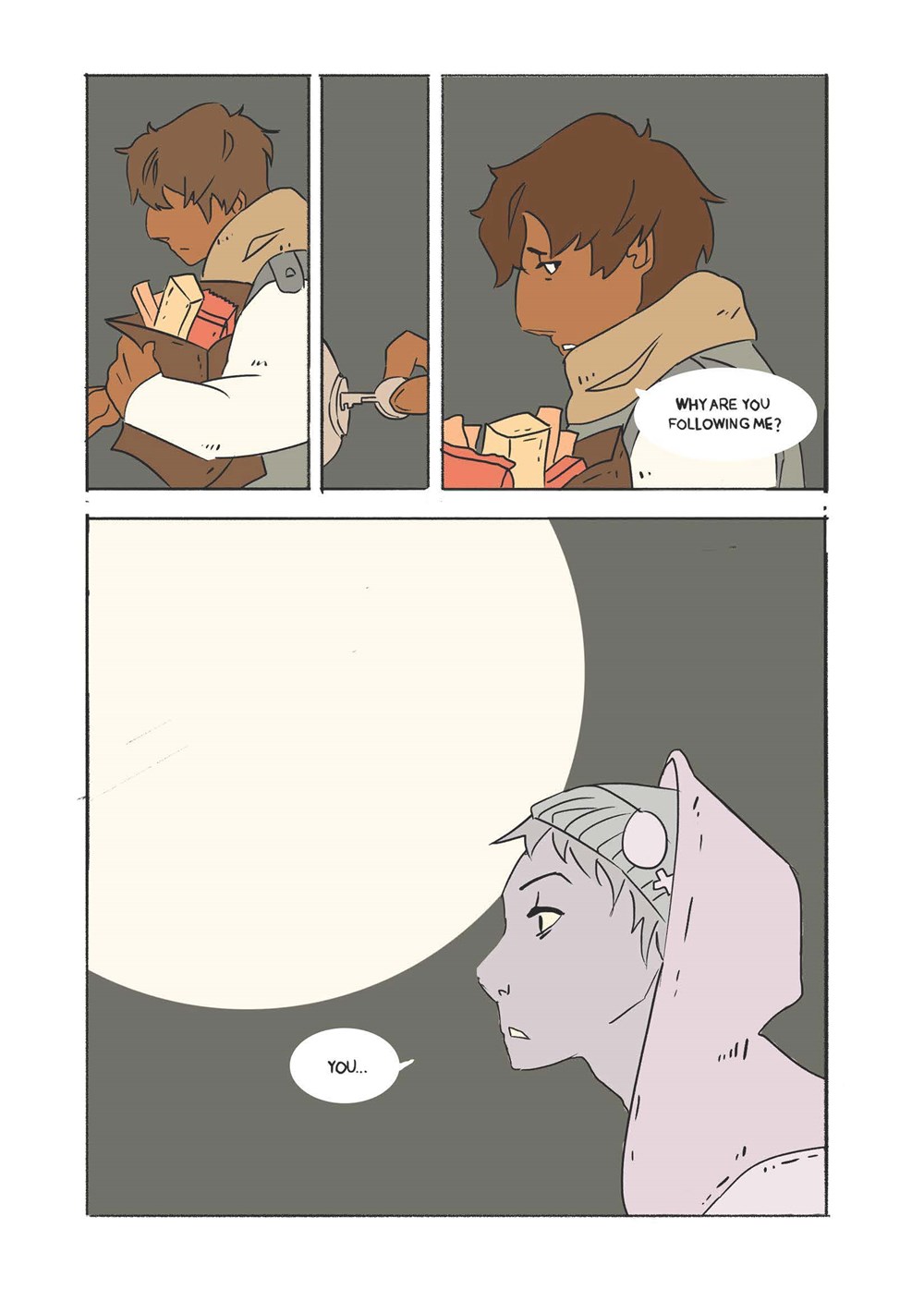
Taproot A Story About a Gardener and a Ghost, by Keezy Young, (Sept. 2017, Lion Forge), $10.99, ISBN: 9781941302460
Recommended for readers 13+

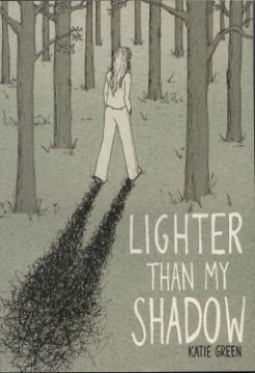
Lighter Than My Shadow, by Katie Green, (Oct. 2017, Lion Forge), $19.99, ISBN: 9781941302415
Recommended for readers 13+
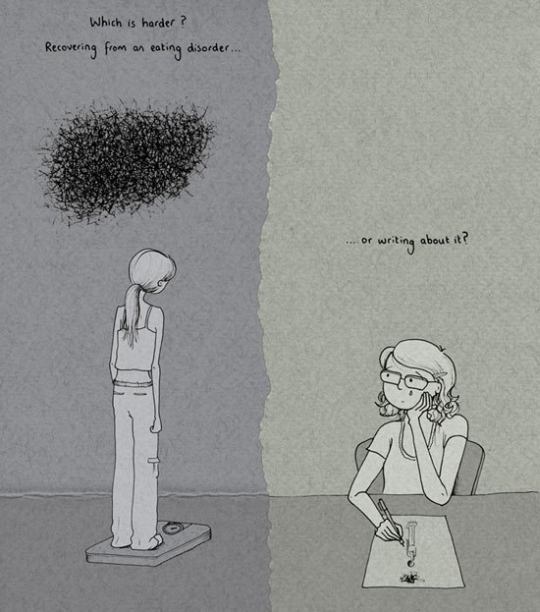
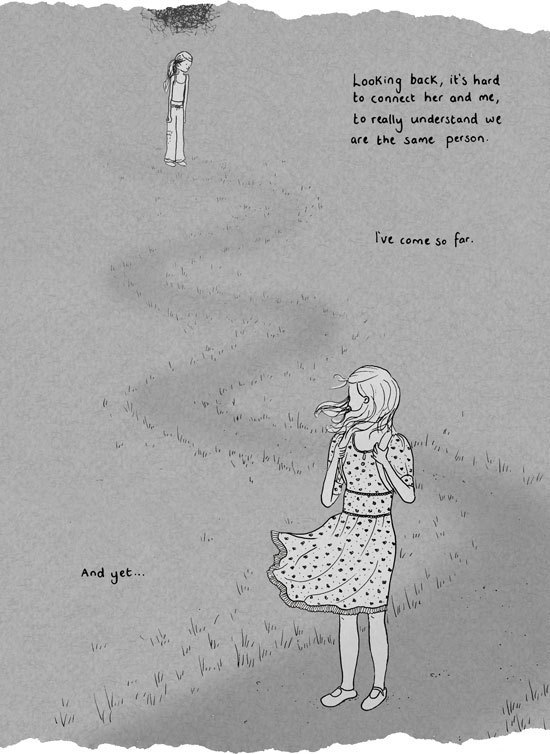
Katie Green’s graphic memoir details her years of abusing disorders, abuse at the hands of the therapist who was supposed to help her, and her recovery and reclamation of self. It’s devastating and inspirational; a life that we can all see in ourselves: cruel teasing, parental threats at the dinner table, a career you’re shoehorned into. Lighter Than My Shadow is a memoir of anxiety and depression, told in shades of grey, black and white. We see the physical manifestation of Green’s hunger and depression: a growing mouth in her stomach, a black scribble over her head, threatening to split her open. It’s an incredible story, and one that must be shared and discussed.
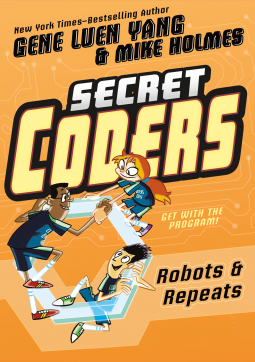
Secret Coders: Robots and Repeats, by Gene Luen Yang & Mike Holmes, (Oct. 2017, First Second), $10.99, ISBN: 9781626726062
Recommended for readers 8-12
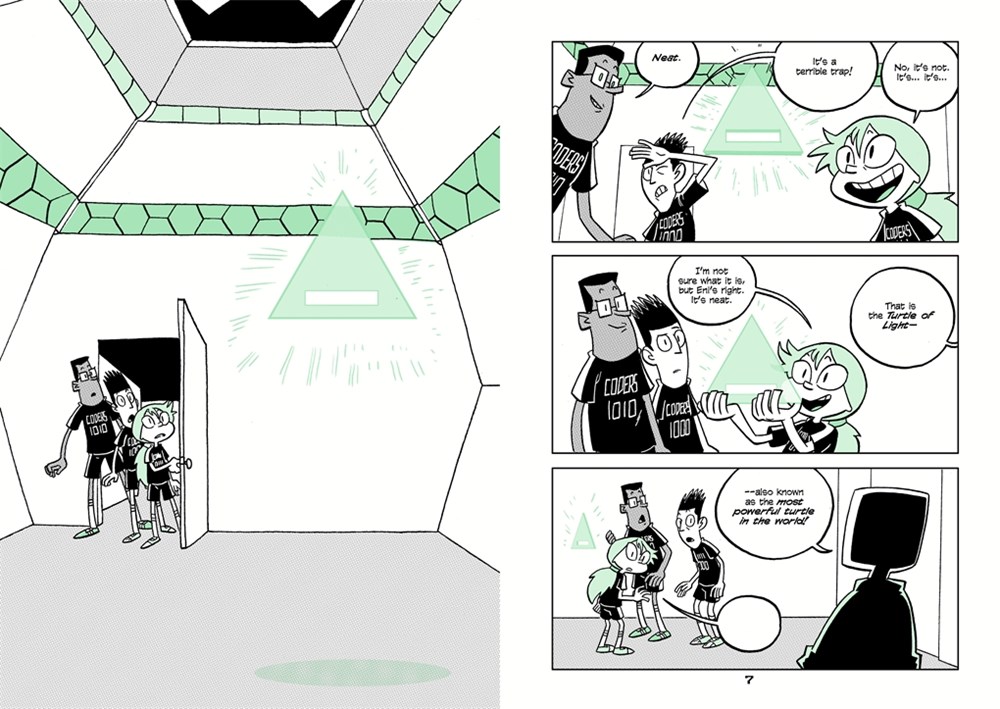
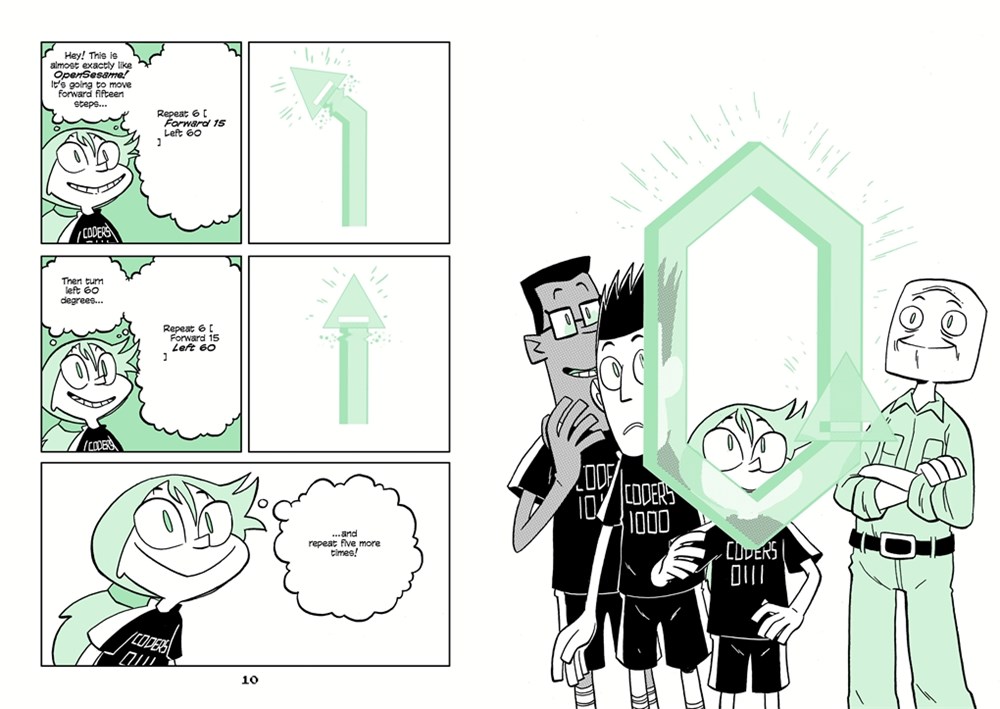
The Coders are back! Dr. One-Zero is a bane to their existence, especially with his new “Advanced Chemistry” class, where he only teaches them to make Green Pop. Hopper’s paired up with an obnoxious classmate who knows nothing about chemistry; Josh is fostering a kinda, sorta crush, and Eni’s sisters are following him around the school, reporting his every move to his overprotective parents, who want him to cut all ties with his fellow Coders. The Coders are still working together, though, and make a new discovery: The Turtle of Light. They also discover someone they’ve been looking for: Hopper’s dad, who’s under the influence of the evil Green Pop! This fourth installment is still good fun and has more coding challenges for readers; most notably, working out pattern repeats. The fifth book, Potions and Parameters, is coming in March.
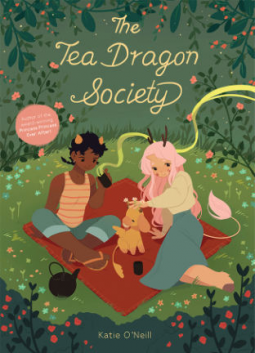
The Tea Dragon Society, by Katie O’Neill, (Oct. 2017, Oni Press), $17.99, ISBN: 9781620104415
Recommended for readers 9-13
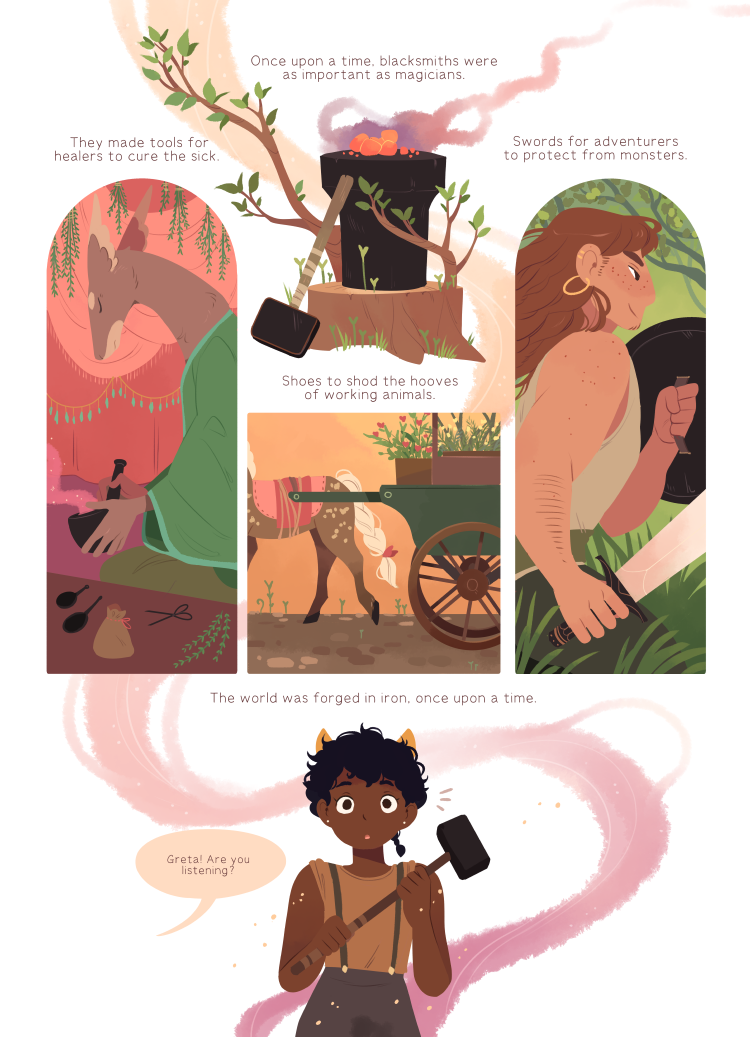
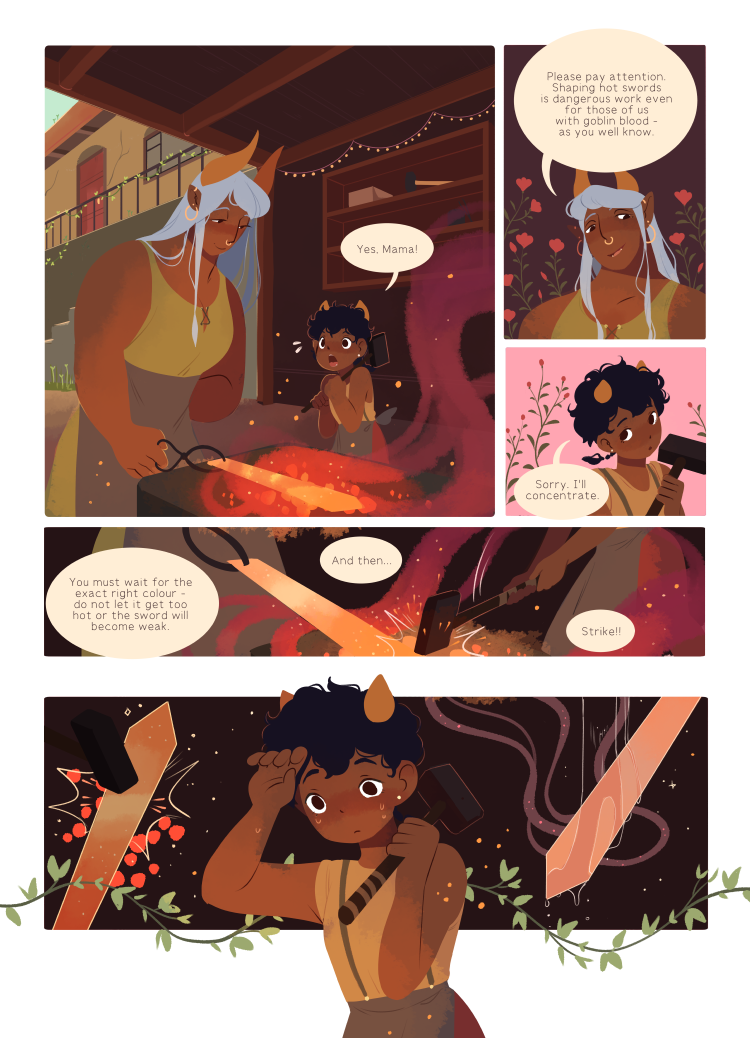
If you loved Princess Princess Ever After as much as I did, you are in for a treat with Katie O’Neill’s newest graphic novel, The Tea Dragon Society. Greta is a blacksmith’s apprentice who wonders whether her mother’s craft is even relevant anymore. She learns about another art form when she rescues a young tea dragon in a marketplace: the care of tea dragons; they’re dragons, who grow tea leaves out of their horns and antlers. The cast is beautifully illustrated and diverse; we’ve got a plethora of relationships depicted, and a storyline every fairy tale and fantasy reader will love. The backgrounds, the characters, every single piece of this graphic novel is just incredible artwork. Buy two copies for your shelves, and a copy or two for readers you love. Do. Not. Miss.


Posted in geek, geek culture, Middle Grade, programs, Tween Reads

I had a BookPop! party and it was great!

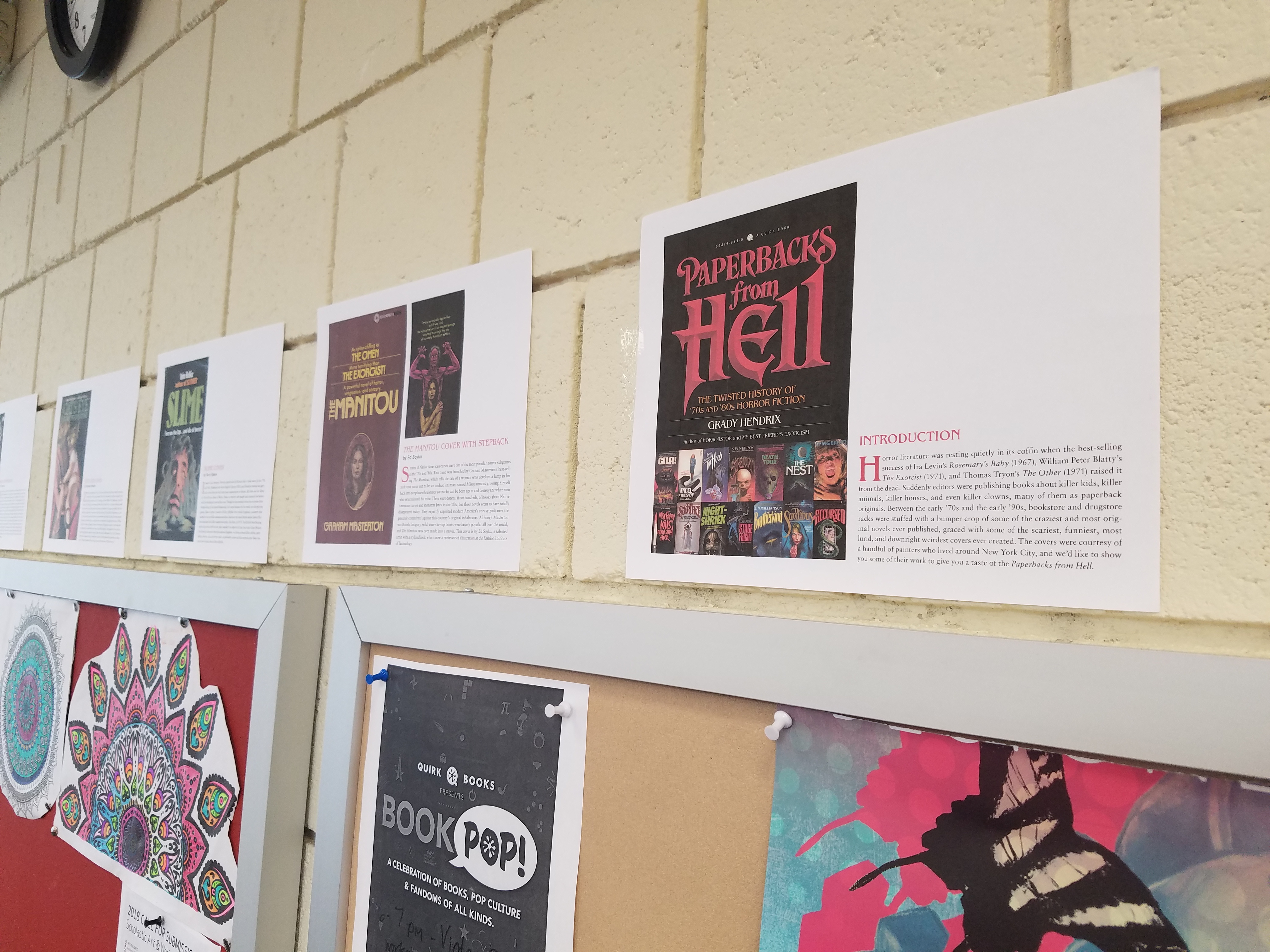
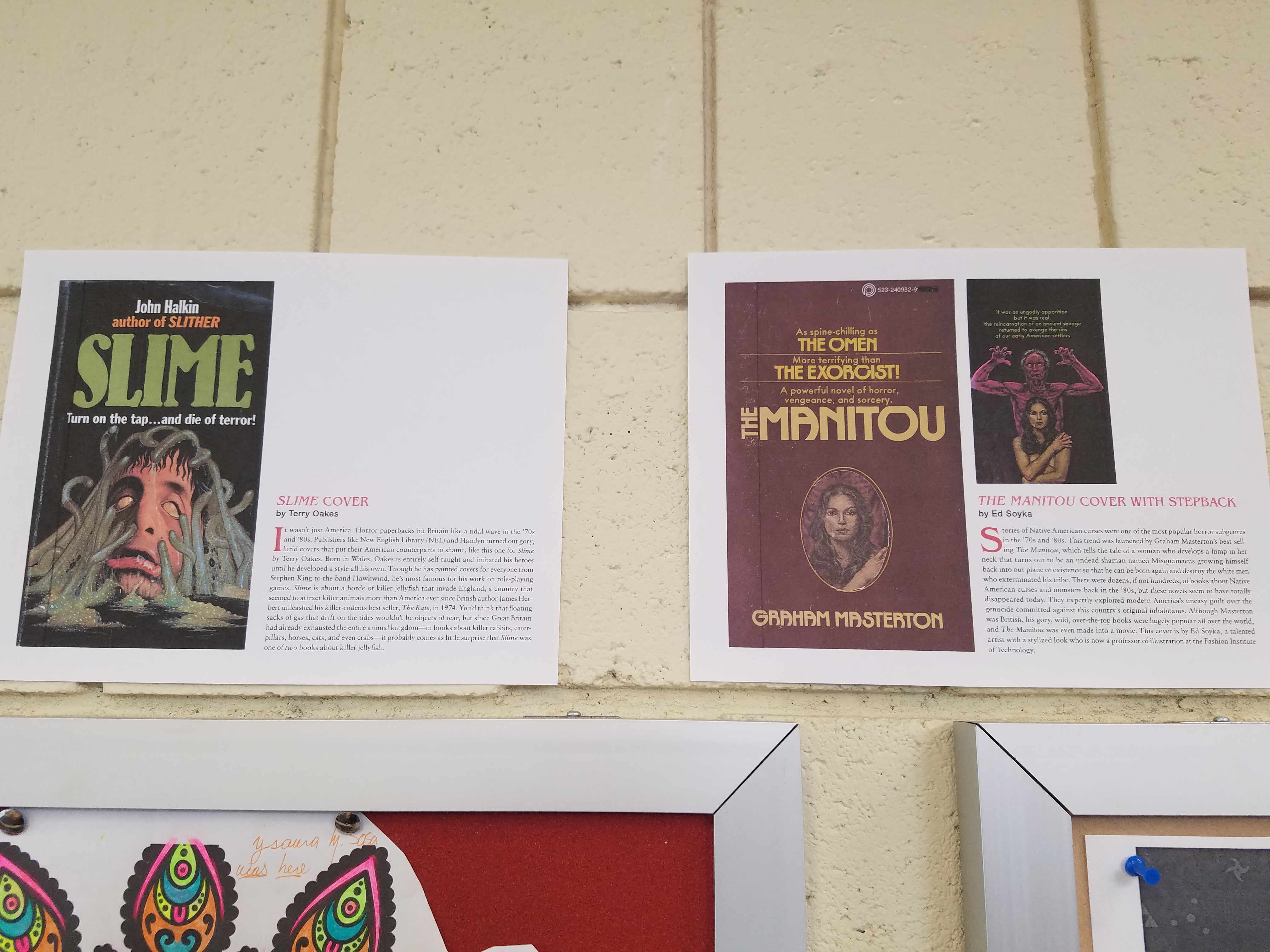
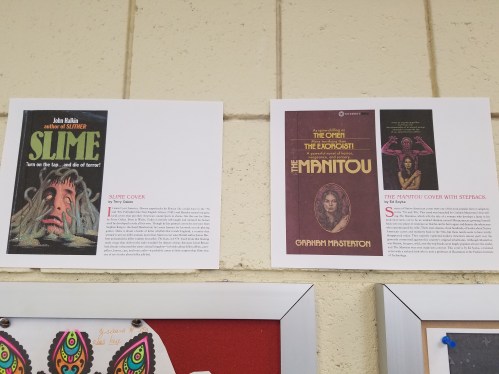
Quirk Books is a… well, quirky, fun book publisher that has a comic book writer and former YA librarian in their ranks, spreading the good word. It’s pretty awesome, because now, my library gets to do things like have a gallery dedicated to horror paperbacks of the ’70s and ’80s (Paperbacks From Hell), and have a mini pop culture con for my kiddos and tweens.

First up, my Paperbacks From Hell gallery, in my teen section. It’s garnering some looks, some chuckles, and some conversations: “What the hell is that?” “That is a giant gila monster. And watch your mouth.” (The display is in the teen area, but you know, little pitchers, big ears). The teens are pretty baffled, the grownups get a kick out of it, and it just makes me happy.
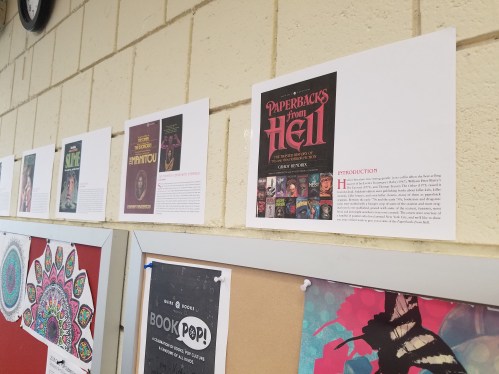
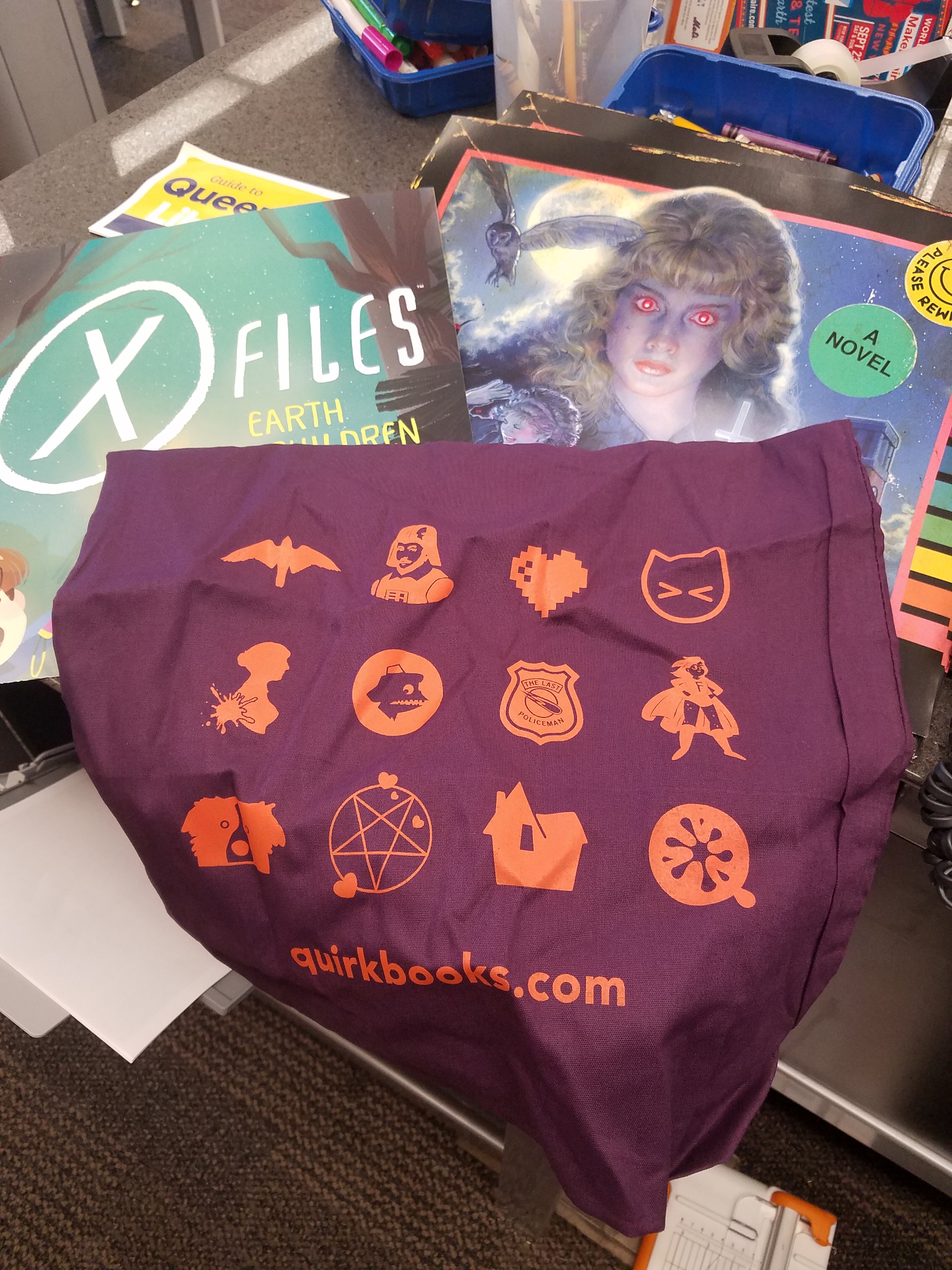
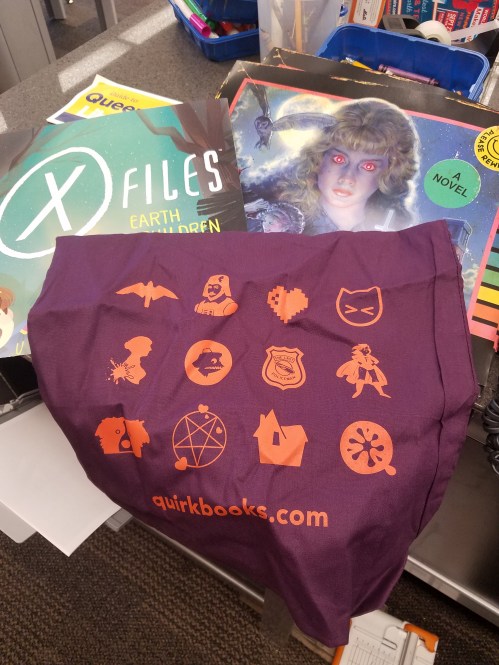
Next up, BookPop: Quirk’s traveling pop culture fest, happening in libraries and bookstores all over the place. I held mine late, because I thought it would be the perfect program to hold when the kids were out of school; last Thursday – since most of the families in my community don’t observe Rosh Hashanah – was the day. Quirk sent me a box o’swag, including ET: The Extra-Terrestrial tattoos (not in the picture: those babies were GONE); posters of the new kids’ books, X-Files: Children are Weird, and the YA novel My Best Friend’s Exorcism; and a spiffy tote bag to put everything in. I downloaded Quirk’s Geek Guides for putting on a great day of programming, and was ready.
First program of BookPop! Day was Superhero Storytime. I had a handful of kiddos and their parents attend, and we made masks and Geek Family Crests when we were done. The kids loved the masks – I downloaded some blank templates from First Palette, handed out scissors, markers, crayons, and lanyard to tie the masks, and the kids loved it. One little one even wore her mask through the next program…

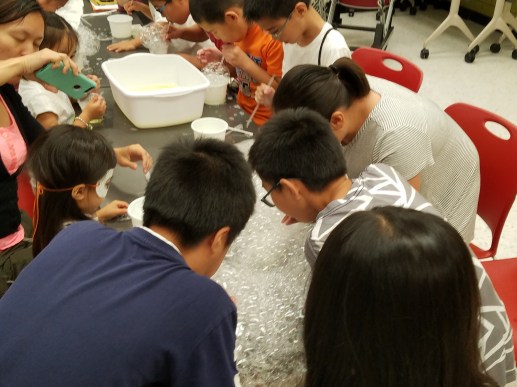
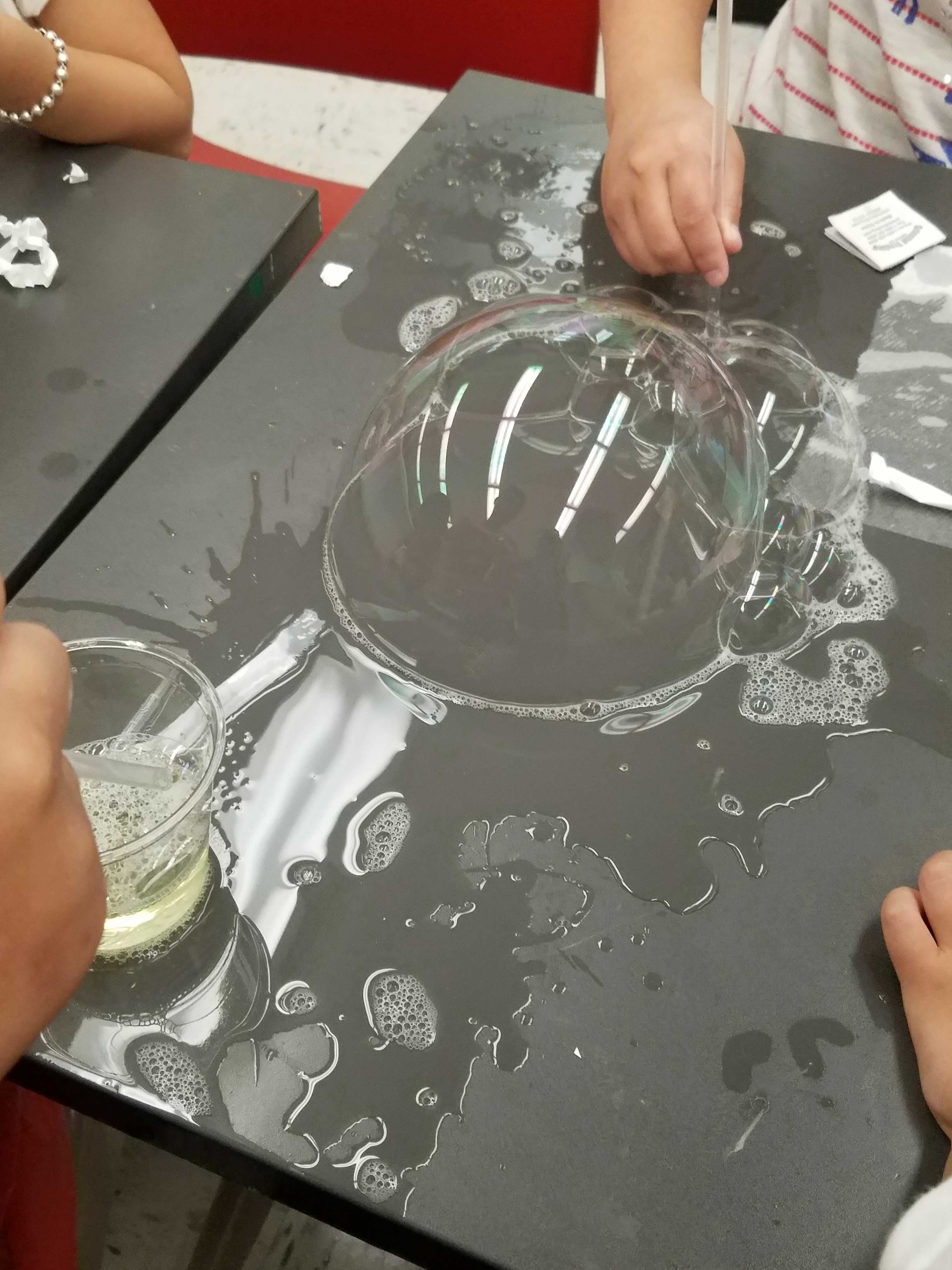
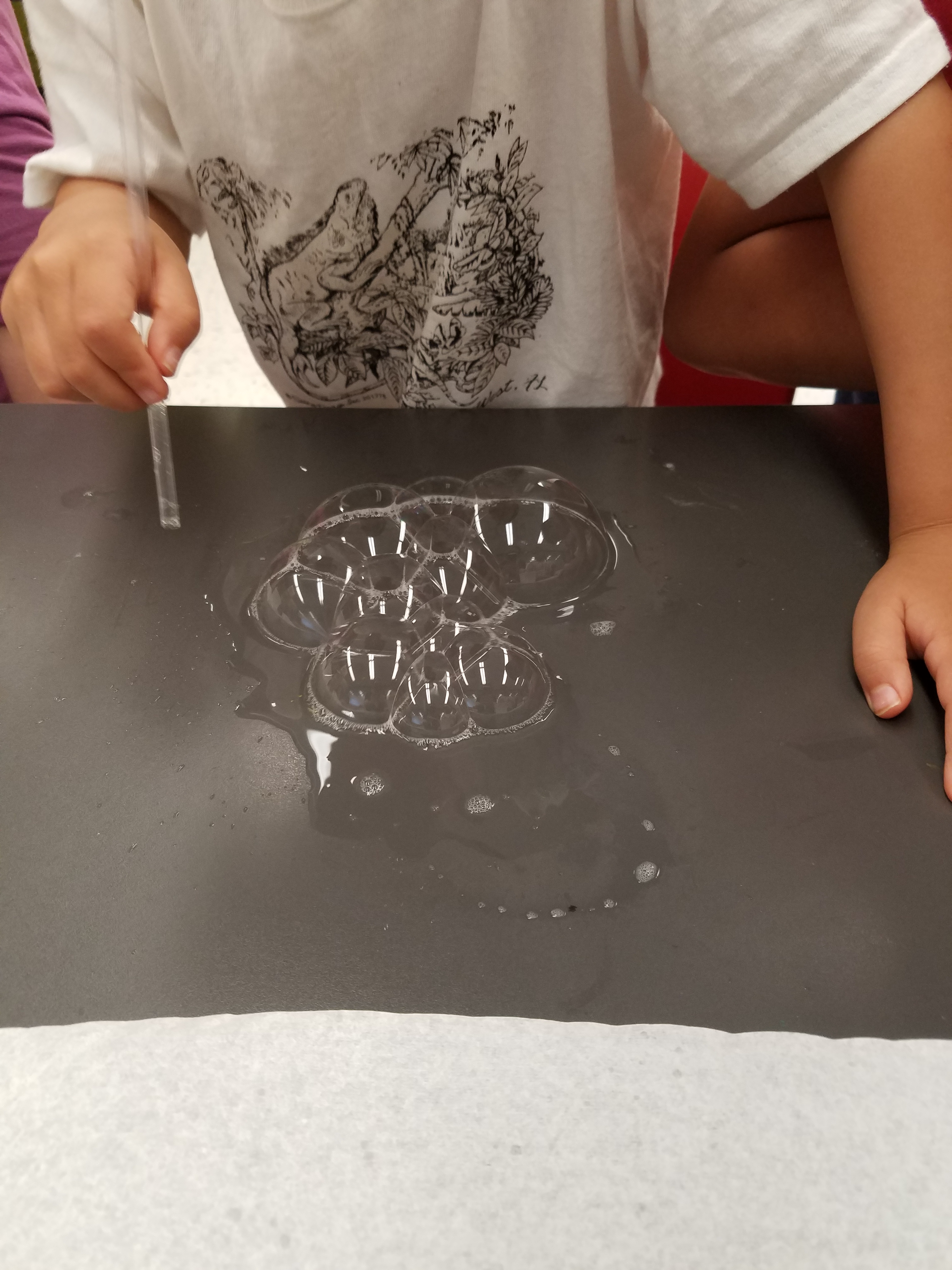
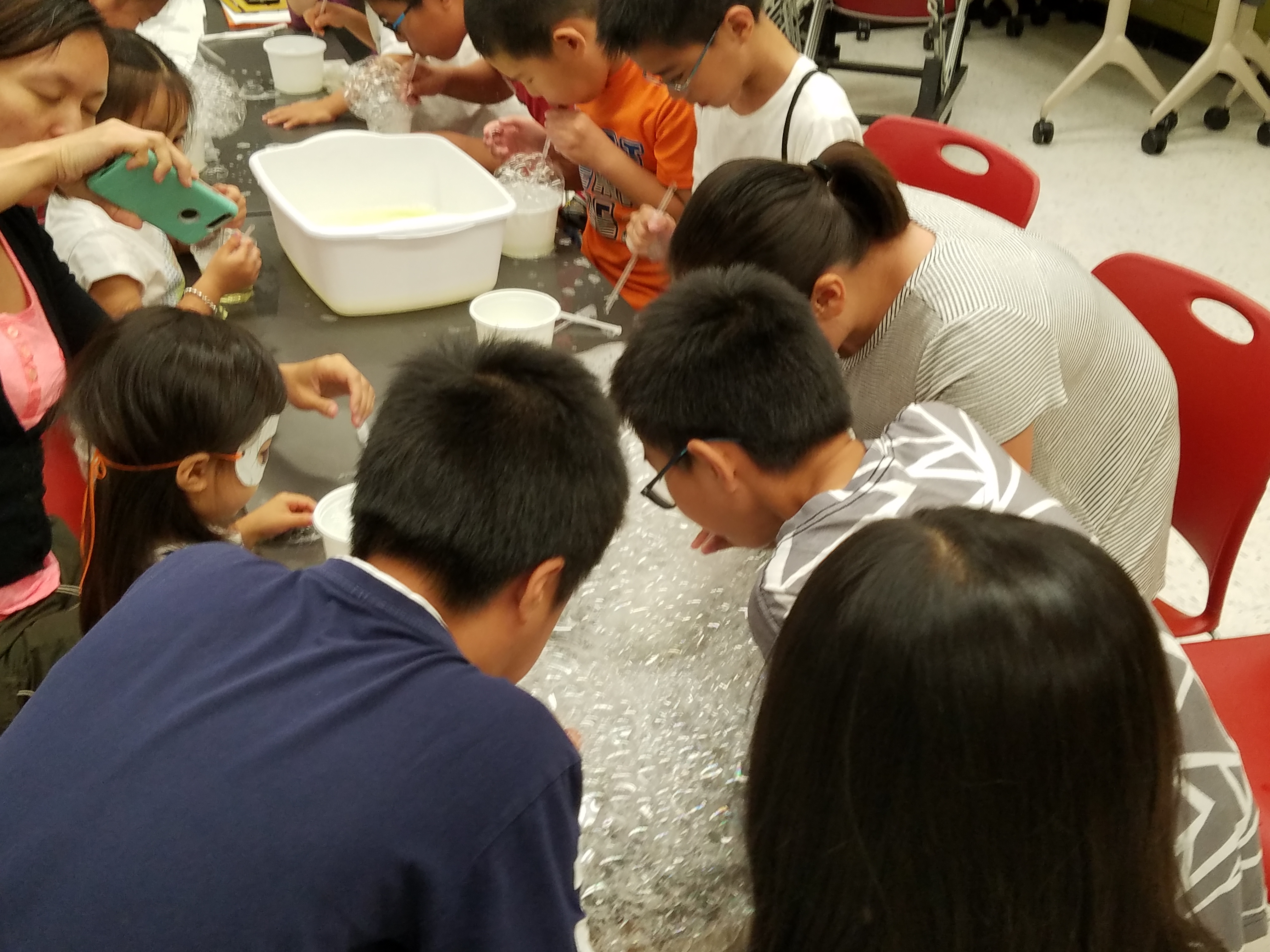
Nick and Tesla’s Science Workshop. The Nick and Tesla books are tons of fun and loaded with STEM experiments, but I wanted something that even my littler ones could do. Enter, bubbles. I told the kids that Nick and Tesla are a brother-sister team that solve mysteries and get out of trouble by creating great science projects, and that we were going to learn about surface tension, and the difference between bubbling your milk and bubbling water with a little dish soap in it. I had a gallon-sized tub filled with water, gave out droppers, straws, and cups, and we bubbled away. Then, I had one of the kids add a cup of plain old liquid dish soap, and they all took turns stirring it. I spread some water on the table and demonstrate how to blow a table bubble, and that was all the kids needed. Look at these bubbles!
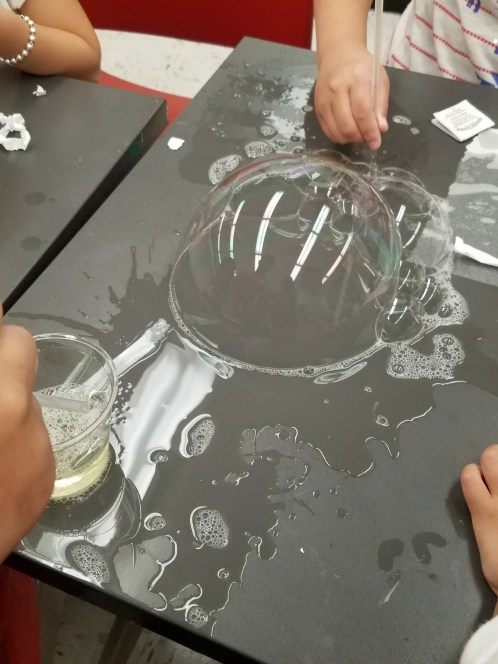
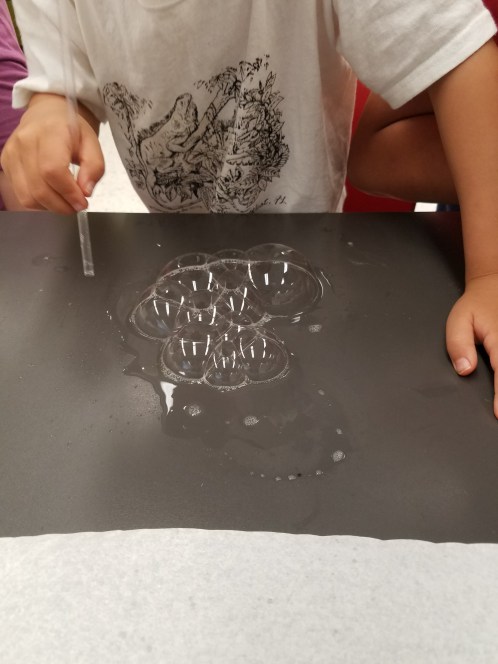
The entire table, at one point, was covered in bubbles. They loved it, I loved it, and they want more fun science programming, so win, all around. Next up was…

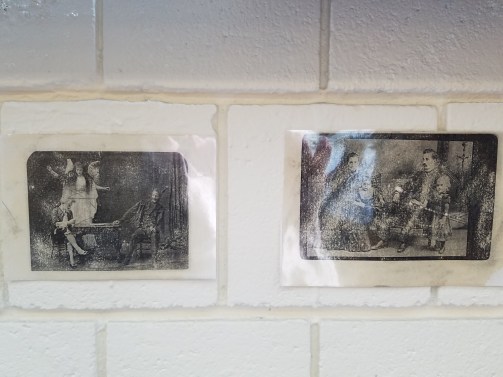
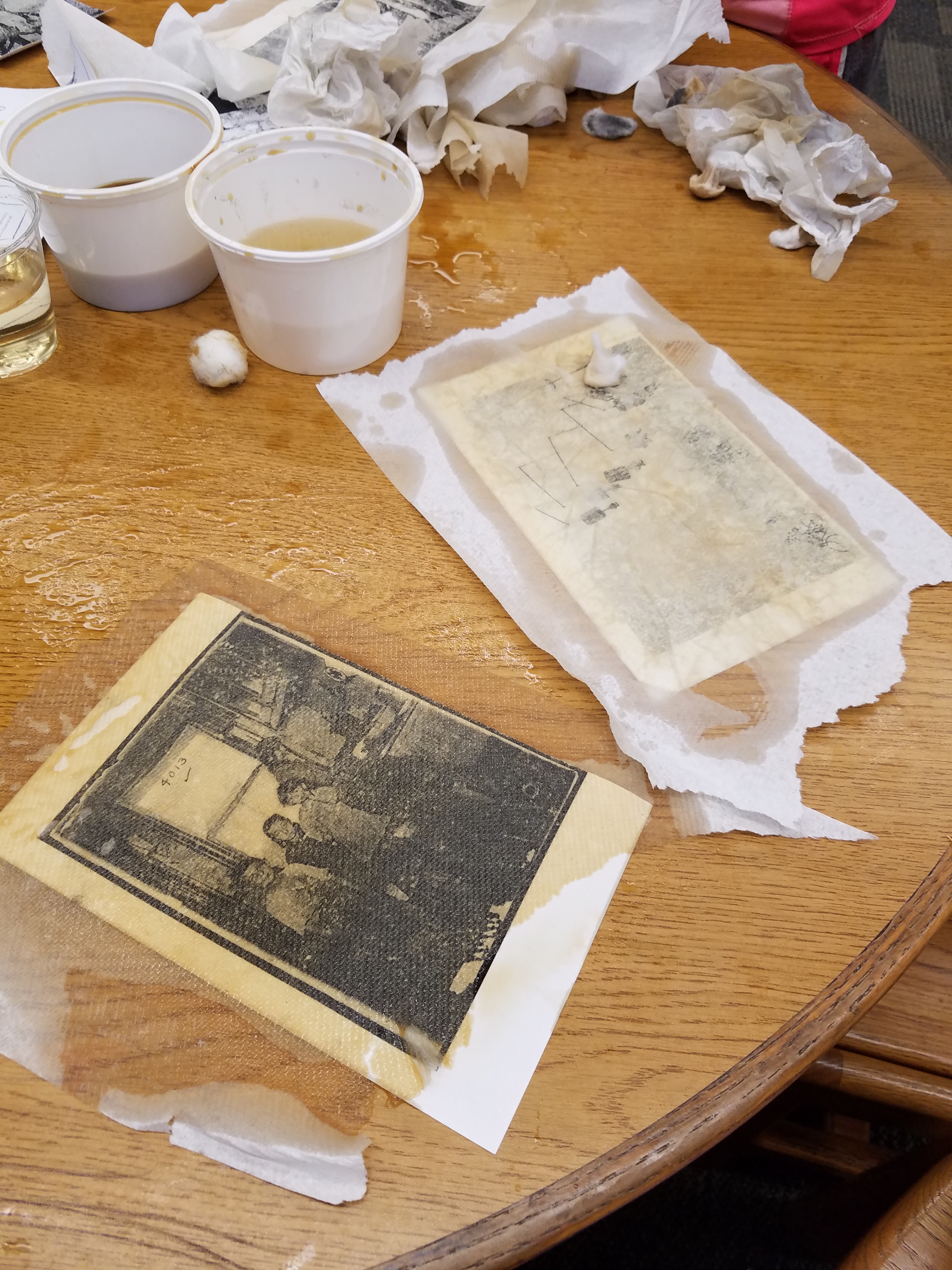
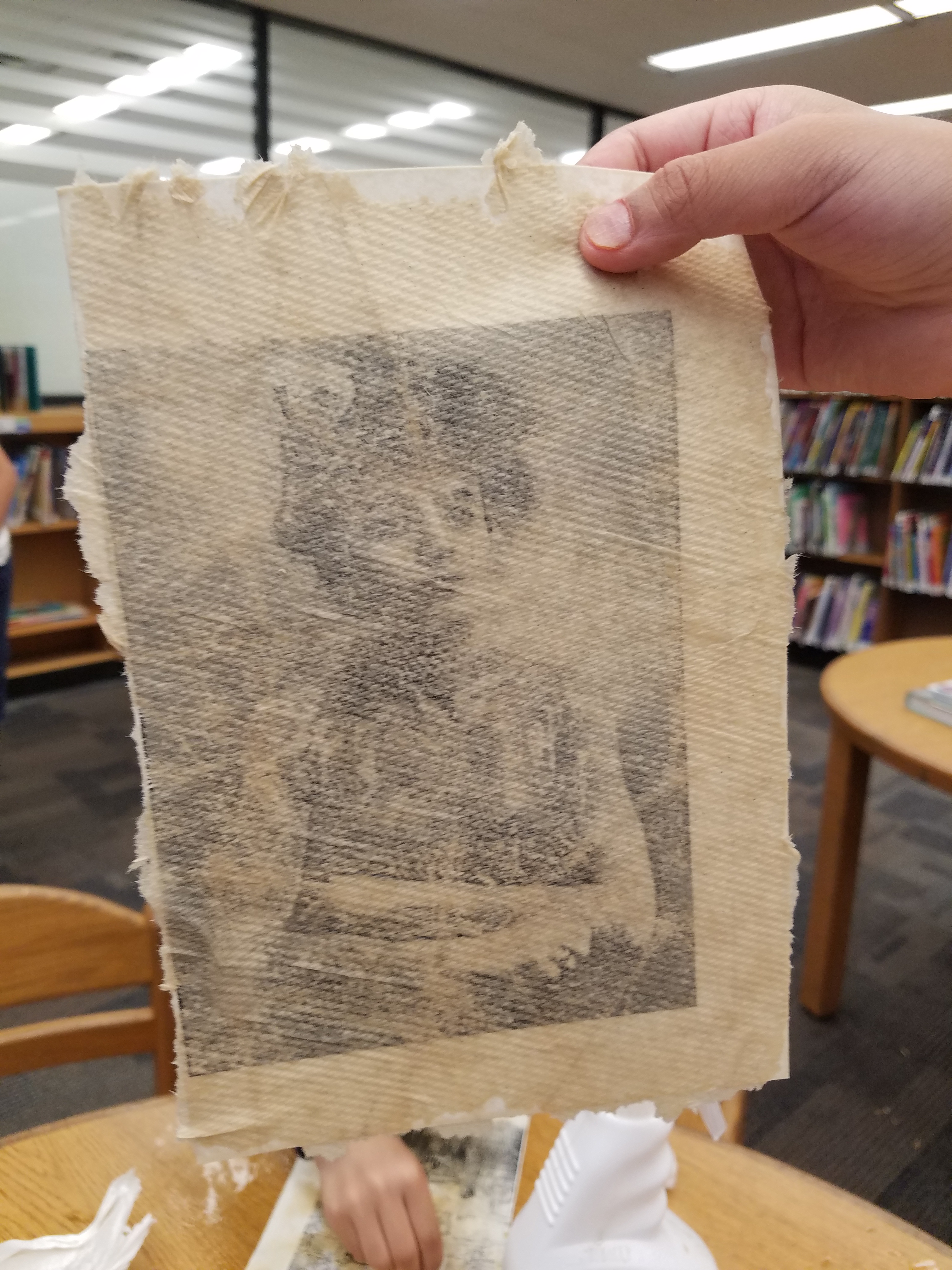
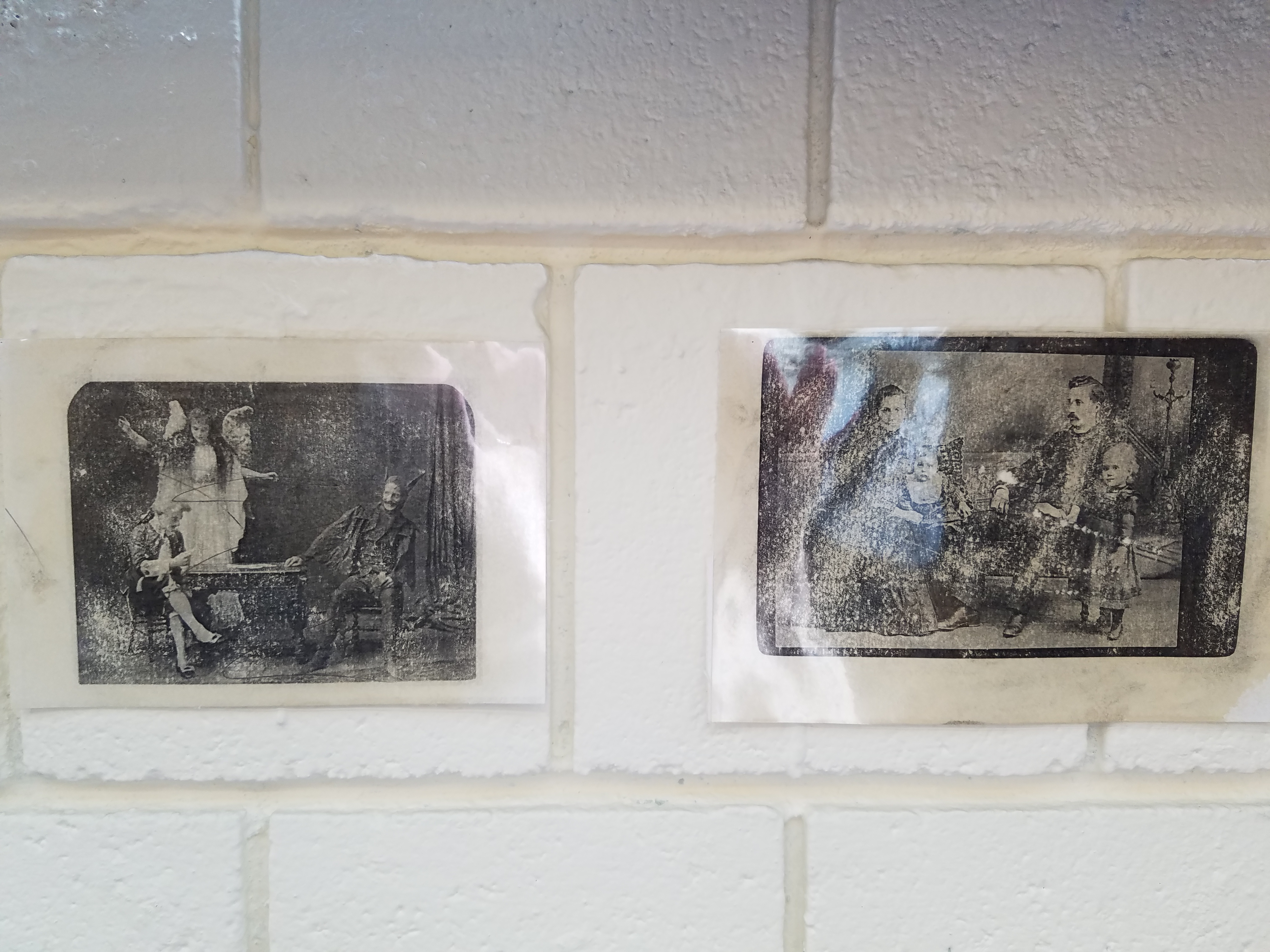
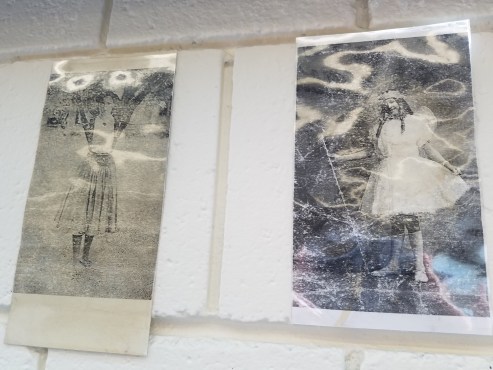
The Miss Peregrine Photo Workshop. Originally, I planned this for my teen patrons, but they weren’t interested – I had a group of tweens, though, who were all over it. We talked about the movie, I showed them the books, and brought out the equipment: photos I printed onto card stock from a Miss Peregrine-inspired Pinterest board (search on “vintage weird” and I guarantee you won’t be sorry), lots of paper towel, a spray bottle full of coffee, and two containers of coffee and tea. The kids loved aging their photos, and I was amazed by their creativity: one girl laid a paper towel over her photo to give it more texture as the coffee seeped through, and another tore the borders of her photo to make it look even older.
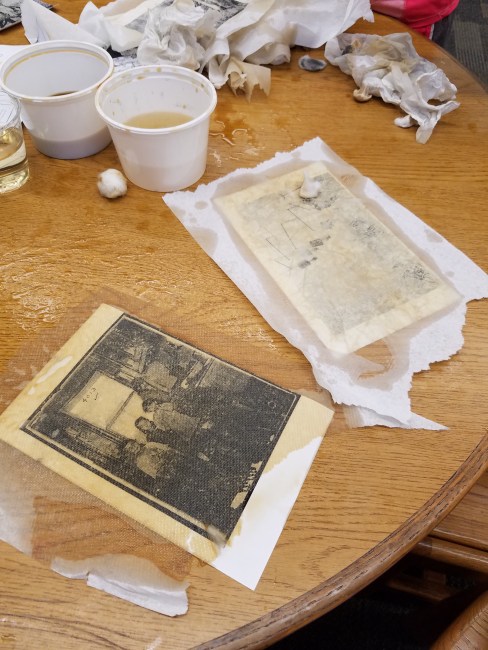
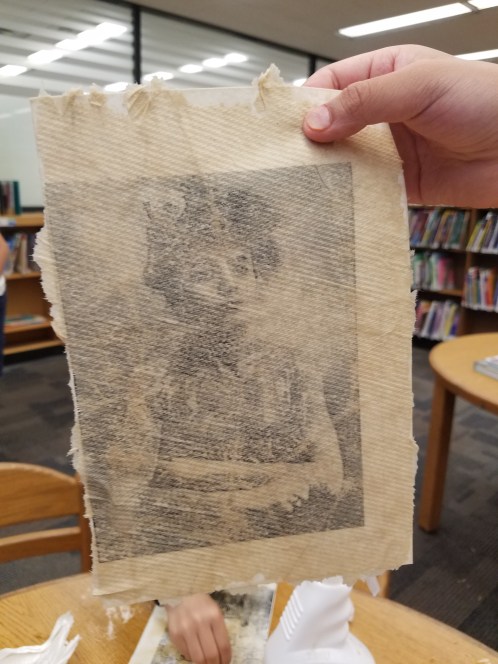
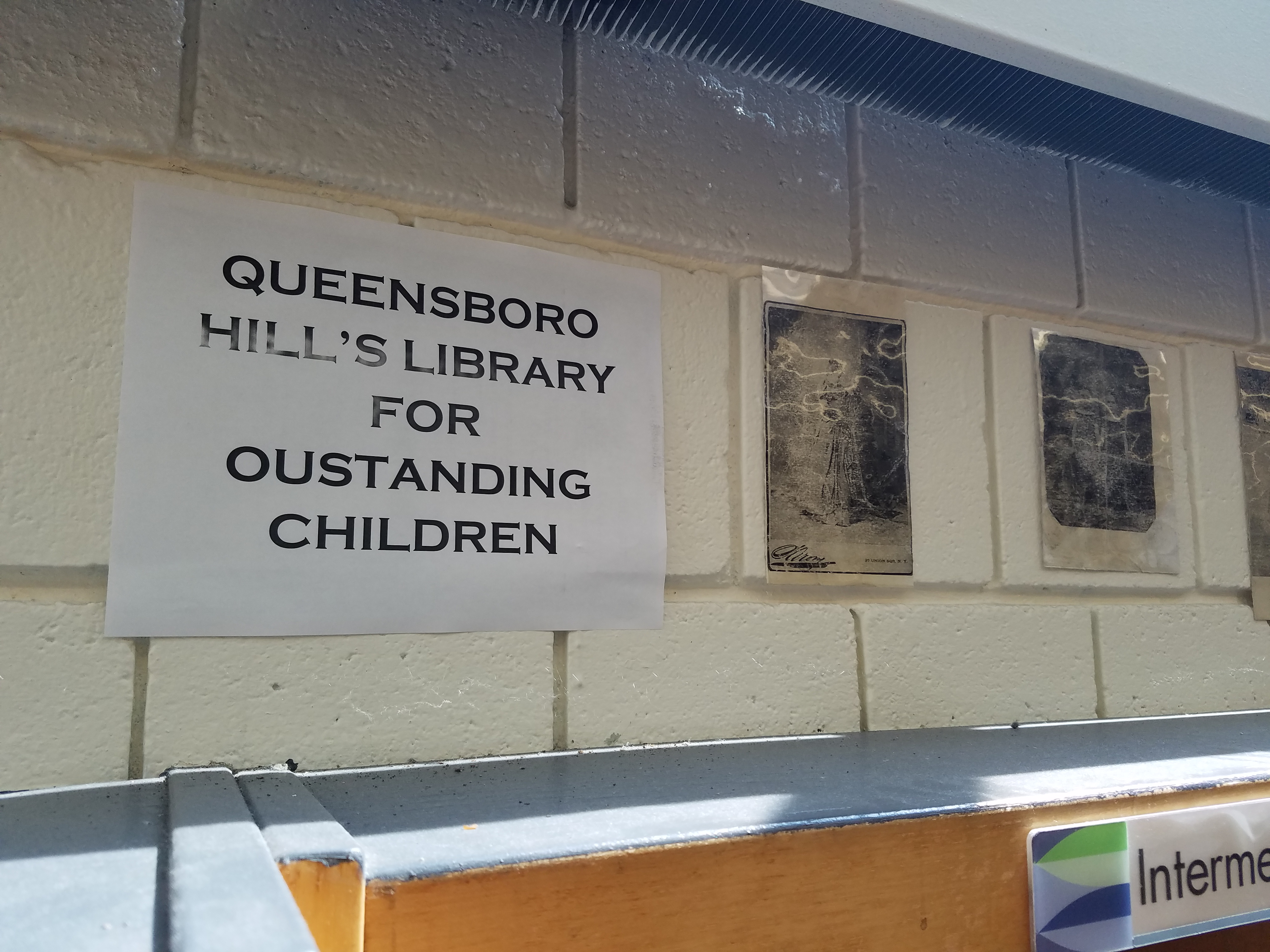
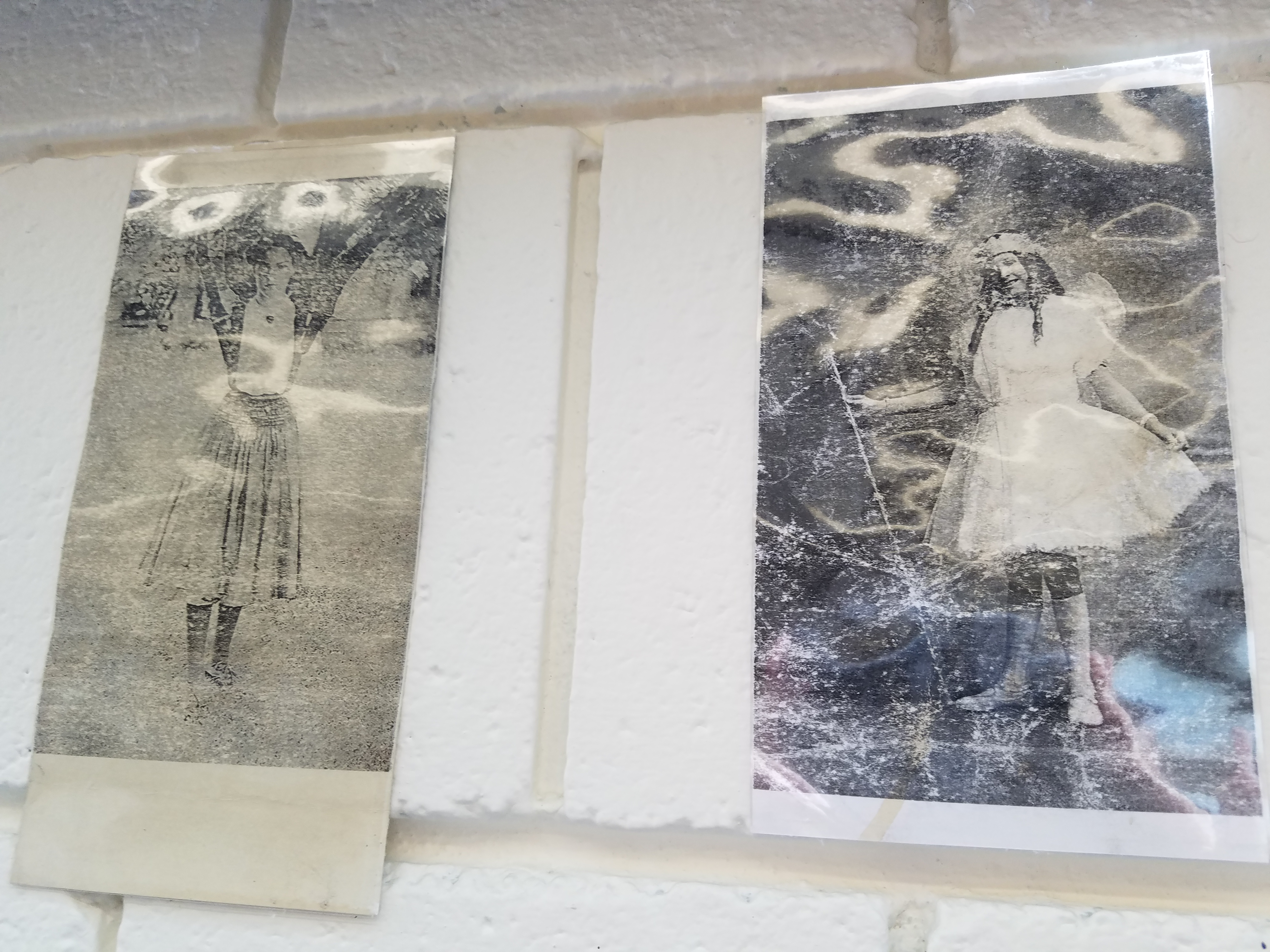
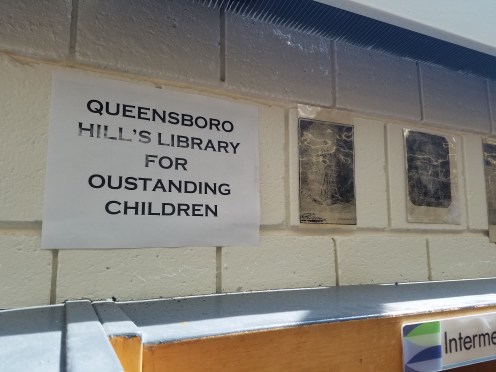
When I told them I wanted to create a photo gallery of their work, they all donated the photos to the library! So today, we have “Queensboro Hill’s Library for Outstanding Children” (forgive the glare, I laminated the photos so they wouldn’t deteriorate further):
I handed swag bags out for most of the day, and everything went except for one tote, two X-Files posters, and a handful of My Best Friend’s Exorcism posters, which will all be prizes for future programs. One kid couldn’t even wait to get home: he gave himself an ET tattoo sleeve, which was pretty fabulous.

I’d call our Queensboro Hill BookPop! a success.

Posted in Middle School, Non-Fiction, Teen, Tween Reads

Summer of STEAM: Making Simple Robots

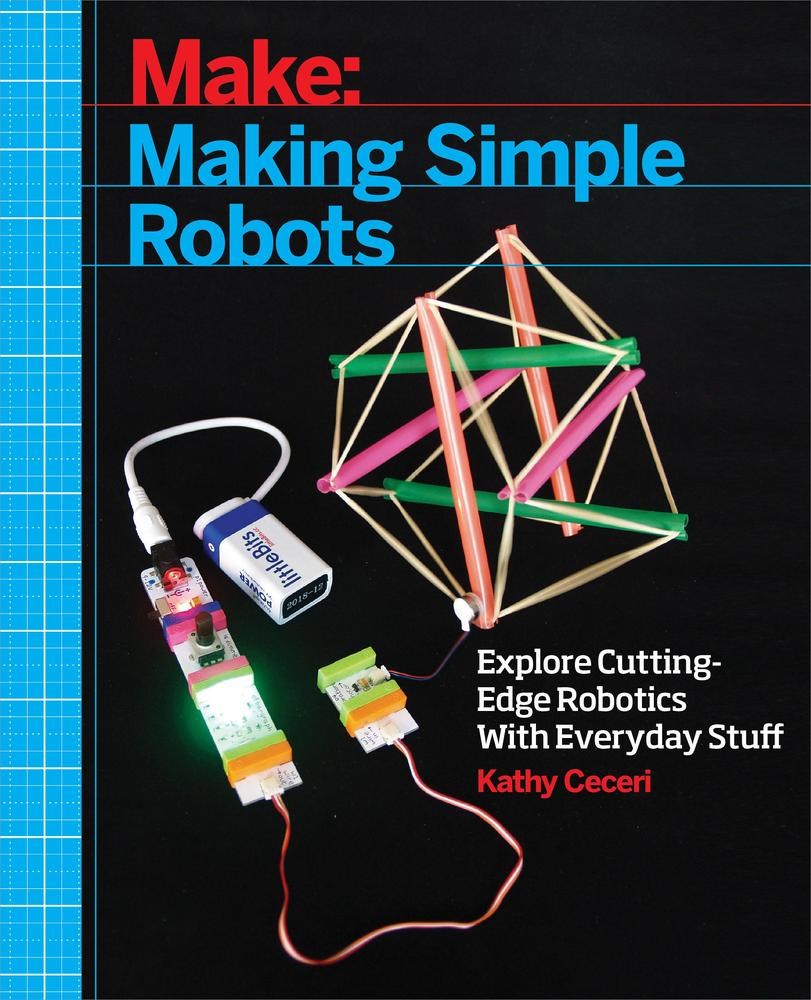
Making Simple Robots: Exploring Cutting-Edge Robotics with Everyday Stuff, by Kathy Ceceri, (March 2015, Maker Media), $24.99, ISBN: 9781457183638
Recommended for readers 11-17
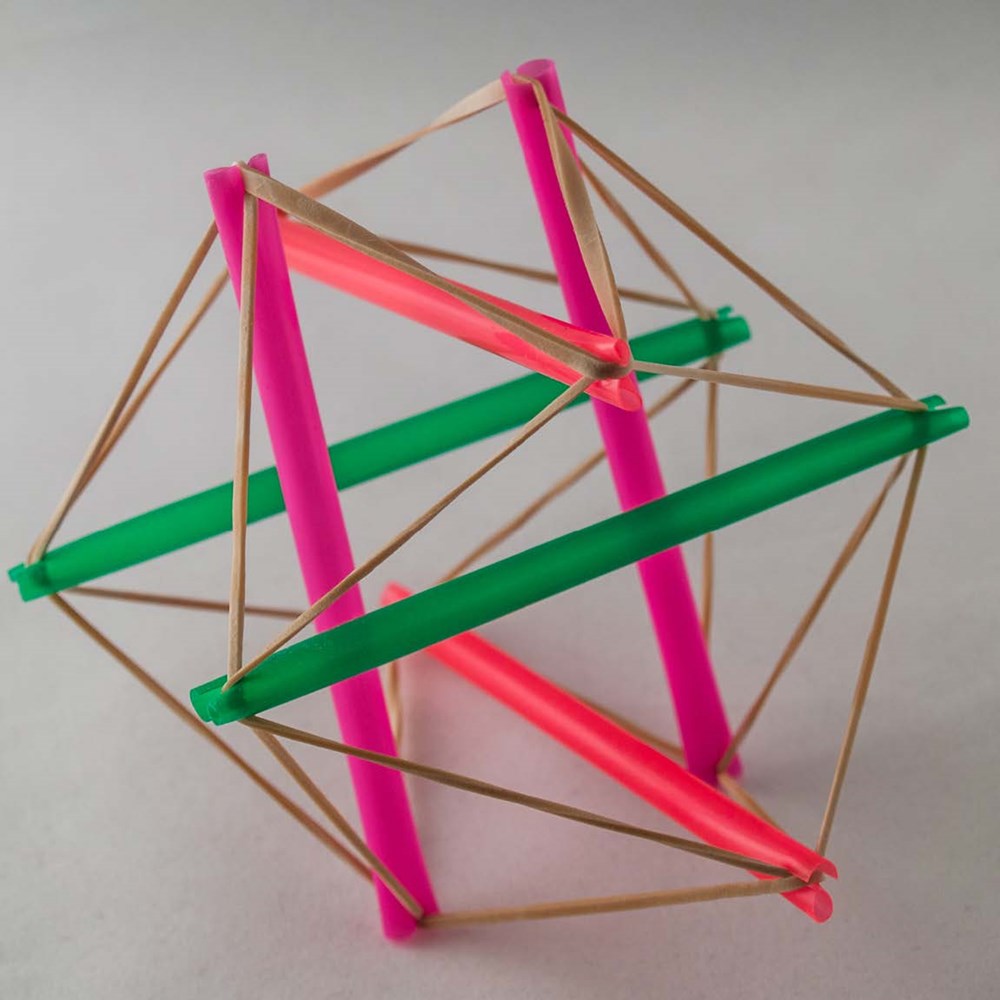
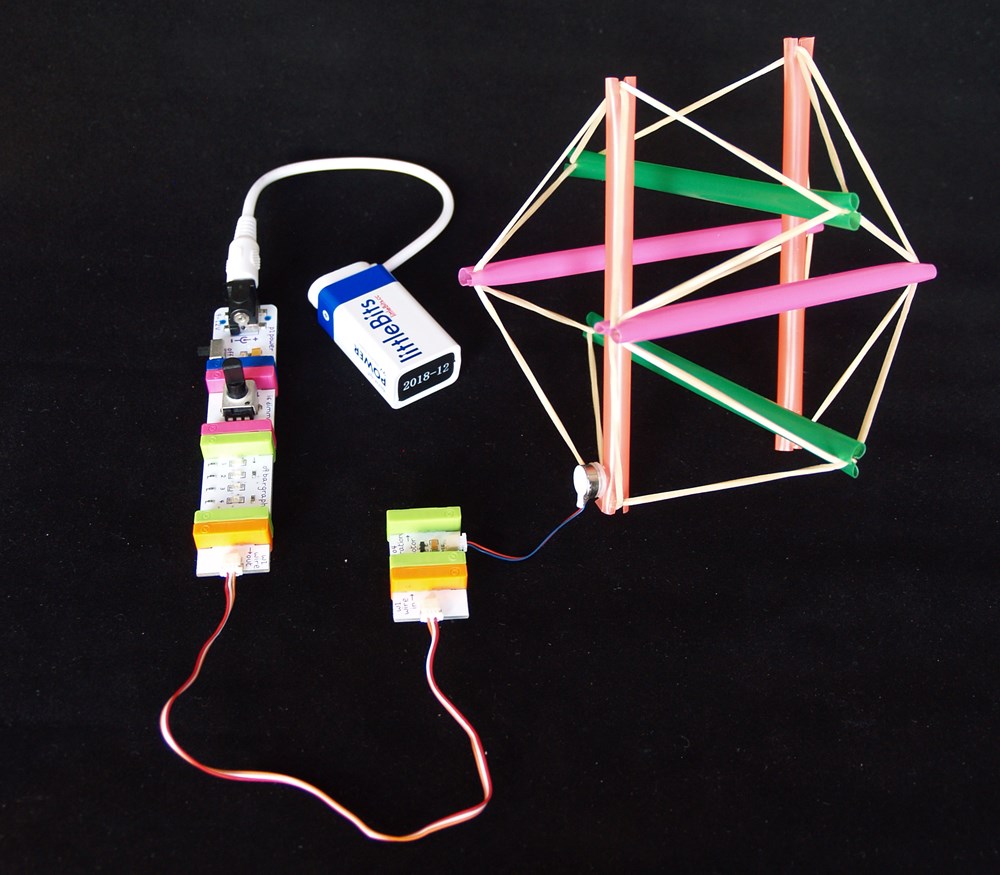
If you haven’t gotten into robotics because you think it’s too expensive to lay down the money for a LEGO Mindstorms set, this is the book for you. Combining plain-English engineering explanations with household materials (and a short list of goodies you can usually get online or at Home Depot), Making Simple Robots walks readers through making robots using paper, balloons (think Baymax, from Big Hero 6, but smaller and less sentient), drinking straws and rubber bands. Projects become more involved as the book progresses, and use more complex materials like Little Bits and 3-D printers. Each project walks readers through the design, building and testing a prototype, helpful troubleshooting suggestions, and ways to adapt and expand on the robots.
You know I love my “program in a book”, and this is another one. I could pull together a beginning robotics program, no sweat, with a small budget and some time to play around. My go-to project from this book? The Gliding Vibrobot, which is a tiny robot you can make for $10 or less, with a motor from an old cell phone or electric toothbrush, 1.5 to 3 volt batteries, foam tape, and gumball machine toy capsules. For a public librarian’s budget, this is a dream project! Have a coding program? Work that into the mix with a Chatbot, where you use Scratch to program your sprite to use a script to carry on a conversation with another user.
There are loads of helpful hints and “cheat sheets” to refer to throughout the book, and an index makes for handy, quick reference.

Every Make book that I’ve read so far has included such a broad range of projects, allowing all skill levels and wallets a chance to make something really cool. Making Simple Robots combines a maker guide with an intro to modern robotics that middle schoolers and older will love.

Posted in Fiction, Intermediate, Middle Grade, Middle School, Non-Fiction, Non-fiction, Realistic Fiction, Tween Reads

Summer of STEAM: Girls Who Code Two-Fer!

I love coding and playing around with computer science-y type stuff. In my mind, I look like this:

When I create this.  (This is actually mine! I created it using Scratch.)

I do my best to get science in front of my own kids, and my library kids, at every opportunity. The kids here at my library are Minecrafters, so I feel like I’ve got an in and am working on building a nice, tech-friendly nonfiction section; the next additions on my list are from the organization, Girls Who Code.  If you aren’t familiar with Girls Who Code, they are a New York-based organization on a mission to close the gender gap in the tech industry and the classroom. They teach girls to embrace tech and to code, to create, and most importantly, not to fear science and math. Andrea Gonzalez and Sophie Hauser, two GWC grads, wrote Girl Code: Gaming, Going Viral, and Getting It Done, where they talk about their GWC experience.

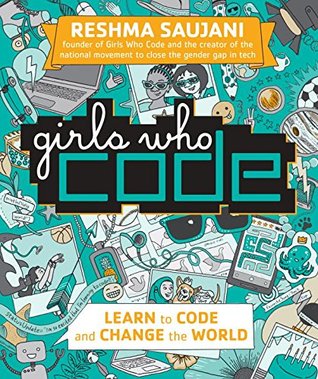
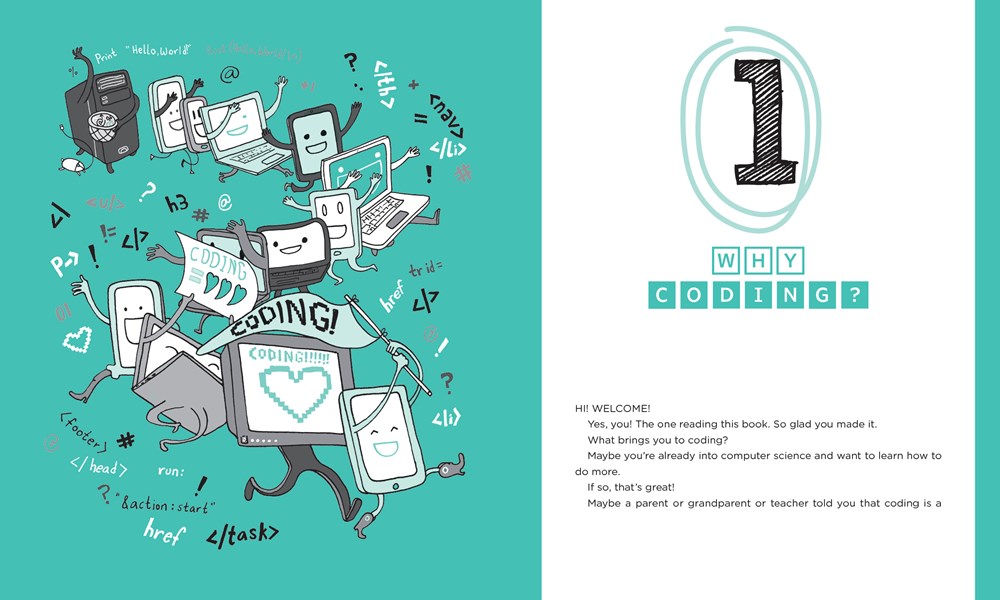
Now, Reshma Saujani, Girls Who Code founder, is releasing her own book, Girls Who Code: Learn to Code and Change the World (Aug. 2017, Viking, $17.99, ISBN: 978-0425287538). It’s a coding beginner’s guide, a spotlight on women in the computer science industry, an empowering career guide, and introduction to STEM for girls, all rolled up into one volume. It’s fun and easy to read, with Reshma speaking to readers in a comfortable, friendly voice; she gets some help from a group of illustrated, diverse girls: Lucy, Erin, Sophia, Leila, and Maya. The illustrated group of friends (more on them later) explain concepts and act as a step-by-step example of different stages of coding and creating.

What sets Girls Who Code: Learn to Code and Change the World apart from all the other coding books out there? Glad you asked. The tone, for starters, is fun, light, and personal. Reshma and her group of illustrated friends are talking straight to readers. The two-color illustrations are fun, like those you’d find in a middle grade novel, and feature characters from different ethnicities; Leila rocks a hijab, Maya is an Asian fashionista with a sleek bob; Lucy is African-American, Sophia is Latina, and Erin is a blonde. The group of friends come together to create apps and problem solve their coding; we’re invited along for the ride. Not sure you want to go into computer science? That’s no problem, either: GWC points out how many careers and hobbies incorporate coding these days, from baking, to politics, to social justice, sports, and art.  You’ll learn new terms, like pseudocode – that’s when you write out the steps of your program in plain language, to brainstorm and go over your program before starting to code. There are further Web resources and a glossary to complete this trusty guide to STEM life. Trust me, you’ll never look at the mere making of a peanut butter and jelly sandwich again after you read this.

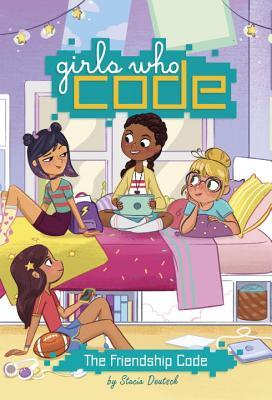
Also arriving the same day as Girls Who Code: Learn to Code and Change the World is the first in a new GWC series of fiction chapter books, starring the Girls Who Code we met in the previous book: Lucy, Erin, Sophia, and Maya (Leila’s arriving in the next book) come together thanks to a coding club in the new adventure, The Friendship Code, by Stacia Deutsch.

Girls Who Code: The Friendship Code, by Stacia Deutsch, (Aug. 2017, $12.99, ISBN: 9780399542510)


We get some background on each character: there’s been some past drama between Lucy and Sophia; Erin is an army brat who’s new in town; Maya is the fashionista who has a fashion column in the school newspaper; Sophia’s an athlete, and Lucy is fixated on learning to code so she can create an app to help her sick uncle remember to take his medicine. Thanks to the Coding Club, the girls learn that coding is more than just banging out numbers on computers (sometimes, to Lucy’s chagrin). With a fun mystery thrown in, the GWC series is like a Babysitter’s Club for a new group of tech-savvy kids. The series is great for intermediate-level readers; black and white illustrations and a quick pace make this novel a fun read that introduces younger middle graders to beginning coding terms and STEM. The mystery is even written in pseudocode – maybe a fun thing to introduce to your kids! Slip a pseudocode note into a lunchbox here, introduce a pseudocode scavenger hunt there… the possibilities stretch far and wide. Where Girls Who Code: Learn to Code, Change the World is best for your middle schoolers and upper middle graders, Girls Who Code: The Friendship Code is a great way to get younger middle graders familiar with the characters, the language of coding, and the fun of STEM.

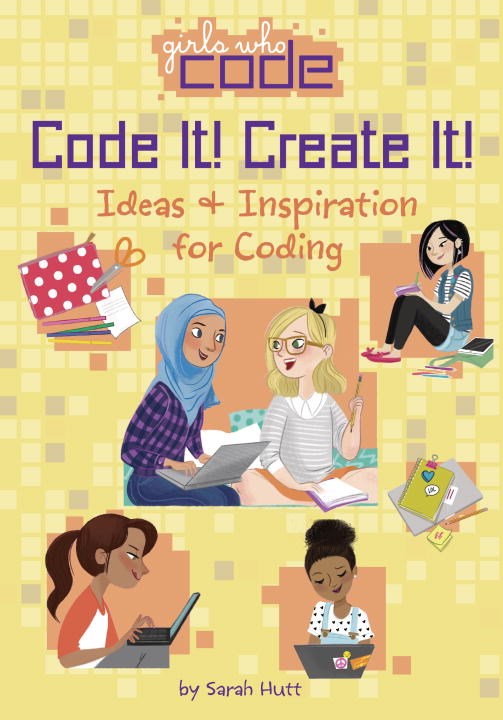
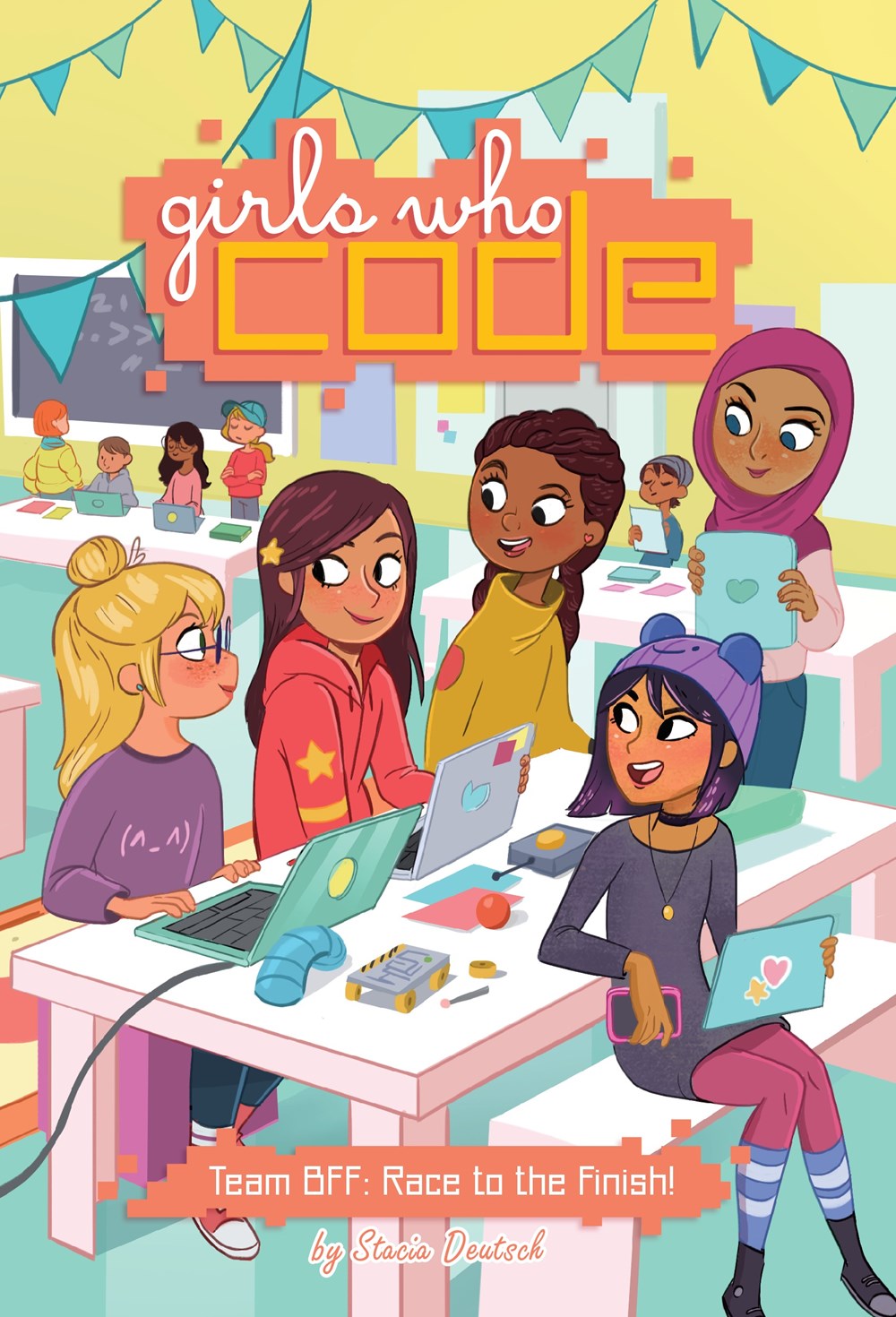
In October, we’re getting another nonfiction/fiction GWC combo, when Code It! Create It! and Team BFF: Race to the Rescue! hit shelves. I’ll be waiting!


Posted in Non-Fiction, Teen, Tween Reads, Young Adult/New Adult

Girl Power! Girl Code!

Girl Code: Gaming, Going Viral, and Getting It Done, by Andrea Gonzales and Sophie Houser, (March 2017, HarperCollins), $17.99, ISBN: 9780062472502

Recommended for readers 12+

Two teens attend NYC’s Girls Who Code Program, become friends, and create a viral video game that addresses the taboo of menstruation. It really happened, and they’re telling their story, hoping to inspire more girls to get involved in the tech space. More importantly, Andrea “Andy” Gonzalez and Sophie Houser talk frankly about the stress and the pressure of being in the spotlight; the sacrifices they made as they learned more about school, tech and entrepreneurship. They discuss the struggle to find a work-life balance. Girl Code is loaded with photos and includes an appendix with a glossary and coding exercises for both PC and Mac and is essential reading for anyone – particularly young women – interested in pursuing STEM careers.

I’ve been a big proponent of STEM for my library kids and for my own kids. I’ve run coding programs at my last library and am working on plans to bring one to my newest location. I urge the kids I see every day to get hands on, whether it’s toddlers playing with water tables to see what floats and what sinks, or tweens making BB-8 and R2D2 follow coding commands to move around a screen. Having two mentors like Sophie and Andy available on bookshelves is important, because they tell all: overcoming shyness and anxiety; encouraging kids to keep plugging away at code because it doesn’t always happen the first time, but perseverance gets results; and most importantly, that there are people out there that want you to succeed, but there are also people out there that will try to take the wind out of your sails once you do. Having two young women talk about their experiences is so much more important than me telling kids to stick two Scratch blocks together to run a command, because representation matters. I want readers to read these young women’s words and think, “I can do that.”

If you don’t have kids that are into code, give them this book anyway. Sophie and Andy take on the very taboo topic of being female in public. You read that right. Their game, Tampon Run, takes on the taboo of “icky girl stuff” – having periods – and puts it front and center, making it visible and real. It’s a big statement, and the thinking and reasoning behind the creation of this game is fascinating and inspiring reading.

Posted in Middle Grade, Non-Fiction, Non-fiction, Teen, Tween Reads

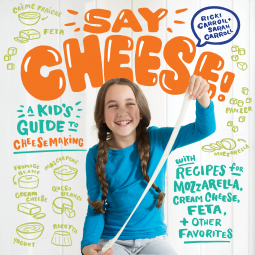
Say Cheese! teaches kids how to make their own yummy cheeses

Say Cheese! A Kid’s Guide to Cheesemaking, by Ricki Carroll & Sarah Carroll, (Apr. 2018, Storey Publishing), $18.95, ISBN: 9781612128238

Recommended for kids (and grownups) 9+

I do love a good kids’ cookbook, and Say Cheese! is the goods. It’s an introduction to cheesemaking for kids – how cool is that? The book provides smart, everyday tips, like how to read a milk carton (the differences between raw, pasteurized, ultra-pasteurized, homogenized, and fortified milks); info about the ingredients that go into milk making, the different animals who provide the milk we drink, and a look at the history and science of cheese and cheesemaking. That all being said, there’s a rundown on the tools and utensils you’ll need, advice on how to clean and prep everything, and finally, without further ado, the recipes! Color photos and step-by-step instrucitons give kids all they need to know on making their first cheese, with an emphasis on adult supervision: they are using the stove and sharp knives, after all. Make a mascarpone or some yogurt, spread some home-made cream cheese on a bagel or skewer some feta onto a toothpick with some watermelon: there are great recipes and tips for snacking to be had. This may not be up every kid’s alley, but it’s a fun, nontraditional cookbook to have on shelves and great for kids who love to cook and are looking for something new to test their skills.

Posted in Middle Grade, Non-Fiction, Non-fiction, Tween Reads

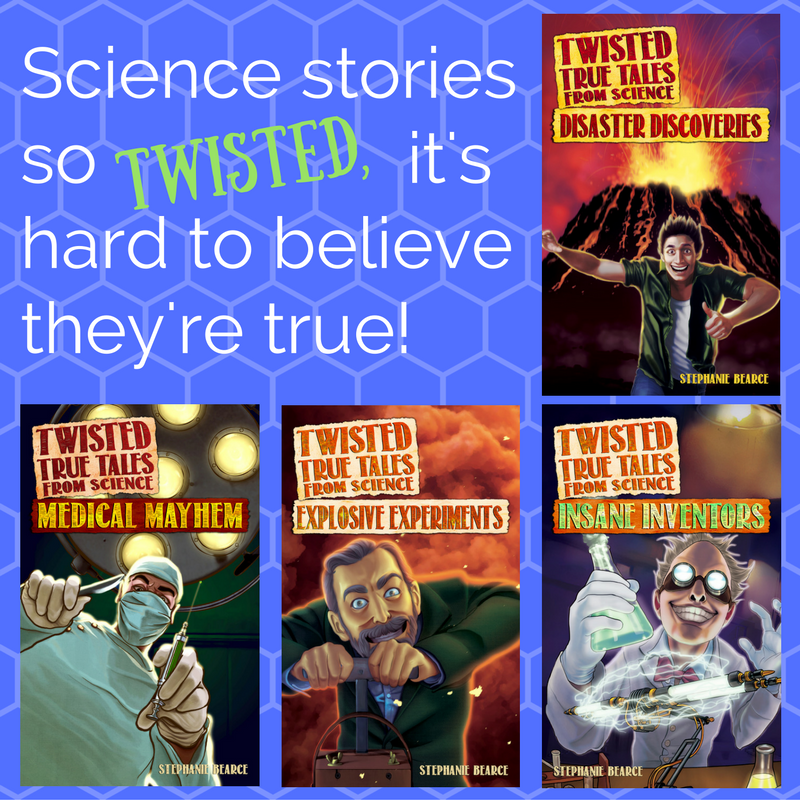
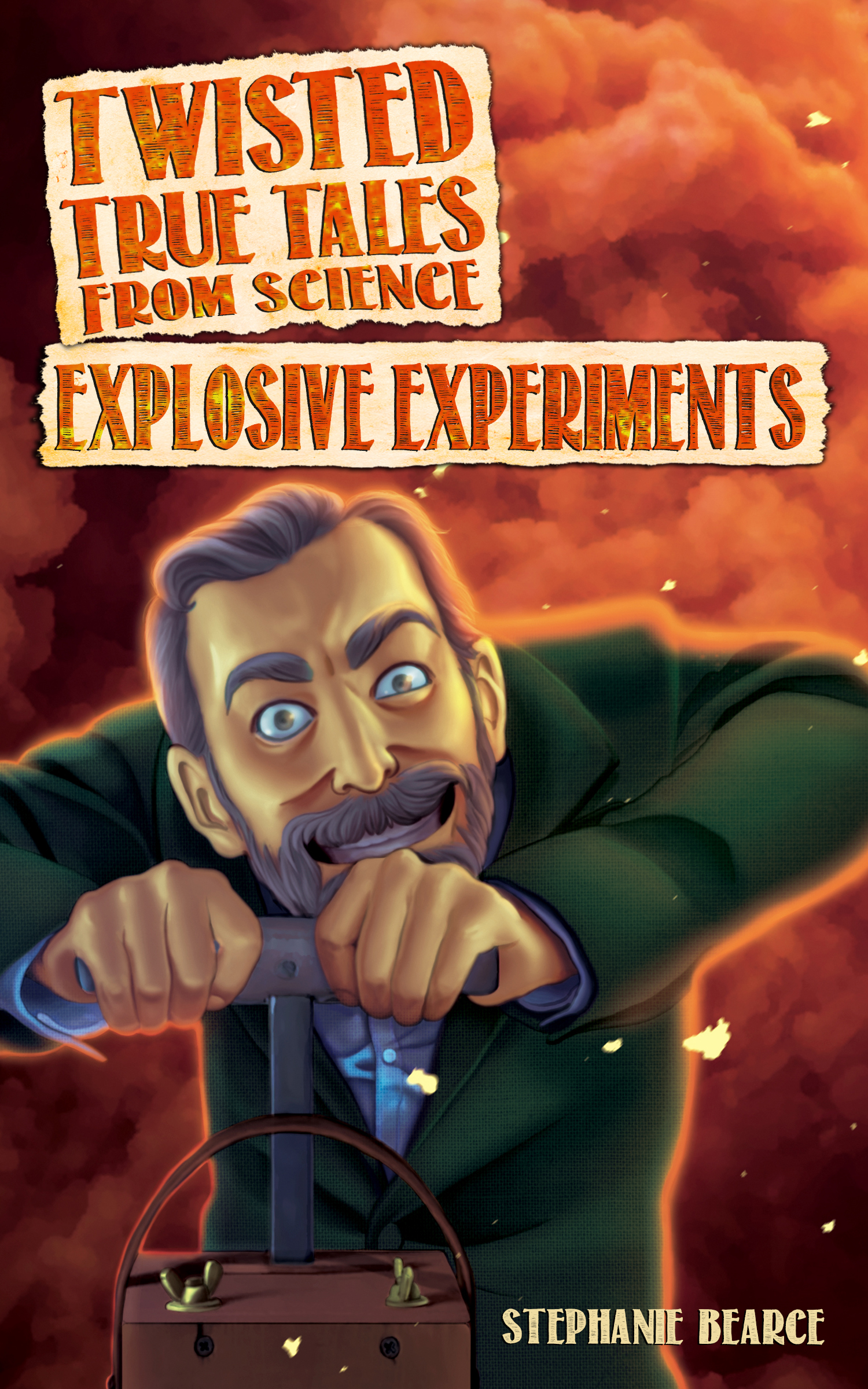
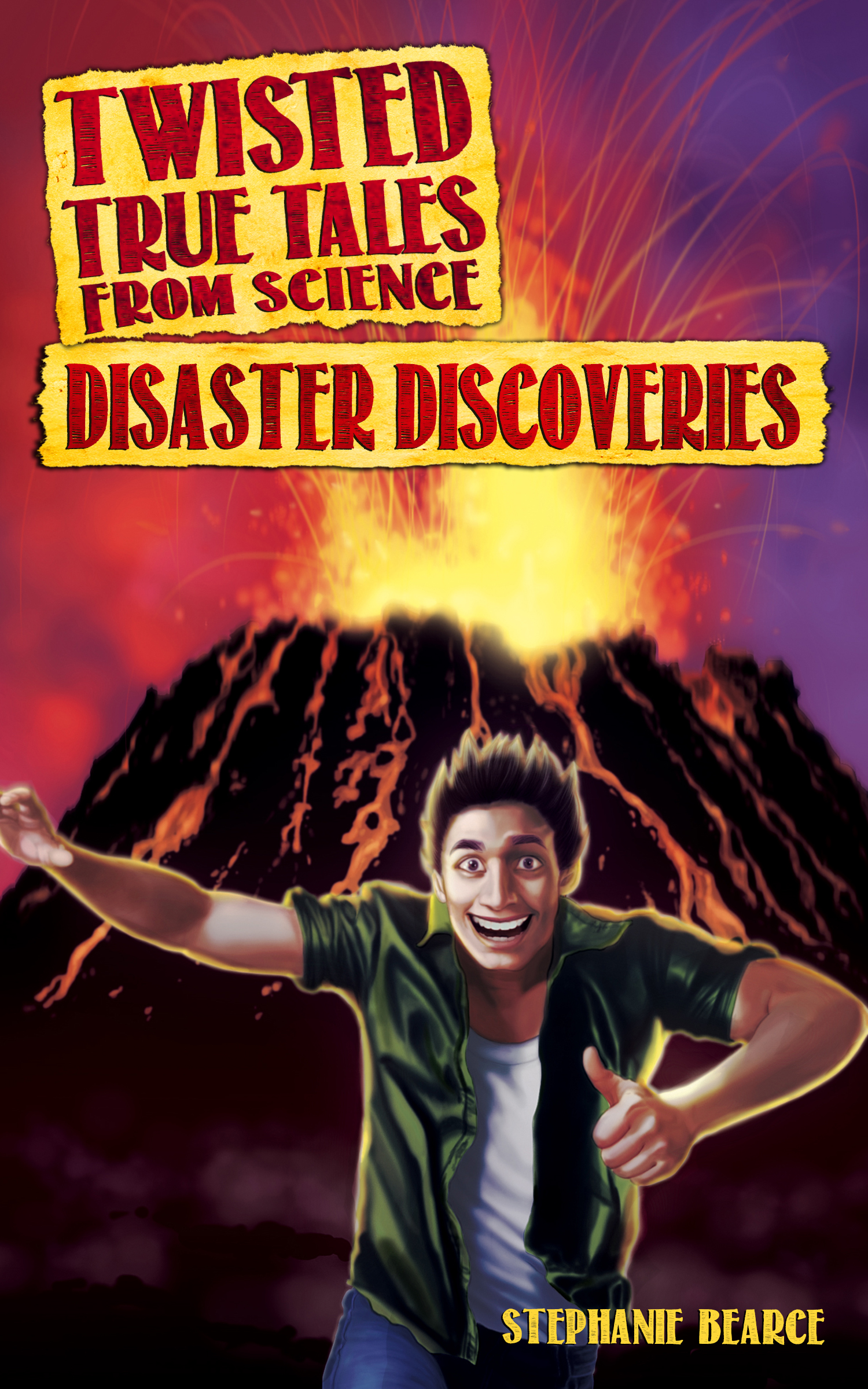
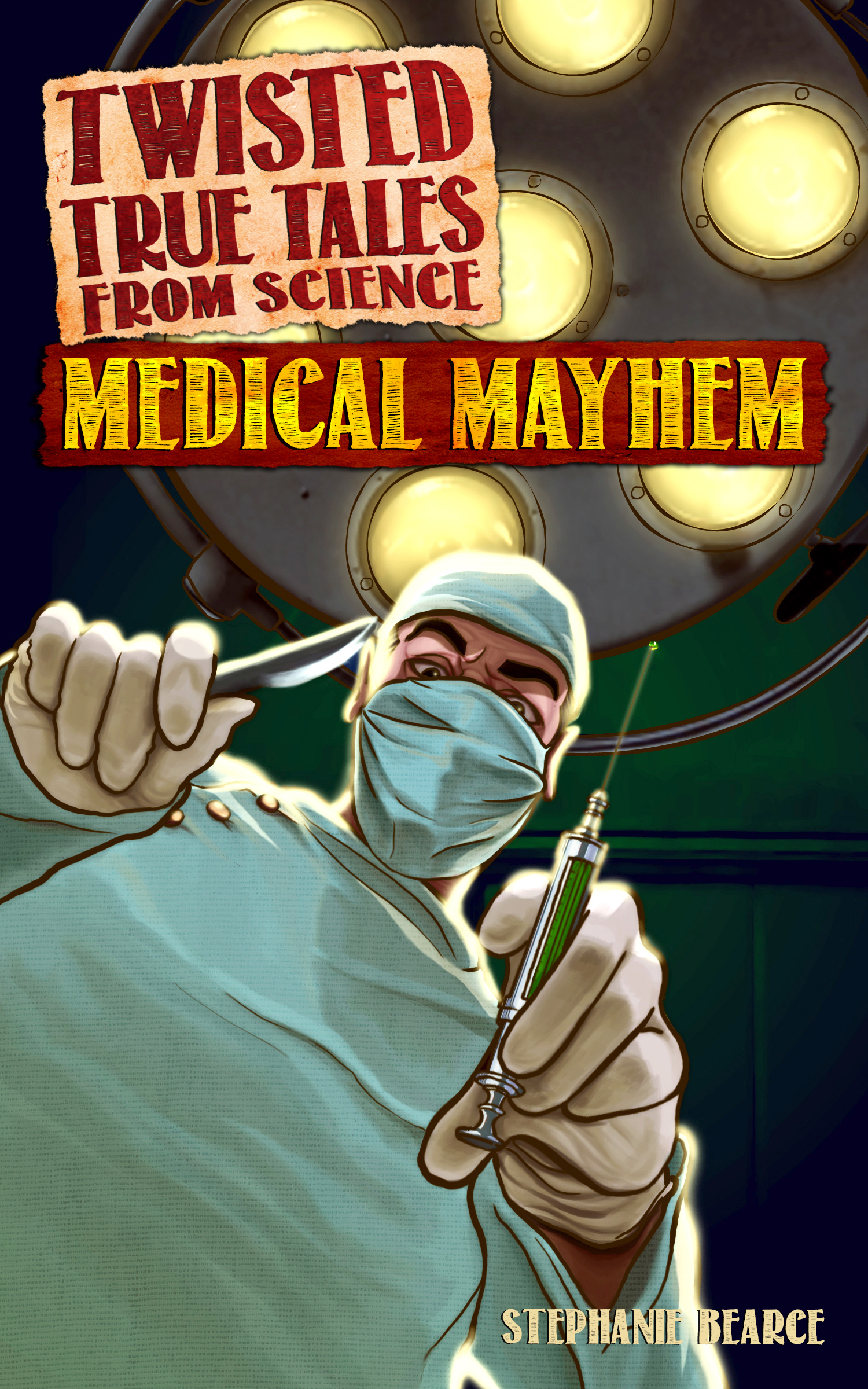
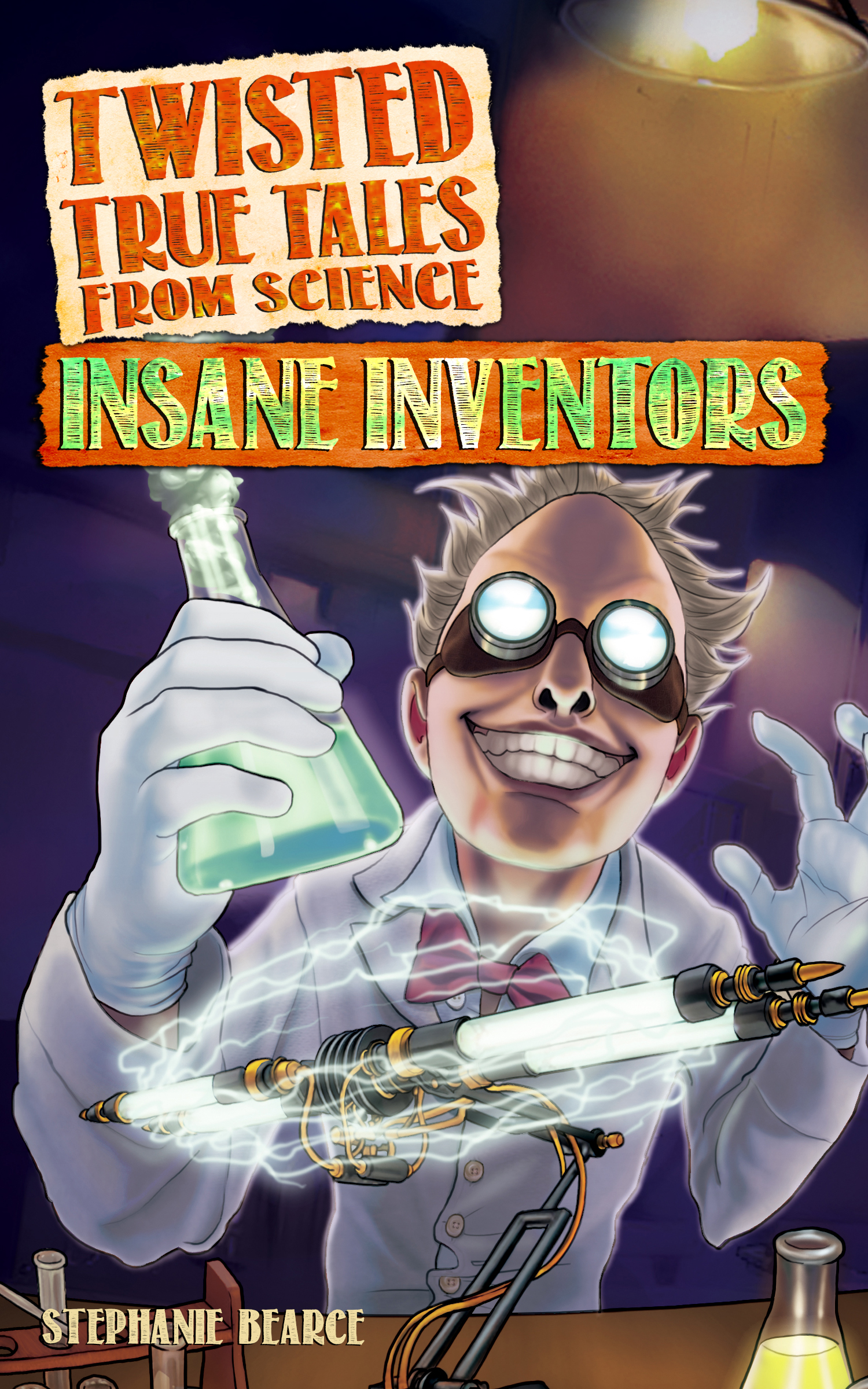
Blog Tour: Twisted True Tales from Science!

Happy New Year! What better way to kick things off than by talking up a new, cool nonfiction science series?

twisted-true-tales-from-science

Series information:

Title: Twisted True Tales from Science

Author: Stephanie Bearce

Release Date: February 1, 2017

Publisher: Prufrock Press

Did you know that Nikola Tesla invented a death ray gun and was also afraid of women who wore jewelry? How about the Chinese scientists from two-thousand years ago who were trying to create a medicine that would make them live forever but accidentally blew up their lab and discovered gun powder?

9781618215765

Find out more about the strange history of science in Twisted True Tales from Science, a new non-fiction series that introduces kids to some of the most twisted yet completely true stories from science. These books are perfect for the gross-but-true legends of the Ripley’s Believe-It-Or-Not! stories.

Freaky Facts from Explosive Experiments

Gunpowder was a chemical explosive discovered by the ancient Chinese. But they weren’t experimenting to invent a weapon. They were actually trying to make a medicine that would give their emperor eternal life. Boy – were they surprised when the elixir for life exploded and blew up their laboratory.

9781618215741

The mission was code named Starfish Prime and it was one of the largest man-made explosions in the history of the world. In 1962 the United States tested a nuclear bomb in outer space. The explosion was so bright that it lit up the sky over Honolulu just like it was the fourth of July. But instead of fireworks, it was a nuclear bomb 100 times bigger than the bomb dropped on Hiroshima.

9781618215727

GIVEAWAY for one bundle of the entire Twisted True Tales from Science series (4 books)

Don’t miss your chance to win a bundle of your own Twisted True Tales from Science! Enter a Rafflecopter giveaway today!

https://widget-prime.rafflecopter.com/launch.js

9781618215703

Posted in Fiction, Middle Grade, Realistic Fiction, Tween Reads

Career Day: The STEM Club Goes Exploring

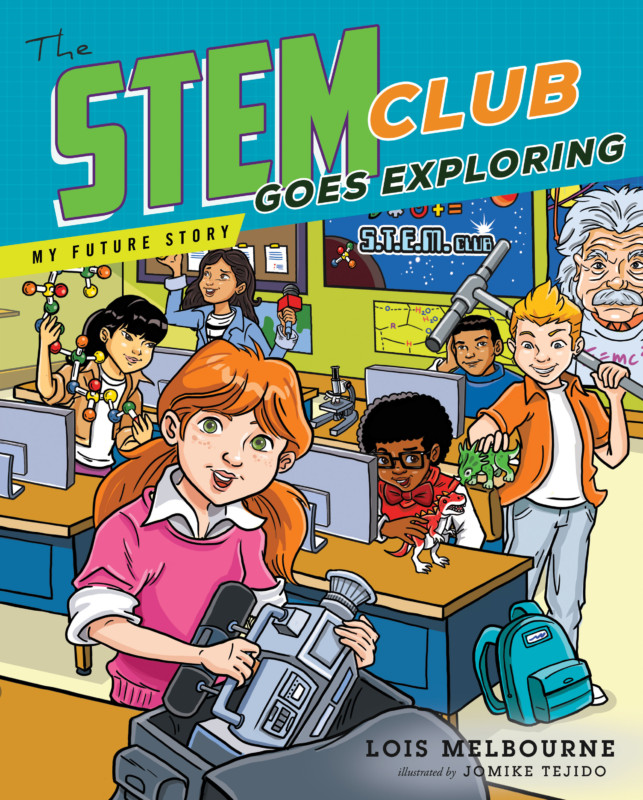
stemThe STEM Club Goes Exploring (My Future Story series), by Lois Melbourne, (Sept. 2016, Greenleaf Book Group), $15.95, ISBN: 9781626343030

Recommended for ages 8-12

The STEM Club is excited! They’re going to interview STEM professionals to help them with their own presentations during their school’s Favorites Day. The Club visits a video game company, a veterinary clinic, a hospital, and a mine to learn about the career opportunities in these fields.

This is one of those books you have to have in your collections, whether it’s a classroom, school, or public library. STEM is everywhere; we’re teaching it, we’re creating programs using it, and kids are loving it. It’s bringing a little bit of fun and discovery back to education, which is a great thing, and it’s teaching kids that there are so many careers out there for them, that they can reach for the stars. You can work at NASA, you can create video games or apps, you can be a doctor, a veterinarian, or do anything you can think of. Science and Math aren’t as scary as they used to be when you start talking about coding and gaming, right?

The STEM Club Goes Exploring is the answer to a lot of those “yeah, but what can you do with that?” questions. The ones the kids’ parents sometimes ask me when I’m showing them how to set a code that will make BB-8 roll across their screen, or how to create Hogwarts in Minecraft. The series will also work really nicely with The Magic School Bus – think of it as the school next door; maybe even the middle school Miss Frizzle’s kids head to once they graduate elementary school.

Posted in Non-Fiction, Non-fiction

Coding Projects in Scratch: Step up your coding game

coding projects in scratchCoding Projects in Scratch, by Jon Woodcock, (July 2016, DK Children), $19.99, ISBN: 9781465451422

Recommended for ages 8-12

Scratch is one of the best programs to start kids out on their coding education. Using block programming, kids can drag and drop chunks of code that interlock to run all sorts of operations. Coding Projects in Scratch is a step-by-step, fully illustrated guide to creating projects that use movement and sound.

The best part about Scratch is that it’s free. Go to the Scratch site, create a free account, and have this book next to you. I sat at my desk and was able to create a dinosaur dance party, a cat that changed sizes and colors, and I even got some sound effects into my animations. You can download Scratch if you want to work online, but – and the book will remind you throughout – save your work!

The book is split into several parts: an explanation of coding, resources to get you started, art projects, games, simulations, music and sound, mindbenders, and a What Next? section that takes you beyond Scratch into other programming fun. Callout boxes throughout the book offer extra tips, information, and on-the-spot explanations of different terms and lingo. A glossary and an index complete the package to present a great resource for kids and adults who are ready to start coding, or maybe kids who got their first taste of coding through a program like Hour of Code and want to learn more.

All in all, there are 18 projects to explore here, including a birthday card, “tunnel of doom” multiplayer game, and a dinosaur dance party (with an optional ballerina). I’ve been pushing coding pretty heavily here at my library, and trying to get my mouse potato tween to get into coding so he can do something other than go on Warcraft raiding parties.

Add this book to your coding library, whether it’s a home, school, or institutional collection.