Charlesbridge Publishing has a new series that’s just in time for school, whether you’re fully remote, homeschooling, unschooling, or blended learning. Storytelling Math is all about looking at math a little differently. The authors and illustrators are diverse, their characters speak different languages, and they all speak the universal language of mathematics. The series was developed in collaboration with math experts at STEM education non-profit TERC, under a grant from the Heising-Simons Foundation.
Let’s start with award-winning author/illustrator Grace Lin’s new math board book series!
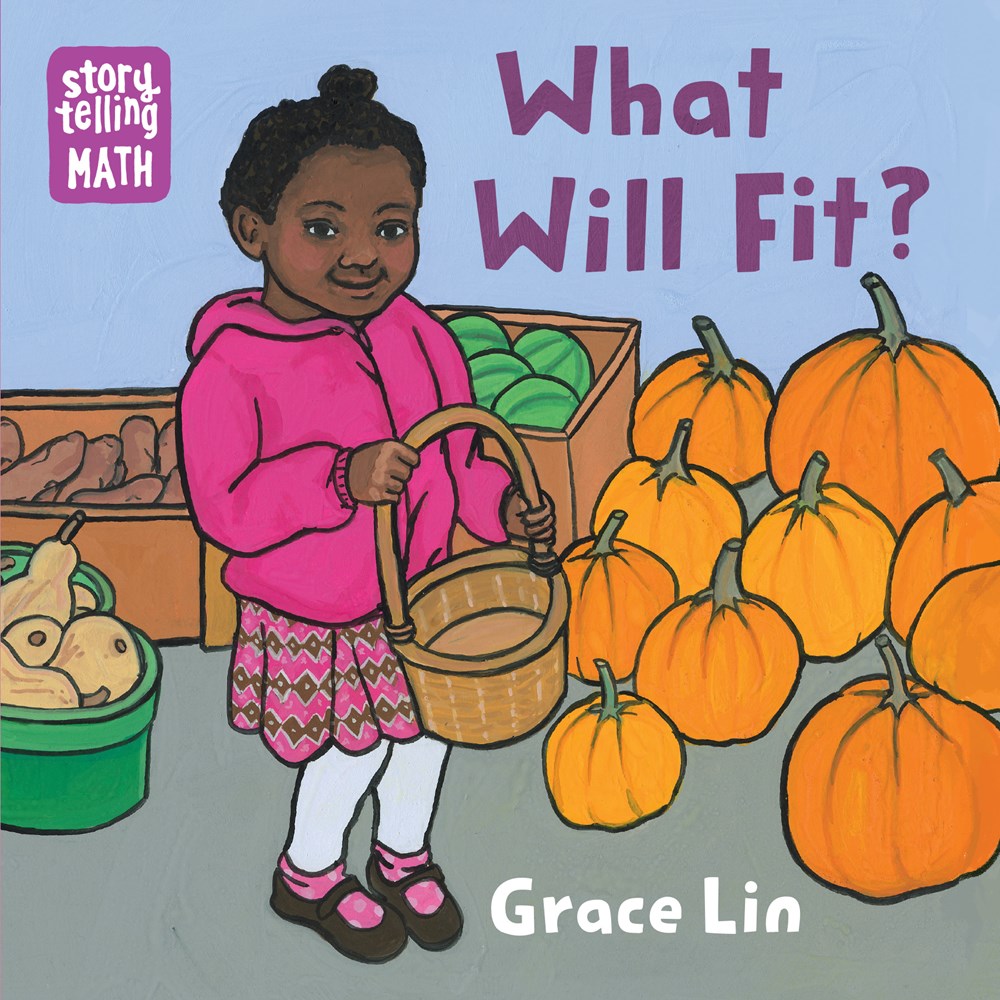 What Will Fit?, by Grace Lin, (Oct. 2020, Charlesbridge), $6.99, ISBN: 9781623541255
Ages 0-3
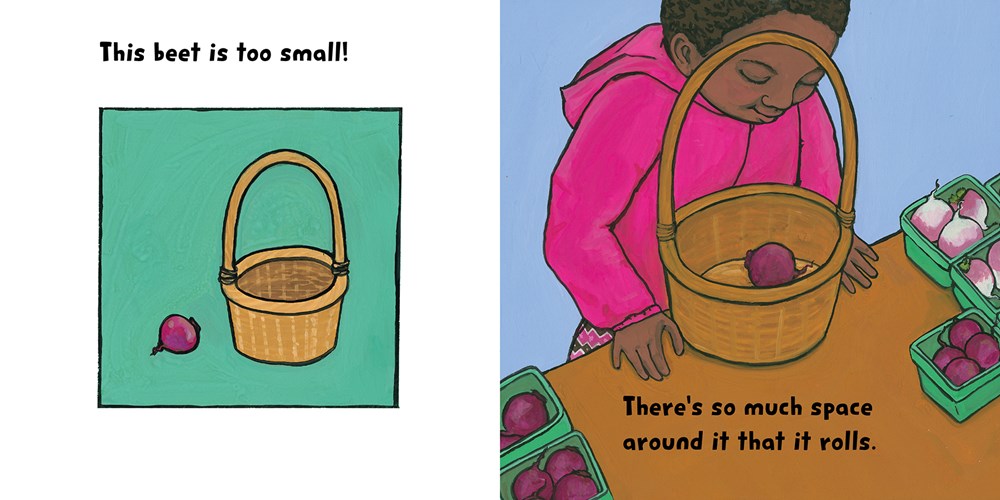
Olivia, a little girl, heads to a farmer’s market, ready to fill her basket with good food. What will fit? The beet just rolls around, but the zucchini is too long, and just sticks out. How will Olivia find the best fit and bring home some healthy food? What Will Fit? is all about spatial relations. A section called Exploring the Math explains the math – in this case, spatial sense and how things fit – in the context of the story. A Try This! section offers easy activities that parents and caregivers can incorporate lessons into a child’s day. Exploring Math and Try This are written by Douglas Clements, Kennedy Endowed Chair and Professor at the University of Denver and executive director of the Marsico Institute for Early Learning and Literacy.
Grace Lin’s artwork is always so colorful and fun. Setting What Will Fit? in a farmer’s market allows her to let her character, a young girl of color, wander through a colorful setting, with delicious foods that kids can identify, count, and name shapes and colors.
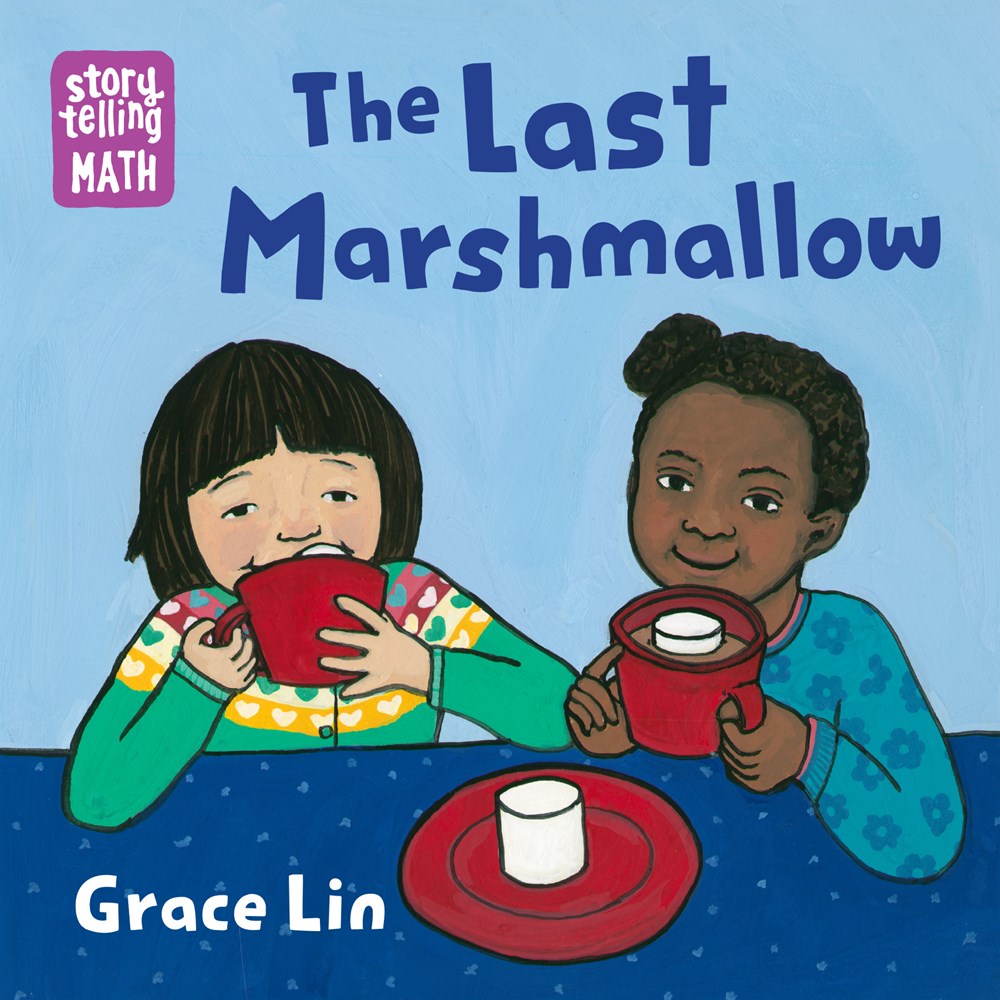 The Last Marshmallow, by Grace Lin, (Oct. 2020, Charlesbridge), $6.99, ISBN: 9781623541262
Ages 0-3
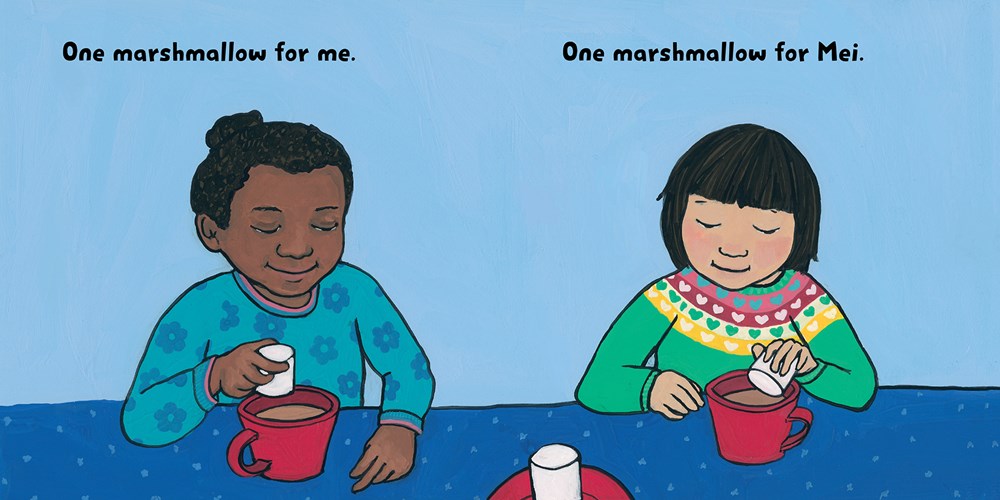
It’s a cold day out, and Olivia and Mei warm up with some hot chocolate. There are two friends, and three marshmallows: who will get the last marshmallow? All about division and fractions, The Last Marshmallow is also about sharing and friendship. Exploring the Math explains how sharing leads to a real-world understanding of fractions and division, and Try This! suggests having kids figure out how to share food in different increments in a way that’s fair to everyone.
The artwork is cheerful and focuses mainly on Olivia and Mei, with two yummy cups of hot cocoa, and three plump marshmallows to split between them.
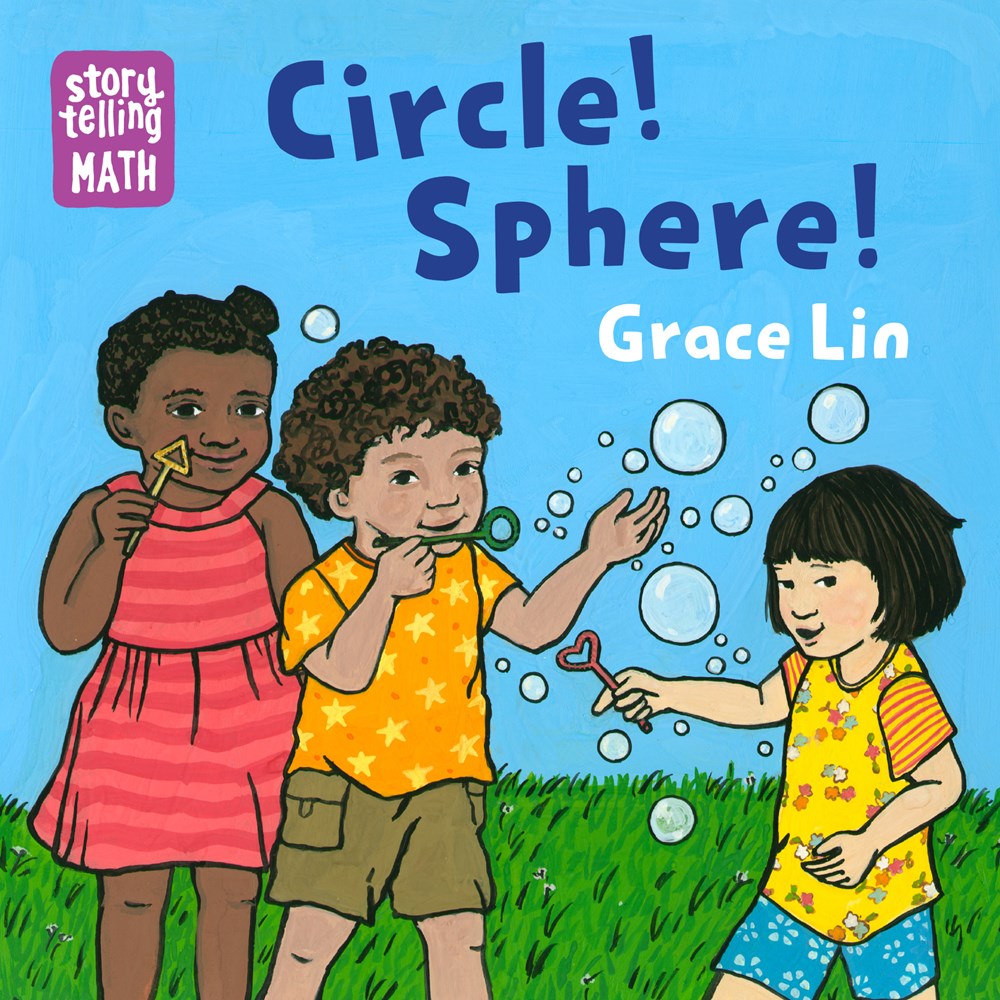 Circle! Sphere!, by Grace Lin, (Oct. 2020, Charlesbridge), $6.99, ISBN: 9781623541248
Ages 0-3
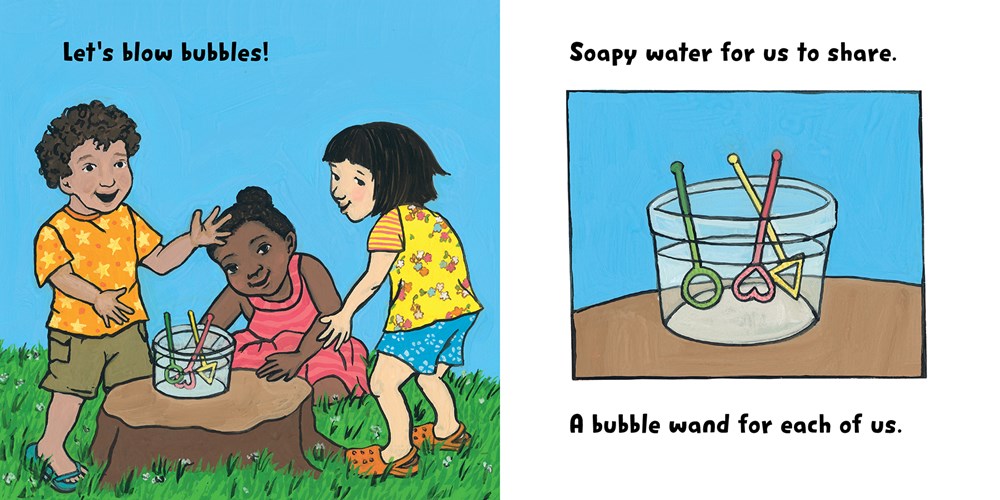
Manny, Mei, and Olivia are playing outside together and want to blow bubbles. There are three bubble wands; one for each friend. Each wand has a different shape, but they all blow spherical bubbles! Teaching children the foundation of geometry, Circle! Sphere! looks at shapes and 3-dimensional objects using a day outside, spent blowing bubbles with friends. Exploring the Math explains how the story helps build that mathematical foundation, and Try This! introduces new vocabulary words, including sphere, circle, and round, along with suggestions for encouraging children to think about shapes.
The artwork is cheery , depicting three friends playing outside on a warm day. Bubbles and wands offer the chance to go over shapes and colors with little learners.
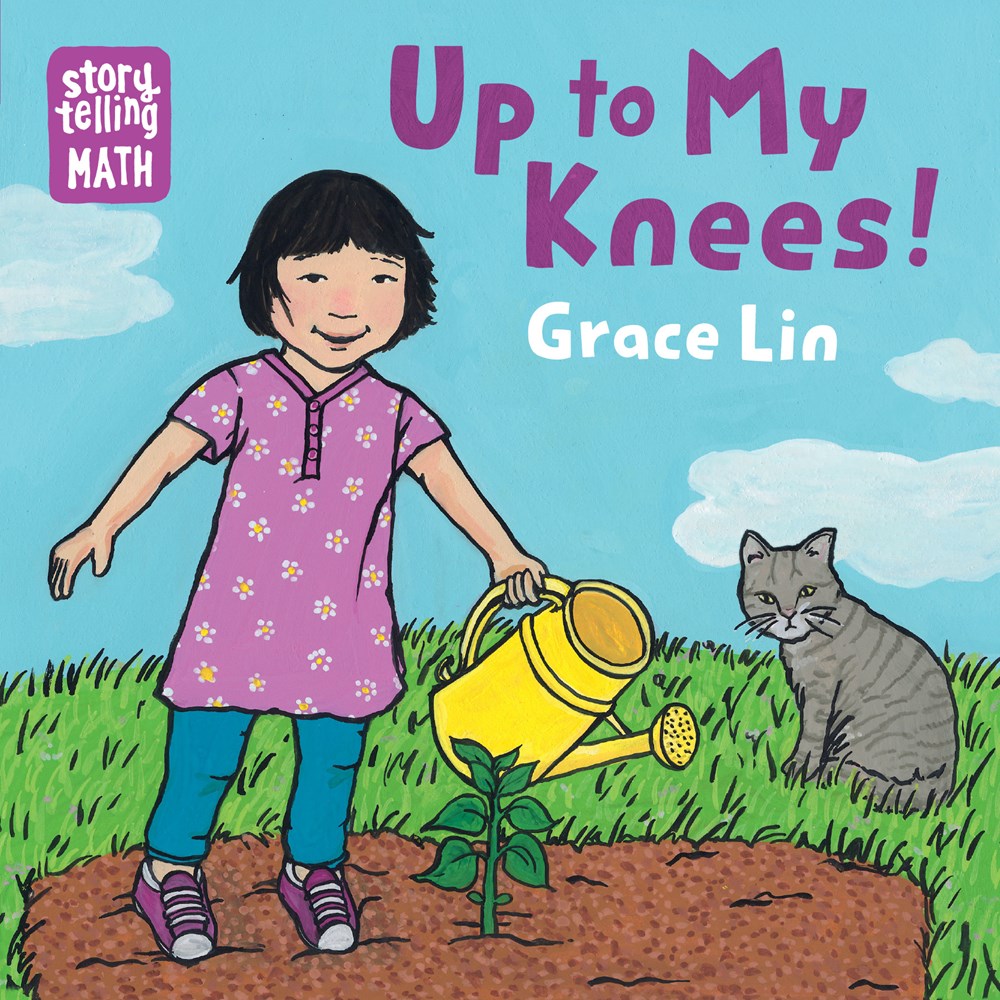 Up to My Knees!, by Grace Lin, (Oct. 2020, Charlesbridge), $6.99, ISBN: 9781623541231
Ages 0-3
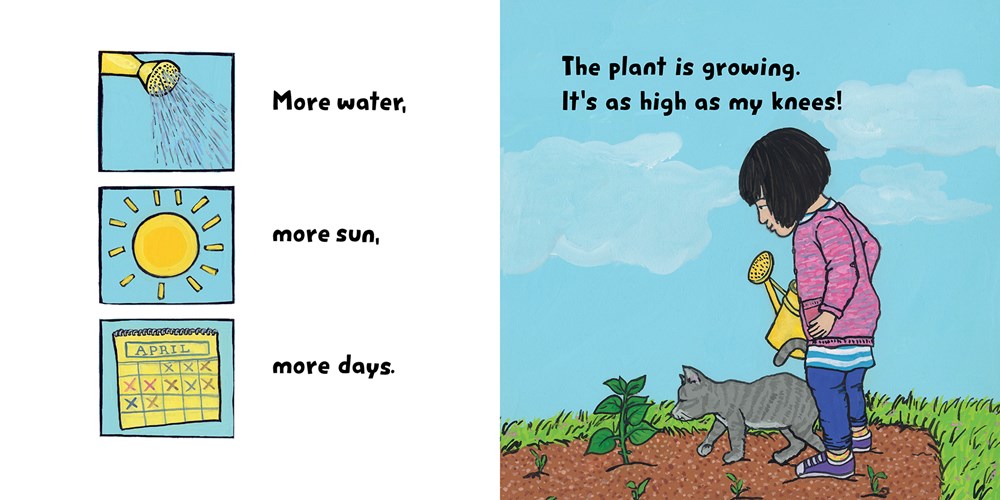
Mei celebrates the spring by gardening! She plants a seed and waits for it to grow. With water, sun, and time, the plant grows and grows: first it’s as tall as her toe; then, her knees; her shoulders, and finally, when summer arrives, the sunflower is in full bloom and taller than Mei! Up to My Knees introduces height and measurement in a story about plants, growing, and the seasons. Explore This explains how stories like Up to My Knees set the stage for understanding measurements and, eventually, using tools like yardsticks and rulers. Try This! encourages parents and caregivers to work with kids to measure things in their homes and environs, and introduces vocabulary words like longer and taller.
The artwork is cheery and bright: it’s spring and summer! Mei is out in the open air, gardening and growing a lush green plant that blooms into a bright sunflower.
Setting the stage for everyday math concepts, Grace Lin’s board book series features diverse characters and tells deeper stories of sharing and friendship. While Grace Lin’s website doesn’t have anything about the Storytelling Math books up yet, she does have some great resources available for parents, caregivers, and kids. The Storytelling Math website has author Q&A and videos; I’m hoping we get some educator and parent resources soon, too.
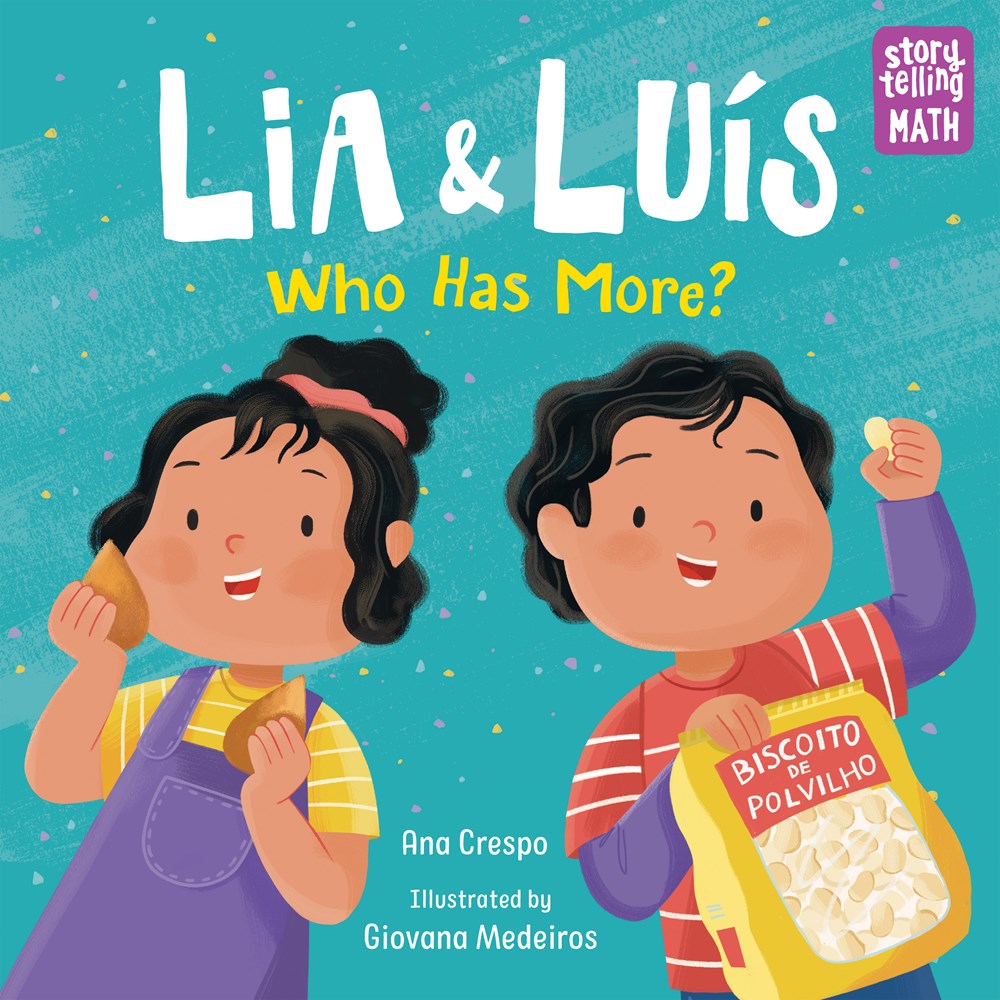 Lia and Luis: Who Has More?, by Ana Crespo/Illustrated by Giovana Medeiros, (Oct. 2020, Charlesbridge), $15.99, ISBN: 9781623541279
Ages 3-6
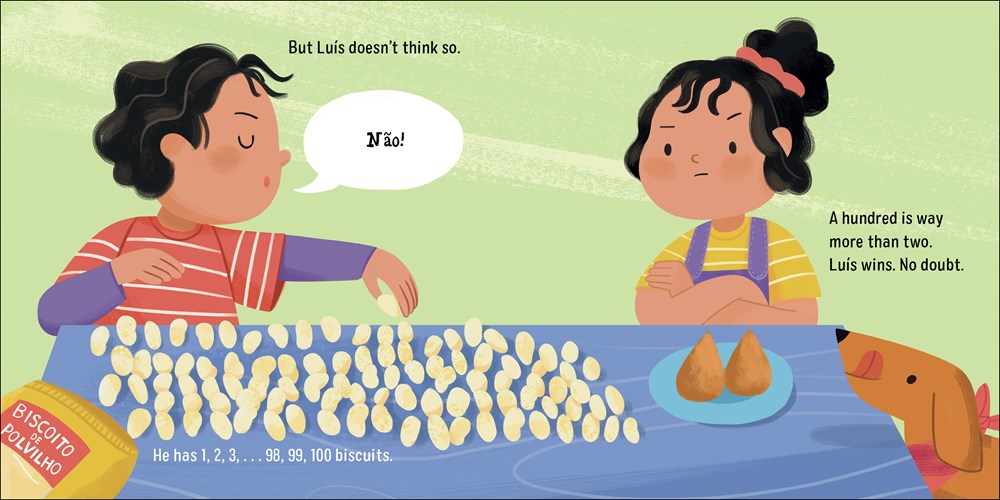
Twins Lia and Luis try to one-up one another when it comes to their favorite snacks. Lia’s got two chicken croquettes, and Luis has a bag of tapioca biscuits. So who has more? Depends on how you look at it: if you’re counting, a bag of chips has a lot more than just two; but if you weigh them, two chicken croquettes weigh more than a light bag of chips. So how do they even things out without anyone feeling bad?
The twins use the math concepts of comparing, measuring, and counting to work out who has “more”: depending on what you consider more, the answer is going to be different, as they learn. They learn that quantity and weight are two very, very different things! It’s an easy way to put learning into practice: the next time you go to a grocery store, show your kids how different packaging doesn’t necessarily mean there’s more of something; point out how the weight really makes the difference, especially when it comes to getting the best deal for your money. A Try This! section at the end of the story, by Sara Cordes, Ph.D., Associate Professor of Psychology at Boston College, offers practical ways to help kids put this story into practice.
This is a fun story made even more fun by the fact that Lia and Luis speak Portuguese! The narrative text of the story is in English, and Lia and Luis, who are Brazilian, speak Portuguese to one another. A glossary of phrases is there for readers (but they’re largely understandable in context). Friendly characters, warm colors, and an exciting new language lesson make learning math even more enjoyable!
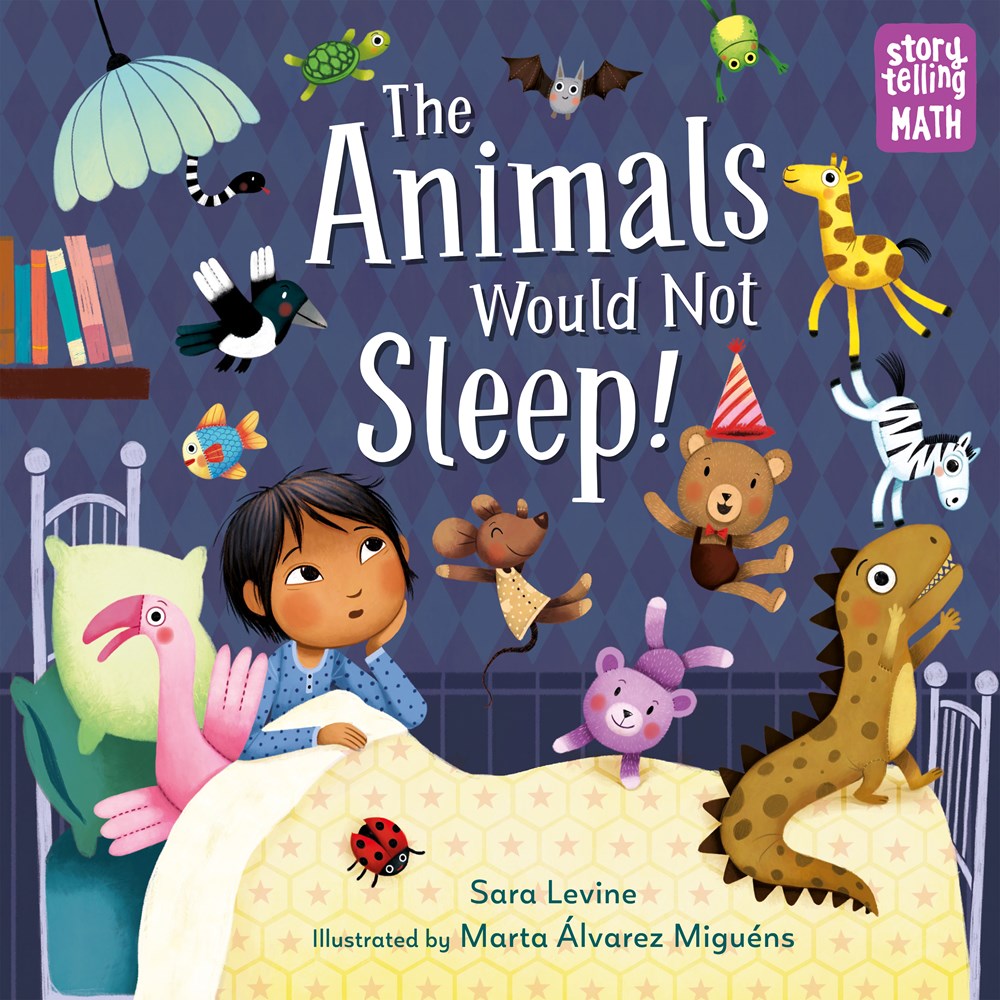 The Animals Would Not Sleep, by Sara Levine/Illustrated by Marta Alvarez Miguens, (Oct. 2020, Charlesbridge), $15.99, ISBN: 9781623541286
Ages 3-6
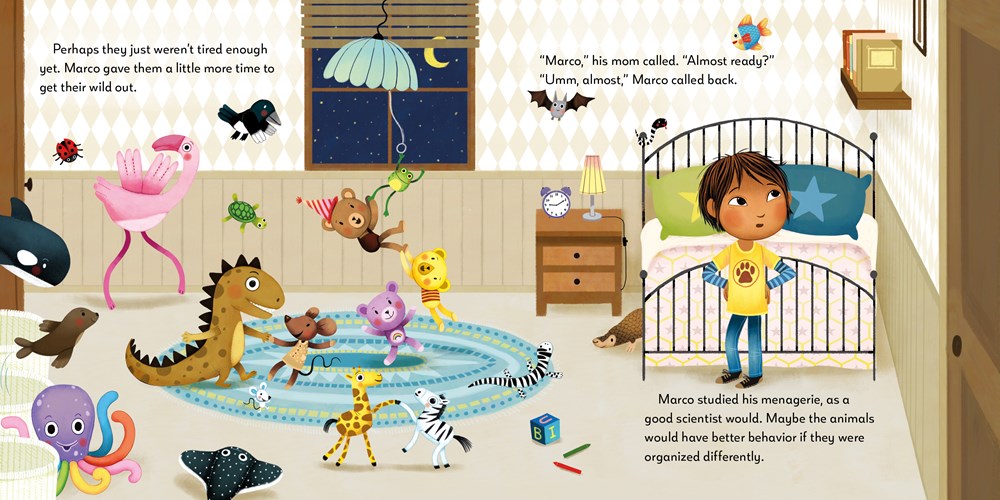
Marco has to get ready for bed, but his stuffed animals are causing a ruckus! He tries to sort them into bins to get ready for bed, but they aren’t happy! He attemps different classifications to sort by – he IS a scientist, after all! – and finally arrives at an arrangement that works well for everyone. Incredibly relatable – my Kiddo loved this, because it mirrors has bedtime arrangement – and sweetly affectionate, The Animals Would Not Sleep is a good bedtime story, but it’s also a great way to start talking about the concepts of classification, sorting, and characteristics. Each time Marco classifies and sorts his animals, he’s spot on – some are flying animals, some move on land, some swim – but they complain. He changes them up according to size, and then color, but someone is always feeling left out. His last arrangement takes everyone’s feelings into consideration and leads to a good night’s sleep.
Back matter talks about sorting in science, and a sections on Exploring the Math and Try This! by Karen Economopoulos, Co-Director of the Investigations Center for Curriculum and Professional Development at TERC, introduces ways to bring sorting and classifying into your homes. Encourage your kids to sort some of their toys or school supplies and explain what led them to their decisions. Encourage scientific thinking!
Most Storytelling Math books are available in both English and Spanish, which makes me very happy.
 Mom Read It