Posted in Fiction, Graphic Novels, Middle Grade, Science Fiction, Tween Reads

Sanity & Tallulah are a STEAM Dream Team!

Sanity & Tallulah, by Molly Brooks, (Oct. 2018, Disney-Hyperion), $21.99, ISBN: 9781368008440

Ages 8-12

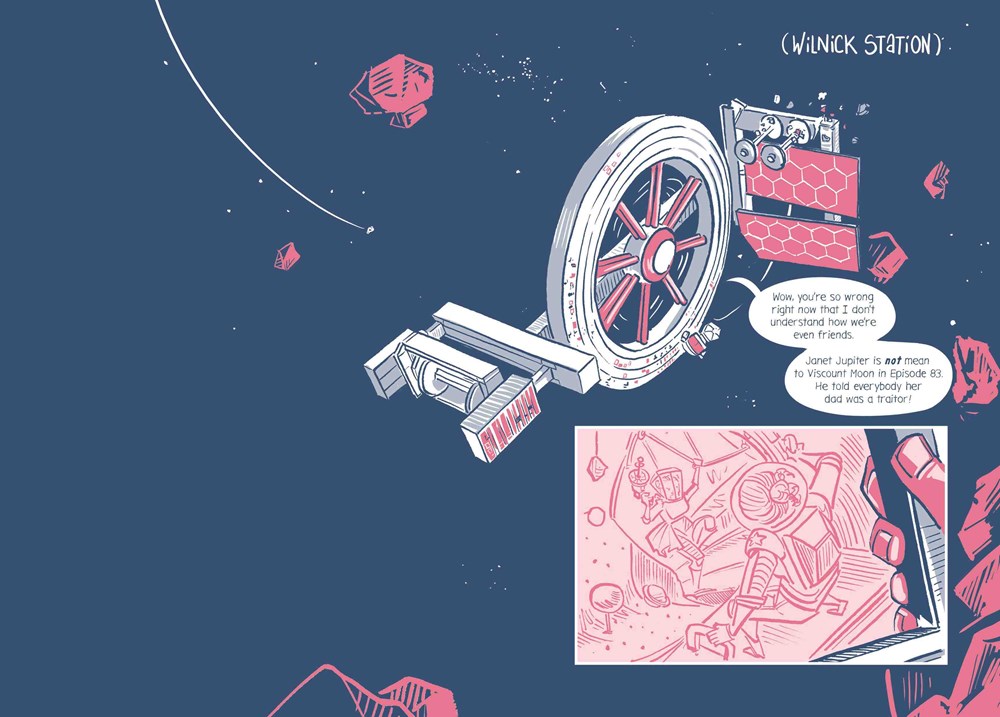
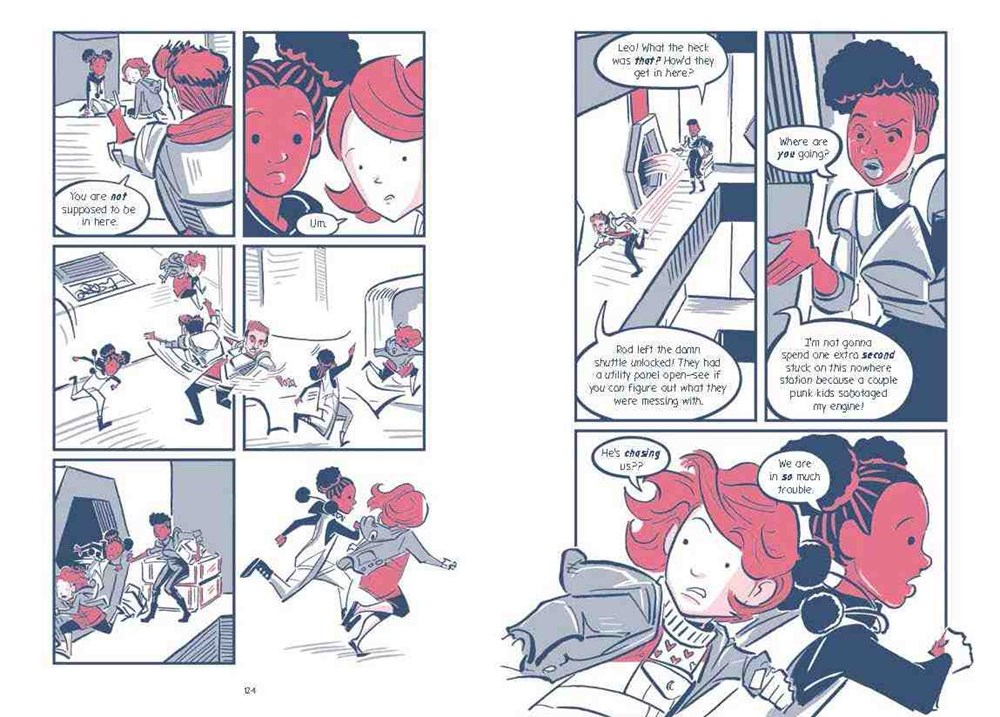
Life aboard a space station is never boring, especially when you have to cobble things together to keep things running. Sanity Jones, and her best friend, Tallulah Vega-Davisson, certainly know how to keep things interesting aboard Wilnick Station: their latest experiment is Sanity’s project; a three-headed kitten named Princess Sparkle Destroyer of Worlds (one name for each head, naturally!). Princess Sparkle is discovered, but the kitten escapes into the duct system. As the girls go on the search for their pet, before she can get hurt or caught, Dr. Vega, the station’s senior scientist and Tallulah’s mom, has bigger problems on her hands: Wilnick Station is experiencing some big-time glitches that could put the station at risk. While some of the crew point their fingers at Princess Sparkle Destroyer of Worlds, Sanity and Tallulah find evidence of something else in those ducts. They’ve got to solve the mystery and save their kitten, and they may just have to rescue the whole space station!

This is such a positive, fun read. The cast is diverse, with our two heroines coming from African-American and biracial (Latinx-white) families of prominence: Sanity’s dad is Wilnick’s station director, Tallulah is the daughter of the senior scientist. Her white dad rocks a man bun, prosthetic leg, and context clues allude to his being a celebrity heartthrob at some point in the past. There’s humor and technospeak that kids will love. The three-color white, purple, and pink artwork has bold lines and gives a real feel for the sheer size and scope of a space station.  Molly Brooks gives readers a vision of a diverse future where strong female characters are valued. A must-add to graphic novel collections – put this with your Zita the Spacegirl and Star Scouts books!

Sanity & Tallulah has starred reviews from Kirkus and Publisher’s Weekly.

Posted in Intermediate, Middle Grade, Non-Fiction, Non-fiction, Non-Fiction, picture books, Preschool Reads, Tween Reads

Space… The Final Frontier…

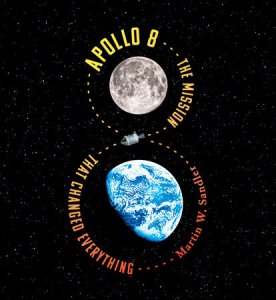
…these are the voyages of the starship Bibliomaniac. My continuing mission: to bring you the coolest books about space, while butchering a beloved TV show’s intro. This post has a books that should appeal to fiction and non-fiction lovers alike. Because it’s SPACE! Planets! Stars! Rocket ships! So whaddaya say? Join me! After all… Stardust Explores the Solar System (Stardust Science), by Bailey and Douglas Harris, (Apr. 2018, StoryBook Genius Publishing), $10.95, ISBN: 9781941434918 Ages 5-9 Stardust Science is a kids’ nonfiction series from a small-press publisher that I’ve just been turned onto. Bailey and Douglas Harris are a daughter-father team who write some pretty fun books starring a girl who loves science and is named named Stardust. Stardust Explores the Solar System is the second Stardust book, and here, Stardust takes readers on a tour of our solar system and its formation, and a trip to each planet. Spreads have a brief, informative paragraph and artwork placing Stardust on each planet, whether she’s driving an exploration craft across Venus or freezing atop Uranus. Extra fun facts focus on the possibility of extraterrestrial life, the Kuiper belt and dwarf planets, and the asteroid belt. Stardust Explores the Solar System was a successful 2017 Kickstarter (which is where I found the internal artwork for this post), and there’s a current Kickstarter for the next book, Stardust Explores Earth’s Wonders. You can pick up copies of My Name is Stardust and Stardust Explores the Solar System from the Stardust Science webpage. It’s a fun book, co-written by a 12-year old Neil DeGrasse Tyson fan, so how can you go wrong? It’s a nice additional book to big collections, and a sweet way to empower your younger readers. My 6-year-old loves this one and says he’s ready to write his own book.   The Universe Ate My Homework, by David Zeltser/Illustrated by Ayesha L. Rubio, (Aug. 2018, Carolrhoda Books), $17.99, ISBN: 978-1512417982 Ages 6-8 Abby’s a little girl who has homework to do, but UGH. She’d rather be stargazing with her dog, Cosmo, or talking to her physicist dad. He’s been thinking about universes, and how to make a baby universe, which gets Abby thinking. She sneaks into her dad’s study and works on making her own black holeout of the dreaded homework! It takes a lot of squeezing and a lot of energy, but Abby and Cosmo have done it! But what happens when a black hole’s gravity kicks in? HELP! This is an absolute fun way to explain the science of black holes to kiddos. What better way to get rid of your homework than by turning it into an actual science experiment? Kids will be squeezing the daylights out of their looseleaf for weeks to come, waiting for their own wee Big Bang. The artwork is too much fun, with something to see in every spread: the John Coltrane album and record player in the family living room; Dad’s study is loaded with things to see, including a framed picture of Marie Curie, family photo, Abby’s family drawing, and a postcard depicting a scene from  Georges Méliès’s 1902 A Trip to the Moon. The mini galaxy Abby creates unfolds for readers, starting first with swirls and stars, then with planets. It’s a fun book that makes for a great storytime, and a teacher’s note to Abby (you didn’t forget about the homework, did you?) at the story’s end will leave kids and adults alike laughing out loud. An author’s note gives a little more information about black holes and baby universes. Add this one to your collections and get your little ones contemplating astrophysics! Apollo 8: The Mission That Changed Everything, by Martin W. Sandler, (Oct. 2018, Candlewick), $24.99, ISBN: 978-0-7636-9489-0 Ages 10+ It was 1968, and the U.S. was about to make a huge gamble. America was deep into the Cold War with the USSR, and the country was fraying at the seams after the assassinations of Martin Luther King Jr. and Robert F. Kennedy; it was a country where the civil rights movement and the Vietnam War caused violent clashes. We needed something to unite us. Russia had already launched the first man-made satellite to orbit Earth, Sputnik I – in 1957, but now, they were getting ready to go to the moon. America was determined to get there first. But first, we had to get into space. Apollo 8: The Mission That Changed Everything is a brilliantly written chronicle of NASA’s mission to put a craft into orbit around the earth. Loaded with black and white and color archival photos and written by one of the most well-known names in children’s and young adult nonfiction, this is a must-have for your middle grade and middle school collections. With the 50th anniversary celebration of the Apollo 8 mission falling in December of this year, this is going to be an in-demand title in classrooms and libraries. Martin W. Sandler is an award-winning writer – a two-time Pulitzer nominee, five-time Emmy winner, and Boston Globe-Horn Book Honor winner – who makes nonfiction read as compulsively as solid fiction; There are extensive source notes and a bibliography for further reading and research.
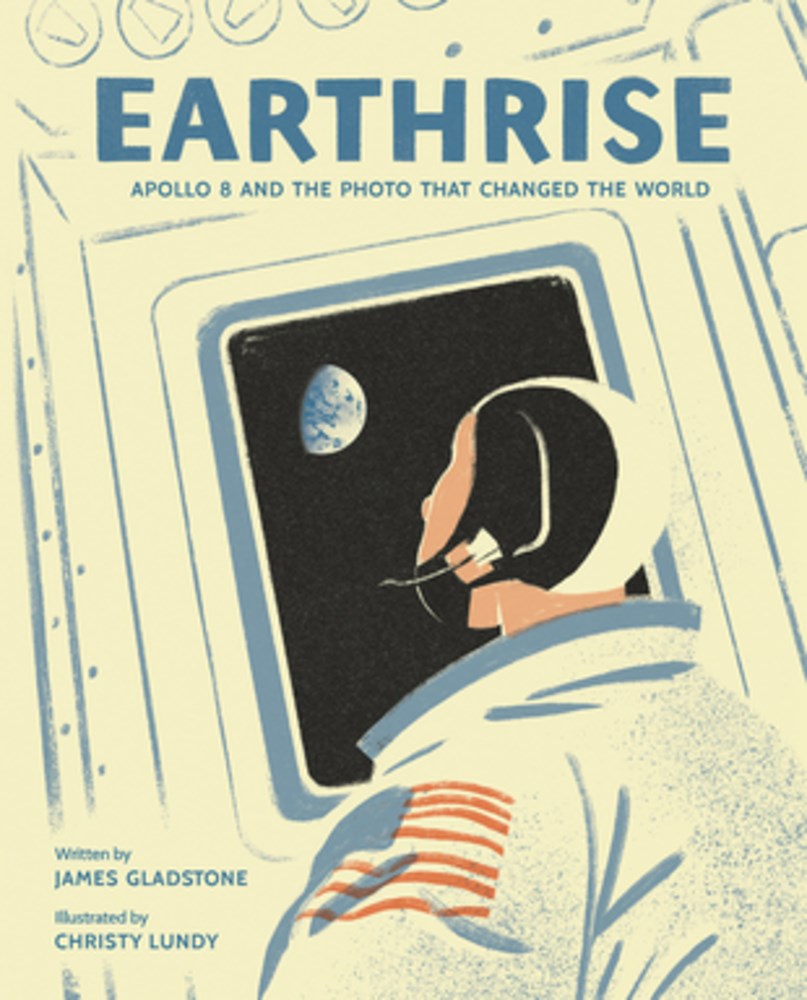
Earthrise: Apollo 8 and the Photo That Changed the World, by James Gladstone/Illustrated by Christy Lundy, (Oct. 2018, OwlKids Books), $16.95, ISBN: 9781771473163
Ages 4-8
This is the year for Apollo 8 books! Earthrise is a gorgeous picture book that tells that story of Earthrise, the history-making photo of Earth, taken from lunar orbit, taken by astronaut Bill Anders. The story shows readers how this single photo took us from a planet full of conflict to a global community – if only for a moment. We see the story from shifting perspectives: the crowds gathered in anticipation, the men in Mission Control, and an African-American family, with a little girl who dreams of being an astronaut one day.
The text is just beautiful. James Gladstone creates a mood of wonder as he writes lines like, “Now the craft was coasting on a human dream, speeding the crew off to another world”, and “The astronauts saw the whole turning Earth – no countries, no borders – floating in the vastness of space”. Back matter includes a piece on how the Earthrise photo changed the world, and an invitation to readers to share what Earthrise means to them. It’s the perfect program in a book! Show the original Apollo 8 launch broadcast, this NASA Apollo 8 documentary, and/or the broadcast Apollo 8 Christmas Eve message and ask kids to talk about what seeing the Earthrise makes them feel, 50 years later. Paired with Christy Lundy’s vintage-inspired artwork, Earthrise is a necessity in your nonfiction collections. Earthrise has a starred review from Kirkus.
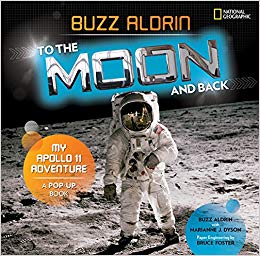
To the Moon and Back, by Buzz Aldrin with Marianne J. Dyson/Paper engineering by Bruce Foster, (Oct. 2018, National Geographic), $32, ISBN: 978-1-4263-3249-4
Ages 6+
How much fun is a pop-up book about SPACE? With ROCKETS?! Buzz Aldrin, Marianne J. Dyson, and Bruce Foster take readers on a trip through “humanity’s greatest adventure”. Learn Buzz Aldrin’s nickname on the mission; read about the launch and landing; souvenirs left on the lunar surface, and the astronauts’ return, all accompanied by amazing paper engineering: pop-up rockets, fold-out lunar landings, and side flaps that offer even greater information – and a few laughs. If you’re getting this for a library or classroom collection, put it in reference; it will get beaten up pretty quickly. The book also comes with a paper Apollo 11 lunar module kids can engineer on their own. (We haven’t built that one yet.) Want to make a space fan happy? Put this on your holiday and special occasion shopping lists. Read more about the 1969 Moon Landing on NatGeo’s webpage.
Whew! Okay, that’s all I’ve got for now, go forth and explore!
Posted in Middle Grade, Non-fiction, Teen, Tween Reads

To Explore Strange New Worlds…

Pop quiz! We know that outer space is still largely unexplored, but did you know that we’ve explored less than five percent of the world’s oceans? There are some great new books on space and sea exploration for middle graders to dive into (see what I did there?). Read on!

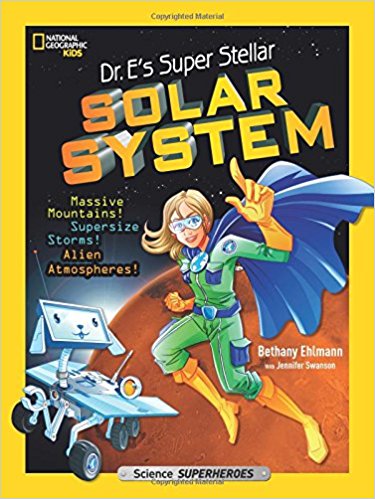
Dr. E’s Super Stellar Solar System, by Bethany Ehlmann with Jennifer Swanson, (Jan. 2018, National Geographic Kids), $12.99, ISBN: 978-1-4263-2798-8

Recommended for readers 8-12

Planetary geologist Dr. E (Bethany Ehlmann) and her sidekick, Rover, take readers on a trip around the universe, filled with activities, photos, facts, and comics. Readers will learn about space exploration and how our big blue dot fits in with our cosmic neighbors: who else has volcanoes and sand dunes; how plate tectonics work; how craters are formed. There’s information about robots and rovers; space exploration and technology; and how learning about space helps us learn more about Earth. Each chapter begins with a 2-page comic spread, following Dr. E and Rover on an adventure related to chapter material. There are scientist profiles throughout the book, thought-provoking questions to generate discussion, and incredible photos. A glossary, list of book and web resources, and index makes this a solid book to have in space collections and a fun gift for kids who love science.


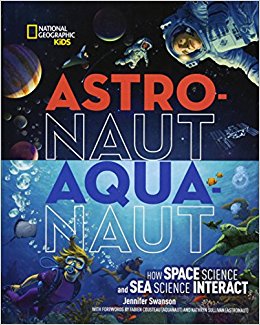
Astronaut-Aquanaut: How Space Science and Sea Science Interact, by Jennifer Swanson, (Jan. 2018, National Geographic Kids), $18.99, ISBN: 978-1-4263-2867-1

Recommended for readers 8-12

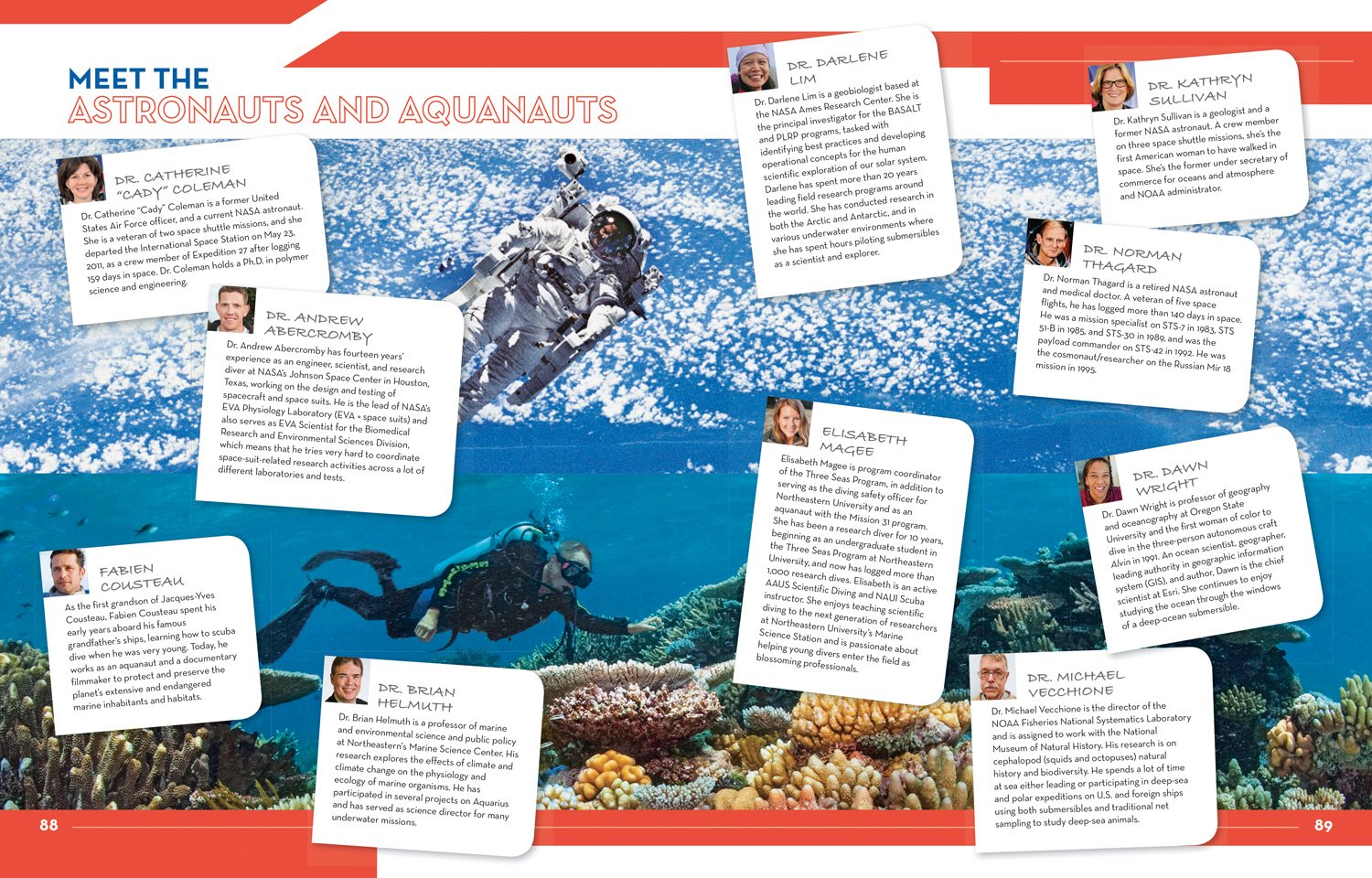
What do space and the ocean exploration have in common? SO much. There’s a reason we’re still trying to figure out how to explore both. Extreme pressure, temperatures and climates are all considerations scientists have to make when planning missions up above or far below. Author Jennifer Swanson (she’s co-author on Dr. E’s book, above!) gets a new generation of explorers ready for action with discussions about buoyancy and gravity; the shapes used in space and sea exploration (shape counts!); creating livable habitats; similarities and differences in each form of travel, and more. There’s consideration given to preservation and conservation for both sea and space: we leave a lot of garbage behind, and we need to stop that. Explorer’s Notebook callouts give readers a quick run-down on different topics, like training for a trip and how to create successful living and working environments – ideas that readers can apply to their daily lives while getting ready to be explorers. Activities give readers hands-on opportunities to learn about concepts like docking the International Space Station. There are detailed illustrations and color photos throughout, astronaut and aquanaut profiles, fun facts, resources, a glossary, and an index. NatGeo never disappoints: I love how Jennifer Swanson brings these two areas of exploration together; maybe it will inspire kids to become both astronauts AND aquanauts!


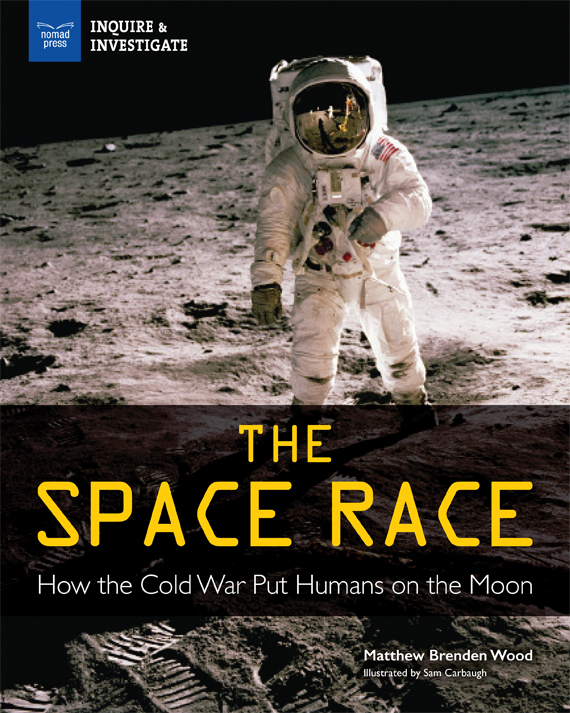
The Space Race: How the Cold War Put Humans on the Moon, by Matthew Brenden Wood/Illustrated by Sam Carbaugh, (May 2018, Nomad Press), $17.95, ISBN: 978-1-61930-663-9

Recommended for readers 12-15

The Cold War between the U.S. and Soviet Union led to a race for dominance, and space was best place to push for that dominance. Matthew Brenden’s book, The Space Race, is an interactive chronicle of this pivotal point in history. Beginning with a timeline to give readers background, Brenden takes us from the 1917 Russian Revolution, through World War II (when Russia was our ally) and the Cold War, to July 20, 1969: the date Neil Armstrong and Buzz Aldrin became the first people to walk on the moon.

A  comic strip running throughout the book illustrates and encapsulates the big ideas in the book, adding a little mental break for readers. There are loads of callout boxes, enhanced with QR codes that lead to historical reference and further learning; some topics include McCarthyism, duck-and-cover nuclear war drills, and the first anniversary of the Berlin Wall. Blast Fact callout boxes provide quick facts, and Inquire and Investigate sections provide rich inspiration for projects and research. Questions throughout the text challenge readers to think deeper about the material and would provide a great jumping-off point for book group or class discussions, and Vocab Lab sections offer new words to learn, all defined in the glossary at the end of the book. There are black-and-white and color photos throughout, providing a strong connection to history. Thankfully, there’s a metric conversion table, since science is metric and I’m not; there are additional resources, source notes, and an index.

I love Nomad Press’ books; there are so many entry points for students in each book. This one is a valuable reference for Science or History: in fact, The Space Race is one in a set of four Nomad books exploring great events of the 20th Century (others include Globalization: Why We Care About Faraway Events; The Vietnam War; and World War II: From the Rise of the Nazi Party to the Dropping of the Atomic Bomb).

The Space Race skews slightly older than the NatGeo books above: Nomad recommends this one for ages 12-15, but I think it can go a year or two younger, especially in my children’s room, where it will see more circ than in our teen section. Your library’s mileage, and your kids’ reading interests may vary. It’s a Guided Reading level Z, which can go as young as 9; I’d suggest at least 10 or 11.


Posted in Middle Grade, Non-Fiction, Non-fiction, Tween Reads

NatGeo Kids sends kids back to school ready for everything!

I am an unabashed fan of NatGeo for my nonfiction sections. They have books on EVERYTHING, and the kids love it. They also make every single thing they cover amazing, hilarious, or both, which makes my life a lot easier when I have kids trudging into my children’s room, moaning that they have to read more nonfiction. Excuse me, do you see the GIANT WATER FAUCET on the cover of this book? Guess what? Nonfiction. Suddenly, they’re a lot more amenable to what I have to offer.

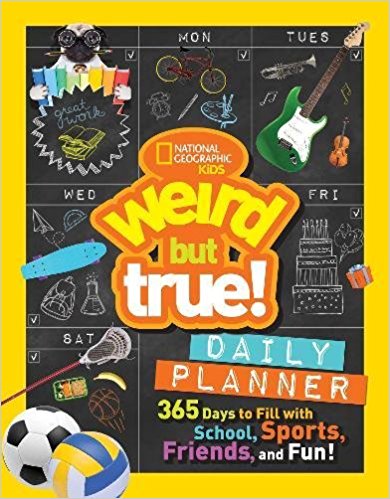
Let’s start with the backpack essential: The Weird But True Planner ($12.99, ISBN: 978-1426327933). The Weird But True books come in second only to the NatGeo Kids joke books when it comes to demand in my children’s room. It’s got the planner essentials: it’s spiral bound and sturdy, so kids can use it and it will hold up. It’s got paper that won’t tear when you turn a page. You know that paper; it’s usually the one that flies away and has the details of your homework on it. The space is smartly laid out, with NatGeo’s trademark gorgeous photos sharing space with planning and goal pages that help your kids keep it together during the school year. And because it’s NatGeo, it’s got the fun, weird holidays, crazy facts, pages for scribbling areas where you need homework help, little writing prompts, and an overall fun vibe that demands you embrace your weirdness. I have a copy that I desperately want to keep for my own library notes, programs, and scheduling the lives of my weird family; now, the key is making sure the kids don’t take mine off my desk at work OR at home.

Let’s be clear: this is not a library book; it’s a book meant to be written in, used, and yeah, even a little abused. But it IS an essential buy.

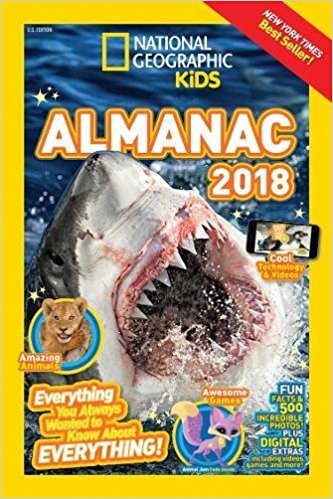
Next up is the NatGeo Kids 2018 Almanac ($14.99, ISBN: 978-1-4263-2772-8). Updated for 2018, this is another go-to for my library kids. There are 12 sections – up from last year’s 10 – and cover current events, life science, engineering and technology, space and earth, and more. The fun and games section is still here, and the overall fun spirit of discovery runs through the book. A spread in life science tells readers “18 Fantastic Facts About Fungi”, with facts about cheese mold, to mushrooms, to athlete’s foot (it’s just a photo of a bare foot). Feel bad for the Ugly Food, but rejoice in reading how being ugly doesn’t mean being garbage – make banana bread with those brown bananas (that’s when they’re the best), or make a smoothie using that bruised peach. A companion page on the time it takes different types of trash to decompose is a powerful call to action for recycling and re-purposing our trash. Homework help tips, quizzes, jokes, fun facts, and breathtaking photos make this Almanac a keeper.
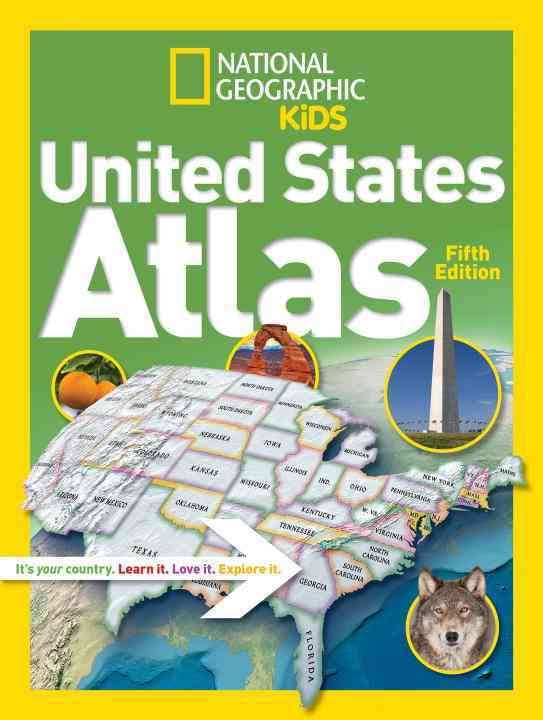
Atlases are always handy to have around, especially with increased importance on understanding global affairs and cultures. The United States Atlas (Fifth Edition, $12.99, ISBN: 978-1-4263-2831-2) gives readers a literal lay of the land, with political and physical maps by territory: Northeast, Southeast, Midwest, Southwest, and West. There are maps and statistics for each state within the territories; economy symbols to illustrate local economies like crops and industries. Photos and infographics round out each state’s profile. The atlas also includes U.S. territories, a glossary, postal abbreviations, and additional web resources.
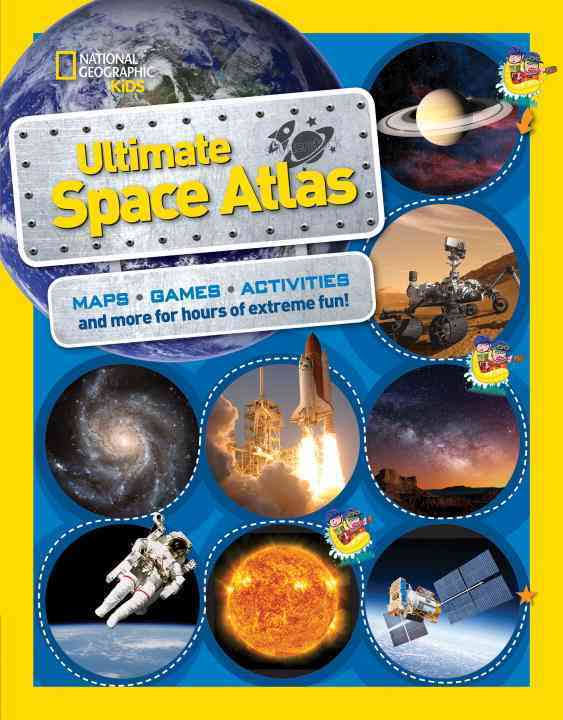
The Ultimate Space Atlas ($12.99, ISBN: 978-1-4263-2802-2) is a handy guide to what’s “up there”: phases of the moon, seasonal constellation maps for each hemisphere, what’s new in space exploration. “Digital Traveler” boxes help readers expand their learning by using going online. There are fun facts, amazing photos, diagrams, and Space Travel Attractions to visit… you know, from here. Earth. There’s a section with some fun activities at the end, and a glossary and index complete this handy astronomy desk reference. Both atlases will be helfpul during the school year, so load up your bookshelves if you’re in a library, or consider these when you’re buying school supplies.
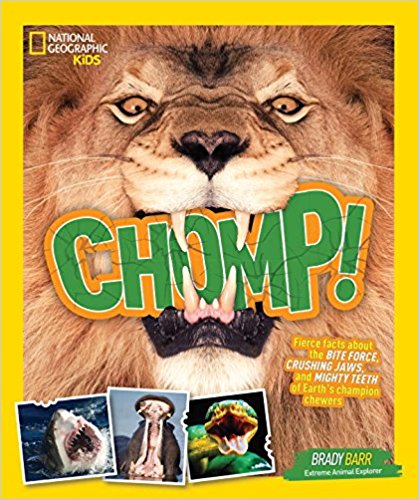
CHOMP!: Fierce Facts About the Bite Force, Crushing Jaws, and Mighty Teeth of Earth’s Champion Chewers ($12.99, ISBN: 978-1-4263-2839-8) has been on my shelves since this summer, and I see it wandering around the tables at the library (meaning, the kids are reading it while they’re in the library during the day) pretty regularly. Written by “Extreme Animal Explorer” Brady Barr, CHOMP! has a lot of pictures of a lot of big, mean teeth. The first page has a hippo, jaws open wide, greeting readers, and those choppers are intimidating! Barr organizes his chompers into four groups: the grippers, slicers, crushers, and gulpers; bite force and preferred menu for each animal profiled appear on each page. Barr jumps in with his own entertaining anecdotes, Brady’s Bite Stories, that will make kids squeal and cringe all at once; I’m thinking of reading the one about Barr squeezing a live otter out of a gator the next time I have a class visit. I like to be memorable. Further resources, a glossary and an index, make this a good companion guide for animal reports and fun reading for animal fans.
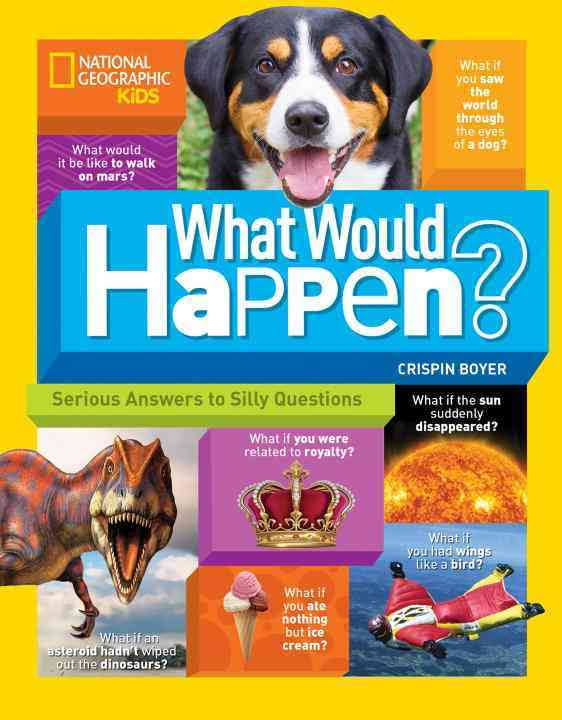
Last but never least, What Would Happen? Serious Answers to Silly Questions ($14.99, ISBN: 978-1-4263-2770-4) looks at the logic and science behind some wild, weird questions. Starting with questions like, “What if you ate nothing but ice cream?” (short answer: DON’T) and working their way up to “What if you could wield The Force?” (You may call me Lady Vader), questions are organized into areas covering humans, space, nature, time, technology, natural wonders, worst-case scenarios, and just plain surreal. Each question is examined by giving readers a background on the deeper question (ice cream tastes great, but without protein and fiber, you’re in for some problems); primary repercussions (those problems could include going to the bathroom, no matter how much you love butter pecan); side effects (you’ll get weak and possibly develop scurvy from lack of Vitamin C); and finally, could it happen (unless you’re putting chunks of chicken or tofu, plus some broccoli and tomato on that ice cream, probably not)? This is going to move right along with my Weird Facts books. Heck, I may just turn this one into a program – write your own What Would Happen? and let’s swap; research it and find out the answer. But I’m totally developing The Force.
Go forth and fill up backpacks, and have a great school year!
Posted in Intermediate, Middle Grade, Non-fiction, Non-Fiction

September Non-Fiction: Engineering, Nutrition, and the Planets

Engineered! Engineering Design at Work, by Shannon Hunt/Illustrated by James Gulliver Hancock, (Sept. 2017, Kids Can Press), $18.99, ISBN: 9781771385602

Recommended for readers 9-13

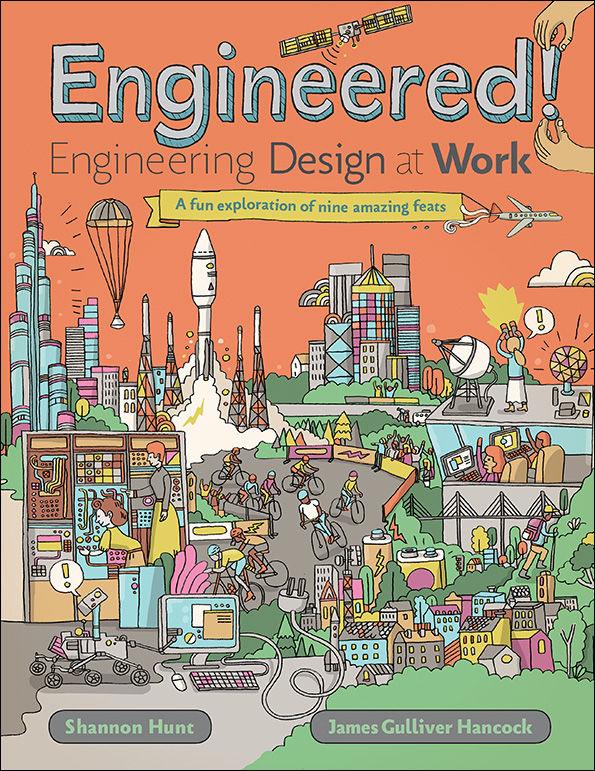
Nine engineering specialties -Aerospace Engineering, Biomedical Engineering, Chemical Engineering, Mechanical Engineering, Electrical Engineering, Civil Engineering, Geomatics Engineering, Computer Engineering, and Environmental Engineering – in this look at engineering design, which introduces readers to the step-by-step process by using eye-catching icons and nine case studies, one for each field. Team member bios that introduce kids to new scientists and what they do; new fields of engineering, like geomatics, are explained and illustrated, as are new technologies, like the incorporation of 3-D printing into biomedical engineering. Cartoony illustrations make the science more appealing to anyone who may think they can’t *do* science. Kids will learn that engineering can be found everywhere, from sending the rover to Mars, to saving animals from extinction, to replacing a sewer system to clear pollution from a lake. A glossary helps with new engineering terms readers come across.

Engineered! is a fun introduction to the basics of engineering and can be used equally in a science class, makerspace, or on career day.


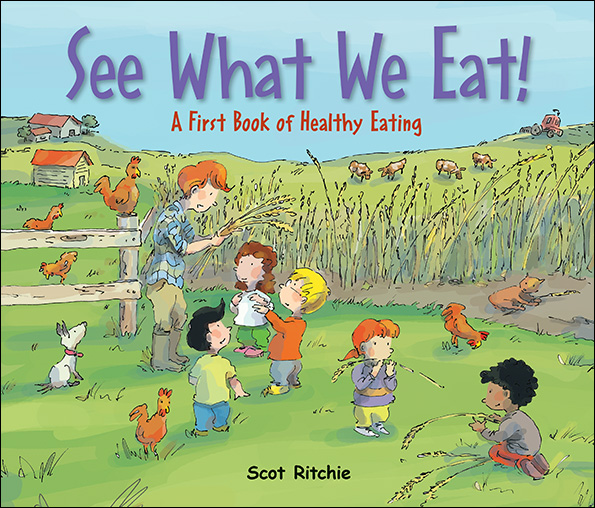
See What We Eat! A First Book of Healthy Eating, by Scot Ritchie, (Sept. 2017, Kids Can Press), $16.99, ISBN: 9781771386180

Recommended for readers 5-8

A group of friends takes a trip to a farm, run by one girl’s aunt. They’re there for pick apples and make an apple crisp for the potluck harvest dinner. Yulee’s aunt takes them on a tour of the farm, teaching the kids about growing grains and vegetables, getting enough nutrients, dairy, and protein – and addresses food allergies and alternative methods of getting those nutrients. Kids learn about transporting food to farmer’s market, stores, and all over the world. Ritchie addresses composting and recycling, and includes a tasty Harvest Apple Crisp recipe to try. A glossary helps readers with new words like pasteurize, carbohydrate, and nutrient.

The illustrations are soft, cartoony realistic, with a multicultural group of friends coming together to learn and eat. The room where the Harvest Celebration takes place has a line of hanging global flags as the families dine on pierogies, tamales, and apple crisp. With bolded facts and questions to encourage deeper thinking, this is a fun introduction for younger learners to nutrition and sustainability.


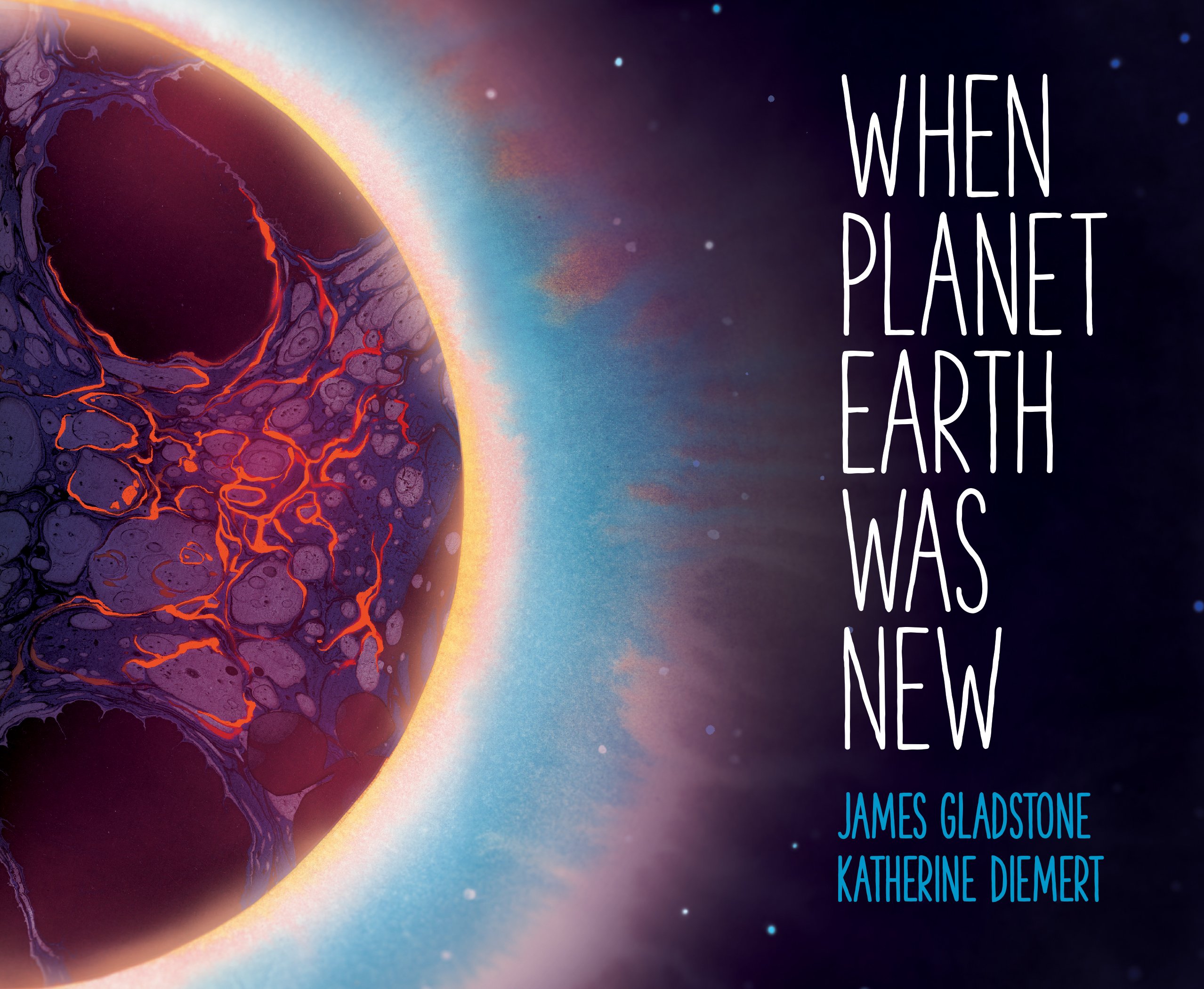
When Planet Earth Was New, by James Gladstone/Illustrated by Katherine Diemert, (Sept. 2017, OwlKids Books), $18.95, ISBN: 9781771472036
Recommended for readers 4-7
Take a trip through time and space and discover how our planet – and life on our planet – evolved. Beginning billions of years ago when Earth was forming, When Planet Earth Was New follows our planet’s formation through volcanoes and comet bombardment; through the formation of the oceans and evolution of life in the oceans and on the land. Beautiful, digitally-enhanced watercolor spreads showcase colorful artwork of each moment captured, with brief descriptive text that preschool and early elementary audiences will find breathtaking. A gorgeous spread showcases life on Earth today: a blue whale, birds flying overhead, and a marching line of animals, including a human being. A section at the end of the book presents each spread in thumbnail format, with additional explanatory text, and a glossary and list of sources round out this introduction to astronomy for young readers.
My 5 year-old loves this book; the spare text is just right for him and he’s fascinated with the changes our planet went through on its journey to the present. It’s a beautiful-looking book, and a great addition to elementary nonfiction collections. I can’t wait to display a copy in my library.


Posted in Adventure, Science Fiction, Teen, Young Adult/New Adult

The Kaitan Chronicles #1: Shadow Run

Shadow Run, by Michael Miller and AdriAnne Strickland, (March 2017, Delacorte Press), $17.99, ISBN: 9780399552533

Recommended for readers 13+

Nev is the newest crew member aboard the starship Kaitan Heritage, a ship that “fishes” for Shadow, a volatile energy harvested from space. The crew is a ragtag collection of misfits, and their captain, a teenage female named Qole, is the youngest ever to pilot her own ship – she’s hard as nails because she has to be. She’s from a desolate world where Shadow poisoning killed her family, except for her brother, Arjan, a member of her crew. Nev has his own secrets: he’s a prince from a world that wants to examine how Shadow binds to organic material, ostensibly to make the galaxy a better place – and help their own interests, naturally. But Nev has to get close to Qole first, before he can reveal who he is and convince her to come back to his homeworld with him.

Nev isn’t the only one who knows about Qole and her ability to channel the Shadow inside her, though. A rival royal family is onto them, and they’re not nearly as concerned with the greater good as Nev is. As Nev tries to win Qole’s trust, and the trust of everyone aboard the Kaitan, he must navigate the rough and tumble spacefaring world and the world of privilege he’s grown up; he may also learn that not everything on his home world is what it seems to be, and his own family’s intentions may not be as honorable as his are.

Shadow Run is the first book in the science fiction series, Kaitan Chronicles. There is a lot of solid world-building here, but the first half of the book just didn’t catch me. Once the story hit its stride, though, it was a solid pulse-pounder, loaded with diplomatic intrigue, betrayal, and action. The characters are well thought out; revelations happen throughout the course of the book, so it’s worth sticking with it.

Shadow Run‘s been compared to both Firefly and Dune. I see more Firefly than Dune; the rivalry between the royal families is the only facet tying it to Dune. This is more space opera/western, like Firefly, with a diverse crew of characters that have much more going on than meets the eye. I liked the chemistry between Qole and Nev, and I liked the relationships that each of the supporting characters had to Qole. Their reactions to Nev were honest, visceral, and I appreciated that; no “magic friendships” or melodrama popped up here and I respect the writers for it. There’s gender fluidity that truly brings this novel into the 21st century and beyond, too. Stick with Shadow Run: you’ll be happy you did.

Posted in Early Reader, Fiction, Graphic Novels, Preschool Reads

Start ’em off right: BLIP! from TOON Books

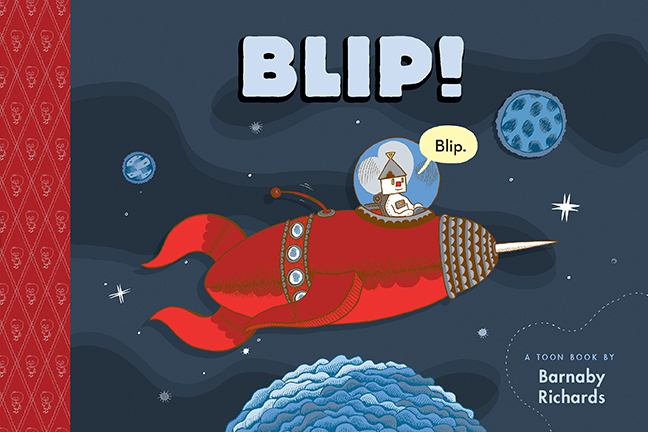
blipBLIP!, by Barnaby Richards, (Sept. 2016, TOON Books), $12.95, ISBN: 978-1-935179-98-6

Recommended for ages 2-5

A robot’s ship is separated from his friends and lands on a strange, new world. Now, his challenge is to find another being that speaks his language! He explores his surroundings and encounters things that roar and snap, but will anyone or anything speak “Blip” and “Bleep”?

This is one of TOON’s Level 1 graphic novels, so there are minimal words, one-two syllables; lots of sound effects, expressive faces and lush scenery, and clearly delineated panels to teach kids how things happen in a sequence. It’s a wonderful and fun way to introduce kids to graphic novels!

I recommend TOON Books all the time. I’ve talked them up when I’ve staffed booth at comic conventions, and I bring parents right to my graphic novels shelves here at my library. Level 1 books, like BLIP!, are a brilliant way to introduce sequential art to kids. They introduce fun, new words that they can associate with sounds their toys make, like blips and bleeps, bangs and snaps; they teach kids that events happen in a sequence, and you can introduce prediction by asking them what they see, and what they think will happen next.

I love the retro futuristic art in BLIP! – his ship looks like Flash Gordon’s spaceship! – and there’s an 8-bit inspired panel that makes my ’80s soul sing. My little guy gets a huge kick out of this one, and I can’t wait to share it with my storytime crew when I have my next Robot storytime. Ask kids what sounds their robots would make, and have a robot craft ready.

I’d add this to any burgeoning graphic novel collection, especially where you’ve got developing readers and English Language Learners. BLIP!‘s not due out until September, so keep your eye on their detail page on TOON’s website; there will be an educator’s guide closer to pub date.

blip_2

blip_3


Posted in Early Reader, Non-Fiction, Preschool Reads

Explore life On the Space Station!

on the space stationOn the Space Station: A Shine-A-Light Book, by Carron Brown/Ilustrated by Bee Johnson, (Jan. 2016, Kane Miller), $12.99, ISBN: 978-1-61067-411-9

Recommended for ages 4-8

Take readers on a trip to outer space, where they can discover what astronauts do in space: how they sleep and exercise, for starters; we also get a glimpse into some of the work astronauts do on board the space station: working robotics, making repairs, even calling home!

On the Space Station is one of the books in Kane Miller’s Shine-A-Light series, where see-through pages allow readers to shine a light – a flashlight, or simply holding the page up to a light source – behind the page to reveal a new piece of information about the picture! A great next step for little ones who love the excitement of lift-the-flap books but are ready for something more, Shine-A-Light books continue working with the concept of object permanence for younger readers while adding a new dimension of interactivity to older readers. The books ask a question on one page; the child is able to discover the answer for his or herself by illuminating the page. The highlighted image has an expanded explanation on the next page.

shine a light_2

shine a light_1

The contrast between black and white images on the left and color images on the right will keep readers’ attention; explanations are black and white, concrete; activity and exploration is in color, provoking the imagination. The artwork is wonderful and fluid, giving kids an idea of the weightlessness of space contained within the space of a page.

My 3 year old loved this concept, and yes, this book has entered the regular rotation, too. The language is great for young audiences; direct, with fun “flicks”, “swishes”, and “wheees!” to add some zing to the nonfiction text. This could make for a fun storytime book, too – I have to figure out how to smoothly shine the light onto the page without the book flopping down as I hold it up!

As I said regarding The River, I worry about this one in circ. The paper is a good quality stock, but I have visions of pages being yanked and torn as little hands hold them up to the light. I may buy a set to keep in storytime reference, because I love this concept and think the kids will, too. Classrooms and home collections will really benefit from these.

Kane Miller is knocking my socks off with the quality of material they’re putting out for kids now! I’m becoming an unabashed Kane Miller fangirl, with good reason. Stay tuned for more!


Posted in Intermediate, Middle Grade, Non-fiction, Non-Fiction

Launch a Rocket into Space – boost your math skills!

launch a rocket into spaceLaunch a Rocket Into Space (You Do the Math Series), by Hilary Koll & Steve Mills, (June 2015, QED Publishing), $17.95, ISBN: 9781609927295

Recommended for ages 8-12

Called “Math That’s Out of this World!”, this latest entry into QED’s You Do the Math series gets kids acting like rocket scientists – for real! The book takes kids all the way through the steps involved in a rocket launch – from astronaut selection to the return from space – and the math needed to complete each step. No nuclear physics here, just solid math skills designed to strengthen every student’s math familiarity. Astronaut Selection works on interpreting tables; Getting Ready for Launch reinforces comparing weights; Going Into Space looks at temperature and negative numbers.

All operations are attached to a particular area of mathematics, presents a scenario, asks questions (answers are included in the back of the book), and challenges readers to apply similar skills to their own lives. For instance, when looking at astronaut selection, kids are asked to compare their own heights against those of their friends; comparing weights in space asks kids to figure out their own weights when in orbit. The book also includes a timeline of key events in the history of rocket ships, a glossary, and an index.

This book isn’t meant to teach your kids math, but it’s a helpful book to have on hand to help them reinforce concepts they’re learning in school, and showing them the useful side of mathematics; because, you know every generation asks, “But what will I need to know this stuff for?” Well, now you know. So put on an episode of Big Bang Theory, pull out this book, and get your rocket scientist ready for MIT. (Psst… Math teachers… good ideas for extra credit abound!)

Posted in Intermediate, Middle Grade, Non-fiction, Non-Fiction

Discovering Mars: The Amazing Story of the Red Planet

mars

Discovering Mars: The Amazing Story of the Red Planet, by Melvin Berger and Mary Kay Carson (Aug. 2015, Scholastic), $5.99, ISBN: 9780545839600

Recommended for ages 7-11

This updated edition of Discovering Mars features a new cover and updated information and discoveries about the Red Planet. Recognized as an exemplar text by the Common Core State Standards, this latest version of the book includes the Mars Curiosity Rover’s mission and detection of organic compounds on the planet, leading to increased discussions about whether or not Mars had the ability to sustain life at one point.

Other topics covered include early theories about Mars, including the ancient Romans, who named the blood-red planet after the god of war and the vocabulary mixup between English and Italian that had some people thinking that the dark lines visible on the planet’s surface were man-made waterways!

We’ve also got a history of NASA’s Mars research and the future wish list for further research and discovery on the planet. I’m thrilled with this updated edition of Discovering Mars – make sure you keep a copy handy in your home or school library, and give your kids money for this one at the next Scholastic Book Fair.