Posted in Middle Grade, Non-Fiction, Non-fiction, Tween Reads

Space Books take readers to new heights

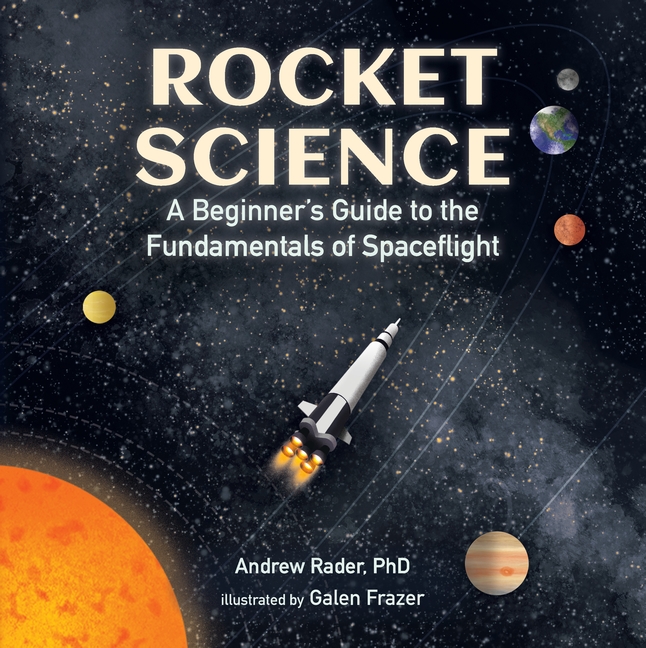
Rocket Science: A Beginner’s Guide to the Fundamentals of Spaceflight, by Andrew Rader, PhD./Illustrated by Galen Frazer, (Nov. 2020, Candlewick Press), $16.99, ISBN: 9781536207422

Ages 10-13

This beginner’s guide to spaceflight is concise, comprehensive, and illustrated in full-color. Andrew Rader is an actual rocket scientist and a SpaceX Mission Manager, and he makes space travel so tempting, you’ll want to get in touch with Elon Musk and secure your spots now. Readers will learn the basics to start: gravity, the solar system, and how we can push through gravity to reach the Moon. That leads in to a discussion on rockets: how they work, the staging series, and how to use rockets to communicate, navigate, and travel. There is information on interplanetary travel, possible life in the universe beyond our planet, and a word about the future of space exploration. Digital illustrations are colorful and detailed. A glossary and list of web resources are available. A spread on spacecraft and the solar system details some of the more well-known spacecraft, in relation to layout of the planets, like the Hubble, International Space Station, Curiosity, and Cassini. A nice intro to rocket science without throwing calculus into the mix, this is a great intro to whet younger readers’ appetitles for space travel.


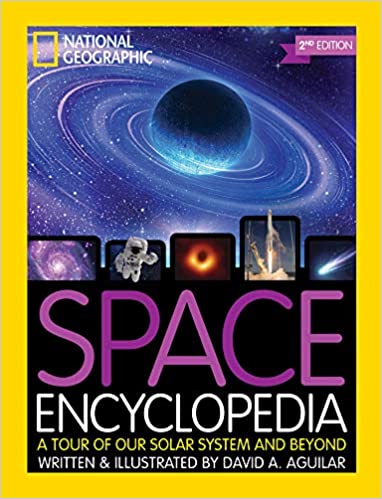
Space Encyclopedia: A Tour of Our Solar System and Beyond (2nd Edition), by David Aguilar & Patricia Daniels, (Nov. 2020, National Geographic Kids), $24.99, ISBN: 9781426338564

Ages 8-12

This is the updated version of the 2013 Space Encyclopedia, and there has been a lot to update! The 2020 version includes updated photos, facts, and profiles on the latest in space exploration, including the first ever image of a black hole, newly discovered dwarf planets, the possibility of life beyond Earth, and the formation of the universe. Profiles on icons in the field include Stephen Hawking, Einstein, and Galileo. It’s a beautiful desk reference, loaded with full color photos and artwork beyond the facts. My Kiddo used this as a reference tool for his report on space and he was beyond excited at how much he was able to use from this source.


Posted in Middle Grade, Non-Fiction, Non-fiction, Tween Reads

Holiday Goodies: Gift book shopping guide!

I hope everyone enjoyed their holiday break! If you celebrate Thanksgiving, I hope you had a wonderful and safe holiday. And now, the shopping season heats up, so let’s get another gift guide together. This one is all about the gift books, and remember: today is Small Business Saturday, so if you’re able to, please support a local business!


Anatomicum (Welcome to the Museum), by Jennifer Z. Paxton/Illustrated by Katy Wiedemann, (Sept. 2020, Big Picture Press), $35, ISBN: 9781536215069

Ages 8-13

The Welcome to the Museum series is a great nonfiction series that lets readers recreate a museum in their own homes. Every museum wing you can imagine has a book: Dinosaurs, Animals, History, and so many more; many of the books have companion workbooks. The latest book, Anatomicum, dives  into the inner workings of the human body: how our cardiovascular systems and respiratory systems work, how facial muscles contribute to facial expressions, the development of a baby in the reproductive system, and how our immune and lymphatic systems help fight disease are just a few areas readers will explore. Katy Wiedemann’s scientific drawings in 2-color sepia-tones are detailed and Jennifer Z. Paxton’s accompanying text provides factual explanations and overviews on each area. Think of this as a Grey’s Anatomy for younger readers; artists and budding biologists and medical professionals alike will love this.


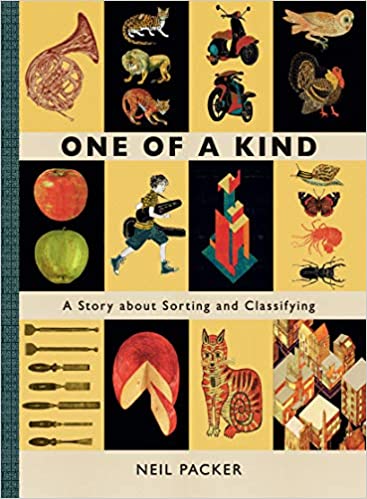
One of a Kind: A Story About Sorting and Counting, by Neil Packer, (Oct. 2020, Candlewick Studio), $22.99, ISBN: 9781536211214

Ages 7-10

A story wrapped within a book on classification, this is an excellent introduction to scientific classification and organization for kids. Readers meet a boy named Arvo, and get a look at his family tree. They meet his cat, Malcolm, and see his family tree, too. As Arvo moves through his day, readers discover how many ways there are to classify and organize information: as he learns to play the violin, we see where it fits into a grouping of musical instruments; when he needs to fix his bicycle’s tire, we get a look at different types of tools. Arvo visits the library, where the books are laid out by subject: can I get a print of this for my library? Back matter describes the classifications discussed throughout the story, and the mixed media art is interesting; each piece looks like a museum piece. What a great next step for sorting and classifying for kids!

The Language of the Universe, by Colin Stuart/Illustrated by Ximo Abadía, (Oct. 2020, Big Picture Press), $24.99, ISBN: 9781536215052

Ages 8-12

A visually stunning of the intersection of math and science, The Language of the Universe examines the history and application of math in the natural world. Discover the Fibonacci sequence in a sunflower and investigate the atom patterns in the periodic table; lift with levers and use math to encrypt messages. The text is easy to understand and lends itself to fun new projects for readers to think up. The art is colorful and there’s always something exciting to look at. Another great addition to shelves for young scientists and artists everywhere.


Space Encyclopedia: A Tour of Our Solar System and Beyond, by David A. Aguilar, (Nov. 2020, National Geographic), $24.99, ISBN: 978-1426338564

Ages 8-12

The latest update of NatGeo Kid’s Space Encyclopedia is out just in time for the holidays! The latest updates on our universe, all accompanied by breathtaking, full-color photographs, wait for readers in these pages. Sections on the stars, a tour of the solar system, life on other planets, and our future inclue Amazing Space! Milestone timelines, fun facts, and easy-to-read quick data bursts throughout. Spotlights on key figures in space exploration include Galileo Galilei, Albert Einstein, and Copernicus. The book is indexed and includes resources for additional reading and websites. A great gift idea for your budding astronomers and astrophycisists.

Posted in Fiction, Intermediate, Middle Grade, Science Fiction

Books from Quarantine: Secret Explorers and the Comet Collision

The Secret Explorers and the Comet Collision, by SJ King, (July 2020, DK), $5.99, ISBN: 978-0744021066

Ages 7-10

This is the second book in an upcoming new series from DK; the first, The Secret Explorers and the Lost Whales, also publishes on July 7, 2020. Perfect reading for kids who loved Little Einsteins, Octonauts, or Wild Kratts when they were younger, these chapter books introduce a group of Secret Explorers – kids who specialize in different areas of the sciences – who go on secret missions to gather knowledge and solve a big problem. In Comet Collision, two explorers, Roshni and Ollie, have to work together when they’re sent into space to fix a broken space probe by the planet Jupiter. A comet is set to collide with the planet and will wipe out all the probe’s important data if they don’t fix it in time, so they have to work together and work fast!

Loaded with adventure, facts, and fast-paced reading, this is a fun new STEM-based series for readers. You don’t need to read the first book to enjoy this one (I picked this up at ALA Midwinter, and thought it was the first in the series until I finished it and saw the “2” on the spine). The kids play with cool technology, are specialists in different areas of science, and take readers to space and beyond. This will be a good series to fit with the Imagine Your Story Summer Reading theme this year, too – ask your readers to think of their favorite type of science (or give them one to explore) and ask them to imagine their story as a scientist in space, in a rain forest, in a lab, anywhere. Black and white cartoony artwork throughout helps place readers on a spacewalk and at the controls of a spaceship. The cast of characters is multicultural, from all over the world.

Invite kids to learn more about space probes from NASA, and about Jupiter and the other planets here.

Posted in Uncategorized

Reach for the Stars with Astro-Girl

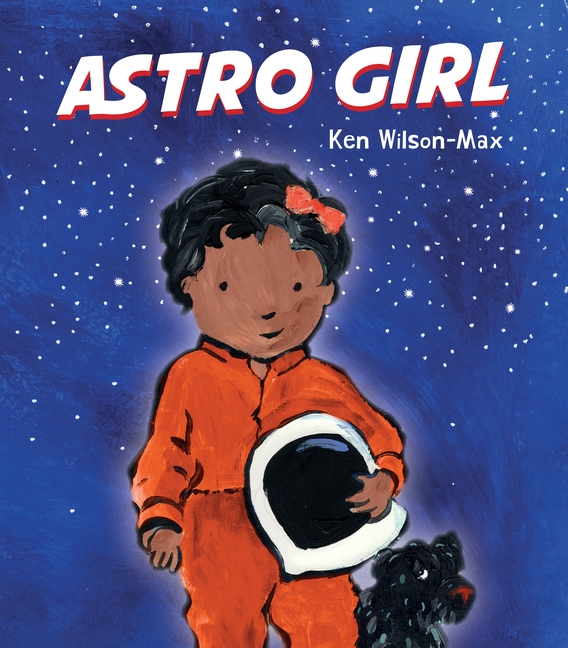
Astro Girl, by Ken Wilson-Max, (Sept. 2019, Candlewick Press), $16.99, ISBN: 9781536209464

Ages 4-8

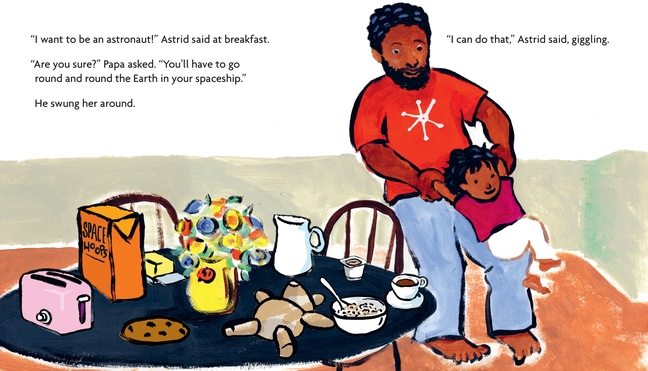
Astrid is a little girl who loves the stars and space.  She and her father act out the challenges that astronauts face in outer space, as they wait to meet Astrid’s mom, who’s coming home from a business trip… of sorts. He swings her around and around like a spaceship orbiting Earth and tosses her up in the air, defying gravity like an astronaut; she eats a cereal bar in place of astronaut food in a tube and conducts her own “experiments” by making rocket ship cookies.

I love Ken Wilson-Max’s bold, bright acrylic artwork, and Astro Girl has plenty of it. Boldly outlined, with bright, bold colors, Astro Girl is as wonderful to look at as it is to read. The story of a family of color is a great STEAM story, too: Astrid’s mom is an astronaut, and Astrid means to follow in her footsteps. Back matter includes the origin of the word “astronaut”, and brief profiles on five women who have gone into space, just like Astrid’s mom. Endpapers show a midnight blue sky, sprinkled with stars, giving kids the same desire to reach for the stars that Astrid is imbued with. The warm colors and bold outlines make this a warm book that draws readers close and talks to them, like Astrid has a secret to share with each reader.

I can’t get enough of Astro Girl, and I guarantee your readers won’t, either. The cover features Astrid, in her bright orange jumpsuit and astronaut helmet – accompanied by her dog – is a striking sight that will grab everyone’s attention. My son asked me if this was a Mae Jemison book when he saw it! Use this as an opportunity to get Mae Jemison’s name, and the names of other astronauts. You can start with the most recent all-female spacewalk:


Astro Girl is a must-have for your storytimes, and your STEM/STEAM shelves.

Posted in picture books, Preschool Reads

Join the Red Rover as it wanders Mars

Red Rover: Curiosity on Mars, by Richard Ho/Illustrated by Katherine Roy, (Oct. 2019, Roaring Brook Press), $18.99, ISBN: 978-1-250-19833-4

Ages 4-7

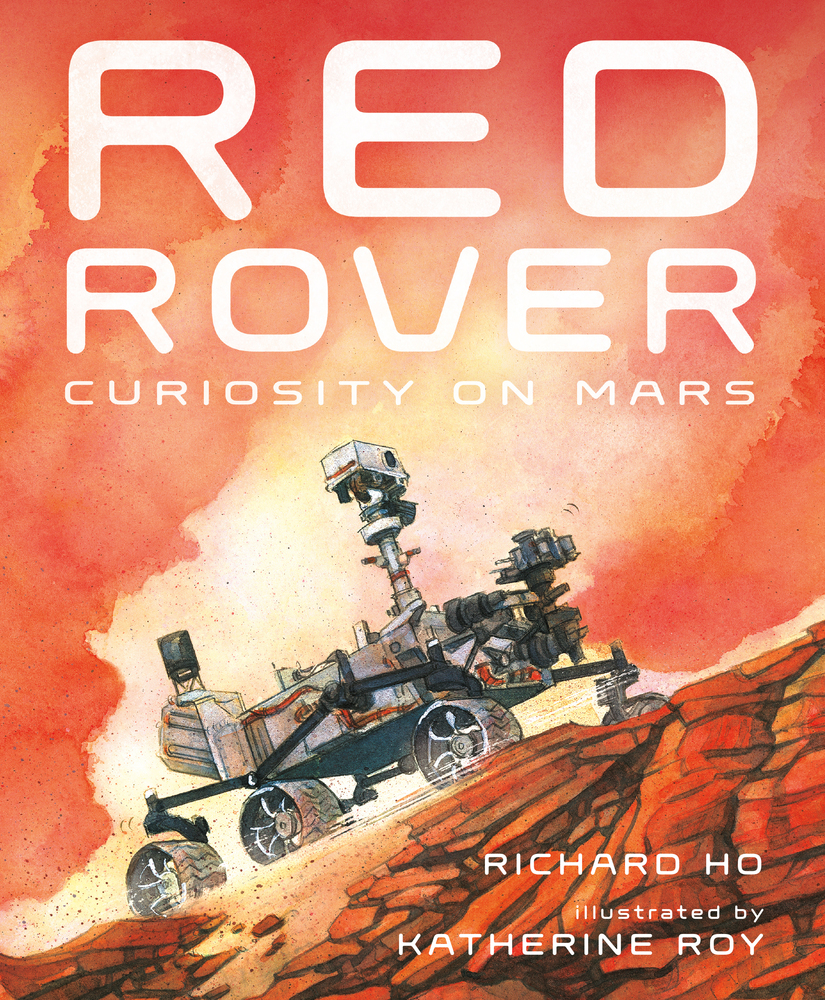
I am in love with this sweet, factual story about the Curiosity Rover, the robotic rover currently exploring Mars after landing in the Gale Crater in August, 2012. The story is straightforward, yet gives life to the Curiosity by referring to it as the “little rover” and wondering about its habits. Is it looking for water because it’s thirsty? It may seem lonely, but it has friends that came before. The narrator is the planet Mars, who seems to be watching Curiosity and its predecessors with interest. Mars states, “They call me Mars. I am not like your world”, and notes that life is hard for Curiosity: there are sand storms; the air is thin and it’s cold; it’s very, very, red. Through it all, artwork depicts the scrappy Curiosity rover, undeterred from its mission: it collects, its observes, it records. Back matter includes an annotated sketch of the Curiosity; facts about Mars, and brief profiles of the previous orbiters, landers, and rovers that have explored the planet (and that are in progress). There’s a bibliography and websites for further reading.

The story gives the Curiosity a personality of sorts, and the artwork presents a breathtaking artist’s rendering of the Red Planet. The sandstorms are chaotic, and a foldout of the red landscape is just stunning: the Curiosity stands on a cliff, overlooking the barren, beautiful world. Red Rover is a nice introduction for younger readers to the world of space exploration. If you have Wall-E fans, introduce them to Red Rover.

If you have readers who want more on Mars, Kiddle has Curiosity Facts for Kids; NASA’s Space Place has the Mars rovers broken out into trading cards with stats; and NASA’s FunZone has coloring sheets.

Posted in picture books

Saying Farewell to Summer Reading with How to Be on The Moon

How to Be on the Moon, by Viviane Schwarz, (June 2019, Candlewick Press), $16.99, ISBN: 9781536205459

Ages 4-7

A little girl and her best crocodile friend decide to go to the moon. They ready their math skills, practice having patience, and pack travel games and sandwiches, then take off for a jaunt on the moon.

This is the second Anna and Crocodile adventure from Viviane Schwarz (the first, How to Find Gold, was published in 2016), and it is a celebration of friendship and imagination. The illustrations are pencil, crayon, and watercolor, giving the scenery different textures; it’s like taking a peek into an imaginary landscape. The moonscape is amazing, and looks like aluminum foil (more on that in a minute) against a colorful rocketship and blue-black spacescape. The book is upbeat, with an overall sense of playful fun, that makes this a book I’ll return to again and again at storytime and science time.

Speaking of science time, I’m finishing up my summer reading programs this week, and will be reading How to Be on the Moon when the kids and I make aluminum foil moons. It’s a simple enough craft that I can open it up to all ages, and I think it will be a fun way to bid summer reading goodbye for another year.

Author/illustrator Viviane Schwarz has fun, free downloadables and activities on her author webpage. Check them out!

I look forward to seeing where Anna and Crocodile go on their next trek!

Posted in Non-Fiction, picture books, Preschool Reads

Three great books about space!

The Summer Reading theme for this year is all about Space, and I am psyched. I love outer space, and I’ve got a growing list of books to add to my own readers advisory lists (I’ll put that together in the next week or two for a post). Meanwhile, Sourcebooks and Barefoot Books have three great books about space that are staggered throughout the year, and perfect for your space-faring STEM fans. Let’s check them out, shall we?


Moon’s First Friends: One Giant Leap for Friendship, by Susanna Leonard Hill/Illustrated by Elisa Paganelli, (June 2019, Sourcebooks Wonderland), $17.99, ISBN: 9781492656807

Ages 4-8

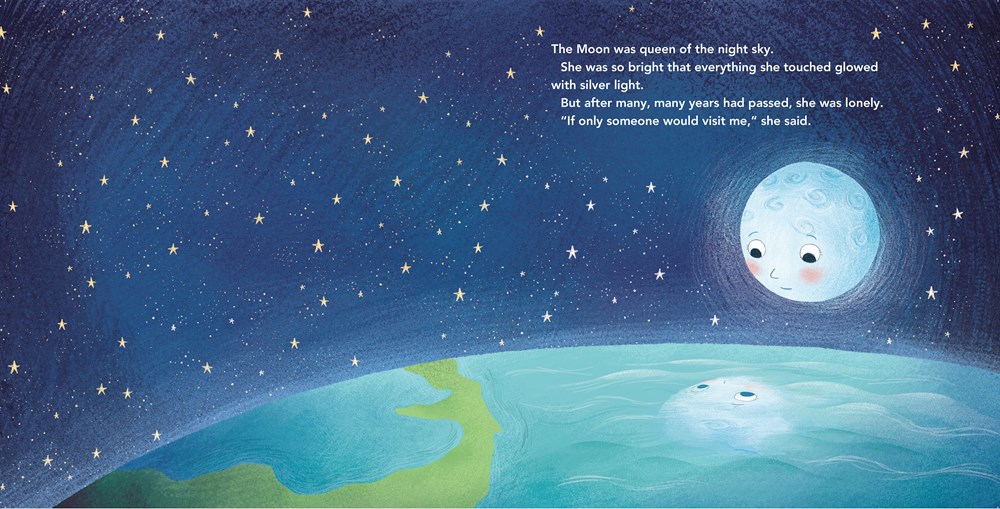
The Moon was so lonely, up in the night sky by herself. When she sees life developing on Earth, she patiently waits for someone to notice and visit her. It takes a while: the dinosaurs don’t notice; early people build pyramids and structures that just aren’t high enough. Eventually, though, she gets some visitors, and she is thrilled! She gives them presents of rocks and dust to take back to Earth, and they give her a beautiful flag and a plaque. Now, Moon is in the sky, happy and waiting for more visitors. Will you be her next guest?

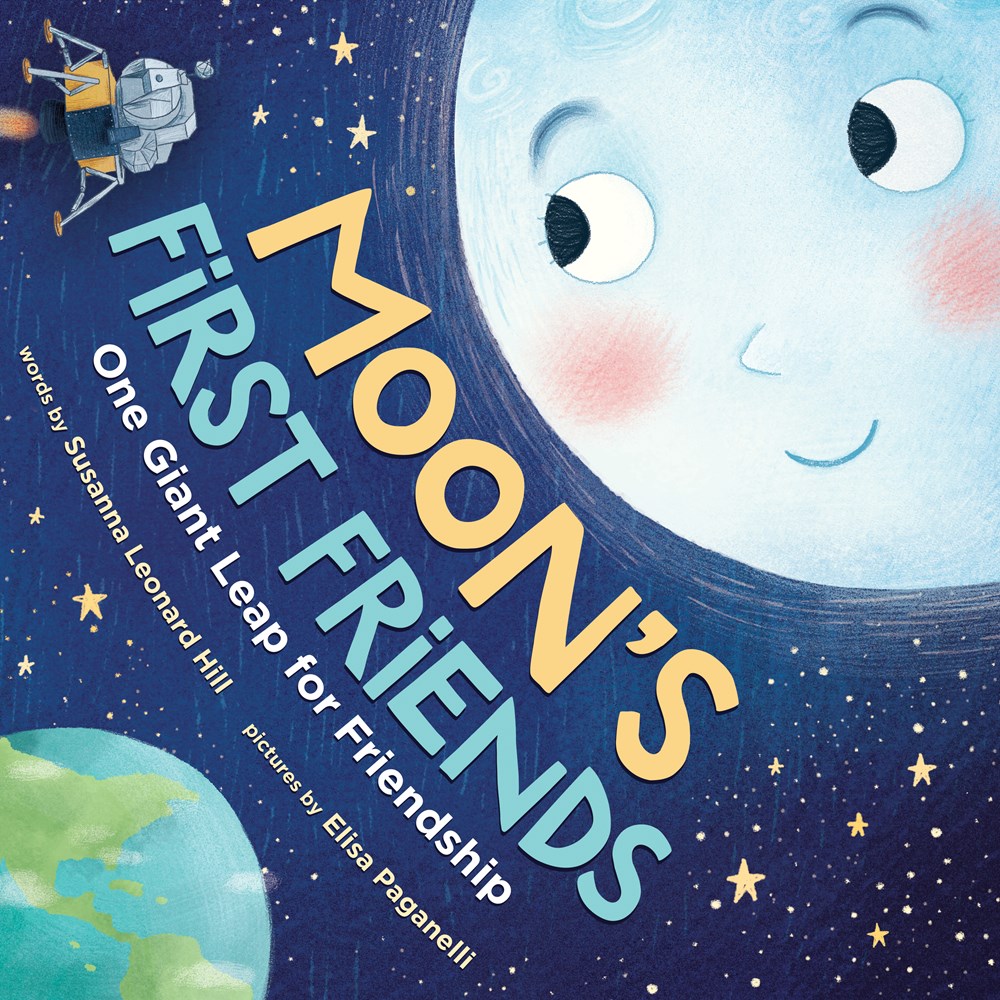
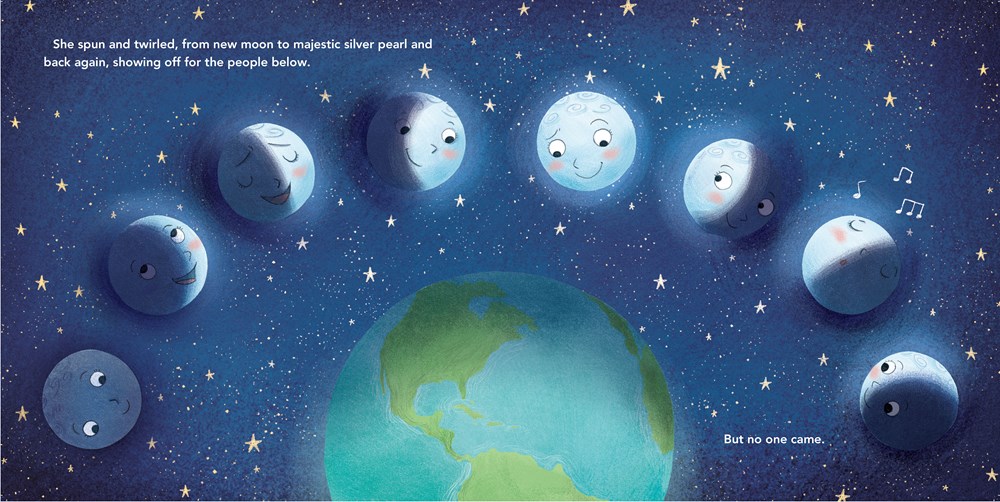
This is the sweetest story I’ve read yet on the Apollo 11 mission to the Moon. The Moon is illustrated as a softly shining, opalescent sphere with kind eyes, rosy cheeks, and a sweet smile; readers are treated to a quick history of Earth’s development as the Moon quietly observes, waiting for a friend to reach out – or up – and say hello. She even dances around the planet, showing off her phases! The actual Apollo mission takes up a brief part of the story, making this sweet book about a lonely satellite who just wants a friend an adorable storytime read for younger kids, and a fun book with solid facts for school-age kids. There’s a brief bibliography on the verso page, and back matter includes several pages dedicated to Mission Moon, the Apollo 11 voyage; moon facts, and moon phases, along with a running timeline of Earth’s formation and development. Endpapers are starry nights, where kids can imagine sailing through the stars to visit their favorite moon. Readers can also scan a QR code to hear Neil Armstrong’s historic first words from the 1969 moon landing. Gentle storytelling and adorable illustration make this a great Summer Reading addition! Display and booktalk with Stacey McAnulty’s Moon, Earth, and Sun trilogy.


There Was a Black Hole That Swallowed the Universe, by Chris Ferrie/Illustrated by Susan Batori, (Sept. 2019, Sourcebooks Explore), $17.99, ISBN: 9781492680772

Ages 3-8

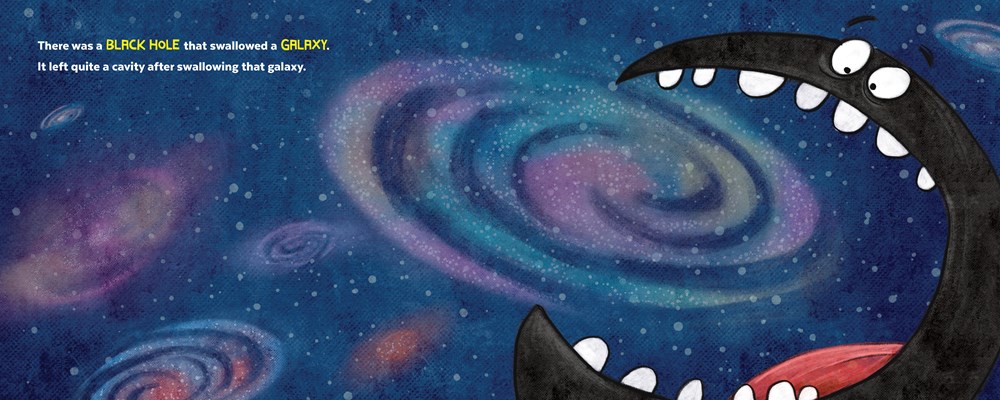
You know if Chris Ferrie is writing a book, I’m reading it. This STEM-errific take on There Was an Old Lady Who Swallowed a Fly is about a giant black hole that swallows… well, everything. He starts with a universe… it couldn’t get worse! But oh, it does: the black hole swallows planets, stars, galaxies, and atoms, molecules, and quarks along with it. Yikes!

I read this to my first grader this morning and he immediately smiled and said, “This is like The Old Lady story!”, so kids familiar with the classic tale (and all of its spin-offs) will immediately jump in and know what’s coming; how the story will progress. With each chomping, the black hole gets bigger, and the planets and heavenly bodies look hilariously terrified as they try to get away from its maw. The storytelling is fun and loaded with humor; it’s cumulative and rhyming storytelling at its scientific funniest. The illustrations are goofy, with exaggerated facial expressions that make the storytelling more dramatic and humorous as you go. Bone up on your keyword knowledge for kids who will ask during the story (neutrons, atoms, quarks, oh my!). Scientific terms are highlighted in bold yellow, and capitalized to stand out and give your readers a nice working STEM vocabulary. Shine a blacklight on the pages from back to front, and you’ll reveal a super-cool, hidden history of the universe’s creation!

Absolute fun and a must-get for your storytime collections. Be a rock star at Science Storytime! Pair this with The Universe Ate My Homework by David Zelster for more black hole-related fun.


Barefoot Books Solar System, by Anne Jankéliowitch/Illustrated by Annabelle Buxton, Translated by Lisa Rosinsky, $19.99, ISBN: 9781782858232

Ages 8-12

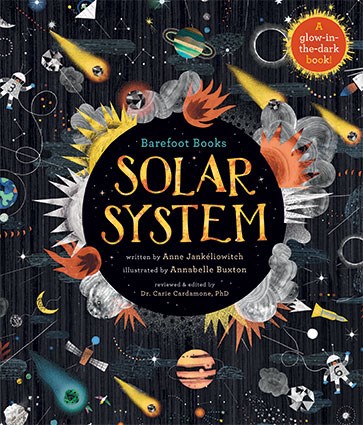
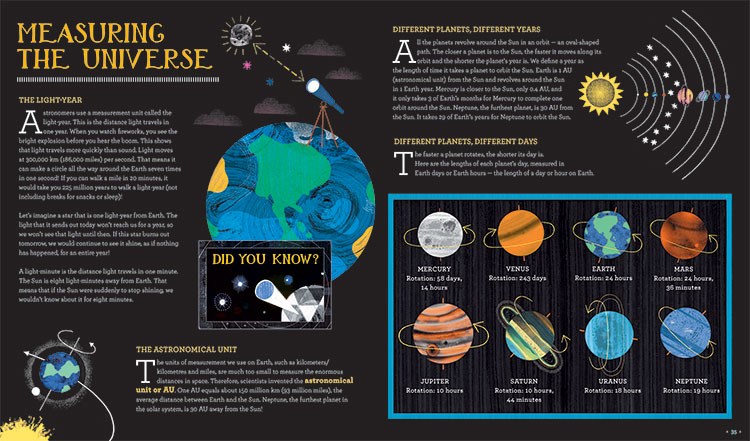
Riding high on the post-Summer Reading wave, middle grade kids can go back school and check out Barefoot Books Solar System, a glow-in-the-dark, interactive guide to our Milky Way, complete with lift the flap booklets, a pull-out map, and beautiful artwork. Originally published in French, the book has been reviewed, edited, and updated by Dr. Carie Cardamone, professor of STEM education and Boston Museum of Science teacher and educator. The text is written with a tongue-in-cheek sense of humor while delivering solid nonfiction goods to middle graders. The book covers each planet, with nicknames like :Saturn: The Space Diva”, and “Uranus and Neptune: The Icy Sisters”; the asteroid belt; differences between solid and gas planets; measuring the universe, and famous outer space voyages. The artwork is bright and bold, seeming to explode off the black pages to grab the reader’s attention.

In keeping with Barefoot’s mission of diversity and inclusivity, there is information about space exploration from around the world, making this a truly global effort. Back matter includes a comprehensive glossary of scientific terms and a note on the units of measurement used in the book. Don’t pass this one up; your 520s will shine a little brighter with Barefoot Books Solar System on your shelf.

Posted in Intermediate, Middle Grade, Non-fiction, Non-Fiction

To Infinity and Beyond! The Day the Universe Exploded My Head

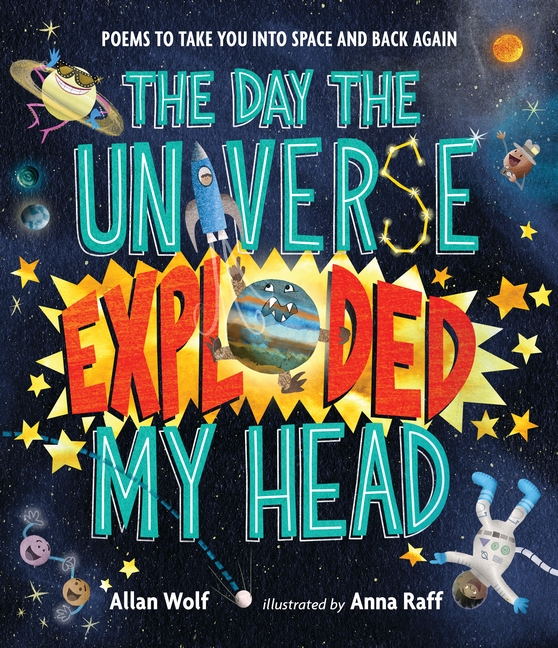
The Day the Universe Exploded My Head: Poems to Take You Into Space and Back Again, by Allan Wolf/Illustrated by Anna Raff, (March 2019, Candlewick Press), $17.99, ISBN: 9780763680251

Ages 7-12

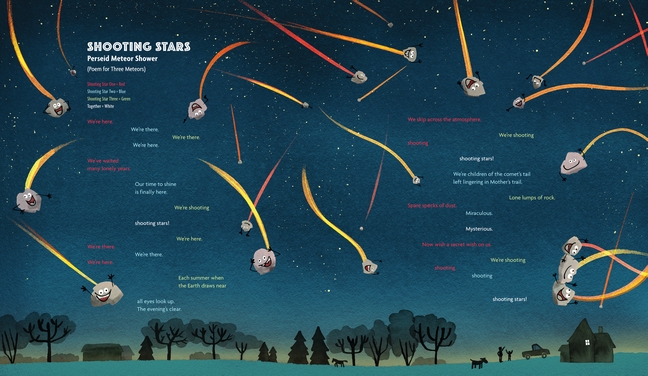
This is one of the best kids’ poetry books I’ve come across in a while! The Day the Universe Exploded My Head contains 29 poems, all about the wonder of space. Each planet gets a poem here, as do the outliers (Planet X, Charon, Pluto). There are nods to pivotal moments in space history (the 2013 meteorite over Cheylabinsk, Sputnik) natural phenomena (black holes, lunar and solar eclipses), and notable scientists (Ivan Ivanovich, Children of Astronomy). The poems are upbeat, factual, and, quite often, very funny, as with the poem, “Planet X”: “I’m one part supercilious/Another part mysterious/One part you-can’t-be-serious/They call me Planet X”. There are a wealth of poems for readers to read out loud, too: “Going the Distance” is a rap for two voices, color-coded for each speaker. The artwork: digitally assembled color collage, made from sumi ink washes, salt, pen, and pencil, explode off the page, with texture that will entice kids to see the swirls of light curling off a star and a fuzzy rings of moons around Neptune.

Non-fiction that informs and excites is aces with me, and The Day the Universe Exploded My Head is a great way to kick off and conclude a space storytime, a STEM program, or a fun read-aloud. Have some printable space coloring sheets ready to hand out, or check out illustrator Anna Raff’s webpage for super-cool activities (I like the Little Card printable for a library visit). Author Allan Wolf’s webpage also has activities, including poetry jokes.

The Day the Universe Exploded My Head has starred reviews from Kirkus and Booklist.


Posted in Fiction, Intermediate, picture books, Preschool Reads, Toddler Reads

March Picture Books

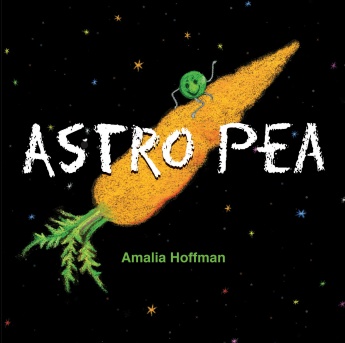
Astro Pea, by Amalia Hoffman, (March 2019, Schiffer Publishing), $9.99, ISBN: 9780764356988

Ages 3-6

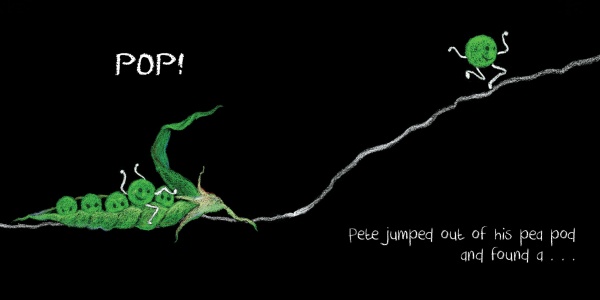
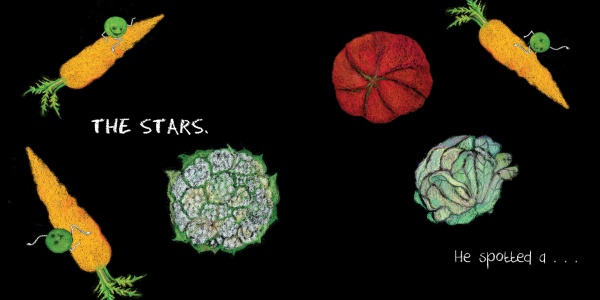
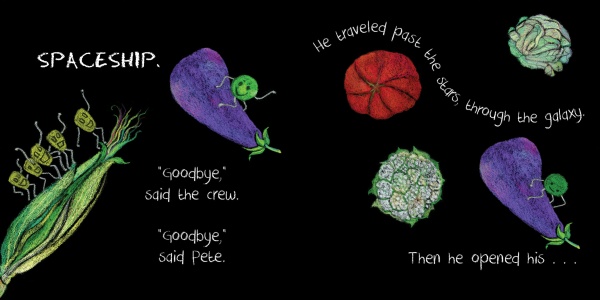
Pete the Pea pops out of his pod, finds a carrot rocket ship and blasts off into space! When his ship collides with a satellite, he’s rescued by a shuttle full of corn kernels, who also provide him with a ride back home to Earth. This adorable picture book stars a cast of vegetables posing as heavenly bodies. Pete zooms by cauliflower star clusters, asparagus satellites, corn shuttles, and mushroom parachutes. It’s a fun story about space and exploring, and a sweet story about making new friends.

The artwork is bright, with primary colors leaping off the jet black background of outer space. The anthropomorphic veggies have smiley little faces, and the simple artwork and text makes for an attention-grabbing storytime selection. Display, booktalk, and read Astro Pea with your healthy eating books, like Eating the Rainbow by Rena D. Grossman and Lois Ehlert’s classics, Growing Vegetable Soup or Eating the Alphabet.

The artwork also lends itself to an interactive storytime and craft. The artwork can be recreated with colorful chalk and black construction paper, letting the kids create their own outer space adventures. Make some felt veggies and let the kids identify each of them as they come up throughout the story. There so many ways to enjoy this adorable book – there’s even a free coloring page available through author Amalia Hoffman’s website. Astro Pea is a cute add to your picture book and storytime collections.

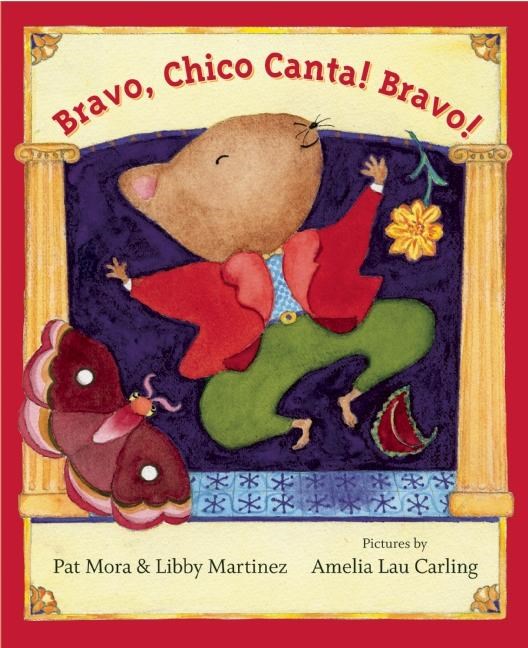
Bravo, Chico Canta, Bravo!, by Pat Mora and Libby Martinez/Illustrated by Amelia Lau Carling, Translated by Elena Iribarren, (March 2019, Groundwood Books), $9.95, ISBN: 9781773062198

Ages 7-10

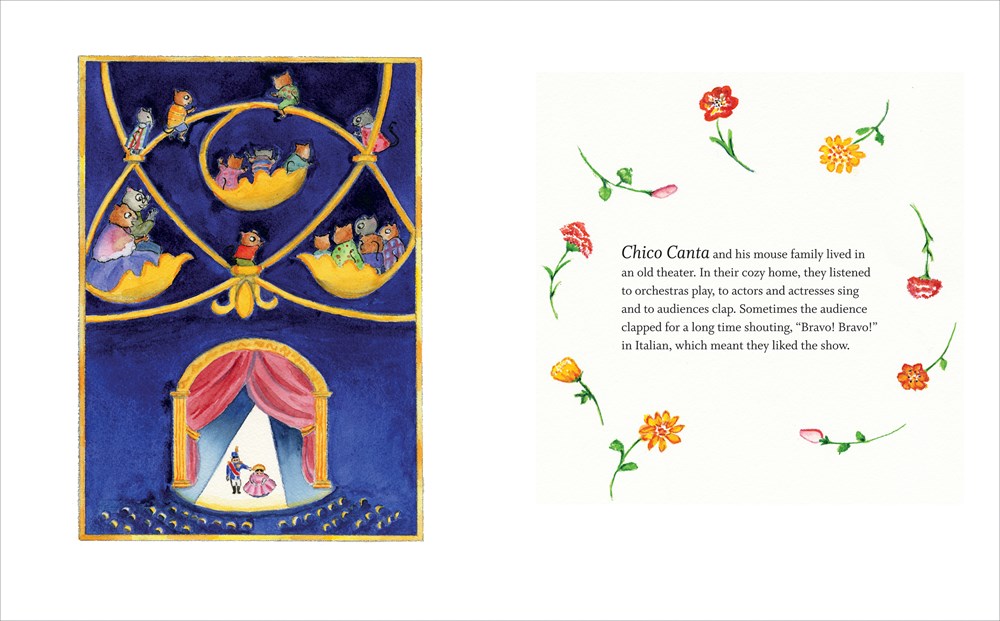
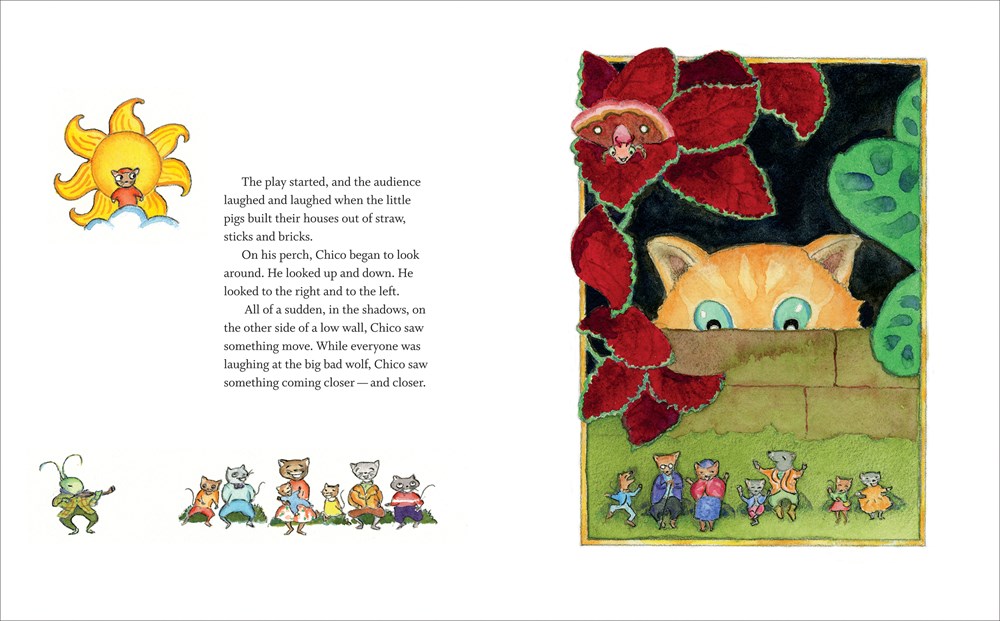
Originally released in hardcover in 2014, this mouse tale is all about the benefits of being bilingual. This release is the paperback version, written by superstar author Pat Mora and her daughter, Libby Martinez. Chico Canta is the youngest mouse in his family; they live in a theatre and love to watch the performances, and yelling “Bravo!” along with the audiences.The family loves the theatre so much, they decide to put on their own production, getting right to work. But Gato-Gato, the cat, is always sneaking around, and Chico saves the day when he uses his own knack for languages to alert everyone on opening night.

This is such an adorable story, embracing the gift of a multi-lingual household. Chico’s mom, Mrs. Canta, speaks many languages (English, Spanish, Italian, Cricket, Spider, and Moth) and encourages her children to develop their own skills. Chico saves the day when he uses his own developing language skill – a dog’s bark – to scare off the cat and save the day. The family works together on the production, everyone working on their own task. The artwork is full of rich color, with adorable animal faces. An author’s note from Pat Mora describes how she and her daughter were inspired to write the story after reading a book of Mexican-American folktales. An inspirational add to collections, especially in communities with multicultural families. I’m always telling parents at my library that the more languages kids know, the better!

Friends, by Geraldo Valério, (March 2019, Groundwood Books), $19.95, ISBN: 9781773061023

Ages 3-6

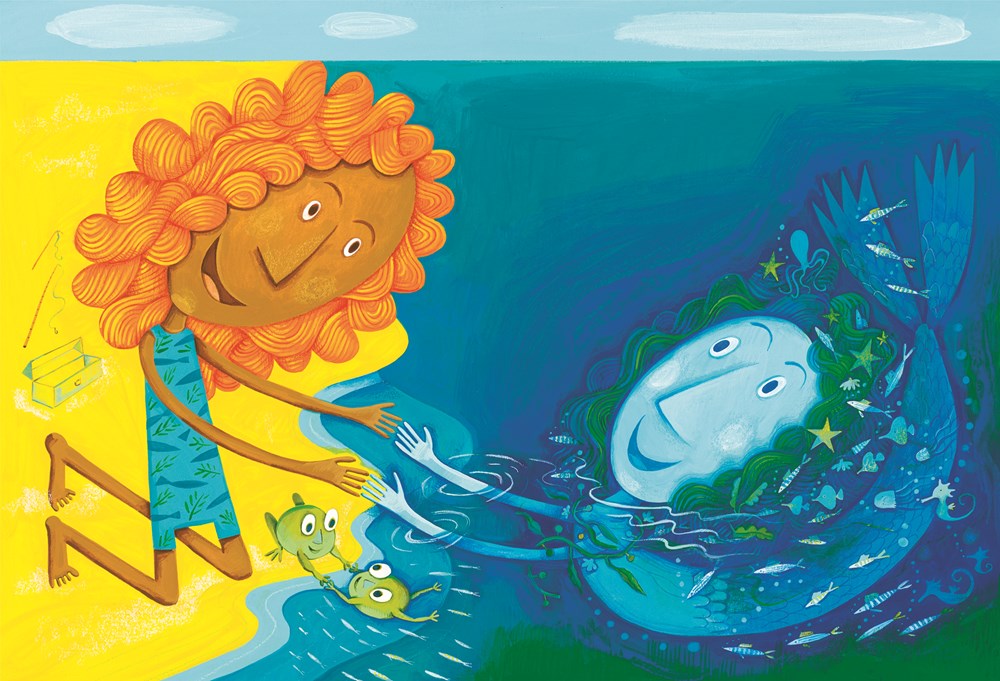
A girl and her frog go fishing, but are disappointed when the fish aren’t biting. She and the frog start making silly faces in the water, and their reflections come to life! The girl’s reflection transforms into a mermaid, and the two sets of friends enjoy a day of underwater adventure where the two girls discover glowing pearls, which they turn into matching necklaces. It’s a sweet, wordless story about friendship and imagination, with bright pastel, color pencil, and acrylic artwork. Pre-readers will love to look at the pictures and tell you what they see happening. Invite your readers to draw their own underwater adventure.

There’s wonderful detail in every spread, with little seahorses and jellyfish popping up. The frogs have their own little underwater romp, so encourage your readers to spot them! This one is a cute additional add to your wordless books.

Posted in Fiction, Fiction, Humor, Intermediate, Middle Grade

Beep and Bob bring the fun to intermediate sci-fi

I’m always on the lookout for good intermediate books (and good easy readers). There’s such an importance to good chapter books to develop that initial love of books into something really special; some kids can be a little scared by the leap from easy reader to chapter book, so you want to make sure you find that magic combination of artwork and story that will draw readers right in. When a publicist friend of mine sent copies of the first three Beep and Bob books by Jonathan Roth, she knew I’d love them and want to booktalk them. And what can I say? She was right.
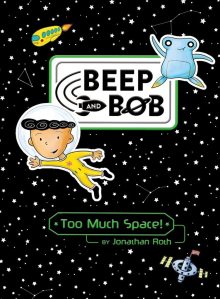
Beep and Bob: Too Much Space! (Beep and Bob #1), by Jonathan Roth, (March 2018, Aladdin), $16.99, ISBN: 9781481488532

Ages 6-10

Here we have Beep and Bob’s origin story and first adventure: Bob is a kid who goes to school in space; he’s the new kid at a school called Astro Elementary, and space is apparently terrifying. Thankfully, he has a little alien friend named Beep at his side Beep’s a little guy who lost his 600 siblings while playing hide and seek in an asteroid field; he knocked on a door at Astro Elementary, Bob answered, and a friendship was born. Beep has bonded to Bob and thinks of him as a mother, even calling him “Bob-mother”. Luckily for the duo, the teachers let Beep stick with Bob throughout the school day. Bob’s got some other friends, including Lani, a supersmart girl who carries three supersmart pet spiders in a jar; and Blaster, kind of a bully, who likes to raise Bob’s hand and volunteer him for class missions: like being the first on the field trip to explore Pluto. Or exploring near the event horizon of a black hole. Which is where we find Beep and Bob in this first adventure: trying to escape, and save Lani’s spiders, from being sucked into the black hole (or, as Professor Zoome puts it, “the bye-bye-forever zone”). Can they make it out safe? (Hint: it’s the first book in a series, you tell me.)

Too Much Space! is a fun start to a new series. There’s a little bit of science fact tossed into the fun to give kids an idea of what exactly a black hole can do (bye-bye forever is certainly a clear explanation to me), and Beep’s observations are hilarious and even sweet. Extra-Credit Fun Space Facts gives drops some non-fiction knowledge related to the adventure: in this case, the discovery of Pluto , it’s downgrade to a dwarf planet, and the fact that it is seriously cold. Pair even pacing, fun writing, and outrageous scenarios with black and white artwork throughout, and this is the start of a beautiful friendship between Beep, Bob, and your readers. I started this one with my first grader last night, and he’s getting a big kick out of Beep and the whole Astro Elementary idea – but he’s not quite ready to jettison off into space just yet.


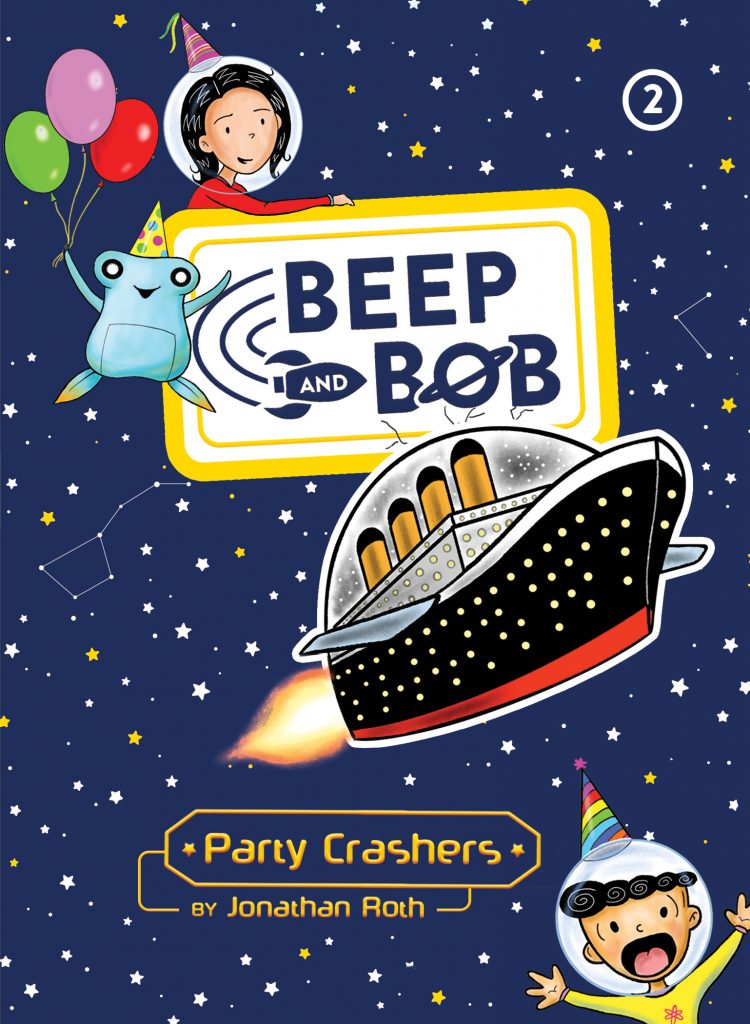
Beep and Bob: Party Crashers (Beep and Bob #2), by Jonathan Roth, (March 2018, Aladdin), $16.99, ISBN: 9781481488563

Ages 6-10

The second series of Bob’s Splog entries (space log entries – that make up each Beep and Bob adventure) starts off with a similar story: Bob introduces himself, Astro Elementary, and Beep’s origin. Rather than space being terrifying, though, this time, he asserts that “SPACE IS STUPENDOUSLY BORING”! This time out, things perk up a bit when Lani invites Beep, Bob, and the other Astro Elementary gang to her birthday party aboard the Starship Titanic! (Douglas Adams fans, this is where you chuckle.) It’s got everything: gravity, for starters, which is pretty fantastic; water parks, amusement parks, and 12 million hypershow channels on TV! What doesn’t it have? Ahem… escape pods. Because it’s indestructible. Where have you heard that before? Oh, and there’s a jewelry thief running around the ship, too. It’s up to Beep and Bob to save the day again!

Party Crashers ups the ante from Too Much Space by bringing the laughs and the crazy situations. We have the Titanic parallels, including the captain, a descendant of the original ship’s captain, who doesn’t know how to pilot his ship because everything is pretty much done for him. He spends most of his day in the amusement park! Throw in a little Agatha Christie-type whodunit mixed with some Star Wars humor, and laugh-out-loud moments throughout the book, and Party Crashers is a strong follow-up to Too Much Space. The Extra-Credit Fun section is all about Neptune, the planet posing a danger in this installment. Black and white artwork is plentiful and adorable.
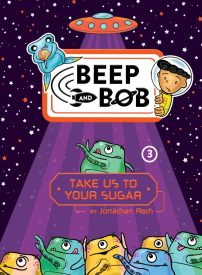
 

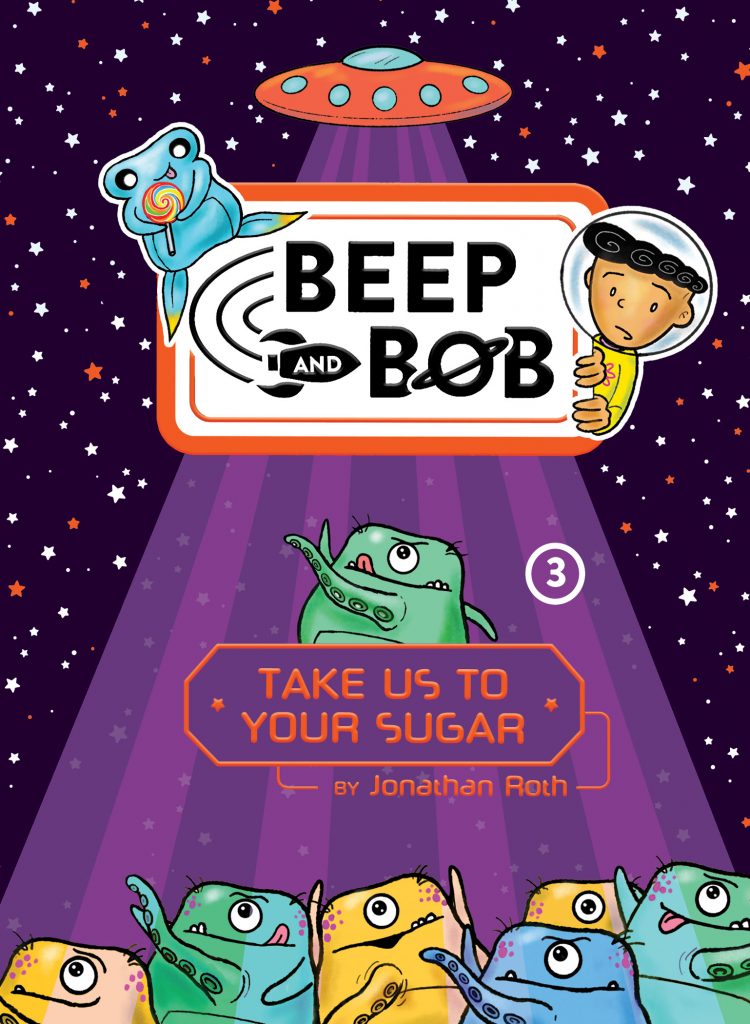
Beep and Bob: Take Us To Your Sugar (Beep and Bob #3), by Jonathan Roth, (Sept. 2018, Aladdin), $16.99, ISBN: 9781481488594

Ages 6-10

Oh NO! Not only is space alternately terrifying and boring, now there’s a problem with THE FOOD! The artificial sweetinizer is broken, and Mr. DaVinci – the school maintenance man, whose genius goes unappreciated – is taking his sweet time fixing it. Bob needs sugar, and he needs it fast, so he decides to come up with his own holiday: Astroween! You see, Astro Elementary doesn’t celebrate Earth holidays, because they’re in space, so Bob and Lani form a secret club called S.C.A.R.E.S. (Society of Candy Addicts who Rely on Energy from Sugar) and employ some quick thinking to create an entirely new holiday and convince Principal Quark to let the school celebrate Astroween. It’s a success but as the kids are planning their costumes and waiting for the candy rush, Beep convinces Bob to send a message out into space, hoping to attract some of his own kind. The message ends up attracting a bunch of sugar-crazy aliens who want to convert all the candy into power for their fleet! Beep and Bob are going to need to do some fast thinking and talking to get out of this one.

Take Us to Your Sugar is a sweeter (no pun intended) adventure in this series, as Lani and Bob start thinking of how lonely Beep feels as the only one of his kind aboard the ship. It’s no less amusing, especially with the addition of the long-suffering Mr. DaVinci, who can’t seem to believe that human race has progressed to the stars and yet… we’ve stayed relatively simple. The Extra-Credit is on Earth holidays and planetary years.

Jonathan Roth has created a smart, humorous series with heart for intermediate readers. Have readers who aren’t quite ready for Diary of a Wimpy Kid but want something funny to read? This is the series for them. There’s a fourth book coming – Double Trouble – next  month, so invest in this series now and get your readers in at the beginning. Beep and Bob was named one of Scholastic Teacher Magazine’s “50 Magical Books for Summer”. Jonathan Roth’s Beep and Bob webpage has loads of info about the author and his series, including scans of his artwork from childhood on – he’s an elementary school teacher, so he knows how to talk to kids! – and there’s an adorable, free PDF available to teach readers how to draw Beep.  Absolute cuteness.