Posted in Middle Grade, Non-Fiction, Non-fiction, Tween Reads

Space Books take readers to new heights

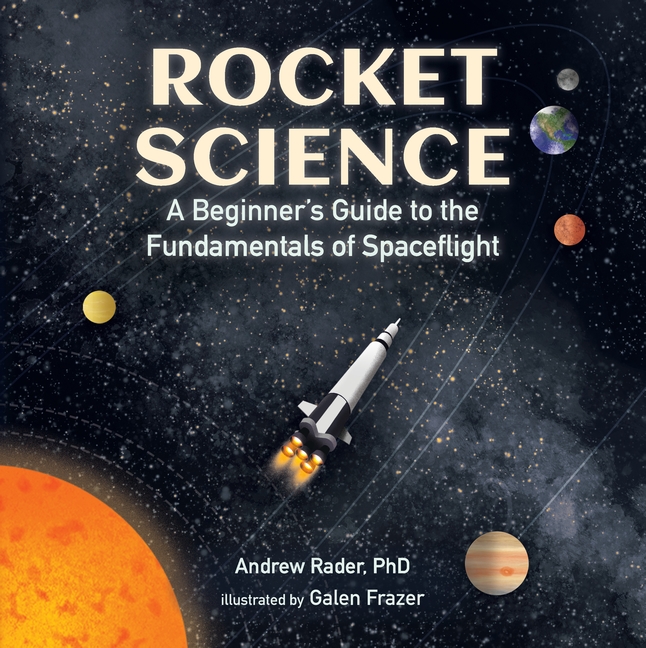
Rocket Science: A Beginner’s Guide to the Fundamentals of Spaceflight, by Andrew Rader, PhD./Illustrated by Galen Frazer, (Nov. 2020, Candlewick Press), $16.99, ISBN: 9781536207422

Ages 10-13

This beginner’s guide to spaceflight is concise, comprehensive, and illustrated in full-color. Andrew Rader is an actual rocket scientist and a SpaceX Mission Manager, and he makes space travel so tempting, you’ll want to get in touch with Elon Musk and secure your spots now. Readers will learn the basics to start: gravity, the solar system, and how we can push through gravity to reach the Moon. That leads in to a discussion on rockets: how they work, the staging series, and how to use rockets to communicate, navigate, and travel. There is information on interplanetary travel, possible life in the universe beyond our planet, and a word about the future of space exploration. Digital illustrations are colorful and detailed. A glossary and list of web resources are available. A spread on spacecraft and the solar system details some of the more well-known spacecraft, in relation to layout of the planets, like the Hubble, International Space Station, Curiosity, and Cassini. A nice intro to rocket science without throwing calculus into the mix, this is a great intro to whet younger readers’ appetitles for space travel.
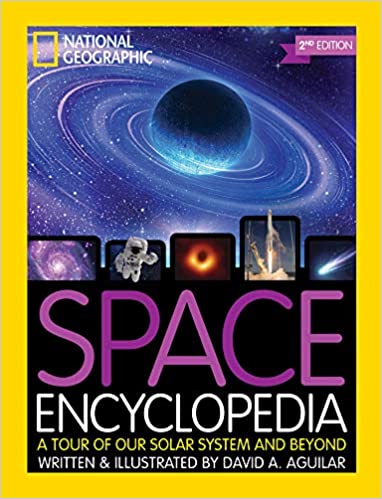


Space Encyclopedia: A Tour of Our Solar System and Beyond (2nd Edition), by David Aguilar & Patricia Daniels, (Nov. 2020, National Geographic Kids), $24.99, ISBN: 9781426338564

Ages 8-12

This is the updated version of the 2013 Space Encyclopedia, and there has been a lot to update! The 2020 version includes updated photos, facts, and profiles on the latest in space exploration, including the first ever image of a black hole, newly discovered dwarf planets, the possibility of life beyond Earth, and the formation of the universe. Profiles on icons in the field include Stephen Hawking, Einstein, and Galileo. It’s a beautiful desk reference, loaded with full color photos and artwork beyond the facts. My Kiddo used this as a reference tool for his report on space and he was beyond excited at how much he was able to use from this source.


Posted in Middle Grade, Non-Fiction, Non-fiction, Tween Reads

Holiday Goodies: Gift book shopping guide!

I hope everyone enjoyed their holiday break! If you celebrate Thanksgiving, I hope you had a wonderful and safe holiday. And now, the shopping season heats up, so let’s get another gift guide together. This one is all about the gift books, and remember: today is Small Business Saturday, so if you’re able to, please support a local business!


Anatomicum (Welcome to the Museum), by Jennifer Z. Paxton/Illustrated by Katy Wiedemann, (Sept. 2020, Big Picture Press), $35, ISBN: 9781536215069

Ages 8-13

The Welcome to the Museum series is a great nonfiction series that lets readers recreate a museum in their own homes. Every museum wing you can imagine has a book: Dinosaurs, Animals, History, and so many more; many of the books have companion workbooks. The latest book, Anatomicum, dives  into the inner workings of the human body: how our cardiovascular systems and respiratory systems work, how facial muscles contribute to facial expressions, the development of a baby in the reproductive system, and how our immune and lymphatic systems help fight disease are just a few areas readers will explore. Katy Wiedemann’s scientific drawings in 2-color sepia-tones are detailed and Jennifer Z. Paxton’s accompanying text provides factual explanations and overviews on each area. Think of this as a Grey’s Anatomy for younger readers; artists and budding biologists and medical professionals alike will love this.


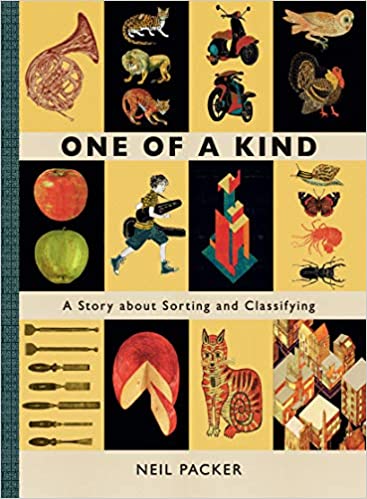
One of a Kind: A Story About Sorting and Counting, by Neil Packer, (Oct. 2020, Candlewick Studio), $22.99, ISBN: 9781536211214

Ages 7-10

A story wrapped within a book on classification, this is an excellent introduction to scientific classification and organization for kids. Readers meet a boy named Arvo, and get a look at his family tree. They meet his cat, Malcolm, and see his family tree, too. As Arvo moves through his day, readers discover how many ways there are to classify and organize information: as he learns to play the violin, we see where it fits into a grouping of musical instruments; when he needs to fix his bicycle’s tire, we get a look at different types of tools. Arvo visits the library, where the books are laid out by subject: can I get a print of this for my library? Back matter describes the classifications discussed throughout the story, and the mixed media art is interesting; each piece looks like a museum piece. What a great next step for sorting and classifying for kids!

The Language of the Universe, by Colin Stuart/Illustrated by Ximo Abadía, (Oct. 2020, Big Picture Press), $24.99, ISBN: 9781536215052

Ages 8-12

A visually stunning of the intersection of math and science, The Language of the Universe examines the history and application of math in the natural world. Discover the Fibonacci sequence in a sunflower and investigate the atom patterns in the periodic table; lift with levers and use math to encrypt messages. The text is easy to understand and lends itself to fun new projects for readers to think up. The art is colorful and there’s always something exciting to look at. Another great addition to shelves for young scientists and artists everywhere.


Space Encyclopedia: A Tour of Our Solar System and Beyond, by David A. Aguilar, (Nov. 2020, National Geographic), $24.99, ISBN: 978-1426338564

Ages 8-12

The latest update of NatGeo Kid’s Space Encyclopedia is out just in time for the holidays! The latest updates on our universe, all accompanied by breathtaking, full-color photographs, wait for readers in these pages. Sections on the stars, a tour of the solar system, life on other planets, and our future inclue Amazing Space! Milestone timelines, fun facts, and easy-to-read quick data bursts throughout. Spotlights on key figures in space exploration include Galileo Galilei, Albert Einstein, and Copernicus. The book is indexed and includes resources for additional reading and websites. A great gift idea for your budding astronomers and astrophycisists.