Posted in picture books

Books that love beautiful weather

I’ve been going through my TBR as we sit in time out for a little while. Today’s picture book slam is all about books to read while enjoying the beautiful weather. Grab some books (they’re available via ebook – check your libraries or order from your indies; many have ebooks!), sit outside with your littles, and enjoy every moment.
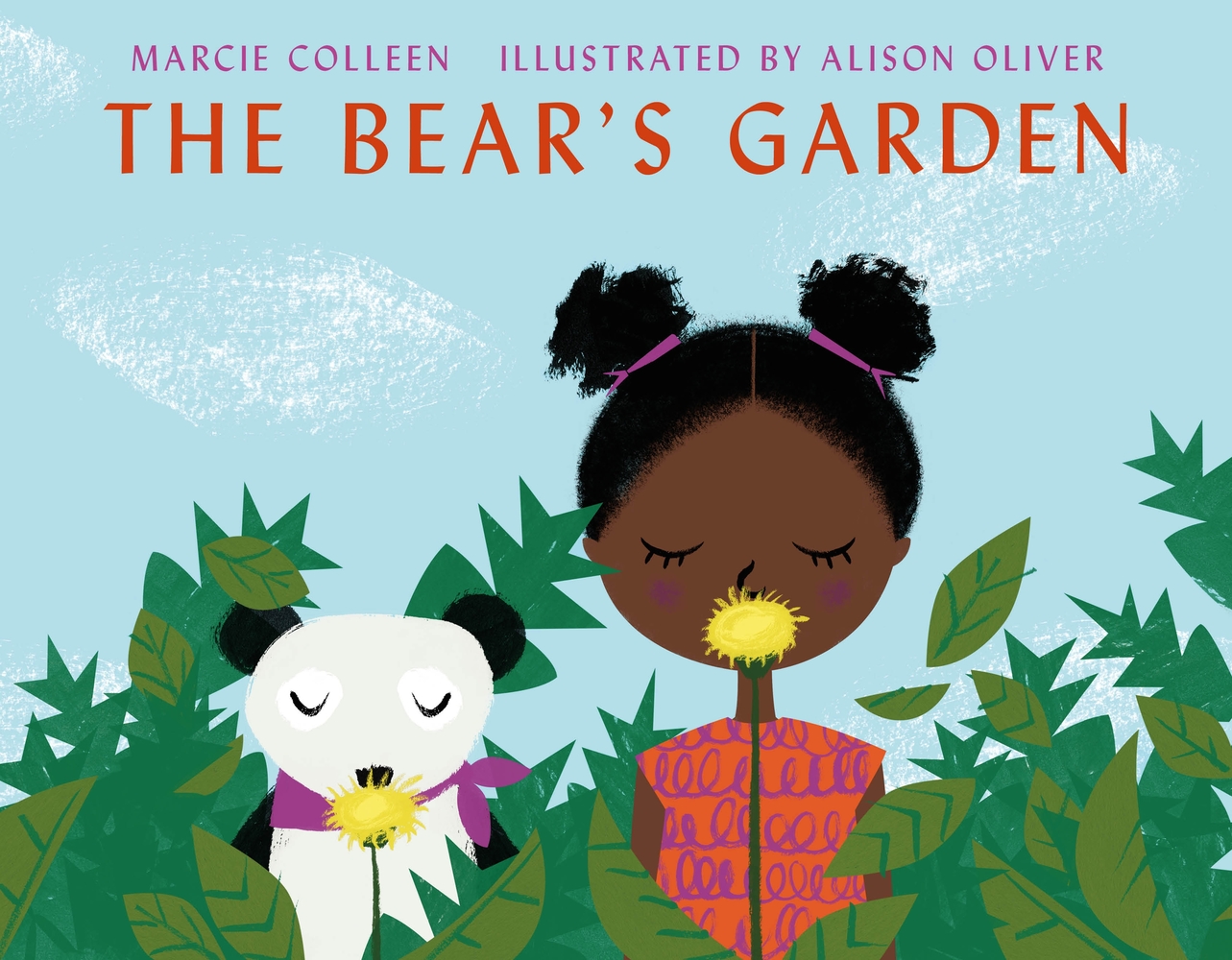
The Bear’s Garden, by Marcie Colleeen/Illustrated by Alison Oliver, (March 2020, Imprint/Macmillan), $18.99, ISBN: 9781250314819

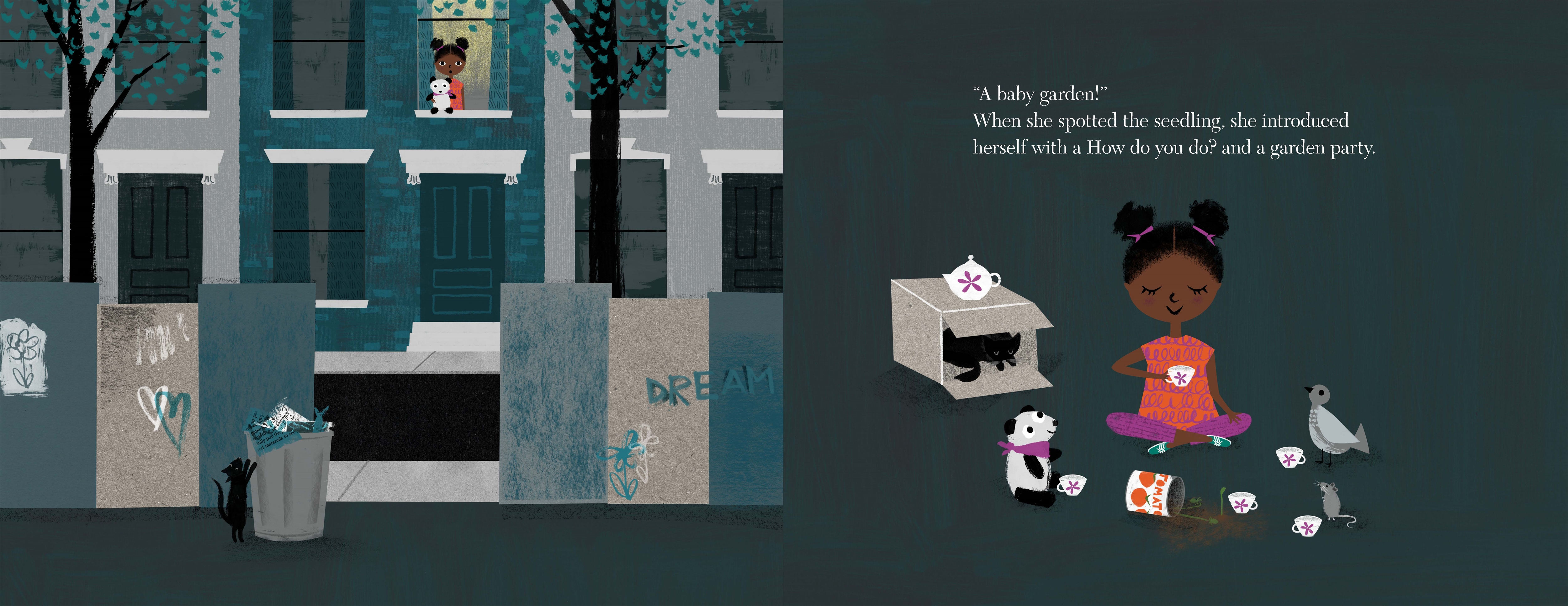
A young girl envisions a community garden from a spilled plant in this story, based on the actual Pacific Street Brooklyn Bear’s Community Garden in Brooklyn, New York. Living in the inner city, the girl sees potential in everything: a cardboard box, a tomato can, a seed. When her tomato can plant falls over, she sees “a baby garden”, and tends to the seedling where it landed. As her plant grows, people being slowing down, admiring her progress. But the girl has to leave, and she worries that without her love, her plants will suffer, so she makes the decision to leave her teddy bear behind. Under the bear’s loving eye, the neighborhood comes together to create a community garden filled with life, color, and love. Colorful and upbeat, The Bear’s Garden illustrates the beauty of imagination, creation, and community coming together. Endpapers are laid out like a map of the boroughs; the back endpapers focuses on Brooklyn, with a colorful burst of flowers noting where the Bear’s Garden can be found.

Consider a planting activity with your own kiddos – I love this Buzzfeed link that has different types of kitchen scraps that you can grow; Kids Gardening has a downloadable planting activity using kitchen scraps.

The Bear’s Garden has a starred review from Kirkus.
 

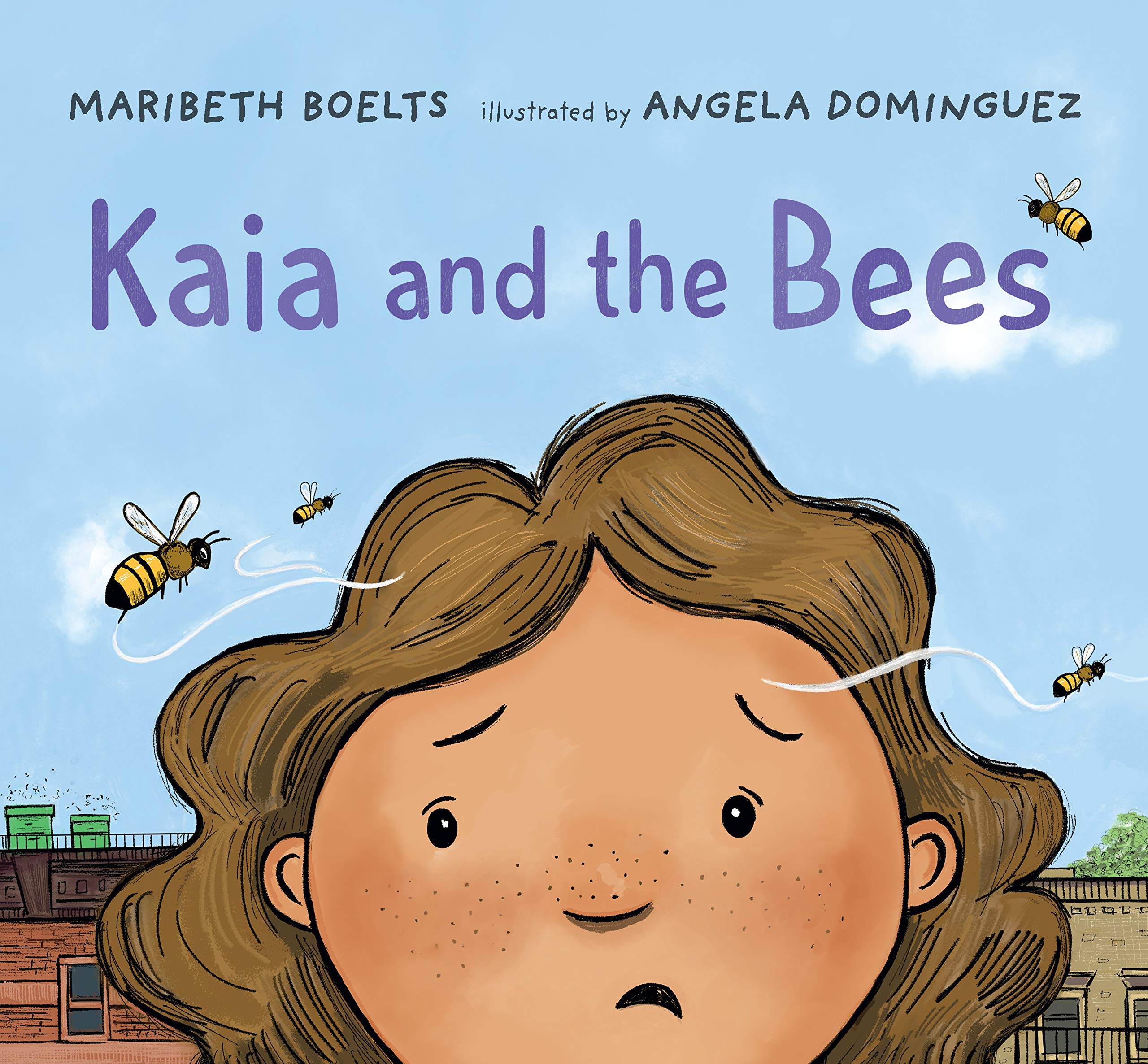
Kaia and the Bees, by Maribeth Boelts/Illustrated by Angela Dominguez, (March 2020, Candlewick Press), $16.99, ISBN: 9781536201055

Ages 4-8

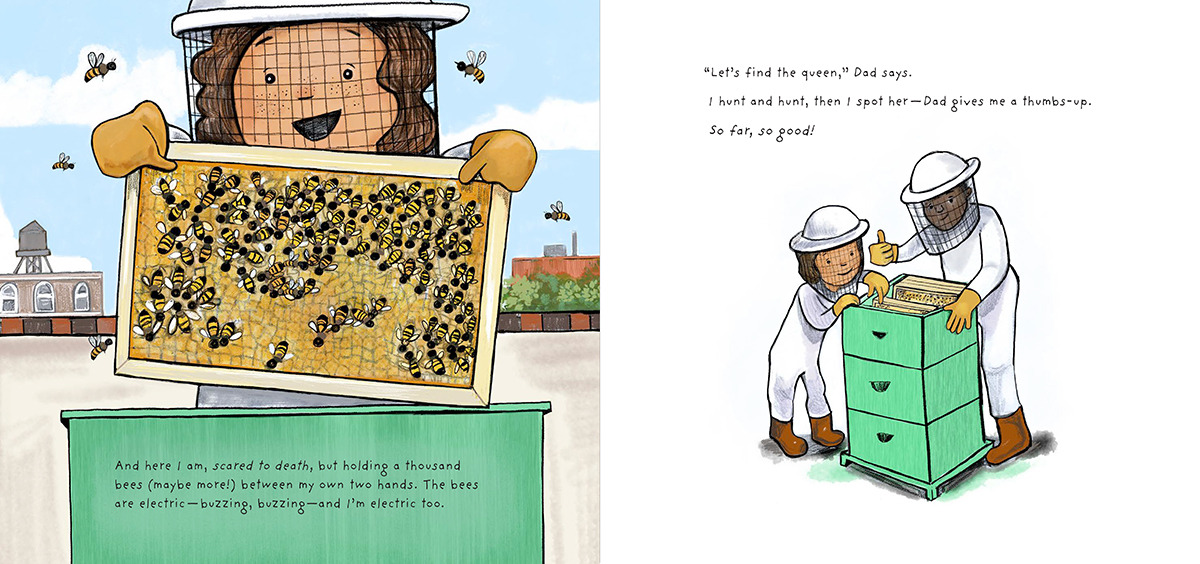
Kaia is a little girl who is pretty brave, but one thing scares her: Bees. She tries to keep it a secret from her friends, but when she’s spooked by a bee flying by her, she turns to her beekeper dad: she wants to go up on the roof with him, to his apiary. She’s doing great with the bees, until she slips her glove off and one stings her finger! Just when Kaia thinks she’s done with bees, she has a moment where she faces her fears and discovers that maybe bees aren’t so scary after all.

A story about bravery and empathy, with a smart message about our environment and urban apiaries, Kaia and the Bees warmly addresses relatable fears – in this case, bees – and how the smallest steps can lead to big progress. Kaia is relatable; she’s brave and smart, but hides her fear of bees until she’s called out on it. Her beekeeper father explains how bees are important to our world, and how his work – the family’s work – as beekeepers helps keep bees safe and healthy. Maribeth Boelts, herself a beekeeper, brings her love of bees and social mindfulness to Kaia’s voice, while Angela Dominguez’s cartoon-realist illustrations give readers an expressive, accessible heroine and a multicultural family living and thriving in an urban setting. Endpapers give readers a peek into a beehive, complete with nonthreatening, cute bees.

There are some interesting facts about honeybees available from NatGeo Kids. Hobby Farms has information on beekeping safety for kids who want to be like Kaia. The New York City Beekeepers Assocation has education on urban beekeeping. Introduce kids to urban beekeeping with Kaia and with Lela Nargi’s book, The Honeybee Man; The Honeybee Conservancy also offers a good list of bee books for children.
 

Hike, by Pete Oswald, (March 2020, Candlewick Press), $17.99, ISBN: 9781536201574

Ages 4-8

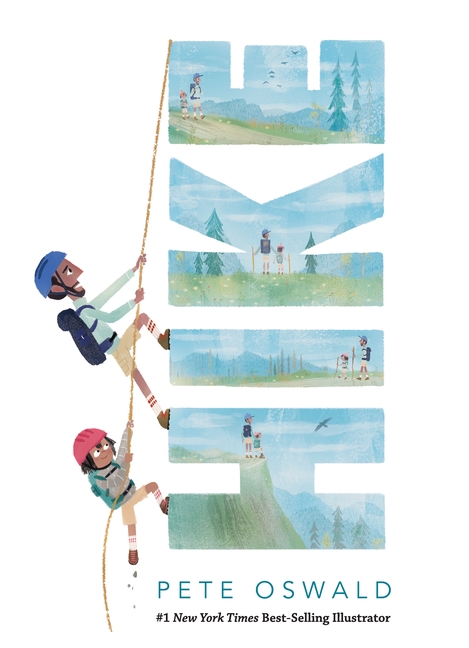
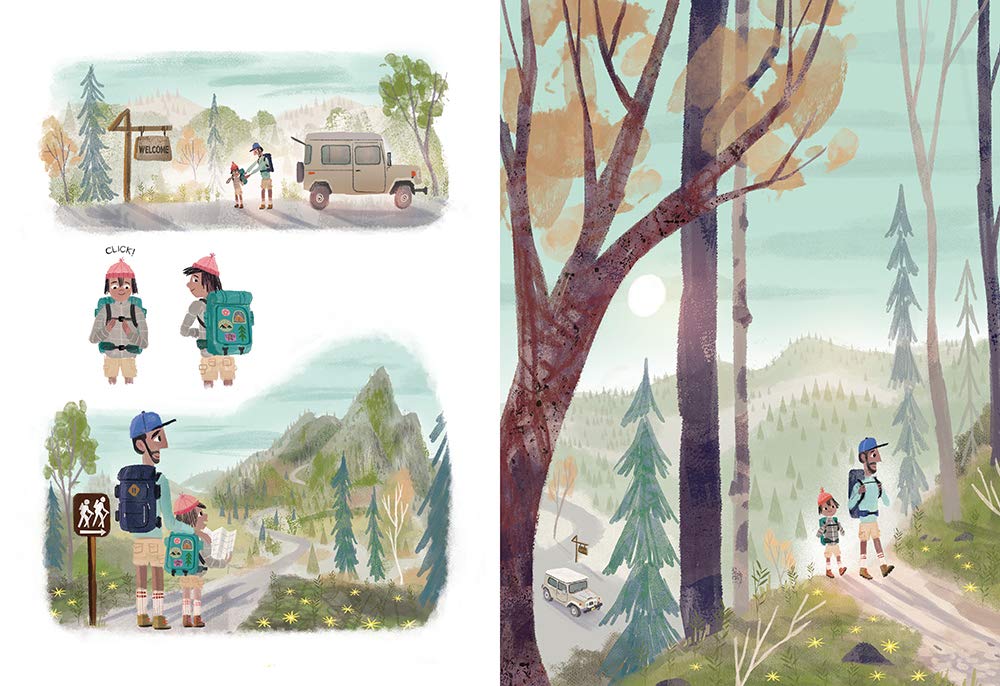
A dad and child wake up and hit the trail for a day’s hike. As they walk a trail together, they notice the beauty of their surroundings: spy a family of deer; track a black bear’s footprints; indulge in a snowball fight, and contribute their own offering to the forest: they plant a sprig from a tree. A celebration of the parent-child bond and our world, Hike is largely wordless, relying on the illustrations to tell the story. The colors are warm, drawn from nature, and the father and child share a visibly warm, loving relationship that invites caregivers and their kids to put on their hiking boots – or sneakers! – and explore their world. Be it a backyard, an urban neighborhood, or a suburban landscape, there’s always something to discover together. A sepia set of endpapers present a map, with start and finish points noted.

I loved the idea of a DIY Nature Journal like this one from KC Edventures. Last year, when I was home with my little guy during Spring Break, we made a nature journal with brown paper lunch bags and went wandering around our neighborhood, collecting cool leaves, acorns, and pebbles we found and liked. Kiddo loved it, and I printed out photos I snapped during our walk to add to the pages. The Pragmatic Parent has a great, free Nature Scavenger Hunt PDF that kids will love, too.

Hike has five starred reviews.
 

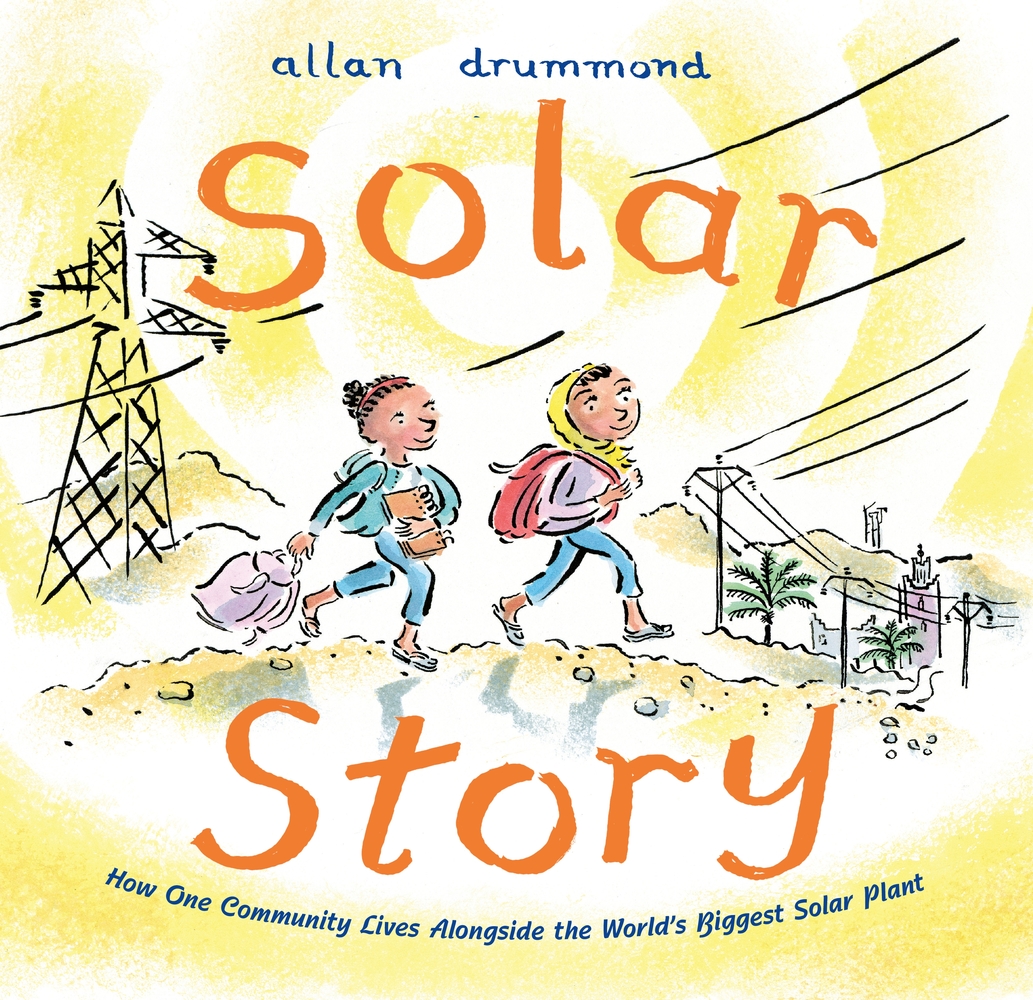
Solar Story: How One Community Lives Alongside the World’s Biggest Solar Plant, by Allan Drummond, (March 2020, Farrar, Straus and Giroux), $18.99, ISBN: 9780374308995

Ages 5-10

This is nonfiction that appeals to multiple grades. The story of the Noor Solar Power Plant in Morocco’s Sahara Desert – the largest solar power plant in the world – wraps around a story about everyday life in a small village next to the plant. Jasmine and Nadia are two friends who go on a class trip to the plant; during that trip, the girls’ class and readers will learn about Morocco and how the power plant creates jobs and improves the quality of life by bringing turnkey skills, technology, and the magic word, sustainability.

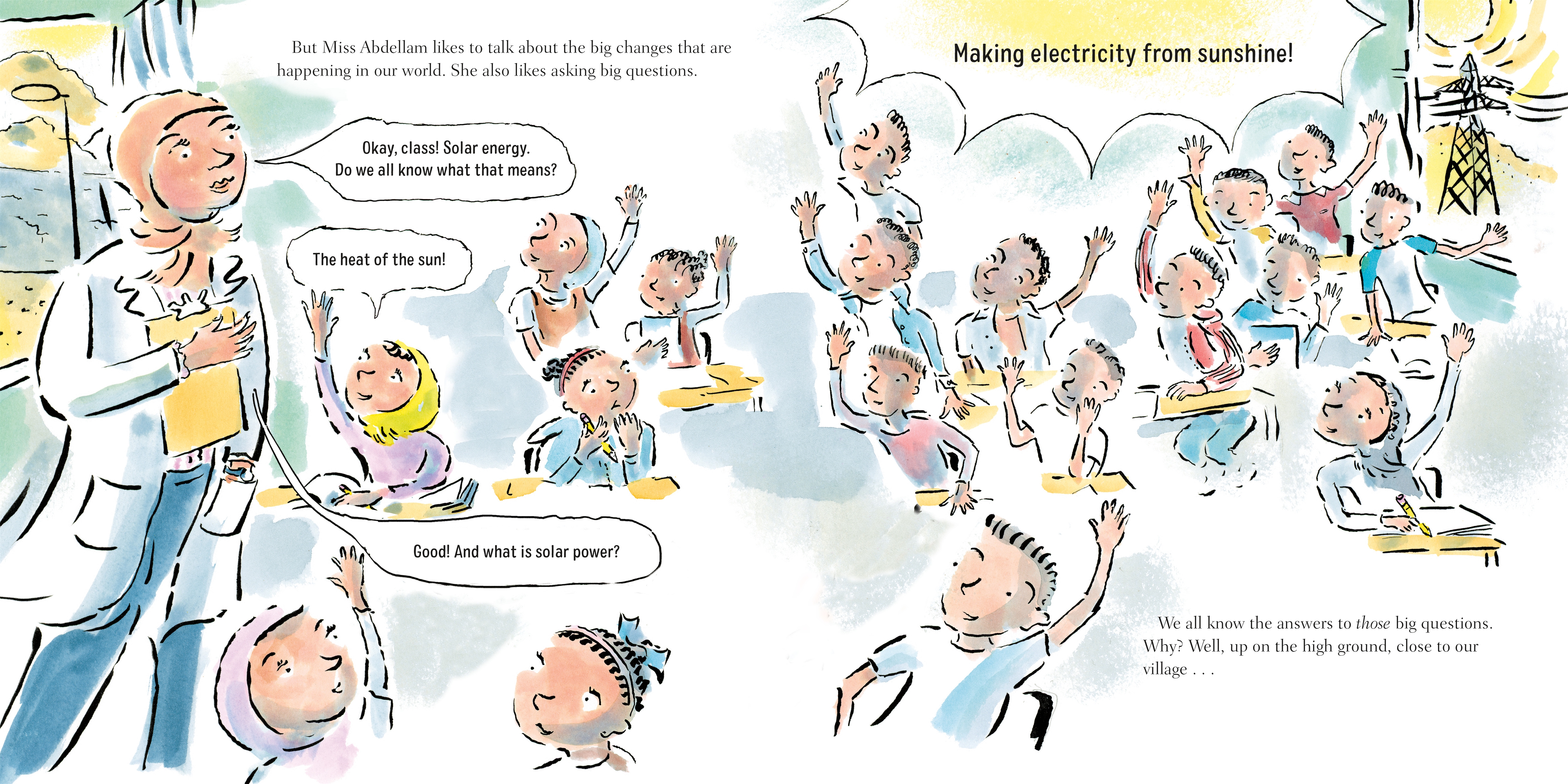
By giving readers relatable guides in the forms of Jasmine and Nadia, readers get a glimpse of life in a small Moroccan village, where the villagers have farm animals and cook on open fires, and the huge sprawl of the power plant and the modernity it brings while honoring the culture of the people who inhabit the area. The teacher engages her students, and readers, by asking thoughtful questions; most notably, “what does sustainability mean?”, to get her students and our readers ready for the school trip that illustrates how the power plant creates sustainability.

Watercolor illustrations and word balloon dialogue make this an enjoyable read. Warm yellows wander through the story, and earth tones and blues bring the reader to the land and its people. The teacher and many female children wear hijab. Sidebars throughout provide more detailed information about Morocco, the power plant, and sustainability. An author’s note showcases photos of workers at the Noor plant and a bibliography provides an opportunity for more reading. Endpapers bookend the story by having Nadia and Jasmine meet before the trip, and head back to school after.
A good addition to STEM collections. Toms of Maine has some easy to do activities to teach kids about solar power. Time for Kids has a 2016 article about the Noor plant.


That’s it for this time, I want to get this posted! More books coming!
Posted in Graphic Novels, Middle Grade, Non-Fiction, Non-fiction, picture books, Preschool Reads, Tween Reads

Books to inspire your young scientists!

This is an incredible year for children’s books! There’s something for everyone available or coming soon, with wonderful artwork and text that draws readers right in. This time around, I’m looking at some fun science books for readers – and caregivers will like them, too.

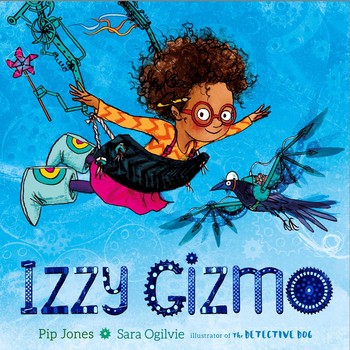
Izzy Gizmo, by Pip Jones/Illustrated by Sara Ogilve,
(March 2018, Peachtree Publishers), $16.95, ISBN: 978-1-68263-021-1
Recommended for readers 4-7


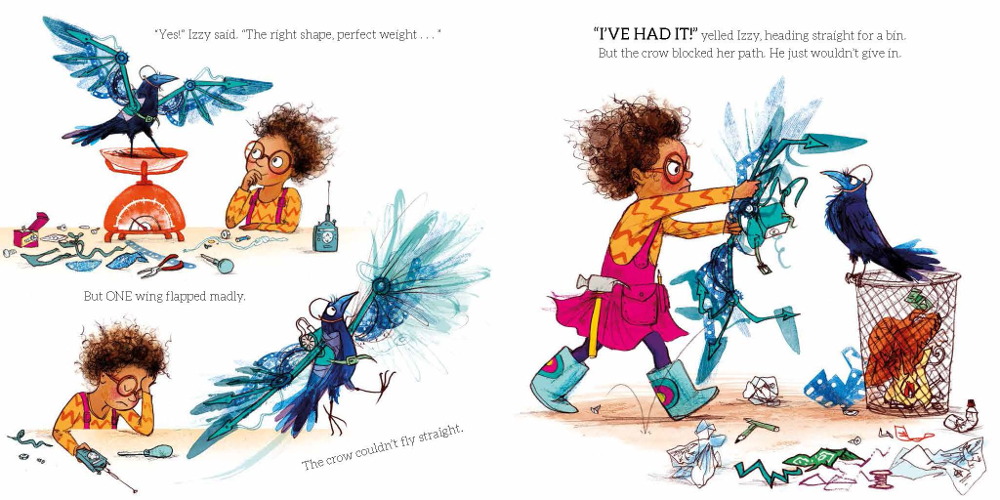
Izzy Gizmo is a curious little girl of color who loves to invent, tweak, and discover. Her inventions don’t always work, but she discovers that she has to put her frustrations aside when she rescues a crow with a broken wing. He wants her to help him fly again, and he’s willing to stick with her through trial and error, until she can get it right. I love the bright colors and chaotic art in this story; it lets readers know that creativity is often messy and wild; the story assures readers that mistakes are just opportunities to filter out what isn’t working and concentrate on what will work; and I love the story of endurance and perseverance. Izzy’s grandfather and her crow friend have faith in Izzy; she just has to find her faith in herself. The gray and white endpapers feature different gears and mechanical parts, letting readers know they’re going to put on their engineering hats to help Izzy out, and the art – a mix of pencil, ink, oil pastel, monoprint, and digital technique – create a busy background that provides a glimpse into the mind of a scientist. Originally published in the UK in 2011, Izzy’s just arrived here in the U.S. and her rhyming story would be a great addition to collections where Andrea Beaty’s Iggy Peck, Architect, Rosie Revere, Engineer, and Ada Twist, Scientist are popular.


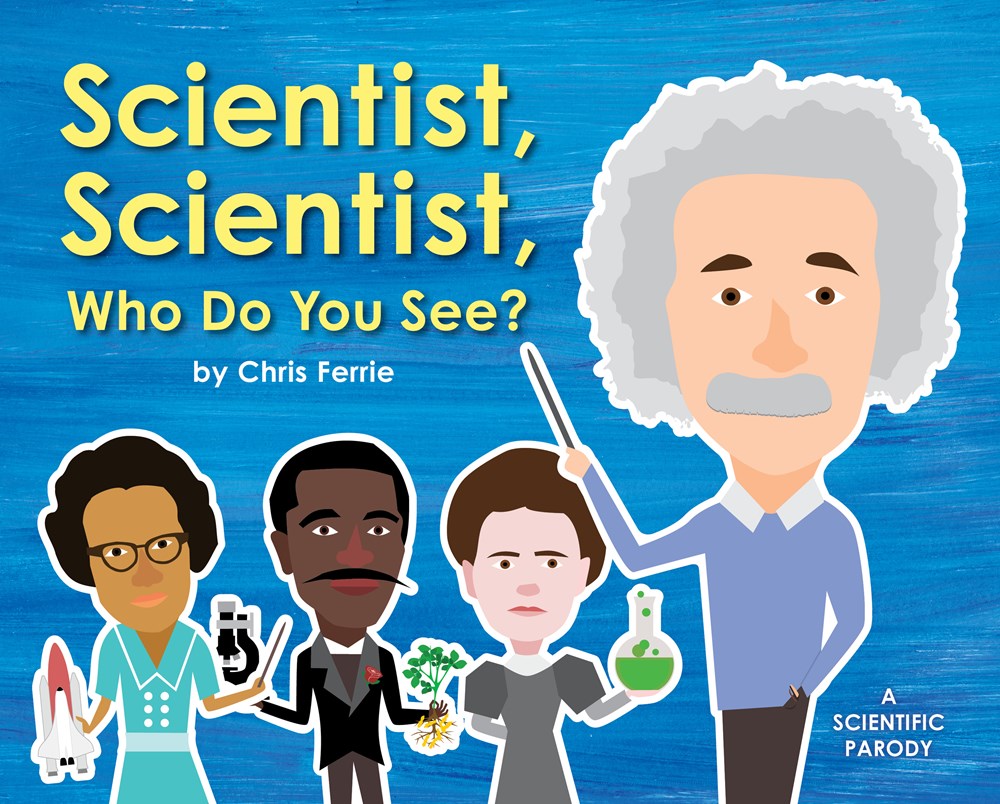
Scientist, Scientist, Who Do You See?, by Chris Ferrie,
(Apr. 2018, Sourcebooks Jabberwocky), $17.99, ISBN: 9781492656180
Recommended for readers 3-6


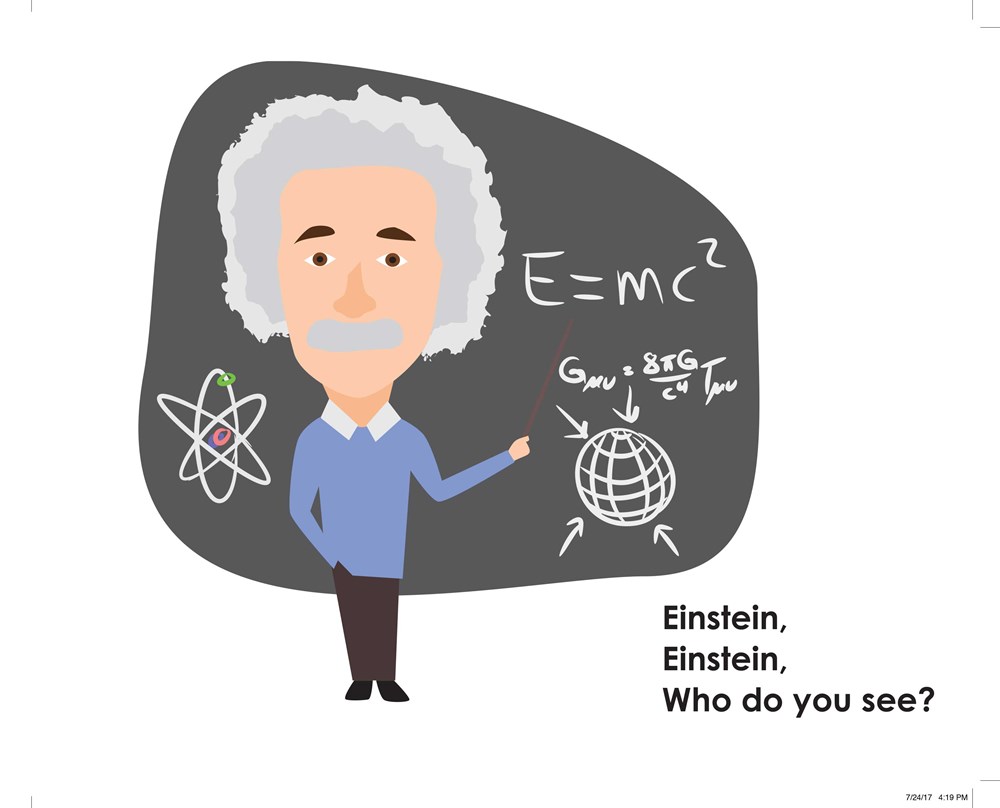
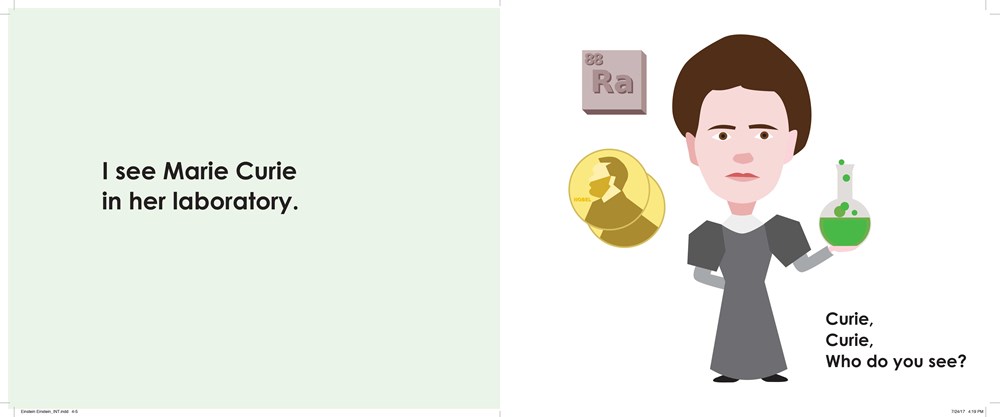
Set to the cadence of the classic, Brown Bear, Brown Bear, What Do You See?, scientist and dad Chris Ferrie introduces little readers to some of history’s greatest minds with Scientist, Scientist, Who Do You See? There is a strong mix of disciplines and diversity represented here, with Einstein sharing space with Grace Hopper, Ahmed Zewail, George Washington Carver, Katherine Johnson, and more. It’s noted as a “scientific parody”, and it certainly is a fun book that will make everyone smile, but kids are introduced to names and ideas, and that’s just great. Starting off with the question, “Einstein, Einstein, Who Do You See?” and the response, “I see Marie Curie in her laboratory”, the story goes on, introducing scientists and their accomplishments, in the soothing rhyme style we’ve grown up hearing and enjoying. Chris Ferrie has given us Baby Science board books and a fun take on Goodnight, Moon with Goodnight, Lab; let’s hope he keeps finding new, fun ways to make science lovers out of our kids.


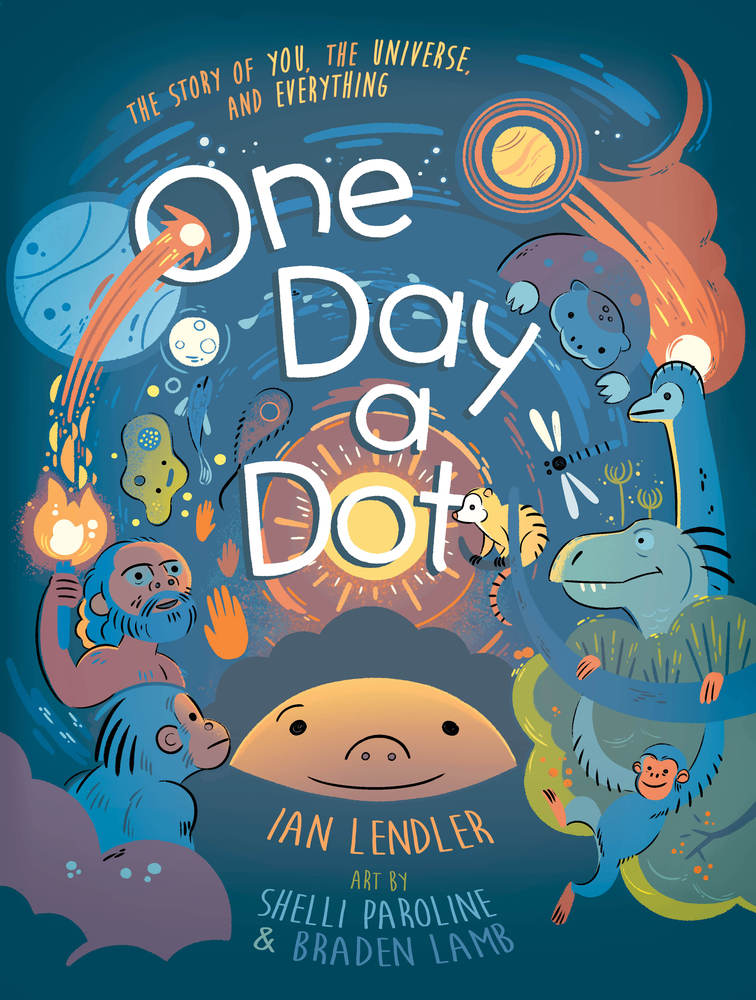
One Day a Dot: The Story of You, the Universe, and Everything, by Ian Lendler/Illustrated by Shelli Paroline & Braden Lamb,
(Apr. 2018, First Second Books), $17.99, ISBN: 9781626722446
Recommended for readers 7-10

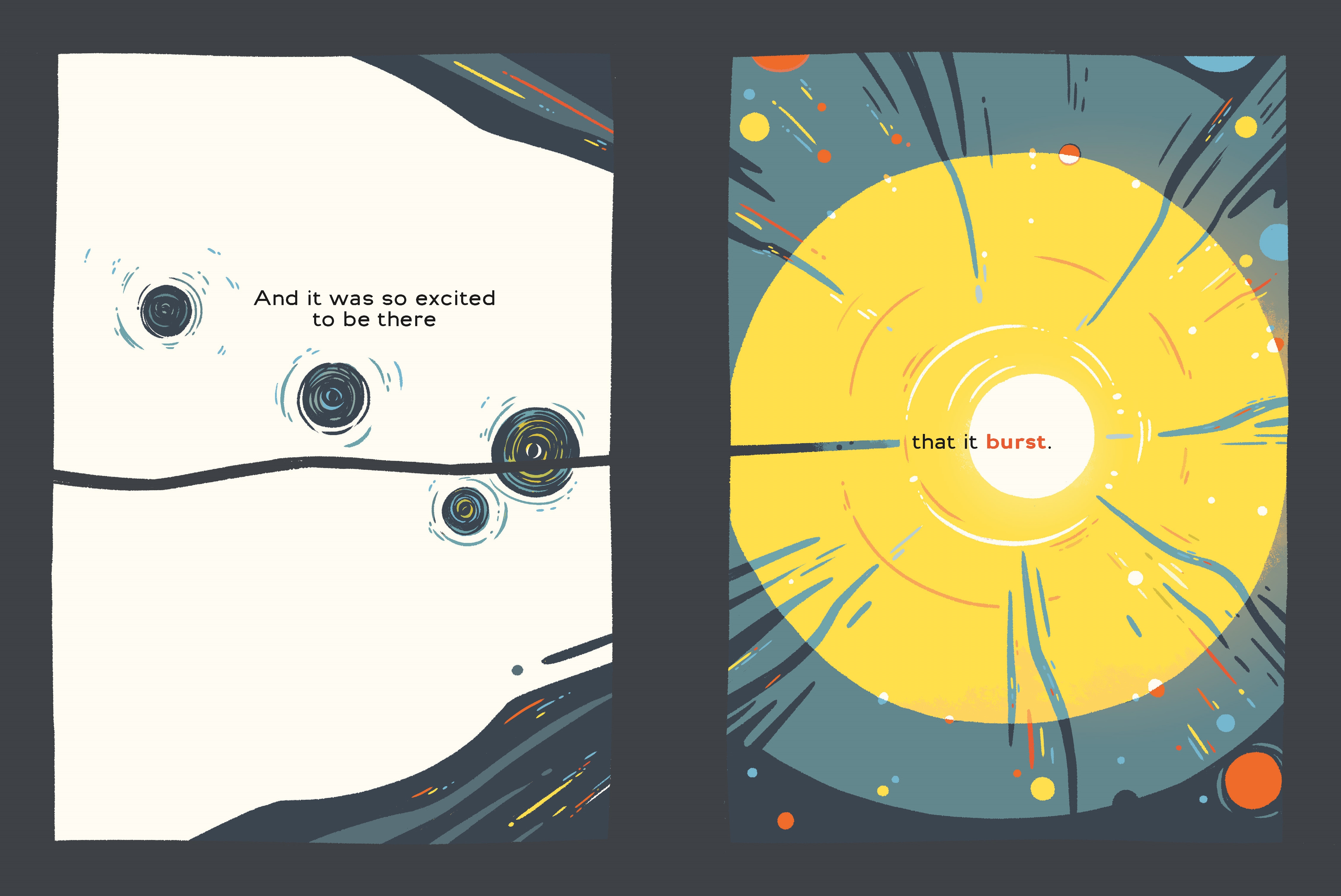
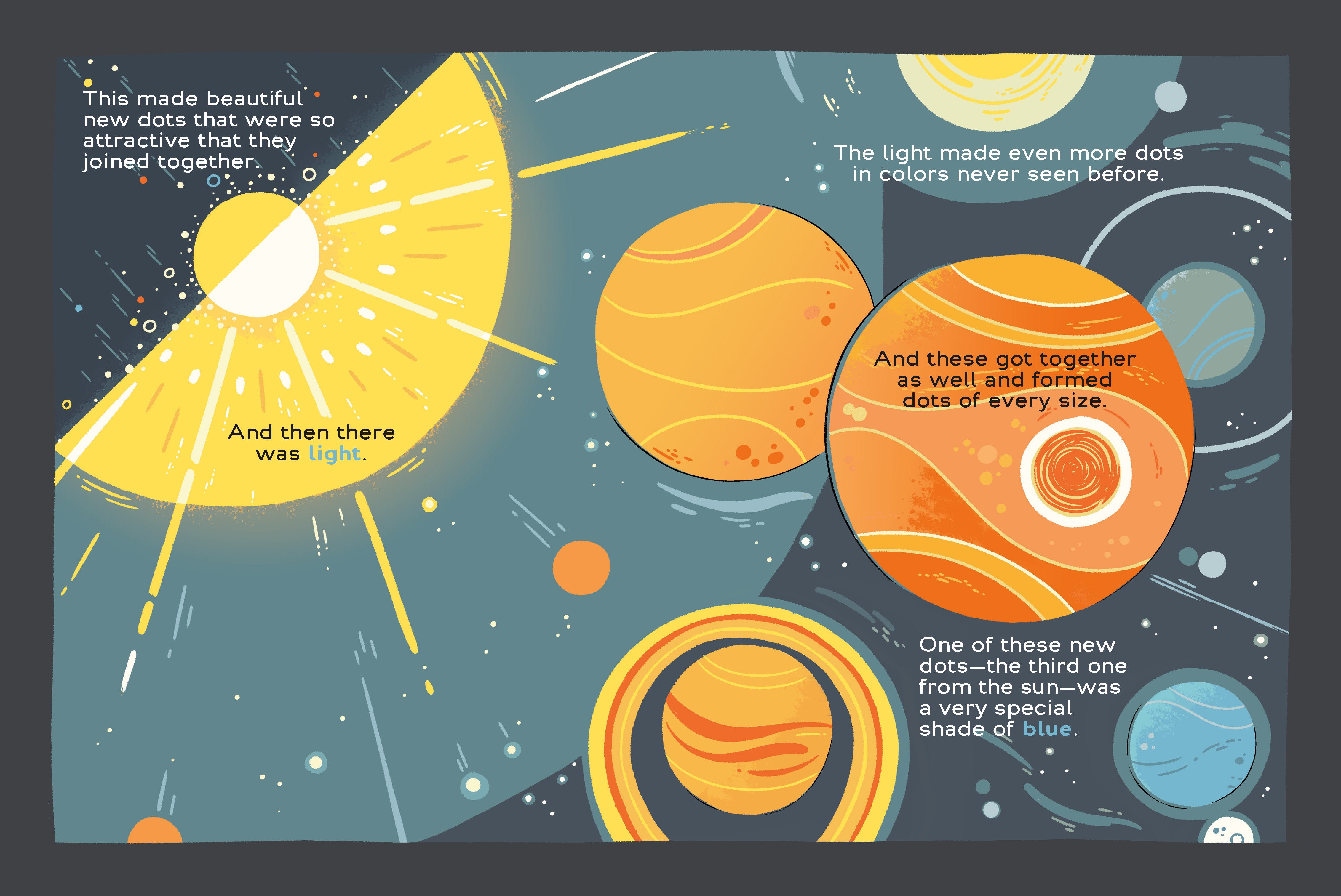
This one’s one of my standout favorites. Author Ian Lendler and illustrators Shelli Paroline and Braden Lamb drill down the history of everything to one humble dot. From one dot’s excited burst of joy comes the Big Bang, bringing new dots together to form planets and, eventually, life. The dots are animated, dancing, playing, even running away from other dots that want to eat them! The artwork is bright with a retro feel and uses the dot theme as a focal point through the story, gently leading readers on a trip through time and space. It’s a simplified look at the formation of the universe, but works nicely for younger readers. Give this one to kids who like Stacy McAnulty’s Earth: My First 4.5 Billion Years, and Dominic Walliman’s Professor Astro Cat books, published by Nobrow.


Iqbal and His Ingenious Idea: How a Science Project Helps One Family and the Planet, by Elizabeth Suneby/Illustrated by Rebecca Green,
(May 2018, Kids Can Press), $19.99, ISBN: 9781771387200
Recommended for readers 7-10

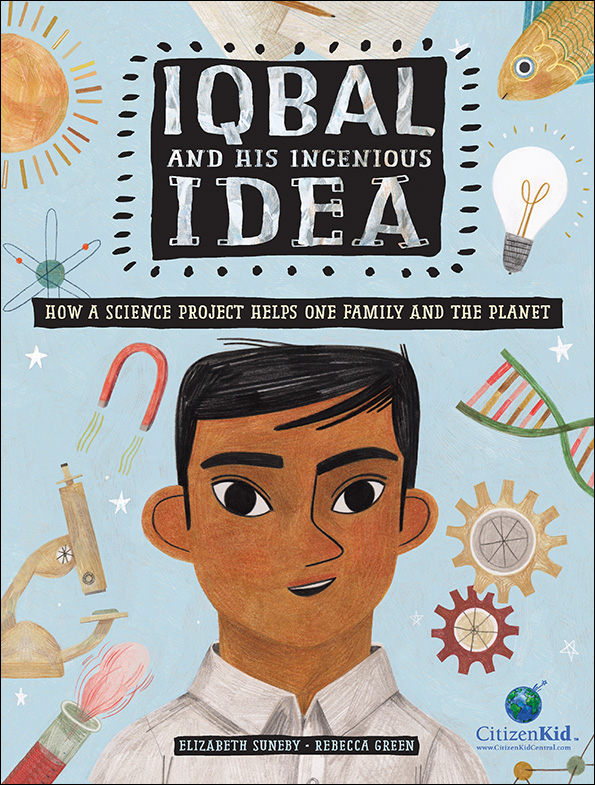
The latest from Kids Can Press’ Citizen Kid imprint, Iqbal and His Ingenious Idea is a fictional story about a Bangladeshi boy named Iqbal, who comes with a clean, solar-powered cookstove for his science fair project. He sees his mother force to cook the family’s meals indoors during monsoon season, but the family has no stove: she cooks over an open fire, which produces smoke that makes breathing difficult, especially for his mother and baby sister. He learns about solar energy cooking, wins first place in the science fair, and introduces a sustainable and healthier way for families to prepare meals. The artwork illustrates everyday life in Bangladesh and communicates the closeness Iqbal shares with his family and his hard work to create a science fair project that accomplishes the dual purpose of getting him a good grade and helping his family. The story shows readers that kids can make a difference, and that healthier living doesn’t depend on expensive gadgets – a little research, and you can make the world a better place with tools right in front of you. The book includes more information on cookstoves, a glossary, and instructions for making a DIY solar cooker. Great for class projects and science fair ideas!

Audrey the Inventor, by Rachel Valentine/Illustrated by Katie Weymouth,
(May 2018), words & pictures, $17.95, ISBN: 9781910277584
Recommended for readers 4-7

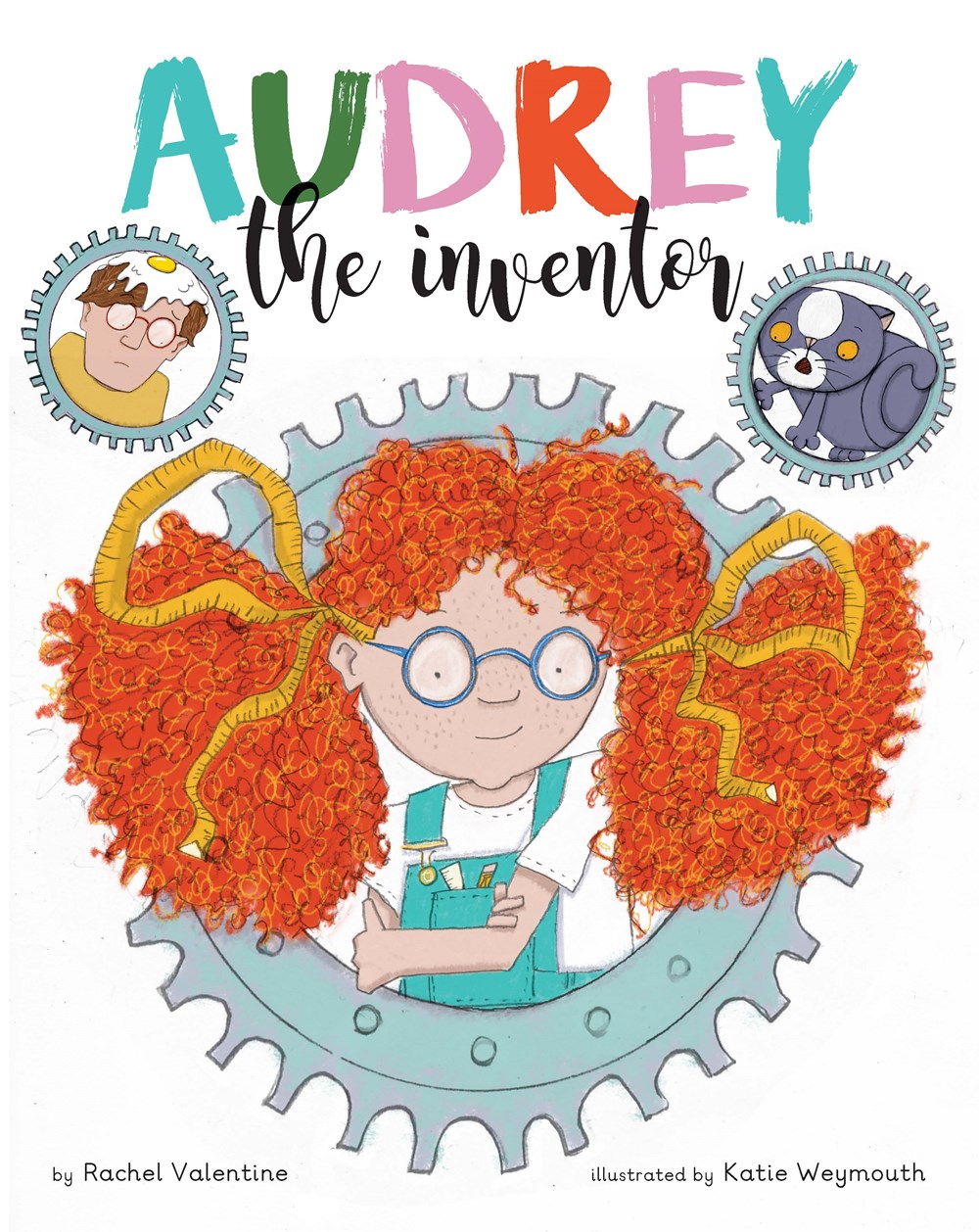
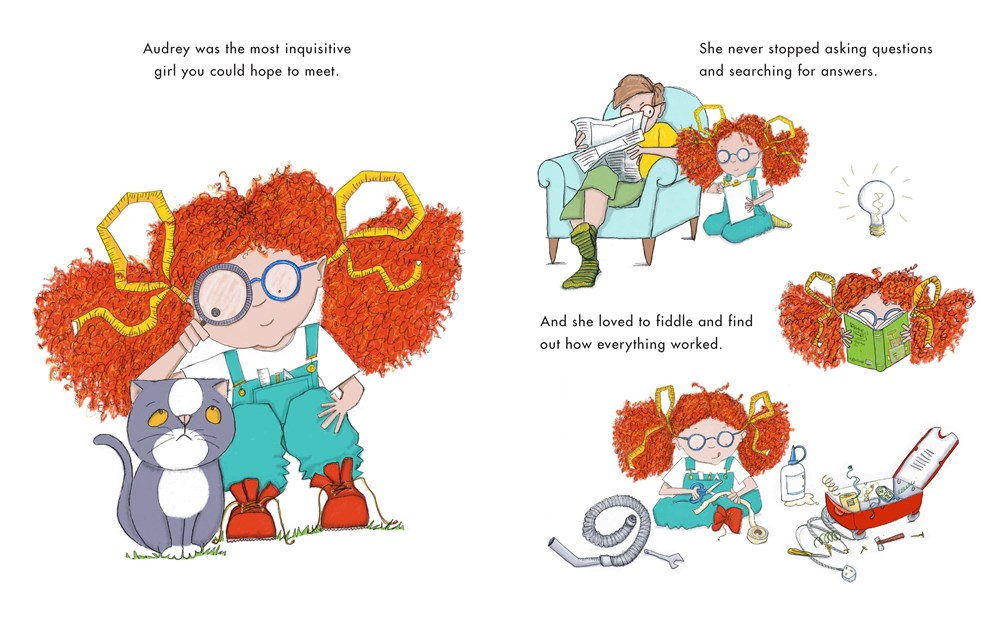
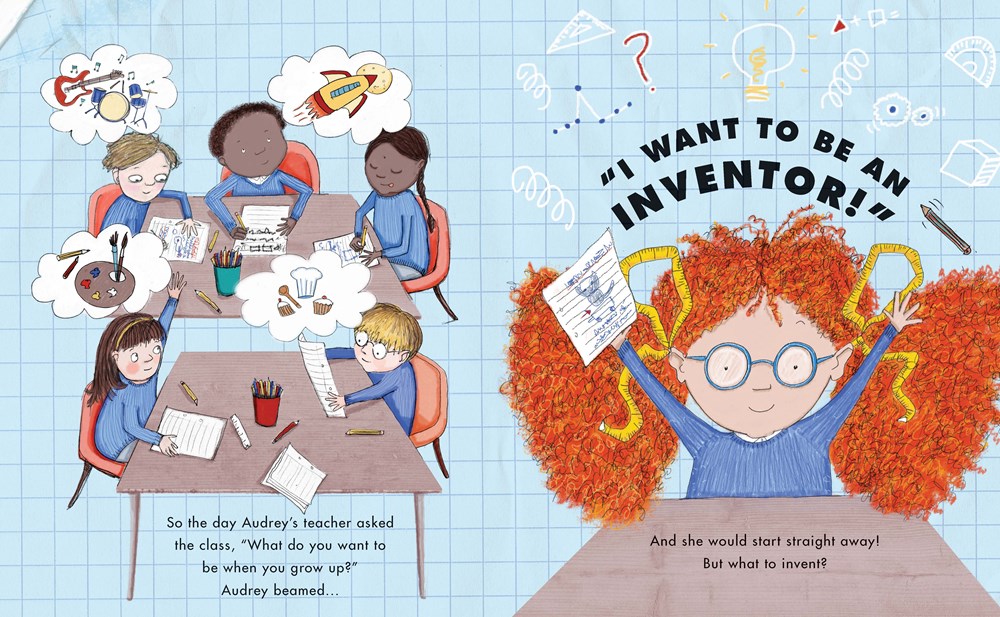
Audrey could hang out with Izzy (first book) and Andrea Beaty’s gang. A wild-haired, redheaded little girl who uses measuring tape for ribbons, Audrey is a curious kid who wants to be an inventor – but she doesn’t know what to invent! She sets off on a host of different ideas, some involving her poor cat, Happy Cat, all of which end up in the “rework” pile. She’s ready to throw in the towel, but decides to give it one last try after getting some encouragement. Little touches, like featuring a graph paper background and visualizing Audrey’s thought process and her doodles, invite kids to share their own ways of working out ideas. The collage, watercolor, and pen artwork comes together to create a busy story about a busy mind. A fun add to creative collections.

These books offer a great way to introduce the scientific method, even for younger grades. Little Bins for Little Hands has a good article, with tips on using the scientific method – and including links to experiments – for preschoolers.

Posted in Adventure, Fiction, Middle Grade, Tween Reads

STEM Siblings: Nick and Tesla are back!

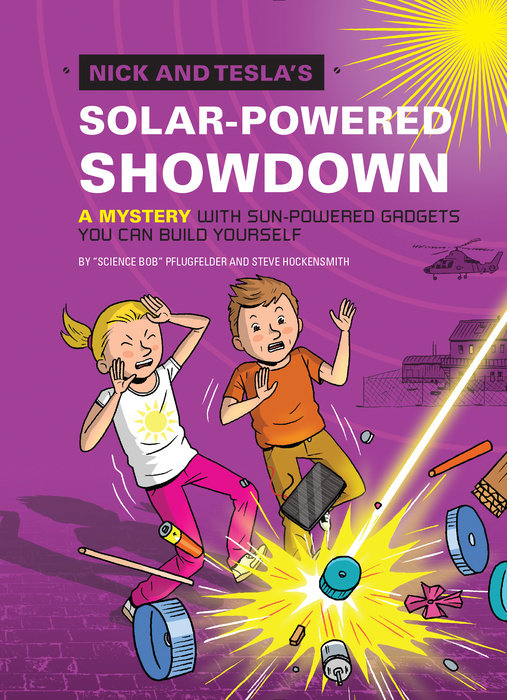
nick and teslaNick and Tesla’s Solar-Powered Showdown, by “Science Bob” Pflugfelder and Steve Hocksmith/Illustrated by Scott Garrett (May 2016, Quirk Books), $12.95, ISBN: 978-1-59474-866-0

Recommended for ages 8-12

Super smart siblings Nick (short for Nicolas) and Tesla are back, and so is Uncle Newt, plus friends Silas, and DeMarco! Nick and Tesla are having a heck of a summer: their parents are still missing, and all signs point to them being kidnapped, possibly by an evil mastermind. This latest installment in the popular middle grade mystery series has brother and sister working together to create all sorts of solar-powered gadgets that will get the attention of their government contact, distract the bad guys, and save the day. Let’s hope it’s enough!

This is such a fun series for middle graders, because it puts the power in their hands. Nick and Tesla are competent, smart kids that aren’t middle school pariahs; they have fun, wacky friends, and they have a strong, supportive – if eccentric – family. They can MacGuyver a solution to seemingly every problem: from getting a secret agent’s attention, to cooking hot dogs using a Pringles container and solar power. The best part? The kids can recreate the experiments! As with the other books in the Nick and Tesla series, Solar-Powered Showdown features five projects readers can make along with the twins: a a hot dog cooker, listening device, nighttime LED signal cannon, range rover, and alarm bell. All solar-powered, and all easy to make (with adult supervision).

You don’t need to be intimately familiar with the series to pick this one up – this is the first book I’ve read in the series; it’s been on my “to get to” list for a while – because the text will fill you in, usually via humorous footnotes, on what’s happened in the previous books. A note at the beginning of the book lets parents and kids alike know that project instructions should be reviewed by an adult, and that adults should supervise and assist on each project. The instructions are detailed, numbered, and illustrated, really encouraging kids to go for it and create exciting, sustainable things!

The Nick and Tesla website has videos, educator guides, book excerpts, and downloadable shopping lists, by book, for each of the projects featured in the novels. You can submit your own work for them to check out, too.

I’m working on a lot of STEM/STEAM ideas for Summer Reading, so this series will be on display, along with Gene Luen Yang’s Secret Coders and HowToons graphic novels (the second Secret Coders book is due out in August!), and Jon Sciezska’s Frank Einstein series of novels. Get kids thinking and creating this summer!

Need more ideas? Science Bob has tons of them on his own website, and his Instagram has some very cool science facts and videos, like Tesla coils at work and BB8 droids under construction.