Posted in Fiction, Intermediate

Books from Quarantine: Stella Endicott and the Anything-Is-Possible Poem by Kate DiCamillo

Stella Endicott and the Anything-Is-Possible Poem, by Kate DiCamillo/Illustrated by Chris Van Dusen (Tales from Deckawoo Drive), (June 2020, Candlewick Press), $14.99, ISBN: 9781536201802

Ages 7-10

When my bigger little ones (my first and second graders, usually) come into the library, many of them automatically ask me for Mercy Watson books. They love Kate DiCamillo, they love Mercy Watson and all her friends on Deckawoo Drive, and they love Kate DiCamillo at an early age; when they’re a couple of years older, and come in looking for Tales of Desperaux, I remind them that this is the same author they’ve been reading since they picked up Mercy Watson, and that smile, that book hug, it makes every day I’m there fantastic. Yeah, I’m rhapsodizing again; forgive me. It’s been going on three months since I’ve been around my Corona Kids and I’m missing them, big time. Every book I read, I know just the kid I want to tell about it. This is hard, folks. Don’t think for a second it isn’t.

Okay. So, let’s talk the newest book in the Tales from Deckawoo Drive series. Stella Endicott loves school and loves her teacher, Miss Liliana. She’s so excited to work on her assignment, to write a poem, because she knows just who she’s going to write about: Mercy Watson, the pig who lives next door and relaxes on a couch! She creates a lovely poem, but class know-it-all Horace Broom insists that she’s lying: wizards don’t play accordions, and pigs don’t live in houses! Annoyed not only by Horace’s lack of imagination, but the fact that he called her a liar, Stella shouts back at him, and the two are sent to the principal’s office, which leads to an adventure where the two will learn to see things from the other’s point of view.

The Deckawoo Drive books just make me happy. They’re funny, upbeat, and always have a good message to share. Here, we learn that it’s good to be literal and metaphorical. It’s balance! Stella is smart and spirited, and Horace may have learned his lesson about offering uninvited criticism. Gouache artwork from Chris Van Dusen is automatically recognizable: kids will spot this book on a bookshelf (literal or virtual) a mile away. Mercy’s cameo is adorable – if you have the space in your reading area, stick some cushions or pillows on the floor with a stuffed pig and let your kids curl up with their Mercy to read, imagine, and create with.

Stella Endicott and the Anything-Is-Possible Poem has a starred review from Kirkus. Want to visit Deckawoo Drive and spend some time with Mercy? Visit the Mercy Watson website for information about the books, resources for parents and educators, join the fan club, and play some games.

Kate DiCamillo is the Newbery-Award winning author of Flora & Ulysses and The Tale of Desperaux, and a former National Ambassador for Young People’s Literature. Chris Van Dusen is the illustrator of the Mercy Watson and Deckawoo Drive series, and an author-illustrator of books including The Circus Ship and Hattie & Hudson.

 

Posted in Uncategorized

Books from Quarantine: Six Angry Girls

Six Angry Girls, by Adrienne Kisner, (Jul. 2020, Feiwel & Friends), $17.99, ISBN: 9781250253422

Ages 12+

This girl power teen novel is a fantastic story of friendship, knitting, and smashing the patriarchy. Raina Petree is on track to have a great senior year until her boyfriend dumps her, her drama club leaves her in the lurch, and her college dreams aren’t as secure as she initially thought they were. Meanwhile, Millie Goodwin is tired of being her father’s servant, and when her Mock Trial team votes her out in favor of lesser-qualified, newer guys – even after she’s been the backbone of the team for the last three years – she has HAD IT. Raina turns to an advice column for help on getting over Brandon, the ex-boyfriend, leading her to take up knitting as a hobby; a hobby that leads to a meeting of the minds with Millie, and the two come up with the ultimate idea: start their own Mock Trial team. There are no rules against it, and they manage to find a mentor in their school librarian. Now, they just have to fill the open spots on the team – with girls who are sick and tired of being discounted and looked down on by the boys and men who think they’re calling all the shots. It’s time to pick up the knitting needles, study those legal briefs, and take down the patriarchy.

With a fantastic cast of multicultural characters that smash the gender spectrum, Adrienne Kisner has given readers a group of characters that we’d all want to hang out with. They’re smart, driven, and fed up with B.S., whether it’s from a teacher, an ex-boyfriend or fellow student, or a parent. It’s such an upbeat book, filled with major crossroad moments and stand up and cheer scenes while taking on some very big issues. It’s an excellent discussion book that will spark deep conversations.

I loved this book and would gladly shout this out to my library teens. Give this to your Moxie fans and your Ashley Poston readers. And start a knitting club at your library to get them talking!

Check out Adrienne Kisner’s author webpage for more information about her books, links to her blog and social media, and to sign up for her newsletter.

Posted in Fiction, Middle Grade, Realistic Fiction, Tween Reads

I start #MGMarch with Fly Back Agnes

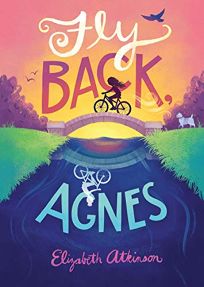
Fly Back Agnes, by Elizabeth Atkinson, (March 2020, Carolrhoda), $17.99, ISBN: 978-1-5415-7820-3

Ages 10-13

It’s Middle Grade March (#MGMarch on social media), and I’m working my way through some incredible Middle Grade in my pile. Let’s start with Elizabeth Atkinson’s Fly Back, Agnes; a book I did not want to put down.

Agnes is a 12-year-old living in Vermont with her mother, who Agnes sees as a “bulldozer” that just rolls over everything in her path. Agnes is frustrated by her mother’s pushiness and opinions about Agnes’s clothes and imminent “becoming a woman”; she really isn’t crazy about her mother’s mumbling artist boyfriend, Richard, and Richard’s weird and obnoxious kid, George. She misses her father, who lives in a nearby town, where he’s a cellist and teaches at a university. She misses her sister, Viva, who’s pulled away from their family entirely. She feels betrayed by her best friend, Megan, who’s become enchanted with the new mean girl, Lux. So when her mother announces that they’re moving to Kansas for the summer, for a project Richard’s been hired to do – despite Agnes having made plans to work at an animals shelter – she has had it. It all starts with a white lie, so she can spend the summer with her dad, who’s housesitting for a friend. She’s thrilled to have the summer with her father, but he’s finishing up his dissertation, so he doesn’t have a lot of time to spend with her, leaving Agnes to wander the town and decide to take on a persona that isn’t Agnes at all. She becomes Chloe, an actress-dancer 14-year-old who has the life Agnes desperately wants. Even as she makes friends in town – a young woman named Stella, Stella’s grandmother, Birdie, and a cute 15-year-old named Fin – the lies get bigger and deeper. Agnes wants to tell them the truth, especially as each reveals their own secrets to her, but she just can’t seem to find a way out.

Two major themes in Fly Back, Agnes are secrets and identities. Agnes is struggling with her identity because she’s on the cusp of “womanhood” – getting her period – something that, for her, is a sign that her childhood is over. She sees her visit to her father as a chance to escape the life she’s in, and tries a new identity on for size while she’s away. Being the main character, she’s the most fleshed out: biracial, with a part-Korean father and American mother, she has her mother’s freckles and curly red hair and her father’s skin tone. Her friends are ready to take on the tween/teen mantle, consumed with their smartphones and appearances, and it feels like a betrayal to Agnes, especially when she overhears mean girl Lux talking with them behind Agnes’s back at a sleepover. Stella and Fin have their own secrets, but they haven’t created a new persona: their identities are wrapped up in their secrets, and their trust in Agnes makes her feel guilty. Agnes’s parents are less fleshed out but have enough background to give us a pretty good picture of them. I wanted to learn more about Viva, but she and Megan were both there to give Agnes more depth, and ultimately, that was fine with me.

Fly Back, Agnes, has great pacing, good characters, and is a story I can’t wait to booktalk to my middle graders. It’s relatable, with (mostly) likable characters, and an interesting mini-plot with rehabilitating wild birds. It’s a good add to your realistic fiction collections.

Posted in Fantasy, Fiction, Fiction, Intermediate, Middle Grade, Uncategorized

Polly and Buster prove that witches and monsters should be friends

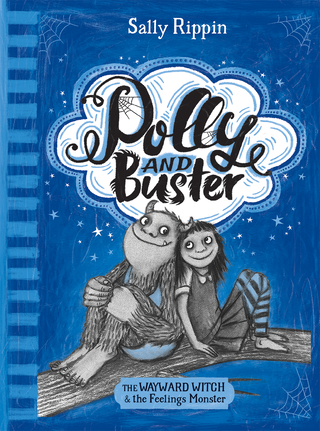
Kane Miller sent me a middle grade fantasy trilogy about Polly & Buster, a young witch and a young monster who are best friends despite monster and witch society not always seeing eye to eye.

Polly and Buster: The Wayward Witch and the Feelings Monster (Book 1), by Sally Rippin, (Sept. 2019, Kane Miller), $6.99, ISBN: 978-1-61067-926-8

Ages 7-11

The first book in the series introduces us to Polly, a 9-year-old witch who just can’t seem to get her witching schoolwork right. Her older sister, Winifred, is the star sibling, and her widowed mother is often frustrated by Polly’s inability to excel like Winifred, and by her friendship with Buster, the monster next door. Polly and her family are still reeling from her father’s death in the mines a few years ago, which seems to be the tipping point for witch-monster tensions. When Polly casts a powerful spell while trying to protect Buster from bullies, her actions are misinterpreted, and the relationship between witches and monsters grows dangerous. Polly and Buster have to work together to salvage their own relationship and keep one another safe as witches and monsters choose sides in what could be a brewing war.

I was pulled right into this easily readable adventure. Polly exhibits some ADHD, dyslexic, and OCD tendencies, which could be linked to her burgeoning witch power: think Percy Jackson and the similar issues exhibited by demi-gods in that series. Buster is a kind-hearted monster who tries to hide his sensitivity from other monsters; his feelings manipulate his size and color, leaving him open to bullying. Witch and monster society in this series is symbolic of our own society: racism, intolerance, and exclusion abounds in witch society, while monsters grow increasingly tired and angry of being considered second-class citizens. Throw in a mean girl bully, and her equally mean, manipulative mother, and Polly and Buster goes from being a sweet story about acceptance and friendship to a powerful look at inequality and revolt.


Polly and Buster: The Mystery of the Magic Stones (Book 2), by Sally Ripkin, (Sept. 2019, Kane Miller), $6.99, ISBN: 978-1-61067-927-5

Ages 7-11

The second book in the Polly and Buster series brings the action and the tension up several notches as readers witness the breakdown of relations in witch-monster society. Polly and Buster are on the run from witches who have determined that Buster is dangerous and needs to be taken prisoner (or worse); Polly turns to her favorite teacher, the sympathetic Miss Spinnaker, for help. Meanwhile, a handful of mysterious stones that Polly’s father left to her start to glow and feel warm to the touch; Polly feels them beckoning her… to the mines where her father died?

The Mystery of the Magic Stones brings the action on quickly – witch and monster society are breaking down, and the story has a very Harry Potter feel as a group of vigilante witches start taking policing matters into their own hands as monsters form gangs to protect one another and defend themselves against witches. There’s a feeling of urgency throughout the story, as Polly tries to unravel the mystery of the stones while she and Buster are running and hiding for their lives. No sophomore syndrome here; the second book in the Polly and Buster series will leave readers waiting to find out how this is all going to shake out: make sure you have that third book ready to give them.


Polly and Buster: The Seach for the Silver Witch (Book 3), by Sally Ripkin, (Sept. 2019, Kane Miller), $6.99, ISBN: 978-1-68464-095-9

Ages 7-11

The third book in the Polly and Buster series brings things to a big close. Polly and Buster have been on the run through all of the second book as relations between witches and monsters threaten to descend into violence. Polly has made discoveries about herself that will change how others see her – if she can stay safe long enough! Seeking out her aunt – an outcast from witch society – for answers, Polly hopes to unload the burden the stones have put on her. Meanwhile, there’s a dark power brewing in Polly and Buster’s neck of the woods, and it’s making everything worse!

In this third book, Polly learns that she’s far stronger than she ever dreamed – her inner strength will give her the power she and Buster need to make things right between their two communities, and will help her defend everyone she loves against the biggest danger that her village has ever faced. Polly has her hero’s journey across these three books, but Buster also comes into his own as a monster who accepts his feelings and can put aside his own fear to jump in and help when he’s needed.

The whole series, originally published in the UK, is great for emerging readers who are ready for a little more of a challenge in terms of book content and length. It’s an intermediate-level series with more heft and big social issues to unpack. There’s fantastic world-building, solid character development, and sympathetic heroes and villains alike. Black and white illustrations throughout will keep readers interested, and help with pacing and imagining. This series will be super-popular with your fantasy readers. U.S. publisher Kane Miller has a bunch of extras, including a free word search, discussion questions and activities, and some discussions points from the author herself.

Posted in Historical Fiction, Realistic Fiction, Teen, Young Adult/New Adult

Rebel Girls: YA turns back the clock

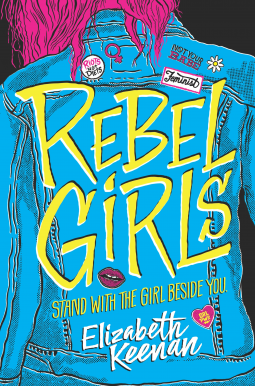
Rebel Girls, by Elizabeth Keenan, (Sept. 2019, Inkyard Press), $18.99, ISBN: 978-1-335-18500-6

Ages 12+

Taking place in the mid-1990s, Rebel Girls is about the riot grrl movement and the abortion debate. Athena Graves is a high school junior and a burgeoning riot grrl. Her younger sister, Helen, is a freshman who prefers Pearl Jam to Bikini Kill and is an aspiring model, while Athena dyes her hair red and eschews all things mainstream. The two sisters couldn’t be more different, but when a rumor makes the rounds at their Catholic high school that Helen had an abortion over the summer, Athena goes on the offensive. She knows that rumor came from Leah, an awful mean girl at school, and her cronie, Aimee. Leah can’t stand someone being as pretty and popular as she is; Helen poses a threat to her popularity. But Leah is dating Athena’s best friend, football player Sean. Pro-life Helen is devastated by the rumors, which get her removed from all extra-curricular activities – including the school’s pro-life club – and could get her expelled. As Athena tries to get to the bottom of the rumors and the bullying Helen endures at school, she starts dating new kid, Kyle, only to have Leah start flirting with him, too. Athena is going to have to lace up her Doc Martens and take on Leah and her mean girls, riot grrl style: which can be the toughest thing of all, because riot grrl culture encourages women to lift up other women, not put them down.

Rebel Girls presents a solid, realistic look at both sides of the abortion debate. Athena and her best friend, Melissa, are both riot grrls and pro-choice advocates, where Helen is firmly pro-life; in defending Helen, the two come up with a strategy that doesn’t preach, but does leave a lot of room for discussion. Riot Grrl culture is alive and well in this book, which resonates, because elements of that culture are experiencing a renaissance today: ‘zines, social causes, and the #MeToo culture have their roots in the ’90s and the riot grrl movement. Athena constantly checks herself through the book, reminding herself that even when things are difficult, she has to find a riot grrl way to handle things. That means not spreading vicious rumors about Leah or tearing her down to make Helen look or feel better. Athena and Melissa find ways to rebel against the faculty and student body persecution of Helen in a brilliant way that unites the school while still following (most of) the rules. As a Catholic schoolgirl from the late ’80s, Rebel Girls was like a trip back home. I loved the writing, the characters, and the smartly crafted story. The story touches on the ugly underneath the gloss in more ways than one, too: Melissa is half Vietnamese and half Cajun; Sean is African-American, and both characters experience racism in the book. It’s a small thread of a subplot, but a solid one to remind readers that the more things change, the more things stay the same. If you have readers who loved Moxie by Jennifer Mathieu, make sure to give them this one.

Rebel Girls has a starred review from Kirkus.


Posted in Fiction, Middle Grade, Science Fiction, Tween Reads

Happy Book Birthday to Weird Little Robots by Carolyn Crimi!

Weird Little Robots, by Carolyn Crimi/Illustrated by Corinna Luyken, (Oct. 2019, Candlewick), $16.99, ISBN: 9780763694937

Ages 8-12

Two girls discover their mutual love of tinkering and science in this quirky, fun, illustrated novel. Eleven-year-old Penny Rose is new in town, and doesn’t really have any friends yet – unless you count the little robots she makes in her shed. She makes them out of found objects, and tinkers lovingly with them, giving them names and looking after them every day. Lark, her neighbor, is a quirky girl next door who loves birds and tinkers with found objects given to her by the crows; she makes birdhouses to keep her friends safe from the elements. The two girls become friends and create an entire town for the little robots… and when a mysterious wind sweeps through their town, it brings some surprises with it! But while Penny and Lark enjoy one another’s company, a secret science club at school offers Penny membership in their society. Penny feels the tug between her new best friend and a group of like-minded science friends, but making the wrong decisions for the wrong reasons could cost Penny her best friend and the robots that she loves so much.

This is such an unconventional, enjoyable book! I love the idea of making creations out of found objects, and the touch of magical realism infused in this story makes it a joy to read. It’s a STEM story, a friendship story, and a comforting story about second chances. The little robots have their own personalities, each reflected in their names, bestowed on them by Penny. Penny is more tech-focused, while Lark prefers the world around her, showing that making and tinkering presents endless creations. The black and white illustrations throughout give life to the story and keep readers interested as they move through the book.

There’s a downloadable guide with discussion questions and activities, making this a good idea for an ELA/Science partnership or book club/Discovery Club program. I can’t wait until my library’s copy arrives, so I can start telling kids how much they need to read this book. Maybe it’s time for a secret science society at MY library… hmmmm…


“[A]uthor Crimi infuses this unassuming transitional novel with compassion, humor, and a refreshing storyline in which girls organically weave a love for science into their everyday lives. Illustrations by Luyken add to the guileless sensibility. A contemplation on the magic of friendship told with sweetness, simplicity, and science.”—Kirkus Reviews


Carolyn Crimi enjoys snacking, pugs, Halloween, and writing, although not necessarily in that order. Over the years she has published 15 funny books for children, including Don’t Need Friends, Henry and the Buccaneer Bunnies, Where’s My Mummy?, There Might Be Lobsters, and I Am The Boss of This Chair. Weird Little Robots is her first novel.

For more information, and to download a free classroom guide for Weird Little Robots, visit her website.

Twitter: @crims10

Corinna Luyken is the author-illustrator of The Book of Mistakes. She lives with her husband and daughter in Olympia, Washington.
Posted in picture books, Preschool Reads

Big moves, big thoughts in A New Home

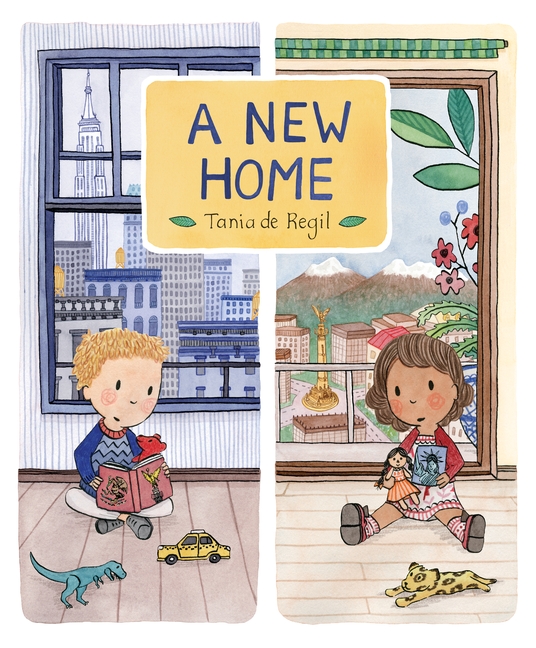
A New Home, by Tania de Regil, (April 2019, Candlewick Press), $16.99, ISBN: 9781536201932

Ages 4-7

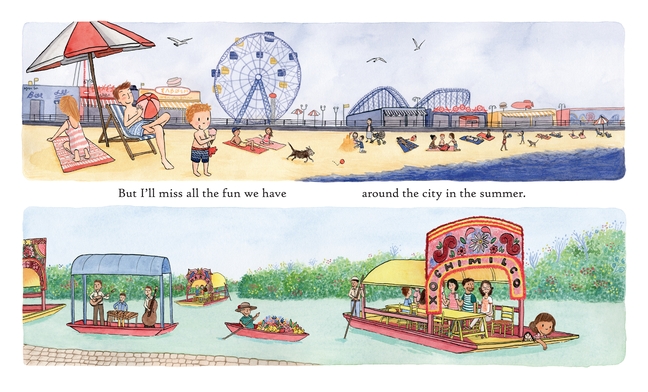
A boy from New York City and a girl from Mexico City are each moving, and nervous about their new home. Readers quickly understand that the kids are swapping places: the boy is moving to Mexico, and the girl, to New York. They voice their worries about everyday things they will miss: an after-school snack on the way home; cheering on a local sports team; having places to play. Optimistically, they also think about the new friends they will meet, and hope they enjoy their new home.

A New Home speaks to kids’ concerns and fears over leaving the familiar and starting over somewhere new, as it reassures those fears by illustrating another child enjoying those same things. The boy from New York stands under a T-Rex skeleton in the American Museum of Natural History as the girl from Mexico City stands in front of the Sun Stone in the Museo Nacional de Antropología, each hoping there will be places for their classes to explore their past. The book touches on some of the challenges of city life, including homelessness and poverty. Back matter provides more information about the places and images that come up in the book; everyday images like hot dog carts and street music all get their moment here. Soft, yet bright illustrations make big city living a little less overwhelming.

A New Home is a good addition to your books about moving. Brightly and Moving.com offer reading lists with further book suggestions. There’s a free, downloadable activity kit available through the publisher.

Posted in Graphic Novels, Non-Fiction, Teen, Women's History

What Makes Girls Sick and Tired – great for YA collections

What Makes Girls Sick and Tired, by Lucile De Pesloüan/Illustrated by Geneviève Darling, (March 2019, Second Story Press), $13.99, ISBN: 9781772600964

Ages 12+

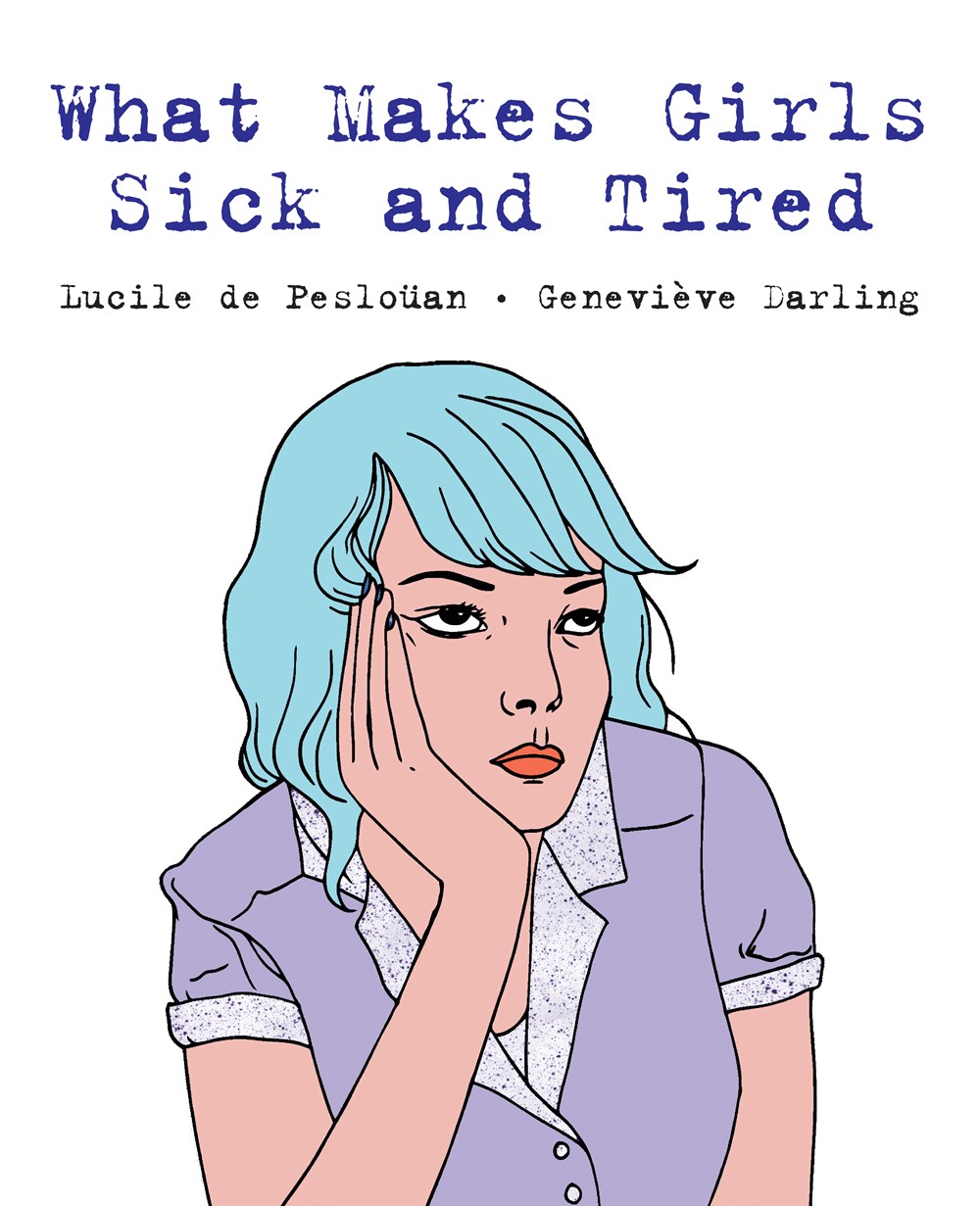
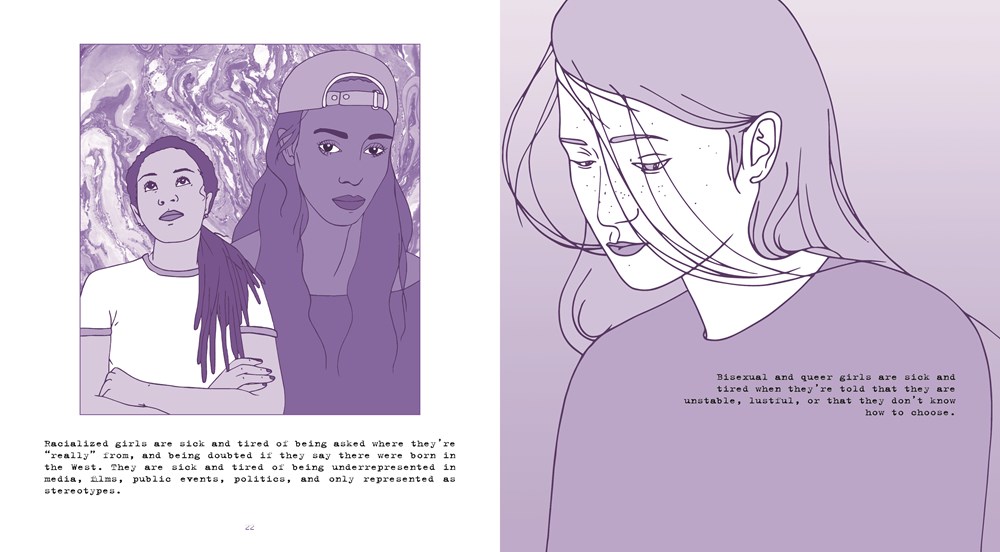
The time for conversations is here: there are a lot of things women are sick and tired of hearing. We’re tired of hearing the same old “jokes” and passive-aggressive comments and we’re not laughing it off with a simple eyeroll any longer. What Makes Girls Sick and Tired is a graphic novel – a feminist manifesto, as publisher Second Story Press states – that brings these obnoxious ideas, assumptions, and comments to light, in the hope that it will prompt discussion and understanding.

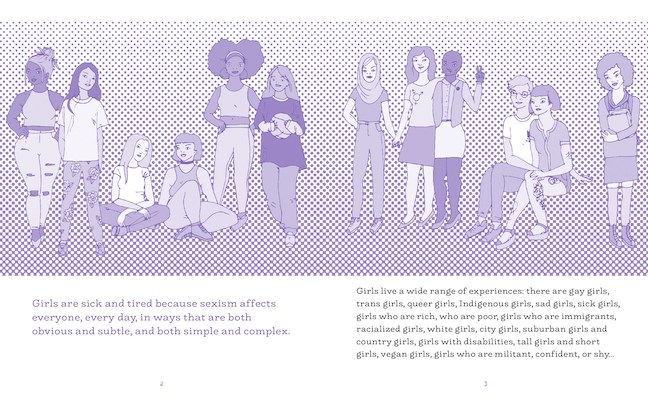
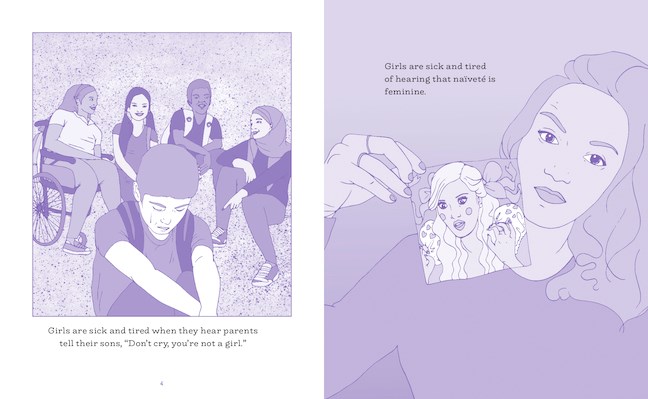
Geneviève Darling’s purple-and-white artwork gives visual understanding to Lucile De Pesloüan’s words and ideas, featuring  diverse, inclusive groups of women to get the points across. Girls and women are not cookie-cutter templates: we are different, have different tastes and experiences, come from different cultures and backgrounds, and have different ideas and beliefs. We don’t all want to be rescued, and we don’t want to be someone’s “score”. We don’t like it when you assume we’re weak, when you tell boys and men to “man up” or “stop crying like a girl”. We don’t want to be told to “act like a lady” or, for that matter, what a lady is, does, or looks like. These moments, and many more, are intelligently captured and plainly stated. It’s a powerful, smart book that I hope will inspire young women – and men – to read, discuss, and move forward with understanding. There are no solutions presented here: that’s for us to take on.

What Makes Girls Sick and Tired has received some great feedback from librarians and bloggers, and I’m looking forward to getting this on my shelves. Like Oni Press’s A Quick Easy Guide to They/Them Pronouns, this is information that works well in graphic format for teen and college audiences.

Posted in Middle Grade, Non-fiction, picture books

Two picture book biographies: Charlie Chaplin and Gloria Steinem

Smile: How Young Charlie Chaplin Taught the World to Laugh (and Cry), by Gary Golio/Illustrated by Ed Young, (March 2019, Candlewick Press), $17.99, ISBN: 9780763697617

Ages 8-12

This picture book bio on silent screen giant Charlie Chaplin starts with Chaplin’s early life in London and his life in a poorhouse; covers his early performing years in London and his discovery by American filmmaker Mack Sennett, and Chaplin’s success in creating his classic Little Tramp. Using verse with occasional moments of rhyme, this is a fantastic way to bring Charlie Chaplin’s movies and life to an audience that, as Kirkus notes, “grow ever more distant”. I remember watching Chaplin’s movies on TV when I was growing up, and later on, as a cinema student in college; I loved his humor, and I loved his social commentary that came across loud and clear. Smile touches on these concepts and Chaplin’s talent to make viewers laugh and cry, sometimes at the time.

Ed Young’s collage and ink artwork is incredible. The collage endpapers are populated with silhouette cutouts; spreads are created using torn paper, fabrics, newsprint, and murky colors. Little Tramp silhouettes show up on almost every spread. The story ends with a photo of Chaplin as Little Tramp, and the beginning and end of the book appear as a silent film title cards.

Back matter includes quotes from Chaplin’s writing, an afterword from the author, facts about Charlie Chaplin, and a list of resources. The author includes a suggested Chaplin viewing list that I’d love to run here at my library. I’ll have to see if I can generate some interest. In the meantime, here’s a clip from The Kid (1921).

Smile has starred reviews from Kirkus and Publishers Weekly. Gary Golio is an award-winning author of children’s nonfiction; Ed Young is a Caldecott-winning artist.

Gloria Takes a Stand: How Gloria Steinem Listened, Wrote, and Changed the World, by Jessica M. Rinker/Illustrated by Daria Peoples-Riley, (March 2019, Bloomsbury), $17.99, ISBN: 9781681196763

Ages 8-12

Feminist activist and icon Gloria Steinem’s story is told in narrative text and mixed media art, beginning with her early years as she traveling with her parents and learned in the back of their car. She goes to college, shakes off the “when are you going to get married?” expectations, opting to travel to India. Inspired by the the 1963 March on Washington, she decided to join fight for equality, eventually co-founding Ms. magazine in 1971.

The text is a bit dense, making it a better choice for middle grade readers; short sentences summarize every few spreads to reinforce Steinem’s actions throughout her life: “Gloria watched. She learned. And helped”; “Gloria thought. She questioned. And learned”. The mixed media artwork shows Steinem’s intersectionality, standing alongside people of color at marches and protests. There’s a nice tribute to Steinem’s influence on later generations of young women, with a diverse group holding signs including “Black Lives Matter”, “Where are you going to college?”, and “Resist! Persist!” An author’s note and illustrator’s note each touch on Steinem’s personal influence, and additional back matter includes a timeline of important events in U.S. women’s history, and a bibliography of further resources. The endpapers are renderings of Ms. magazine covers.

A nice addition for Women’s History Month collections and research.

Posted in Fiction, Fiction, Middle Grade, Realistic Fiction, Tween Reads

Reckless Club “remixes The Breakfast Club for the Instagram generation”

The Reckless Club, by Beth Vrabel, (Oct. 2018, Running Press), $16.99, ISBN: 9780762490400

Ages 9-13

I had to use Kirkus’ line in that opening, because how more perfect can one describe a book? Beth Vrabel, one of my favorite middle grade authors, reaches back into one of the movies that defined my generation and brought it back, with a few nips and tucks, to inspire a new generation. We take one group: a Nobody (Jason), a Drama Queen (Lilith), a Flirt (Wes), an Athlete (Ally, also known as “Sports Barbie”), and a rebel (Rex) all come together at a retirement home one day in the late summer. Each has done something so wrong in their last year of middle school that they’ve got to spend the last Saturday before high school here, helping elderly patients and their principal’s sister, who oversees the home. Each teen is paired with an elder, and their personalities quickly emerge, as does a mystery: is one of the nurse’s stealing from the patients?

The book has wonderful callouts to The Breakfast Club, meaning I’ll get to booktalk this to some of my parents, too. We Gen Xers never get tired of ’80s nostalgia! But the story is so much more than that. Beth Vrabel has the dual gifts of dialogue and character development, giving readers a voraciously readable story that delves into LGBTQ+, self-esteem and acceptance, and race matters.

I love Beth Vrabel’s books. I feel good at the end of a Beth Vrabel story, and I feel like people can and still want to make a difference when I read a Beth Vrabel story. She tells realistic stories about kids we could see in our classrooms, our libraries, and at our dinner tables every day, and provides insights that we may not even realize we’re overlooking. That handsome class president with the dimples may not have it as easy as you think. The drama queen that throws a hissy fit may have hit her last straw with an awful teacher. That star athlete may have something really unhealthy pushing her to excel. It reminds us, as adults, as well as middle graders and tweens, that everyone has something going on under the surface. A final note, a la the Breakfast Club, sums up the group’s experiences of the day, and we can only hope that The Reckless Club has another adventure in store for us soon.

Visit Beth Vrabel’s website for study guides, news about her other books, and info about school visits.