Posted in Media, TV Shows

TV Show Review: Good Luck Charlie (Disney Channel, 2011-Present)

Recommended for ages 9-14

Good Luck Charlie is a Disney Channel show that follows the Duncan family, a family of six. The title refers to the youngest, Charlie (Charlene), and the videos that her family makes for her as a guide to growing up. Every video ends with her oldest sister (and star of the show) Teddy, played by Disney Channel favorite Bridgit Mendler, wishing Charlie “good luck” as she navigates her wacky family.

The show sticks to the Disney formula of having present, loving parents who tend to need more supervision than the children. While lacking much of the smart-alecky backtalk that some of the Nick shows have drawn fire for, the Duncan children, particularly the middle schooler Gabe, have no problem talking to their parents as their peers. Mom Amy may be a nurse, assuming a degree of intelligence, but she craves attention like a child; Dad Bob has his own bug-extermination business but seems to be lucky he can function on his own, as he comes across dim-witted beyond belief.

Each Duncan child is a stereotype: PJ, the oldest son, takes after his father in being slow-witted; high-schooler Teddy is the straight-A, neurotic overachiever; middle-schooler Gabe is the caustic, scheming pre-teen, and toddler Charlie steals the show with a cute word or smile.

The formulaic characters provide a comfortable familiarity to the ‘tweens who watch the show – they know what to expect, they know that they’ll get a laugh, and they know everything is neatly resolved by the end of the episode. The parents manage to be loving and supportive and offer disciplinary action when warranted; for instance, when Teddy is caught in a lie, she is grounded; when Teddy goes through a bad breakup with her boyfriend, her mother is there to hold her and tell her it will be okay. The kids come together and care for one another and their parents and have friends who they surround themselves with. They are good kids, a good family, with their quirks – kind of like most families.
Posted in Adventure, Fiction, Tween Reads

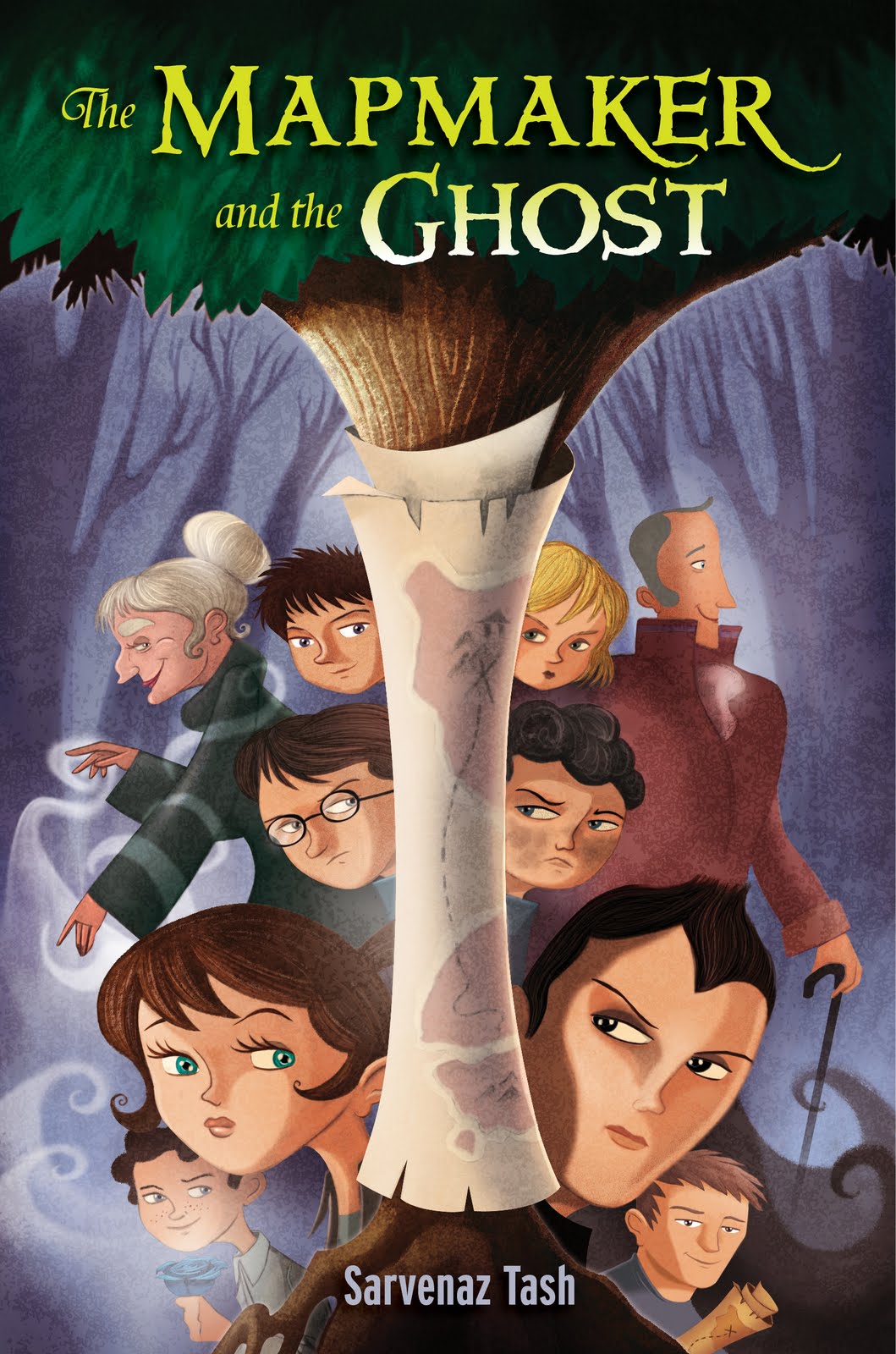
Book Review: The Mapmaker and the Ghost, by Sarvenaz Tash (Walker Books for Young Readers, 2012)

Recommended for ages 9-12

Goldenrod Moram wants to be an explorer and mapmaker like her hero, Meriweather Lewis (of Lewis & Clark fame). When she decides to spend her summer making a map of the forest behind her home, she stumbles into an adventure that has been over a hundred years in the making. Before her summer vacation is over, she will find herself in trouble with a local group of troublemakers, The Gross-Out Gang, and she will meet a strange old lady with an interesting family connection. She will also meet her idol face to ghostly face!

The Mapmaker and the Ghost gives readers a new heroine in Goldenrod Moram. She’s smart and gutsy, like many ‘tweenage characters these days, but she is not on the hunt for treasure – she just wants to make maps like her idol, Meriweather Lewis. And how often do you hear Lewis and Clark coming up as a literary and historical idol? Readers get a look at an important figure in American history and learn a little more about who he is.

 
Some of the characters are predictable. The Gross-Out Gang, for instance, is made up of kids who come from a multitude of mixed backgrounds: the rich parents who have no time for their children; the divorced father in a deep depression who cannot focus on his daughter; and the kid who’s been bounced around from foster home to foster home are all here. The ending is predictably light, but it gives the reader hope that every situation, when you use your brains and bring understanding and honesty to the situation, can work out for the best.
 
This is Ms. Tash’s first book. Her website offers information about the book and a link to her blog.
Posted in Fiction, Tween Reads

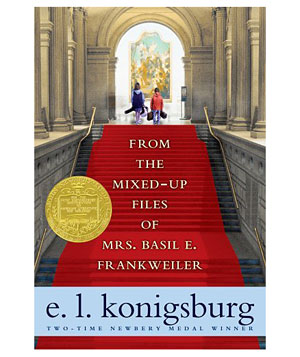
Book Review: From the Mixed-Up Files of Mrs. Basil E. Frankweiler, by E.L. Konigsberg (Athenum Press, 1967)

Recommended for ages 9-12

After reading this Newbery Medal award winner as a child, I wanted to run away and live in the Museum of Natural History. Yes, the museum was different from The Met, where the main characters ran away to, but I wanted to live with dinosaurs.

Claudia is a precocious 11-year old who lives in Connecticut with her family and feels unappreciated and bored. She decides to teach her family a lesson in “Claudia appreciation” and plans to run away. She invites her 9-year old brother, Jamie to go with her because he’s cheap and has money. When he agrees, she sets her elaborate plan in motion, and the two run away and spend a week living in the Metropolitan Museum of Art.

While wandering around all of the exhibits, Claudia and Jamie happen upon a new exhibit of Angel, a statue rumored to be one of Michelangelo’s earlier works. Focused on solving the mystery of Angel’s origin, Claudia cannot go home until she has figured it out. She feels that knowing the secret will change her somehow; give her running away a purpose.

 Their search for information takes them all the way to the statue’s previous owner, Mrs. Basil E. Frankweiler, a wealthy widow living in Connecticut. She manages to get the children to tell her where they have been for the past week, and offers them, in return for their story, an hour in her file room where the secret to the statue lives; they are then driven home by her chauffer.

This story is still relevant over 40 years later.  Parts of it may not resonate with new audiences – maybe an 11- and 9-year old wandering the streets of New York City sounds riskier in this day and age – but it is, at heart, a child’s fantasy. What preteen hasn’t felt unappreciated by his or her family and dreamed of running away? This is a New York adventure that boys and girls alike should read and enjoy.

Konigsburg does not speak down to her audience; rather, she details how intelligent Claudia and Jamie are as she details the planning process for running away, their complex hiding arrangements, and their need to stick to a budget. They make mature decisions: Jamie nixes the idea of a bus or a cab for transportation, saying it will eat into their money too quickly; they take care of themselves by bathing in the fountains (and also collecting some of the coins tossed in there to add to their nest egg) and doing their laundry; they strive to learn something every day, despite not being in school.

E.L. Konigsburg received Newbery Medals for From the Mixed-Up Files of Mrs. Basil E. Frankweiler and The View from Saturday; she also received Newbery Honors for Jennifer, Hecate, Macbeth, William McKinley, and Me, Elizabeth. There is a wealth of information about the book online, including discussion guides through Scholastic and the Wake County Library system.

Posted in Fantasy, Fiction, Tween Reads

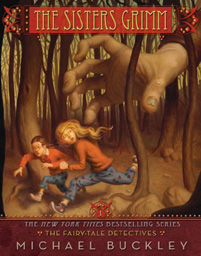
The Sisters Grimm: The Fairytale Detectives, Book 1, by Michael Buckley (Amulet, 2007)

Recommended for ages 9-12

Sisters Daphne and Sabrina have been shuttled from foster home to foster home since their parents disappeared, so when a woman claiming to be their grandmother contacts the orphanage to claim them, Sabrina is suspicious; their parents told the girls that their grandmother was dead.

Not only is their grandmother very much alive, the girls learn that they are descended from the famous Grimm brothers and that their “fairy tales” were actually case studies – magical creatures are very real, and they’re stuck in Ferryport Landing, New York, with a Grimm to act as the guardian.

As Grandma Relda and her friend Mr. Canis are investigating a  mystery involving a giant, Mayor Charming and a house crushed flat, they are kidnapped by a giant and Sabrina and Daphne must find a way to rescue them. But can they trust Jack the Giant Killer, who offers to help them? What magical creatures are there to help them or hurt them – and how can they tell the difference?

This first adventure in the 7-book series is great fun for kids and adults alike – it’s a great bridge between a fun, action-adventure story and the fairy tales we all grew up with. The dialogue is well-paced and smartly written, never talking down to its audience, and the characters are likable and provide a good mix of fantasy and reality. These are children who miss their parents and who fell into the cracks of a child protective system that fails to do its job. Even when they find their fantasy grandmother to love them and connect them back to their family, they face surreal dangers and have to figure out who they can trust. This is a great book for a family book group discussion, providing many ideas to talk about and delve deeper into between parents and kids. The publisher’s website provides a readers’ guide for this purpose (geared at librarians and teachers, but parents can build on this). The site also offers a fairy tale “regurgitator” that helps visitors create their own fairy tales.

Posted in Fiction, Humor, Middle School, Tween Reads

Book Review: Diary of a Wimpy Kid, by Jeff Kinney (Amulet, 2007)

Recommended for ages 9-12

I am an unabashed fan of the Wimpy Kid series – I’ve read them all am waiting, with my kids, for Cabin Fever, the next book in the series (39 days from today!). My older son had the pleasure of meeting Jeff Kinney at ComicCon a few years ago and he was a very nice guy, autographing his book, mentioning that his son shared the same name as mine, my son and his son shared the same name, and really listening to what my son enjoyed about his book. 

Greg Heffley is a middle school ne’er do well – he’s lazy, he’s selfish, and he can’t figure out what everyone else’s problem is. Despite these qualities, he’s wildly funny, and he does try to do the right thing (he just tends to get a little lost on the way to doing it). He’s a middle schooler, he’s just trying to navigate life and make things easier on himself. Can you blame him?

Diary of a Wimpy Kid is a good book for several reasons, aside from it’s compulsive readability: the characters are well-written and funny, Greg has a clear voice, and this book shows boys and girls alike that keeping a diary – or a journal, whatever you choose to call it – is a good thing. Writing, even to a slacker kid like Greg, can be something fun to do. The book even resembles a diary on the inside and out, with lined pages, handwriting font, and hand-drawn pictures that look like Greg had drawn them filling the book.

Jeff Kinney’s Wimpy Kid series is one of the most popular middle-grade series out today, with five book currently out and the sixth coming in November. The Wimpy Kid website offers information about all of the books (and a countdown clock for Cabin Fever)  and offers news and information about the author, a link to “Wimp Yourself” where kids can create their own Wimpy Kid using preselected templates, links to merchandise.

Posted in History, Non-Fiction, Tween Reads

Book Review: Little House in the Big Woods, by Laura Ingalls Wilder (HarperCollins, 1971)

Recommended for ages 8+

Most people know Laura Ingalls Wilder’s stories, if not through her books, then through the long-running television series, Little House on the Prairie. A a pioneer child who wrote down her experiences and later had them published, Ms. Wilder wrote nine Little House books, originally published between 1932 and 1943. The series resonated with girls and young women and is popular to this day.

Little House in the Big Woods is the first book in the Little House series, and introduces the reader to the Ingalls family: Laura, her older sister, Mary, baby sister, Carrie, and parents, Ma and Pa (Caroline and Charles). The family lives in the Big Woods in Wisconsin in the later part of the 19th Century, shortly after the Civil War. (Laura even mentions a family member who is “wild since he came back from the army”.)

We go through each of the seasons with the Ingalls family and learn how families lived, ate, and had fun. There are family dances and visits, trips to town, and encounters with bears and bees. There is always time for work, though, and this is where the book acts as a primer. Laura details the process of preserving meats and vegetables to keep the family fed through the lean winter months; how Pa prepares an animal skin to be used as leather goods; how to get sap from a tree, and how to smoke bees out of a hive to be able to get to the honey. It’s a fascinating look at a different time, and while it is written with a girl’s voice, this is should not be considered a “girl’s book”: boys and girls alike can learn much about the wildnerness life.

Laura writes in a clear voice, drawing her readers in because her stories are real. The love of family and nostalgia as she looks back on her life bring to mind the feeling a child gets when listening to a parent or grandparent talking about their childhood. Black and white drawings by Garth Williams add to the book.

There is a wealth of information about Laura Ingalls Wilder online. Wilder’s home in Rocky Ridge Farm in Mansfield, Missouri, where she wrote the Little House books, is now the Laura Ingalls Wilder Historic Home and Museum and word finds, quizzes and coloring pages. The Little House Books website features a family tree tracking the girls of the Little House series from Laura’s great-grandmother to her daughter, Rose. The site also offers games and craft ideas, as well as information for teachers interested in teaching the book.

Posted in Humor, Science Fiction, Tween Reads

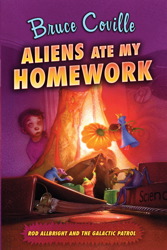
Book Review: Aliens Ate My Homework, by Bruce Coville (Aladdin, 1993)

     Recommended for ages 9-12

Sixth-grader Rod Albright, better known as Rod the Clod among his classmates, is a target for the two bullies at school and the go-to babysitter for his toddler twin brother and sister at home. One day, while working on a science project for school, a miniature alien spaceship crashes into his window, and Rod is commandeered into helping the alien crew in their search for BKR, an intergalactic criminal infamous for his cruelty – and who just happens to be hiding out in Rod’s neighborhood. Can Rod, who is incapable of lying, keep his alien visitors a secret and help them succeed in their mission while getting his science project done on time?

Told from Rod’s point of view, Aliens Ate My Homework is a fun read for kids ages 9-12. As the first book in a four-book series, Coville sets up the story line and introduces the reader to a full cast of characters: Rod, Thing One and Thing Two, the toddler twins, their mother, the crew of the Ferkel, and BKR, the intergalactic villian. The crew of the Ferkel is a diverse group of aliens, illustrating that diversity is welcome in all parts of the universe; Grakker, the Ferkel’s captain, is a borderline hostile military man, but the crew and Rod all learn how to work with him – and vice versa. BKR, the criminal wanted across the galaxy, is guilty of cruelty. Says Ferkel ambassadaor Madame Pong of BKR’s crimes,  “Millions have wept.” There are lessons to be learned within Coville’s bright narrative – different personalities and people and capable of working together; cruelty is wrong; and every being, no matter how powerful or how small, needs help.

Aliens Ate My Homework is the first in Bruce Coville’s 4-book series, Rod Albright’s Alien Adventures; the other books in the series are I Left My Sneakers in Dimension X; The Search for Snout; and Aliens Stole My Body. Coville’s website also offers printable door hangers and bookmarks, crossword puzzles, and information about all of Coville’s books.

Posted in Fiction, Humor, Middle School, Tween Reads

Book Review: Middle School – The Worst Years of My Life, by James Patterson and Chris Tebbetts (Little, Brown, 2011)

Recommended for ages 10-14
 

Rafe Katchadorian is having a tough year: his mom is working double shifts at her diner job in order to support him, his sister, and her lazy, unemployed fiance, and he’s already attracted the attention of the school bully during his first week of middle school. What’s a kid to do? Make a name for himself, of course!

With some prodding by his best friend, Leonardo the Silent, Rafe decides that he’s going to break every single rule in the middle school code of conduct. There are guidelines to follow, though – he’s got to have witnesses every time he breaks a rule; he’s got three “lives” – he loses one if he passes up an opportunity to break a rule – and finally, he can’t hurt anyone in his quest to break the rules. How bad can a good kid get, and how far is Rafe willing to go to break all the rules, and will he break his own in the process?
 
I started this book expecting a light, humorous tale and was amazed at the punch Patterson and Tibbett packed into this middle school story. Rafe’s family issues aside, there are a multitude of issues in his life. In reality, he would be considered an at-risk tween with a need for a solid support system. Two major plot developments may suprise readers, but these are important stories for tweens and young teens to be exposed to – children with similar life stories may appreciate a literary figure they can relate to, and other readers will glimpse into another kid’s world, possibly starting a dialogue or creating a new sensitivity among them.
 
 Chris Tebbetts is a YA author whose love of books and libraries began as a child. His website suggests links for writerw and readers, and provides a list of Good Reads for young readers and teens.
 

James Patterson is best known for his Alex Cross mystery series, but he is a Children’s Choice Award-winning author, receiving the award in 2010 for his book Max, one of the books in his popular Maximum Ride series. His Daniel X series has been praised by Good Morning America as being some of the best books for boys, and the first book in his Witch & Wizard series spent five weeks on the New York Times bestseller list. Patterson’s website, ReadKiddoRead, is dedicated to getting kids reading and suggests titles for all ages and interests.

Posted in Animal Fiction, Fantasy, Tween Reads

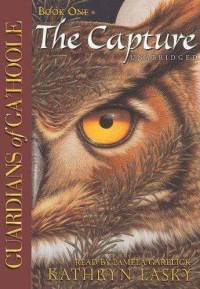
Book Review: The Guardians of Ga’Hoole Book One: The Capture by Kathryn Lasky (Scholastic, June 2003)

Recommended for ages 9-12

Newbery Award winning author Kathryn Lasky’s Guardians of Ga’Hoole series has been hugely popular since the publication of the first book in the series, The Capture. In 2010, Warner Brothers released a movie based on the first three books in the series and its companion website offers quizzes, games and book facts. A Guardians of Ga’Hoole wiki offers exhaustive information about characters and storylines. The series has taken on a life of its own in many ways, similar to such literary touchstones as Harry Potter and The Lord of the Rings.
The book begins with Soren, a young barn owl born into a loving family in the forest of Tyto. He has a cruel older brother, Kludd, a sweet younger sister, Eglantine, and a beloved snake nursemaid, Mrs. Plithiver. One day, Soren falls out of his nest and is kidnapped, taken to the St. Aegolius Academy for Orphaned Owls, where he meets Gylfie, a small Elf Owlet.

St. Aggie’s, as the Academy is referred to, is a thinly veiled deprogramming center/work camp for owls where they are subjected to sleep deprivation and corporal punishment in order to break them down and create a blank slate upon which the St. Aggie’s owls can build and create an army for owl domination. By sticking together and focusing on their families, each other, and the mythical stories of the Ga’Hoole, the guardians of owlkind, Soren and Gylfie defy the odds and retain their individuality. They ultimately escape St. Aggie’s with some help on the inside and head out in search of the Great Ga’Hoole Tree, where they hope to find help to save the owls from the St. Aggie’s army. They meet two other escapees, Digger and Twilight, who join them in their search.

I found myself having trouble enjoying The Capture. I vacillated between being taken aback at the brutality of a book written for a relatively young audience and just not connecting with the story. The book is graphic in its depiction of the punishment heaped on the younger owls and Lasky does not shy away from writing about murder and cruelty. The terror of losing one’s own identity, coupled with cold-blooded murder, make for a potentially terrifying read to some readers on the younger half of the age range, and I’d recommend parents reading the book with their children to address any fears that may come up. The book speaks to the fear of being taken, the terror of not knowing how to get back to one’s family, and the sense of hopelessness that can overpower someone in that situation.
Other times, I was frustrated with the use of owl jargon – the owls have their own phrases and terms, and it appeared haphazard in its usage – and bored with some of the more plodding scenes at St. Aggie’s. I wanted more from the book than it was ready to give me – perhaps reading further into the series will help me connect at a later point.

Kathryn Lasky has written over 100 books for children and has a great website that offers video messages for her fans, a section detailing her awards and information about her upcoming books. Naturally, there is a section devoted to the Guardians series, and she even features fan art dedicated to the series. I really liked that Lasky, who exhaustively researches both her fiction and nonfiction writing, shares her research and links for books she’s working on.