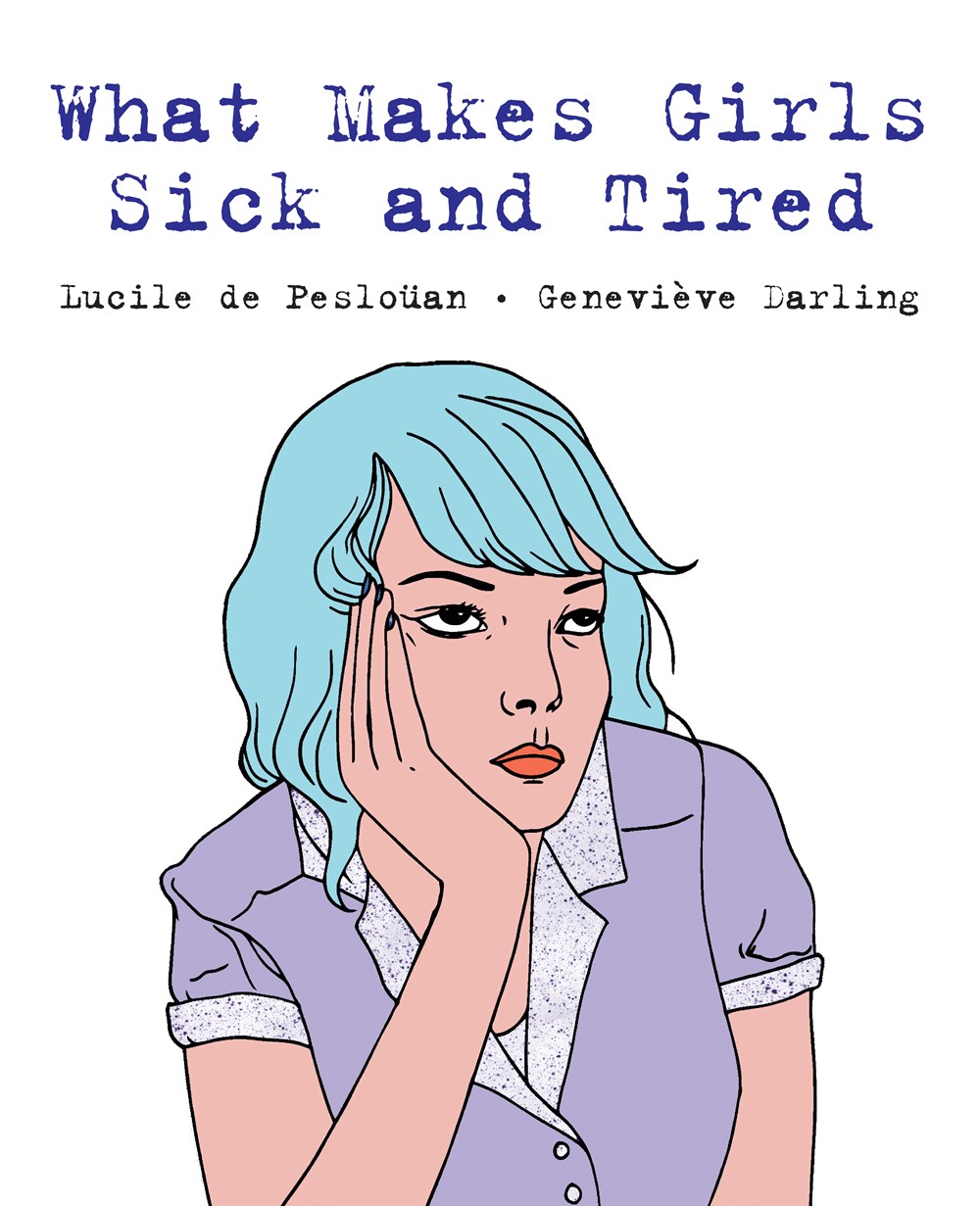
 What Makes Girls Sick and Tired, by Lucile De Pesloüan/Illustrated by Geneviève Darling, (March 2019, Second Story Press), $13.99, ISBN: 9781772600964
Ages 12+
The time for conversations is here: there are a lot of things women are sick and tired of hearing. We’re tired of hearing the same old “jokes” and passive-aggressive comments and we’re not laughing it off with a simple eyeroll any longer. What Makes Girls Sick and Tired is a graphic novel – a feminist manifesto, as publisher Second Story Press states – that brings these obnoxious ideas, assumptions, and comments to light, in the hope that it will prompt discussion and understanding.
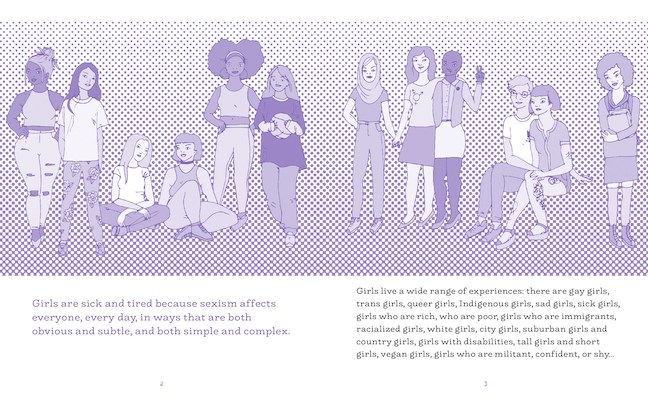
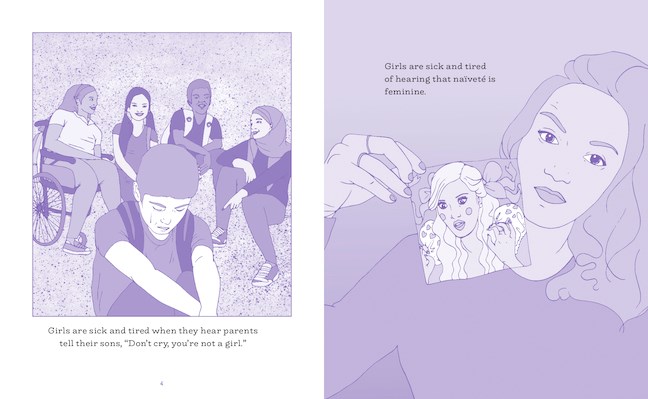
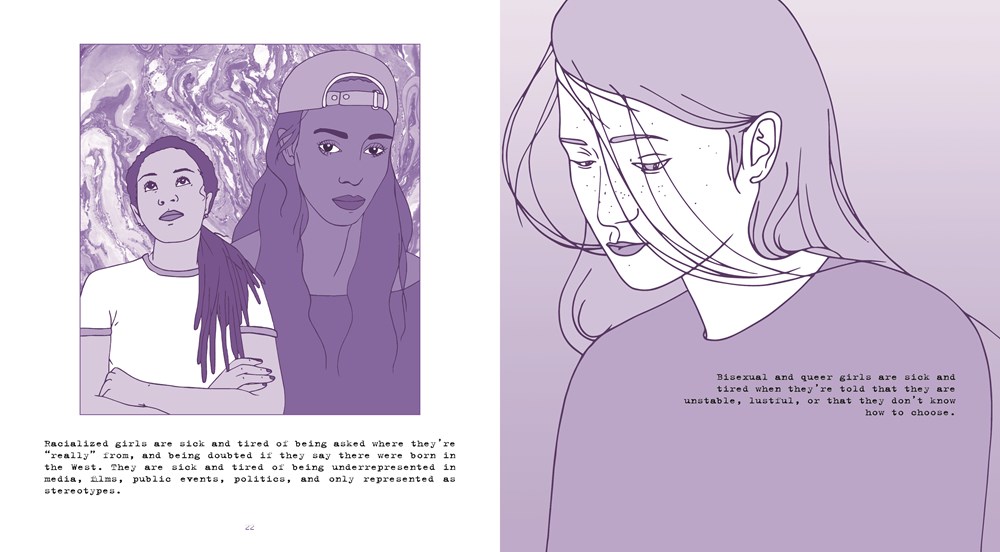
Geneviève Darling’s purple-and-white artwork gives visual understanding to Lucile De Pesloüan’s words and ideas, featuring diverse, inclusive groups of women to get the points across. Girls and women are not cookie-cutter templates: we are different, have different tastes and experiences, come from different cultures and backgrounds, and have different ideas and beliefs. We don’t all want to be rescued, and we don’t want to be someone’s “score”. We don’t like it when you assume we’re weak, when you tell boys and men to “man up” or “stop crying like a girl”. We don’t want to be told to “act like a lady” or, for that matter, what a lady is, does, or looks like. These moments, and many more, are intelligently captured and plainly stated. It’s a powerful, smart book that I hope will inspire young women – and men – to read, discuss, and move forward with understanding. There are no solutions presented here: that’s for us to take on.
What Makes Girls Sick and Tired has received some great feedback from librarians and bloggers, and I’m looking forward to getting this on my shelves. Like Oni Press’s A Quick Easy Guide to They/Them Pronouns, this is information that works well in graphic format for teen and college audiences.


 Mom Read It