Earth Day is coming to a close, but we can celebrate our Pale Blue Dot all year ’round. Let Earth Day be the kickoff to a Spring full of environmental awareness for your libraries and communities!
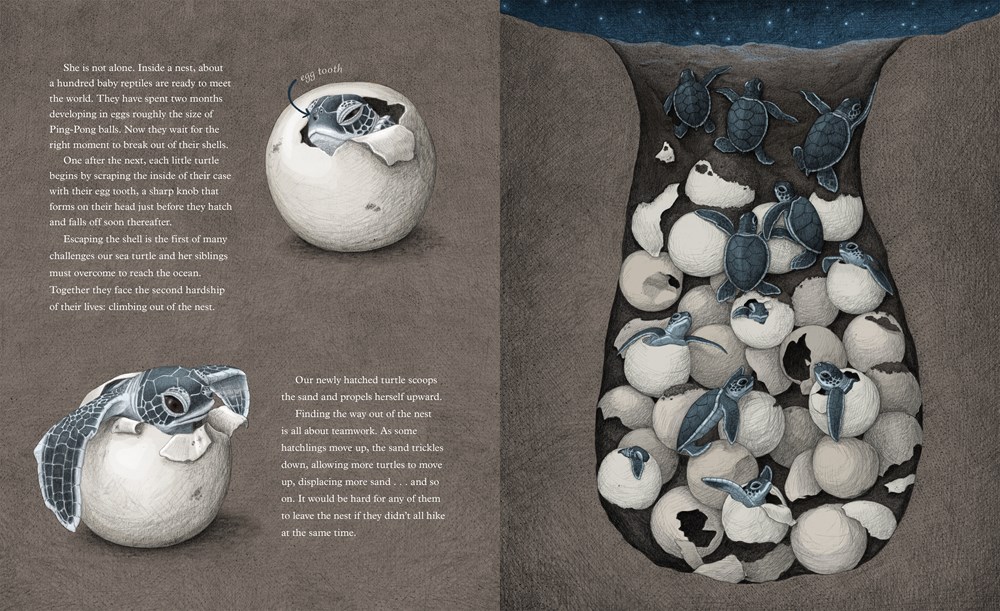
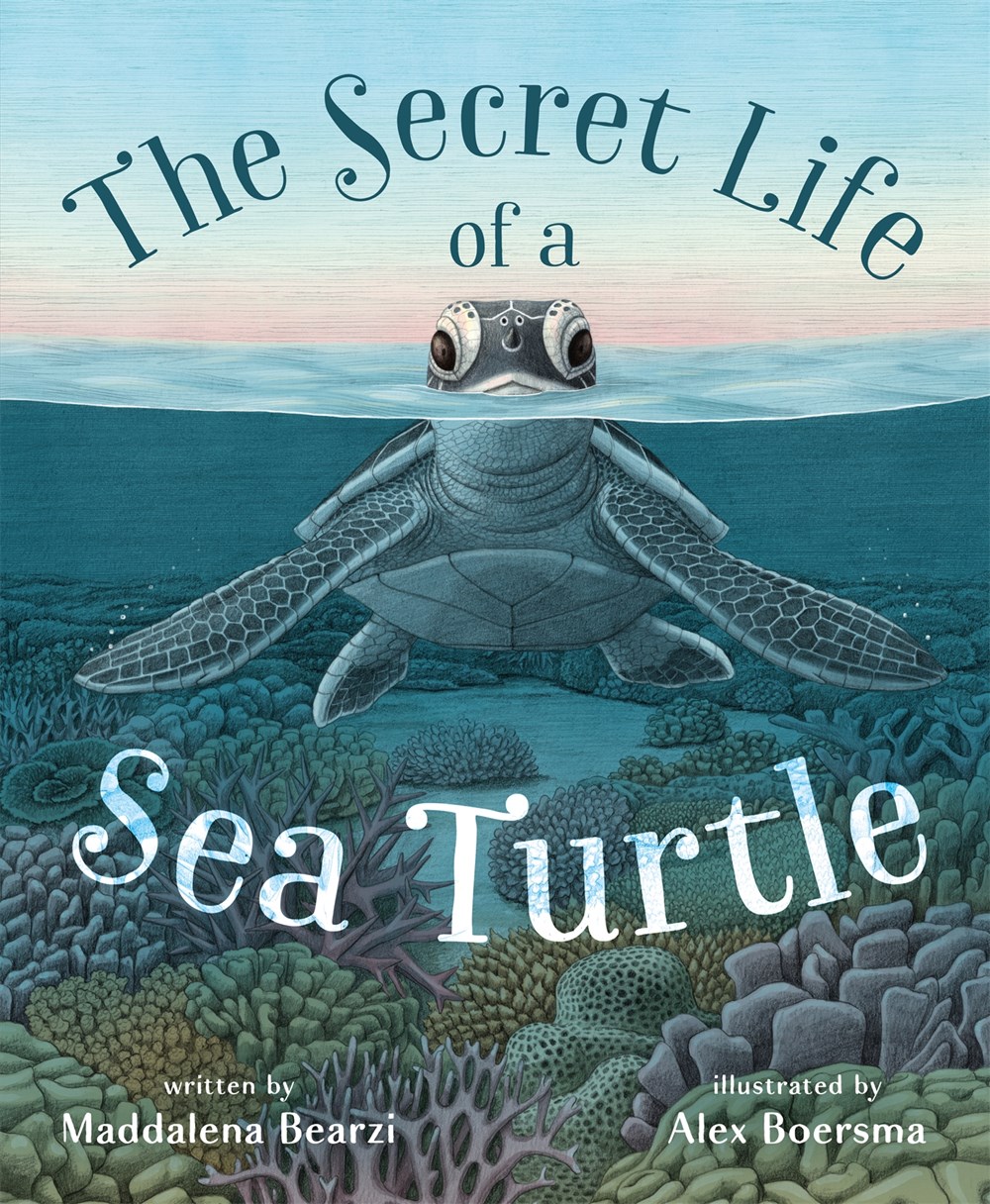 The Secret Life of a Sea Turtle, by Maddalena Bearzi/Illustrated by Alex Boersma, (May 2025, Roaring Brook Press), $19.99, ISBN: 9781250901675
Ages 6-10
There’s bits and pieces of knowledge most of us have about sea turtles: they lay eggs on the beach, the hatchlings hatch, and there’s the “race for life” to get to the ocean before the predators get the hatchlings. What happens after a turtle hatchling makes it to the water? Bearzi, a marine biologist and conservationist, details the life of a sea turtle for readers. Beginning with the hatching, Bearzi continues the story to show readers that making it to water isn’t the end of a sea turtle’s struggle; there are predators in the water and there are humans, whose fishing nets don’t always allow for a turtle to escape. Bearzi also discusses migration patterns and brings the turtle’s life full circle by having the main sea turtle return to the same beach where she hatched, this time to lay her own eggs. Boersma’s realistic illustrations are breathtaking, evoking emotion and awe with each spread. Back matter includes a section on spotting the different types of sea turtles, ways to protect sea turtles, information about sea turtle researchers, and a bibliography. A must-buy for your nonfiction collections. The Secret Life of a Sea Turtle has a starred review from Kirkus.
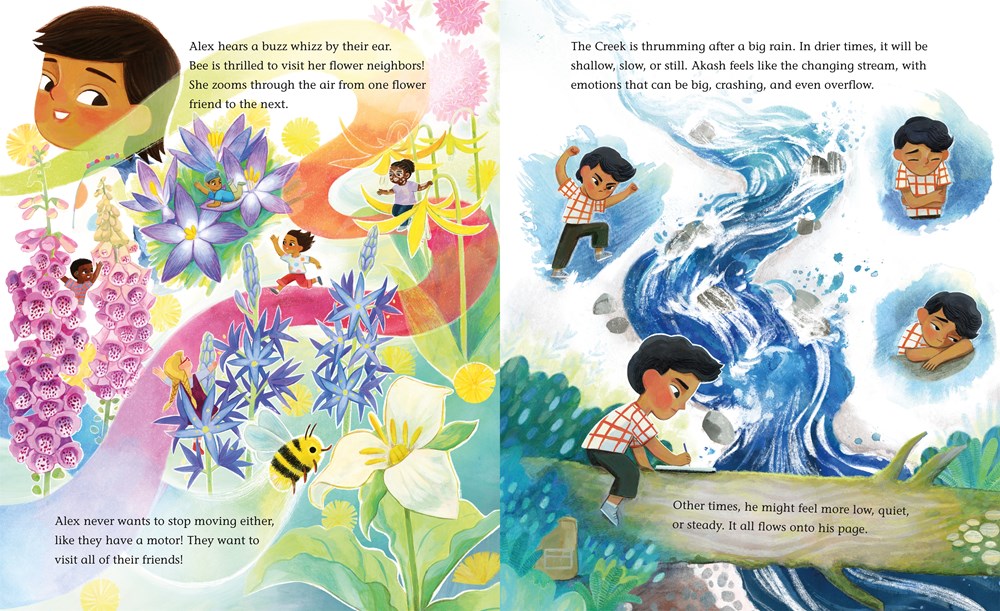
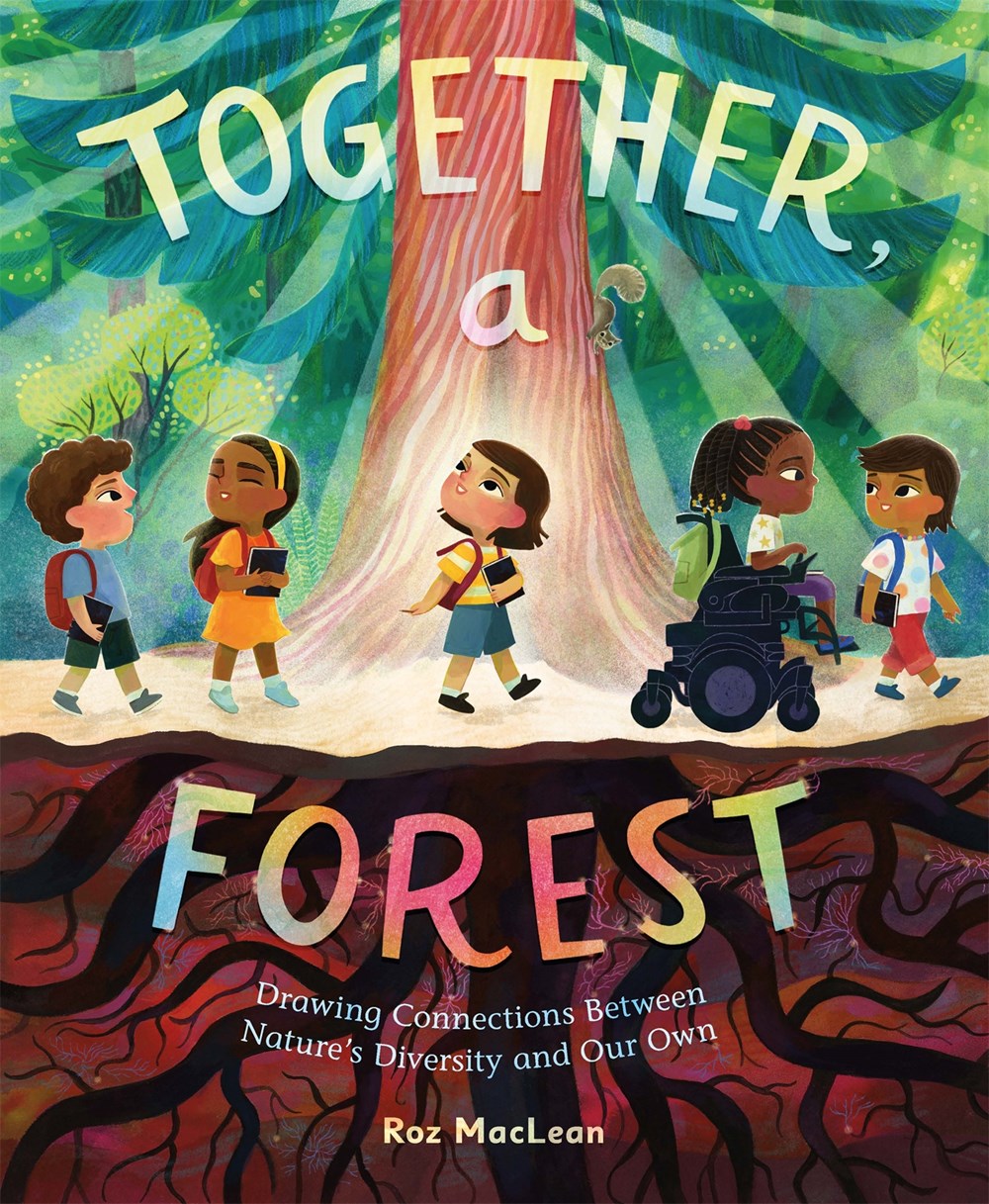 Together, a Forest: Drawing Connections Between Nature’s Diversity and Our Own, by Roz MacLean, (March 2025, Henry Holt & Co), $18.99 ISBN: 9781250864512
Ages 4-8
A class trip to a forest is a study in interconnectivity. Each of the class interacts with their environment in their own ways, illustrating how we each relate to our surroundings. Sasha, a student with a white cane who codes as being blind, listens to the differences in bird sounds as they change position; the surrounding trees and plants creating “sound shadows”. Angel, a student who gets “caught up in the moment” and “often misplaces things”, is much like a squirrel, who buries more seeds than he will need to get through winter, just in case he forgets where he saved everything. Student Joy appears to suffer from anxiety, is worried about her class assignment, but the soothing network of her classmates – her ecosystem – sustains her just as the orchid sustains its environs. A moving meditation on how we all come together to create a diverse and vibrant world and how we are connected to our planet. A good addition to picture book collections. Mixed media illustration includes a diverse and inclusive group. Use this book to encourage discussion. Together, a Forest has a starred review from Kirkus. Download a free activity kit from MacKids School and Library.
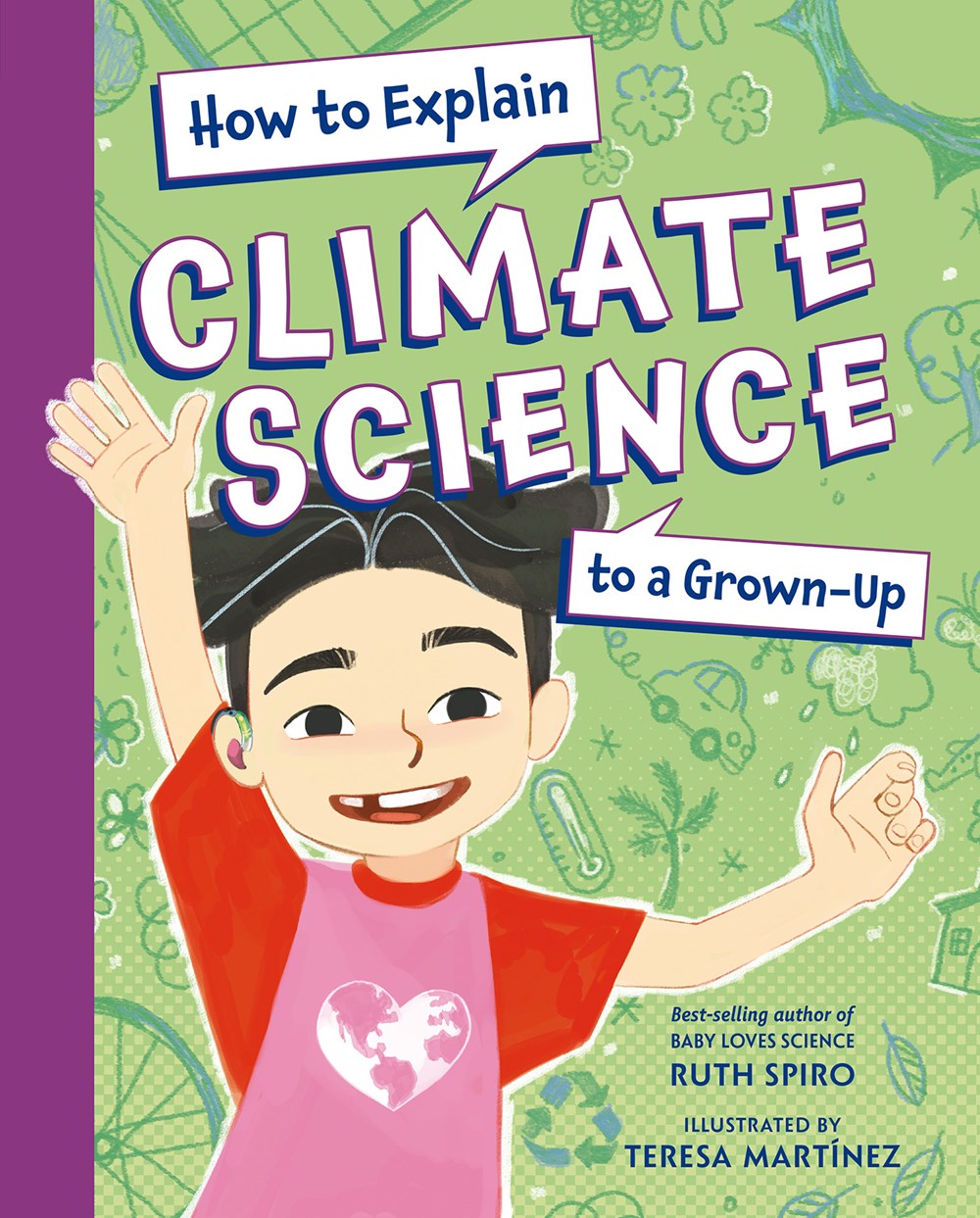 How to Explain Climate Science to a Grown-Up, by Ruth Spiro/Illustrated by Teresa Martínez, (March 2025, Charlesbridge), $17.99, ISBN: 9781623546205
Ages 4-8
You know, sometimes it’s just up to kids to get things done, especially when grown-ups don’t want to listen. That’s where this “How to Explain” series comes in handy, and climate change is a particularly important one for kids to be aware of AND about how to talk to grown-ups. Written with the assumption that kids are in charge, Spiro – whose Baby Loves Science series we love! – offers comic book panels, simple and factual explanation (so grownups can understand!) and Pro Tips to fall back on when stubborn adults insist that climate change isn’t a real thing. Martínez’s illustration offers helpful diagrams for visual explanation and comic book dialogue to keep everyone engaged. It’s a tough job, being a kid, especially when you have to explain everything to those spacey grownups: stock your collection with this series to help a kid out. Download an educator kit, a Kid Expert certificate, and badge from Charlesbridge’s website.

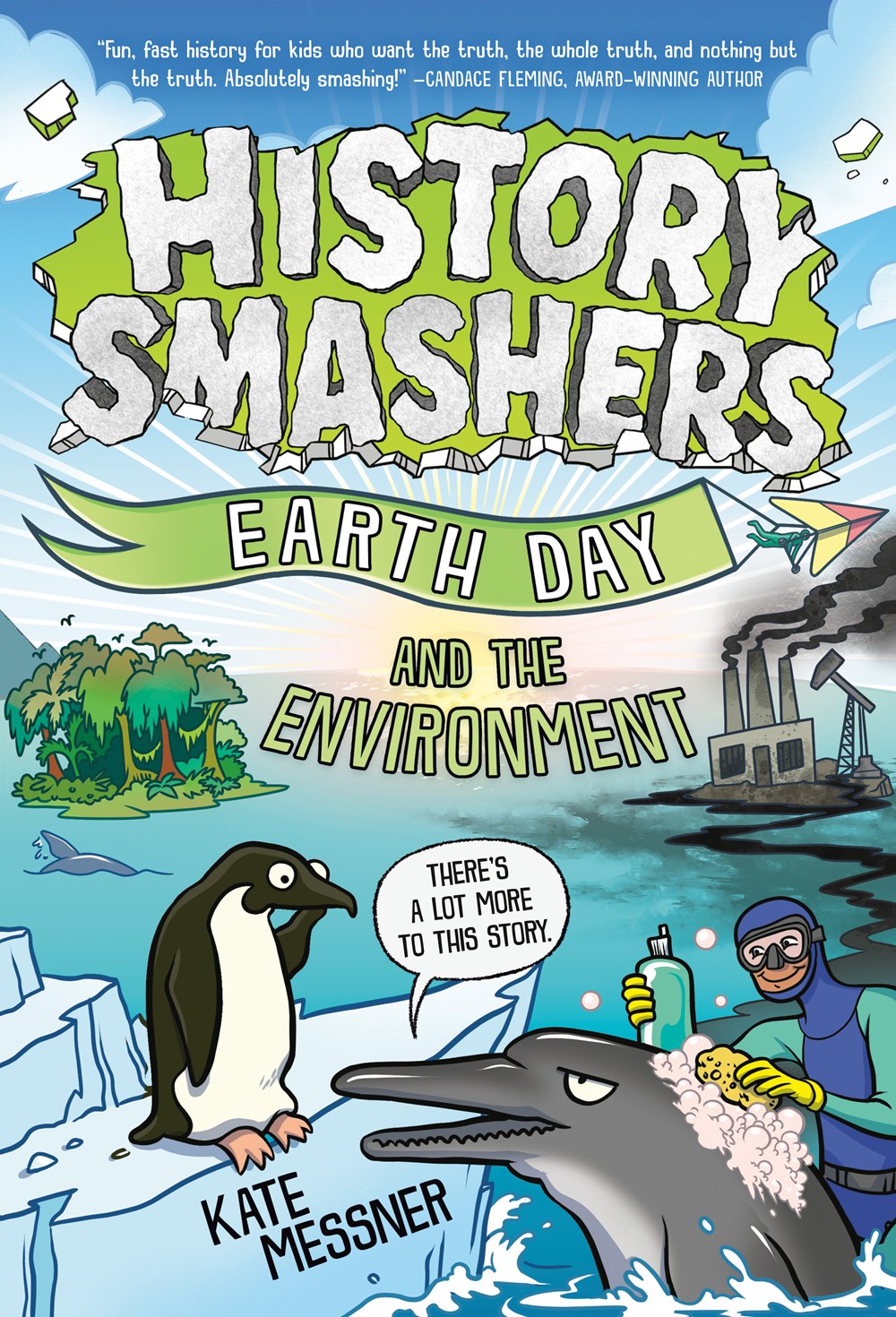 History Smashers: Earth Day and the Environment, by Kate Messner/Illustrated by Justin Greenwood, (March 2025, Random House Books for Young Readers), $9.99, ISBN: 9780593705308
Ages 8-12
This series does gangbusters in my library, which is no big surprise, because it’s penned by Kate Messner. Here, Messner gets to the truth behind the Earth Day history and myths. Messner gets into the first Earth Day in April 1970, but gets to the roots of the holiday with discussions on Indigenous populations who developed sustainable farming practices, environmental activists going back to the 18th and 19th centuries, and the science behind global warming. Messner’s straightforward discourse has the ability to empower a new generation to take up the cause: plant a tree, throw out some trash, recycle the bottles! Greenwood’s black and white illustrations go from the realistic-factual to comic book panels depending on the ideas he communicates. A home run for graphic novel fans and more visual readers that will find a great home in nonfiction collections.


 Mom Read It