Posted in Early Reader, Graphic Novels, Intermediate, Non-Fiction, Non-Fiction

Something’s Fishy introduces kids to fishy fun

fishy_1Something’s Fishy, by Kevin McCloskey, (April 2017, TOON Books), $12.95, ISBN: 978-1-943145-15-7

The man behind Toon’s Easy to Read Giggle and Learn series is back again with his fun blend of science and art. Something’s Fishy teaches young readers about fish – from the ABCs (there’s a fish for every letter of the alphabet), to biology, to the history of keeping goldfish as pets, Mr. McCloskey uses his acrylic and gouache artwork to illustrate all kinds of fish. He also discusses responsible pet ownership by mentioning that some fish, while popular film characters, aren’t really supposed to be pets: they’re much happier in their natural environments. A just-about-actual-size rendering of a foot-long goldfish will make readers giggle… and learn!

I love the trend of graphic novels as nonfiction texts, and Kevin McCloskey’s work for young readers and listeners are among some of my favorites. We Dig Worms and The Poop On Pigeons are in constant rotation at my library, and I can’t wait to introduce kids to fish with Something’s Fishy. His books make for excellent nonfiction storytime reading and pair nicely with picture books. You can very easily pair Something’s Fishy with Rainbow Fish, Lois Ehlert’s Rain Fish, or any number of fish or sea life-related stories. This is a fun add to nonfiction collections and a great gift for your younger Nemo and Octonauts fans.


Posted in Middle Grade, Non-Fiction, Non-fiction, Teen, Tween Reads

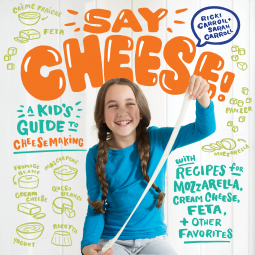
Say Cheese! teaches kids how to make their own yummy cheeses

Say Cheese! A Kid’s Guide to Cheesemaking, by Ricki Carroll & Sarah Carroll, (Apr. 2018, Storey Publishing), $18.95, ISBN: 9781612128238

Recommended for kids (and grownups) 9+

I do love a good kids’ cookbook, and Say Cheese! is the goods. It’s an introduction to cheesemaking for kids – how cool is that? The book provides smart, everyday tips, like how to read a milk carton (the differences between raw, pasteurized, ultra-pasteurized, homogenized, and fortified milks); info about the ingredients that go into milk making, the different animals who provide the milk we drink, and a look at the history and science of cheese and cheesemaking. That all being said, there’s a rundown on the tools and utensils you’ll need, advice on how to clean and prep everything, and finally, without further ado, the recipes! Color photos and step-by-step instrucitons give kids all they need to know on making their first cheese, with an emphasis on adult supervision: they are using the stove and sharp knives, after all. Make a mascarpone or some yogurt, spread some home-made cream cheese on a bagel or skewer some feta onto a toothpick with some watermelon: there are great recipes and tips for snacking to be had. This may not be up every kid’s alley, but it’s a fun, nontraditional cookbook to have on shelves and great for kids who love to cook and are looking for something new to test their skills.

Posted in Middle Grade, Non-Fiction, Non-fiction, Tween Reads

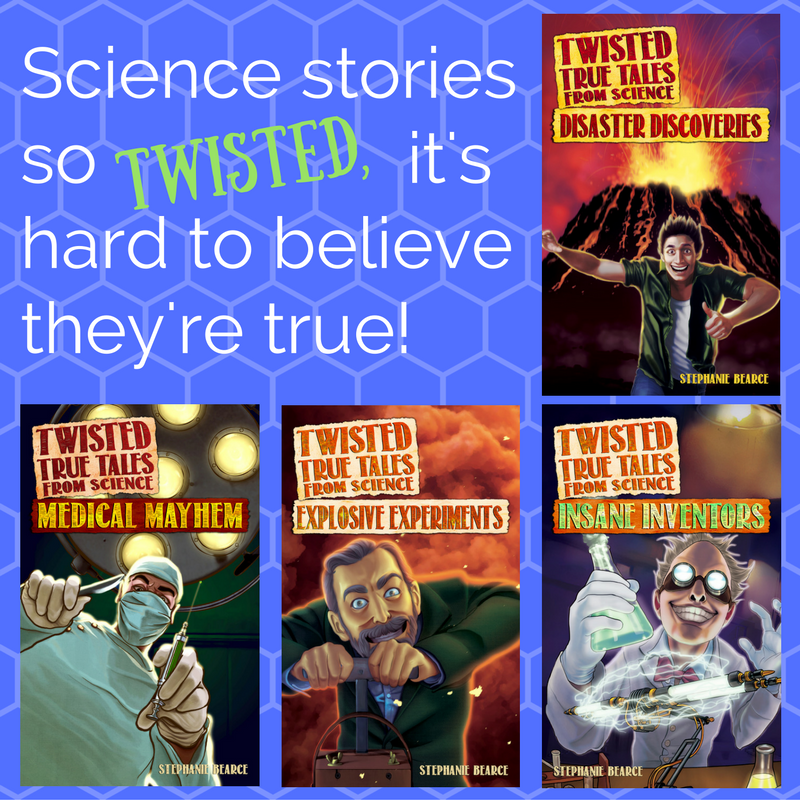
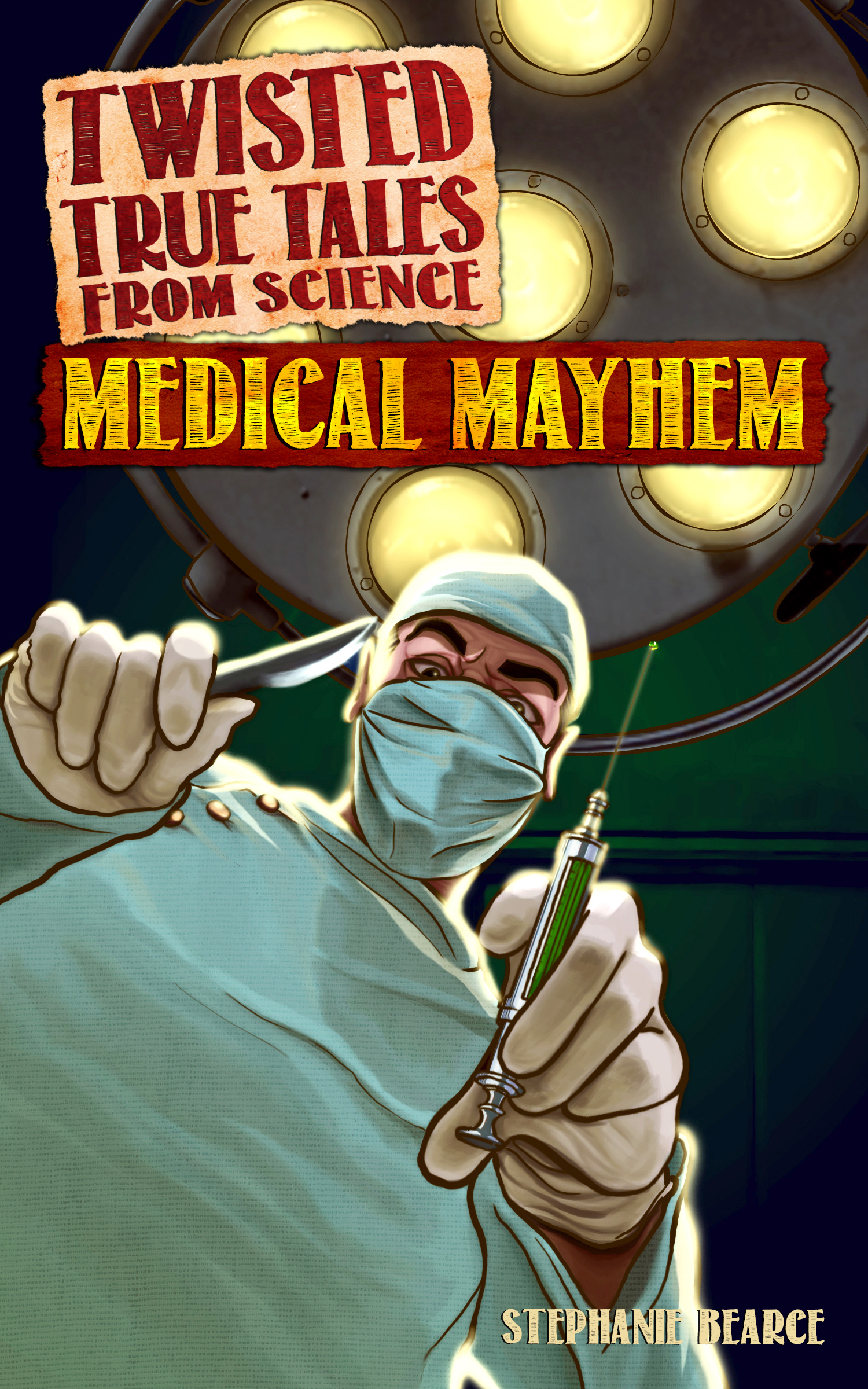
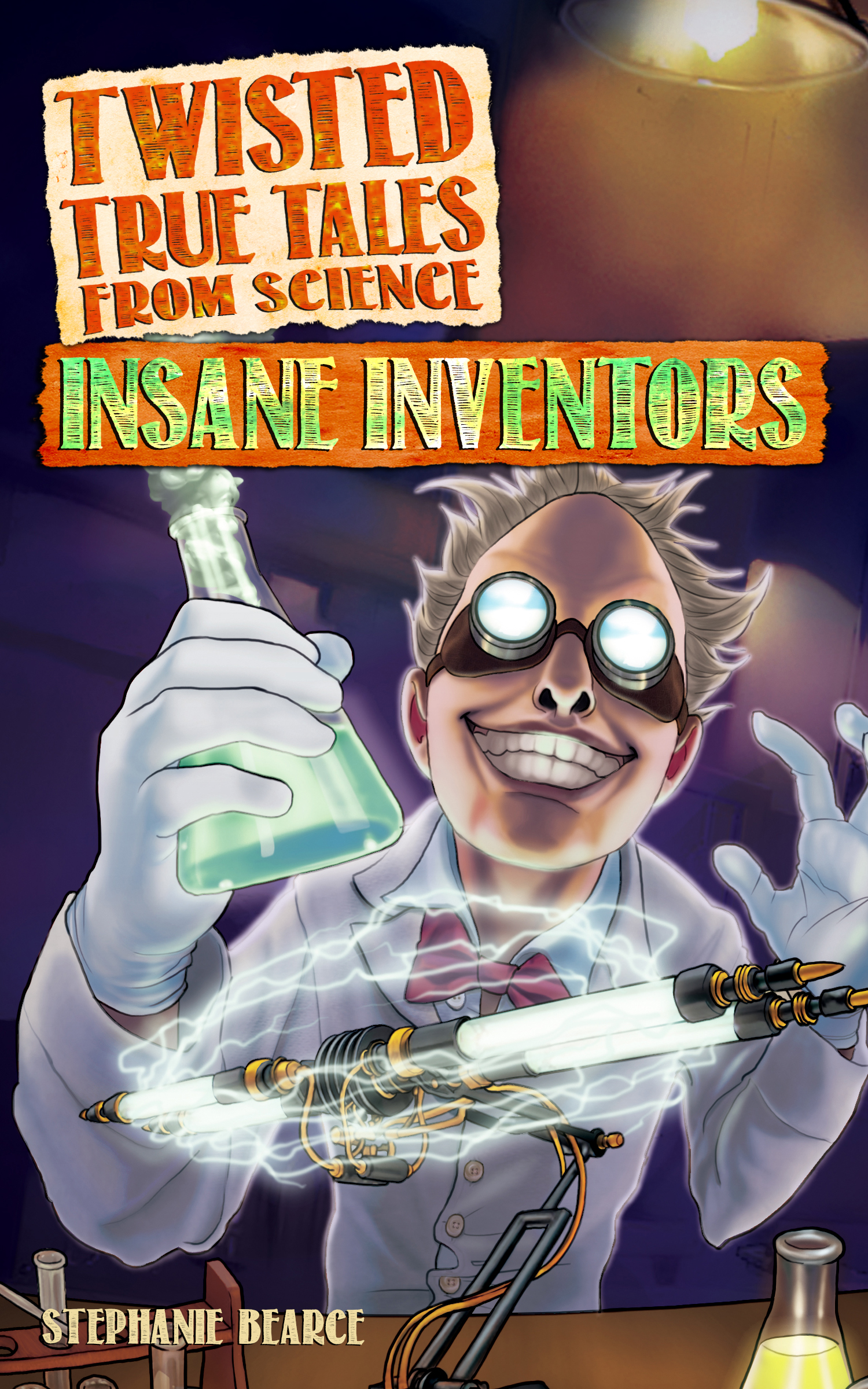
Blog Tour: Twisted True Tales from Science!

Happy New Year! What better way to kick things off than by talking up a new, cool nonfiction science series?

twisted-true-tales-from-science

Series information:

Title: Twisted True Tales from Science

Author: Stephanie Bearce

Release Date: February 1, 2017

Publisher: Prufrock Press

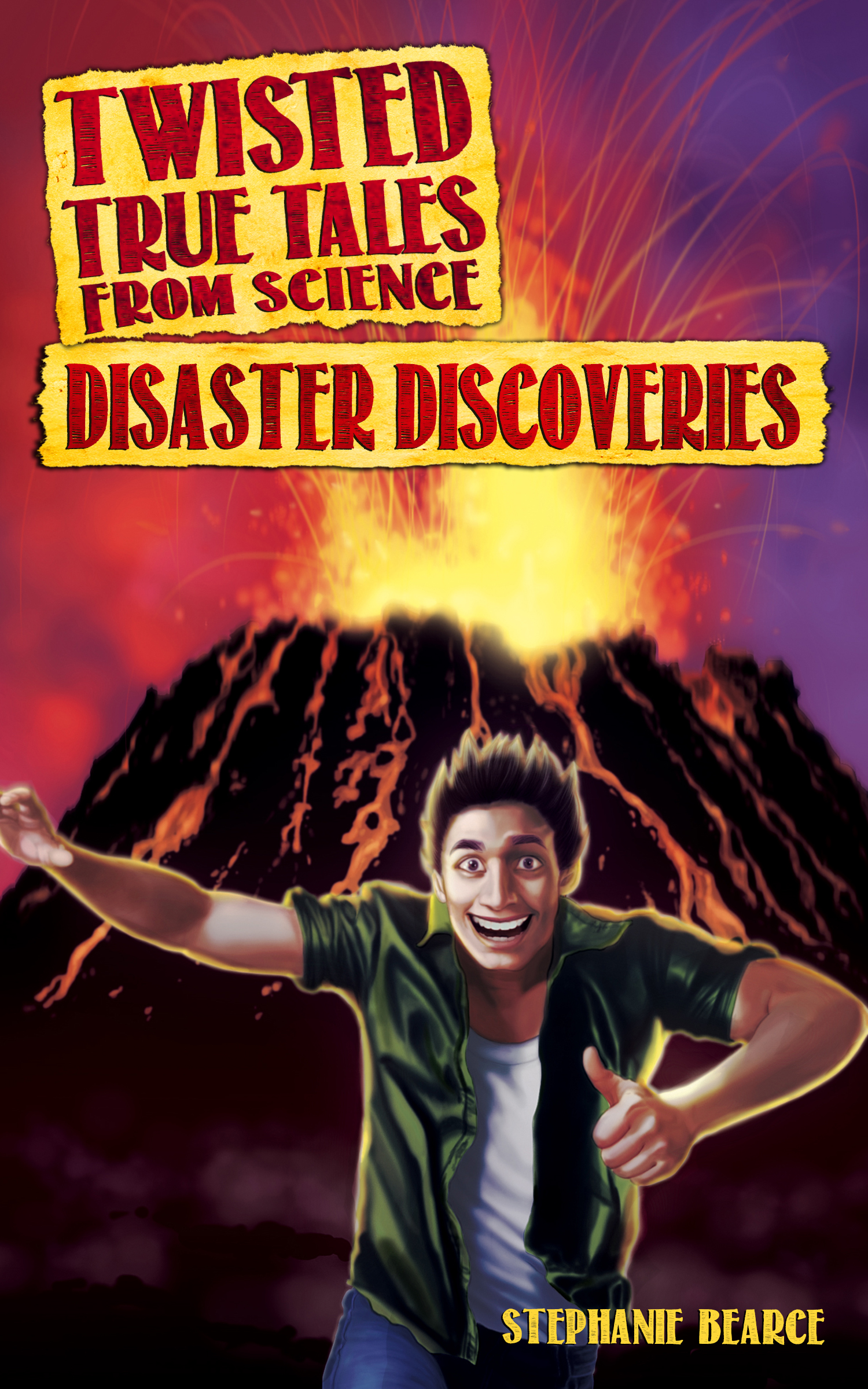
Did you know that Nikola Tesla invented a death ray gun and was also afraid of women who wore jewelry? How about the Chinese scientists from two-thousand years ago who were trying to create a medicine that would make them live forever but accidentally blew up their lab and discovered gun powder?

9781618215765

Find out more about the strange history of science in Twisted True Tales from Science, a new non-fiction series that introduces kids to some of the most twisted yet completely true stories from science. These books are perfect for the gross-but-true legends of the Ripley’s Believe-It-Or-Not! stories.

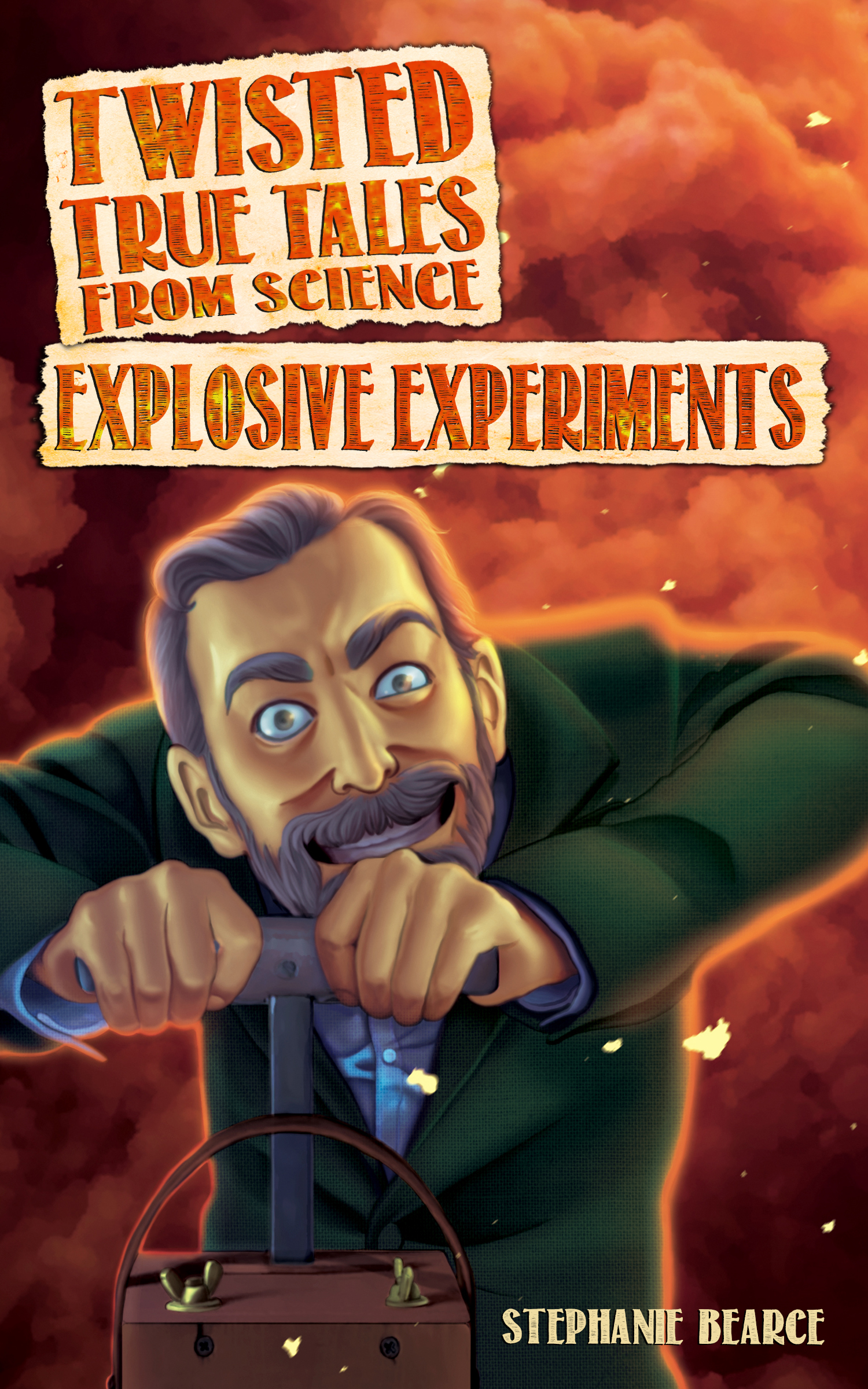
Freaky Facts from Explosive Experiments

Gunpowder was a chemical explosive discovered by the ancient Chinese. But they weren’t experimenting to invent a weapon. They were actually trying to make a medicine that would give their emperor eternal life. Boy – were they surprised when the elixir for life exploded and blew up their laboratory.

9781618215741

The mission was code named Starfish Prime and it was one of the largest man-made explosions in the history of the world. In 1962 the United States tested a nuclear bomb in outer space. The explosion was so bright that it lit up the sky over Honolulu just like it was the fourth of July. But instead of fireworks, it was a nuclear bomb 100 times bigger than the bomb dropped on Hiroshima.

9781618215727

GIVEAWAY for one bundle of the entire Twisted True Tales from Science series (4 books)

Don’t miss your chance to win a bundle of your own Twisted True Tales from Science! Enter a Rafflecopter giveaway today!

https://widget-prime.rafflecopter.com/launch.js

9781618215703

Posted in Fiction, geek, Guide, Non-Fiction, Non-fiction, Tween Reads

Holiday Book Shopping: Science and Tech

Books make fantastic holiday gifts! Need a stocking stuffer or are stumped by a kid who has seemingly everything? Try one of these!

I am guilty of favoring books in the STEM/STEAM areas, because that’s what I love evangelizing to my own kids and the kids at my libraries. Take a look – you don’t need to be a Stephen Hawking-in-the-making to enjoy these.
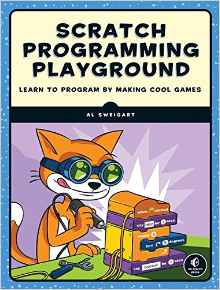
scratch-playgroundScratch Programming Playground, by Al Sweigart, (Oct. 2016, No Starch Press), $24.95, ISBN: 978-1593277628

Recommended for Ages 8-12

I love working with Scratch for young coders. It’s all about teaching kids how to computer code using interconnecting blocks of code, and the Scratch program, developed at MIT, is free and available online. Scratch Programming Playground walks kids (and grownups – I used this book extensively while putting together programs for this coming winter) through the process of learning Scratch by making cool games, like Fruit Slicer (a Fruit Ninja clone), Brick Breaker (where my ’80s friends at?), and Asteroid Breaker (Asteroids! Remember that one?). There are tons of full-color visuals and step-by-step breakdowns that will have kids programming in no time. I buy No Starch books for my libraries all the time – they’re great to have on hand.
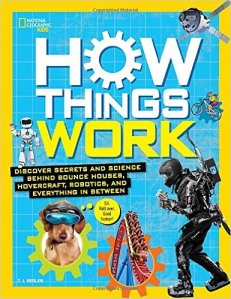
 

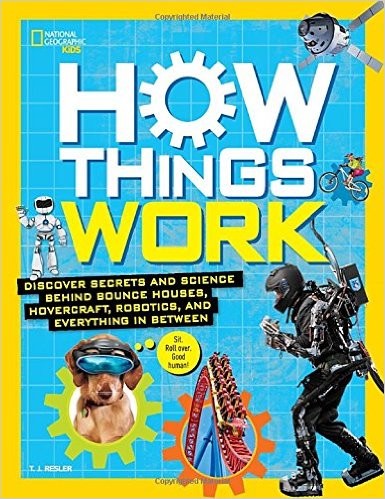
how-things-workHow Things Work, by T.J Resler (Oct. 2016, National Geographic Kids), $19.99, ISBN: 978-1-4263-2555-7

Recommended for ages 7-12

Know a kid who’s constantly taking everything apart to see how it works? This is the book for her or him. It’s loaded with gadgets and how they work; fun facts; in-depth pieces on technology and how it works; profiles of scientists and innovators, and yes, experiments that are totally safe to try at home (with adult supervision, please). Learn how a tablet really works, how an aquarium works to keep fish healthy and happy, even how a toilet works, complete with diagram. Design a roller coaster with your kids – it’s easier than you think! Because it’s a NatGeo Kids book, you know the writing is great; it speaks to kids in easy, clear, fun language that educates and never talks over their heads or down to them. The photos are amazing, and the dog on a surfboard (page 131) is worth the cost of the book all on its own.
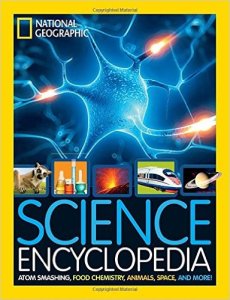
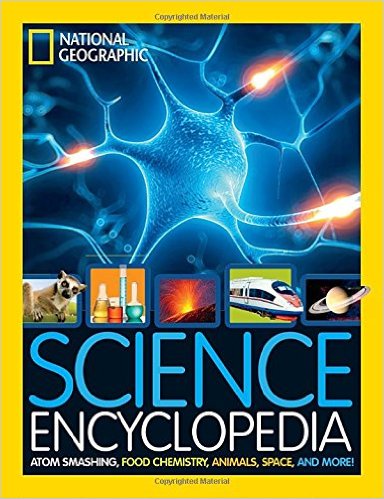
science-encyclopediaScience Encyclopedia: Atom Smashing, Food Chemistry, Animals, Space, and More!, by National Geographic Kids, (Oct. 2016, National Geographic Kids), $24.99, ISBN: 978-1-4263-2543-4

Recommended for ages 8-13

I know, it’s a NatGeo Kids lovefest right now, but it’s well-deserved. The Science Encyclopedia is info-packed with everything kids need to know about physical and life sciences, covering matter, energy, electronics, the universe, and more. There are record breakers, key dates in atomic science, and activities to try at home. Information is presented in 2-page spreads broken out into subject-specific blocks, with stunning photos, fun facts, and hilariously bad jokes (Where does bad light go? A prism!) A glossary, index, and additional resources round this volume out. Fantastic gift for any tween who wants to know more about everything.


These are all available now, either in your local bookstore or online through Amazon, Barnes & Noble, Books-a-Million, or IndieBound.

Posted in Intermediate, Middle Grade, Non-Fiction, Non-fiction, Non-Fiction

Extreme Wildfire takes kids to the front lines of fire fighting!

extreme_wildfire_coverExtreme Wildfire: Smoke Jumpers, High-Tech Gear, Survival Tactics, and the Extraordinary Science of Fire, by Mark Thiessen, (Aug. 2016, National Geographic Kids), $12.99, ISBN: 9781426325304

Recommended for ages 8-12

It can go from a spark to a flame in almost no time. It can devour homes and forests alike, leaving destruction and devastation in its path. NatGeo Kids brings readers to the front lines of wildfires, and the people – largely volunteers – who fight them, in Extreme Wildfire.  Author Mark Thiessen is a NatGeo photographer and certified wildland firefighter has photographed countless fires over the last 20 years; Extreme Wildfire represents part of a lifelong project: to create a visual record of what these firefighters do.

Extreme Wildfire discusses the science behind wildfire; how firefighters battle the flames and how lookouts spot potential fires on the horizon; the equipment used in combating fire, the devastation – and nature’s adaptation – that fire leaves in its wake, and how communities come together to help one another. Chock full of facts and call-out boxes with more information, plus an emphasis on fire safety and prevention to finish up the book, this a good addition to nonfiction collections. There’s a glossary, list of resources, and index.

The kids in one of my library’s neighborhood schools have a unit on natural disasters every year. I’ve ordered two copies of this book – my Corona Kids know how much I love NatGeo books – to have available for them when the time comes around this year. It’s also a good book to have on display if you have fire safety talks. There are some good fire safety and education resources online, including Science for Kids Club and The Kids Should See This.

extreme_wildfire_14-151Photo courtesy of Chat With Vera.


Posted in Fiction, Fiction, Graphic Novels, Intermediate, Middle Grade, Non-fiction, Non-Fiction, Tween Reads

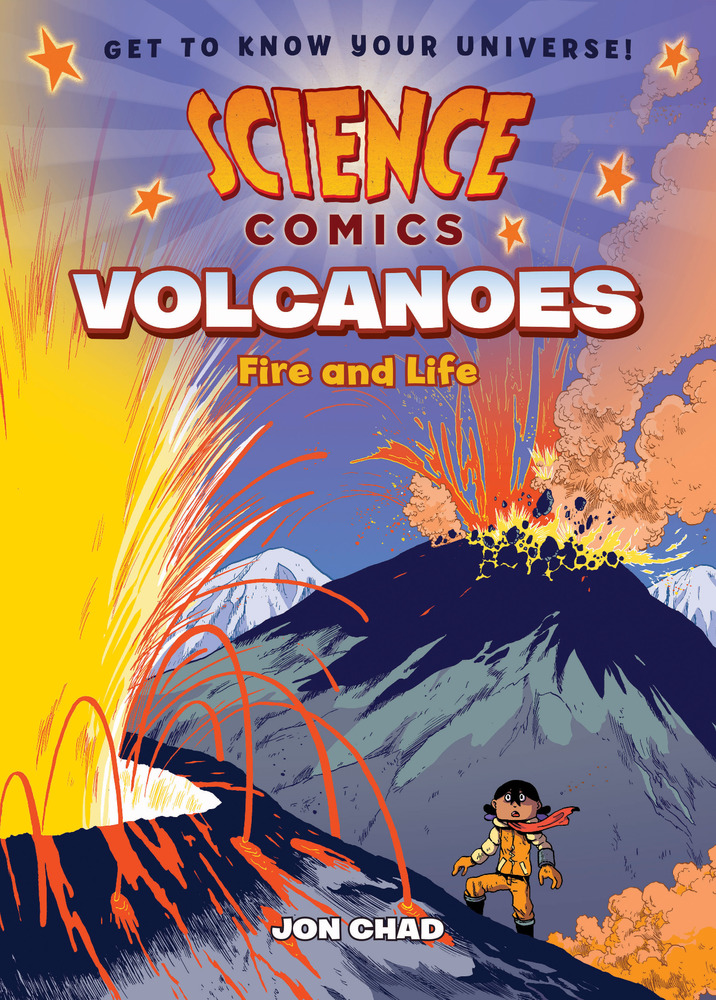
Science Comics explores Volcanoes

volcanoesScience Comics: Volcanoes-Fire and Life, by Jon Chad, (Oct. 2016, First Second), $12.99, ISBN: 9781626723603

Recommended for ages 8-12

Earlier this year, we got a look at First Second’s two Science Comics, Coral Reefs and Dinosaurs. There’s great science and fun art wrapped up in each of these comics, so I was super-psyched when I met a First Second rep at the PLA Conference this year, and she told me that there were more Science Comics coming. True to her word, we’re getting Volcanoes in just a couple of weeks.

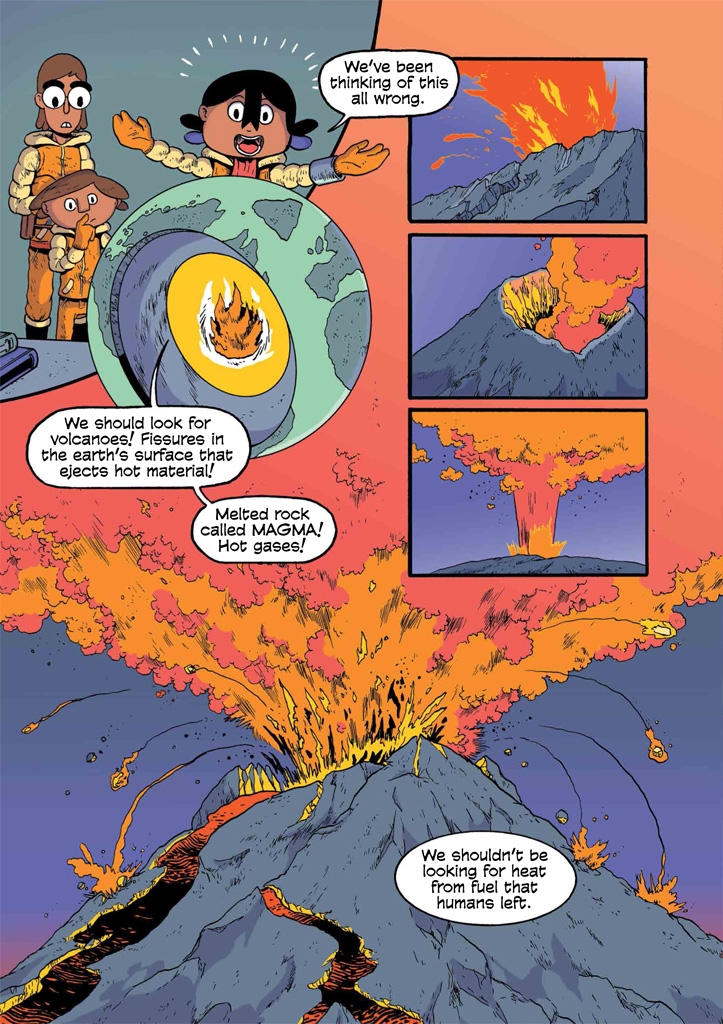
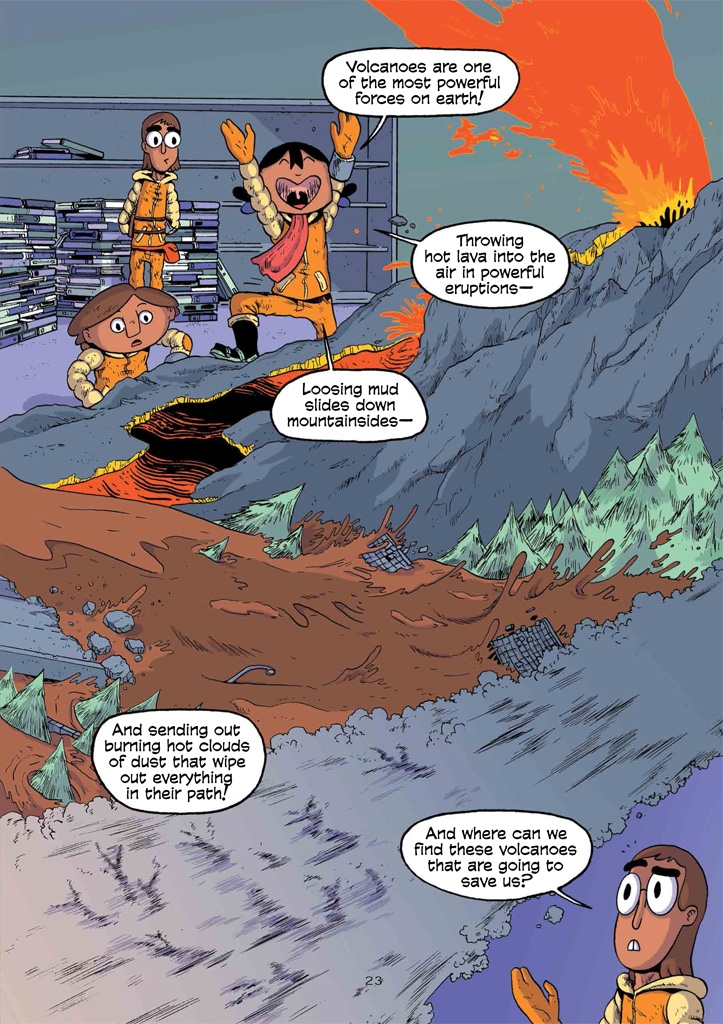
Similar to Coral Reefs, Volcanoes wraps information about volcanic activity into a story: there’s been some sort of environmental cataclysm, and Earth is freezing. A tribe is scanning books when Aurora, one of the kids, discovers a book about volcanoes; she is HOOKED. She’s saved her tribe! The power to warm the planet is right underneath their feet!

From there, Aurora becomes the reader’s guide through a look into the activity bubbling under the earth’s crust: there are magma vents, shifting tectonic plates, and volcanic eruptions. Volcanoes create just as much as they destroy: there are entire land masses that owe their existence to a volcanic eruption, just as there are entire cities that have been wiped out by them.

Posted in Middle Grade, Non-Fiction, Non-fiction, Tween Reads

NatGeo’s 2017 Almanac is jam-packed!

almanac_coverNational Geographic Kids Almanac 2017 (May 2016, National Geographic), $14.99, ISBN: 978-1426324178

Recommended for ages 8-13

NatGeo’s 2017 almanac is packed with content from their kids’ magazine, their collection of books, and their NatGeo Kids website. It’s chock full of articles, facts, games, and digital extras, including an invitation to the Newsmaker Challenge, where kids can submit their own time capsule artifact photos to be featured in next year’s almanac. Features on animals encourage kids to get involved in the Summer Mission Animal Rescue Challenge, increasing awareness about endangered species and how they can play a part in helping do their part toward conservation and protection.

Information is broken out into 10 sections, covering current events, animals, going green, world cultures, adventure, fun and games, science and nature, history, and geography. Each section is loaded with breathtaking photos, top 10 lists, homework help and research ideas, and a quiz.

These books are a great idea for kids who love trivia, and they’re great for introducing readers to the world outside their doors. Like I’ve said before, NatGeo books are a win with the kids in my library, my own kids, and the kids in my extended family. There’s so much to love!

Posted in Intermediate, Middle Grade, Middle School, Non-Fiction, Non-fiction, Non-Fiction, Tween Reads

Inside Your Insides puts you under a microscope

inside your insidesInside Your Insides: A Guide to the Microbes That Call You Home, by Claire Eamer/Illustrated by Marie-Eve Tremblay, (Sept. 2016, Kids Can Press), $17.95, ISBN: 9781771383325

Recommended for ages 8-12

This interesting nonfiction book takes a look at the microbes that live on our bodies: in our hair, on our skin, and the ones we pick up everywhere we go. We’re microbiomes: a walking, talking collection of microbes, and Inside Your Insides introduces us to some of the most common microbes we share our surroundings with. We learn about bacteria, archaea, viruses, fingu, protists and mites; their preferred environments; and all the places they live on and around us. Complete with brightly colored, cartoony illustrations, makes this a good introduction or companion for middle grade science students.

There are some good callout facts and groan-worthy jokes scattered throughout the book, and a glossary and index round everything out. Kids will learn that not all bacteria are bad for you: you don’t need everything antibacterial, and it may be doing more harm than good, anyway! A section dedicated to saving our microbes goes into detail on how to take care of ourselves to attract the “good” microbes: play outside, eat lots of fruits and vegetables, and explore your world. The combination of clear, instructional writing with a humorous bent, and the eye-catching illustrations, kids will get a kick out of this intro to microbiology. It’s a good additional purchase for collections where science books circulate.

You can also direct kids to the Genetic Science Learning Center’s Human Microbiome site. There are teacher resources, interactive simulators, informative videos, and information that’s written in a clear, interesting way to get kids excited about learning more.


Posted in Middle Grade, Non-Fiction, Non-fiction, Tween Reads

Could Dracula make it in today’s world? Monster Science gives you the scoop.

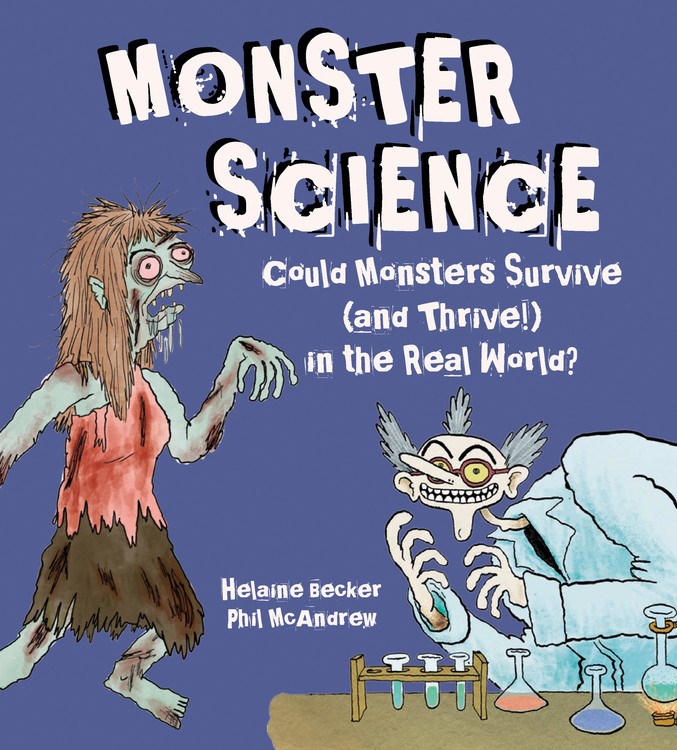
monster scienceMonster Science, by Helaine Becker/Illustrated by Phil McAndrew, (Sept. 2016, Kids Can Press), $18.95, ISBN: 9781771380546

Recommended for ages 8-12

Monster Science takes a look at some of our favorite monsters – Frankenstein’s Monster, vampires, Bigfoot, werewolves, zombies, and sea monsters – and, using science smarts, discusses the plausibility of these monsters’ ever being able to exist in our world. If you’ve ever wondered whether or not you should really start stockpiling food and weapons for the upcoming zombie apocalypse, or stared for a little too long at those blurry pictures of Bigfoot and Nessie, the Loch Ness Monster,  you’ll love this book.

The book devotes a chapter to each monster, provides background info, incorporating the history of the monsters, and using science, history, literature, myths and legends, helps readers work through whether or not these creatures could have ever existed or could exist today. There are colorful, cartoony illustrations, seriously groan-worthy jokes, and pop up facts throughout the book, and a quiz tests finishes up each chapter and challenges readers to remember what they’ve just read. There are enough gross facts – the stages of decay; electric shock bringing making dead body parts jerk and move, dead people who sat up at their own funerals – presented with a humorous bent, to delight middle graders who want something fun and gross to read, yet will also give them some cool facts to bring to their science class.

This is the kind of book I love booktalking to kids, because my awesome nonfiction selections are sadly underappreciated. When I put a coding book out, I get interest, because I have a library full of Minecraft mouse potatoes, but when I try to get them excited about science, I usually get eyerolls, or – zounds! – blank stares. A book like this will help me explain how wonderful and gross science can be! We can talk about The Walking Dead (no, they’re not old enough to read the comics, but you know they’re watching it at home), we can talk about Dracula and Frankenstein, and I can terrify them with repeated viewings of Mad Monster Party and the Groovie Ghoulies, because ’70s monster claymation and cartoons are aces with me, but they leave the kids bewildered. They don’t know what they’re missing.

In all seriousness, the book is fun leisure reading and a good companion to science, history, or ELA classes. There’s so many interesting facts, presented in a fun, light, manner, that kids will end up reading and remembering more information than they can imagine. Add it to your library collections, or make it a fun gift for a monster fan you know and love.

Posted in Intermediate, Middle Grade, Non-fiction, Non-Fiction, Teen, Tween Reads

Create and learn with Maker Lab

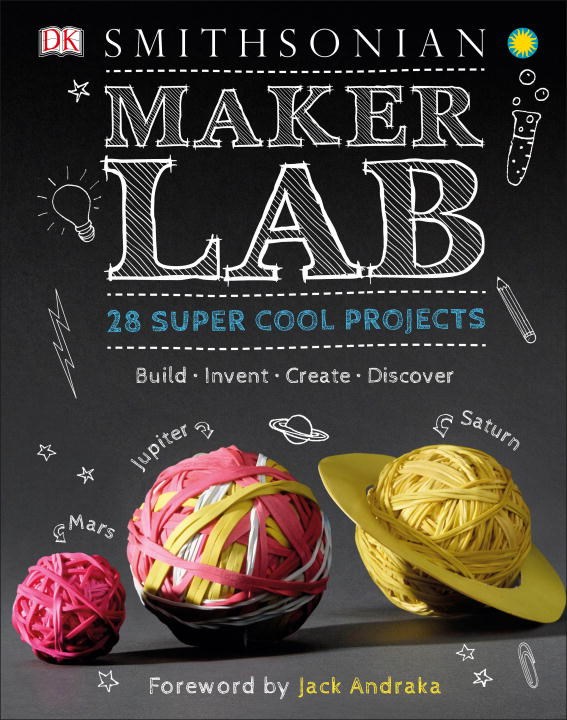
maker lab_covMaker Lab – 28 Super Cool Projects: Build * Invent * Create * Discover, by  Jack Challoner, (July 2016, DK Publishing), $19.99, ISBN: 9781465451354

Recommended for ages 8-12

I saw a mockup copy of this book at PLA earlier this year, and stopped dead in my tracks, for two reasons: I LOVE DK books, and anything Maker or STEM grabs my attention, because I have kids at home and at work, so I’m always on the lookout for projects to bring to them. When an e-ARC was available on Edelweiss, I jumped at it.

There are 28 projects in here, 90% of which you probably have the  materials for in your home or can easily get to. The book is divided into four sections: Food for Thought (kitchen science); Around the Home (pretty self-explanatory); Water World (projects working with water); and the Great Outdoors (stuff you can do outside). Each project is beautifully photographed and step-by-step instructions and photos take burgeoning scientists through each experiment/project/activity. Each project has a notation of approximate time the activity will take, difficulty (easy-medium-hard), and adult supervision is always encouraged, particularly when using sharps, like scissors, or hot liquids. A “How it Works” section explains the science behind each project, adding some nice science inquiry. A glossary and index complete the book.

Maker Lab is created in association with the Smithsonian Institution and supports STEAM education initiatives, and it’s just fun. I want to add this book to my two science clubs at work, and get my little guy making a rubber band solar system with me at home. I know I’m a DK fangirl, but with good reason: they create great material for anyone who wants to learn.

This book will be a big help during science fair season, so maybe get an extra copy.


maker lab_3