Posted in Non-fiction, picture books

Nature is the artwork in Drawn from Nature

I think I can finally put away my winter coat, which has me embracing Spring and Spring-like books! I think I’ll devote today’s posts to nature-related artwork and storytelling.

Drawn from Nature, by Helen Ahpornsiri, (March 2018, Candlewick), $22.00, ISBN: 9780763698980

Recommended for readers 6-10

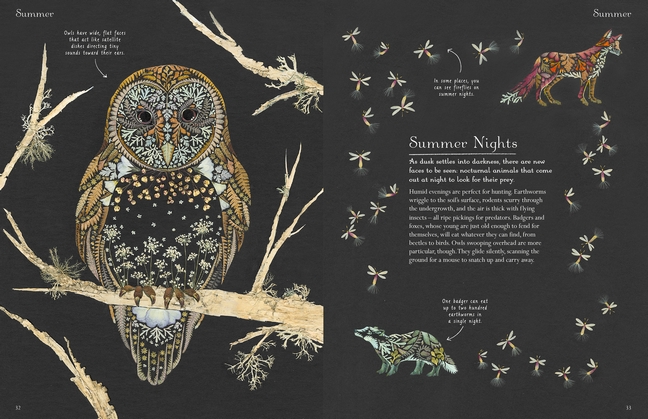
This look at the seasons is just stunning. The artwork is created using hand-pressed flowers and foliage (responsibly grown or foraged in the wild, as the artist/author’s note takes care to mention). Flowers and leaves create bird feathers and beaks; eggs and nests, ladybugs and butterflies. Helen Ahpornsiri takes readers through each season, making sure we notice the beautiful little notes from nature; from building a nest in Spring, to swooping swallows and chirping crickets in the Summer; from the fragile dandelion puffs of Autumn to the bare branches of Winter, each season reveals itself through delicate and exquisite art.

The endpapers delight with colorful garden scenes and each season’s nature maintains its color palette: Spring is verdant and green, bright and bold; Summer is deeper, vibrant, with an emphasis on fireflies and nocturnal animals who hunt by night; Autumn colors become more yellow and red, crisping at the edges, and Winter is spare, fragile, with clustered and hibernating animals and bare branches; evergreen leaves holding onto their leaves.

As Booklist notes, Drawn from Nature is a beautiful blend of art and science and is a wonderful inspiration for art classes as well as nature and earth science classes. A glossary includes terms mentioned throughout the book. Get those leaves, twigs, and stones for the kids, then let them have at it! Drawn from Nature has a starred from Kirkus.

Posted in Middle Grade, Non-fiction, Teen, Tween Reads

To Explore Strange New Worlds…

Pop quiz! We know that outer space is still largely unexplored, but did you know that we’ve explored less than five percent of the world’s oceans? There are some great new books on space and sea exploration for middle graders to dive into (see what I did there?). Read on!

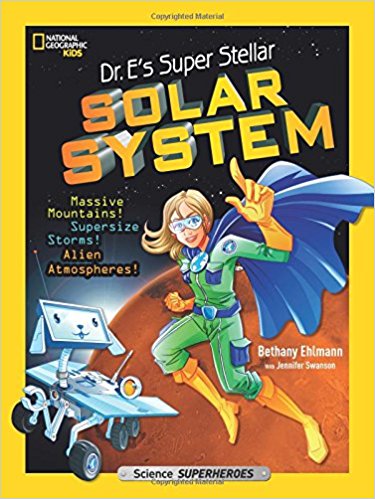
Dr. E’s Super Stellar Solar System, by Bethany Ehlmann with Jennifer Swanson, (Jan. 2018, National Geographic Kids), $12.99, ISBN: 978-1-4263-2798-8

Recommended for readers 8-12

Planetary geologist Dr. E (Bethany Ehlmann) and her sidekick, Rover, take readers on a trip around the universe, filled with activities, photos, facts, and comics. Readers will learn about space exploration and how our big blue dot fits in with our cosmic neighbors: who else has volcanoes and sand dunes; how plate tectonics work; how craters are formed. There’s information about robots and rovers; space exploration and technology; and how learning about space helps us learn more about Earth. Each chapter begins with a 2-page comic spread, following Dr. E and Rover on an adventure related to chapter material. There are scientist profiles throughout the book, thought-provoking questions to generate discussion, and incredible photos. A glossary, list of book and web resources, and index makes this a solid book to have in space collections and a fun gift for kids who love science.


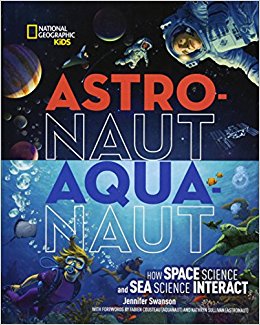
Astronaut-Aquanaut: How Space Science and Sea Science Interact, by Jennifer Swanson, (Jan. 2018, National Geographic Kids), $18.99, ISBN: 978-1-4263-2867-1

Recommended for readers 8-12

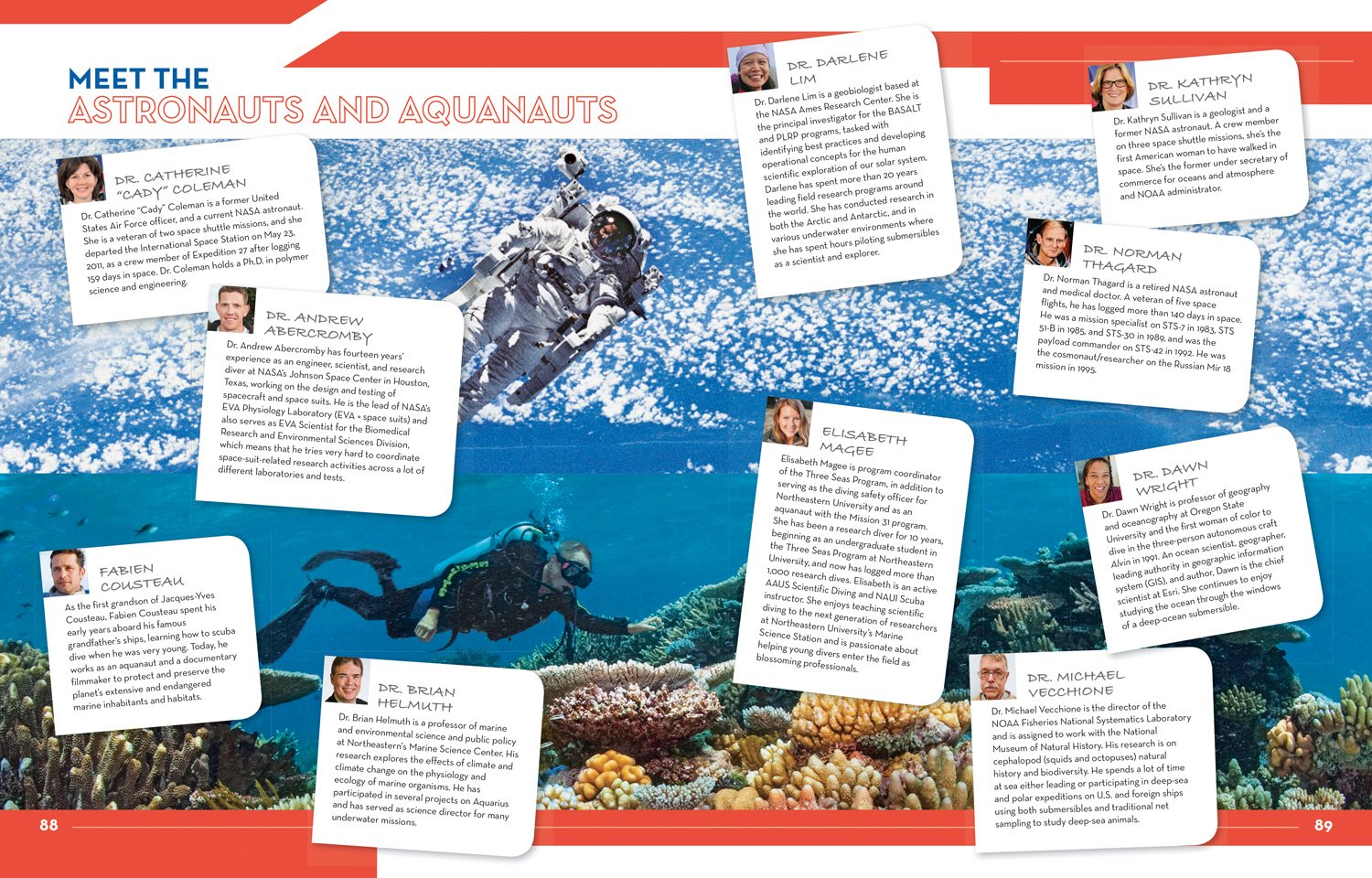
What do space and the ocean exploration have in common? SO much. There’s a reason we’re still trying to figure out how to explore both. Extreme pressure, temperatures and climates are all considerations scientists have to make when planning missions up above or far below. Author Jennifer Swanson (she’s co-author on Dr. E’s book, above!) gets a new generation of explorers ready for action with discussions about buoyancy and gravity; the shapes used in space and sea exploration (shape counts!); creating livable habitats; similarities and differences in each form of travel, and more. There’s consideration given to preservation and conservation for both sea and space: we leave a lot of garbage behind, and we need to stop that. Explorer’s Notebook callouts give readers a quick run-down on different topics, like training for a trip and how to create successful living and working environments – ideas that readers can apply to their daily lives while getting ready to be explorers. Activities give readers hands-on opportunities to learn about concepts like docking the International Space Station. There are detailed illustrations and color photos throughout, astronaut and aquanaut profiles, fun facts, resources, a glossary, and an index. NatGeo never disappoints: I love how Jennifer Swanson brings these two areas of exploration together; maybe it will inspire kids to become both astronauts AND aquanauts!


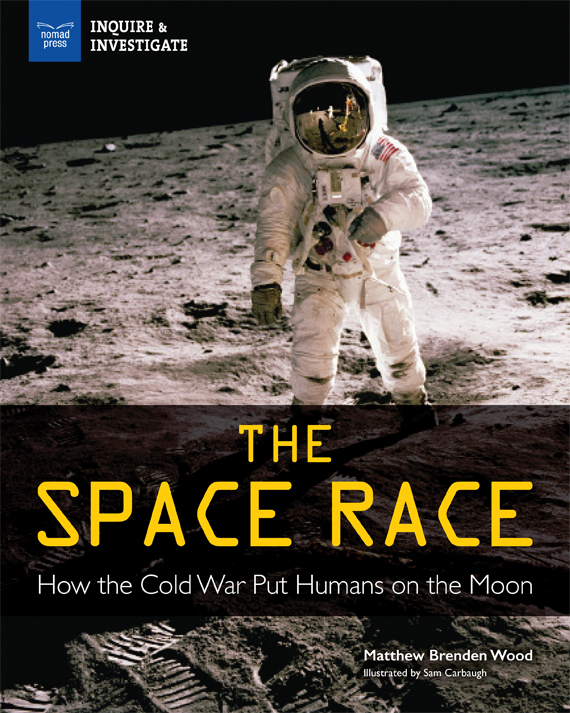
The Space Race: How the Cold War Put Humans on the Moon, by Matthew Brenden Wood/Illustrated by Sam Carbaugh, (May 2018, Nomad Press), $17.95, ISBN: 978-1-61930-663-9

Recommended for readers 12-15

The Cold War between the U.S. and Soviet Union led to a race for dominance, and space was best place to push for that dominance. Matthew Brenden’s book, The Space Race, is an interactive chronicle of this pivotal point in history. Beginning with a timeline to give readers background, Brenden takes us from the 1917 Russian Revolution, through World War II (when Russia was our ally) and the Cold War, to July 20, 1969: the date Neil Armstrong and Buzz Aldrin became the first people to walk on the moon.

A  comic strip running throughout the book illustrates and encapsulates the big ideas in the book, adding a little mental break for readers. There are loads of callout boxes, enhanced with QR codes that lead to historical reference and further learning; some topics include McCarthyism, duck-and-cover nuclear war drills, and the first anniversary of the Berlin Wall. Blast Fact callout boxes provide quick facts, and Inquire and Investigate sections provide rich inspiration for projects and research. Questions throughout the text challenge readers to think deeper about the material and would provide a great jumping-off point for book group or class discussions, and Vocab Lab sections offer new words to learn, all defined in the glossary at the end of the book. There are black-and-white and color photos throughout, providing a strong connection to history. Thankfully, there’s a metric conversion table, since science is metric and I’m not; there are additional resources, source notes, and an index.

I love Nomad Press’ books; there are so many entry points for students in each book. This one is a valuable reference for Science or History: in fact, The Space Race is one in a set of four Nomad books exploring great events of the 20th Century (others include Globalization: Why We Care About Faraway Events; The Vietnam War; and World War II: From the Rise of the Nazi Party to the Dropping of the Atomic Bomb).

The Space Race skews slightly older than the NatGeo books above: Nomad recommends this one for ages 12-15, but I think it can go a year or two younger, especially in my children’s room, where it will see more circ than in our teen section. Your library’s mileage, and your kids’ reading interests may vary. It’s a Guided Reading level Z, which can go as young as 9; I’d suggest at least 10 or 11.


Posted in Non-fiction, Non-Fiction

Make #science even cooler with Adventures in Science

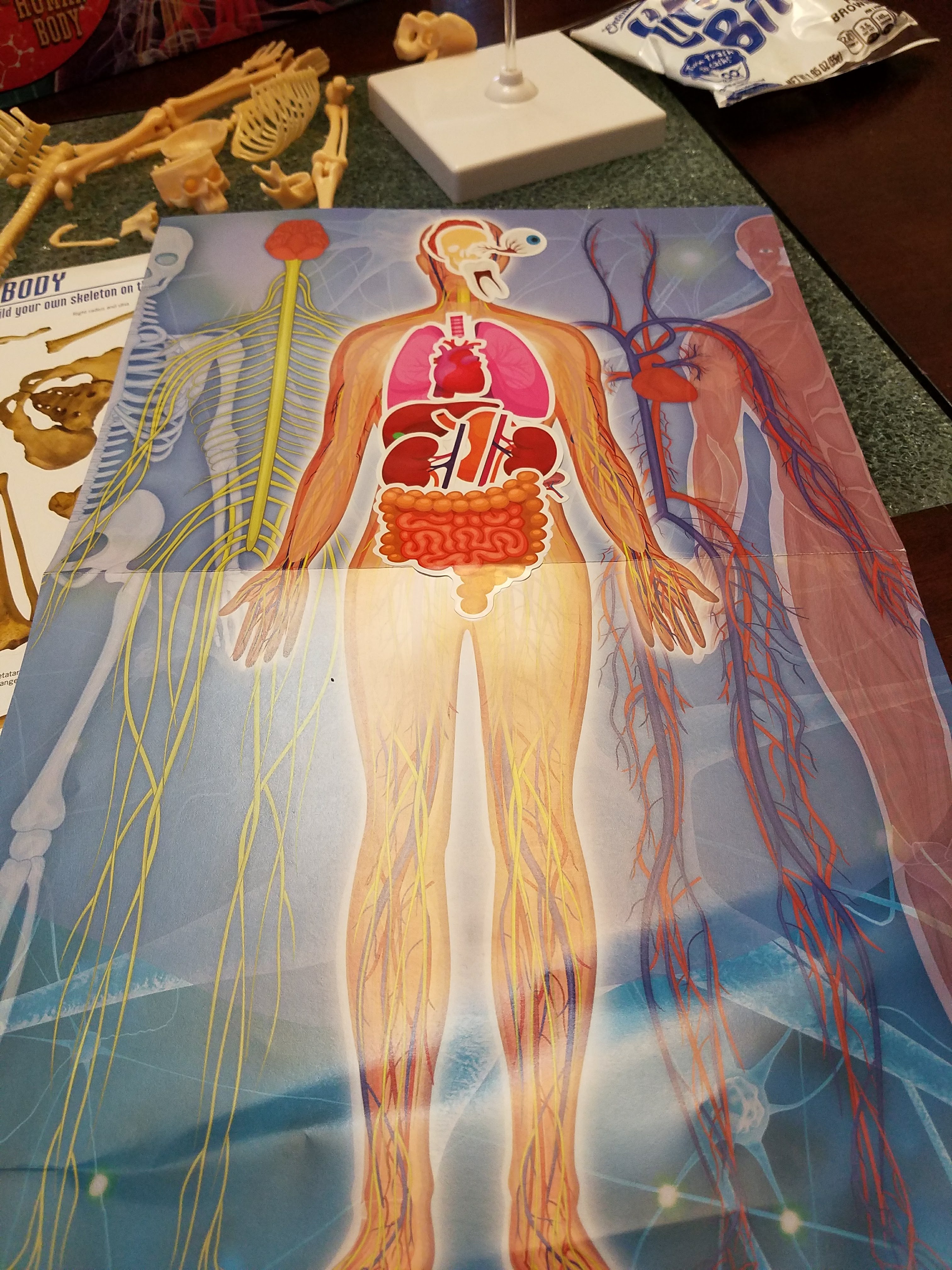
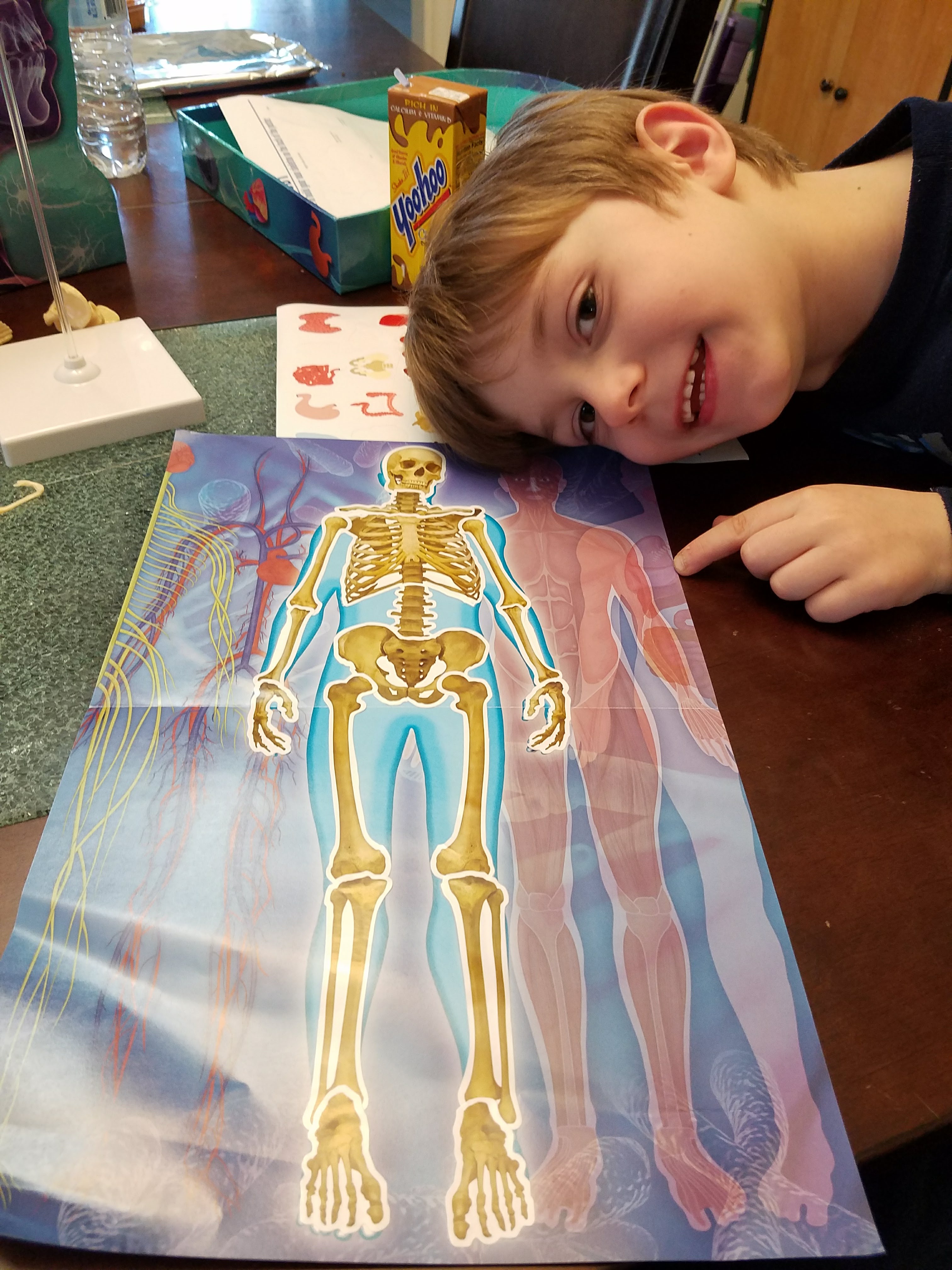
My Kindergartener and I like to hang out and relax on the weekends, but I like to make sure that doing something fun doesn’t always involve endless hours of watching Minecraft videos on YouTube (his current obsession). Thankfully, I remembered that I received an Adventures in Science: Human Body kit from the kind folks at Silver Dolphin, so out it came. The first cheer came from me, when I realized that it’s a 6+ kit, not an 8 or 10+ kit, like most of them are: my kiddo could do this! The second cheer came from the kiddo, who saw a skeleton, because I’ve got that kid. (And I’m that mom.) We cracked open the box and went to it.

Adventures in Science: The Human Body, by Courtney Acampora, (Dec. 20017, Silver Dolphin Books), $21.99, ISBN: 978-1684121298

The box was full of stuff that would appeal to kids from ages 5(ish, my kiddo is going to be 6 in June) to about 10 or 11. There are two sheets of stickers; one sheet of bones, the other, of internal organs, including a set of “free play” stickers. The stickers go on a two-sided sheet with an outline of the human body; one side accommodates the organ stickers, one, the bones. There’s a separate bag for a snap-together skeleton model, playing card-sized flash cards about the body, and a booklet on the human body. Kiddo went to work on the sticker sheet, ASAP. The outlines are clear enough that he didn’t need my help at all! The only fiddly part came with the organ stickers, because so many overlap one another. We moved stuff around, covered some stuff up, and were pretty happy with the results.


I tried to read some of the flash cards to him as he was stickering, but realized that I was interested, but he was just sticking his little heart out, so I read them to myself and pointed out any cool stuff I came across. That worked for him.


Okay, next up, was the big guy: the skeleton. It’s a snap-together, and he got the skull, pelvis, and legs together pretty quickly. The really fiddly part came with the rib cage, spine, and arms. The rib cage is delicate, and the little spokes were giving us a hard time getting them in. We ultimately called in the big guns (Daddy), who made it work.


Overall, it was a fun hour spent with two cool hands-on crafts. He learned a couple of things, reinforced some facts he already knew, and ended up with a fun new skeleton to put in his room. I really like the flash cards and accompanying book, which gives a nice introduction to the human body for school-age kids; ideal for maybe around 7 or 8 years old. Younger kids will like the full-color pictures and graphics, and the book is loaded with fast fact Did You Know? boxes you can read to them. At $21.99, it’s a good gift for a curious kid. If you can get some fundraising money or program budget money together, this would be a great project for a small science group at your library; two or three kids can easily work together on one model and the posters. And they’d be pretty awesome to display.


Posted in Graphic Novels, Middle Grade, Non-Fiction, Non-fiction, picture books, Preschool Reads, Tween Reads

Books to inspire your young scientists!

This is an incredible year for children’s books! There’s something for everyone available or coming soon, with wonderful artwork and text that draws readers right in. This time around, I’m looking at some fun science books for readers – and caregivers will like them, too.
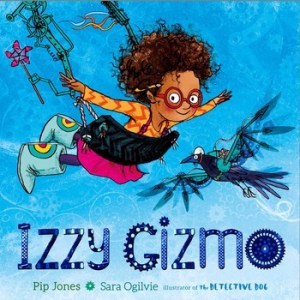
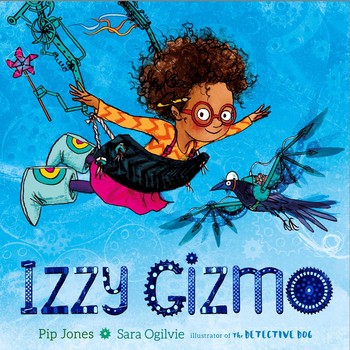
Izzy Gizmo, by Pip Jones/Illustrated by Sara Ogilve,
(March 2018, Peachtree Publishers), $16.95, ISBN: 978-1-68263-021-1
Recommended for readers 4-7
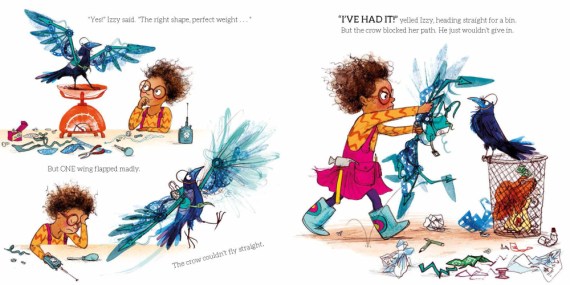
 

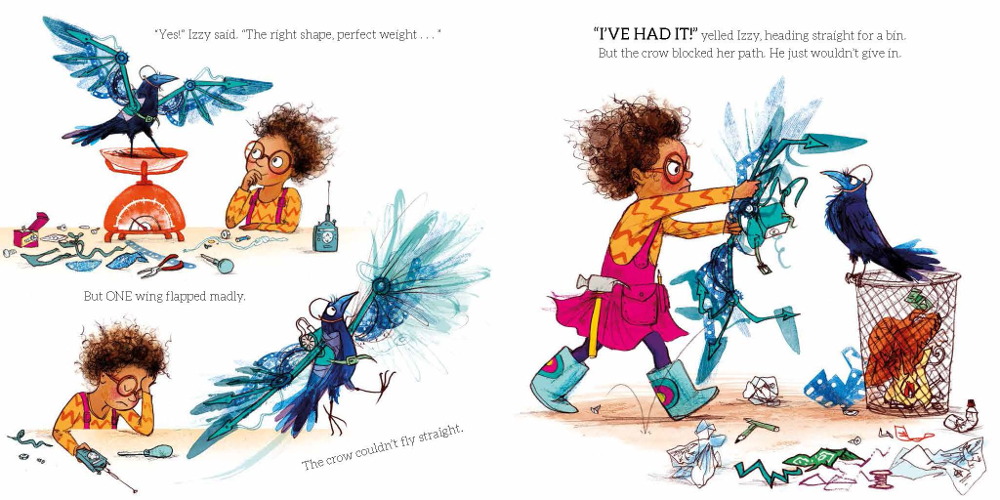
Izzy Gizmo is a curious little girl of color who loves to invent, tweak, and discover. Her inventions don’t always work, but she discovers that she has to put her frustrations aside when she rescues a crow with a broken wing. He wants her to help him fly again, and he’s willing to stick with her through trial and error, until she can get it right. I love the bright colors and chaotic art in this story; it lets readers know that creativity is often messy and wild; the story assures readers that mistakes are just opportunities to filter out what isn’t working and concentrate on what will work; and I love the story of endurance and perseverance. Izzy’s grandfather and her crow friend have faith in Izzy; she just has to find her faith in herself. The gray and white endpapers feature different gears and mechanical parts, letting readers know they’re going to put on their engineering hats to help Izzy out, and the art – a mix of pencil, ink, oil pastel, monoprint, and digital technique – create a busy background that provides a glimpse into the mind of a scientist. Originally published in the UK in 2011, Izzy’s just arrived here in the U.S. and her rhyming story would be a great addition to collections where Andrea Beaty’s Iggy Peck, Architect, Rosie Revere, Engineer, and Ada Twist, Scientist are popular.
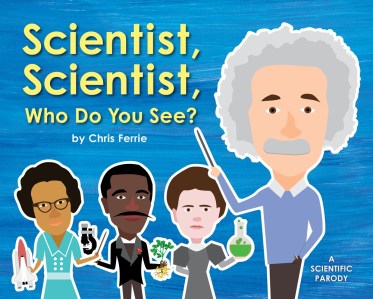
 

Scientist, Scientist, Who Do You See?, by Chris Ferrie,
(Apr. 2018, Sourcebooks Jabberwocky), $17.99, ISBN: 9781492656180
Recommended for readers 3-6
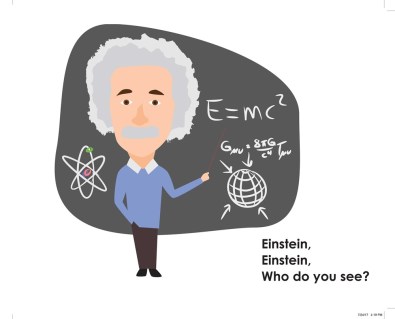
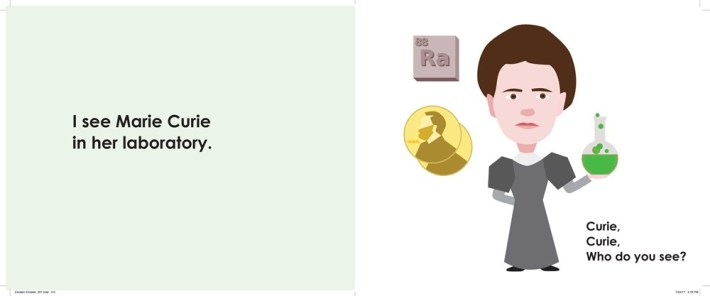
 

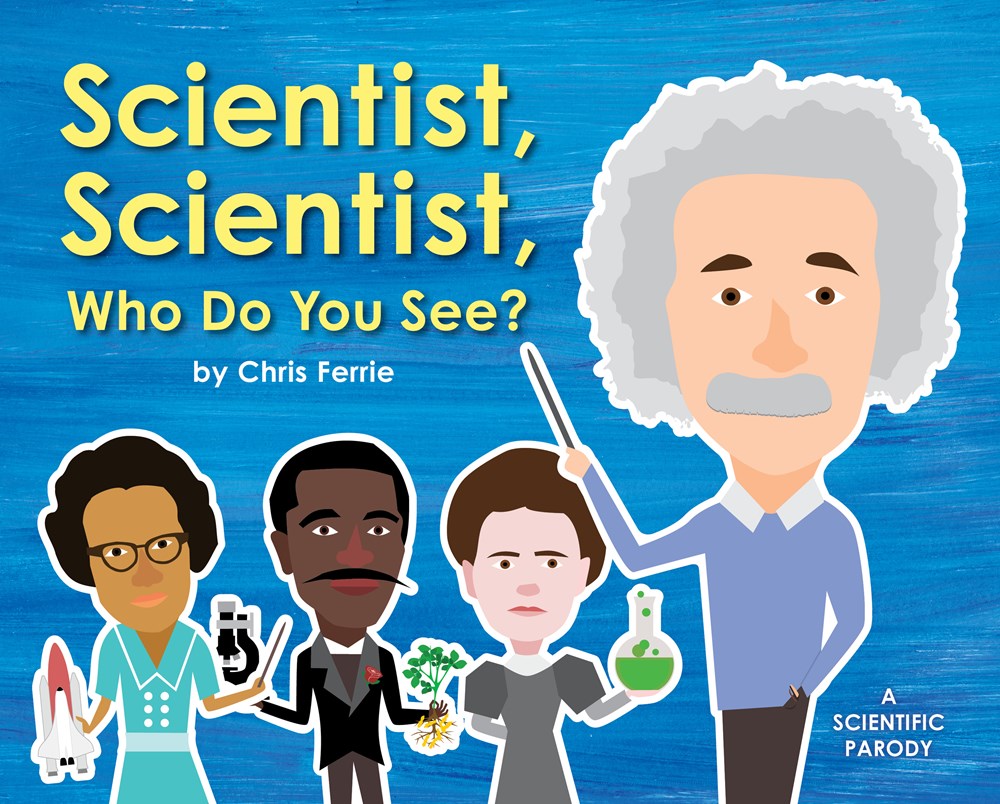
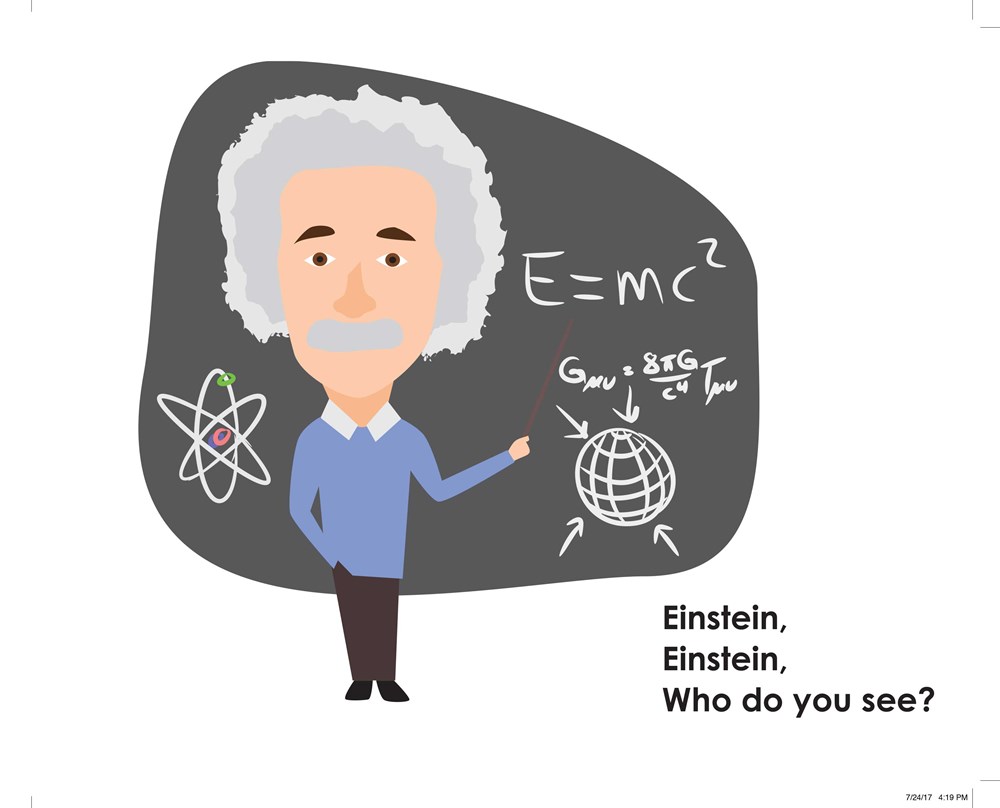
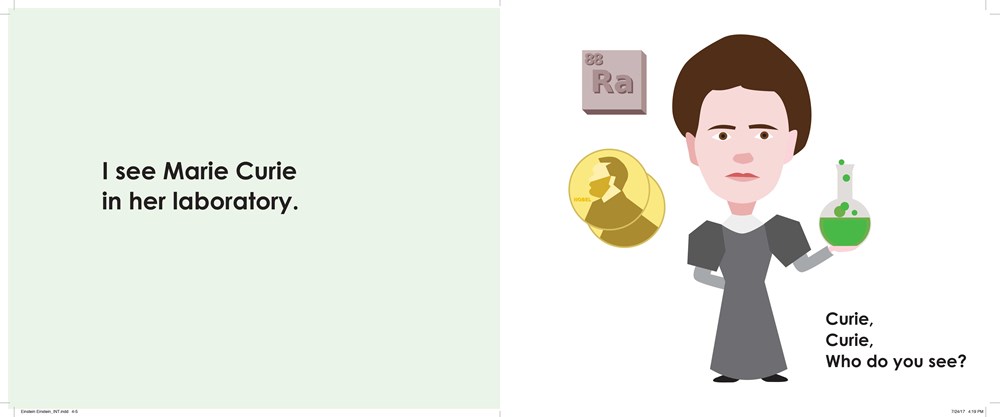
Set to the cadence of the classic, Brown Bear, Brown Bear, What Do You See?, scientist and dad Chris Ferrie introduces little readers to some of history’s greatest minds with Scientist, Scientist, Who Do You See? There is a strong mix of disciplines and diversity represented here, with Einstein sharing space with Grace Hopper, Ahmed Zewail, George Washington Carver, Katherine Johnson, and more. It’s noted as a “scientific parody”, and it certainly is a fun book that will make everyone smile, but kids are introduced to names and ideas, and that’s just great. Starting off with the question, “Einstein, Einstein, Who Do You See?” and the response, “I see Marie Curie in her laboratory”, the story goes on, introducing scientists and their accomplishments, in the soothing rhyme style we’ve grown up hearing and enjoying. Chris Ferrie has given us Baby Science board books and a fun take on Goodnight, Moon with Goodnight, Lab; let’s hope he keeps finding new, fun ways to make science lovers out of our kids.
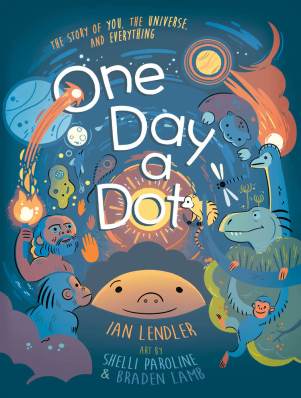
 

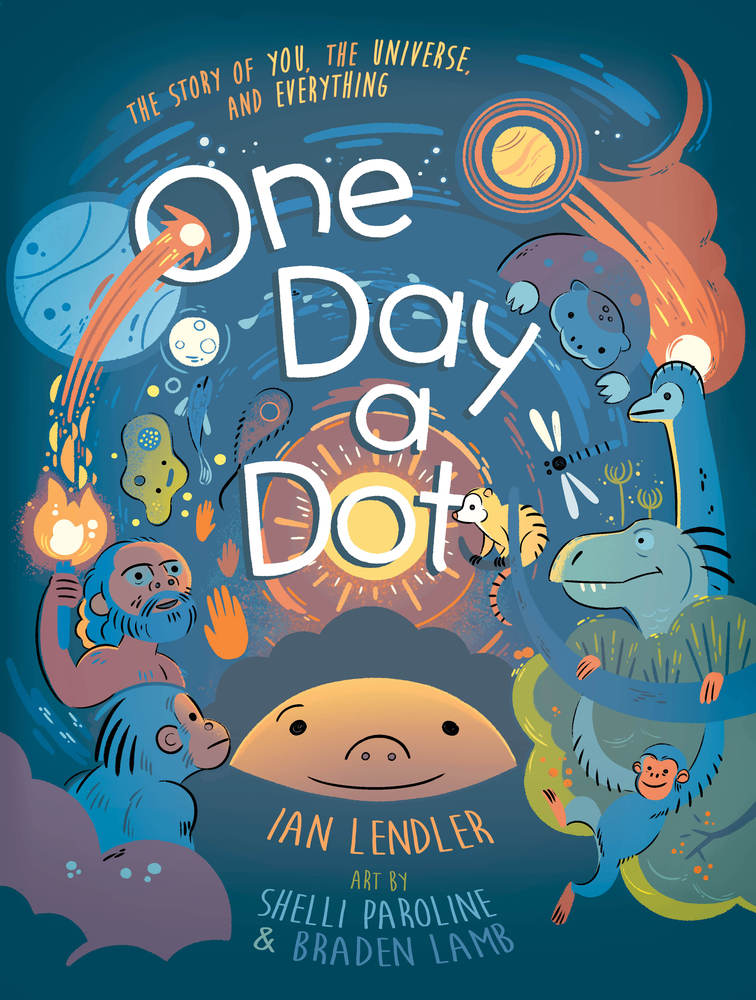
One Day a Dot: The Story of You, the Universe, and Everything, by Ian Lendler/Illustrated by Shelli Paroline & Braden Lamb,
(Apr. 2018, First Second Books), $17.99, ISBN: 9781626722446
Recommended for readers 7-10
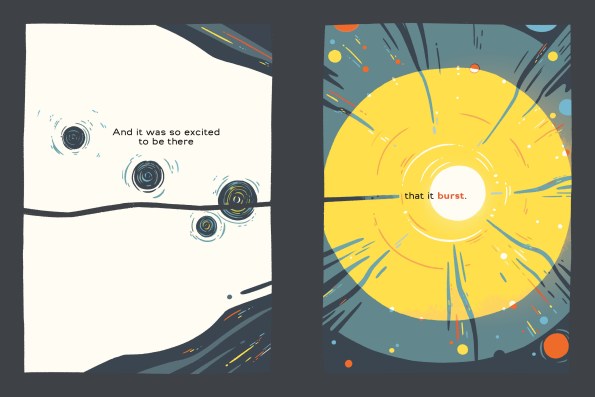
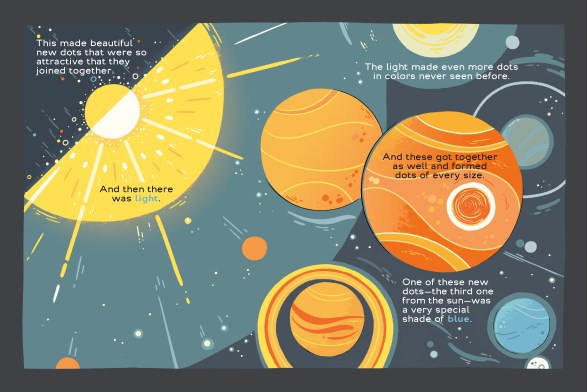
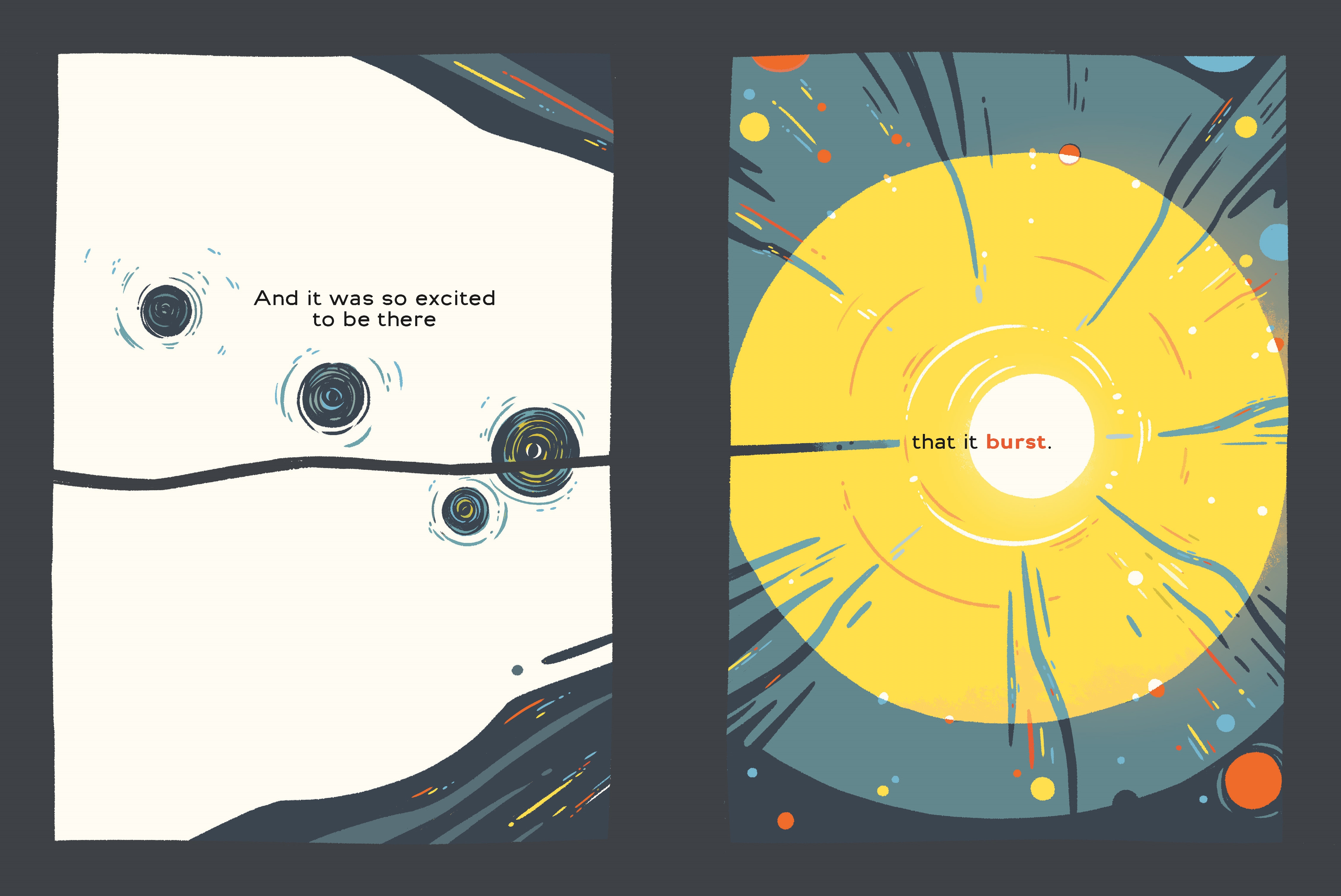
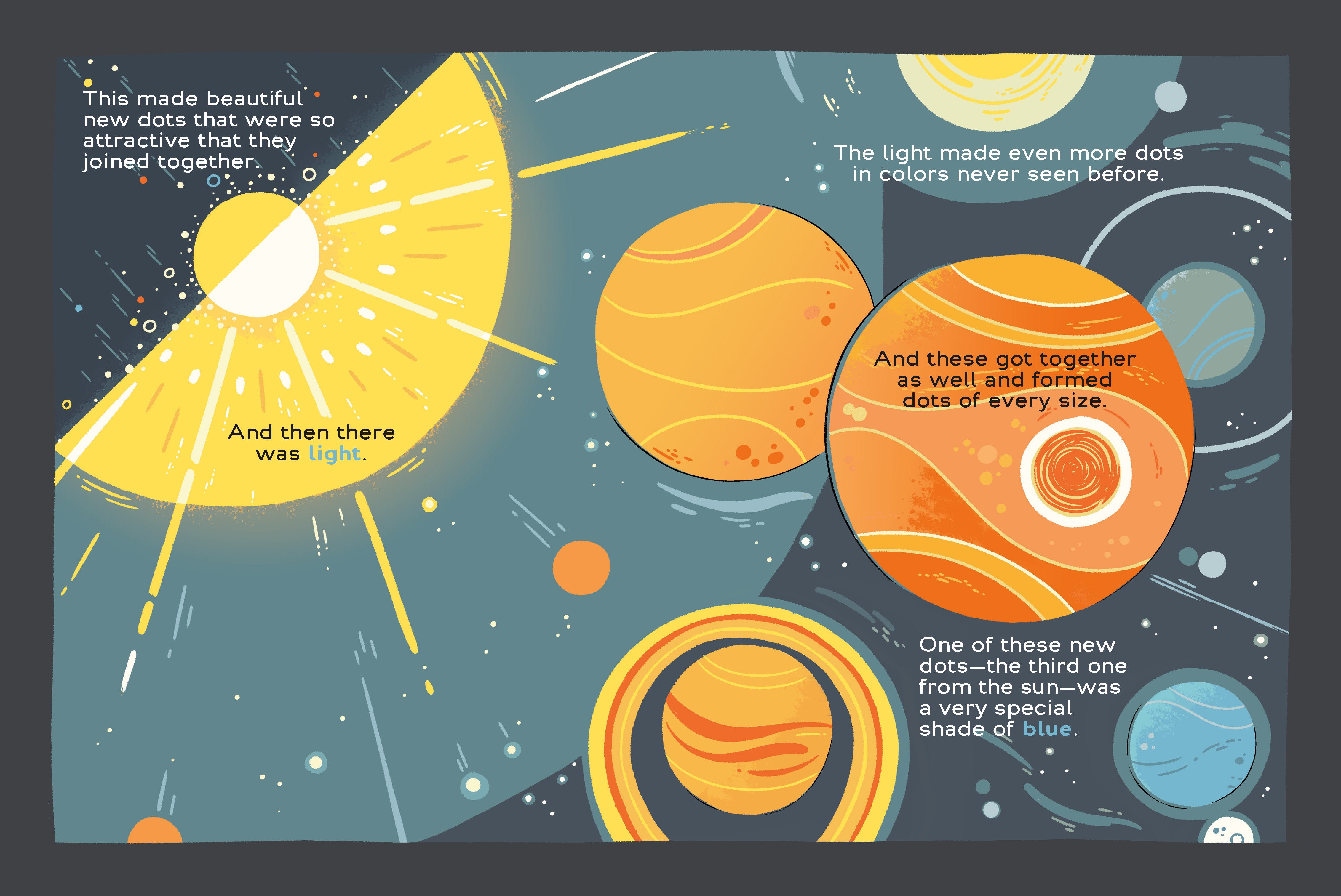
This one’s one of my standout favorites. Author Ian Lendler and illustrators Shelli Paroline and Braden Lamb drill down the history of everything to one humble dot. From one dot’s excited burst of joy comes the Big Bang, bringing new dots together to form planets and, eventually, life. The dots are animated, dancing, playing, even running away from other dots that want to eat them! The artwork is bright with a retro feel and uses the dot theme as a focal point through the story, gently leading readers on a trip through time and space. It’s a simplified look at the formation of the universe, but works nicely for younger readers. Give this one to kids who like Stacy McAnulty’s Earth: My First 4.5 Billion Years, and Dominic Walliman’s Professor Astro Cat books, published by Nobrow.
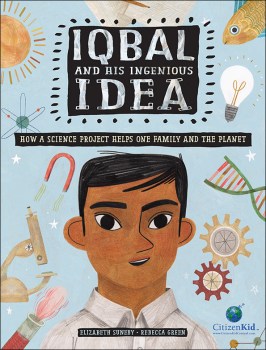
 

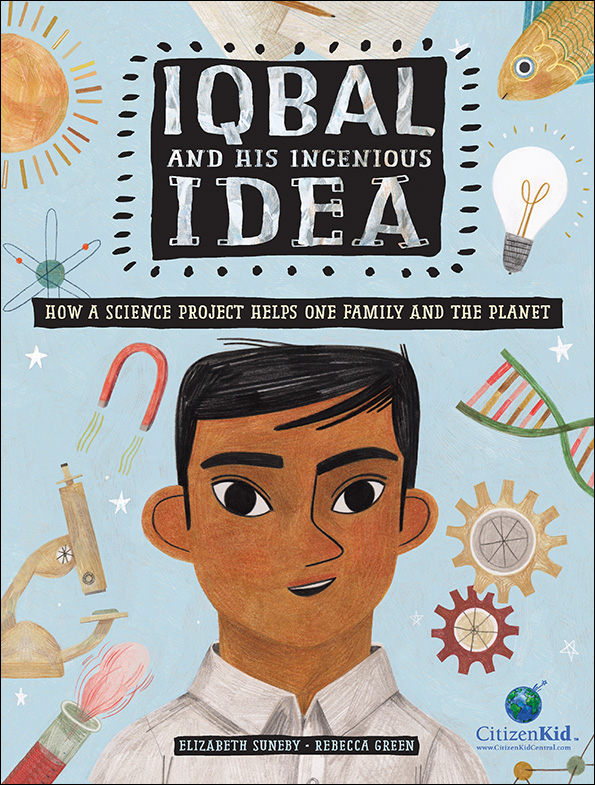
Iqbal and His Ingenious Idea: How a Science Project Helps One Family and the Planet, by Elizabeth Suneby/Illustrated by Rebecca Green,
(May 2018, Kids Can Press), $19.99, ISBN: 9781771387200
Recommended for readers 7-10

The latest from Kids Can Press’ Citizen Kid imprint, Iqbal and His Ingenious Idea is a fictional story about a Bangladeshi boy named Iqbal, who comes with a clean, solar-powered cookstove for his science fair project. He sees his mother force to cook the family’s meals indoors during monsoon season, but the family has no stove: she cooks over an open fire, which produces smoke that makes breathing difficult, especially for his mother and baby sister. He learns about solar energy cooking, wins first place in the science fair, and introduces a sustainable and healthier way for families to prepare meals. The artwork illustrates everyday life in Bangladesh and communicates the closeness Iqbal shares with his family and his hard work to create a science fair project that accomplishes the dual purpose of getting him a good grade and helping his family. The story shows readers that kids can make a difference, and that healthier living doesn’t depend on expensive gadgets – a little research, and you can make the world a better place with tools right in front of you. The book includes more information on cookstoves, a glossary, and instructions for making a DIY solar cooker. Great for class projects and science fair ideas!
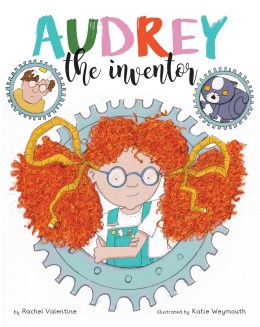
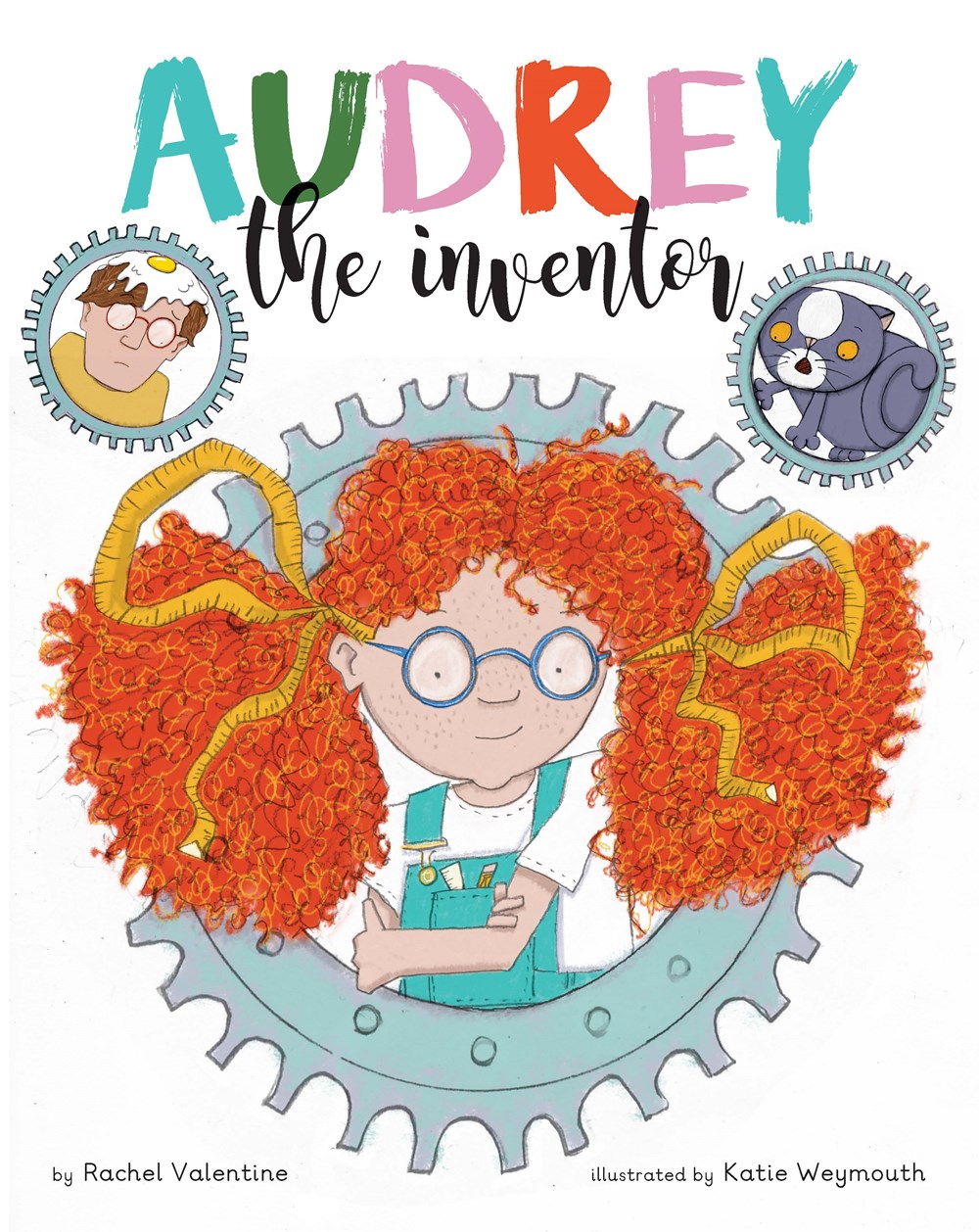
Audrey the Inventor, by Rachel Valentine/Illustrated by Katie Weymouth,
(May 2018), words & pictures, $17.95, ISBN: 9781910277584
Recommended for readers 4-7
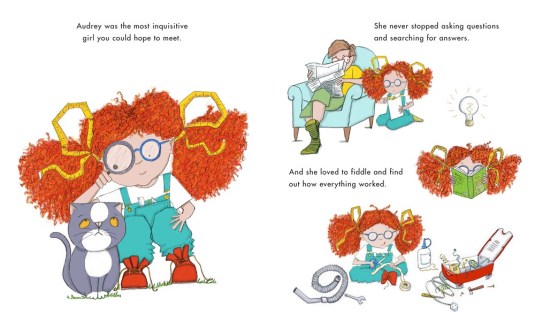
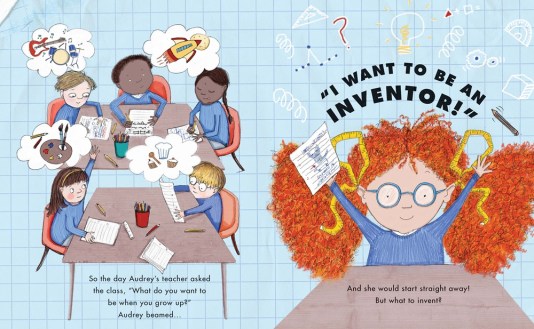
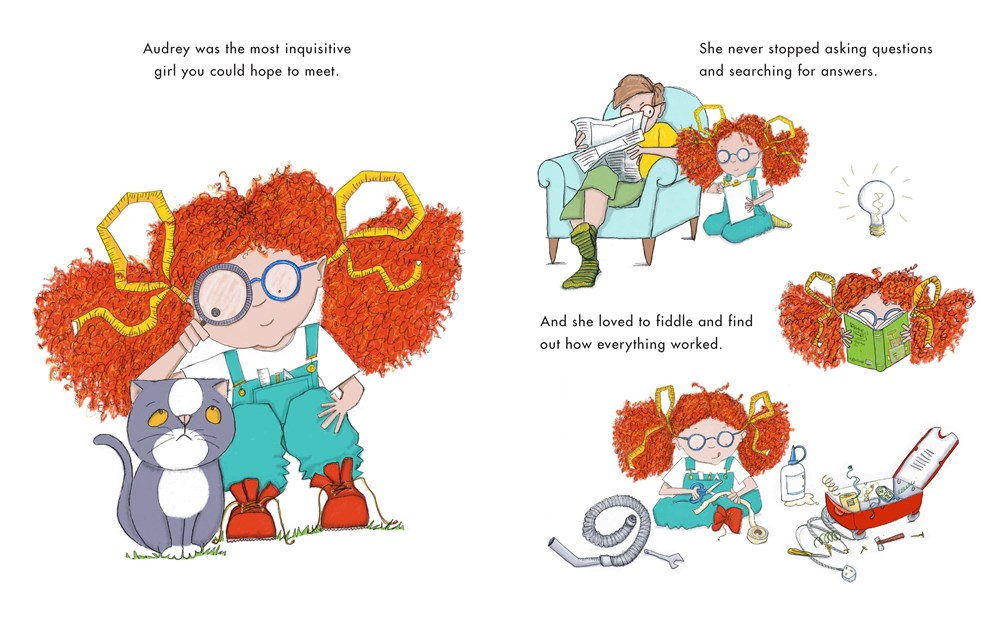
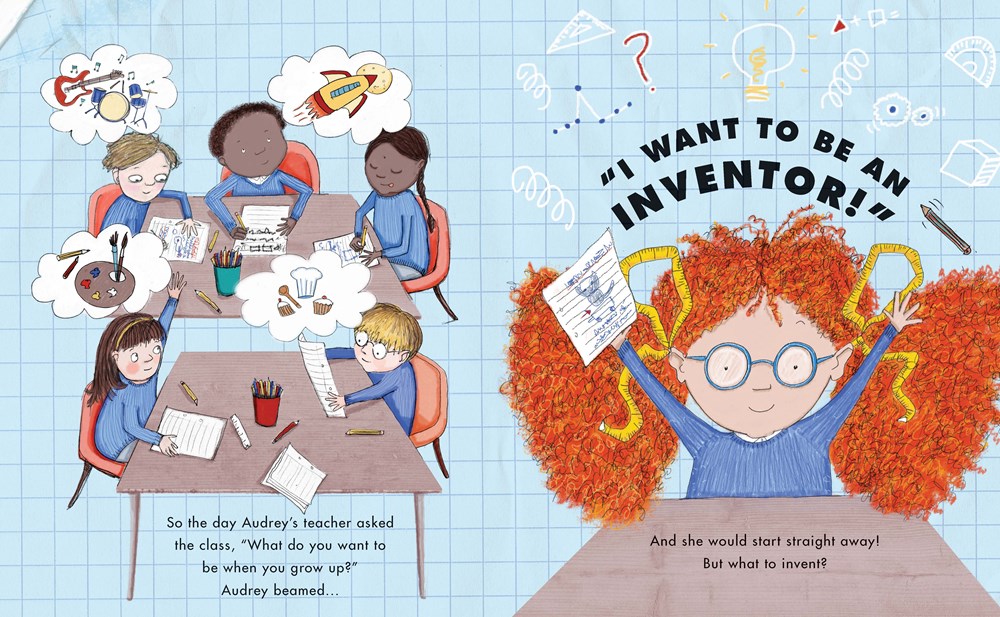
Audrey could hang out with Izzy (first book) and Andrea Beaty’s gang. A wild-haired, redheaded little girl who uses measuring tape for ribbons, Audrey is a curious kid who wants to be an inventor – but she doesn’t know what to invent! She sets off on a host of different ideas, some involving her poor cat, Happy Cat, all of which end up in the “rework” pile. She’s ready to throw in the towel, but decides to give it one last try after getting some encouragement. Little touches, like featuring a graph paper background and visualizing Audrey’s thought process and her doodles, invite kids to share their own ways of working out ideas. The collage, watercolor, and pen artwork comes together to create a busy story about a busy mind. A fun add to creative collections.

These books offer a great way to introduce the scientific method, even for younger grades. Little Bins for Little Hands has a good article, with tips on using the scientific method – and including links to experiments – for preschoolers.

Posted in Early Reader, Fiction, Non-Fiction, picture books

Science for Kindergarteners!

I’m always looking for ways to get more science in my kids’ days: my QBH Kids and my own Kindergartener alike. I’ve had some great successes and some that fell a little flat. At my previous library, I had a phenomenal early learning assistant who helped create amazing Science Storytimes, using popular storybooks to demonstrate simple science concepts for little ones: using Ellen Stoll Walsh’s Balancing Act to teach balance, while showing them a simple balance board that kids were invited to place small objects on and discover what balanced, and what tipped the sides.

I also look to fellow librarian and teacher bloggers for hints. Pinterest is a great resources, as is Education.com and Teachers Pay Teachers. Science In Storytime is one of my more recent go-tos, with loads a great book and activity ideas, and The Show Me Librarian has some fantastic programming for Pre-K and elementary programs.

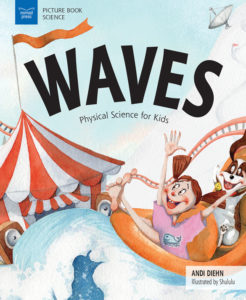
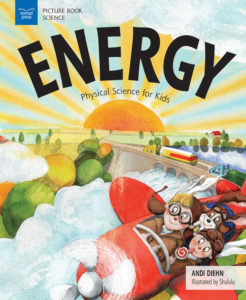
I’ve just received some new books from Nomad Press’ Picture Book Science series, too. These are a lot of fun: color artwork on every page, a fun poem to kick off each book, and my favorite part: an explanation of the scientific term, with all the uses of the term. Take, for instance, the book Waves: it starts off with the simplest interpretation of the word; a way to say hello. The book goes on to include ocean waves in that explanation, then the motion of a wave, and finally, a discussion of waves: energy, light, sound, all using questions to provoke thought, discussion, and understanding. Each book “Try This!” boxes, with simple activities kids can easily do at home or in the classroom (or during Science Storytime). Glossaries are handy to define terms that come up. There are currently four books in the Picture Book Science series: Waves, Forces, Matter, and Energy, all written by Andi Diehn and illustrated by Shululu; at $9.95 each, it’s a good and reasonable investment for our home, school, and public shelves. (Waves: 978-1-61930-635-6; Forces: 978-1-61930-638-7; Matter: 978-1-61930-644-8; Energy: 978-1-61930-641-7)


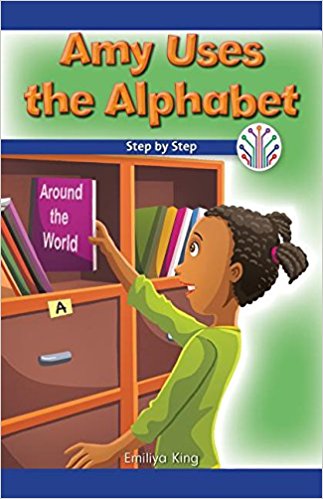
Rosen Classroom has a new series of easy readers called Computer Science for the Real World. They’re not attempting to teach Python or Scratch to the little ones (yet): these readers break the concepts needed to study computer science down for beginning readers. The three readers I received use everyday concepts – morning routines, alphabetizing books, building a birdhouse – to introduce activities that will help learn computer science; in this case, repetition and doing things step by step.


The books are leveled and contain instructional guides with include new vocabulary words, background knowledge for the specified concept, and text-dependent questions. There are independent and class activities to help kids learn through experience, and are available in English and Spanish. I really like these readers; there aren’t that many “just right books” (as my son’s school calls them) explaining science like this, and I’d love to have them in my library, but this is more of a Central library purchase, at least in my system, because you’re going to want to buy these by the collection; you can certainly buy them as single books, but having a whole set will better benefit your readers. The pricing is pretty reasonable, so I’ll be slipping this into an interoffice envelope bound for my collection development department tomorrow morning.

Posted in picture books, Preschool Reads

Explore the Starry Skies!

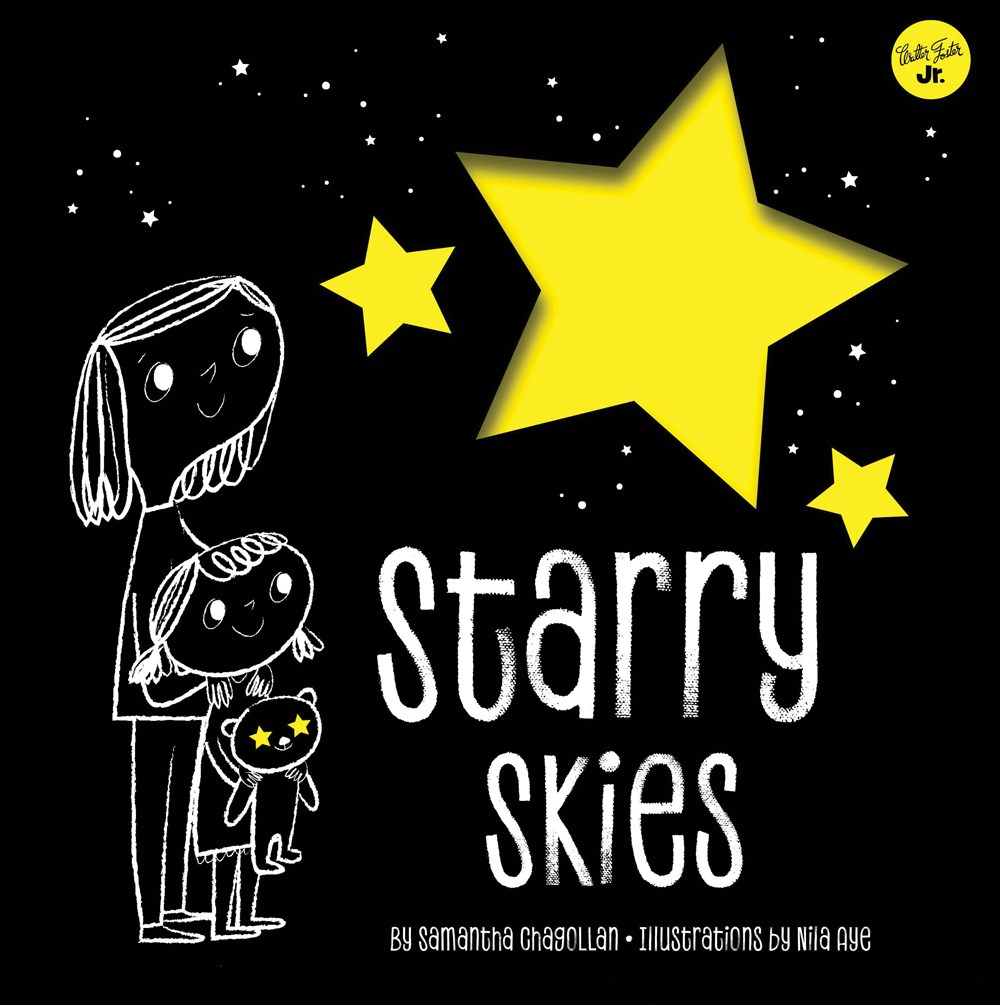
Starry Skies: Learn About the Constellations Above Us, by Samantha Chagollan/Illustrated by Nila Aye, (April 2018, Walter Foster Jr.), $16.95, ISBN: 9781633225091

Recommended for readers 4-6

I remember my first book on constellations. It’s still around today: Find the Constellations, by H.A. Rey (the Curious George author!); and it endures because it’s diligently updated (5 updates, including a 2017 version) and because constellations are fascinating. They’re pictures in the sky; they’re maps in the sky; they’re stories, waiting to be revealed. Starry Skies is a great companion – an introduction to constellations for the preschool set – to the well-loved Rey book.

Beginning with the sentence, “Every night, the sky is filled with stars that tell a thousand stories,” Starry Skies launches into spreads features a different individual starring in his or her own story: a boy battles a dragon (Draco); a cat sees herself as Leo, the lion; a girl gets ready to fly on Pegasus. Each spread features a black sky, dotted with stars, and a white line drawings of the dreamers and their constellations. It’s a preschool-friendly entry to stargazing, astronomy, and mythology. Readers enjoy 14 constellations in all, plus a star map of the for the Spring/Summer and Fall/Winter seasons.


Posted in Non-Fiction

Poems celebrate creatures who build in A Place to Start a Family

A Place to Start a Family: Poems About Creatures That Build, by David L. Harrison/Illustrated by Giles Laroche, (Jan. 2018, Charlesbridge), $17.99, ISBN: 9781580897488
Recommended for readers ages 5-9
A nice meeting of prose and science, A Place to Start a Family includes 12 poems about creatures that build homes to house their families. Organized into poems for animals who build underground, like prairie dogs and moles; on land, like the cobra or termite; in water, like the beaver or pufferfish; in the air, like storks and wasps, each poem is illustrated with attractive, textured mixed media artwork. Poems are brief, factual, and some bring a tongue-in-cheek sense of humor to nature. Witness the poem in praise of the White-Spotted Pufferfish: With tail and fin/hoping he/will soon charm/a willing she/he works hard/day and night/Will he win a mate?/He might. More information about each animal, including scientific names, descriptive paragraphs, and further resources, are available at the end. Thanks to the authors and editors for recommending readers visit the library to learn more! A nice additional resource for animal and poetry collections.
Posted in Intermediate, Middle Grade, Non-Fiction, Non-fiction, Non-Fiction, Tween Reads

Out-There Nonfiction

There is such great nonfiction being published these days. Nonfiction used to conjure pictures of boring textbooks with walls of words, with a handful of old black and white photos. Today? Nonfiction includes video game guides, crazy stories about our bodies, animals, planets, and the freaky ways famous people died. And that’s just scratching the surface. Kids’ nonfiction sports full-color illustration or photographs, text that understands how kids read and learn, and takes all interests into consideration. Series nonfiction, like the Who Was/What Was series from Penguin makes history compulsive readable, and No Starch Press has full-color STEM and tech books that teach kids everything from coding in Scratch to explaining the sciences using manga comics. I love building a good nonfiction section; these are a few of the books on my current shopping list.

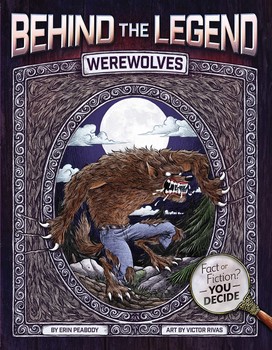
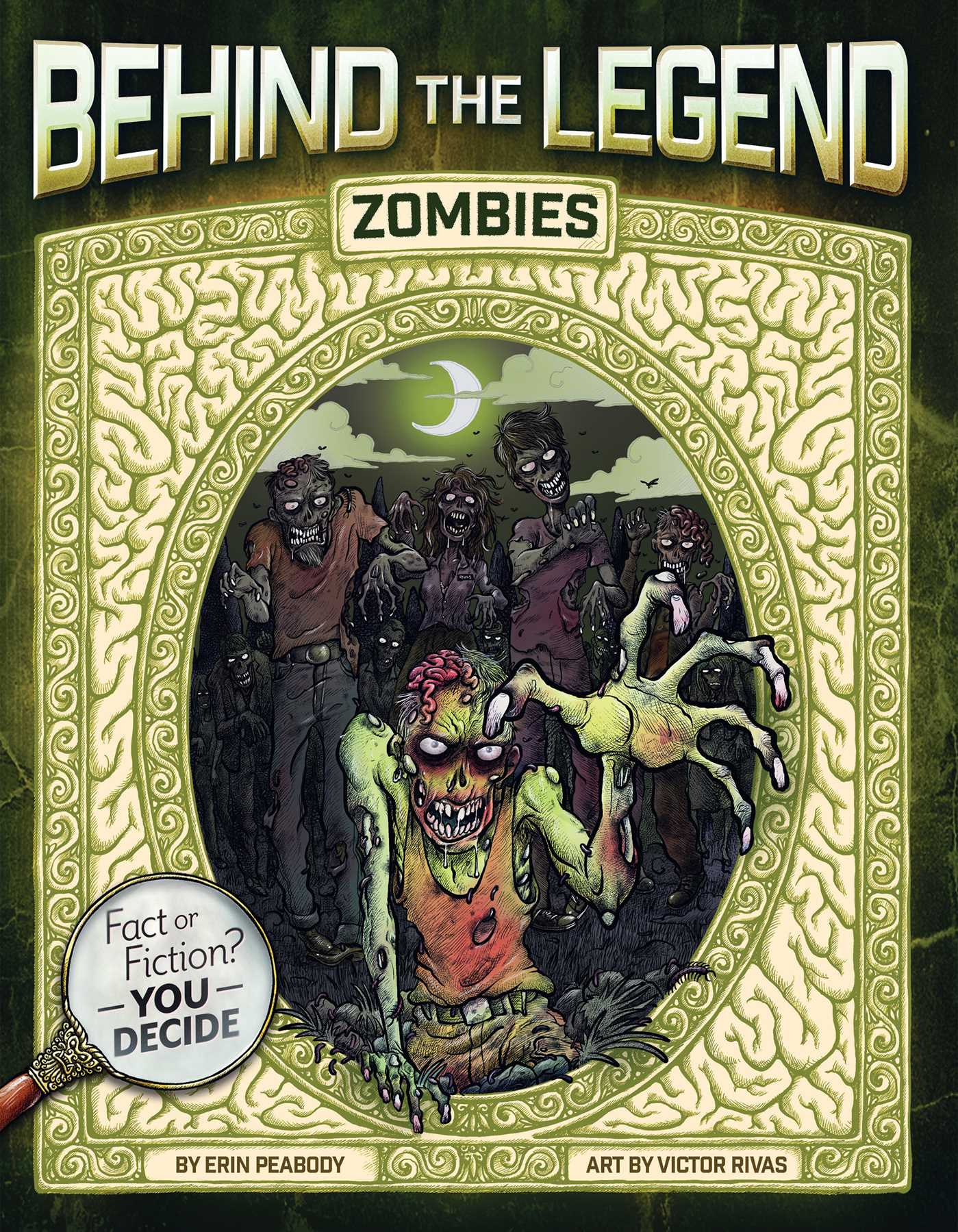
Behind the Legend series, by Erin Peabody/Illustrated by Victor Rivas and Jomike Tejido, little bee books
Good for readers 9-12


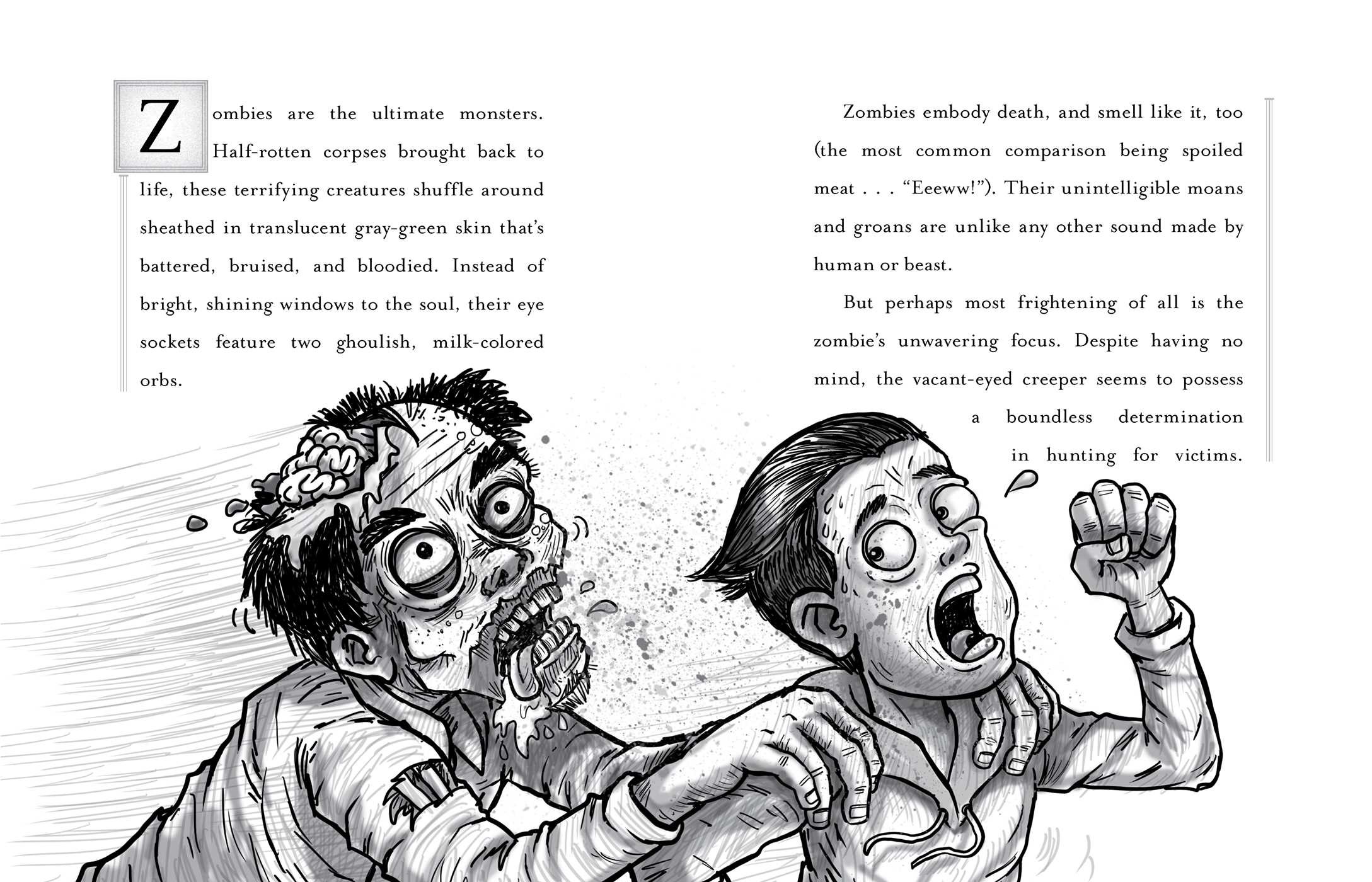
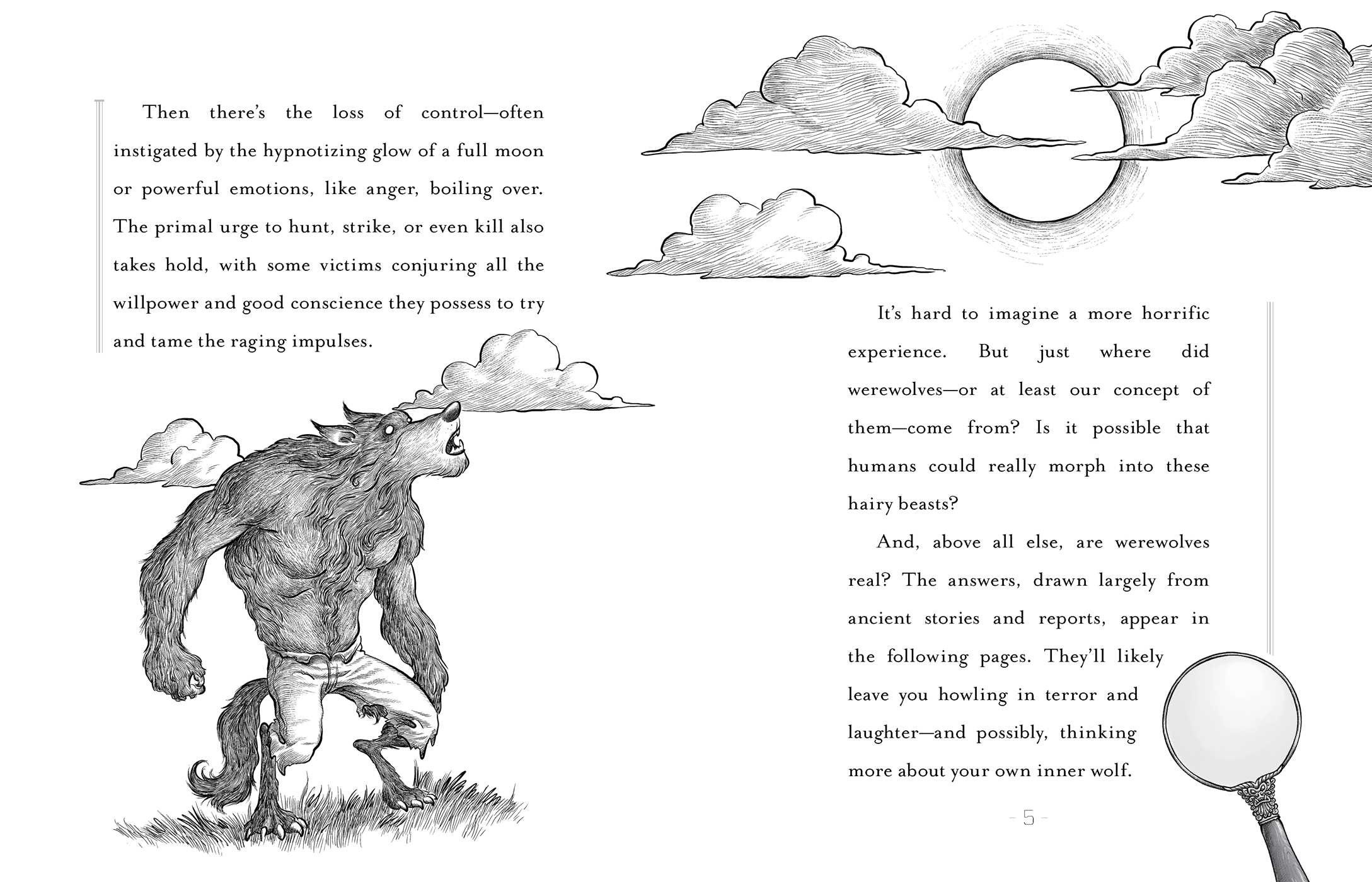
This series is so good. I’ve read Werewolves and Zombies, and love the way Erin Peabody weaves history with pop culture to present a paranormal guide that kids will love reading and learn from. There are black and white illustrations throughout; cartoony, bordering on downright freaky. Zombies delves deeply into the history of slavery and its ties to the rise of the zombie legend and the practice of voudou; Peabody also talks about the walking dead being very old news; they were showing up in Mesopotamia long before Robert Kirkman ever thought up Rick Grimes and his band of survivors. Werewolves talks about the history of animal lore and famous “were-beasts” in history, like the Gandillon siblings – a French brother and sister who were convinced they were wolves and acted accordingly. Harry Potter, Scooby-Doo, and Twilight all get a shout-out in this fun look at werewolves. There are further sources for kids who want to read further. Other Behind the Legend books include Dragons, the Loch Ness Monster, and Bigfoot. This is an absolute must-add set for kids who love themselves some pop culture paranormal reading (and half the price of most series nonfiction, library-bound books).


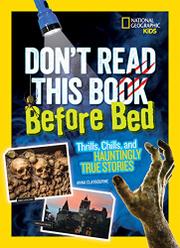
Don’t Read This Book Before Bed, by Anna Claybourne, (Aug. 2017, National Geographic Kids),
$14.99, ISBN: 978-1-4263-2841-1
Good for readers 9-12

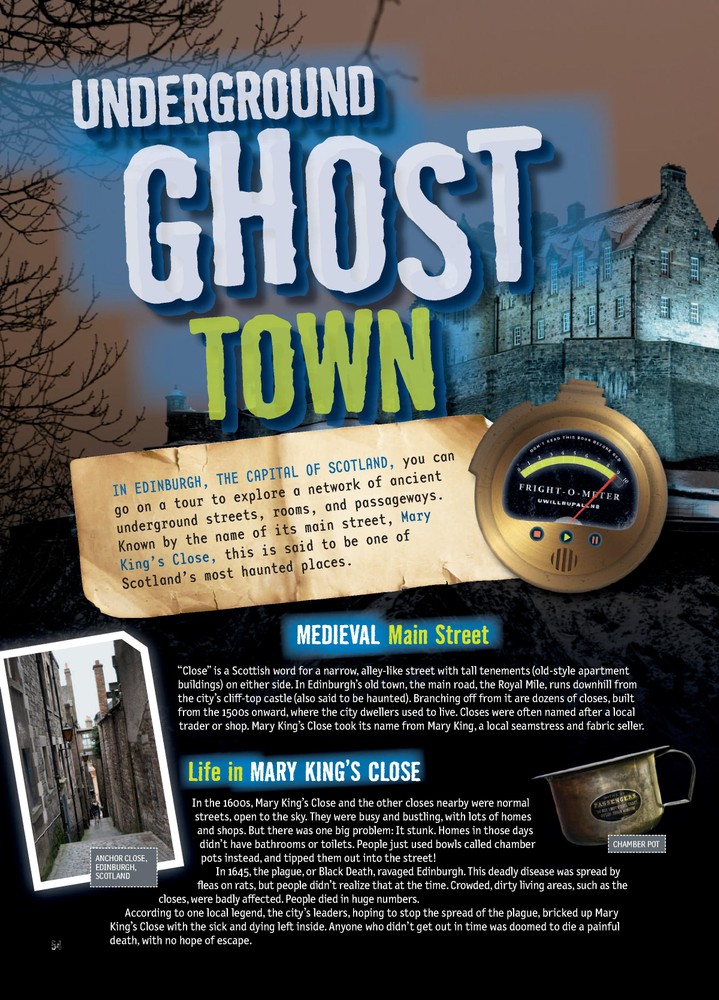
The kids in my library love creepy. Most kids do, right? It’s that safe scare, the adrenaline rush, the squeal of the “eeeeeewwwwwww!” that you can make while safely in your seat, surrounded by family, friends, or your stuffed animals or action figures. It’s being able to turn to your friend and say, “Look at this!” and watching your friend freak out, too. NatGeo knows this, and Don’t Read This Book Before Bed (which is exactly what kids will do) is chock full of freaky stories that will keep them reading and saying, “NO WAY!” Think of it as the Lore podcast, for kids. Haunted castles? Check. Freaky dolls? (Robert the Doll, profiled in here, actually has both a podcast and episode of Lore dedicated to him.) Check. Aliens and fish people? Right this way. Each story has a “fright-o-meter” to let readers know how scary this is going to get, and quizzes help readers figure out their phobias (I love a good flow chart), test whether or he or should would be a good ghostbuster, or take apart the mysteries of science. My library’s copy is rarely on the shelf.


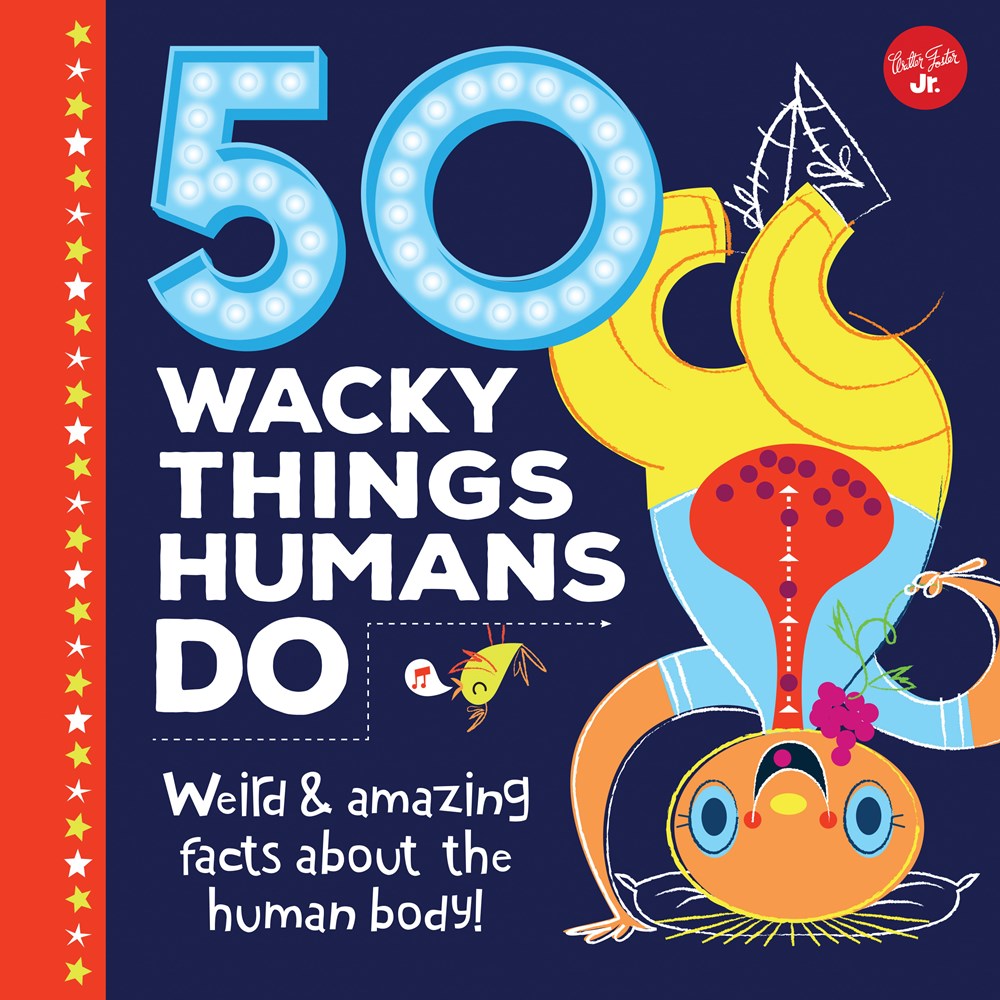
50 Wacky Things Humans Do: Weird & Amazing Facts About the Human Body, by the Walter Foster Jr. Creative Team/Illustrated by Lisa Perrett,
(Dec. 2017, Walter Foster Jr.), $14.95, ISBN: 9781633223967
Good for readers 7-10

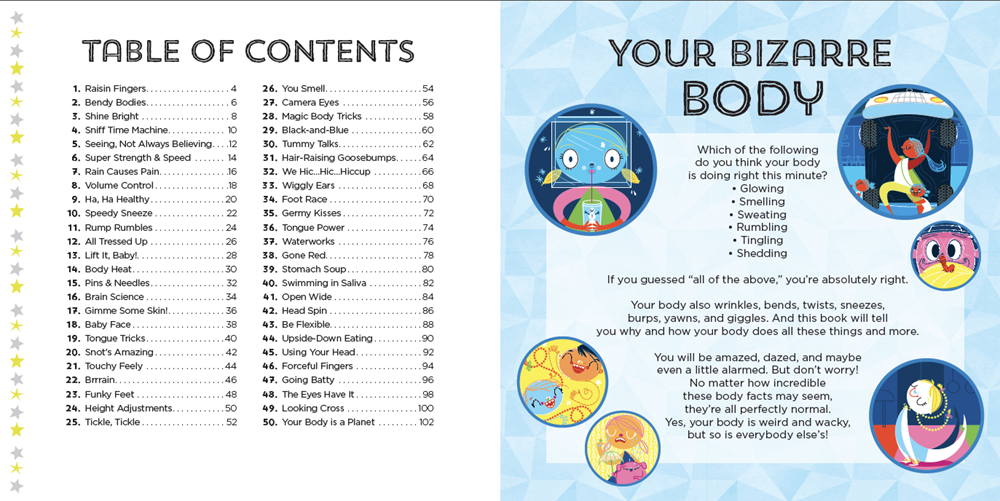
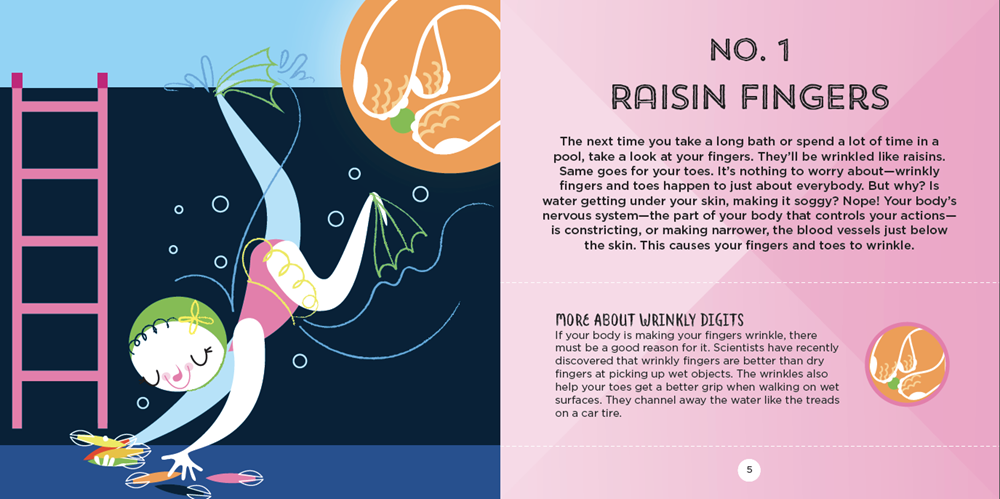
Our bodies do some wild stuff. A sneeze moves at about 100 miles per hour. (Think about that, next time someone doesn’t cover their nose and mouth when they sneeze near you.) If someone tickles you and you put your hand on theirs, it’ll send a message to the brain that stops the tickling sensation. Wrinkly bathtub fingers help us grip things better. Readers will learn all of this and more in 50 Wacky Things Humans Do, written in a similar vein to the chunky, digest-sized NatGeo Kids fun fact books. Wacky Things features one fact per spread and one colorful, fun illustrations; good for intermediate-level readers.


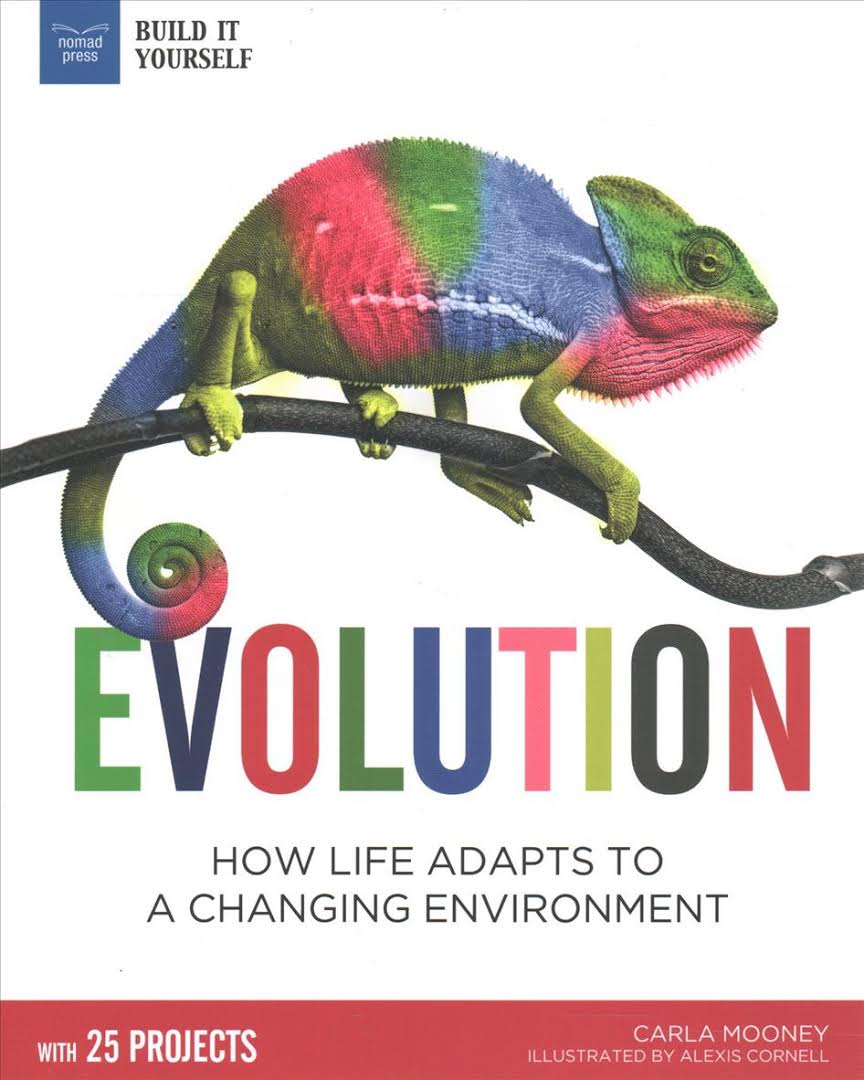
Evolution: How Life Adapts to a Changing Environment, by Carla Mooney/Illustrated by Alexis Cornell,
(Nov. 2017, Nomad Press), $17.95, ISBN: 978-1-61930-601-1
Good for readers 9-12

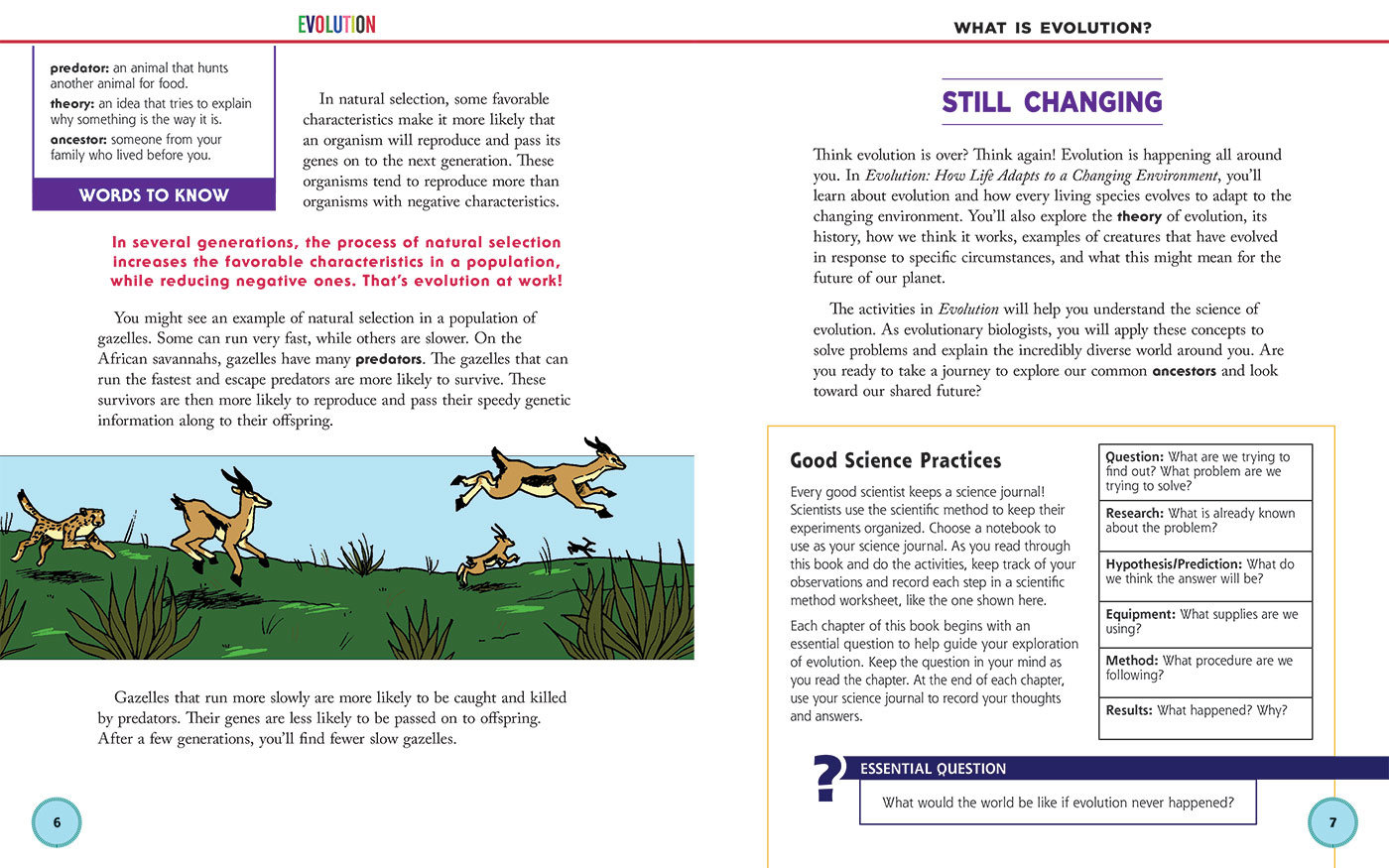
Nomad Press has enjoyed shelf space in my library for a while. They have great science project books and consistently win awards because they blend hands-on projects with text readability. Evolution is a great update to Nomad’s collection and my science projects shelf. First of all, the book is in color; my Nomad books have normally been black and white, and this is as eye-catching on the inside as it is on the cover. The book progresses from a basic overview of evolution and how it works, through natural selection, species and speciation, through to classification and human evolution. Twenty-five projects allow kids to map early human migration; find sidewalk fossils (awesome for my urban library kiddos), and research an endangered species and create a plan to save it. There’s a glossary, lists of resources, and an index. I love this new direction Nomad seems to be taking and want to see more! Great for library shelves.


Posted in Graphic Novels, Non-Fiction, Non-fiction, Tween Reads

Secret Coders and Science Comics – Comics that help kids love learning!

There are two more Science Comics coming your way from First Second, along with another Secret Coders volume. Let’s jump in and see what’s good!


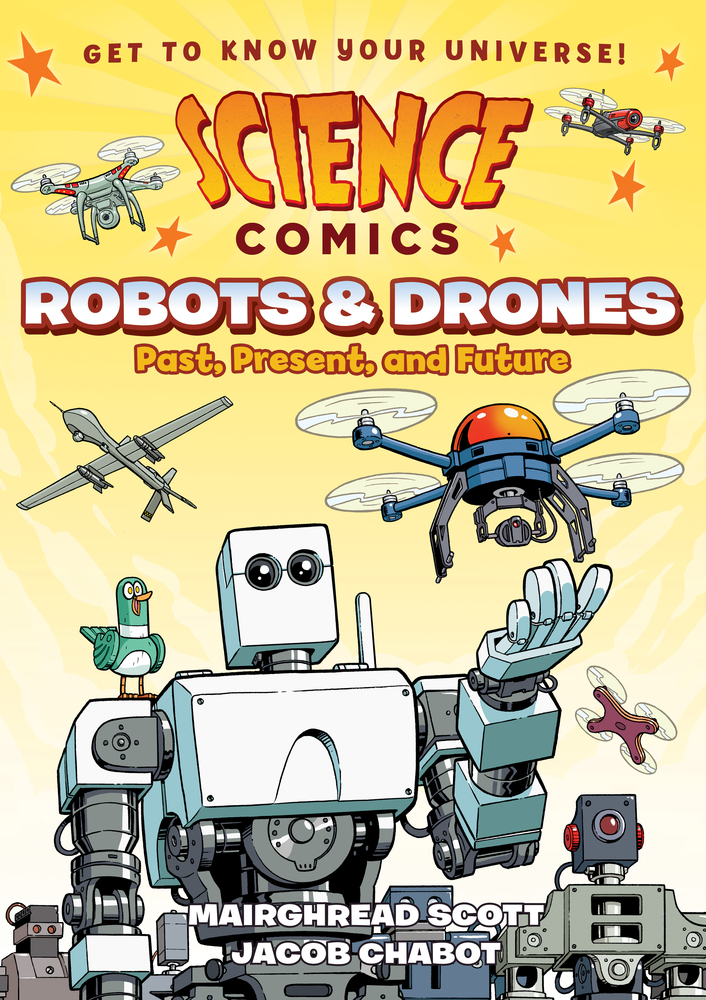
Science Comics: Robots & Drones – Past, Present, & Future, by Mairghread Scott/Illustrated by Jacob Chabot, (March 2018, First Second), $19.99, ISBN: 9781626727939
Recommended for readers 9-13

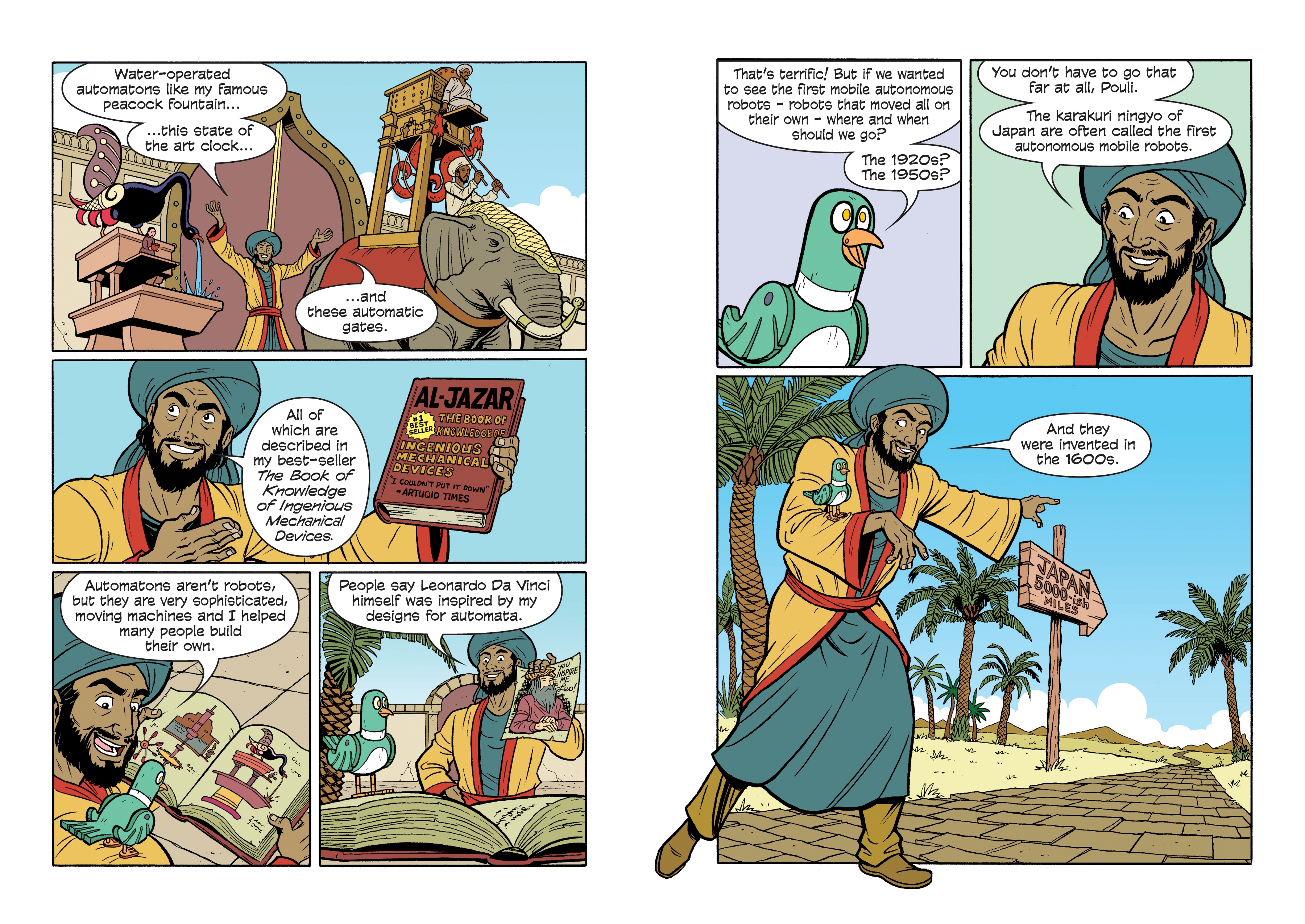
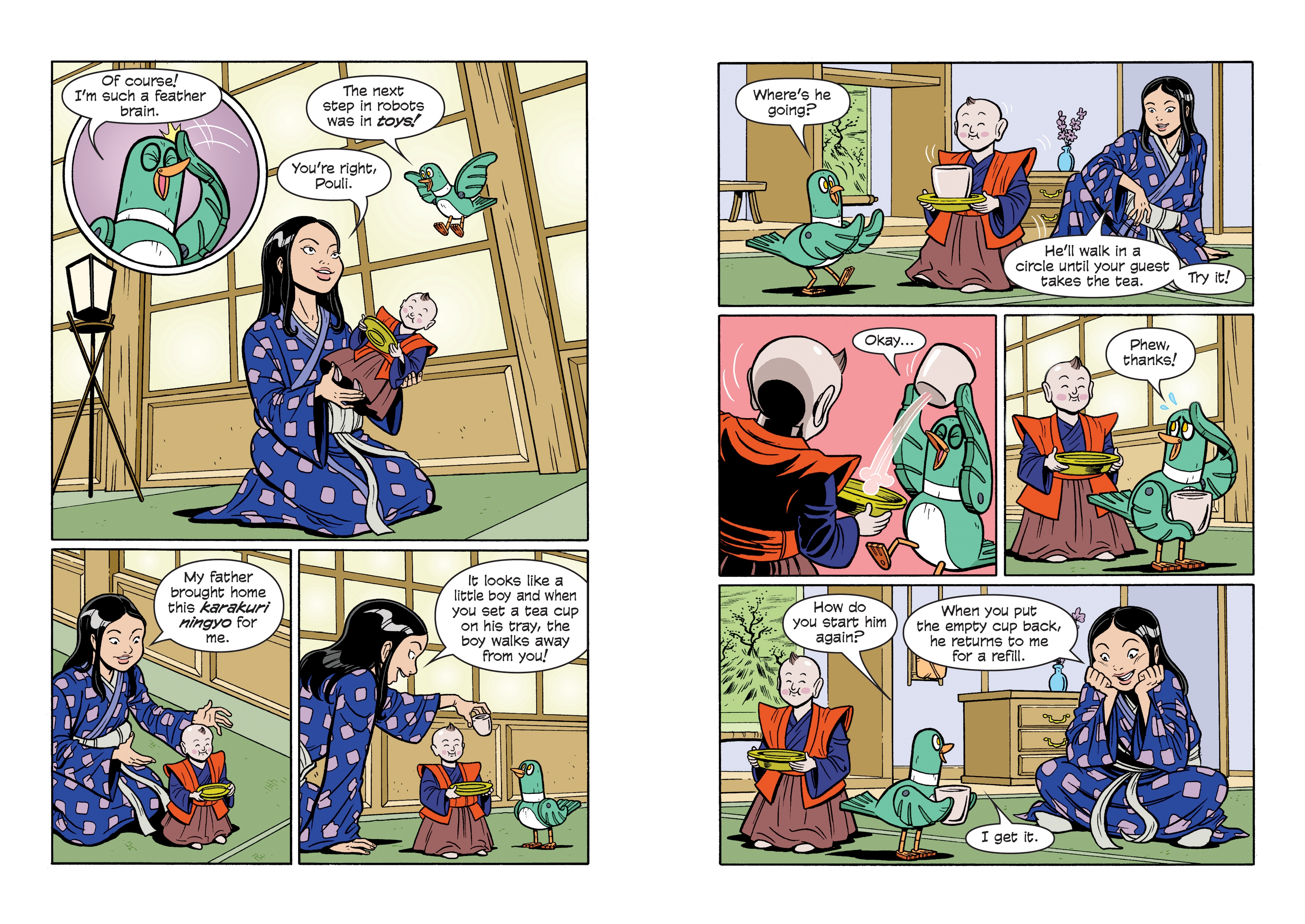
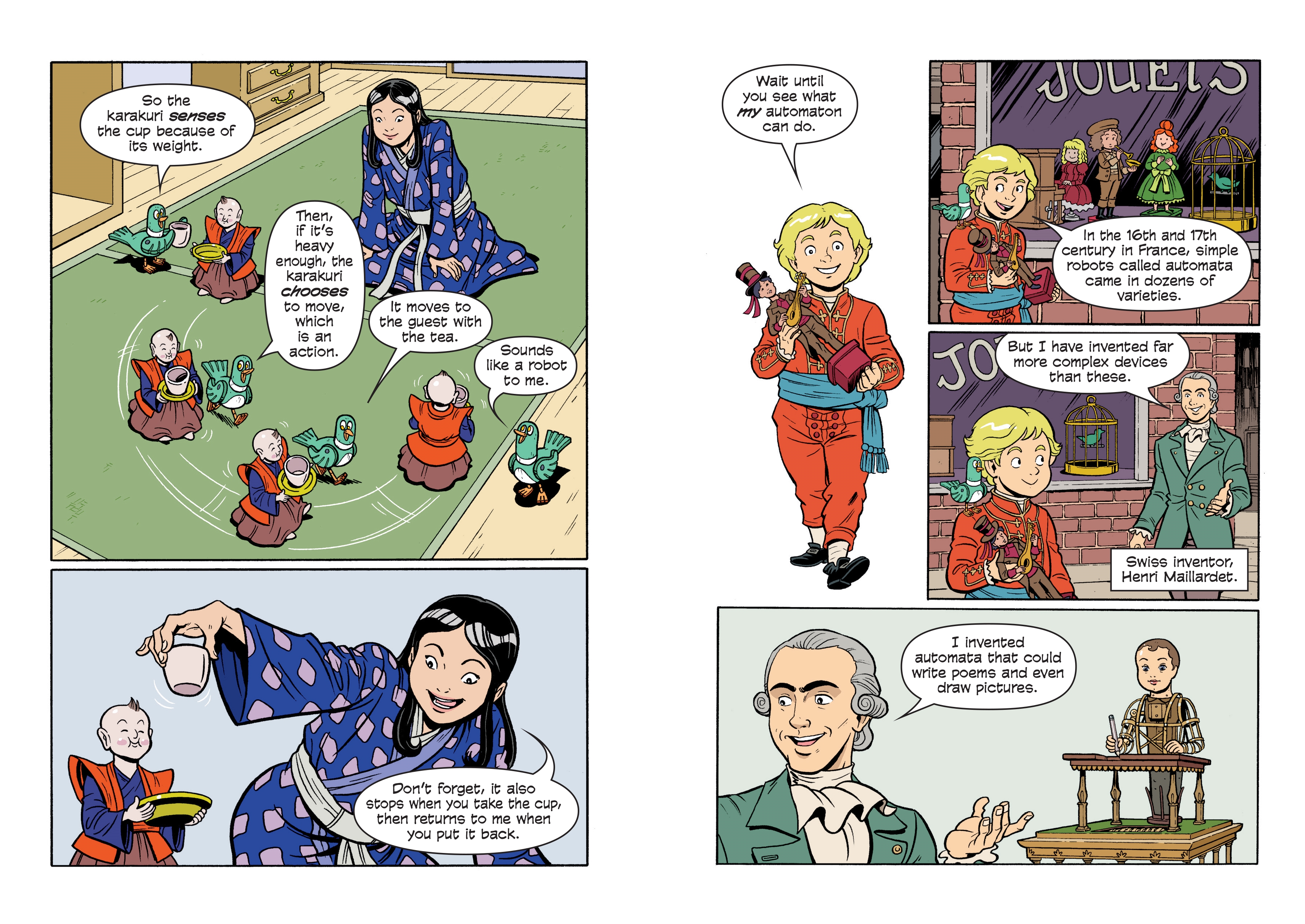
The latest volume of Science Comics takes a deeper look at robots. With Poulli, a birdlike robot that’s also the first machine to ever fly through the sky (back in 350 BCE!), as our guide, readers get a guided tour through the history of robotics, and learn what is versus what isn’t a robot. New, programmable coffeemakers? Robots! Remote-controlled cars – not really. Kids get a refresher on simple machines (levels and pulleys) and how those simple concepts formed the building blocks for more complex machines, eventually leading to modern technology, robots, and drones. There’s a focus on the good robots and drones can accomplish (for those techno-phobes who see The Terminator as our eventual future) and the human component of computer programming. Isaac Asimov, legendary scientist and science fiction writer who gave us the Three Laws of Robotics, gets some recognition here, too.

There’s a nice shout-out to libraries and after-school programs as places to go to learn more about getting into programming and robotics, and some cool pop culture nods that parents will recognize (Star Trek and KITT from Knight Rider, to name a couple). The artwork features diverse characters putting their learning into practice, and the history of robotics covers diverse areas of the world. Poulli is a friendly, cute guide that will appeal to readers, and the language – as with all Science Comics – is easy to understand but never dumbs down information.

There’s a Hall of Awesome Robots, spotlighting 25 robots from history; a closer look at how drones work, and a glossary of new terms to finish up the volume.

Me? I immediately add the newest Science Comics to my shopping cart ; they’re a great add for my “True Story” nonfiction section, where I put books that may get lost on the actual nonfiction shelves, but will grab attention on their own. Plus, my True Story section is next to my Graphic Novels shelf, so it’s a win all around.


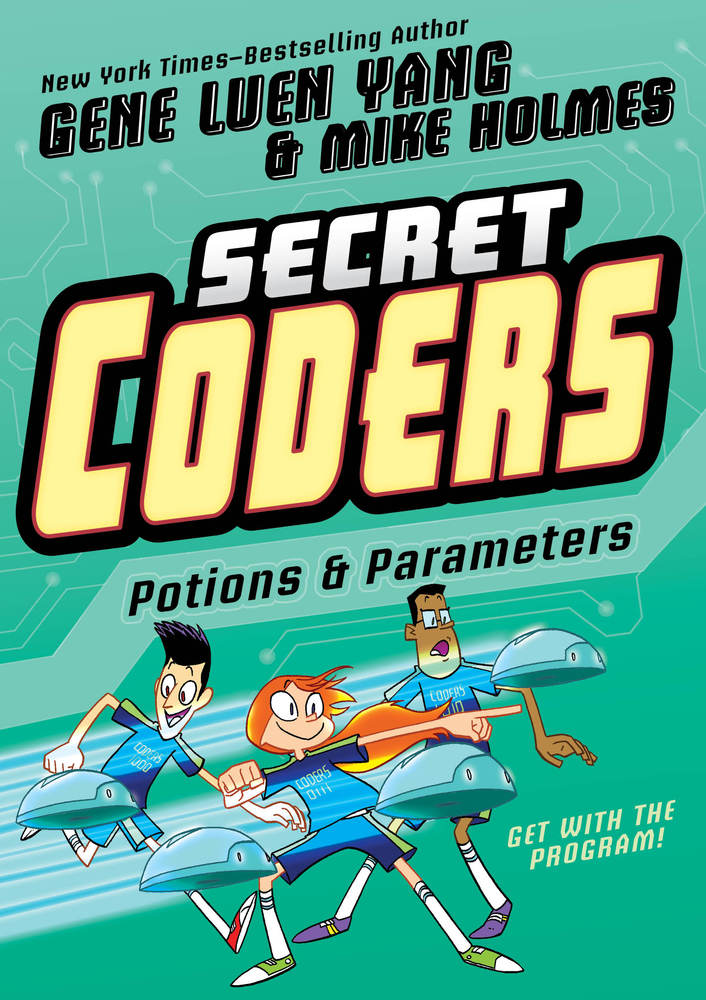
Secret Coders: Potions and Parameters, by Gene Luen Yang and Mike Holmes,
(March 2018, First Second), $10.99, ISBN: 9781626726079
Recommended for readers 8-12

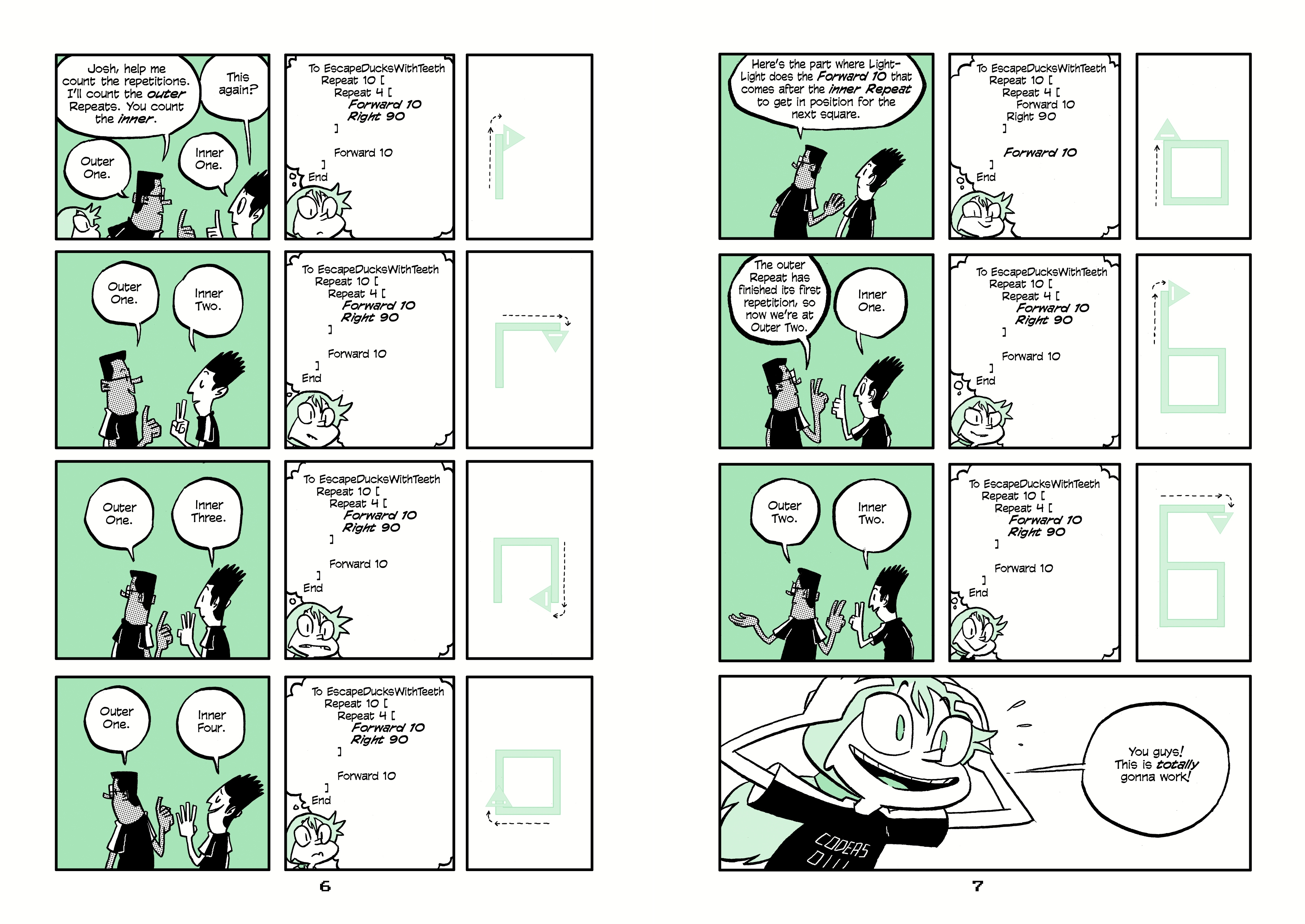
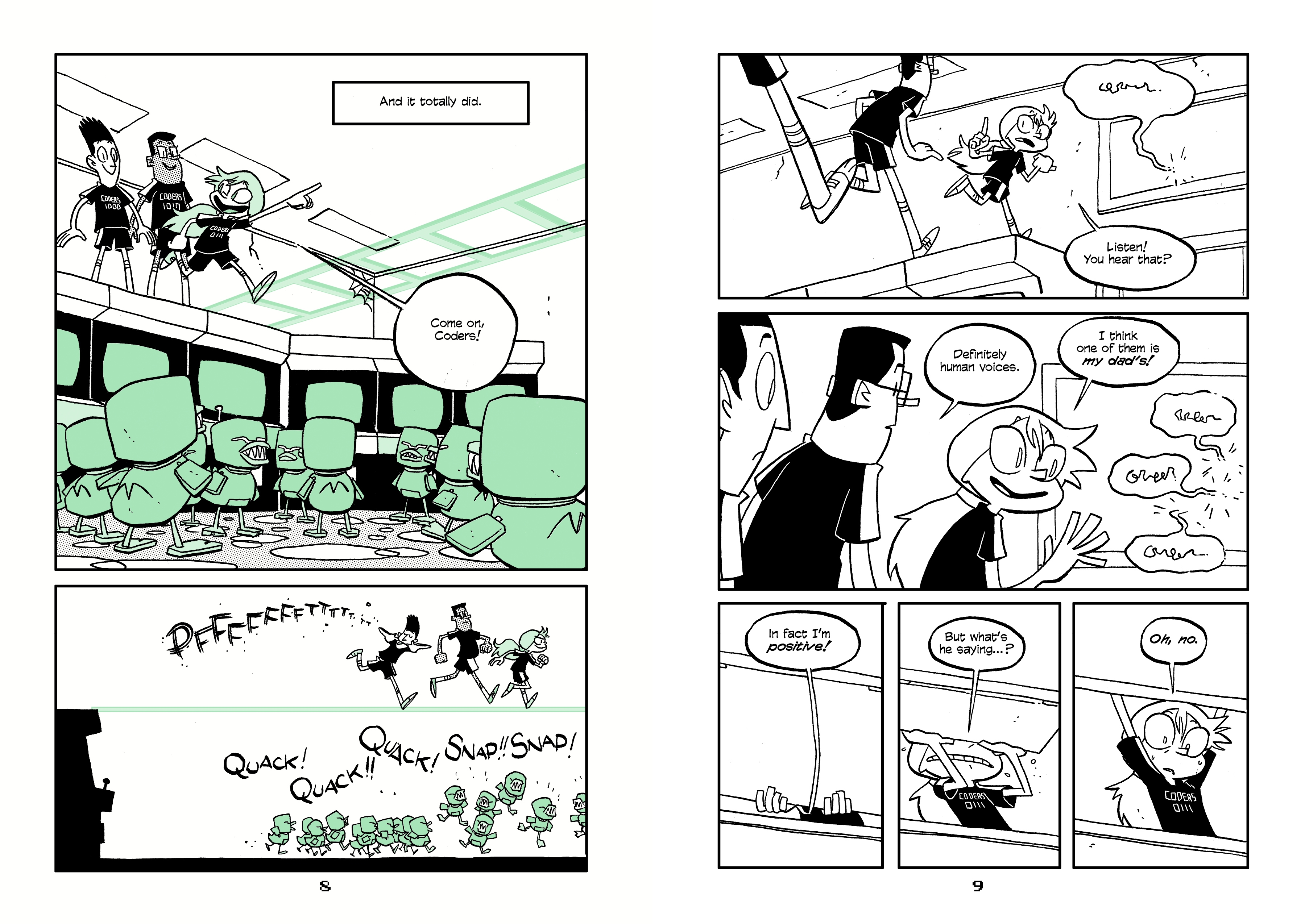
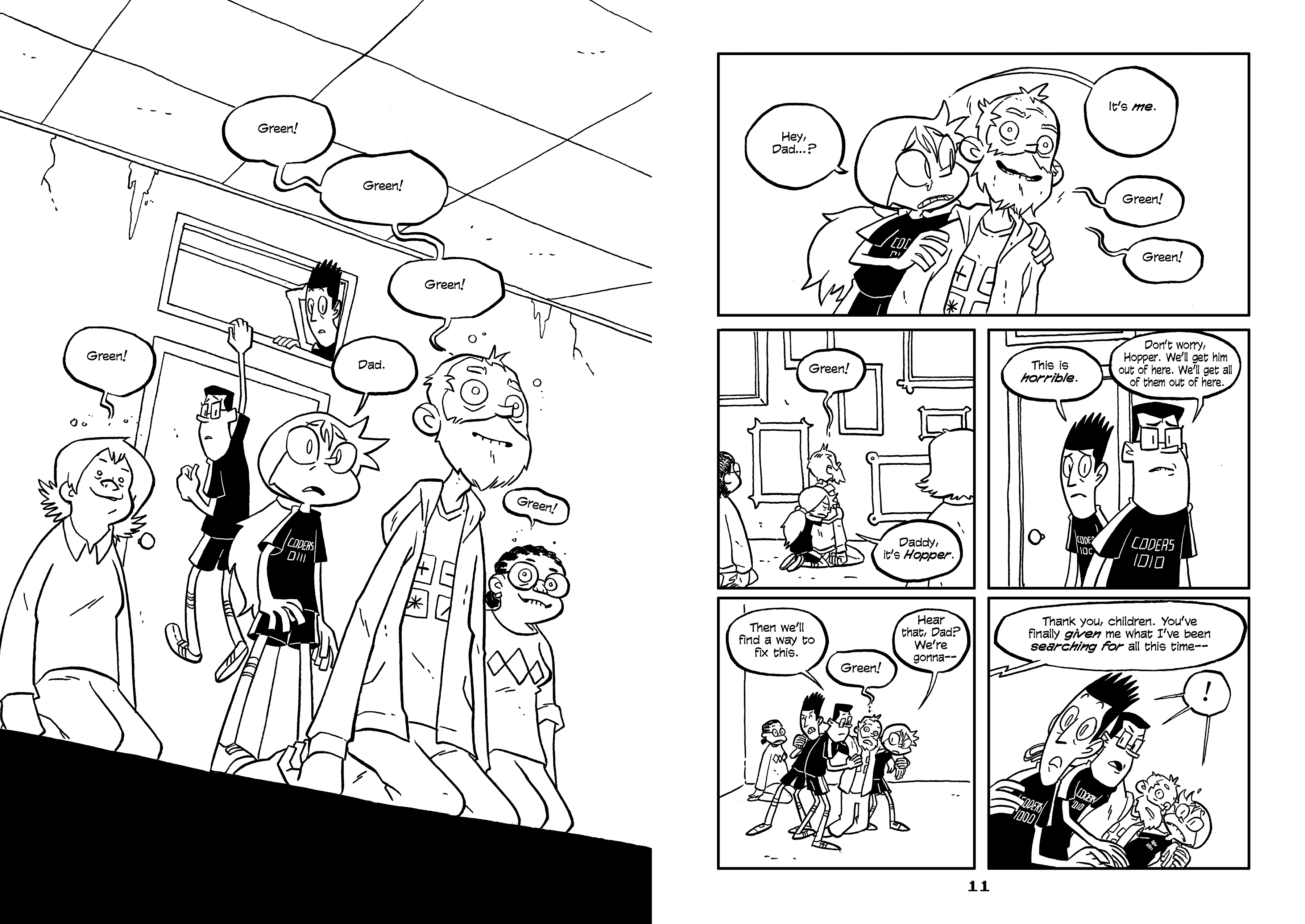
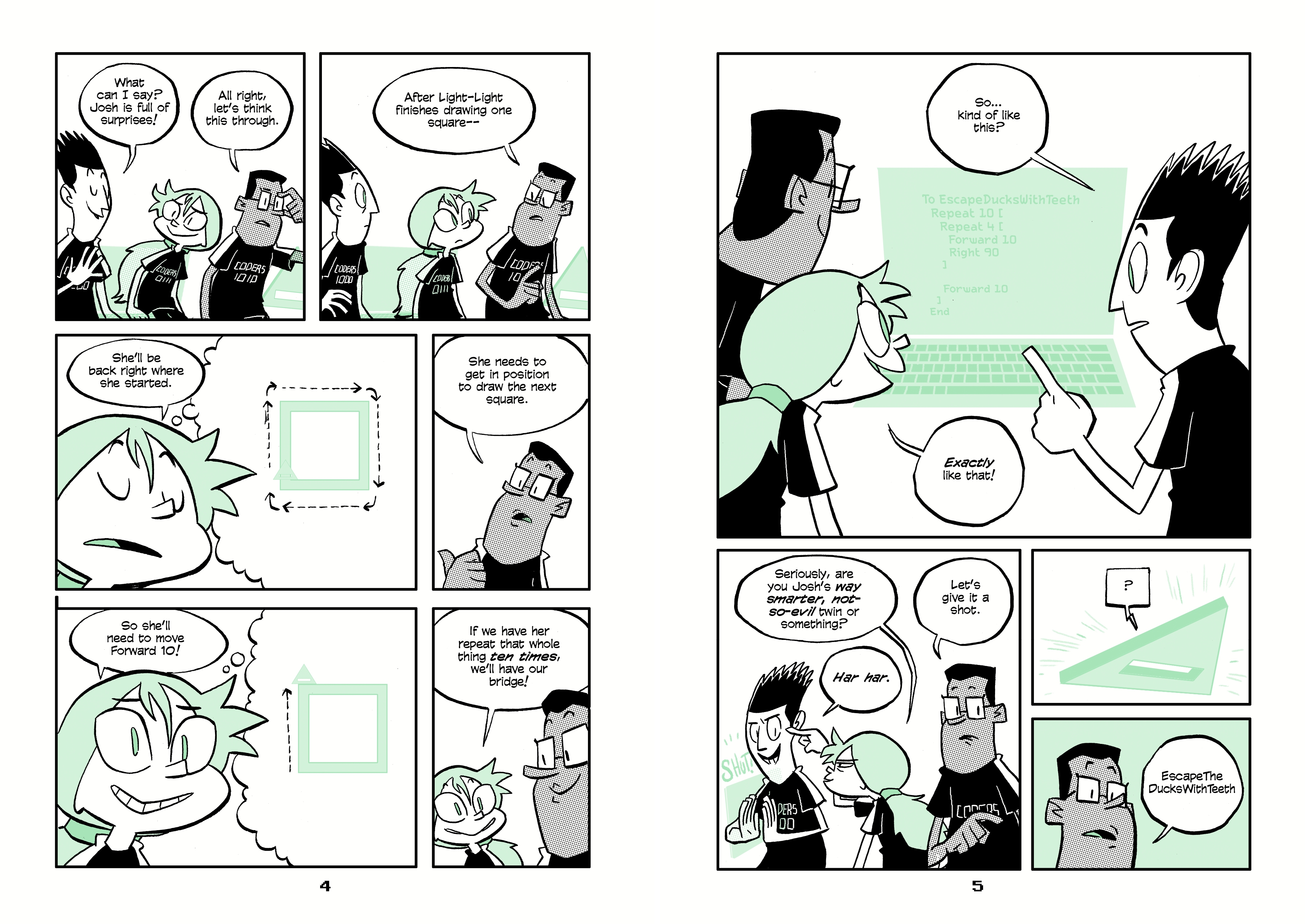
While we’re talking about robots and programming, there’s a new volume of Secret Coders coming at you. The fifth installment of the series sees Hopper, Eni, and Josh going up against Professor One-Zero and his evil Green Pop. The stakes are high, especially now that Hopper’s dad’s fate lies in the balance! We get a lot more of Professor Bee’s origin, and the fight for the mystical Turtle of Light will keep you turning pages. Yang and Holmes challenge readers with more logic puzzles and codes to work through, and provide detailed explanation through their characters.

Science Comics: Sharks – Nature’s Perfect Hunter, by Joe Flood,
(Apr. 2018, First Second), $12.99, ISBN: 9781626727885
Recommended for readers 8-13

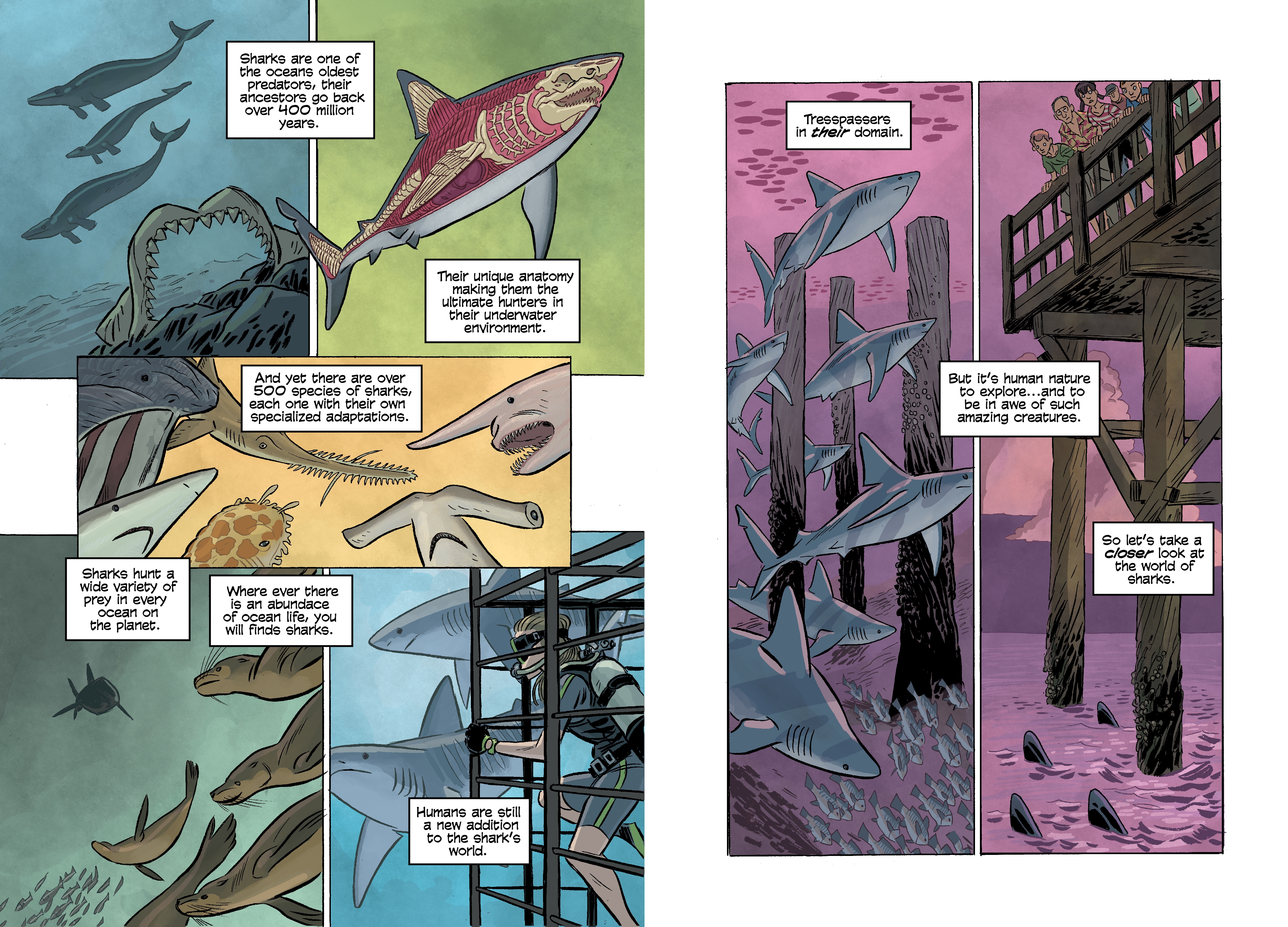
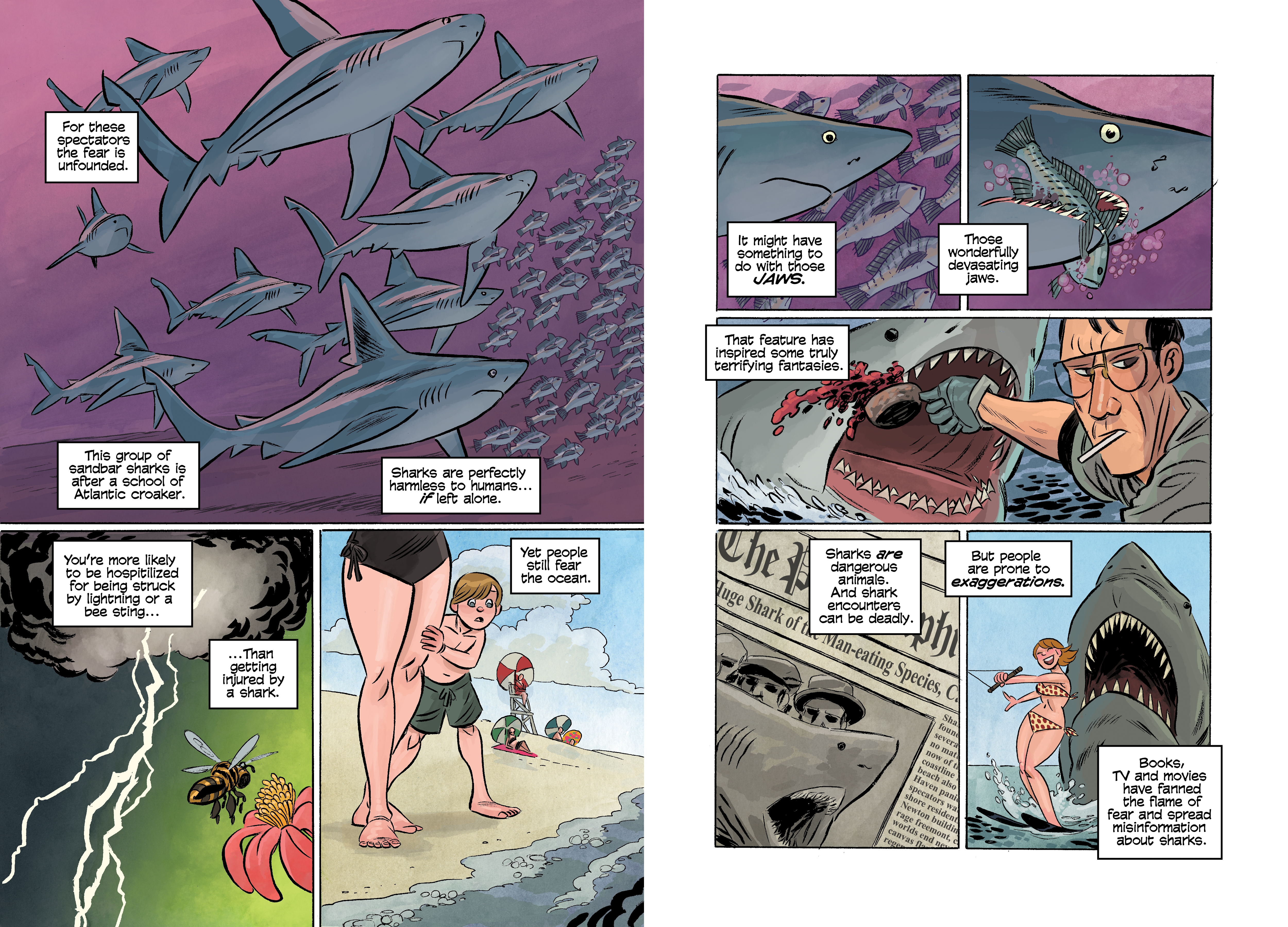
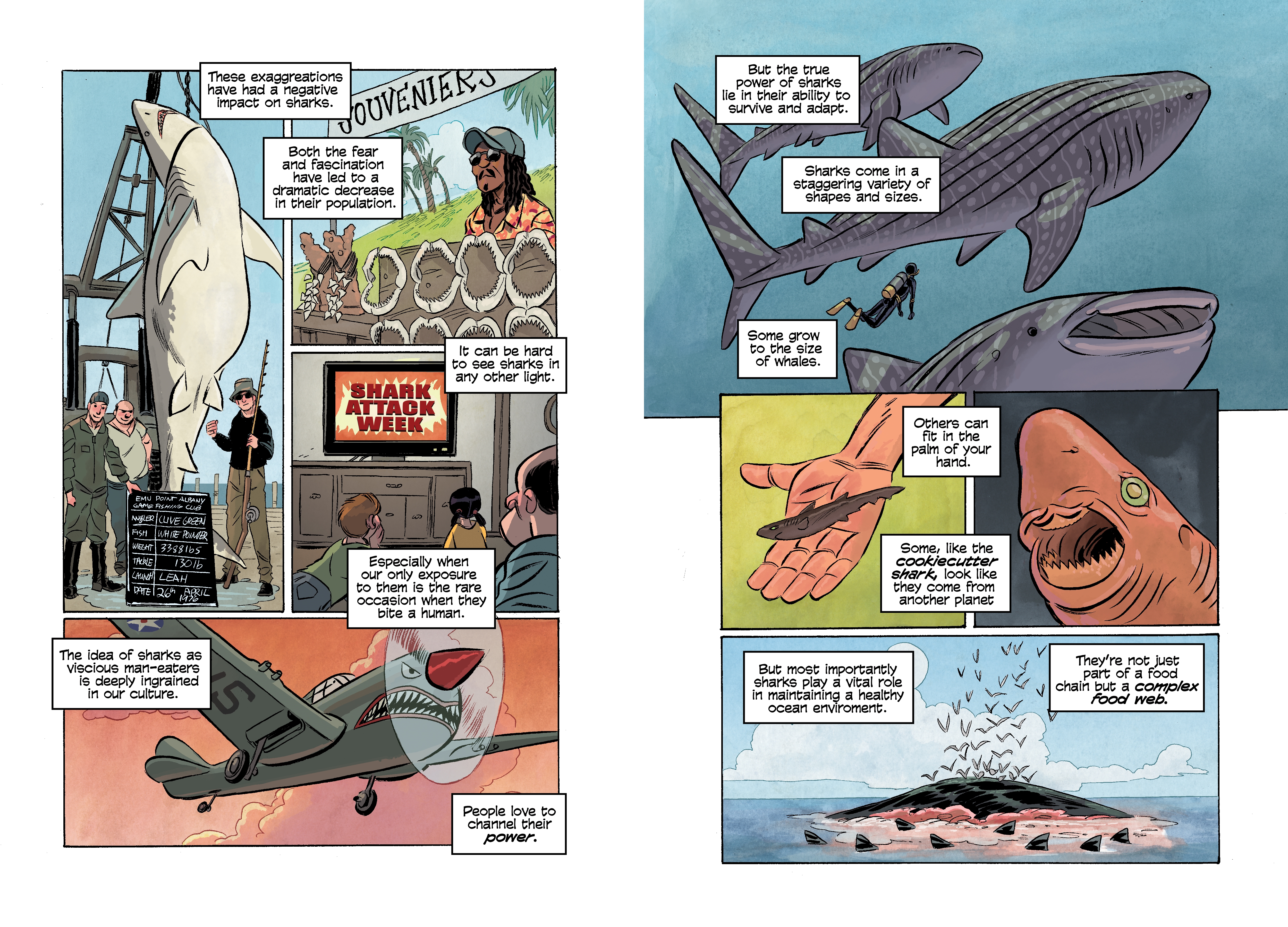
Science Comics has a one-two punch in March and April, first with Robots & Drones, next with Sharks. Kids LOVE sharks. The introduction nails it with its opening line: “Lots of kids, including many of you who are reading this book, go through an ‘I love sharks’ phase.” Shark books move off my shelves faster than just about any animal, tied only by dinosaurs (and we’ve already got a Science Comic on them), so this book should be going in your cart, sight unseen. But since that’s not what I do – and because I still do love sharks – here’s a bit more to whet your shark appetites.


The nonfiction narrative is tied together with a story about a fictional group of shark seekers, which leads into a discussion about the bad rap sharks have gotten over the years. The classic movie Jaws kicked off shark paranoia back in the mid-1970s, and that’s explored here, as is the fact that Jaws author Peter Benchley became a passionate shark conservationist in the aftermath of his book and subsequent movie.

Readers get a history of sharks from the prehistoric era until the present, with a look at shark physiology. migration patterns, variety, and eating habits. Spoiler alert: we don’t taste very good to them, and any biting is purely accidental.  We also get a peek at the one sea animal that can take down even a great white… and it ain’t man. A shark family tree, glossary of terms, and a more accurate clarification of how to phrase shark incidents (the section’s called “Don’t Say ‘Shark Attack'”).

As I was writing this review up, one of my library kids peeked over my shoulder and saw the page scans. When I told him Sharks was coming out in April, he yelped, “Are you kidding me?!” which just goes to show you, Science Comics: Sharks is going to be a hit. I may have to order two copies.

Posted in Fiction, Intermediate, Realistic Fiction

In Lucy’s Lab, science is everywhere!

Sky Pony has a new series for intermediate readers that incorporates a fun science component into each tale. Lucy’s Lab is a series about a second grader named Lucy, and she loves science! Her cousin and best friend, Cora, is in class with her, and is more of the purple and pink princess type, but she’s always up for a stint in Lucy’s Lab. Now, if only she could get that annoying classmate Stewart Swinefest, to behave himself…

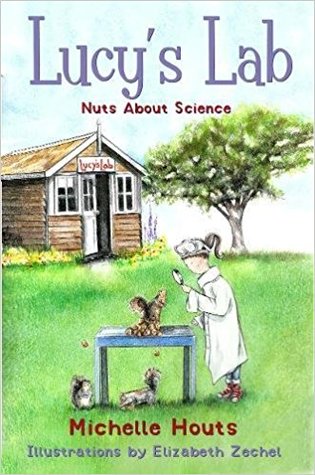
Lucy’s Lab: Nuts About Science, by Michelle Houts/Illustrated by Elizabeth Zechel,
(Sept. 2017, Sky Pony Press), $13.99, ISBN: 978-1510710641
Recommended for readers 7-10

In Lucy’s first science adventure, Nuts About Science, we meet the science-loving second grader at the beginning of her school year. She likes her new teacher, Miss Flippo, and she really likes that there’s a science lab in her classroom! Miss Flippo even has lab coats and goggles for the students to wear in the lab! One thing doesn’t sit so well with Lucy this school year, though: the big oak tree outside her classroom is gone, and Lucy’s worried that the squirrels that lived there will have nowhere to go! She and her friends manage to find out what happened, and lobby the principal and the PTA for a new tree. In the meantime, Lucy turns an old playhouse her father built in the backyard into her very own lab!


Lucy’s Lab: Nuts About Science, by Michelle Houts/Illustrated by Elizabeth Zechel,
(Sept. 2017, Sky Pony Press), $13.99, ISBN: 978-1510710672
Recommended for readers 7-10

Lucy and her classmates learn about the states of matter in Solids, Liquids, Guess Who’s Got Gas, which may be the best Intermediate book title ever. Miss Flippo believes in science being fun, and teaches them about solids, liquids, and gases by using balloons, frozen water, and a school trip to the apple orchard! Kudos to author Michelle Houts for slipping the fourth state of matter – plasma – into the story, as well as its recent inclusion into science textbooks. Lucy discovers a new science hero in this story, and Stewart Swinefest gets some payback for being obnoxious.

The Lucy’s Lab series is easy reading, with bite-sized information slipped into the narrative. Lucy has her own lab time in each book, and we return to Room 2-C for adventures in the science lab during school hours; we also get interesting tidbits throughout each story, whether it’s about the origin of some last names, tree diseases, or the scientist who studied plasma. There’s always something interesting happening in Lucy’s world, and we’re invited to come along. Black and white illustrations keep the reader’s interest and keep the pace moving for readers transitioning from beginner chapter books to intermediate novels.

This is a nice series to give to your readers who like exploring the world around them. I’d display this with the Girls Who Code chapter books and Jon Scieszka’s Frank Einstein books to give kids a nice introduction to STEM fiction.