Posted in Preschool Reads, Toddler Reads

Take a trip around Our World with the kiddos!

Our World, by Sue Lowell Gallion/Illustrated by Lisk Feng, (July 2020, Phaidon Press), $18.95, ISBN: 9781838660819

Ages 2-6

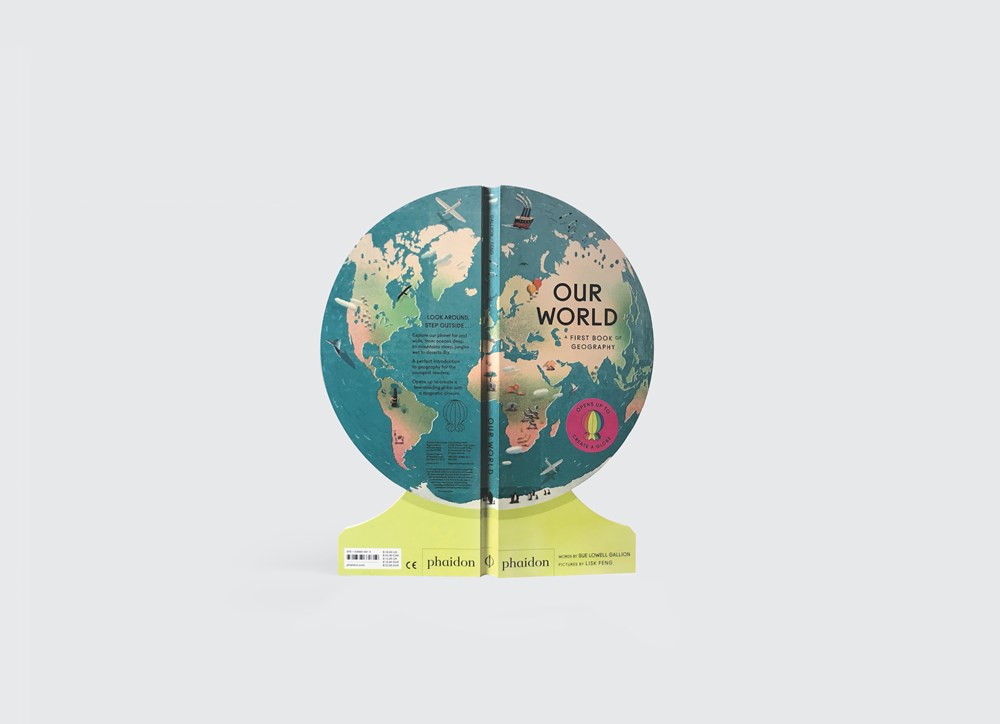
School’s… kind of in session? Traveling is still a bit shaky, but we all know that books take us everywhere we want to go, and Sue Lowell Gallion – author of one of my favorite picture book series, Pug & Pig – is our tour guide on a trip around the world. Our World is an oversized board book, perfect for exploring eyes and hands, that opens into a freestanding globe. The youngest learners will enjoy the 3-D design and the descriptive rhyming text, brief and evocative all at once: “Many places to explore, / From mountain peaks to ocean floor. / Look around you, step outside… / Find forests tall, and grasslands wide.” Emerging readers and school-age learners will love the facts and thought-provoking questions that run through the book, inviting readers to think about where they live and how their home environment fits into the world at large. Lisk Feng’s illustrations present gorgeous world landscapes, from icy tundras to lush rain forests, making each turn of the page an exciting new adventure. Look at that cover! If you’re able to zoom in, you’ll see penguins hanging out at the bottom of the base, inhabiting their own little South Pole, as lions, elephants, and zebras race across the African Savanna and trees and mountains dot the American Pacific Northwest and Canadian wilderness. An outstanding beginner’s atlas for our younger readers, with a rhyming story that will invite them to fall in love with nonfiction.

Author Sue Lowell Gallion has great resources available on her author page including activity guides for Our World, with ideas for reading and engaging even our youngest listeners.

Posted in picture books, Preschool Reads

#SummersCool: Picture Book Party!

Want to keep the kiddos reading and learning this summer? Picture books are the way to go! Fiction, non-fiction, a great mix of the two, picture books have them all and they’re fun to read with and to your littles. Give some of these a whirl:

Rover Throws a Party, by Kristin L. Gray/Illustrated by Scott Magoon, (March 2020, Knopf Books for Young Readers), $17.99, ISBN: 9780525646488

Ages 3-7

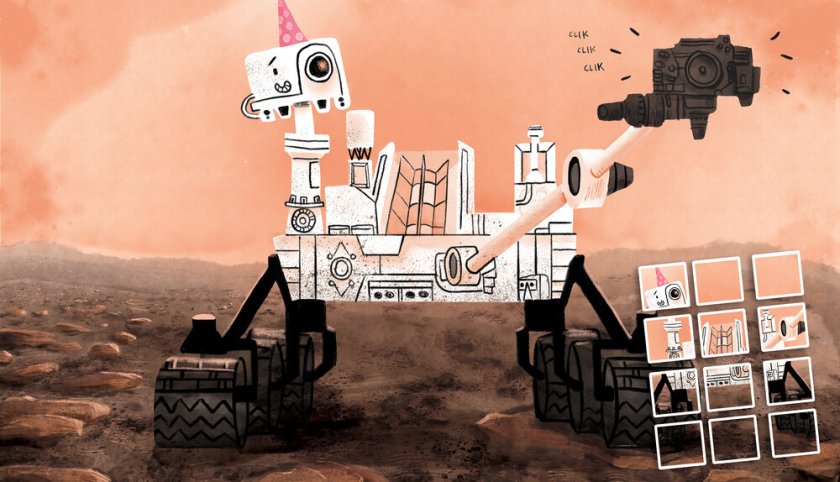
I get such a kick out of the Rover books that have been hitting shelves, introducing the Rovers as kid-friendly robots wandering around Mars. This latest one, Rover Throws a Party, inspired by the Curiosity Rover, is a great mix of fiction and non-fiction for preschoolers and early elementary learners. Rover is planning the best party in the universe to celebrate an anniversary on Mars, and there is so much to do! Will someone – or something – join Curiosity to celebrate? As the Curiosity trundles through each spread, there’s a fun story to read; a step in the party planning, and a fact about Mars or the Curiosity, related to the storyline. As Curiosity captures a sunrise, the accompanying fact tells readers that Mars sunrises and sunsets appear blue; Curiosity invites NASA to the party, and we discover that it takes about 20 minutes for a radio transmission to reach Earth from Mars. The digital artwork is bright and fun, instantly eyecatching, and just adorable: Curiosity wears a party hat on the cover; how can you pass that up? Endpapers feature NASA Mission Control and the Mars landscape, with party invitations and confetti strewn about. An author’s note, a bibliography, and Rover fast facts make this a storytime, science time pick.

Visit illustrator Scott Magoon’s website for some more info on Rover Throws a Party, including a link to fun printables (and storytime videos)! Author Kristin L. Gray’s website has link to her blog, information about her other books, and author fun facts.
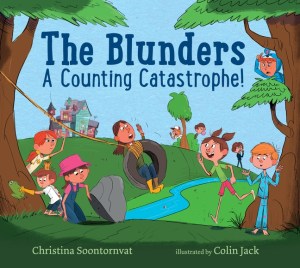
 

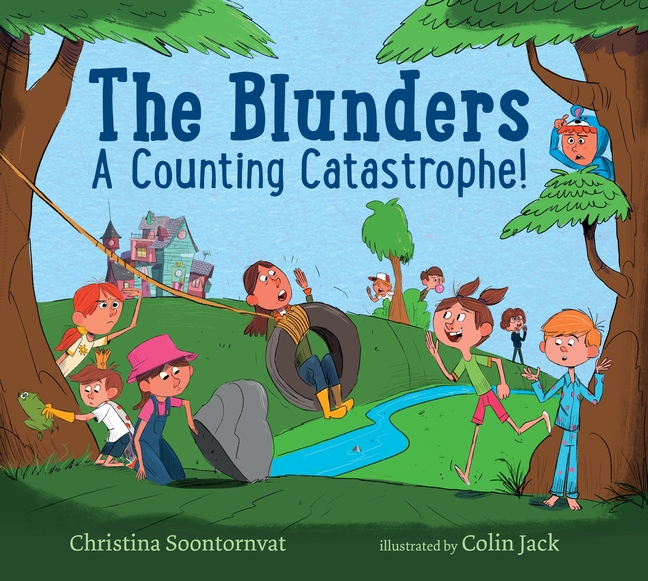
The Blunders: A Counting Catastrophe!, by Christina Soontornvat/Illustrated by Colin Jack, (Feb. 2020, Candlewick Press), $16.99, ISBN: 9781536201093

Ages 3-7

The Blunder Kids are driving their mom CRAZY. The 10 brothers and sisters “blundered” the laundry, the bathtub, and let the hamsters out and the dogs in. Momma Blunder needs a break, so she sends them out to go play, telling them to be back by sunset. No problem! The kids go play outside by the creek, but when it’s time to go home, the headcount doesn’t quite match up. No matter who’s counting -and each and every kid takes a shot at counting! – there are only 9 Blunders! Can you figure out where the mistake is? Thank goodness, Mom saves the day.

This is a sweetly fun story, based on a favorite folktale. Teachers and parents responsible for headcounts will get a big kick out of this, as (spoiler alert!) each child leaves themselves out of the counting, always leaving them one short. It’s great for interactive storytelling, because you can get kids counting along with you and asking them if they can figure out who’s missing and why. The digital illustrations are bright, bold, and characters have expressive faces that kids can easily read. The different headcounting methods are good for a laugh (“Raise your hand if you’re lost”), and the excuses for being late are just hilarious. Great for counting storytimes, and if you have Loud House fans, sign them up as Reading Buddies to read this one to younger readers; I got a real Loud House vibe from the big family and the general mayhem that goes along with them. So much fun for math-type reading.

Author Christina Soontornvat has a great author website with more info about the author herself, all of her books, and videos with book trailers and interviews. Illustrator Colin Jack has worked on books and for Dreamworks; check out his Instagram for more of his illustration.
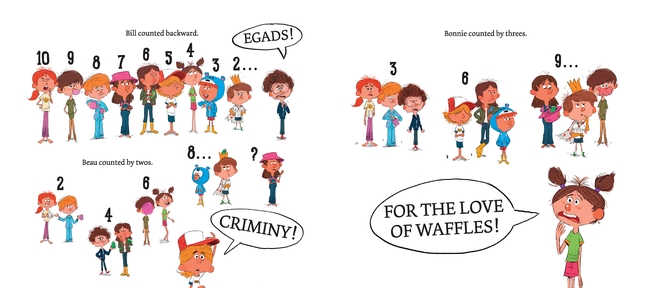
 

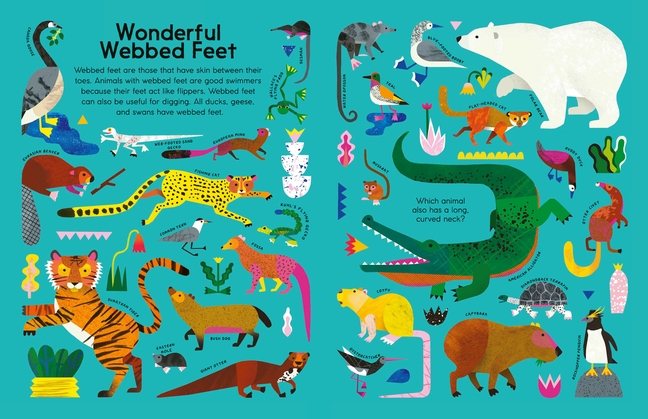
Creature Features, by Big Picture Press/Illustrated by Natasha Durley, (March 2020, Big Picture Press), $17.99, ISBN: 9781536210439

Ages 3-8

This is a fun animal book for younger kids: preschoolers to kindergarteners are the sweet spot, with older kids enjoying the cool animals that they may not see in animal books. Vibrant colors set off the pages, and each spread features animals with unusual, alliterative, characteristics: Enormous Eyes; Nice Noses; Excellent Ears; Terrific Tails; Dreaded Defenses; Huge Horns; Wonderful Webbed Feet; Lovely Long Necks; Tremendous Tongues, and Fantastic Fur. There’s an introductory paragraph about how these characteristics help the animals, and questions for observant readers to discover and answer. There is always something new to discover here, and the larger size and heavy cardboard pages make this a great transitional book for kids moving from board books to picture books. I enjoy books that give kids a look at different animals, and this has a bunch of good ones, including a sea hare (doesn’t look like a rabbit), an aardwolf (not in the Nice Noses section!), and narwhal, who’s become a popular picture book subject over the last few years. Worth the purchase for your animal book collections.
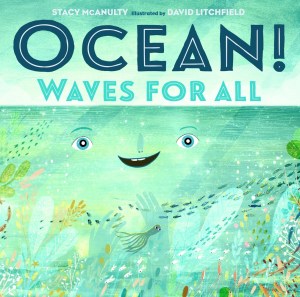
 

Ocean! Waves for All (Our Universe), by Stacy McAnulty/Illustrated by David Litchfield, (May 2020, Henry Holt), $18.99, ISBN: 9781250108098

Ages 4-8

Stacy McAnulty’s Our Universe books have been home runs here at home. My kiddo – who just turned 8 in quarantine! – has asked me to get each one as it comes out, ever since I introduced him to Earth! My First 4.54 Billion Years at a bookstore a couple of years ago. Ocean: Waves for All is the fourth book in the series; this is the nonfiction STEM series to spend your budget dollars on. Plus, it’s written in the voice of a surfer, which opens up amazing storytime readaloud possibilities for me. Win-win.

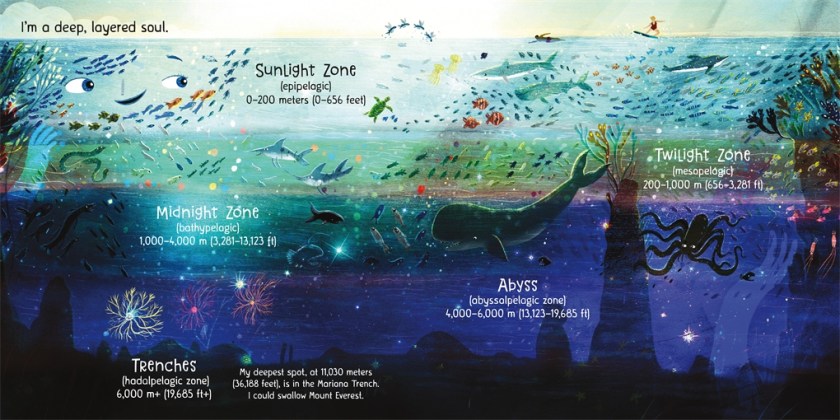
Ocean is the dude. Atlantic, Pacific, Arctic, Indian, it’s all excellent Ocean. Ocean is super laid-back, proud of itself – and why shouldn’t it be? Ocean covers over 71% of our world. Ocean is free: “no flag. No nationality. My waves are for all.” But DUDE! People visit outer space more than Ocean; what’s up with that? And Ocean is in some serious trouble, too; people are filling Ocean up with garbage; Ocean’s creatures are struggling to survive, and glaciers and icebergs are melting too fast. Loaded with amazing facts, Ocean is gorgeously illustrated and superbly written, and comes with a serious message: take care of our planet. Take care of our ocean. Ocean is drawn with a friendly face, big, blue eyes, and a smiling (and sometimes scared) mouth. Endpapers are bursting with color, giving readers a glimpse of the underwater landscape. Slip off the book’s cover to see a different view of Ocean. Don’t miss it.

Illustrator David Litchfield’s website has more of his artwork and links to his blog. Author Stacy McAnulty has a great author website with info about her books, activity sheets, and curriculum guides. It’s a great reference resource and storytime resource (SO MANY COLORING SHEETS).
Posted in Fiction, Fiction, Intermediate, Middle Grade

Books from Quarantine: Kate the Chemist

So while I live in my Stephen King-esque Dome (as I like to think of my home at the moment), I’ve been doing a lot of reading, in addition to my virtual programming, helping my kids with their schoolwork, and assorted goofiness with the dog. First up, let’s talk about Kate the Chemist, a fun new STEM intermediate/middle grade series.

Kate the Chemist: Dragons vs. Unicorns, by Dr. Kate Biberdorf with Hillary Homzie, (Apr. 2020, Philomel Books), $12.99, ISBN: 978-0-593116555

Ages  7-12

Ten-year-old Kate the Chemist is a science problem solver: meaning, she can solve just about any problem that she faces with science! In her first STEM adventure, Dragons vs. Unicorns, Kate is the assistant director on her school play, and her best friend is the lead unicorn. But someone is sabotaging the production! Kate has to use her science skills to figure out who’s trying to hurt the show, and how to save the day when the unicorns face a last-minute costume malfunction. The narration is fast-paced and comprehensive in its look at science, and how chemistry is a big help in day-to-day situations (baking = science! special effects = science!). Scientist Kate Biberdorf includes a recipe for Unicorn Glue at the end of the book (looks easy enough – I haven’t tried it yet) and an explanation of how it works. Ellie May series author Hillary Homzie and Kate Biberdorf come together to give readers a fun intermediate/middle school mix of drama (literal and figurative), friendship, and science. This one is a good series to watch. There are some black and white illustrations throughout; usually journal pages and scientific items like flasks and volcanoes, to add to the fun.

Kate Biberdorf is a science entertainer with a series of videos and a Big Book of Experiments to introduce kids to fun, safe, science. Her website has videos, information about her books, and contact information. Hillary Homzie’s author webpage has great info for aspiring writers, links to her blog and social media, and more information about her books.


Posted in picture books, Preschool Reads

Dream Big, Little Scientists encourages and inspires

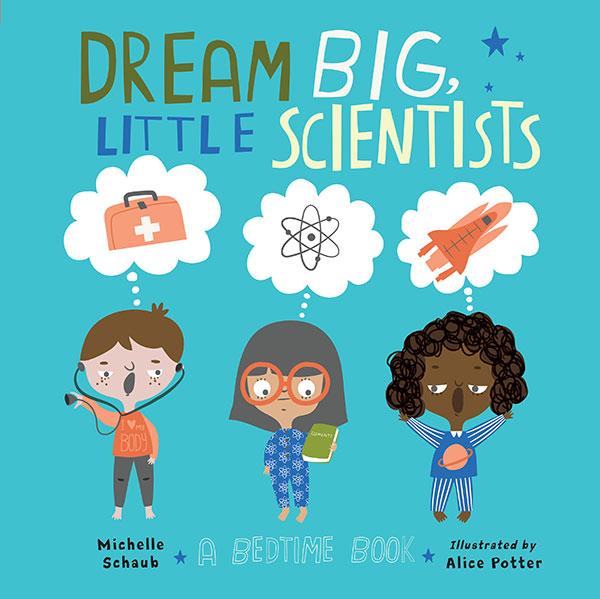
Dream Big, Little Scientists, by Michelle Schaub/Illustrated by Alice Potter, (Feb. 2020), Charlesbridge, $16.99, ISBN: 9781580899345

Ages 3-7

Twelve kids who dream of being scientists get ready for bed in this adorable, rhyming bedtime STEM story. Each spread features a different child who favors a different area of science, and the spreads are a feast for the eyes. The verse maps to each child’s preferred area, bringing art and verse together to give kids a mini-science lesson on each spread: each child has favored scientists in each field; bedding and room decor cleverly gives readers a guessing game of scientific proportions. A little girl looks out her window at the moon, shining through her planetary curtains; on her bedside table is a book on stars and planets, and she has posters of Carl Sagan and a Space Shuttle hanging up. The verse reads, “The sun has tucked itself in bed; the moon is on the rise”; on the next spread, a boy lays across his map of the world rug, reading; his bedding depicts a mountain scene, and he has a shade with an erupting volcano drawn. A poster of geologist Jess Phoenix hangs on the wall, and the verse reads, “Under rumpled mountain quilts, the earth is snuggled tight”.

It’s a wonderful way of teaching through exposure: younger readers will love the rhyme, bright colors, and bold digital artwork; school-age readers can guess each kid’s favorite science and name disciplines as they navigate their way through each spread. Back matter offers brief profiles of each discipline spotlighted, and a link to visit for more information. The book detail page on publisher Charlesbridge’s website includes a link to information about the featured scientists in the story, plus a downloadable educator’s guide and storytime kit.

I’m definitely incorporating this into a Science Storytime. Pick a few branches of science and go for it! I really like Toronto Public Library’s suggestions here, and there are tons of great Toddler/Preschooler STEAM craft ideas on Pinterest and all over the web (homeschoolers, I love you).

Dream Big, Little Scientists is great for bedtime, science time, or anytime!

Posted in Fiction, Middle Grade, Science Fiction, Tween Reads

Happy Book Birthday to Weird Little Robots by Carolyn Crimi!

Weird Little Robots, by Carolyn Crimi/Illustrated by Corinna Luyken, (Oct. 2019, Candlewick), $16.99, ISBN: 9780763694937

Ages 8-12

Two girls discover their mutual love of tinkering and science in this quirky, fun, illustrated novel. Eleven-year-old Penny Rose is new in town, and doesn’t really have any friends yet – unless you count the little robots she makes in her shed. She makes them out of found objects, and tinkers lovingly with them, giving them names and looking after them every day. Lark, her neighbor, is a quirky girl next door who loves birds and tinkers with found objects given to her by the crows; she makes birdhouses to keep her friends safe from the elements. The two girls become friends and create an entire town for the little robots… and when a mysterious wind sweeps through their town, it brings some surprises with it! But while Penny and Lark enjoy one another’s company, a secret science club at school offers Penny membership in their society. Penny feels the tug between her new best friend and a group of like-minded science friends, but making the wrong decisions for the wrong reasons could cost Penny her best friend and the robots that she loves so much.

This is such an unconventional, enjoyable book! I love the idea of making creations out of found objects, and the touch of magical realism infused in this story makes it a joy to read. It’s a STEM story, a friendship story, and a comforting story about second chances. The little robots have their own personalities, each reflected in their names, bestowed on them by Penny. Penny is more tech-focused, while Lark prefers the world around her, showing that making and tinkering presents endless creations. The black and white illustrations throughout give life to the story and keep readers interested as they move through the book.

There’s a downloadable guide with discussion questions and activities, making this a good idea for an ELA/Science partnership or book club/Discovery Club program. I can’t wait until my library’s copy arrives, so I can start telling kids how much they need to read this book. Maybe it’s time for a secret science society at MY library… hmmmm…


“[A]uthor Crimi infuses this unassuming transitional novel with compassion, humor, and a refreshing storyline in which girls organically weave a love for science into their everyday lives. Illustrations by Luyken add to the guileless sensibility. A contemplation on the magic of friendship told with sweetness, simplicity, and science.”—Kirkus Reviews


Carolyn Crimi enjoys snacking, pugs, Halloween, and writing, although not necessarily in that order. Over the years she has published 15 funny books for children, including Don’t Need Friends, Henry and the Buccaneer Bunnies, Where’s My Mummy?, There Might Be Lobsters, and I Am The Boss of This Chair. Weird Little Robots is her first novel.

For more information, and to download a free classroom guide for Weird Little Robots, visit her website.

Twitter: @crims10

Corinna Luyken is the author-illustrator of The Book of Mistakes. She lives with her husband and daughter in Olympia, Washington.
Posted in Conferences & Events, Early Reader, Graphic Novels, Intermediate, Non-Fiction, Non-Fiction

Kevin McCloskey, Giggle & Learn, Ants and Pigeon Poop: It’s all good here!

Kevin McCloskey is one of my favorite graphic novelists. What does he draw, you ask? Spidey? The Avengers? X-Men?

Nope. He creates science graphic novels for the little ones, examine such subjects as snail goo, pigeon and worm poop, and foot-long goldfish. Sometimes, he paints his pictures on recyclable grocery bags, because he believes in recycling. Most importantly, he creates nonfiction that speaks to young learners in a way that engages their minds and their funny bones, talking about the funny, gross, and awesome parts of nature and making them equally… amazing.

Ants Don’t Wear Pants!, by Kevin McCloskey, (Sept. 2019, TOON Books), $$12.95, ISBN: 9781943145454

Ages 4-7

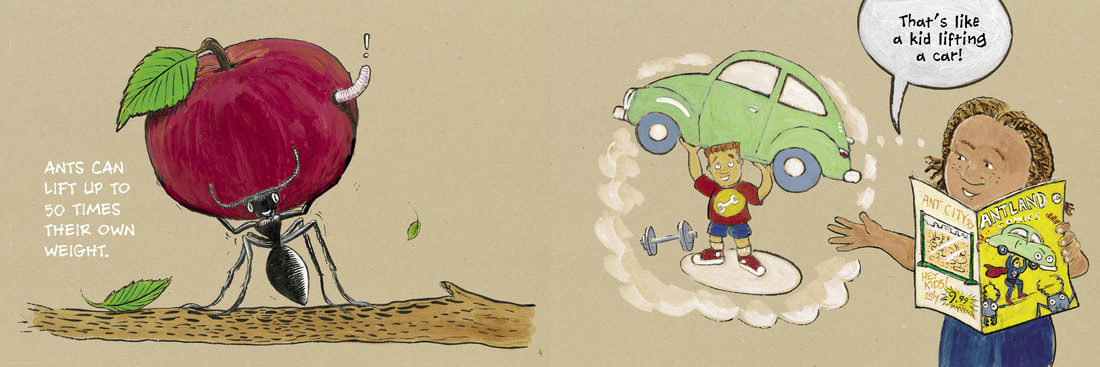
Who here hasn’t been told, “You have ants in your pants!” while growing up? With that phrase, Kevin McCloskey sets readers off on the study of ants: biology and physiology, life cycle, food, kinds of ants, and what they eat. The book is loaded with fun facts and illustrations, like the one of an ant bench pressing an apple, combined with a picture of a child lifting a car, to bring home the fact that an ant can lift up to 50 times its own weight, and what that would mean to us human folk. The front endpapers have hundreds and hundreds of ants, with one magnified under a magnifying glass, greeting readers and inviting them to come and learn. This is the newest in Kevin McCloskey’s Giggle and Learn series of graphic novels for young learners, published by TOON, and I love it. My kiddo’s first McCloskey book was We Dig Worms (2015), which I read to him when he was barely out of the toddler years, and he loved it, because the material is accessible and fun. A lesson plan is coming soon!


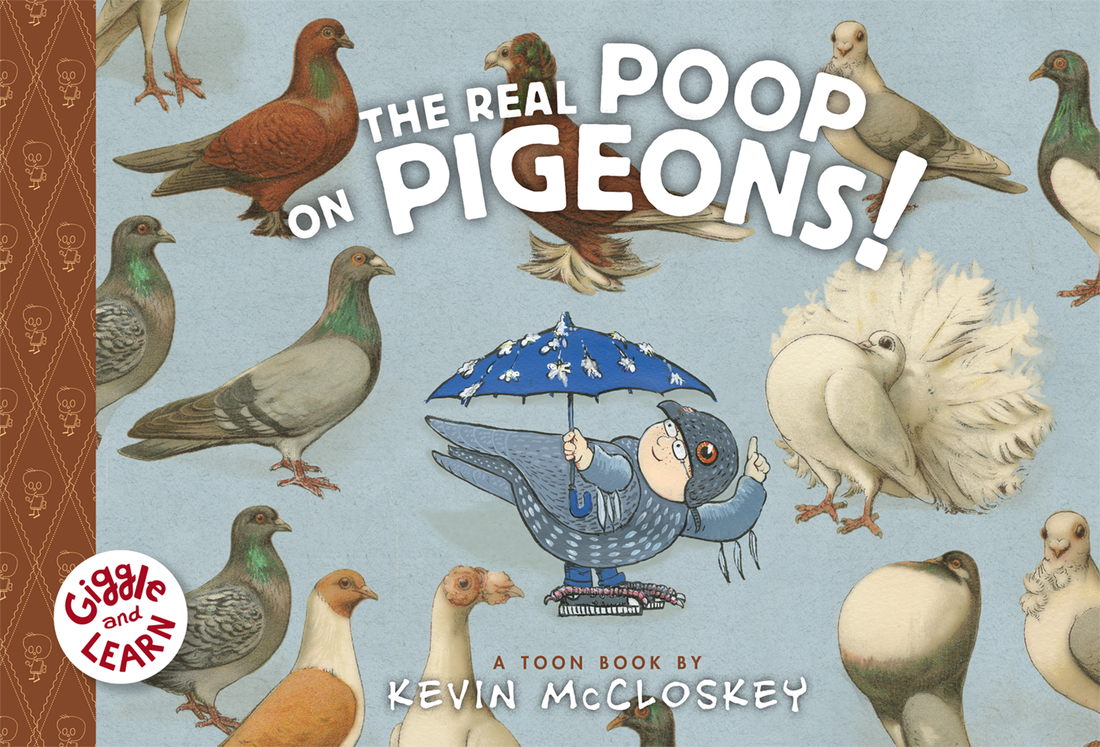
The Real Poop on Pigeons!, by Kevin McCloskey, (Sept. 2019, TOON Books), $6.99, ISBN: 9781943145430

Ages 4-7

Originally published in 2016, The Real Poop on Pigeons! is coming to paperback. When a man sitting on the park bench starts shooing pigeons away, a group of children, dressed as pigeons, show up to school him – and us readers – on pigeon history – they carried the first airmail! – and biology, breeding, and pigeon milk. (Read the book. You can’t buy this in Stop & Shop.) There are some great pigeon family tree revelations here, like the fact that the Dodo was a member of the pigeon family. A three-foot pigeon! Ever wonder why you haven’t seen a baby pigeon? Read the book! The Real Poop on Pigeons is yet another win from Kevin McCloskey, and another win for young readers.


Posted in Middle Grade, Non-fiction, Tween Reads

The truth about cats and dogs (and gerbils, birds, fish, and other pets…)

Nat Geo Kids is all about the pets these days: they’ve just released Doggy Defenders, a series of books on working dogs, and they’ve also put out some great desk references about cats, dogs, and an Big Book to get younger readers excited about the world of animal companionship. Here’s a glimpse at some of the books out.

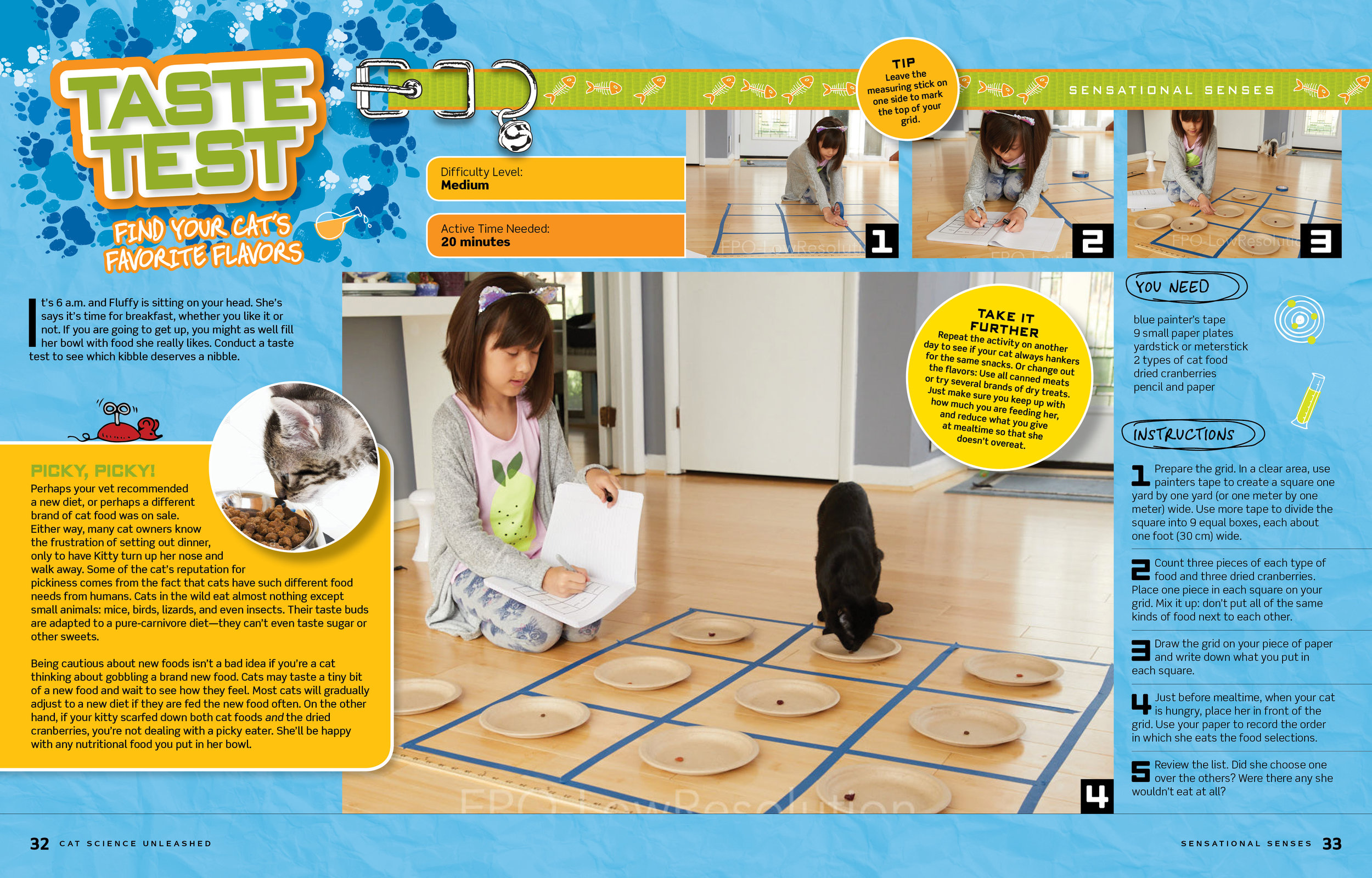
Cat Science Unleashed: Fun Activities to Do With Your Feline Friend, by Jodi Wheeler-Toppen/Photos by Matthew Rakola, (Aug. 2019, National Geographic Kids), $12.99, ISBN: 978-1-4263-3441-2

Ages 7-12

A companion to last year’s Dog Science Unleashed, Cat Science Unleashed is all about the cats, with a glimpse into cat biology and physiology, cat facts, and cat-tivities to engage the scientists in your life. Eleven kid scientists have tested their cats – you’ll meet them on a spread in the book – and invite readers to join them in discovering how cats see at night and how to discover their favorite smells. Activities include building a hiding spot for your cat’s toys (other than my living room floor? Have to get my kid on that) and making toys to test your kitty’s stalking prowess. There’s a glossary and list of further resources at the end A fun volume, and with a new science fair season on the horizon, this could be a fun way to give your kiddos’ cats the spotlight at school in addition to home.

Cat Breed Guide: A Complete Reference to Your Purr-Fect Best Friend, by Stephanie Warren Drimmer & Dr. Gary Weitzman, DVM, (Sept. 2019, National Geographic Kids), $19.99, ISBN: 978-1-4263-3439-9-

Ages 8+

This is a compact, thorough desk reference to cats, perfect for an animal lover, cat fan, and anyone either writing a report about felines or researching a new pet. The guide provides a look at feline history, with a cat family tree, a history of cats and how domesticated cats became household constants, even cat-related superstitions and folktales. There are profiles on more than 60 cat breeds, organized by short hair and long hair breeds, and each profile offers a quick “cat stats” box that provides notes on country of origin, size, coat, grooming, and “catitude”. There are gorgeous photos, fun facts, and general adorableness throughout, plus a section on cat-related careers, a glossary, and further resources. I’m always trying to keep my domestic animals/pets books stocked, so this one will be a nice add to my shelves.


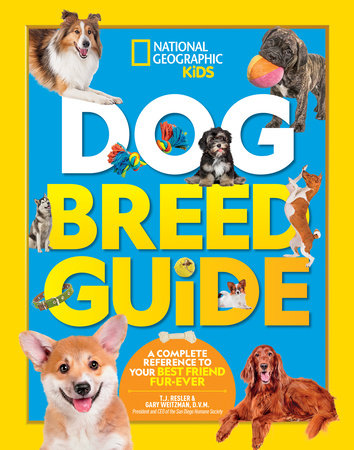
Dog Breed Guide: A Complete Reference to Your Best Friend Fur-Ever, by TJ Reser & Dr. Gary Weitzman, DVM, (Sept. 2019, National Geographic Kids), $19.99, ISBN: 978-1-4263-3445-0

Ages 8+

A companion desk reference to the Cat Breed Guide, Dr. Weitzman and TJ Reser team up to give readers a comprehensive guide to canines, from their wolfish origins to today’s modern breeds. Organized into 10 sections, dog profiles include full-color, squeal-worthy photos and stats-at-a-glance: country of origin, height, weight, coat, grooming, exercise needs, and K-9 qualities. There are sections on show dogs, canine senses, and how to talk to your dog, and a section on adopting and training a puppy. There’s a glossary and more resources.

Together, the Dog and Cat Breed Guides provide a handy reference for pet and animal lovers.


Little Kids First Big Book of Pets, by Catherine D. Hughes, (July 2019, National Geographic Kids), $14.99, ISBN: 978-1-4263-3470-2

Ages 4-8

I love the NatGeo Kids Little Kids First Big Book series! There are 17 books in the series now, and they’re great for pre-readers to look through, while emerging readers can more confidently navigate the pages. Words are bold, the pictures are big and bright, and there’s tons of fun facts, quizzes, and info to be found. The First Big Book of Pets is all about our favorite companions, from dogs and cats to birds, reptiles, fish, mice… you name it. Interactive questions throughout the book prompt discussion, games at the end of every chapter help reinforce concepts and give librarians like me an excuse to have fun, pet-related programming, and fact boxes give kids info at-a-glance about different pets. If you know a kiddo who wants a pet, but isn’t quite decided on what pet to get, hand them this guide – it’s geared toward educating kids about different pets’ needs, and our responsibilities to animals once we adopt them. A section for parents includes a recipe for baking dog biscuits, pet jokes and tips and ideas to engage kids about pets. There’s a glossary and list of additional resources. The Little Kids First Big Books are really popular with my library kids, so this one is another win for my shelves.

Posted in Middle Grade, Non-Fiction, Non-fiction, Teen, Tween Reads

Monstrous brings the science of monsters to you

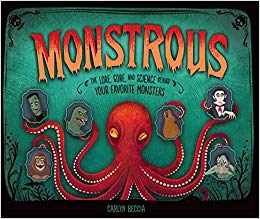
Monstrous: The Lore, Gore, and Science Behind Your Favorite Monsters, by Carlyn Beccia, (Sept. 2019, Carolrhoda Books), $19.99, ISBN: 978-1-5124-4916-7

Ages 10+

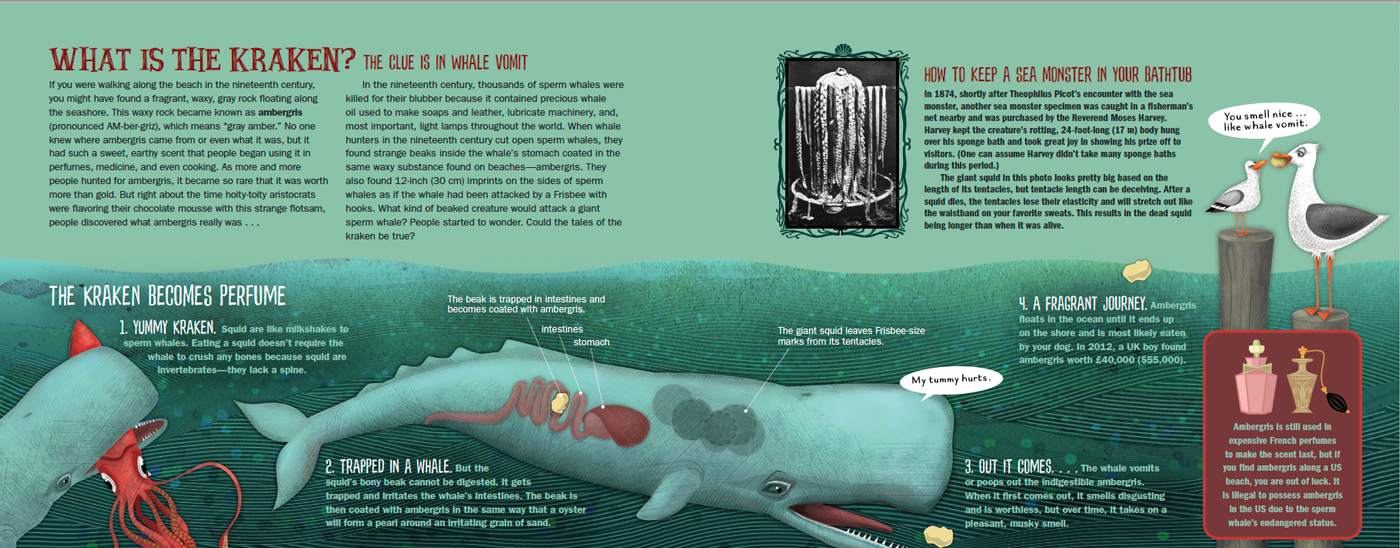
Okay, this is one of the best nonfiction reads I’ve read this summer. Eight movie monsters come together with witty writing, solid science and history, pop culture and myth, and amazing artwork to bring readers the “Science of the Monstrous”. Talk about electricity with Frankenstein’s Monster; whether or not science can make us immortal with Dracula (also, a spirited discussion on sparkly vampires); look at the zombie brain and pack a zombie preparedness kit while reading about zombie viruses; learn about math and whether or not you’re stronger than a dung beetle with King Kong; learn how to avoid – or, failing that, survive – a werewolf attack and read about the science behind the legend of werewolves; check out the ocean zones to figure out where the kraken dwells (and learn whether or not you’re about to be eaten by a giant octopus); talk evolution with Bigfoot while you scan a map of the US to see where your best chance of spotting him is; and, last but NEVER least, find out what kind of dinosaur Godzilla, King of All Monsters, is (hint: the awesome kind).

That’s the short of it. There is so much great stuff in here, I’d be here all day long if I tried to gush about how much I loved this book. I chuckled and snickered out loud behind the reference desk reading it, which brought some of my Library Kids over (the section on Why You Should Never Stress Your Mom Out made them laugh, which garnered a librarian look over the glasses from me). Everything in here is just pure gold, from the timelines like “The Monstrous History of Electricity”, where you learn that Thomas Edison used electricity on dolls to experiment with recorded sound (SO CREEPY), and a real list of radioactive creatures, like the wolves of Chernobyl and the cows of Fukushima. Carlyn Beccia’s writing is informative and whip-crack smart and funny – if I had a book like Monstrous available to me when I was in the middle grades, I’d probably be making freaky dolls talk to people in a lab today. Instead, I’ll figure out how to hold a program to let my Library Kids do it.

My Library Kids love the grossest history and science stuff out there, which I challenge myself to find on a regular basis; one of their favorites is Carlyn Beccia’s They Lost Their Heads!, along with Georgia Bragg’s How They Croaked and How They Choked, so I predict this book will disappear shortly after I say, “Hey, guys! Look what I’ve—“.

Long story short, Monstrous is a guaranteed win for your science collections, your STEM collections, and for your horror/monster/burgeoning goth fans. Check out author Carlyn Beccia’s webpage for more about her books, her art, and her social media links. Monstrous has a starred review from Kirkus.

Posted in Middle Grade, Non-Fiction, Non-fiction, Tween Reads

Learn about these Awesome Achievers in Technology!

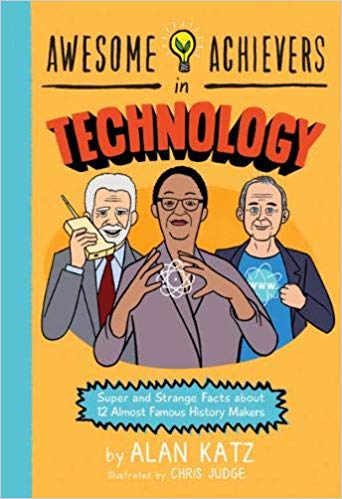
Awesome Achievers in Technology, by Alan Katz/Illustrated by Chris Judge, (Aug. 2019, Running Press), $11.99, ISBN: 9780762463367

Ages 8-12

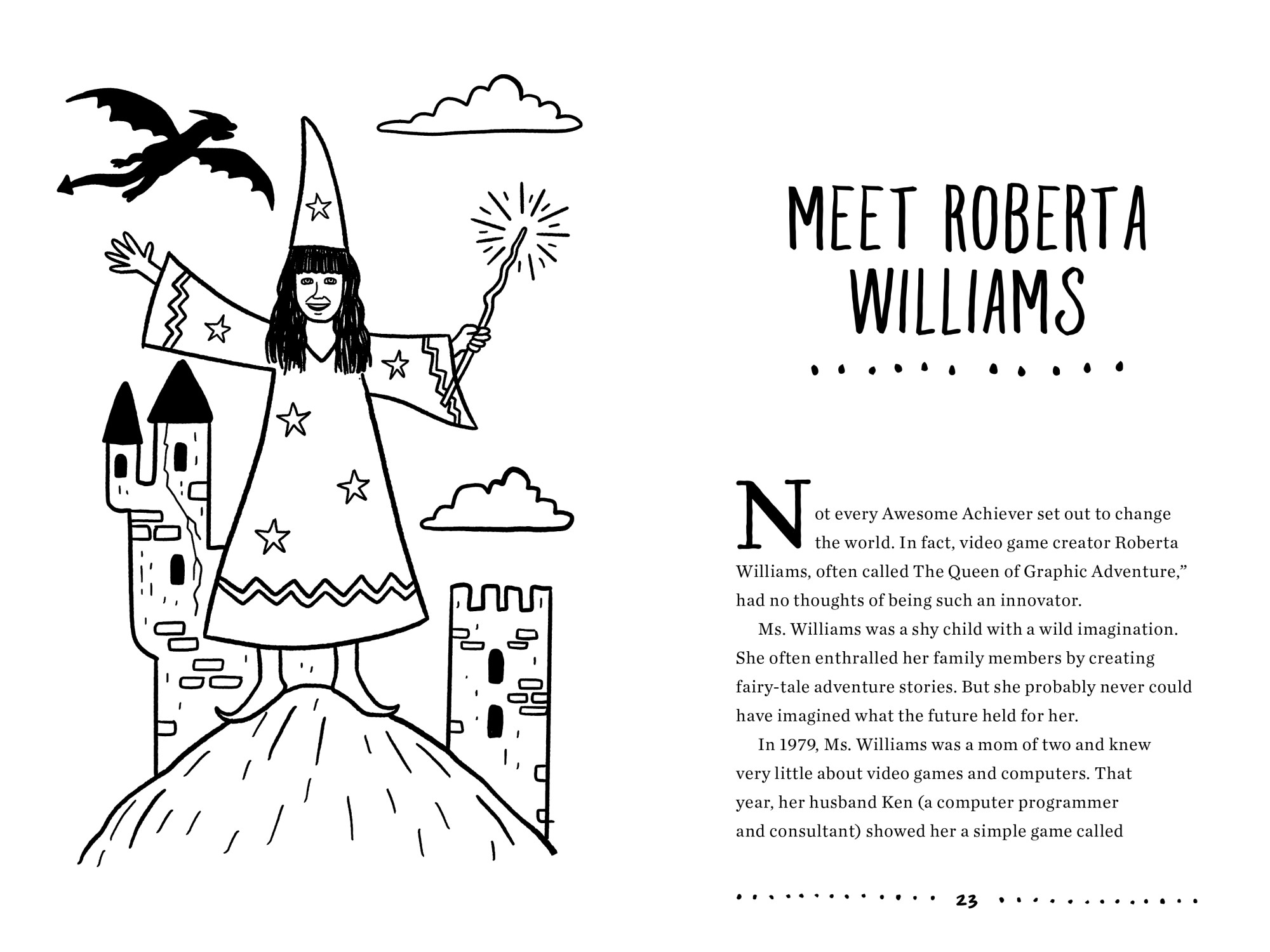
Kids have heard of the big names in Technology: Steve Jobs, Bill Gates, and, lord knows, Markus Persson (also known as Notch; Minecraft’s creator). But have they heard of Sir Tim Berners-Lee, the particle physicist who invented the World Wide Web as a way to share information with other scientists? Or Marie Van Brittan Brown, the nurse from Queens who devised the first closed circuit TV system, in conjunction with her engineer husband? Awesome Achievers in Technology is a series of short bios on some of the lesser-heralded names in technology. The book is part biography compilation, part wacky facts and silly stories, and a sprinkling of dad jokes. There are 12 profiles and 13 biographies – Adam Cheyer and Dag Kittlaus, the developers who created Siri, are included together – with black and white illustrations throughout. There are fun asides, including a “Get the couch potato back where he belongs” maze, remote control pop quiz, and wacky poems and stories from Katz’s memories.

All in all, a fun addition to biography shelves, and a good way to introduce kids to even more figures in STEM history. Awesome Achievers is going to be an ongoing series, with Awesome Achievers in Science hitting shelves on the same day as Awesome Achievers in Technology.

Posted in Fantasy, Graphic Novels, Non-Fiction, Teen, Tween Reads, Young Adult/New Adult

July graphic novels: A Hawking bio and a witchy middle grade noir

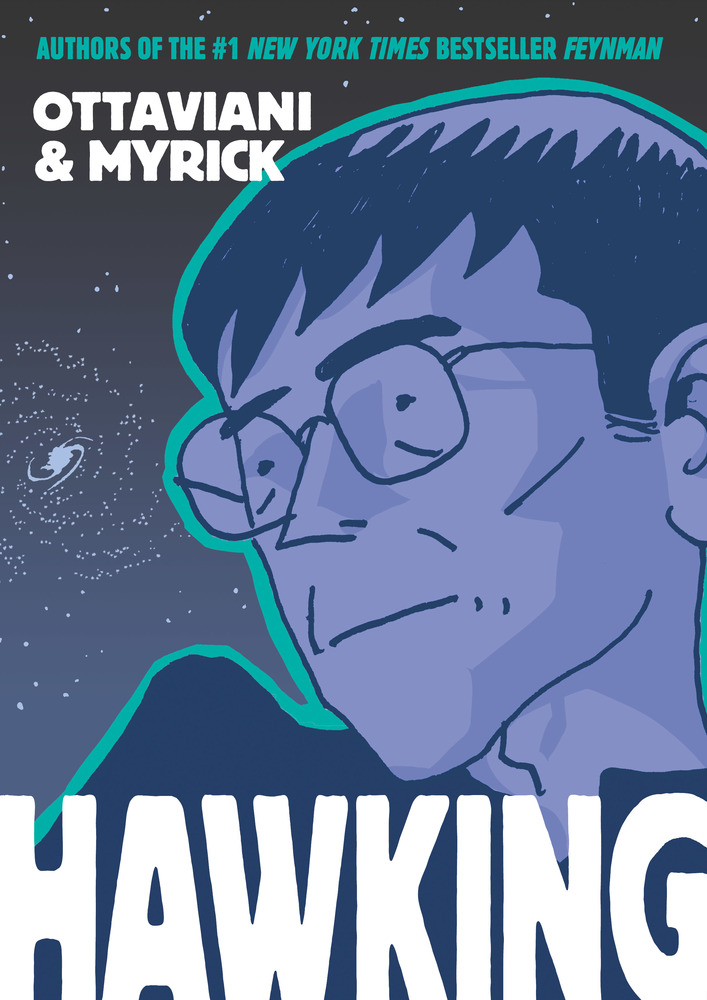
Hawking, by Jim Ottaviani/Illustrated by Leland Myrick, (July 2019, First Second), $29.99, ISBN: 9781626720251

Ages 12+

If your science and biography sections don’t have an Ottaviani/Myrick section yet, you may want to get to work on that. This is the second collaboration the two have worked on; the first being Feynman, a graphic biography on physicist and Nobel laureate Richard Feynman.

Hawking is in parts biography and science comic for teens and adults, moving easily back and forth between Stephen Hawking’s life story and explanations of physics, black holes, and the universe at large. The story begins with Hawking’s birth, 300 days to the day after Galileo’s death, wanders through his early adolescence as a teen who speaks “Hawkingese” and appears socially awkward; his marriage to Jane Hawking and his diagnosis with motor neurone disease, also known as ALS; his research and ultimate pop culture fame, and his later years, second marriage, and the degenerative path of his disease. First and foremost, this is a story about science; there are pages devoted to discussions between defining voices, including Newton, Faraday, and Einstein, about cosmology, light, and gravity. Jim Ottaviani captures Hawking’s voice – the graphic novel is narrated by a fictional Hawking – and shows up a glimpse of the man behind the legend. Award-winning illustrator Leland Myrick‘s artwork is unfussy, providing scientific sketches as easily as he captures Stephen Hawking’s wry smirk and his ability to disappear into a cloud of physics, even in a crowded room. The end of Hawking’s story will catch readers right in the feelings – I choked up a bit. An author’s note discusses how graphic novels are a good medium for narrative nonfiction, and I couldn’t agree more. Jim Ottaviani is an New York Times-bestselling author whose graphic biographies also include The Imitation Game (Alan Turing) and Primates (Jane Goodall, Dian Fossey, and Biruté Galdikas), so the man knows how to plot out a graphic biography. There is a nice list of references that will give interested readers even more material to look through.

I love graphic novel bios – they’re a great way to get tweens, teens, and adults interested in reading biographies, and the graphic medium allows for great explanations of topics that may be difficult in solid print (like physics!). If you have readers who have aged up from Science Comics, hand them Hawking. A definite must-add to your (growing!) graphic novel biographies.


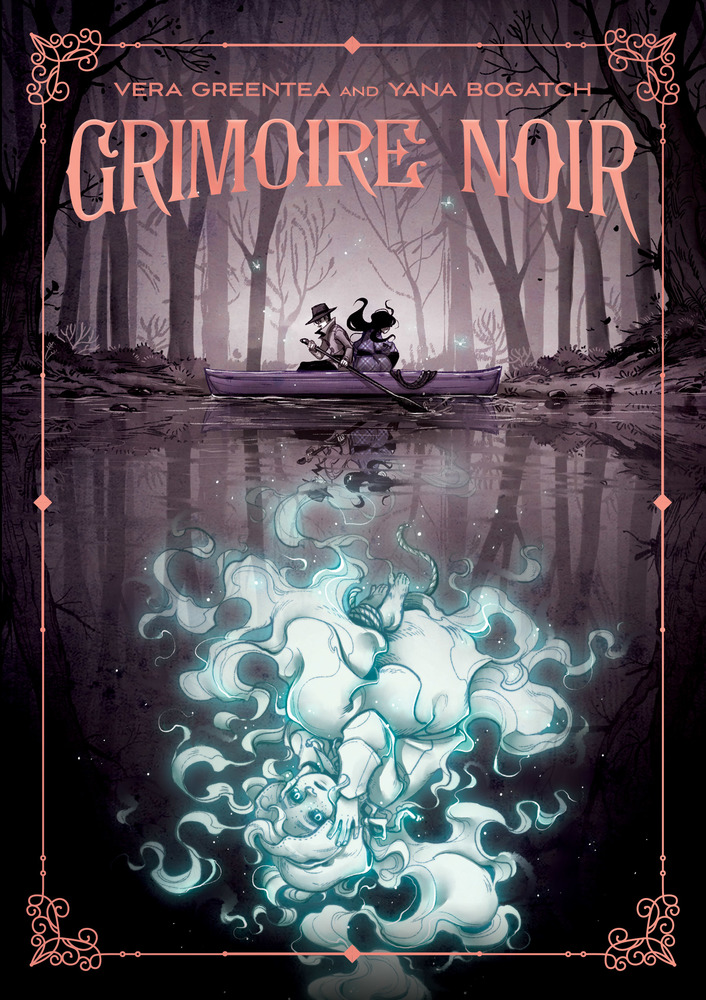
Grimoire Noir, by Vera Greentea/Illustrated by Yana Bogatch, (July 2019, First Second), $17.99, ISBN: 9781626725980

Ages 12+

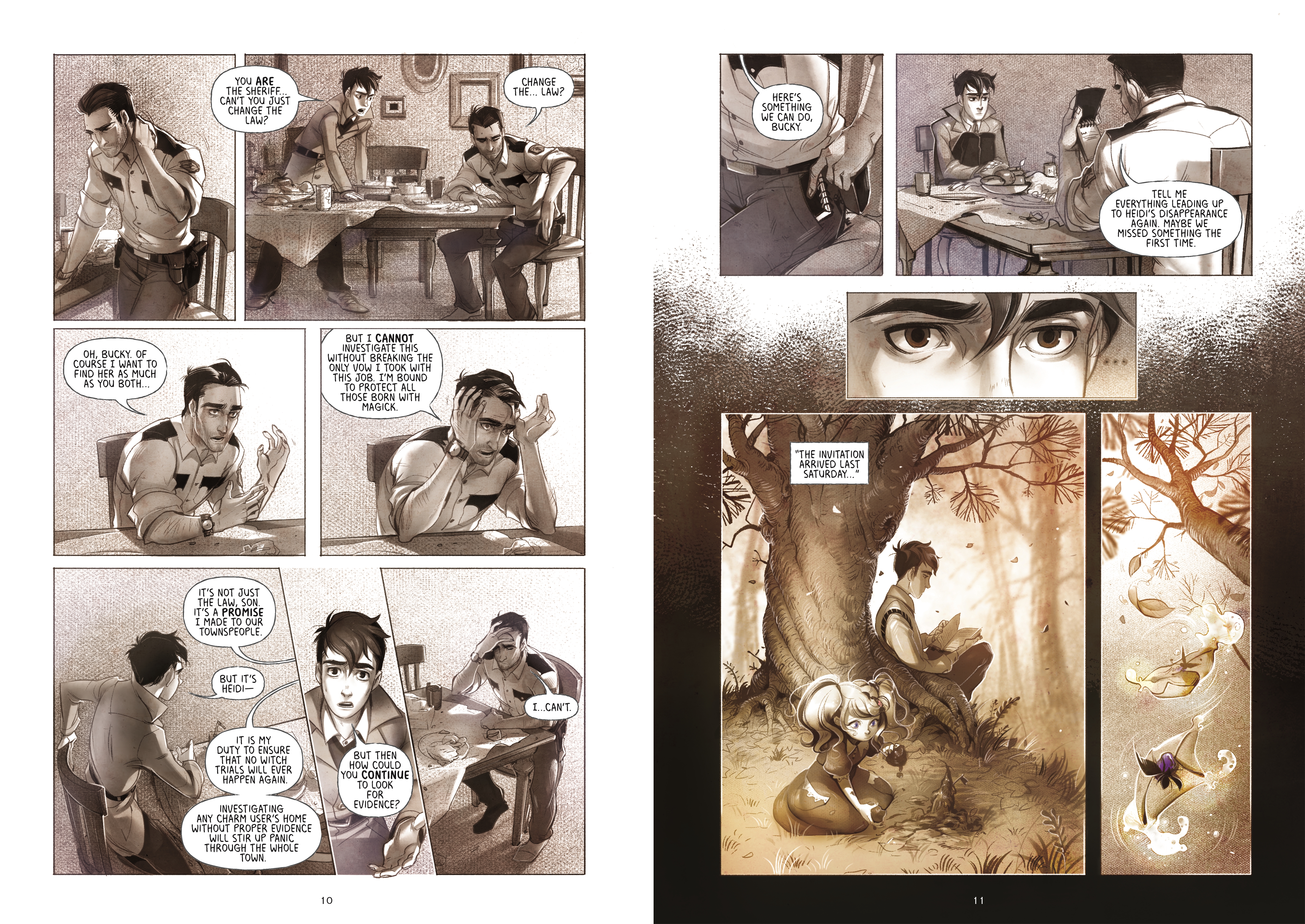
This beautifully illustrated graphic novel has a few plots going on at once: set in a town called Blackwell, where all the girls are witches, a teen named Bucky yearns for power of his own – despite the fact that no witch can leave the town. Ever. Bucky’s younger sister, Heidi, is kidnapped, and Bucky joins forces with his estranged friend, a teen girl named Chamomile, to look for her. Within this main story are threads of other plots; the hostility Chamomile’s father, Blackwell’s deputy, has toward Bucky (who also happens to be the sheriff’s son); a coven of Mean Girls/The Craft witches called The Crows, who want to set plans in motion that will set them free to leave Blackwell, and a ghost of the very first witch, a child named Griselda, whose death at the hands of witch hunters set the curse on Blackwell’s daughters into motion.

The storyline has moments where the storyline becomes confusing to follow, but has some touching relationship bits that I’d like to have seen more about. The relationship between Chamomile and her father runs deep, and we only get a surface glimpse, for instance. Will we get more Blackwell stories from Vera Greentea and Yana Bogatch? We can sure hope so; I think there’s a lot more to tell in a town with a history like theirs. Tween and young teens will enjoy this human, paranormal tale with a twist.