Posted in picture books, Preschool Reads

When Bear meets Goldilocks, a big mess ensues!

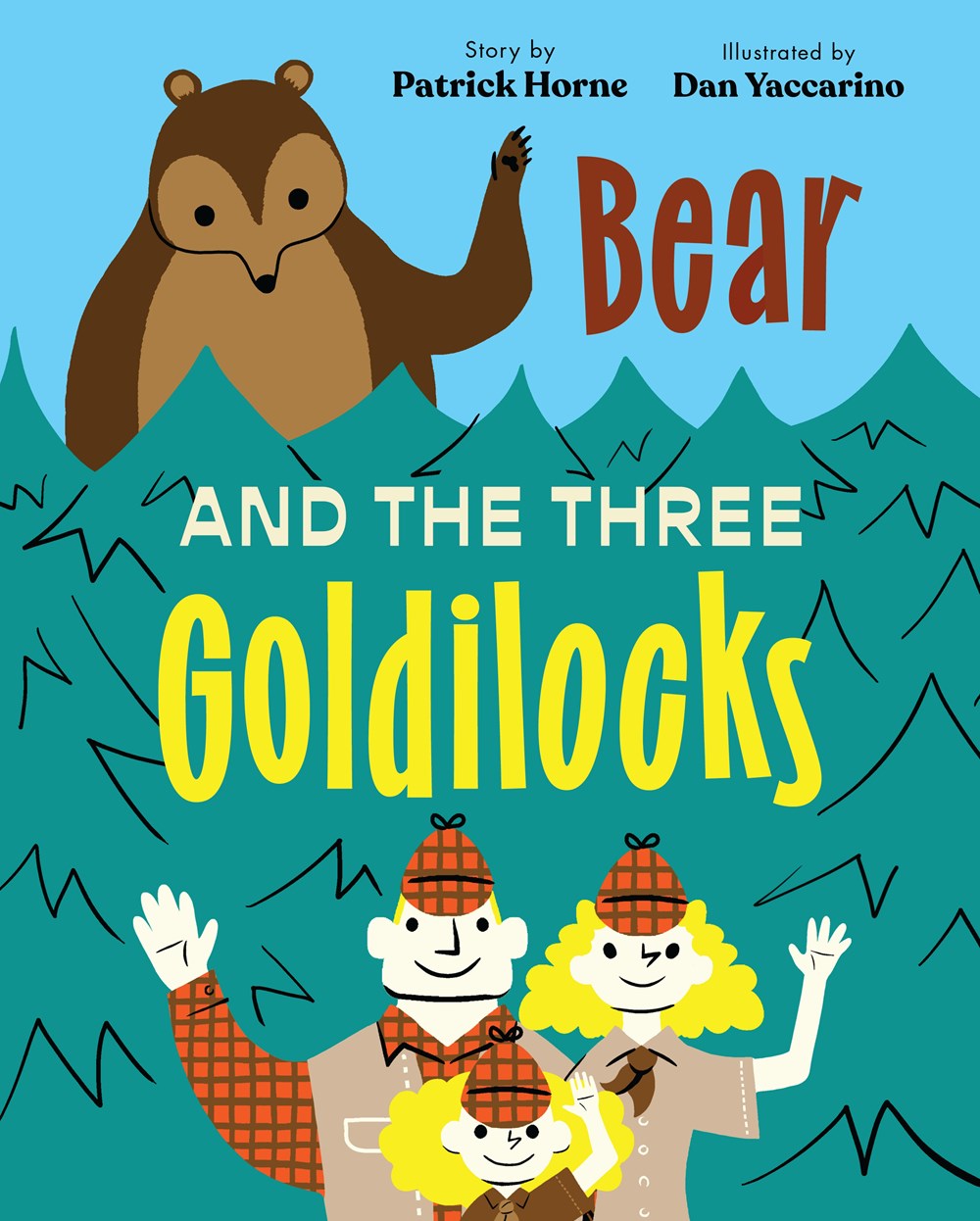
Bear and the Three Goldilocks, by Patrick Horne/Illustrated by Dan Yaccarino, (July 2025, Holiday House), $18.99, ISBN: 9780823455522

Ages 4-8

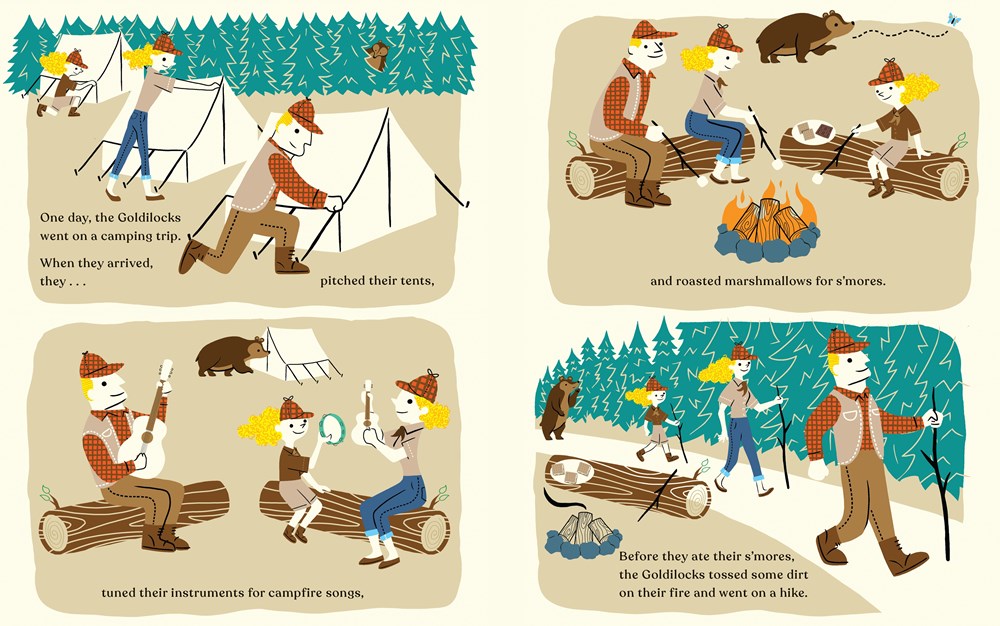
This flipped fairy tale serves as a cautionary tale when going camping. The Goldilocks family – Mr. Goldilock, Mrs. Goldilock, and Goldie Goldilock – head to the campground for a family trip, but sharp-eyed readers will see that the family is being watched by a curious bear, who wanders to their camp when the family goes for a hike. He samples their s’mores – too gooey, too chocolatey, juuuust right – and finishes the rest of the food, too; after all, “that’s how bears roll”. Bear tries out the family’s instruments, and finally, makes himself at home in Goldie’s tent, where he falls asleep. Baby Bear’s family arrives on the scene as the Goldilocks family discovers the mess, but as the family doesn’t understand bear language, Mr. and Mrs. Bear’s apologies and an invitation to come to their house for some porridge doesn’t go over well. The moral of the story: put your food in bear-proof containers when camping! Yaccarino’s illustrations are wonderful and have little details to enjoy, from Bear peeking out of the trees as the family arrives to a wolf confronting a young girl with a red hood at the story’s close. Horne’s storytelling makes for a funny, casual readaloud that will keep readers giggling. Pick this one up for your storytime collections.

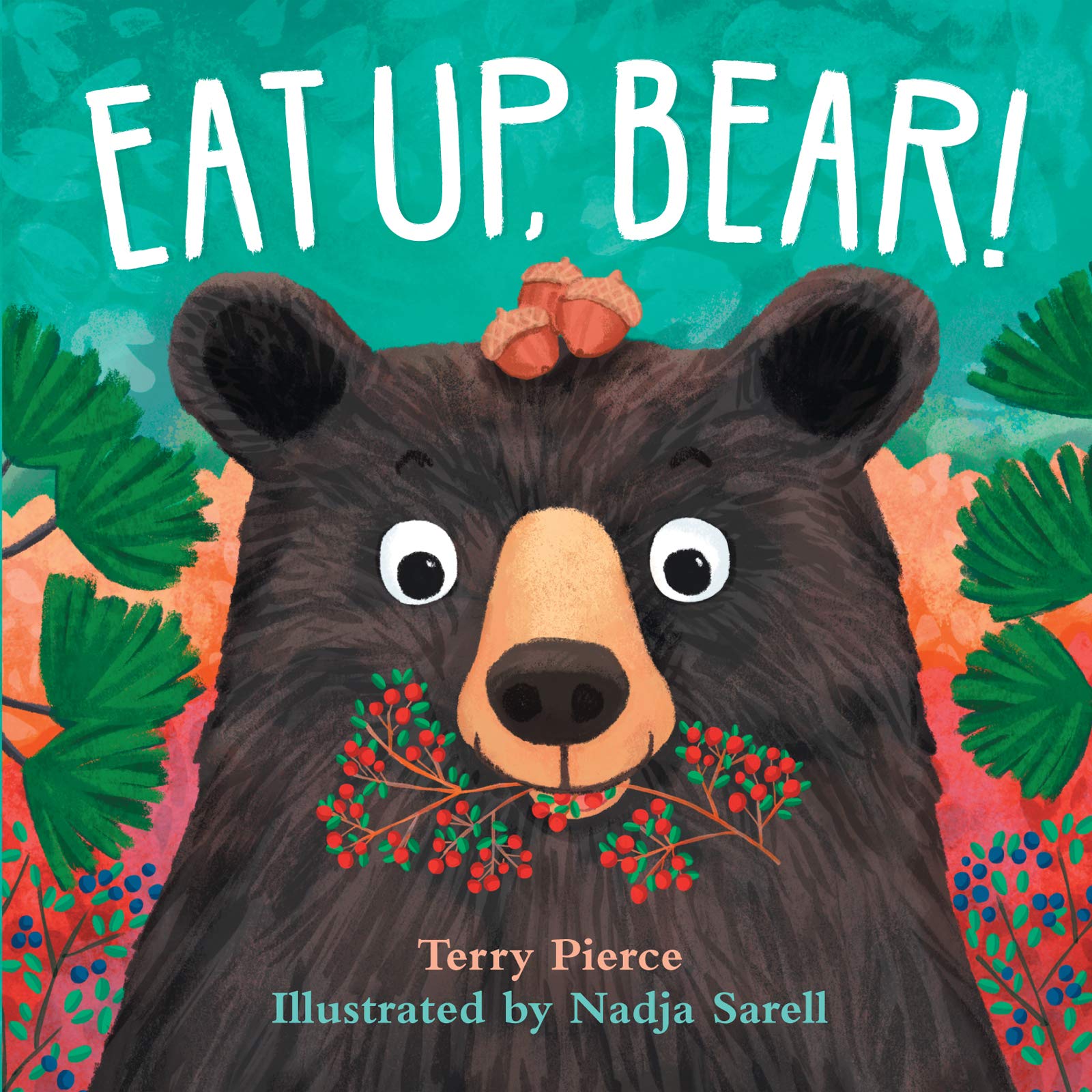
Terry Pierce’s board book, Eat Up, Bear! is another fun story about campground safety; my interview with Terry also includes links to keeping campers and bears safe.

Posted in picture books, Preschool Reads, Toddler Reads

Let’s get the school year off to a great start!

You want books for back to school? I got books for back to school!


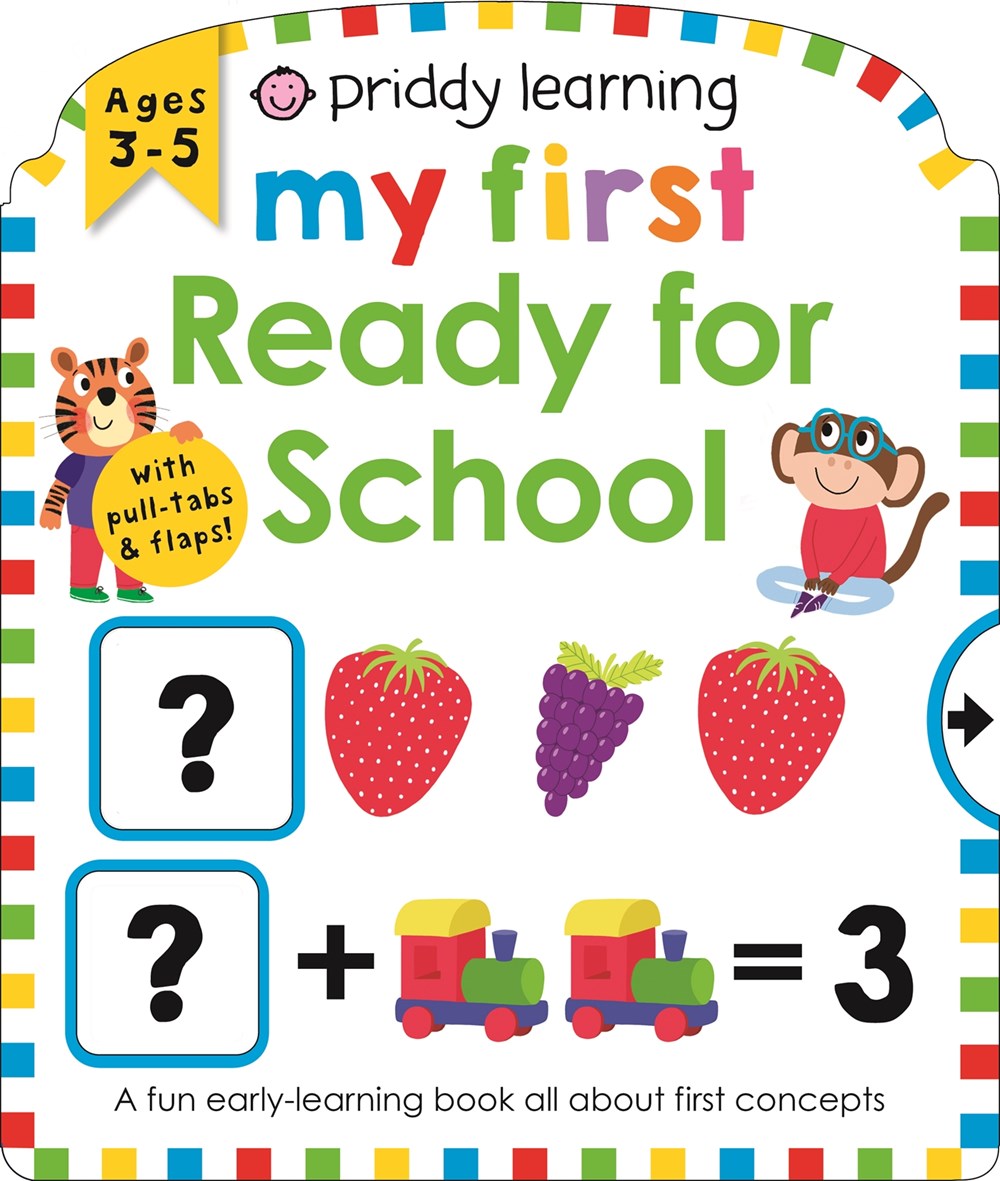
My First Ready for School, by Roger Priddy, (May 2021, Priddy Books US), $9.99, ISBN: 9781684491384

Ages 3-5

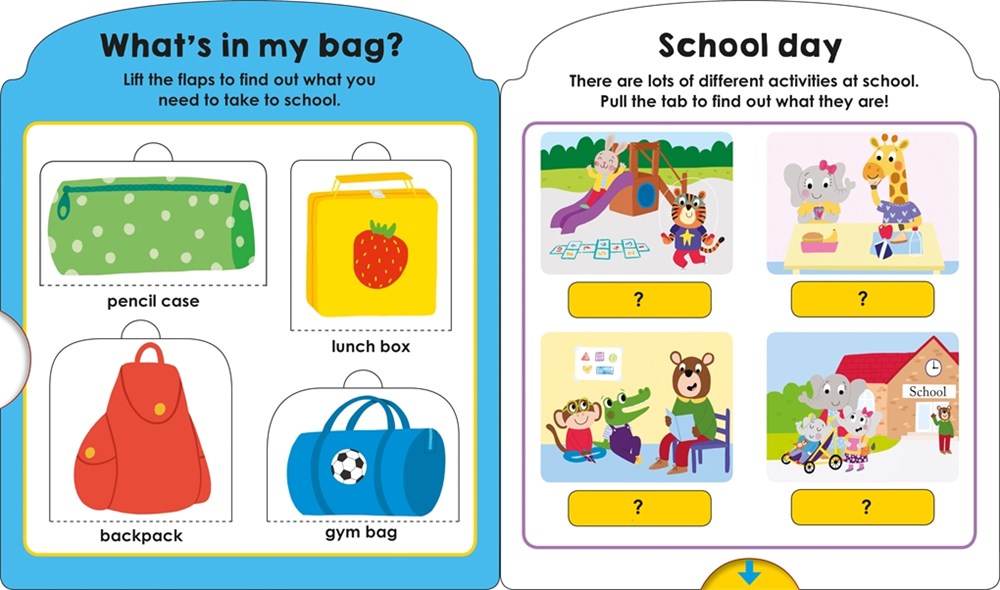
Priddy Books does it again; I’ve loved their board books and early learning books for babies since my own now-fourth grader (fourth grade!) was born. This preschool activity book is the perfect Welcome to School gift for preschoolers, and a great add to preschool shelves and collections in your classrooms and libraries. It’s all about concepts, early learning, and fun: there are pull tabs and flaps on every single page, all getting the little ones ready to experience a school day. Learn what to put in your school bag, with pull-down flaps that reveal what goes in your pencil case, lunch box, gym bag, and backpack; use the pull tab to discover all the great activities taking place at school, like playtime and storytime; learn about mixing colors, school shapes, patterns, and more! The book is tough, strong enough to stand up to repeated use, with bulky board pages, strong tabs, and secure flaps. Colorful and friendly animal characters will greet little readers and help them sharpen their pattern and shape recognition, counting skills, and sight words. Get a few of these in your collections if possible; they’re a great investment.


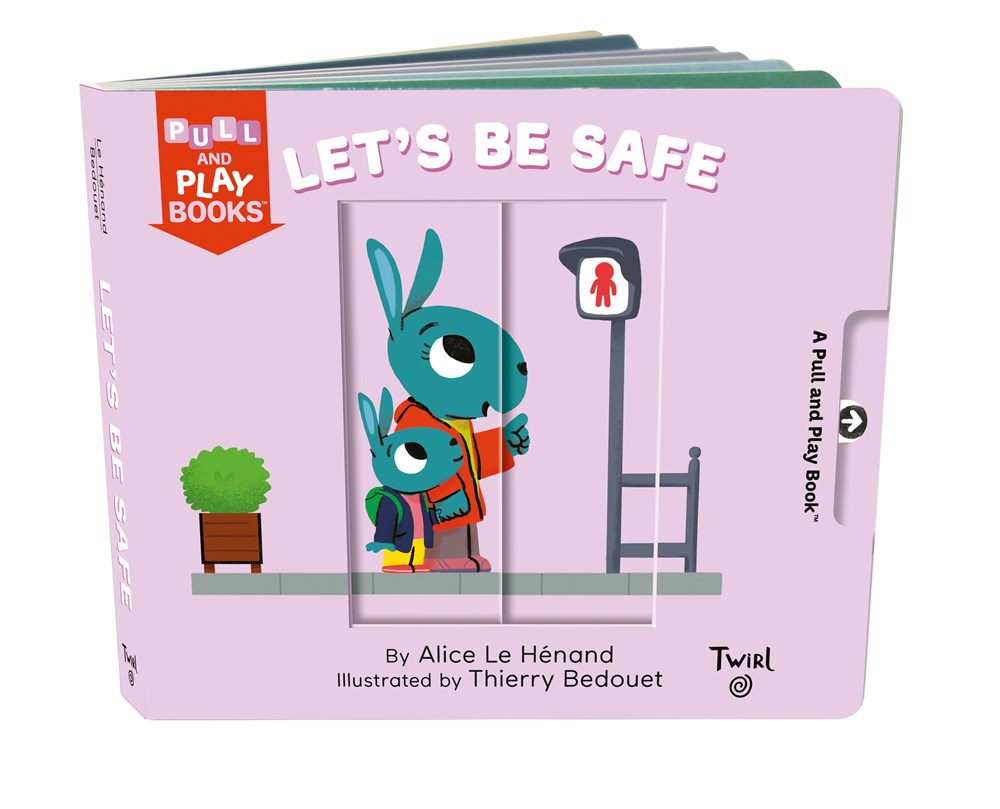
Let’s Be Safe, by Alice Le Henand/Illustrated by Thierry Bedouet (Oct. 2021, Twirl Books), $12.99, ISBN: 9782408028497

Ages 0-3

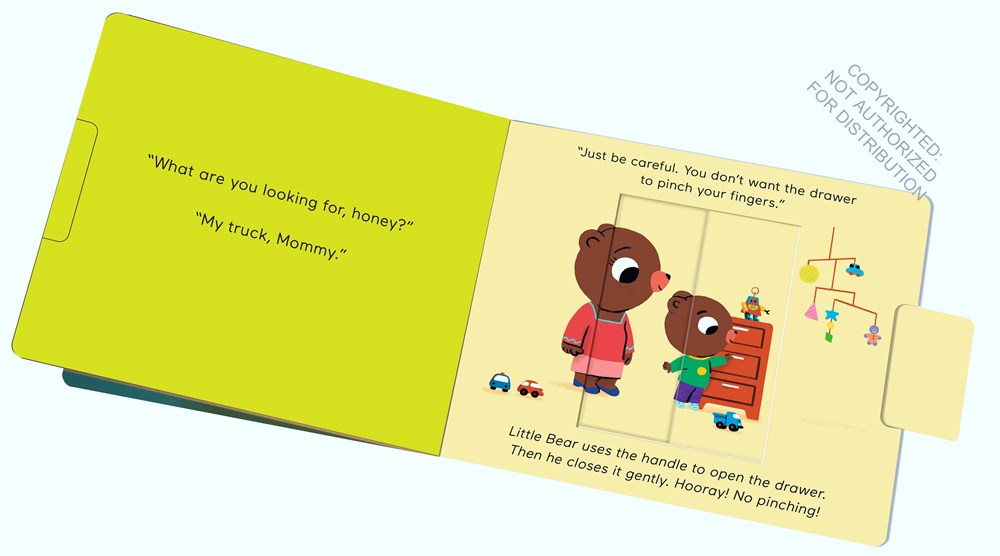
I am a big fan of Twirl Books’s Pull and Play series. This outing, Let’s Be Safe, teaches readers about safety while doing everyday tasks. Familiar animal friends from previous books in the series are back, like Little Kangaroo, Little Cat, and Little Monkey, and their parents gently guide them through scenarios that could end up with tears – but don’t, thanks to some smart thinking and safe action. Little Crocodile wants to come down the stairs by himself – great! – and Dad lets him, as long as he holds onto the railing. Little Kangaroo wants to stand up to play in the tub, but Mom cautions against it, because slipping and falling really hurts. Isn’t it better to sit and play? Pull tabs illustrate the before-and-after, with the Little Gang modeling safe behaviors as parents lovingly explain and stand by to help. Parents will appreciate the modeling on what to say to newly independent toddlers and preschoolers, and kids will love pulling the tabs and seeing their animal friends be safe. Win-win for all.


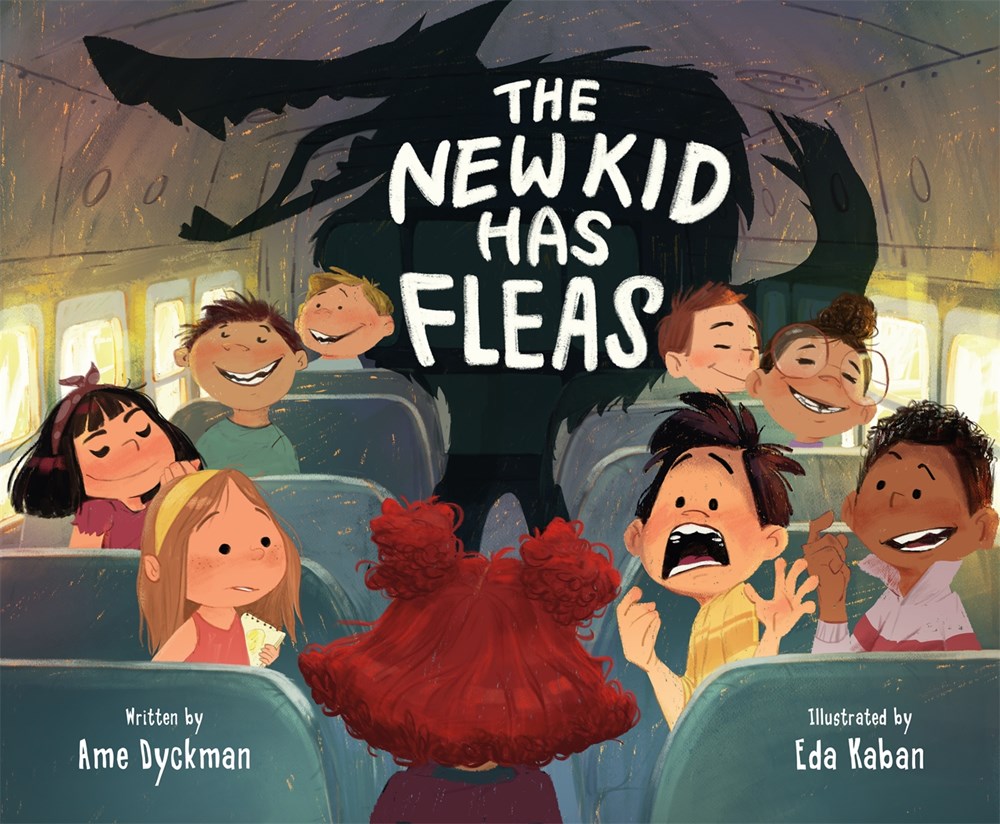
The New Kid Has Fleas, by Ame Dyckman/Illustrated by Eda Kaban, (June 2021, Roaring Brook Press), $18.99, ISBN: 9781250245243

Ages 3-6

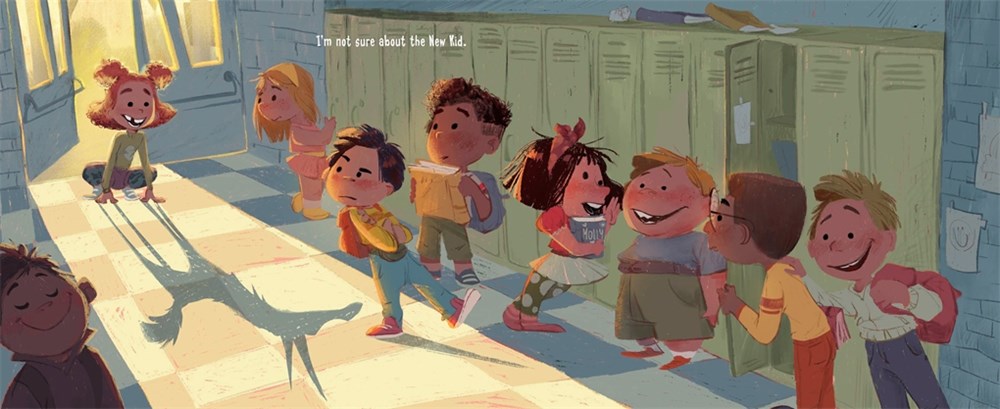
Award-winning author Ame Dyckman’s story about welcoming the new kid is a study in kindness and discovery. There’s a new kid at school, and she’s a little… different. Naturally, the rumors fly when the mean girl tries to spread rumors, but our narrator, who ends up paired with the New Kid for a science project, discovers that she and her family are pretty cool, after all! The New Kid – who we discover is named Kiki – is different, with a different family and a different home. She doesn’t wear shoes, she howls, she chases squirrels, and her family seem to be wolves! After spending a day working on a school project, though, our narrator – a young boy – embraces Kiki’s family, tussles with her brothers and sisters, and, in a laugh-out-loud moment, “goes with the flow” when it comes to using the restroom. Turns out, welcoming the new kid is a far more fun way to go than being mean! Digital illustrations capture the fun spirit of the story and show the growing friendship between Kiki and her new friend, and I loved the use of a wolf’s shadow to illustrate the Kiki is more than meets the eye. What a great way to teach kids to extend a friendly hand to new students. Another win from Ame Dyckman!

Visit Ame Dyckman’s author page for more information about her books.

Posted in picture books, Preschool Reads

Author Terry Pierce talks Eat Up, Bear!

Eat Up, Bear! is an adorable, rhyming board book that addresses a big topic: respecting the local wildlife – and keeping yourself safe! – when enjoying the outdoors! Whether you’re having a picnic or birthday party in a park, going on a hike, or enjoying a camping trip, it’s important to remember that local wildlife, especially bears, LOVE to eat and will eat your food – not healthy for them! – unless you keep that food safely packed up and properly disposed of!

Eat Up, Bear!, by Terry Pierce/Illustrated by Nadja Sarell,
(Apr. 2021, Yosemite Conservancy),
$8.99, ISBN: 9781-951179-01-4
Ages 3-6

Author Terry Pierce was kind enough to answer a few questions I had. Enjoy!

MomReadIt: Hi there and thank you so much for writing Eat Up, Bear! I love that you’ve written a fun and informative book about keeping both bears and people safe. What inspired you to write Eat Up, Bear for a young audience?

Terry Pierce: Thank you for inviting me to talk about Eat Up, Bear!, Rosemary. It’s a small book that packs a powerful message. My inspiration for this story came from my love of black bears. I’ve hiked and backpacked my whole life and have had many amazing bear encounters in the wild. I’ve seen bears in trees, in ponds, even bears in my camp! One time, I almost ran right into a fledgling bear at a blind spot on a trail. That was exciting! All these encounters led me to have an enormous respect for them, knowing these are gentle creatures who really just want to eat and be left alone.

And therein lies the focus of Eat Up, Bear! Black bears LOVE to eat! Their natural food sources are things like berries, grubs, nuts, grass, and occasionally fish. But they’re also opportunistic eaters, meaning if humans leave food out a bear will eat it. And this is bad for both bears and humans. Obviously, bears should eat natural good-for-their-health foods, not chips and hoagies! Beyond concerns for the bear’s health, when a bear becomes dependent on human food, it can behave more aggressively in its efforts, becoming a “problem bear.” Bears have been known to break into cars if they see food inside, or rummage through a campground looking for unattended ice chests or food left out on picnic tables. This can be a huge problem for bears and people! Sadly, if a bear gets too aggressive, it is put down, so proper food storage can help prevent the death of a bear.

So, when I saw Yosemite Conservancy’s call out for board books, I immediately thought about writing a book about using proper food storage to help keep bears safe and healthy (people too!). Our goal for the book is to entertain and educate little campers everywhere and show how families can do their part to help keep bears wild through respectful coexistence.

MomReadIt: You mention a variety of ways people can enjoy nature, yet keep wildlife – especially bears! – safe from people food (which keeps people safe, too): latching boxes, packing their food well, locking up their coolers, and disposing of trash. Are there any other things to be aware of, when planning a day or camping trip, to keep everyone and every bear safe and sound?

Terry Pierce: Planning is the key word. Plan your trip ahead of time, including learning about wildlife you might encounter during your visit. You can visit the National Park Service website for specifics about the location. For backpackers, an essential item is a “bear canister” for storing your food. In the old days, hikers would hang their food in storage sacks from a tree branch at night, but now they’re required to use a bear canister (a heavy-duty plastic container with a locking lid that’s bearproof).

It’s also smart to make sure you leave no food (or evidence of food) in your car while you’re out enjoying nature. Bears will look in cars and can smell food even if it’s out of sight so roll up your windows. I once saw where a bear had ripped off a car door just to get three peanuts accidentally left on the dashboard! As Eat Up, Bear! says, “Bears are hungry. Clever, too! Take care or bears will eat your food!” The book is a good way for families to learn together the various ways to store food properly and keep everyone safe.

Last, in established campgrounds, such as those in Yosemite National Park, campsites have food lockers to store food when not in use. These lockers are bearproof and right in your campsite, making in convenient for campers to use. Keeping your food inaccessible to bears will keep them safe. For more information about bears and food storage, here’s a NPS link: https://www.nps.gov/yose/planyourvisit/bears.htm.

MomReadIt: Keeping the area safe for people and bears also means keeping the area safe and clean for everyone to enjoy. Over the last year in particular, people have turned to the great outdoors for a safe space. Do you have any suggestions for people that may be new to hiking, camping, and picnicking that will respect nature?

Terry Pierce: Yes, this is true! The pandemic has caused people to take to the great outdoors to enjoy life in a naturally social distanced way. And it’s wonderful to see so many families heading to the outdoors, exposing their little ones to nature early in life. But sometimes, when folks aren’t familiar with wildlife and the outdoors, mistakes can happen.

As I mentioned above, check out the area you plan to visit ahead of time, so you’ll be prepared. Also, check the weather conditions as they can make or break an outing (especially if you’re not prepared with proper attire).

The other thing I recommend is to be respectful of the outdoors while enjoying it. Immerse yourself in nature—listen to the birds, watch for animals, pack out all your trash, absorb the beauty and carry it with you. Turn off your music and phones and take in the sounds of the forest. Slow down as you drive so you have ample time to brake for wild animals. Resist the urge to take selfies with wild animals in the background. People have been injured doing so! Remember, wild animals are exactly that—WILD. So be respectful of them and their home while you visit.

And last, if you have little ones, prepare them in advance by reading books with them. Eat Up, Bear! is terrific book for the smallest of campers and hikers, not only for its message but Nadja’s Sarell’s gorgeous illustrations show what a camping experience might be like. Yosemite Conservancy has an online store with many wonderful children’s books: https://shop.yosemite.org/collections/youth.

Thanks so much to Terry Pierce! Visit Keep Bears Wild for more tips on staying safe – and keeping bears safe – when enjoying the great outdoors this spring and summer.
Posted in picture books, Preschool Reads

Get ready for summer with Rosie the Dragon, her friend, Charlie, and a giveaway!

Rosie the Dragon and Charlie Make Waves, by Lauren H. Kerstein/Illustrated by Nate Wragg, (June 2019, Two Lions), $17.99, ISBN: 978-1542042925

Ages 4-8

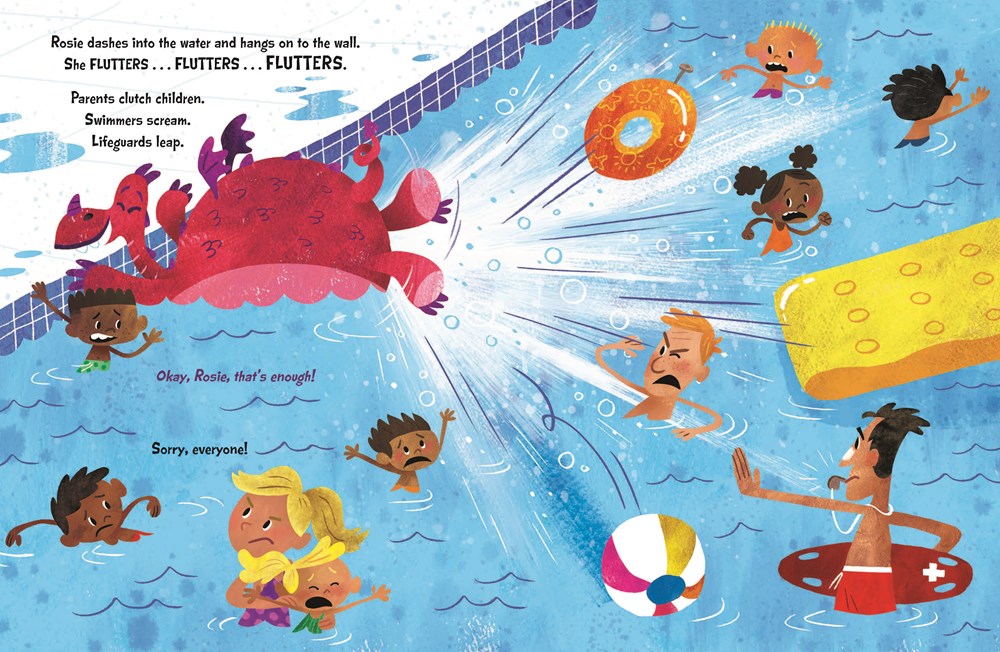
A boy and his dragon have fun and practice pool safety at a local pool. Charlie is a boy of color who has a pet dragon named Rosie. They’ve stayed up all night, preparing for this (Rosie’s last pool outing didn’t turn out so well), and they’re ready. They arrive at the pool, read the rules, and get in the pool, but it’s still tough for Rosie! Dragons aren’t great at sharing, and fingers tend to look really tasty to a hungry dragon. Finally, the two start having fun, blowing bubbles, giving rides around the pool to the other kids, and swimming across the pool. Rosie even manages a cannonball before Charlie realizes that she’s eaten the very snack that gives her wicked dragon breath: Oh No! Clear the pool!

How cute is this story about pool safety? Rosie is remarkably similar to toddlers and preschoolers that I know, between her fear of the water and reluctance to share. Kids will see themselves in this story, either as Rosie or Charlie, and there are great, teachable moments about being safe around the water. Reading the rules is a great way to help kids gain awareness of being safe at the pool, for starters, and reminding kids that running at the pool is a great way to get hurt or hurt someone else. Silly moments like the bubble blowing, flutter kicks that cause a tidal wave, and – reminiscent of Dragons Love Tacos – the skunk candy that brings on wicked dragon’s breath just make this an absolutely hilarious, light summer read-aloud. Nate Wragg’s digital artwork is bright, colorful, and adorable, with a big, friendly-faced, red dragon and her human friend and foil. The bold font makes this an easy read-aloud, and the kids I read it to at my Saturday storytime fell in love with Rosie and her antics. Have a dragon puppet? Put it on let Rosie come to life for the kids. A fun book for a summer circle time!

Want a chance to win your own copy of Rosie the Dragon and Charlie Make Waves? Try your luck with this Rafflecopter giveaway!

Posted in Preschool Reads, Toddler Reads

Duck & Hippo get lost and found!

Duck and Hippo: Lost and Found, by Jonathan London/Illustrated by Andrew Joyner, (Aug. 2017, Two Lions/Amazon), $17.99, ISBN: 978-1542045629

Recommended for readers 3-7

Duck and Hippo: Lost and Found, the second book in Froggy author Jonathan London’s new buddy series is every bit as sweet as the first one, Duck and Hippo in the Rainstorm. In this latest tale, the friends go on a picnic with their friends Turtle, Elephant, and Pig. Everyone’s brought something to share… except for Hippo, who forgot! Determined to make things right, he sets off into the forest in search of wild berries. As night falls, Duck and friends worry that Hippo’s gotten lost, but what should they do?

There are great themes at work here: friendship, the main plot point that drives the Duck and Hippo adventures; sharing and caring for one another emerge as the story progresses. Kids will appreciate Duck’s decision to search for her friend, and the decision to stay in a group and loudly call for Hippo will provide relief to parents, who likely give the same advice to kids in the event of a separation (I know I do). Repeated phrases provide kids with the chance to jump in and be part of the Hippo search party. I love Andrew Joyner’s cheerful art, and the colorful, emphasized fonts that add to a reading. Andrew Joyner offers free, downloadable activity pages on his website, too – the kids at my library love the coloring sheets, which have been a staple of my summer coloring club.

Jonathan London has written more than one hundred children’s books, including the bestselling Froggy series, illustrated by Frank Remkiewicz. He is the author of the popular Duck and Hippo series, illustrated by Andrew Joyner. Many of his books explore nature, among them Flamingo Sunset, illustrated by Kristina Rodanas, and Little Penguin: The Emperor of Antarctica, illustrated by Julie Olson. He is also author of the Aaron’s Wilderness middle-grade series, illustrated by his son Sean London. Jonathan lives in Graton, California. Learn more online at www.jonathan-london.net.

Andrew Joyner is an illustrator, author, and cartoonist based in South Australia. He has illustrated a number of picture books, and he wrote and illustrated a chapter book series about a warthog named Boris. He is the illustrator of the popular Duck and Hippo series, written by Jonathan London. He has also illustrated for newspapers and magazines, including the Wall Street Journal, Reader’s Digest, and Rolling Stone magazine, among others. Learn more online at www.andrewjoyner.com.au.

Giveaway!

Two Lions is offering a set of the Duck and Hippo books–DUCK AND HIPPO IN THE RAINSTORM and DUCK AND HIPPO LOST AND FOUND–to one lucky winner (U.S. addresses only, please). Just enter this https://widget-prime.rafflecopter.com/launch.jsecopter.com/rafl/display/bbc165de19/" rel="nofollow" data-raflid="bbc165de19" data-theme="classic" data-template="" id="rcwidget_scf2jfhw">a Rafflecopter giveaway</a> https://widget-prime.rafflecopter.com/launch.js“>Rafflecopter giveaway!

Posted in Intermediate, Middle Grade, Non-Fiction, Non-fiction, Non-Fiction

Extreme Wildfire takes kids to the front lines of fire fighting!

extreme_wildfire_coverExtreme Wildfire: Smoke Jumpers, High-Tech Gear, Survival Tactics, and the Extraordinary Science of Fire, by Mark Thiessen, (Aug. 2016, National Geographic Kids), $12.99, ISBN: 9781426325304

Recommended for ages 8-12

It can go from a spark to a flame in almost no time. It can devour homes and forests alike, leaving destruction and devastation in its path. NatGeo Kids brings readers to the front lines of wildfires, and the people – largely volunteers – who fight them, in Extreme Wildfire.  Author Mark Thiessen is a NatGeo photographer and certified wildland firefighter has photographed countless fires over the last 20 years; Extreme Wildfire represents part of a lifelong project: to create a visual record of what these firefighters do.

Extreme Wildfire discusses the science behind wildfire; how firefighters battle the flames and how lookouts spot potential fires on the horizon; the equipment used in combating fire, the devastation – and nature’s adaptation – that fire leaves in its wake, and how communities come together to help one another. Chock full of facts and call-out boxes with more information, plus an emphasis on fire safety and prevention to finish up the book, this a good addition to nonfiction collections. There’s a glossary, list of resources, and index.

The kids in one of my library’s neighborhood schools have a unit on natural disasters every year. I’ve ordered two copies of this book – my Corona Kids know how much I love NatGeo books – to have available for them when the time comes around this year. It’s also a good book to have on display if you have fire safety talks. There are some good fire safety and education resources online, including Science for Kids Club and The Kids Should See This.

extreme_wildfire_14-151Photo courtesy of Chat With Vera.


Posted in Early Reader, Fiction, Preschool Reads

Maggie McGillicuddy’s got an eye for trouble… do you?

maggie mcgillicuddyMaggie McGillicuddy’s Eye for Trouble, by Susan Hughes/Illustrated by Brooke Kerrigan, (Oct. 2016, Kids Can Press), $16.95, ISBN: 9781771382915

Recommended for ages 4-8

This fun look at imagination appeals to a kid’s sense of play, but also teaches them to be aware of their surroundings. Maggie McGillicuddy sits on her porch, knitting away, and sees things a little differently. When she sees a shadow on the wall, she just knows it’s a hungry tiger! She clacks her knitting needles and scares that wildcat away. That’s no tree branch behind the pizza delivery girl’s bike, it’s a snake! She whacks her walking stick and scares that slippery snake right off. But when Charlie, her next door neighbor, is about to run into the street while chasing a ball, Maggie springs into action – this is no figment of her imagination!

This is such a great story about imagination and playing little games with yourself, but it makes a point about being aware, too. When Maggie sees that Charlie’s in danger, there’s no clacking of knitting needles or whacking a walking stick, she yells and gets Charlie’s attention – she makes him very aware of his surroundings! And playing games with your imagination is a fun way of being aware of what’s around you, too. Charlie and Maggie bond over their active imaginations, and invite the reader in, with repeated wink and nudge phrases like, “you see it there, don’t you?”

The artwork is rendered in watercolor, pencil crayon, gouache and collage, all coming together to give a light, fun tone to the book. Kids will recognize the places where Maggie’s and Charlie’s imaginations take root: tree roots that become snakes, shadows that become wild animals, herds of elephants out on the horizon and a dinosaur lurking behind a bush. I love the movement in illustrator Brooke Kerrigan’s work, too; Maggie’s scarf sways gently until she jumps to action: then, it swings outward, almost at attention. When all is well, the scarf gently relaxes at Maggie’s feet. Throughout the book, the scarf gets longer until both Maggie and Charlie are wearing it, looped around their necks.

Read this and talk to kids about being safe: from looking both ways before crossing a street to knowing street signs and where you are. Maybe even link this story to a book on community helpers, so kids know who to turn to if they need assistance. Have kids draw pictures of what they see in their imaginations when they look outside and make up a story of their own about what’s in the hallway!

Very good for Pre-K and elementary collections. The fun of imagination is contagious.