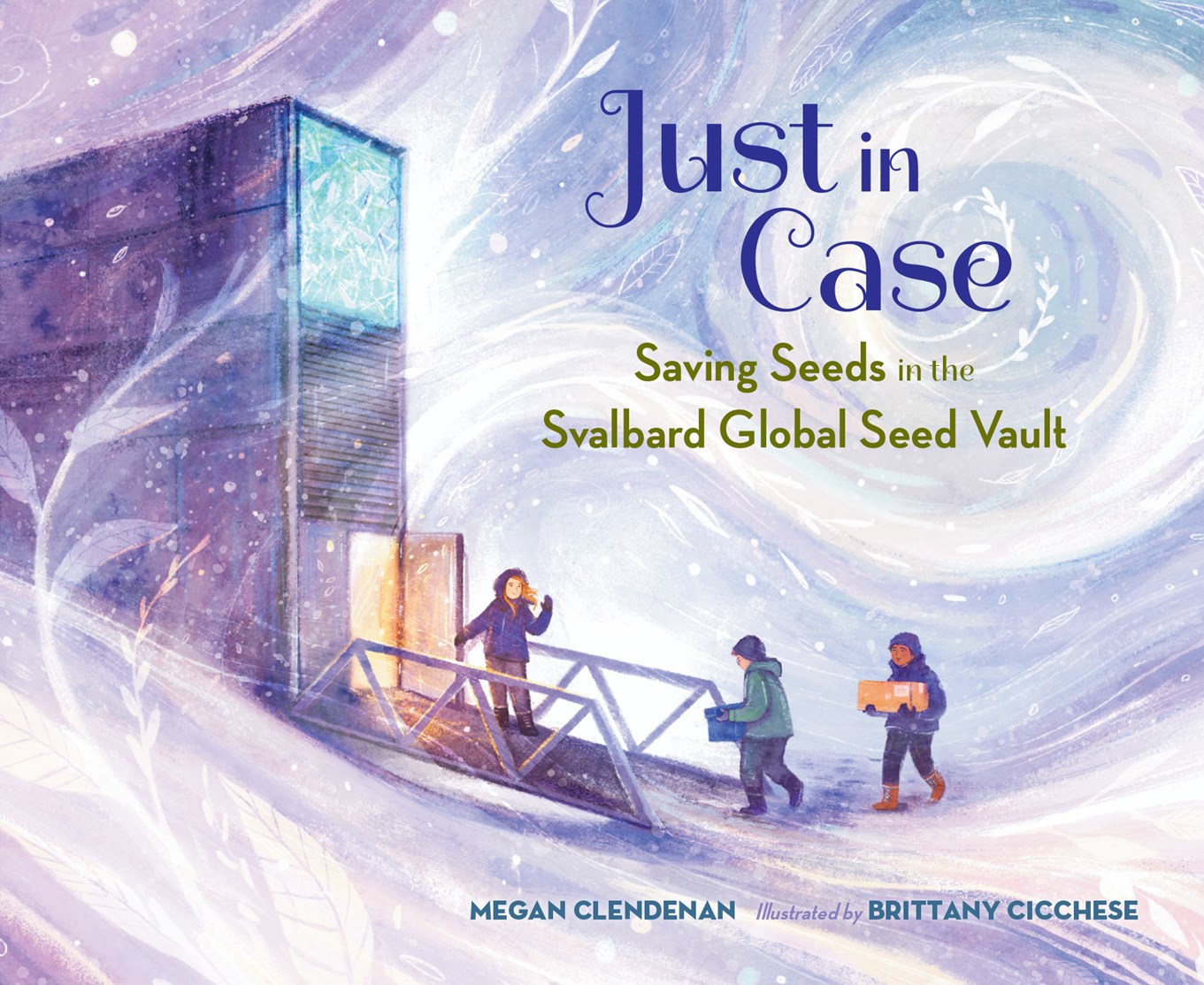
 Just in Case: Saving Seeds in the Svalbard Global Seed Vault, by Megan Clendenan/Illustrated by Britany Cicchese, (Oct. 2025, Charlesbridge Publishing), $17.99, ISBN: 9781623544805
Ages 5-8
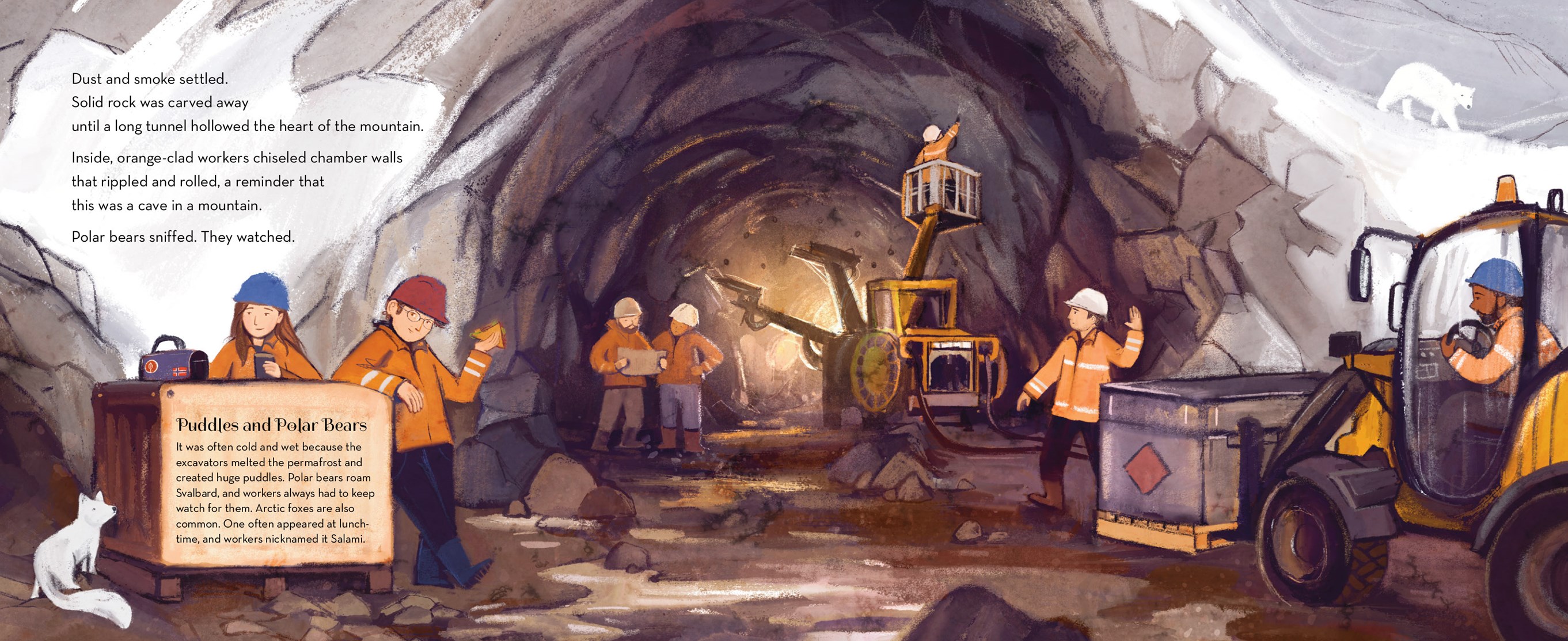
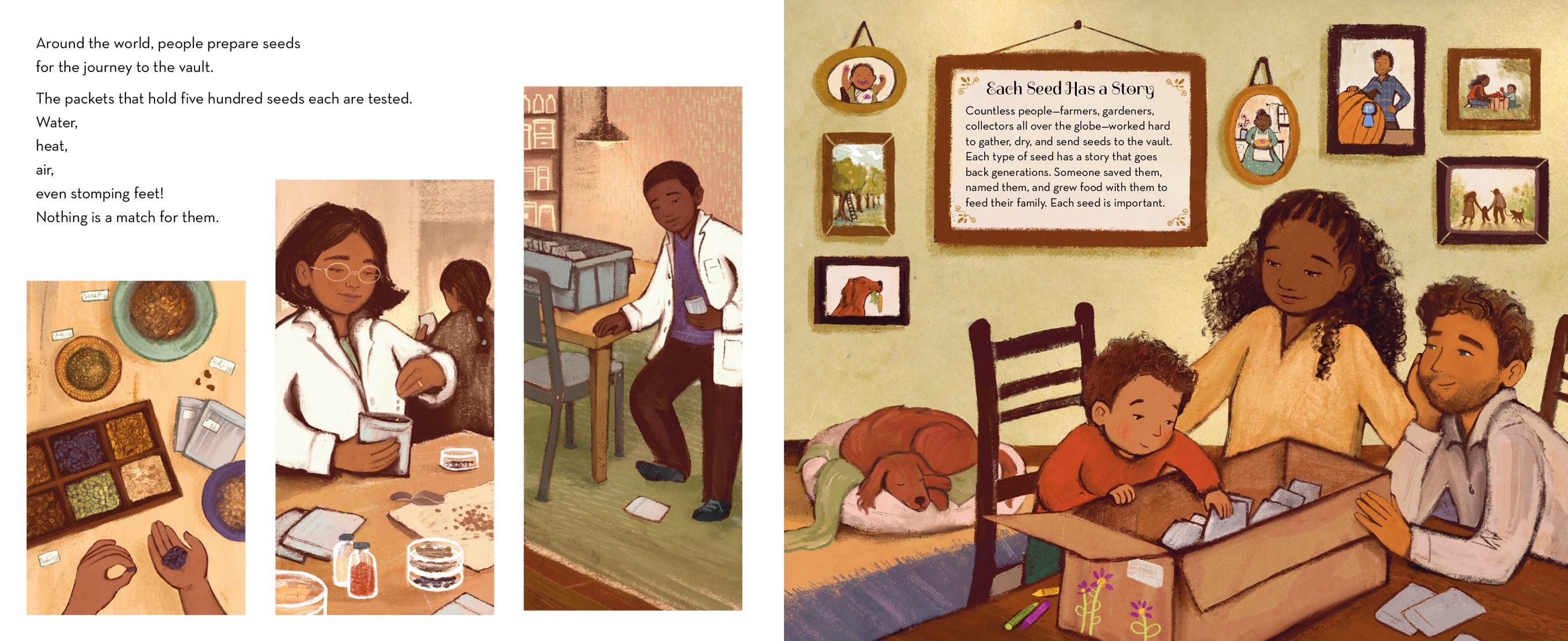
Located deep in a Norwegian mountain is the key to protecting the planet’s resources: the Svalbard Seed Vault. Just in Case tells the story of the Svalbard vault using clear and easy-to-understand language; Clendenan infuses her straightforward narrative with beautiful language, pairing with Cicchese’s digital landscapes to inspire awe: “Steel doors open and beckon into the belly of a mountain. Inside the air is as cold as the Arctic outside. Walls of ice shine like stars”. Clendenan and Cicchese show people from all over the world coming together to farm, plant, and eat together, thus creating a respect for nature and what the planet provides. Callouts throughout the book provide further context the importance of seeds and the vault’s creation. Frequent use of the phrase, “Just in case”, resonates with readers of all ages who hear – and say – the same phrase for everything from bringing an umbrella on a cloudy day to carrying a purse-sized first aid kit. It’s a phrase that speaks of importance, the need to be prepared, and creates a bridge of understanding. Back matter includes information on the need for seed safety, an author’s note, a bibliography and further resources. If you haven’t purchased this for your shelves yet, please do it now.
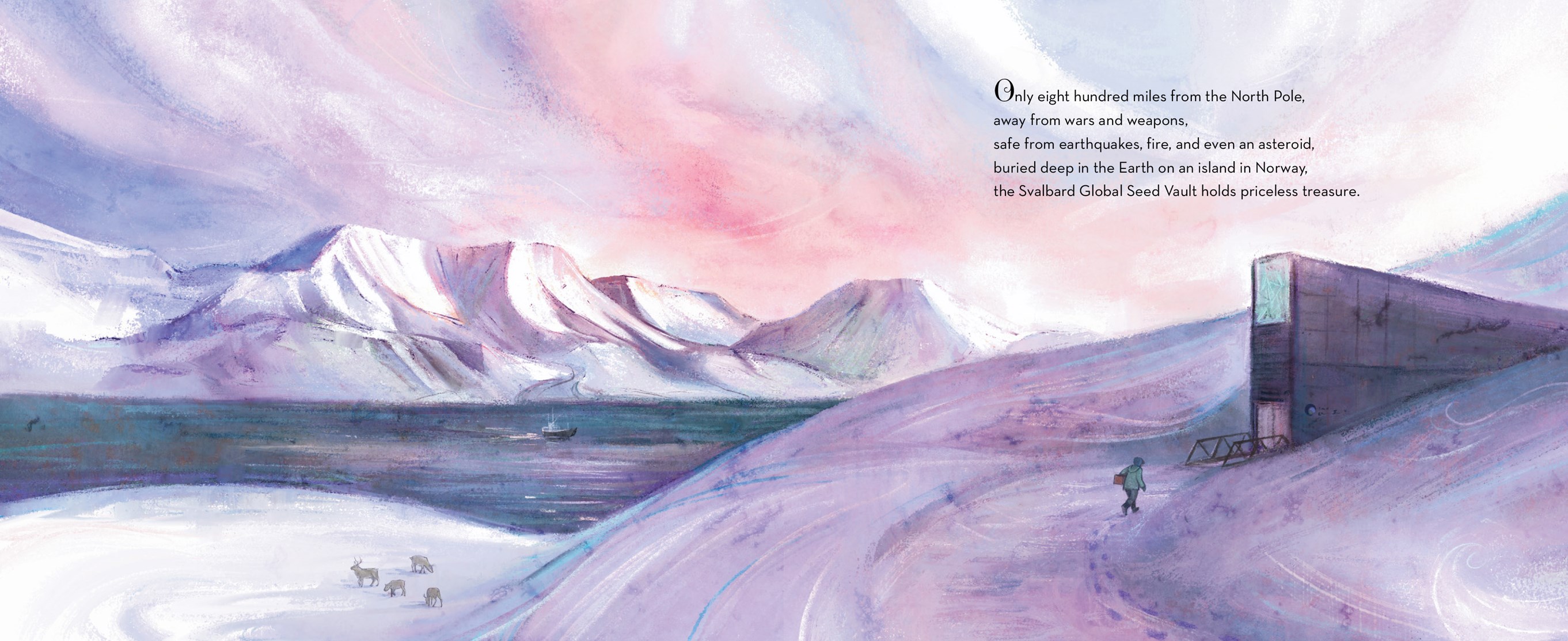
With Spring coming, this is the perfect time to discuss Just in Case: the Svalbard Vault’s anniversary is February 26th; Earth Day is April 22nd, and World Food Day is October 16th. If your library has a seed library, display the book with your library’s “seed vault” and encourage folks to add their seeds to the library’s collection. Find Seed Libaries at the Seed Library Network website.
Just in Case has starred reviews from School Library Journal, The Horn Book, and was a Shelf Awareness pick. It is also a 2026 Orbis Pictus Award Winner and is part of the 2026 Children’s Book Council Outstanding Science Trade Books and Children’s Book Council Best STEM Books.
 Megan Clendenan studied sociology, English, and environmental planning and has worked for nonprofit organizations focused on environmental law, women’s empowerment, mental health, and urban food security. As a children’s book author, she loves writing nonfiction that explores the connections between history, society, and the environment. She is the author of Design Like Nature: Biomimicry for a Healthy Planet, Fresh Air, Clean Water: Our Right to a Healthy Environment, and Cities: How Humans Live Together. She lives near Vancouver, British Columbia, with her family and two fuzzy orange cats. This is her first picture book. To learn more, visit meganclendenan.com. Follow her on Instagram at @meganclendenan.
 Mom Read It