Posted in Intermediate, Middle Grade, Non-fiction, Non-Fiction

September Non-Fiction: Engineering, Nutrition, and the Planets

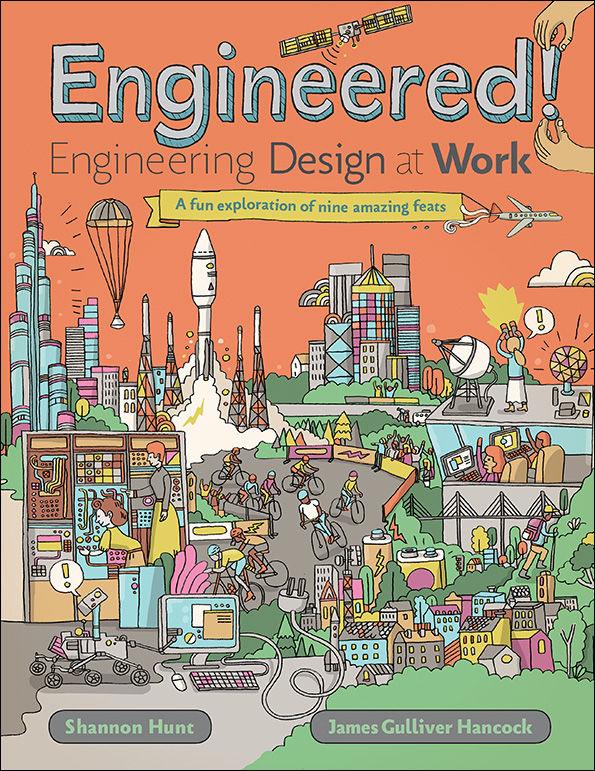
Engineered! Engineering Design at Work, by Shannon Hunt/Illustrated by James Gulliver Hancock, (Sept. 2017, Kids Can Press), $18.99, ISBN: 9781771385602

Recommended for readers 9-13

Nine engineering specialties -Aerospace Engineering, Biomedical Engineering, Chemical Engineering, Mechanical Engineering, Electrical Engineering, Civil Engineering, Geomatics Engineering, Computer Engineering, and Environmental Engineering – in this look at engineering design, which introduces readers to the step-by-step process by using eye-catching icons and nine case studies, one for each field. Team member bios that introduce kids to new scientists and what they do; new fields of engineering, like geomatics, are explained and illustrated, as are new technologies, like the incorporation of 3-D printing into biomedical engineering. Cartoony illustrations make the science more appealing to anyone who may think they can’t *do* science. Kids will learn that engineering can be found everywhere, from sending the rover to Mars, to saving animals from extinction, to replacing a sewer system to clear pollution from a lake. A glossary helps with new engineering terms readers come across.

Engineered! is a fun introduction to the basics of engineering and can be used equally in a science class, makerspace, or on career day.
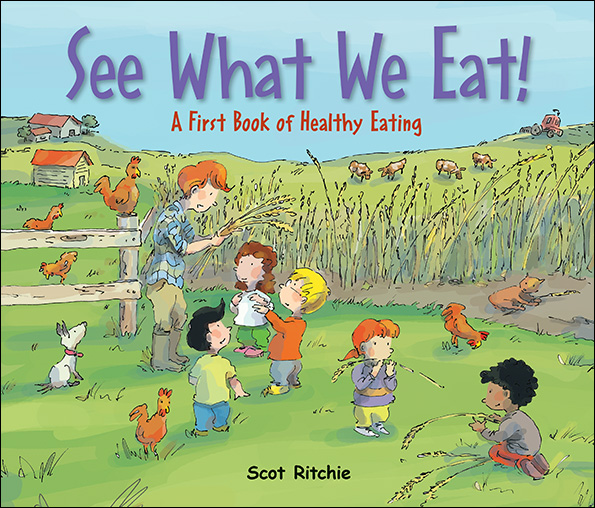
 

See What We Eat! A First Book of Healthy Eating, by Scot Ritchie, (Sept. 2017, Kids Can Press), $16.99, ISBN: 9781771386180

Recommended for readers 5-8

A group of friends takes a trip to a farm, run by one girl’s aunt. They’re there for pick apples and make an apple crisp for the potluck harvest dinner. Yulee’s aunt takes them on a tour of the farm, teaching the kids about growing grains and vegetables, getting enough nutrients, dairy, and protein – and addresses food allergies and alternative methods of getting those nutrients. Kids learn about transporting food to farmer’s market, stores, and all over the world. Ritchie addresses composting and recycling, and includes a tasty Harvest Apple Crisp recipe to try. A glossary helps readers with new words like pasteurize, carbohydrate, and nutrient.

The illustrations are soft, cartoony realistic, with a multicultural group of friends coming together to learn and eat. The room where the Harvest Celebration takes place has a line of hanging global flags as the families dine on pierogies, tamales, and apple crisp. With bolded facts and questions to encourage deeper thinking, this is a fun introduction for younger learners to nutrition and sustainability.
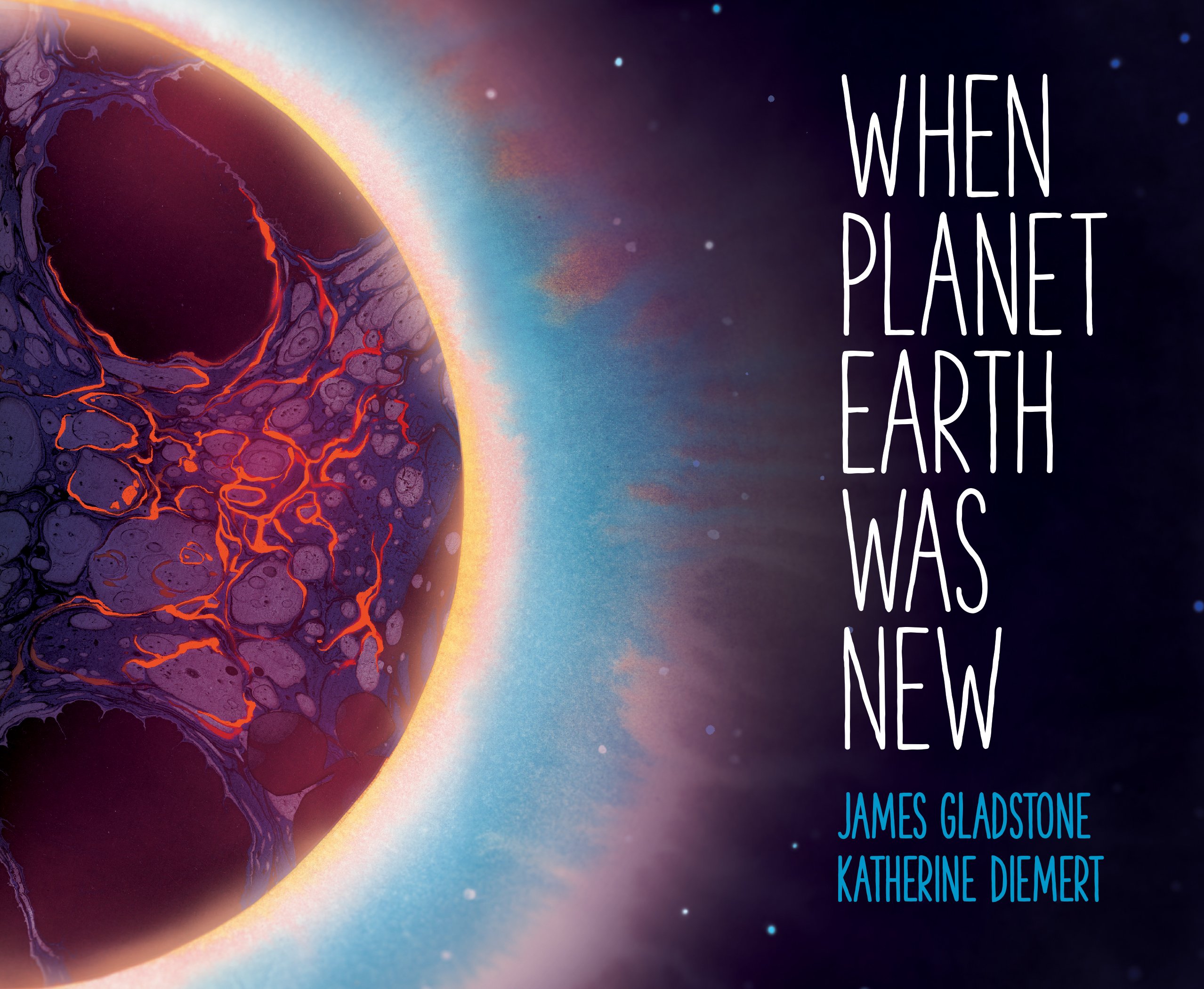
 

When Planet Earth Was New, by James Gladstone/Illustrated by Katherine Diemert, (Sept. 2017, OwlKids Books), $18.95, ISBN: 9781771472036
Recommended for readers 4-7
Take a trip through time and space and discover how our planet – and life on our planet – evolved. Beginning billions of years ago when Earth was forming, When Planet Earth Was New follows our planet’s formation through volcanoes and comet bombardment; through the formation of the oceans and evolution of life in the oceans and on the land. Beautiful, digitally-enhanced watercolor spreads showcase colorful artwork of each moment captured, with brief descriptive text that preschool and early elementary audiences will find breathtaking. A gorgeous spread showcases life on Earth today: a blue whale, birds flying overhead, and a marching line of animals, including a human being. A section at the end of the book presents each spread in thumbnail format, with additional explanatory text, and a glossary and list of sources round out this introduction to astronomy for young readers.
My 5 year-old loves this book; the spare text is just right for him and he’s fascinated with the changes our planet went through on its journey to the present. It’s a beautiful-looking book, and a great addition to elementary nonfiction collections. I can’t wait to display a copy in my library.


Posted in Intermediate, Middle Grade, Non-Fiction, Non-fiction, Non-Fiction, Tween Reads

Road Trip! Ranger Rick’s Travels: National Parks

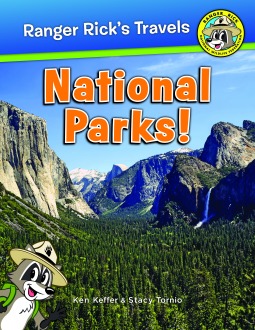
ranger-rickRanger Rick’s Travels: National Parks!, by Stacy Tornio & Ken Keffer, (Aug. 2016, Muddy Boots), $14.95, ISBN: 9781630762308

Recommended for ages 8+

In a fabulous love letter to the National Parks of America and the National Park Service, the folks at Ranger Rick Magazine – remember them? They have books now! – put together this beautiful book, featuring each one of the 58 National parks across America. Ranger Rick and his best friend, Deputy Scarlett, appear throughout the book to join readers on a countrywide sightseeing tour.

The book opens with a map of the United States, including Hawaii, Alaska, and the US Virgin Islands. Each park is numbered and corresponds to the Table of Contents, which organizes the parks into 9 groups: Eastern Parks, Midwest Parks, Mountain West Parks, Southwest Parks, Utah and Nevada Parks, California Parks, Pacific Northwest Parks, Pacific Island Parks, and Alaska Parks. Each park’s profile includes stunning photos and facts that will make readers want to pack their bags and take a month or six off from work or school!

rangerrick-rickandscarlettEach park feature provides information in quick bites that read like a tourism guide. About the Park provides a quick overview and basic facts; What to Watch For are Ranger Rick’s top nature picks on what plants and animals to keep an eye out for. Ranger Rick’s Top Things To Do is a bucket list for each park – don’t leave without seeing Old Faithful in Yellowstone Park, naturally, but also make sure not to miss out on a hike through the park! Finally, Ranger Rick’s Amazing Facts are the “WOW” factor for each park: did you know that you can only reach Northwest Alaska’s Kobuk Valley National Park by foot, dogsled, snowmobile, or air taxi? Now you do!

This is a great book to have in collections and to have available when you’re talking about the U.S. There’s 100 years of history in the National Parks Service, but there are far more years in the history of these parks; there are petrified trees, dinosaur footprints and bones, and formations carved out of rock thousands of years ago, here for all to enjoy. Families planning a vacation or two can use this as a jumping off point (I know I am).

Don’t forget to head to the Ranger Rick website, where kids can read more about nature and the environment, play some games, and get craft ideas. Educator resources included lesson plans and webinars.

Ranger Rick and Scarlett image courtesy of Photobucket.
Posted in Middle Grade, Middle School, Non-fiction

What’s Up in the Amazon Rainforest?

rainforest_coverWhat’s Up in the Amazon Rainforest?, by Ginjer L. Clarke (Sept. 2015, Grosset & Dunlap), $8.99, ISBN: 9780448481036

Recommended for ages 8-12

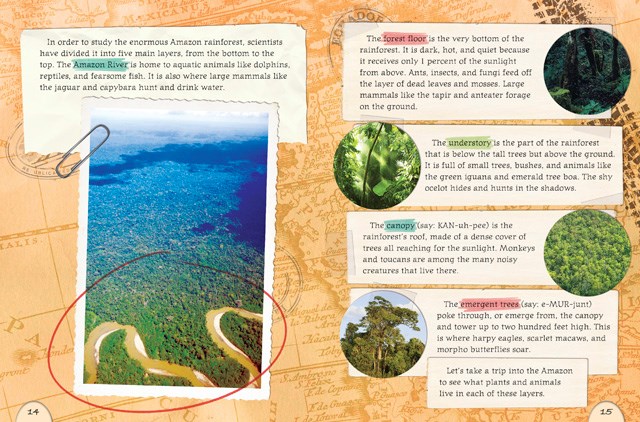
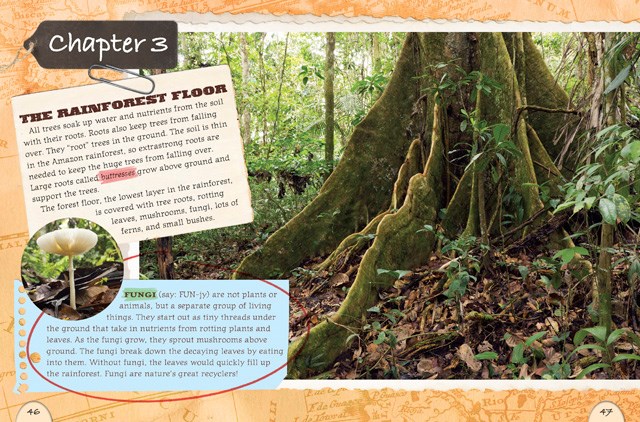
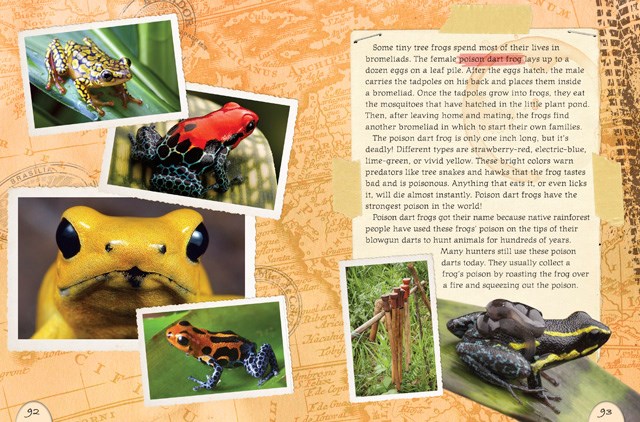
I’ve been doing a lot of weeding in my new library spot, and the first section I hit was the Animals section. Naturally, I need some new books to fill in my shelves, and this beauty fits the bill. It’s a new geography series, loaded with color photos and a fold-out map, and it’s laid out like a dossier file, with photos sharing space with informative text, laid over maps in the background, and little touches like circled paragraphs and paper clips to give the feeling that kids are reading an environmentalist’s journal.

rainforest_1

There’s a ton of information packed into this book: Ginjer Clarke looks at each layer of the rainforest, the flora and fauna that can be found there, and moves on to provide quick profiles on the people that live in the rainforest, products that come from the rainforest (yay, coffee and chocolate!), and most importantly, the importance of conservation and preservation. A bibliography and index round out the book. I’d love to see a glossary and some websites for kids included in future editions – admittedly, I’m working from a galley of the book, so if any of these resources are included in the finished copy, I apologize! In the meantime, her blog offers really cool updates and photos of different places she visits while researching her books. (Wait until you see the size of the oarfish.)

You’ll learn about pink dolphins – who knew there were dolphins in the rainforest? – and howler monkeys, Kapok and cacao trees. Fold-out maps will let kids place themselves in the locations they’re reading about.

Author Ginjer L. Clarke writes popular nonfiction books for kids. She’s got a section dedicated to her Baby Animals series on her website, and sections with more information about her other series, including more of her What’s Up, Out, and Wild Animals series.
Check out some more of What’s Up in the Amazon Rainforest below. The pictures are unbelievable!
rainforest_2 rainforest_3
rainforest_4 rainforest_5
Posted in Preschool

Butterfly Park by Elly MacKay is a gorgeous book about new beginnings and friendship!

buterfly parkButterfly Park, by Elly MacKay (2015, Running Press), $16.95, ISBN: 978-0762453399

Recommended for ages 3-8

A young girl moves from her home, surrounded by green and butterflies, to a new house, where she hears horns and sirens, and everything looks the same. Until she finds the gates to a park next door, that read “Butterfly Park”. Thrilled, she drops in – but there are no butterflies to be found in the park! She sets to work with her neighbors to create a place that the butterflies will return to again and again.

This book delivers such positive messages in a beautiful setting. Created with collage and diorama, the art seemingly takes on an extra dimension, inviting the reader to join in the quest to bring the butterflies to Butterfly Park. The characters, known only as The Girl and The Boy, facilitate this by easily allowing any child reading the book to become The Girl or The Boy, chasing butterflies and planting flowers with nectar that the butterflies will love.  The entire neighborhood comes together to help The Girl create the garden, illustrating the value and the fun in teamwork. The girl’s determination to make the best of her move and her new surroundings will resonate with anyone who’s had to move and start over.

The book’s cover folds out into a poster featuring plants that attract butterflies, and the final pages fold out into a beautiful panorama of a community butterfly garden. Kids will likely want to get some seeds and tools and plant their own gardens after reading this book – and they should! It’s springtime! Show kids they can create a garden anywhere – container gardens and houseplants are just as much fun to work with as outdoor gardens.

Join #TheButterflyTrail at Running Press’ Butterfly Park site and learn more about the book and the author.

Posted in Intermediate, Non-Fiction

Experiment with What a Plant Needs to Grow – Science Fair Help is Here!

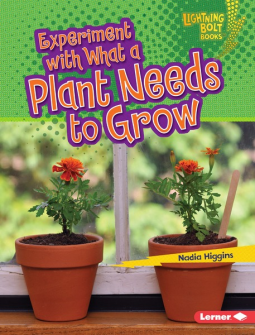
what a plant needsExperiment with What a Plant Needs to Grow, by Nadia Higgins (Mar. 2015, Lerner Publishing Group) $26.65, ISBN: 9781467757300

Recommended for ages 8-12

There are few absolutes in life, and the annual school Science Fair is one of them. Experiment with What a Plant Needs to Grow is here to rescue your child (and you) from yet another ice cube melting experiment. With full-color photographs and easy to read, step-by-step language, the book guides you and your child through the necessaries in keeping a plant alive – sunlight, air, water, minerals – and the finer details: how much water does a seed need to sprout? What will a plant do to find the light it needs (hint: a LOT)?

The book is a science fair project in one convenient spot. There are several experiments from which to select, and the book never gives anything away for free – it asks questions to guide your child in the scientific process, never handing your child the answer. These are hugely helpful questions that they can use to write their own notes and summaries, and bring home that winning ribbon. Good luck!


Posted in Media, Video Games

Game Review: Plants vs. Zombies (PopCap Games, 2009)

Recommended for ages 8-up

Plants vs. Zombies is a tower defense game by PopCap Games where the objective is fairly simple – using different plants as defense, keep the zombies out.

With every wave the player successfully fends off, the zombies increase, as do the plants at the player’s disposal. Originally starting with pea shooters and sunflowers, who draw sunlight and allow you to grow more plants, the game also provides such defensive fauna as cherry bombs, walnuts, and exploding potatoes. The zombies start out in the classic shambling style and whispering “Braaiins”, but get craftier – some ride zambonis, some dance, Saturday Night Fever-like, onto the scene, and some drop from the sky. They will eat through the plants if they make it through the wave of attacks, and if they eat their way through, lawnmowers stand by as a last line of defense. Increasing levels take the battle from the front lawn to the backyard (setting up defense by the pool) and the roof. A neighbor,  “Crazy Dave”, appears periodically to give the player a chance to purchase additional bonuses.

The game is available for limited play on PopCap’s site; it is also available as a download for Apple iPod and iPad systems, Android, Nintendo DSi, PlayStation 3, XBox, and the multiplayer platform Steam. PC and Mac users can also buy a copy for their computer. There is a Plants vs. Zombies wikia where players can read about walkthroughs, cheats, and new releases.

The game is shoot-’em-up fun without any horrific or realistic violence. Zombie’s heads pop off, but this is no George Romero film. The flowers are cute animated characters, and the zombies are ugly-cute more than horrific. If the zombies make it into the house, there are crunching sounds and red letters appear on the screen saying, “The zombies ate your brains!” but that is the extent of the horror in this game. The game helps kids plan strategies, figuring out how much they want to spend on their flowers, placement to best fend off their zombies, and when to spend funds with “Crazy Dave”.

The game is the fastest-selling PopCap video game and has been nominated for Interactive Achievement Awards from the Academy of Interactive Arts & Sciences (“Casual Game of the Year” and “Outstanding Achievement in Game Design”). The game has also received nominations in “Best Game Design”, “Innovation”, and “Best Download Game” for the Game Developers Choice Awards. (Wikipedia)