Posted in Uncategorized

Tales from the TBR: How Not to Kill Your Plant

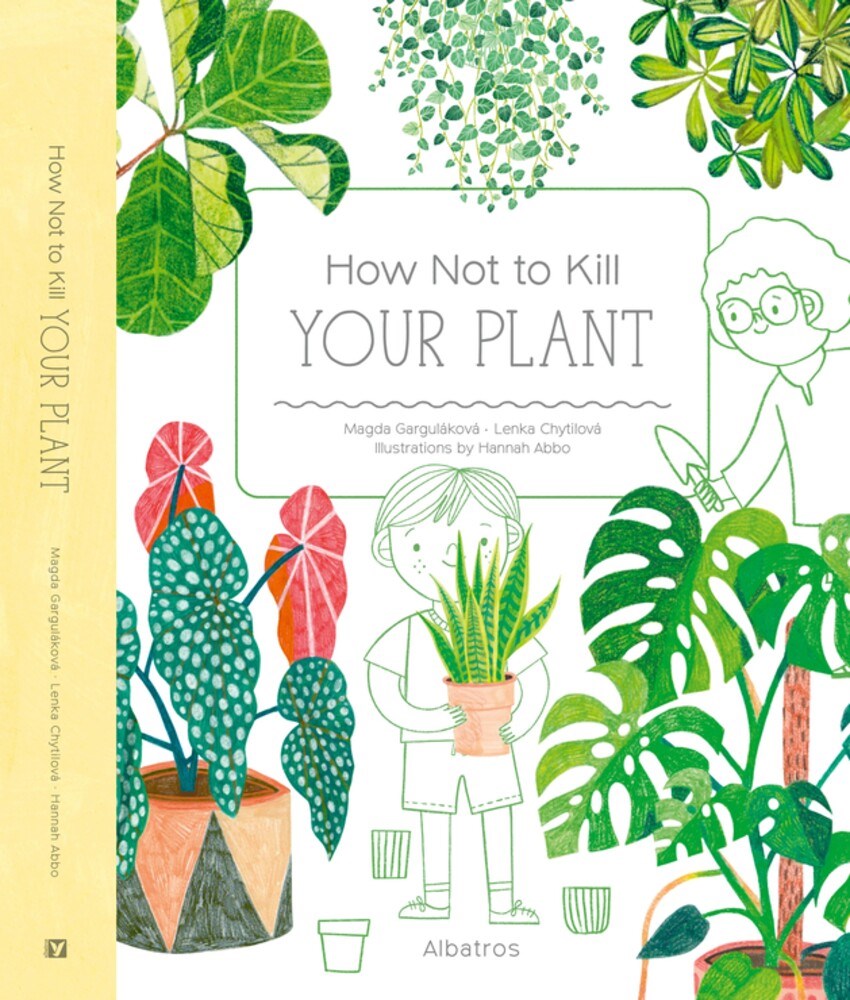
How Not to Kill Your Plant, by Magda Gargulakova & Lenka Chytilova/Illustrated by Hannah Abbo, (Dec. 2023, Albatros Media), $15.95, ISBN: 9788000069968

Ages 6-10

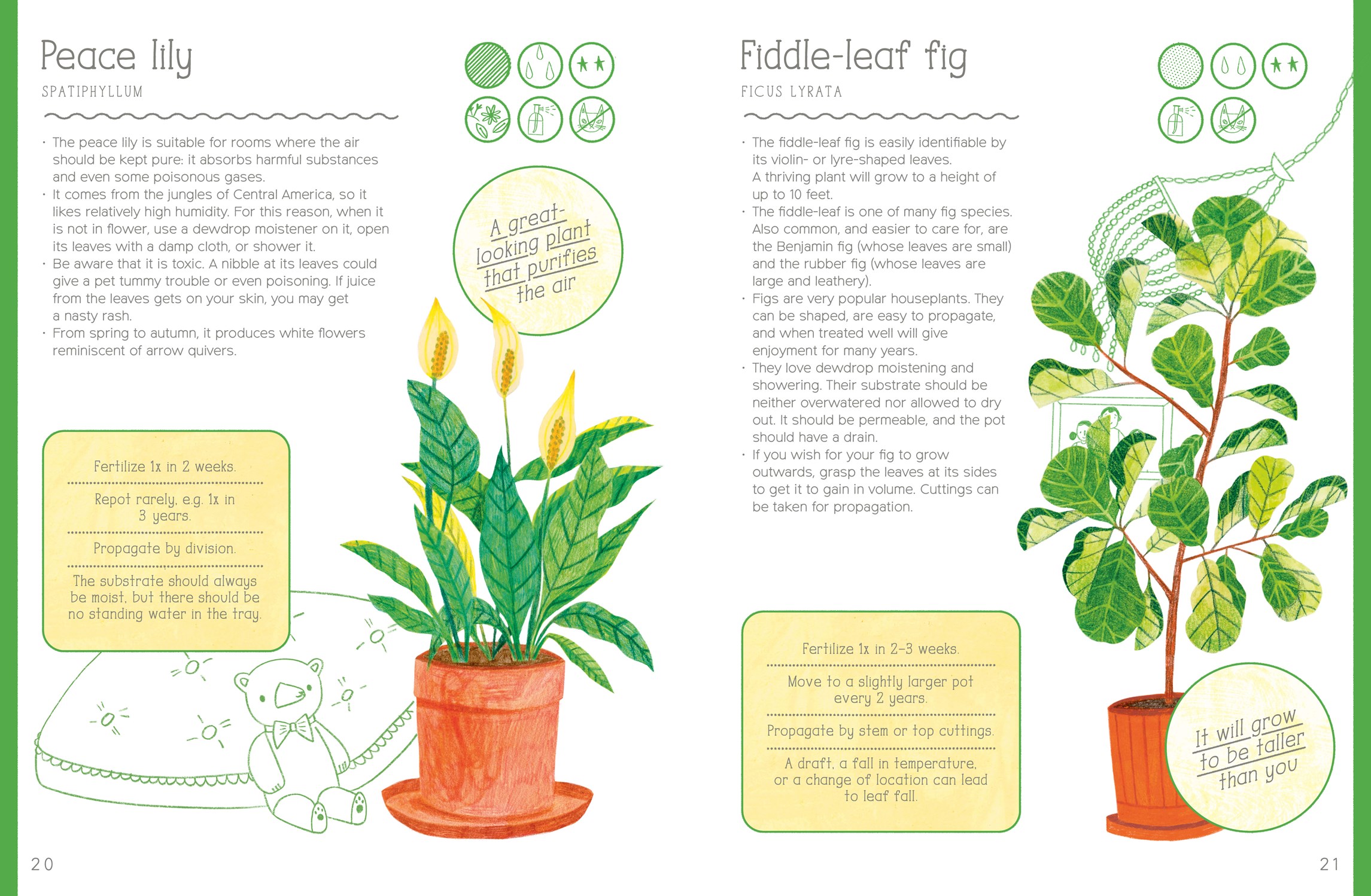
Kids love gardening programs. Remember in science, when you (or your kids) grew a sprout from a bean? Gardening is magic, and houseplants are pretty. How Not to Kill Your Plant is a kid-friendly, illustrated guide to caring for houseplants. Organized into areas like “The Basics of Care”, “Encyclopedia of Houseplants”, and “Cultivation Practice,” the book has everything kids need to get started on a new hobby and set them up for a lifetime of loving and caring for plants. The “Encyclopedia of Houseplants” section features detailed drawings on 16 popular houseplants that are great for beginners. Yes, I said beginners, because I’m using this book to take care of my plants, too. Kids’ books are the best way to learn things and develop a solid base understanding! There are troubleshooting suggestions and step-by-step instructions on plant care, including taking cuttings, propagating, and repotting. Helpful icons on the plant pages let readers know the basics at a glance: how much to water, how much sunlight, is it okay to have around pets? At only 56 pages, it’s not overwhelming for new plant hobbyists. I loved this book and think you will, too.


Posted in picture books, Preschool Reads, Toddler Reads, Uncategorized

New Earth Day Reads!

Earth Day is right around the corner! There are some great new books to have ready for a great readaloud. Let’s take a look.

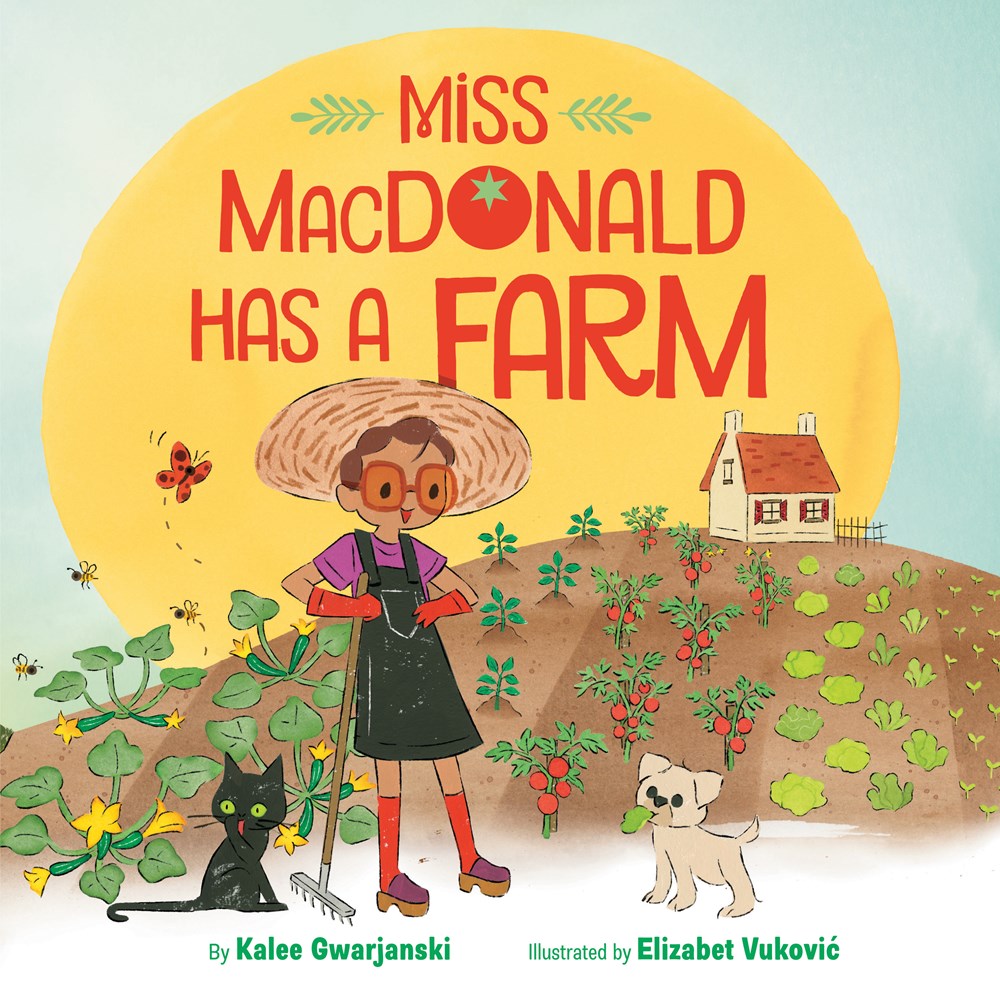
Miss MacDonald Has a Farm, by Kalee Gwarjanski/Illustrated by Elizabet Vuković, (March 2024, Doubleday Books for Young Readers), $18.99, ISBN: 9780593568163

Ages 3-7

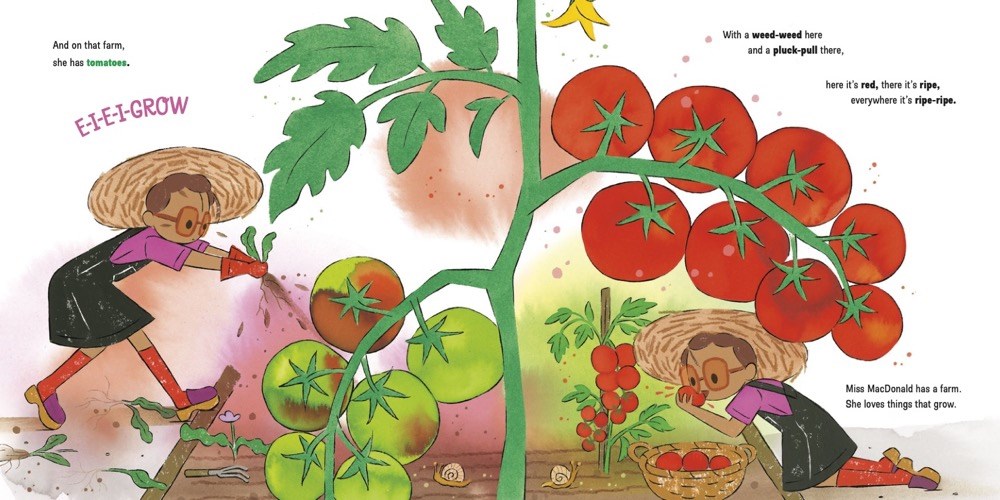
It’s a new spin on an old favorite! Miss MacDonald has a farm, and she loves to grow her own food in this ode to farm-to-table food. Kids are going to love this easy-to-learn song, with repetitive phrases like “Miss MacDonald has a farm. / She loves things that grow” and “E-I-E-I-GROW”. Miss MacDonald grows all sorts of yummy food, like tomatoes and green beans, sweet corn and pumpkins, and she “shuck-shucks” and “thrish-thrashes” her way through her fields, planting and harvesting her wares to bring to a farmer’s market and feasting at a community table with a diverse group of neighbors. It’s a fun way to illustrate where our food comes from and how it gets to the table, with colorful and appealing illustrations that show a young female farmer of color growing and harvesting her food. Back matter includes vocabulary that explains the steps in getting food to grow from seed to table, and a recipe for a harvest vegetable bake included in the story. I sang this story to a pre-k class during a school visit this week, and they loved it! This is a great story for anyone who’s doing flannel storytimes, too – get those colorful sheets out and make yourself a vegetable garden.

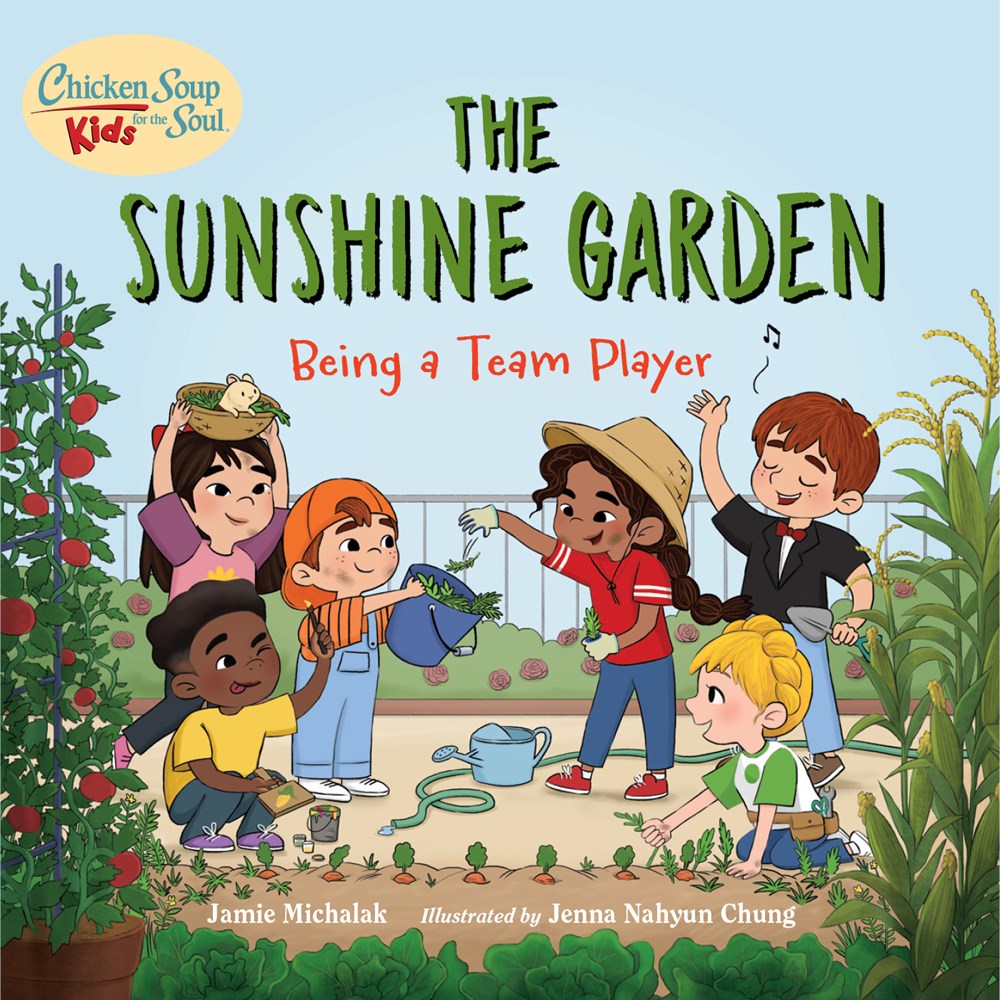
Chicken Soup for the Soul KIDS: The Sunshine Garden: Being a Team Player, by Jamie Michalak/Illustrated by Jenna Nahyun Chung, (March 2024, Charlesbridge), $14.99, ISBN: 9781623542863

Ages 4-7

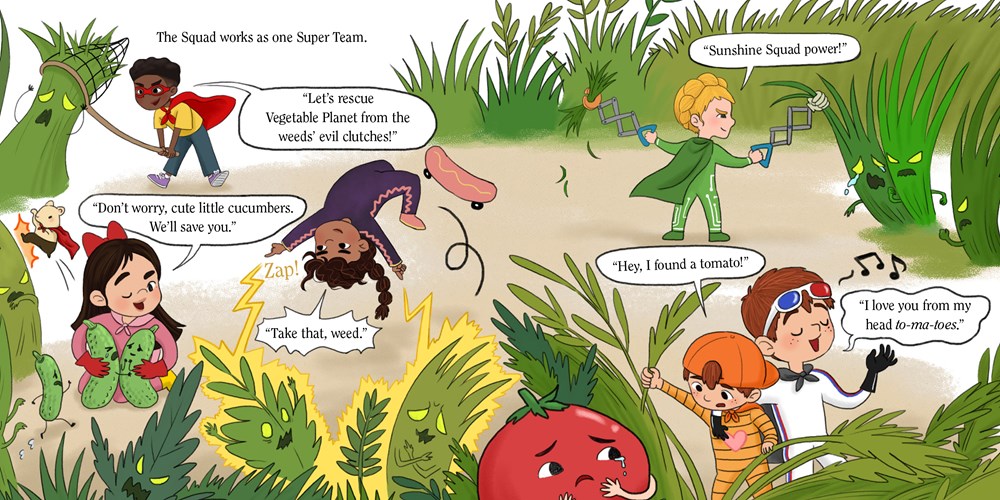
The Sunshine Squad returns in this sweet story about kindness, teamwork, and gardening. The Sunshine Squad are six friends who loves to pretend they’re superheroes, and do some pretty great everyday superhero stuff. Mia, one of the Squad, learns that her grandma’s friend, Mr. Angelo, is sick and unable to tend to his community garden and steps in to help… but it’s a much bigger task than she realized. The rest of the Sunshine Squad step in and use their “superpowers” to get the job done and save the day! It’s a sweet story about helping one another and being kind, while showing kids that kindness can be a superpower. Back matter includes tips on being part of a team, with suggestions that work nicely within an Earth Day setting. It’s a good additional add to picture book collections, especially where Chicken Soup for the Soul books do well.


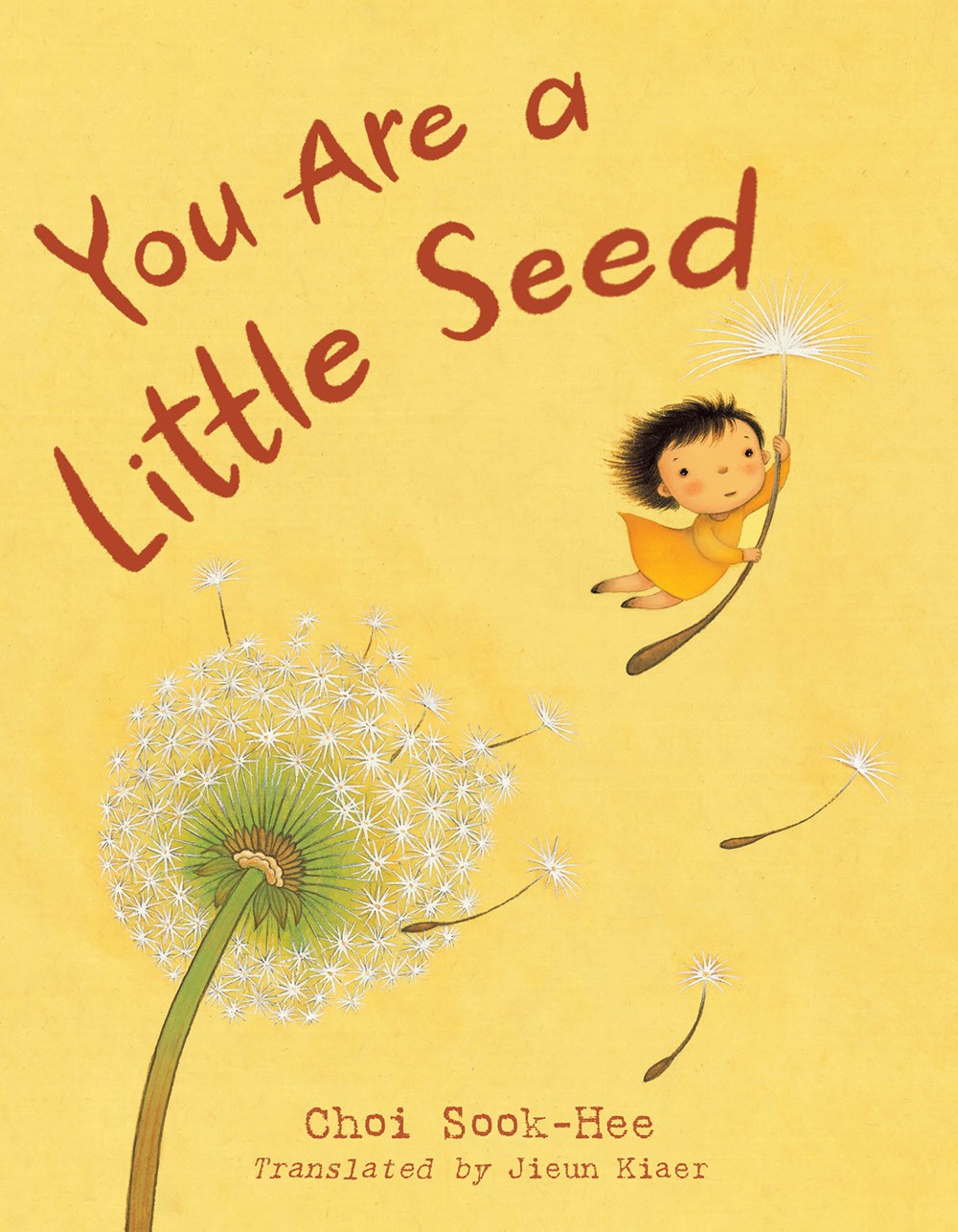
You Are a Little Seed, by Sook-Hee Choi, Translated by Jieun Kiaer, (March 2024, Charlesbridge), $15.99, ISBN: 9781623544287

Ages 2-5

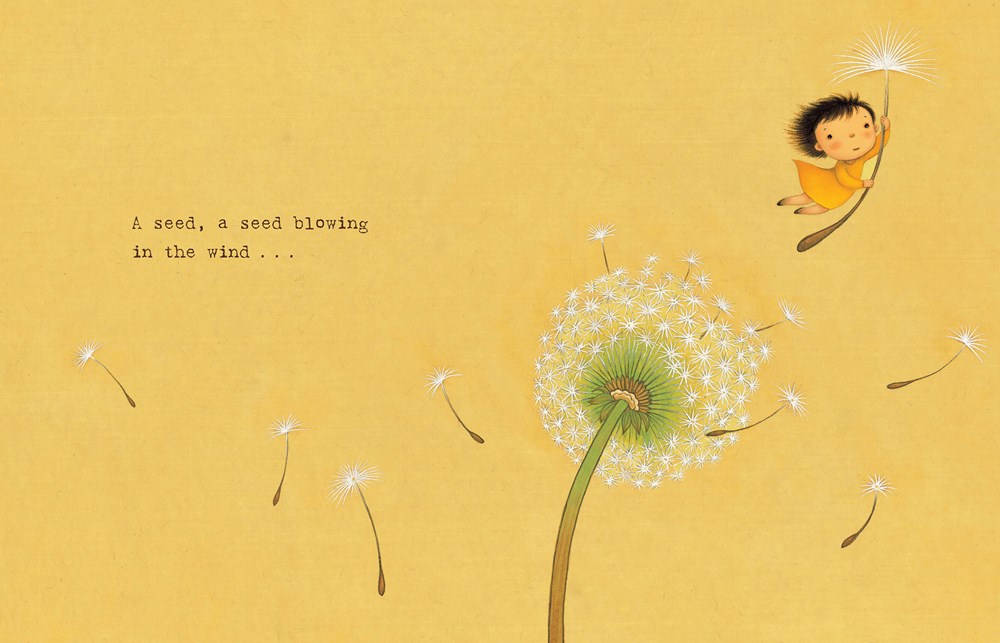
Originally published in Korean in 2013, this is a gentle story that reads like poetry, describing seven types of flowers that bloom from different types of seeds and became beautiful flowers: “A seed, a seed blowing / in the wind… / took root in / the wild and bloomed / as a dandelion”. Children show up in the flowers as seeds and fully bloomed, showing readers that we can bloom under all sorts of conditions. A soft color palette creates a soothing setting, and the flower illustrations are breathtaking. A wonderful metaphor for how we grow and our beauty in diversity. My only concern is a pssage that describes a seed as “ugly and wrinkled”, which reads more like the author is referring to the child as unsightly; I’m hoping it was more of a moment where the child may feel that way but blossoms into themselves? Other than that, You Are a Little Seed is lovely.

You Are a Little Seed has starred reviews from Kirkus and Foreword Reviews.

Posted in picture books

Happy Book Birthday to I Love Strawberries!

I Love Strawberries!, by Shannon Anderson/Illustrated by Jaclyn Sinquett, (Apr. 2022, Feeding Minds Press), $17.99, ISBN: 9781948898065

Ages 4-8

Jo is a young girl who LOVES strawberries; so much, that she wants to grow her own. Can she convince her parents that’s she’s responsible enough for the task? Told through Jo’s journal entries and narration, this fun STEM story is perfect for springtime reading. Jo is an immediately likable and funny narrator who goes from adding red marker lines on her face in an attempt to look older in a flash to a thoughtful strawberry farmer who journals her process, from planting grass seeds for her rabbit and raising money for her strawberry plants to protecting her fledgling strawberry crop from “bird attacks” and using her newly grown fruit in recipes. She’s enterprising, growing a small business out of her flourishing strawberry plants, and she may have a new plan for the next year. A fun, informative story with a biracial main character and a step-by-step process in growing and maintaining one’s own food. Green endpapers feature burgeoning strawberry plants, and back matter includes information on growing strawberry plants and pest management. The I Love Strawberries! page on Feedings Minds’s website is loaded with free downloadable goodies, including coloring pages and an educator’s guide.

If you have the budget for it, consider a fun grab-and-go planting project – it doesn’t have to be strawberries! Include a little notebook so kids can journal their progress like Jo does!

Posted in picture books, Preschool Reads, Toddler Reads

Grow Love, Share Love: Oscar’s Tower of Flowers

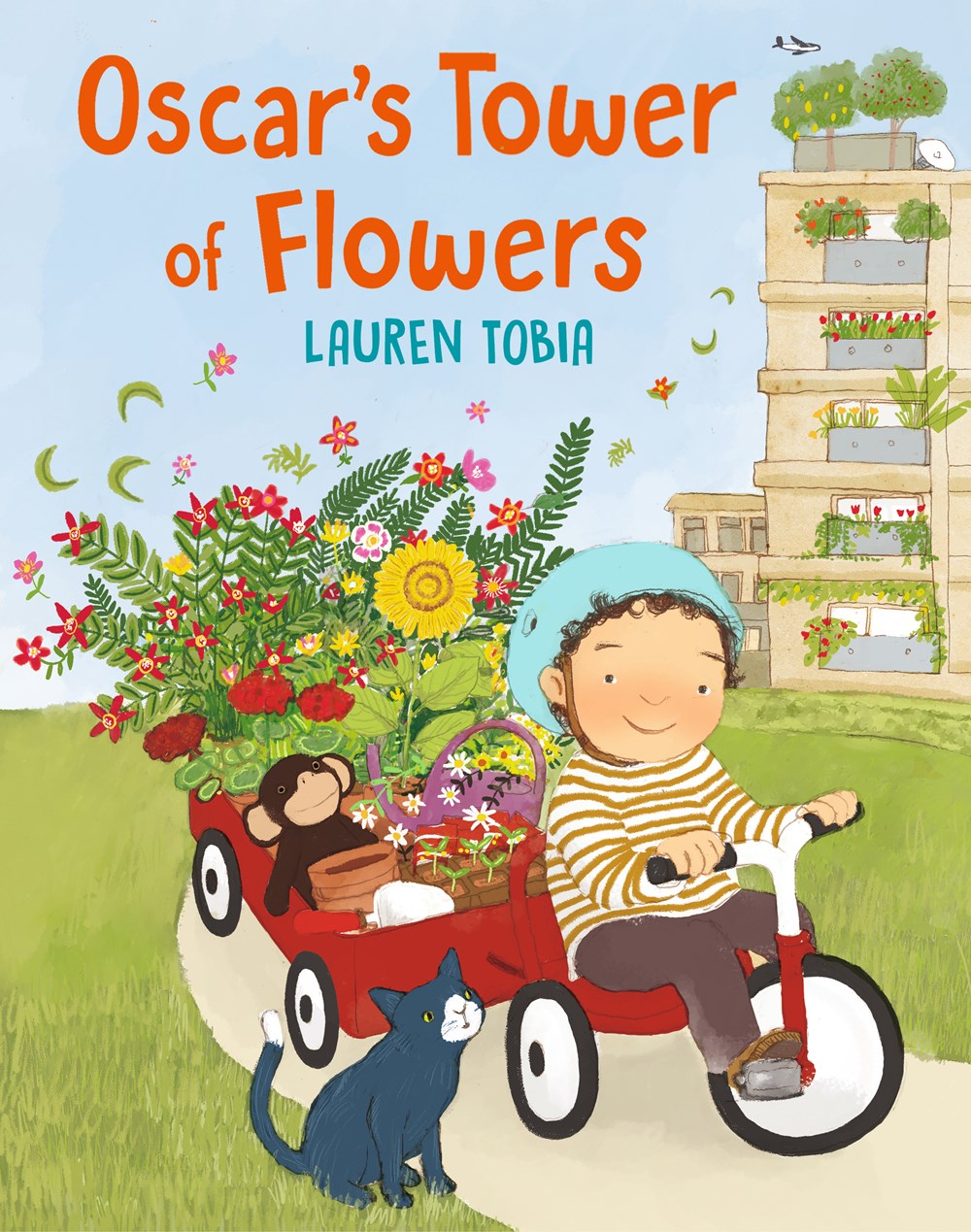
Oscar’s Tower of Flowers, by Lauren Tobia, (May 2021, Candlewick Press), $17.99, ISBN: 9781536217773

Ages 2-6

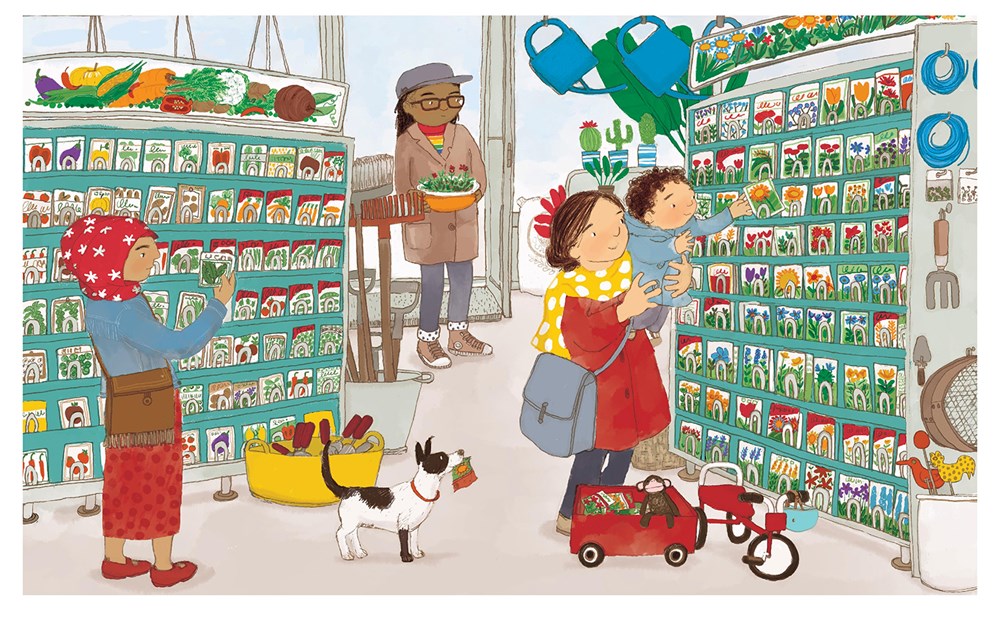
In this wordless book, a little boy named Oscar stays with his Nana when his mother goes away. He finds joy in planting with his grandmother, who takes him to the store to buy some seeds. Oscar’s green thumb proves to be pretty impressive, and Nana’s home quickly becomes covered in green! Oscar has an idea: share his love with others in Nana’s building! He loads up a red wagon with plants, and shares them with his grandmother’s neighbors throughout the building, spreading the joy he experienced while growing them all. When Mom returns, he happily sits on her lap, sharing some together time with Mom and Nana. Mixed media artwork beautifully tells this story, beginning with the endpapers: an apartment building bustles with people as Nana seems to wave to someone off in the distance; the back endpapers show a happier bunch of neighbors, with all of Oscar’s greenery decorating homes and the building’s roof, which appears to have added an apiary, too! The artwork is gentle, soft, loving.

As a mom of a certain age, I was relieved to see Nana looking so young! But don’t relegate yourself to the woman being Nana. There’s nowhere in the book that says so, and to be honest, until I read other reviews and the blurb text online, I thought the other woman was Mom’s partner. Flap copy says, “When someone Oscar loves has to go away on a trip, he tries to find ways to stay busy. With some grown-up help, a red wagon, and his favorite toy, Oscar plants all kinds of flowers and waits for them to grow”. You want Oscar to have two mommies? Oscar can have two mommies. The heart of the story is Oscar’s kind heart and his joy in cultivating plants to share. Keep a copy of this in your daycare/after school collections for littles who miss their parents when they go to work.

Oscar’s Tower of Flowers has a starred review from Kirkus. Visit Lauren Tobia’s website to see more of her work on Oscar’s Tower of Flowers and her work on one of my favorite chapter book series, Anna Hibiscus.

Posted in Intermediate, Middle Grade, Non-fiction, Non-Fiction

Starting off Earth Day right!

Earth Day is coming at the end of the month, so expect to see lots of books about our big blue dot here over the next few weeks. Today, I’m starting with the earth – the ground itself – and what it gives us.

A World of Plants by Martin Jenkins & James Brown, (March 2021, Candlewick Studio), $25, ISBN: 9781536215328

Ages 7-10

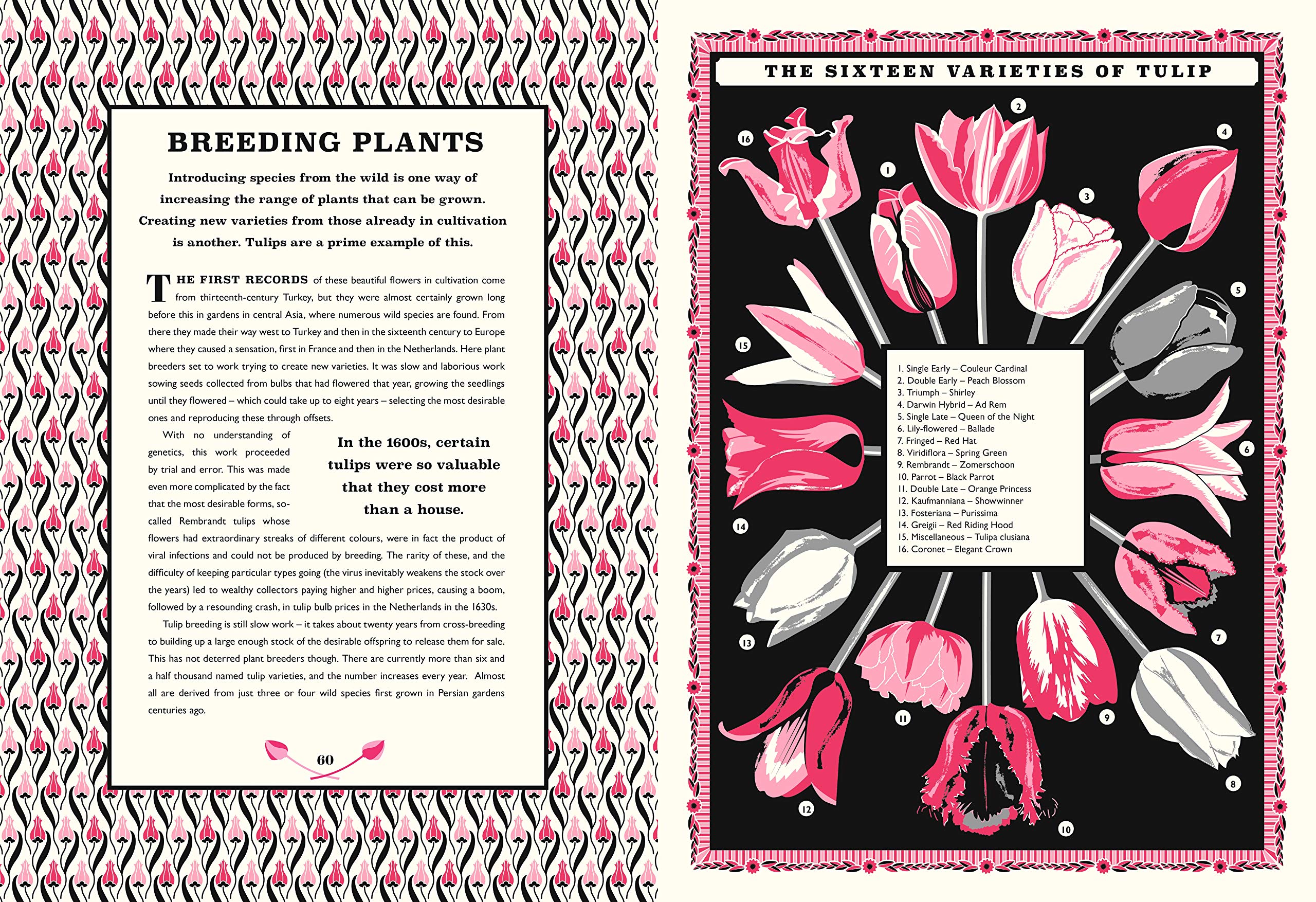
The latest in the “A World of…” series from Martin Jenkins and James Brown is all about plants. Organized into 30 areas and fully illustrated with 2-color artwork and infographics, this oversized book covers plants from seed to bloom; how they spread, who eats them and who they eat; plants that thrive in different habitats, and more. A Plants in Peril section covers conservation and environmental awareness, with an eye to different plants that are threatened, overharvested, and facing habitat destruction.  A section on symbolic plants discusses the link between religion and nature. Fun facts abound: learn your climbing plants, for instance, by identifying which are twiners, which are tendrils and leaf twiners, which are clingers, and which are hook climbers. How do plants defend themselves? A World of Plants goes beyond thorns and looks at the dumb cane, a plant that accumulates needlelike crystals that can pierce an animal’s mouth, or the passionflower, whose leaves mimic dots that look like butterfly eggs, so butterfiles will pass them by. A World of Plants is a nice addition to a beautiful nonfiction series. Sample a chapter at publisher Candlewick’s website.


Fungarium (Welcome to the Museum), curated by Katie Scott and Ester Gaya, (April 2021, Big Picture Press), $35, ISBN: 9781536217094

Ages 8-12

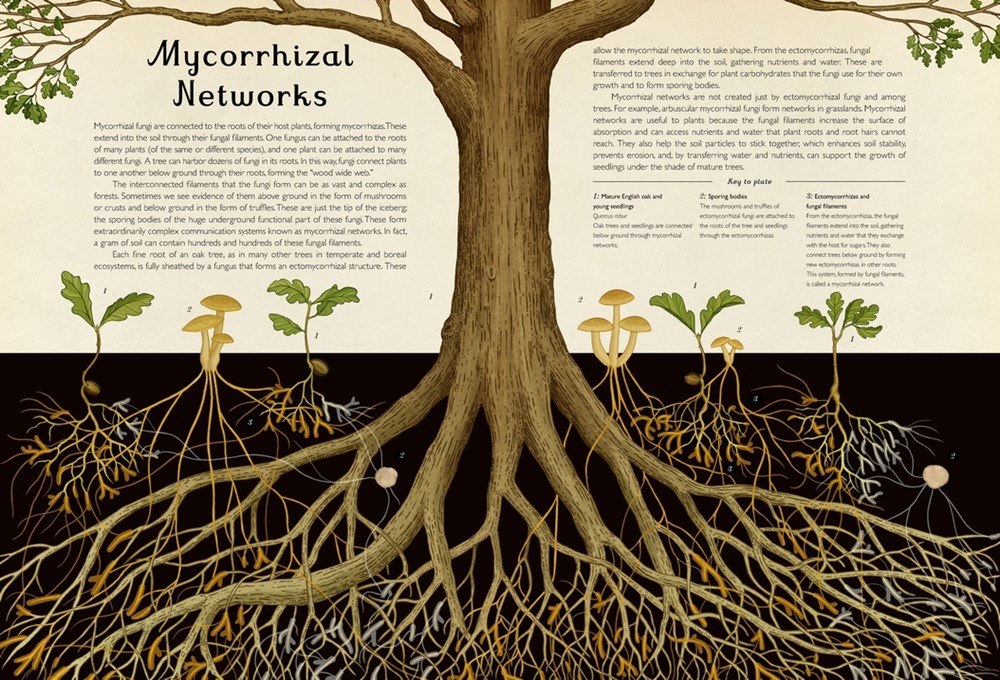
Another good nonfiction series, Welcome to the Museum, introduces its newest wing, Fungarium. It’s all about the mushrooms here! Organized into four galleries, readers will get the full scoop on Fungal Biology, Fungal Diversity, Fungal Interactions, and Fungi and Humans. Fungi get a pretty bad rap (myself included: not a mushroom fan), but this book seeks to clear up a lot of issues people have: without fungi, there would be no coffee, tea, or chocolate, which is reason enough for me to fully support my local mycologist. Beautiful scientific illustration brings the diversity of these organisms to life on the page, and detailed keys to each plate provide helpful information at a glance. Entries on each section in the galleries give readers plenty of information to get them started on learning about fungi, from what’s growing on that tree we pass on the way to school every morning to what’s in cans at the grocery store. Worried about what not to eat? The section on Poisonous Fungi makes sure you know how to identify a Death cap, False morel, or Destroying angel. If that’s too much of a turn-off, head over to Wonder Drugs and learn how fungi are also the source of many modern medicines, including that wonder drug, penicillin. Fully indexed, with a list of further resources and brief bios on the curators behind the book, Fungarium is a nice addition to the Welcome to the Museum series. Publisher Candlewick has a sample chapter available for viewing.

Fungarium has starred reviews from Booklist and Kirkus.

Posted in Middle Grade, Middle School, Non-fiction, Tween Reads

Outdoor School is in session!

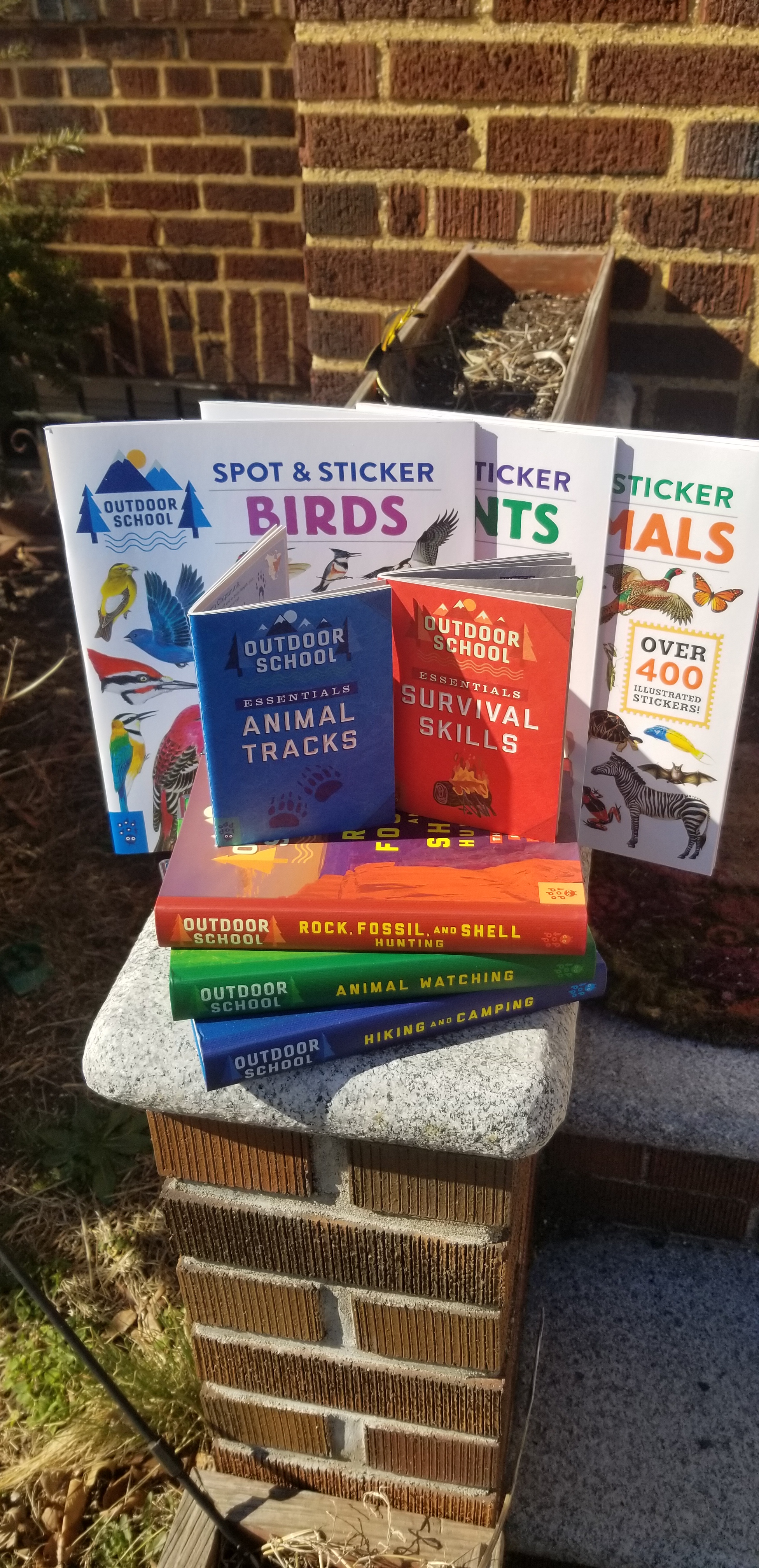
I’m excited to be a super influencer in Macmillan and Odd Dot’s Outdoor School campaign! Outdoor School is a series of books that’s going to help kids (and us grownups!) “re-wild” our lives, by helping reacquaint us with the outdoors and the world around us. Launching at the end of April, Outdoor School will have three definitive, interactive nature guides: Animal Watching; Rock, Fossil, and Shell Hunting, and Hiking and Camping. There are also two smaller, pocket Essentials Guides on Animal Tracks and Survival Skills; made with durable Tyvek material, these little guides are waterproof and tear-proof. Finally, there are Spot and Sticker books on Animals, Plants, and Birds, each with over 400 illustrated stickers for kids to use as decoration; plus, the book folds out into a checklist poster where kids can keep track of animals they discover along the way.

It’s been a heck of a year, and one thing we have started doing more is embracing the outdoors. I know, during the initial lockdown, we started walking around more because it was somewhere to go, somewhere to be able to see our friends and let my Kiddo run around and have while being able to keep a safe distance. Being able to take this a step further, with these guide books and sticker books, will make the spring and summer even more fun for my Kiddo and for my library kiddos: think of your local green spaces, like public parks. Think of local wildlife – we found raccoon footprints the cement over by a house near Kiddos’s school, which made us laugh, thinking about a raccoon leaving his little mark on wet cement in the middle of an urban borough. These books are beautifully constructed, with colorful pages and artwork, and it fosters a real respect for and love of the outside.

This is just the beginning of the promotion, so keep an eye out for lots more content and challenges until the books publish at the end of April. Watch this space for more.

Posted in Uncategorized

A greener, gentler world: The Green Giant

The Green Giant, by Katie Cottle, (July 2019, Pavilion Children’s Books), $16.95, ISBN: 978-1-84365-430-8

Ages 4-7

A little girl named Bea and her dog, Iris, spend summer vacation at Bea’s grandpa’s home in the countryside. One day, Iris chases a cat, sending Bea chasing Iris; the two discover a greenhouse packed with lush, green plants… and one of them is an honest-to-goodness giant! The friendly green giant befriends Bea, and tells her that living in the city was just too much: “…the city got more grey and it was hard to breathe. I had to leave”. Here in the magical greenhouse, the giant and all the plants have room to grow, and it shows: the illustrations depict bright, anthropomorphic foliage with smiling faces and outstretched branches and leaves. The greenhouse becomes Bea’s and Iris’s refuge for the summer, but all too soon, it’s time to go home. The giant hands Bea a gift of sparkling seeds, which she sprinkles outside her apartment window. A beautiful transformation takes place, turning the drab grey of the city into a green, yellow, and orange paradise! Will the giant return one day to see his friend’s handiwork?

The Green Giant is a lovely story about taking care of our world and encouraging green spaces. Katie Cottle takes an intuitive approach to talking green with younger children by creating a friendly green giant to explain that the city’s crowded, grey spaces made it too difficult to live – but, in an optimistic spark for the future, gives her seeds that will turn – maybe thanks to the greenhouse’s magic? – the concrete landsdcape into a living outdoor green space! The artwork is bright, bold, and primarily uses greens, oranges, browns, yellows, and blues, all coming to life from the a stark white background. Bea appears to be biracial; she is a child of color, and her grandfather presents as Caucasian.

Pair this with Ingrid Chabbert’s The Last Tree for an environmentally-focused read-aloud. You can also pair with Lois Ehlert’s classic, The Leaf Man, and invite kids to use leaves to make their own Green Giants and Leaf Men. Or invite parents to a container planting program, and encourage personal green spaces. Read an interview with author Katie Cottle on the Gardening Know How’s Blog, and visit her author webpage for more of her illustration work.

Posted in Fantasy, Fiction, Graphic Novels, Middle Grade

Mighty Jack and The Goblin King: An incredible re-imagining of a classic tale!

Mighty Jack and the Goblin King, by Ben Hatke, (Sept. 2017, :01First Second), $14.99, ISBN: v

Recommended for readers 8-12

It’s here! The sequel to Mighty Jack (2016) is here! And the best part? It’s AMAZING.

Mighty Jack introduced us to Jack, his autistic sister, Maddy, and neighbor, Lilly. The trio discovered a magical garden that got a little out of control; Maddy was kidnapped, and Jack and Lilly set off through a portal, determined to bring her back. Mighty Jack and the Goblin King picks up with Jack and Lilly arriving in a way station of sorts; a crossroads between worlds. Lilly is injured, forcing Jack to continue alone, where he discovers the giants’ plan for his sister: to feed her to a mechanical “beast” that will grind her bones into dust, and eat her, securing their ability to rule until the next time the beast needs to be fed! Lilly, meanwhile, has been rescued and is being cared for by goblins, who plan to marry her to their goblin king.

Spoiler alert: It’s not David Bowie.


Posted in Intermediate, Middle Grade, Non-fiction, Non-Fiction

September Non-Fiction: Engineering, Nutrition, and the Planets

Engineered! Engineering Design at Work, by Shannon Hunt/Illustrated by James Gulliver Hancock, (Sept. 2017, Kids Can Press), $18.99, ISBN: 9781771385602

Recommended for readers 9-13

Nine engineering specialties -Aerospace Engineering, Biomedical Engineering, Chemical Engineering, Mechanical Engineering, Electrical Engineering, Civil Engineering, Geomatics Engineering, Computer Engineering, and Environmental Engineering – in this look at engineering design, which introduces readers to the step-by-step process by using eye-catching icons and nine case studies, one for each field. Team member bios that introduce kids to new scientists and what they do; new fields of engineering, like geomatics, are explained and illustrated, as are new technologies, like the incorporation of 3-D printing into biomedical engineering. Cartoony illustrations make the science more appealing to anyone who may think they can’t *do* science. Kids will learn that engineering can be found everywhere, from sending the rover to Mars, to saving animals from extinction, to replacing a sewer system to clear pollution from a lake. A glossary helps with new engineering terms readers come across.

Engineered! is a fun introduction to the basics of engineering and can be used equally in a science class, makerspace, or on career day.


See What We Eat! A First Book of Healthy Eating, by Scot Ritchie, (Sept. 2017, Kids Can Press), $16.99, ISBN: 9781771386180

Recommended for readers 5-8

A group of friends takes a trip to a farm, run by one girl’s aunt. They’re there for pick apples and make an apple crisp for the potluck harvest dinner. Yulee’s aunt takes them on a tour of the farm, teaching the kids about growing grains and vegetables, getting enough nutrients, dairy, and protein – and addresses food allergies and alternative methods of getting those nutrients. Kids learn about transporting food to farmer’s market, stores, and all over the world. Ritchie addresses composting and recycling, and includes a tasty Harvest Apple Crisp recipe to try. A glossary helps readers with new words like pasteurize, carbohydrate, and nutrient.

The illustrations are soft, cartoony realistic, with a multicultural group of friends coming together to learn and eat. The room where the Harvest Celebration takes place has a line of hanging global flags as the families dine on pierogies, tamales, and apple crisp. With bolded facts and questions to encourage deeper thinking, this is a fun introduction for younger learners to nutrition and sustainability.


When Planet Earth Was New, by James Gladstone/Illustrated by Katherine Diemert, (Sept. 2017, OwlKids Books), $18.95, ISBN: 9781771472036
Recommended for readers 4-7
Take a trip through time and space and discover how our planet – and life on our planet – evolved. Beginning billions of years ago when Earth was forming, When Planet Earth Was New follows our planet’s formation through volcanoes and comet bombardment; through the formation of the oceans and evolution of life in the oceans and on the land. Beautiful, digitally-enhanced watercolor spreads showcase colorful artwork of each moment captured, with brief descriptive text that preschool and early elementary audiences will find breathtaking. A gorgeous spread showcases life on Earth today: a blue whale, birds flying overhead, and a marching line of animals, including a human being. A section at the end of the book presents each spread in thumbnail format, with additional explanatory text, and a glossary and list of sources round out this introduction to astronomy for young readers.
My 5 year-old loves this book; the spare text is just right for him and he’s fascinated with the changes our planet went through on its journey to the present. It’s a beautiful-looking book, and a great addition to elementary nonfiction collections. I can’t wait to display a copy in my library.


Posted in Intermediate, Middle Grade, Non-Fiction, Non-fiction, Non-Fiction, Tween Reads

Road Trip! Ranger Rick’s Travels: National Parks

ranger-rickRanger Rick’s Travels: National Parks!, by Stacy Tornio & Ken Keffer, (Aug. 2016, Muddy Boots), $14.95, ISBN: 9781630762308

Recommended for ages 8+

In a fabulous love letter to the National Parks of America and the National Park Service, the folks at Ranger Rick Magazine – remember them? They have books now! – put together this beautiful book, featuring each one of the 58 National parks across America. Ranger Rick and his best friend, Deputy Scarlett, appear throughout the book to join readers on a countrywide sightseeing tour.

The book opens with a map of the United States, including Hawaii, Alaska, and the US Virgin Islands. Each park is numbered and corresponds to the Table of Contents, which organizes the parks into 9 groups: Eastern Parks, Midwest Parks, Mountain West Parks, Southwest Parks, Utah and Nevada Parks, California Parks, Pacific Northwest Parks, Pacific Island Parks, and Alaska Parks. Each park’s profile includes stunning photos and facts that will make readers want to pack their bags and take a month or six off from work or school!

rangerrick-rickandscarlettEach park feature provides information in quick bites that read like a tourism guide. About the Park provides a quick overview and basic facts; What to Watch For are Ranger Rick’s top nature picks on what plants and animals to keep an eye out for. Ranger Rick’s Top Things To Do is a bucket list for each park – don’t leave without seeing Old Faithful in Yellowstone Park, naturally, but also make sure not to miss out on a hike through the park! Finally, Ranger Rick’s Amazing Facts are the “WOW” factor for each park: did you know that you can only reach Northwest Alaska’s Kobuk Valley National Park by foot, dogsled, snowmobile, or air taxi? Now you do!

This is a great book to have in collections and to have available when you’re talking about the U.S. There’s 100 years of history in the National Parks Service, but there are far more years in the history of these parks; there are petrified trees, dinosaur footprints and bones, and formations carved out of rock thousands of years ago, here for all to enjoy. Families planning a vacation or two can use this as a jumping off point (I know I am).

Don’t forget to head to the Ranger Rick website, where kids can read more about nature and the environment, play some games, and get craft ideas. Educator resources included lesson plans and webinars.

Ranger Rick and Scarlett image courtesy of Photobucket.