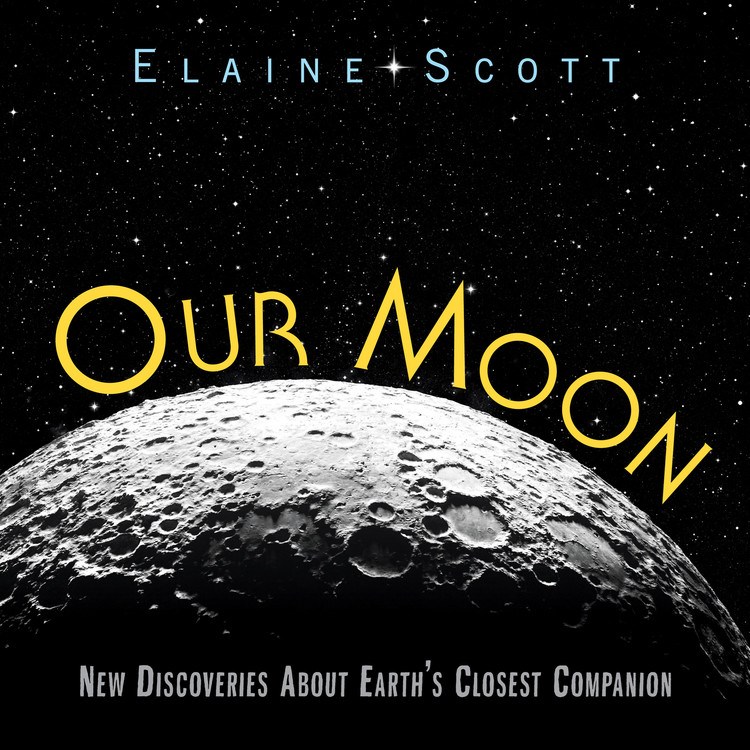
 Our Moon: New Discoveries About Earth’s Closest Companion, by Elaine Scott (Feb. 2016, Clarion Books), $18.99, ISBN: 9780547483948
Recommended for ages 10-13
You may have heard the old myth about the man in the moon, or even that the moon was made of green cheese. Did you hear about a Chinese princess named Chang-o or a rabbit, though? Those ancient Chinese stories are only the beginning of what I learned from Elaine Scott’s Our Moon: New Discoveries About Earth’s Closest Companion.
Our Moon is a great biography about our one and only satellite, Luna. The Moon. We get her all of her numbers: size, speed, temperature; we learn in depth about her phases, and her origin story. Ms. Scott gives us a history of lunar research and exploration, from the Turkish philosopher Anaxagoras’ ideas about moonlight being a reflection of the sun’s light back in the 5th century B.C.E. to the modern lunar landings and space travel. The book is loaded with photographs and quick facts that make for easy reading. A glossary breaks down terms used in the book, and there are resources for further reading, both on- and offline.
This is the book I’d have wanted in my astronomy library when I was a kid. It’s a great library purchase and a great home library purchase. Our Moon will be available in February, 2016, but you can pre-order it from Amazon.
Elaine Scott is an award-winning nonfiction author of children’s books. Her author website includes information about her books, honors, and school visits.


 Mom Read It