Posted in Intermediate, Middle Grade, Non-fiction, Non-Fiction

Welcome Spring with My Big Book of Outdoors

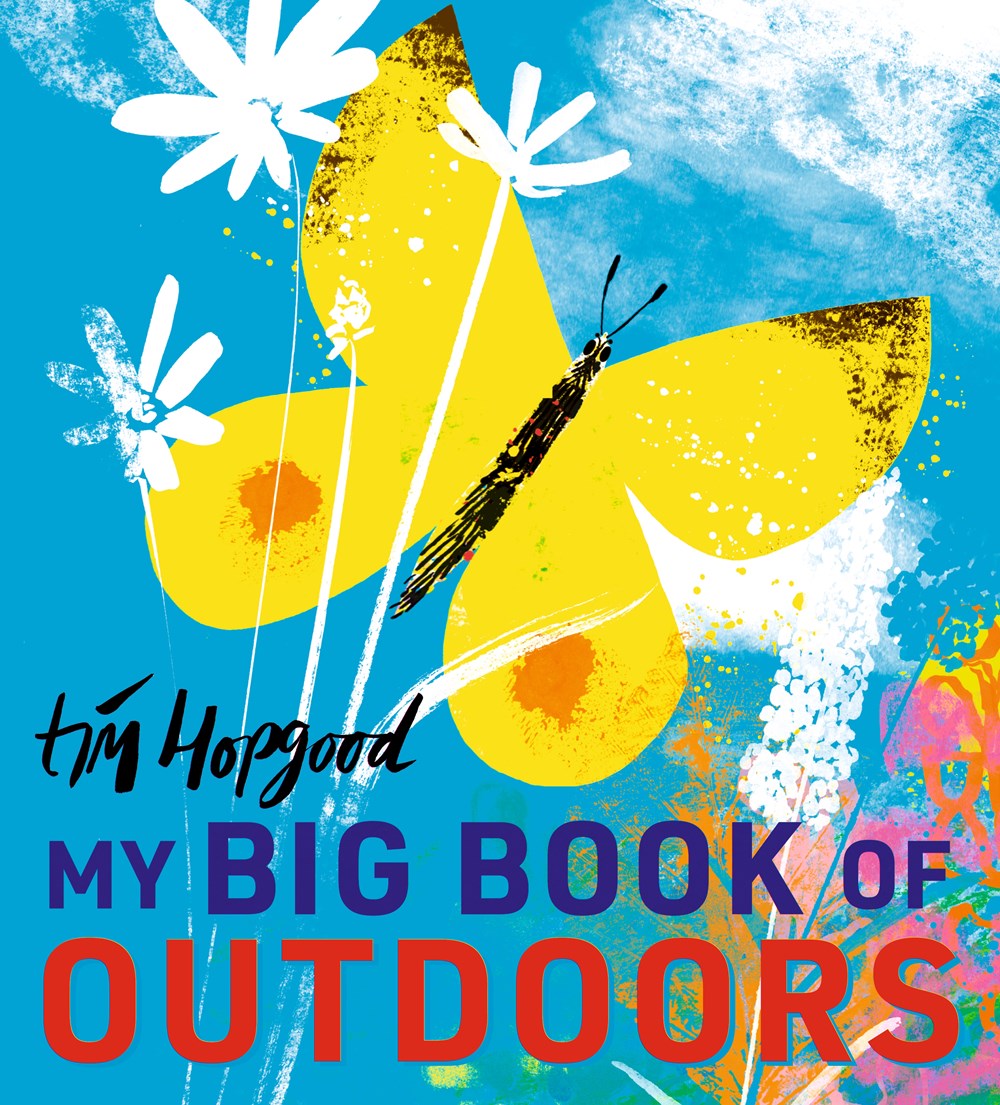
My Big Book of Outdoors, by Tim Hopgood, (March 2022, Candlewick Studio), $19.99, ISBN: 9781536215335

Ages 7-10

One part poetry book, one part nonfiction resource, one part craft and activity primer, My Big Book of Outdoors is an illustrated guide to the seasons with activities and mixed media illustrations. Each season is organized like a scrapbook of art, poetry, nature facts, and nature-based projects to create, like chocolate nests (made with shredded wheat and chocolate); leaf mobiles, and bird feeders. Thoughtful observations and questions invite readers to consider nature as seasons move from one to the next; to think about different birds they see in each season, or look for types of plants and trees. The artwork is vibrant. Think of it as a scrapbook that celebrates and encourages active participation in each season. It’s beautiful to look at, enjoyable to read, fun to play with. There are tons of ideas for seasonal programs and grab-and-go programs in here, too – an all-around great resource for kids and educators.

My Big Book of Outdoors was originally published in the UK in 2021.

Posted in Intermediate, Middle Grade, Non-fiction, Non-Fiction, picture books, Preschool Reads

Some poetry books for National Poetry Month

April 1 starts off National Poetry Month, and Candlewick Press is ready with three new books to share with your readers! Take a look at these picture book poetry collections.

Behold Our Magical Garden : Poems Fresh from a School Garden, by Allan Wolf/Illustrated by Daniel Duncan, (March 2022, Candlewick Press), $18.99, ISBN: 9781536204551

Ages 8-12

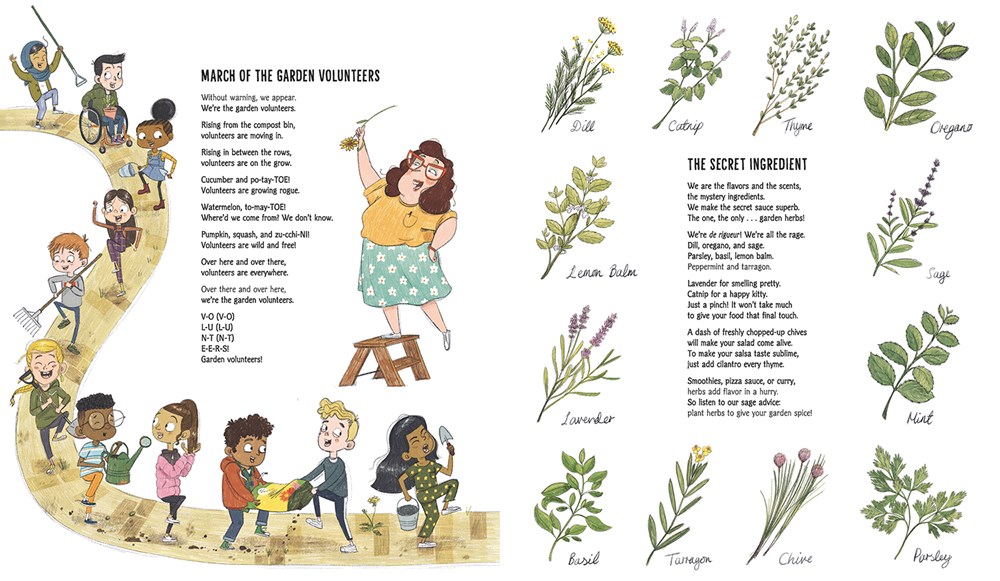
Perfect for springtime reading, this collection of poems celebrates gardening at school; from scientific observations and flavorful herbs to bugs on strike and compost bins, all facets of gardening get a moment in the sun (so to speak) here. Colorful illustrations featuring diverse students and an enthusiastic teacher have cartoony moments and photorealistic artwork that comes together to give readers a fun expedition into gardening. Great for quick readalouds, Behold Our Magical Garden gives silly moments like an underwear-sporting thundercloud: “We saw up in the sky by chance / a rain cloud who had lost his pants. / But luckily he wore a pair / of silver lining thunder-wear”, and thoughtful moments, as with The Green Bean Bower: “so much depends / upon / a green bean / bower / covered with vine / leaves / climbing the bamboo / poles”. Back matter includes notes on each poem, and endpapers showcase a variety of gardening tools and inhabitants. What a way to welcome springtime planting activities!

For extension activity ideas, visit KidsGardening.org, and find learning activities, lesson plans, and information on designing a school garden of your own.


Marshmallow Clouds: Two Poets at Play among Figures of Speech, by Ted Kooser and Connie Wanek/Illustrated by Richard Jones, (March 2022, Candlewick Press), $19.99, ISBN: 9781536203035

Ages 9+

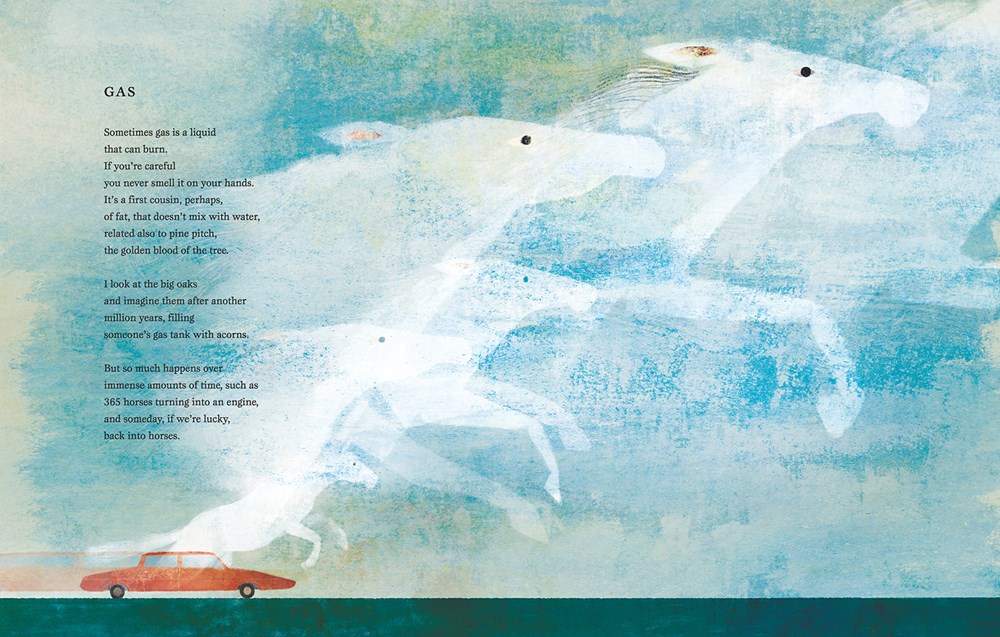
Framed by the four elements – fire, water, air, earth – and infused with dreamlike imagery, Marshmallow Clouds is a collection of poems that takes readers into the heart of a hot July day: “I was the crimson crayon / melting in a sunny car, / the color of firecrackers and flags / and Mars, where once water / cooled the red stones” and confides in the readers as to why pets don’t write: “Parrots could, actually, / but they don’t believe that’s / any of your business”. The authors let their imaginations run wild, envisioning remote controls “designed for the human hand / the way a pacifier fits exactly / where a baby cries” and old barns “pull[ing] on / its patched-up underwear of rotten boards / beneath its coveralls of corrugated metal”. Richard Jones’s dreamlike illustrations manage to bring Ted Kooser’s and Connie Wanek’s imagery to life while maintaining a surreal, hazy feel. Readers will devour these, come to the end, and turn back to start all over again.

Marshmallow Clouds has starred reviews from The Bulletin of the Center for Children’s Books, Booklist, and The Horn Book. Ted Kooser is a Pulitzer Prize-winning former US Poet Laureate; find more of his poetry at his webpage. Find more of Connie Wanek’s poetry at her website.


Take Off Your Brave, by Nadim (age 4)/Illustrated by Yasmeen Ismail, (March 2022, Candlewick Press), $17.99, ISBN: 9781536223163

Ages 4-8

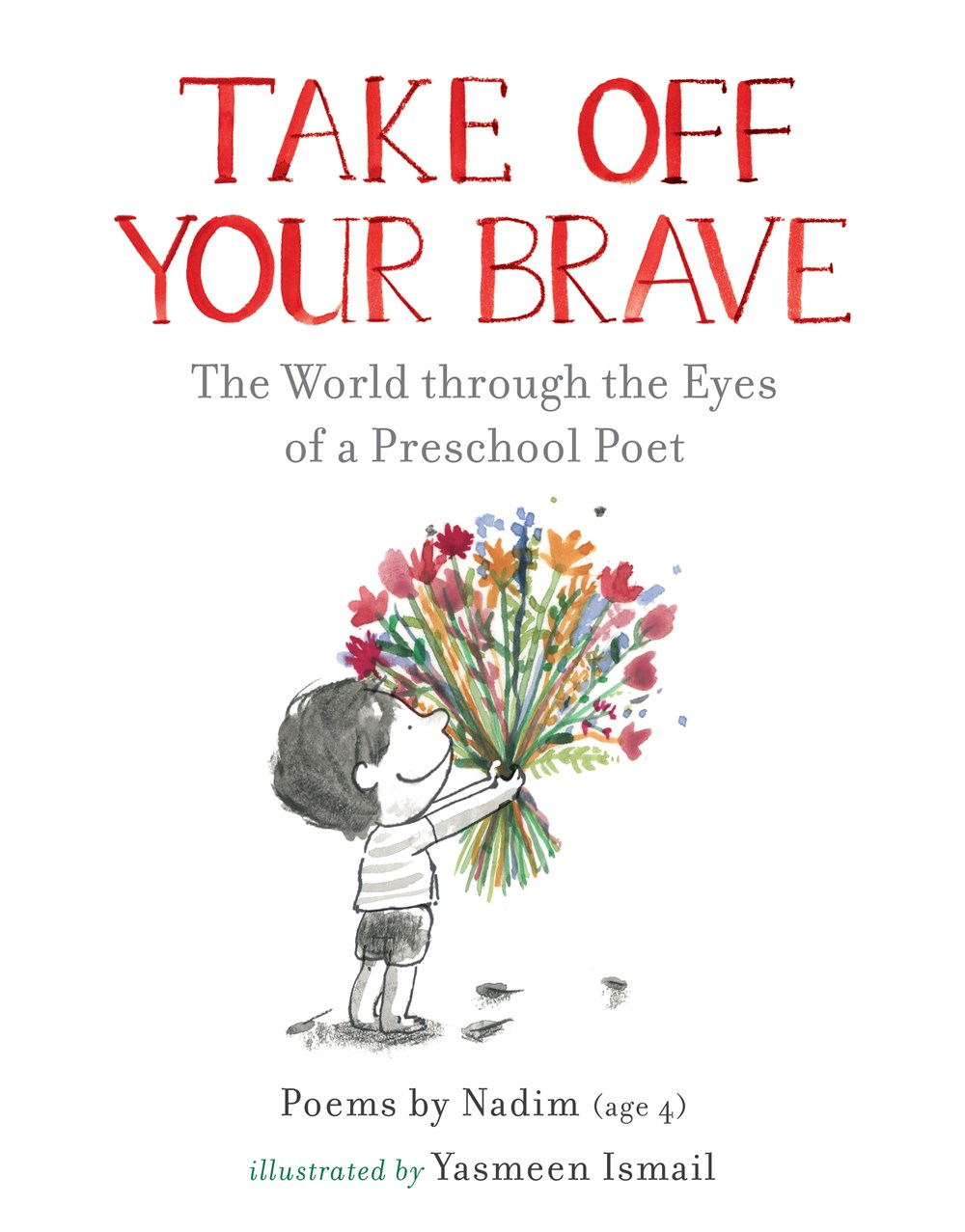
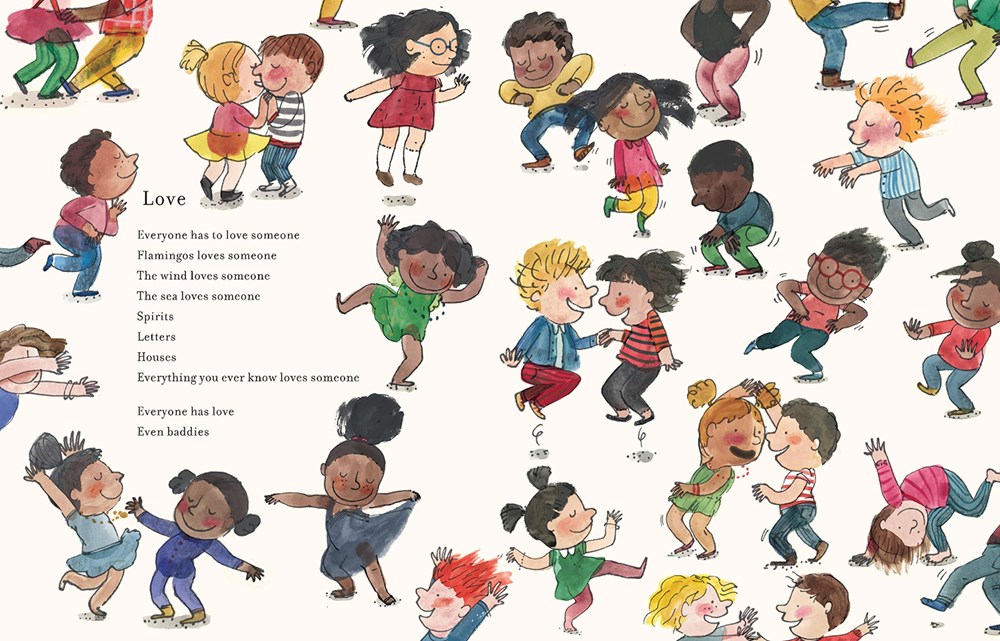
Enjoy this collection of poems that shows the world through a preschooler’s eyes. Nadim, the author, wrote these poems when he was a 4-year-old preschooler (his sister and his preschool class have piece in here as well) after discovering poetry at school. The poems are adorably created, by children for children, with observations on love: “Everyone has love / even baddies”, beloved teachers: “Miss Angela is nice. / Miss Angela smells like flowers. / Miss Angela is warm. / Miss Angela sounds like a bell, ringing gently”, and best friends: “He’s as fast as anyone – / Faster than everyone – / And everyone you’ve ever seen. / And he knows pretty much everything / About aliens”. The poems are a true, wonderful look into a preschooler’s mind; a sweet, comforting hug kids and adults alike could really use to get through a rough day. Essential reading for Poetry Month and beyond, teachers can use Nadim’s Take Off Your Brave as a class project jumping off point and create their own poetry collections to share. A note from Nadim’s mother explains how Nadim discovered poetry. Yasmeen Ismail’s watercolor illustrations are a joyful celebration of being a child, with a diverse group of children and animals playing together. Take Off Your Brave was originally published in the UK in 2021.

Poets.org has a wealth of National Poetry Month resources, including printable Poem in Your Pocket PDFs and programming ideas, both in-person and virtual.

Posted in picture books, Preschool Reads

Arbordale Publishing’s Compare and Contrast books get readers thinking

I haven’t written about Arbordale books in about a minute, but I am remedying that right now. The folks at Arbordale were kind enough to send me some of their new books to look over, and I love the colorful artwork and photos, interesting factual writing, and the thought-provoking activities at the end of each book. They also publish in English and Spanish, which is aces for my library kids. I’m starting off with their Compare and Contrast series, which takes a topic and encourages learners to think about similarities and differences.

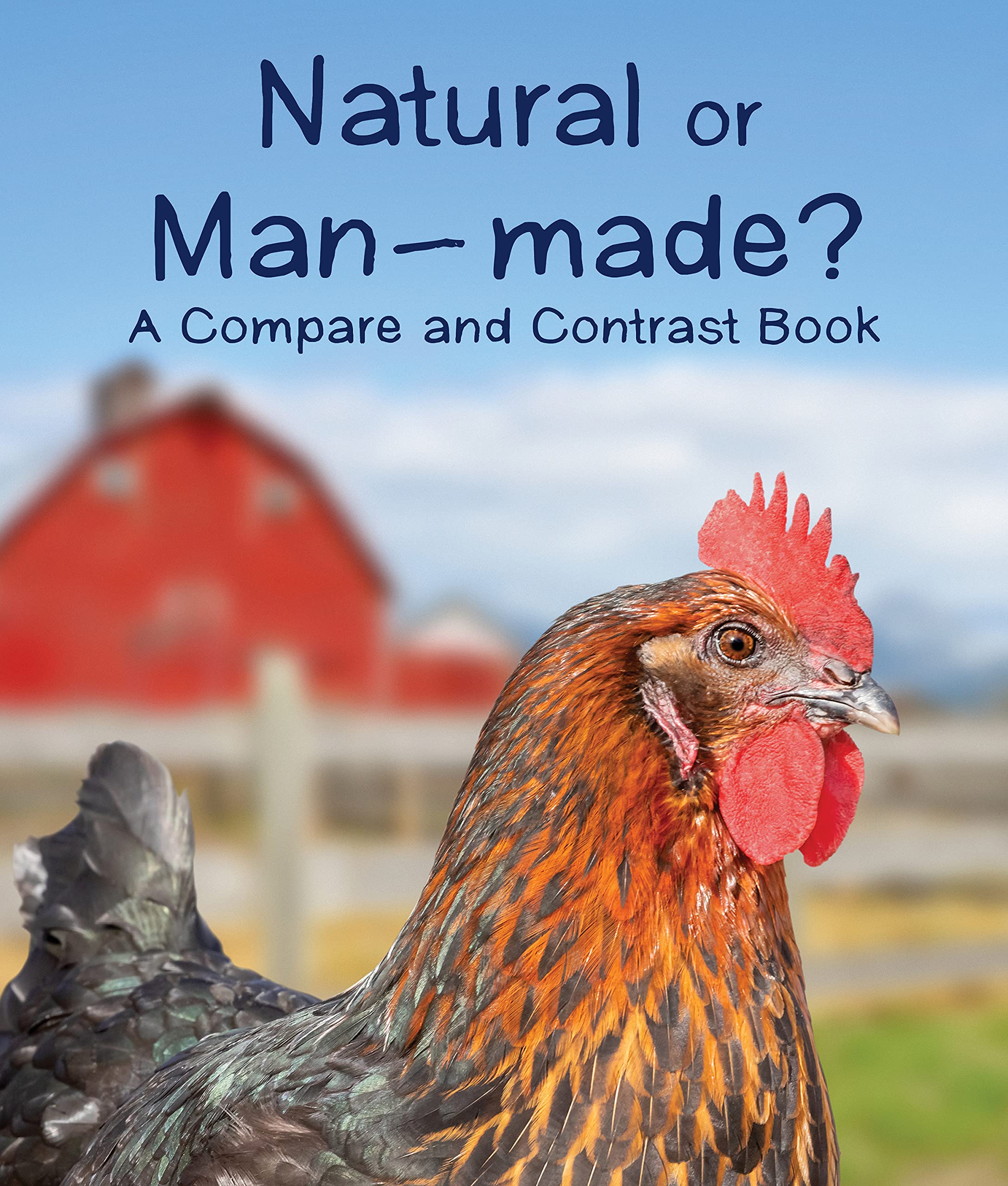
Natural or Man-made? A Compare and Contrast Book, by Arbordale Publishing, (Sept. 2021, Arbordale Publishing), $10.95, ISBN: 9781643518244

Ages 4-8

Opening with an explanation of natural resources, Natural or Man-made? uses straightforward writing to explain natural resources and how we use those resources to create other resources. A tree, for instance, grows food, like nuts and fruits; we also use trees to make lumber, and build homes with them. We use plants and animals for clothing and food; we use sunlight and air by converting it to energy. Thought-provoking questions and color photos encourage readers to think about the different ways we use our natural resources. The Creative Minds section has four activities to expand on reading, you can find a PDF for Natural or Man-made‘s For Creative Minds section here, with permission for non-commercial use. (Psst… great for grab-and-go programs!)

You can find a PDF preview of Natural or Man-made on the book detail page at the Arbordale website.
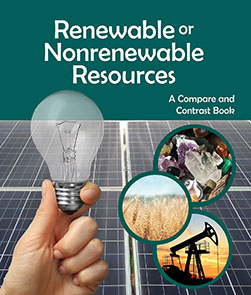
 

Renewable or Non-Renewable Resources: A Compare and Contrast Book, by Arbordale Publishing, (Sept. 2021, Arbordale Publishing), $10.95, ISBN: 9781643519807

Ages 5-9

Continuing on the resources theme, we have Renewable or Non-Renewable Resources. Beginning with an age-appropriate explanation about natural resources and how they replace themselves: “within a period of time usually shorter than a person’s lifetime”, versus nonrenewable resources, which “cannot be easily replaced as it takes much longer than a human lifetime to make new”, the book elaborates on how natural resources replenish themselves and how nonrenewable resources, like oil, rocks, and minerals, lead humans to create synthetic materials to replace them when they run out – and how that impacts our planet. There’s a discussion on recycling nonrenewable resources and a cautionary word on not taking our resources for granted. A smart, respectful discussion on conservation, recycling, and being environmentally aware. Color photos throughout show a variety of renewable and nonrenewable resources; this is a great book to introduce in younger STEM classes. Create scavenger hunts and games by asking readers to find renewable versus nonrenewable resources! Find a PDF preview on the book detail page on the Arbordale website.

Donald Baiter on TeachersPayTeachers has a fun card sorting game on renewable and nonrenewable resources; Karen Jordan has a very cute song that helps with sorting the two concepts, and The Magical Gallery has natural resources clip art!


Penguins: A Compare and Contrast Book, by Cher Vatalaro, (Nov. 2021, Arbordale Publishing), $10.95, ISBN: 9781643519876

Ages 4-8

Penguins! Kids love penguins, I love penguins, Cher Vatalaro loves penguins! Penguins: Compare and Contrast is all about the 18 different species of penguins and where they live: and most of them live in warm climates, not cold ones! Colorful photos of each type of penguin, paired with informative text, let learners learn what makes each type of penguin alike and different, from colorful feathers to differently shaped beaks. Readers will be able to tell right away that these are all penguins, and standout features like orange and yellow patches make King and Emperor penguins very similar, yet wildly different from Macaroni and Rockhopper penguins, who sport colorful feathers around their eyes. A fun activity invites readers to match different penguins with their area of the world.

There is so much fiction and nonfiction available for penguin fans: make a great display! TeachersPayTeachers has loads of free penguin clip art available, including this Penguin Life Cycle Clip Art from Sylph Creatives. Education.com has a wealth of free penguin resources: worksheets, coloring sheets, crafts, even lesson plans. Preview Penguins: A Compare and Contrast at Arbordale’s book detail page.


Otters: River or Sea? A Compare and Contrast Book, by Cathleen McConnell, (Nov. 2021, Arbordale Publishing), $10.95, ISBN: 9781643519784

Ages 4-8

Otters are like puppies of the water. Look at those boopable noses! Otters: River or Sea? A Compare and Contrast Book, like Penguins, is about the similarities and differences between river and sea otters: their habitats, their physiology; appearance; eating habits, and social habits. Readers will love the colorful photos of otters at play, with their babies, in groups, and in action, and fun facts and easy-to-read writing make this a fun way to learn. There are fun otter books – fiction, like Laurie Keller’s Do Unto Otters and Lisa Connor’s Oliver’s Otter Phase; nonfiction, like NatGeo Kids’s Sea Otters and Susannah Buhrman-Deever’s If You Take Away the Otter – that will form a display that features something for everyone. Education.com has free otter worksheets and coloring sheets; National Geographic has a webpage with facts and information. You can see a preview of Otters: River or Sea? A Compare and Contrast Book at Arbordale’s book detail page.

Extra shout-out: Arbordale features a free multilingual ebook every month. Check out their website and bookmark it. Find all sorts of free resources, including downloads for each Arbordale book’s For Creative Minds section, at the Arbordale website.
Posted in Preschool Reads, Toddler Reads

Going Outside board books introduce concepts in nature

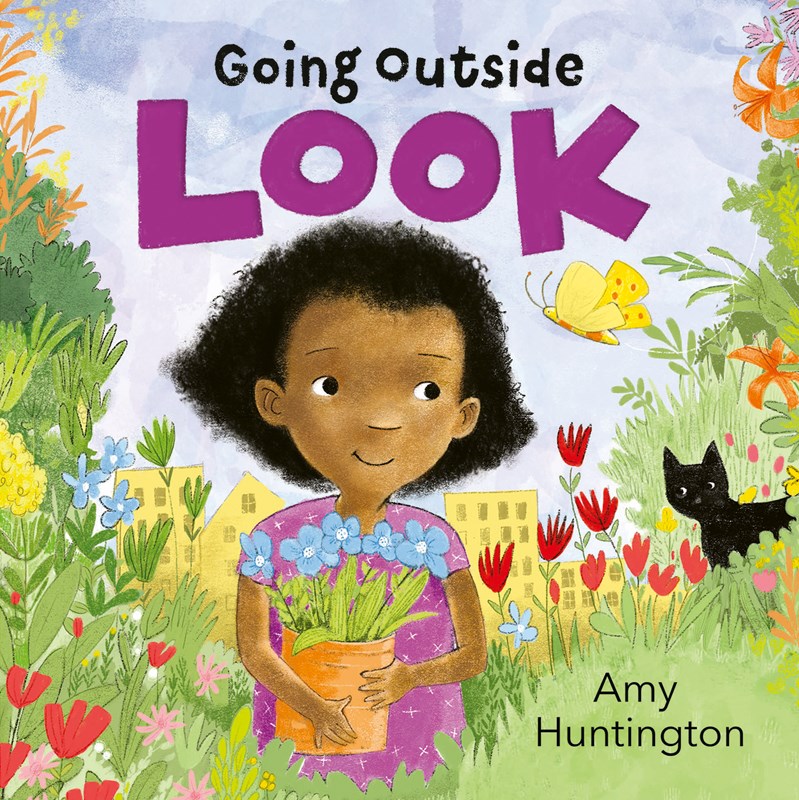
Going Outside: Look, by Amy Huntington, (Sept. 2021, Kane Miller), $5.99, ISBN: 9781684642465

Ages 0-3

This new concept board book series invites readers to mindfully explore their world, concentrating on their senses.  In Look, a toddler and her parent help rehabilitate an urban space, creating a community garden where there was once litter and neglect: “Bags of paper, bottles, cans, / Bits of plastic, shards of glass. / Friends and neighbors, pitching in. / Look, what can you see?” Spreads show the community working together to clean up the area, boxing up garbage and tending to the land, planting and watering the earth, creating a welcoming garden. The artwork moves from a darker, almost gloomy cityscape to a warm, green space that local wildlife returns to, with gentle repetition to encourage readers to point out what they see on each spread. Ask your littles what they see and how it differs from the previous spread: are there more plants? Less junk and litter? Notice how the cityscape fades further into the background as the garden – the focus of the story – grows and flourishes. The toddler and her parent are brown-skinned; the community is diverse.

Download a coloring page for Look from publisher Kane Miller and have them ready to hand out.


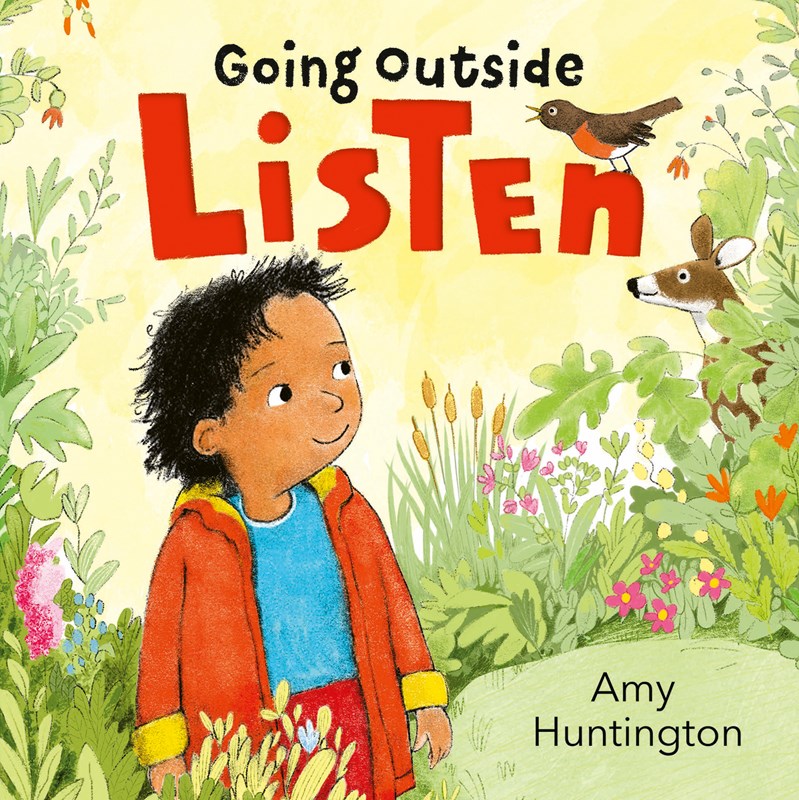
Going Outside: Listen, by Amy Huntington, (Sept. 2021, Kane Miller), $5.99, ISBN: 9781684642472

Ages 0-3

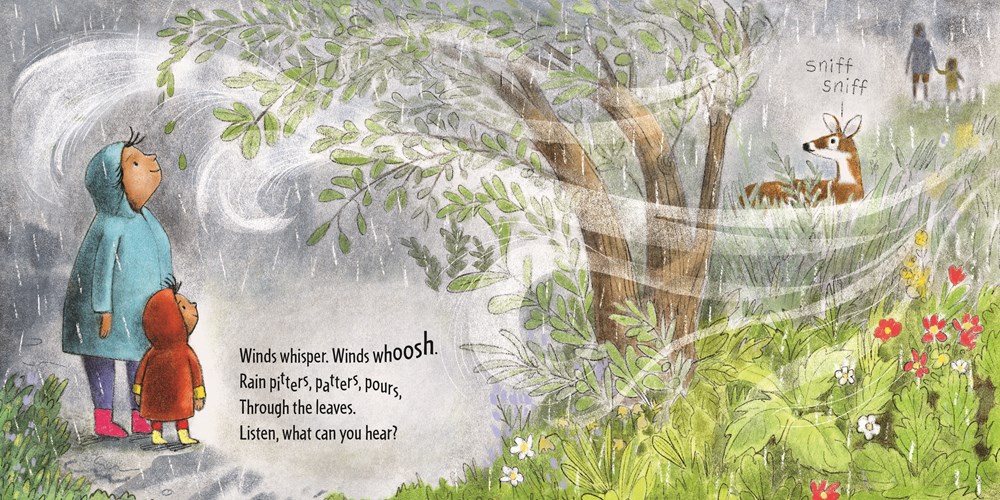
The companion book to Look, Listen follows a toddler and his parent as they go on a nature walk on a rainy day. The focus here in on the sounds around the two: “Winds whisper. Winds whoosh. / Rain pitters, patters, pours, / Through the leaves. / Listen, what can you hear?” The fonts play with language, stretching and bending to elicit sounds from readers. The repetitive question, “What can you hear?” invites readers to think about what the characters must be hearing, based on the verse, or even what they themselves hear in their environments. This is a great book to read twice in a seating if you can manage it: ask your readers to close their eyes and listen to a reading first, asking them, to form a picture in their minds of walking through a woodsy area on a rainy day. Animals add to the soundscape on each spread, as deer sniff, moles scratch, birds tweet, and frogs croak. The parent and child are people of color. Watercolor illustrations create a peaceful landscape and foster a love for nature.

I’m looking forward to seeing what Amy Huntington has planned for our other touch, taste, and smell! Download a coloring page for Listen at Kane Miller’s webpage.


Posted in picture books, Preschool Reads, Toddler Reads, Uncategorized

Guess the birdie! Who is Singing?

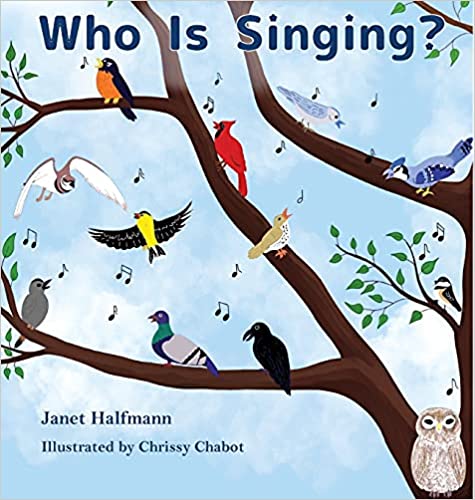
Who is Singing?, by Janet Halfmann/Illustrated by Chrissy Chabot, (July 2021, Pen It! Publications), $20.99, ISBN: 978-1954868373

Ages 2-6

Take a walk and listen on any given day, and you’ll hear a cacophony of birds: tweets, chirps, screeches, and coos abound; even city kids can hear a dove coo, a pigeon scold, and a blue jay (like the one who likes to argue with the squirrels, right outside my window). Who is Singing? is author Janet Halfmann’s tribute to some colorful, musical birds, all identifiable by their songs. Using each bird’s defining song, repetitive verse, and a noticeable characteristic for each bird, Janet Halfmann introduces readers to the gentle art of bird-watching and bird-listening, giving readers 11 fairly familiar birds to start out with. You’ll recognize pigeons, “begging for treats along a city sidewalk”; “bully loud and bold” blue jays screaming; cheery chick-a-dees, “dressed up for dinner in a black cap and bib”, and more. Ms. Halfmann encourages the birds to “take a bow”, making for a fun readaloud where you can invite your littles to take a bow – or let a bird puppet or flannel take their own bows when you announce them, too.

Chrissy Chabot’s illustrations are bright and lovely, photorealistic birds that will help readers more easily spot and identify them the next time they’re out and about. A lovely little story to read out loud, and works well with a lapsit. Print out some coloring pages and let the kiddos envision their own colorful birds and make some music of their own!

Posted in picture books

The Over and Under series continues with Over and Under the Canyon

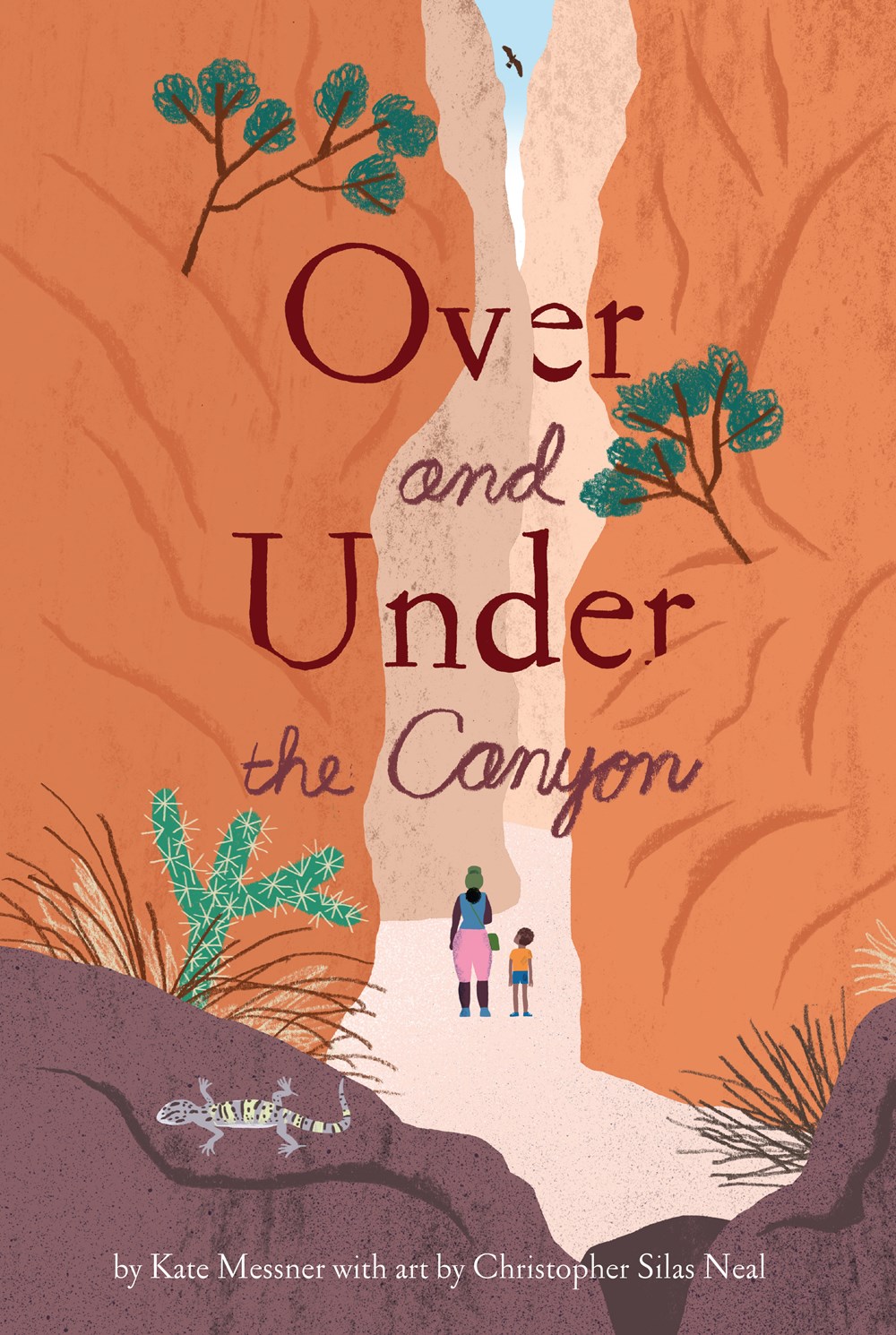
Over and Under the Canyon, by Kate Messner/Illustrated by Christopher Silas Neal, (Sept. 2021, Chronicle Books), $18.99, ISBN: 9781452169392

Ages 5-8

The fifth book in Kate Messner and Christopher Silas Neal’s series on the world’s habitats, Over and Under the Canyon explores life in a desert through the eyes of a family on a hike. Mom and child hike through the desert, glimpsing hawks circle, hear stones crunch underfoot, and see any animal life scrambling, seeking relief from the sweltering sun. They squeeze through tight spaces and observe animals hunting for food: a jackrabbit is lucky, a rattlesnake is not. The boy joyfully dances in flowerbeds and marvels at the world around him. Back at camp, the family eats together; as the sun goes down, they hear coyotes howl and glimpse – thanks to mom’s special flashlight – a scorpion making its way through the dark. The son is biracial; his mother is a woman of color, and his father appears white. A lovely, nonintrusive look at both diurnal and nocturnal animals and desert life, the artwork is rich with browns and oranges during the day, cool blues at night. Kate Messner tells a beautiful story, describing the desert evening as a “desert-night lullaby of moonlight and shadows, insect song and stars”. Together, she and Christopher Silas Neal make an outstanding team. Great for early STEM/STEAM collections.

Posted in picture books

Twinkle, Twinkle, Little Star… Ada and the Galaxies

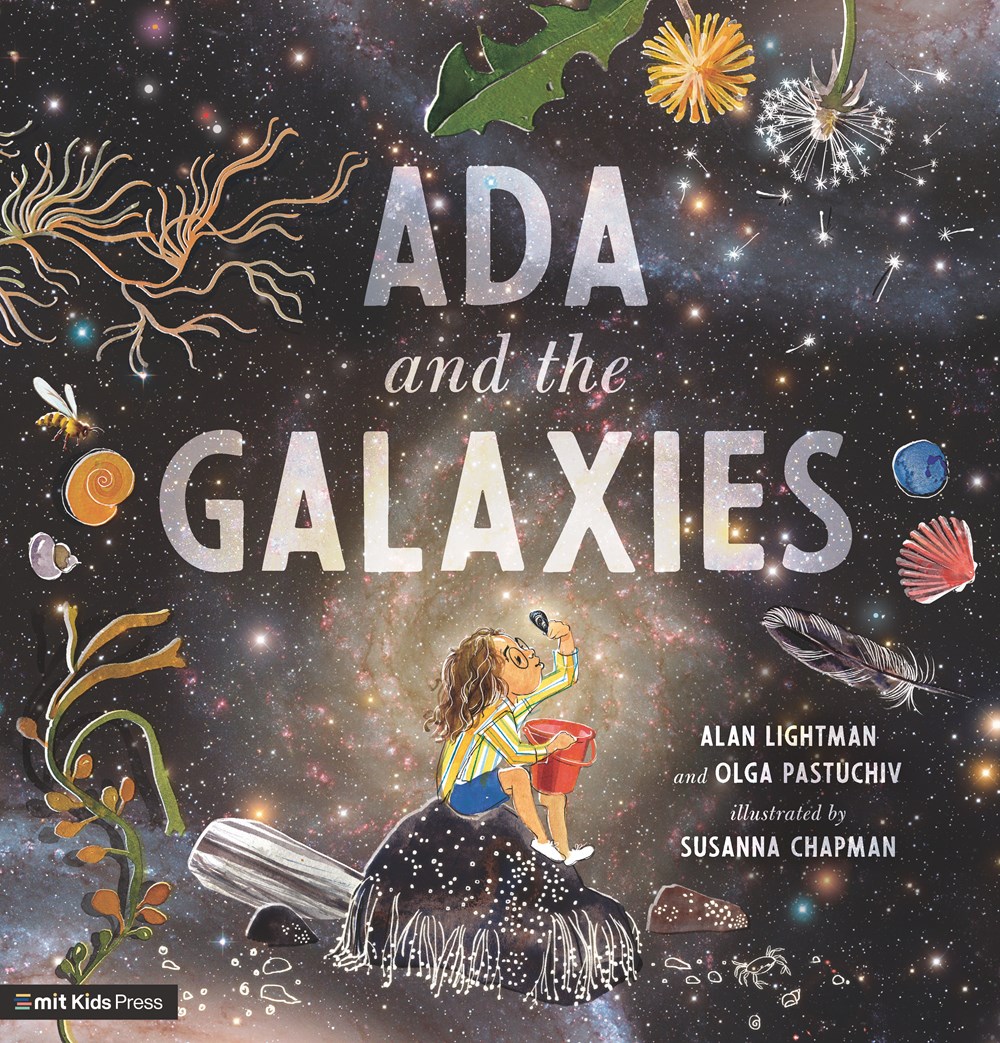
Ada and the Galaxies, by Alan Lightman & Olga Pastuchiv/Illustrated by Susanna Chapman, (Sept. 2021, MIT Kids Press), $17.99, ISBN: 9781536215618

Ages 4-8

Author and physicist Alan Lightman, together with author Olga Pastuchiv, create a story about stars, galaxies, and the natural world, perfect for stargazers and astronomy fans. Ada is a young girl visiting her grandparents, Ama and Poobah, in Maine. Ada is hoping to see a sky full of stars in Maine, because in New York,  where she lives, too much light pollution keeps her from seeing the night sky in all its beauty. Ama and Poobah take Ada all around, showing her the beautiful nature that Maine offers, but Ada is singularly focused: when will it be dark enough to see the night sky? When nature decides to intervene, Poobah turns to his astronomy books and shows Ada incredible photos of galaxies, all photographed by the Hubble telescope. Fascinated, Ada and Poobah talk about galaxies, space, and what we’re all made of: space stuff. Using watercolor, digital artwork, and actual Hubble telescope photos, Ada and the Galaxies is a breathtaking look at our night skies, a warm story of a little girl enjoying her grandparents, and a story about the incredible wonder of nature. It takes readers from a small moment – finding a crab on a beach – and expands to the size of our universe. A wonderful story about life and everything in it, with lovely illustrations that also wrap readers in the smallest of moments – reading a book with a grandparent – growing it into a story about the night sky, filled with stars, and, ultimately, the universe and its galaxies. There are beautiful details here, like Ada and Poobah sharing a rocketship ride together; the artwork of the rocket appears over a photo of a crab-shaped galaxy, NGC 1300, and a bright red crab adorns the rocket. A word on seeing the night sky informs readers about some of the numbers behind our world, and confirms that the numbers Poobah uses in the book to describe the size and distance of galaxies is scientifically accurate. Read and display with The Stars Just Up the Street by Sue Soltis and Marion Dane Bauer’s The Stuff of Stars.

Ada and the Galaxies has starred reviews from Publishers Weekly, Booklist, and KirkusVisit the Hubble Telescope website for news, images, and video; you can also follow the Hubble on Twitter and on Instagram for photos and updates. Educator John Williams on Teachers Pay Teachers has Hubble Star Cards, downloadable for free, that you can share with your library and school kids.

Posted in Graphic Novels, Intermediate, Middle Grade, Non-fiction, Non-Fiction

Join The Bug Club!

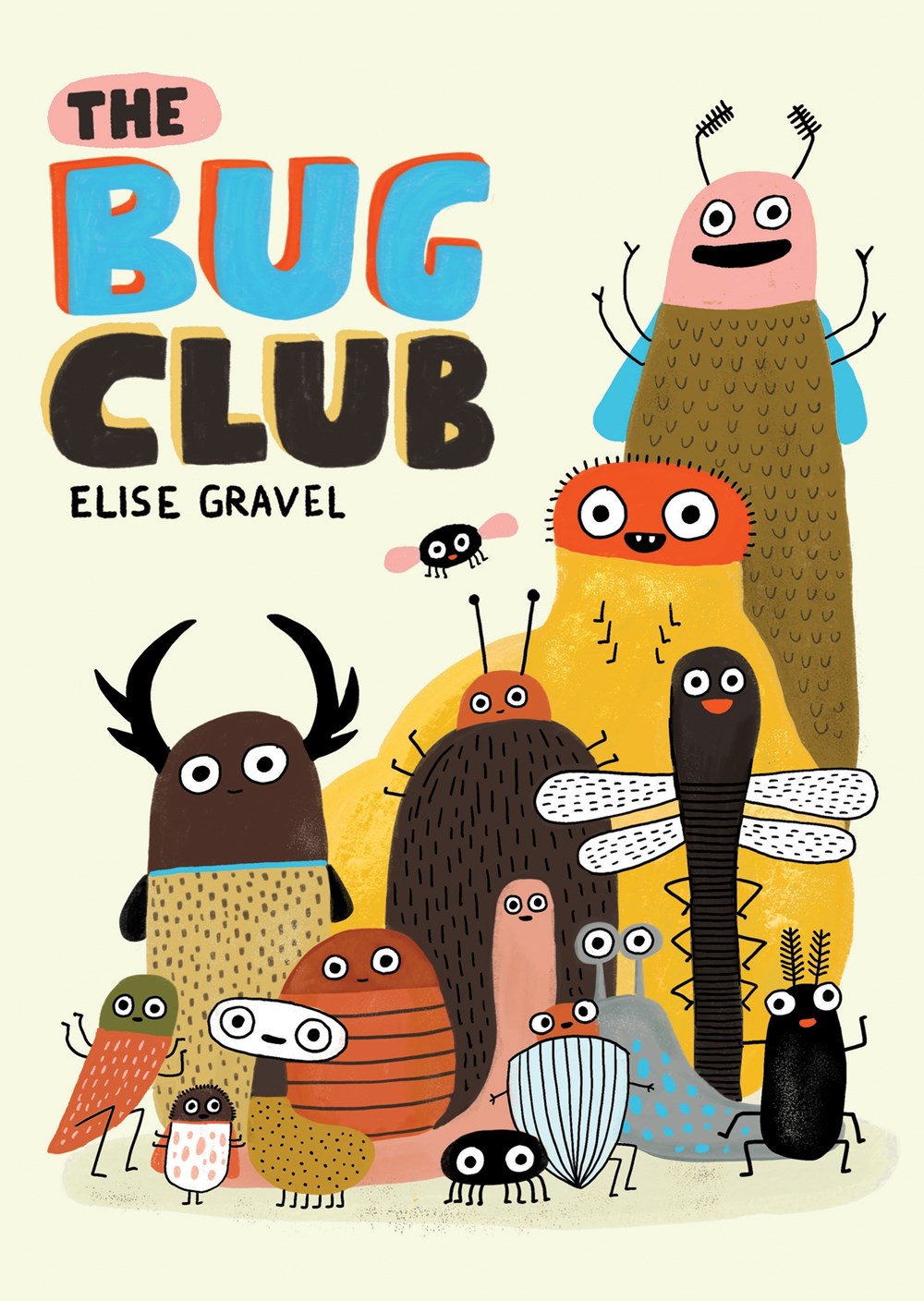
The Bug Club, by Elise Gravel, (Aug. 2021, Drawn & Quarterly), $17.95, ISBN: 9781770464155

Ages 6-10

I adore Elise Gravel’s graphic novels. Her latest, The Bug Club, is part autobiography, part STEM study; just like her Mushroom Fan Club (2018). We learn that Elise Gravel has always been fascinated by bugs, and, using her friendly, cartoon style, presents a wide range of fascinating and adorable bugs for readers to enjoy with her. It’s a good introduction to etymology; she gives an overview of invertebrates and what makes them members of that club; she illustrates wing shapes, antenna shapes, provides an overview of life cycles, and offers illustrations of baby vs. adult types of bugs, like wasps, ladybugs, and dragonflies. We even get profiles on some of her favorite bugs, with full-page illustrations and a brief discussion of tardigrades, dung beetles, and others. Loaded with fun facts, Ms. Gravel encourages kids to use their imaginations and think about bugs as cool aliens. Her writing is easy to read, easy to understand, and makes the science of bug-watching just plain fun. Great for young readers, you can go over colors, count numbers of bugs, wings, eyes, horns, or legs. Get creative! Encourage your own kiddos to start their own nature journals (you know I love my nature journals) and sketch pictures of the bugs they may discover in books or in the park (remember; take only pictures, leave only footprints).

Visit Elise Gravel’s page on Drawn and Quarterly for more about her graphic novels; visit Elise Gravel’s webpage for fun activities and downloadables for your kiddos and your libraries and classrooms.

Posted in Early Reader, Non-Fiction, picture books, Preschool Reads

¡Más libros en español: peces y insectos! / More books in Spanish: Fish and Insects!

When I got back to my library just under two months ago, I discovered some bookmail waiting for me: two books in Spanish, courtesy of Peachtree Publishing! They’ve been wonderful about keeping me updated on their bilingual and Spanish nonfiction books, and I’ve loved the “About…” series they’ve sent me so far, so I wanted to make sure I gave these two books the love they deserve (and a place on my Spanish collection shelves).

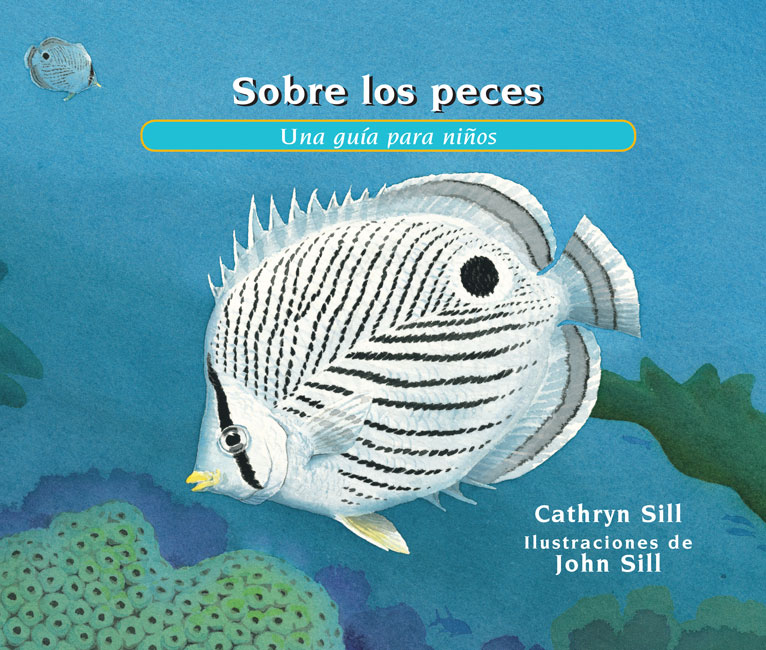
Sobre los peces, by Cathryn Sill/Illustrated by John Sill, (Feb. 2020, Peachtree Publishers), $8.99, ISBN: 978-1-68263-154-6

Ages 3-7

Great early reader nonfiction. Sobre los peces is entirely in Spanish, and offers readers a look at the basics of fish: where they live, how they adapt to their environment, what they eat, how they reproduce. The text is written in easy-to-read, easy-to-understand, simple sentences, and each spread includes colorful, realistic paintings of different fish throughout. The text is presented in bold, black font against a white background, not competing for the reader’s attention; each painting includes the name of the fish, to increase understanding and forward the fact that there are a LOT of fish out there! Back matter includes more information about each spread: did you know that tropical fish are usually more vibrantly colored than fish from cold waters? It helps them camouflage better in their surroundings! A glossary and bibliography offer more resources for curious readers.

Peachtree includes a link to a free, downloadable Teacher’s Guide for the whole series. The guide is in English, but pair with some Spanish-language information like this page on National Geographic España, this story on sharks from TeachersPayTeachers creator, The Storyteller’s Corner, and this graphic organizer from TeachersPayTeachers creator Dual Language, Dual Fun.


Sobre los insectos, by Cathryn Sill/Illustrated by John Sill, (Feb. 2020, Peachtree Publishers), $8.99, ISBN: 978-1-68263-155-3

Ages 3-7

More great books in translation from Peachtree! About Insects is translated entirely into Spanish, with easy-to-read, easy-to-understand sentences introducing readers to the basics about insects: how many legs they have (it’s 6, not 8!), their hard exoskeletons, how they change forms as they get older, what they eat and how they eat, and how they are helpful to us humans (and how some are just plain pests). Colorful paintings by John Sill are realistic and detailed, making a naturalist out of every reader; the environments are textured, often lush, and there’s always something to draw your eye, from the movement of water as a trout jumps to catch a fleeing mayfly to the shadowy leaves in the background as a katydid leaps. Details on each painting, a glossary, and bibliography make up the back matter.

While the Teacher’s Guide is currently available in English, you can find more information about insects at National Geographic España, and there are copious free resources on TeachersPayTeachers, including a reader about The Hungry Insects from The Spanglish Senorita, bilingual bug bingo from onlinefreespanish, and a  counting sheet from The Spanish Amigo.

Thanks again, Peachtree!

Posted in picture books, Preschool Reads

Find the Extraordinary in all things

Extraordinary!, by Penny Harrison/Illustrated by Katie Wilson, (March 2021, Kane Miller), $12.99, ISBN: 9781684641444

Ages 4-8

When you think of the extraordinary, you tend to think big. Extraordinary acknowledges this, with dreams of soaring eagles and space travel: “the extraordinary bellows, it trumpets and booms. / It towers above us it blazes and blooms”. But consider the everyday moments that bring a touch of the extraordinary into our lives: turn to nature for incredible moments that often go overlooked. Extraordinary celebrates these moments, encouraging families to seek out these moments, whether it’s discovering a bird’s nest or a bug on a leaf, enjoying a cool breeze, or watching birds soar. Extraordinary is about finding the magic in the everyday and embracing it. Taking place over generous spreads and separate panels, the rhyming verse leads readers through image after image of families and friends spending time outdoors, together. Illustrations appear like watercolor paintings, gently colorful. Endpapers show a colorful outdoor landscape and a more sepia-toned version of the same landscape. A gorgeous Spring story.